• About
  • THE BEADY EYE SAY’S : THE EUROPEAN UNION SHOULD THANK ENGLAND FOR ITS IN OR OUT REFERENDUM.

bobdillon33blog

~ Free Thinker.

bobdillon33blog

Category Archives: Facebook

THE BEADY EYE SAYS WATCH THE WORLD SPLIT IN TWO THANKS TO ARTIFICIAL INTELLIGENCE.

08 Sunday Dec 2024

Posted by bobdillon33@gmail.com in 2024 the year of disconnection, A Constitution for the Earth., Algorithms., Artificial Intelligence., DIGITAL DICTATORSHIP., Donald John Trump, Erasing history., Facebook, Fourth Industrial Revolution., History., Human Collective Stupidity., Human Exploration., HUMAN INTELLIGENCE, Human values., Humanity., INTELLIGENCE., International laws,, Modern day life., Our Common Values., Populism., Religious Beliefs., Robot citizenship., Robotic murderer, Social Media, Social Media Regulation., Speed of technology., State of the world, Survival., Sustaniability, Technology, Technology v Humanity, Technology., Telling the truth., The common good., The essence of our humanity., The Future, The metaverse., The Obvious., The state of the World., The world to day., THE WORLD YOU LIVE IN., THIS IS THE STATE OF THE WORLD.  , TRACKING TECHNOLOGY., VALUES, War, We can leave a legacy worthwhile., What is shaping our world., WHAT IS TRUTH, What Needs to change in the World, Where's the Global Outrage., World Leaders, World Organisations.

≈ Comments Off on THE BEADY EYE SAYS WATCH THE WORLD SPLIT IN TWO THANKS TO ARTIFICIAL INTELLIGENCE.

Tags

Artificial Intelligence., The Future of Mankind, Visions of the future.

( Four minute read)

It’s not the Iron Curtain nor will it be the coming Trump dump that we should be worried about.

In the not so distant future it’s the Silicone Curtain that is potentially far more dangerous than climate change or nuclear war.

Why?

Because unlike Climate Change and a Nuclear war there’s no reverting Artificial Intelligence which we continue to confuse with human intelligence when in fact the two are totally different.

The day is fast approaching when we will be asking our personal oracle what to do, buy. With algorithms or not will they be ruling our lives, but how soon.

Computers are already running the Financial world.

It won’t be long before we are all subjected to an alien self learning intelligence (own ed by and control by god only knows who ) generating its own systems, feeding on synthetic data, from a metaphysical world.

We’re already relying on AI outside of our control taking initiative’s in shaping our societies, our history, our cultures.

Facebook alone has caused real problems.

Fanning the flames of splits with fake news between and in societies that are struggling to eradicate racism, ethnic tensions, inequality etc.

International institutions are being undermine by social media platforms giving rise to populist rhetoric and political instability.

We now have wars run by drones, and full scale ethnic cleansing, not just in the world of  illusion’s but in reality.

The thing to understand here is that algorithms are different when it comes to spreading news on social media as they are deciding what you see or hear. These algorithms are non transparent or accountably like the printed press or TV.

However they are supposed to be in the control of what ever platform use them. They are deciding what or what not to allowed on to the platform.

Therefore the algorithm is orientation is to attract more users to enhance its advertising revenues.

For me the responsibility lies with the engineering of the App ie the Code makers who should be held responsible under law for not modifying or changing the Apps capabilities.

The problem however is that they (the algorithm are self learning), like murder must be proven to be premeditated to guarantee for the death penalty.

Of course with our laws this is an impossibility.

Algorithms just like us can make decisions and decide actions on their own.

So should we give them legal status like companies, or other entities so they can be held accountable?

Yes!

The sooner the better before they split the world and all of us that live on it.

———————

We are already forced to grapple with some very deep issues/questions.

Religion have for centuries claimed non human sources for their holy books.

Artificial intelligence is capable of rewriting these books and creating new religions. In fact Ai will consume- all human creations as data and start to regurgitate new culture artefacts.

The next war will not be over how controls the air, the freshwater, the nuclear button or religious belief or even the arrival of Artificial Intelligence’s.

It will be the split between the technological world and not so advanced technology world.

We are at this moment inventing a sentient killing machine which will be impossible to find, alter or terminate. That will be able to totally mummify us all at will.

It’s now or never before history no longer has the connection of biological and cultural mix that we must interrogate algorithms to see that they have human values at their core.

All human comments appreciated. All like click and abuse chucked in the bin.

Contact: bobdillon33@gmail.com

Share this:

  • Click to share on WhatsApp (Opens in new window) WhatsApp
  • More
  • Click to share on Pocket (Opens in new window) Pocket
  • Click to share on Mastodon (Opens in new window) Mastodon

THE BEADY EYE ASK’S: THESE DAYS WHAT CAN WE BELIEVE IN ?

21 Thursday Dec 2023

Posted by bobdillon33@gmail.com in #whatif.com, 2023 the year of disconnection., A Constitution for the Earth., Advertising, Advertising industry, Algorithms., Artificial Intelligence.,  Attention economy, Capitalism, CAPITALISM IS INCOMPATIBLE IN THE FIGHT AGAINST CLIMATE CHANGE., Carbon Emissions., Civilization., Climate Change., Collective stupidity., Consciousness., Cry for help., Dehumanization., Democracy, Digital age., DIGITAL DICTATORSHIP., Digital Friendship., Disconnection., Discrimination., Earth, Emergency powers., Enegery, Environment, Face Recognition., Facebook, Fake News., Fourth Industrial Revolution., Freedom of Speech, Freedom of the Press., Google, Google Knowledge., GPS-Tracking., Green Energy., Happy Christmas from the Beady eye., Honesty., How to do it., Human Collective Stupidity., HUMAN INTELLIGENCE, Human values., Humanity., Imagination., Inequality, INTELLIGENCE., IS DATA DESTORYING THE WORLD?, James Webb Telescope, Life., MISINFORMATION., Modern Day Communication., Modern Day Democracy., Modern day life., Modern Day Slavery., Monetization of nature, Our Common Values., PAIN AND SUFFERING IN LIFE, Political lying., Political Trust, Politics., Populism., Post - truth politics., Profiteering., Purpose of life., Real life experience's, Reality., Renewable Energy., Robot citizenship., Social Media, Social Media Regulation., Society, State of the world, Sustaniability, Technology, Technology v Humanity, Telling the truth., The common good., The essence of our humanity., The Future, The Internet., THE NEW NORM., The Obvious., The pursuit of profit., The state of the World., The world to day., THE WORLD YOU LIVE IN., THIS IS THE STATE OF THE WORLD.  , TRACKING TECHNOLOGY., Truth, Truthfulness., Twitter, Unanswered Questions., Universal values., VALUES, We can leave a legacy worthwhile., What is shaping our world., WHAT IS TRUTH, Where's the Global Outrage., World Leaders, World Organisations., World Politics

≈ Comments Off on THE BEADY EYE ASK’S: THESE DAYS WHAT CAN WE BELIEVE IN ?

Tags

bible, god, philosophy, Religion., Science

( Fifteen minute read)

The last post this year, have a peaceful Christmas.

This post is a follow up to the post, ( What is life, What does it mean to be alive). It is also an attempt to argue for as many preposterous positions as possible in the shortest space of time possible.

That there are no options other than accepting that life is objectively meaningful or not meaningful at all.

Science requires proof, religious belief requires faith.

So let’s get God and Gods out of the way.

.Could quantum physics help explain a God that could be in two places at once? (Credit: Nasa)
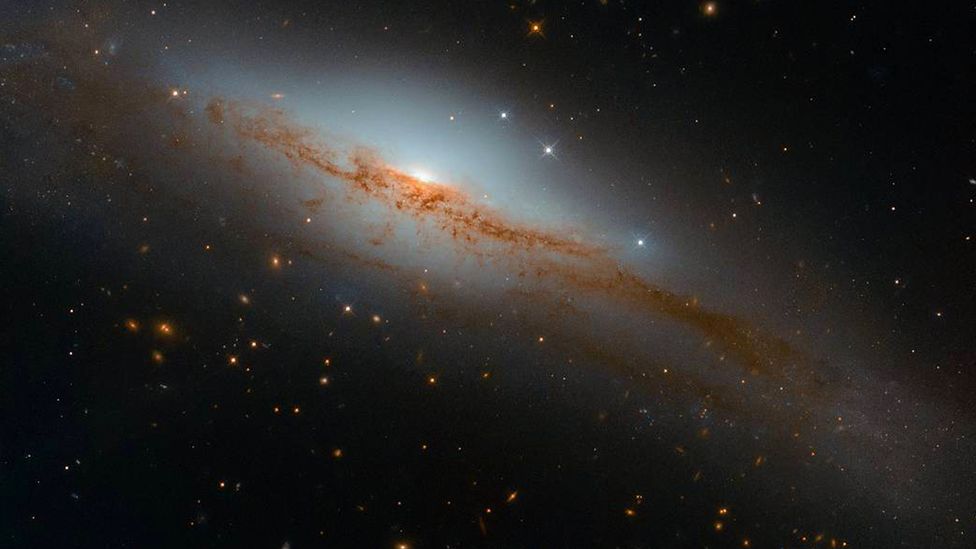
If you believe in God, then the idea of God being bound by the laws of physics is nonsense, because God can do everything, even travel faster than light. If you don’t believe in God, then the question is equally nonsensical, because there isn’t a God and nothing can travel faster than light.

Perhaps the question is really one for agnostics, who don’t know whether there is a God.

The idea that God might be “bound” by the laws of physics – which also govern chemistry and biology might not be so far stretched that the James Webb telescope might discover him or her. Whether it does or does not, if it did discovered life on another planet and the human race realizes that its long loneliness in time and space may be over — the possibility we’re no longer alone in the universe is where scientific empiricism and religious faith intersect, with NO true answer?.

Could any answer help us prove whether or not God exists, not on your nanny.

If God wasn’t able to break the laws of physics, she or he arguably wouldn’t be as powerful as you’d expect a supreme being to be. But if he or she could, why haven’t we seen any evidence of the laws of physics ever being broken in the Universe?

If there is a God who created the entire universe and ALL of its laws of physics, does God follow God’s own laws? Or can God supersede his own laws, such as travelling faster than the speed of light and thus being able to be in two different places at the same time?

Let’s consider whether God can be in more than one place at the same time.

(According to quantum mechanics, particles are by definition in a mix of different states until you actually measure them.)

There is something faster than the speed of light after all: Quantum information.

This doesn’t prove or disprove God, but it can help us think of God in physical terms – maybe as a shower of entangled particles, transferring quantum information back and forth, and so occupying many places at the same time? Even many universes at the same time?

But is it true?

A few years ago, a group of physicists posited that particles called tachyons travelled above light speed. Fortunately, their existence as real particles is deemed highly unlikely. If they did exist, they would have an imaginary mass and the fabric of space and time would become distorted – leading to violations of causality (and possibly a headache for God).

(This in itself does not say anything at all about God. It merely reinforces the knowledge that light travels very fast indeed.)

We can calculate that light has travelled roughly 1.3 x 10 x 23 (1.3 times 10 to the power 23) km in the 13.8 billion years of the Universe’s existence. Or rather, the observable Universe’s existence.

The Universe is expanding at a rate of approximately 70km/s per Mpc (1 Mpc = 1 Megaparsec or roughly 30 billion billion kilometres), so current estimates suggest that the distance to the edge of the universe is 46 billion light years. As time goes on, the volume of space increases, and light has to travel for longer to reach us.

We cannot observe or see across the entirety of the Universe that has grown since the Big Bang because insufficient time has passed for light from the first fractions of a second to reach us. Some argue that we therefore cannot be sure whether the laws of physics could be broken in other cosmic regions – perhaps they are just local, accidental laws. And that leads us on to something even bigger than the Universe.

But if inflation could happen once, why not many times?

We know from experiments that quantum fluctuations can give rise to pairs of particles suddenly coming into existence, only to disappear moments later. And if such fluctuations can produce particles, why not entire atoms or universes? It’s been suggested that, during the period of chaotic inflation, not everything was happening at the same rate – quantum fluctuations in the expansion could have produced bubbles that blew up to become universes in their own right.

How come all the physical laws and parameters in the universe happen to have the values that allowed stars, planets and ultimately life to develop?

We shouldn’t be surprised to see biofriendly physical laws – they after all produced us, so what else would we see? Some theists, however, argue it points to the existence of a God creating favourable conditions.

But God isn’t a valid scientific explanation.

We can’t disprove the idea that a God may have created the multiverse.

No matter what is believable or not, things can appear from nowhere and disappear to nowhere.

If you find this hard to swallow, what follows will make you choke.

First there is panpsychism, the idea that “consciousness pervades the universe and is a fundamental feature of it.

Even particles are never compelled to do anything, but are rather disposed, from their own nature, to respond rationally to their experience. That the universe is conscious and is acting towards a purpose of realising the full potential of its consciousness.

The radicalism of this “teleological cosmopsychism” is made clear by its implication that “during the first split second of time, the universe fine-tuned itself in order to allow for the emergence of life billions of years in the future”. To do this, “the universe must in some sense have been aware of this future possibility”.

That the universe itself has a built-in purpose, the disappointingly vague goal of which is “rational matter achieving a higher realisation of its nature.

The laws of physics are just right for conscious life to evolve that it can’t have been an accident.

It is hard to see why the universe’s purpose should give our lives one. Indeed, to believe one plays an infinitesimally small part in the unfolding of a cosmic master plan makes each human life look insignificant.

The basic question about our place in the Universe is one that may be answered by scientific investigations.

What are the next steps to finding life elsewhere?

Today’s telescopes can look at many stars and tell if they have one or more orbiting planets. Even more, they can determine if the planets are the right distance away from the star to have liquid water, the key ingredient to life as we know it.

NEXT:How to Choose Which Social Media Platforms to Use

We live in a time of political fury and hardening cultural divides. But if there is one thing on which virtually everyone is agreed, it is that the news and information we receive is biased. Much of the outrage that floods social media, occasionally leaking into opinion columns and broadcast interviews, is not simply a reaction to events themselves, but to the way in which they are reported and framed that are the problem.

This mentality now with the help of technological advances in communication spans the entire political spectrum and pervades societies around the world twisting our basic understanding of reality to our own ends.

This is not as simple as distrust.

The appearance of digital platforms, smartphones and the ubiquitous surveillance have enable to usher in a new public mood that is instinctively suspicious of anyone claiming to describe reality in a fair and objective fashion. Which will end in a Trumpian refusal to accept any mainstream or official account of the world with people become increasingly dependent on their own experiences and their own beliefs about how the world really works.

The crisis of democracy and of truth are one and the same:

Individuals are increasingly suspicious of the “official” stories they are being told, and expect to witness things for themselves.

How exactly do we distinguish this critical mentality from that of the conspiracy theorist, who is convinced that they alone have seen through the official version of events? Or to turn the question around, how might it be possible to recognise the most flagrant cases of bias in the behaviour of reporters and experts, but nevertheless to accept that what they say is often a reasonable depiction of the world?

It is tempting to blame the internet, populists or foreign trolls for flooding our otherwise rational society with lies.

But this underestimates the scale of the technological and philosophical transformations that are under way. The single biggest change in our public sphere is that we now have an unimaginable excess of news and content, where once we had scarcity. The explosion of information available to us is making it harder, not easier, to achieve consensus on truth.

As the quantity of information increases, the need to pick out bite-size pieces of content rises accordingly.

In this radically sceptical age, questions of where to look, what to focus on and who to trust are ones that we increasingly seek to answer for ourselves, without the help of intermediaries. This is a liberation of sorts, but it is also at the heart of our deteriorating confidence in public institutions.

There is now a self-sustaining information ecosystem becoming a serious public health problem across the world, aided by the online circulation of conspiracy theories and pseudo-science. However the panic surrounding echo chambers and so-called filter bubbles is largely groundless.

What, then, has to changed?

The key thing is that the elites of government and the media have lost their monopoly over the provision of information, but retain their prominence in the public eye.

And digital platforms now provide a public space to identify and rake over the flaws, biases and falsehoods of mainstream institutions.

The result is an increasingly sceptical citizenry, each seeking to manage their media diet, checking up on individual journalists in order to resist the pernicious influence of the establishment.

The problem we face is not, then, that certain people are oblivious to the “mainstream media”, or are victims of fake news, but that we are all seeking to see through the veneer of facts and information provided to us by public institutions.

Facts and official reports are no longer the end of the story.

The truth is now threatened by a radically different system, which is transforming the nature of empirical evidence and memory. One term for this is “big data”, which highlights the exponential growth in the quantity of data that societies create, thanks to digital technologies.

The reason there is so much data today is that more and more of our social lives are mediated digitally. Internet browsers, smartphones, social media platforms, smart cards and every other smart interface record every move we make. Whether or not we are conscious of it, we are constantly leaving traces of our activities, no matter how trivial.

But it is not the escalating quantity of data that constitutes the radical change.

Something altogether new has occurred that distinguishes today’s society from previous epochs.

In the past, recording devices were principally trained upon events that were already acknowledged as important.

Things no longer need to be judged “important” to be captured.

Consciously, we photograph events and record experiences regardless of their importance. Unconsciously, we leave a trace of our behaviour every time we swipe a smart card, address Amazon’s Alexa or touch our phone.

For the first time in human history, recording now happens by default, and the question of significance is addressed separately.

This shift has prompted an unrealistic set of expectations regarding possibilities for human knowledge.

When everything is being recorded, our knowledge of the world no longer needs to be mediated by professionals, experts, institutions and theories. Data can simply “speak for itself”. This is a fantasy of a truth unpolluted by any deliberate human intervention – the ultimate in scientific objectivity.

From this perspective, every controversy can in principle be settled thanks to the vast trove of data – CCTV, records of digital activity and so on – now available to us. Reality in its totality is being recorded, and reporters and officials look dismally compromised by comparison.

It is often a single image that seems to capture the truth of an event, only now there are cameras everywhere.

No matter how many times it is disproven, the notion that “the camera doesn’t lie” has a peculiar hold over our imaginations. In a society of blanket CCTV and smartphones, there are more cameras than people, and the torrent of data adds to the sense that the truth is somewhere amid the deluge, ignored by mainstream accounts.

The central demand of this newly sceptical public is “so show me”.

The rise of blanket surveillance technologies has paradoxical effects, raising expectations for objective knowledge to unrealistic levels, and then provoking fury when those in the public eye do not meet them.

Surely, in this age of mass data capture, the truth will become undeniable.

On the other hand, as the quantity of data becomes overwhelming – greater than human intelligence can comprehend – our ability to agree on the nature of reality seems to be declining. Once everything is, in principle, recordable, disputes heat up regarding what counts as significant in the first place.

What we are discovering is that, once the limitations on data capture are removed, there are escalating opportunities for conflict over the nature of reality.

Remember AI does not exist in a vacuum, its employment can and is discriminating against communities, powered by vast amounts of energy,  producing CO2 emissions.

Lastly the Advertising Industry.The impact of COVID-19 on the advertising industry - Passionate In ...

These day it seems that it has free rain to claim anything.

Like them or loathe them, advertisements are everywhere and they’re worsening not just the climate crisis, and ecological damage by promoting sustainability in consumption and inequality. Presenting a fake, idealised world that papers over an often brutal reality.

But advertising in one sense is even more dangerous, because it is so pervasive, sophisticated in its techniques and harder to see through. When hundreds of millions of people have desires for more and more stuff and for more and more services and experiences, that really adds up and puts a strain on the Earth.

The toll of disasters propelled by climate change in 2023 can be tallied with numbers — thousands of people dead, millions of others who lost jobs, homes and hope, and tens of billions of dollars sheared off economies. But numbers can’t reflect the way climate change is experienced — the intensity, the insecurity and the inequality that people on Earth are now living.

In every place that climate change makes its mark, inequality is made worse.

How are we going to protect the truth:

It goes without saying that spiritual beliefs will protect themselves. Lies, propaganda and fake news however is the challenge for our age.

Working out who to trust and who not to believe has been a facet of human life since our ancestors began living in complex societies. Politics has always bred those who will mislead to get ahead.

With news sources splintering and falsehoods spreading widely online, can anything be done?

Check Google.

Welcome to the world of “alternative facts”. It is a bewildering maze of claim and counterclaim, where hoaxes spread with frightening speed on social media and spark angry backlashes from people who take what they read at face value.

It is an environment where the mainstream media is accused of peddling “fake news” by the most powerful man in the world.

Voters are seemingly misled by the very politicians they elected and even scientific research – long considered a reliable basis for decisions – is dismissed as having little value.

Without a common starting point – a set of facts that people with otherwise different viewpoints can agree on – it will be hard to address any of the problems that the world now faces. The threat posed by the spread of misinformation should not be underestimated.

Some warn that “fake news” threatens the democratic process itself.

A survey conducted by the Pew Research Center towards the end of last year found that 64% of American adults said made-up news stories were causing confusion about the basic facts of current issues and events.

How we control the dissemination of things that seem to be untrue. We need a new way to decide what is trustworthy.

Take Wikipedia itself – which can be edited by anyone but uses teams of volunteer editors to weed out inaccuracies – is far from perfect.

These platforms and their like are simply in it for the money.

Last year, links to websites masquerading as reputable sources started appearing on social media sites like Facebook.

Stories about the Pope endorsing Donald Trump’s candidacy and Hillary Clinton being indicted for crimes related to her email scandal were shared widely despite being completely made up. The ability to share them widely on social media means a slice of the advertising revenue that comes from clicks.

Truth is no longer dictated by authorities, but is networked by peers. For every fact there is a counterfact. All those counterfacts and facts look identical online, which is confusing to most people.

Information spreads around the world in seconds, with the potential to reach billions of people. But it can also be dismissed with a flick of the finger. What we choose to engage with is self-reinforcing and we get shown more of the same. It results in an exaggerated “echo chamber” effect.

The challenge here is how to burst these bubbles.

One approach that has been tried is to challenge facts and claims when they appear on social media. Organisations like Full Fact, for example, look at persistent claims made by politicians or in the media, and try to correct them. (The BBC also has its own fact-checking unit, called Reality Check.)

This approach doesn’t work on social media because the audiences were largely disjointed.

Even when a correction reached a lot of people and a rumour reached a lot of people, they were usually not the same people. The problem is, corrections do not spread very well. This lack of overlap is a specific challenge when it comes to political issues.

On Facebook political bodies can put something out, pay for advertising, put it in front of millions of people, yet it is hard for those not being targeted to know they have done that. They can target people based on how old they are, where they live, what skin colour they have, what gender they are.

We shouldn’t think of social media as just peer-to-peer communication – it is also the most powerful advertising platform there has ever been. We have never had a time when it has been so easy to advertise to millions of people and not have the other millions of us notice.

Twitter and Facebook both insist they have strict rules on what can be advertised and particularly on political advertising. Regardless, the use of social media adverts in politics can have a major impact.

We need some transparency about who is using social media advertising when they are in election campaigns and referendum campaigns. We need watchdogs that will go around and say, ‘Hang on, this doesn’t stack up’ and ask for the record to be corrected.

We need Platforms to ensure that people have read content before sharing it to develop standards.

Google says it is working on ways to improve its algorithms so they take accuracy into account when displaying search results. “Judging which pages on the web best answer a query is a challenging problem and we don’t always get it right,”

The challenge is going to be writing tools that can check specific types of claims.

Built a fact-checker app that could sit in a browser and use Watson’s language skills to scan the page and give a percentage likelihood of whether it was true.

This idea of helping break through the isolated information bubbles that many of us now live in, comes up again and again.

By presenting people with accurate facts it should be possible to at least get a debate going.

There is a large proportion of the population living in what we would regard as an alternative reality.  By suggesting things to people that are outside their comfort zone but not so far outside they would never look at it you can keep people from self-radicalising in these bubbles.

There are understandable fears about powerful internet companies filtering what people see.

We should think about adding layers of credibility to sources. We need to tag and structure quality content in effective ways.

But what if people don’t agree with official sources of information at all?

This is a problem that governments around the world are facing as the public views what they tell them with increasing scepticism. There is an unwillingness to bend one’s mind around facts that don’t agree with one’s own viewpoint.

The first stage in that is crowdsourcing facts.  So before you have a debate, you come up with the commonly accepted facts that people can debate from.

Technology may help to solve this grand challenge of our age, but it is time for a little more self-awareness too.

In the end the world needs a new Independent Organisation to examine all technology against human values. Future war will be fought on Face recognition.

To certify and hold the original programs of all technology.

Have I been trained by robbery its manter when it comes to algorithms.

The whole goal of the transition is not to allow a handful of Westerners to peacefully go through life in a Tesla, a world in flames; it is to allow humanity – and the rest of biodiversity – to live decently.

All human comments appreciated. All like clicks and abuse chucked in the bin.

Contact: bobdillon33@gmail.com

Share this:

  • Click to share on WhatsApp (Opens in new window) WhatsApp
  • More
  • Click to share on Pocket (Opens in new window) Pocket
  • Click to share on Mastodon (Opens in new window) Mastodon

THE BEADY EYE LOOKS AT THE ROLE OF MONEY IN POLOTICS.

05 Friday Nov 2021

Posted by bobdillon33@gmail.com in 2021. The year for change., Algorithms., Big Data., Corruption., Democracy, Digital age., Emergency powers., Facebook, First past the post., How to do it., Human Collective Stupidity., Modern Day Democracy., Money in Politics., Political Trust, Politics., Post - truth politics., Reality., Robot citizenship., Technology v Humanity, Telling the truth., The common good., The essence of our humanity., The Obvious., The state of the World., The world to day., Truth, Unanswered Questions., We can leave a legacy worthwhile., WHAT IS MONEY?, What Needs to change in the World

≈ Comments Off on THE BEADY EYE LOOKS AT THE ROLE OF MONEY IN POLOTICS.

Tags

Big Data, Dark money., Lobbyists., Money and power., Money in Politics., Political financing., When Money Talks

(Eighteen-minute read) 

First, money is a medium of exchange that lets us earn, buy, and sell completely different things in the same units.

On top of this, money is also a unit of account—i.e. it lets us put the prices of very different things in the same terms.

This is why private wealth impacts public life, with the world of politics full of lobbyists. 

Money has always shaped the process of political competition and influences policymaking but most of us are unaware of how money works, behind the scenes in the political theater, it is a year-round issue that dictates the daily life of the nation.

Money finds its way into politics in myriad ways — 

Any political campaign lives or dies by its funding and for a long time, there has been a popular myth about how everyday voters who outnumber the wealthy will collectively donate more money than the few donations of the wealthy.

The influence of cash within politics could be called dark money.

It turns politicians’ existence into serving their donors instead of their voters, which affects the policies they support, how they allocate government spending, and their expressed values.

Regardless of our personal feelings, money makes the world (and democracy) go round.

It seems unfathomable that these external entities have such leverage in our election process.

Whether elected officeholders betray their voters, prioritizing interest groups or single campaign donors, remains a question to be answered in the public sphere. 

The super-wealthy class is almost single-handedly funding elections, which impacts our government’s overall functionality and integrity, meaning the power lies in the hands of few.

Cash has become a determining factor for who wins the most crucial elections like the president of the USA. 

most expensive presidential campaign


Since 1980 if you add it all up it comes to $ 105 billion 349 million.   

There’s way way way too much money in politics and most of it is having a corrupting, undue influence and locking out the voices that count.

For too long, money has been the one thing that has reigned supreme in a democracy.  

The influx of cash from corporations and interest groups sways the ways our political leaders pass legislation that supports these entities, regardless of the public’s best interest.

It allows corporations to buy leverage that alters the fabric of our economy.

                              ———————————

Fighting undue influence and corruption from political financing requires a clear understanding of the difference between unlawful influence on public administration and behavior and breach of trust of voters.

The former requires precise regulation of those sectors of administration that usually lend themselves to compensate campaign donors.

The potential entry point in the public sector can vary along with several channels of influence.

Beyond political advertising and election contributions, cash is influential in the lobbying industry. 

A ridiculous game in which corporations are people and money is magically empowered to speak. Allowing people and corporate interest groups and others to spend an unlimited amount of unidentified money has enabled certain individuals to swing any and all elections.  Donal Trump and referendums like Brexit.

While banning all campaign donations is an option, a comprehensive approach will take into account private agents who can resort to lobbying, personal networks, or corruption.

The truth requires that we call the corrosion of money in politics what it is – it is a form of corruption and it muzzles more of us than it empowers, and it is an imbalance that the world has taught us can only sow the seeds of unrest.

                                               —————

Money cannot always buy the best election results – Trump – Robert Mugabe – Crown Prince Abdullah – Kim Jong-un – Bashar al-Assad –Saparmurat Niyazov –  Putin – Idi Amin Saddam Hussein – Mengistu Haile Mariam – Augusto Pinochet – Pol Pot – Charles Taylor – Suharto – Mobutu Seko to name just a few dead and alive.

As of today, there are 50 dictatorships in the world.

But the millionaire class and the billionaire class increasingly own the political process, and they own the politicians that go to them for money.

It’s time to get big money out of politics., and have a system of scrutiny to ensure that no special access or call time with rich donors or big-dollar fundraisers to permanently eliminate big money from our politics and return it to the people.

                                —————-

Our democracy shouldn’t be bought and paid for by the wealthy and powerful.

It belongs to all of us or does it with the arrival of Big data the next currency of politics now being used to directly influence our decisions.

Data brings change to much more than just the commercial side of our lives.

We have to acknowledge that our data has much more than just a “one-shot” value.

The fact that Facebook and other social networks collect data on us is presented as something outrageous but not in the political world.  

Putting you into an “opinion bubble” by better targeting political ads and thus motivating you to actually go and vote, and become (unknowingly) an ambassador for the power that has you in its aim, exists. 

Data as a Political Asset: valuable stores of existing data on potential voters exchanged between political candidates, acquired from national repositories, or sold or exposed to those who want to leverage them

Data as Political Intelligence: data that is accumulated and interpreted by political campaigns to learn about voters’ political preferences and to inform campaign strategies and priorities, including creating voter profiles and testing campaign messaging.

Data as Political Influence: data that is collected, analyzed, and used to target and reach potential voters with the aim of influencing or manipulating their views or votes.

In reality, the same problems with money and now data have existed for years, with huge amounts of personal data being sold to corporate clients. And yet, we only start panicking when we see how the illegal, or barely legal trade of our life patterns collected by social networks impacts our political choices.

Knowing where we spend our time, what media we watch, what books we read, what food we prefer, and what words are we most likely to use in our tweets makes the difference.

But what is it that makes the politicians “addicted to big data like it’s campaign cash”,

Unfortunately, this “addiction” to data has induced politicians and their campaign managers into the same illusion that businesses are struggling with right now:

Big data allows reliable prediction and, obviously, politics, as the very structure of societal governance, is heavily impacted.

It is, indeed, a problem.

The amount of information that companies have about who we are and what we are as social units is so huge, that it is this data reshaping the very fabric of our societies.

Most people believe — because of huge public buzz scandals like the one of Cambridge Analytica — that big data in politics serves the goals of better manipulation.

The issue of data collection in the interest of the political actors must not be reduced to just cynical Frank Underwood-style power brokers buying data on where we eat and what we watch on Netflix and who our friends are to better sell us their quotes about how they are gonna make our lives better.

The overwhelming power of the big brother that tracks our every step raises the question.  If societies value equality of information, open debate, and transparency, these trends should be of concern?

One thing we know for sure is that the clear trend of getting more and more data involved in political campaigning and decision-making is there.

Without considering these questions, there is a danger that any response may have unintended consequences and fail to advance the principles we want to uphold.

Bribery is human nature and the only way to expose it is with transparency requirements that enable the media, public interest groups, and parties to engage in this debate.

The manipulation of the future political result, by algorithms is only a click away.

We will still need (yes, NEED) tons of “money in politics.”

Without big donors, how many Independent candidates will be able to go up against the dark money and deep, oligarch pockets?

Ok, let’s figure out where that money goes. 

All human comments are appreciated. All like clicks chucked in the bin.

Go back

Your message has been sent

Warning
Warning
Warning
Warning

Warning.


Share this:

  • Click to share on WhatsApp (Opens in new window) WhatsApp
  • More
  • Click to share on Pocket (Opens in new window) Pocket
  • Click to share on Mastodon (Opens in new window) Mastodon

THE BEADY EYE ASKS. WHEN WILL WE EVER LEARN THAT THERE IS NO SUCH THING AS FREEDOM ? WE ARE NOT FREE AND NEVER WILL BE. .

22 Saturday May 2021

Posted by bobdillon33@gmail.com in 2021. The year for change., Algorithms., Artificial Intelligence., Big Data., Dehumanization., Digital age., DIGITAL DICTATORSHIP., Facebook, Fourth Industrial Revolution., Freedom, Human values., Humanity., Life., Modern day life., Modern day Slavery, Pandemic, Reality., Robot citizenship., Survival., Technology v Humanity, The essence of our humanity., The Future, The Internet., The Obvious., The world to day., THE WORLD YOU LIVE IN., THIS IS THE STATE OF THE WORLD.  , TRACKING TECHNOLOGY., Unanswered Questions., VALUES, We can leave a legacy worthwhile., What Needs to change in the World, Where's the Global Outrage.

≈ Comments Off on THE BEADY EYE ASKS. WHEN WILL WE EVER LEARN THAT THERE IS NO SUCH THING AS FREEDOM ? WE ARE NOT FREE AND NEVER WILL BE. .

Tags

Freedom, Human rights, Technological rights.

(Twelve-minute read) 

People think they’re free, but in reality, they don’t even understand freedom.

To live a free life, you must first be free.

Rousseau notes that the real mystery of freedom is how we can be in chains and still regard ourselves as free (Rousseau: 181).

And Kant’s argument provides us with a formidable justification for assuming that freedom is the necessary and indispensable condition of human existence given that man has the capacity to act upon the commands of reason: that is the categorical imperative.

If the will is subject to extraneous circumstances or influences it ceases to express itself freely in our actions. In this scheme of things, freedom can only be preserved if the moral laws that individuals endorse and accept as their guidance are such that they can accept them voluntarily (Kant: 57-58).

Just how true in the world of Algorithms, Data collection, Social Media, Search Platforms, Track and Trace, Potential Covid Passports, Smartphones with around-the-clock electronic surveillance to name just a few, remains to be seeing.     

In fact, there is no such thing as freedom. 

Is there a statement more likely to provoke consternation from people than to submit that there is no such thing as freedom?

I think not.

The modern political theory holds that “freedom” is something available to all but in the technology world and post-pandemic world, there is no such thing as freedom in the absolute sense since everyone views freedom differently.

Can you remember who you were before the world told you who you should be?

The dictionary definition of freedom is; The power or right to act, speak or think as one wants without hindrance or restraint and the power to determine action without restraint.

In other words, we have full control over the things that we choose to do.

This is simply not true.

A democratic constitution will not state that each of us is free, what it says is that we have the right to certain freedoms which the constitution is supposed to protect.  

We are simply part of a system of rules that gives us certain rights referred to as freedoms.

So what have we got? 

  • Free means that we freely make the choices we make and are thus are morally responsible for our choices. In addition, we may be held legally accountable for the choices we make.
  • Or does it mean I am stronger than you, so I will retain my freedoms at your expense by the use of force?

There is no such thing as “freedom” because it can’t be defined objectively.

Why? 

Because too many people in the world live with the constraints of poverty, poor access to health care and education, and a structural lack of opportunity.

None of us were representation or were participants in the writing of the rules of the social contract of the Internet.

In the face of such a common reality, is it reasonable to speak of free will as a tool to change lives?

At the most, we might be able to argue that in such circumstances a person is constrained but not determined.

We are free to stop eating but we are not free to stop breathing.

                                             ————–

The truth is that our rights, beliefs, and actions are determined by our biology, neurology, life context, nature, experiences, and interpretation of our experiences.

In psychological terms, free will means that we understand the history of our determinedness; how we have come to be what we are. 

However, the scope of your individual rights has one primary limit: it ends where the rights of another begin.

Apply that universally and you have the basis for all rights.

Instead of using the word “freedom” as an entity all in itself (which does not exist) should we be using rights?

Each culture defines rights differently based on the ethos of the various cultures.

“Rights” are simply arbitrary policies set up by individual societies to meet the needs of the citizens. Different people and different individuals differ on what they believe is a right.

Again, a subjective phrase depending on what is morally right.

It is my belief, and it is a belief shared by many, that these are rights that should be observed, and that the infringement upon these rights of any entity, whether it be government or individual, should be stopped.

So rights are freedoms with the caveat that it’s morally correct to collect Data without our express permission to do so in the first place. A Liberty which is taken for granted.

Take  “Liberty” an abstract word that doesn’t have an absolute definition.

The word simply means whatever it is accepted to mean even if one’s man’s desired Liberty is perceived as infringing on another man’s Liberty.

Freedom, use to be the ability to legally do or think anything that does not infringe upon the rights of another human being whether or not the action or thought is popular or under a certain prevailing viewpoint.

Freedom does happen, in the brain but one’s perception of freedom changes when one can not see the freedom one owns. So freedom these days still exists though it may seem as though it is not all that it is cracked up to be.

Not any longer. To access platforms one has to agree with an untransparent Algorithm that runs that platform.  

Is this morally wrong? 

How do you define “morally wrong” when everyone has a different moral belief?

The problem is that data collection is now the holy grail and the fewer people in a country feel they have been severely limited in their freedom, the less free the country is as a whole.

“Freedom is nothing left to lose”

The current Pandemic has and is highlighting how freedoms that are taken for granted can be reversed. 

As long as the masses do what the elite tells them to do, then they are free.

What then is freedom? 

The power to live as one wishes. – Marcus Tullius Cicero.

The moment we let go is the moment we find freedom. – Rebekah Stephenson.

Freedom is never voluntarily given by the oppressor; it must be demanded by the oppressed. – Martin Luther King.

Most people do not really want freedom, because freedom assumes responsibility and most people are afraid of that. – Sigmund Freud.

Freedom is the power to choose our own chains. – Jean Jacques Rousseau.

It’s only after we’ve lost everything that we’re free to do anything. – Tyler Durden.

Money doesn’t buy you freedom, but freedom cannot be achieved without money either. Money doesn’t work for you, you work for money – you’re a slave for money.

                                          __________________

The role of the internet and social media offered the possibility of retrieving a common space and a way for people to share and connect and to be free. 

It was a chance to build an economy that wasn’t based purely on the extraction of resources and capital.

But that’s not what happened.

Instead, digital technology is used to double down on industrialism and it has evolved in everything from the spread of terrorist propaganda to the rise of authoritarianism.

At some point, technology ceased to be a tool to help us get what we want and instead became the only thing we actually want.

Technology is everywhere, and we’re all more or less dependent upon it — so how do we escape the pitfalls?

We’re talking about algorithms here. They live with us, even if we don’t see them.

We stopped using technology and it started using us.

We’re all hostage to our technologies, or we’re simply at the mercy of this system.

We’re being steamrolled by our devices, and the result is a kind of emotional slavery turning crucial decisions about people’s lives over to machines to translate the data into action.

We now live in a consumer democracy that restricts human connection and stokes “whatever appetites guarantee the greatest profit.”

Algorithms are behind the digital services that we consult daily. They are modifying the opinion of their users based on their psychological profiles and they are increasingly being extended to all businesses.

Take a platform like Facebook, and Facebook is using data from your past to dump you into a statistical bucket. Once they know what bucket you’re in, they do everything to keep you in that bucket and to make you behave in ways that are more consistent with all the things about that bucket.

The lifeblood of data science is turning what left of our identity into  “filtered freedom”  “predictive algorithms freedom”  “governance algorithm” “risk reports algorithms, Google search algorithms,  all effectively destroying human autonomy.

With a growing dependence on automated systems that are taking humans and transparency out of the process?

Where are our digital rights? 

How to confront the use of algorithms.

George Orwell once predicted that those who control the information hold the power.

This is more true today than it ever was!

How do you win against a computer that is built to stop you?

How do you stop something that predetermines your fate? 

There must be total and full transparency with all algorithms subject to auditable accountability. 

I can’t control other people, but I can control my choices.  

One of the things we need to make really clear about algorithms — is that they are hand-tailored to a particular decision.

Kant notes that man may come to approve of various rules of social co-operation for a variety of reasons, some of them ethically more obscure than others.

Algorithms are not just doing our thinking for us they are fucking up the world.

AI algorithms are worthless without a dataset to work on.

Because of this, the usefulness of an AI algorithm is intrinsically tied to the availability of high-quality data. In this regard, AI algorithms are fundamentally different from other types of software, whose code is valuable on its own without any additional data.

This is why you see companies like IBM buying Weather Channel’s data operations not because it wanted to know if it’s going to rain, but because climate change is going to be the number-one factor driving global GDP the data will allowing it to do everything from predicting winter energy demand to forecasting crop yields.

Google, Facebook, and others hold similar advantages in their respective areas, possessing vast quantities of consumer and social-media data that can be used to train highly valuable AI tasks, from sentiment analysis for marketing to object-recognition for photos to natural language processing for user interfaces.

For AI tech companies with large treasure troves of data, the sky is the limit, and rest assured it is not to stimulate broad societal benefits but to cash in on your freedoms.

Freedom is to remember your humanity what you do with what’s been done to you.  

All human comments appreciated. All like clicks and abuse chucked in the bin.

Go back

Your message has been sent

Warning
Warning
Warning
Warning

Warning.


Share this:

  • Click to share on WhatsApp (Opens in new window) WhatsApp
  • More
  • Click to share on Pocket (Opens in new window) Pocket
  • Click to share on Mastodon (Opens in new window) Mastodon

THE BEADY EYE SAYS: ITS TO LATE TOO REGULATE ARTIFICAL INTELLIGENCE – SO WHAT IF ANYTHING CAN BE DONE?

18 Thursday Feb 2021

Posted by bobdillon33@gmail.com in #whatif.com, 2021. The year for change., Algorithms., Artificial Intelligence., Big Data., COVID-19, Dehumanization., Digital age., DIGITAL DICTATORSHIP., Digital Friendship., Disconnection., Emotions., Face Recognition., Facebook, Fake News., Fourth Industrial Revolution., Google, Inequality, Lock Down., Modern day life., Modern day Slavery, POST COVID-19., Quantum computers., Reality., Robot citizenship., Social Media, Social Media Regulation., Technology, Technology v Humanity, The common good., The essence of our humanity., The Future, The Obvious., The pursuit of profit., The state of the World., The world to day., THE WORLD YOU LIVE IN., THIS IS THE STATE OF THE WORLD.  , TRACKING TECHNOLOGY., Twitter, Unanswered Questions., VALUES, We can leave a legacy worthwhile., WHAT IS TRUTH, What Needs to change in the World, Where's the Global Outrage.

≈ Comments Off on THE BEADY EYE SAYS: ITS TO LATE TOO REGULATE ARTIFICAL INTELLIGENCE – SO WHAT IF ANYTHING CAN BE DONE?

Tags

Algorithms trade., Algorithms., Artificial Intelligence., Capitalism and Greed, Globalization, Government, Inequility, Post-Covid-19, Technology, The Future of Mankind, Visions of the future.

  ( A Thirty-minute read)  Do you have a right to believe what you want? Yes, of course, but we now live in an Algorithmic driven world that is blurring the boundaries and amplifying the social tensions that are festering under the surface.  The problem is that we are allowing the building of technologies, that are making consequential decisions about people’s lives. AI is shaping people’s lives on a daily basis, but it’s an open question whether AI will become a trusted advisor or even a corrupting force.

It’s not COVID-19 that will kill us all its Profit-seeking algorithms.

However, here in this post, my main concern is whether the AI techniques will develop into quantum algorithms that will be totally out of control.  If artificial general intelligence is on the not too distant horizon, surely we should be ensuring that it is not owned by anyone corporation and that at its core it respects our core values. To achieve this we cannot surely let wealth be concentrated in fewer and fewer hands, or to be let to the marketplace, or any world organization that is not totally transparent and self-financing. We therefore as a matter of grave urgency need a new world organization that vets all technology, and algorithms. (See previous posts) As long as the ALGORITHMS don’t go to war with each other and cause something even more difficult to diagnose than a crash on the stock markets they are safe is as naive as saying ” It’s going to be Great.” AlGORITHMS are increasingly in charge of a world that is precious to us all. Basically, we’re entering the era of machines controlling everything. If we want to create new different societies with human dignity for all we need to do something about it. The difficulty of predicting the future is not just a cliche, it’s a basic fact of our existence. Part of the hypothesis of Singularity is that this difficulty is just going to get worse and worse. Yes, creating AGI ( Artificial General Intelligence) is a big and difficult goal, but according to known science, it is almost surely an achievable one. However, there are sound though not absolutely confident arguments that it may well be achievable within our lifetimes. If artificial general intelligence is on the not too distant horizon, surely we should be ensuring that it is not owned by anyone corporation and that at its core it respects our core values. If we think in months we focus on immediate problems such as the present-day wars, the Covid crisis, the Donald Trumps, the economy, if we think in decades, climate, growing inequality, the loss of jobs to automation are all presenting dangers. But if we look at life in total, science is converging on data processing and AI that is developing itself with algorithms. When intelligence is approached in an incremental manner, with strict reliance on interfacing to the real world through perception and action, reliance on representation disappears. It won’t be long before we will not be unable to distinguish the real world from the virtual world. Since there is only one real world and there can be infinite virtual worlds the probability that you will inhabit this sole world is zero.  So it won’t matter whether computers will be conscious or not. Is starting to feel like it’s every man for himself, Is possible that right now, a global crisis is upon us, Without even knowing… And the virus may not be the biggest threat, but the crisis that follows, Everyday goods that keep us alive will be gone, I’m talking, food, freshwater, medicine, clothes, fuel… Intelligence is decoupling from consciousness and soon rather than later it will be consigned to Google, Facebook, Twitter, Smartphones, and the like to make decisions that are not possible to reverse.  You might think that the above is stupid but it won’t be long before we will be witnessing the most unequal societies in history.                                  —————————— We humans will soon be living with robots that process data without any subjective experiences or consciousness or moral opprobrium. As we watch robots, autonomous vehicles, artificial intelligence machines, and the like slowly (and sometimes rapidly) permeate our world, it’s not hard to imagine them going from permeating to taking over. Algorithms are increasingly determining our collective future. It will only matter what they think about you. We are already halfway towards a world where algorithms run everything. This is why many of the issues raised in this post will require close monitoring, to ensure that the oversight of machine learning-driven algorithms continues to strike an appropriate and safe balance between recognizing the benefits (for healthcare and other public services, for example, and for innovation in the private sector) and the risks (for privacy and consent, data security and any unacceptable impacts on individuals).                                     —————————— WHAT CAN GOVERNMENTS DO?  Please regulate AI, this is too dangerous. Given the international nature of digital innovation, governments, should establish audits of algorithms, introducing certification of algorithms, and charging ethics boards with oversight of algorithmic decisions. Why? They are bringing big changes in their wake. From better medical diagnoses to driverless cars, and within central governments where there are opportunities to make public services more effective and achieve long-term cost savings. However, the Government should produce, publish, and maintain a list of where algorithms with significant impacts are being used within the Central Government, along with projects underway or planned for public service algorithms, to aid not just private sector involvement but also transparency. Governments should not just simply accept what the developers of algorithms offer in return for data access. To this end, Governments should be at the forefront of the creation of a “statutory building code”, which describes mandatory safety and quality requirements for digital platforms. Social networks should be required by law to release details of their algorithms and core functions to trusted researchers, in order for the technology to be vetted. This Law should enable the enforcement of, 
  • forcing social networks to disclose in the news feed why content has been recommended to a user.
  • limiting the use of micro-targeting advertising messages.
  • making it illegal to exclude people from content on the basis of race or religion, such as hiding a spare room advert from people of color.
  • banning the use of so-called dark patterns – user interfaces designed to confuse or frustrate the user, such as making it hard to delete your account.
  • labeling the accounts of state-controlled news organizations.
  • limiting how many times messages can be forwarded to large groups, as Facebook does on WhatsApp.
If we took the premise that people should have a lawful right to be manipulated and deceived, we wouldn’t have rules on fraud or undue influence.                                 ———————————– To days Algorithms and where we are. As data accumulates, even more so now with Covid- 19 track and trace, and now working from home we have more centralized data depositories and large centralized AI models that work off centralized or decentralized data. How does the concentration of power affect this balance that impinges on individual liberty? Our democratic institutions and public discourse are underpinned by an assumption that we can at least agree on things that are true. Facebook, Twitter, and YouTube create algorithms that promote and highlight information. That is an active engineering decision. Regardless of whether Facebook, Twitter profits from hate or not, it is a harmful by-product of the current design and there are social harms that come from this business model. Platforms that monetize user engagement have a duty to their users to make at least a minimum effort to prevent clearly identified harms. We have to focus on the responsibility of platforms. Because people are being manipulated with objectively false information, there has to be some kind of accountability for platforms. Currently, these platforms are not neutral environments they have no common understanding that there are certain things that are manifestly true with algorithms making decisions about what people see or do not see. In most Western democracies, you do have the freedom of speech. But freedom of speech is not an entitlement to reach. You are free to say what you want, within the confines of hate speech, libel law, and so on. But you are not entitled to have your voice artificially amplified by technology. The way Facebook and other platforms approach this problem is: We’ll wait and see and figure out a problem when it emerges. Every other industry has to have minimum safety standards and consider the risks that could be posed to people, through risk mitigation and prevention. There are right now some objectively disprovable things spreading quite rapidly on Facebook. For example, that Covid does not exist and that the vaccine is actually to control the minds of people. These are all things that are manifestly untrue, and you can prove that. However, algorithms are much more prevalent than that- the Apple Face ID algorithm decides whether you are who you say you are. Algorithms limit people’s worldview, which can allow large population groups to be easily controlled. Social Media algorithms tuned to your desires and want’s ensures that everything on your feed will be of interest to you without you knowing what data these algorithms use and what they aim for. Conclusion.  We are already living with large AI platforms that are monopolizing the fruits of globalization with billions being left behind. With us accepting this as if natural.
  • It will be too late when we are asking ourselves. What’s more valuable – intelligence or consciousness? Then ask yourselves what happens to society, politics, and daily life when non-conscious but highly intelligent algorithms know us better than we know ourselves?
  • Whatever view one takes on artificial intelligence ethics. You can rest assured that we will see far more nut cases blowing themselves up, far more wars over finite resources, with vast movements of people.
We have to remember that self-regulation is not the same as having no regulation. Of course, the loudest arguments for and against something often have one thing in common. They are often made by people with no desire to compromise or understand the other side. I think self-regulation, in and of itself contemplates people in power, deciding how they will act. We have to accept from history that we cannot possibly predict all adverse consequences of technology and that’s because it is not just technology that has adverse consequences, but the context in which is applied, It is impossible to regulate AI while thinking about all of its potential adverse consequences.  The seeds for harm at the design stage, or at the development stage, or at the deployment stage. We don’t have to wait for the technology to become an application before we think of regulating it effectively.  There is a need to strengthen specific provisions to safeguard individual liberty and community rights when it comes to inferred data. There is a need to balance the trade-offs between the utility of AI and protecting privacy and data.  Self-regulation within the AI industry may not be enough since it may not solve the massive differential between the people developing the technology and the people affected by it. Machine learning is the next step that they are aiming for, with the algorithms deciding the input and output completely. Inherent political and economic power hierarchies between the state and citizens and within the private sector need to be addressed because the promise of globalization is a lie when it comes to AI and prosperity for all. Algorithms are being used in an ever-growing number of areas, in ever-increasing ways, however, like humans, they can produce bias in their results, even if unintentional. We are all becoming redundant with biotechnology becoming only available to the riches of us. I don’t think that AI per se can be regulated because today it is AI, tomorrow it will be Augmented Reality or Virtual Reality, and the day after tomorrow it may be something that we can’t even think of right now. So it is important to have checks and balances in the use and access to AI that go beyond just technological means. Why? Because they are also moving into areas where the benefits to those applying them may not be matched by the benefits to those subject to their ‘decisions’—in some aspects of the criminal justice system, for example. However, technology companies are not all the same, and nor is technology the only part of the media ecosystem. It is essential to ensure a whole society response to tackle these important issues. You could require algorithms to have a trigger TO SHUT OF – to stop misinformation or terrorist groups using social media as a recruiting platform. BUT who defines what counts as misinformation? It is no longer possible for humans to fact-check so the only course of action is a world Independent Universal Algorithm that is designed to establish fairness.  While “fairness” is much vaguer than “life or death,” I believe it can – and should – be built into all AI using their algorithm. Therefore every Social network should display a correction to every single person who was exposed to misinformation if independent fact-checkers identify a story as false. (Google’s search algorithm is more closely guarded than classified secret documents with  Google Algorithm’s that now owns most of the largest data sets in the world stored in its cloud.)                                        ——————– We now have algorithms fighting with each other for supremacy on the market, prey on other algorithms in order to blunder the world exchanges for profit to such an extent that they now effectively in control of capitalism.  Take for instance, when someone says algorithmic trading, it covers a vast subject not just buying and selling large volumes of shares automatically at very high speeds by unsupervised learning algorithms. There are four major types of trading algorithms.  There are:
  • Execution algorithms
  • Behavior exploitative algorithms
  • Scalping algorithms
  • Predictive algorithms
Transparency must be a key underpinning for algorithm accountability. Why? Because it will make it easier for the decisions produced by algorithms to be explained.  (The ‘right to explanation’ is a key part of achieving accountability and tackling the ethical implications around AI.) We are only on the outskirts of mind science that presently knows little about how the mind works never mind consciousness.  We have no idea how a collection of electric brain signals creates subjective experiences however we are conscious of our dreams. 99% of our bodily activities take place without any conscious feelings. As neuroscientists acquired more and more data about the workings of the brain, cognitive sciences, and their stated purpose is to combine the data from numerous disciplines so as better to understand such diverse phenomena as perception, language, reasoning, and consciousness. Even so, the subjective essence of “what it means” to be conscious remains an issue that is very difficult to address scientifically. To really understand what is meant by the cognitive neurosciences, one must recall that until the late 1960s, the various fields of brain research were still tightly compartmentalized. Brain scientists specialized in fields such as neuroanatomy, neurohistology, neuroembryology, or neurochemistry. Nobody was yet working with the full range of investigative methods available, but eventually, the very complexity of the subject at hand-made that a necessity. The first problem that arises when examining consciousness is that a conscious experience is truly accessible only to the person who is experiencing it. Despite the vast knowledge we have gained in the field of mathematics and computer science, none of the data processing systems we have created needs subjective experiences in order to function. None feel pain, pleasure, anger, or love. These emotions are vanishing into algorithms that are or will have an effect on how we see the world but also how we live in it.   If not address now all moral and political values will disappear, turning consciousness into a kind of mental pollution. After all, computers have no minds. Take images on Instagram they can affect mental health and body image.  You might say so what that has always been the case. And you would be right up to now but because of Covid-19 government has given themselves wide-ranging powers to collect and analyze data, without adequate safeguards. If we are not careful they will have no notion of self, existing only in the present unaware of the past or future, and therefore will be unable to consciously plan for future eventualities. Unconscious algorithms in our brains rather than conscious images in a mind. If you are using a smartphone, it indirectly means that you are enjoying the AI knowingly or unknowingly. It cannot be modified unknowingly or can’t get disfigured or breakdown in a hostile environment. We should not be regulating technology but Artificial Intelligence. It is so complicated in behavior we need to be regulated it at the data level. In lots of regulated domains, there is this notion of post-market surveillance, which is where the developer bears the responsibility of how the technology developed by them is going to be used. As William Shakespeare wrote in – As you Like it.   ” All the world is a stage, and all the men and women merely players, they have their exits and entrances. ”   Sadly with AI, Machine Learning Algorithms no one knows or for that matter will ever know when they enter or exit. Probably like AI learning is actually an ongoing process that takes place throughout all of life. It’s the process of moving information from out there — to here. Unfortunately with the brain, has its own set of rules by which it learns best, unlike AI, the information doesn’t always stick. Together, we have a lot to learn. Humanity is in contact with humanity.   All human comments appreciated. All like clicks and abuse chucked in the cloud bin.  


Go back

Your message has been sent

Warning
Warning
Warning
Warning

Warning.

                                              social media oligarchy where the richest participants are allowed to spread dangerous                  .                

Share this:

  • Click to share on WhatsApp (Opens in new window) WhatsApp
  • More
  • Click to share on Pocket (Opens in new window) Pocket
  • Click to share on Mastodon (Opens in new window) Mastodon

THE BEADY EYE SAYS. THERE IS ANOTHER VIRUS CALLED MISINFORMATION.

25 Monday Jan 2021

Posted by bobdillon33@gmail.com in Algorithms., Artificial Intelligence., COVID-19, Digital age., Facebook, Fake News., Google, How to do it., HUMAN INTELLIGENCE, Human values., Humanity., MISINFORMATION., Modern day life., Our Common Values., POST COVID-19., Reality., Social Media, Technology v Humanity, The common good., The essence of our humanity., The Obvious., The pursuit of profit., The state of the World., The world to day., Twitter, Unanswered Questions., Viruses., We can leave a legacy worthwhile., WHAT IS TRUTH, What Needs to change in the World, Where's the Global Outrage.

≈ Comments Off on THE BEADY EYE SAYS. THERE IS ANOTHER VIRUS CALLED MISINFORMATION.

Tags

Algorithms for Profit., Algorithms trade., Algorithms., Artificial Intelligence., Capitalism and Greed, Coronavirus (COVID-19), MISINFORMATION., Personifying the algorithms, Social Media, The Future of Mankind, Visions of the future.


(FUNDAMENTAL FIFTEEN MINUTE READ. TO CHANGING THE DIRECTION THE WORLD IS GOING IN) 

This virus has no vaccine against it, it extracts data about our behaviors and using it to manipulate us. It flourishes on social media that preys on the most primal parts of your brain.

You sign up to it with the terms and conditions when you get online with Twitter or Facebook, Google, and more.

Companies like Facebook and Google have corporate goals and interests that are backing us into an untenable social framework, where these monopolies own and operate the Internet, outside societal influences, and democratic control, extracting data on a massive scale.

They own your content in precise ways, and they have precise aims for your content.

As well, and, most of the time, treating our private lives as raw material for their profit.  

Their algorithms are engineered to amplify the most extreme, angry, toxic, content with the intent to maximize data extraction thereby creating a huge societal asymmetry of knowledge and power – a whole new dimension of inequality. 

WE ARE LEARNING THE HARD ABOUT THEIR DESTRUCTIVE EFFECTS – the election of Donald Trump, the Arab Spring, Promoting Popularism, false news on everything, from climate change to covid-19.  

WITH THE CURRENT STATE OF AFFAIRS IT IS INTOLERABLE TO ALLOW MISFORMATION TO BE SPREAD WILLY NILLY WITHOUT VERIFICATION OF THE TRUTH.

  This commercial surveillance has to stop because the boundaries between the virtual and the real world are melting. 

We the people should have the right to decide what becomes of data and what remains private. What data is sharable and what purpose data should be used for. 

WHY?

BECAUSE OUR PUBLIC DISCOURSE RULED BY SOCIAL MEDIA IS BEING RULED BY A HANDFUL OF PEOPLE FOR THE SAKE OF THEIR PROFIT.

If we don’t in the not so distant future you will see algorithms with self-awareness or worse still self-aware robots.

Instead of massive concentrations of data to manipulate our commercial and political behavior, data becomes a critical resource for people and society to ensure we remove inequalities in society.

There is no room tweaking any of this to get us where we need to go.

Let’s not delve into whether social media are a boon or bane for society. Instead, let’s appropriate social media and use it as an extension of ourselves to reach out to others, and not as a replacement for our physical offline relationships…

Unfortunately, our political discourse is shrinking to fit our smartphone screens and it is too late to regulate or pass laws governing the use of Algorithms. Only the threat of the very large fines will get these platforms and the people behind to concentrate on this in an appropriate way.

Because the formulaic quality of social media is well suited to the banter it appears these days that you’re only as relevant as your last tweet.

WE NEED A FUNDAMENTAL WORLD RESET WITH AI TO TETHER INDUSTRIAL CAPITALISM TO EQUALITY NOT INEQUALITY.   

                                         ———————–

Facebook is basically an advertising company; they exist to make money, like all companies.

Even though Facebook has joined WHO and UNIFC to supply accurate information about covid-19 vaccines misinformation still finds a way on to social media where it combined to make a whirlpool of misinformation.

For example. A post like this.

10 years from now you will hear commercials that say ” if you took the Covid-19 vaccine between 2020-2021 you may be entitled to compensation”

                                      ———————–


The world is experiencing dramatic events that are leaving their mark not only on our society and our economy but on each and every one of us.

On the plus side of Ai technology, machine-learning algorithms are helping researchers understand the virus, identify the regions of the world with the highest contagion rates, and forecast the capacity needs of national health systems, with the aim—among others—of minimizing fatalities in the COVID-19 pandemic.

These algorithms can identify patterns of concentration, contagion rates, hidden similarities among cases, and, in general, allow for the aggregation of valuable knowledge that provides a more accurate global picture of the pandemic. More importantly, such algorithms can be used to protect communities that might be more vulnerable. For example, if an elder-care facility is located in an area with a high concentration of contagion, it should receive special attention to prevent unnecessary fatalities.

Prediction algorithms, together with fine-grained simulations can be used to forecast the evolution of the crisis.

For all these outcomes to be reliable, an important precondition is the trustworthiness of the data used with the algorithms.

                                       ——————–

Social media is run by algorithms, programs that spit out the things you see online, working in the background to come up with the things you see.

The interest of the corporation is fueling the content that you’re seeing.

However, when we are talking about algorithms on the internet or social media, you’re talking about people’s data going into a system and reworked preferences that come from that data input coming out. So you’re seeing the same sorts of things again and again when you’re expressing your preferences online.

So clicking on Google, YouTube, Twitter, the Facebook which are reinforcement systems based on existing preferences is about giving anthropomorphic agency to something that really doesn’t make decisions in the same way that we do.

Are they giving us beneficial moments, or making actual choices for us? 

The question is if algorithms just show us what we want, can they push us in different directions. 

Think about it in terms of what the algorithm wants and how it’s treating us by personifying the algorithm.

To sum up. 

They are inescapable and encrypted in individuals’ online lives constantly, ‘making autocratic decisions…to produce a single output and agonistic in influencing individuals becoming a key site of power in the contemporary mediascape with the ability to, ‘shape social and cultural formations.  

To date, we as individuals have granted algorithms the, ‘almost unimaginable power to determine what we see, where we spend, how we perceive.

Their power seems to be located in the mechanics of the algorithm.

However, it is in the hands of the individual to modify their opinions and perspectives to what has been put in order for them.

Every algorithm falls under a certain class.

Basically, they are-

1)      Brute force.

2)      Divide and conquer.

3)      Decrease and conquer.

4)      Dynamic programming.

5)      Greedy algorithm.

6)      Transform and conquer.

7)      Backtracking algorithm.


https://youtu.be/NLSWI7wVwmA


All human comments appreciated. All like clicks and abuse chucked in the bin.

Go back

Your message has been sent

Warning
Warning
Warning
Warning

Warning.


Share this:

  • Click to share on WhatsApp (Opens in new window) WhatsApp
  • More
  • Click to share on Pocket (Opens in new window) Pocket
  • Click to share on Mastodon (Opens in new window) Mastodon

THE BEADY EYE SAY’S. YOU CAN TAKE THE KNEE BUT WHAT IS IT THAT MAKES A NATION.

24 Wednesday Jun 2020

Posted by bobdillon33@gmail.com in 2020: The year we need to change., A Constitution for the Earth., Civilization., Climate Change., COVID-19, Dehumanization., Democracy, Digital age., Disconnection., Donald Trump., European Union., Evolution, Facebook, Human values., Humanity., Inequality, Life., Modern Day Communication., Modern day life., POST COVID-19., Social Media, Technology, The common good., The essence of our humanity., The Internet., The Obvious., The state of the World., The world to day., Unanswered Questions., WHAT IS TRUTH, What Needs to change in the World

≈ Comments Off on THE BEADY EYE SAY’S. YOU CAN TAKE THE KNEE BUT WHAT IS IT THAT MAKES A NATION.

Tags

Climate change, Nation identity., Nation v technology., Nationality, Nationhood, Nations and cultures, Rise of nationalism, Technology, The Future of Mankind, Visions of the future.


(Twenty-minute read) 

IT IS NOT COVID-19 OR TAKING THE KEEN OR THE GDP THAT MAKES A NATION. 

SO LET US ASK SOME QUESTIONS:

What is it these days that constituents a Nation?

How does a nation emerge and evolve?  

What are the precise differences between a nation and a gathering of people?

It is hard, -and even one may claim impossible- to give satisfactory answers.

Nations seem so compelling, so “real,” and so much a part of the political and cultural landscape, that people think they have lasted forever. In reality, they come into being and dissolve with changing historical circumstances – sometimes over a relatively short period of time, like Czechoslovakia and Yugoslavia.

Did you notice that suddenly out of nowhere, the BBC has started to refer to England as the Four Nations?

Charles Stewart Parnell said  “No Man Has the Right to Fix the Boundary to the March of a Nation” no man has a right to say to his country—thus far shalt thou go and no further.

Ernest Renan in 1882 said nations share “a soul” and memories of “endeavors, sacrifice, and devotion.

Historical events uniquely fuse together the population of a given territory into a nation.

These nations share “a soul” and memories of “endeavors, sacrifice, and devotion.”

But, because of migration, most modern states include within their borders diverse communities that challenge the idea of national homogeneity and give rise to the community of citizenship, rather than membership in the nation.

So is a nation the kind of moral conscience, which we call a nation? 

If one were to believe some political theorists, a nation is above all a dynasty, representing an earlier conquest, one which was first of all accepted, and then forgotten by the mass of the people.

With technology however we are learning that man is a slave neither of his race nor his language, nor of his religion, nor of the course of rivers nor of the direction taken by mountain chains.

Why, then, does national identity give rise to such extremely strong feelings?

And why would so many be ready to “die for the nation” in time of war?

THERE IS NO RIGHT ANSWER. 

In the age of global transportation and communication, new identities arise to challenge the “nation,” but the pull of nationalism remains a powerful force to be reckoned with – and a glue that binds states together and helps many people (for better and for worse) make sense out of a confusing reality.

Language invites people to unite, but it does not force them to do so.

The United States and England, Latin America, and Spain speak the same languages yet do not form single nations.

Religion cannot supply an adequate basis for the constitution of a modern nationality either.

Geography, or what is known as natural frontiers, undoubtedly plays a considerable part in the division of nations.

So a nation’s existence is if you will pardon the metaphor, a daily plebiscite, just as an individual’s existence is a perpetual affirmation of life.

National identity is typically based on shared culture, religion, history, language or ethnicity, though disputes arise as to who is truly a member of the national community or even whether the “nation” exists at all (do you have to speak French to be Québécois or Irish to be Irish? Are Wales and Tibet nations?). 

Theorizing further about nations, Renan says they reinforce themselves in a “daily plebiscite” of a common will to live together. 

This might have been true before the arrival of the internet and the smartphone.

Now the world can see into every backyard and what is on the washing line.

In other words, we are no longer living in a world defined by Nationhood but a world that is driven by the whims of bias, color, profit, and the inequality of the accident of birth. 

WE TODAY MIGHT LIVE BEHIND FRONTIERS BUT WE ALL CONNECTED TO ONE ANOTHER.

The term “nationalism” is simply not part of technology so the nation exists in the minds of its members as an “image”. 

For most of the last 50 years, technology knew its place.

THEN ALONG CAME SOCIAL MEDIA.  

Face book alone has around 2.6 billion people using it every month but it remains a sub-identities not a new identity; however, the technology it and other platforms are using does not reflect their impacts on nationhood.

After decades of inward-looking and jargon-infused discourse, governments are just beginning to wake up to social media and finally taking their communications seriously.

They reflect the grand narrative that is shaping a common sense of belonging.

Our digital identity is already an inextricable part of our lives, as is the technology that allows us to manage it. However, there are two really sad things about this and the unintended consequence of the use of these emerging technologies.

First, most people have no idea of the dramatic changes that are occurring slowly yet inexorably.  Second, this shift in identity, from internally derived to externally driven, can’t be good for us as (formerly unique?) individuals nor for us as a (formerly vital?) society.

We come to see our identities as those we would like to have or that we want people to see rather than who we really are. We then feel compelled to promote and market these identities through social media.

It is easier than ever to change our identity, yet it is harder than ever to control.

It isn’t difficult to see how external forces may now be gaining a disproportionate influence over our self-identities compared with previous generations. These platforms are shaping our self-identities in ways in which most of us aren’t the least bit aware.

In previous generations, most of the social forces that influenced our self-identities were positive; parents, peers, schools, communities, extracurricular activities, even the media sent mostly healthy messages about who we were and how we should perceive ourselves.

But now, the pendulum has swung to the other extreme in a social world where profit is motive and rule by the collection of data. 

On the Internet, people create imaginary identities in virtual worlds with a new generation contemplating a life of wearable computing, finding it natural to think of their eyeglasses as screen monitors, their bodies as elements of cyborg selves.

They are and will blur the boundaries between their on-line and off-line lives, and there is every indication that the future will include robots that seem to express feelings and moods, not nations.

We are ill-prepared for the new psychological world we are creating. 

The Internet constantly confronts us with evidence of our past but we are losing the chance to remake ourselves?

This is certain to have some kind of profound effect on the development of identity.

What that effect will be we’re not quite sure.

Smartphone—allows us to produce a narrative of our lives, to choose what to remember and what to contribute to our own mythos.

This is of particular importance for those who yearn to establish new identities.

The trouble is, most difficult memories aren’t captured by photos, videos, or tweets, complex historical past has to be read or taught as it has a major consequence: 

Memory is almost a form of political representation, enabled by social media; groups are able to preserve their history as they travel across continents.

National identity – there we are. 

But the main victim of today’s shenanigans when it comes to nationhood is that sentiment of self has been tempered for centuries by an intense feeling of collective suffering, generating a crave for unity, a thrive for a fusion of the entire society.

In the end, nations will form a federation like the USA and Europe.

Each nation of Europe represents too much of a specific history for the European spirit
to be anything else than the spirit of the European nations.

Over time this too shall pass eventually but it will take centuries for Europe to forget that Europe is just about nations. 

The USA under the Presidency of Donal Dump nationhood appears to mean that the more you destroy, the more you count.

The Uk now referred to itself as the four nations all of which have their national selections, with the exception of the Olympics.

The best way of being right in the future is, in certain periods, to know how to resign oneself to being out of fashion.

There can be little doubt that the present COVID-19 and the forthcoming Economics Depressions are and will start to exam what defines – A Nation.

The virus loves a large body of people, associated with a particular territory, that is sufficiently conscious of its unity to seek or to possess a government peculiarly its own ends, as it is not talking to itself.

Technology allows for self-representation and preservation of personal and collective identity by providing autonomy and empowerment but it now poses questions about authenticity in new, urgent ways.

Technology can be used to preserve the language, customs, and culture, but it will if not transparent and shared drive inequality without any understanding of the perspective of critical sociology. 

It’s my hope that as we become more sophisticated consumers of computational technology—and realize how much it is changing the way we see our world and the quality of our relationships.

Remember it is nationalism’s adaptability to most local conditions that allow it to thrive, especially when supported by a government intent on expanding its own power domestically and internationally.  It’s an attractive ideology for political leaders, as it provides a ready-made and widely-believed justification for increased political power in order to Make the Nation Great Again. 

One way or the other coming climate change, with mass migration, will redefine what it is to be a Nation.  

All human comments and contributions appreciated. All like clicks and abuse chucked in the bin. 

Go back

Your message has been sent

Warning
Warning
Warning
Warning

Warning.


Share this:

  • Click to share on WhatsApp (Opens in new window) WhatsApp
  • More
  • Click to share on Pocket (Opens in new window) Pocket
  • Click to share on Mastodon (Opens in new window) Mastodon

THE BEADY EYE ASK’S. IS THE CURRENCY AND THE ART OF THE HANDSHAKE GOING EXTINCT.

28 Tuesday Jan 2020

Posted by bobdillon33@gmail.com in Communication., Disconnection., Emotions., Enegery, Face Recognition., Facebook, Human values., Humanity., Life., Our Common Values., Reality., Social Media, The art of a handshake., The power of touch.

≈ Comments Off on THE BEADY EYE ASK’S. IS THE CURRENCY AND THE ART OF THE HANDSHAKE GOING EXTINCT.

Tags

Dehumanization., Digital emoji., Face Recognition technology., Facebook and Society., Google/Amazon/Facebook/Twitter, Handshake., Human Touch., Instagram, Smartphones, The Politician’s Handshake.


(Ten-minute read)

Remember when people use to initially judge you by your handshake. It formulated a picture of a person we were meeting for the first time.

In the span of a few seconds, it lay the foundation for how others perceive and feel about us — and we about them.

“It was wet,” “It was creepy,” ” It was firm,” It was crushing,” “It a Mormon handshake,” “It a Mason probing handshake”, enthusiastic, vigorous, prolonged, high-fives to fist-bumping.

A handshake was a globally widespread, brief greeting or parting tradition in which two people grasp one of each other like hands making impressions that have a very long shelf-life based on a brief but important meeting.

Your handshake is the business card you leave behind.

Believed by some to have originated as a gesture of peace by demonstrating that the hand holds no weapon.

It is a reassuring tactile touch that we as social animals share is essential for social interaction, social harmony, health, survival, and security, as well as for communicating our true feelings.

It serves as a means of transferring social chemical signals between the shakers.

What is even more startling is how long we remember those bad handshakes — sometimes we remember for decades.

Today we pay for items with the swipe of our phone or by inserting a small plastic card into a reader. The old handshake just doesn’t have its place anymore.

We can also spend thousands of hours clicking a mouse over a small image on a computer screen. Nothing is real, nothing is said – only ones and zeros racing around the globe in small packets of data.

The world of technology continues to tractor us into a world absent of looking at one another in the eyes the Art of the handshake is dead.

With, Social media, Face recognition, Instagram, Facebook, Smartphones, Emails etc our most valuable currency of the handshake is evaporating and being replaced by digital signatures or passwords, that are undermining our trust in each other.

It’s no wonder that so many people get something so simple as a handshake wrong. 

Take the Politician’s Handshake:Corporate-Image-Two-handed-handshake5

Two hands to cover or cup the other person’s hands twisting the other person’s hand so that yours is superior or playing hand jujitsu to let the other person know you are in charge is just rubbish.

In the real world-shaking a person’s hand allows you to establish your friendliness and accessibility. 

For example meeting your future in-laws for the first time, your first job interview.

It might be true that in the future daily and weekly media will be more and more electronic, but physical media will always exist.

Stand in front of the webcam and send a digital emoji and you could be shaking hands with the devil. 

You cannot reproduce a handshake with meaning electronically.

This is a part of the beauty and the freakiness of the internet no handshake required.

Its no wonder there is grooming.

There was a time that a person had to put on nice clothes and go out into the real world to meet a love interest.

Today, you can be “out there” without ever having to go out- online dating.

You can even engage in a virtual relationship by using email or instant messaging. It is possible to get to know a person on a relatively deep level without ever meeting at all.

Customs surrounding handshakes are specific to cultures and can offer some real benefits.  Take Brazilan negotiators they touch each other almost five times each half-hour where there is no physical contact between American negotiators. 

In postmodern society, superstitions don’t have much of a place, for most of history they have a played a huge role in shaping culture and society before the arrival of the handshake.

The internet cares not what you do. You miss out on real contact with people.

It is affecting our ability to connect with others as equals. Not being able to manage the normal tasks of adult living resulting in more and more limper handshakes. Which leads them to problems with society and unable to get along with others.

Although teens are staying in constant contact via the Internet and texting, these friendships do not foster trust and intimacy the same as face-to-face contact.

The century’s old practice to seal a deal may seem quaint but its importance in the future will tell us whether its a robot or not.

As the appreciation of small things disappears; nature loses its brilliance.

Our planet is in a tight spot lets shake hands on that.

As we know there can be no peace no universal action on anything without it. 

All the verbal diarrhoea in the world cannot replace it. 


Corporate-Image-handshake2

Corporate-Image-Finger-tip-grab-handshake3    


All human comments appreciated. All like clicks and abuse chucked in the bin. 

Go back

Your message has been sent

Warning
Warning
Warning
Warning

Warning.


Share this:

  • Click to share on WhatsApp (Opens in new window) WhatsApp
  • More
  • Click to share on Pocket (Opens in new window) Pocket
  • Click to share on Mastodon (Opens in new window) Mastodon

THE BEADY EYE ASK’S. WHY IS THE OBVIOUS SO DIFFICULT TO RECOGNIZE?

20 Monday Jan 2020

Posted by bobdillon33@gmail.com in #whatif.com, 2020: The year we need to change., Algorithms., Artificial Intelligence., Digital age., Facebook, Fourth Industrial Revolution., Google, HUMAN INTELLIGENCE, Human values., Humanity., Life., Modern day life., Nanotechnology, Our Common Values., Post - truth politics., Reality., Robot citizenship., Social Media, Sustaniability, Technology, The common good., The essence of our humanity., The Future, The Obvious., The world to day., Unanswered Questions., WHAT IS TRUTH, What Needs to change in the World, Where's the Global Outrage., World Organisations., World Politics

≈ Comments Off on THE BEADY EYE ASK’S. WHY IS THE OBVIOUS SO DIFFICULT TO RECOGNIZE?

Tags

Algorithms., “Crises” facing humanity., Common sense., The Obvious.


(Twelve-minute read) 

We live in a world where the obvious cannot be addressed.

Each and every aspect of our daily lives, work, relationships are somehow influenced or mediated by technology today, not only as individuals but collectives.

It makes one wonder about the sheer volume of ignorance which not only allows the same problems to persist decade after decade but to even get worse.

It is obvious that our very sustainability is under threat but we remain “Oblivious”

Why? 

Consider the paradoxical and strategic implications of the fact that people do not perceive things being too small or too big, too far away or too close, too wide or too narrow, too unimportant or too important for us, too slow and gradual or too sudden and fast, always present or usually absent, too often repeated or not often enough to be remarked, too general, complicated and abstract or too simple, too respectable or too unworthy, too familiar or too alien, too similar or too different too few or too many… Imagine the practical implications of such blindness!

Some of the biggest things around us dissolve into background scene, too huge to count and seemingly too big to fail.

To defeat this blindness we must ask what exactly is obvious? Why? obvious to whom? To me? to you? To everybody? Everywhere? All the time? 

Decisions about technology should not be irreversibly delegated to technocrats, corporations and tech monopolies. 

We think unknowingly with other people’s thoughts.

The conclusion is that our senses and memories cheat us, our common sense is no good and our judgement false.

It is self-evident that basic assumptions are the riverbeds of our thoughts, the compass of our judgment and choices and our actions; most of them we inherited from trusted people and from authorities, they look inherent, seem to be there from eternity, as if out of sight, so that we would not question them.

This is now leading to a ready-made thinking world of algorithms used by Facebook- Utube – Google – Smartphones -Twitter -and Social media. An invisible prison of social media where it is easier to observe other people’s basic assumptions than yours; particularly when they are dissimilar with yours; then, other people have not yet grown into your culture may be useful to detect your unquestionable beliefs; especially very different people coming from somewhere else; or you, visiting somewhere else.

I do not see much good in convincing people not to trust their own mind; we must instead accept and work around this “blindness” without moving our life into monasteries at the feet of gurus or into laboratories at the feet of the experts of the day.

After a while, you don’t notice. They become references.

The Right to an Algorithmic Opt-Out…

How to notice, by ourselves, the obvious turned imperceptible? How to detect it, how to discern it from the merely neutral “obvious” background? How to evaluate the importance and potential of change of something so evident that it escapes your attention?  How to wake up to it? How to seek and get help? How to help other people to do the same? What to do when people cannot or do not want to see the obvious? How to awaken people?

The question is still “How to open my eyes when they are open already?”

The intelligent reason should visit its basic assumptions, regularly; but it doesn’t.

Our worst enemy in discerning the obvious is a certainty, to be convinced that we know it all and that the obvious is obvious for us.

The obvious is best disguised into itself. One obvious hide another.

How banal to say that the obvious is that which is right in front of us, readily accessible to our observation, to our senses or being credible knowledge we have!

With commercial profit-seeking algorithms, this hidden price of selective blindness and thus freedom diminished.

if you repeat slogans endlessly they will become obvious for you (even some false ones), and you will end up believing them.

The most amazing for me is to observe how we only apprehend things fit to our size and relative to us. We do not grasp the incommensurable, out of proportion with us, with which we have no common standard of measurement: the trillions of billions.

Because of compression, we have become an incredibly stupid species.

The obvious known comes alive for us to do something about it only when understanding turns it into a personal image, vivid and simple enough to be of our size; otherwise, we stay paralysed and dumb. 

Perhaps it because our body believes that big things don’t move and unmoving things are harmless. 

Perhaps its because we are weak, unable to face them and we allow our judgment to slumber; we do not see what we do not wish to see, hoping that it will go away or solve itself.

Perhaps only when understood does the evidence become awareness, we are able to respond to, so that we would do something because of what it means. 

Perhaps figuring out that the elusive 20th-century social contract is gone, is too enormous for us. Therefore we will go on like cattle to the slaughterhouse. 

Why is this becoming true? 

Because as Wittgenstein, Ludwig, Philosophical Investigations states. 

“The aspects of things that are most important for us are hidden because of their simplicity and familiarity. (One is unable to notice something because it is always before one’s eyes.) The real foundations of their inquiry do not strike people at all. Unless that fact has at some time struck them. And this means: we fail to be struck by what, once seen, is most striking and most powerful.”

Only by understanding how and when common sense fails can we improve how we plan for the future. 

Then, question and challenge the obvious at the root: “Why exactly it must be so? Why it is impossible? Who says so? Where is it necessary or impossible? Only here or everywhere? Really?! For whom; for you or for the entire humanity? With what means? At what size? Within what frame of time? Forever? Which pieces in this puzzle would, if changed, make the impossible possible and the necessary less so? Maybe you or somebody else, somewhere else, with different means have other self-evidence. 

Where it will end?

Either there will be a technological or psychological breakthrough or we will see worldwide degradation like we’ve never seen before.

Old labels often obscure the obvious. 


I’d like to state the obvious:

Problem-solving is the only thing in life that holds value. Anything that isn’t a solution to a problem is pure excess.

The truth is that the world is not a democracy. We don’t all decide what is best – only a select few do.

We are egocentric through and through – but creating a lasting, meaningful change feeds our egos like nothing else.

Unfortunately, creating change takes time, patience and perseverance.

It appears that for every one step we take forward as a global community, we end up taking two steps backwards.

Every problem in the world is a function that is processed in an environment, on a platform with certain bounds, certain rules, and certain major players.

As far as I can see, life has little certain purpose. If there is a real reason for it, then we have to accept that we simply don’t know the reason.

However, don’t give up until you have to – until there is a better, more logical option.

Big ideas can change the world, can’t they?

Of course, we don’t know. Nobody does. It is really about what we want to happen and whether we go out there and make it happen.

Will we be able to shift direction to avoid the worst impacts of climate change?

Yes.

We face risks, called existential risks, that threaten to wipe out humanity.

These risks are not just for big disasters, but for the disasters that could end history.

Nuclear war.

Climate Change.

Bioengineered pandemic.

Superintelligence.

Nanotechnology.

Inequality. 

Unknown unknowns.

Anyone of them might mean that value itself becomes absent from the universe.

In doing so we will get the economy back on its feet again and re-orientate our financial institutions so that they cannot place the world in a similar situation to what we experienced in 2008.

In the daily hubbub of current “crises” facing humanity, we forget about the many generations we hope are yet to come.

All human comments appreciated. All like clicks and abuse chucked in the bin.

Go back

Your message has been sent

Warning
Warning
Warning
Warning

Warning.


Share this:

  • Click to share on WhatsApp (Opens in new window) WhatsApp
  • More
  • Click to share on Pocket (Opens in new window) Pocket
  • Click to share on Mastodon (Opens in new window) Mastodon

THE BEADY EYE ASK’S: HAS FRIENDSHIP CHANGE. WHAT IS FRIENDSHIP THESE DAYS?

08 Friday Nov 2019

Posted by bobdillon33@gmail.com in 2019: The Year of Disconnection., Artificial Intelligence., Communication., Digital Friendship., Education, Emotions., Facebook, Happiness., Humanity., Life., Modern day life., Reality., Social Media, Technology, The Obvious., The world to day., Unanswered Questions., WHAT IS TRUTH, What Needs to change in the World

≈ Comments Off on THE BEADY EYE ASK’S: HAS FRIENDSHIP CHANGE. WHAT IS FRIENDSHIP THESE DAYS?

Tags

Artificial Intelligence., Digital friendships, Social Media, The Future of Mankind, Visions of the future.


(Twenty-minute read)

The dawning of the digital age has not just changed communication, facilitating individual and group interaction in previously unimaginable ways it has fundamentally changed human relationships, or more specifically, the establishment of fraternity amongst people?

The internet has made it so you don’t need to physically see people feel close to them.

I miss those days of pre-digital friendship.

Thirty years ago we asked what we would use computers for.

children-1149671_640

Facebook. Twitter. SecondLife. “Smart” phones. Robotic pets. Robotic lovers.

Now the question is what don’t we use them for.

Technology promises to let us do anything from anywhere with anyone and the introduction of social media platforms has changed the “friendship playing field”.

The way friendships are played out in the digital world is changing how young people express themselves, how they define ‘good’ friendships and interact with each other.

Now, through technology, we create, navigate, and perform our emotional lives.

In a surprising twist, relentless connection leads to a new solitude.

We turn to new technology to fill the void, but as technology ramps up, our emotional lives ramp down. At the threshold of “the robotic moment,” our devices prompt us to recall that we have human purposes and, perhaps, to rediscover what they are.

The huge role that technology plays in supporting young people’s friendships, with over half (55%) saying they interact online with their closest friends several times an hour and 63% saying they are closer to their friends because of the internet.

The basic components of friendship USE TO BE interdependence and voluntary participation but technology is now embedded throughout our relationships.

So the question is.  Has friendship changed because technology changed it? Or both?

The popular platforms 8-17-year-olds are using to chat to their friends on a daily basis are YouTube (41%), WhatsApp (32%), Snapchat (29%), Instagram (27%) and Facebook or Facebook Messenger (26%)

Technology provides an important way for them to support their peers who are going through difficult times with Social media providing a vehicle of self-promotion, a means of fixing an idea of yourself in the social sphere, without people actually knowing you at all.

Has it made friendship less personal, less connective, less real?

The distinction in the online world is that the effort it takes to present ourselves in a certain way is much less.

Not to mention the fact that technology has allowed us to maintain friendships that might have otherwise waned when time, distance, and the constant demands of parenting take hold.

The lines between real friendships and fleeting acquaintances have become

blurred in the virtual world, not just but also because of many Social media

users showcase more than 1000 friends on their profiles, while the realistic

maximum number of people we are able to maintain relationships with lies at

150 people.

Our brains are just not wired to cope with.

——————

True friendships are hallmarked by each member’s desire to engage with the other – it’s about a mutual interest in one another’s experiences and thoughts, as well as a sense of ‘belongingness’ and connection, there’s no telling when and where a friendship will develop.

The cornerstone of friendship isn’t the public nature of the relationship, but the private connection of it and that private uniqueness hasn’t been eliminated; it just looks different now.

The Internet is undoubtedly an invaluable link between people separated by distance. But this link must be built on a stronger foundation of intimacy and familiarity and a balance of online and offline interactions will pave the way to better relationships in the world.

We “met” through a mutual friend on Twitter.

(Posts Tagged With friendship in the digital age,

 “I wish I had stayed in touch with my friends.” is number five.)

Sexual online meetings themselves may be a replacement for deeper longings in couples. It may be an extension of particular needs not being met within the relationship.

They find that the relationship to their primary partner is more undervalued than in the past and that traditional definitions of intimacy are vaguer. They explain that couples who once experienced a secure relationship now struggle with the new –often ambiguous– rubrics surrounding agreed-upon Internet conduct.

Young people also need to be empowered to take control of their digital wellbeing, by recognising their emotions and the way that their use of digital technology can impact on their self-esteem and mood so that they are able to implement strategies to achieve a healthy relationship with technology.

Social exclusion can have just as much of a damaging impact on young
people but may not be easy to detect and manage in digital spaces.

Facebook has completely redefined the definition of a friend.

It wont be long before we could be seeing the following.

“We’d like to say a big ‘thank you’ every time you recommend a friend to us by rewarding you with a retail shopping voucher £250 will be paid for a friend.

Two in five adults (40%) first look at their phone within five minutes of waking up, climbing to 65% of those aged under 35. Similarly, 37% of adults check their phones five minutes before lights out, again rising to 60% of under-35s.

The average amount of time spent online on a smartphone is 2 hours 28 minutes a day. This rises to 3 hours 14 minutes among 18-24s.

A decade of change in digital communications.

Infographic timeline showing notable events and products or services launched between 2007 and 2018. 2007: first iPhone released; Amazon Prime launched. 2008: first Android smartphone; up to 50 Mbit/s broadband launched; Spotify and Amazon Kindle launched. 2009: Ashton Kutcher becomes first person to amass one million followers; YouTubers Fred becomes first to reach one million subscribers; WhatsApp launched. 2010: National launch of fibre-to-the-cabinet broadband; iPad goes on sale in the UK; 3DTV and Instagram launched. 2011: Snapchat launched. 2012: 4G mobile service launched in UK by EE; completion of digital switchover; Netflix and Candy Crush launched. 2013: Chromecast launched. 2014: Netflix begins streaming content in 4K; Amazon Prime Video and FireTV launched. 2015: Apple iWatch makes debut; Samsung VR headsets on sale; Facebook Live launched. 2016: Friends Reunited, pioner of social networking, closes; Amazon Echo launched. 2017: Sonos (with Amazon Alexa built in) released; Google Home launched. 2018: Share of digital radio listening exceeds 50%; 78% of adults have a smartphone; Apple HomePod and YouTube Premium launched.

It is said that in the course of a normal life one is lucky to have a handfull of friends.

Now its social mobile, analytics, and cloud all want to be your friend.

When we think about social, the key is to consider why social is happening, rather than think of it as just a set of tools.

For example, Facebook, Twitter, and so on are tools, but why people use them is much more important. The same was true with the internet when we first started using that — that was a tool, but what it did to the lives of normal people in terms of access to information, increased freedom, etc., was much more important.

Mobile is a similar shape to social in that it’s the why as to why people use mobile devices as opposed to anything structural about the devices themselves.

The idea behind big data is that you can derive understanding about behaviour through statistical analysis of clumps of data. You can then take that understanding and implement some form of control to either get more of what you want, or get less of what you don’t want.

Finally, we come to the cloud.  This is really about how companies buy. There are all sorts of reasons to like outsourcing IT functions to the cloud, whether it’s just outsourcing compute power into a load of servers that you run as if they were your own, or buying functionality on an SaaS basis ( Software as a service)

Is cloud necessary for digital?

To an extent, it likely does not. However, as a fashion/trend, it’s clearly important, and a lot of the tools and services involved in digital are unlocked as part of a cloud-based approach, hence it’s likely important.

It’s a sociological change, rather than a technical one.

You can see that by the fact that this is generally all about the “why” this is happening — why are customers using social, why are they using mobile, why big data is showing the trends that it is, why are companies able to buy and use consumer products, and why is running systems in the cloud easier.

Because they all your Friend without you knowing and couldn’t care less who or how they share that friendship with or what they do with it.  Google it.

All human comments appreciated. All like clicks and abuse chucked in the bin.

Go back

Your message has been sent

Warning
Warning
Warning
Warning

Warning.


Share this:

  • Click to share on WhatsApp (Opens in new window) WhatsApp
  • More
  • Click to share on Pocket (Opens in new window) Pocket
  • Click to share on Mastodon (Opens in new window) Mastodon
← Older posts

All comments and contributions much appreciated

  • THE BEADY EYE SAYS. DONALD TRUMP IS EXPOSING THE WEAKEST OF OUR WORLD ORGANISATIONS January 7, 2026
  • THE BEADY EYE SAYS. MADURO ADDUCTION SHOWS THAT INTERNATIONAL LAW IS A JOKE. January 4, 2026
  • THE BEADY EYE ASKS: January 4, 2026
  • THE BEADY EYE ASKS. HOW MUCH LONGER IS THE WORLD GOING TO PUT UP WITH DONALD DUMP. January 3, 2026
  • THE BEADY EYE ASKS: IS THERE ANYONE OUT THERE WHO KNOWS WHERE ALL OF THIS TECHNOLOGY IS GOING. January 2, 2026

Archives

  • January 2026
  • December 2025
  • November 2025
  • October 2025
  • September 2025
  • August 2025
  • July 2025
  • June 2025
  • May 2025
  • February 2025
  • January 2025
  • December 2024
  • November 2024
  • October 2024
  • September 2024
  • August 2024
  • July 2024
  • June 2024
  • May 2024
  • April 2024
  • March 2024
  • February 2024
  • January 2024
  • December 2023
  • October 2023
  • September 2023
  • August 2023
  • July 2023
  • June 2023
  • May 2023
  • April 2023
  • March 2023
  • February 2023
  • January 2023
  • December 2022
  • November 2022
  • October 2022
  • September 2022
  • August 2022
  • July 2022
  • June 2022
  • May 2022
  • April 2022
  • March 2022
  • February 2022
  • January 2022
  • December 2021
  • November 2021
  • October 2021
  • September 2021
  • August 2021
  • July 2021
  • June 2021
  • May 2021
  • April 2021
  • March 2021
  • February 2021
  • January 2021
  • December 2020
  • November 2020
  • October 2020
  • September 2020
  • August 2020
  • July 2020
  • June 2020
  • May 2020
  • April 2020
  • March 2020
  • February 2020
  • January 2020
  • December 2019
  • November 2019
  • October 2019
  • September 2019
  • August 2019
  • July 2019
  • June 2019
  • May 2019
  • April 2019
  • March 2019
  • February 2019
  • January 2019
  • December 2018
  • November 2018
  • October 2018
  • September 2018
  • August 2018
  • July 2018
  • June 2018
  • May 2018
  • April 2018
  • March 2018
  • February 2018
  • January 2018
  • December 2017
  • November 2017
  • October 2017
  • September 2017
  • August 2017
  • July 2017
  • June 2017
  • May 2017
  • April 2017
  • March 2017
  • February 2017
  • January 2017
  • December 2016
  • November 2016
  • October 2016
  • September 2016
  • August 2016
  • July 2016
  • June 2016
  • May 2016
  • April 2016
  • March 2016
  • February 2016
  • January 2016
  • December 2015
  • November 2015
  • October 2015
  • September 2015
  • August 2015
  • July 2015
  • June 2015
  • May 2015
  • April 2015
  • March 2015
  • February 2015
  • January 2015
  • December 2014
  • November 2014
  • October 2014
  • September 2014
  • August 2014
  • July 2014
  • June 2014
  • May 2014
  • April 2014
  • March 2014
  • February 2014
  • January 2014
  • December 2013
  • November 2013
  • October 2013

Talk to me.

Jason Lawrence's avatarJason Lawrence on THE BEADY EYE ASK’S: WIT…
benmadigan's avatarbenmadigan on THE BEADY EYE ASK’S: WHA…
bobdillon33@gmail.com's avatarbobdillon33@gmail.co… on THE BEADY EYE SAYS: WELCOME TO…
Ernest Harben's avatarOG on THE BEADY EYE SAYS: WELCOME TO…
benmadigan's avatarbenmadigan on THE BEADY EYE SAY’S. ONC…

7/7

Moulin de Labarde 46300
Gourdon Lot France
0565416842
Before 6pm.

My Blog; THE BEADY EYE.

My Blog; THE BEADY EYE.
bobdillon33@gmail.com

bobdillon33@gmail.com

Free Thinker.

View Full Profile →

Follow bobdillon33blog on WordPress.com

Blog Stats

  • 94,424 hits

Blogs I Follow

  • unnecessary news from earth
  • The Invictus Soul
  • WordPress.com News
  • WestDeltaGirl's Blog
  • The PPJ Gazette
Follow bobdillon33blog on WordPress.com

The Beady Eye.

The Beady Eye.
Follow bobdillon33blog on WordPress.com

Blog at WordPress.com.

unnecessary news from earth

WITH MIGO

The Invictus Soul

The only thing worse than being 'blind' is having a Sight but no Vision

WordPress.com News

The latest news on WordPress.com and the WordPress community.

WestDeltaGirl's Blog

Sharing vegetarian and vegan recipes and food ideas

The PPJ Gazette

PPJ Gazette copyright ©

Privacy & Cookies: This site uses cookies. By continuing to use this website, you agree to their use.
To find out more, including how to control cookies, see here: Cookie Policy
  • Subscribe Subscribed
    • bobdillon33blog
    • Join 223 other subscribers
    • Already have a WordPress.com account? Log in now.
    • bobdillon33blog
    • Subscribe Subscribed
    • Sign up
    • Log in
    • Report this content
    • View site in Reader
    • Manage subscriptions
    • Collapse this bar