• About
  • THE BEADY EYE SAY’S : THE EUROPEAN UNION SHOULD THANK ENGLAND FOR ITS IN OR OUT REFERENDUM.

bobdillon33blog

~ Free Thinker.

bobdillon33blog

Category Archives: Dehumanization.

THE BEADY ASK’S: ARE WE SCREWED?

28 Sunday Jan 2024

Posted by bobdillon33@gmail.com in #whatif.com, 2024 the year of disconnection, Algorithms., Arms Trade., Artificial Intelligence., Carbon Emissions., Civilization., Climate Change., Collective stupidity., Cry for help., Dehumanization., Digital age., DIGITAL DICTATORSHIP., Disaster Capitalism., Donald Trump., Earth, Extermination., Human Collective Stupidity., Human Exploration., HUMAN INTELLIGENCE, Human values., Humanity., Inequality, INTELLIGENCE., Our Common Values., PAIN AND SUFFERING IN LIFE, Palestinian- Israel., Politics., Populism., Purpose of life., Reality., Robot citizenship., Russia’s invasion of Ukraine, State of the world, Survival., Technology v Humanity, Technology., The common good., The essence of our humanity., The Future, THE ISRAELI- PALESTINIAN PROBLEM., THE NEW NORM., The Obvious., The state of the World., The world to day., THE WORLD YOU LIVE IN., THIS IS THE STATE OF THE WORLD.  , Ukraine/ Russia., Ukraine/Russian war., Unanswered Questions., War., Wars, We can leave a legacy worthwhile., What is shaping our world., WHAT IS TRUTH, What Needs to change in the World, Where's the Global Outrage., World Politics, WORLD POVERTY WHERE'S THE GLOBAL OUTRAGE, World View.

≈ Comments Off on THE BEADY ASK’S: ARE WE SCREWED?

Tags

AI, Algorithms., Artificial Intelligence., Capitalism and Greed, Capitalism vs. the Climate., Climate change, Inequility, politics, Technology, The Future of Mankind, Visions of the future.

( Three minute read)

Man is said to have evolved from monkeys and apes …but we still have monkeys and apes.

We live in a world of verball diarrhoea, another words every Joe saop has an opinion.

However the world today is being expressed as a single unified, interconnected and interdependent global system, and since we wish to remain as our individualistic egoistic selves while the world becomes more and more connected, we experience such tightening connection as suffering.

Characterized by intricate interconnections, rapid advancements in technology, globalization, diverse geopolitical challenges, and a multitude of social, economic, and environmental issues.

Since everyone understands the world from his/her own perspective which may be different from others due to religions beliefs we cannot understand what wholeness is.

Our world is beautiful but screwed.

71% water, average 93,000,000 miles away from a white star, around which it completes an elliptical orbit every 365.25 days with a dominant species are Homo Sapiens, which can live anywhere. It has one large satellite measuring 2,159 miles in diameter which is some 239,000 miles distant and is tidally locked.

—————–

With it’s current greedy drive for more – more this, more that, more me, me, me. causing greater and greater stress to the planet, earth is experiencing its hottest year on record and massive floods, fires and other climate-related disasters have taken root.

And lack of action on climate change threatens billions of lives and livelihoods.

Most of us know this but we don’t know when something amazing or horrible will happen next and it could be the greatest or worst thing for this world.

Like the opening of a massive technological gap between the global rich and the poor.

As our World becomes more disaster prone due to the extreme changes to our Climate, these vestibules of self-interest will be dumped for hardline practical leaders who will do whatever is necessary for the survival of mankind.

In the mean time all we do is fight over utterly meaningless bullshit.

———————————–

We carry affordable supercomputers in our pockets, and that is even more powerful than it sounds.

  • It has created multiple civilizations, none of which has been able to achieve a satisfactory minimum level of quality of life; the poorest people still live in inhumane conditions; the very few richest people own more than the all of the rest put together.
  • Most markets are moving online, moving from the physical world into the digital app world, until they’ll be purged there too by oligarchies; which will be the next medium?
  • Right wing politics and populism continue to gain ground through advocating individual freedom to prosper, while left wing politics is failing to establish and administer a necessary minimum of social equality and governmental regulation, which continues to propagate financial deregulation aka greed is good which in turn prevents a normal fluctuation of economy turning it into steep growth and catastrophic chain reaction crashes.
  • The extreme conservatism of certain societies founded on medieval concepts and flawed morals coupled with perpetual poverty and social stagnation certainly help maintaining inequality in the world.
  • Alternatively, we may destroy ourselves in the midst of our seemingly endless growth, and nature will resume its course over the centuries and millenia to come.
  • How can anyone with an active mind, who is aware of all this, neatly summarize his or her POV “of the world today” with A SINGLE WORD???????
  • Pretty nonsensical, if you take a couple of minutes to think about it.

The chances of wholeness happening now are roughly zero.

Why?

Because politicians who were starved of intelligent thinking and ARE BEING ELECTED INTO OFFICE BY DIGITLIZED CITIZENS RUN BY PROFIT SEEKING ALGORITHMS.

Recent advances in artificial intelligence raise a variety of questions about how to control a technology that could improve or threaten civilization in countless ways.

The Doomsday Clock that has been ticking for 77 years.  The clock isn’t designed to definitively measure existential threats, but rather to spark conversations about difficult scientific topics such as climate change. Trends continue to point ominously towards global catastrophe.

Due to ongoing concerns about the war in Ukraine, the Israel-Gaza conflict, the potential of a nuclear arms race, and the climate crisis, its almost impossible to get people’s attention about existential threats and the required action.

We can reduce them but doing so is not easy, nor has it ever been. It requires serious work and global engagement at all levels of society.

The war in Ukraine poses an ever-present risk of nuclear escalation. And the October 7 attack in Israel and war in Gaza provides further illustration of the horrors of modern war, even without nuclear escalation.

A more realistic endpoint to both wars would be a military ceasefire, in which increasingly exhausted combatants see frontline positions harden around a line of control. That will become clearer by the summer or autumn, and will at some point prompt a question for its western backers: how long should the west continue supplying military aid at current levels to Ukraine/Israel

This requires a collective even harder stance.

A political earthquake. That’s the metaphor that stuck.

——————–

What if science itself is in some way culpable for all this?

We don’t know the real answer yet, and we probably will never know, but this is the moment to anticipate what such a finding might ultimately mean. It could obliterate the faith of millions.

This may be the great scientific meta-experiment of the 21st century. That the common people of the world have been forced into a real-life lab experiment, at tremendous cost — there is a moral earthquake on the way.

All of these disasters brought to you by the total, self-assured unanimity of the highly educated people who are supposed to know what they’re doing, plus the total complacency of the highly educated people who are supposed to be supervising them.

A perfect storm, as institutions crumpled and collapsed. with new fault lines targeting up the most powerful country on the planet.

Don’t disengage as digital technology is disrupting international politics in myriad ways.

To start, it is bringing new dimensions to the authoritarian playbook, enabling governments to more easily manipulate information consumed by citizens, to monitor dissent and track political opponents, and to censor communications.

Democracies, meanwhile, are struggling to strike the right balance between rewarding economic innovation and reaping the financial benefits of Big Tech, while protecting user privacy, guarding against surveillance misuses, and countering disinformation and hate speech.

Can democracies strike an appropriate balance between safeguarding their societies from dangerously polarizing online rhetoric while maintaining commitments to protecting free expression?

Can civic activists, independent journalists, and human rights advocates continue to find innovative ways to push back against government repression using new tools, tactics, and technologies?

The answers to these questions are not foretold—all of them represent major areas of contestation.

But one thing is clear. There is an expanding set of countries relying on facial recognition technology, big data analytics, predictive policing techniques, and safe city systems to enhance their security capabilities. There is now a close relationship between authoritarian regimes, constraints on political freedoms, and corresponding government reliance on digital repression techniques.

What technological methods are Gulf states using to enact their political agendas?

What can civil society make of the growth of internet shutdowns and social media blockages around the world?

Government disdain for international human rights principles “is pushing resistance to the breaking point.”

Disinformation has become the tool of choice for many illiberal regimes. From extreme political movements, particularly far-right groups, which harness social media to propagate falsehoods, spread conspiracy theories, and foment polarization and identity politics.

Flooding  social media channels with competing or distracting information that overwhelms legitimate information sources, and deliberately post offensive content on­line to provoke or disrupt conversations

.A bigger question is how much governments should hold platforms responsible for facilitating the spread of bad information .

It is insufficient to blame Facebook or Twitter’s poor leadership for the much more complicated proliferation of politically motivated falsehoods.

These varying global perspectives shed light on emerging areas of contestation and highlight the complexities, urgency, and dangers involved in the advance of digital technologies and their effects on politics globally.

One has only to look at technology usage in the current wars in order to relise that Alogrithms are ruling not just how lives or dies on the battle fields but the direction we all going in our everyday lives.

All human comments appriciated. All like clicks and abuse chucked in the bin.

Contatc: bobdillon33@gmail,com

Share this:

  • Click to share on WhatsApp (Opens in new window) WhatsApp
  • More
  • Click to share on Pocket (Opens in new window) Pocket
  • Click to share on Mastodon (Opens in new window) Mastodon

THE BEADY EYE ASKS: WHAT DOES THE WORD WE (IN TODAY’S WORLD OF AI) MEAN. IT CERTAINLY DOES NOT MEAN IT’S ON ME, IT’S ON YOU, IT’S ON US.

20 Saturday Jan 2024

Posted by bobdillon33@gmail.com in #whatif.com, 2024 the year of disconnection, Algorithms., Artificial Intelligence., Civilization., Cry for help., Dehumanization., DIGITAL DICTATORSHIP., Disconnection., Donald Trump., Erasing history., Extermination., Human Collective Stupidity., Human values., Humanity., IS DATA DESTORYING THE WORLD?, Israel and Palestine, Israeli-Palestinian conflict, Life., MISINFORMATION., Palestinian- Israel., Post - truth politics., Purpose of life., Reality., Religious Beliefs., State of the world, Technology, Technology v Humanity, The cost of war., The essence of our humanity., THE ISRAELI- PALESTINIAN PROBLEM., The Obvious., The state of the World., The world to day., THE WORLD YOU LIVE IN., THIS IS THE STATE OF THE WORLD.  , Truth, Universal values., War, Wars, We can leave a legacy worthwhile., WHAT IS TRUTH, What Needs to change in the World, Where's the Global Outrage., World Organisations., World Politics

≈ Comments Off on THE BEADY EYE ASKS: WHAT DOES THE WORD WE (IN TODAY’S WORLD OF AI) MEAN. IT CERTAINLY DOES NOT MEAN IT’S ON ME, IT’S ON YOU, IT’S ON US.

Tags

AI, Artificial Intelligence., god, Israel, Technology

(Five minute read)

Those of us who still want to live lives that we consider human, the word we is becoming a dangerous word.

In a world run by artificial intelligence, a world of disequilibrium and it is equilibrium, the assumption of equilibrium has to be explained. So it is quite wrong to start from we, because first we must understand the processes that lead to the social construction of this ‘we’ and to the constitution of our combined voice, that are now unbalanced, unstable by we who are without faces.

These AI voice, are becoming the crisis of not just capitalism but democracy.

For example:  Donald Trump a refusal to accept the truth of the untrue, a refusal to accept closure now running to take office.

We cannot start by pretending to stand outside the dissonance of our own experience, for to do so would be a lie.

A refusal to accept the inevitability of increasing inequality, misery, exploitation and violence is lacking due to the uses of AI.

———————-

To start in the third person is not a neutral starting point.

The ‘we’ of our starting point is very much a question rather than an answer.

It affirms the social character, but poses the nature of that sociality as a question.

The merit of starting with a ‘we’ rather than with an ‘it’ is that we are then openly confronted with the question that must underlie any theoretical assertion, but which is rarely addressed: who are we that make the assertion?

The fact that ‘we’ and our conception of ‘we’ are product of a whole history of the subjection of the subject changes nothing.

For the moment, this ‘we’ of ours is a confused ‘we”I’ already presupposes an individualisation, a claim to individuality in thoughts and feelings, whereas the act of writing or reading is based on the assumption of some sort of community, however contradictory or confused.

It is just that the negative situation in which we exist leaves us no option: to live, to think, is to negate in whatever way we can the negativeness of our existence.

What we feel is not necessarily correct, but it is a starting point to be respected and criticised, not just to be put aside in favour of objectivity.

The dissonance is not an external ‘us’ against ‘the world, inevitably it is a dissonance that reaches into us as well, that divides us against ourselves.

——————-

Society is, but it exists in an arc of tension towards that which is not, or is not yet.

To look at the web objectively, from the outside – we see all as blurred movement, that are predicting the downfall of the world, while accepting that there is nothing we can do about it.

Our refusal to accept, tells us nothing of the future, nor does it depend for its validity on any particular outcome.

How then do we change the world without taking power?

For example:

The problem with armed struggle, is that it accepts from the beginning that it is necessary to adopt the methods of the enemy in order to defeat the enemy, but even in the unlikely event of military victory, it is capitalist social relations that have triumphed.  #Israel v Palestine.

How many children have died needlessly since I started to write THIS POST?  How many since you began to read it?

We all know that Palestinians in Gaza, the West Bank and Israel all live under various regimes of organized discrimination and oppression, much of which makes life nearly unlivable. The reflexive identification with Israel, by both US and the UK obscures the fuller picture of what’s happening between Israel and the Palestinians.

What exactly counts as a provocation?

Not, apparently, the large number of settlers, more than 800 by one media account, who stormed the al-Aqsa mosque compound on 5 October. Not the 248 Palestinians killed by Israeli forces or settlers between 1 January and 4 October of this year. Not the denial of Palestinian human rights and national aspirations for decades. Not the thousands currently losing their lives.

To be considered a political being you must at the very least be considered a human being.

Who gets to count as human?

We are fighting human animals and we are acting accordingly,” Israel’s defense minister Yoav Gallant said. Human animals?

How can such language and an announced policy of collective punishment against all the residents of Gaza be seen by Israel’s supporters in the United States or elsewhere as defensible?

Let’s be clear: Gallant’s language is not the rhetoric of deterrence. It’s the language of genocide which WE are condoning.

WHAT ATTEMPTS HAVE THERE BEEN TO MAKE PEACE?

Two-state solution:

An agreement that would create a state for the Palestinians in the West Bank and Gaza Strip alongside Israel. Israel has said a Palestinian state must be demilitarised so as not to threaten its security. Now inconceivable. 

Today about 5.6 million Palestinian refugees – mainly descendants of those who fled in 1948 – live in Jordan, Lebanon, Syria, the Israeli-occupied West Bank and Gaza. About half of registered refugees remain stateless, according to the Palestinian foreign ministry, many living in crowded camps.

What continues to be astounding is that a regime recognised under international law as the occupying power, and as one that many human rights groups agree is imposing a system of apartheid, is trusted to relay information about its own atrocities.

The Israeli regime continues to dehumanise Palestinians as part of its tactic to sow seeds of doubt on their testimonies and to justify the atrocities it is committing.

The only solution ( put forward by the BEADY EYE is one Federal state with a written constitution. See previous post) 

I have seen images and videos that will haunt me forever.

The reality is that Palestinians have been dehumanised to such an extent, that even when they hold up their murdered children in front of cameras and display them to the world, there are those who will still say they are responsible for their own children’s deaths. But make no mistake, what we are seeing in Gaza is an unfolding genocide and Palestinians are showing the world what it looks like in real time.

Yet despite the plethora of pictures, videos and testimonies we the International Community have not thrown Israel our of the United Nations.

With a US presidential election looming, and with few signs that the Israeli conflict will ebb away any time soon, evangelicals could find themselves in a position of significant power in the near future.

This is what they are saying.

“To the terrorists who have chosen this fight, hear this, what you do to Israel, god will do to you. Despite today’s weeping, joy will come because he [god] who watches over Israel neither slumbers nor sleeps,”

In keeping with Christian Just War tradition, we also affirm the legitimacy of Israel’s right to respond against those who have initiated these attacks as Romans 13 grants governments the power to bear the sword against those who commit such evil acts against innocent life.”

“What will come soon [is] the antichrist and his seven year empire that will be destroyed in the battle of armageddon. Then Jesus Christ will set up his throne in the city of Jerusalem. He will establish a kingdom that will never end,” Hagee said.

Hagee, despite having a long history of antisemitism – he has suggested Jews brought persecution upon themselves by upsetting God and called Hitler a “half-breed Jew” – founded Christians United for Israel in 2006.

CUFI, (Christians United for Israel,) whose founder believes the presence of Jews in Israel is a precursor to Jesus Christ returning to Earth, God forbid he does because we the International Community are condemned to hell if he and it exists.

Finally:

Those who survive will grow up sad, fearful, guilty, angry, alienated and looking for vengeance – or at least, judging by past experience, many of them will. They will ask who killed their brothers and sisters, their parents, their friends, and why they did it. They will ask what the world did to stop the killing.

All human comments appreciated. All like clicks and abue chucked in the bin.

Contact: bobdillon33@gmail.com

Share this:

  • Click to share on WhatsApp (Opens in new window) WhatsApp
  • More
  • Click to share on Pocket (Opens in new window) Pocket
  • Click to share on Mastodon (Opens in new window) Mastodon

THE BEADY EYE ASKS: WHY DO THE US SUPPORT ISRAEL?

11 Thursday Jan 2024

Posted by bobdillon33@gmail.com in American Cultures, CULTURES COLLIDE, Dehumanization., Donald Trump Presidency., Extermination., Uncategorized

≈ Comments Off on THE BEADY EYE ASKS: WHY DO THE US SUPPORT ISRAEL?

Tags

gaza, Genocide, History., Israel, palestine

( Five minute read)

We have the spectral of Mr Antony J. Blinken the Secretary of State for the USA (the largest and once the most powerful military country in the world) running around the middle east unable to call for a cease fire in the current war Israel/Palestine.

Why?

Because, President Joe Biden’s promise for the US to “stand with Israel” continues a special relationship that dates back to 1948, when President Harry Truman became the first world leader to recognize the Jewish state, moments after its creation.

Even before 7 October, support for Israel among American Jews – who constitute the world’s second largest Jewish population after Israel – was shifting. At this point, more Americans, but not a majority, think Israel’s response has been appropriate.

The idea that of all nations in the world, Israel alone doesn’t have the right to respond in self-defense, of course is wrong, but as the saying goes two wrongs don’t make a right.

The question is why does the US support a country that is committing a genocide.

I believe this is because americans learned very few details about the role of racist violence in American history. They are not always familiar with the often coded language and imagery of antisemitism.

The answer lies in its history.

The USA is a country founded on immigration, so it has historical roots of support for Israel.The Israeli and U.S. flags are projected against the wall of the old city of Jerusalem during the visit of President Biden.

In our current age of unapologetic racism and resurgent authoritarianism, for dismantlers of democracy, there is no better exemplar than a Genocide.

The mechanics of Hitler’s rise are a particularly example.

Hitler had no blueprint for the Holocaust.

Nazis took inspiration from American racism of the late nineteenth and early twentieth centuries.

He was a student of history and admired America’s rapid industrialization and growth, which he attributed to a vast, diverse continental empire and agricultural base. So Hitler’s plan was for Germany to emulate the United States.

What possessed a society of seemingly, sane, educated and cultured people to implement a policy of barbarism and depraved violence upon the Jews of Europe during World War II?

Hitler’s understanding of how the American republic came to industrialize and prosper through expulsion of indigenous people and, especially, through the institution of slavery, which is now understood to have been central to America’s economic development.

First by seizing large tracts of productive land by pushing the indigenous populations out. If those natives could not be pushed out, they were to be killed. And then slave labor was to be employed to produce the food necessary to support industrialization and militarization, just as the United States had done.

When Hitler praised American restrictions on naturalization, he had in mind the Immigration Act of 1924, which imposed national quotas and barred most Asian people altogether.

Commodification and suffering and forced labor of African-Americans is what made the United States powerful and rich.

Nazi ideology also embraced virulent European anti-semitism.

The kind of genocidal hatred that erupted in Germany had been seen before and has been seen since.

Why?

First, the very application of the term “genocide” is applied too slowly and cautiously when atrocities happen. Second, the international community fails to act effectively against genocides. Third, too few perpetrators are actually convicted of their crimes.

Seventy years after the UN Convention, genocide remains ever present in our global society. Now consider that only three have been legally recognised – and led to trials – under the convention:

The world watched in apparent indifference. Rwanda in 1994, Bosnia (and the 1995 Srebrenica massacre), and Cambodia under the 1975-9 Pol Pot regime. The widespread killing and displacement of Yazidi by IS and Rohingya in Myanmar and Darfur, are ongoing.

Add the Indonesian genocide of 1965-66 and the Guatemalan genocide of 1981-83, the Kurds in 1988-91 in Iraq, and by West Pakistan forces against Bangladeshis in 1971, the Tamils in Sri Lanka between 1983 and 2009, not to mention the Australia’s “stolen generations”, the Irish Famine that might fall under the UN definition is frighteningly long.

The US, for example, famously never officially recognised the 1915 Armenian genocide as one.

Only by stripping away its national regalia and comprehending its essential human form do we have any hope of vanquishing genocide.

———————-

The “tyranny of hindsight”—the lordly perspective that reduces a complex, contingent sequence of events to an irreversible progression.

So Hitler’s model was in fact the U.S.A.

It goes without saying that he was an extreme narcissist lacking in empathy. a loner.

He had a Jewish grandfather; that he had encephalitis; that he contracted syphilis from a Jewish prostitute; that he blamed a Jewish doctor for his mother’s death; that he was missing a testicle;

Hundreds of thousands of Americans died fighting Nazi Germany. Still, bigotry toward Jews persisted, even toward Holocaust survivors.

These chilling points of contact are little more than footnotes to the history of Nazism.

But they tell us rather more about modern America.

Since Trump entered politics, he has repeatedly been compared to Hitler, not least by neo-Nazis.

What is worth pondering is how a demagogue of Hitler’s malign skill might more effectively exploit flaws in American democracy. He would certainly have at his disposal craven right-wing politicians who are worthy heirs to Hindenburg, He would also have millions of citizens who acquiesce in inconceivably potent networks of corporate surveillance and control.


The above however is not the only reason as such, it is only fair to my American readers to point out.

We certainly live in a VUVA world; Volatile, Uncertain, Complex and Ambiguous.

Undoubtedly our world is becoming increasingly digital and there is a blurring between the digital and non-digital world.

The excesses of social media and the impact that this has on people’s psychological wellbeing needs to be addressed.  (I think that psychology; understanding of people, their behaviour and how the mind functions, will be increasingly important.)

Desensitization is an unsettling phenomenon which stems from individuals refusing or being unable to react to or express emotion towards a certain situation. Through the click of a button on our device, we distance ourselves from the serious happenings of society.

Ours is a forgetful age. In an era of instant news, amnesia is baked in. And amnesia has consequences.

While it is vital to be aware of current events and their impacts, like the war in Ukraine and the current Israeli/Palestinian war, both are purposeless if we aren’t able to understand these events and empathize with the people involved.

We spend much of our lives on devices that are designed to need replacing every three years, accessing social media platforms that amplify the sense of a continuous present and an absent past. Everything feels unexpected, as if it is coming out of nowhere. Developments appear unconnected to the past, and indeed to each other. In the absence of a plausible historical narrative, people retreat into tribalism or conspiracy theories (perhaps both) to help them make sense of the pace of change.

The vast majority of people in human history have not shared our views of work, family, government, religion, sex, identity, or morality, no matter how universal or self-evident we may think they are.

They expose vulnerabilities in the national consciousness that:

All men are equally entitled to the free exercise of religion, according to the dictates of conscience.

With one in every ten people in Gava now killed the future of further any peace efforts with Arab nations could now be in doubt, as Israel continues to bomb the Gaza Strip in its effort to punish Hamas.

——————–

Finally:

The spread of white-supremacist propaganda on the Internet. YouTube is a superb vehicle for the circulation of such content, its algorithms guiding users toward ever more inflammatory material.

Given its billion or so users, YouTube may be one of the most powerful radicalizing instruments of the 21st century.

The internet is a breeding ground for loners who have a “vague notion of being reserved for something else. Suicide bomber, Mass killer, may attempt to turn metaphor into reality.

He might be out there now, cloaked by the blue light of a computer screen, ready, waiting.

For me, this digital and data analytically world emphasises the important of social connections and networks. There will be a need for collaboration and for different ways of working.

Part of this will be reflected in the changing power dynamics. Organisations may operate in different ways. This includes social change, climate, and the balance that we want in our lives, simply because the repetition can be overwhelming. When things occur again and again, we become too-familiar with the situation, thus not treating it as important, unable to put intense situations into perspective.

Which inclines us to fawn over the future, and either patronize the past or ignore it altogether.

To sum up, as Albert Einstein said ‘learn from yesterday, live for today, hope for tomorrow.

The important thing is not to stop questioning. A person who never made a mistake, never tried anything new.

The question is, are we happy to live in a world that deliberately creates destitution for some?

Our technology does not help us here.

Now as ever, great-power politics will drive events, and international rivalries will be decided by the relative capacities of the competitors.

Memory, in contrast, should generate humility:

The acknowledgment of our past, with all its strengths and weaknesses, and the recognition that the reason we have the moral convictions we do, and the material advantages we do, is because of our ancestors.

As James Baldwin relentlessly pointed out, we are our history.

All human comments appreciated. All like clicks and abuse chucked in the bin.

Contact: bobdillon33@gmail.com


Share this:

  • Click to share on WhatsApp (Opens in new window) WhatsApp
  • More
  • Click to share on Pocket (Opens in new window) Pocket
  • Click to share on Mastodon (Opens in new window) Mastodon

THE BEADY ASKS: WHAT SHOULD OUR VIEWS ON THE CURRENT WAR BETWEEN ISRAEL AND PALESTINE BE? AFTER ALL WAR IS WAR.

29 Friday Dec 2023

Posted by bobdillon33@gmail.com in Civilization., Collective stupidity., Cruelty., Cry for help., CULTURES COLLIDE, Dehumanization., Disconnection., Erasing history., Extremism., Freedom, Freedom of Speech, How to do it., Human values., Humanity., International solidarity., Israel and Palestine, Israeli-Palestinian conflict, Militarism., Modern day Slavery, PAIN AND SUFFERING IN LIFE, Palestinian- Israel., Reality., Refugees., Religious Beliefs., Russia / Ukraine ., State of the world, Survival., Telling the truth., Terrorism., The common good., The cost of war., THE ISRAELI- PALESTINIAN PROBLEM., The Obvious., The state of the World., The Ukraine., The world to day., THE WORLD YOU LIVE IN., THIS IS THE STATE OF THE WORLD.  , Truth, Unanswered Questions., Uncategorized, Violence, War, War Crimes., We can leave a legacy worthwhile., WHAT IS TRUTH, What Needs to change in the World, Where's the Global Outrage., World Cup., World Leaders, World Organisations., World Politics

≈ Comments Off on THE BEADY ASKS: WHAT SHOULD OUR VIEWS ON THE CURRENT WAR BETWEEN ISRAEL AND PALESTINE BE? AFTER ALL WAR IS WAR.

Tags

hamas, Israel, news, palestine, palestinians, The Future of Mankind, Visions of the future.

( FIVE MINUTE READ)

The world today looks very different from the way it appeared thirty years ago.

It is one thing to express your opinion, it is another to do so in a way that actually puts a stumbling block in the way of others.

It’s okay to want to find ways of expressing some nuance.

Not about the wickedness of what’s happened. Not about the horror at loss of life. Not about the fact Hamas are terrorists, committed to the total destruction of the Jewish state.

But about where (like all war’s) is this war going before it ends as all wars eventually do.

Bright trails of rockets fired towards Israel from the Gaza strip, lighting up the orange night sky

How do you draw the line between retaliation and self-defence?

What proportion of vengeance is acceptable?

Is sending hundreds of thousands of troops into Gaza wise?

Is cutting off water and electricity act of justice?

These are complex questions.

Palestine is not a country. That’s the whole point.

Palestinians in Gaza, the West Bank and Israel all live under various regimes of organized discrimination and oppression, much of which makes life nearly unlivable. But in terms of what happens now, and how the response plays itself out, there might well be room for nuance but first and foremost, we must unequivocally condemn the Hamas attacks for what they were. Any attempt to justify these actions is morally indefensible, and we must firmly oppose the arguments of those who seek to rationalise them.

However the line between punishing evil and revenge can be a fine one, but it’s an important one.

For example, I think Hamas are freedom fighters, turned into terrorists by the west and their recent barbaric acts.

————–

Let’s distinguish between those questions on which we can be clear.

The conflict and tensions in the Middle East are complex and deep rooted.

Let’s be equally honest about the complexity of this situation and not white wash away the sins of either side.

There is no Biblical justification to what Israel is doing.

There is not Promised Land anymore.

Why?

Because the events are and were unavoidably, part of a 80 year long story of modern times.

A further episode of horror. Israel – using unprecedented violence on a largely defenseless and penned-in population, in part to cover for its own fatal mistakes and embarrassment.

You might even think that Palestinians are the ones colonizing the land of Israel, no less. And you probably believe that Israel, which holds ultimate control over the lives of 5 million Palestinians in the West Bank and Gaza and yet denies them the right to vote in Israeli elections, is a democracy.

WAR IS WAR.

NO INTERNATIONAL LAWS or INTERNATIONAL COMMUNITY WILL CHANGE THAT NO MATTER WHERE A WAR IS OR TAKING PLACE.

The one thing war and bloodshed do for us is leave us longing for a new world.

Palestinians always act while Israel only reacts.

(It is amazing that such a poorly trained and equipped group of Palestinians from Gaza could overcome the best intelligence in the world found in Israel. The Israelis were caught napping and their response is influenced by this.)

It is not appropriate to see Hamas as separate from the Palestinian people.

It is a fundamentalist political group, supported originally by Israel, that responded to the secularism and corruption of the Fatah dominated Palestinian Authority.

Whilst we may disagree about what is proportionate. What Hamas have done is wicked, “unprovoked”

What exactly counts as a provocation?

Not the 248 Palestinians killed by Israeli forces or settlers between 1 January and 4 October of last year.

Not the denial of Palestinian human rights and national aspirations for decades.

Israel have human rights, as do other nations, but there are terrorists on both sides, including those in power currently in Israel. Mutually dependent on each other for survival. Yet neither can win.

The Palestinians will remain. They cannot be eliminated. Israel too will continue to exist.

There are roughly 14.5 million Palestinians in the world, according to a 2023 estimate from the Palestinian Central Bureau of Statistics, the vast majority of whom are Sunni Muslims, though a significant minority is Christian. Over 5 million live in the West Bank and the Gaza Strip, and another 2 million in Israel. The remaining population lives elsewhere, mostly as refugees, with the largest communities in Jordan, Lebanon and Syria.

As of 2019, about 5.6 million Palestinians were considered refugees by the United Nations because they or their forebears were displaced by wars with Israel.

Today Palestinians are a minority. 1.8 million Palestinians form around 20.8 percent of Israel’s population. They’re not equal. One dominates while the other is dominated. One colonizes. The other is colonized.

Desperate western attachment to morally bankrupt double standards bears a large portion of the blame for this and the resulting wars that have plagued the region.

———–

The future is full of unnecessary and horrific bloodshed all around.

There is and has been wrongdoing and bad decisions on both sides.

Calling out either one, does no good.

Was the land stolen from Arabs living in the British Protective of Palestine. The land was granted them by an UN charter.

Unfortunately the “land without people for a people without land” was flawed as there were people on that land and that was stolen from them.

We are ignoring the painful context. 

If we once again ignore the big picture, then all this will just keep happening.

————————–

THAT THERE IS NO DENYING (BEING LIVE STREAMED IN FRONT OF THE WORLD.) This new outbreak is turning into a Genocide.

SHOULD THE UNITED NATIONS NOW EXPEL ISRAEL? ( LIKE IT DID WITH SOUTH AFRICA DURING ITS APARTHEID.)

SHOULD INTERNATIONAL SPORT AND CULTURAL ORGANISATIONS &  COMMERCIAL CORPORATIONS NOW BOYCOTT ISRAEL, WITH TARGETS BOYCOTTS. TO AVOID BEING COMPLACENT AND TARNISHED WITH A GENOCIDE?

SHOULD THERE BE A LARGE DE VESTMENT OF INVESTMENTS IN ISRAEL?

SHOULD THERE BE A MILITARY EMBARGO?

SHOULD AS 83% OF IDRSAI TO DAY SUPPORT ETHNIC CLEANSING ISRAEL BE BAN IN COMPETING IN THE OLYMPICS, THE WORLD CUP AND ALL OTHER SPORTING EVENTS.

————

EVEN WHEN ALL OF THIS COMES TO A STOP THE ROOT CAUSE WILL NOT JUST DISAPPEAR FROM THE MAP.

WE MUST APPLY PRESSURE AND NOT BE COMPLICITY.

WE MUST NOT ALLOW GOVERNMENTS TO CLOSE DOWN OR UNDERMINE ANY FREEDOM OF EXPRESSION OR SPEECH SUPPORTING A CEASEFIRE AND POLITICAL SETTLEMENT.

ISRAEL DOES NOT REPRESENT ALL JEWS ETHNICS. CLEANNESS IS A JEWS VALUE NOT GENOCIDE.

HERE ARE A FEW COLLECTIVE ACTIONS THAT WE ALL CAN APPLY.

Boycott:

Hewlett Packard helps run the biometric ID system that Israel uses to restrict Palestinian movement.

Siemens is complicit in apartheid Israel’s illegal settlement enterprise through its planned construction of the EuroAsia Interconnector

Soda Steam is actively complicit in Israel’s policy of displacing the indigenous Bedouin-Palestinian citizens of Israel in the Naqab (Negev).

AXA invests in Israeli banks, which finance the theft of Palestinian land and natural resources

Sabra hummus is a joint venture between PepsiCo and the Strauss Group, an Israeli food company that provides financial support to the Israeli army.

A barcode starting with 729 usually indicates a product of Israel. ( But this is not always reliable.)

Palestinian refugees have long claimed that international law guarantees them the right to return to their homes, citing U.N. General Assembly resolution 194, adopted in December, 1948, which states that refugees wishing to return to their homes and live at peace with their neighbours should be permitted to do so at the earliest practicable date.

For its part, Israel largely considers this claim a non-starter, fearing that the return of millions of Palestinians is neither feasible nor just and would demographically overwhelm the country, erasing its Jewish character.

Sadly, 2023 has been a violent one on the global stage.

Many proposals have been put forward for how the current conflicts could, or should, be brought to a close. All will involve concessions that will effectively appease one side or the other without tackling their underlying cause.

The unanimous conclusion rest on a common belief: That wars should, and usually do, end in negotiation and compromise.

The first problem is that they don’t.

It is true that the majority of wars do not end in absolute victory. Ceasefire, armistice and stalemate terminate most conflicts, even if the ‘peace’ is infirm or short-lived.

The second problem lies in the fatalistic quality of many arguments ruling out the pursuit or even possibility of defeat. The third deficiency of arguments to ‘settle now’ is their reliance on false analogies. The fourth and greatest problem is a failure to take account of the character of this war and the outlook of a systemic adversary viscerally hostile to the ‘collective West’ and the international order it claims to uphold.

Negotiation, compromise and reconciliation are undertaken with new regimes only after old regimes are defeated and removed.

This war might not meet legal definitions of genocide, but the barbarism and the serial war crimes that have taken place – material, cultural and now ecological – have not been witnessed in Europe since the Second World War. The war is being waged on an industrial scale OF DESTRUCTION.  

Western policy must be underpinned by a long-term strategy – political, military and industrial – based on a sustainable definition of victory, not on a search for negotiation with an adversary whose minimal terms flatly contradict Western interests.

Outlier events cannot be ruled out.

The only way I can foresee either the Ukraine War or the Palestinian Israeli War possibly ending is a change in leadership with new agreed compliant political federation regime installed.

THERE WILL BE WITH CLIMATE CHANGE MANY WARS TO FOLLOW.

Wars of the 21st century will be fought over something quite different: climate change, and the shortages of water and food that will come from it. If you look deeply at the source of future conflicts, I think you’ll see a basic resource conflict at the bottom of it all.

All human comments appreciated. All like and abuse chucked in the bin.

Contact: bobdillon33@gmail.com

Share this:

  • Click to share on WhatsApp (Opens in new window) WhatsApp
  • More
  • Click to share on Pocket (Opens in new window) Pocket
  • Click to share on Mastodon (Opens in new window) Mastodon

THE BEADY EYE ASK’S: WHY DOES THE USA SUPPORT ISRAEL? IF THE BIDEN ADMI CAN’T STAND UP TO AN ALLY WHO CAN IT STAND UP TO ?

28 Thursday Dec 2023

Posted by bobdillon33@gmail.com in #whatif.com, Arms Trade., Civilization., Collective stupidity., Colonialism., Consciousness., Cruelty., Dehumanization., Democracy., Donald Trump., Erasing history., Extermination., Freedom, Holocaust 100 remembrance day., How to do it., Humanity., Israel and Palestine, Israeli-Palestinian conflict, The Ukraine.

≈ Comments Off on THE BEADY EYE ASK’S: WHY DOES THE USA SUPPORT ISRAEL? IF THE BIDEN ADMI CAN’T STAND UP TO AN ALLY WHO CAN IT STAND UP TO ?

Tags

Human rights, Israel, middle-east, palestine, politics

(Twenty minute read)

Seventy-five years ago this week, an anomalous state was imposed on the Arab Middle East.

The new creation was alien in every sense to the region’s culture and anti-colonial struggle, which it would put into reverse – and it had no historical antecedents in the Arab world, despite the relentless promotion of biblical mythology to pretend otherwise.

From the start, Israel was a western creation:

A settler-colonial state set up with the aim of absorbing the Jews of the world.

The gift of Palestine as compensation to Jews for their suffering, not least the western antisemitism that was behind it, has been fundamental to western support for Israel, although it is unlikely that anyone today is conscious of it.

The residual legacy of guilt about Jewish suffering, and the idea that Jews are owed a state, still runs deep in western psychology – most obviously in Germany, but also elsewhere in Europe and among European-origin Americans.

The new state went on to violate international law repeatedly, attack its neighbours, persecute the native Palestinian population, and impose a system of apartheid rule over them.

Astonishingly, it became the recipient of unstinting support from powerful western states, apparently unshaken by any of its excesses.

(Russia’s crimes against Ukraine were swiftly punished by the imposition of ferocious western sanctions, while Israel has been forgiven for similar crimes against Palestinians – and its privileged status in western esteem has not changed. ) Palestine was a godsend to be exploited.

The US has stood with Israel throughout history.

It is hard for the US to distance itself in any way from Israeli military operations.

The US was the first country to offer de facto recognition to the new Israeli government when the Jewish state declared independence on 14 May 1948. Seventy-five years later, Washington has long been Israel’s strongest military and diplomatic ally.People gather for a 'Stand With Israel Rally' in Freedom Plaza on 13 October in Washington.

There are multiple US laws that require monitoring and cutting off military aid to countries that use it to violate human rights and commit war crimes – which raises the question of why Biden is creating an entirely separate mechanism to enforce the same standards American lawmakers and his own administration created.

With Israel, however, the US provides so much military aid that it has become impossible to track down to an individual unit. So the vetting doesn’t actually happen before the provision of military aid to Israel as the law requires. ( Section 620(i) of the US Foreign Assistance Act prohibits sending arms to a country that prohibits or restricts the transport or delivery of humanitarian aid is ignored.)

One need look no further than the US position on the military occupation of Palestine v the military occupation of Ukraine to see the hypocrisy of its position.

One would think that by now the USA government believes – and finds it deeply disturbing – that Israel is not taking into sufficient consideration how many civilians it kills and is forcibly displaying civilians far beyond what’s necessary.

All of this becomes especially troubling when considering the reasons that Biden is communicating conditions behind closed doors where there can be no oversight or accountability. That he still does not feels the need to break from decades of exempting Israel from scrutiny.

Despite that conclusion, and instead of immediately halting arms transfers, the Biden administration is still sending a bottomless tray of armaments to Israel.

However there is a law:

The US, it states, will not send weapons overseas if it “assesses that it is more likely than not” that they will be used to commit grave breaches of the Geneva conventions, specifically mentioning “attacks intentionally directed against civilian objects or civilians protected as such; or other serious violations of international humanitarian or human rights law”.

—————–

Though both Jews and Arab Muslims date their claims to the land back a couple thousand years, the current political conflict began in the early 20th century. An early United Nations plan to give each group part of the land failed, and Israel and the surrounding Arab nations fought several wars over the territory.

Today’s lines largely reflect the outcomes of two of  wars, one waged in 1948 and another in 1967.

The relationship only really began to flourish following the 1967 War which saw Israel defeat a coalition of Arab states, suffering comparatively few casualties in the process with little help from outside forces, and occupy swaths of new territory, including Gaza and the West Bank.

From the beginning. Former US President Harry Truman was the first world leader to recognise Israel when it was created in 1948.

In the 1980s and ’90s, the US and Israel began cooperating on research and development and production of weaponry.

After the 9/11 terror attacks, that money helped spur advancements in Israel’s surveillance technology and signal intelligence.

Currently, Israel receives $3.8 billion in military aid from the US annually under a memorandum signed in 2019. That accounted for about 16 percent of Israel’s total military budget in 2022 — a significant fraction, but not so large that Israel still depends on US aid in the way it once did.

This has made Israel the 10th largest military exporter in the world — and also made the US conversely reliant on Israel.

Even in the face of global opposition to Israeli  treatment of Palestinians the US is continued its unconditional aid to Israel, which has totaled $158 billion (not adjusted for inflation) since World War II.

The US is Israel’s top trading partner, with annual bilateral trade of nearly $50 billion in goods and services. “American capacities are now to some extent dependent on Israel.”

Washington has failed to urge an immediate ceasefire or utter a word of criticism directed at Israel.

The US president’s position is not unique among a long line of US presidents who have shown nearly unconditional support for Israel in times of conflict. The US also blocked a United Nations Security Council statement that would have called for an end to the violence.

In 2016, then-President Barack Obama signed a defence agreement with Israel providing $38bn in US military support over 10 years including funding for the Iron Dome missile defence system. The responsibility for these tragic deaths rests squarely with Hamas. “No nation should accept rockets being fired into its borders, or terrorists tunnelling into its territory,” Obama said.

This recent outburst of violence was instigated by Hamas – a Palestinian terrorist group supported by Iran and Syria that calls for Israel’s destruction,” Bush said.

The Trump administration facilitated agreements to normalize relations between Israel and several of its Muslim-majority neighbors, the United Arab Emirates, Bahrain, and Morocco. There is speculation that Hamas’s attack was intended to upend talks brokered by the Biden administration to also normalize relations between Israel and its main regional rival Saudi Arabia so that they can form a united front against Iran, a common enemy that financially supports Hamas.

Donald Trump was deeply unpopular across much of the world. Israel was an exception after he moved the US embassy from Tel Aviv to Jerusalem, recognising the city as Israel’s capital which most countries do not.

There are a number of organisations in the US that advocate for US support of Israel.

The largest and most politically powerful is the American Israel Public Affairs Committee (AIPAC). Pro-Israel interest groups donate millions to US federal political candidates. During the 2020 campaign, pro-Israel groups donated $30.95m, with 63 percent going to Democrats, 36 percent to Republicans.

Large majorities of the US Congress in the Democratic and Republican parties are avowedly pro-Israel.

It seem on the surface that the US have accepted that it’s just the cost of maintaining the special relationship, which is not just military and political in nature, Biden has reportedly floated a proposal for $2 billion in supplemental aid that would go towards missile interceptors for the Iron Dome, artillery shells, and other munitions. However, the White House could try to tie that aid to other, less bipartisanly popular causes — including funding for Ukraine and Taiwan and border security — which could delay its passage in the Republican-led House.

The continuing US alliance is giving Israel a wide berth for military actions, while disproportionately blaming Palestinians for any violence.  “Israel is in the American camp, no ifs, ands, or buts so is this current war/genocide an American war cleansing.

Decades of brutal Israeli control have demolished the moral case for unconditional US support to the point that these weapons were and are now being used in the commission of war crimes.


”What does it mean for the current Gaza war?

The war is such a major development, with such major implications for the region, that it could transform the nature of Israeli-Palestinian relations as we know them.

This could  stir anti-US sentiment in the Middle East as neighboring countries witness the death and destruction wreaked by Israeli forces in Gaza.

Israeli Jews and Palestinian Arabs both want the same land. And a compromise has proven difficult to find.

Israel is the world’s only Jewish state.

Palestine, wants to establish a state by that name on all or part of the same land.

The Israeli-Palestinian conflict is over who gets what land and how it’s controlled can only be resolved by peace in some form.

The alternative to a two-state solution is a “one-state solution,” wherein all of the land becomes either one big Israel, one big Palestine, or some kind of shared state with a new name.

Palestinians in Gaza, the West Bank and Israel all live under various regimes of organized discrimination and oppression, much of which makes life nearly unlivable, If you watched only US news, you would be likely to presume that Palestinians always act while Israel only reacts. You might even think that Palestinians are the ones colonizing the land of Israel, no less. And you probably believe that Israel, which holds ultimate control over the lives of 5 million Palestinians in the West Bank and Gaza and yet denies them the right to vote in Israeli elections, is a democracy.

——————

To be considered a political being you must at the very least be considered a human being. Who gets to count as human? “I have ordered a complete siege on the Gaza Strip. There will be no electricity, no food, no fuel, everything is closed. We are fighting human animals and we are acting accordingly,” Israel’s defense minister Yoav Gallant said.

Human animals?

How can such language and an announced policy of collective punishment against all the residents of Gaza be seen by Israel’s supporters in the United States or elsewhere as defensible? Let’s be clear: Gallant’s language is not the rhetoric of deterrence. It’s the language of genocide.

One fundamental way this double standard operates is through a false equivalence, a two-sides-ism that hides the massive asymmetry of power between the state of Israel and the scattered population groupings that make up the Palestinian people. They’re not equal. One dominates while the other is dominated. One colonizes. The other is colonized.

We are very likely entering another long and painful era where armed struggle and violent domination become increasingly and mutually dependent on each other for survival. Yet neither can win. The Palestinians will remain. They cannot be eliminated. Israel too will continue to exist. The future is full of unnecessary and horrific bloodshed all around. Desperate western attachment to morally bankrupt double standards bears a large portion of the blame. The failure of  “the two-state solution.

The failure of the Zionist movement to entice the majority of European and American Jews to come to Palestine between 1897 and 1947 (or since) and its failure to acquire more than 6.5 percent of the land during that time necessitated an arrangement to establish a Jewish settler-colony on at least parts of Palestine, if not all of it.

It is important to point out, is only a solution to the Zionist failure to successfully colonise the whole country.Palestinian protesters shout slogans as they take part in a demonstration against Israel's plans to annex parts of the occupied West Bank, in Khan Yunis in the southern Gaza Strip on June 23, 2020.

The crowning efforts of realising the “two-state solution” that legitimises Israel while granting a consolation prize to the PLO in the form of an ever-deferred mini-state.

For the Israelis, who essentially authored the accords, the Oslo deal was no more than a public relations stunt for the “two-state solution,” while they secretly and not-so-secretly sounded the death knell for it, in preparation for the final “one-state solution”.

What the Israelis have in mind is a one state, not unlike what European white colonists had achieved across the Americas, Africa and Oceania, since the late 18th century, namely domination of the natives through land theft and a series of draconian security arrangements legitimised by the signing of a series of treaties.

These arrangements worked relatively well in the United States until the 1960s, when they had to be updated to be more effective in selling white supremacy to white Americans and to the rest of the world as the best form of “democracy”.

This is, with some variations, what had transpired in Canada, Australia, and New Zealand.

However, the white-supremacist one-state solution which worked well because of the effectiveness of genocide and slavery in establishing white demographic supremacy in the Americas and Oceania was less successful elsewhere, least of all in Africa.

In Palestine, the dilemma of the Jewish colonists who constituted 10 percent of Palestine’s population after World War One and 30 percent after World War Two was how to establish a demographic majority short of genocide. They opted for mass expulsion, a plan they had drawn up as early as the late 1920s and more formally after the mid-1930s. By the time they finished conquering Palestine in late 1948, they had expelled 90 percent of the Palestinian population in the Palestinian areas they conquered and established a Jewish-supremacist one state, in the American, Canadian, and Australian style.

Today, indigenous Palestinians (seven million – 5.1 million in the West Bank and Gaza and 1.9 million in Israel) have again outnumbered their colonisers (6.7 million), not counting the eight million expelled Palestinian refugees living in Jordan, Syria and Lebanon within a 100-mile radius around their homeland.

It is also the major reason why the one-state solution, despite its clear advantages – not to mention, inevitability – has never taken off at the official level, and is unlikely to while the present mindset persists in western countries.

As there are three different arrangements for the ‘one-state solution,’ which one of them does Israel have in mind for the Palestinian people?

Let no one be fooled, unless the one-state solution nullifies all Jewish racial and colonial privileges and decolonizes the country in order to grant equal rights to all, it would be yet another PR campaign to cover up the maintenance of Jewish supremacy under a new guise.

In the end do states have the right to exist. Taken literally – no state has a right to exist, especially settlers states.  States exist because a group of people wants the state to exist for their benefit. If the state is no longer beneficial to its people, it can be changed or dissolved.

Even after three months of violence and tragedy in Gaza, there remains one theme which is too often danced around or simply ignored. It is the question on which all others depend: does Israel have a right to exist?

How to solve the unsolvable.

It seems to me that the nature of states should be determined by the demographics and democratic will of the people that state governs.

So Israel has the right to maintain its character as a Jewish supremacist ethno-state. But to have a genuine state like all state it must not just reconcile its history but accommodate it in all its forms, granting equality of opportunity to all its citizens no matter what their beliefs.

This is currently not happening through refusing Palestinians citizenship or collaboration as equals, or the right of return to their ancestral lands. Considering the fact that Palestinians have spent the last few decades either in ghettoized villages in the West Bank or in the open air prison camp of Gaza, and embrace absolute resistance to their own disempowerment and exclusion, to say “Israel has the right to exist” is a declaration of commitment to either eternal war, ethnic cleansing, or genocide.

In the case of Israel, the choice the state has faced has been between allowing the Jewish Supremacist nature of the state to change to account for the democratic will of Arabs, African asylum seekers, and other non-Jews, or to deny those non-Jews citizenship and go one claiming to be a “democracy” in the same way that ancient Athens was a democracy- if you happened to be a Greek male citizen, but not if you were a slave, non-Greek, or a woman..

If what we mean by “destroy Israel” is dissolve the nature of Israel as a Jewish ethno-state, than there is nothing wrong with saying so or doing so.

If the will of the actual people living in what is now Israel, want to re-imagine their country as a multicultural democracy or a binational state of Jews and Arabs, than they may do so, and there is nothing immoral or violent about saying so or advocating for this.

There is no other choice as very state formed by settlers colonization is learning to its cost.

Put simply, how can you expect calls for a ceasefire to be heard if you do not recognise the right to exist of those doing the fighting?

Peace depends on the hope of co-existence. Peace also requires leadership that Palestinians have rarely had — and Israel only sometimes. That lack of leadership is linked to opposition to a two-state solution extending back a century, even if the Palestinian Authority technically recognised Israel from 1993.

It’s logical to conclude that the repeated failures of Palestinian leaders to reach a deal for their own state (especially the offers on the table in 2000 and 2008) are inextricably linked to a refusal to consider true co-existence. Accepting a two-state solution means accepting Israel, and for most that cannot happen

.A positive response to “Does Israel have a right to exist?” sticks in the throat of a lot of pro-Palestine protestors, let alone Palestinians themselves.

This aspect of their cause is both fantastical and fantastically futile, since it rests entirely on the forlorn hope that Israel would, ideally, just disappear. The more Western activists adopt an absolutist stance on Israel, the more they put their own ideological purity before the long-term suffering of the Palestinians.

With or without a gencoid, leaving a uninhabitable land there is only a one state solution that can bring permanent peace.

Why not a Federalism? 

States do not have rights. People have rights, and these rights generally exist to protect them from states.

Just like in Northern Ireland when they dont exist to protect them from the states, they exist to protect them from other people.

With a single state likely the inevitable reality, it is past time to start imagining how it could be best implemented.

Fundamentally based on creating an Israeli-Palestinian reality that is shared rather than separate.

Since most peace efforts are based on relationship building, the two-state’s rhetoric of separation ultimately reinforces the perception on both sides that Palestinians are unwanted by Israel.

Regional governments under a larger federal body. This would preserve Israel’s Jewish majority, even in the long term. Israel plus the West Bank is currently 65% Jewish, and birth rates for Jews and Palestinians in this area are almost identical.  The federal government would operate based on a written constitution, which Israel currently lacks.

The constitutions of the cantons could be oriented toward the local majority culture while preserving freedoms of all religions and remaining within the bounds of the federal constitution.

A new parliamentary body representing the cantons would become the upper house, and the existing unicameral Knesset would become the lower house.

Jewish settlements would integrate rather than be dismantled.

The borders of this federation model are more easily defensible than almost any possible with a two-state solution.

Palestinians will likely be concerned about leaving Gaza behind.

To address this, Gaza could receive a port, airport and reasonable border and access arrangements. It would remain independent for as long as expedient. In the future, it could be integrated partly or wholly into the federation. One possibility for Gaza is a proposal related to federation, called confederation. Confederation includes elements of the federation model, such as shared Israeli-Palestinian governmental structures. However, it fundamentally preserves the existing national sovereignties, and so is considered a separate-state solution.

On the Palestinian side, it gives Palestinians the empowerment they have long sought. On the Israeli side, it opens the West Bank, develops Gaza for trade and improves Israel’s worldwide image. It even has the potential to inspire and rally parts of the Jewish Diaspora that are currently apathetic or polarized.

The West set up Israel out of compassion now it must for the same reason offer an alternative with the potential to succeed.

—————-

How do you define genocide?

The term genocide was coined in 1943 by the Jewish-Polish lawyer Raphael Lemkin, who combined the Greek word “genos” (race or tribe) with the Latin word “cide” (to kill).

But behind that simple definition is a complicated tangle of legal concepts concerning what constitutes genocide and when the term can be applied.

Article Two of the convention defines genocide as “any of the following acts committed with the intent to destroy, in whole or in part, a national, ethnic, racial or religious group, as such”:

  • Killing members of the group
  • Causing serious bodily or mental harm to members of the group
  • Deliberately inflicting on the group conditions of life calculated to bring about its physical destruction in whole or in part
  • Imposing measures intended to prevent births within the group
  • Forcibly transferring children of the group to another group

Does what is happing in Palestine qualify?  You decide.

The willingness of citizens to view their neighbors in a civic way – is in an advanced stage of decline or collapse. “I’m afraid that we are reaching the point of no return if we allow a country openly admit its going to commit a genocide.

Out of respect for those who lost their lives in these grievous mass exterminations, let’s spend some time completing these sobering events in human history.

Bangladesh Genocide, The Croatian Ustasha Genocide. The mass extermination of the Mongol Buddhist Dzungar people, or Zunghars,  The Rwandan Genocide, Tutsi ethnic group, with Hutu nationalists annihilating nearly seventy-five percent of the Tutsi people. The Armenian Genocide.The Kazakhstan Goloshchekin Genocide. The Cambodian Genocide. The Ukrainian Genocide. The Holocaust

Combined wiped they out around 38 million and counting. 

Even the darkest moments of human history have an undeniable impact on the future of our world:

IF JOE BIDEN 81, DOESN’T HAVE THE BALLS to turn on the red light THE REST OF US ARE SITTING ON A POWDER KEG of eroding democracy and the looming threat of authoritarianism.

Because Donald is running for president under the shadow of 91 criminal charges in four jurisdictions, knowing that regaining the White House might be his best hope of avoiding prison – a calculus that could make him and his supporters more desperate and volatile than ever.

Biden is surrounded by people who are experienced campaign veterans and so is he. Use it.

All human comments appreciated. All like clicks and abuse chucked in the bin.

Contact: bobdillon33@gmaail.com

Share this:

  • Click to share on WhatsApp (Opens in new window) WhatsApp
  • More
  • Click to share on Pocket (Opens in new window) Pocket
  • Click to share on Mastodon (Opens in new window) Mastodon

THE BEADY EYE ASK’S: THESE DAYS WHAT CAN WE BELIEVE IN ?

21 Thursday Dec 2023

Posted by bobdillon33@gmail.com in #whatif.com, 2023 the year of disconnection., A Constitution for the Earth., Advertising, Advertising industry, Algorithms., Artificial Intelligence.,  Attention economy, Capitalism, CAPITALISM IS INCOMPATIBLE IN THE FIGHT AGAINST CLIMATE CHANGE., Carbon Emissions., Civilization., Climate Change., Collective stupidity., Consciousness., Cry for help., Dehumanization., Democracy, Digital age., DIGITAL DICTATORSHIP., Digital Friendship., Disconnection., Discrimination., Earth, Emergency powers., Enegery, Environment, Face Recognition., Facebook, Fake News., Fourth Industrial Revolution., Freedom of Speech, Freedom of the Press., Google, Google Knowledge., GPS-Tracking., Green Energy., Happy Christmas from the Beady eye., Honesty., How to do it., Human Collective Stupidity., HUMAN INTELLIGENCE, Human values., Humanity., Imagination., Inequality, INTELLIGENCE., IS DATA DESTORYING THE WORLD?, James Webb Telescope, Life., MISINFORMATION., Modern Day Communication., Modern Day Democracy., Modern day life., Modern Day Slavery., Monetization of nature, Our Common Values., PAIN AND SUFFERING IN LIFE, Political lying., Political Trust, Politics., Populism., Post - truth politics., Profiteering., Purpose of life., Real life experience's, Reality., Renewable Energy., Robot citizenship., Social Media, Social Media Regulation., Society, State of the world, Sustaniability, Technology, Technology v Humanity, Telling the truth., The common good., The essence of our humanity., The Future, The Internet., THE NEW NORM., The Obvious., The pursuit of profit., The state of the World., The world to day., THE WORLD YOU LIVE IN., THIS IS THE STATE OF THE WORLD.  , TRACKING TECHNOLOGY., Truth, Truthfulness., Twitter, Unanswered Questions., Universal values., VALUES, We can leave a legacy worthwhile., What is shaping our world., WHAT IS TRUTH, Where's the Global Outrage., World Leaders, World Organisations., World Politics

≈ Comments Off on THE BEADY EYE ASK’S: THESE DAYS WHAT CAN WE BELIEVE IN ?

Tags

bible, god, philosophy, Religion., Science

( Fifteen minute read)

The last post this year, have a peaceful Christmas.

This post is a follow up to the post, ( What is life, What does it mean to be alive). It is also an attempt to argue for as many preposterous positions as possible in the shortest space of time possible.

That there are no options other than accepting that life is objectively meaningful or not meaningful at all.

Science requires proof, religious belief requires faith.

So let’s get God and Gods out of the way.

.Could quantum physics help explain a God that could be in two places at once? (Credit: Nasa)

If you believe in God, then the idea of God being bound by the laws of physics is nonsense, because God can do everything, even travel faster than light. If you don’t believe in God, then the question is equally nonsensical, because there isn’t a God and nothing can travel faster than light.

Perhaps the question is really one for agnostics, who don’t know whether there is a God.

The idea that God might be “bound” by the laws of physics – which also govern chemistry and biology might not be so far stretched that the James Webb telescope might discover him or her. Whether it does or does not, if it did discovered life on another planet and the human race realizes that its long loneliness in time and space may be over — the possibility we’re no longer alone in the universe is where scientific empiricism and religious faith intersect, with NO true answer?.

Could any answer help us prove whether or not God exists, not on your nanny.

If God wasn’t able to break the laws of physics, she or he arguably wouldn’t be as powerful as you’d expect a supreme being to be. But if he or she could, why haven’t we seen any evidence of the laws of physics ever being broken in the Universe?

If there is a God who created the entire universe and ALL of its laws of physics, does God follow God’s own laws? Or can God supersede his own laws, such as travelling faster than the speed of light and thus being able to be in two different places at the same time?

Let’s consider whether God can be in more than one place at the same time.

(According to quantum mechanics, particles are by definition in a mix of different states until you actually measure them.)

There is something faster than the speed of light after all: Quantum information.

This doesn’t prove or disprove God, but it can help us think of God in physical terms – maybe as a shower of entangled particles, transferring quantum information back and forth, and so occupying many places at the same time? Even many universes at the same time?

But is it true?

A few years ago, a group of physicists posited that particles called tachyons travelled above light speed. Fortunately, their existence as real particles is deemed highly unlikely. If they did exist, they would have an imaginary mass and the fabric of space and time would become distorted – leading to violations of causality (and possibly a headache for God).

(This in itself does not say anything at all about God. It merely reinforces the knowledge that light travels very fast indeed.)

We can calculate that light has travelled roughly 1.3 x 10 x 23 (1.3 times 10 to the power 23) km in the 13.8 billion years of the Universe’s existence. Or rather, the observable Universe’s existence.

The Universe is expanding at a rate of approximately 70km/s per Mpc (1 Mpc = 1 Megaparsec or roughly 30 billion billion kilometres), so current estimates suggest that the distance to the edge of the universe is 46 billion light years. As time goes on, the volume of space increases, and light has to travel for longer to reach us.

We cannot observe or see across the entirety of the Universe that has grown since the Big Bang because insufficient time has passed for light from the first fractions of a second to reach us. Some argue that we therefore cannot be sure whether the laws of physics could be broken in other cosmic regions – perhaps they are just local, accidental laws. And that leads us on to something even bigger than the Universe.

But if inflation could happen once, why not many times?

We know from experiments that quantum fluctuations can give rise to pairs of particles suddenly coming into existence, only to disappear moments later. And if such fluctuations can produce particles, why not entire atoms or universes? It’s been suggested that, during the period of chaotic inflation, not everything was happening at the same rate – quantum fluctuations in the expansion could have produced bubbles that blew up to become universes in their own right.

How come all the physical laws and parameters in the universe happen to have the values that allowed stars, planets and ultimately life to develop?

We shouldn’t be surprised to see biofriendly physical laws – they after all produced us, so what else would we see? Some theists, however, argue it points to the existence of a God creating favourable conditions.

But God isn’t a valid scientific explanation.

We can’t disprove the idea that a God may have created the multiverse.

No matter what is believable or not, things can appear from nowhere and disappear to nowhere.

If you find this hard to swallow, what follows will make you choke.

First there is panpsychism, the idea that “consciousness pervades the universe and is a fundamental feature of it.

Even particles are never compelled to do anything, but are rather disposed, from their own nature, to respond rationally to their experience. That the universe is conscious and is acting towards a purpose of realising the full potential of its consciousness.

The radicalism of this “teleological cosmopsychism” is made clear by its implication that “during the first split second of time, the universe fine-tuned itself in order to allow for the emergence of life billions of years in the future”. To do this, “the universe must in some sense have been aware of this future possibility”.

That the universe itself has a built-in purpose, the disappointingly vague goal of which is “rational matter achieving a higher realisation of its nature.

The laws of physics are just right for conscious life to evolve that it can’t have been an accident.

It is hard to see why the universe’s purpose should give our lives one. Indeed, to believe one plays an infinitesimally small part in the unfolding of a cosmic master plan makes each human life look insignificant.

The basic question about our place in the Universe is one that may be answered by scientific investigations.

What are the next steps to finding life elsewhere?

Today’s telescopes can look at many stars and tell if they have one or more orbiting planets. Even more, they can determine if the planets are the right distance away from the star to have liquid water, the key ingredient to life as we know it.

NEXT:How to Choose Which Social Media Platforms to Use

We live in a time of political fury and hardening cultural divides. But if there is one thing on which virtually everyone is agreed, it is that the news and information we receive is biased. Much of the outrage that floods social media, occasionally leaking into opinion columns and broadcast interviews, is not simply a reaction to events themselves, but to the way in which they are reported and framed that are the problem.

This mentality now with the help of technological advances in communication spans the entire political spectrum and pervades societies around the world twisting our basic understanding of reality to our own ends.

This is not as simple as distrust.

The appearance of digital platforms, smartphones and the ubiquitous surveillance have enable to usher in a new public mood that is instinctively suspicious of anyone claiming to describe reality in a fair and objective fashion. Which will end in a Trumpian refusal to accept any mainstream or official account of the world with people become increasingly dependent on their own experiences and their own beliefs about how the world really works.

The crisis of democracy and of truth are one and the same:

Individuals are increasingly suspicious of the “official” stories they are being told, and expect to witness things for themselves.

How exactly do we distinguish this critical mentality from that of the conspiracy theorist, who is convinced that they alone have seen through the official version of events? Or to turn the question around, how might it be possible to recognise the most flagrant cases of bias in the behaviour of reporters and experts, but nevertheless to accept that what they say is often a reasonable depiction of the world?

It is tempting to blame the internet, populists or foreign trolls for flooding our otherwise rational society with lies.

But this underestimates the scale of the technological and philosophical transformations that are under way. The single biggest change in our public sphere is that we now have an unimaginable excess of news and content, where once we had scarcity. The explosion of information available to us is making it harder, not easier, to achieve consensus on truth.

As the quantity of information increases, the need to pick out bite-size pieces of content rises accordingly.

In this radically sceptical age, questions of where to look, what to focus on and who to trust are ones that we increasingly seek to answer for ourselves, without the help of intermediaries. This is a liberation of sorts, but it is also at the heart of our deteriorating confidence in public institutions.

There is now a self-sustaining information ecosystem becoming a serious public health problem across the world, aided by the online circulation of conspiracy theories and pseudo-science. However the panic surrounding echo chambers and so-called filter bubbles is largely groundless.

What, then, has to changed?

The key thing is that the elites of government and the media have lost their monopoly over the provision of information, but retain their prominence in the public eye.

And digital platforms now provide a public space to identify and rake over the flaws, biases and falsehoods of mainstream institutions.

The result is an increasingly sceptical citizenry, each seeking to manage their media diet, checking up on individual journalists in order to resist the pernicious influence of the establishment.

The problem we face is not, then, that certain people are oblivious to the “mainstream media”, or are victims of fake news, but that we are all seeking to see through the veneer of facts and information provided to us by public institutions.

Facts and official reports are no longer the end of the story.

The truth is now threatened by a radically different system, which is transforming the nature of empirical evidence and memory. One term for this is “big data”, which highlights the exponential growth in the quantity of data that societies create, thanks to digital technologies.

The reason there is so much data today is that more and more of our social lives are mediated digitally. Internet browsers, smartphones, social media platforms, smart cards and every other smart interface record every move we make. Whether or not we are conscious of it, we are constantly leaving traces of our activities, no matter how trivial.

But it is not the escalating quantity of data that constitutes the radical change.

Something altogether new has occurred that distinguishes today’s society from previous epochs.

In the past, recording devices were principally trained upon events that were already acknowledged as important.

Things no longer need to be judged “important” to be captured.

Consciously, we photograph events and record experiences regardless of their importance. Unconsciously, we leave a trace of our behaviour every time we swipe a smart card, address Amazon’s Alexa or touch our phone.

For the first time in human history, recording now happens by default, and the question of significance is addressed separately.

This shift has prompted an unrealistic set of expectations regarding possibilities for human knowledge.

When everything is being recorded, our knowledge of the world no longer needs to be mediated by professionals, experts, institutions and theories. Data can simply “speak for itself”. This is a fantasy of a truth unpolluted by any deliberate human intervention – the ultimate in scientific objectivity.

From this perspective, every controversy can in principle be settled thanks to the vast trove of data – CCTV, records of digital activity and so on – now available to us. Reality in its totality is being recorded, and reporters and officials look dismally compromised by comparison.

It is often a single image that seems to capture the truth of an event, only now there are cameras everywhere.

No matter how many times it is disproven, the notion that “the camera doesn’t lie” has a peculiar hold over our imaginations. In a society of blanket CCTV and smartphones, there are more cameras than people, and the torrent of data adds to the sense that the truth is somewhere amid the deluge, ignored by mainstream accounts.

The central demand of this newly sceptical public is “so show me”.

The rise of blanket surveillance technologies has paradoxical effects, raising expectations for objective knowledge to unrealistic levels, and then provoking fury when those in the public eye do not meet them.

Surely, in this age of mass data capture, the truth will become undeniable.

On the other hand, as the quantity of data becomes overwhelming – greater than human intelligence can comprehend – our ability to agree on the nature of reality seems to be declining. Once everything is, in principle, recordable, disputes heat up regarding what counts as significant in the first place.

What we are discovering is that, once the limitations on data capture are removed, there are escalating opportunities for conflict over the nature of reality.

Remember AI does not exist in a vacuum, its employment can and is discriminating against communities, powered by vast amounts of energy,  producing CO2 emissions.

Lastly the Advertising Industry.The impact of COVID-19 on the advertising industry - Passionate In ...

These day it seems that it has free rain to claim anything.

Like them or loathe them, advertisements are everywhere and they’re worsening not just the climate crisis, and ecological damage by promoting sustainability in consumption and inequality. Presenting a fake, idealised world that papers over an often brutal reality.

But advertising in one sense is even more dangerous, because it is so pervasive, sophisticated in its techniques and harder to see through. When hundreds of millions of people have desires for more and more stuff and for more and more services and experiences, that really adds up and puts a strain on the Earth.

The toll of disasters propelled by climate change in 2023 can be tallied with numbers — thousands of people dead, millions of others who lost jobs, homes and hope, and tens of billions of dollars sheared off economies. But numbers can’t reflect the way climate change is experienced — the intensity, the insecurity and the inequality that people on Earth are now living.

In every place that climate change makes its mark, inequality is made worse.

How are we going to protect the truth:

It goes without saying that spiritual beliefs will protect themselves. Lies, propaganda and fake news however is the challenge for our age.

Working out who to trust and who not to believe has been a facet of human life since our ancestors began living in complex societies. Politics has always bred those who will mislead to get ahead.

With news sources splintering and falsehoods spreading widely online, can anything be done?

Check Google.

Welcome to the world of “alternative facts”. It is a bewildering maze of claim and counterclaim, where hoaxes spread with frightening speed on social media and spark angry backlashes from people who take what they read at face value.

It is an environment where the mainstream media is accused of peddling “fake news” by the most powerful man in the world.

Voters are seemingly misled by the very politicians they elected and even scientific research – long considered a reliable basis for decisions – is dismissed as having little value.

Without a common starting point – a set of facts that people with otherwise different viewpoints can agree on – it will be hard to address any of the problems that the world now faces. The threat posed by the spread of misinformation should not be underestimated.

Some warn that “fake news” threatens the democratic process itself.

A survey conducted by the Pew Research Center towards the end of last year found that 64% of American adults said made-up news stories were causing confusion about the basic facts of current issues and events.

How we control the dissemination of things that seem to be untrue. We need a new way to decide what is trustworthy.

Take Wikipedia itself – which can be edited by anyone but uses teams of volunteer editors to weed out inaccuracies – is far from perfect.

These platforms and their like are simply in it for the money.

Last year, links to websites masquerading as reputable sources started appearing on social media sites like Facebook.

Stories about the Pope endorsing Donald Trump’s candidacy and Hillary Clinton being indicted for crimes related to her email scandal were shared widely despite being completely made up. The ability to share them widely on social media means a slice of the advertising revenue that comes from clicks.

Truth is no longer dictated by authorities, but is networked by peers. For every fact there is a counterfact. All those counterfacts and facts look identical online, which is confusing to most people.

Information spreads around the world in seconds, with the potential to reach billions of people. But it can also be dismissed with a flick of the finger. What we choose to engage with is self-reinforcing and we get shown more of the same. It results in an exaggerated “echo chamber” effect.

The challenge here is how to burst these bubbles.

One approach that has been tried is to challenge facts and claims when they appear on social media. Organisations like Full Fact, for example, look at persistent claims made by politicians or in the media, and try to correct them. (The BBC also has its own fact-checking unit, called Reality Check.)

This approach doesn’t work on social media because the audiences were largely disjointed.

Even when a correction reached a lot of people and a rumour reached a lot of people, they were usually not the same people. The problem is, corrections do not spread very well. This lack of overlap is a specific challenge when it comes to political issues.

On Facebook political bodies can put something out, pay for advertising, put it in front of millions of people, yet it is hard for those not being targeted to know they have done that. They can target people based on how old they are, where they live, what skin colour they have, what gender they are.

We shouldn’t think of social media as just peer-to-peer communication – it is also the most powerful advertising platform there has ever been. We have never had a time when it has been so easy to advertise to millions of people and not have the other millions of us notice.

Twitter and Facebook both insist they have strict rules on what can be advertised and particularly on political advertising. Regardless, the use of social media adverts in politics can have a major impact.

We need some transparency about who is using social media advertising when they are in election campaigns and referendum campaigns. We need watchdogs that will go around and say, ‘Hang on, this doesn’t stack up’ and ask for the record to be corrected.

We need Platforms to ensure that people have read content before sharing it to develop standards.

Google says it is working on ways to improve its algorithms so they take accuracy into account when displaying search results. “Judging which pages on the web best answer a query is a challenging problem and we don’t always get it right,”

The challenge is going to be writing tools that can check specific types of claims.

Built a fact-checker app that could sit in a browser and use Watson’s language skills to scan the page and give a percentage likelihood of whether it was true.

This idea of helping break through the isolated information bubbles that many of us now live in, comes up again and again.

By presenting people with accurate facts it should be possible to at least get a debate going.

There is a large proportion of the population living in what we would regard as an alternative reality.  By suggesting things to people that are outside their comfort zone but not so far outside they would never look at it you can keep people from self-radicalising in these bubbles.

There are understandable fears about powerful internet companies filtering what people see.

We should think about adding layers of credibility to sources. We need to tag and structure quality content in effective ways.

But what if people don’t agree with official sources of information at all?

This is a problem that governments around the world are facing as the public views what they tell them with increasing scepticism. There is an unwillingness to bend one’s mind around facts that don’t agree with one’s own viewpoint.

The first stage in that is crowdsourcing facts.  So before you have a debate, you come up with the commonly accepted facts that people can debate from.

Technology may help to solve this grand challenge of our age, but it is time for a little more self-awareness too.

In the end the world needs a new Independent Organisation to examine all technology against human values. Future war will be fought on Face recognition.

To certify and hold the original programs of all technology.

Have I been trained by robbery its manter when it comes to algorithms.

The whole goal of the transition is not to allow a handful of Westerners to peacefully go through life in a Tesla, a world in flames; it is to allow humanity – and the rest of biodiversity – to live decently.

All human comments appreciated. All like clicks and abuse chucked in the bin.

Contact: bobdillon33@gmail.com

Share this:

  • Click to share on WhatsApp (Opens in new window) WhatsApp
  • More
  • Click to share on Pocket (Opens in new window) Pocket
  • Click to share on Mastodon (Opens in new window) Mastodon

THE BEADY EYE ASK’S : ARE OUR LIVES GOING TO BE RULED BY ALGORITHMS.

20 Saturday May 2023

Posted by bobdillon33@gmail.com in 2023 the year of disconnection., Algorithms., Artificial Intelligence., Big Data., Communication., Dehumanization., Democracy, Digital age., DIGITAL DICTATORSHIP., Digital Friendship., Disconnection., Fourth Industrial Revolution., Human Collective Stupidity., Human values., Humanity., Imagination., IS DATA DESTORYING THE WORLD?, Modern Day Democracy., Our Common Values., Purpose of life., Reality., Social Media Regulation., State of the world, Technology, Technology v Humanity, The Obvious., The state of the World., The world to day., THE WORLD YOU LIVE IN., THIS IS THE STATE OF THE WORLD.  , Tracking apps., Unanswered Questions., Universal values., We can leave a legacy worthwhile., What is shaping our world., What Needs to change in the World

≈ Comments Off on THE BEADY EYE ASK’S : ARE OUR LIVES GOING TO BE RULED BY ALGORITHMS.

Tags

Algorithms., Artificial Intelligence., The Future of Mankind, Visions of the future.

( Ten minute read) 

I am sure that unless you have being living on another planet it is becoming more and more obvious that the manner you live your life is being manipulate and influence by technologies.

So its worth pausing to ask why the use of AI for algorithm-informed decision is desirable, and hence worth our collective effort to think through and get right.

A huge amount of our lives – from what appears in our social media feeds to what route our sat-nav tells us to take – is influenced by algorithms. Email knows where to go thanks to algorithms. Smartphone apps are nothing but algorithms. Computer and video games are algorithmic storytelling.  Online dating and book-recommendation and travel websites would not function without algorithms.

Artificial intelligence (AI) is naught but algorithms.

The material people see on social media is brought to them by algorithms. In fact, everything people see and do on the web is a product of algorithms. Algorithms are also at play, with most financial transactions today accomplished by algorithms. Algorithms help gadgets respond to voice commands, recognize faces, sort photos and build and drive cars. Hacking, cyberattacks and cryptographic code-breaking exploit algorithms.

Algorithms are aimed at optimizing everything.

Self-learning and self-programming algorithms are now emerging, so it is possible that in the future algorithms will write many if not most algorithms.

Yes they can save lives, make things easier and conquer chaos, but when it comes both the commercial/ social world, there are many good reasons to question the use of Algorithms.

Why? 

They can put too much control in the hands of corporations and governments, perpetuate bias, create filter bubbles, cut choices, creativity and serendipity, while exploiting not just of you, but the very resources of our planet for short-term profits, destroying what left of democracy societies, turning warfare into face recognition, stimulating inequality, invading our private lives, determining our futures without any legal restrictions or transparency, or recourse.

The rapid evolution of AI and AI agents embedded in systems and devices in the Internet of Things will lead to hyper-stalking, influencing and shaping of voters, and hyper-personalized ads, and will create new ways to misrepresent reality and perpetuate falsehoods.

———

As they are self learning, the problem is who or what is creating them, who owns these algorithms and what if there should be any controls in their usage.

Lets ask some questions that need to be ask now not later concerning them. 

1) The outcomes the algorithm intended to make possible (and whether they are ethical)

2) The algorithm’s function.

3) The algorithm’s limitations and biases.

4) The actions that will be taken to mitigate the algorithm’s limitations and biases.

5) The layer of accountability and transparency that will be put in place around it.

There is no debate about the need for algorithms in scientific research – such as discovering new drugs to tackle new or old diseases/ pandemics, space travel, etc. 

Out side of these needs the promise of AI is that we could have evidence-based decision making in the field:

Helping frontline workers make more informed decisions in the moments when it matters most, based on an intelligent analysis of what is known to work. If used thoughtfully and with care, algorithms could provide evidence-based policymaking, but they will fail to achieve much if poor decisions are taken at the front.

However, it’s all well and good for politicians and policymakers to use evidence at a macro level when designing a policy but the real effectiveness of each public sector organisation is now the sum total of thousands of little decisions made by algorithms each and every day.

First (to repeat a point made above), with new technologies we may need to set a higher bar initially in order to build confidence and test the real risks and benefits before we adopt a more relaxed approach. Put simply, we need time to see in what ways using AI is, in fact, the same or different to traditional decision making processes.

The second concerns accountability. For reasons that may not be entirely rational, we tend to prefer a human-made decision. The process that a person follows in their head may be flawed and biased, but we feel we have a point of accountability and recourse which does not exist (at least not automatically) with a machine.

The third is that some forms of algorithmic decision making could end up being truly game-changing in terms of the complexity of the decision making process. Just as some financial analysts eventually failed to understand the CDOs they had collectively created before 2008, it might be too hard to trace back how a given decision was reached when unlimited amounts of data contribute to its output.

The fourth is the potential scale at which decisions could be deployed. One of the chief benefits of technology is its ability to roll out solutions at massive scale. By the same trait it can also cause damage at scale.

 In all of this it’s important to remember that while progress isn’t guaranteed transformational progress on a global scale normally takes time, generations even, to achieve but we pulled it off in less than a decade and spent another decade pushing the limits of what was possible with a computer and an Internet connection and, unfortunately, we are beginning running into limits pretty quickly such as.

No one wants to accept that the incredible technological ride we’ve enjoyed for the past half-century is coming to an end, but unless algorithms are found that can provide a shortcut around this rate of growth, we have to look beyond the classical computer if we are to maintain our current pace of technological progress.

A silicon computer chip is a physical material, so it is governed by the laws of physics, chemistry, and engineering.

After miniaturizing the transistor on an integrated circuit to a nanoscopic scale, transistors just can’t keep getting smaller every two years. With billions of electronic components etched into a solid, square wafer of silicon no more than 2 inches wide, you could count the number of atoms that make up the individual transistors.

So the era of classical computing is coming to an end, with scientists anticipating the arrival of quantum computing designing ambitious quantum algorithms that tackle maths greatest challenges an Algorithm for everything.

———–

Algorithms may be deployed without any human oversight leading to actions that could cause harm and which lack any accountability.

The issues the public sector deals with tend to be messy and complicated, requiring ethical judgements as well as quantitative assessments. Those decisions in turn can have significant impacts on individuals’ lives. We should therefore primarily be aiming for intelligent use of algorithm-informed decision making by humans.

If we are to have a ‘human in the loop’, it’s not ok for the public sector to become littered with algorithmic black boxes whose operations are essentially unknowable to those expected to use them.

As with all ‘smart’ new technologies, we need to ensure algorithmic decision making tools are not deployed in dumb processes, or create any expectation that we diminish the professionalism with which they are used.

Algorithms could help remove or reduce the impact of these flaws.


So where are we.

At the moment modern algorithms are some of the most important solutions to problems currently powering the world’s most widely used systems.

Here are a few. They form the foundation on which data structures and more advanced algorithms are built.

Google’s PageRank algorithm is a great place to start, since it helped turn Google into the internet giant it is today.

The PageRank algorithm so thoroughly established Google’s dominance as the only search engine that mattered that the word Google officially became a verb less than eight years after the company was founded. Even though PageRank is now only one of about 200 measures Google uses to rank a web page for a given query, this algorithm is still an essential driving force behind its search engine.

The Key Exchange Encryption algorithm does the seemingly impo

Backpropagation through a neural network is one of the most important algorithms invented in the last 50 years.

Neural networks operate by feeding input data into a network of nodes which have connections to the next layer of nodes, and different weights associated with these connections which determines whether to pass the information it receives through that connection to the next layer of nodes. When the information passed through the various so-called “hidden” layers of the network and comes to the output layer, these are usually different choices about what the neural network believes the input was. If it was fed an image of a dog, it might have the options dog, cat, mouse, and human infant. It will have a probability for each of these and the highest probability is chosen as the answer.

Without backpropagation, deep-learning neural networks wouldn’t work, and without these neural networks, we wouldn’t have the rapid advances in artificial intelligence that we’ve seen in the last decade.

Routing Protocol Algorithm (LSRPA) are the two most essential algorithms we use every day as they efficiently route data.

The two most widely used by the Internet, the Distance-Vector Routing Protocol Algorithm (DVRPA) and the Link-State traffic between the billions of connected networks that make up the Internet.

Compression is everywhere, and it is essential to the efficient transmission and storage of information.

Its made possible by establishing a single, shared mathematical secret between two parties, who don’t even know each other, and is used to encrypt the data as well as decrypt it, all over a public network and without anyone else being able to figure out the secret.

Searches and Sorts are a special form of algorithm in that there are many very different techniques used to sort a data set or to search for a specific value within one, and no single one is better than another all of the time. The quicksort algorithm might be better than the merge sort algorithm if memory is a factor, but if memory is not an issue, merge sort can sometimes be faster;

One of the most widely used algorithms in the world, but in that 20 minutes in 1959, Dijkstra enabled everything from GPS routing on our phones, to signal routing through telecommunication networks, and any number of time-sensitive logistics challenges like shipping a package across country. As a search algorithm, Dijkstra’s Shortest Path stands out more than the others just for the enormity of the technology that relies on it.

——–

At the moment there are relatively few instances where algorithms should be deployed without any human oversight or ability to intervene before the action resulting from the algorithm is initiated.

The assumptions on which an algorithm is based may be broadly correct, but in areas of any complexity (and which public sector contexts aren’t complex?) they will at best be incomplete.

Why?

Because the code of algorithms may be unviewable in systems that are proprietary or outsourced.

Even if viewable, the code may be essentially uncheckable if it’s highly complex; where the code continuously changes based on live data; or where the use of neural networks means that there is no single ‘point of decision making’ to view.

Virtually all algorithms contain some limitations and biases, based on the limitations and biases of the data on which they are trained.

 Though there is currently much debate about the biases and limitations of artificial intelligence, there are well known biases and limitations in human reasoning, too. The entire field of behavioural science exists precisely because humans are not perfectly rational creatures but have predictable biases in their thinking.

Some are calling this the Age of Algorithms and predicting that the future of algorithms is tied to machine learning and deep learning that will get better and better at an ever-faster pace. There is something on the other side of the classical-post-classical divide, it’s likely to be far more massive than it looks from over here, and any prediction about what we’ll find once we pass through it is as good as anyone else’s.

It is entirely possible that before we see any of this, humanity will end up bombing itself into a new dark age that takes thousands of years to recover from.

The entire field of theoretical computer science is all about trying to find the most efficient algorithm for a given problem. The essential job of a theoretical computer scientist is to find efficient algorithms for problems and the most difficult of these problems aren’t just academic; they are at the very core of some of the most challenging real world scenarios that play out every day.

Quantum computing is a subject that a lot of people, myself included, have gotten wrong in the past and there are those who caution against putting too much faith in a quantum computer’s ability to free us from the computational dead end we’re stuck in.

The most critical of these is the problem of optimization:

How do we find the best solution to a problem when we have a seemingly infinite number of possible solutions?

While it can be fun to speculate about specific advances, what will ultimately matter much more than any one advance will be the synergies produced by these different advances working together.

Synergies are famously greater than the sum of their parts, but what does that mean when your parts are blockchain, 5G networks, quantum computers, and advanced artificial intelligence?

DNA computing, however, harnesses these amino acids’ ability to build and assemble itself into long strands of DNA.

It’s why we can say that quantum computing won’t just be transformative, humanity is genuinely approaching nothing short of a technological event horizon.

Quantum computers will only give you a single output, either a value or a resulting quantum state, so their utility solving problems with exponential or factorial time complexity will depend entirely on the algorithm used.

One inefficient algorithm could have kneecapped the Internet before it really got going.

It is now oblivious that there is no going back.

The question now is there anyway of curtailing their power.

This can now only be achieved with the creation of an open source platform where the users control their data rather than it being used and mined.  (The uses can sell their data if the want.)

This platform must be owned by the public, and compete against the existing platforms like face book, twitter, what’s App, etc,   protected by an algorithm that protects the common values of all our lives – the truth. 

Of course it could be designed by using existing algorithms which would defeat its purpose. 

It would be an open net-work of people a kind of planetary mind that has to always be funding biosphere-friendly activities.

A safe harbour perhaps called the New horizon.   A digital United nations where the voices of cooperation could be heard.   

So if by any chance there is a human genius designer out there that could make such a platform he might change the future of all our digitalized lives for the better.   

All human comments appreciated. All like clicks and abuse chucked in the bin.

Contact: bobdillon33@gmail.com  
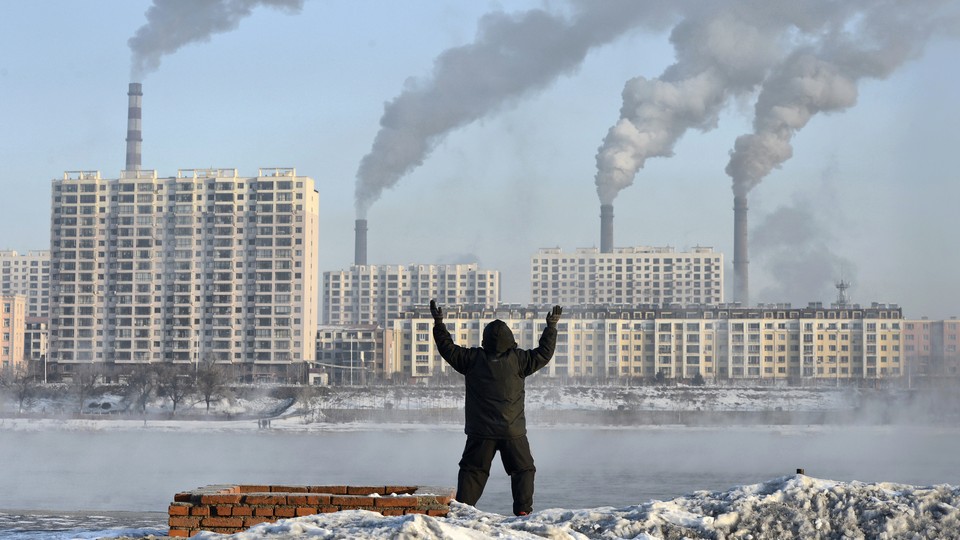


Share this:

  • Click to share on WhatsApp (Opens in new window) WhatsApp
  • More
  • Click to share on Pocket (Opens in new window) Pocket
  • Click to share on Mastodon (Opens in new window) Mastodon

THE BEADY EYE SAY’S: IT’S FAR TO LATE TO CONTROL AI.

01 Saturday Apr 2023

Posted by bobdillon33@gmail.com in 2023 the year of disconnection., Artificial Intelligence., Dehumanization., Democracy., Digital age., DIGITAL DICTATORSHIP., Disaster Capitalism., Fake News., Fourth Industrial Revolution., How to do it., Human Collective Stupidity., Human Exploration., Human values., Humanity., Inequality, Life., Modern day life., Modern day Slavery, Our Common Values., Post - truth politics., Purpose of life., Reality., Robot citizenship., Social Media Regulation., State of the world, Sustaniability, Technology v Humanity, Technology., The essence of our humanity., The Future, The Internet., The metaverse., The Obvious., The state of the World., The world to day., TRACKING TECHNOLOGY., Unanswered Questions., VALUES, VIRTUAL REALITY., What is shaping our world., WHAT IS TRUTH, What Needs to change in the World

≈ Comments Off on THE BEADY EYE SAY’S: IT’S FAR TO LATE TO CONTROL AI.

( Six minute read)

Why?

Because the change is already taking place.

Because,  There are now more cell phones in the world than people. There were less than 7% of the world on online in 2000, today over half the global population has access to the internet.

Because, technology has already radically transformed our societies and our daily lives, from smartphones to social media and healthcare. Technology touches nearly everything we do.

Because, your voice, your image, your race, your shopping habits, your health, your movement’s, your viewing habits, your voting, your financial standing, your criminal record, your interests, your decision making, down to what you are eating, not forgetting your sex life is and has being harvest for free.

All can be and are being faked.

Because, virtual interactions offers enticing financial opportunities for big businesses and digitalized Governments.

——-

Excessive use of technology can do more harm than good, and we should bear this in mind before we rush into digitizing our lives.

When all areas of human activity get rapidly digitized, it’s easy to become desensitized to the importance of innovations and advancements for the overall progress of society. Though it may be tough to predict which advancements technology would bring next, some innovations are already changing our beliefs about the world around us.

The coming generations will be living in a mixture of reality and the metaverse. Using headsets to create a  3D avatar – a representation of themselves –  to enter a virtual world connecting all sorts of digital environments. Perhaps when they go online shopping, they will be able too try on digital clothes first, and then order them to arrive in the real world.

A virtual economy of inequality.  Nowhere does the intersection of technology, enterprises and individuals hold greater opportunity than in the metaverse.

If it happens at all – will be fought among tech giants for the next decade, or maybe even longer.

———-

The Metaverse doesn’t exist – at least not yet, but there no way of predicting how people will react to it, or how it will be used.

( Everything transformed into line of code, augmenting reality by superimposing a computer-generated image on a user’s view of the real world. You have an experience while wearing another person’s body and you get to walk a mile in that person’s shoes.)

The next generation of the internet has the power to reshape the way that businesses and consumers engage, transact, socialize, work and learn together exploring the world on their own terms.

As of today, there isn’t anything that could legitimately be identified as a metaverse. The metaverse is essentially a massive, interconnected network of virtual spaces,

A better question might be:

What could become the metaverse?

Something that people would have considered magic just a few decades ago is now gaining popularity in business, gaming, and team building.

The combination of augmented, virtual and mixed reality – will play an important role.

The distinction between being offline and online will be much harder to delineate. So we either end up in a situation where it’s complete chaos and everyone’s allowed to do everything and you know, there’s racism, sexism, abuse and all that kind of stuff, or there’s incredibly tight moderation and no one’s allowed to do anything.

Wearable screens and gesture-based computing, other recent innovations, are predicted to soon substitute the usual PC and phone screens.

A red-haired woman wears the Oculus Quest 2 headset in white, holding two controllers

——-

Robots, another buzzword in today’s business world, have already replaced humans in some workplaces — robotic arms work at assembly or packing lines. Flying cars will soon address the issue of limited ground space and long traffic jams.

Clearly, technology by itself is neither good nor bad. It is only the way and extent to which we use it that matters.

It is indisputable that thanks to technology, we get a chance to live a life our predecessors could not even dream about.

But do all tech advancements bring sole good to our lives?

Or, maybe, the impact of tech innovations is quite ambiguous.

We are all at the mercy of machine learning algorithms, that are non transparent, non accountable, and non regulated.

So we have an open letter from those on High in the Tec world,  advocating that the brakes should be applied to the creation of new tech that generates falsehood’s. You dont have to be a Tech genius to know that this is not going to happen.

My advice is.

To protect oneself.

Every person should have a secret verification word in order to authenticate the caller and a symbol to be used in all texts and emails, that if not present in any communication received or sent,  marks it as False.

——–

All of which begs the question: just why is the 21st century so dystopian?

A few years ago, you might have thought: this is just a phase. It’ll pass. But it’s not. If anything, it’s getting worse, and it feels like it’s here to stay.

When I say “it”, or “dystopia,” you might wonder exactly, precisely what I mean. What I mean is very simple though. How many crises do we face? More than I can easily count. Let’s try to list them all, though we’ll run out of sanity and room before we finish, for sure. Finances? Total crisis, incomes falling around the world, debt levels soaring. Infrastructure? Mega-crisis, unless you think the infrastructure we have survives this century, let alone this decade. Social systems? Everywhere from France to Britain to America — crisis. People’s…minds? Crisis, especially in young people, depression and anxiety and suicide rates soaring. Then there are the big ones: climate change and mass extinction, not to mention politics , which has taken a notably…fascist…turn, again.

All of this is what scholars have begun to call The age of Polycrises.  And in it, the better question isn’t: “what’s in crisis?

It’s: what isn’t?

Like I said, the list above is a mere brief beginning. Migration and refugees? Another one. Peace and democracy? Yup, in crisis.

How about upward mobility? Check. Faith and confidence in institutions? Super crisis. Take a look at any element of society or the world, and chances are, it’s in crisis. How about inequality? Shocking levels of crisis.

This is why the 21st century feels so dystopian.

It’s not really a “feeling,” though that’s the way it’s often made out to be by media. It’s an empirical reality. Scholars have begun to conceptualize the 21st century as a “Polycrisis” for a reason, which is that the dystopia is real.

So when media, bigwigs, wannabe intellectuals and so forth, make all this out to be exaggeration, hyperbole, imply that you are the fainting Victorian bride in the room, because, hey, Tucker!! Everything’s Great!!…they’re completely wrong. And that needs to be said. It’s a form of denialism at this point, because…

The next part is about cause and effect. We need, as a civilization and a world, to figure out what’s causing all this, so we can begin to undo it. But if all we do is deny it…then, my friends, our gooses are well and cooked.  It’s fascism on a dying planet, in different bitter and poisonous flavours, maybe.

ITS NOW AGI. ( Artificial General Intelligence) Already it is transforming every walk of life.

AI is not a futuristic vision, but rather something that is here today and being integrated with and deployed into a variety of sectors.

There are numerous examples where AI already is making an impact on the world and augmenting human capabilities in significant ways. This includes fields such as finance, national security, health care, criminal justice, transportation, and smart cities, digital education, decision making, democracy’s.

Artificial intelligence algorithms are designed to make decisions, often using real-time data. They are unlike passive machines that are capable only of mechanical or predetermined responses. Using sensors, digital data, or remote inputs, they combine information from a variety of different sources, analyse the material instantly, and act on the insights derived from those data. With massive improvements in storage systems, processing speeds, and analytic techniques, they are capable of tremendous sophistication in analysis and decision making.

———-

These software systems “make decisions which normally require [a] human level of expertise” and help people anticipate problems or deal with issues as they come up. As such, they operate in an intentional, intelligent, and adaptive manner

AI generally is undertaken in conjunction with machine learning and data analytics. Machine learning takes data and looks for underlying trends. If it spots something that is relevant for a practical problem, software designers can take that knowledge and use it to analyse specific issues. All that is required are data that are sufficiently robust that algorithms can discern useful patterns. Data can come in the form of digital information, satellite imagery, visual information, text, or unstructured data.

AI systems have the ability to learn and adapt as they make decisions. In the transportation area, for example, semi-autonomous vehicles have tools that let drivers and vehicles know about upcoming congestion, potholes, highway construction, or other possible traffic impediments. Vehicles can take advantage of the experience of other vehicles on the road, without human involvement, and the entire corpus of their achieved “experience” is immediately and fully transferable to other similarly configured vehicles. Their advanced algorithms, sensors, and cameras incorporate experience in current operations, and use dashboards and visual displays to present information in real time so human drivers are able to make sense of ongoing traffic and vehicular conditions. And in the case of fully autonomous vehicles, advanced systems can completely control the car or truck, and make all the navigational decisions.

If we don’t want to end up as deglazed digital citizens here’s what should be done.

  • Regulate broad AI principles rather than specific algorithms,
  • Take bias complaints seriously so AI does not replicate historic injustice, unfairness, or discrimination in data or algorithms,
  • Maintain mechanisms for human oversight and control, and
  • Penalize malicious AI behaviour and promote cybersecurity.

All human comments appreciated. All like clicks and abuse chucked in the bin.

Contact: bobdillon33@gmail.com
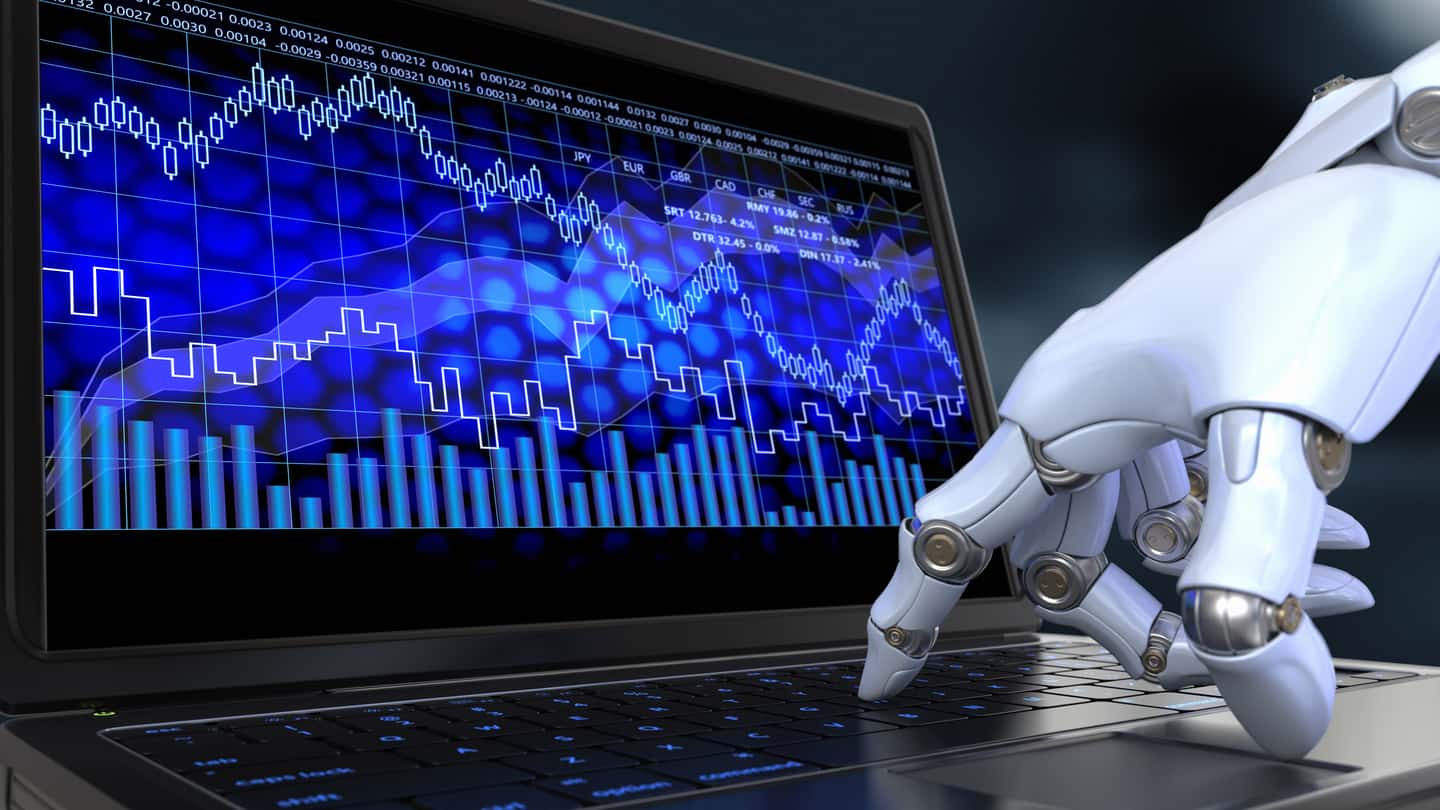
Share this:

  • Click to share on WhatsApp (Opens in new window) WhatsApp
  • More
  • Click to share on Pocket (Opens in new window) Pocket
  • Click to share on Mastodon (Opens in new window) Mastodon

THE BEADY EYE SAY’S. CIVILIZATION WITH CLIMATE CHANGE WILL BE A VERY THIN VENEER.

21 Tuesday Mar 2023

Posted by bobdillon33@gmail.com in Climate Change., CO2 emissions, Dehumanization., Environment, Green Energy., Human Collective Stupidity., Human values., Life., Reality., State of the world, Telling the truth., The common good., The Future, The Obvious., The state of the World., Truth, Unanswered Questions., What is shaping our world., WHAT IS TRUTH, What Needs to change in the World, Where's the Global Outrage.

≈ Comments Off on THE BEADY EYE SAY’S. CIVILIZATION WITH CLIMATE CHANGE WILL BE A VERY THIN VENEER.

Tags

Capitalism and Greed, Capitalism vs. the Climate., Climate change, The Future of Mankind, Visions of the future.

.( Twenty minute read) 

There are no words to describe the present state of our world.

Here below is a recent picture from Australia, it more than adequately does the job. Millions of dead fish float were seen floating on the Lower Darling in Far west NSW.

A thousand fish per square metre (caused “severe deoxygenation”)

We seen conflict raging for decades across the world, as if war is always and forever an ordinary routine, limited to developing third world nations, however wars are no longer something visited upon impoverished and remote populations. With the Coming Climate Change we ent seeing nothing yet when it comes to wars.

IT IS THE DEFINING ISSUE OF OUR TIMES, WITH PROFOUND CONSEQUENCES, FOR THE FOOD CHAIN, ENGERY  DISEASES, DWINDELING RESOURSE AND FUTURE WARS.

To date we have had summit after summit with countries promising to reduce their carbon emission at varying degrees and rates of time, with 60% not in the west returning home, PROBALY THINKING WHY SHOULD THEY BE CARRYING THE CAN WHEN ITS IS THE COUNTRIES IN THE WEST THAT CAUSED THE PROBLEM IN THE FIRST PLACE.

Vermillion Cliffs at Paria Canyon Wilderness in Arizona

We are already in a pivotal moment in deciding our planets future, which requires significant societal changes to mitigate it.

Why?

Because our current global political economy solves problems through business as usual growth, wasting precious time to effectively reduce emissions to prevent human suffering and ecological system collapse at an unimaginable scale.

Because we are unable to put the common good in front of short term profit.

Although we have been raising public awareness on climate change for years, this is not enough; the global temperature increases day by day.  Unless greenhouse gas emissions and global temperature are reduced within years, the world will face demanding consequences.

Because the fragility of life as we know it, will be shattered by Climate change.

——–

Most human beings have an almost infinite capacity for taking things for granted. What we fail to remember is that we ourselves live in the very world we do not seem to care what happens to.

We do not realise is that with each day that passes without any action, the number of natural resources available also decreases significantly.

Take the Fashion Industry’s for example.

10,000 litres of water are used to produce just one kilogram of cotton.

WITH OVER 5 BILLIONS PAIRS OF JEANS PRODUCED A YEAR  – 60 PAIRS A SECOND USING – 1000 LITERS OF WATER PER PAIR = A MIND BLOWING WASTE OF WATER. 

The average jeans collection needs 36,250 litres of water. Hoodies and sweatshirts need 23,450 litres. T-shirts and shirts require 15,000 litres, while our undergarments combined use 45,950 litres of water. The average person drinks 691 litres of water per year.

This means that our jeans collection has used 52.5 years of drinking water for one person.

The next time you put on your best threads, think about the environmental cost of your outfit — you may just be dripping wet.


——

” We are now entering in the politics of eternity and the politics of inevitability.”

How is the Earth going to survive, if the only species it has the chance to lean on, turn their back to it?

Climate is the envelope within which all other environmental conditions and processes important to human well-being must function. ANY TIPPING POINT COULD opened the floodgates.

Inevitability politicians portray history as a journey from savagery to civilization and assume this trend will continue to their desired outcome.

We have witnessed in the past 30 years the degradation of liberal democracy, the spread of Islamic terror across borders, and the resilience of the illiberal Chinese political system.

Up to now very form of society has been based, on the antagonism of oppressing and oppressed classes…This is why Capitalism combined with democracy has provided the perfect balance for governance, and as a consequence took root in most countries.

The liberal arrogance shown at the end of the 20th century paved the way for the blowback of the 21st.

Liberals failed to confront the innate inequality of the post-war international order so liberal inevitability politics sealed its own fate. By failing to address the problems of the now rapidly collapsing global order, and those who are committed to democracy and strong institutions have spent this century trying to pick up the pieces.Vladimir Putin sits angrily at desk

Where eternity politics is best on display currently is in the Russian narrative on their invasion of Ukraine.

To the Russian eternity politician, the West is simply repeating its century-old tactic to assault Russian values and Russia’s greatness, as they did in the Crimean War, Great Northern War, or any other conflict they may pick.

But the eternity politician makes the same mistake as the inevitability politicians, they remove agency from individuals and movements with personalized beliefs, motivations, and tactics.

Herein lies the problem with both the politics of inevitability and the politics of eternity:

They ignore the fact that developments in the political and social conscience of individuals and societies determine history, not the other way around.

As an entire nation of people is stripped of its agency the war in Ukraine is boiling down into a proxy war between two great powers. However, what cannot be done is to create a single coherent narrative about the historical past, the political present, and the prospective future, because of the simple fact that human beings do not have omniscience.

We cannot possibly isolate the individuals and communities that shape historical development. We cannot aggregate history, and we should not try. Revolutions did occur in China and in Russia (along with many other places), regimes committed atrocities with impunity, as everything they did was in service of the righteous and inevitable world revolution, just as the dogma told them.

The most dangerous facet of the politics of eternity and politics of inevitability is not the gross oversimplification of history they embody, but rather the societal implications they necessitate.

In the case of liberal capitalist democracies, it leads to a small group of wealthy individuals amassing such great control that it threatens the very institutions liberals revere as eternal.

For the Marxist, it leads to the justification of mass arrest, disenfranchisement , and slaughter in the name of an inevitable world revolution that will never arrive. And for the nationalist, it means a constant paranoid struggle for dominance against their neighbours, no matter the cost.

So with the arrival of the Internet /Social media / The smartphone, are we in an “intellectual coma.” left with a form of Capitalism that is no longer working.

In denying historicism, we shouldn’t deny that progress is possible, rather we should accept that progress is not pre-determined, and relies on all of us as active participants to truly make history.

Climate change with out a doubt will lead to social disruption and potentially violent conflict.

I shudder to think about this impromptu utterances.

———-

Earth on psychiatrist's couch.


It’s not that difficult to see that, says mass migration, it will provoke more conflict in the world.

Our tribalism will become more apparent over the next decade or so. Social Media reflects this with the pervasive mentality in western journalism of normalizing tragedy in parts of the world, such as the Middle East, Africa, south Asia, and Latin America, Syria, Afghanistan, Ukraine, your name it and it is perversely turned into entertainment.

Everything will have to adapt to the changing times.

As culture change, so does the way we consume it – all digital and virtual viewing merging into a digital and physical worlds with  interactions changing into an endless cycle of content discovery, co-creation and sharing, which will deepen the emotional impact of content or by- pass it completely. This extends beyond our screens and newspapers and easily bleeds and blends into politics.

Righteous outrage immediately mounted online.

Xenophobia is an efficient tool to keep people divided. Colonial powers knew this early on. By separating people based on superficial characteristics, such as skin colour, and then assigning qualities to these features (such as being civilized vs. barbarian, or intelligent vs. backward), people started to believe that they were different from each other based on these highly unscientific classifications. To eradicate racism, we must become aware that our ancestors invented the notion of race for self-fulfilling reasons rooted in unscientific assumptions.

The question becomes how we classify people as strangers. This changes over time. Therefore, the classification of people as strangers is culturally constructed, with racism being one of its many forms.

Race and racism were non-existent during most of human history. To be human has always meant one thing -to be civilised. One was not born human. One had to become human.

Racism is a recently invented classification system that triggers xenophobia.

——-

After demonizing and abusing refugees, especially Muslim and African refugees, for years., now if one does not look like a refugee the chances of being excepted anywhere is almost zero.

You can see it already in Europe.

I suspect we’re going to see more nativism, more xenophobia, and more talk of building walls on our borders. Neighbour helping neighbour is a dying falsify.

Very concept of providing refuge is not and should not be based on factors such as physical proximity or skin colour.

The idea of granting asylum, of providing someone with a life free from political persecution, must never be founded on anything but helping innocent people who need protection. That’s where the core principle of asylum is located. If not we are showing ourselves as giving up on civilization and opting for barbarism instead.

On the one hand, there is something to be said about the idea of mankind as a group defined, beyond gender, race, or class, by a characteristic shared by all humans.

The history of the idea of human nature since the 5th century BC represents the history of Western violence and domination. It bears witness to some of the deepest conflicts and divisions the earth has seen.

The West identifies capitalism, liberalism and democracy as markers of civilisation and progress against Islamic fundamentalism, theocratic rule, and what it irresponsibly calls ‘the Muslim world’.

——–

These things exist with or without climate change, but the effects of climate change — migration in particular — will exacerbate them and help fuel reactionary movements around the world.

Ideology will always be a surface-level justification for conflict — people come up with narratives to justify whatever they’re doing in the political world. But if you look deeply at the source of future conflicts, I think you’ll see a basic resource conflict at the bottom of it all.

We can say with some confidence that climate change will render huge parts of the world less hospitable to human beings, and that as a consequence, humans will have to change how and where they live.

Are we prepared?   NO!

Do we have the institutions, the structures, the systems of cooperation we need to deal with this problem?  NO!

Have we existing structure of peacekeeping that can hold up under these conditions?   NO!

Can Western democratic society, which is built on a system of limitless growth and productivity, change its destructive relationship with nature?  NO!

Modern liberal democratic societies are successful at improving the lives and freedoms of people who live in them. The problem is that these systems are based on the exploitation of nature and our environment, and we’re sort of trapped in this paradigm.

The lessons for those of who lived through the coronavirus pandemic today, it that Civilization is a very thin veneer. That your well-being as individuals really depends on the flourishing of the greater society.

Why?

Because under even slight amounts of pressure, that social contract starts to break down, and [when] people lose that veneer … that can be very dangerous. If a pandemic finds a society that is fractured, where there is distrust, where the public health system is neglected or in decay … that is going to be revealed, as it was with profiteers during the pandemic “willing to make money off human misery”

——–

Putting the pandemic into perspective as a terrible episode, but nonetheless just one episode, in a much longer story. This however  is not an option when it comes to Climate Change. Overwhelmed by the disaster, people will see what our system of Capitalism has become.

I think one of the things that is clearly exacerbating matters is when the issue is what we’d call politicized.

With technology and social media we humans – we become the stories that we tell ourselves. Our stories are never just stories. They are self-fulfilling prophecies.

That’s because we tend to use history, which is at its heart the study of surprises, as a guide to the future. This should however not stop us from aiming to better understand the future: the knowledge gained through planning is crucial to the selection of appropriate actions as future events unfold. We don’t know the answer, but we can at least ask useful questions and catalyze the conversation!

It’s important to remember that technology is often value-neutral: it’s what we do with it day in, day out that defines whether we are dealing with the “next big thing”.

Is there a way to think of the human being beyond the opposition between the ‘civilized’ and the ‘barbarian’?

Or is such an idea of mankind yet to be invented?


Watch and weep.

All human comments appreciated. All like clicks and abuse chucked in the bin.

Contact: bobdillon33@gmail.com

Share this:

  • Click to share on WhatsApp (Opens in new window) WhatsApp
  • More
  • Click to share on Pocket (Opens in new window) Pocket
  • Click to share on Mastodon (Opens in new window) Mastodon

THE BEADY EYE ASK’S. WHY IS IT SO DIFFICULT FOR HUMANS TO ACCEPT THE TRUTH. IF WE DON’T THE TRUTH WILL BE CONSTRUCT BY ALGORITHMS AND DATA.

21 Saturday Jan 2023

Posted by bobdillon33@gmail.com in 2023 the year of disconnection., Algorithms., Artificial Intelligence., Civilization., Communication., Dehumanization.

≈ Comments Off on THE BEADY EYE ASK’S. WHY IS IT SO DIFFICULT FOR HUMANS TO ACCEPT THE TRUTH. IF WE DON’T THE TRUTH WILL BE CONSTRUCT BY ALGORITHMS AND DATA.

Tags

The Future of Mankind, Visions of the future.

( FIFTEEN MINUTE READ)

Human brains are the product of blind and unguided evolution, therefore one day hit a hard limit – and may already have done so.

So a population of human brains is much smarter than any individual brain in isolation.

But does this argument really hold up?

Can our puny brains really answer all conceivable questions and understand all problems?

What made our species unique, is that we were capable of culture, in particular cumulative cultural knowledge. With the arrival of Artificial Intelligence this applies as we now have Apps that select what we hear, see and believe to be true.

Considering that human brains did not evolve to discover their own origins either, and yet somehow we managed to do just that. Perhaps the pessimists are missing something.

It is right that our brains are simply not equipped to solve certain problems, there is no point in even trying, as they will continue to baffle and bewilder us. Assuming we could even agree on a definition of “truth,” the list of reasons we can’t or don’t wish to know the truth would be quite long and well beyond the scope of this blog post.

We all know that we are destroying the planet we all live on. One of the reasons that we have difficulties with perceiving this truth, is with seeing reality, has to do with the purpose of truth.

The purpose of truth is rooted in the purpose of life itself. Truth isn’t desirous for its own sake, it serves a higher master than AI.

Our minds evolved by natural selection to solve problems that were life and death matters to our ancestors, not to commune with correctness.

Our ancestors needed to be able to discriminate friend from foe, healthy from unhealthy, and safe from dangerous (e.g., “It is good to eat this and bad to eat that.”).

Within an evolutionary framework, ignorance of what is true or real could be dangerous or deadly.

In order to survive, it was critical for our ancestors to learn to make predictions based on available information. It motivates them to move from a state of not knowing to knowing.

Thus, our ancestors didn’t need to see the world for what it really was. They just needed to know enough to help them survive. For example, the world looks flat. It looks like the sun rises in the sky and is a relatively small object. Our eyes (or our brains) deceive us though. The Earth, as well as other planets, are roughly spherical in shape. A million Earths could fit inside the Sun, and it is 93,000,000 miles away from us.

If our ancestors had no need to understand the wider cosmos in order to spread their genes, why would natural selection have given us the brainpower to do so?

At some point, human inquiry will suddenly slam into a metaphorical brick wall, after which we will be forever condemned to stare in blank incomprehension.

We will never find the true scientific theory of some aspect of reality, or alternatively, that we may well find this theory but will never truly comprehend it?

No one has a clue what this means.

To day, why is it that some cannot accept the Truth?

Truth is something we have to face now or after some time..

I think its mostly because of the fear of having to accept it, face it and deal with it, even though it may contradict what one might already believe.

A person’s belief system is built on a foundation. If the facts are outside of the foundation and cannot be supported by it, the person may not believe it, or remain very sceptical about it.

Lets take a few examples.

The past:

The Holocaust:87b84f9d 6d7f 48fe 8c90 530d980936bc

While no master list of those who perished in the Holocaust exists anywhere in the world. The shelves of the Hall of Names at Yad Vashem contain four million pages of testimony in which survivors and families have contributed information, but for those who were never known, there can be no record.

Towards the end of the war thousands of Hungarians Jews could have being saved if the the railways were bomb.

They were not because the reports of what was happing were not believed.

The Future.

An Asteroid or Meteorite heading towards earth.  Most of us would have no comprehension of such an event and would probably not believe it to be true.

The present:

This talk about man-made climate change.

People have been predicting catastrophic events for the last hundred years or so. None of them have happened, so people have a hard time believing new predictions.

—————————————–

Today, fewer and fewer people understand what is going on at the cutting edge of theoretical physics – even physicists.

The unification of quantum mechanics and relativity theory will undoubtedly be exceptionally daunting, or else scientists would have nailed it long ago already.

The same is true for our understanding of how the human brain gives rise to consciousness, meaning and intentionality.

But is there any good reason to suppose that these problems will forever remain out of reach? Or that our sense of bafflement when thinking of them will never diminish?

Who knows what other mind-extending devices we will hit upon to overcome our biological limitations?  Biology is not destiny.

As soon as you frame a question that you claim we will never be able to answer, you set in motion the very process that might well prove you wrong: you raise a topic of investigation.

With all the data that is at our disposal theses days, Truth is analysed by Algorithms and self learning software programs.

The data-driven revolution is prefaced upon the idea that data and algorithms can lead us away from biased human judgement towards pristine mathematical perfection that captures the world as it is rather than the world biased humans would like.

Truths that do not always align with our values. “Truth” told by data with the preordained outcome they desire.

Getty Images

Algorithms And Data Construct ‘Truth,’ Not Discover It.

There is no such thing as perfect data or perfect algorithms.

All datasets and the tools used to examine them represent trade-offs. Each dataset represents a constructed reality of the phenomena it is intended to measure. In turn, the algorithms used to analyse it construct yet more realities.

In short, a data scientist can arrive at any desired conclusion simply by selecting the dataset, algorithm, filters and settings to match.(filistimlyanin/iStock.com)

It is more imperative than ever, that society recognizes that data does not equate to truth.

The same dataset fed into the same algorithm can yield polar opposite results depending on the data filters and algorithmic settings chosen.

But the important thing to note about these unknown unknowns is that nothing can be said about them.

The basic premise of the data-driven revolution in bringing quantitative certainty to decision-making is a false narrative.

To presume from the outset that some unknown unknowns will always remain unknown, is not modesty – it’s arrogance.

There’s always a human strategy behind using algorithms.

The exact details of how they works are often incomprehensible. Is this what we really want?

I think we need more transparency about how algorithms work, and how owns and operated them.

The problem with this is that demanding full transparency will have an adverse effect on the self-learning capacity of the algorithm. This is something that needs to be weighed up very carefully indeed.

There are certainly causes for concern but the need for regulations as profit seeking algorithms are plundering what is left of our values.  

If not regulated, I think that we’ll also see lots more legal constructions determining what we can and cannot do with algorithms.

———————————-

Algorithms are aimed at optimizing everything.

They can save lives, make things easier and conquer chaos.

Artificial intelligence (AI) is naught but algorithms.

The material people see on social media is brought to them by algorithms.

In fact, everything people see and do on the web is a product of algorithms. Every time someone sorts a column in a spreadsheet, algorithms are at play, and most financial transactions today are accomplished by algorithms. Algorithms help gadgets respond to voice commands, recognize faces, sort photos and build and drive cars. Hacking, cyberattacks and cryptographic code-breaking exploit algorithms.

They are mostly invisible aids, augmenting human lives in increasingly incredible ways. However, sometimes the application of algorithms created with good intentions leads to unintended consequences.

We have already turned our world over to machine learning and algorithms.

Algorithms will continue to spread everywhere becoming  the new arbiters of human decision-making.

The question now is, how to better understand and manage what we have done?

The main negative changes come down to a simple but now quite difficult question:

How are we thinking and what does it mean to think through algorithms to mediate our world?

How can we see, and fully understand the implications of, the algorithms programmed into everyday actions and decisions?

The rub is this: Whose intelligence is it, anyway?

By expanding collection and analysis of data and the resulting application of this information, a layer of intelligence or thinking manipulation is added to processes and objects that previously did not have that layer.

So prediction possibilities follow us around like a pet.

The result: As information tools and predictive dynamics are more widely adopted, our lives will be increasingly affected by their inherent conclusions and the narratives they spawn.

Our algorithms are now redefining what we think, how we think and what we know. We need to ask them to think about their thinking – to look out for pitfalls and inherent biases before those are baked in and harder to remove.

Advances in algorithms are allowing technology corporations and governments to gather, store, sort and analyse massive data sets.

This is creating a flawed, logic-driven society and that as the process evolves – that is, as algorithms begin to write the algorithms – humans may get left out of the loop, letting “the robots decide.”

Dehumanization has now spread to our, our economic systems, our  health care and social services.

We simply can’t capture every data element that represents the vastness of a person and that person’s needs, wants, hopes, desires.

Who is collecting what data points?

Do the human beings the data points reflect even know or did they just agree to the terms of service because they had no real choice?

Who is making money from the data?

How is anyone to know how his/her data is being massaged and for what purposes to justify what ends?

There is no transparency, and oversight is a farce. It’s all hidden from view.

I will always remain convinced the data will be used to enrich and/or protect others and not the individual. It’s the basic nature of the economic system in which we live.

It will take us some time to develop the wisdom and the ethics to understand and direct this power. In the meantime, we honestly don’t know how well or safely it is being applied.

The first and most important step is to develop better social awareness of who, how, and where it is being applied.”

If we use machine learning models rigorously, they will make things better; if we use them to paper over injustice with the veneer of machine empiricism, it will be worse.

The danger in increased reliance on algorithms is that is that the decision-making process becomes oracular: opaque yet unarguable.

If we are to protect the TRUTH. Giving more control to the user seems highly advisable.

When you remove the humanity from a system where people are included, they become victims.

Advances in quantum computing and the rapid evolution of AI and AI agents embedded in systems and devices in the Internet of Things will lead to hyper-stalking, influencing and shaping of voters, and hyper-personalized ads, and will create new ways to misrepresent reality and perpetuate falsehoods to the point of no return.

All human comments appreciated. All like clicks and abuse chucked in the bin.

Contact: bobdillon33@gmail.com

Share this:

  • Click to share on WhatsApp (Opens in new window) WhatsApp
  • More
  • Click to share on Pocket (Opens in new window) Pocket
  • Click to share on Mastodon (Opens in new window) Mastodon
← Older posts
Newer posts →

All comments and contributions much appreciated

  • THE BEADY EYE SAYS TRUST IS DISAPPEARING THANKS TO OUR INABILITY TO RELATE TO EACH OTHER. December 19, 2025
  • THE BEADY EYE SAYS. THE WORLD NEEDS PEOPLE GOVERNMENT NOT MONEY GOVERNMENTS. December 18, 2025
  • THE BEADY EYE ASKS WHAT ARE WE THE SAME GOING TO DO TO STOP THE WORLD BEING FUCK UP FOR PROFIT BY RIPOFF MERCHANT. December 17, 2025
  • THE BEADY EYE CHRISTMAS GREETING. December 16, 2025
  • THE BEADY EYE SAYS. TO THE NEXT GENERATION TO LIVE A LIFE WORTH WHILE YOU MUST CREATE MEMORIES. December 16, 2025

Archives

  • December 2025
  • November 2025
  • October 2025
  • September 2025
  • August 2025
  • July 2025
  • June 2025
  • May 2025
  • February 2025
  • January 2025
  • December 2024
  • November 2024
  • October 2024
  • September 2024
  • August 2024
  • July 2024
  • June 2024
  • May 2024
  • April 2024
  • March 2024
  • February 2024
  • January 2024
  • December 2023
  • October 2023
  • September 2023
  • August 2023
  • July 2023
  • June 2023
  • May 2023
  • April 2023
  • March 2023
  • February 2023
  • January 2023
  • December 2022
  • November 2022
  • October 2022
  • September 2022
  • August 2022
  • July 2022
  • June 2022
  • May 2022
  • April 2022
  • March 2022
  • February 2022
  • January 2022
  • December 2021
  • November 2021
  • October 2021
  • September 2021
  • August 2021
  • July 2021
  • June 2021
  • May 2021
  • April 2021
  • March 2021
  • February 2021
  • January 2021
  • December 2020
  • November 2020
  • October 2020
  • September 2020
  • August 2020
  • July 2020
  • June 2020
  • May 2020
  • April 2020
  • March 2020
  • February 2020
  • January 2020
  • December 2019
  • November 2019
  • October 2019
  • September 2019
  • August 2019
  • July 2019
  • June 2019
  • May 2019
  • April 2019
  • March 2019
  • February 2019
  • January 2019
  • December 2018
  • November 2018
  • October 2018
  • September 2018
  • August 2018
  • July 2018
  • June 2018
  • May 2018
  • April 2018
  • March 2018
  • February 2018
  • January 2018
  • December 2017
  • November 2017
  • October 2017
  • September 2017
  • August 2017
  • July 2017
  • June 2017
  • May 2017
  • April 2017
  • March 2017
  • February 2017
  • January 2017
  • December 2016
  • November 2016
  • October 2016
  • September 2016
  • August 2016
  • July 2016
  • June 2016
  • May 2016
  • April 2016
  • March 2016
  • February 2016
  • January 2016
  • December 2015
  • November 2015
  • October 2015
  • September 2015
  • August 2015
  • July 2015
  • June 2015
  • May 2015
  • April 2015
  • March 2015
  • February 2015
  • January 2015
  • December 2014
  • November 2014
  • October 2014
  • September 2014
  • August 2014
  • July 2014
  • June 2014
  • May 2014
  • April 2014
  • March 2014
  • February 2014
  • January 2014
  • December 2013
  • November 2013
  • October 2013

Talk to me.

Jason Lawrence's avatarJason Lawrence on THE BEADY EYE ASK’S: WIT…
benmadigan's avatarbenmadigan on THE BEADY EYE ASK’S: WHA…
bobdillon33@gmail.com's avatarbobdillon33@gmail.co… on THE BEADY EYE SAYS: WELCOME TO…
Ernest Harben's avatarOG on THE BEADY EYE SAYS: WELCOME TO…
benmadigan's avatarbenmadigan on THE BEADY EYE SAY’S. ONC…

7/7

Moulin de Labarde 46300
Gourdon Lot France
0565416842
Before 6pm.

My Blog; THE BEADY EYE.

My Blog; THE BEADY EYE.
bobdillon33@gmail.com

bobdillon33@gmail.com

Free Thinker.

View Full Profile →

Follow bobdillon33blog on WordPress.com

Blog Stats

  • 94,157 hits

Blogs I Follow

  • unnecessary news from earth
  • The Invictus Soul
  • WordPress.com News
  • WestDeltaGirl's Blog
  • The PPJ Gazette
Follow bobdillon33blog on WordPress.com

The Beady Eye.

The Beady Eye.
Follow bobdillon33blog on WordPress.com

Blog at WordPress.com.

unnecessary news from earth

WITH MIGO

The Invictus Soul

The only thing worse than being 'blind' is having a Sight but no Vision

WordPress.com News

The latest news on WordPress.com and the WordPress community.

WestDeltaGirl's Blog

Sharing vegetarian and vegan recipes and food ideas

The PPJ Gazette

PPJ Gazette copyright ©

Privacy & Cookies: This site uses cookies. By continuing to use this website, you agree to their use.
To find out more, including how to control cookies, see here: Cookie Policy
  • Subscribe Subscribed
    • bobdillon33blog
    • Join 223 other subscribers
    • Already have a WordPress.com account? Log in now.
    • bobdillon33blog
    • Subscribe Subscribed
    • Sign up
    • Log in
    • Report this content
    • View site in Reader
    • Manage subscriptions
    • Collapse this bar