• About
  • THE BEADY EYE SAY’S : THE EUROPEAN UNION SHOULD THANK ENGLAND FOR ITS IN OR OUT REFERENDUM.

bobdillon33blog

~ Free Thinker.

bobdillon33blog

Category Archives: 2023 the year of disconnection.

THE BEADY EYE OPENED LETTER TO VLADIMIR PUTIN PRESIDENT OF RUSSIA.

12 Sunday Oct 2025

Posted by bobdillon33@gmail.com in #whatif.com, 2025 Another Year of change, A solution to Climate change., American Cultures, China, Civilization., Climate Change., Community., Cry for help., CULTURES COLLIDE, Dehumanization., DIFFERENCE BETWEEN GENERATIONS, Digital age., Disaster Capitalism., Disconnection., Donald John Trump, Donald Trump Presidency., Donald Trump., Earth, Environment, European Union., Evolution, FEAR, History., Honesty., How to do it., HUMAN ABILITIES., Human Collective Stupidity., Human Exploration., HUMAN INTELLIGENCE, Human values., Humanity., INTELLIGENCE., International solidarity., Life, Modern day life., Money in Politics., Mr Putin., Natural World Disasters, Open Letter., Our Common Values., PAIN AND SUFFERING IN LIFE, Political Trust, President of the USA., Purpose of life., Reality., Recession v Depression, Russia / Ukraine ., RUSSIA/ UKRAINE/ US/ NATO/ EU, RUSSIA/ UKRAINE/ US/ NATO/ EU., State of the world, Survival., Sustaniability, Technology v Humanity, Telling the truth., The art of a handshake., The common good., The cost of war., The essence of our humanity., The Future, The new year 2025, The Obvious., The Russia Cultures, The state of the World., The Ukraine., THE UNITED NATIONS, The USA., The world to day., THE WORLD YOU LIVE IN., The year 2025, THIS IS THE STATE OF THE WORLD.  , Trade Agreements., Trump the president, Truth, Truthfulness., Ukraine/ Russia., Unanswered Questions., United Nations, VALUES, War., Wars, We can leave a legacy worthwhile., What is shaping our world., WHAT IS TRUTH, What needs to change in European Union., What Needs to change in the World, Where's the Global Outrage., World Leaders, World Organisations., World Politics, World View.

≈ Comments Off on THE BEADY EYE OPENED LETTER TO VLADIMIR PUTIN PRESIDENT OF RUSSIA.

Tags

Mr Putin.

(TREE MINUTES READ)

Dear Sir,

Many a man has walked on the blood soaking ground of EUROPE and the MIDDLE EAST, even a man claiming to be the son of GOD walked on this part of the Earth.

With over 8 billions of us there is no realistic way we can all live on one planet without war, but we can recognise when to stop them.

As you know the history of the twenty and the early twenty first centuries is the story how courage we all were ( a lot of it Russia) in defeating barbarism.

You also know as well as I do that the peace that spares evil like NAZISM is merely the prelude to the next war.

To day peace is won by the brave but continues to be squandered by the cautious.

The world doesn’t need false appeasements called peace accords, agreements, treaties, iron domes, trade deals, all of which can be broken whenever anyone dispute there contents.,

To have real consequences peace must be built on trust, and trust can only be obtained by intermingling with each other.

I am writing to you in the belief that ever one has the right to live their life in security and peace, alongside their fellow humans on Earth.

I therefore wish to put this proposal to you as a honourable way to end the war that your current in.

What I am suggesting is the following.

The EUROPEAN UNION offers RUSSIA full membership in exchange for peace.

Russia would keep its glorious history and the UKRAINE its wish to be a member of the EU and not NATO.

If you were to do this, it would go down as a historical moment in the evolution of man, putting more than TRUMP nose out of joint because he as a convicted felon did not win the Nobel PRIZE for peace.

This would create a trading block to be able to tell MR TRUMP where to stuff his tariffs and enhance the block relations with a peaceful CHINA the world’s growing power, which you saw marching by your feet not so long ago.

Over a million young Russia have already given their lives in a war, which is for what really when you look at the world to come.

You know that it going to require a massive combination of world powers to fight climate change which won’t give two hoots whether you’re RUSSIA or UKRAINE OR WHATEVER.

The Climate has no preference or treaties to abide to.

Its a win win for everyone.

All human comments appreciated. All likes and abuse chucked in the bin.

Contact: bobdillon33@gmail.com

Share this:

  • Click to share on WhatsApp (Opens in new window) WhatsApp
  • More
  • Click to share on Pocket (Opens in new window) Pocket
  • Click to share on Mastodon (Opens in new window) Mastodon

THE BEAD EYE SAY’S HERE IS THE REAL REASON WHY DONALD TRUMP IS PRESIDENT OF THE USA.

10 Friday Oct 2025

Posted by bobdillon33@gmail.com in #whatif.com, 'Refugee' and 'Migrant' , 2022: The year we need to change., 2025 Another Year of change, A Constitution for the Earth., A solution to Climate change., American Cultures, American political system., China, Civilization., Climate Change., Climate refugees., Collective stupidity., Communication., Community., Cry for help., Dehumanization., Democracy., DIFFERENCE BETWEEN GENERATIONS, Disaster Capitalism., Donald John Trump, Donald Trump Presidency., Donald Trump., European Union., Evolution, Extermination., Fresh Water., Green Energy., Honesty., How to do it., Human Collective Stupidity., Human Exploration., HUMAN INTELLIGENCE, Humanity., Inequality, INTELLIGENCE., Life, MAN MADE CHEMICALS., MISINFORMATION., Modern day life., Modern day Slavery, Monetization of nature, Natural World Disasters, Our Common Values., PAIN AND SUFFERING IN LIFE, Paris Climate Change Delegates., President of the USA., Purchasing Power., Purpose of life., Reality., Renewable Energy., Sovereign wealth fund, State of the world, Stimulus package., Survival., Sustaniability, Technology v Humanity, Telling the truth., The common good., The current state of our oceans., The essence of our humanity., THE FUTURE OF OUR OCEANS/SEAS, The new year 2025, The Obvious., The pursuit of profit., The state of the World., THE UNITED NATIONS, The USA., The world to day., The year 2025, THIS IS THE STATE OF THE WORLD.  , Time, Trump the president, Truthfulness., Unanswered Questions., VALUES, We can leave a legacy worthwhile., What is shaping our world., WHAT IS TRUTH, What needs to change in European Union., What Needs to change in the World, Where's the Global Outrage., World Leaders, World Organisations., World View.

≈ Comments Off on THE BEAD EYE SAY’S HERE IS THE REAL REASON WHY DONALD TRUMP IS PRESIDENT OF THE USA.

Tags

Capitalism, Capitalism and Greed, Climate Change Solution's., Community cohesion, Current world problems, Distribution of wealth, Extinction, Future Society., global climate change, Global warming, Greed, Humanity, Inequility, Life, Migrants/Refugees., Natural disaster, Out of Date Democracy, politics, Sustainability, Technology versus Humanity, The cost of Climate Change., The Future of Mankind, THE UNITED NATIONS, Truth, USA, Visions of the future., War, World aid commission

( Five minute read)

There’s no secret.

The Presidency of the USA has always been bought.

Donald Dump is no exception.

In the eurozone there are 5 million people on social assistance.

In the USA there are over 1000 million on social welfare @ 1862 $ a month

Most of it is spent on medical care.

If Mr Dump wants an American war this is where to start one in his own backyard.

This man is a fascism and should be awarded a tin laurel leaf sprayed gold to join his others two Fascism compatriots, and we all know who they are.

There is a lot to be said to give one big and powerful a kick up the arse. Noble prize winner not on my watch. This man is a danger not just to himself but to all peace abiding people of the world.

It takes an enormous amount of courage when there’s no one out there to call this man the Al Capone of the founders of the USA, DONALD DUCKING.

How would have dreamed that we would have a convicted felon running the USA.

What next?

Then truth comes out in the bone.

Even some states rely on assistance.

China has over 82 payments system., with mandatory state unemployment payments.

However it is estimated that there are over 200 to 300 million people homeless in china.

It cost around 600$ a month for a single person to live in china.

Health care is heavily subsidised.

Here are some of the major issues facing the Chinese. Just like the rest of the world Climate change is the problem of the future .

Unless we pour billions into Lessing the effect of climate change . We will have a china on the move and that will be worse than a nuclear boom.

All human comments appreciated. All like clicks and abuse chucked in the bin.

Contact: bobdillon33@gmail,com

Share this:

  • Click to share on WhatsApp (Opens in new window) WhatsApp
  • More
  • Click to share on Pocket (Opens in new window) Pocket
  • Click to share on Mastodon (Opens in new window) Mastodon

THE BEADY EYE ASKS: WHY DO THE US SUPPORT ISRAEL?

11 Thursday Jan 2024

Posted by bobdillon33@gmail.com in American Cultures, CULTURES COLLIDE, Dehumanization., Donald Trump Presidency., Extermination., Uncategorized

≈ Comments Off on THE BEADY EYE ASKS: WHY DO THE US SUPPORT ISRAEL?

Tags

gaza, Genocide, History., Israel, palestine

( Five minute read)

We have the spectral of Mr Antony J. Blinken the Secretary of State for the USA (the largest and once the most powerful military country in the world) running around the middle east unable to call for a cease fire in the current war Israel/Palestine.

Why?

Because, President Joe Biden’s promise for the US to “stand with Israel” continues a special relationship that dates back to 1948, when President Harry Truman became the first world leader to recognize the Jewish state, moments after its creation.

Even before 7 October, support for Israel among American Jews – who constitute the world’s second largest Jewish population after Israel – was shifting. At this point, more Americans, but not a majority, think Israel’s response has been appropriate.

The idea that of all nations in the world, Israel alone doesn’t have the right to respond in self-defense, of course is wrong, but as the saying goes two wrongs don’t make a right.

The question is why does the US support a country that is committing a genocide.

I believe this is because americans learned very few details about the role of racist violence in American history. They are not always familiar with the often coded language and imagery of antisemitism.

The answer lies in its history.

The USA is a country founded on immigration, so it has historical roots of support for Israel.The Israeli and U.S. flags are projected against the wall of the old city of Jerusalem during the visit of President Biden.

In our current age of unapologetic racism and resurgent authoritarianism, for dismantlers of democracy, there is no better exemplar than a Genocide.

The mechanics of Hitler’s rise are a particularly example.

Hitler had no blueprint for the Holocaust.

Nazis took inspiration from American racism of the late nineteenth and early twentieth centuries.

He was a student of history and admired America’s rapid industrialization and growth, which he attributed to a vast, diverse continental empire and agricultural base. So Hitler’s plan was for Germany to emulate the United States.

What possessed a society of seemingly, sane, educated and cultured people to implement a policy of barbarism and depraved violence upon the Jews of Europe during World War II?

Hitler’s understanding of how the American republic came to industrialize and prosper through expulsion of indigenous people and, especially, through the institution of slavery, which is now understood to have been central to America’s economic development.

First by seizing large tracts of productive land by pushing the indigenous populations out. If those natives could not be pushed out, they were to be killed. And then slave labor was to be employed to produce the food necessary to support industrialization and militarization, just as the United States had done.

When Hitler praised American restrictions on naturalization, he had in mind the Immigration Act of 1924, which imposed national quotas and barred most Asian people altogether.

Commodification and suffering and forced labor of African-Americans is what made the United States powerful and rich.

Nazi ideology also embraced virulent European anti-semitism.

The kind of genocidal hatred that erupted in Germany had been seen before and has been seen since.

Why?

First, the very application of the term “genocide” is applied too slowly and cautiously when atrocities happen. Second, the international community fails to act effectively against genocides. Third, too few perpetrators are actually convicted of their crimes.

Seventy years after the UN Convention, genocide remains ever present in our global society. Now consider that only three have been legally recognised – and led to trials – under the convention:

The world watched in apparent indifference. Rwanda in 1994, Bosnia (and the 1995 Srebrenica massacre), and Cambodia under the 1975-9 Pol Pot regime. The widespread killing and displacement of Yazidi by IS and Rohingya in Myanmar and Darfur, are ongoing.

Add the Indonesian genocide of 1965-66 and the Guatemalan genocide of 1981-83, the Kurds in 1988-91 in Iraq, and by West Pakistan forces against Bangladeshis in 1971, the Tamils in Sri Lanka between 1983 and 2009, not to mention the Australia’s “stolen generations”, the Irish Famine that might fall under the UN definition is frighteningly long.

The US, for example, famously never officially recognised the 1915 Armenian genocide as one.

Only by stripping away its national regalia and comprehending its essential human form do we have any hope of vanquishing genocide.

———————-

The “tyranny of hindsight”—the lordly perspective that reduces a complex, contingent sequence of events to an irreversible progression.

So Hitler’s model was in fact the U.S.A.

It goes without saying that he was an extreme narcissist lacking in empathy. a loner.

He had a Jewish grandfather; that he had encephalitis; that he contracted syphilis from a Jewish prostitute; that he blamed a Jewish doctor for his mother’s death; that he was missing a testicle;

Hundreds of thousands of Americans died fighting Nazi Germany. Still, bigotry toward Jews persisted, even toward Holocaust survivors.

These chilling points of contact are little more than footnotes to the history of Nazism.

But they tell us rather more about modern America.

Since Trump entered politics, he has repeatedly been compared to Hitler, not least by neo-Nazis.

What is worth pondering is how a demagogue of Hitler’s malign skill might more effectively exploit flaws in American democracy. He would certainly have at his disposal craven right-wing politicians who are worthy heirs to Hindenburg, He would also have millions of citizens who acquiesce in inconceivably potent networks of corporate surveillance and control.


The above however is not the only reason as such, it is only fair to my American readers to point out.

We certainly live in a VUVA world; Volatile, Uncertain, Complex and Ambiguous.

Undoubtedly our world is becoming increasingly digital and there is a blurring between the digital and non-digital world.

The excesses of social media and the impact that this has on people’s psychological wellbeing needs to be addressed.  (I think that psychology; understanding of people, their behaviour and how the mind functions, will be increasingly important.)

Desensitization is an unsettling phenomenon which stems from individuals refusing or being unable to react to or express emotion towards a certain situation. Through the click of a button on our device, we distance ourselves from the serious happenings of society.

Ours is a forgetful age. In an era of instant news, amnesia is baked in. And amnesia has consequences.

While it is vital to be aware of current events and their impacts, like the war in Ukraine and the current Israeli/Palestinian war, both are purposeless if we aren’t able to understand these events and empathize with the people involved.

We spend much of our lives on devices that are designed to need replacing every three years, accessing social media platforms that amplify the sense of a continuous present and an absent past. Everything feels unexpected, as if it is coming out of nowhere. Developments appear unconnected to the past, and indeed to each other. In the absence of a plausible historical narrative, people retreat into tribalism or conspiracy theories (perhaps both) to help them make sense of the pace of change.

The vast majority of people in human history have not shared our views of work, family, government, religion, sex, identity, or morality, no matter how universal or self-evident we may think they are.

They expose vulnerabilities in the national consciousness that:

All men are equally entitled to the free exercise of religion, according to the dictates of conscience.

With one in every ten people in Gava now killed the future of further any peace efforts with Arab nations could now be in doubt, as Israel continues to bomb the Gaza Strip in its effort to punish Hamas.

——————–

Finally:

The spread of white-supremacist propaganda on the Internet. YouTube is a superb vehicle for the circulation of such content, its algorithms guiding users toward ever more inflammatory material.

Given its billion or so users, YouTube may be one of the most powerful radicalizing instruments of the 21st century.

The internet is a breeding ground for loners who have a “vague notion of being reserved for something else. Suicide bomber, Mass killer, may attempt to turn metaphor into reality.

He might be out there now, cloaked by the blue light of a computer screen, ready, waiting.

For me, this digital and data analytically world emphasises the important of social connections and networks. There will be a need for collaboration and for different ways of working.

Part of this will be reflected in the changing power dynamics. Organisations may operate in different ways. This includes social change, climate, and the balance that we want in our lives, simply because the repetition can be overwhelming. When things occur again and again, we become too-familiar with the situation, thus not treating it as important, unable to put intense situations into perspective.

Which inclines us to fawn over the future, and either patronize the past or ignore it altogether.

To sum up, as Albert Einstein said ‘learn from yesterday, live for today, hope for tomorrow.

The important thing is not to stop questioning. A person who never made a mistake, never tried anything new.

The question is, are we happy to live in a world that deliberately creates destitution for some?

Our technology does not help us here.

Now as ever, great-power politics will drive events, and international rivalries will be decided by the relative capacities of the competitors.

Memory, in contrast, should generate humility:

The acknowledgment of our past, with all its strengths and weaknesses, and the recognition that the reason we have the moral convictions we do, and the material advantages we do, is because of our ancestors.

As James Baldwin relentlessly pointed out, we are our history.

All human comments appreciated. All like clicks and abuse chucked in the bin.

Contact: bobdillon33@gmail.com


Share this:

  • Click to share on WhatsApp (Opens in new window) WhatsApp
  • More
  • Click to share on Pocket (Opens in new window) Pocket
  • Click to share on Mastodon (Opens in new window) Mastodon

THE BEADY EYE ASK’S: THESE DAYS WHAT CAN WE BELIEVE IN ?

21 Thursday Dec 2023

Posted by bobdillon33@gmail.com in #whatif.com, 2023 the year of disconnection., A Constitution for the Earth., Advertising, Advertising industry, Algorithms., Artificial Intelligence.,  Attention economy, Capitalism, CAPITALISM IS INCOMPATIBLE IN THE FIGHT AGAINST CLIMATE CHANGE., Carbon Emissions., Civilization., Climate Change., Collective stupidity., Consciousness., Cry for help., Dehumanization., Democracy, Digital age., DIGITAL DICTATORSHIP., Digital Friendship., Disconnection., Discrimination., Earth, Emergency powers., Enegery, Environment, Face Recognition., Facebook, Fake News., Fourth Industrial Revolution., Freedom of Speech, Freedom of the Press., Google, Google Knowledge., GPS-Tracking., Green Energy., Happy Christmas from the Beady eye., Honesty., How to do it., Human Collective Stupidity., HUMAN INTELLIGENCE, Human values., Humanity., Imagination., Inequality, INTELLIGENCE., IS DATA DESTORYING THE WORLD?, James Webb Telescope, Life., MISINFORMATION., Modern Day Communication., Modern Day Democracy., Modern day life., Modern Day Slavery., Monetization of nature, Our Common Values., PAIN AND SUFFERING IN LIFE, Political lying., Political Trust, Politics., Populism., Post - truth politics., Profiteering., Purpose of life., Real life experience's, Reality., Renewable Energy., Robot citizenship., Social Media, Social Media Regulation., Society, State of the world, Sustaniability, Technology, Technology v Humanity, Telling the truth., The common good., The essence of our humanity., The Future, The Internet., THE NEW NORM., The Obvious., The pursuit of profit., The state of the World., The world to day., THE WORLD YOU LIVE IN., THIS IS THE STATE OF THE WORLD.  , TRACKING TECHNOLOGY., Truth, Truthfulness., Twitter, Unanswered Questions., Universal values., VALUES, We can leave a legacy worthwhile., What is shaping our world., WHAT IS TRUTH, Where's the Global Outrage., World Leaders, World Organisations., World Politics

≈ Comments Off on THE BEADY EYE ASK’S: THESE DAYS WHAT CAN WE BELIEVE IN ?

Tags

bible, god, philosophy, Religion., Science

( Fifteen minute read)

The last post this year, have a peaceful Christmas.

This post is a follow up to the post, ( What is life, What does it mean to be alive). It is also an attempt to argue for as many preposterous positions as possible in the shortest space of time possible.

That there are no options other than accepting that life is objectively meaningful or not meaningful at all.

Science requires proof, religious belief requires faith.

So let’s get God and Gods out of the way.

.Could quantum physics help explain a God that could be in two places at once? (Credit: Nasa)
If you believe in God, then the idea of God being bound by the laws of physics is nonsense, because God can do everything, even travel faster than light. If you don’t believe in God, then the question is equally nonsensical, because there isn’t a God and nothing can travel faster than light.

Perhaps the question is really one for agnostics, who don’t know whether there is a God.

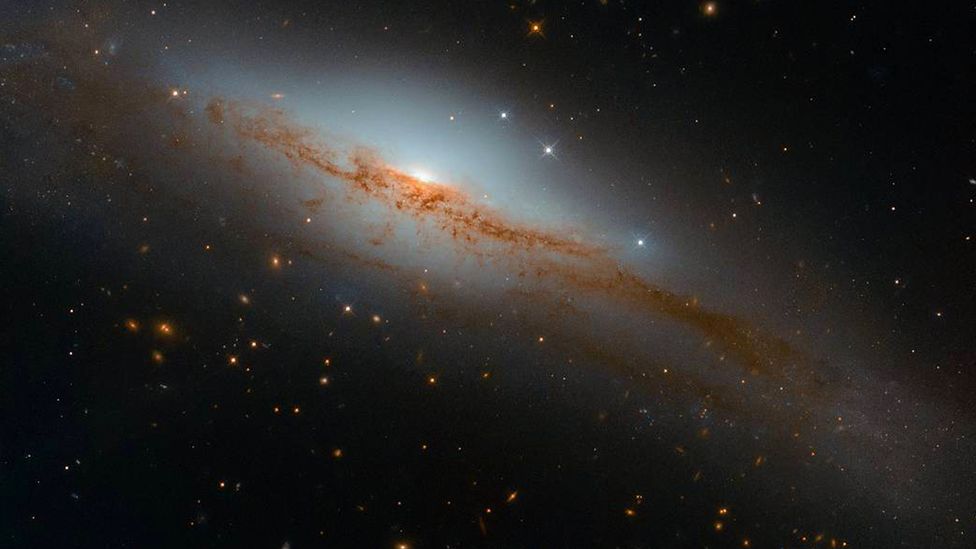
The idea that God might be “bound” by the laws of physics – which also govern chemistry and biology might not be so far stretched that the James Webb telescope might discover him or her. Whether it does or does not, if it did discovered life on another planet and the human race realizes that its long loneliness in time and space may be over — the possibility we’re no longer alone in the universe is where scientific empiricism and religious faith intersect, with NO true answer?.

Could any answer help us prove whether or not God exists, not on your nanny.

If God wasn’t able to break the laws of physics, she or he arguably wouldn’t be as powerful as you’d expect a supreme being to be. But if he or she could, why haven’t we seen any evidence of the laws of physics ever being broken in the Universe?

If there is a God who created the entire universe and ALL of its laws of physics, does God follow God’s own laws? Or can God supersede his own laws, such as travelling faster than the speed of light and thus being able to be in two different places at the same time?

Let’s consider whether God can be in more than one place at the same time.

(According to quantum mechanics, particles are by definition in a mix of different states until you actually measure them.)

There is something faster than the speed of light after all: Quantum information.

This doesn’t prove or disprove God, but it can help us think of God in physical terms – maybe as a shower of entangled particles, transferring quantum information back and forth, and so occupying many places at the same time? Even many universes at the same time?

But is it true?

A few years ago, a group of physicists posited that particles called tachyons travelled above light speed. Fortunately, their existence as real particles is deemed highly unlikely. If they did exist, they would have an imaginary mass and the fabric of space and time would become distorted – leading to violations of causality (and possibly a headache for God).

(This in itself does not say anything at all about God. It merely reinforces the knowledge that light travels very fast indeed.)

We can calculate that light has travelled roughly 1.3 x 10 x 23 (1.3 times 10 to the power 23) km in the 13.8 billion years of the Universe’s existence. Or rather, the observable Universe’s existence.

The Universe is expanding at a rate of approximately 70km/s per Mpc (1 Mpc = 1 Megaparsec or roughly 30 billion billion kilometres), so current estimates suggest that the distance to the edge of the universe is 46 billion light years. As time goes on, the volume of space increases, and light has to travel for longer to reach us.

We cannot observe or see across the entirety of the Universe that has grown since the Big Bang because insufficient time has passed for light from the first fractions of a second to reach us. Some argue that we therefore cannot be sure whether the laws of physics could be broken in other cosmic regions – perhaps they are just local, accidental laws. And that leads us on to something even bigger than the Universe.

But if inflation could happen once, why not many times?

We know from experiments that quantum fluctuations can give rise to pairs of particles suddenly coming into existence, only to disappear moments later. And if such fluctuations can produce particles, why not entire atoms or universes? It’s been suggested that, during the period of chaotic inflation, not everything was happening at the same rate – quantum fluctuations in the expansion could have produced bubbles that blew up to become universes in their own right.

How come all the physical laws and parameters in the universe happen to have the values that allowed stars, planets and ultimately life to develop?

We shouldn’t be surprised to see biofriendly physical laws – they after all produced us, so what else would we see? Some theists, however, argue it points to the existence of a God creating favourable conditions.

But God isn’t a valid scientific explanation.

We can’t disprove the idea that a God may have created the multiverse.

No matter what is believable or not, things can appear from nowhere and disappear to nowhere.

If you find this hard to swallow, what follows will make you choke.

First there is panpsychism, the idea that “consciousness pervades the universe and is a fundamental feature of it.

Even particles are never compelled to do anything, but are rather disposed, from their own nature, to respond rationally to their experience. That the universe is conscious and is acting towards a purpose of realising the full potential of its consciousness.

The radicalism of this “teleological cosmopsychism” is made clear by its implication that “during the first split second of time, the universe fine-tuned itself in order to allow for the emergence of life billions of years in the future”. To do this, “the universe must in some sense have been aware of this future possibility”.

That the universe itself has a built-in purpose, the disappointingly vague goal of which is “rational matter achieving a higher realisation of its nature.

The laws of physics are just right for conscious life to evolve that it can’t have been an accident.

It is hard to see why the universe’s purpose should give our lives one. Indeed, to believe one plays an infinitesimally small part in the unfolding of a cosmic master plan makes each human life look insignificant.

The basic question about our place in the Universe is one that may be answered by scientific investigations.

What are the next steps to finding life elsewhere?

Today’s telescopes can look at many stars and tell if they have one or more orbiting planets. Even more, they can determine if the planets are the right distance away from the star to have liquid water, the key ingredient to life as we know it.

NEXT:How to Choose Which Social Media Platforms to Use

We live in a time of political fury and hardening cultural divides. But if there is one thing on which virtually everyone is agreed, it is that the news and information we receive is biased. Much of the outrage that floods social media, occasionally leaking into opinion columns and broadcast interviews, is not simply a reaction to events themselves, but to the way in which they are reported and framed that are the problem.

This mentality now with the help of technological advances in communication spans the entire political spectrum and pervades societies around the world twisting our basic understanding of reality to our own ends.

This is not as simple as distrust.

The appearance of digital platforms, smartphones and the ubiquitous surveillance have enable to usher in a new public mood that is instinctively suspicious of anyone claiming to describe reality in a fair and objective fashion. Which will end in a Trumpian refusal to accept any mainstream or official account of the world with people become increasingly dependent on their own experiences and their own beliefs about how the world really works.

The crisis of democracy and of truth are one and the same:

Individuals are increasingly suspicious of the “official” stories they are being told, and expect to witness things for themselves.

How exactly do we distinguish this critical mentality from that of the conspiracy theorist, who is convinced that they alone have seen through the official version of events? Or to turn the question around, how might it be possible to recognise the most flagrant cases of bias in the behaviour of reporters and experts, but nevertheless to accept that what they say is often a reasonable depiction of the world?

It is tempting to blame the internet, populists or foreign trolls for flooding our otherwise rational society with lies.

But this underestimates the scale of the technological and philosophical transformations that are under way. The single biggest change in our public sphere is that we now have an unimaginable excess of news and content, where once we had scarcity. The explosion of information available to us is making it harder, not easier, to achieve consensus on truth.

As the quantity of information increases, the need to pick out bite-size pieces of content rises accordingly.

In this radically sceptical age, questions of where to look, what to focus on and who to trust are ones that we increasingly seek to answer for ourselves, without the help of intermediaries. This is a liberation of sorts, but it is also at the heart of our deteriorating confidence in public institutions.

There is now a self-sustaining information ecosystem becoming a serious public health problem across the world, aided by the online circulation of conspiracy theories and pseudo-science. However the panic surrounding echo chambers and so-called filter bubbles is largely groundless.

What, then, has to changed?

The key thing is that the elites of government and the media have lost their monopoly over the provision of information, but retain their prominence in the public eye.

And digital platforms now provide a public space to identify and rake over the flaws, biases and falsehoods of mainstream institutions.

The result is an increasingly sceptical citizenry, each seeking to manage their media diet, checking up on individual journalists in order to resist the pernicious influence of the establishment.

The problem we face is not, then, that certain people are oblivious to the “mainstream media”, or are victims of fake news, but that we are all seeking to see through the veneer of facts and information provided to us by public institutions.

Facts and official reports are no longer the end of the story.

The truth is now threatened by a radically different system, which is transforming the nature of empirical evidence and memory. One term for this is “big data”, which highlights the exponential growth in the quantity of data that societies create, thanks to digital technologies.

The reason there is so much data today is that more and more of our social lives are mediated digitally. Internet browsers, smartphones, social media platforms, smart cards and every other smart interface record every move we make. Whether or not we are conscious of it, we are constantly leaving traces of our activities, no matter how trivial.

But it is not the escalating quantity of data that constitutes the radical change.

Something altogether new has occurred that distinguishes today’s society from previous epochs.

In the past, recording devices were principally trained upon events that were already acknowledged as important.

Things no longer need to be judged “important” to be captured.

Consciously, we photograph events and record experiences regardless of their importance. Unconsciously, we leave a trace of our behaviour every time we swipe a smart card, address Amazon’s Alexa or touch our phone.

For the first time in human history, recording now happens by default, and the question of significance is addressed separately.

This shift has prompted an unrealistic set of expectations regarding possibilities for human knowledge.

When everything is being recorded, our knowledge of the world no longer needs to be mediated by professionals, experts, institutions and theories. Data can simply “speak for itself”. This is a fantasy of a truth unpolluted by any deliberate human intervention – the ultimate in scientific objectivity.

From this perspective, every controversy can in principle be settled thanks to the vast trove of data – CCTV, records of digital activity and so on – now available to us. Reality in its totality is being recorded, and reporters and officials look dismally compromised by comparison.

It is often a single image that seems to capture the truth of an event, only now there are cameras everywhere.

No matter how many times it is disproven, the notion that “the camera doesn’t lie” has a peculiar hold over our imaginations. In a society of blanket CCTV and smartphones, there are more cameras than people, and the torrent of data adds to the sense that the truth is somewhere amid the deluge, ignored by mainstream accounts.

The central demand of this newly sceptical public is “so show me”.

The rise of blanket surveillance technologies has paradoxical effects, raising expectations for objective knowledge to unrealistic levels, and then provoking fury when those in the public eye do not meet them.

Surely, in this age of mass data capture, the truth will become undeniable.

On the other hand, as the quantity of data becomes overwhelming – greater than human intelligence can comprehend – our ability to agree on the nature of reality seems to be declining. Once everything is, in principle, recordable, disputes heat up regarding what counts as significant in the first place.

What we are discovering is that, once the limitations on data capture are removed, there are escalating opportunities for conflict over the nature of reality.

Remember AI does not exist in a vacuum, its employment can and is discriminating against communities, powered by vast amounts of energy,  producing CO2 emissions.

Lastly the Advertising Industry.The impact of COVID-19 on the advertising industry - Passionate In ...

These day it seems that it has free rain to claim anything.

Like them or loathe them, advertisements are everywhere and they’re worsening not just the climate crisis, and ecological damage by promoting sustainability in consumption and inequality. Presenting a fake, idealised world that papers over an often brutal reality.

But advertising in one sense is even more dangerous, because it is so pervasive, sophisticated in its techniques and harder to see through. When hundreds of millions of people have desires for more and more stuff and for more and more services and experiences, that really adds up and puts a strain on the Earth.

The toll of disasters propelled by climate change in 2023 can be tallied with numbers — thousands of people dead, millions of others who lost jobs, homes and hope, and tens of billions of dollars sheared off economies. But numbers can’t reflect the way climate change is experienced — the intensity, the insecurity and the inequality that people on Earth are now living.

In every place that climate change makes its mark, inequality is made worse.

How are we going to protect the truth:

It goes without saying that spiritual beliefs will protect themselves. Lies, propaganda and fake news however is the challenge for our age.

Working out who to trust and who not to believe has been a facet of human life since our ancestors began living in complex societies. Politics has always bred those who will mislead to get ahead.

With news sources splintering and falsehoods spreading widely online, can anything be done?

Check Google.

Welcome to the world of “alternative facts”. It is a bewildering maze of claim and counterclaim, where hoaxes spread with frightening speed on social media and spark angry backlashes from people who take what they read at face value.

It is an environment where the mainstream media is accused of peddling “fake news” by the most powerful man in the world.

Voters are seemingly misled by the very politicians they elected and even scientific research – long considered a reliable basis for decisions – is dismissed as having little value.

Without a common starting point – a set of facts that people with otherwise different viewpoints can agree on – it will be hard to address any of the problems that the world now faces. The threat posed by the spread of misinformation should not be underestimated.

Some warn that “fake news” threatens the democratic process itself.

A survey conducted by the Pew Research Center towards the end of last year found that 64% of American adults said made-up news stories were causing confusion about the basic facts of current issues and events.

How we control the dissemination of things that seem to be untrue. We need a new way to decide what is trustworthy.

Take Wikipedia itself – which can be edited by anyone but uses teams of volunteer editors to weed out inaccuracies – is far from perfect.

These platforms and their like are simply in it for the money.

Last year, links to websites masquerading as reputable sources started appearing on social media sites like Facebook.

Stories about the Pope endorsing Donald Trump’s candidacy and Hillary Clinton being indicted for crimes related to her email scandal were shared widely despite being completely made up. The ability to share them widely on social media means a slice of the advertising revenue that comes from clicks.

Truth is no longer dictated by authorities, but is networked by peers. For every fact there is a counterfact. All those counterfacts and facts look identical online, which is confusing to most people.

Information spreads around the world in seconds, with the potential to reach billions of people. But it can also be dismissed with a flick of the finger. What we choose to engage with is self-reinforcing and we get shown more of the same. It results in an exaggerated “echo chamber” effect.

The challenge here is how to burst these bubbles.

One approach that has been tried is to challenge facts and claims when they appear on social media. Organisations like Full Fact, for example, look at persistent claims made by politicians or in the media, and try to correct them. (The BBC also has its own fact-checking unit, called Reality Check.)

This approach doesn’t work on social media because the audiences were largely disjointed.

Even when a correction reached a lot of people and a rumour reached a lot of people, they were usually not the same people. The problem is, corrections do not spread very well. This lack of overlap is a specific challenge when it comes to political issues.

On Facebook political bodies can put something out, pay for advertising, put it in front of millions of people, yet it is hard for those not being targeted to know they have done that. They can target people based on how old they are, where they live, what skin colour they have, what gender they are.

We shouldn’t think of social media as just peer-to-peer communication – it is also the most powerful advertising platform there has ever been. We have never had a time when it has been so easy to advertise to millions of people and not have the other millions of us notice.

Twitter and Facebook both insist they have strict rules on what can be advertised and particularly on political advertising. Regardless, the use of social media adverts in politics can have a major impact.

We need some transparency about who is using social media advertising when they are in election campaigns and referendum campaigns. We need watchdogs that will go around and say, ‘Hang on, this doesn’t stack up’ and ask for the record to be corrected.

We need Platforms to ensure that people have read content before sharing it to develop standards.

Google says it is working on ways to improve its algorithms so they take accuracy into account when displaying search results. “Judging which pages on the web best answer a query is a challenging problem and we don’t always get it right,”

The challenge is going to be writing tools that can check specific types of claims.

Built a fact-checker app that could sit in a browser and use Watson’s language skills to scan the page and give a percentage likelihood of whether it was true.

This idea of helping break through the isolated information bubbles that many of us now live in, comes up again and again.

By presenting people with accurate facts it should be possible to at least get a debate going.

There is a large proportion of the population living in what we would regard as an alternative reality.  By suggesting things to people that are outside their comfort zone but not so far outside they would never look at it you can keep people from self-radicalising in these bubbles.

There are understandable fears about powerful internet companies filtering what people see.

We should think about adding layers of credibility to sources. We need to tag and structure quality content in effective ways.

But what if people don’t agree with official sources of information at all?

This is a problem that governments around the world are facing as the public views what they tell them with increasing scepticism. There is an unwillingness to bend one’s mind around facts that don’t agree with one’s own viewpoint.

The first stage in that is crowdsourcing facts.  So before you have a debate, you come up with the commonly accepted facts that people can debate from.

Technology may help to solve this grand challenge of our age, but it is time for a little more self-awareness too.

In the end the world needs a new Independent Organisation to examine all technology against human values. Future war will be fought on Face recognition.

To certify and hold the original programs of all technology.

Have I been trained by robbery its manter when it comes to algorithms.

The whole goal of the transition is not to allow a handful of Westerners to peacefully go through life in a Tesla, a world in flames; it is to allow humanity – and the rest of biodiversity – to live decently.

All human comments appreciated. All like clicks and abuse chucked in the bin.

Contact: bobdillon33@gmail.com

Share this:

  • Click to share on WhatsApp (Opens in new window) WhatsApp
  • More
  • Click to share on Pocket (Opens in new window) Pocket
  • Click to share on Mastodon (Opens in new window) Mastodon

THE BEADY EYE SAY’S WE ARE TURNING INTO FOOLS WHEN IT COMES TO CLIMATE CHANGE, NOT TO MENTION TECHNOLOGY AND GENETIC ENGINEERING

29 Tuesday Aug 2023

Posted by bobdillon33@gmail.com in 2023 the year of disconnection., Climate Change., HUMAN ABILITIES., Human Collective Stupidity., Human Exploration., HUMAN INTELLIGENCE, Human values., Humanity., IS DATA DESTORYING THE WORLD?, Technologically Enabled Genetics., Technology, Technology v Humanity, Telling the truth., The common good., The essence of our humanity., THE NEW NORM., The pursuit of profit., The state of the World., THE WORLD YOU LIVE IN., THIS IS THE STATE OF THE WORLD.  

≈ Comments Off on THE BEADY EYE SAY’S WE ARE TURNING INTO FOOLS WHEN IT COMES TO CLIMATE CHANGE, NOT TO MENTION TECHNOLOGY AND GENETIC ENGINEERING

Tags

Algorithms., Capitalism and Greed, Capitalism vs. the Climate., Climate change, Distribution of wealth, Inequility, Technology, The Future of Mankind, Visions of the future.

( Five minute read) 

Like me today, many of us are being constantly bombarded by facts, figures and narratives that tell us our days on earth are numbered, that it’s our fault and that it’s also largely out of our control.

Our problem is that capitalism is designed to squeeze every last cent out of this planet until there is nothing left. We can either fool ourselves about that until it kills us, or we can change it.

Like many horror stories, this one features a main character full of futile determination to maintain a sense of normalcy even as the ominous signs of doom become ever more impossible to ignore.

We can chuckle knowing that the monster is going to come for our designated protectors.

We stop chuckling knowing that it’s coming for all of us next.

Homo sapiens rose above the lesser animals thanks to our ability to wield logic and reason, yet we have somehow gotten ourselves to a place where the knowledge of what is driving all these wildfires and floods is not enough to enable us to do anything meaningful to stop it.

As overwhelming and omnipresent as the climate crisis is, it is not the core issue.

The core issue is capitalism.

Capitalism’s unfettered pursuit of economic growth is what caused climate change, and capitalism’s inability to reckon with externalities – the economic term for a cost that falls onto third parties – is what is preventing us from solving climate change.

It is easy to imagine that a real live existential threat to our way of life would prompt any society to assume war footing and marshal everything it has to fight for survival. Unfortunately, this response only takes hold in actual war situations, where the threat is “other people that we can shoot and kill in glorious fashion”.

When the threat comes not from enemy people, but from our own nature, we find it much harder to rise to the occasion.

Where is the glory in recognizing the folly of our own greed and profligacy? Leaders are not elected on such things. We want leaders who will give us more, leading us ever onwards, upwards and into the grave.

The G20 is a perfect model of our collective failure to build institutions capable of coping with deep, long-term, existential problems that cannot be solved by building more weapons.

On the one hand, the head of the United Nations says that there is no way for the world to meet its 1.5C warming goal without the leadership of the G20 that claims to be bailing out humanity’s sinking ship with one hand while contributing billons of tons of carbon to the atmosphere by subsidising in the past five years $3.3tn to fossil fuel production and consumption.

—————–

It is not good to be too pessimistic on climate change, because we must maintain the belief that we can win this battle if we are to have any hope at all. That said, it sure does seem like we’re screwed.

We’re being led to believe that the society we’ve built has to ‘collapse’ if we’re to save the world.

We’re presented with a binary choice — save the planet and live a miserable existence, or accept that some populations (plant, animal, human) will have to act as collateral damage to ensure a quality of life that vaguely resembles our current one.

This whole thing of it being ‘a trade-off’ or ‘tough choices’ is based on our current lifestyle being awesome and the future being a kind of worthy ascetic hardship.

The message is that all the things you rely on to keep us safe are no longer part of a viable future fit for everyone. The sense is that when these things disappear, life will be unbearable. That we’re going to turn on each other

.It’s almost like our lives are being engineered this way.

Cuts to benefits, dismantling of free healthcare, with Government openly allowing the majority of wealth to be passed on to those who are already most wealthy.

—————-

We haven’t got a hope of addressing complex problems or creating a future fit for everyone.

Given the challenge we’re facing — one that’s complex, systemic and long-term, if we carry on acting from this place we’re going to really screw it up.

Climate change and the destruction of our ecosystems seem to be the result of persistent, rampant over-consumption. This is because our modern society is a consumer society.

It’s based on one simple idea: that consuming will meet your needs.

Others things we think are harmless serve to numb us: Netflix boxsets, smartphones, profit seeking algorithms, masquerade as the answer, but they are really just part of the same system — insurance policies, private healthcare and the multi-billion dollar ‘wellness’ industry.

New industries pop up to give us what we want without the guilt — sustainably sourced, vegan, fair-trade — but even aside from the minefield that is working out whether it’s really ‘sustainable’, it’s still built on the same system. A system built on a disconnection from your needs, that can never leave you satisfied with who you are and the world around you.

None of these things can or will ever meet our unmet needs for love, connection or trust in the world, so we continue consuming, throwing more things into the bottomless pit inside.

We seem to be more unhappy than ever before. More physically and mentally ill. More divided than ever. More stressed about our impact on the world.

Social media is a form of disconnection from ourselves that leads to the disconnection from each other that in turn leads to disconnection from our environment — which is the only thing that has enabled us to create the extractive, destructive system we have in place.

Given all this, ‘conscious consumerism’ and ‘green new deals’ will never offer the solution we need, if they are built on the fundamental idea of citizen is as consumer, working to earn, earning to spend, spending to consume etc.

I think the fundamental answer lies instead in rebuilding our lives around connection.

Recognise that if you would love other people to live in a certain way or see the world from a different perspective, this is only going to happen if others sense you’re not judging them to be wrong.

People are slowly but steadily finding that their real needs are met more consistently in self-awareness and relationship than they are in quick fix consumption.

We can’t all join a five-day protest and we’re not all ready to sit in a circle and talk about our feelings but that’s not what’s being asked of us.

Indeed, climate change itself is the ultimate negative externality: fossil-fuel companies and assorted polluting corporations and their investors get all the benefits, and the rest of the world pays the price.

Now the entire globe finds itself trapped in the gruesome logic of capitalism, where it is perfectly rational for the rich to continue doing something that is destroying the earth, as long as the profits they reap will allow them to insulate themselves from the consequences.

The path we are on, still, is not one that leads to a happy ending.

Rather, it is one that leads to the last billionaire standing on dry land blasting off in his private rocket as the rest of us drown in rising seas.

We talk about tipping points when it comes to the climate, but the real tipping point has long passed.

Its called inequality.

A strict definition of capitalism is a society where capital is privately owned, and workers are paid wages by private firms. Essentially it is a society with minimal government intervention and resources are distributed according to the outcome of free markets.

A looser definition of capitalism is a situation where business is left to the free market, but the government intervene in many areas of the economy like business regulation, health care and education.

In practice, using this definition of capitalism – most modern economies are essentially capitalist because it is the free market that dominates in the production and distribution of scarce resources.

Therefore, you can say the potential of reward makes inequality an essential ingredient of capitalism.

Therefore, capitalists with access to private property can ‘exploit’ their monopoly power to make a much higher profit than other people in society. Therefore those who inherit capital can enjoy high income even without any effort.

To redress some of the inequalities of capitalist society.

Regulate monopoly power, provide free education, so everyone has access to education and equality of opportunity.

  • Capitalism is unconcerned about equity. It is argued that inequality is essential to encourage innovation and economic development.
  • Socialism is concerned with redistributing resources from the rich to the poor. This is to ensure everyone has both equal opportunities and in some forms of socialism – equal outcomes.

Aspects of Democratic socialism

  • Advocates nationalisation of key industries (often the natural monopolies, like electricity, water)
  • Prices set by the market mechanism, except public goods, such as health and education.
  • Provision of a welfare state to provide income redistribution
  • Support for trade unions in wage bargaining
  • Use of minimum wages and universal income to raise low-income wages
  • Progressive tax and provision of public services. For example, marginal income tax rates of 70%. Tax on wealth.

There is no reason that Democratic socialism can not operate in a Capital society that is disappearing into the world of Profit seeking algorithms. 

For anyone still unsure that big, important things are now broken, several new titles paint a convincing portrait of grossly unsustainable inequality, corrupt political processes, and a looming crisis—much of it stemming from a financial system that for 40 years or so has prioritized short-term profit over all else and systematically removed any checks on its own worst impulses in pursuit of that goal. 

The single most important step is re-empowering governments, to start putting out the inferno.

All Human comments appreciated. All like clicks and abuse chucked in the bin.

Contact: bobdilllon33@gmail.com   

Share this:

  • Click to share on WhatsApp (Opens in new window) WhatsApp
  • More
  • Click to share on Pocket (Opens in new window) Pocket
  • Click to share on Mastodon (Opens in new window) Mastodon

THE BEADY EYE SAY’S: WE ARE STILL A LONG WAY FROM ANY WORLD UNDERSTANDING OF THE CONSQUENCES OF CLIMATE CHANGE.

23 Wednesday Aug 2023

Posted by bobdillon33@gmail.com in 2023 the year of disconnection., A Constitution for the Earth., Carbon Emissions., Climate Change.

≈ Comments Off on THE BEADY EYE SAY’S: WE ARE STILL A LONG WAY FROM ANY WORLD UNDERSTANDING OF THE CONSQUENCES OF CLIMATE CHANGE.

Tags

Capitalism vs. the Climate., Climate change, The Future of Mankind, Visions of the future.

(Twelve minute read)

Understanding the many challenges facing our world isn’t easy, but surely it should be easy to understand that we all survive only because of ecosystems that provide us with life.

The picture is bleak.

  Climate change increases the risk of hot, dry weather that is likely to fuel wildfires.

The chief reason is that the world has no history of dealing with such a difficult problem, nor the institutions to do so. The harm done by climate change is not visited on the people, or the generations, that have the best chance of acting against it. Those who suffer most harm are and will be predominantly poor and in poor countries.

The rising global temperatures are already fuelling devastating extreme weather events around the world, with escalating impacts on economies and societies and fulling future wars.

What many don’t realise about the warming of the present Earth, is that once we pass a certain threshold, physics takes over, where multiple earth systems march past the point of no return.

We don’t understand the non-linear effects.

There’s are referred to tipping points, best described as domino pieces waiting to topple in only one direction to the end.

Tipping points we thought might happen well into the future are already underway.

It has been clear for decades that the Earth’s climate is changing.

Although positive things have started to happen, even if all countries commit to achieve net zero emissions by the middle of this century its too late to reverse.

Global climate change is not a future problem. Some changes (such as droughts, wildfires, and extreme rainfall) are happening faster than scientists previously assessed.

While natural drivers will modulate human-caused changes, especially at regional levels and in the near term, they will have little effect on long-term global warming, reversal is beyond reach.

We really are out of time,

The scale of recent changes across the climate system are unprecedented over many centuries to many thousands of years, and will not be reverse by any technology.

We cannot wait for decades to act, we have to start acting.

————

Already in this decade.

Concentrations of the major greenhouse gases – carbon dioxide (CO2), methane (CH4) and nitrous oxide (N2 O) continued to increase. The difference between where emissions are heading and where science indicate they should be in 2030 is as large as ever.

The lifetime of carbon dioxide is so long, one year anomaly in emissions doesn’t change the big picture.

The truth is before our very eyes, in the prism of social media videos of burning wild fires, flooding, immigration, food shortages, you name it and it is happing.

It’s hard to understand that there will be a fresh water crisis when some countries are flooding.

It’s hard to appreciate the Arctic ice is disappearing when the winter is filled with stories of extreme weather events.

We don’t know what’s going to happen to the Antarctic glacier, where we have the biggest mass of ice worldwide and in the worst case, we could see up to two meters of sea level rise by the end of this century if the melting of the Antarctic glacier happens in a speedier manner.

Tree planting isn’t enough.

Its hard to believe that 80% of all insect have died – no bees no pollination – no food.

Its hard to believe that our oceans alone are absorbing the heat equivalent of five Hiroshima atomic bombs dropping into the water every second.

Is hard to believe that we are in the process of unmoored ourselves from our past, as if we have transplanted ourselves onto another planet.

Its hard to believe that there will be  ( Severe heatwave historically expected once a decade) heatwaves will happening every other year at 2C.

There is no huge chasm after a 2c rise, we are tumbling down a painful, worsening rocky slope rather than about to suddenly hit a sheer cliff edge – nearly one in 10 vertebrate animals and almost one in five plants will lose half of their habitat.

Its beyond belief that by most standards the world’s governments are currently failing to avert a grim fate with the fingerprint of climate change on recent extreme weather is quite clear to one and all.

The evidence is irrefutable.

We do know that the global average sea level will likely rise, putting the homes of 200 million below sea level in 70 years.

Around 216 million people, mostly from developing countries, will be forced to flee these impacts by 2050 unless radical action is taken. The frequency of heavy precipitation events, will start to climb, nearly doubling the historical norm once it heats up by 2C. Globally, extreme crop drought events that previously occurred once a decade on average will more than double in their frequency at 2C of temperature rise.

A 16-year-old child swims in the flooded area of Aberao village in Kiribati. The Pacific island is one of the countries worst affected by sea-level rise.

Extreme sea level events that previously occurred once in 100 years could happen every year by the end of this century.

Changes to the ocean, including warming, more frequent marine heatwaves, ocean acidification, and reduced oxygen levels, affect both ocean ecosystems and the people that rely on them, and they will continue throughout at least the rest of this century.

It won’t be just about temperature.

The consequences will devastate economies, infrastructure and political stability.

			A fire rages in Brazil's rainforest, near Maranhao at night.

For example, climate change is intensifying the natural production of water – the water cycle. This brings more intense rainfall and associated flooding, as well as more intense drought in many regions.

The alarm bells are deafening.

The past 20 years there has been a 53·7% increase in heat-related mortality in people older than 65 years.

A chilling number of Earth’s other denizens, including 40 percent of all amphibians known to science (about 3,200 species) is under threat. Climate change, pollution, deforestation, overfishing, development, and invasive species are putting biodiversity in peril.

At least 155 million people, 2.3 times as many as live in the UK, were pushed into acute food insecurity in 2020 due to extreme weather,

In 2019, atmospheric CO2 concentrations were higher than at any time in at least 2 million years, and concentrations of methane and nitrous oxide were higher than at any time in the last 800,000 years.

The loss of the West Antarctic ice sheet and the Amazon rainforest, or extensive thawing of permafrost, as well as other key components of the climate system, are considered “tipping points” because they can cross critical thresholds, and then abruptly and irreversibly change.

Every fractional rise in temperature increases the risk of triggering one of 30 major tipping points. With just 1 degree C of current warming, nine of these are now thought to be beginning to tip. The Earth’s climate and ecological systems are deeply intertwined. A substantial change in one will affect others. Different tipping points are beginning to slowly crash into each other.

Arctic warming, along with melting of Greenland’s ice sheet, is driving fresh water into the North Atlantic, which could have contributed to a recent 15 percent slowdown of the Atlantic Meridional Overturning Circulation (AMOC) in the Atlantic Ocean. Those ocean currents drive heat from the tropics and are responsible for the relative warmth of the Northern Hemisphere.

We shouldn’t be discounting the legacy we’re leaving to future generations, no matter how far they are in the future.”

It is unclear when most of the tipping points will kick in, and the risk of those cascading into an irreversible global tipping point with tremendous impacts on human civilisation warrants a declaration of a planetary climate emergency.

No amount of economic cost-benefit analysis is going to help us now that we face an existential threat to civilization.

The risks posed by climate tipping points are not part of any economic analysis of climate policies, there there’s also a social tipping points, a broad societal awareness tipping point that will cause a stampede of migration.

Its hard to believe that we are just going to sit back and just watch.

It can be hard not to be despondent, so blinkered.

No wonder public opinion is not sending stronger signals to politicians that more urgent action is required.

How is it that we can have such strong emotional attachments when looking at nature, claim to love and appreciate it, yet be so indifferent to the destructive impact our way of living has on it?

We tend to be motivated by relatively short-term concerns. This may partly explain why we are so slow to accept what is happening. However if scientific knowledge about nature (which is what the natural sciences seek to produce) relies so heavily on producing facts which have been purified of their social, political, cultural and historical baggage, then when this baggage suddenly becomes visible, it causes anxiety and disbelief.

What if permafrost melting or flooding cuts off critical roads used by supply chains? What if storms knock out the world’s leading computer chip factory? What happens once half of the world is exposed to disease-carrying mosquitos?

The changes required are now so vast that many countries, companies, governments struggle to even articulate them.

Reaching a net-zero world will entail “wholesale transformation” in both infrastructure and how things are done. If business leaders truly grasped the seriousness of this crisis, they would immediately pivot their entire business models and resources toward scaling climate solutions full stop.

No matter what we do now, it’s too late to avoid climate change.

Perhaps most concerning of all is the fact that even if emissions of all greenhouse gases ceased entirely tomorrow, any warming would still persist for many centuries.

Countries will still remain umbilically connected to fossil fuels, subsidizing oil, coal and gas to the tune of around $11m every single minute. By the end of this year the world will have burned through 86% of the carbon “budget” that would allow us just a coin flip’s chance of staying below 1.5C.

Realistically what can be done ?

We know that every decision – every oil drilling lease, every acre of the Amazon rainforest torched for livestock pasture, every new gas or electrical -guzzling SUV that rolls onto the road – will decide how far we tumble down the hill.

To achieve anything requires a massive change in the Capitalist systems, away from GDP to Sustainability and Greed energy, benefiting not just the earth but all that live on it surface.

This will require the creation of a perpetual fund of trillions ( see previous posts) allowing every person to invest in a green future, closing the gap in inequality.

Such a fund could be distributed by non-repayable grants by the United nations under new UN blockchain plate form, with all country governments setting their own blockchain plate forms.

Each block is connected to the ones before and after it. Each additional block strengthens the verification of the previous block and hence the entire blockchain. This renders the blockchain tamper-evident, delivering the key strength of immutability. The result is newfound trust and transparency, because members share a single view of the truth, you can see all details of a transaction end to end.

Place a ban on all advertising that does not prompt sustainability.

Close all stock exchanges trading in Co2 as a product.

Cutting emissions tomorrow is better than the day after.

In the end the truth is that we live in a world of I am all right jack.

Not until our hair is burning and our tongues are hanging out, with our smartphone melted to our ears will we eventfully blame ourselves.

All human comments appreciated. All like clicks and abuse chucked in the bin.

Contact: bobdillon33@gmail.com

Share this:

  • Click to share on WhatsApp (Opens in new window) WhatsApp
  • More
  • Click to share on Pocket (Opens in new window) Pocket
  • Click to share on Mastodon (Opens in new window) Mastodon

THE BEADY EYE SAY’S. THE FIRST OF OUR CURRENT CHALLENGES WITH CLIMATE CHANGE IS TO ADMIT THAT WE WILL NOT STOP IT.

10 Thursday Aug 2023

Posted by bobdillon33@gmail.com in 2023 the year of disconnection., Climate Change.

≈ Comments Off on THE BEADY EYE SAY’S. THE FIRST OF OUR CURRENT CHALLENGES WITH CLIMATE CHANGE IS TO ADMIT THAT WE WILL NOT STOP IT.

Tags

Capitalism and Greed, Capitalism vs. the Climate., Climate change, The Future of Mankind, Visions of the future.

( Fourteen minute read)

Why is this so ?

We lack the collective will to address climate change because of the way our brains have evolved over the last two million years..

As individuals, we know what we can do about climate change. But addressing the issue also requires collective action on a scale that exceeds our evolutionary capacities. The larger the group, the more challenging it gets.

We know that climate change is happening, but cognitive biases that ensure our initial survival make it difficult to address, complex, long-term challenges that now threaten our existence, like climate change.

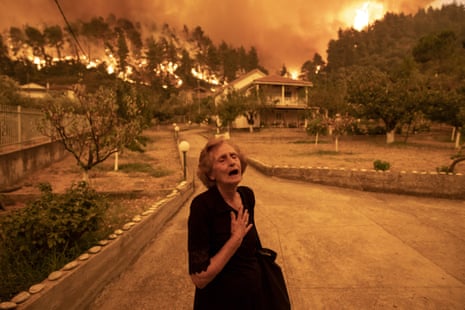
They impede our ability to take action, now hamstringing our ability to respond to what could be the largest crisis humanity has ever created or had to face. An older lady clasps her chest and shouts while fires rage in the background behind a large house in Greece

Prevention is no longer an option.

The natural systems that regulate climate on the planet are already changing, and ecosystems that support us are shifting under our feet, undermining many of the ecological foundations of our ability to provide for basic needs.

Clearly, one of the key challenges is going to be how the burden is distributed, and how we respond to the vulnerability of people to climatic shifts and adjustments – from drought and floods, to health issues ranging from disease to heatstroke, to food security, to environmental migrations.

And, of course, our actions now – given the delay between emissions and impact – will harm people in the future. So our responsibilities of justice now extend over vast stretches of geography and time.

We will be a climate-challenged society for the foreseeable future, immersed in a long age of adaptation.

But that information hasn’t been enough to change our behaviours on a scale great enough to stop climate change. And a big part of the reason is our own evolution.

The same behaviours that once helped us survive are, today, working against us. We imagine we live in a rational, enlightened society. In such a place, experts would identify issues to be addressed, and goals to be reached, in response to our creation of climate change. Scientific knowledge would be respected and accepted (after peer review, of course), and policy would be fashioned in response.

Ignoring climate change in the short term has benefits both to individuals and to organizations.

Climate change is a nonlinear problem.

When a function increases slowly at first and then accelerates, though, that causes problems, because people extrapolate that function linearly,  without obvious consequences until suddenly there is a significant problem.

Many effects of climate change are distant from most people.

People conceptualize things that are psychologically distant from them (in time, space, or social distance) more abstractly than things that are psychologically close. When there are weather disasters that are probably a reflection of climate change (like wildfires or extreme storms), they tend to happen far away from where most people live.

As a result, most people are not forced to grapple with the specifics of climate change, but rather can treat it as an abstract concept.

Abstract concepts simply don’t motivate people to act as forcefully as specific ones do.

Only when you and me and others experience this future threat in the present (rather than something that is still a generation away) will it have enough motivational force to get us to engage in actions that take more effort today.

Consider what you’d be willing to forgo today knowing that in one generation there will be serious, catastrophic consequences because of inaction.

Ultimately, we have to be willing to be explicit about the values we are acting on.

If we choose to enrich our lives in the present at the cost of the quality of life of future generations, that is a choice of values that we rarely like to make explicitly. We have to be willing to look in the mirror and say that we are willing to live our lives selfishly, without regard to the lives of our children and grandchildren.

And if we are not willing to own that selfish value, then we have to make a change in our behaviour today.

WHEN THE LAST INSECT DISSAPEARS SO DOES OUR FOOD CHAIN.

Why People Aren’t Motivated to Address Climate Change.

Even more challenging, however, is the reality that our emissions undermine the environments of vulnerable people elsewhere:

Unfortunately, climate change involves a combination of factors that make it hard for people to get motivated.

In the case of climate change, there are sceptics who argue that it is not certain that the influence of human activity on climate will have the dire consequences that some experts have projected.

People are much better with obvious threats like that nasty dog at the door than they are with threats that escalate quickly and nonlinearly.

Now we have entered a new era in the human relationship with climate change, with a variety of broad and different challenges.

So how might we begin to address the challenges of climate justice?

We may be dealing with an issue with a level of complexity that human beings are simply not capable of addressing. Climate change will certainly challenge our adaptive abilities more than anything else the species has faced.

It will demand multi-scale, widely-distributed, networked, flexible, anticipatory, and adaptive responses on the part of governments from the global down to the local.

Climate change will require a radical re-thinking of the very nature of governance, and the adoption of new forms

We are capable of changing our currently destructive relationship with the rest of nature.

Key here is the reality that, in bringing climate change upon ourselves, we have demonstrated that the very construction of how we immerse ourselves in the natural world, and how we provide for our basic needs, is simply not working.

In fact, our relationship with nature is undermining the lives we’ve constructed.

Our continued refusal to recognise ourselves as animals embedded in ecosystems has resulted in the undermining of those systems that sustain us.

That’s our key problem, our central challenge.

Many groups and movements are rethinking and restructuring the ways we interact with the natural world as we provide for our basic needs – around sustainable energy, local food security, and even crafting and making. These new materialist movements offer alternative ways of relating to the nonhuman systems that sustain us, and illustrate the possibility of redesigning and restructuring our everyday lives based in our immersion in natural systems. After 30 years of failing in our response to climate change, we may yet demonstrate that human beings still have the capacity to adapt.

The good news is that our biological evolution hasn’t just hindered us from addressing the challenge of climate change. It’s also equipped us with capacities to overcome them. How we communicate about climate change influences how we respond.

All human comments much appreciated. All like clicks and abuse chucked in the bin.

Contact: bobdillon33@gmail.com

Share this:

  • Click to share on WhatsApp (Opens in new window) WhatsApp
  • More
  • Click to share on Pocket (Opens in new window) Pocket
  • Click to share on Mastodon (Opens in new window) Mastodon

THE BEADY EYE ASK’S. WILL CLIMATE CHANGE LEAD TO MORE WARS?

08 Tuesday Aug 2023

Posted by bobdillon33@gmail.com in 2023 the year of disconnection., Arms Trade., Carbon Emissions., Climate Change., Climate refugees., CO2 emissions, Collective stupidity., Fourth Industrial Revolution., Human Collective Stupidity., HUMAN INTELLIGENCE, Human values., Humanity., Israeli-Palestinian conflict, Life., Migrants/Refugees., Militarism., MISINFORMATION., Mr Putin., Natural World Disasters, Northern Ireland., PAIN AND SUFFERING IN LIFE, Palestinian- Israel., Reality., RUSSIA/ UKRAINE/ US/ NATO/ EU, State of the world, Survival., Sustaniability, Telling the truth., The common good., The cost of war., The essence of our humanity., The Obvious., The state of the World., The world to day., THE WORLD YOU LIVE IN., THIS IS THE STATE OF THE WORLD.  , Ukraine/ Russia., Unanswered Questions., VALUES, War., Wars, What Needs to change in the World, Where's the Global Outrage., World Organisations.

≈ Comments Off on THE BEADY EYE ASK’S. WILL CLIMATE CHANGE LEAD TO MORE WARS?

Tags

Capitalism vs. the Climate., The Future of Mankind, Visions of the future.

( Six minute read)

It’s one of the most important questions of the 21st century:

You always have a higher potential for violent conflict when the survival conditions of groups of people are threatened.  This is a very basic principle.

Will climate change provide the extra spark that pushes two otherwise peaceful nations into war?

The obvious answer is yes.

You can see this when you look at events that are already happening, like land conflicts due to desertification, or various resource conflicts around the world.

There are currently 27 ongoing conflicts worldwide. A quarter of the entire global population lives in conflict-affected areas. This year, it is estimated that at least 274 million people will need humanitarian assistance. But it’s important to remember that the causal links between climate and conflict are rarely direct.

However there has always been an empirical connection between violence and climate change which has persists across 12,000 years of human history.

We now  live on a planet expecting changes to temperature or rainfall in the coming decades—which will come faster and stronger than the many natural climate changes of the past.

This is the situation the world finds itself in today.

Conflict is on the rise. Millions are displaced. International law is disregarded with impunity, as criminal and terrorist networks profit from the division and violence.

The reasons for the outbreak of conflict range from territorial disputes and regional tensions, to corruption and dwindling resources due to climate change.

Take the Syrian war for example.

Nearly 11 years after it started, the Syrian refugee crisis remains the largest displacement crisis worldwide (13.2 million, including 6.6 million refugees and more than 6 million internally displaced people). At least 2 million people are living in tented camps with limited access to basic services.

Lasting more than 60 years, the conflict in Myanmar (previously called Burma) remains the longest ongoing civil war in the world.

The cost of war is almost unfathomable with conflicts driving 80% of humanitarian needs.

In 2016, the cost of conflict globally stood at an astonishing $14 trillion. That’s enough to end world hunger 42 times over.

For the seventh year in a row, global military spending is increasing, exceeding trillions’ for the first time.

Just imagine what the world could do with that money if conflicts were to end worldwide.

——-

If you’re looking for the causes of climate change, it’s us—the overconsuming, fossil-fuel-burning North and West.

If you want to get serious about climate change, worrying about the small-scale details of conflicts in Africa is missing the point.  It’s us.

Twentieth-century wars were fought over land, religion, and economics. But the wars of the 21st century will be fought over something quite different: climate change, and the shortages of water and food that will come from it with mass migration leading to social disruption and potentially violent conflict.

I think this will become more apparent over the next decade or so. You can see it already in Europe.

I suspect we’re going to see more nativism, more xenophobia, and more talk of building walls on our borders.

If you look deeply at the source of future conflicts, I think you’ll see a basic resource conflict at the bottom of it all.

The thin veneer of civilization.

‘ Overwhelmed by the disaster, people could not see what was to become of them and started losing respect for laws of god and man alike,” Thucydides wrote.

Do we have the institutions, the structures, the systems of cooperation we need to deal with this problem?

I don’t think we have an existing structure of peacekeeping that can hold up under these conditions — or at least I’m not encouraged by what we’ve seen so far.

Can Western democratic society, which is built on a system of limitless growth and productivity, change its destructive relationship with nature?

No, modern liberal democratic societies are successful at improving the lives and freedoms of people who live in them but the problem is that their systems are based on the exploitation of nature and our environment, and we’re sort of trapped in this paradigm.

Climate change is a threat multiplier, which means it amplifies problems already facing the world.

Stressors such as poverty, political instability, and crime are magnified by increased droughts, floods, or heat waves. Of the 25 countries deemed most vulnerable to climate change, 14 are mired in conflict.

The climate crisis is altering the nature and severity of humanitarian crises.

As the world gets hotter, mayhem could spread.

Humanitarian organizations are already struggling to respond and will not be able to meet exponentially growing needs resulting from unmitigated climate change.

I think one of the things that clearly exacerbates matters is when the issues become politicized.

It’s going to take a combination of both personal action and systemic change to combat climate change. One is not a substitute for the other, and doing one without the other won’t solve the issues we face.

How civilized will we remain?

Climate change will be a small hole through which we glimpsed what always lies below the thin crust we lay across the seething magma of nature, including human nature.

Recycle. Fly less. Eat less meat.

These are some of the ways that we’ve been told can slow climate change.

But the inordinate emphasis on individual behaviour is the result of a marketing campaign that has succeeded in placing the responsibility for fixing climate change squarely on the shoulders of individuals.

With immensely powerful vested interests aligned in defence of the fossil fuel status quo, the societal tipping point won’t happen without the active participation of citizens everywhere aiding in the collective push forward.

While humongous industries continue to shirk responsibility, lobbying against change and top-down regulation. Nothing decivilizes more quickly and surely than war.

All human comments appreciated. All like clicks and abuse chucked in the bin.

Contact: bobdillon33@gmail.com
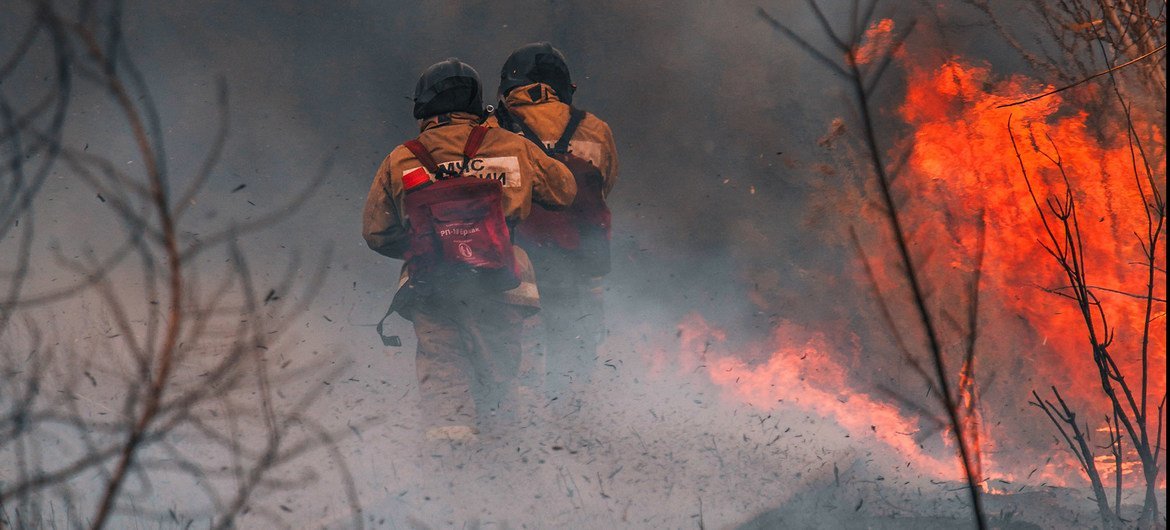
So watch the video, learn the facts, and form your own conclusions.

. https://youtu.be/RnWoFJmqCF8

Share this:

  • Click to share on WhatsApp (Opens in new window) WhatsApp
  • More
  • Click to share on Pocket (Opens in new window) Pocket
  • Click to share on Mastodon (Opens in new window) Mastodon

THE BEADY EYE SAY’S. WHEN IT COMES TO CLIMATE CHANGE WE NEED TO CUT OUT THE VERBAL BULL SHIT.

23 Sunday Jul 2023

Posted by bobdillon33@gmail.com in #whatif.com, 2023 the year of disconnection., A solution to Climate change., Carbon Emissions., Civilization., Climate Change., Collective stupidity., Cop 29, Enegery, Environment, Green Energy., HUMAN ABILITIES., Humanity., Life., Reality., Renewable Energy., State of the world, Sustaniability, Telling the truth., The common good., The state of the World., The world to day., THE WORLD YOU LIVE IN., Truthfulness., Unanswered Questions., WHAT IS TRUTH, What Needs to change in the World, Where's the Global Outrage.

≈ Comments Off on THE BEADY EYE SAY’S. WHEN IT COMES TO CLIMATE CHANGE WE NEED TO CUT OUT THE VERBAL BULL SHIT.

Tags

Climate change, Cop 29, The Future of Mankind, Visions of the future.

( Six minute read)

Although we have been raising public awareness on climate change for years, this is not enough.

Despite the effects of climate change becoming more and more obvious, big polluting corporations – the ones responsible for the majority of carbon emissions – continue to carry on drilling for and burning fossil fuels.

Climate change is happening now, and it’s the most serious threat to life on our planet.

The global temperature increases day by day with much of Southern Europe and Northern Africa already in the grips of back-to-back heatwaves, which have caused wildfires and broken temperature records.

We all know that this warming causes harmful impacts such as the melting of Arctic sea ice, more severe weather events like heatwaves, floods and hurricanes, rising sea levels, spread of disease and the acidification of the ocean.

To date we have had around 26 global conferences  resulting in agreements and promises, with insufficient actions to make any material changes to global temperatures rising.


Unless greenhouse gas emissions and global temperature are reduced within years, the world will face demanding consequences.

While every fraction of a degree making climate tipping points more likely the next UN Climate Change Conference will convene from 30 November to 12 December 2023 in Dubai, United Arab Emirates (UAE).

With signs that some climate tipping points are already approaching / irreversible we will witness once more the who’s the how’s and where while the melting of polar glaciers and sea ice, die-back of the Amazon rainforest and coral reef extinction are all on the edge of tipping over into a feedback loop of self-destruction, whereby their decline itself becomes a source of warming.

We can’t be sure exactly when tipping becomes inevitable.

Because of war in the Ukrain (which is affecting the world food supply) the climate targets will become looser and looser, higher and higher with world governments doing even less in the future.

We don’t have the policies in place, we don’t have the financing in place to reach any of the goals required.

Seven million people are already being killed by climate change around the world – as many as those killed by Covid. Yet progress by world governments has been achingly slow.  it’s never been more important to demand that our leaders act.

Current policies are “totally inadequate” and you may rest assured that world leaders will once again make a “terrible mistake” in prioritising inflation, the pandemic and the Ukraine war over the climate.

We need concrete solutions to make it less uncomplicated to achieve any goals.

The world cannot be at  “positive tipping point” in the fight against climate change without addressing the lack of financing. ( See previous posts)

There are signs that some climate tipping points are already approaching, according to new research.

Many commitments to reduce carbon emissions have been set, but few are binding and targets are often missed.

Climate change isn’t just a scientific problem or a political challenge its a distribution of wealth problem including technologies such as artificial intelligence.

It’s easy to feel overwhelmed, and to feel that climate change is too big to solve. It can be challenging to wrap your head around such a complex issue, These impacts are severe and far-reaching – both now and into the future – with no sign of slowing down unless drastic action is taken.

To work, all of these solutions need strong international cooperation between governments and businesses, including the most polluting sectors.

Many of the world’s biggest challenges, from poverty to wildlife extinction, are made more difficult by climate change.

But we already have the answers, now it’s a question of making them happen.

Mitigating greenhouse gas emissions requires changes in many areas, namely buildings, transportation, and the energy industry.

Governments want to be re-elected, and  businesses can’t survive without customers. Demanding action from them is a powerful way to make change happen.

Transitioning to a sustainable future comes with a massive price tag, but it isn’t always clear who should foot the bill – or how the money should be spent.

Developing countries will increasingly be stuck with debts to pay for their climate solutions.In the US, the value placed on the social cost of carbon has fluctuated in recent years, with far-reaching effects (Credit: Getty Images)

We are now facing an important crossroads. Make profit out of climate change or see it as a one-off, last-chance opportunity – to restructure economies at the pace and scale that climate science requires by integrating climate action into the economic recovery.

As the impacts of climate change add up, economists are trying to figure out what the true cost of a tonne of carbon really is. ” The most important figure you’ve never heard of”

It is basically a complete denial of climate science that underpinned the social cost of carbon.

Such as the cost of adapting to sea-level rise, or how increased temperatures affect labour productivity, and how crop yields will be affected. The impacts of climate change will be felt over many hundreds of years, whereas cutting emissions costs money now. A high discount rate suggests those alive today are worth more than future generations, whereas a low one suggests the opposite.

It defines how much society should pay to avert future damages caused by climate change. It also accounts for the impact that today’s emissions will have on future generations.

Instead of making assumptions about issues such as the relationship between temperature and human wellbeing at some abstract point in the future, there is now a lot of real-life data.  If we pass certain climate tipping points, such as thawing permafrost and ice sheet disintegration, the runaway damage caused will increase the social cost of carbon. It will certainly affect the actions that people undertake.

It’s overwhelmingly accepted that climate change is a very significant threat to humanity.

We probably underestimated the consequences but every small step we take as individuals contributes.

So why not demand solar panel’s be put on every roof, free of costs, or that villages build solar farm to supply greed energy to their inhabitants, instead of military spending that will be worthless in the fight against rising tempts.

By financing renewable energy, “smart grid” technologies and other green innovations, of course things do not suddenly stabilise at 2030, but at the very least its a concrete step in the right direction.

All human comments appreciated. All like clicks and abuse chucked in the bin

Contact: bobdillon33@gmail.com

Share this:

  • Click to share on WhatsApp (Opens in new window) WhatsApp
  • More
  • Click to share on Pocket (Opens in new window) Pocket
  • Click to share on Mastodon (Opens in new window) Mastodon

THE BEADY EYE SAY’S: Misaligned or confused and conflated goals of an AI will be a significant concern of the future.

21 Friday Jul 2023

Posted by bobdillon33@gmail.com in 2023 the year of disconnection., Collective stupidity.

≈ Comments Off on THE BEADY EYE SAY’S: Misaligned or confused and conflated goals of an AI will be a significant concern of the future.

Tags

Artificial Intelligence., Capitalism and Greed, Climate change, The Future of Mankind, Visions of the future.

( Fourteen minute read)

The biggest problem of our world today is not artificial intelligence but natural stupidity!

When it comes to climate change – profit seeking algorithms – and the Military race to send atomist drone killers into the battle field –  Welcome to the perplexing world of collective stupidity!

The Trump campaign and Brexit – where we all woke up the next day astounded that “this could happen” are both prime examples of campaigns that leaned heavily on the emotions of anxiety, fear and tribalism. and collective stupidly.

Since then, there has been much unpacking of “what happened” and talk about “it could only have been “stupid” people” who could have voted that way.

But is this true?

Yes, profound lapses in logic can plague even the smartest mind.

There are intelligent people who are stupid. So why the paradox? Stupidity is not a lack of IQ.

Unconscious emotions drive our decisions –  Intuitive feelings gave us an evolutionary advantage in caveman days, a survival way of dealing with information overload; and can still play a useful role as we on the precipice of a critical moment with AI.

All over the world, we are in the midst of a great shift. The data revolution has given way to the analytics movement. Press our emotional buttons and our judgement is derailed. Hence the temptation to choose the first solution that comes to mind, even if obviously flawed.

It seems that nothing encourages stupidity more than group culture.

An uncritical dependence on set rules often leads to absurd decisions, the-way-we-do-things-here, often not being the most intelligent way.

And the more intelligent someone is, the more disastrous the results of their stupidity.

 ————–

With generative AI technologies data-driven insights are reshaping outcomes without needing to write code, becoming truly intrusive, enabling decision-makers, analysts, data scientists and developers to collaborate and develop analytical insights in real time.

SO, WHAT CAN WE DO TO PROTECT OURSELVES FROM DOING STUPID THINGS?

Knowledge of our foolish nature, can help us escape its grasp.

We can step outside the group of Google algorithms knowledge to question where we are at and going.

and revert to culture-thinking that relies on that “everyone knows the true”

Stupidity is all around us. As long as there have been humans there has been human stupidity,

. —————

Over the past decade, we’ve seen the volume of data available to decision-makers grow exponentially.

In this intelligence era, it’s no longer about how much data one company can generate, it’s about how they use it. Corporate leaders, academics, policymakers, and countless others are looking for ways to harness generative AI technology, which has the potential to transform the way we learn, work, and more.

Generative AI is evolving quickly, but to truly get the most benefits from this ground breaking technology, you need to manage the wide array of risks.

Why?

Because generative AI is so powerful and easy to use, it’s poised to change what is real and what is not.

Unlike earlier disruptions, the reality of the generative AI race is already looking out of control. 

This could be the first “disruptive” new tech in a long time built and controlled largely by giants in the tech world which could entrench, rather than shake up, the status quo.

Right now, only a handful of companies — including Google, Meta, Amazon and Microsoft (through their $10 billion investment in Open-air) — are responsible for the world’s leading large language models.

So what can policymakers do about AI?

Is there a way to prevent the hottest new technology from simply cementing the power of the tech giants? 

Virtual worlds should not become walled gardens. 

It is abundantly clear that leaving it to the market to decide how these powerful technologies are used, and by whom, is a very risky proposition.

———

For decades, many of the great scientific and philosophical minds had conceived of creating collective intelligence in the form of a globally connected space to pool our knowledge.

Social Media -Smart phones – are digitalizing citizens and their resulting emergent behaviour.

This is a phenomenon that occurs in complex adaptive systems. In such systems, simple components interact in such a way that the whole becomes greater than the sum of its parts.

Our collective intelligence has now become what can only be referred to as our collective stupidity.

————-

The Dark Side — Collective Stupidity.

Collective stupidity can be perplexing and is often harmless.

How is it possible that a group of smart individuals can sometimes make decisions so perplexing, it feels like the intelligence just evaporated?

How does collective stupidity happen?

Are we are better off by not underestimating the effects of this phenomenon?

A system based on generating clicks and interactions has created an environment for the outlandish and bizarre to flourish, with expertise falling by the wayside.

Broad, anonymous social networks breed collective stupidity.

Top Social Media Statistics And Trends Of 2023

In 2023, an estimated 4.9 billion people use social media across the world this number is expected to jump to approximately 5.85 billion users by 2027.

The driving force.  The increasing global adoption of 5G technology.

These staggering numbers aren’t just statistics, either. They highlight the expansive influence and potential of social media platforms. Right now, 1.9 billion daily users access Facebook’s platform, Twitter has gained 319 new users per minute in 2020, while 500 hours of video are uploaded to YouTube in the same amount of time. Millions of businesses around the world rely on Facebook to connect with people.

The recent new platform Threads Meta’s new social network, had 100 million sign ups in its first five days.

With this much content being generated, how can experts possibly stand out from the crowd?

By emulating the human ability to forget some of the data, psychological AIs will transform algorithmic accuracy.

Machine learning, on the other hand, typically takes a different path: It sees reasoning as a categorization task with a fixed set of predetermined labels. It views the world as a fixed space of possibilities, enumerating and weighing them all.

Social media networks are not very sociable these days. Feeds are algorithmic, which means you see whatever the apps want to show you.

All this has eroded public confidence.

——–

We all have intelligence and expertise to offer, even if the internet leaves us feeling isolated at times.

With so much misguided thought and active disinformation online, it has become difficult for people with insight worth sharing to do so. Behind the anonymity of the web, anyone can claim to be an expert. When everybody is an expert, nobody is.

With online communities, the relationship between experts and their audience becomes a two-way street.

Many of the issues we throw billions of dollars at and attempt to solve with technology could be easily achieved if we were able to better utilize our collective intelligence.

Technology is the means, not the end; its potential is massive, but not as great as our own.

So we wildly overestimate our access to our own mind.

In essence, the same emergent behaviour that typically helps the group survive sometimes leads to collective stupidity and death.

The Internet gave us the ability to connect with people on a global scale.

But its click-baiting algorithms and lack of regulation also brought with them chaos. As social media came to dominate the landscape, it made using the internet for the purpose of collective intelligence increasingly difficult.

You see, with stupidity, or stupid people for that matter, protesting or reasoning doesn’t really work. This is mainly because of their strong prejudice. They simply disbelieve any facts or reasoning we provide. In most cases, they either simply deny the arguments. And if they can’t, then they call them trivial exceptions.

People are often made stupid under certain circumstances. Maybe they allow this to happen to themselves. It is a group phenomenon.

The nature of stupidity has its roots deep in the subconscious. It is largely driven by the fundamental mechanics of our experience. following the herd. It is arguably the most prominent one, and mostly it does make sense. If the information is lacking, doing what others are doing is probably the best bet. But this doesn’t work all the time.

In fact, herd behaviour is among the pre-eminent causes of stupidity.

It is not that intellect suddenly fails. But people are deprived of inner independence, so they give up autonomous positions under the overwhelming impact. We always feel that we are dealing with slogans, signs, buzzwords, and not with the real person. As if they are under the spell of someone or something.

As this happens, we are also creating (unknowingly) various risks to our socio-economic structure, civilization in general, and to some extent, for the human species.

Species-level risks are not evident yet; However, the other two, socio-economic and civilization level risks, are significant enough to be ignored.

So far, several significant building blocks have been developed and are in progress. When we stitch them together, AI’s capability will increase multifold, which should be a more significant concern for us.

It takes the already tiny amount of time we have to change our ways, and save the planet, and practically cuts it in half.

We have less than 27 years to get our collective act together and reshape how our entire civilisation operates. And I’m not sure if we can do that… The more concerning part is about the risks that we have not thought of yet. We may not be able to avoid all of them, but we can understand them to address them.

Our over-enthusiasm for new technologies has somehow colluded our quality expectations. So much so that we have almost stopped demanding the right quality solutions. We are so fond of this newness that we are ignoring flaws in new technologies.

The problem with these low-quality solutions is that subpar techs’ flaws do not surface until it is too late!

In many cases, the damage is already done and maybe be irreversible.

Misalignment between our goals and the machine’s goals could be dangerous. It is easier to correct a team of humans; doing that with a rampant machine could be a very tricky and arduous task.

Achieving a level of alignment with human-level common sense is quite tricky for a computerized system. Without having any balanced approach like a scorecard, this may not be achievable.

Technology is an answer to the “how” of the strategy, but without having the right “why” and “what” in place, it can do more damage than good. When AI systems do not know why, there will always be a lurking risk of discrimination, bias, or an illogical outcome.

Weapon systems equipped with AI are the most vulnerable to the right AI in wrong hand problems and therefore have the greatest risks. The Russian /Ukrain war is now the labourite of drone warfare. The possibility of AI systems being used to overpower others by some group or a country is a significant risk.

Overall, the right AI’s risk in the wrong hands is one of the critical challenges and warrants substantial attention to avoid it.

Extending AI and automation beyond logical limits could potentially alter our perception of what humans can do.

We still value human interaction, communication skills, emotional intelligence, and several other qualities in humans. What happens when an AI app takes over? What happened to AI doing mundane tasks and leaving time for us to do what we like and love?

The most important thing in artificial intelligence isn’t the fancy algorithms.

Let’s assume the worst case and we have a general purpose AI – that can do everything a human can.

What would happen?

Waiting for smartphone app to tell us what to do next and how we might be feeling now!

The enormous power carried by the grey matter in our heads may become blunt and eventually useless if we never exercise it, turning it into just some slush. The old saying, “use it or lose it,” is explicitly applicable in this case. Half knowledge is more dangerous than ignorance!

Trust me, a lot can happen in 24 hours. The lesson here is – in times like this, the first principles-based thinking is your best bet.

Our problem is that on one side, we have intelligent people, who are full of doubts, and on the other, we have stupid people full of confidence. Stupidity is not an intellectual failing, it’s a moral failing. And it happens because we believe only in feelings and not in facts or truthfulness

When we see and hear all this, we wonder if there is any antidote? If there is any way to stop this from happening?

The ultimate test of a moral society is the kind of world that it leaves to its children.

So the question now is, “How are we going to fight this AI pandemic?”

We will finally recognize that more computing power makes machines faster, not smarter.

If a problem is too difficult for a machine, it is we who will have to adapt to its limited abilities.

There is already a frustrating struggle for humans and machines to understand one another in natural language. Soon, we will live in a world where, regardless of your programming abilities, the main limitations are simply curiosity and imagination.

The Garland Test, inspired by dialog from the movie, is passed when a person feels that a machine has consciousness, even though they know it is a machine.

Will computers pass the Garland Test in 2023? I doubt it. But what I can predict is that claims like this will be made, resulting in yet more cycles of hype, confusion, and distraction from the many problems that even present-day AI is giving rise to.

This will force us to reconsider how our behaviours today might influence digital versions of ourselves set to outlive us.

Faced with this prospect of virtual immortality, 2023 will be the year we broaden our definition of what it means to live forever, a moral question that will fundamentally change how we live our day-to-day lives, but also what it means to be immortal stupid.

We tend to think we are the be all and end all—but we’re not. The sooner we can realize that the natural world goes its way, not our way, the better.”  “I hope as a consequence that the needs and wonder and importance of the natural world are seen. We tend to think we are the be all and end all—but we’re not.

We’re both the victims and benefactors, and the sooner we can realize that the natural world goes its way, not our way, the better.” Sir David Attenborough.

All human comments appreciated. All like clicks and abuse chucked in the bin.

Contact: bobdillon33@gmail,com

Share this:

  • Click to share on WhatsApp (Opens in new window) WhatsApp
  • More
  • Click to share on Pocket (Opens in new window) Pocket
  • Click to share on Mastodon (Opens in new window) Mastodon
← Older posts

All comments and contributions much appreciated

  • THE BEADY EYE SAYS WARS USE TO BE MAN AGAINST MAN, NO LONGER. WAR IS NOW DRONE AGAINST DRONE. January 9, 2026
  • THE BEADY EYE SAYS. WE HAVE SURROUND THE EARTH WITH SATELLITES. HERE TO DAY GONE TO MORROW. January 9, 2026
  • THE BEADY EYE SAYS GOVERNANCE IS BECOMING MORE BY REALITY TV, ALGO January 9, 2026
  • THE BEADY EYE SAYS. DONALD TRUMP IS EXPOSING THE WEAKEST OF OUR WORLD ORGANISATIONS January 7, 2026
  • THE BEADY EYE SAYS. MADURO ADDUCTION SHOWS THAT INTERNATIONAL LAW IS A JOKE. January 4, 2026

Archives

  • January 2026
  • December 2025
  • November 2025
  • October 2025
  • September 2025
  • August 2025
  • July 2025
  • June 2025
  • May 2025
  • February 2025
  • January 2025
  • December 2024
  • November 2024
  • October 2024
  • September 2024
  • August 2024
  • July 2024
  • June 2024
  • May 2024
  • April 2024
  • March 2024
  • February 2024
  • January 2024
  • December 2023
  • October 2023
  • September 2023
  • August 2023
  • July 2023
  • June 2023
  • May 2023
  • April 2023
  • March 2023
  • February 2023
  • January 2023
  • December 2022
  • November 2022
  • October 2022
  • September 2022
  • August 2022
  • July 2022
  • June 2022
  • May 2022
  • April 2022
  • March 2022
  • February 2022
  • January 2022
  • December 2021
  • November 2021
  • October 2021
  • September 2021
  • August 2021
  • July 2021
  • June 2021
  • May 2021
  • April 2021
  • March 2021
  • February 2021
  • January 2021
  • December 2020
  • November 2020
  • October 2020
  • September 2020
  • August 2020
  • July 2020
  • June 2020
  • May 2020
  • April 2020
  • March 2020
  • February 2020
  • January 2020
  • December 2019
  • November 2019
  • October 2019
  • September 2019
  • August 2019
  • July 2019
  • June 2019
  • May 2019
  • April 2019
  • March 2019
  • February 2019
  • January 2019
  • December 2018
  • November 2018
  • October 2018
  • September 2018
  • August 2018
  • July 2018
  • June 2018
  • May 2018
  • April 2018
  • March 2018
  • February 2018
  • January 2018
  • December 2017
  • November 2017
  • October 2017
  • September 2017
  • August 2017
  • July 2017
  • June 2017
  • May 2017
  • April 2017
  • March 2017
  • February 2017
  • January 2017
  • December 2016
  • November 2016
  • October 2016
  • September 2016
  • August 2016
  • July 2016
  • June 2016
  • May 2016
  • April 2016
  • March 2016
  • February 2016
  • January 2016
  • December 2015
  • November 2015
  • October 2015
  • September 2015
  • August 2015
  • July 2015
  • June 2015
  • May 2015
  • April 2015
  • March 2015
  • February 2015
  • January 2015
  • December 2014
  • November 2014
  • October 2014
  • September 2014
  • August 2014
  • July 2014
  • June 2014
  • May 2014
  • April 2014
  • March 2014
  • February 2014
  • January 2014
  • December 2013
  • November 2013
  • October 2013

Talk to me.

Jason Lawrence's avatarJason Lawrence on THE BEADY EYE ASK’S: WIT…
benmadigan's avatarbenmadigan on THE BEADY EYE ASK’S: WHA…
bobdillon33@gmail.com's avatarbobdillon33@gmail.co… on THE BEADY EYE SAYS: WELCOME TO…
Ernest Harben's avatarOG on THE BEADY EYE SAYS: WELCOME TO…
benmadigan's avatarbenmadigan on THE BEADY EYE SAY’S. ONC…

7/7

Moulin de Labarde 46300
Gourdon Lot France
0565416842
Before 6pm.

My Blog; THE BEADY EYE.

My Blog; THE BEADY EYE.
bobdillon33@gmail.com

bobdillon33@gmail.com

Free Thinker.

View Full Profile →

Follow bobdillon33blog on WordPress.com

Blog Stats

  • 94,469 hits

Blogs I Follow

  • unnecessary news from earth
  • The Invictus Soul
  • WordPress.com News
  • WestDeltaGirl's Blog
  • The PPJ Gazette
Follow bobdillon33blog on WordPress.com

The Beady Eye.

The Beady Eye.
Follow bobdillon33blog on WordPress.com

Blog at WordPress.com.

unnecessary news from earth

WITH MIGO

The Invictus Soul

The only thing worse than being 'blind' is having a Sight but no Vision

WordPress.com News

The latest news on WordPress.com and the WordPress community.

WestDeltaGirl's Blog

Sharing vegetarian and vegan recipes and food ideas

The PPJ Gazette

PPJ Gazette copyright ©

Privacy & Cookies: This site uses cookies. By continuing to use this website, you agree to their use.
To find out more, including how to control cookies, see here: Cookie Policy
  • Subscribe Subscribed
    • bobdillon33blog
    • Join 223 other subscribers
    • Already have a WordPress.com account? Log in now.
    • bobdillon33blog
    • Subscribe Subscribed
    • Sign up
    • Log in
    • Report this content
    • View site in Reader
    • Manage subscriptions
    • Collapse this bar