• About
  • THE BEADY EYE SAY’S : THE EUROPEAN UNION SHOULD THANK ENGLAND FOR ITS IN OR OUT REFERENDUM.

bobdillon33blog

~ Free Thinker.

bobdillon33blog

Tag Archives: philosophy

THE BEADY EYE SAYS REMEMBER “ ISLAM WAS A SPARKLING CIVILISATION NEXT TO A CRUDE MEDIEVAL EUROPE.

03 Monday Nov 2025

Posted by bobdillon33@gmail.com in #whatif.com, 2025 Another Year of change, Artificial Intelligence., Collectively, HUMAN ABILITIES., Human Collective Stupidity., Human Exploration., HUMAN INTELLIGENCE, Human values., Humanity., ISLAM, Life, Uncategorized

≈ Comments Off on THE BEADY EYE SAYS REMEMBER “ ISLAM WAS A SPARKLING CIVILISATION NEXT TO A CRUDE MEDIEVAL EUROPE.

Tags

A 0.05% WORLD AID COMMISSIONS, Artificial Intelligence., Capitalism and Greed, Capitalism isn't working, Climate change, Collectively, Community cohesion, Current world problems, Death v Technology, Dehumanization., Environment, European leaders, Extinction, Future humans, Future Society., Future wars, global climate change, Global warming, Google ambitions, Human interaction, Human societies, Human society, Humanity, Inequility, ISLAM, Modern humans, Our Common Values., Our world problems, People of the Earth, philosophy, Political leaders, Post - truth politics., Purpose of life., Quality of Life, Reality of Climate Change, Religion., RELIGIONS, Robots., Social Media, Society, State of the world, Sustainability, Technology, Technology versus Humanity, The cost of Climate Change., The essence of our humanity., The Future of Mankind, The Meaning of Life., The right to life, The World, Truth, United Nations, Visions of the future., What Needs to change in the World

( Ten minute read)

What happened?

Well the crude Europeans in the name of GOD sacked its holy places in Jerusalem, stole Islam’s science, its mathematics, its art to bring about their Renaissance, rose to dominate most of the rest of the globe, and then scooped up the majority of Muslims into their European empires.

September 11 committed by a tiny minority of extremist misfits that killed over 300 people resulted in the Taliban been turfed out of power in Afghanistan with Saddam Hudson somehow replacing bin Laden as the most evil man of history.

Causing a pre- emotive war to get rid of him and his alleged weapons of mass destruction in Iraq occurred with no weapons of mass destruction only a pathetic man with a beard hiding in a hole.

Since then it seems the world has changed into isolation with Russia trying to take advantage of its disunity to grab the Ukraine back by force into is empire.

The more one reflects on what really matters in human existence the more you become alienated from a culture that is obsessed with materialism.

These days we barely have time to absorb one event before ten others replace it.

Society is now governed by Social Media which is incapable of expressing any critical thinking to tackle the real problems facing all of us in a world that needs to unite to have any hope against CLIMATE CHANGE or ARTIFICIAL INTELLIGENCE.

It’s now or never that we need to come together, not isolation, not Donald Dump, nor Mr Putin, nor most of the Islam I am all right Jack world, while we watch inequality expand across the globe.

Insh’ Allah might descend a religious philosophy in one word however ever I prefer the word bolloxed.

All human comments appreciated. All like clicks and abuse chucked in the bin.

Contact: bobdillon33@gmail.com

https://youtu.be/jbqq4C8IrF0?si=UQYpA5XDe6fOYlUz

https://youtu.be/JRjuZSKY4VY?si=1j_bFrVRvVOVSFNR

Share this:

  • Click to share on WhatsApp (Opens in new window) WhatsApp
  • More
  • Click to share on Pocket (Opens in new window) Pocket
  • Click to share on Mastodon (Opens in new window) Mastodon

THE BEADY EYE ASK’S: What happens after we die?

03 Wednesday Apr 2024

Posted by bobdillon33@gmail.com in Death, Denial of Death.

≈ Comments Off on THE BEADY EYE ASK’S: What happens after we die?

Tags

afterlife, Death, Death v Technology, god, Life, philosophy

( Fifteen minute read)

The fear of death is often linked to the unknown, but death is one of the most fundamental facts of life.

A common view is that after death, the soul ascends to heaven. However, very few say they can explain what happens in heaven. How heaven can be real if different religions view the afterlife differently.

Since people have promulgated religions, the guidance they offer may be imperfect and inconsistent within each religion or in comparison with other religions, even if God originally inspired it.

Why do we have to die?

Theologians and religious believers have long had a ready-made answer: death is simply a transition from this stage to the next in a cosmic proscenium.

In the religious worldview death needs no explanation other than “God wills it” as part of a deific design that will be disclosed once we get to the other side, usually involving a cosmic comeuppance for one’s actions and a settling of all moral scores.

Without consciousness of self life is pointless as it has no inherent meaning, you don’t exist and the world you live is a hallucination, an uncontrolled perception of that conscious.

What is certain is that we all have a finite life and we are all the time call our selves as bodily -self, as peroectival -self, as volitional -self, as narrative – self, as social-self, that’s reality.

It also is reasonable to assume that there are many things we cannot perceive, of which we are unaware.

Thus, rather than a position of certainty about the lack of existence after death, it may be more humble to hold an agnostic position: It is unknowable what happens after death so a humble position is to accept that what happens after death is unknowable.

An eternal life is pointless. Without death there would be no life. We die so others may live.

We are biological machines that see the world not just visually, but with predictions of our brains.

———————–

We’re learning more new things about death everyday.

Much has been said and theorized about the great divide between life and the Great Beyond. While everyone and every culture has their own philosophies and unique ideas on the subject, we’re beginning to learn a lot of new scientific facts about the deceased corporeal form.

At this every moment, within our bodies and all around us, trillions of microscopic combatants are waging a war that shapes our health and life on Earth.

Time of death is considered when a person has gone into cardiac arrest, which is the cessation of the electrical impulse that drives the heartbeat. As a result, the heart locks up.

This moment when the heart stops is considered by medical professionals to be the clearest indication that someone has died.

But what happens inside our mind during this process?

Do we entered a hyper-alert state just before death?

Does death immediately overtake our subjective experience or does it slowly creep in?

Could people who were technically dead be cognizant of what’s happening around them?

After death, you’re aware that you’ve died!

Even after our breathing and heartbeat stop, we remain conscious for about two to 20 seconds. That’s how long the cerebral cortex is thought to last without oxygen. This is the thinking and decision-making part of the brain. It’s also responsible for deciphering the information gathered from our senses.

It can take hours for our thinking organ to fully shut down.

To understand whether consciousness becomes annihilated or whether it continues after you’ve died for some period of time — and how that relates to what’s happening inside the brain in real time is impossible to know.

To break the definition of dead down, an individual must be completely brain-dead so that their breathing and blood circulation stops. This specification is important because there are cases when an individual’s lungs and heart are still beating. The cells of the rest of the body can also remain alive because they still have a supply of oxygen. However when the heart stops pumping blood and the lungs stop breathing, cells won’t receive oxygen or nutrients and will begin to die in a matter of minutes.

There are 4 stages that the body moves through after death:

After death, the body undergoes a series of changes that occur in a timely and orderly manner. These stages are also affected by the extrinsic and intrinsic factors of the corpse. Since there is no fixed duration for these stages, it is impossible to determine the exact time of death unless there is a witness or some other verifiable source of this information.

All these stages of death are often overlapping in their occurrence. They may start separately, but most of them continue to occur simultaneously Hence, you never rely solely on one or 2 factors but rather take as many as possible into consideration and then draw conclusions from there!

Depending on the circumstances of death in space, the body could be frozen, dried out, slowly rotting, or decomposing normally.

Pallor Mortis, paleness in the face, Algor Mortis, the corpse eventually starts to match the outside temperature. Rigor Mortis, all the muscles will become relaxed and limp, but the whole body will stiffen after a few hours. On average, rigor mortis lasts for 24 to 48 hours. and Livor Mortis your blood succumbs to gravity. Lividity starts with the skin where the blood has settled, developing a bright red colour. After a few hours, the colour changes from red to bluish-purple. This can take 6 to 8 hours with a bluish colouring of the skin.

  • Cells are biology’s basic units of life — microscopic capsules with everything needed for life and replication contained within a fat-based membrane and, sometimes, a tough outer wall.
  • All life on the planet — except viruses — consists of cells.

Vastly outnumbering the viruses that do us harm, phage’s power ecosystems, drive evolutionary innovation, and harbour a remarkable capacity to heal life-threatening infections when conventional antibiotics fail. Yet most of us have never heard of them, thinking of viruses only as enemies to be feared.

Microbe rules our world.

  • Researchers estimate there may be as many as ten million trillion trillion phage’s on Earth — that’s 10 with 30 zeros after it.The Immortalists - can science defeat death? © Getty Images                                                         Can science defeat death? 
  • Humanity’s obsession with the afterlife and the quest for immortality.
  • Life is just too long if it lasts an eternity. 
  • It is estimate that before our generation roughly 100 billion people lived and died, and not one of them has returned to confirm the existence of an afterlife, at least not to the high evidentiary standards of science. 

The goal of cryonics, in a phrase, is “freeze—wait—reanimate.” The soul in this scenario is the self as stored in memory, so the cryopreservation of memory preserves the self indefinitely until the day when medical technologies come online to reanimate it. Currently this is done through the vitrification of the brain, which involves turning the cryopreserved brain into a glass-like substance.

The goals of extropy are uplifting if not utopian: longer lives, more intelligence, greater wisdom, improved physical and mental health, and the elimination of political, economic, and cultural limits to personal development and social progress. Once these are achieved “immortality is next” they proclaim.

Transhumanists intend to transform the human condition first through lifestyle choices involving diet and exercise, then through body enhancements (e.g., breast or cochlear implants) and body parts replacements (e.g., artificial knees, hips, and hearts), then genetic engineering, all with the goal of taking control of evolution and transforming the species into something stronger, faster, sexier, healthier, and with vastly superior cognitive abilities.

We will reach a point when medical technologies will add one additional year every year to your life expectancy. There go I but for the grace of God. As the rate of progress of medical technology accelerates the years will pile up for decades, centuries, and beyond, possible to forever. At some point it will be prudent to upload your mind—your self, your soul—into a computer to avoid the problems that a biological substrate like a brain entails.

When that happens humans will achieve immortality.

Do we enter heaven, become an animal, or reset in a simulation with our souls teleporting instantly.

In the meantime, whether or not there’s a hereafter, we live here and now, so we must make the most of our time by making every day, every encounter, every relationship count, for that is where the true meaning of life is found.

The meaning of life is that everyone must choose the answer to that question for themselves. Life is far more absurd than we can grasp. But we have to grasp that absurdity by the horns and deal with it.

Purposes are created by people.

Yes you can have deep meaning without having to deny rationalism or science!

“Are your thoughts and memories really your own?”. After all, if life loses meaning, there’s still life.

You live and die in a universe which has been evolving for billion and billions of years, expanding/ inflating at the speed of light ( 300,000 km per second with a light year equalling  946,000,000,000 km  creating more and more space)

Andromeda the nearest galaxy in this universe of ours is two and a half light years from us.  We see it as as man had only just started using stone tools. Every think in the universe is moving away from us without changing it position. When space expands it stretches space making more space.

Space has no centre, no walls that mark’s its end, so you can roam around the universe without meeting an edge.

Even if you could travel considerably faster than light you would come back to where you started.

Beyond the Cosmic Horizon is undecidable or known by any means we have.

Beyond this horizon how much space is there?

It is calculated that is size of the dimeter of the observable universe is 23 trillion light years away. Our observable universe is home to two trillion galaxies with the unobservable universe housing 30 quint trillion of them.

Life must be playing out on an other world.

As to how far heave is God only knows, as beyond the cosmic horizon no one knows where the space of an expanding universe’s goes. Perhaps God is dark energy.

Ultimately like us the universe will die so for what purpose would a god create such a universe  Long live imagination, perhaps it is God.

If I can control how and what I perceive, then I am the god of my own world.

All human comments appreciated. All like clicks and abuse chucked in the bin

Contact: bobdillon33@gmail.com

Share this:

  • Click to share on WhatsApp (Opens in new window) WhatsApp
  • More
  • Click to share on Pocket (Opens in new window) Pocket
  • Click to share on Mastodon (Opens in new window) Mastodon

THE BEADY EYE SAY’S: HAPPY NEW YEAR, HERE IS YOUR WORLD TO LOOK FORWARD TO IN 2024.

31 Sunday Dec 2023

Posted by bobdillon33@gmail.com in The new year 2024

≈ Comments Off on THE BEADY EYE SAY’S: HAPPY NEW YEAR, HERE IS YOUR WORLD TO LOOK FORWARD TO IN 2024.

Tags

AI, Artificial Intelligence., Capitalism and Greed, Capitalism vs. the Climate., Climate change, philosophy, Technology, The Future of Mankind


( Thirty minute read) 

In fairness, the world won’t suddenly end on January 1, 2024.

There are three visions from humans today. span space colonies, a genetic panopticon, and straight-up apocalypse.Navigating The Future: 10 Global Trends That Will Define 2024

It is said that there no such thing a reality, as everything that is observed once un-observed does not exist, – Quantum Physics – Interactions.

But reality in our world does not have to be observed, it’s plain for all to see.

Yes we are all born without any understanding of the world.

In recent years we’ve learned that the human brain is actually a master of deception, and your experiences and actions do not reveal its inner workings.

Our lives are a constant struggle, not just to survive, but to understand that we all must die, leaving behind information. This left behind data and current data is now been harvested, not so much for the betterment of the world but for short term profit for the few.

Technology has changed how we interact among ourselves and with our surrounding environment and we must engage in a philosophical reflection on how we currently understand the “new” world we are a part of.

Luckily our collective conscious or conceptions of what is real in the world are not computable.

However the future of society, as defined by the scientific and technological revolutions, which needs a custom ethical and philosophical direction will change with genetic editing; and artificial intelligence challenges the concept of “I” and “individual;” and robotics will bring new “companion robots,” which we need to define and adopt socially.

In order to pair our knowledge of events with the true timeframe of when those events occurred, to really understand what’s happening, we must “extract potential signals from the noise of all this data.

Why?

Because misinterpreting those signals will have profound consequences.

For example:

How pathetic it is to witness the only word organisation the UN unable to agree on what constitutes a genocide, to call on Israel to stop its war on a trapped people.

—————-

First let me awaken you to 2024 by reminding you of the news year you’ve just lived through – or by warning you of the news year you’re about to live through.

To describe the present day I suppose that the best way is to draw a comparison with a War Ship of the Line during Nelson days. Although full of cannons and every class of humanity, for it to be operational, it had to rely on rules and regulations, which meant nothing, as everything ends up tied together, and nothing worked without the power of nature.  No wind, no victory.

Our world is similar, full of people, with individual names, all living within tribal nations, ruled by law, but governed by the planetary balance in its true nature, providing life. No fresh water, no fresh air, no food, annihilation.

These days, when it comes to ecosystems ( its not how we live or where we live, or when we live, which  means nothing unless you are fully conscience of the greed of a few and its continuing effects on the inequalities that exist on the planet.

————-

There isn’t a particular moment in which humanity came into existence, as the transition from species to species is gradual.

The demographers estimate that in the 200,000 years before us about 109 billion people have lived and died. It is these 109 billion people we have to thank for the civilization that we live in.

In 2024 there will about 8 billion of us alive. Taken together with those who have died, about 117 billion humans have been born since the dawn of modern humankind. This means that those of us who are alive now represent about 7% of all people who ever lived.

How many people will be born in the future? We don’t know.

But we know one thing: The future is immense, and the universe will exist for trillions of years.

In such a future, there would be 100 trillion people alive over the next 800,000 years.

One thing that sets us apart is that we now – and this is a recent development – have the power to destroy ourselves.

The key moral question of long termism is ‘what can we do to improve the world’s long-term prospects?

There are two other major risks that worry me greatly:

Pandemics, especially from engineered pathogens, and artificial intelligence technology. These technologies could lead to large catastrophes, either by someone using them as weapons or even unintentionally as a consequence of accidents.

We don’t have to think about people who live billions of years in the future to see our responsibilities. This shouldn’t give the impression that the risks we are facing are confined to the future.

Several large risks that could lead to unprecedented disasters are already with us now. AI capabilities and biotechnology have developed rapidly and are no longer science fiction; they are posing risks to those of us who are alive today.

As a society, we spend only little attention, money, and effort on the risks that imperil our future. Only very few are even thinking about these risks, when in fact these are problems that should be central to our culture. The unprecedented power of today’s technology requires unprecedented responsibility.

Algorithms can exacerbate divisions and inequality in society.

In truth, no one knows where the AI revolution will take us as a society or as a species, but our actions in 2024 will be critical to setting us on a path that leads to a happy outcome.

No one will remember the Internet.

We will be the ancestors of a very large number of people. Let’s make sure we are good ancestors.

Why?

Because to understand something is to be liberated from it.   Google it.

Back to 2024.

There are currently about a dozen major global conflicts, with the most recent one now repeating one of the most barbaric acts ever committed in a war (The Jewish Holocaust) However this time it is being committed by the very people who suffered it in the first place, waving the old testament as a title deed to Palestine, to justify the right to commit another genocide while the world stands by helpless to intervene. 

The people who suffer from injustice, who withstand daily insults to their dignity, who are marginalised, silenced, exploited, left to die or killed cannot afford to ask themselves if they have hope. They cling on to life, they try to cope, they fight in front of a more or less a silent world, while it passing resolution’s to appease the two warmongering nations with vetoes.

Then we have the forgotten war in the Ukraine which is turning into a generation war. 

No resolutions other than the resolve of the Ukraine people to its bitter end will bring peace. 

—————  

What Is Enlightenment when we turn a blind eye?

Full awakening comes when you sincerely look at yourself, deeper than you’ve imagined, and question everything.

To think for yourself, to think of putting yourself in the shoes of everyone else, and to always think consistently:  This is the principles of enlightened thinking, that produced the Bill of Human rights.

The foundation of a peaceful world.

Out of 13 major global conflicts, the newest ones are the Myanmar civil war, triggered shortly after a military coup in February 2021, and the war in Ukraine that started with Russia’s full-scale invasion in February 2022. Seven of these conflicts are in Asia, including sectarian violence in Iraq following the pullout of the U.S. in December 2017, and Syria’s complicated civil war. Five of these conflicts are on the African continent.

To put it simply the state of the planet is broken because we have chosen a system of Capitalism that benefits the few over the many.

——————-

There is more to life than we are currently perceiving.

FOR EXAMPLE OUR REACTIONS TO CLIMATE CHANGE WHICH NOW HAS ITS OWN MOMENTUM AND ITS NOW CERTAIN THAT IT IS TOO LATE FOR THE WARS TO COME.  DRIVEN BY GREED.

WE ARE THE MOST COMPLICATED THING ON THE PLANET, ALL RELYING ON THE MOST BASIC THINGS.  Fresh air, Fresh water, etc.

In every moment, as you see, think, feel, and navigate the world around you, your perception of these things is built from ingredients. One is the signals we receive from the outside world. Your brain uses what you’ve seen, done, and learned in the past to explain sense data in the present, plan your next action, and predict what’s coming next.  This all happens automatically and invisibly, faster than you can snap your fingers. Much of this symphony is silent and outside your awareness, thank goodness. If you could feel every inner tug and rumble directly, you’d never pay attention to anything outside your skin.

Your mind is in fact an ongoing construction of your brain, your body, and the surrounding world.

Every act of recognition is a construction. You don’t see with your eyes; you see with your brain.

Your brain can even impose on a familiar object new functions that are not part of the object’s physical nature. TAKE A FEATHER FOR EXAMPLE.

Computers today can use machine learning to easily classify this object as a feather. But that’s not what human brains do. If you find this object on the ground in the woods, then sure, it’s a feather. But to an author in the 18th century, it’s a pen.

This incredible ability is called ad hoc category construction. In a flash, your brain employs past experience to construct a category such as “symbols of honor,” with that feather as a member.

Category membership is based not on physical similarities but on functional ones—how you’d use the object in a specific situation. Such categories are called abstract. A computer cannot “recognize” a feather as a reward for bravery because that information isn’t in the feather. It’s an abstract category constructed in the perceiver’s brain.

Computers can’t do this. Not yet, anyway.

Brains also have to decide which sense data is relevant and which is not, separating signal from noise. Economists and other scientists call this decision the problem of “value.”

Your thoughts and dreams, your emotions, even your experience right now as you read these words, are consequences of a central mission to keep you alive, regulating your body by constructing ad hoc categories. Most likely, you don’t experience your mind in this way, but under the hood (inside the skull), that’s what is happening.

Value itself is another abstract, constructed feature. It’s not intrinsic to the sense data emanating from the world, so it’s not detectable in the world. The importance of value is best seen in an ecological context.

Awaken out of their familiar senses of self, and out of their familiar senses of what the world is, into a much greater reality-into something far beyond anything they knew existed.

Being hopeful has nothing to do with how the world goes. It’s a kind of duty, a necessary complement to morality. What is the point of trying to do the right thing if we have no reason to think others do the same? What is the point of holding others responsible if we think responsibility is beyond their capacity?

Paradoxically, the worse the world goes, the more hopeful you must remain to be able to continue fighting. Being hopeful is not about guaranteeing the right outcome but preserving the right principle: the principle based on which a moral world makes sense.

On the contrary, they are crucial to filling the gap between the world in which we live and the one we have a responsibility to build.

Most people tend to think of hope as an attitude that sits somewhere between a desire and a belief: a desire for a certain outcome and the belief that something favours its realisation.

In the 18th century there were no algorithms, no social media, and no echo chambers, and it was, therefore, still possible to believe in enlightenment through public discourse.

What had the Enlightenment ever done for us, if it wasn’t even able to help us stop genocide?

There is such a gap between the world I read about, taught and believed in, and the one in which I lived.

All I could find were efforts to convince the world that killing innocent civilians is sometimes, for some people, under some conditions, acceptable.

Was it so absurd to believe that, at some level, politics can remain accountable to morality?

More and more people are waking up-having real, authentic glimpses of reality.

Your World has become a hugely popular geography app, full of substitution ciphers, concealment ciphers, transposition ciphers that can only be deciphered using AI programs, testing millions of combination per second, disregarding human feelings.

We can now listen to podcast describing killing, watch youtube with no access to truth itself, chained to the limits of our own perceptions. ( We all have different ideas of it)

The least the rest of us can do is to avoid questioning the grounds for hope, indulging ourselves even more. Perhaps this is the real political meaning of the Enlightenment: whether there is hope or not is only a relevant question for those who have the privilege to doubt it. That is a small fraction of the world.

Don’t despair.

Other matters> 

We’re going to see, unfortunately, more technological unemployment. 

How do we address the wealth gap? We may have to consider very seriously ideas such as a universal basic income.  We can no longer ignore the issue of inequality.

Culture will need to adjust in terms of revisiting some of our values.

We need to be more pro-environment in our own behavior as consumers.

The cost of things average people must buy—healthcare, education, housing—tends to have risen more than wages did over the last two decades.

Globalization vs. regionalization. 

With the current wars and future wars globalization is on its last legs.

So the “America Alone” scenario within an otherwise China-centered world seems the most likely. Technology and political trends are aligning against mega-powers like the US and China.

Neither physical strength nor access to capital are sufficient for economic success. Power now resides with those best able to organize knowledge.

The internet has eliminated “middlemen” in most industries. In a representative democracy, politicians are basically middlemen. Hence, the knowledge revolution should bring a shift to direct democracy.

Today’s great powers have little choice but to spend their way to political stability, which is unsustainable.

This is the source of much angst around the world, including the current wave of popular protests.

The fact that our actions have an impact on the large number of people who will live after us should matter for how we think about our own lives.

The next decade will see a more than hundredfold boom in the world’s output of human genetic data.

The impact is hard to even imagine.

A world so saturated with genetic data will come with its own risks. The emergence of genetic surveillance states and the end of genetic privacy loom. Technical advances in encrypting genomes may help ameliorate some of those threats. But new laws will need to keep the risks and benefits of so much genetic knowledge in balance.

New models of delivering education will be needed to serve the citizens of crowded megacities as well as children in remote rural areas.

The United Nations is supposed to stick to more solid ground, but some of its Sustainable Development Goals for 2030 sound nearly as fantastical. In a mere 10 years, the UN plans to eradicate poverty “in all its forms everywhere.”  Bull shit, or is it.  Strong science coupled with political will might yet turn climate change around, and transform the UN’s predictions from a dream into reality.

Donald Trump  “America first , America First. There is however hope for the Earth.

The momentum for change is building. Humanity has a quality of finding creative solutions to challenges. If we keep each other safe – and protect ourselves from the risks that nature and we ourselves pose – we are only at the beginning of human history.

There are no catastrophes that loom before us which cannot be avoided.

We can only expect the pace of change to increase.

There is nothing that threatens us with imminent destruction in such a fashion that we are helpless to do something about it. In 2024, some will be refugees fleeing war, some will be economic migrants in search of a better life, and some will be looking to escape to parts of the world where life is not yet overly disrupted by rising temperatures and sea levels.

It seems that the message about climate change has not yet sunk in. 12 years left to avoid catastrophic climate change. The impact of climate emergency will bring profound change.

Finally: 

Eighteenth-century thinker Jean-Jacques Rousseau wrestled with how to preserve individual freedom when we also have to depend on each other for survival. Rousseau saw politics as a social contract between a sovereign and citizens. What we call “government” is the interface between them.

The sovereigns of Rousseau’s time were mostly kings, but he envisioned a democracy in which the people collectively were sovereign. But then he ran into a math problem.

In a tiny democracy of, say, a thousand citizens, each possesses one-thousandth of the sovereignty… small, but enough to have a meaningful influence. Each individual’s share of sovereignty, and therefore their freedom, diminishes as the social contract includes more people. So, other things being equal, Rousseau thought smaller countries would be freer and more democratic than larger ones.

How do we reconcile that with democracy. I’m not sure we can. It worked pretty well for a long time but maybe, as population grows, the math is catching up to us. If so, the options are a non-democratic.

Perhaps the lands we now inhabit are not real Nothing requires them to remain so. At some point, they will develop into something else. When and how this will happen, we don’t know yet. But we know it will.

All human comments appreciated. All like clicks and abuse chucked in the bin.

Contact: bobdillon33@gmail.com

Share this:

  • Click to share on WhatsApp (Opens in new window) WhatsApp
  • More
  • Click to share on Pocket (Opens in new window) Pocket
  • Click to share on Mastodon (Opens in new window) Mastodon

THE BEADY EYE ASK’S: THESE DAYS WHAT CAN WE BELIEVE IN ?

21 Thursday Dec 2023

Posted by bobdillon33@gmail.com in #whatif.com, 2023 the year of disconnection., A Constitution for the Earth., Advertising, Advertising industry, Algorithms., Artificial Intelligence.,  Attention economy, Capitalism, CAPITALISM IS INCOMPATIBLE IN THE FIGHT AGAINST CLIMATE CHANGE., Carbon Emissions., Civilization., Climate Change., Collective stupidity., Consciousness., Cry for help., Dehumanization., Democracy, Digital age., DIGITAL DICTATORSHIP., Digital Friendship., Disconnection., Discrimination., Earth, Emergency powers., Enegery, Environment, Face Recognition., Facebook, Fake News., Fourth Industrial Revolution., Freedom of Speech, Freedom of the Press., Google, Google Knowledge., GPS-Tracking., Green Energy., Happy Christmas from the Beady eye., Honesty., How to do it., Human Collective Stupidity., HUMAN INTELLIGENCE, Human values., Humanity., Imagination., Inequality, INTELLIGENCE., IS DATA DESTORYING THE WORLD?, James Webb Telescope, Life., MISINFORMATION., Modern Day Communication., Modern Day Democracy., Modern day life., Modern Day Slavery., Monetization of nature, Our Common Values., PAIN AND SUFFERING IN LIFE, Political lying., Political Trust, Politics., Populism., Post - truth politics., Profiteering., Purpose of life., Real life experience's, Reality., Renewable Energy., Robot citizenship., Social Media, Social Media Regulation., Society, State of the world, Sustaniability, Technology, Technology v Humanity, Telling the truth., The common good., The essence of our humanity., The Future, The Internet., THE NEW NORM., The Obvious., The pursuit of profit., The state of the World., The world to day., THE WORLD YOU LIVE IN., THIS IS THE STATE OF THE WORLD.  , TRACKING TECHNOLOGY., Truth, Truthfulness., Twitter, Unanswered Questions., Universal values., VALUES, We can leave a legacy worthwhile., What is shaping our world., WHAT IS TRUTH, Where's the Global Outrage., World Leaders, World Organisations., World Politics

≈ Comments Off on THE BEADY EYE ASK’S: THESE DAYS WHAT CAN WE BELIEVE IN ?

Tags

bible, god, philosophy, Religion., Science

( Fifteen minute read)

The last post this year, have a peaceful Christmas.

This post is a follow up to the post, ( What is life, What does it mean to be alive). It is also an attempt to argue for as many preposterous positions as possible in the shortest space of time possible.

That there are no options other than accepting that life is objectively meaningful or not meaningful at all.

Science requires proof, religious belief requires faith.

So let’s get God and Gods out of the way.

.Could quantum physics help explain a God that could be in two places at once? (Credit: Nasa)
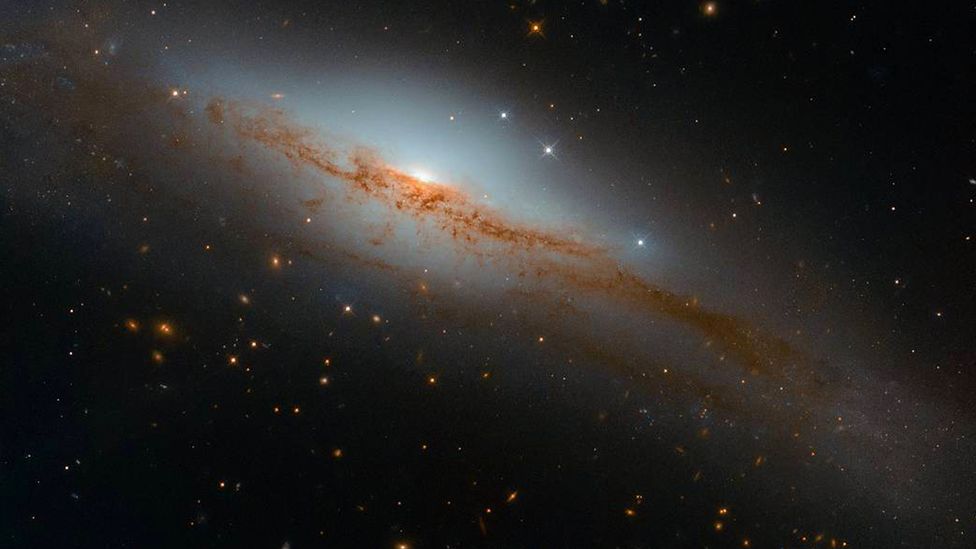
If you believe in God, then the idea of God being bound by the laws of physics is nonsense, because God can do everything, even travel faster than light. If you don’t believe in God, then the question is equally nonsensical, because there isn’t a God and nothing can travel faster than light.

Perhaps the question is really one for agnostics, who don’t know whether there is a God.

The idea that God might be “bound” by the laws of physics – which also govern chemistry and biology might not be so far stretched that the James Webb telescope might discover him or her. Whether it does or does not, if it did discovered life on another planet and the human race realizes that its long loneliness in time and space may be over — the possibility we’re no longer alone in the universe is where scientific empiricism and religious faith intersect, with NO true answer?.

Could any answer help us prove whether or not God exists, not on your nanny.

If God wasn’t able to break the laws of physics, she or he arguably wouldn’t be as powerful as you’d expect a supreme being to be. But if he or she could, why haven’t we seen any evidence of the laws of physics ever being broken in the Universe?

If there is a God who created the entire universe and ALL of its laws of physics, does God follow God’s own laws? Or can God supersede his own laws, such as travelling faster than the speed of light and thus being able to be in two different places at the same time?

Let’s consider whether God can be in more than one place at the same time.

(According to quantum mechanics, particles are by definition in a mix of different states until you actually measure them.)

There is something faster than the speed of light after all: Quantum information.

This doesn’t prove or disprove God, but it can help us think of God in physical terms – maybe as a shower of entangled particles, transferring quantum information back and forth, and so occupying many places at the same time? Even many universes at the same time?

But is it true?

A few years ago, a group of physicists posited that particles called tachyons travelled above light speed. Fortunately, their existence as real particles is deemed highly unlikely. If they did exist, they would have an imaginary mass and the fabric of space and time would become distorted – leading to violations of causality (and possibly a headache for God).

(This in itself does not say anything at all about God. It merely reinforces the knowledge that light travels very fast indeed.)

We can calculate that light has travelled roughly 1.3 x 10 x 23 (1.3 times 10 to the power 23) km in the 13.8 billion years of the Universe’s existence. Or rather, the observable Universe’s existence.

The Universe is expanding at a rate of approximately 70km/s per Mpc (1 Mpc = 1 Megaparsec or roughly 30 billion billion kilometres), so current estimates suggest that the distance to the edge of the universe is 46 billion light years. As time goes on, the volume of space increases, and light has to travel for longer to reach us.

We cannot observe or see across the entirety of the Universe that has grown since the Big Bang because insufficient time has passed for light from the first fractions of a second to reach us. Some argue that we therefore cannot be sure whether the laws of physics could be broken in other cosmic regions – perhaps they are just local, accidental laws. And that leads us on to something even bigger than the Universe.

But if inflation could happen once, why not many times?

We know from experiments that quantum fluctuations can give rise to pairs of particles suddenly coming into existence, only to disappear moments later. And if such fluctuations can produce particles, why not entire atoms or universes? It’s been suggested that, during the period of chaotic inflation, not everything was happening at the same rate – quantum fluctuations in the expansion could have produced bubbles that blew up to become universes in their own right.

How come all the physical laws and parameters in the universe happen to have the values that allowed stars, planets and ultimately life to develop?

We shouldn’t be surprised to see biofriendly physical laws – they after all produced us, so what else would we see? Some theists, however, argue it points to the existence of a God creating favourable conditions.

But God isn’t a valid scientific explanation.

We can’t disprove the idea that a God may have created the multiverse.

No matter what is believable or not, things can appear from nowhere and disappear to nowhere.

If you find this hard to swallow, what follows will make you choke.

First there is panpsychism, the idea that “consciousness pervades the universe and is a fundamental feature of it.

Even particles are never compelled to do anything, but are rather disposed, from their own nature, to respond rationally to their experience. That the universe is conscious and is acting towards a purpose of realising the full potential of its consciousness.

The radicalism of this “teleological cosmopsychism” is made clear by its implication that “during the first split second of time, the universe fine-tuned itself in order to allow for the emergence of life billions of years in the future”. To do this, “the universe must in some sense have been aware of this future possibility”.

That the universe itself has a built-in purpose, the disappointingly vague goal of which is “rational matter achieving a higher realisation of its nature.

The laws of physics are just right for conscious life to evolve that it can’t have been an accident.

It is hard to see why the universe’s purpose should give our lives one. Indeed, to believe one plays an infinitesimally small part in the unfolding of a cosmic master plan makes each human life look insignificant.

The basic question about our place in the Universe is one that may be answered by scientific investigations.

What are the next steps to finding life elsewhere?

Today’s telescopes can look at many stars and tell if they have one or more orbiting planets. Even more, they can determine if the planets are the right distance away from the star to have liquid water, the key ingredient to life as we know it.

NEXT:How to Choose Which Social Media Platforms to Use

We live in a time of political fury and hardening cultural divides. But if there is one thing on which virtually everyone is agreed, it is that the news and information we receive is biased. Much of the outrage that floods social media, occasionally leaking into opinion columns and broadcast interviews, is not simply a reaction to events themselves, but to the way in which they are reported and framed that are the problem.

This mentality now with the help of technological advances in communication spans the entire political spectrum and pervades societies around the world twisting our basic understanding of reality to our own ends.

This is not as simple as distrust.

The appearance of digital platforms, smartphones and the ubiquitous surveillance have enable to usher in a new public mood that is instinctively suspicious of anyone claiming to describe reality in a fair and objective fashion. Which will end in a Trumpian refusal to accept any mainstream or official account of the world with people become increasingly dependent on their own experiences and their own beliefs about how the world really works.

The crisis of democracy and of truth are one and the same:

Individuals are increasingly suspicious of the “official” stories they are being told, and expect to witness things for themselves.

How exactly do we distinguish this critical mentality from that of the conspiracy theorist, who is convinced that they alone have seen through the official version of events? Or to turn the question around, how might it be possible to recognise the most flagrant cases of bias in the behaviour of reporters and experts, but nevertheless to accept that what they say is often a reasonable depiction of the world?

It is tempting to blame the internet, populists or foreign trolls for flooding our otherwise rational society with lies.

But this underestimates the scale of the technological and philosophical transformations that are under way. The single biggest change in our public sphere is that we now have an unimaginable excess of news and content, where once we had scarcity. The explosion of information available to us is making it harder, not easier, to achieve consensus on truth.

As the quantity of information increases, the need to pick out bite-size pieces of content rises accordingly.

In this radically sceptical age, questions of where to look, what to focus on and who to trust are ones that we increasingly seek to answer for ourselves, without the help of intermediaries. This is a liberation of sorts, but it is also at the heart of our deteriorating confidence in public institutions.

There is now a self-sustaining information ecosystem becoming a serious public health problem across the world, aided by the online circulation of conspiracy theories and pseudo-science. However the panic surrounding echo chambers and so-called filter bubbles is largely groundless.

What, then, has to changed?

The key thing is that the elites of government and the media have lost their monopoly over the provision of information, but retain their prominence in the public eye.

And digital platforms now provide a public space to identify and rake over the flaws, biases and falsehoods of mainstream institutions.

The result is an increasingly sceptical citizenry, each seeking to manage their media diet, checking up on individual journalists in order to resist the pernicious influence of the establishment.

The problem we face is not, then, that certain people are oblivious to the “mainstream media”, or are victims of fake news, but that we are all seeking to see through the veneer of facts and information provided to us by public institutions.

Facts and official reports are no longer the end of the story.

The truth is now threatened by a radically different system, which is transforming the nature of empirical evidence and memory. One term for this is “big data”, which highlights the exponential growth in the quantity of data that societies create, thanks to digital technologies.

The reason there is so much data today is that more and more of our social lives are mediated digitally. Internet browsers, smartphones, social media platforms, smart cards and every other smart interface record every move we make. Whether or not we are conscious of it, we are constantly leaving traces of our activities, no matter how trivial.

But it is not the escalating quantity of data that constitutes the radical change.

Something altogether new has occurred that distinguishes today’s society from previous epochs.

In the past, recording devices were principally trained upon events that were already acknowledged as important.

Things no longer need to be judged “important” to be captured.

Consciously, we photograph events and record experiences regardless of their importance. Unconsciously, we leave a trace of our behaviour every time we swipe a smart card, address Amazon’s Alexa or touch our phone.

For the first time in human history, recording now happens by default, and the question of significance is addressed separately.

This shift has prompted an unrealistic set of expectations regarding possibilities for human knowledge.

When everything is being recorded, our knowledge of the world no longer needs to be mediated by professionals, experts, institutions and theories. Data can simply “speak for itself”. This is a fantasy of a truth unpolluted by any deliberate human intervention – the ultimate in scientific objectivity.

From this perspective, every controversy can in principle be settled thanks to the vast trove of data – CCTV, records of digital activity and so on – now available to us. Reality in its totality is being recorded, and reporters and officials look dismally compromised by comparison.

It is often a single image that seems to capture the truth of an event, only now there are cameras everywhere.

No matter how many times it is disproven, the notion that “the camera doesn’t lie” has a peculiar hold over our imaginations. In a society of blanket CCTV and smartphones, there are more cameras than people, and the torrent of data adds to the sense that the truth is somewhere amid the deluge, ignored by mainstream accounts.

The central demand of this newly sceptical public is “so show me”.

The rise of blanket surveillance technologies has paradoxical effects, raising expectations for objective knowledge to unrealistic levels, and then provoking fury when those in the public eye do not meet them.

Surely, in this age of mass data capture, the truth will become undeniable.

On the other hand, as the quantity of data becomes overwhelming – greater than human intelligence can comprehend – our ability to agree on the nature of reality seems to be declining. Once everything is, in principle, recordable, disputes heat up regarding what counts as significant in the first place.

What we are discovering is that, once the limitations on data capture are removed, there are escalating opportunities for conflict over the nature of reality.

Remember AI does not exist in a vacuum, its employment can and is discriminating against communities, powered by vast amounts of energy,  producing CO2 emissions.

Lastly the Advertising Industry.The impact of COVID-19 on the advertising industry - Passionate In ...

These day it seems that it has free rain to claim anything.

Like them or loathe them, advertisements are everywhere and they’re worsening not just the climate crisis, and ecological damage by promoting sustainability in consumption and inequality. Presenting a fake, idealised world that papers over an often brutal reality.

But advertising in one sense is even more dangerous, because it is so pervasive, sophisticated in its techniques and harder to see through. When hundreds of millions of people have desires for more and more stuff and for more and more services and experiences, that really adds up and puts a strain on the Earth.

The toll of disasters propelled by climate change in 2023 can be tallied with numbers — thousands of people dead, millions of others who lost jobs, homes and hope, and tens of billions of dollars sheared off economies. But numbers can’t reflect the way climate change is experienced — the intensity, the insecurity and the inequality that people on Earth are now living.

In every place that climate change makes its mark, inequality is made worse.

How are we going to protect the truth:

It goes without saying that spiritual beliefs will protect themselves. Lies, propaganda and fake news however is the challenge for our age.

Working out who to trust and who not to believe has been a facet of human life since our ancestors began living in complex societies. Politics has always bred those who will mislead to get ahead.

With news sources splintering and falsehoods spreading widely online, can anything be done?

Check Google.

Welcome to the world of “alternative facts”. It is a bewildering maze of claim and counterclaim, where hoaxes spread with frightening speed on social media and spark angry backlashes from people who take what they read at face value.

It is an environment where the mainstream media is accused of peddling “fake news” by the most powerful man in the world.

Voters are seemingly misled by the very politicians they elected and even scientific research – long considered a reliable basis for decisions – is dismissed as having little value.

Without a common starting point – a set of facts that people with otherwise different viewpoints can agree on – it will be hard to address any of the problems that the world now faces. The threat posed by the spread of misinformation should not be underestimated.

Some warn that “fake news” threatens the democratic process itself.

A survey conducted by the Pew Research Center towards the end of last year found that 64% of American adults said made-up news stories were causing confusion about the basic facts of current issues and events.

How we control the dissemination of things that seem to be untrue. We need a new way to decide what is trustworthy.

Take Wikipedia itself – which can be edited by anyone but uses teams of volunteer editors to weed out inaccuracies – is far from perfect.

These platforms and their like are simply in it for the money.

Last year, links to websites masquerading as reputable sources started appearing on social media sites like Facebook.

Stories about the Pope endorsing Donald Trump’s candidacy and Hillary Clinton being indicted for crimes related to her email scandal were shared widely despite being completely made up. The ability to share them widely on social media means a slice of the advertising revenue that comes from clicks.

Truth is no longer dictated by authorities, but is networked by peers. For every fact there is a counterfact. All those counterfacts and facts look identical online, which is confusing to most people.

Information spreads around the world in seconds, with the potential to reach billions of people. But it can also be dismissed with a flick of the finger. What we choose to engage with is self-reinforcing and we get shown more of the same. It results in an exaggerated “echo chamber” effect.

The challenge here is how to burst these bubbles.

One approach that has been tried is to challenge facts and claims when they appear on social media. Organisations like Full Fact, for example, look at persistent claims made by politicians or in the media, and try to correct them. (The BBC also has its own fact-checking unit, called Reality Check.)

This approach doesn’t work on social media because the audiences were largely disjointed.

Even when a correction reached a lot of people and a rumour reached a lot of people, they were usually not the same people. The problem is, corrections do not spread very well. This lack of overlap is a specific challenge when it comes to political issues.

On Facebook political bodies can put something out, pay for advertising, put it in front of millions of people, yet it is hard for those not being targeted to know they have done that. They can target people based on how old they are, where they live, what skin colour they have, what gender they are.

We shouldn’t think of social media as just peer-to-peer communication – it is also the most powerful advertising platform there has ever been. We have never had a time when it has been so easy to advertise to millions of people and not have the other millions of us notice.

Twitter and Facebook both insist they have strict rules on what can be advertised and particularly on political advertising. Regardless, the use of social media adverts in politics can have a major impact.

We need some transparency about who is using social media advertising when they are in election campaigns and referendum campaigns. We need watchdogs that will go around and say, ‘Hang on, this doesn’t stack up’ and ask for the record to be corrected.

We need Platforms to ensure that people have read content before sharing it to develop standards.

Google says it is working on ways to improve its algorithms so they take accuracy into account when displaying search results. “Judging which pages on the web best answer a query is a challenging problem and we don’t always get it right,”

The challenge is going to be writing tools that can check specific types of claims.

Built a fact-checker app that could sit in a browser and use Watson’s language skills to scan the page and give a percentage likelihood of whether it was true.

This idea of helping break through the isolated information bubbles that many of us now live in, comes up again and again.

By presenting people with accurate facts it should be possible to at least get a debate going.

There is a large proportion of the population living in what we would regard as an alternative reality.  By suggesting things to people that are outside their comfort zone but not so far outside they would never look at it you can keep people from self-radicalising in these bubbles.

There are understandable fears about powerful internet companies filtering what people see.

We should think about adding layers of credibility to sources. We need to tag and structure quality content in effective ways.

But what if people don’t agree with official sources of information at all?

This is a problem that governments around the world are facing as the public views what they tell them with increasing scepticism. There is an unwillingness to bend one’s mind around facts that don’t agree with one’s own viewpoint.

The first stage in that is crowdsourcing facts.  So before you have a debate, you come up with the commonly accepted facts that people can debate from.

Technology may help to solve this grand challenge of our age, but it is time for a little more self-awareness too.

In the end the world needs a new Independent Organisation to examine all technology against human values. Future war will be fought on Face recognition.

To certify and hold the original programs of all technology.

Have I been trained by robbery its manter when it comes to algorithms.

The whole goal of the transition is not to allow a handful of Westerners to peacefully go through life in a Tesla, a world in flames; it is to allow humanity – and the rest of biodiversity – to live decently.

All human comments appreciated. All like clicks and abuse chucked in the bin.

Contact: bobdillon33@gmail.com

Share this:

  • Click to share on WhatsApp (Opens in new window) WhatsApp
  • More
  • Click to share on Pocket (Opens in new window) Pocket
  • Click to share on Mastodon (Opens in new window) Mastodon

THE BEADY EYE ASK’S: What is life? What does it mean to be alive?

19 Tuesday Dec 2023

Posted by bobdillon33@gmail.com in Uncategorized

≈ Comments Off on THE BEADY EYE ASK’S: What is life? What does it mean to be alive?

Tags

Consciousness., neuroscience, philosophy, Science, spirituality

( Eight minutes read)

The quest to understand life and its purpose has been around as long as we have.

Today the same question persists:    What does it mean to be fully alive?

With the arrival of machine learning/artificial intelligence we are becoming disposable products – here to day, gone tomorrow. Therefore most essential existential drive is to understand the meaning of our own existence, that relates to all of us – rich or poor – left hemisphere – right hemisphere.

This with what the world is now facing, there are no questions more important or pressing ( now and or in the not so distant future), than the above for the whole planet.

It is one of those philosophical questions that can never be answered definitively.

However the conspiracy of greed, in all its forms, is not sustainable for any lifeform, whether it is alive or not.

——————

Life is short and time moves fast. Your life is not a dress rehearsal – make it count.

There is simply no room for belief in a spiritual realm, or in a scientific view of reality. Period.

No matter what we put in a test tube nothing is going to crawl out alive, it would simply be another kind of physical property.

We defined biology as the branch of science concerned with the study of living things, or organisms.

That definition is pretty straightforward. However, it opens the door to more difficult—and more interesting—questions:

adimas | AdobeStock

LET’S START.

Do you have to be conscious to be alive.  No. It actually isn’t as cut and dry as you think it is. Where does consciousness come from? And how do our brains create it?

We don’t have a great scientific definition of consciousness, and philosophical definitions are disputed, but in almost every conception it has something to do with an ongoing awareness of events beyond the raw computation of their properties and immediate selection of an action.

It might depend on what we mean exactly by consciousness (cognitive/representational abilities? Qualitative experience?) and also by “living” (autonomous subsistence? Self replication? Lineage with biological organisms on earth?).

All evidence is that brains generate consciousness.

Only living matter is susceptible of consciousness, but not all living things have a consciousness in the sense that we employ. Rudimentary life forms such as worms, bacteria, virus, do have a primitive form of consciousness even though they can hardly be said to be “conscious”.

Consciousness results from the antagonistic relativization between biological matter and physical matter. Somehow, within each of our brains, the combined activity of billions of neurons, each one a tiny biological machine, is giving rise to a conscious experience. And not just any conscious experience, your conscious experience, right here, right now.

One of the most compelling aspects of the mystery of consciousness is the nature of self.

Is consciousness possible without self-consciousness? And if so, would it still matter so much?

To understanding consciousness it immediately becomes apparent that like all other biological phenomena and like life itself, it must have evolved in gradations.

People have long pondered what consciousness actually is. What do we even mean by consciousness?

How can a purely physical thing feel like something? Surely consciousness is some kind of otherness?

Perhaps consciousness is an as-yet undiscovered fundamental property of the universe, or is it God himself.

So how far back in evolutionary history should we go to look for the origins of consciousness?

All the way back. Nearly four billion years. Long before animals had brains, or even a nervous system. Back to simple single-celled organisms like bacteria. Back to the origin of life itself.

This is not to suggest that simple unicellular organisms possessed consciousness, or even a modicum of it. Not consciousness, but its building blocks:

The origins of life will never be found.  Nor will we ever be able to create it.

Consciousness probably evolved as a way for organisms to go far beyond responding merely reflexively to stimuli—to be able to respond more flexibly, and in a more delayed and planned manner.

Thoughts and feelings seem ethereal, untethered from anything physical.

Self-awareness seems like a phenomenon utterly divorced from anything that could possibly be produced by cells comprised of physical particles. How the same material particles that comprise inanimate matter could be arranged in such a way as to make something alive, without adding that special, mysterious nonmaterial essence. Let alone how inanimate matter could organize itself in such clever and intricate ways through entirely unguided, spontaneous processes.

—————–

Now, in the present century, science is turning its attention to decoding the enigma of consciousness.

Without a shadow of a doubt there is no aspect of the mind that is not entirely the product of, and utterly dependent on, the physical brain. Disruption, disassembly or enhancement of brain circuitry (subtle or major) can radically alter any aspect of the mind.

And yet the mystery of how exactly the brain produces consciousness has remained unexplained.

When does consciousness begin in development? Does it emerge at birth, or is it present even in the womb?

We don’t yet know exactly how consciousness emerges, and very many intriguing mysteries remain.

About six minutes after the heart stops, and the blood supply to the brain is interrupted, the brain essentially dies. Then, deterioration reaches a point of no return and core consciousness – our ability to feel that we are here and now, and to recognise that thoughts we have are own own – is lost.

The moment the brain loses its exquisitely synchronized organization, consciousness is lost.

If that breakdown of physical processes is irreversible, consciousness is permanently extinguished, and the unique organization of matter that constituted that individual’s personhood, self or essence ceases to exist.

Everything that lives dies.  Is this true?  Yes  You only live once. No living thing know when living a life ends.

Indeed, the denial of death is the raison d’être of most religions.

The idea of life after death makes complete sense to our intuitions, and that’s not the only reason why the belief comes so naturally to people.

Because we associate ourselves with our body and we know bodies die this is true, but the distinction between past, present and future is only a stubbornly persistent illusion.

Do you believe that your mind, personality, or self is an essence that exists independent of your physical brain?

Do you think of you as a spirit or soul, temporarily constrained and residing in the organ that is your brain—an immortal consciousness merely housed in your earthly body?

———————

Death has never been popular, especially when it is seen as the final and utter cessation of being.

The prospect’s tolerability increases only when it is reframed as a mere passage to a heavenly paradise filled with all manner of delights—all the more so for those who are suffering or disadvantaged in this life.

It all depend on the observer.

What you see could not be present without your consciousness.

Your eyes are not portals to the world. Everything you see and experience right now‚ even your body, is a whirl of information occurring in your mind so you could live a life without been conscious that you are alive.

So how can a particle change its behavior depending on whether you watch it or not?

Our mind and its knowledge is the only thing that determines how they behave.

The answer is simple, reality is a process that involves your consciousness.

A particle’s exact location and momentum can’t be known at the same time.

So why should it matter to a particle what you decide to measure?

How can pairs of entangled particles be instantaneously connected on opposite sides of the galaxy as if space and time don’t exist?

In 2002, scientists showed that particles of light “photons” knew, in advance,what their distant twins would do in the future.

There are an infinite number of universes and everything that could possibly happen occurs in some universe. Death and Life does not exist in any real sense in these scenarios. All possible universes exist simultaneously, regardless of what happens in any of them.

When we die, we do so not in the random billiard-ball-matrix but in the inescapable-life-matrix. Life has a non-linear dimensionality; it’s like a perennial flower that returns to bloom in the multiverse.

Of course, we live in the same world. But critics claim this behavior is limited to the microscopic world. But this ‘two-world’ view (that is, one set of physical laws for small objects, and another for the rest of the universe including us) has no basis in reason and is being challenged in laboratories around the world.

Until we recognize the universe in our heads, attempts to understand reality will remain a road to nowhere.

————————–

You are alive, and so am I.

The tree’s outside my window.

However, snow falling from the clouds is not alive, or is it

The computer you’re using to read this article is not alive, and neither is a chair or table. The parts of a chair that are made of wood were once alive, but they aren’t any longer. If you were to burn the wood in a fire, the fire would not be alive either, or is it.

How can we tell that one thing is alive and another is not?

As I have said it’s surprisingly hard to come up with a precise definition of life.

Many definitions of life are operational definitions—they allow us to separate living things from nonliving ones, but they don’t actually pin down what life is. To make this separation, we must come up with a list of properties that are, as a group, uniquely characteristic of living organisms.

All living organisms are made up of one or more cells, which are considered the fundamental units of life

Humans—are made up of many cells.

Life depends on an enormous number of interlocking chemical reactions. Living things must use energy and consume nutrients to carry out the chemical reactions that sustain life.

Living organisms regulate their internal environment to maintain the relatively narrow range of conditions needed for cell function.

For instance, your body temperature needs to be kept relatively close to 98.6. This maintenance of a stable internal environment, even in the face of a changing external environment IS ESSENTIAL.

Living organisms show “irritability,” meaning that they respond to stimuli or changes in their environment.

Living organisms can reproduce themselves to create new organisms. Sperm and egg cells containing half of their genetic information, and these cells fuse to form a new individual with a full genetic set. You yourself started out as a single cell and now have tens of trillions of cells in your body.

Unicellular organisms may migrate toward a source of nutrients or away from a noxious chemical.

———————-

Populations of living organisms can undergo evolution, meaning that the genetic makeup of a population may change over time, for instance the basic building blocks of everyday life that have been obliterated in many areas of the Gaza Strip as the Israeli bombardment following Hamas’ deadly 7 October attacks stretches into its third month, will result in an state of unsecure Israel for decades to come.

You might well ask what can I do to change life. The answer is simple – Give and you will receive.

I was not alive in 1066 or 1492 or 1865 or 1920, so I have no way to judge any time except the time I experienced myself. I don’t think anyone can really pass judgment on any time which they did not experience for themselves, without seriously romanticising, or conversely vilifying that time.

I submit that the “golden years” for any generation, or individual, are the years right before you are forced to confront the realities of keeping yourself alive by yourself.

I am a 60th youth. so I could dream about being a part of the changes needed to make the world a better place, without being jaded by the realities of the roadblocks set up to prevent any of these changes from maturing.

We must come alive to be alive.  The best time to be alive is today, this moment, right now.

We have some big challenges facing us, like climate change, growing socioeconomic disparity, and threats of an erosion of rights and on going wars. “Yes, we have challenges galore … but those challenges spark imagination, creativity, courage and cooperation (if we are smart enough to rise to the occasion).

It is a battle, but it is possible to win.

That’s a problem because when we act instead of being, we aren’t living in the fullest sense.

————————–

GET OFF YOUR SMARTPHONE.

Engage with the world around you and learning as much as possible.  don’t take things for granted or perceive life casually. Being fully alive means being open to all the possibilities of your existence and exploring every part of yourself until you find what…

“Wealth is the ability to fully experience life,” Henry David Thoreau said.  Wrong.  You need an awakened brain to see life.

To rap this post up we could ask how and what has changed to living one life.

It can be made complicated or simple as the Malthusian trap in 1751 when we allowed machines to think,
– the AI trap.
What about future.
Will a Robot’s develop their own consciousness. 
Here, we ought to be concerned not just about the power that new forms of artificial intelligence are
gaining over us, but also about whether and when we need to take an ethical stance toward them.
With each new advance in our understanding comes a new sense of wonder and a new ability to see
ourselves as less apart from — and more a part of — the rest of nature. 
Our conscious experiences are part of nature just as our bodies are, just as our world is. 
“To live is the rarest thing in the world. Most people just exist,” Oscar Wilde said.

All human comments appreciated.  All like clicks and abuse chucked in the bin.

Contact: bobdillon33@gmail.com

Share this:

  • Click to share on WhatsApp (Opens in new window) WhatsApp
  • More
  • Click to share on Pocket (Opens in new window) Pocket
  • Click to share on Mastodon (Opens in new window) Mastodon

All comments and contributions much appreciated

  • THE BEADY EYE SAYS TRUST IS DISAPPEARING THANKS TO OUR INABILITY TO RELATE TO EACH OTHER. December 19, 2025
  • THE BEADY EYE SAYS. THE WORLD NEEDS PEOPLE GOVERNMENT NOT MONEY GOVERNMENTS. December 18, 2025
  • THE BEADY EYE ASKS WHAT ARE WE THE SAME GOING TO DO TO STOP THE WORLD BEING FUCK UP FOR PROFIT BY RIPOFF MERCHANT. December 17, 2025
  • THE BEADY EYE CHRISTMAS GREETING. December 16, 2025
  • THE BEADY EYE SAYS. TO THE NEXT GENERATION TO LIVE A LIFE WORTH WHILE YOU MUST CREATE MEMORIES. December 16, 2025

Archives

  • December 2025
  • November 2025
  • October 2025
  • September 2025
  • August 2025
  • July 2025
  • June 2025
  • May 2025
  • February 2025
  • January 2025
  • December 2024
  • November 2024
  • October 2024
  • September 2024
  • August 2024
  • July 2024
  • June 2024
  • May 2024
  • April 2024
  • March 2024
  • February 2024
  • January 2024
  • December 2023
  • October 2023
  • September 2023
  • August 2023
  • July 2023
  • June 2023
  • May 2023
  • April 2023
  • March 2023
  • February 2023
  • January 2023
  • December 2022
  • November 2022
  • October 2022
  • September 2022
  • August 2022
  • July 2022
  • June 2022
  • May 2022
  • April 2022
  • March 2022
  • February 2022
  • January 2022
  • December 2021
  • November 2021
  • October 2021
  • September 2021
  • August 2021
  • July 2021
  • June 2021
  • May 2021
  • April 2021
  • March 2021
  • February 2021
  • January 2021
  • December 2020
  • November 2020
  • October 2020
  • September 2020
  • August 2020
  • July 2020
  • June 2020
  • May 2020
  • April 2020
  • March 2020
  • February 2020
  • January 2020
  • December 2019
  • November 2019
  • October 2019
  • September 2019
  • August 2019
  • July 2019
  • June 2019
  • May 2019
  • April 2019
  • March 2019
  • February 2019
  • January 2019
  • December 2018
  • November 2018
  • October 2018
  • September 2018
  • August 2018
  • July 2018
  • June 2018
  • May 2018
  • April 2018
  • March 2018
  • February 2018
  • January 2018
  • December 2017
  • November 2017
  • October 2017
  • September 2017
  • August 2017
  • July 2017
  • June 2017
  • May 2017
  • April 2017
  • March 2017
  • February 2017
  • January 2017
  • December 2016
  • November 2016
  • October 2016
  • September 2016
  • August 2016
  • July 2016
  • June 2016
  • May 2016
  • April 2016
  • March 2016
  • February 2016
  • January 2016
  • December 2015
  • November 2015
  • October 2015
  • September 2015
  • August 2015
  • July 2015
  • June 2015
  • May 2015
  • April 2015
  • March 2015
  • February 2015
  • January 2015
  • December 2014
  • November 2014
  • October 2014
  • September 2014
  • August 2014
  • July 2014
  • June 2014
  • May 2014
  • April 2014
  • March 2014
  • February 2014
  • January 2014
  • December 2013
  • November 2013
  • October 2013

Talk to me.

Jason Lawrence's avatarJason Lawrence on THE BEADY EYE ASK’S: WIT…
benmadigan's avatarbenmadigan on THE BEADY EYE ASK’S: WHA…
bobdillon33@gmail.com's avatarbobdillon33@gmail.co… on THE BEADY EYE SAYS: WELCOME TO…
Ernest Harben's avatarOG on THE BEADY EYE SAYS: WELCOME TO…
benmadigan's avatarbenmadigan on THE BEADY EYE SAY’S. ONC…

7/7

Moulin de Labarde 46300
Gourdon Lot France
0565416842
Before 6pm.

My Blog; THE BEADY EYE.

My Blog; THE BEADY EYE.
bobdillon33@gmail.com

bobdillon33@gmail.com

Free Thinker.

View Full Profile →

Follow bobdillon33blog on WordPress.com

Blog Stats

  • 94,155 hits

Blogs I Follow

  • unnecessary news from earth
  • The Invictus Soul
  • WordPress.com News
  • WestDeltaGirl's Blog
  • The PPJ Gazette
Follow bobdillon33blog on WordPress.com

The Beady Eye.

The Beady Eye.
Follow bobdillon33blog on WordPress.com

Create a free website or blog at WordPress.com.

unnecessary news from earth

WITH MIGO

The Invictus Soul

The only thing worse than being 'blind' is having a Sight but no Vision

WordPress.com News

The latest news on WordPress.com and the WordPress community.

WestDeltaGirl's Blog

Sharing vegetarian and vegan recipes and food ideas

The PPJ Gazette

PPJ Gazette copyright ©

Privacy & Cookies: This site uses cookies. By continuing to use this website, you agree to their use.
To find out more, including how to control cookies, see here: Cookie Policy
  • Subscribe Subscribed
    • bobdillon33blog
    • Join 223 other subscribers
    • Already have a WordPress.com account? Log in now.
    • bobdillon33blog
    • Subscribe Subscribed
    • Sign up
    • Log in
    • Report this content
    • View site in Reader
    • Manage subscriptions
    • Collapse this bar