I am no scientist but it is obvious that you don’t rely on the very deadly infectious agent to create an immune population by allowing it to grow exponentially.
Viruses have host-pathogen interactions. They increase their diffusion rates, which creates opportunities for new host-virus encounters.
We are under environmental change and this virus might be the first associated with the ecosystem. The environment creates a disease triangle, animals, plants, humans, three-way interactions or hyperlinks driven by intraspecific competition.
So warm weather as we know kills off the flue till it returns in another form.
The transmissibility of COCID_19 is much greater and it is not clear what effect temperature and humidity will have on this virus.
My understanding of a virus is that it lies low in the long tall grass till its behavioural fatigue is understood.
Without strong guidance institutions and citizens will begin to make there own decisions.
This is not a time to create stamping herds however if your planning to practice social distancing your first thought turn to food.
Remember that online shopping and its delivery pass through multiple handling, so wash your hands before picking up the delivery and after.
Wash everything packeted or not.
Precaution, not panic.
Don’t believe sensational Tabloid News paper head lines.
The Evening Standard newspaper has a headline that states “the residents in Los Angeles are flocking to buy arms.”
History has taught us that Society is capable of both untold horrors and inspiring resolve.
That said watch Sovereign wealth funds the hyena of the world economy gobble, the roadkill.
All human comments appreciated. All like clicks and abuse chucked in the bin.
≈ Comments Off on THE BEADY EYE OPEN LETTER TO THE DELEGATES OF THE FORTHCOMING UNITED NATIONS CLIMATE CHANGE CONFERENCE IN GLASGOW: If you thinks they we have a problem with migration today … wait 20 years.
Although climate change undoubtedly posed an “existential threat to our world” it is not too late to take decisive action.
So far we had the Cop-out 15 to Cop 25, the Kyoto Protocol in 1997 the Paris Agreement in December 2015 and now the 2020 United Nations climate change conference in Glasgow.
As you know dealing with climate change will require coordinated action by nations around the world.
Up to this point what we have seen are countries and industries trying to gut, block or water down all efforts, in a rearguard manoeuvre that mirrors President Donald Trump’s rollback of climate policy in Washington.
24 million people were displaced by weather-related disasters this year.
As climate change begins to alter patterns of disasters, we can imagine these figures will get worse. Understand how changing weather patterns and disasters will alter patterns of migration. This will be both difficult and almost impossible to predict.
Reduction of carbon emissions has no chance of being reached through a voluntary cap and trade system utilizing the free market system. Why would countries strongly enforce caps and targets on their emissions if it puts them at a competitive disadvantage in the market place?
The fact is that if we are to save the planet from a devastating ecological meltdown, it is going to require an immediate and I mean immediate, reduction in greenhouse gases.
We must abandon the absurd notion that the invisible hand of the free market system will solve the crisis.
Why?
Because a market-driven voluntary system will not work.
Because they are traded for huge profits. There is no baseline from which true carbon reductions can be measured, verification is lacking.
Because it is cheaper to pollute and buy credits than it is to change production processes.
It is totally unrealistic to believe that carbon reductions on a large scale can be attained unless mandatory reductions are implemented and a full scale global.
While rewarding carbon-reducing technologies makes sense we will only be able to take worthwhile actions if they are funded by a self-perpetuating fund with outright non-repayable subsidies.
However, I don’t have to tell you that when it comes down to the wire as who and how we are going to fund the way forward to tackle fairly any actions the simple answer is that we do not have enough time to haggle about it.
It can be achieved tomorrow by placing a 0.005% commission on all world activities that seek profit for profit sake. ( See previous posts)
The world stock markets are 99% run by high-frequency algorithms. Exploiting market conditions that can’t be detected by the human eye.
Of course, this begs an important question will such a commission affect the free market and can it be applied worldwide.
Yes to both.
It will not be climate change that creates another refugee crisis.
Rather, it will be the attempts to stop this migration that will be creating a crisis.
Climate change will not wait. Neither can we for climate refugees.
Regardless of how fast we cut emissions, we are going to see more and more people on the move and there is no single global agreement that can be signed and ratified to change this fact.
Most of what you know about climate-linked migration is probably wrong.
We all know that climate change is the unpredictable ingredient in our rapidly changing world – and it’s potential to trigger both violent conflict and mass migration – needs to be considered as an urgent priority for policymakers.
As its effects spread, it will destabilise entire economies and overwhelm poorer countries lacking resources and infrastructure.
When added to existing social, economic and political tensions, it has the potential to ignite violence and conflict with disastrous consequences.
You cannot strike a bargain with Climate.
The choice faced by politicians and all of us is not about how to prevent climate-linked migration.
That possibility is gone, several decades ago.
There is now a stark choice between two very different options:
One: Trying to stop people from moving—which will lead to something that looks like a crisis—or helping people migrate out of the most badly hit areas.
Two: Is to facilitate climate-linked migration in a legal and organised way.
Support for migrants and refugees is at an all-time low. People are already using migration as a way of adapting climate change, with little or no help.
When migration isn’t illegal there is no need to do it secretly. No need for traffickers and smugglers. And no need for migrants to hide as soon as they arrive.
There is no simple law that could be passed that would “fix” climate-linked migration.
The problem is this won’t stop people moving so we need to start by defining exactly what a climate refugee is.
Droughts, hurricanes, floods and sea-level rise are all forcing people to move but picking out one group of people to call “climate refugees” is very difficult.
WHY?
Political responses to climate-linked migration are complicated, and it’s a field where the answers are often not simple.
Because if climate change plays a role in displacement it becomes difficult to draw the line.
What do we know about the links between climate change and conflict?
Climate-linked migration is very often from rural areas into cities.
So if the seas do rise to the predicted levels and people move within there own countries they will not be refugees climate or otherwise.
To be a refugee you have to have crossed an international border which is part of the official definition of what makes someone a refugee. But, as the impacts of climate change worsen, more people will want to migrate across borders.
Therefore there is only one course of action and that is to open approved channels into the EU and other world nations in order to determine who is a genuine refugee and who is not.
Few politicians will risk making bold statements about making provision for more people. Climate change is also a low priority for electorates in developed countries.
This is the climate crisis, not the coronavirus. tomorrow is too late.
These changes cannot take place tomorrow. They should have been implemented yesterday!
Capitalism caused the problem now it should pay to resolve it.
Climate change is unequivocal, that we are responsible, and that our choices before us matter”.
We were never going to get there in one go unless we spread the cost in a way that is acceptable to one and all.
Most of us struggle with seeing things from a different perspective but our perception of how the world is changing matters for what we believe is possible in the future.
So the purpose of this post is an attempt to take the complexity of the world and simplify it into some sort of graphic that will either help you understand it or motivate you to do something differently.
Dire predictions for the future are nothing new. There is a connection between our perception of the past and our hope for the future.
When one considers our world from a compressed perspective, the need for acceptance, understanding and education becomes glaringly apparent.
The state of the world today with Social media and profit-seeking algorithms is one of distrust. There are things that are certain in this world and there are lots of uncertainty attached to many things. Sometimes the only way to understand the world at its extremes is to put it in terms we use every day.
The fact is that at least two of the world’s largest powers have been at war with each other more than 50% of the time since about 1500.
The only problem we have here is us and therefore we cannot kill our way to a solution.
The Earth is about 3.5 million times larger than a human.
If you can read this message, you are more blessed than over two billion people in the world that cannot read at all.
Here’s what we’ve got.
We see our earth as big, and in a relative way, it is.
There are about 7 billion people currently on Earth. Over its existence, around 106 billion people have lived on Earth.
It exists on a blue dot, 24,901 miles in circumference that is over 4 1/2 billion years old, weighing in a 13,170,000,000,000,000,000,000,000 pounds (or 5,974,000,000,000,000,000,000,000 kilograms)
(Since Earth is too big to be placed on a scale, scientists use mathematics and the laws of gravity to figure out Earth’s weight.)
It has a solid iron ball in the middle that is 1,500 miles wide.
It makes up about 0.0003% of the total mass of our solar system.
75% of the Earth is covered in water only 2.5 per cent of it is fresh essential for producing food, clothing, and computers, moving our waste stream, and keeping us and the environment healthy.
About 321 billion gallons per day of surface water is used by humans.
Humans who are just 0.01% of all life have destroyed 83% of wild mammals.
Plants overshadow everything, representing 82% of all living matter. All other creatures, from insects to fungi, to fish and animals, make up just 5% of the world’s biomass.
It takes light a little over 8 light-minutes to travel from the Sun to Earth and it can circle our planet about seven and a half times in a single second.
Our closest star is Proxima Centauri at a distance of four light-years.
The Milky Way itself is about 100,000 light-years across and is home to about 400 billion stars.
(A light-year is the distance light travels in one Earth year. One light-year is about 6 trillion miles (9 trillion km). That is a 6 with 12 zeros behind it!)
According to the Big bang theory which happened about 13.7 billion years ago all the matter in the universe came into existence at the same time.
So anything can serve as a symbol as long as it refers to something beyond itself.
In our daily activities to give such things more than a passing glance.
However, our planet only seems large until we take a look at the rest of the cosmos around us.
Where do start? Its age., its place in the cosmic, or it’s future.
“Statistical facts don’t come to people naturally. Quite the opposite.
We’re visual creatures.
So perhaps a sense of scale might help.
Let’s start with a few comparisons
Life on Earth first emerged about 600 million years and we are the first generations whose decisions will determine for good or ill the future of human life on this planet, and we seem stuck in a way of thinking that is obsolete in a globalized world of growing populations. The widespread ignorance about these truly important changes in the world feeds into a general discontent about how the world is changing.
To our brains, a million, billion, and trillion all seem like large, vague numbers.
Today (January 2020) Bill Gates fortune amounts to around $108,5 billion around 0.5% of the GDP of the United States. By the time I complete this post, $1436400 amount will be added to his net worth and is predicted to hit the trillion mark by the age of 86.
If you are one of the so-called “rich” and you were lucky enough to make a million dollars per year, it would take you almost 80,000 YEARS to catch up.
We share the Earth with an estimated 1 quadrillion ants. Insects outweigh us by a factor of 17.
For every human, there are about one million ants and the total weight termites are more than the weight of all the humans in the world. They alone make up 10% of all animal biomass and 95% of soil and insect biomass in tropical regions.
Bacteria were one of the first life forms to appear on Earth, about 3.8 billion years ago, and they will most likely survive long after humans are gone.
The number of bacteria on our planet is estimated to be five million trillion trillion – that’s a five with 30 zeroes after it.
All the bacteria on Earth combined are about 1,166 times more massive than all the humans. For every human walking over the face of the planet.
Bacteria are the huddled masses of the microbial world, performing tasks that include everything from causing diseases to fixing nitrogen in the soil.
The number of bacteria makes the globe’s human population look downright puny.
Because the number of bacteria is so large, events that would occur once in 10 billion years in the laboratory would occur every second somewhere on the Earth.
We may have been underestimating our own humanness for the past several decades when it comes to Bacteria. The average human has over 100 trillion microbes in and on their body microbial cells outnumber human cells in your body by a ratio of around 10:1.
Our modus operandi was to kill them, rather than synchronize with them.
Bills and coins are the best way to transfer bacteria between people worldwide;
The debate over the microbiome will rage on, as the fear of the invisible and little understood will drive the masses in the short-term.
It is a fact that bacteria live in a whole series of worlds which stretch our imagination, be it the clouds in the sky, an Antarctic ice flow, a 100 degree C hot sulphur spring, 10 km down at the bottom of the sea, 1500 m below the surface of the earth in solid rock, in a rotting peach, in the roots of plants, the stomachs of animals and even your mouth, bacteria can be found there.
The vast majority of life is land-based and a large chunk – an eighth – is bacteria buried deep below the surface but bacteria also now found circling the Earth in the most upper layers of our atmosphere.
Recent findings on animal-bacteria interactions will likely require biologists to significantly alter their view of the fundamental nature of the entire biosphere.
“And that’s the way it is.”
My preference would be to avoid mentioning any ratio at all – you don’t need to it convey the importance of the microbiome.
Some 70 per cent of the global consumption of the drugs are used in animal and fish farming and to spray on crops.
Antibiotics in the environment do not do any good, they only contribute to risks which we are now witnessing with the Coronavirus. A rapidly spreading virus that is establishing itself across the world through international travel, trade and tourism.
We are now living in a bacterial world, and it’s impacting us more than
previously thought. No matter what process you think you are studying, you
must look for and consider a major role for bacteria.
The World Bank has estimated that drug-resistant infections could cost the world economy $1 trillion every year after 2030.
By 2050 costing the world around $100 trillion in lost output: more than the size of the current world economy, and roughly equivalent to the world losing the output of the UK economy every year, for 35 years not to mention killing an extra 10 million people across the world every year.
Back to earth.
This is what a quadrillion looks like written out: 1,000,000,000,000,000.
If it survives us it has 6.5 billion years before the sun (which is 92,960,000 miles away) about 109 times larger than the earth. That means you could fit around 1.3 million earth’s inside the sun which is actually considered a dwarf star — By contrast, UY Scuti is the largest star we humans are aware of; it is a hypergiant around 1.7 billion miles in diameter. UY Scuti is around 5 billion times larger than our sun.
Its no wonder we a pixel.
The diameter of our solar system is around 5,580,000,000,000 miles — that is, about five and a half trillion miles across. Expanding outward from here, we have to start talking about things in terms of light-years, as the scale is just too massive to discuss in miles. (One light-year is about 6 trillion miles (9 trillion km).
Our Milky Way Galaxy is about 100,000 light-years in diameter of which since the dawn of man we have observed the equivalent of the top of rubber on a pencil.
This is about one 24-millionth of the entire night sky visible from earth.
The diameter of the observable universe is estimated at about 28 billion parsecs (93 billion light-years).
Ok, the numbers are pretty hard to comprehend even when you know what each unit represents. To even think of how long 10 trillion kilometres might be, let alone 93 billion times that distance, can cause your brain to hurt.
Earth, in turn, is nothing more than a molecule in the incomprehensibly vast cosmic ocean.
Without a global jurisdiction, no government can enforce any kind of coherent rights doctrine, particularly in the face of borderless problems like terrorism or environmental crisis.
It is up to the people of earth to dissolve the strains between each-other in an equitable, harmonious way.
The planet you were born on is dying.
We’re on a timeline that leaves little space for politicians to gamble. This is a world that requires nations, corporations and individuals to think not in terms of quarterly reports or midterm elections, but in decades.
For transformative change to be possible, we sometimes need marginalized peoples to speak out, in a loud voice, against the status quo.
The guardians for future generations, representing the children of 2050, can be that voice that says we are spending too much on conflict and too little on peace.
Thus as Irving John Good said, “The survival of man depends on the early construction of an ultra-intelligent machine.”
“The first ultra-intelligent machine is the last invention that man need ever make, provided that the machine is docile enough to tell us how to keep it under control.”
If I took a personal guess the way we are going there will be no need for such an intelligent machine as there will be nothing to be intelligent with.
ALL HUMAN COMMENTS APPRECIATED. ALL LIKE CLICKS AND ABUSE CHUCKED IN THE BIN.
We are the first generation to know we’re destroying the world, and we could be the last that can do anything about it.
SO AS IF YOU DON’T ALREADY KNOW WHAT NEEDS TO CHANGE HERE IS YOUR CHANCE TO DO SOMETHING ABOUT IT.
We need to recognize that everything we do, every step we take, every sentence we write, every word we speak—or don’t speak—counts. Nothing is trivial.
Take personal responsibility.
We need to use social media – this is one of the most effective ways to get brands to listen to you, so tell them that you want a change.
Why?
Because, unfortunately, the politicians who dominate the world stage are, depressingly, mostly cut from the old cloth, and the leadership challenges they face, are particularly complex and will require different skills — notably a clearer vision among leaders of organisation’s shared purpose.
Because the digital revolution is far from over the pace of change only seems to be quickening when in fact it is causing isolation.
Because, we are allowing non-regulated large technology platforms to become too powerful, using their size to dominate markets and we are not paying enough attention to how the tools they create can be used for ill – like device addictions, as we drown in notifications and false news feed posts.
Because there is an increasing imperative for all of us to respond to climate change. Which will and is challenging our lives developing on a daily bases right in front of our eyes into our biggest need to act as one.
How can any of this be achieved?
How will the changing political, economic and environmental landscapes shape the world?
Don’t get caught up in the how of things. Don’t wait for things to be right in order to begin.
Because in our age of tectonic geopolitical shifts, “alternative facts,” and conflicting narratives, our routine everyday life is losing sight of our true goals and aspirations.
Because with the rise of short-sighted populism we will solve nothing, other than feeding the great unwashed with short term gratification.
We need to write a piece of software that eliminated malware, viruses and all of that crap.
We need to show our political leaders that they want to change, to understand our common humanity.
We need to try to put yourself into another person’s headspace and accept people for who they are and what their beliefs are.
We need to collaborate and push for policies that complement both sides of the political spectrum.
We need to make wasting our resources unacceptable in all aspects of our life. Every product we buy has an environmental footprint and could end up in a landfill. The impact of plastic pollution on our oceans is becoming increasingly clear, having drastic impacts on marine life.
We need to be more conscious about what we buy, and where we buy it from. Living a less consumerist lifestyle can benefit you and our planet.
We need to use our purchasing power and make sure our money is going towards positive change.
We need to realize that what we eat contributes around a quarter of global greenhouse gas emissions and is responsible for almost 60% of global biodiversity loss.
We need to be supporting eco-friendly products.
We need to try to waste as little food as possible, and compost the organic waste we can’t eat.
We need to make education free for all. Start educating not for profit but for a better understanding of what is the common values of life.
We need to stop asking the world’s smartest scientists to find us more time and to reverse gravity’s effect on our lives.
We need to stop killing each other. Countries start wars and people die and more people are in poverty.
We need to create out of profit for profit sake a World Aid fund with perpetual funding. (See previous posts) A new nonprofit called Carbon Offsets to alleviate address Climate change and Poverty.
We need to realize that all significant change throughout history has occurred not because of nations, armies, governments and certainly not committees. They happened as a result of the courage and commitment of individuals. Believe that you can and will make a difference.
The genesis for change is awareness so I need to stop.
This year will not only be another opportunity for the leading minds in media in all its forms to highlight consumption for consumption sake.
However, if they wanted to spread a message that helps us all they would ban advertising that promotes consumption for consumption sake/profit.
Feel free to add your priorities. With rapid innovations in technology and open access to data its no longer “wait and see.” We need to stop the huge feeling of apathy.
The coming year, let alone the next decade looks unpredictable.
All human comments appreciated. All like clicks and abuse chucked in the bin.
Climate change is accelerating and we know that it is the world’s greatest collective action problem.
The global climate is probably the most complex of all complex systems to which humans belong.
It’s more than a quarter of a century since the leaders of the world, gathered in Rio de Janeiro in 1992, committed their countries to avoiding “dangerous anthropogenic interference in the climate system” by signing the UN convention on climate change.
We know we have to tackle climate change –as do the politicians.
We know that it’s rational for an individual country not to drastically reduce greenhouse gases, given most economies are heavily based on energy resources that emit them.
Yet, if all nations act that way — indeed, that’s what’s happening — most countries will eventually be worse off due to the cumulative impacts of all our emissions.
Put another way, what’s better for each individual country in isolation is actually worse for the planet as a whole. Conversely, what is worse for each individual country, overtime would be better for the planet.
Unlike other policies, climate change is cumulative.
We know that climate summits highlight the science, but achieve little or nothing-
The First World Climate Conference was held on 12–23 February 1979 in Geneva as was the second the third.
Here is the list
Contents
1995: Berlin, Germany
1996: Geneva, Switzerland
1997: Kyoto, Japan
1998: Buenos Aires, Argentina
1999: Bonn, Germany
2000: The Hague, Netherlands
2001: Bonn, Germany
2001: Marrakech, Morocco
2002: New Delhi, India
2003: Milan, Italy
2004: Buenos Aires, Argentina
2005: Montreal, Canada
2006: Nairobi, Kenya
2007: Bali, Indonesia
2008: Poznań, Poland
2009: Copenhagen, Denmark
2010: Cancún, Mexico
2011: Durban, South Africa
2012: Doha, Qatar
2013: Warsaw, Poland
2014: Lima, Peru
2015: Paris, France
2016: Marrakech, Morocco
2017: Bonn, Germany
2018: Katowice, Poland
2019: Bonn, Germany
2019: Madrid, Spain
A lot of talking while the ice melts, our lands burn, and our oceans rise and our Co2 emissions are traded on an Ecosystem Marketplace’s – Carbon offsetting- Cardon Cap and trade systems.
The longer we wait to address it, the bigger the problem it becomes and the harder it gets to solve, fueling a feedback loop that makes solutions ever more difficult.
Imagine getting taxed before you put that money into your fund and then not living long enough to reap the payoffs of your fund.
That’s happening with climate change, on a global scale.
However, we must realize that climate is a much broader, systemic problem that can not be tackled solely by making how important our everyday choices are.
We know that behind the energy and climate change hypocrisy is in all of us.
You’re a hypocrite for advocating on climate change while using fossil fuels.
Such arguments are shallow because virtually everyone depends on these fuels somehow.
Trying to make people feel guilty for their carbon-intensive activities doesn’t actually get them to change their behaviour.
Nobody wants to change unless they really, really have to.
We know that transforming endemic corporate behaviours that are devastating the planet requires whole industries to move together, and fast.
We need bold, industry-wide coalitions for change.
We need to bring industry leaders together to agree on reforms to the parts of the business that are irrelevant to customers but of grave importance for our environment.
However business cannot tackle climate change on its own and we don’t have time to wait for individual companies to each go on their own sustainability journeys.
We know that enacting policies today to cut greenhouse gas emissions won’t have a discernible impact on global warming for decades, if not centuries.
We know that investors are in effect expecting returns on assets in companies that eventually must be written off for the planet to be safe.
The private sector can either destroy the planet or replenish it.
We know what needs to be done.
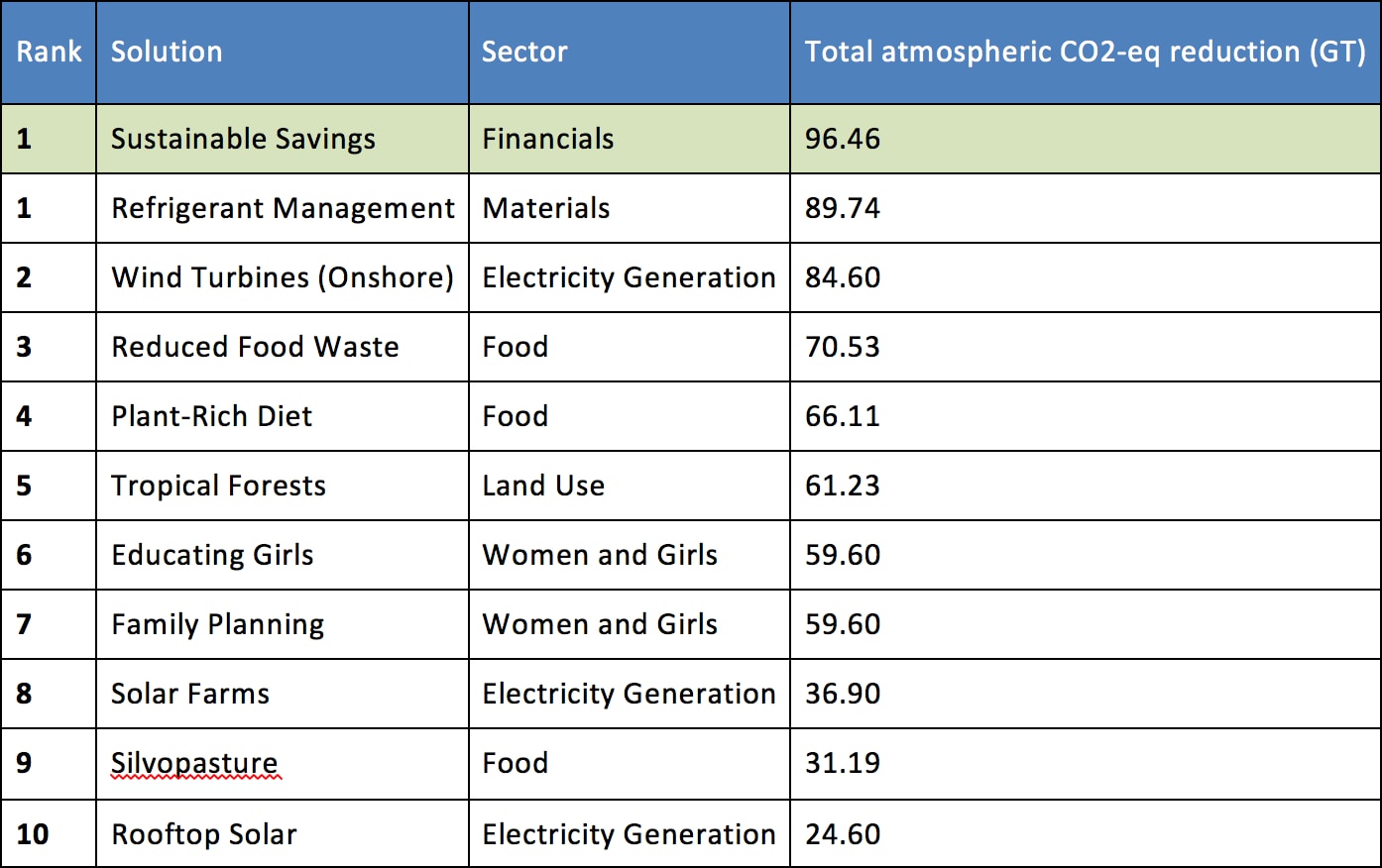
This means that sustainable savings are the number one solution to climate change and the effects are larger than rooftop solar, solar farms, afforestation and electric vehicles combined.
To do this is laying down a clear challenge.
But unfortunately, not all carbon footprints are created equally.
This makes it a tough sell and begs the question to what degree people are willingly taking concrete steps to lower their lifestyle’s impact on climate change, or why people are not.
The why not, is because for most people it’s still intangible and not well understood even considered a Hoax because of Fake news’ or ‘inconvenient truth that there is no problem and hope that it disappears by itself.
The willingness is rhetoric like flight shaming which is near the top of the list of hypocrisy charges.
No press release can obscure the fact that time is not on our side.
We need to cap our carbon emissions now not in ten years.
Increasingly missing from this picture above is the support of governments that operate on 2- to 6-year election cycles.
Technology is bringing down the price of switching to green alternatives, not least renewable energy. So what is stopping governments from making these technologies available with affordable Green Grants to one and all Now?
With most countries more engrossed by their internal domestic political squabbles the reasons are political or financial, not scientific.
The science isn’t that difficult to explain but instead of explanations we are presented with statements of facts with an only simple explanation and no real substance, CO2 is like a blanket.
Yet there is a troubling gap between the serious reality depicted by climate change science and the level of concern among all of us.
Worry and action are two different things.
Climate change is a direct consequence of the widespread, now globalized, mass production and consumption of goods, and of the material construction of our habitat that has accompanied it. Yet, despite this reality, production and construction continue unabated.
If we believed that a systemic response to climate change was an equally shared responsibility, was our responsibility, we would be responding to it.
Until we do that, we’re all climate change deniers.
( See Post – suggestion a World Aid commission of 0.05% )
All human comments appreciated. All like clicks and abuse chucked in the bin.
The most recent UN Climate Change summit in New York saw a succession of national leaders standing on the podium saying they understood the gravity of the situation but then failing to announce concrete plans.
China made no new promises. The United States said nothing at all, with Germany promoting a new plan worth $60 billion over 10 years to speed a transition to clean power the European Union did not signal its intention to cut emissions faster.
In fact, a host of countries made only incremental promises. Most of the major economies fell “woefully short” of expectations.
Their lack of ambition stands in sharp contrast with the growing demand for action around the world.
Indeed the summit highlighted that the United Nations (which is our best effort to humans to come together for the good of all) is for all intensive purposes a gossip shop with no powers.
This is not the fault of the organisation because the only way for human rights to persist is for everyone to collectively agree to accept that things don’t have to go their way 100% of the time.
Climate Change, however, represents a unique problem in as much that for the first time in human history, the human race is confronted with a problem that is not about human rights but our very existence as a species.
It is the defining issue of our time and now is the defining moment to do something about it.
Fortunately or unfortunately observations of the future are not available at this time.
But we do however have scientific models with the best data available predicting the need for humans to act like one if we want future generations of our species to prevail.
Rowland said, ” What’s the use of having developed a science well enough to make predictions if in the end were willing to do is to stand around and wait for them to come true.”
Thanks to technology we are now constantly aware of every fault and flaw of our humanity, combined with an inundation of doomsayers and narcissistic nihilists commanding our attention space
It is what is causingthis constant feelingof a chaotic and insecure world that doesn’t actually exist.
It’s this feeling of insecurity and chaos that is igniting the platforms of divisive strong-men like Trump, Erdogan, and Putin.
It’sthis feeling that has consumed the consciousness of millions of people and caused them to look at their country through the lens of popularism a fun-house of the mirror: exaggerating all that is wrong and minimizing all that is right.
We judge groups of people by their weakest and most deprived members. And to protect ourselves from the overreaching judgments of others, we consolidate into our own clans and tribes, we take refuge in our own precious identity politics and we buy more and more into a worldview that is disconnected from cold data and hard facts.
Because of this, we demonize each other.
The plain truth lies in our past historical model of our development to the present day which confirms that because of greed we are incapable of acting in the common good of all.
This is not just a world of shortages, but also of over-consumption. A great paradox is that 1,300 million tons of food is wasted every year, while almost 2000 million people suffer from hunger or malnutrition.
We all know that we need Fresh Air/Fresh Water/ Clean Energy/ and Food.
In order to keep ourselves tethered to reality as it is, not to reality how it feels the sooner we come to term that Climate Change has all the components to affect each and every one of them the better.
One only has to look to see that we are failing to match reality, rather than peaking, the level of emissions being released into the atmosphere are at an all-time high, triggering global weather hazards from heat waves to intense hurricanes and raging wildfires.
You might not think that humans were and are capable of changing the basic physics and chemistry of this entire, huge planet but you can’t make this shit up we are all related: us, plants, animals, soil.
Extinction Rebellion a do-it-together movement has its core reasons for protests correct :
That government and other institutions must tell the truth and declare a Climate and Ecological Emergency must act now to halt biodiversity loss and reduce greenhouse gas emissions to net-zero by 2025 and must create and be led by the decisions of Citizens’ Assemblies on climate and ecological justice.
Their protests worldwide are causing a flood of negativity because Capitalism is not ready to burn down the very structures on which the most successful civilizations in human history have been built.
They are promoting internet generated platform where apocalyptic beliefs are celebrated and spread, and moderation and reason is something that becomes too arduous and boring to stand.
There is no doubt that with our ever-increasing population, our human needs for various resources to sustain, maintain and increase our living standards have put a great strain on our planet and it’s ability to provide.
But the world isn’t worse. It’s just that we’re more aware of all of the bad things than ever before. By every objective measurement, it’s arguably the sanest and safest it’s been in recorded history.
What is new is smartphone the internet, and most importantly, social media. This is what’s new. This is what’s different. How we’re getting information, what information is reaching us, and most importantly, what information and views we are most rewarded for sharing.
Perhaps if Extinction Rebellion were to shift their focus to the attention economy, (outrageous news and information spread faster and further than any other form of information, dominating our daily attention) where people are rewarded for extremism they might have a greater effect.
There is only one way to tackle climate change and that is by making Profit for profit sake provide the financial assistance that is required to do so. ( see the previous post on – A world aid commission)
By applying a World Aid commission of 0.05% on all activities that generate profit for profit sake we would create a perpetual fund of billions that could seriously address the underlying reasons for climate change.
We could also through this fund give people the opportunity to get involved by issuing World Aid non-trading Bonds.
All everyone needed to do to succeed in life is work very hard, it is what we’ve all been sold and it is true but no it is not if you just take a few steps back and look at the bigger picture and the smallest of details.
Most of us are lucky to live in a world where wars are far less frequent than they were in the past, the trade-off does not make for good celebratory achievement, however.
I’m exhausted from all the stories of shootings and attacks and bombs and the constant stream of awful stuff that is happening out there. I, too, feel desensitized and dejected from the seemingly constant carnage raging across the planet.
Most of us wouldn’t be happy with living our lives on water rations, for the poor and developing world that is already the case.
All human comments appreciated. All like clicks and abuse chucked in the bin.
≈ Comments Off on THE BEADY EYE ASK’S; IS THE NEW GREEN DEAL PRIMARILY A PETTY-BOURGEOIS ATTEMPT TO RESCUE CAPITALISM BY THE METHODS OF SOCIAL REFORMISTS UNDER THE CLOAK OF CLIMATE CHANGE?
These days in the higher ethylene of the political world it seems you must be an accomplished liar and not a far-seeing planner to be successful.
With the advent of social media people’s day-to-day exposure to political discussion and disagreement has increased dramatically.
However what is worrying is that technology in the form of social media, the smartphone is continuing to create a contemporary problem that large sections of the public want ‘democracy’ but without the ‘politics.
As a result, were are seeing fake news driving populist politics that has no longterm objectives.
There is nothing new about fake news it has been prevalent down the ages but the days when a lot of us believe that many of the major world events that are shaping our destinies occur because somebody or somebodies have planned them that way are all but disappeared.
However, with the media making very little effort to explain political decisions, rather than just jumping on any perceived gaffe or conflict ‘democracy’ remains an incredibly positive notion.
With the public no longer thinking about the world within the silos of government departments governments need to engage people in solutions rather than top-down ‘vote for us and we’ll provide the answers.
Younger people don’t just copy their parents’ tribal loyalties. Voting is more like shopping, with preferences changing on a quim of twitter on social media.
Unfortunately, our present-day political system has not yet caught up, it offers limited choice. What happens in between elections is for all attentive purposes driven by the smartphone that are monitored by unregulated algorithms owned by you know who.
What is been ignored is that this digital space in all its diversity represents a huge opportunity with the power to engage people in new ways. Online participation in local decision-making is one possibility. This would involve citizens outside election time-.
So we need to understand all the ways people behave and respond in the digital space and set clear and realistic goals for what they hope to accomplish.
However, people are now becoming slow and slower to engage with the internet due to the lack of security/ privacy/and a source of truth.
Why?
Because Capitalism is spending billion on digital marketing each year, and for good reason. Digital media has enormous power to reach and influence people. Over 2 billion people—about one-third of the global population—now access the Internet.
We all know if we are to avoid extinction due to climate change which poses real risks to our collective future we need a green energy transformation.
The problem is that behind a veneer of objectivity, Capitalism as always sees an opportunity to make a profit – Carbon Credits for instance, with more and more consumerism products being promoted as good for the environment
With all the political goodwill the transfer to low carbon emission can only be achieved by offering citizens a means to get involved other than protesting.
How can this be done?
We must allow people to exercise democratic control over their money, finance, working conditions and environment ie De-politicising decision-making by limiting capitalism’s worst failing- profit for profit sake.
To have authentic democracy!
Citizens must be afforded the opportunity to get involved not just politically, but financially by creating Green Energy European Bonds that cannot be traded.
These bonds will allow citizens to regain control over unaccountable ‘technocrats’, complicit politicians and shadowy institutions.
They can be sold like lotto tickets. Forging a common agenda.
Emancipating citizens from all levels of government from bureaucratic and corporate power. Allowing direct investment into shared, green prosperity.
Politics has never been popular and never will be:
The more disengaged, the less likely that political parties will deliver.
We’re able to measure things in a way that we’ve never been able to measure them before. So why not measure the wealth of a nation by the financial investment support it gets from its citizen’s. Rather than encompassing every possible thing that can go under the rubric of “green.
I suppose my goal here is to propose something vague enough that no one will object to it.
Have you wondered how you got to where you are today?
Greed.
Is technology taking control of our lives or our destiny?
Yes. We’ve ditched reality.
The very data on which we measure the economy is disconnected from
the reality, with political leaders using high soaring” words “which often
imbibe emptiness.
Communication and leadership are key elements in elections these days
but you can’t sell a bad product, can you?
All human comments appreciated. All like clicks and abuse chucked in the bin.
Right now nobody knows for sure but it is going to radically upend many aspects of our lives, as it is a technological paradigm shift.
3G or 4G was just a trailer, and the movie is about to begin.
Why?
Because it is going to marry data collection and computation with billions of devices.
But there is a debate on the necessity for it, considering human physical and mental limitations.
It will become the underlying fabric of an entire ecosystem of fully connected intelligent sensors and devices, capable of overhauling economic and business policies, and further blurring geographical and cultural borders.
It will create a world populated by digital citizens in continual interaction with their surroundings, their peers and public services.
It will enable communications & computing power to come together creating a hyperconnected ‘Internet of everything’ world.
It will release the spectrum for mobile devices, bring about dramatic transformations in our daily lives.
It is going to change everything about everything else.
It will rock the world economy over the next decade as we haven’t yet
conceived that will be tied into the 5G network.
For example:
Your car will know your every move faster than your mind. Cars will be able to use 5G to talk to other cars and sensors built around cities, from street lamps to gas stations.
Think about your relationship between the smart city and an autonomous car.
Think about predictive care. It will enable advanced data transfer from wearables and sensors, facilitating remote clinical decisions and robotic surgery
Think about bring virtual reality into the classroom, allowing students to face real-life situations without real-life consequences.
Think about living in a world of always-on, always-sharing, cloud applications and services.
Think about it leading to seamless and ubiquitous information control.
It will potential to unlock trillions of revenue across a broad range of industries creating a different hidden economy with wireless consumption.
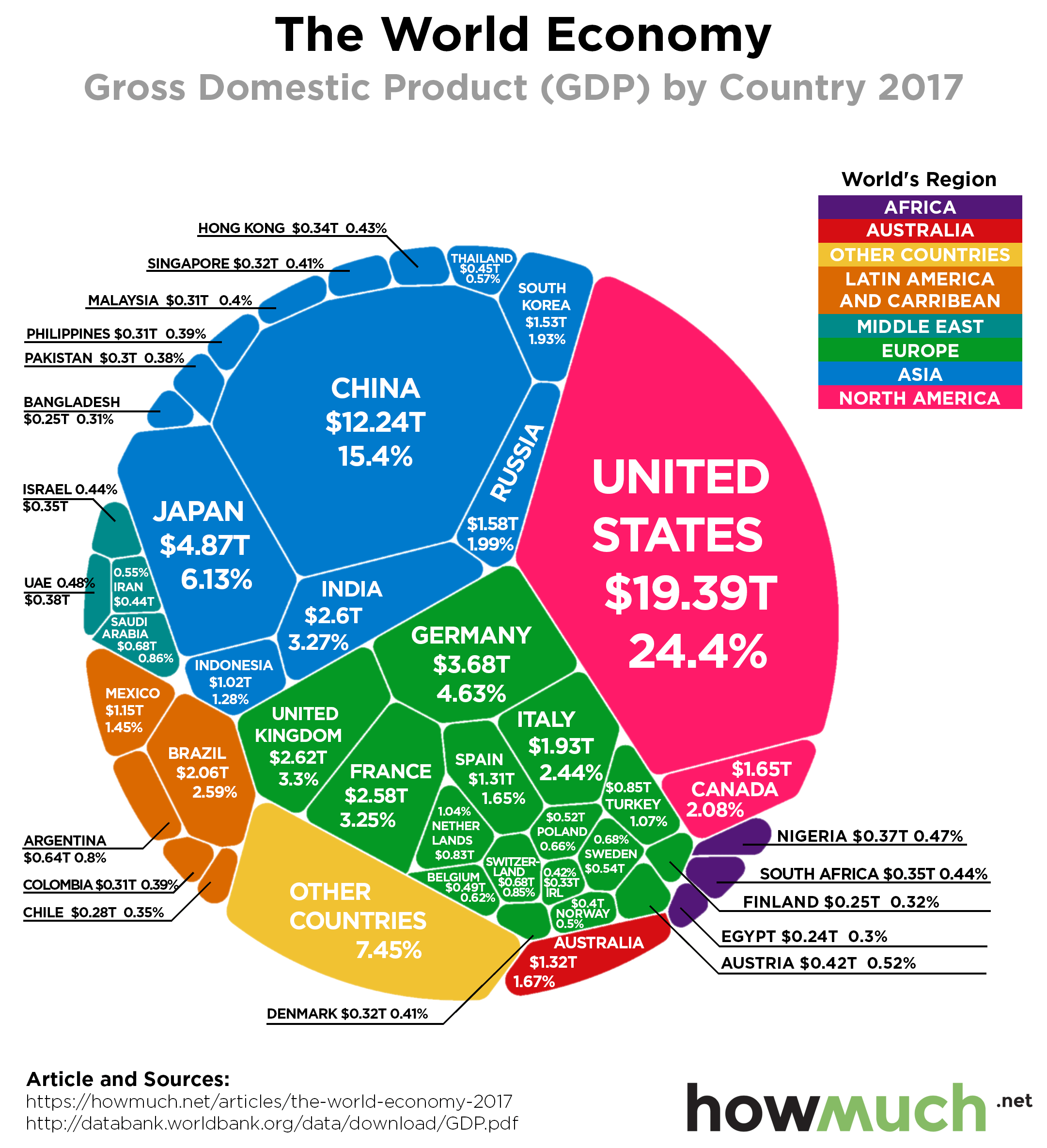
This revenue will be equivalent to total U.S. consumer spending in 2016, and more than the combined spending of China, Japan, France, Germany, and the U.K. This revenue also represents about 4.6 per cent of all global real output in 2035.
Another words countries without 5G will become less competitive globally, spreading inequality on a scale not seen before. This inequality leads to more than just differences in consumption and wealth distribution. It affects access to healthcare, education, nutrition, employment, financial and technological platforms; it exacerbates poverty, exclusion and violence.
By 2020, analysts estimate that there will be more than 20 billion installed IoT devices around the world, supporting 22 million jobs generating massive amounts of data.
With access to this kind of information, industries of all kinds will be able to reach new levels of efficiency as they add products, services, and capabilities.
It will mean that a surgeon may not need to be in the same room as a patient in the future. A surgeon could use a VR headset and special glove to control a robot arm that would perform an actual operation in another location.
With haptic feedback, you’ll be able to transmit the tactile sensation of experience, enhancing the sights and sounds of a video experience.
It will make drone warfare affordable and drone defence essential.
It will make consumption and production distant and broad concepts that are somehow unattached from us.
So what can we, as consumers, do, instead of feeling powerless and distraught?
We must ensure that 5G respect nature, and the interconnectedness of everything that matters for humanity.
An unofficial trade war is already afoot in the tech industry due to the imminent rise of 5G technology.
But it will not happen overnight. Think in terms of a decade or more for it to fully unfold.
All human comments appreciated. All like clicks and abuse chucked in the bin.
The world has been so depleted and is being so depleted even at this moment, that the future sustenance and stability for humanity is now imperilled.
Your future and your destiny will not be determined within the next decades. It will be determined now.
It will be determined by humanity’s wisdom or by its ignorance.
The future and fate of humanity will be decided in the years to come, and it will be determined by how humanity responds to the great change that is coming over the horizon in the form of climate change to the world.
No religion nor religious institution as it stands today can prepare humanity for the complexities of life in the universe or what humanity must know to preserve human freedom and sovereignty within this world.
It is what humanity must do to prepare both collectively and individually for climate change and our collective inability to regulate AI.
But because humanity as a whole is dull and ignorant, self-absorbed and unresponsive to a changing world we are still writing ourselves out of the script.
Our universities for years have taught classical/neoclassic/neoliberal economics; like these theories are unmovable divine pillars of reality.
Therefore, while most people see we need a more reasonable and democratic version of our current extreme capitalism, the dominant discourse insists the story not be changed at all. The dominant political narrative of our times is that we must live as individuals crushed between market and state. The relationship between the individual and the state boils down to a zero-sum game where everyone one eventually looses. The state is a pure and simple force.
With the effects of climate change (to come) people are waking up to the deception, let’s hope we can do right, because on all fronts of civilization as we know it time is running out.
We have political failure everywhere leading to the malfunctioning of our altruistic nature.
There is a disconnect between mass (commercial) media, even political science and common sense or popular wisdom.
Sounds to cynical?
Let me oil up my bow.
Present-day political failures are at heart of our problems.
Why?
Because there is a failure of imagination when it comes to the societal structure we evolved to live in and that our brains are still programmed for.
Google, Apple, Facebook, Amazon, etc.
These new organizations are actually not creating a dream environment of maximum social cooperation.
They are instead removing people’s needs to fulfilling each other’s needs!
Gnawing away our collective and individual identity our senses of belonging to a community for the sake of profit.
We need politics of belonging, but the trouble is, it requires a moral, ethical and educated populations which we don’t have and are now with AI are more than likely than ever never going to have.
As we rely on more and more Algorithms to make decisions without a discussion of facts and morals, against a background of pure data narrative can lead society to dark places.
We are unaware of what I call honest pricing that shows the cost of profit for profit sake to the environment.
If we were to charge fees proportional to harmful impacts on the environment, we would create a monetary representation of the value of natural resources.
So overcoming the material world would be the first step to a sustainable world-shifting us into a new reality.
We are left with the ever-present questions.
Do we give a toss and if so what can be done about it?
What roles do religion and our deepest beliefs play in contemporary life?
What lifestyles are we adopting in an increasingly technological world?
What is the balance of power–and the balance of trade?
What is the pattern of war and peace?
What are the issues facing local and regional communities, and what issues must we confront on a global scale?
What do we remember about our collective past, and how do we see the future?
Have the great issues that preoccupied people since the beginning of time taken new, distinctive forms after more than a hundred years of the fastest technological and cultural change in the history of the planet?
What challenges remain intractable?
What emerging solutions seem to offer the greatest promise?
Social media is full of video on the state of the world.
The need for clear-headed prioritisation of resources to tackle real, not imagined problems.
Despite that long record of success, agricultural production is stressed by floods, deforestation, drought, urbanization (land-devouring cities), and a growing appetite for resource-intensive meat.
More than 150 million people worldwide are at risk from rising sea levels and extreme storms that cause coastal flooding.
In the past 50 years, thanks to education and technology, more than 2 billion people joined the middle class, swelling the human footprint of nearly 50 per cent. At the same time, millions of acres of cropland have been devoured by population growth.
Today more than 6 billion people live in cities—about 70 per cent of the world’s population, roughly double the proportion of a half-century ago.
The Arctic may hold 22 per cent of the world’s undiscovered conventional oil and natural gas resources. Melting ice is liberating immense oil and natural gas reserves.
Although mounting worldwide energy demand continues to stress the environment, it has powered large-scale development of renewable energy.
Artificial intelligence will soon dominate the Earth—it could take decades, it could take millennia. At that point, AI will also take control of the Earths process. Refashioning the planet in ways that are optimal for synthetic life but quite possibly deadly for us.
You can’t help but wonder where it will lead. It’s a very dodgy future.
It may be true that the cosmos started with the Big Bang, some 14 billion years ago, but it took an awfully long time for the consequences of the Big Bang to settle down.
To have an optimistic view is the only one worth having.
So may you recognize that you as an individual must make these decisions and not simply rely upon others to make them for you.
All human comments appreciated. All like clicks and abuse chucked in the bin.
In one sense, as no one knows the future, no one or any organisation is able, to tell the truth about climate change.
There is not a politician on earth who wants to tell his or her constituents the truth when it comes to Climate Change so we’ve probably already blown our chance to avoid substantial suffering, but we can somewhat reduce the even worse suffering that awaits our grandchildren.
However, the truth is that the evidence for rapid climate change is now more than compelling:
Unfortunately, are we not able as a species to confront the facts?
Humans are subject to intense status quo bias.
Especially on the conservative end of the psychological spectrum — which is the direction all humans move when they feel frightened or under threat — there is a powerful craving for the message that things are, basically, okay, that the system is working like it’s supposed to, that the current state of affairs is the best available, or close enough.
No matter how we look at it the truth is, that on our current trajectory, in the absence of substantial new climate policy, current warming is heading for up to 4°C and may be higher by the end of the century.
On any clear reading of the available evidence, no one or any country wants to financially foot the economic cost of reducing emissions.
We are headed for disaster — slowly, yes, but surely with the outcome determined not by us but by earth itself.
We are now facing a situation in which limiting temperature even to either 2/ 3°C requires heroic policy and technology changes, not to mention trillions and trillions in investment.
Capitalism might be “decoupling ” carbon emissions but whether we like it or not the worrying implication is that emissions will be much higher than expected even if climate action continues and is ramped up.
It is true to say that over the course of the Earth’s 4.5-billion-year history, the climate has changed a lot. This is true. But the rapid warming we’re seeing now can’t be explained by natural cycles of warming and cooling. This much faster warming corresponds with levels of carbon dioxide in the atmosphere, which have been increasing since the industrial revolution.
Let’s be clear, CO2 itself does not cause problems. It’s part of the natural global ecosystem.
We’re already seeing the devastating effects of climate change on global food supplies, increasing migration, conflict, disease and global instability, and this will only get worse if we don’t act now.
It threatens the future of the planet that we depend on for our survival and we’re the last generation that can do something about it.
The fact that everyone involved has to dance around the obvious truth, at risk of losing their status and influence will once again be displayed at the forthcoming UN conference.
But that’s where we’re headed.
It will take enormous effort just to avoid that fate and we’re running out of time; we’ve only got five or 10 years to turn things around, but we can do it, if we just not only put our minds to agreeing a 0.05% world aid commission on all activities that produce profit for profit sake. ( See previous posts)
The problem is, while carbon capture is getting less, as more and more forests are either cut down or burned across the world, largely to produce our food or palm oil or cosmetics etc, Governments are still backing dirty fossil fuels.
The technology and systems we need to move to 100% renewable energy by 2045 and use our planet’s resources sustainably are already available.
What’s now needed is for political and business leaders to take bold and urgent action towards using these solutions to address the climate crisis and restore nature.
Given what we know about human beings, path dependence, and political dysfunction we will not be able to suck thousands of megatons of carbon out of the atmosphere, so humanity can go net negative by 2100.
Capitalism is already turning climate change into a product.
Before its too late – there is no way that the world will come to any agreement unless there is an equitable distribution of the costs.
Capitalism profit contributed to it so let it do it again but in reverse.
This is the brutal logic of climate change.
Even if we emit a bunch more carbon in the short term. “deployment of large-scale bioenergy faces biophysical, technical and social challenges will cause massive social unrest.
No branch of science, certainly not climatology, can tell us what the humans of 2050 are capable of. We are all, on that score, making educated guesses, and a knowledge of history, politics, and economics will be just as important to that judgment as any knowledge of the physical sciences.
We can watch footage of Trump calling climate change “a hoax … a money-making industry” and not be left winded by such staggering ignorance or astonishing deceit, though it is, more likely, more bleakly, a catastrophic combination of the two.
The evidence that climate change is a serious problem that we must contend with now, is overwhelming on its own. There is no need to overstate the evidence, particularly when it feeds a paralyzing narrative of doom and hopelessness.
No one wants to pays but we will all pay in one way or the other.




:max_bytes(150000):strip_icc():format(webp)/GettyImages-459705020-58b88e343df78c353cc1d53a.jpg)