• About
  • THE BEADY EYE SAY’S : THE EUROPEAN UNION SHOULD THANK ENGLAND FOR ITS IN OR OUT REFERENDUM.

bobdillon33blog

~ Free Thinker.

bobdillon33blog

Category Archives: James Webb Telescope

THE BEADY EYE ASK’S: THESE DAYS WHAT CAN WE BELIEVE IN ?

21 Thursday Dec 2023

Posted by bobdillon33@gmail.com in #whatif.com, 2023 the year of disconnection., A Constitution for the Earth., Advertising, Advertising industry, Algorithms., Artificial Intelligence.,  Attention economy, Capitalism, CAPITALISM IS INCOMPATIBLE IN THE FIGHT AGAINST CLIMATE CHANGE., Carbon Emissions., Civilization., Climate Change., Collective stupidity., Consciousness., Cry for help., Dehumanization., Democracy, Digital age., DIGITAL DICTATORSHIP., Digital Friendship., Disconnection., Discrimination., Earth, Emergency powers., Enegery, Environment, Face Recognition., Facebook, Fake News., Fourth Industrial Revolution., Freedom of Speech, Freedom of the Press., Google, Google Knowledge., GPS-Tracking., Green Energy., Happy Christmas from the Beady eye., Honesty., How to do it., Human Collective Stupidity., HUMAN INTELLIGENCE, Human values., Humanity., Imagination., Inequality, INTELLIGENCE., IS DATA DESTORYING THE WORLD?, James Webb Telescope, Life., MISINFORMATION., Modern Day Communication., Modern Day Democracy., Modern day life., Modern Day Slavery., Monetization of nature, Our Common Values., PAIN AND SUFFERING IN LIFE, Political lying., Political Trust, Politics., Populism., Post - truth politics., Profiteering., Purpose of life., Real life experience's, Reality., Renewable Energy., Robot citizenship., Social Media, Social Media Regulation., Society, State of the world, Sustaniability, Technology, Technology v Humanity, Telling the truth., The common good., The essence of our humanity., The Future, The Internet., THE NEW NORM., The Obvious., The pursuit of profit., The state of the World., The world to day., THE WORLD YOU LIVE IN., THIS IS THE STATE OF THE WORLD.  , TRACKING TECHNOLOGY., Truth, Truthfulness., Twitter, Unanswered Questions., Universal values., VALUES, We can leave a legacy worthwhile., What is shaping our world., WHAT IS TRUTH, Where's the Global Outrage., World Leaders, World Organisations., World Politics

≈ Comments Off on THE BEADY EYE ASK’S: THESE DAYS WHAT CAN WE BELIEVE IN ?

Tags

bible, god, philosophy, Religion., Science

( Fifteen minute read)

The last post this year, have a peaceful Christmas.

This post is a follow up to the post, ( What is life, What does it mean to be alive). It is also an attempt to argue for as many preposterous positions as possible in the shortest space of time possible.

That there are no options other than accepting that life is objectively meaningful or not meaningful at all.

Science requires proof, religious belief requires faith.

So let’s get God and Gods out of the way.

.Could quantum physics help explain a God that could be in two places at once? (Credit: Nasa)
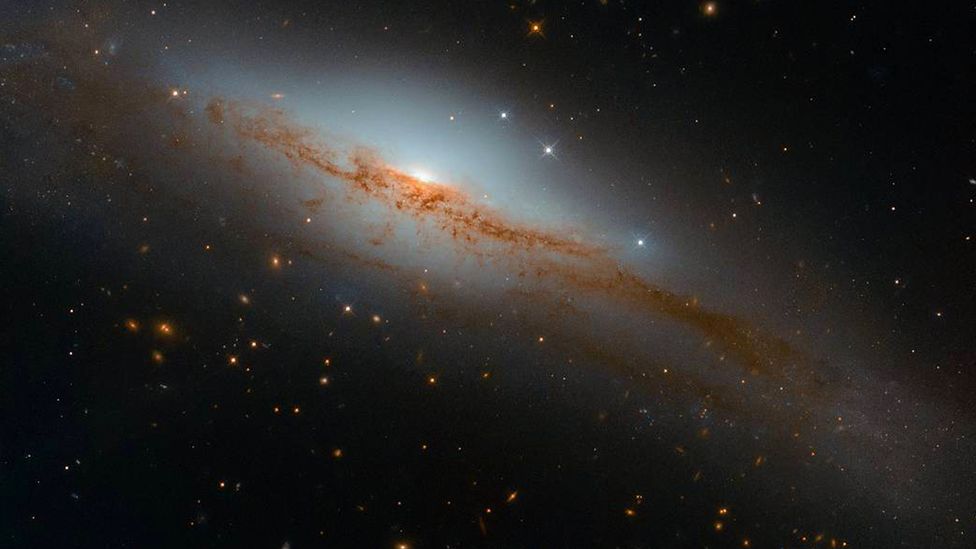
If you believe in God, then the idea of God being bound by the laws of physics is nonsense, because God can do everything, even travel faster than light. If you don’t believe in God, then the question is equally nonsensical, because there isn’t a God and nothing can travel faster than light.

Perhaps the question is really one for agnostics, who don’t know whether there is a God.

The idea that God might be “bound” by the laws of physics – which also govern chemistry and biology might not be so far stretched that the James Webb telescope might discover him or her. Whether it does or does not, if it did discovered life on another planet and the human race realizes that its long loneliness in time and space may be over — the possibility we’re no longer alone in the universe is where scientific empiricism and religious faith intersect, with NO true answer?.

Could any answer help us prove whether or not God exists, not on your nanny.

If God wasn’t able to break the laws of physics, she or he arguably wouldn’t be as powerful as you’d expect a supreme being to be. But if he or she could, why haven’t we seen any evidence of the laws of physics ever being broken in the Universe?

If there is a God who created the entire universe and ALL of its laws of physics, does God follow God’s own laws? Or can God supersede his own laws, such as travelling faster than the speed of light and thus being able to be in two different places at the same time?

Let’s consider whether God can be in more than one place at the same time.

(According to quantum mechanics, particles are by definition in a mix of different states until you actually measure them.)

There is something faster than the speed of light after all: Quantum information.

This doesn’t prove or disprove God, but it can help us think of God in physical terms – maybe as a shower of entangled particles, transferring quantum information back and forth, and so occupying many places at the same time? Even many universes at the same time?

But is it true?

A few years ago, a group of physicists posited that particles called tachyons travelled above light speed. Fortunately, their existence as real particles is deemed highly unlikely. If they did exist, they would have an imaginary mass and the fabric of space and time would become distorted – leading to violations of causality (and possibly a headache for God).

(This in itself does not say anything at all about God. It merely reinforces the knowledge that light travels very fast indeed.)

We can calculate that light has travelled roughly 1.3 x 10 x 23 (1.3 times 10 to the power 23) km in the 13.8 billion years of the Universe’s existence. Or rather, the observable Universe’s existence.

The Universe is expanding at a rate of approximately 70km/s per Mpc (1 Mpc = 1 Megaparsec or roughly 30 billion billion kilometres), so current estimates suggest that the distance to the edge of the universe is 46 billion light years. As time goes on, the volume of space increases, and light has to travel for longer to reach us.

We cannot observe or see across the entirety of the Universe that has grown since the Big Bang because insufficient time has passed for light from the first fractions of a second to reach us. Some argue that we therefore cannot be sure whether the laws of physics could be broken in other cosmic regions – perhaps they are just local, accidental laws. And that leads us on to something even bigger than the Universe.

But if inflation could happen once, why not many times?

We know from experiments that quantum fluctuations can give rise to pairs of particles suddenly coming into existence, only to disappear moments later. And if such fluctuations can produce particles, why not entire atoms or universes? It’s been suggested that, during the period of chaotic inflation, not everything was happening at the same rate – quantum fluctuations in the expansion could have produced bubbles that blew up to become universes in their own right.

How come all the physical laws and parameters in the universe happen to have the values that allowed stars, planets and ultimately life to develop?

We shouldn’t be surprised to see biofriendly physical laws – they after all produced us, so what else would we see? Some theists, however, argue it points to the existence of a God creating favourable conditions.

But God isn’t a valid scientific explanation.

We can’t disprove the idea that a God may have created the multiverse.

No matter what is believable or not, things can appear from nowhere and disappear to nowhere.

If you find this hard to swallow, what follows will make you choke.

First there is panpsychism, the idea that “consciousness pervades the universe and is a fundamental feature of it.

Even particles are never compelled to do anything, but are rather disposed, from their own nature, to respond rationally to their experience. That the universe is conscious and is acting towards a purpose of realising the full potential of its consciousness.

The radicalism of this “teleological cosmopsychism” is made clear by its implication that “during the first split second of time, the universe fine-tuned itself in order to allow for the emergence of life billions of years in the future”. To do this, “the universe must in some sense have been aware of this future possibility”.

That the universe itself has a built-in purpose, the disappointingly vague goal of which is “rational matter achieving a higher realisation of its nature.

The laws of physics are just right for conscious life to evolve that it can’t have been an accident.

It is hard to see why the universe’s purpose should give our lives one. Indeed, to believe one plays an infinitesimally small part in the unfolding of a cosmic master plan makes each human life look insignificant.

The basic question about our place in the Universe is one that may be answered by scientific investigations.

What are the next steps to finding life elsewhere?

Today’s telescopes can look at many stars and tell if they have one or more orbiting planets. Even more, they can determine if the planets are the right distance away from the star to have liquid water, the key ingredient to life as we know it.

NEXT:How to Choose Which Social Media Platforms to Use

We live in a time of political fury and hardening cultural divides. But if there is one thing on which virtually everyone is agreed, it is that the news and information we receive is biased. Much of the outrage that floods social media, occasionally leaking into opinion columns and broadcast interviews, is not simply a reaction to events themselves, but to the way in which they are reported and framed that are the problem.

This mentality now with the help of technological advances in communication spans the entire political spectrum and pervades societies around the world twisting our basic understanding of reality to our own ends.

This is not as simple as distrust.

The appearance of digital platforms, smartphones and the ubiquitous surveillance have enable to usher in a new public mood that is instinctively suspicious of anyone claiming to describe reality in a fair and objective fashion. Which will end in a Trumpian refusal to accept any mainstream or official account of the world with people become increasingly dependent on their own experiences and their own beliefs about how the world really works.

The crisis of democracy and of truth are one and the same:

Individuals are increasingly suspicious of the “official” stories they are being told, and expect to witness things for themselves.

How exactly do we distinguish this critical mentality from that of the conspiracy theorist, who is convinced that they alone have seen through the official version of events? Or to turn the question around, how might it be possible to recognise the most flagrant cases of bias in the behaviour of reporters and experts, but nevertheless to accept that what they say is often a reasonable depiction of the world?

It is tempting to blame the internet, populists or foreign trolls for flooding our otherwise rational society with lies.

But this underestimates the scale of the technological and philosophical transformations that are under way. The single biggest change in our public sphere is that we now have an unimaginable excess of news and content, where once we had scarcity. The explosion of information available to us is making it harder, not easier, to achieve consensus on truth.

As the quantity of information increases, the need to pick out bite-size pieces of content rises accordingly.

In this radically sceptical age, questions of where to look, what to focus on and who to trust are ones that we increasingly seek to answer for ourselves, without the help of intermediaries. This is a liberation of sorts, but it is also at the heart of our deteriorating confidence in public institutions.

There is now a self-sustaining information ecosystem becoming a serious public health problem across the world, aided by the online circulation of conspiracy theories and pseudo-science. However the panic surrounding echo chambers and so-called filter bubbles is largely groundless.

What, then, has to changed?

The key thing is that the elites of government and the media have lost their monopoly over the provision of information, but retain their prominence in the public eye.

And digital platforms now provide a public space to identify and rake over the flaws, biases and falsehoods of mainstream institutions.

The result is an increasingly sceptical citizenry, each seeking to manage their media diet, checking up on individual journalists in order to resist the pernicious influence of the establishment.

The problem we face is not, then, that certain people are oblivious to the “mainstream media”, or are victims of fake news, but that we are all seeking to see through the veneer of facts and information provided to us by public institutions.

Facts and official reports are no longer the end of the story.

The truth is now threatened by a radically different system, which is transforming the nature of empirical evidence and memory. One term for this is “big data”, which highlights the exponential growth in the quantity of data that societies create, thanks to digital technologies.

The reason there is so much data today is that more and more of our social lives are mediated digitally. Internet browsers, smartphones, social media platforms, smart cards and every other smart interface record every move we make. Whether or not we are conscious of it, we are constantly leaving traces of our activities, no matter how trivial.

But it is not the escalating quantity of data that constitutes the radical change.

Something altogether new has occurred that distinguishes today’s society from previous epochs.

In the past, recording devices were principally trained upon events that were already acknowledged as important.

Things no longer need to be judged “important” to be captured.

Consciously, we photograph events and record experiences regardless of their importance. Unconsciously, we leave a trace of our behaviour every time we swipe a smart card, address Amazon’s Alexa or touch our phone.

For the first time in human history, recording now happens by default, and the question of significance is addressed separately.

This shift has prompted an unrealistic set of expectations regarding possibilities for human knowledge.

When everything is being recorded, our knowledge of the world no longer needs to be mediated by professionals, experts, institutions and theories. Data can simply “speak for itself”. This is a fantasy of a truth unpolluted by any deliberate human intervention – the ultimate in scientific objectivity.

From this perspective, every controversy can in principle be settled thanks to the vast trove of data – CCTV, records of digital activity and so on – now available to us. Reality in its totality is being recorded, and reporters and officials look dismally compromised by comparison.

It is often a single image that seems to capture the truth of an event, only now there are cameras everywhere.

No matter how many times it is disproven, the notion that “the camera doesn’t lie” has a peculiar hold over our imaginations. In a society of blanket CCTV and smartphones, there are more cameras than people, and the torrent of data adds to the sense that the truth is somewhere amid the deluge, ignored by mainstream accounts.

The central demand of this newly sceptical public is “so show me”.

The rise of blanket surveillance technologies has paradoxical effects, raising expectations for objective knowledge to unrealistic levels, and then provoking fury when those in the public eye do not meet them.

Surely, in this age of mass data capture, the truth will become undeniable.

On the other hand, as the quantity of data becomes overwhelming – greater than human intelligence can comprehend – our ability to agree on the nature of reality seems to be declining. Once everything is, in principle, recordable, disputes heat up regarding what counts as significant in the first place.

What we are discovering is that, once the limitations on data capture are removed, there are escalating opportunities for conflict over the nature of reality.

Remember AI does not exist in a vacuum, its employment can and is discriminating against communities, powered by vast amounts of energy,  producing CO2 emissions.

Lastly the Advertising Industry.The impact of COVID-19 on the advertising industry - Passionate In ...

These day it seems that it has free rain to claim anything.

Like them or loathe them, advertisements are everywhere and they’re worsening not just the climate crisis, and ecological damage by promoting sustainability in consumption and inequality. Presenting a fake, idealised world that papers over an often brutal reality.

But advertising in one sense is even more dangerous, because it is so pervasive, sophisticated in its techniques and harder to see through. When hundreds of millions of people have desires for more and more stuff and for more and more services and experiences, that really adds up and puts a strain on the Earth.

The toll of disasters propelled by climate change in 2023 can be tallied with numbers — thousands of people dead, millions of others who lost jobs, homes and hope, and tens of billions of dollars sheared off economies. But numbers can’t reflect the way climate change is experienced — the intensity, the insecurity and the inequality that people on Earth are now living.

In every place that climate change makes its mark, inequality is made worse.

How are we going to protect the truth:

It goes without saying that spiritual beliefs will protect themselves. Lies, propaganda and fake news however is the challenge for our age.

Working out who to trust and who not to believe has been a facet of human life since our ancestors began living in complex societies. Politics has always bred those who will mislead to get ahead.

With news sources splintering and falsehoods spreading widely online, can anything be done?

Check Google.

Welcome to the world of “alternative facts”. It is a bewildering maze of claim and counterclaim, where hoaxes spread with frightening speed on social media and spark angry backlashes from people who take what they read at face value.

It is an environment where the mainstream media is accused of peddling “fake news” by the most powerful man in the world.

Voters are seemingly misled by the very politicians they elected and even scientific research – long considered a reliable basis for decisions – is dismissed as having little value.

Without a common starting point – a set of facts that people with otherwise different viewpoints can agree on – it will be hard to address any of the problems that the world now faces. The threat posed by the spread of misinformation should not be underestimated.

Some warn that “fake news” threatens the democratic process itself.

A survey conducted by the Pew Research Center towards the end of last year found that 64% of American adults said made-up news stories were causing confusion about the basic facts of current issues and events.

How we control the dissemination of things that seem to be untrue. We need a new way to decide what is trustworthy.

Take Wikipedia itself – which can be edited by anyone but uses teams of volunteer editors to weed out inaccuracies – is far from perfect.

These platforms and their like are simply in it for the money.

Last year, links to websites masquerading as reputable sources started appearing on social media sites like Facebook.

Stories about the Pope endorsing Donald Trump’s candidacy and Hillary Clinton being indicted for crimes related to her email scandal were shared widely despite being completely made up. The ability to share them widely on social media means a slice of the advertising revenue that comes from clicks.

Truth is no longer dictated by authorities, but is networked by peers. For every fact there is a counterfact. All those counterfacts and facts look identical online, which is confusing to most people.

Information spreads around the world in seconds, with the potential to reach billions of people. But it can also be dismissed with a flick of the finger. What we choose to engage with is self-reinforcing and we get shown more of the same. It results in an exaggerated “echo chamber” effect.

The challenge here is how to burst these bubbles.

One approach that has been tried is to challenge facts and claims when they appear on social media. Organisations like Full Fact, for example, look at persistent claims made by politicians or in the media, and try to correct them. (The BBC also has its own fact-checking unit, called Reality Check.)

This approach doesn’t work on social media because the audiences were largely disjointed.

Even when a correction reached a lot of people and a rumour reached a lot of people, they were usually not the same people. The problem is, corrections do not spread very well. This lack of overlap is a specific challenge when it comes to political issues.

On Facebook political bodies can put something out, pay for advertising, put it in front of millions of people, yet it is hard for those not being targeted to know they have done that. They can target people based on how old they are, where they live, what skin colour they have, what gender they are.

We shouldn’t think of social media as just peer-to-peer communication – it is also the most powerful advertising platform there has ever been. We have never had a time when it has been so easy to advertise to millions of people and not have the other millions of us notice.

Twitter and Facebook both insist they have strict rules on what can be advertised and particularly on political advertising. Regardless, the use of social media adverts in politics can have a major impact.

We need some transparency about who is using social media advertising when they are in election campaigns and referendum campaigns. We need watchdogs that will go around and say, ‘Hang on, this doesn’t stack up’ and ask for the record to be corrected.

We need Platforms to ensure that people have read content before sharing it to develop standards.

Google says it is working on ways to improve its algorithms so they take accuracy into account when displaying search results. “Judging which pages on the web best answer a query is a challenging problem and we don’t always get it right,”

The challenge is going to be writing tools that can check specific types of claims.

Built a fact-checker app that could sit in a browser and use Watson’s language skills to scan the page and give a percentage likelihood of whether it was true.

This idea of helping break through the isolated information bubbles that many of us now live in, comes up again and again.

By presenting people with accurate facts it should be possible to at least get a debate going.

There is a large proportion of the population living in what we would regard as an alternative reality.  By suggesting things to people that are outside their comfort zone but not so far outside they would never look at it you can keep people from self-radicalising in these bubbles.

There are understandable fears about powerful internet companies filtering what people see.

We should think about adding layers of credibility to sources. We need to tag and structure quality content in effective ways.

But what if people don’t agree with official sources of information at all?

This is a problem that governments around the world are facing as the public views what they tell them with increasing scepticism. There is an unwillingness to bend one’s mind around facts that don’t agree with one’s own viewpoint.

The first stage in that is crowdsourcing facts.  So before you have a debate, you come up with the commonly accepted facts that people can debate from.

Technology may help to solve this grand challenge of our age, but it is time for a little more self-awareness too.

In the end the world needs a new Independent Organisation to examine all technology against human values. Future war will be fought on Face recognition.

To certify and hold the original programs of all technology.

Have I been trained by robbery its manter when it comes to algorithms.

The whole goal of the transition is not to allow a handful of Westerners to peacefully go through life in a Tesla, a world in flames; it is to allow humanity – and the rest of biodiversity – to live decently.

All human comments appreciated. All like clicks and abuse chucked in the bin.

Contact: bobdillon33@gmail.com

Share this:

  • Click to share on WhatsApp (Opens in new window) WhatsApp
  • More
  • Click to share on Pocket (Opens in new window) Pocket
  • Click to share on Mastodon (Opens in new window) Mastodon

THE BEADY EYE SAY’S. YOU MIGHT NOT BE BLAMED TO WONDER (WITH THE STATE OF THE WORLD) WHAT IS THE WEBB TELESCOPE GOING TO DO FOR US BACK HERE ON EARTH.

28 Friday Jul 2023

Posted by bobdillon33@gmail.com in James Webb Telescope

≈ Comments Off on THE BEADY EYE SAY’S. YOU MIGHT NOT BE BLAMED TO WONDER (WITH THE STATE OF THE WORLD) WHAT IS THE WEBB TELESCOPE GOING TO DO FOR US BACK HERE ON EARTH.

Tags

James Webb Telescope

( Ten minute read) 

The name Earth is a Germanic word, which simply means “the ground”

It’s formation remains a strange, scientific mystery, the third planet from the Sun, and the only place we know of so far that’s inhabited by living things.

Our planet began as part of a cloud of dust and gas.

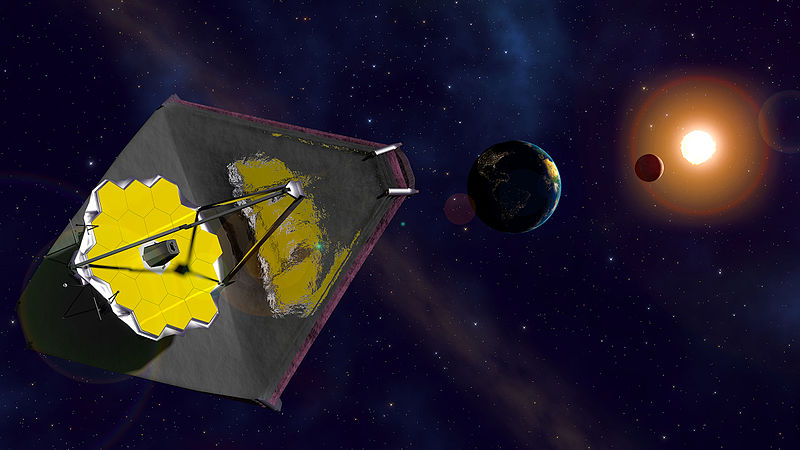
But Earth did not always exist within this expansive universe, and it was not always a hospitable haven for life.Artist illustration of the James Webb Space Telescope

To answer this question one has only has to look at what the Webb telescope is showing us.

Looking back through billions of years of the history of the universe to the creation of stars it is not just showing us where we are, but what can be achieved when we corporate with each other.

The lifetime cost to NASA will be approximately $10.8 billion.

The European Space Agency provided the Ariane 5 launch vehicle and two of the four science instruments for an estimated cost of €700 million. The Canadian Space Agency contributed sensors and scientific instrumentation, which cost approximately CA$200 million.

This places the James Webb Space Telescope among the most expensive scientific platforms in history. The telescope was not always planned to be a megaproject. It was originally estimated to cost $4.96 billion and launch in 2014.

To quantify this, the United States government will spend, in total, approximately $101 trillion.

The James Webb Space Telescope accounts for a mere 0.0095% of all U.S. spending during its building  — the equivalent of setting aside a single penny out of a 100 dollars to answer fundamental questions about our cosmos.

The dollars and cents it took to create this technological marvel will look paltry compared to the priceless insights it provides into our cosmos.

The James Webb Space Telescope is not in orbit around the Earth, like the Hubble Space Telescope is – it actually orbits the Sun, 1.5 million kilometres (1 million miles) away from the Earth. The telescope itself operates at about 225 degrees below zero Celsius (minus 370 Fahrenheit). The temperature difference between the hot and cold sides of the telescope is huge – you could almost boil water on the hot side, and freeze nitrogen on the cold side!  It is actually similar in size to the Moon’s orbit around the Earth!

This orbit (which takes Webb about 6 months to complete once) keeps the telescope out of the shadows of both the Earth and Moon. Unlike Hubble, which goes in and out of Earth shadow every 90 minutes, Webb has an unimpeded view that allows science operations 24/7.

We have continuous communications with it as the Earth rotates through the Deep Space Network (DSN), using three large antennas on the ground located in Australia, Spain and California. Webb uplinks command sequences and downlinks data up to twice per day, through the DSN. It uploads a full week’s worth of commands at a time, and makes updates daily as needed.

Webb will study every phase in the history of our universe, ranging from the first luminous glows after the big bang, to the formation of solar systems capable of supporting life on planets like Earth, to the evolution of our own solar system.

To be able to send and receive data over such a distance is mind boggling.  In order to carry out its mission, several innovative and powerful new technologies ranging from optics to detectors to thermal control systems have been developed. It has six major subsystems:

  • Electrical Power Subsystem
  • Attitude Control Subsystem
  • Communication Subsystem
  • Command and Data Handling Subsystem
  • Propulsion Subsystem
  • Thermal Control Subsystem

The first step toward understanding how AI can contribute to this area of science and knowledge is, once again, drawing a comparison between an AI and a human. There is a lot of uncertainty that comes with adopting such high-end technologies, but one thing is for sure:

It raises the question: Is Artificial Intelligence The New Guardian Of The Galaxy?

Should we be spending vast amounts on the exploration of the Universe where none of us will ever go or understand, without Quantum computers.

Why?

Because, Quantum computers are expected to be powerful enough to break modern-day ‘unbreakable’ encryption, accelerate medicine discover, re-shape how the global economy transports goods, explore the stars, and pretty much revolutionise anything involving massive number crunching.

The problem is, quantum computers are immensely difficult to make, and maybe even more difficult to run but God help us if we are relying on the human brain to function, as so far it appears to be designed for self destroying the earth never mind the universe.   

———-

Artificial intelligences are promising in future societies, and neural networks are typical technologies with the advantages such as self-organization, self-learning, parallel distributed computing, and fault tolerance, but their size and power consumption are large. It’ll take some time before we entirely replace AI accelerators with something that resembles a brain.

Yet experiential attempts have already begun to replace classical computing as we know it.

Don’t worry as we’re only scratching the surface of AI’s uses today, and to unlock those deeper, more impactful uses there’s a whole new type of chip in the works, a neuromorphic computer/chip is any device that uses physical artificial neurons to do computations.

What is an Neuromorphic chip/ computer?

The answers in the name, neuro, meaning related to the nervous system. A neuromorphic computer aims to imitate the greatest computer, and most complex creation, ever known to man: The brain.

If a neuromorphic processor were to be developed and implemented in a GPU, the amount of processing power would surpass any of the existing products with just a fraction of the energy.

Neuromorphic computing is an approach to computing that is inspired by the structure and function of the human brain.

The goal of neuromorphic computing ( According to Wikipedia) is not to perfectly mimic the brain and all of its functions, but instead to extract what is known of its structure and operations to be used in a practical computing system. No neuromorphic system will claim nor attempt to reproduce every element of neurons and synapses, but all adhere to the idea that computation is highly distributed throughout a series of small computing elements analogous to a neuron.

Neuromorphic computers are not currently being used in real-world applications but it won’t be long before neuromorphic algorithmic, offer tremendous potential for computing beyond Moore’s law.

There’s more immediate potential for the future of computing in artificial intelligence, it really is a massive and life-changing development for many, and I’m not just talking about that clever-sounding, slightly-too-argumentative chatbot in your browser.

This is the world’s first hybrid chip where neuron elements and synapse devices of different functional semiconductors are integrated.

Neuromorphic computers are well poised to become the artificial intelligence accelerators and co-processors in personal computing devices such as smart phones, laptops and desktops. They will begin to emerge in these technologies in the future, first probably in the edge computing space as specialized processors and later in future heterogeneous computers.

As the Ukrain/ Russian war is the laboratory for drone warfare the Webb is the laboratory of Ai 

All human comments appreciated. All like clicks and abuse chucked in the bin.

Contact: bobdillon33@gmail.com 
Share this:

  • Click to share on WhatsApp (Opens in new window) WhatsApp
  • More
  • Click to share on Pocket (Opens in new window) Pocket
  • Click to share on Mastodon (Opens in new window) Mastodon

THE BEADY EYE ASKS. WILL WE FIND GOD WITH THE JAMES WEBB TELESCOPE

18 Thursday Aug 2022

Posted by bobdillon33@gmail.com in #whatif.com, James Webb Telescope

≈ Comments Off on THE BEADY EYE ASKS. WILL WE FIND GOD WITH THE JAMES WEBB TELESCOPE

Tags

James Webb Telescope


( Five minute read) 

This isn’t an easy question, because in order to understand where something came from, we have to first know precisely what it is.

Despite all we know, there are some epic unknowns that have no solution at present.

When it comes to the Universe if we want to know how it got to be that way, we have to apply the laws of physics to the Universe, and follow the evolution of the physical systems that we know exist.

To answer any physical question, you must ask the Universe itself.

Newton stands on Einstein who in turn stands on the work of some future theorist. Each offers a closer approximation to a core reality, but not necessarily the “whole truth.”

But no matter when in the past or the future we would’ve asked this question, taking a scientific approach to it would always yield the same cosmic story.

Here’s where we are today.

We know that our planet, like every other planet in the Universe, is made of atoms.

We know that planets both float freely through the galaxy and also orbit stars.

We know how gravitation works.

We know how electromagnetism works.

We know how the nuclear forces work.

We know hydrogen and helium, when we examine the cosmos, are everywhere. In fact, they’re so abundant that they make up over 99% of the atoms in the Universe; fewer than 1% of the atoms out there, by number, are anything heavier.

We know, based on the observed facts of the Universe, that it must have been born with the seeds of what would become its large-scale structure: an initial spectrum of over dense and under dense regions.

We know it is expanding, cooling, and becoming gravitationally “clumpier” over time, that tells us that, early on, the Universe was smaller, denser, hotter, and more uniform than it is today.

We know how to time-evolve any physical system that we start off with.

Put simply, if you give a physicist a set of initial conditions that describe the system, they can write down equations that govern the evolution of that system, and can tell you — to the limits of the uncertainty and indeterminism inherent to nature — what the outcome (or probabilistic set of outcomes) of that system will be at any point in the future.

Fortunately, when we look out into the Universe, we see the very processes that are required for this to occur in action.

__________________________

What could be more complicated than the universe itself, which contains everything complicated we know, including galaxies, proteins and manuals for assembling robots.

That’s what the Universe is.

But what happens when the answers aren’t around anymore? The farther back we go, we find we run into an inevitable problem:  The Universe cannot provide answers beyond a certain point.

                                           ————————–

Scientific facts are not simply discovered but rather constructed through a social process that depends partly on the status and prestige of the people involved.

Unlike philosophers of the ancient world, cosmologists are not just trying to out-argue one another with their theories. They are measuring, sometimes with breath-taking precision, the concrete physical parameters on which our understanding of the universe is based.

Reality abides by rules of logic and that theories can be improved based on how well their predictions fit with observations.  Something that is independent of human belief systems and political rhetoric.

Scientists, whatever their initial starting points, are converging on a singular truth.

In other words, the evidence we draw from the natural world should ultimately be pointing us toward the same description of reality.

In an era when scientific facts guide our responses to pandemics, climate change and other pressing challenges our understanding of the universe of galaxies, stars, penguins and people is never more important. Our universe is the only piece of reality seemingly capable of producing life, including creatures with the capacity to wonder what reality is all about.

Is life just a chance by-product of nature’s laws or necessary aspect of them?

James Webb Space Telescope

Recent images from the newly commissioned James Webb Space Telescope are revealing something bigger than humans and their social networks.

Light from the cosmic dawn of the universe has always been there, coming down towards us, carrying tales from the edge of time itself.

Now, with the help of the James Weep telescope , we can finally meet the faint luminous glow from the period immediately following the Big Bang.

                                                    —————————-

The James Webb Space Telescope is already discovering new worlds. Filling the gaps in chemical evolution?

It will allow for the detection of chemical signatures from galaxies formed billions of years ago and compare them with newer systems.

I suppose its real goal is explain the natural phenomena of the Universe without resorting to spirits, evil influences, established authority, or God, but rather on the basis of principles or laws of nature. 

Psychologically the Universe was once filled with gods and angels that are now vanishing replaced with emptiness except for matter and forces.

So heaven if it exists is in a separate spiritual realm that does not lie within the physical universe. Neither we or gods are essential to the universe.  Yet Physics claims to define physical reality, treating humans as objects, so we are left wondering whether anything in the Universe recognized us as more than that.

Perhaps we were just a random occurrence on a average planet and uncaring scheme of things.

                                                               ——————

If you want to see what the Webb is looking at the next time you look up at the stars imagine that you have lost you memory and there is only this moment. 

You are not conscious of any moment before this one.

You are alive but how did you get to this spot on which you are standing or lying down.

You have no idea. Who are you?  There is no answer. 

You are like a robot with hormones. You have lost your soul.  You are the latest improved model, believing in the latest programs. This is all you know. 

Instead imagine that you can send your consciousness back at the speed of light.  Down the countless generations to your primate ancestors, thought all the animals that ever existed, into a single cell with the complex chemicals that made it possible, into the elementary particles in the Big Bang. 

This is science of the Webb. 

You are all this. The sum total of all history.  Who much of your own identity do you claim – its up to you but the story of origins continues to belong solely to religion.

The trouble with finding god will be as always which god will it be. 

In the end the James Webb has comparatively simpler problem of understanding the nature of the universe at large.

Anything could happen.

We may not have teleportation yet, but we are going boldly (visually) where no human has ever gone before!  

All human comments appreciated. All like clicks and abuse chucked in the bin. 

Contact.   bobdillon33@gmail.com

https://anchor.fm/s/54b17390/podcast/rss


Share this:

  • Click to share on WhatsApp (Opens in new window) WhatsApp
  • More
  • Click to share on Pocket (Opens in new window) Pocket
  • Click to share on Mastodon (Opens in new window) Mastodon

All comments and contributions much appreciated

  • THE BEADY EYE ASKS: HOW MUCH LONGER IS THE WORLD GOING TO TOLERATE THE PLUNDERING OF USA? January 10, 2026
  • THE BEADY EYE SAYS WARS USE TO BE MAN AGAINST MAN, NO LONGER. WAR IS NOW DRONE AGAINST DRONE. January 9, 2026
  • THE BEADY EYE SAYS. WE HAVE SURROUND THE EARTH WITH SATELLITES. HERE TO DAY GONE TO MORROW. January 9, 2026
  • THE BEADY EYE SAYS GOVERNANCE IS BECOMING MORE BY REALITY TV, ALGO January 9, 2026
  • THE BEADY EYE SAYS. DONALD TRUMP IS EXPOSING THE WEAKEST OF OUR WORLD ORGANISATIONS January 7, 2026

Archives

  • January 2026
  • December 2025
  • November 2025
  • October 2025
  • September 2025
  • August 2025
  • July 2025
  • June 2025
  • May 2025
  • February 2025
  • January 2025
  • December 2024
  • November 2024
  • October 2024
  • September 2024
  • August 2024
  • July 2024
  • June 2024
  • May 2024
  • April 2024
  • March 2024
  • February 2024
  • January 2024
  • December 2023
  • October 2023
  • September 2023
  • August 2023
  • July 2023
  • June 2023
  • May 2023
  • April 2023
  • March 2023
  • February 2023
  • January 2023
  • December 2022
  • November 2022
  • October 2022
  • September 2022
  • August 2022
  • July 2022
  • June 2022
  • May 2022
  • April 2022
  • March 2022
  • February 2022
  • January 2022
  • December 2021
  • November 2021
  • October 2021
  • September 2021
  • August 2021
  • July 2021
  • June 2021
  • May 2021
  • April 2021
  • March 2021
  • February 2021
  • January 2021
  • December 2020
  • November 2020
  • October 2020
  • September 2020
  • August 2020
  • July 2020
  • June 2020
  • May 2020
  • April 2020
  • March 2020
  • February 2020
  • January 2020
  • December 2019
  • November 2019
  • October 2019
  • September 2019
  • August 2019
  • July 2019
  • June 2019
  • May 2019
  • April 2019
  • March 2019
  • February 2019
  • January 2019
  • December 2018
  • November 2018
  • October 2018
  • September 2018
  • August 2018
  • July 2018
  • June 2018
  • May 2018
  • April 2018
  • March 2018
  • February 2018
  • January 2018
  • December 2017
  • November 2017
  • October 2017
  • September 2017
  • August 2017
  • July 2017
  • June 2017
  • May 2017
  • April 2017
  • March 2017
  • February 2017
  • January 2017
  • December 2016
  • November 2016
  • October 2016
  • September 2016
  • August 2016
  • July 2016
  • June 2016
  • May 2016
  • April 2016
  • March 2016
  • February 2016
  • January 2016
  • December 2015
  • November 2015
  • October 2015
  • September 2015
  • August 2015
  • July 2015
  • June 2015
  • May 2015
  • April 2015
  • March 2015
  • February 2015
  • January 2015
  • December 2014
  • November 2014
  • October 2014
  • September 2014
  • August 2014
  • July 2014
  • June 2014
  • May 2014
  • April 2014
  • March 2014
  • February 2014
  • January 2014
  • December 2013
  • November 2013
  • October 2013

Talk to me.

Jason Lawrence's avatarJason Lawrence on THE BEADY EYE ASK’S: WIT…
benmadigan's avatarbenmadigan on THE BEADY EYE ASK’S: WHA…
bobdillon33@gmail.com's avatarbobdillon33@gmail.co… on THE BEADY EYE SAYS: WELCOME TO…
Ernest Harben's avatarOG on THE BEADY EYE SAYS: WELCOME TO…
benmadigan's avatarbenmadigan on THE BEADY EYE SAY’S. ONC…

7/7

Moulin de Labarde 46300
Gourdon Lot France
0565416842
Before 6pm.

My Blog; THE BEADY EYE.

My Blog; THE BEADY EYE.
bobdillon33@gmail.com

bobdillon33@gmail.com

Free Thinker.

View Full Profile →

Follow bobdillon33blog on WordPress.com

Blog Stats

  • 94,518 hits

Blogs I Follow

  • unnecessary news from earth
  • The Invictus Soul
  • WordPress.com News
  • WestDeltaGirl's Blog
  • The PPJ Gazette
Follow bobdillon33blog on WordPress.com

The Beady Eye.

The Beady Eye.
Follow bobdillon33blog on WordPress.com

Blog at WordPress.com.

unnecessary news from earth

WITH MIGO

The Invictus Soul

The only thing worse than being 'blind' is having a Sight but no Vision

WordPress.com News

The latest news on WordPress.com and the WordPress community.

WestDeltaGirl's Blog

Sharing vegetarian and vegan recipes and food ideas

The PPJ Gazette

PPJ Gazette copyright ©

Privacy & Cookies: This site uses cookies. By continuing to use this website, you agree to their use.
To find out more, including how to control cookies, see here: Cookie Policy
  • Subscribe Subscribed
    • bobdillon33blog
    • Join 223 other subscribers
    • Already have a WordPress.com account? Log in now.
    • bobdillon33blog
    • Subscribe Subscribed
    • Sign up
    • Log in
    • Report this content
    • View site in Reader
    • Manage subscriptions
    • Collapse this bar