• About
  • THE BEADY EYE SAY’S : THE EUROPEAN UNION SHOULD THANK ENGLAND FOR ITS IN OR OUT REFERENDUM.

bobdillon33blog

~ Free Thinker.

bobdillon33blog

Tag Archives: Capitalism vs. the Climate.

THE BEADY EYE SAYS: THE CORONA VIRUS IS SHINING A LIGHT ON WHAT IS WRONG WITH THE WORLD AND IT IS SPREADING FAST.

21 Saturday Mar 2020

Posted by bobdillon33@gmail.com in #whatif.com, 2020: The year we need to change., CORONA VIRUS., COVID-19, Denial of Death., Disconnection., Environment, Evolution, Fourth Industrial Revolution., HUMAN INTELLIGENCE, Human values., Humanity., Inequality, Life., Modern day life., Our Common Values., Post - truth politics., Reality., Refugees., Survival., Sustaniability, Technology v Humanity, Telling the truth., The common good., The essence of our humanity., The Obvious., The state of the World., The world to day., Truth, Unanswered Questions., VALUES, WHAT IS TRUTH, What Needs to change in the World, Where's the Global Outrage., World Leaders, World Organisations., World Politics

≈ Comments Off on THE BEADY EYE SAYS: THE CORONA VIRUS IS SHINING A LIGHT ON WHAT IS WRONG WITH THE WORLD AND IT IS SPREADING FAST.

Tags

Capitalism and Greed, Capitalism vs. the Climate., Climate change, Coronavirus (COVID-19), Extinction, Global warming, Globalization, The Future of Mankind, Visions of the future.


(Ten-minute read) 


AS IF WE DID NOT KNOW it is posing that fundamental profound question once more.

Are we going to care of the Earth so it can care for us?  

It is impossible to say which way the disease will go however there is no doubt that it is creating the biggest restriction of civil liberties “in peacetime”. 

We know that we all tracked by Google.  Behind all the restrictions governments will adopt powers that they will loath to relinquish when the crises are over. 

There is every like hood that the pandemic will strengthen the state and reinforce nationalism.  What won’t change is the inequality and greed, rather it will create a less open, less prosperous and less free world. 

Of course, it did not have to be like this but it will be the straw that brakes the camel’s back of globalization and it will probably result in uncontrolled Co2 emissions.

In the short term, with decoupling and rivalry coming to the forefront driven by a cascading sense of vulnerability there will be a race to return to full production.

However the Pandemic is proof of our interdependence but we are not or are we heading for a poorer, meaner, and smaller world.

If the Pandemic shocks us into recognizing our real interests in cooperating multilaterally on the big global issues facing us all it will have served a useful purpose. 

We all know that it is not enough to think of one nation’s power over another when it comes to climate change. The key is learning the importance that we have all to act together and Covid -19 is going to show that we are failing to adjust our strategy on many fronts to this new world. 

Either way, this crisis will reshuffle the international power structure in the way we can only begin to imagine. 

If we don’t support each other the result will be instability and widespread conflict within and across nations. 

We know that there is a dramatic new stage in global capitalism on the horizon with supply chains be brought closer to home.  We are going to see failed states with billions of economic refugees on the move. 

We are going to see the USA no longer as an international leader. 

To date, international collaboration has been woefully insufficient. 

What is needed it targeted assistance that provides hope that men and woman can prevail in response to this extraordinary challenge.  

If it gets Airborne the white full personal-protection suits that presently strike fear into the hearts of us all will be worthless.

AS IF EARTH DOES NOT HAVE ENOUGH PROBLEMS THE NEXT NASA PROJECT TO MARS IS SCHEDULED TO LAUNCH IN JULY. 

NASA’s 2020 Mars rover. 

The rover will collect and cache promising samples for eventual return to Earth.

The first pristine pieces of Mars won’t be coming down to Earth for at least another decade, but the time to start preparing society for the epic arrival is now. 

This is an extremely grave point.

On the one hand, we can argue that Martian organisms cannot cause any serious problems to terrestrial organisms, because there has been no biological contact for 4.5 billion years between Martian and terrestrial organisms. On the other hand, we can argue equally well that terrestrial organisms have evolved no defences against potential Martian pathogens, precisely because there has been no such contact for 4.5 billion years. The chance of such an infection may be very small, but the hazards, if it occurs, are certainly very high.

Martian rock that has already arrived on earth contained structures resembled the fossilized remains of bacteria-like lifeforms.

What if such samples turned out to be dangerous, and contagiously so?

Are there some Mars-oriented lessons to be learned from COVID-19. 

Here on earth, it is gruelling and potentially lethal work to identify a virus never mind virus from other planets. 

It is estimated that there are 1.6 million unknown viruses in birds and mammals. Of these, it is thought between 600,000 and 800,000 are zoonotic, meaning they have the potential to jump from animals to people. 

Virulence, contacts and the length of time for which people are infectious are the three factors that determine what is called ‘the basic reproductive rate’ – how far and fast the epidemic will spread. 

There may be a staggering 3,200 different types of coronavirus harboured in bats alone.


As with historical infectious disease epidemics, the coronavirus that’s spreading currently is another example of why it’s so important to understand the consequences of interacting with environments humans rarely contact and then distributing widely whatever [they] picked up.

If one looks at the outbreak in Africa, of Ebola and the HIV/Aids pandemic – which to date has killed 35 million and infected 70 million – started about a century ago in Cameroon when a chimpanzee virus was transmitted to a human who almost certainly killed, butchered or consumed it.

Markets were closed during both outbreak, but they are now once more doing a roaring trade selling tropical game including monkeys, chimpanzees, cane rats, bats and snakes. Bushmeat is entrenched in local culture and is often a vital form of subsistence, hence why the authorities are unwilling or unable to announce an outright ban.

Last, with or without artificial intelligence we continue at our collective peril to make imbalance’s in the ecosystem.

All human comments appreciated. All like clicks and abuse chucked in the bin.

← Back

Thank you for your response. ✨


Share this:

  • Share on WhatsApp (Opens in new window) WhatsApp
  • More
  • Share on Mastodon (Opens in new window) Mastodon

THE BEADY EYE SAY’S: THIS CORONA VIRUS IS ASKING ALL OF US WHAT TYPE OF WORLD DO WE WANT?

19 Thursday Mar 2020

Posted by bobdillon33@gmail.com in #whatif.com, 2020: The year we need to change., CORONA VIRUS., COVID-19, Disasters., Disconnection., Evolution, Honesty., HUMAN INTELLIGENCE, Human values., Humanity., Inequality, Life., Modern day life., Natural World Disasters, Our Common Values., Poverty, Reality., Refugees., Religious Beliefs., Survival., Sustaniability, Technology v Humanity, Telling the truth., The common good., The current state of our oceans., The essence of our humanity., The Future, THE FUTURE OF OUR OCEANS/SEAS, The Obvious., The Refugees, The state of the World., The world to day., Truth, Truthfulness., Unanswered Questions., VALUES, War., WHAT IS TRUTH, What Needs to change in the World, Where's the Global Outrage., World Leaders, World Organisations., World Politics

≈ Comments Off on THE BEADY EYE SAY’S: THIS CORONA VIRUS IS ASKING ALL OF US WHAT TYPE OF WORLD DO WE WANT?

Tags

Capitalism and Greed, Capitalism vs. the Climate., Coronavirus (COVID-19), Earth, Environment, Extinction, Global warming, Globalization, Inequility, Natural disaster, The Future of Mankind, Visions of the future.


(Seven-minute read) 

I know that humans are the only type of species that are suitable to manage the earth but it does not make them the right species!

Apparently not.

Did we ever think that we would be living in a world where it is life-threatening to go our side and I am not talking about terrorists or any other Hollywood science fiction movie scenario?

There’s a lot of bad news out there but this is not a death sentence. 

 It’s time to save the world. ” We can use it as we wish”

No one owns the earth. No one has the right to do whatever they want.

We’re not the only thing that lives here, nor are we more important in any way.

We cannot use the world as we please as our actions are endangering not just us but other species. 

Our Earth was meant to be lived on in union with its Ecosystems and we cannot allow that to be broken.

The Coronavirus ( Covid  19 ) is illuminating what is wrong with our world. 

So our most crucial life questions are: 

What Kind of World Do We Want to Leave to Our Children?

Whatever your interest — whether it’s the environment, health care, poverty, or education — there are simple steps each of us can take to make life better not just for someone in our own community. 

The Universal Declaration of Human Rights, that “all human beings are born free and equal in dignity and rights.” now needs an Earth Declaration. 

Here are the top six of my non-legal binding the goals.  

Use Global Warming to Solve Global Warming.

Take urgent action to combat climate change and its impacts to protect, restore, and promote sustainable use of terrestrial ecosystems, sustainably manage forests, combat desertification, halt and reverse land degradation, and halt biodiversity loss.

Conserve and sustainably use the oceans, seas, and marine resources for sustainable development.

Sustainable Development Goals which will take years for a critical mass of governments to actually rally behind. 

The allocation of resources to fight climate change and other environmental issues over the next decade can be achieved by making a profit for profit sake pay. ( See the previous post on a 0.05% World Aid Commission. How it could be implemented so the costs are spread fairly) 

End poverty in all its forms everywhere.

Global poverty. Reduce inequality within and among countries. Ensure inclusive and equitable quality education and promote lifelong learning opportunities for all.

Expand access to clean drinking water, green energy.

Artificial Intelligence and Automation. 

The 2020s sounds like such a radical futuristic decade however to strengthen the means of implementation and revitalize the global partnership for sustainable development requires a coherent and plausible conception of social justice. A basic income, a periodic cash payment unconditionally delivered to all on an individual basis, without means-test or work requirement.

Stop the sale of arms. 

The estimate of the total value of the global arms trade in 2017 was at least $95 billion.* However, the true figure is likely to be higher. On any given day at any given moment in your life, there are at least 15 wars and armed conflicts actively going on all around the world — even if you’re only hearing about a few of them on the news.

There are an estimated 11-12 million refugees in the world today with between 12-24 million Internally Displaced Persons.

Electoral Reform with Citizens’ Assemblies. 

These aren’t just focus groups or consultations though but for the members to engage in serious, informed reflection on important policy matters with people they may never normally meet.

As Hubert Reeves ( Canadian-French Astrophysicist) say’s, ” Man is the most insane species. He worships an invisible God and Destroys a Visible Nature. Unaware that this Nature he’s destroying is this God he’s worshipping “

Feel free to have idea sex between your ideas and mine so we can come up with even better ideas. It’s a way of saying: “We agree that these are the world’s top priorities right now.”

← Back

Thank you for your response. ✨

Share this:

  • Share on WhatsApp (Opens in new window) WhatsApp
  • More
  • Share on Mastodon (Opens in new window) Mastodon

THE BEADY EYE SAY’S. ITS TIME TO STOP THE BULL SHIT. FLATTENING THE CURVE. HERD IMMUNITY. ETC.

17 Tuesday Mar 2020

Posted by bobdillon33@gmail.com in COCID-19, CORONA VIRUS.

≈ Comments Off on THE BEADY EYE SAY’S. ITS TIME TO STOP THE BULL SHIT. FLATTENING THE CURVE. HERD IMMUNITY. ETC.

Tags

Capitalism vs. the Climate., Climate change, COCID_19, CORONA VIRUS., Earth, Environment, Global warming, The Future of Mankind


(Two-minute read) 

I am no scientist but it is obvious that you don’t rely on the very deadly infectious agent to create an immune population by allowing it to grow exponentially.

Viruses have host-pathogen interactions. They increase their diffusion rates, which creates opportunities for new host-virus encounters.

We are under environmental change and this virus might be the first associated with the ecosystem. The environment creates a disease triangle, animals, plants, humans, three-way interactions or hyperlinks driven by intraspecific competition.

So warm weather as we know kills off the flue till it returns in another form.

The transmissibility of COCID_19 is much greater and it is not clear what effect temperature and humidity will have on this virus.

My understanding of a virus is that it lies low in the long tall grass till its behavioural fatigue is understood.

Without strong guidance institutions and citizens will begin to make there own decisions.

This is not a time to create stamping herds however if your planning to practice social distancing your first thought turn to food.

Remember that online shopping and its delivery pass through multiple handling, so wash your hands before picking up the delivery and after.

Wash everything packeted or not.

Precaution, not panic.

Don’t believe sensational Tabloid News paper head lines.  

The Evening Standard newspaper has a headline that states “the residents in Los Angeles are flocking to buy arms.”

History has taught us that Society is capable of both untold horrors and inspiring resolve.

That said watch Sovereign wealth funds the hyena of the world economy gobble, the roadkill. 

All human comments appreciated. All like clicks and abuse chucked in the bin.

← Back

Thank you for your response. ✨


https://youtu.be/Hks6Nq7g6P4

Share this:

  • Share on WhatsApp (Opens in new window) WhatsApp
  • More
  • Share on Mastodon (Opens in new window) Mastodon

THE BEADY EYE LOOKS AT THE CRISES FACING THE WORLD.

08 Sunday Mar 2020

Posted by bobdillon33@gmail.com in 2020: The year we need to change., Artificial Intelligence., Capitalism, Disasters., Environment, HUMAN INTELLIGENCE, Human values., Inequality, Life., Modern day life., Natural World Disasters, Our Common Values., Poverty, Survival., Sustaniability, Technology, Technology v Humanity, The common good., The essence of our humanity., The Obvious., The state of the World., The world to day., Unanswered Questions., VALUES, War, WHAT IS TRUTH, What Needs to change in the World, Where's the Global Outrage., World Leaders, World Organisations., World Politics

≈ Comments Off on THE BEADY EYE LOOKS AT THE CRISES FACING THE WORLD.

Tags

Capitalism and Greed, Capitalism vs. the Climate., Earth, Extinction, Inequility, Technology, The Future of Mankind, Visions of the future.


Five minute read.

With all aspects of our life made into a form of viewing entertainment. We live in a world that has become desensitized. 

The result is that most if not all of us pay little attention to the state of Earth.

The drawn-out nature of many crises now facing us all underscores the importance of coming together to urgently resolve the root causes of a humanitarian crisis.

It is unlikely the situation will improve. 

 Where do you even start? Which issues are the most urgent?


So this post is not intended to be an exhaustive list. Rather, it serves as an overview of some of the major issues all global citizens should be aware of.

Sometimes it can seem as though there are too many – from climate change to inequality around the world, too many people living without access to medical care its not worth knowing. 

But just in case here is why we are in such a mess. 

12.9% of the world is undernourished, about 30% of the adult population is overweight.

Conflict continues to drive displacement and food insecurity but communicable diseases are still responsible for 71% of deaths.

The international community, and in particular wealthy nations, are failing to meaningfully share the responsibility for protecting people who have fled their homes in search of safety. 

  • 25.9 million refugees globally — the highest level ever recorded
  • Half of the world’s refugees are children
  • A third of refugees — 6.7 million people — is hosted by the world’s poorest countries
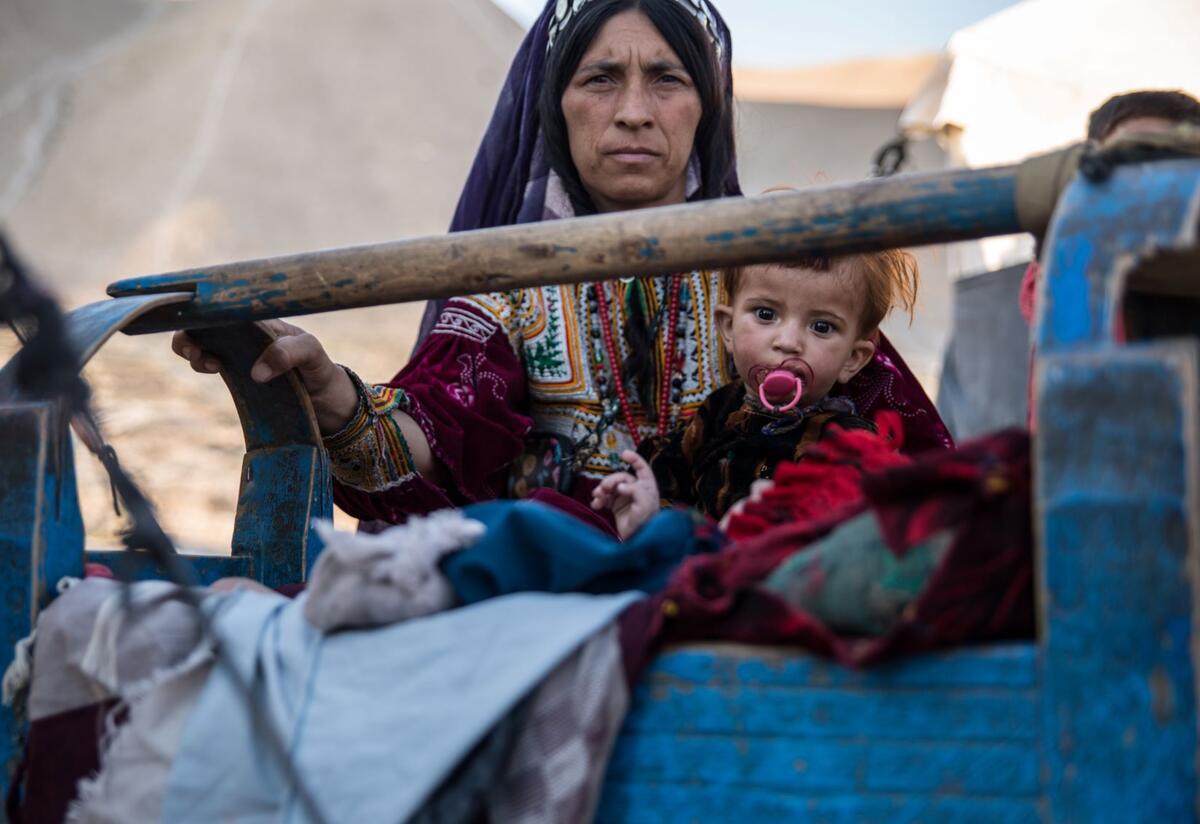
A mother rocks her sick child in a camp in Afghanistan's Badghis' Muqur district, where the IRC supports displaced families.

Driven by nearly two decades of conflict and political instability; 9.4 million Afghans (25 per cent of the population) need humanitarian assistance. There are almost 2.5 million registered Afghan refugees living outside the country.

4.6 million Venezuelans have fled the country as of November 2019. 

There are over 2 million displaced Nigerians.

Eleven million Syrians (65 per cent of the population) are in need of humanitarian assistance.

The Democratic Republic of Congo 15.9 million people require humanitarian assistance. 

Over 24 million Yemenis (80 per cent of the population) are in need of humanitarian assistance,

South Sudan 7.5 million people need humanitarian assistance. 

600 million children are not mastering basic mathematics and literacy while at school.

Forests are key to producing the air we breathe, yet these are being depleted at a rate of 26 million hectares every year.

Extinctions are happening at what scientists estimate to be about 1,000 times the normal pace. Not only are we losing flora and fauna, but we are also damaging our ecosystems, and throwing them out of balance

Our oceans are under threat.  

Sand and gravel are now the most-extracted materials in the world, exceeding fossil fuels and biomass.

Climate change is another issue.

There is actually not enough fresh water for each person currently living on the planet. 

Population growth. The number of people on the planet is set to rise to 9.7 billion in 2050 with 2 billion aged over 60.

More than 61 million jobs have been lost since the start of the global economic crisis in 2008, leaving more than 200 million people unemployed globally.

With 43% of the world’s population connected to the internet, regulatory frameworks are unable to keep up.

In this complex moment in history, in which so many are suffering and the Earth itself is in peril

The cloud of nuclear destruction hangs over each of our days.

But the question remains what kind of society do we want to have?

The reasons behind current trends are many and complex.

The detail of the information that we are beginning to capture about our world is mind-blowing. The granularity of the data we are beginning to collect through advances in technology. While improving our lives through cleaner energy sources, personalized nanomedicine and nano-engineered materials.

In all of these areas, progress will undoubtedly lead to a reduction in conventional jobs and inequality on a global scale not seen before.

But technology alone can not break the self-reinforcing mechanism that causes poverty to persist. 

As highly innovative products emerging will, however, promote inequality if only a few have access to this new technology and the knowledge to master it.

Education is probably the single most important tool for turning technology into an engine for opportunities for all.

Public policies, which are currently mainly focused on fostering economic growth, should focus on providing further opportunities, less inequality and a more sustainable economic, social and environmental future.

Technology is not the solution but it is, for sure, a powerful tool towards achieving this ambitious objective.

Whether it’s turning promises on climate change into action, rebuilding trust in the financial system, or connecting the world to the internet there is an overall lack of long-term investment, which has serious implications for global growth.

But the most astonishing canvas is right in front of us if only we would listen with our ear to the earth we might see the light we cannot see.

In short, the world urgently needs a new, global plan based on genuine international cooperation and a meaningful and fair sharing of responsibilities. 

All human comments appreciated. All like clicks and abuse chucked in the bin.
← Back

Thank you for your response. ✨


https://youtu.be/dnxRCHVLGRo

Share this:

  • Share on WhatsApp (Opens in new window) WhatsApp
  • More
  • Share on Mastodon (Opens in new window) Mastodon

THE BEADY EYE OPEN LETTER TO THE DELEGATES OF THE FORTHCOMING UNITED NATIONS CLIMATE CHANGE CONFERENCE IN GLASGOW: If you thinks they we have a problem with migration today … wait 20 years.

06 Friday Mar 2020

Posted by bobdillon33@gmail.com in Climate Change.

≈ Comments Off on THE BEADY EYE OPEN LETTER TO THE DELEGATES OF THE FORTHCOMING UNITED NATIONS CLIMATE CHANGE CONFERENCE IN GLASGOW: If you thinks they we have a problem with migration today … wait 20 years.

Tags

Capitalism and Greed, Capitalism vs. the Climate., Climate change, Climate Change Solution's., Climate refugees., Delegates Paris Climate change Summit Glasgow 2020, Earth, Environment, Extinction, Mediterranean refugee crisis., Migrants/Refugees., Reality of Climate Change, The cost of Climate Change., The Future of Mankind, THE UNITED NATIONS, What Needs to change in the World, World Climate Change refugees


Fifteen-minute read.

Dear Delegate,

Although climate change undoubtedly posed an “existential threat to our world” it is not too late to take decisive action.

So far we had the Cop-out 15 to Cop 25, the Kyoto Protocol in 1997 the Paris Agreement in December 2015 and now the 2020 United Nations climate change conference in Glasgow.

As you know dealing with climate change will require coordinated action by nations around the world.

Up to this point what we have seen are countries and industries trying to gut, block or water down all efforts, in a rearguard manoeuvre that mirrors President Donald Trump’s rollback of climate policy in Washington.

24 million people were displaced by weather-related disasters this year.

As climate change begins to alter patterns of disasters, we can imagine these figures will get worse. Understand how changing weather patterns and disasters will alter patterns of migration. This will be both difficult and almost impossible to predict.

Reduction of carbon emissions has no chance of being reached through a voluntary cap and trade system utilizing the free market system. Why would countries strongly enforce caps and targets on their emissions if it puts them at a competitive disadvantage in the market place?

The fact is that if we are to save the planet from a devastating ecological meltdown, it is going to require an immediate and I mean immediate, reduction in greenhouse gases.

We must abandon the absurd notion that the invisible hand of the free market system will solve the crisis.

Why?

Because a market-driven voluntary system will not work.  

Because they are traded for huge profits. There is no baseline from which true carbon reductions can be measured, verification is lacking. 

Because it is cheaper to pollute and buy credits than it is to change production processes.

It is totally unrealistic to believe that carbon reductions on a large scale can be attained unless mandatory reductions are implemented and a full scale global. 

While rewarding carbon-reducing technologies makes sense we will only be able to take worthwhile actions if they are funded by a self-perpetuating fund with outright non-repayable subsidies. 

However, I don’t have to tell you that when it comes down to the wire as who and how we are going to fund the way forward to tackle fairly any actions the simple answer is that we do not have enough time to haggle about it. 

It can be achieved tomorrow by placing a 0.005% commission on all world activities that seek profit for profit sake. ( See previous posts)

The world stock markets are 99% run by high-frequency algorithms. Exploiting market conditions that can’t be detected by the human eye.

Of course, this begs an important question will such a commission affect the free market and can it be applied worldwide. 

Yes to both. 

It will not be climate change that creates another refugee crisis.

Rather, it will be the attempts to stop this migration that will be creating a crisis.

Climate change will not wait. Neither can we for climate refugees.

Regardless of how fast we cut emissions, we are going to see more and more people on the move and there is no single global agreement that can be signed and ratified to change this fact. 

Most of what you know about climate-linked migration is probably wrong.

We all know that climate change is the unpredictable ingredient in our rapidly changing world – and it’s potential to trigger both violent conflict and mass migration – needs to be considered as an urgent priority for policymakers.

As its effects spread, it will destabilise entire economies and overwhelm poorer countries lacking resources and infrastructure. 

When added to existing social, economic and political tensions, it has the potential to ignite violence and conflict with disastrous consequences.

Poland is highly dependent on polluting coal for power (Pic: Beemwej)
You cannot strike a bargain with Climate. 

The choice faced by politicians and all of us is not about how to prevent climate-linked migration.

That possibility is gone, several decades ago.

There is now a stark choice between two very different options:

One: Trying to stop people from moving—which will lead to something that looks like a crisis—or helping people migrate out of the most badly hit areas.

Two: Is to facilitate climate-linked migration in a legal and organised way.

Support for migrants and refugees is at an all-time low. People are already using migration as a way of adapting climate change, with little or no help.

When migration isn’t illegal there is no need to do it secretly. No need for traffickers and smugglers. And no need for migrants to hide as soon as they arrive.

There is no simple law that could be passed that would “fix” climate-linked migration.

The problem is this won’t stop people moving so we need to start by defining exactly what a climate refugee is.

Droughts, hurricanes, floods and sea-level rise are all forcing people to move but picking out one group of people to call “climate refugees” is very difficult.

WHY?

Political responses to climate-linked migration are complicated, and it’s a field where the answers are often not simple.

Because if climate change plays a role in displacement it becomes difficult to draw the line.

What do we know about the links between climate change and conflict?

Climate-linked migration is very often from rural areas into cities.

So if the seas do rise to the predicted levels and people move within there own countries they will not be refugees climate or otherwise.  

To be a refugee you have to have crossed an international border which is part of the official definition of what makes someone a refugee. But, as the impacts of climate change worsen, more people will want to migrate across borders.

Therefore there is only one course of action and that is to open approved channels into the EU and other world nations in order to determine who is a genuine refugee and who is not. 

Few politicians will risk making bold statements about making provision for more people. Climate change is also a low priority for electorates in developed countries.

This is the climate crisis, not the coronavirus. tomorrow is too late. 

These changes cannot take place tomorrow. They should have been implemented yesterday!

Capitalism caused the problem now it should pay to resolve it.

Climate change is unequivocal, that we are responsible, and that our choices before us matter”.

We were never going to get there in one go unless we spread the cost in a way that is acceptable to one and all.  

Yours Faithfully 

The Beady Eye. 

Footnote: All supportive comments appreciated.

← Back

Thank you for your response. ✨


Share this:

  • Share on WhatsApp (Opens in new window) WhatsApp
  • More
  • Share on Mastodon (Opens in new window) Mastodon

THE BEADY EYE SAY’S OK. WITH THE CORONA-VIRUS LETS TRY AND PUT WHERE WE ALL LIVE AND HAVE LIVED EARTH INTO PERSPECTIVE.

27 Thursday Feb 2020

Posted by bobdillon33@gmail.com in 2020: The year we need to change., Evolution, HUMAN INTELLIGENCE, Human values., Humanity., Modern day life., Our Common Values., Reality., Sustaniability, Technology v Humanity, The common good., The essence of our humanity., The Future, The Obvious., The state of the World., The world to day., Unanswered Questions., WHAT IS TRUTH, What Needs to change in the World, Where's the Global Outrage., World Leaders, World Organisations.

≈ Comments Off on THE BEADY EYE SAY’S OK. WITH THE CORONA-VIRUS LETS TRY AND PUT WHERE WE ALL LIVE AND HAVE LIVED EARTH INTO PERSPECTIVE.

Tags

Capitalism vs. the Climate., Earth, Environment, The Future of Mankind


Twenty minutes read. 

Most of us struggle with seeing things from a different perspective but our perception of how the world is changing matters for what we believe is possible in the future.

So the purpose of this post is an attempt to take the complexity of the world and simplify it into some sort of graphic that will either help you understand it or motivate you to do something differently.

Dire predictions for the future are nothing new. There is a connection between our perception of the past and our hope for the future.

When one considers our world from a compressed perspective, the need for acceptance, understanding and education becomes glaringly apparent.

The state of the world today with Social media and profit-seeking algorithms is one of distrust. There are things that are certain in this world and there are lots of uncertainty attached to many things. Sometimes the only way to understand the world at its extremes is to put it in terms we use every day.

The fact is that at least two of the world’s largest powers have been at war with each other more than 50% of the time since about 1500. 

The only problem we have here is us and therefore we cannot kill our way to a solution.

The Earth is about 3.5 million times larger than a human.

If you can read this message, you are more blessed than over two billion people in the world that cannot read at all.

Here’s what we’ve got.

We see our earth as big, and in a relative way, it is.

There are about 7 billion people currently on Earth.  Over its existence, around 106 billion people have lived on Earth.

It exists on a blue dot, 24,901 miles in circumference that is over 4 1/2 billion years old, weighing in a 13,170,000,000,000,000,000,000,000 pounds (or 5,974,000,000,000,000,000,000,000 kilograms)

(Since Earth is too big to be placed on a scale, scientists use mathematics and the laws of gravity to figure out Earth’s weight.)

It has a solid iron ball in the middle that is 1,500 miles wide. 

It makes up about 0.0003% of the total mass of our solar system.

75% of the Earth is covered in water only 2.5 per cent of it is fresh essential for producing food, clothing, and computers, moving our waste stream, and keeping us and the environment healthy.

About 321 billion gallons per day of surface water is used by humans.

Humans who are just 0.01% of all life have destroyed 83% of wild mammals.

Plants overshadow everything, representing 82% of all living matter. All other creatures, from insects to fungi, to fish and animals, make up just 5% of the world’s biomass.

It takes light a little over 8 light-minutes to travel from the Sun to Earth and it can circle our planet about seven and a half times in a single second.

Our closest star is Proxima Centauri at a distance of four light-years.

The Milky Way itself is about 100,000 light-years across and is home to about 400 billion stars.

(A light-year is the distance light travels in one Earth year. One light-year is about 6 trillion miles (9 trillion km). That is a 6 with 12 zeros behind it!)

According to the Big bang theory which happened about 13.7 billion years ago all the matter in the universe came into existence at the same time.

So anything can serve as a symbol as long as it refers to something beyond itself.

In our daily activities to give such things more than a passing glance.

However, our planet only seems large until we take a look at the rest of the cosmos around us.

Where do start? Its age., its place in the cosmic, or it’s future.

“Statistical facts don’t come to people naturally. Quite the opposite.

We’re visual creatures.

So perhaps a sense of scale might help.

Let’s start with a few comparisons

Life on Earth first emerged about 600 million years and we are the first generations whose decisions will determine for good or ill the future of human life on this planet, and we seem stuck in a way of thinking that is obsolete in a globalized world of growing populations. The widespread ignorance about these truly important changes in the world feeds into a general discontent about how the world is changing.

To our brains, a million, billion, and trillion all seem like large, vague numbers. 

Today (January 2020) Bill Gates fortune amounts to around $108,5 billion around 0.5% of the GDP of the United States. By the time I complete this post, $1436400 amount will be added to his net worth and is predicted to hit the trillion mark by the age of 86.

If you are one of the so-called “rich” and you were lucky enough to make a million dollars per year, it would take you almost 80,000 YEARS to catch up. 

We share the Earth with an estimated 1 quadrillion ants. Insects outweigh us by a factor of 17.

For every human, there are about one million ants and the total weight termites are more than the weight of all the humans in the world. They alone make up 10% of all animal biomass and 95% of soil and insect biomass in tropical regions.­ Colonies of multi-drug resistant EBSL E. coli

Bacteria were one of the first life forms to appear on Earth, about 3.8 billion years ago, and they will most likely survive long after humans are gone.

The number of bacteria on our planet is estimated to be five million trillion trillion – that’s a five with 30 zeroes after it.

All the bacteria on Earth combined are about 1,166 times more massive than all the humans. For every human walking over the face of the planet. 

Bacteria are the huddled masses of the microbial world, performing tasks that include everything from causing diseases to fixing nitrogen in the soil.

The number of bacteria makes the globe’s human population look downright puny.

Because the number of bacteria is so large, events that would occur once in 10 billion years in the laboratory would occur every second somewhere on the Earth.

We may have been underestimating our own humanness for the past several decades when it comes to Bacteria. The average human has over 100 trillion microbes in and on their body microbial cells outnumber human cells in your body by a ratio of around 10:1.

Our modus operandi was to kill them, rather than synchronize with them.

Bills and coins are the best way to transfer bacteria between people worldwide; 

The debate over the microbiome will rage on, as the fear of the invisible and little understood will drive the masses in the short-term.

It is a fact that bacteria live in a whole series of worlds which stretch our imagination, be it the clouds in the sky, an Antarctic ice flow, a 100 degree C hot sulphur spring, 10 km down at the bottom of the sea, 1500 m below the surface of the earth in solid rock, in a rotting peach, in the roots of plants, the stomachs of animals and even your mouth, bacteria can be found there.

The vast majority of life is land-based and a large chunk – an eighth – is bacteria buried deep below the surface but bacteria also now found circling the Earth in the most upper layers of our atmosphere.

Recent findings on animal-bacteria interactions will likely require biologists to significantly alter their view of the fundamental nature of the entire biosphere.

“And that’s the way it is.”

My preference would be to avoid mentioning any ratio at all – you don’t need to it convey the importance of the microbiome. 

Some 70 per cent of the global consumption of the drugs are used in animal and fish farming and to spray on crops.

Antibiotics in the environment do not do any good, they only contribute to risks which we are now witnessing with the Coronavirus. A rapidly spreading virus that is establishing itself across the world through international travel, trade and tourism.

We are now living in a bacterial world, and it’s impacting us more than

previously thought.  No matter what process you think you are studying, you

must look for and consider a major role for bacteria. 

The World Bank has estimated that drug-resistant infections could cost the world economy $1 trillion every year after 2030.

By 2050 costing the world around $100 trillion in lost output: more than the size of the current world economy, and roughly equivalent to the world losing the output of the UK economy every year, for 35 years not to mention killing an extra 10 million people across the world every year.

Back to earth.

This is what a quadrillion looks like written out: 1,000,000,000,000,000.

If it survives us it has 6.5 billion years before the sun (which is 92,960,000 miles away) about 109 times larger than the earth. That means you could fit around 1.3 million earth’s inside the sun which is actually considered a dwarf star — By contrast, UY Scuti is the largest star we humans are aware of; it is a hypergiant around 1.7 billion miles in diameter. UY Scuti is around 5 billion times larger than our sun.

Its no wonder we a pixel.

The diameter of our solar system is around 5,580,000,000,000 miles — that is, about five and a half trillion miles across.  Expanding outward from here, we have to start talking about things in terms of light-years, as the scale is just too massive to discuss in miles. (One light-year is about 6 trillion miles (9 trillion km).

Our Milky Way Galaxy is about 100,000 light-years in diameter of which since the dawn of man we have observed the equivalent of the top of rubber on a pencil.

This is about one 24-millionth of the entire night sky visible from earth.

The diameter of the observable universe is estimated at about 28 billion parsecs (93 billion light-years).

Ok, the numbers are pretty hard to comprehend even when you know what each unit represents. To even think of how long 10 trillion kilometres might be, let alone 93 billion times that distance, can cause your brain to hurt.

Earth, in turn, is nothing more than a molecule in the incomprehensibly vast cosmic ocean. 

Without a global jurisdiction, no government can enforce any kind of coherent rights doctrine, particularly in the face of borderless problems like terrorism or environmental crisis. 

It is up to the people of earth to dissolve the strains between each-other in an equitable, harmonious way. 

The planet you were born on is dying.

We’re on a timeline that leaves little space for politicians to gamble. This is a world that requires nations, corporations and individuals to think not in terms of quarterly reports or midterm elections, but in decades.

For transformative change to be possible, we sometimes need marginalized peoples to speak out, in a loud voice, against the status quo.

The guardians for future generations, representing the children of 2050, can be that voice that says we are spending too much on conflict and too little on peace.

Thus  as Irving John Good said, “The survival of man depends on the early construction of an ultra-intelligent machine.” 

“The first ultra-intelligent machine is the last invention that man need ever make, provided that the machine is docile enough to tell us how to keep it under control.”

If I took a personal guess the way we are going there will be no need for such an intelligent machine as there will be nothing to be intelligent with. 

ALL HUMAN COMMENTS APPRECIATED. ALL LIKE CLICKS AND ABUSE CHUCKED IN THE BIN. 

← Back

Thank you for your response. ✨


https://youtu.be/jYtXoUZbUCQ


Share this:

  • Share on WhatsApp (Opens in new window) WhatsApp
  • More
  • Share on Mastodon (Opens in new window) Mastodon

THE BEADY EYE ASK’S. WILL THE WORLD EVER BE ABLE TO ACT AS ONE?

26 Wednesday Feb 2020

Posted by bobdillon33@gmail.com in 2020: The year we need to change., Algorithms., Artificial Intelligence., Climate Change., Dehumanization., Digital age., DIGITAL DICTATORSHIP., Disconnection., Environment, Fourth Industrial Revolution., Google, Human values., Humanity., Life., Our Common Values., Reality., Robot citizenship., Sustaniability, Technology, Technology v Humanity, The cloud., The common good., The essence of our humanity., The Future, The Obvious., The state of the World., The world to day., Unanswered Questions., WHAT IS TRUTH, What Needs to change in the World, Where's the Global Outrage.

≈ Comments Off on THE BEADY EYE ASK’S. WILL THE WORLD EVER BE ABLE TO ACT AS ONE?

Tags

Algorithms., Artificial Intelligence., Big Data, Capitalism vs. the Climate., Climate change, Extinction, Technology, The Future of Mankind, Visions of the future.


Twenty-five minute read.

If humanity stopped fighting and competing against one another; if we bound together in a common cause, we could accomplish spectacular things.

Not true.

We would basically become mindless drones of no culture because it’d all just be one culture with no distinct forms.

If this were to become a reality, Ummm how would govern it.

China’s premier Wen Jiabao put forward the following equation in a speech: “Internet + Internet of Things = Wisdom of the Earth.”

How wrong he was, however, by 2025 there will be 1 trillion networked devices worldwide in the consumer and industrial sectors combined.

He should have said, “Internet + Internet of Things = Becoming what we do not think? Because people are truly not that intelligent.

In our houses cars and factories, we’re surrounded by tiny, intelligent devices that capture data about how we live and what we do. Now they are beginning to talk to one another. Soon we’ll be able to choreograph them to respond to our needs, solve our problems, even save our lives.

Intelligent things all around us, coordinating their activities.

Coffee pots that talk to alarm clocks. Thermostats that talk to motion sensors. Factory machines that talk to the power grid and to boxes of raw material.

We might be seeing the dawn of an era when the most mundane items in our lives can talk wirelessly among themselves, performing tasks on command, giving us data we’ve never had before? This intelligence once locked in our devices will flow into the universe of physical objects.

We are already struggling to name this emerging phenomenon.

Some have called it the Internet of Things or the Internet of Everything or the Industrial Internet—despite the fact that most of these devices aren’t actually on the Internet directly but instead communicate through simple wireless protocols.

Others are calling it the Sensor Revolution.

I call it the Programmable Profitable in a World of profit-seeking algorithms.

It’s the fact that once we get enough of these objects onto our networks, they’re no longer one-off novelties or data sources but instead become a coherent system, a vast ensemble that can be choreographed, a body that can dance in the era of the cloud and apps and the walled garden— of Google, Apple, etc, which connotes a peer-to-peer system in which each node will not be equally empowered.

These connected objects will act more like a swarm of drones, a distributed legion of bots, far-flung and sometimes even hidden from view but nevertheless coordinated as if they were a single giant machine, relying on one another, coordinating their actions to carry out simple tasks without any human intervention.

So the world will act as one. Or will it?

Once we get there, that system will transform the world of everyday objects into a design­able environment, a playground for coders and engineers.

It will change the whole way we think about the division between the virtual and the physical putting intelligence from the cloud into everything we touch.

Call it “smart exploration.” 

The rises of the smartphone have supplied us with a natural way to communicate with those smart objects. So far they include watches, heart rate monitors, and even some new Nike shoes. Smartphone making payments to merchants wirelessly instead of swiping a card, and some billboards are using the protocol to beam content to passersby who ask for it. As a way to sell more products and services—particularly Big Data–style analysis—to their large corporate customers.

The yoking together of two or more smart objects—is the trickiest, because it represents the vertiginous shift from analysis, the mere harvesting of helpful data, to real automation.

In my view no matter how thoroughly we might use data to fine-tune our lives and businesses, it’s scary to take any decisions out of human hands.

It can be hard to imagine the automation you might someday want or even need, in your daily life. There are all sorts of adjustments you make over the course of any given day that is reducible to simple if-then relationships.

Facebook, which has famously described the underlying data it owns as a social graph—the knowledge of who is connected to whom and how.

Would you want to automate all of these relationships?

A world where every one of us would have a sensor on us. “Presence” tags—low-energy radio IDs that sit on our keychains or belt loops and announce our location, verify our identity.

This is the principle behind Square Wallet and a number of other nascent payment systems, including ones from PayPal and Google. (When you walk into a participating store today, Square can let the cashier know you’re there; you pay simply by giving your name.)

A tracking tool that monitors not just your pet’s movements, but your movements.

GPS reliably know our location within 100 feet, give or take, and that knowledge has and is transforming our lives immeasurably: turn-by-turn driving directions, local restaurant recommendations, location-based dating apps, and so on.

With presence technology, Google has already the potential to know our location absolutely, down to a foot or even a few inches. That means knowing not merely which bar your friend is at but which couch she’s sitting on if you walk through the door.

It means receiving a coupon for a grocery item on the endcap at the moment you walk by.

Think about a liquor cabinet that auto-populated your shopping list based on the levels in the bottles—but also locked automatically if your stock portfolio dropped more than 3 per cent.

Think about a home medical monitoring system that didn’t just feedback data from diabetic patients but adjusted the treatment regimen as the data demanded.

Think about how much more intelligent your sprinklers could be if they responded to the weather report as well as to historical patterns of soil moisture and rainfall.

It does not stop just there think about applications on top of these connected objects.

This means not just tying together the behaviour of two or more objects—like the sprinkler and the moisture sensor—but creating complex interrelationships that also tie in outside data sources and analytics. 

Plugged into that information, your system wouldn’t just know how much water is in the soil it could predict how much there will be, based on whether it’s going to rain or the sun will be baking hot that day.

It means walking through an art museum and having your phone interpret the paintings as you pause in front of them.

This simple link—between a tag on us and a tag in the world—stands to become the culmination of the location revolution, delivering on all the promises it hasn’t quite fulfilled yet. A simple link—between a tag on us and a tag in the world—will complete the location revolution.

The treasure that it digs up could be considerable.

This is obviously true for retailers:

It’s a future where the intelligence once locked in our devices will now flow into the universe of physical objects. Users and developers can share their simple if-then apps and, in the case of more complex relationships, make money off of apps, just like in the mobile marketplaces.

Processing it all in the cloud in a language unheard of.

On Google Maps, you can now navigate inside certain airports and stores, with Wi-Fi triangulation helping out your GPS. 

And according to a mobile couponing firm called Koupon Media, some 80 per cent of customers who buy gas at one major convenience-store chain never walk inside the store, so presence-based coupons could make a huge impact on the bottom line.

But it’s also true for our everyday lives. Have you ever lost an object in your house and dreamed that you could just type a search for it, as you would for a wayward document on your hard drive? With location stickers, that seemingly impossible desire has become a reality:

A startup called StickNFind Technologies already sells these quarter-sized devices for $25 apiece.

Think about a thermostat app pulling in readings from any other device on that platform—motion sensors that might say which room you’re in, presence tags that identify individual family members (with different temperature preferences)—as well as outside data sources like weather or variable power price.

An even more natural category for apps is security. It locks itself up, shuts down the lights and thermostat, and activates an alarm system complete with siren, flashing lights, and auto-notifications, and notifications with an on-call platoon of off-duty cops all coordinated through the Smart­Things.

This, finally, is the Programmable World, the point at which the full power of developers, entrepreneurs, and venture capitalists are brought to bear on the realm of physical objects—improving it, customizing it, and groping toward new business plans for it that we haven’t dreamed of yet. Indeed, it will marshal all the forces that made the Internet so transformational and put them to work on virtually everything around us.

However, there are obviously some pitfalls lurking in this future of connected objects.

As a sanity check.

Our fears about malicious hackers preying on our email and bank accounts via the cloud might pale in comparison to how we’ll feel about those same miscreants pwning our garage doors and bathroom light fixtures.

The mysterious Stuxnet and Flame exploits have raised the issue of industrial security in the era of connected devices.

Vanity Fair recently detailed nightmare scenarios in which hackers could hit connected objects, from our high tech cars (university researchers have figured out how to exploit an OnStar-type system to cause havoc in a vehicle) to our utility “smart meters” (which collect patterns of energy use that can reveal a great deal about our activities at home) to even our pacemakers.

The idea of animating the inanimate, of compelling the physical world to do our bidding, has been a staple of science fiction for half a century or more.

No, the main existential threat to the Programmable World is the considerably more mundane issue of power. Every sensor still needs a power source, which in most cases right now means a battery; low-energy protocols allow those batteries to last a long time, even a few years, but eventually, they’ll need to be replaced.

Just as with social networking, the privacy concerns of a sensor-­connected world will be fast outweighed by the strange pleasures of residing in a hyperconnected world.

A bigger concern, perhaps, is simple privacy. Just because we’ve finally warmed up to oversharing in the virtual world doesn’t mean we’ll be comfortable doing the same in the physical world, as all our interactions with objects capture more and more data about where we are and what we’re doing. iStock_000049614472Medium1

What’s coming is ubiquitous connectivity that will accelerate how people collaborate, share, learn, gather, do business, and exchange knowledge.

There will one day be universal access to all human knowledge by everyone on the planet.
So based on our collective knowledge, will we be able to act as one.
How will you use global connectivity to enhance our lives?
We automatically sort people into “like us” or “not like us.”
We are currently in a new era, combating mass species extinction and climate change with a Virus Pandemic all bring humans and the natural world together as one. 
Humanity as a whole needs to be united if we are to preserve what’s left on Earth.
One in three of the population of earth died in the Black Death, they had no idea why it was happening.
As a result, they had no responsibility, because they didn’t know.
Our problem is that we do know, and therefore, we have absolute responsibility.
We have only a very small window and if we don’t use that window in the next 10 years, not the next thirty or fifty years connectivity will be the least of our worries.
In November this year, the world will descend on Scotland, and states from across the globe will be given a choice between cooperating or continuing as they have until now.Toxic-leaders

All human comments appreciated. All like clicks and abuse chucken in the bin.

← Back

Thank you for your response. ✨

Share this:

  • Share on WhatsApp (Opens in new window) WhatsApp
  • More
  • Share on Mastodon (Opens in new window) Mastodon

THE BEADY EYE SAY’S. IS IT TO BE GDP OR RIP. THERE IS NO REASON THAT EVERY BUILDING SHOULD NOT HAVE SOLAR PANELS.

17 Friday Jan 2020

Posted by bobdillon33@gmail.com in Climate Change.

≈ Comments Off on THE BEADY EYE SAY’S. IS IT TO BE GDP OR RIP. THERE IS NO REASON THAT EVERY BUILDING SHOULD NOT HAVE SOLAR PANELS.

Tags

Capitalism vs. the Climate., Climate change, Extinction, The Future of Mankind, World aid commission


(fifteen-minute read)

Irreversible by 2030. 

Up to 200 million people could be displaced by climate change by 2050.

50% of all carbon emissions are emitted by the richest 10% of the world’s

population.

Half of the world’s coral reefs have died in the last 30 years.

 At our current rate of consumption, we’d need 1.7 planets to support the

demand on the earth’s ecosystems.

Greenhouse gas levels are at an all-time high.

Have we lost all common sense!

So why are governments not enacted a simple law requiring solar panels on homes?

The main reason is.

None wants to foot the bill – GDP greed- 

it is being turned into a product to sell – Bio this Bio that  – Carbon Credits – etc.  

climate change

It’s a vicious circle.

What is required is a step towards a circular CO2 economy.

Take Air condition for example.

As the climate grows hotter, there’s more need to stay cool.

It is projected that there will be 1.6 billion new AC units to be in use by 2050 throughout the world.

Air conditioners consume huge amounts of energy and that’s adding to climate change. It pumps out heat straight into the atmosphere. Using powerful greenhouse gases called hydrofluorocarbons (HFCs), thousands of times more potent than carbon dioxide.

Surely it would be not that difficult technically to add CO2 capture functionality to an A/C system. The necessary technology is already commercially available.

Once collected, water and CO2, can be converted into renewable hydrocarbon fuels into renewable synthetic oil.

Office buildings throughout cities could produce more than 120 million gallons. The same process could happen on buildings everywhere.

If this additional cost was added to the mortgage of a new home, the purchaser would actually be in the pocket, because the mortgage costs on the additional £2,000 will be less than the energy costs savings that the solar panels bring.

When will we come to our senses?Solar panels

The amount of sunlight received by the earth in one hour is more than the total energy used by the entire world for an entire year!

Solar panels and wind turbines coupled with energy storage offer better hope for tackling climate change.

Harmless benign solar panels producing useful heat energy and saving harmful emissions.

There is no valid reason to wait ten twenty or thirty years not to start using it.

It could replace current fossil fuels like coal and gas for generation of electricity that produces air, water, and land pollution.

It could be achieved in five years.

We all know.

That, Climate Change has led to an increase in flooding and hurricanes due to disturbed weather patterns.

That climate change is happening and perhaps faster than expected.

That, Higher carbon dioxide concentration is making oceans acidic and killing marine life, like corals.

That, Climate change causes extinct of species from Sub-Arctic Boreal forests to tropical Amazon forests.

That, Higher temperatures result melting of polar ice caps, reducing habitats for wildlife and also increase sea level.

That, Irregular rainfall or increasing droughts affect agriculture and livelihoods of the weaker sections of society globally.

That Emissions are blamed for the rise in global temperatures, and changes in weather patterns leading to a cascade of effects.

That, the momentum for change is currently too slow.

That, given that climate change is inevitable, we are not doing nearly enough to save hundreds of millions of people from a miserable future.

That, the worst effects are yet to come. Submersion and loss of land displacing people.

That, the current targets would put the world on track for 3C of warming, which will ultimately lock in irreversible sea-level rises of perhaps two metres.

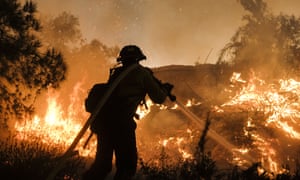
That, the greatest difference would be to nature. Insects, which are vital for pollination of crops, and plants are almost twice as likely to lose half their habitat at 2C compared with 1.5C. Corals would be 99% lost at the higher of the two temperatures, but more than 10% have a chance of surviving if the lower target is reached.A firefighter battles a wildfire in California

Against the above background it’s a line in the sand and what it says to our species is that this is the moment and we must act now.

What we are witnessing is patchy international efforts to prevent it from happening.

On one hand, we have Sir David Attenborough, “So we have to realise that this is not playing games. This is not just having nice little debates and arguments and then coming away with a compromise. This is an urgent problem that has to be solved.

”https://youtu.be/r-91umZ7cQE

On the other hand, I am sure he would puke at hippocras of countries declaring Climate Emergency and then bailing out Airlines.

The truth is that this is a global problem that will require a global solution.

We can’t shy away from that.

The Glasgow 2020 event with 30,000 delegates could be key to the fight against climate change only if China, India and—most importantly the US, participation in any future multilateral agreements.

If the UK is not stable enough to act as a diplomatic facilitator ahead of the summit (The Conservative manifesto devoted just two pages to climate change, skirted the issue) perhaps it might be a good idea to move it to Australia where the 30,000 delegates can witness first hand the effects A HEATING CLIMATE CAN DO.

Of course, this is not going to happen.

So how might be achieved other than Boris “Get Net Zero Done.”

It will be one of the first major tests of the UK’s influence on the world stage after it leaves the EU.

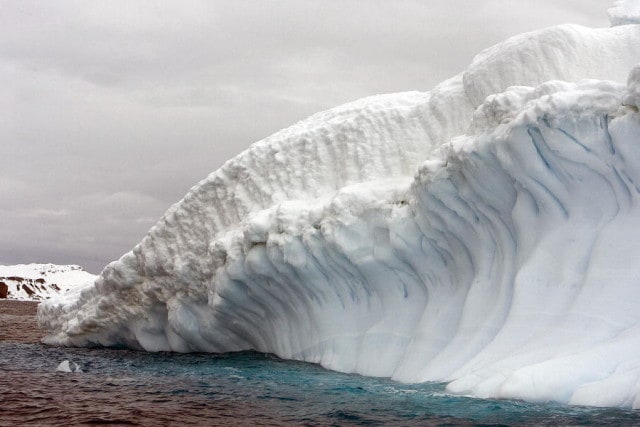
Collins Glacier in King George Island, Antarctica.

The main sticking points of international climate diplomacy are well known.

There are tensions between so-called ‘Global North’ and ‘Global South’ countries over financial and technological flows in aid of decarbonisation, and debates over how best to support those most vulnerable to climate risks, such as island nations.

If we are unwilling to make profit pay market-based instruments need to be sensibly designed to not negate the disproportionate costs of climate change on different groups.

What appears fundamental to the success of market-based instruments to reduce emissions is how government actually spend the revenue they generate.

If revenue is reinvested in other, complementary policies—especially supporting those on low incomes—and there is a consistent political and public dialogue, market-based instruments might work like Green Government bonds.

The problem is that none of the market-based instruments can be policed and will not produce the necessary funds to tackle the problems.

Because climate change does not affect everyone equally there is only one just solution we must make a profit for profit sake foot the bill, it will produce a perpetual world fund. ( See the previous post on a world aid commission of 0.05%)

All human comments appreciated. All like clicks and abuse chucked in the bin.

← Back

Thank you for your response. ✨

Share this:

  • Share on WhatsApp (Opens in new window) WhatsApp
  • More
  • Share on Mastodon (Opens in new window) Mastodon

THE BEADY EYE ASK’S. WILL 2020 BE THE YEAR OF THE BIG MELT OR THE BIG FRY.

02 Thursday Jan 2020

Posted by bobdillon33@gmail.com in #whatif.com, 2020: The year we need to change., Climate Change., Evolution, HUMAN INTELLIGENCE, Humanity., Life., Modern day life., Our Common Values., Politics., Populism., Post - truth politics., Purchasing Power., Reality., Social Media, Sustaniability, Technology, The common good., The essence of our humanity., The Future, The Obvious., The state of the World., The world to day., Unanswered Questions., WHAT IS TRUTH, What needs to change in European Union., What Needs to change in the World, Where's the Global Outrage., World Aid., World Leaders, World Organisations.

≈ Comments Off on THE BEADY EYE ASK’S. WILL 2020 BE THE YEAR OF THE BIG MELT OR THE BIG FRY.

Tags

Apathy., Artificial Intelligence., Capitalism and Greed, Capitalism isn't working, Capitalism vs. the Climate., Earth, Environment, Global warming, Inequility, Information gap., Technology, The Future of Mankind, Visions of the future.


(Fifteen-minute read) 


It looks like being both.

We are the first generation to know we’re destroying the world, and we could be the last that can do anything about it.

SO AS IF YOU DON’T ALREADY KNOW WHAT NEEDS TO CHANGE HERE IS YOUR CHANCE TO DO SOMETHING ABOUT IT.  

We need to recognize that everything we do, every step we take, every sentence we write, every word we speak—or don’t speak—counts. Nothing is trivial.

Take personal responsibility.

We need to use social media – this is one of the most effective ways to get brands to listen to you, so tell them that you want a change.

Why?

Because, unfortunately, the politicians who dominate the world stage are, depressingly, mostly cut from the old cloth, and the leadership challenges they face, are particularly complex and will require different skills — notably a clearer vision among leaders of organisation’s shared purpose.

Because the digital revolution is far from over the pace of change only seems to be quickening when in fact it is causing isolation. 

Because, we are allowing non-regulated large technology platforms to become too powerful, using their size to dominate markets and we are not paying enough attention to how the tools they create can be used for ill –  like device addictions, as we drown in notifications and false news feed posts.

Because there is an increasing imperative for all of us to respond to climate change.  Which will and is challenging our lives developing on a daily bases right in front of our eyes into our biggest need to act as one.

How can any of this be achieved? 

How will the changing political, economic and environmental landscapes shape the world?

Don’t get caught up in the how of things. Don’t wait for things to be right in order to begin.

Because in our age of tectonic geopolitical shifts, “alternative facts,” and conflicting narratives, our routine everyday life is losing sight of our true goals and aspirations.

Because with the rise of short-sighted populism we will solve nothing, other than feeding the great unwashed with short term gratification.

We need to write a piece of software that eliminated malware, viruses and all of that crap. 

We need to show our political leaders that they want to change, to understand our common humanity.

We need to try to put yourself into another person’s headspace and accept people for who they are and what their beliefs are.

We need to collaborate and push for policies that complement both sides of the political spectrum.

We need to make wasting our resources unacceptable in all aspects of our life.  Every product we buy has an environmental footprint and could end up in a landfill. The impact of plastic pollution on our oceans is becoming increasingly clear, having drastic impacts on marine life.

We need to be more conscious about what we buy, and where we buy it from. Living a less consumerist lifestyle can benefit you and our planet.

We need to use our purchasing power and make sure our money is going towards positive change.

We need to realize that what we eat contributes around a quarter of global greenhouse gas emissions and is responsible for almost 60% of global biodiversity loss.

We need to be supporting eco-friendly products.

We need to try to waste as little food as possible, and compost the organic waste we can’t eat.

We need to make education free for all.  Start educating not for profit but for a better understanding of what is the common values of life.

We need to stop asking the world’s smartest scientists to find us more time and to reverse gravity’s effect on our lives.

We need to stop killing each other. Countries start wars and people die and more people are in poverty.

We need to create out of profit for profit sake a World Aid fund with perpetual funding. (See previous posts) A new nonprofit called Carbon Offsets to alleviate address Climate change and Poverty. 

We need to realize that all significant change throughout history has occurred not because of nations, armies, governments and certainly not committees. They happened as a result of the courage and commitment of individuals. Believe that you can and will make a difference. 

The genesis for change is awareness so I need to stop. 

This year will not only be another opportunity for the leading minds in media in all its forms to highlight consumption for consumption sake.

However, if they wanted to spread a message that helps us all they would ban advertising that promotes consumption for consumption sake/profit. 

Feel free to add your priorities. With rapid innovations in technology and open access to data its no longer “wait and see.” We need to stop the huge feeling of apathy. 

The coming year, let alone the next decade looks unpredictable.

All human comments appreciated. All like clicks and abuse chucked in the bin.  

← Back

Thank you for your response. ✨


Share this:

  • Share on WhatsApp (Opens in new window) WhatsApp
  • More
  • Share on Mastodon (Opens in new window) Mastodon

THE BEADY EYE SAY’S; WE ARE ABOUT TO ENTER THE END GAME.

29 Sunday Dec 2019

Posted by bobdillon33@gmail.com in 2019: The Year of Disconnection., Climate Change.

≈ 1 Comment

Tags

Capitalism vs. the Climate., Climate change, Climate change and Intelligence, Climate Change Solution's., global climate change, Reality of Climate Change, The cost of Climate Change.


(Sixteen-minute read) 

WHY?

Because there is no point any longer carry on claiming that we are a victim of world events…Climate change, Artificial intelligence, Capitalist greed etc. 

If Everyone’s Finger–Pointing, Who’s to Blame?

The answer, it seems, is someone else.

We think blaming means we get away with it.

Getaway with what?

If we stop it may become evident that this blame game is getting us nowhere and maybe, we need to look deeper at that word RESPONSIBILITY.

Could it be possible that our choices got us in the mess and our new responsible choices could get us out of the blame game forever?

The issue at hand is a vicious circle. Greed versus Common sense.

It is important that the leadership of countries are responsible for governing but does anyone remember the last time that a government actually took responsibility for their own actions?

No.

Politicians — hostage to the tyranny of short election cycles — instead wooed voters seeking instant gratification, the protection of unsustainable entitlements, and shortcuts to continued prosperity they pander to popularism. 

Its no wonder we use blame like an auto-pilot switch?

At no point do we want to think that our choices may be contributing to what is going on in our life.

The media changed our perception of so many things preventing us from coming to a consensus not only on how to dig ourselves out of this mess but also on how to prevent it from happening again.

All that has been positive is slowly being replaced with only more negative.

And so no goes the endless, useless recriminations.

The blame game, however, is a lot more dangerous than it sounds. This never-ending cycle not only diverts responsibility but distracts from coherent responses.

That has two immediate consequences.

First, it is virtually impossible to generate a sense of shared responsibility that must underpin any sustainable, effective solution.

Second, the temptation increases for each country to turn inward, significantly raising the risk of protectionism.

As the species that have taken over the planet.

The world is looking for bold leadership, and in the absence of it, dysfunction that will make 2019 merely a flesh wound risks is becoming an ever more likely reality.

There is the possibility that our struggle to halt destructive climate change is going to make most of the people around the world very conscious of changes on the planetary level that need to be stopped, and species extinction is in that category. . . .However, unless humanity learns a great deal more about global biodiversity we will soon lose most of the species composing life on Earth.

WHY?

Because we need to do one big thing that people could get together on that would solve the problem and it needs to happen politically, globally in order to fulfil this vision? 

We might have achieved many small victories in a losing war but what is immediately relevant at the present time is our collective inability to act as one. If not what we will see soon—it is on the horizon—is a second great environmental crisis, and that’s a shortage of freshwater.

It’s a shortage of fresh water that is rapidly growing, that’s causing some of the most tragic humanitarian problems . . .  and it’s going to get worse and worse.

We the grownups we have to start somewhere.

The era that we have to create ahead of us is going to have to include action and research in multiplicity.

I mean, lots and lots of people involved in order to keep the whole planet and all the plants and animals in it, in order to understand how the living world works….where life came from, where we came from, and what we need to be preserving in order to make Earth a livable, habitable place—a planet to be our home. 

Billion of us live in our technologic bubble called cities, indifference to what is taking place outside our own worlds thanks to the Smartphone. If that remains true for the next decade what is left won’t be worth saving.

Where to start?

We now face a substantial possibility of seeing a complete collapse of the ecosystem which will have an irreversible impact of human activity.

The slide toward extinction with all our efforts around the world has not slowed, nor will it in the near future. 

Like conservation efforts around the world had consisted of targeted procedures to save a species here or there or to save a habitat here or there.

Rather than point the finger of blame here a few things we could change.

Hope is after all one of the great attributes we are all ushered towards…

Profit-seeking Algorithms. Regulation

Technology leapfrogging.  Transparency.

Currency manipulator. Emerging economies gained a competitive advantage by manipulating their currencies, weakening labour standards, degrading the environment, or engaging in various forms of implicit protectionism.  Unsustainable national policies. 

Consumption.  Ban Media/TV Advertising that is promoting consumption for consumption. 

Multilateral institutions.  The UN are only as strong as our member nations let it be.  When push came to shove, these institutions shie away from their duties, hindered by widespread representation and legitimacy deficits. Remove the Veto.

Bogus blame:  Remove False News from Social media 

All those things together intrinsic, to human instinctive behaviour?  

They could go long way to helping us remain in the game.The End Game

Politicians, of course, will say: “It’s not our fault. They are right as to do not hold them to account. 

Education. Stop educating for the market place. Children have to take out of the classroom and learn where fresh air, fresh water, fresh vegetables, fresh everything comes from. To learn true human instinct are not a Tweet, a Like, a Smartphone, a Virtual game.

And trust me — no one will want to take the blame for that tragedy.

Our evolution now is a competition, greed against all of us. 

Everyone can get it eventually, if they just think.

 All human comments appreciated. All like clicks and abuse chucked in the bin. 

← Back

Thank you for your response. ✨


Share this:

  • Share on WhatsApp (Opens in new window) WhatsApp
  • More
  • Share on Mastodon (Opens in new window) Mastodon
← Older posts
Newer posts →

All comments and contributions much appreciated

  • THE BEADY EYE SAYS. EQUALITY, FAIRNESS, JUSTICE ARE INDIVISIBLE CONCEPTS IF ARE ANYTHING. March 18, 2026
  • THE BEADY EYE SAYS. IT DOES MATTER WHAT YOU THINK ABOUT WAR WHETHER ITS JUSTIFIED OR NOT. March 17, 2026
  • THE BEADY EYE ASKS HOW ARE WE TO MAINTAIN HUMAN DIGNITY IN A WORLD DOMINATED BY TECHNOLOGY. March 15, 2026
  • THE BEADY EYE SAYS THANKS TO CURRENT TECHNOLOGIES WE ARE UNABLE TO BELIEVE ANYTHING WE SEE OR HEAR? March 15, 2026
  • THE BEADY EYE SAYS LET’S PUT THE IRAN/ ISRAEL/ USA WAR IN CONTEX. March 12, 2026

Archives

  • March 2026
  • February 2026
  • January 2026
  • December 2025
  • November 2025
  • October 2025
  • September 2025
  • August 2025
  • July 2025
  • June 2025
  • May 2025
  • February 2025
  • January 2025
  • December 2024
  • November 2024
  • October 2024
  • September 2024
  • August 2024
  • July 2024
  • June 2024
  • May 2024
  • April 2024
  • March 2024
  • February 2024
  • January 2024
  • December 2023
  • October 2023
  • September 2023
  • August 2023
  • July 2023
  • June 2023
  • May 2023
  • April 2023
  • March 2023
  • February 2023
  • January 2023
  • December 2022
  • November 2022
  • October 2022
  • September 2022
  • August 2022
  • July 2022
  • June 2022
  • May 2022
  • April 2022
  • March 2022
  • February 2022
  • January 2022
  • December 2021
  • November 2021
  • October 2021
  • September 2021
  • August 2021
  • July 2021
  • June 2021
  • May 2021
  • April 2021
  • March 2021
  • February 2021
  • January 2021
  • December 2020
  • November 2020
  • October 2020
  • September 2020
  • August 2020
  • July 2020
  • June 2020
  • May 2020
  • April 2020
  • March 2020
  • February 2020
  • January 2020
  • December 2019
  • November 2019
  • October 2019
  • September 2019
  • August 2019
  • July 2019
  • June 2019
  • May 2019
  • April 2019
  • March 2019
  • February 2019
  • January 2019
  • December 2018
  • November 2018
  • October 2018
  • September 2018
  • August 2018
  • July 2018
  • June 2018
  • May 2018
  • April 2018
  • March 2018
  • February 2018
  • January 2018
  • December 2017
  • November 2017
  • October 2017
  • September 2017
  • August 2017
  • July 2017
  • June 2017
  • May 2017
  • April 2017
  • March 2017
  • February 2017
  • January 2017
  • December 2016
  • November 2016
  • October 2016
  • September 2016
  • August 2016
  • July 2016
  • June 2016
  • May 2016
  • April 2016
  • March 2016
  • February 2016
  • January 2016
  • December 2015
  • November 2015
  • October 2015
  • September 2015
  • August 2015
  • July 2015
  • June 2015
  • May 2015
  • April 2015
  • March 2015
  • February 2015
  • January 2015
  • December 2014
  • November 2014
  • October 2014
  • September 2014
  • August 2014
  • July 2014
  • June 2014
  • May 2014
  • April 2014
  • March 2014
  • February 2014
  • January 2014
  • December 2013
  • November 2013
  • October 2013

Talk to me.

Jason Lawrence's avatarJason Lawrence on THE BEADY EYE ASK’S: WIT…
benmadigan's avatarbenmadigan on THE BEADY EYE ASK’S: WHA…
bobdillon33@gmail.com's avatarbobdillon33@gmail.co… on THE BEADY EYE SAYS: WELCOME TO…
Ernest Harben's avatarOG on THE BEADY EYE SAYS: WELCOME TO…
benmadigan's avatarbenmadigan on THE BEADY EYE SAY’S. ONC…

7/7

Moulin de Labarde 46300
Gourdon Lot France
0565416842
Before 6pm.

My Blog; THE BEADY EYE.

My Blog; THE BEADY EYE.
bobdillon33@gmail.com

bobdillon33@gmail.com

Free Thinker.

View Full Profile →

Follow bobdillon33blog on WordPress.com

Blog Stats

  • 97,811 hits

Blogs I Follow

  • unnecessary news from earth
  • The Invictus Soul
  • WordPress.com News
  • WestDeltaGirl's Blog
  • The PPJ Gazette
Follow bobdillon33blog on WordPress.com

The Beady Eye.

The Beady Eye.
Follow bobdillon33blog on WordPress.com

Blog at WordPress.com.

unnecessary news from earth

WITH MIGO

The Invictus Soul

The only thing worse than being 'blind' is having a Sight but no Vision

WordPress.com News

The latest news on WordPress.com and the WordPress community.

WestDeltaGirl's Blog

Sharing vegetarian and vegan recipes and food ideas

The PPJ Gazette

PPJ Gazette copyright ©

Privacy & Cookies: This site uses cookies. By continuing to use this website, you agree to their use.
To find out more, including how to control cookies, see here: Cookie Policy
  • Subscribe Subscribed
    • bobdillon33blog
    • Join 222 other subscribers
    • Already have a WordPress.com account? Log in now.
    • bobdillon33blog
    • Subscribe Subscribed
    • Sign up
    • Log in
    • Report this content
    • View site in Reader
    • Manage subscriptions
    • Collapse this bar