
Tags
Capitalism and Greed, Capitalism vs. the Climate., Climate change, Coronavirus (COVID-19), Post-Covid-19, The Future of Mankind, United Nations, Visions of the future., World aid commission
(Twenty-minute read)
Apart from the tragic loss of loved ones what if this epidemic is a turning point, and after it, the world is never the same?
Will the world come out of this crisis better than it was before?
It all depends on what we do and how we behave right now.
Even in the height of the darkest of times, people are already imagining what the future world would look like.
It is, in Metzl’s words, “a convergence of the worlds of science and biology and the world of geopolitics.” And as the coronavirus crisis continues to play out, its geopolitical implications are going to become much greater.”
The old world is dying and the new world struggles to be born.
Post-WWII planners envisioned a world that shared sovereignty and curbed nationalism. But we’re now in a period of dramatic re-nationalization of the world, with the populist, extremist, or authoritarian leaders in power from Brazil to the US to China, and many countries in between.
The one thing that sticks out like a sore thumb is that we don’t have effective structures in place to address global crises—and not just coronavirus. Think of climate change, protecting the oceans, preparing for a future of automation and AI; no country can independently take on or solve these massive challenges.
Crucially, we’re more connected to each other than we’ve ever been. It used to take thousands of years for knowledge to transfer; now it can fly across the world over the internet in minutes.
The tools we’re bringing to this fight are greater than anything our ancestors could have possibly imagined.
Unforuntitly this is bottom-up energy and connectivity, as we witness the abysmal failure of our top-down institutions.
We don’t know the way out or how long it’s going to last. In the meantime, a lot of unexpected things will happen.
There will be an economic slowdown or recession, and there will be issues with our healthcare systems—and these are just the predictable things.
We may see fragile states collapsing and even the EU disintegrating.
We’re going to come out of this into a different world.
We don’t know exactly what that world will look like, but we can imagine some of it. Take the trends that were already in motion and hit the fast-forward button. Virtualization of events, activities, and interactions. Automation of processes and services. Political and economic decentralization.
In hindsight, it’s easy to picture a far better response and outcome to the COVID-19 outbreak. What if, three months ago, there’d been a global surveillance system in place, and at the first signs of the outbreak, an international emergency team led by the World Health Organization had immediately gone to Wuhan?“
We need to be articulating our long-term vision now so that we can evaluate everything against that standard.
There’s not a total lack of a positive long-term vision now: the UN sustainable development goals, for example, call for gender equality, no poverty, no hunger, decent work, climate action, and justice (among other goals) around the world.
The problem is that we don’t have institutions meaningful enough or strong enough to affect the realization of these principles; there’s a mismatch between the global nature of the problems we’re facing and the structure of national politics.
We couldn’t have done this in the industrial age or even the nuclear age. There’s never been this kind of motivation combined with this capacity around the world.
This time will be different; to succeed, the new global plan will need to have a meaningful drive from the bottom up. We need to recognize a new locus of power. And it’s us. Nobody is going to solve this for us. This is our moment to really come together.
We have to turn the United Nations from being a gossip, veto voting, begging shop to an Institution fully funded. ( See the previous post on a World Aid commission of 0.05%. So it can establish around the world Aid Silo fully equipped.)
What better way to help the damaged world economies and to prepare for the next pandemic and climate change.
There is no need for further Climate change deliberations.
If we don’t want to be haunted by COVID-19 saying one thing and doing another is over
All human comments appreciated. All like clicks and abuse chucked in the bin.




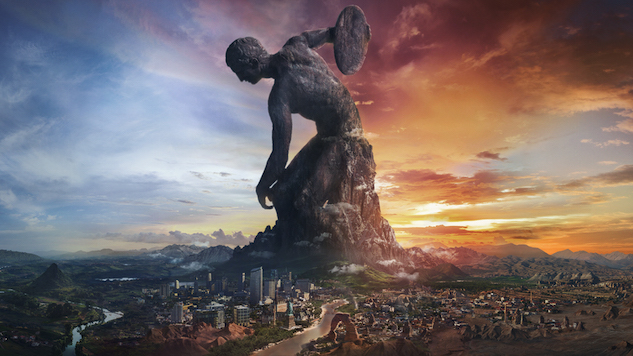 The problem is that most people have no clear understanding of what civilization is or, perhaps as important, what it isn’t.
Wikipedia. According to this seemingly omniscient cyber-seer, civilization is defined most broadly as “any complex state-society characterized by a social hierarchy, symbolic communication forms (typically, writing systems), and a perceived separation from and domination over the natural environment”.
How many of us would fight for civilization if we thought that we were fighting for the increasing complexity of the state and its social hierarchy?
How many of the agrarians amongst us would fight for a civilization that defined itself as being separate from the natural environment and as seeking to dominate it?
How many of us would fight for incessant urbanization, centralization, and the passive domestication of ourselves alongside the domestication of other organisms?
How many of us had realized that being civilized was the willingness to make ourselves cattle in the service of increasingly complex social hierarchies?
How many of us thought that civilization was marked by the sort of “specialization of labour” that had reduced human work to that of a disposable cog in an increasingly large and complex mechanism?
How many of us guessed that civilization was defined by culturally ingrained progressivism and other supremacist ideologies?
How many of us perceived that taxation was civilized and that increasing taxation was therefore and presumably a mark of increasing civilization?
If this is civilization we would be justified in hoping that civilization would go to hell and that, indeed, we would be equally justified in believing that it was all too evidently going there.
However, it is still a helpful framework with which to view how humans come together and form a society.
All civilizations have certain characteristics. These include: (1) large population centres; (2) monumental architecture and unique art styles; (3) shared communication strategies; (4) systems for administering territories; (5) a complex division of labour; and (6) the division of people into social and economic classes.
Again according to Wikipedia, “civilization” is merely an ideological construct of the eighteenth century! It is not a reality in itself but an idea by which an irreligious and irrational “rationalism” can explain and explain away, to its own prejudiced satisfaction, the history of human culture.
This is how civilization is defined on the internet.
Is civilization worth defending?
Should we aim to conform to it so that we can be considered civilized?
Maggie Thatcher once said that there is no such thing as a society. How wrong she was
What is civilization? It is the conforming of the heart of humanity – equality for all.
Culture is everything about human society, i.e. it refers to the knowledge and features of a specific group of people living in a region.
Many forget that a culture is only as great as the rival cultures around it, and all history was written by the winners. So if we are to reinvent anything it won’t be civilisation, but the culture that makes us civilised that will have to change.
To do this we will have to ask what has been tried before and what the results were?
What resources are available, what new theories are there?
WE CAN’T CHANGE ANYTHING UNTILL EDUCATION/ HEALTH IS FREE FOR ALL.
WE CAN’T CHANGE ANYTHING TILL WE SHARE THE RICHES OF THE EARTH– FRESHWATER, FRESH AIR, GREEN ENERGY. ALL FOODS ARE NON-MODIFIED AND SOLD UNDER ITS NATURAL CONDITIONS.
WE CAN’T CHANGE ANYTHING UNLESS INEQUALITY DISAPPEARS. THE RICHEST 1% NOW OWN HALF OF THE WORLD’S WEALTH. THE GAP BETWEEN THE HAVES AND HAVE – NOT’S WHERE ONLY A FRACTION OF SOCIETY REAPS THE BENEFITS OF ECONOMIC GROWTH WILL HAVE TO BE TACKLED – THE BIFURCATED ECONOMY.
(Forty years of neoliberal policy means that wealthy individuals and large companies today have so much “surplus of capital” that they don’t know what to do with it. billions parkEed in tax havens.)
WE CAN’T CHANGE ANYTHING TILL RACISM AND RELIGIOUS BIGOTRY IS ABOLISHED
WE CAN’T CHANGE ANYTHING BY CREATING LOTTO MILLIONAIRES WHILE SLUMS EXIST.
WE CAN’T CHANGE ANYTHING WHILE THE ARMS INDUSTRY EXISTS.
WE CAN’T CHANGE ANYTHING WHILE SOVERGIN FUNDS EXIST.
WE CAN’T CHANGE ANYTHING WHILE PROFIT SEEKING ALGORITHMS EXIST.
WE CAN’T CHANGE ANYTHING TILL WE REALISE THAT EARTH COMES FIRST THEN ITS PEOPLE.
WE CAN’T CHANGE ANYTHING TILL WE ACT AS ONE.
WE CAN’T CHANGE ANYTHING TILL ALL WORLD DEBT IS WRITTEN OFF. TOTAL PUBLIC DEBT WILL BE IN THE TRILLIONS. WORLDWIDE, THE TOTAL MOUNTAIN OF DEBT HAS REACHED A RECORD AMOUNT OF 322% OF THE WORLD GDP.
WE CAN’T CHANGE ANYTHING TILL WE UNDERSTAND THAT ONE’S REACH MUST GO BEYOND ONE GRASP. THE CORONAVIRUS IS THE PERFECT TIME TO LAUNCH A NEW GREEN DEAL THAT IS AMBITIOUS ENOUGHT TO SAVE THE PLANET. NEVER MIND WORLD CONFERENCES TALKING ABOUT IT DO IT. THINK BIG. ACT NOW. TOGETHER.
WE CAN’T CHANGE ANYTHING UNTILL WE DO AWAY WITH DIVIDENDS AND REPLACE THEM WITH A BASIC LIVING INCOME.
WE CAN’T CHANGE ANYTHING UNLESS WE REFORM THE UNITED NATIONS REMOVE THE VETO AND TURN IT FROM A BEGGING SHOP TO A FULLY FUNDED ORGANISATION WITH A PERTUPITUAL INCOME FROM A 0.05% WORLD AID FUND. ( See previous posts.)
WE CAN’T CHANGE ANYTHING UNLESS WE CURBE CONSUMERISM AND MOVE TO SUSTAINABILITY. WE’VE CONSUMED BEYOND OUR MEANS FOR A GENERATION AND NOW THE BILL IS COMING DUE SUDDENLY.
WE CAN’T CHANGE ANYTHING WITH GDP AS OUR CULTURAL GOAL.
WE CAN’T CHANGE ANYTHING WHILE WE TOLERATE ZOMBIE BANKS. NO FEWER THAN 147 INDIVIDUAL NATIONAL BANKS CRISES ACCURED BETWEEN 1970 AND 2011 ACCORDING TO THE IMF. IT’S TIME TO PUT THE BANKING SYSTEM IN GOVERNMENT HANDS AND TO DISMANTLE CASION CAPITALISM.
My point is the pandemic and its aftermath will be super-consequential for how we live the rest of our lives. There will be implications across the board; for business, government, culture, sports and the arts, as well as behaviour.
It’s not too soon to think about that.
Smartphones have given us an always-on connection to the world’s information but history develops our researching skills and our understanding of human behaviour.
What we’ve done in the last generation is we’ve replaced normal human interactions and social capital with technology and money.
And we’ve done that with a deleterious impact on our health and our happiness because technology and money hijack our brains in a stronger way than slow, kind of boring conversations do and yet that’s our heritage.
Our culture is systems blind.
Monetary stability, public safety and all manner of civilised goals have grown too complicated and big. The idea of the trickle-down effect of the free capitalist market is no longer true it continually funnels things towards the top. It doesn’t speak to the bottom half of society now.
They say that the best things in life are free, that adage is only true if basic needs are covered. A lot of people are living paycheck to paycheck, week to week, month to month.
A universal basic income is the way to go.
A basic income that supports the bottom half of society with enough to pay for basic needs.
There is no doubt that many businesses that are booming during the pandemic will continue to thrive.
But we continue to look at issues like climate change or renewable energy or poverty and we don’t think of how everything fits together. And right now we’re lacking a map of how to go forward.
No matter how this all unfolds, the biggest thing that’s going to contribute to better futures is social nodes of communication and social capital.
WE CAN’T GO BACK JUST TO GO OUT AND HAVE AN ORGY OF CONSUMPTION AND BACK TO NORMAL WITHOUT LEARNING ANYTHING FROM THIS.
WE CAN’T ALLOW GOVERNMENTS TO BECOME AUTHORITARIAN. NOR ALLOW SOCIAL MEDIA NETWORKS TO REMAIN UNREGULATED.
It is already clear that in future we will look back on 2020 as a turning point, the beginning of a new era.
The problem is that most people have no clear understanding of what civilization is or, perhaps as important, what it isn’t.
Wikipedia. According to this seemingly omniscient cyber-seer, civilization is defined most broadly as “any complex state-society characterized by a social hierarchy, symbolic communication forms (typically, writing systems), and a perceived separation from and domination over the natural environment”.
How many of us would fight for civilization if we thought that we were fighting for the increasing complexity of the state and its social hierarchy?
How many of the agrarians amongst us would fight for a civilization that defined itself as being separate from the natural environment and as seeking to dominate it?
How many of us would fight for incessant urbanization, centralization, and the passive domestication of ourselves alongside the domestication of other organisms?
How many of us had realized that being civilized was the willingness to make ourselves cattle in the service of increasingly complex social hierarchies?
How many of us thought that civilization was marked by the sort of “specialization of labour” that had reduced human work to that of a disposable cog in an increasingly large and complex mechanism?
How many of us guessed that civilization was defined by culturally ingrained progressivism and other supremacist ideologies?
How many of us perceived that taxation was civilized and that increasing taxation was therefore and presumably a mark of increasing civilization?
If this is civilization we would be justified in hoping that civilization would go to hell and that, indeed, we would be equally justified in believing that it was all too evidently going there.
However, it is still a helpful framework with which to view how humans come together and form a society.
All civilizations have certain characteristics. These include: (1) large population centres; (2) monumental architecture and unique art styles; (3) shared communication strategies; (4) systems for administering territories; (5) a complex division of labour; and (6) the division of people into social and economic classes.
Again according to Wikipedia, “civilization” is merely an ideological construct of the eighteenth century! It is not a reality in itself but an idea by which an irreligious and irrational “rationalism” can explain and explain away, to its own prejudiced satisfaction, the history of human culture.
This is how civilization is defined on the internet.
Is civilization worth defending?
Should we aim to conform to it so that we can be considered civilized?
Maggie Thatcher once said that there is no such thing as a society. How wrong she was
What is civilization? It is the conforming of the heart of humanity – equality for all.
Culture is everything about human society, i.e. it refers to the knowledge and features of a specific group of people living in a region.
Many forget that a culture is only as great as the rival cultures around it, and all history was written by the winners. So if we are to reinvent anything it won’t be civilisation, but the culture that makes us civilised that will have to change.
To do this we will have to ask what has been tried before and what the results were?
What resources are available, what new theories are there?
WE CAN’T CHANGE ANYTHING UNTILL EDUCATION/ HEALTH IS FREE FOR ALL.
WE CAN’T CHANGE ANYTHING TILL WE SHARE THE RICHES OF THE EARTH– FRESHWATER, FRESH AIR, GREEN ENERGY. ALL FOODS ARE NON-MODIFIED AND SOLD UNDER ITS NATURAL CONDITIONS.
WE CAN’T CHANGE ANYTHING UNLESS INEQUALITY DISAPPEARS. THE RICHEST 1% NOW OWN HALF OF THE WORLD’S WEALTH. THE GAP BETWEEN THE HAVES AND HAVE – NOT’S WHERE ONLY A FRACTION OF SOCIETY REAPS THE BENEFITS OF ECONOMIC GROWTH WILL HAVE TO BE TACKLED – THE BIFURCATED ECONOMY.
(Forty years of neoliberal policy means that wealthy individuals and large companies today have so much “surplus of capital” that they don’t know what to do with it. billions parkEed in tax havens.)
WE CAN’T CHANGE ANYTHING TILL RACISM AND RELIGIOUS BIGOTRY IS ABOLISHED
WE CAN’T CHANGE ANYTHING BY CREATING LOTTO MILLIONAIRES WHILE SLUMS EXIST.
WE CAN’T CHANGE ANYTHING WHILE THE ARMS INDUSTRY EXISTS.
WE CAN’T CHANGE ANYTHING WHILE SOVERGIN FUNDS EXIST.
WE CAN’T CHANGE ANYTHING WHILE PROFIT SEEKING ALGORITHMS EXIST.
WE CAN’T CHANGE ANYTHING TILL WE REALISE THAT EARTH COMES FIRST THEN ITS PEOPLE.
WE CAN’T CHANGE ANYTHING TILL WE ACT AS ONE.
WE CAN’T CHANGE ANYTHING TILL ALL WORLD DEBT IS WRITTEN OFF. TOTAL PUBLIC DEBT WILL BE IN THE TRILLIONS. WORLDWIDE, THE TOTAL MOUNTAIN OF DEBT HAS REACHED A RECORD AMOUNT OF 322% OF THE WORLD GDP.
WE CAN’T CHANGE ANYTHING TILL WE UNDERSTAND THAT ONE’S REACH MUST GO BEYOND ONE GRASP. THE CORONAVIRUS IS THE PERFECT TIME TO LAUNCH A NEW GREEN DEAL THAT IS AMBITIOUS ENOUGHT TO SAVE THE PLANET. NEVER MIND WORLD CONFERENCES TALKING ABOUT IT DO IT. THINK BIG. ACT NOW. TOGETHER.
WE CAN’T CHANGE ANYTHING UNTILL WE DO AWAY WITH DIVIDENDS AND REPLACE THEM WITH A BASIC LIVING INCOME.
WE CAN’T CHANGE ANYTHING UNLESS WE REFORM THE UNITED NATIONS REMOVE THE VETO AND TURN IT FROM A BEGGING SHOP TO A FULLY FUNDED ORGANISATION WITH A PERTUPITUAL INCOME FROM A 0.05% WORLD AID FUND. ( See previous posts.)
WE CAN’T CHANGE ANYTHING UNLESS WE CURBE CONSUMERISM AND MOVE TO SUSTAINABILITY. WE’VE CONSUMED BEYOND OUR MEANS FOR A GENERATION AND NOW THE BILL IS COMING DUE SUDDENLY.
WE CAN’T CHANGE ANYTHING WITH GDP AS OUR CULTURAL GOAL.
WE CAN’T CHANGE ANYTHING WHILE WE TOLERATE ZOMBIE BANKS. NO FEWER THAN 147 INDIVIDUAL NATIONAL BANKS CRISES ACCURED BETWEEN 1970 AND 2011 ACCORDING TO THE IMF. IT’S TIME TO PUT THE BANKING SYSTEM IN GOVERNMENT HANDS AND TO DISMANTLE CASION CAPITALISM.
My point is the pandemic and its aftermath will be super-consequential for how we live the rest of our lives. There will be implications across the board; for business, government, culture, sports and the arts, as well as behaviour.
It’s not too soon to think about that.
Smartphones have given us an always-on connection to the world’s information but history develops our researching skills and our understanding of human behaviour.
What we’ve done in the last generation is we’ve replaced normal human interactions and social capital with technology and money.
And we’ve done that with a deleterious impact on our health and our happiness because technology and money hijack our brains in a stronger way than slow, kind of boring conversations do and yet that’s our heritage.
Our culture is systems blind.
Monetary stability, public safety and all manner of civilised goals have grown too complicated and big. The idea of the trickle-down effect of the free capitalist market is no longer true it continually funnels things towards the top. It doesn’t speak to the bottom half of society now.
They say that the best things in life are free, that adage is only true if basic needs are covered. A lot of people are living paycheck to paycheck, week to week, month to month.
A universal basic income is the way to go.
A basic income that supports the bottom half of society with enough to pay for basic needs.
There is no doubt that many businesses that are booming during the pandemic will continue to thrive.
But we continue to look at issues like climate change or renewable energy or poverty and we don’t think of how everything fits together. And right now we’re lacking a map of how to go forward.
No matter how this all unfolds, the biggest thing that’s going to contribute to better futures is social nodes of communication and social capital.
WE CAN’T GO BACK JUST TO GO OUT AND HAVE AN ORGY OF CONSUMPTION AND BACK TO NORMAL WITHOUT LEARNING ANYTHING FROM THIS.
WE CAN’T ALLOW GOVERNMENTS TO BECOME AUTHORITARIAN. NOR ALLOW SOCIAL MEDIA NETWORKS TO REMAIN UNREGULATED.
It is already clear that in future we will look back on 2020 as a turning point, the beginning of a new era.





 bobdillon33blog