THE BEADY EYE SAYS; SO YOU ARE NOW 30 BY THE TIME YOU ARE 70 HERE IS WHAT A DAY IN YOUR LIFE WILL LOOK LIKE.

Tags

, , , , , ,

(Twenty-minute read)

The Dead Sea will be almost completely dried up, nearly half of the Amazon rainforest will have been deforested, wildfires will spread like, umm, wildfire, and the polar ice caps will be only 60 per cent the size they are now.

Wars will involve not only land and sea but space. Superhurricanes will become a regular occurrence.

Should you be worried, of course not AI/Algorithms are here to guide you.

AI-related advancements have grown from strength to strength in the last decade.

Right now there are people coming up with new algorithms by applying evolutionary techniques to the vast amounts of big data via genetic programming to find optimisations and improve your life in different fields.

The amount of data we have available to us now means that we can no longer think in discrete terms. This is what big data forces us to do.

It forces us to take a step back, an abstract step back to find a way to cope with the tidal wave of data flooding our systems. With big data, we are looking for patterns that match the data and algorithms are enabling us to find patterns via clustering, classification, machine learning and any other number of new techniques.

To find the patterns you or I cannot see. They create the code we need to do this and give birth to learner algorithms that can be used to create new algorithms.

So do you remember a time, initially, when it was possible to pass on all knowledge through the form of dialogue from generation to generation, parent to child, teacher to student?  Indeed, the character of Socrates in Plato’s “Phaedrus” worried that this technological shift to writing and books was a much poorer medium than dialogue and would diminish our ability to develop true wisdom and knowledge.

Needless to say that I don’t think Socrates would have been a fan of Social Media or TV.

The machine learning algorithms have become like a hammer at the hands of data scientists. Everything looks like a nail to be hit upon.

In due process, the wrong application or overkill of machine learning will cause disenchantment among people when it does not deliver value.

It will be a self-inflicted  ‘AI Winter’.

So here is what your day at 70th might be.

Welcome to the world of permanent change—a world defined not by heavy industrial machines that are modified infrequently, but by software that is always in flux.

Algorithms are everywhere. They decide what results you see in an internet search, and what adverts appear next to them. They choose which friends you hear from on social networks. They fix prices for air tickets and home loans. They may decide if you’re a valid target for the intelligence services. They may even decide if you have the right to vote.

7.30 am 

Personalised Health Algorithm report.

Sleep pattern good. Anxiety normal, deficient in vitamin C. Sperm count normal.

Results of body scan sent health network.

7.35 am

House Management Algorithm Report.

Temperature 65c. House secure. Windows/ Doors closed Catflap open. Heating off. Green Energy usage 2.3 Kwh per minute. (Advertisement to change provider.) Shower running, Water flow and temperature adjusted, shower head hight adjusted. House Natural light adjusted. Confirmation that smartphone and I pad fully charges. Robotic housemaid programmed.

8 am.

Personalised Shopping/Provisions Algorithm report.

Refrigerators will be seamlessly integrated with online supermarkets, so a new tub of peanut butter will be on its way to your door by drone delivery before you even finish the last one.

8.45 am. Appointments Algorithm.

Virtual reality appointment with a local doctor.

Voice mails and emails and the calendar check.

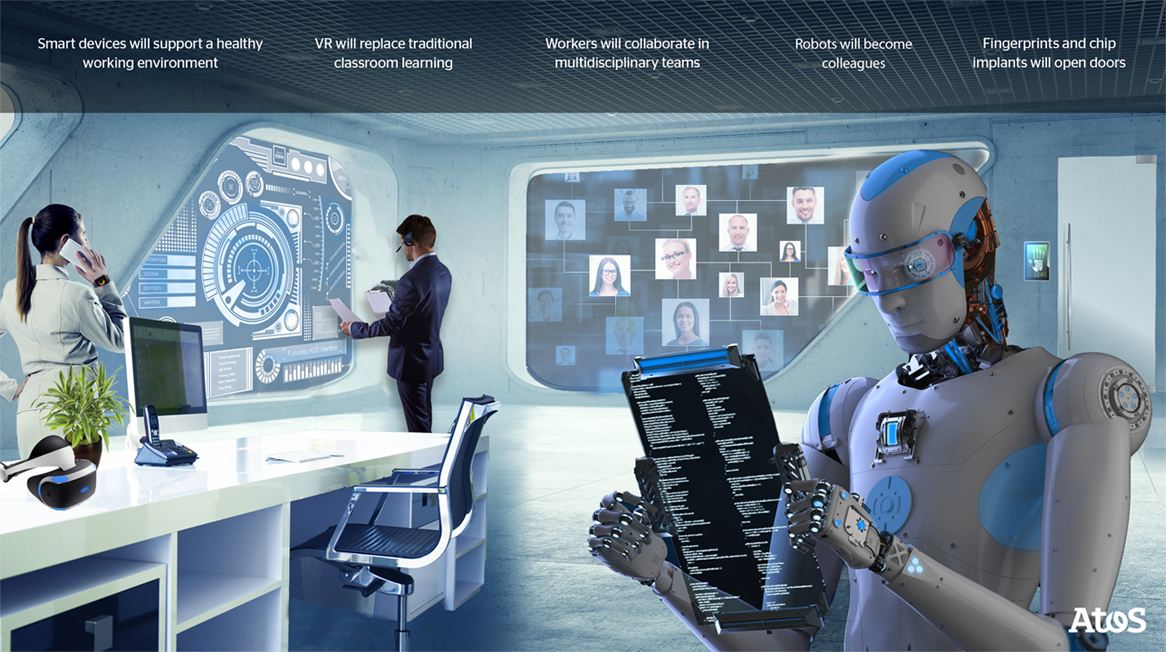
A device in your head might eliminate the need for a computer screen by projecting images (from a Skype meeting, a video game, or whatever) directly into your field of vision from within. It checks

9 am.

Personalised Financial Algorithm.

Balance of credit cards and bank accounts including citizen credit /loyalty points. Value of shares/ pension fund updated.

10 am. Still in your Dressing gown.

11 am.  The self-drive car starts. Seats automatically shift and rearrange themselves to provide maximum comfort. Personalised News and Weather Algorithm gives a report. The car books parking spot places order for coffee. Over coffee, you rent out a robot in Dublin and have it do the legwork for your forthcoming visiting – hotels.

12 pm.

Hologram of your boss in your living room.
1 pm.

Virtual work meeting to discuss the solitary nature of remote work.

Face-to-face meeting arranged.


2 pm. Home. Lunch delivered.

3 pm. Sporting activity with a virtual coach.

5 pm. Home

7 30 pm.

Discuss and view the Dubin robot walk around containing video and audio report. 

Dinner delivered. Six quests. The home management algorithm rearranges the furniture.

8 30 pm

Virtual helmets on for some after-dinner entertainment.

10 pm 

Ask Alixia to shut the house down not before you answer Alixia question to score points and a chance to win — Cash- Holiday- Dinner for two- a discount on Amazon- e bay- or a spot of online gambling.

                                                       ———

The fourth industrial revolution is not simply an opportunity. It matters what kind of opportunity is for whom and under what terms.

We need to start thinking about algorithms.

The core issue here is of course who will own the basic infrastructure of our future which is going to be effect all sectors of society.

They are not just for mathematicians or academics. There are algorithms all around us and you don’t need to know how to code to use them or understand them.

We need to better understand them to better understand, and control, our own futures. To achieve this we need to better understand how these algorithms work and how to tailor them to suit our needs. Otherwise, we will be unable to fully unlock the potential of this abstract transition because machine learning automates automation itself.

The new digital economy, akin to learning to read, has obscured our view of algorithms. Algorithms are increasingly part of our everyday lives, from recommending our films to filtering our news and finding our partners.

Building a solid foundation now for governance for AI the need to use AI responsibly
and to consider the broader reaching implications of this transformational technology’s use.

The world population will be over 9 billion with the majority of people will live in cities.

So here are a few questions at 30 you might want to consider.

How does the software we use influence what we express and imagine?

Shall we continue to accept the decisions made for us by algorithms if we don’t know how they operate?

What does it mean to be a citizen of a software society?

These and many other important questions are waiting to be analyzed.

If we reduce each complex system to a one-page description of its algorithm, will we capture enough of software behaviour?

Or will the nuances of particular decisions made by software in every particular case be lost?

You don’t need a therapist; they need an algorithm.

We may never really grasp the alienness of algorithms. But that doesn’t mean we can’t learn to live with them.

Unfortunately, their decisions can run counter to our ideas of fairness. Algorithms don’t see humans the same way other humans do.

What are we doing about confronting any of this –  Nothing much.

So its no wonder that people start to worry about what’s left for human beings to do.

All human comments appreciated. All like clicks and abuse chucked in the bin.

← Back

Thank you for your response. ✨

THE BEADY EYE ASK’S: WHAT DO YOU THINK OF DONALD TRUMP AFTER TWO YEARS.

Tags

, , ,

(Seven-minute read)

Here is a man that operates on a wing, whim and Twitter.

Trump delivers remarks following the US Military killing against Iranian General Qassem Soleimani in Baghdad, Iraq [Tom Brenner/Reuters]

A man that can’t resist an opportunity to declare his own success with a malign indifferent to reality.

Mathematically incompatible with a 35% popularity country wise and 80% Republican wise. His approval rate is 53% in Russia.

Even before his Facebook election back on January 20, 2017, he had already made a mockery of good governance norms. Any media institution that accurately reports information he doesn’t like he denigrates.

Worldwise fake news outlets and not so rigorous real ones celebrate his victory.

He’s been called an idiot, labelled unchristian, and has even been compared to Hitler and Mussolini. In fact, it’s difficult to find a single world leader who has come out in favour of President Trump.

His international policies on everything from the Muslim ban to the Wall to the Paris Climate Agreement have made him one of the most unpopular presidents in the history of the United States.

There is no need here to list his accomplishments but there is one thing that is becoming clear with the largest arms deal in history, 110 billion$ of arms to Saudi Arabia linked to the majority of deaths in US terrorist attacks he is intentionally or unintentionally setting up the Middle East for a war.

By recognising Jerusalem as Israel’s capital he endorsed Israel, not the Palestinians. Since his election colonization by Israel has surged with an invigorated enthusiasm. (Remember that Jerusalem contains sites sacred to the three major monotheistic faiths Judaism- Islam- Christianity.)

He mocked North Korean leader Kim Jon-un during a speech at the United Nations General Assembly in September 2017 and followed that up by saying he would “totally destroy” North Korea.

Donald Trump is abandoning America’s role as enlightened hegemon, eliminating America’s secret weapon, its soft power.

He is now impeached for allegations that his country colluded with Ukraine in order to rig the US election. He, of course, denies all claims.

If Trump is impeached, is that necessarily the best outcome for our country?

Impeachment over his communications with Ukraine hasn’t affected him more than as a minor annoyance. Because he is both shortsighted and for sale. His old stomping ground of business has many burnt bridges. He loves being the centre of public attention.

Let’s be clear:

Donald Trump is an idiot. I’ve tried to find different, perhaps more parliamentary adjectives to describe him, but none was clear enough. He is an idiot.

If there’s one true form of American entertainment, it’s political figures saying dumb things in person and on the Internet.

The man that gave us the Apprentice, the Miss Universe pageant, and the phrase “Donald Trump hair” is said to have a pathological temper. Pathological, there’s no cure for that.

He tore up the nuclear arms limitation treaty with Iran which was negotiated with Great Britain, Russia, China, Great Britain, France, Germany, the USA and Iran.

In terms of importance, there are other, more important issues we should focus on.

The point here is that getting into the Donal Trump mud will not work even if he loses in 2020 and does so in a campaign and a culture that has mainstreamed his brand of bullying and boorish behaviour, he wins a sort of victory one that is likely to last beyond another four years.

How long will Republicans continue to enable this fool?

Why is Donald Trump so determined to start a war with Iran by investing in a policy of fear?

That’s the way Mussolini arrived and the way Hitler arrived.

You’d never know what he will believe tomorrow.

America needs to build a big enough wall to keep himself from escaping as he has just tossed a stick of dynamite into a tinder box with a gift to all terrorists in the Middle East region even if Soleimani was responsible for unthinkable violence.

What is clear in the wake of the killing of Oasem Soleimani he doesn’t really get what made America great in the first place.

Make no mistake, Donald Trump is weakening America.

Trump is now directing his ‘wisdom’ on the Middle East a man that just says and does whatever comes into his head, usually bypassing his brain.

 Iranian Quds Force commander Qassem Soleimani 

If Iran decides to confront the US, Iraq will be the scene for that battle. Sod the consequences. Death by a thousand cuts.

God forbid that Donald Trump is assassinated.

Because doing that would only make him more noteworthy in history.

If you think that killing Trump will stop the government from being crazy, racist, self-serving lunatics driven by corruption, greed, and profit?

Guess again.

Look at his social media prowess where he has called himself the  “the Ernest Hemingway of 140 characters”. ( He frequently uses Twitter and other social media platforms to make comments about other politicians, celebrities and daily news.) and you will see a novel political relationship between Trump and his followers.

He effortlessly dominated the conversation online which translated into mainstream media coverage.

This despite the fact that nobody with any actual smarts believes an IQ score to be indicative of actual real-world intelligence.

In truth, it is worth mentioning that there are signs the media is fighting back.

One study found that of Trump’s millions of Facebook followers, only 42% were from America.

But, again, he doesn’t care he paints himself as an everyman (an everyman with who lives in a $100m penthouse with a rudimentary understanding of the elements of the internet.

It remains to be seen whether a man so hateful, so farcical, a man whose permanent expression is that of someone whose drunk friends superglued his eyebrows into a frown while he was sleeping.

As there is going to be plenty of online support for Muslims, and defence of Islam, in the wake of Trump’s actions. It’s not enough for politicians worldwide to be able to adeptly read an Autocue. They’d better be able to take a decent selfie and understand a meme, too.

2020 will be a whirling dervish of chaos of a year as he now represents an enormous danger to the whole of the world.

Let’s hope he goes bankrupt for the seventh time.

All human comments appreciated. All like clicks and abuse chucked in the bin.

← Back

Thank you for your response. ✨

THE BEADY EYE ASK’S; WHAT WERE THE MOST SIGNIFICANT EVENTS IN HISTORY THAT HAVE HAD THE GREATEST IMPACT ON THE WORLD.

Tags

, ,

(Twenty-minute read)

Before we get started let’s try and explain the dating system of History.

Why?

Because people of different cultures and belief systems should be able to access and discuss history without having to date it according to the Christian belief in Jesus as the son of God and the messiah.

In order to date, a present event from a past event one must know when that past event occurred.

We have BCE/CE rather than BC/AD – Before Christ/Anno Dominior – Year of Our Lord.

 BCE/CE makes no sense because it refers to exactly the same event as BC/AD.

BC/AD also has no year zero but does not need one because it is not claiming to date history from a specific event.

After the time of Christ” or “in the common era” which eventually came to be written simply as “common era” and then CE which gave rise to BCE in defining events prior to the common era.

BCE/CE continues to be used because it is more accurate than BC/AD so forgive me for using both.

  1. First humans communicated only through speaking and picture drawings.
  2. 3000 B.C., the Sumerians in Mesopotamia (what is today southern Iraq) devised cuniform (shapes)
  3. Around 2000 B.C., Phoenicians created symbols ancient Egyptian writing is known as hieroglyphics
  4. The Greeks later adopted the Phoenician alphabet and added vowels.
  5. The Romans gave the letters Latin names to create the alphabet we use today.
  6. Around 875 A.D., the concept of zero was developed.

———–

Your birth as there would be no history for you if not born.

Herodotus of Halicarnassus 484 BC – ca.425 BC has generally been acclaimed as the “father of history”.

Or was it the birth of Temujin c.1162 who DNA is in 16 million men alive today.

Sitting BullLakota Tatanka Iyotake, born c. 1831.

It is said that the events in history alter the lives of mankind, and human civilization never remains the same after that. The history of the world is the memory of the past.

So was it, Plato born in 428/427 BCE, or Socrates who sought the impartial arbitration of a “thinking machine.” AI, credited as one of the founders of Western philosophy in c. 470 – 399 BC (which is probably only an inference from…Plato or  Aristotle born in 384 BC.)

In July 356 BC. Alexander the Great was born a military genius he was educated by the philosopher Aristotle.

Or was it Confucius born in 551 BCE considered as one of the most important and influential individuals in shaping human history.

Whoever it was the understanding of the linkages between past and present is absolutely basic for a good understanding of the condition of being human.

It is not just ‘useful’, it is essential. All people and peoples are living histories.

It is also essential for ‘rooting’ people in time. And why should that matter?

The answer is that people who feel themselves to be rootless live rootless lives, often causing a lot of damage to themselves and others in the process.

It took a long unfolding history to get everything to NOW.

Was it 11,000 years ago, with the invention of porridge or to put it differently, the first of at least five separate moments when farming was discovered, that is the planting and selection of cereal planting and selection of cereals, alongside the tethering of some animals. It meant that people stopped being nomadic hunters, and human populations grew, trapping farmers with more mouths to feed.

It also meant tooth decay, bad backs and a lot of very boring work. But without it, there would have been no villages, towns – no empires, no cars, no moon landing, no history, really, at all. And, of course, with GM foods and fish farms, it’s an ancient story that hasn’t stopped. In his book Sapiens: ( A Brief History of Humankind, Yuval Noah Harari states that we were all conned by a plant called Wheat.)

Anyway!

3500 AD the wheel was invented.

Prophet Muhammad Abū al-Qāsim Muḥammad ibn ʿAbd Allāh ibn ʿAbd al-Muṭṭalib ibn Hāshim, born after his father’s death in Mecca, Arabia, around c. 570  giving birth to Islam as a religion.

Jesus was born in 3 or 2 B.C.

Julius Caesar was born in Rome on 12 or 13 July 100 BC.

With the final fall of the Western Roman Empire in 476 AD came the dark ages which led to a complete deterioration of the Roman culture. The progressed and developed culture (law, architecture, literature, government, etc.) of the Roman Empire was lost forever.

850AD Gunpower was invented.

The Earth grew colder, and the world is plunged into a cold, pitch-black, chaotic hell with the Black Plague just suddenly appeared in Europe in the 1300s.PHOTO: telegraph

The Song dynasty in China that began in 960c lasted until 1279.

What happened? Where did all of the knowledge of the Greeks and Romans go? Why did people forget how to read and write and sculpt and build?

There was no one factor that we can pin as the cause of the Dark Ages a period from about the 6th to the 10th century CE. Now referred to as the Middle Ages it is a time of superstition, a stagnant decadent ghettoed holocaust for anyone who is not a noble or a priest, ridden with illiteracy, disease, war, and poverty, into the minds of the masses.

1066. William the Conqueror a normans from France invade England.

Around 1552 Walter Raleigh was born he has been credited with bringing potatoes and tobacco back to Britain, although both of these were already known via the Spanish. In 1616, he went off to search for El Dorado, never found it and got executed on 29 October 1618.

Out of this came Colonialism, Imperialism and Slavery, Capitalism with the Industrial Revolution.

There is no doubt that colonialism had a major effect on the entire world followed by the Reformation. It triggered off the American Revolutionary War. Great Britain lost one of its most important colony, and all the participating nations suffered economic losses with the American Revolution influence the French Revolution to a great extent.

1642 Isaac Newton born.

Napoleon Bonaparte born on August 15, 1769, uprooted the old concepts of aristocracy and hierarchy. (Pasteur As ) Germ Theory of Disease.

Samuel Morse born April 27, 1791, invented the telegraph system.

Newton’s theory of gravity in 1798  took place 111 years after the publication of Newton’s Principia and approximately 71 years after his death before we all came down to the ground.

1884 the machine gun.

On 19 March 1813, David Livingstone was born. In October 1871 found Stanley in Africa with the famous phrase: ‘Dr Livingstone I presume?’

Alexander Graham Bell was born on 3 March 1847 credited with inventing the telephone.

On July 1, 1858, Charles Darwin put forth the theory of Natural Selection.

Henry Ford, born July 30, 1863  “You can’t learn in school what the world is going to do next year.”

Nikolai Aleksandrovich Romanov was born near St Petersburg on 18 May 1868.

On 6 June 1868, Robert Falcon Scott was born. Beaten to the South Pole by Roald Amundsen.

Guglielmo Marconi

Ernest Henry Shackleton was born on 15 February 1874 died of a heart attack off South Georgia.

Pasteur’s a Microbiologist 1877 to 1887 presents the germ theory revolutionized biology and medicine.

1879 Albert Einstein born.

Adolf Hitler is Born at 6:30 p.m. on the evening of April 20, 1889. He rose to power as the chancellor of Germany in 1933, and as Führer in 1934.

World War I lasted from 28 July 1914 to 11 November 1918 it killed 16 million people—soldiers and civilians alike giving rise to the Russian Revolution and the Second World War. It helped to spread one of the world’s deadliest global pandemics, the Spanish flu epidemic of 1918, which killed an estimated 20 to 50 million people.

World War II September 1st, 1939 was the deadliest war in human history, with over 75 million deaths all over the world. Two Atom bombs dropped on the cities of Hiroshima and Nagasaki contributed to ending of the war on May 7, 1945, after which the Union of Soviet Socialist Republics (USSR or the Soviet Union) was formed, emerged as a superpower.

Germany was occupied by the Allies and the Soviet army.

However, the failing relations of the Soviet Union with the other Allies ultimately resulted in the division of Germany, and building of the Berlin Wall (also a symbol of the ‘Iron Curtain’)

The Cold War and the arms race was the indirect effects of the war, that were to define world politics for many years to come.

Titanic sinks. At 2:20 a.m. on April 15, 1912.

In 1925 the first Television.

Donald Trump is born on June 14, 1946.

1947 the Kalashnikova.

In 1953 the structure of DNA was a discovery with the field of artificial intelligence research founded as an academic discipline in 1956.

1954, Roger Bannister broke the 4-minute.

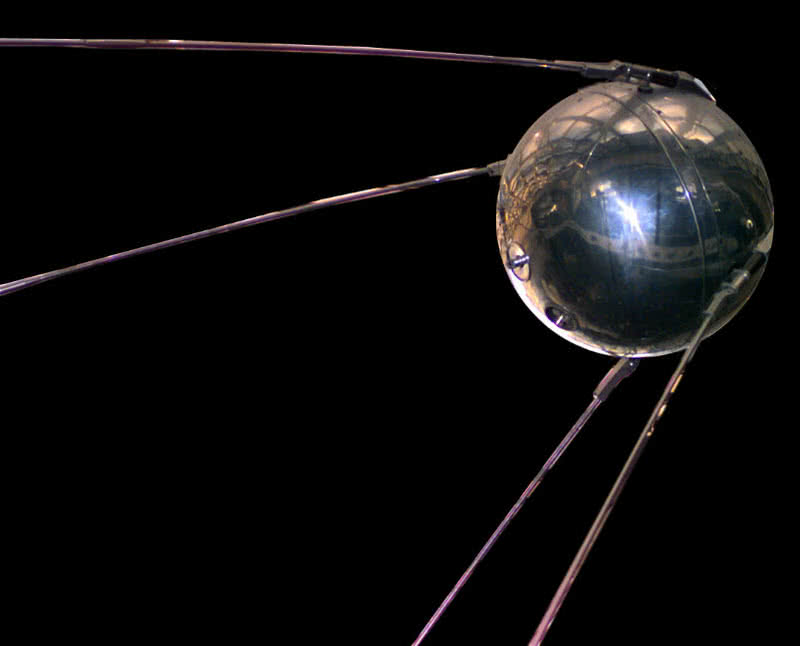
ON 4 October 1957 the Soviet Union inaugurates the “Space Age” with its launch of Sputnik, the world’s first artificial satellite and the start of the internet. Almost one-third of the world’s 6.8 billion people use the internet regularly today.

On April 12, 1961, Yuri Gagarin became both the first person in the world to enter space and the first person to orbit the Earth.

John Fitzgerald Kennedy, the 35th President of the United States, was assassinated on November 22, 1963.

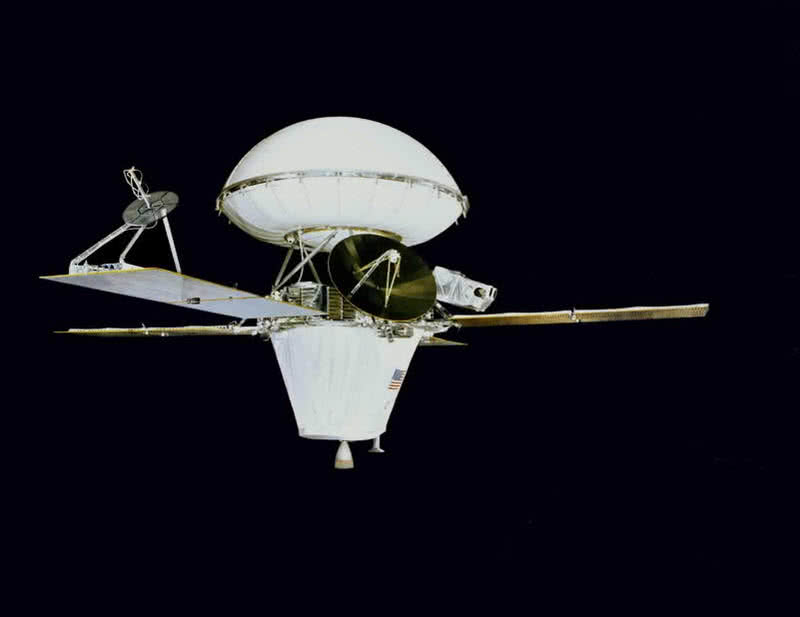
Viking 1 was launched on August 20, 1975, and the second craft, Viking 2, was launched on September 9, 1975.

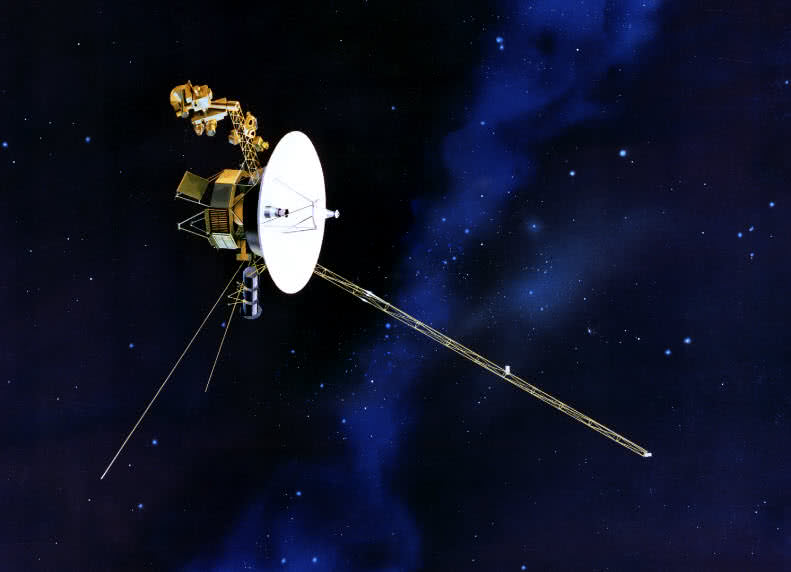
On September 5, 1977, Voyager I was launched and Voyager 11 on August 20, 1977. 

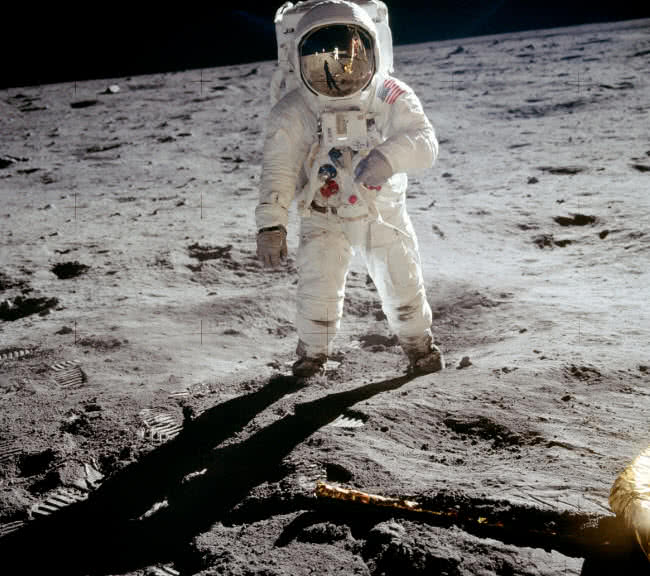
On July 20, 1969, Armstrong and Apollo 11 Lunar Module (LM) pilot Buzz Aldrin became the first people to land on the Moon. Man on MoonBill Gates and Microsoft got their start in 1975.

MS Windows debuts in 1983.

The fall of the Berlin Wall and Reunification of Germany on November 9, 1989. marked the end of the Cold War, and the ultimate fall of the Soviet Union.

Hubble’s launch and deployment in April 1990 marked the most significant advance in astronomy since Galileo’s telescope 400 years ago.

On 20 November 1998 International Space Station starts to get built.

The European Union (EU) was created by the Maastricht Treaty on November 1st 1993.

September 11, 2001, two planes were flown into the World Trade Center towers in New York triggering off the Global War on Terrorism.

In 2015 the Fourth Industrial Revolution starts. It is the fourth major industrial era since the initial Industrial Revolution of the 18th century.

2019. First picture of a Blackhole  55 million light year from the Earth.

It is revolutionizing the present scenario in the world, The main innovations should develop in the fields of nanotechnologies, alternative fuel and energy systems, biotechnologies, genetic engineering, new materials technologies and so on.

It started with Automata, the predecessors of today’s robots, date back to ancient Egyptian figurines.

It is now transforming the world in exceptional ways.

With AI becoming increasingly ingrained into our lives, it offers a lot of promise, but can also be a double-edged sword.

It is offering a plethora of opportunities yet to be ushered in.  AI can now handle complex tasks including Object detection, Speech and Face recognition, etc. However, today it has broad intellectual challenges of its own. It is not limited to specific applications or certain biological structures. It requires combined basic research in cognition, statistics, algorithms, linguistics, neurosciences and much more.

It controls how we communicate and connect, search, buy and sell.

What is called Social media is now dividing and manipulating us, catapulting us towards an Algorithm society that is tearing the connective tissue of our civilisation.

No current program based on mathematics or frame systems has common sense.

Given that all people are living histories, how can we all best learn about the long-unfolding human story in which all participate?’

My answer is: Think again about why and who we elect as leaders and how and where we use neuro-symbolic AI.

So I repeat,  History is not just ‘useful’, it is essential.

All people and peoples are living histories.

We will need to rediscover what it means to be human.

If we are not careful history will repeat itself.

It is obvious that the reason why history repeats itself is that, people do not learn from mistakes. Its lessons must remain indelible on our minds, be it AI, time, money or even a life.

All human comments appreciated. All like clicks and abuse chucked in the bin.

← Back

Thank you for your response. ✨

THE BEADY EYE ASK’S; IF THE WORLD IS TO END, WHICH RELIGIOUS BELIEF OFFER’S THE BEST DEAL

Tags

, ,


(Fifteen-minute read)

Be assured that, for every religion promising a great afterlife there is another religion somewhere else which will promise you that that the other religion has it wrong — and will do so with just as much fervour as the first.

Neither science nor secular humanism provides answers to this question the answer is none of them.

The old testament has no heaven or hell. These only get added in the NT.

Without going into the specifics for what an “after-life” and a “religion” actually are:

No one knows anything about an afterlife.

It is said that religion can be elucidated in various ways.

Here is what a few of the main religions offer. 

As needs be the summary underneath is incomplete.

Buddhism and (possibly?) and Jainism offer reincarnation until one achieves enlightenment, at which point one’s soul merges with the great universal soul of Heaven.

Hinduism: Oldest living religion on earth with 33 Supreme Gods in the form of Lord Ganesh, Lord Shiva, Lord Vishnu, Lord Krishna, Lord Rama, Lord Hanuman, Goddess Durga, Goddess Lakshmi, Goddess Parvati, Goddess Saraswati, Goddess Kali, and scores of other Gods, and Goddesses. Hindus believe that their Gods and Goddesses have specialized knowledge, creative energy, and exalted magical powers.

According to one’s own karma. No religion except it gives a detailed explanation of what happens afterlife and what happens before life and what happens in between two lives.

Punishment consists of being reincarnated as a more lowly life form. You are punished in hell for your wrongdoings And rewarded in heaven for good things. But these are not permanent. After a specific time, you are again kicked back to Earth. And the cycle on birth and death starts again till you neutralize all your karmas and become one with that infinite universal god.

Christianity and Islam, offer eternal bliss in communion with God.

Punishment takes the form of Hell and eternal torment.

Sikhism. God in Sikhism is known as Ik Onkar, he has no gender, beyond time and space and without form. It forbids the representation of God in images.

It has elements of Hinduism and Islam in its beliefs, practices, and traditions. It retains the general Hindu conception of the universe and the doctrine of samsara, or rebirth, based on karma.

Sikhs do not cut their hair. According to Sikhism, all days of the week and all numbers are the same, no one day or a number is better than the other.

One need not perform any rituals or believe in superstitions to receive God’s love.

Guru Gobind Singh was the last Guru of the Sikhs in human form. He created the Khalsa, a spiritual brotherhood and sisterhood devoted to purity of thought and action.

Vikings believed in a multitude of realms or homeworlds, nine in total populated by gods, humans, and giants and sinners.

The three primary realms were Niflheim, the world of the mist, Midgard the land of mortals and Asgard the home of the Aesir gods. Vanaheimr home of the Vanir, Jotunheim was the land of the mighty Norse giants, Alfheim was the land of the elves in Norse mythology, Svartalfheim the home of the dark elves, Muspelheim the realm of fire, Helheim also known as Hel was the underworld of Norse mythology and was home to the being who oversaw this realm also called Hel.

Helheim was the place where Vikings would go should they die from natural causes, or more specifically not in battle. Once there, it would be impossible to leave, Helheim was surrounded by the river Gjoll and guarded by a devilish giant hound, known as Garm.

They who died gloriously in battle go to Valhalla, where they feasted and drank mead all night and fought all day.

Punishment. A dreadful afterlife called Hella.

Atheism, It doesn’t make any afterlife promises that it won’t deliver.

Bahá’í one of the youngest of the world’s major religions. It was founded by Bahá’u’lláh in Iran in 1863. The central idea of faith is that of unity. They believe that people should work together for the common benefit of humanity.

Buddhism.  Has lots of views you are basically psychologically dismembered, layer by layer. As you pass through your journey, layers of your being are erased and rewritten into a new being. There is nothing left of the old you when the process is complete. You can try over and over again to get off the Wheel of Life by reincarnation.

The other possibility is Nirvana, in which you stop being reborn. You become one with everything, yet you also lose all identity. This is why Nirvana is often called “The Deathless State”

Once the process is complete, you are reborn into samsara (The physical world)

Buddhists believe that the 6 realms are literal, that people really come back as Devas or Pretas.

Someone who responds with Anger will enter Naraka or hell,

Someone who responds with greed or desire will become a Preta or hungry ghost,

Someone who responds with Ignorance or Stubbornness will enter the realm of the Tiryag-Yoni, or animals,

A person who responds with Passion or the Desire to Control will be reborn into the Human Realm,

A person who responds with Fear will be reborn as an Asura, or jealous-god,

A person who responds with Pride or Arrogance will be reborn as a Deva, or god.

Pantheism, offer the free option of never dying, through the realization that you existed long before birth.

Islam. Muslims believe that a good devout Muslim man will be given 62 additional wives in heaven.

Taoism, the main belief of the Taoist is that becoming one with the Tao, or, the life force of the universe brings peace and harmony to them. They believe that we are eternal and that the afterlife is just another part of life itself.

Mormons believe that most people will end up in one of three kingdoms of glory, depending on one’s level of faithfulness. They believe that God gives to (virtually) everyone general salvation to immortal life in one of the heavenly kingdoms. Belief in Christ is necessary only to obtain passage to the highest, celestial kingdom.

Judaism. Jews assumed that God chose the Jews to be the picked people to set the cases to that of the greatness moreover the ethical lead to the entire world. Judaism is an antiquated monotheistic religion, with the Torah as its foundational content.

Shintoism believe that daily life is made possible by kami, and accordingly, the personality and life of people are worthy of respect. An individual must revere the basic human rights of everyone as well as his own. The believers of this religion assumed that the supernatural powers existed in the trademark world.

Scientology, believes in the “immortality of each individual’s spirit,” therefore making death, not a significant worry. The spirit acquires another body necessary for growth and survival. Scientologists do not typically dwell on Heaven or Hell or the afterlife, instead focusing on the spirit.

Zoroastrianism believe in the existence of separation of good and evil.

Dogans believe in various malevolent and benevolent spirits who populate the bush, trees, and uninhabited places. Although the Dogon recognize the creator god Amma as the Supreme Being and address prayers and sacrifices to him, the core set of beliefs and practices focuses on ancestor worship. Death is conceived as the separation from the body of the two parts that make up the personality—the nyama, or vital life force, and the kikinu say, or soul.

Amentotop 111 believed he was a living sun god.

Native American, Australian, Polynesian, Southeast Asian, or Central Asian religions

Several seem to threaten eternal torment for not believing them.

In the end, it doesn’t even matter that to which religion one belongs to. We take birth as human beings and die as human beings. A strong society means survival of the species.

History has shown that beliefs and faith, of the most intransigent kind, have served as the justification for tragic violence and destruction and sustained the ignorance of people. People have slaughtered each other in wars, pogroms, genocides, inquisitions, crusades, and political actions for centuries and still kill each other over beliefs in ideologies, politics, philosophies, and religion. 

So how about my new religion-  Problemist  – it could be or could not be.

Instead of owning beliefs, we are open to all beliefs allows us to correct our mistakes without submitting our ideas to years or centuries of traditional time-consuming barriers.

Problematic beliefs do not leave behind fossil evidence.

We communicate without resorting to preconceived ideas based on past beliefs. Our feeling of wonder about the universe provides us with the fuel for exploration; how much more magnificent the results from useful thoughts than ones based on belief or faith.

We do not require education, knowledge, or understanding. Even the most uneducated of us can believe in anything.

https://youtu.be/J9-Xa_DU5f8

All human comments appreciated. All like clicks chucked in the bin.

← Back

Thank you for your response. ✨

THE BEADY EYE ASK’S. WILL 2020 BE THE YEAR OF THE BIG MELT OR THE BIG FRY.

Tags

, , , , , , , , , , , ,


(Fifteen-minute read) 


It looks like being both.

We are the first generation to know we’re destroying the world, and we could be the last that can do anything about it.

SO AS IF YOU DON’T ALREADY KNOW WHAT NEEDS TO CHANGE HERE IS YOUR CHANCE TO DO SOMETHING ABOUT IT.  

We need to recognize that everything we do, every step we take, every sentence we write, every word we speak—or don’t speak—counts. Nothing is trivial.

Take personal responsibility.

We need to use social media – this is one of the most effective ways to get brands to listen to you, so tell them that you want a change.

Why?

Because, unfortunately, the politicians who dominate the world stage are, depressingly, mostly cut from the old cloth, and the leadership challenges they face, are particularly complex and will require different skills — notably a clearer vision among leaders of organisation’s shared purpose.

Because the digital revolution is far from over the pace of change only seems to be quickening when in fact it is causing isolation. 

Because, we are allowing non-regulated large technology platforms to become too powerful, using their size to dominate markets and we are not paying enough attention to how the tools they create can be used for ill –  like device addictions, as we drown in notifications and false news feed posts.

Because there is an increasing imperative for all of us to respond to climate change.  Which will and is challenging our lives developing on a daily bases right in front of our eyes into our biggest need to act as one.

How can any of this be achieved? 

How will the changing political, economic and environmental landscapes shape the world?

Don’t get caught up in the how of things. Don’t wait for things to be right in order to begin.

Because in our age of tectonic geopolitical shifts, “alternative facts,” and conflicting narratives, our routine everyday life is losing sight of our true goals and aspirations.

Because with the rise of short-sighted populism we will solve nothing, other than feeding the great unwashed with short term gratification.

We need to write a piece of software that eliminated malware, viruses and all of that crap. 

We need to show our political leaders that they want to change, to understand our common humanity.

We need to try to put yourself into another person’s headspace and accept people for who they are and what their beliefs are.

We need to collaborate and push for policies that complement both sides of the political spectrum.

We need to make wasting our resources unacceptable in all aspects of our life.  Every product we buy has an environmental footprint and could end up in a landfill. The impact of plastic pollution on our oceans is becoming increasingly clear, having drastic impacts on marine life.

We need to be more conscious about what we buy, and where we buy it from. Living a less consumerist lifestyle can benefit you and our planet.

We need to use our purchasing power and make sure our money is going towards positive change.

We need to realize that what we eat contributes around a quarter of global greenhouse gas emissions and is responsible for almost 60% of global biodiversity loss.

We need to be supporting eco-friendly products.

We need to try to waste as little food as possible, and compost the organic waste we can’t eat.

We need to make education free for all.  Start educating not for profit but for a better understanding of what is the common values of life.

We need to stop asking the world’s smartest scientists to find us more time and to reverse gravity’s effect on our lives.

We need to stop killing each other. Countries start wars and people die and more people are in poverty.

We need to create out of profit for profit sake a World Aid fund with perpetual funding. (See previous posts) A new nonprofit called Carbon Offsets to alleviate address Climate change and Poverty. 

We need to realize that all significant change throughout history has occurred not because of nations, armies, governments and certainly not committees. They happened as a result of the courage and commitment of individuals. Believe that you can and will make a difference. 

The genesis for change is awareness so I need to stop. 

This year will not only be another opportunity for the leading minds in media in all its forms to highlight consumption for consumption sake.

However, if they wanted to spread a message that helps us all they would ban advertising that promotes consumption for consumption sake/profit. 

Feel free to add your priorities. With rapid innovations in technology and open access to data its no longer “wait and see.” We need to stop the huge feeling of apathy. 

The coming year, let alone the next decade looks unpredictable.

All human comments appreciated. All like clicks and abuse chucked in the bin.  

← Back

Thank you for your response. ✨


THE BEADY EYE ASK’S: WITH THE INFORMATION AGE ARE WE HEADING FOR CYBEROCRACY.

Tags

, , , , , , , , , , , ,


(Twenty-minute last post of the year read) 


Technology is not neutral or apolitical.

So information may very well come to succeed capital as a central theoretical concept for political and social philosophy.

The retrieval systems of the future are not going to retrieve facts but points of view

However, the weakness of databases is that they let you retrieve facts, while the strength of our culture over the past several hundred years has been our ability to take on multiple points of view.

The question is, will new technologies speed the collapse of closed societies and favour the spread of open ones. The information revolution empowers individuals, favours open societies, and portends a worldwide triumph for democracy—may not hold up as times change.

The revolution in global communications will forces all nations to reconsider traditional ways of thinking about national sovereignty.

We are witnessing this happing already with the rise of popularism – Election of Donal Trump and Boris Johnston, but the tools that a society uses to create and maintain itself are as central to human life as a hive is to bee life. However, mere tools aren’t enough. The tools are simply a way of channelling existing motivation.

The influence in the information age is indeed proving to revolve around symbolic politics and media-savvy — the ‘soft power’ aspects of influence.

The information revolution may well enable hybrid systems to take the form that does not fit standard distinctions between democracy and totalitarianism.  In these systems, part of the populace may be empowered to act more democratically than ever, but other parts may be subjected to new techniques of surveillance and control.

Technology with algorithms are leading to new hybrid amalgams of democratic and authoritarian tendencies, often in the same country, like China that is building a vast new sensory apparatus for watching what is happening in their own societies and around the world.

The new revolution in communications makes possible both an intense degree of centralization of power if the society decides to use it in that way, and large decentralization because of the multiplicity, diversity, and cheapness of the modes of communication.

Of all the uses to which the new technologies are being put, this may become one of the most important for the future of the state and its relationship to society.

So are we beginning to see the end of democracy and the beginning of Cyberocracy?   

Crime and terrorism are impelling new installations for watching cityscapes, monitoring communications, and mapping potential hotspots, but sensor networks are also being deployed for early warning and rapid response regarding many other concerns — disease outbreaks, forest protection.

However, the existence of democracy does not assure that the new technology will strengthen democratic tendencies and be used as a force for good rather than evil. 

The new technology may be a double-edged sword even in a democracy.

To this end, far from favouring democracy or totalitarianism, Cyberocracy may facilitate more advanced forms of both. It seems as likely to foster further divergence as convergence, and divergence has been as much the historical rule as convergence.

Citizens’ concerns about top-down surveillance may be countered by bottom-up “sousveillance” (or inverse surveillance), particularly if individuals wear personal devices for detecting and recording what is occurring in their vicinity.

One way or the other Cyberocracy will be a product of the information revolution, and it may slowly but radically affect who rules, how and why. That is, information and its control will become a dominant source of power, as a natural next step in political evolution.

Surplus information or monopoly information that is concentrated, guarded, and exploited for privileged economic and political purposes could and WILL most likely lead to Governance by social media platforms owned by Microsoft/ Apple/ Google/ Facebook/ Twitter.

When we change the way we communicate, we change society. 

The structure may be more open, the process more fluid, and the conventions redefined; but a hierarchy must still exist.

The history of previous technologies demonstrates that early in the life of new technology, people are likely to emphasize the efficiency effects and underestimate or overlook potential social system effects.

The information revolution is fostering more open and closed systems; more decentralization and centralization; more inclusionary and exclusionary communities; more privacy and surveillance; more freedom and authority; more democracy and new forms of totalitarianism.

The major impact will probably be felt in terms of the organization and behaviour of the modern bureaucratic state.

The hierarchical structuring of bureaucracies into offices, departments, and lines of authority may confound the flow of information that may be needed to deal with complex issues in today’s increasingly interconnected world.

Bureaucracy depends on going through channels and keeping the information in bounds; in contrast, Cyberocracy may place a premium on gaining information from any source, public or private. Technocracy emphasizes ‘hard’ quantitative and econometric skills, like programming and budgeting methodologies; in contrast, a Cyberocracy may bring a new emphasis on ‘soft’ symbolic, cultural, and psychological dimensions of policymaking and public opinion.

Why will any of this happen? 

Because the actual practice of freedom that we see emerging from the networked environment allows people to reach across national or social boundaries, across space and political division. It allows people to solve problems together in new associations that are outside the boundaries of formal, legal-political association.

As Cyberocracy develops, will governments become flatter, less hierarchical, more decentralized, with different kinds of middle-level officials and offices? 

Some may, but many may not. Governments [particularly repressive regimes] may not have the organizational flexibility and options that corporations have.

So where are we? 

Future trends:

  1. The advanced societies are developing new sensory apparatuses that people have barely begun to understand and use;
  2. A network-based social sector is emerging, distinct from the traditional public and private sectors.  Consisting largely of NGOs and NPOs, its rise is leading to a re-balancing of state, market, and civil-society forces;
  3. New modes of multiorganizational collaboration are taking shape, and progress toward networked governance is occurring;
  4. This may lead to the emergence of the nexus-state as a successor to the nation-state.
  5. We now have communications tools that are flexible enough to match our social capabilities, and we are witnessing the rise of new ways of coordination activities that take advantage of that change.
  6. Civil society stands to gain the most from the rise of networks since policy problems have become so complex and intractable, crossing so many jurisdictions and involving so many actors, that governments should evolve beyond the traditional bureaucratic model of the state.

There is no doubt that the evolution of network forms of organization and related doctrines, strategies, and technologies will attract government policymakers, business leaders, and civil society actors to create myriad new mechanisms for communication, coordination, and collaboration spanning all levels of governance. 

However, states, not to mention societies as a whole, cannot endure without hierarchies. 

In the information-age government may well undergo ‘reinventing’ and be made flatter, more networked, decentralized, etc.—but it will still have a hierarchy at its core.” As the state relinquished the control of commercial activities to private companies, both the nation and the state became stronger.  Likewise, as the social sector expands and activities are transferred to it, the state should again emerge with a new kind of strength, even though it loses some scope in some areas.

A central understanding of the big picture that enhances the management of complexity is now needed more than ever. 

All human comments appreciated. All like clicks and abuse chucked in the bin.

← Back

Thank you for your response. ✨

THE BEADY EYE SAY’S; WE ARE ABOUT TO ENTER THE END GAME.

Tags

, , , , , ,


(Sixteen-minute read) 

WHY?

Because there is no point any longer carry on claiming that we are a victim of world events…Climate change, Artificial intelligence, Capitalist greed etc. 

If Everyone’s FingerPointing, Who’s to Blame?

The answer, it seems, is someone else.

We think blaming means we get away with it.

Getaway with what?

If we stop it may become evident that this blame game is getting us nowhere and maybe, we need to look deeper at that word RESPONSIBILITY.

Could it be possible that our choices got us in the mess and our new responsible choices could get us out of the blame game forever?

The issue at hand is a vicious circle. Greed versus Common sense.

It is important that the leadership of countries are responsible for governing but does anyone remember the last time that a government actually took responsibility for their own actions?

No.

Politicians — hostage to the tyranny of short election cycles — instead wooed voters seeking instant gratification, the protection of unsustainable entitlements, and shortcuts to continued prosperity they pander to popularism. 

Its no wonder we use blame like an auto-pilot switch?

At no point do we want to think that our choices may be contributing to what is going on in our life.

The media changed our perception of so many things preventing us from coming to a consensus not only on how to dig ourselves out of this mess but also on how to prevent it from happening again.

All that has been positive is slowly being replaced with only more negative.

And so no goes the endless, useless recriminations.

The blame game, however, is a lot more dangerous than it sounds. This never-ending cycle not only diverts responsibility but distracts from coherent responses.

That has two immediate consequences.

First, it is virtually impossible to generate a sense of shared responsibility that must underpin any sustainable, effective solution.

Second, the temptation increases for each country to turn inward, significantly raising the risk of protectionism.

As the species that have taken over the planet.

The world is looking for bold leadership, and in the absence of it, dysfunction that will make 2019 merely a flesh wound risks is becoming an ever more likely reality.

There is the possibility that our struggle to halt destructive climate change is going to make most of the people around the world very conscious of changes on the planetary level that need to be stopped, and species extinction is in that category. . . .However, unless humanity learns a great deal more about global biodiversity we will soon lose most of the species composing life on Earth.

WHY?

Because we need to do one big thing that people could get together on that would solve the problem and it needs to happen politically, globally in order to fulfil this vision? 

We might have achieved many small victories in a losing war but what is immediately relevant at the present time is our collective inability to act as one. If not what we will see soon—it is on the horizon—is a second great environmental crisis, and that’s a shortage of freshwater.

It’s a shortage of fresh water that is rapidly growing, that’s causing some of the most tragic humanitarian problems . . .  and it’s going to get worse and worse.

We the grownups we have to start somewhere.

The era that we have to create ahead of us is going to have to include action and research in multiplicity.

I mean, lots and lots of people involved in order to keep the whole planet and all the plants and animals in it, in order to understand how the living world works….where life came from, where we came from, and what we need to be preserving in order to make Earth a livable, habitable place—a planet to be our home. 

Billion of us live in our technologic bubble called cities, indifference to what is taking place outside our own worlds thanks to the Smartphone. If that remains true for the next decade what is left won’t be worth saving.

Where to start?

We now face a substantial possibility of seeing a complete collapse of the ecosystem which will have an irreversible impact of human activity.

The slide toward extinction with all our efforts around the world has not slowed, nor will it in the near future. 

Like conservation efforts around the world had consisted of targeted procedures to save a species here or there or to save a habitat here or there.

Rather than point the finger of blame here a few things we could change.

Hope is after all one of the great attributes we are all ushered towards…

Profit-seeking Algorithms. Regulation

Technology leapfrogging.  Transparency.

Currency manipulator. Emerging economies gained a competitive advantage by manipulating their currencies, weakening labour standards, degrading the environment, or engaging in various forms of implicit protectionism.  Unsustainable national policies. 

Consumption.  Ban Media/TV Advertising that is promoting consumption for consumption. 

Multilateral institutions.  The UN are only as strong as our member nations let it be.  When push came to shove, these institutions shie away from their duties, hindered by widespread representation and legitimacy deficits. Remove the Veto.

Bogus blameRemove False News from Social media 

All those things together intrinsic, to human instinctive behaviour?  

They could go long way to helping us remain in the game.The End Game

Politicians, of course, will say: “It’s not our fault. They are right as to do not hold them to account. 

Education. Stop educating for the market place. Children have to take out of the classroom and learn where fresh air, fresh water, fresh vegetables, fresh everything comes from. To learn true human instinct are not a Tweet, a Like, a Smartphone, a Virtual game.

And trust me — no one will want to take the blame for that tragedy.

Our evolution now is a competition, greed against all of us. 

Everyone can get it eventually, if they just think.

 All human comments appreciated. All like clicks and abuse chucked in the bin. 

← Back

Thank you for your response. ✨


THE BEADY EYE SAY’S: LOOKING FOR AN NEW YEAR RESOLUTION. HERE IS ONE.

Tags

, ,


(Thirty-minute read)

We all recognize that there are many problems in our world, which with our collective intelligence could be address if we did not turn them into profit-making.

The dire warnings about climate change are on the top of the list, but as we have seen the recent UN Climate Conference in Madrid shows that we once again are unable to act collectively. Instead, we opt for blindness and continue as if nothing can change the inevitable disaster awaiting us all.

Why aren’t we interested?

Because it is abstract happing over there, impossible to describe – the Amazon is burning, California is on fire, Australia is covering New Zeland with smoke.

Half the world might not believe in the science, but it’s no longer acceptable to hind the truth behind rhetoric that is saying one thing and feeling another as if deny it.

We know that there are climate refugees, that the Arctic is melting, that there is flooding, extreme weather events, droughts, famines, but the story is too complicated we do not feel immersed in it.

Because we don’t believe it we are incapable of believing, we can do something about it even if it is a solid scientific fact.

What is knowledge when our brains are unprepared to receive it?

Most of us can’t explain how our individual and collective behaviour is boosting hurricane winds.

On one hand, we have to feel it, believe it, but our brains find it difficult to imagine ourselves in the future and to plan for that future.

Therefore the question to be addressed by all of us is.

Are we even capable of believing what the scientist are telling us?

What, then, is to be done?

Greta Thunberg might be the figurehead for change, but the emphasis should be on doing.

The change required is not to wait for feeling or belief,  but to act.

Some now argue that the focus should be on the personal shifts taking the responsibility away from Governments. In my mind governments have a responsibility to oversee the conversion to green energy by ensuring that Climate Change does not become a product to be sold for a profit,

We have a colossal opportunity with climate change to do one or the other, turn it into profit-making or save what left of our planet.

The problem with profit is already here to see.

In fact, that’s exactly what Big Oil firms have just started doing. Relying on oil alone simply won’t be enough for the oil supermajors to sustain their profits.

Bio this Bio that, Wall Street Carbon Credit, Green bonds. When you some of the biggest companies on the planet decide to start spending money, we’re more than happy to get in on the action.

This is just the beginning of the trend.

Sadly externality costs of fossil fuels are shouldered not by fossil fuel producers, but rather by wider society.

After gods knows how many Climate summits and we are still unable and will remain so to agree on any practical solution or action other than rely on technology to come to the rescue.

Why is it not possible to cover every bit of unused land with Solar panels?

Because the problem is that we normally don’t use logic to make the decision which electricity source to use. We want it all.

When looking at sustainable electricity resources, we commonly identify four:

Solar, Wind, Hydro and Biomass.

Each of them is renewable, but that doesn’t necessarily make them sustainable.

Sustainability is determined by three different parameters:

Environmental sustainability, Social sustainability and Economic sustainability.

If producing a renewable energy device costs more energy than it produces during its lifetime, it’s not sustainable.

Mining coal is bad for the environment, but mining neodymium and other rare earth metals for wind turbines is equally polluting.

Let’s not close our eyes to what’s happening:

Anything that’s mined destroys complete ecosystems.

There’s one overarching aspect of social sustainability – we have one globe where we can provide enough food and energy for everyone. Using the planet’s effectively and efficiently is therefore crucial.

Economic sustainability seems easy enough to measure. If a technology can be sold without subsidies it is sustainable, right?

But in most countries, fossil fuels belong to the most heavily subsidized products.

According to the IEA’s World Energy Outlook, fossil electricity is still subsidized for over $100 billion worldwide.

So, how do renewable energy technologies compete with that when subsidies for renewable sources are only one-sixth of that? And which of these can be called economically sustainable?

The one that can be purchased cheapest by consumers.

Sustainability is a very complex word and entails many aspects of which we’ve only scratched a few here to illustrate its diversity.

The question is:

How do we deal with all these aspects? Can we balance all the pros and cons? And how do we do that?

What we can do, is use the full matrix of available renewable electricity technologies and use them in the most sustainable way. Just by using logic.

Solar panels on sloped roofs that are otherwise not used,? Yes, please!

Solar panels on Dutch polders ( Low-lying land)  instead of cattle to create an “energy landscape”? No!

Wind turbines on the North Sea with high impact on nature? No!

Wind turbines on abandoned land with limited impact on nature? Yes, please!

Hydropower with dams that submerge complete villages and arable land in Brazil?! Madness!

Corn production for energy while we could produce food or feed? Of course not!

Biomass residues for electricity production? Yes, please!

Electricity production from living plants while the plant grows while producing rice on the same surface? Yes, please.

We want electricity for the whole world, at low cost, at low environmental impact, as soon as possible, with high return for the companies, with large local economic growth, with high shareholder value, easy to use for consumers, available always and everywhere.

You know what? That’s not possible.

Let’s decide what’s most important and take that as a starting point.

Starting point 1: I want cheap electricity: Here’s your coal-fired power plant. It has all the advantages of cheap electricity, but don’t complain when the Earth dies and when you’ve run out of coal.

Starting point 2: I want renewable electricity at the lowest possible price: You’ve got the choice of hydropower, wind power, solar power or biomass.

Depending on local subsidies and providers, one or more of these options will be available to you. Some of the electricity companies will provide “green electricity” and you don’t even have to choose.

Please don’t ask about the exact sustainability of your renewable electricity. It’s cheap, it’s renewable, forget about the rest.

Starting point 3: I want sustainable electricity: Now we’re talking. You’ve got the choice of hydropower, wind power, solar panels and biomass.

Let’s check what can be combined with other applications at the same land and what has the lowest impact on nature and people in the long run. You might have to pay a bit more than you’re used to, but at least you’ll be assured of a long-term solution and availability of electricity without hampering the access to other resources for yourself or others.

If we all chose starting point 1 nothing will change, we won’t stop climate change and smog will be the number one death cause in large urban areas.

If we choose starting point 2, we’ll focus on low prices that will compete with the sustainability of the renewable energy source. We might end up using fossil resources to produce renewable technologies and not changing anything in the end.

I’ve chosen starting point three. If you do too, we might have a chance of moving towards a sustainable electricity matrix with minimal impact on nature and people.

In fact, we actually may get to a point where energy is abundant, cheap, sustainable and available to everyone everywhere.

Where are we at this point of any time?

At this point, it’s hard even to imagine what a planet that’s 3.6 degrees C hotter would be like. To put this in context, human activity has already warmed the planet by about 0.8 degrees C — enough to produce severe droughts around the world, trigger or intensify intense storms and drastically reduce the Arctic ice cap, not to mention out of control fires.

Fires that will consume the parched forests of the temperate latitudes.

The wildfires in Australia are giving all of us preview that we can’t imagine today.

All the above might be true but it does not address the main problem.

Our usage of Energy.

Industry is increasingly seen as a solution to our global environmental problems, ignoring the role of major corporations in creating the current multiple crises.

Natural resources often lie at the heart of wars and civil strife and the estimated impact of greenhouse gas emissions varies widely due to uncertainties about the future.

We don’t know what the costs of climate change are, and health costs are highly uncertain.

Many scientists have ruled out arguments that market forces and technological changes can gradually lead to a sustainable energy future.

While the investment opportunities for renewable energy continue to grow, the question is to what extent the government ought to finance such investment.

Why?

Because it is no longer efficient for the government to invest in uneconomic technologies at an early stage. This why the political headwinds currently facing the renewables sector are immense.

However, these new energy sources did not simply emerge as the result of free-market forces. Rather, the government heavily subsidized each new energy source.

As the costs of PV technology, wind turbines, energy storage, and other clean energy technology have decreased over time, they have become competitive in their own right.

So here is your new year resolution.

If your community is like many others today, most people want to offset as close as possible to 100 per cent of their consumption.

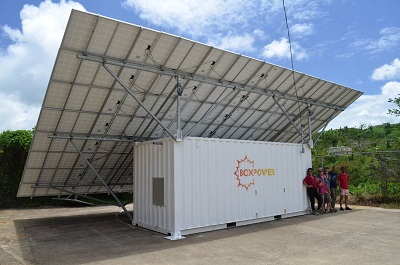
It’s no longer necessary to have 32 acres of solar power panels to meet the demands of 1,000 homes.Solar Container

The majority of solar panels are 250 watts, which means you’d need four panels to create a 1-kilowatt peak (1kWp) system, eight panels to create a 2kWp system, 12 panels to create a 3kWp system, and so on.

A large fixed-tilt photovoltaic solar power plant that produces 1,000 megawatt-hours per year requires, on average, 2.8 acres for the solar panels.

Concentrating solar power plants require an average 2.7 acres for solar collectors and other equipment per 1,000 megawatt-hours; 3.5 acres for all land enclosed within the project boundary.

A solar panel system for a family of three costs around £4,000-£6,000 in the UK.  Solar panels could reduce your monthly energy bill by nearly 50%

So switching to solar energy is a smart decision that allows you to create your own power instead of buying it from the National Grid.

Energy bill savings from solar panels ultimately depend on two things: How much electricity your solar panels produce, and how much of this electricity you use.

More than half of all new electric power worldwide came from renewables last year.

Sounds too good to be true?

Prove me wrong by trying it.

Start your own research by forming an action group.

All human comments appreciated. All like clicks chucked in the bin.

← Back

Thank you for your response. ✨

THE BEADY EYE SAY’S; ADAM AND EVE WERE FOUR PEOPLE IN TWO PERSONS.

Tags

, , , ,


(Twenty-minute read)

In a few days, we enter a new year but not a new beginning as all of us began with Adam and Eve.

SOME TIME AGO I WROTE A POST: Adam and Eve were black. They lived in Africa but never meet each other.

Good and evil existing in every single human being and despite their extreme differences, one couldn’t exist without the other.

In this follow up post I will once again ENDEAVOUR TO STEER CLEAR of the Bible’s account of humanity which is, in fact, both frustrating and ambiguous because of the truth of human nature in and of itself are the acceptance of the impossibility of separating good from evil, two powerful entities that live inside us all.

So there was Adam one and Adam two,  Eve one and Eve two.

Adam One wants to be famous, rich, and win it all for himself and aggressively pursues that goal by calculating survival.

Adam Two seeks internal satisfaction and stability for himself and humbly offers healing and service to others.

Eve One also wants to be famous, rich and to be there for our children. Security.

Eve Two also seeks to attract love, a relationship, to be a mother.

Both care about themself first and both will kill to survive, which is the tension of One and Two that never goes away.

Adam I’s desires are infinite and always leap out ahead of whatever has just been achieved.

Only Adam II can experience deep satisfaction.

Throughout our lives, we’ve all done irrational, incoherent things and acted in totally unexpected ways. There’s a nature within us that, on occasions, pushes us to act or think against the norms.

Homo erectus was a very successful early human, spreading across the ancient world and surviving Earth’s changing environments for nearly two million years—at least five times longer than our own species has been around.

Science has taught us that the first humans were in central Africa but does not say that the first humans were black.

They could have been black, dark, reddish, pinkish, yellowish, or whatever, but the bottom line is every ethnic group, every skin colour, started with the Black Africans, because all human beings were black clear up to 10,000 BC.

Therefore Adam and Eve were black-skinned.

Biblically, there is no evidence that they were “white”.

There is still only one race of Human beings because within Adam and Eve were all the genetic material necessary to produce the variety of humans we have today. Now we are one race with a blueprint written in a code (or language convention) which is carried on very long chemical strings of DNA.

Back to Adam and Eve.


In the first post, I said they never meet each other so they were created both Androgynous.

Since the word, Adam is not used previously in the Bible before either of them arrived there is no evidence that this word must denote a male. Indeed, the explanatory phrase, “male and female he created them,” could be read as clarifying what the nature of this Adam actually was.

“Jesus and God are the “us”.

Just as Eve was taken from Man, so Jesus was taken from God… So my thoughts are not my thoughts, nor your ways are my ways.

To this end, a number of rabbinic passages preserve what may have been a popular interpretation of this passage, which indicates that the first human actually comprised of both genders.

When one looks at humanity now if we could ever all get on the same page again there is no telling what advancements and accomplishments we could attain.

Unfortunately, men have honed and refined the practice of separation into the art of alienating, persecuting and even enslaving other men by virtue of our differences; whether they be nationality, race, gender, sexual orientation or any other excuse to ostracize someone different from themselves; sometimes even to the point of genocide.

This was and is the message that Hitler and the Nazis and all-white supremacists needed and need to hear today.

No man is better than any other man. We are all just little specks of dust.

There is no empirical evidence for the hypothesis of evolution and it has never been shown that evolution happened in any degree.

If we are prepared to dismiss the Genesis narrative, then we have the problem of deciding just when in the scriptures God begins to tell the truth.

Evolution in all aspects, including theistic evolution, is a myth.

Like today, when efforts are often made by intellectual theologians to harmonize modern science with the creation account in Genesis, the rabbis of ancient times were aware of the popular scientific philosophy of their day and integrated it – albeit in a way that also subjugated it – to fit within their broader worldview.‍

We are now on the threshold of discovering that subatomic particles can exist in two places at once. So gravity has self-awareness, in which the quantum state of one part of the system cannot be written without reference to another part of the system.

What are my circumstances calling me to do?

At what points do my talents and deep gladness meet the world’s deep need?

Happy New year.

All human comments appreciated. All like clicks and abuse chucked in the bin.

← Back

Thank you for your response. ✨


THE BEADY EYE’S: CHRISTMAS GREETINGS TO ONE AND ALL.


The continuing exponential deterioration of the world environment — the greenhouse effect, ozone layer depletion, desertification, exponential human population growth, air and water pollution, the pollution of the world’s oceans, loss of topsoil, the continuing loss of ancient forests throughout the world, and the rate of species extinction.

The violence already done to the earth is on a scale beyond all understanding….  how the industrial media have been able to convince so many people that if they just recycle they are “doing their part” for the environment, while they continue with their high-consumption lifestyles and all the other environmentally destructive practices that take place in industrial growth societies.

The wild ecosystems and species on the earth have intrinsic value and the right to exist and flourish and are also necessary for the ecological health of the planet and the ultimate well-being of humans.

Humanity must drastically scale down its industrial activities on Earth, change its consumption lifestyles, stabilize and then reduce the size of the human population by humane means, and protect and restore wild ecosystems and the remaining wildlife on the planet.

IN THIS NEW AGE OF visions promote mega technology solutions to economic and environmental ills and propose massive high-tech global management and development schemes for the biosphere.

We just don’t get it with piecemeal political/economic/legal/technological approaches to protecting the environment.

Depressing, isn’t it?

So to cheer you up here is my Christmas greeting.