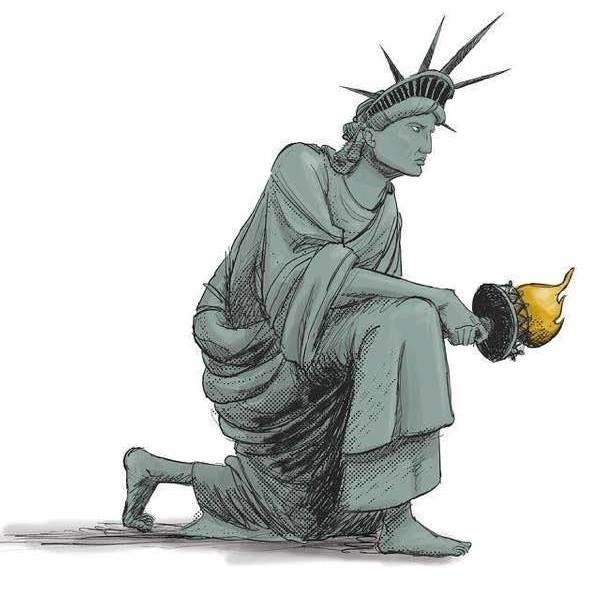
THE BEADY EYE SAY’S. YOU CAN TAKE THE KNEE BUT WHAT IS IT THAT MAKES A NATION.

Tags

, , , , , , , , ,


(Twenty-minute read) 

IT IS NOT COVID-19 OR TAKING THE KEEN OR THE GDP THAT MAKES A NATION. 

SO LET US ASK SOME QUESTIONS:

What is it these days that constituents a Nation?

How does a nation emerge and evolve?  

What are the precise differences between a nation and a gathering of people?

It is hard, -and even one may claim impossible- to give satisfactory answers.

Nations seem so compelling, so “real,” and so much a part of the political and cultural landscape, that people think they have lasted forever. In reality, they come into being and dissolve with changing historical circumstances – sometimes over a relatively short period of time, like Czechoslovakia and Yugoslavia.

Did you notice that suddenly out of nowhere, the BBC has started to refer to England as the Four Nations?

Charles Stewart Parnell said  “No Man Has the Right to Fix the Boundary to the March of a Nation” no man has a right to say to his country—thus far shalt thou go and no further.

Ernest Renan in 1882 said nations share “a soul” and memories of “endeavors, sacrifice, and devotion.

Historical events uniquely fuse together the population of a given territory into a nation.

These nations share “a soul” and memories of “endeavors, sacrifice, and devotion.”

But, because of migration, most modern states include within their borders diverse communities that challenge the idea of national homogeneity and give rise to the community of citizenship, rather than membership in the nation.

So is a nation the kind of moral conscience, which we call a nation? 

If one were to believe some political theorists, a nation is above all a dynasty, representing an earlier conquest, one which was first of all accepted, and then forgotten by the mass of the people.

With technology however we are learning that man is a slave neither of his race nor his language, nor of his religion, nor of the course of rivers nor of the direction taken by mountain chains.

Why, then, does national identity give rise to such extremely strong feelings?

And why would so many be ready to “die for the nation” in time of war?

THERE IS NO RIGHT ANSWER. 

In the age of global transportation and communication, new identities arise to challenge the “nation,” but the pull of nationalism remains a powerful force to be reckoned with – and a glue that binds states together and helps many people (for better and for worse) make sense out of a confusing reality.

Language invites people to unite, but it does not force them to do so.

The United States and England, Latin America, and Spain speak the same languages yet do not form single nations.

Religion cannot supply an adequate basis for the constitution of a modern nationality either.

Geography, or what is known as natural frontiers, undoubtedly plays a considerable part in the division of nations.

So a nation’s existence is if you will pardon the metaphor, a daily plebiscite, just as an individual’s existence is a perpetual affirmation of life.

National identity is typically based on shared culture, religion, history, language or ethnicity, though disputes arise as to who is truly a member of the national community or even whether the “nation” exists at all (do you have to speak French to be Québécois or Irish to be Irish? Are Wales and Tibet nations?). 

Theorizing further about nations, Renan says they reinforce themselves in a “daily plebiscite” of a common will to live together. 

This might have been true before the arrival of the internet and the smartphone.

Now the world can see into every backyard and what is on the washing line.

In other words, we are no longer living in a world defined by Nationhood but a world that is driven by the whims of bias, color, profit, and the inequality of the accident of birth. 

WE TODAY MIGHT LIVE BEHIND FRONTIERS BUT WE ALL CONNECTED TO ONE ANOTHER.

The term “nationalism” is simply not part of technology so the nation exists in the minds of its members as an “image”. 

For most of the last 50 years, technology knew its place.

THEN ALONG CAME SOCIAL MEDIA.  

Face book alone has around 2.6 billion people using it every month but it remains a sub-identities not a new identity; however, the technology it and other platforms are using does not reflect their impacts on nationhood.

After decades of inward-looking and jargon-infused discourse, governments are just beginning to wake up to social media and finally taking their communications seriously.

They reflect the grand narrative that is shaping a common sense of belonging.

Our digital identity is already an inextricable part of our lives, as is the technology that allows us to manage it. However, there are two really sad things about this and the unintended consequence of the use of these emerging technologies.

First, most people have no idea of the dramatic changes that are occurring slowly yet inexorably.  Second, this shift in identity, from internally derived to externally driven, can’t be good for us as (formerly unique?) individuals nor for us as a (formerly vital?) society.

We come to see our identities as those we would like to have or that we want people to see rather than who we really are. We then feel compelled to promote and market these identities through social media.

It is easier than ever to change our identity, yet it is harder than ever to control.

It isn’t difficult to see how external forces may now be gaining a disproportionate influence over our self-identities compared with previous generations. These platforms are shaping our self-identities in ways in which most of us aren’t the least bit aware.

In previous generations, most of the social forces that influenced our self-identities were positive; parents, peers, schools, communities, extracurricular activities, even the media sent mostly healthy messages about who we were and how we should perceive ourselves.

But now, the pendulum has swung to the other extreme in a social world where profit is motive and rule by the collection of data. 

On the Internet, people create imaginary identities in virtual worlds with a new generation contemplating a life of wearable computing, finding it natural to think of their eyeglasses as screen monitors, their bodies as elements of cyborg selves.

They are and will blur the boundaries between their on-line and off-line lives, and there is every indication that the future will include robots that seem to express feelings and moods, not nations.

We are ill-prepared for the new psychological world we are creating. 

The Internet constantly confronts us with evidence of our past but we are losing the chance to remake ourselves?

This is certain to have some kind of profound effect on the development of identity.

What that effect will be we’re not quite sure.

Smartphone—allows us to produce a narrative of our lives, to choose what to remember and what to contribute to our own mythos.

This is of particular importance for those who yearn to establish new identities.

The trouble is, most difficult memories aren’t captured by photos, videos, or tweets, complex historical past has to be read or taught as it has a major consequence: 

Memory is almost a form of political representation, enabled by social media; groups are able to preserve their history as they travel across continents.

National identity – there we are. 

But the main victim of today’s shenanigans when it comes to nationhood is that sentiment of self has been tempered for centuries by an intense feeling of collective suffering, generating a crave for unity, a thrive for a fusion of the entire society.

In the end, nations will form a federation like the USA and Europe.

Each nation of Europe represents too much of a specific history for the European spirit
to be anything else than the spirit of the European nations.

Over time this too shall pass eventually but it will take centuries for Europe to forget that Europe is just about nations. 

The USA under the Presidency of Donal Dump nationhood appears to mean that the more you destroy, the more you count.

The Uk now referred to itself as the four nations all of which have their national selections, with the exception of the Olympics.

The best way of being right in the future is, in certain periods, to know how to resign oneself to being out of fashion.

There can be little doubt that the present COVID-19 and the forthcoming Economics Depressions are and will start to exam what defines – A Nation.

The virus loves a large body of people, associated with a particular territory, that is sufficiently conscious of its unity to seek or to possess a government peculiarly its own ends, as it is not talking to itself.

Technology allows for self-representation and preservation of personal and collective identity by providing autonomy and empowerment but it now poses questions about authenticity in new, urgent ways.

Technology can be used to preserve the language, customs, and culture, but it will if not transparent and shared drive inequality without any understanding of the perspective of critical sociology. 

It’s my hope that as we become more sophisticated consumers of computational technology—and realize how much it is changing the way we see our world and the quality of our relationships.

Remember it is nationalism’s adaptability to most local conditions that allow it to thrive, especially when supported by a government intent on expanding its own power domestically and internationally.  It’s an attractive ideology for political leaders, as it provides a ready-made and widely-believed justification for increased political power in order to Make the Nation Great Again. 

One way or the other coming climate change, with mass migration, will redefine what it is to be a Nation.  

All human comments and contributions appreciated. All like clicks and abuse chucked in the bin. 

← Back

Thank you for your response. ✨


THE BEADY EYE ASK’S. WHAT ARE MODERN DAY VALUES AND THEIR ROLE IN OUR LIVES.

Tags

, , , , ,

(Twenty-minute read) 

This is a vast subject which is not possible to address in an 800-word blog.

However, values role’s in our lives and their importance is not always fully understood.

Values are the things that are important to us, the foundation of our lives.

What I am interested in here is exploring the influence of technology and its advancement and how it now relates to the modification of cultural values.

Technology commonly exerts a strong influence on daily practices, changing the way values are carried out with each new development.

Will this in the end ‘kill’ our social cohesion and will groups of people be left out? Or will our social interaction become extensive and will our relationships get better? Are there any common values left? 

These are all questions that can’t be answered yet and can only be answered in the future. 

Technology is all around us.

It is so pervasive in our everyday life that it is impossible to get away from it.

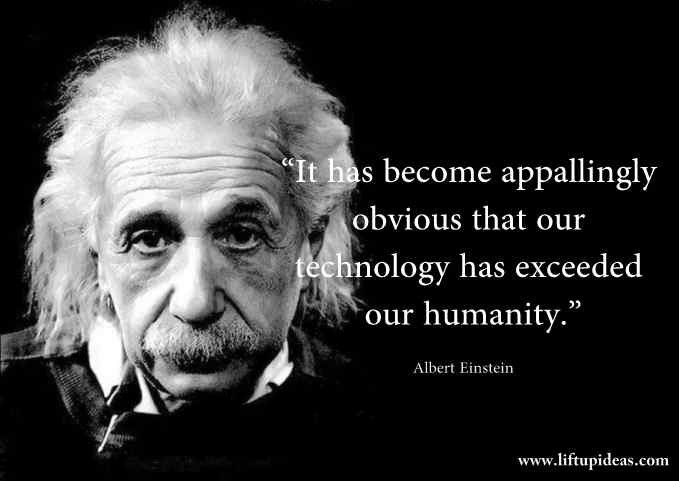
It has become almost invisible so that most of us don’t know how to interact in the real world or with our environment, but it is how humans are using technology that is so devastating our common values. 

Before COVID-19 we were already isolating ourselves from physical contact with smartphones.

The virus has pushed us further apart with social distancing, online education, and social platforms replacing almost all forms of entertainment.   

Are we connected better nowadays with social media, or are we worse off?’

One of the aspects of culture and values is social interaction between people. How we behave to one another and in which way we do that. Social media has taken a big role in our social interaction. We no longer have to speak to a person to know what they are doing. We just look on twitter of Facebook. 

Social media and smartphones both are turning us into non-empathic couch potatoes and it is this passive use of technology that is the reason technology is ruining not just our values but humanity itself. 

With the arrival of COVID-19 ( His “epidemic”) technology isn’t allowing the young generation to truly embrace our humanity while creating a gap between generations. 

The real connection such as visual and emotional expressions aren’t shown anymore, because we are looking at a computerized display. This way messages could be understood differently than they should be, because they don’t get to know the real meaning behind the message.

If Facebook was a country, it would be the world’s 3rd largest country in terms of population. 

Now is the opportunity to realize this and that we must use technology as a tool, not reality.

Our overbearing dependence on technology can be detrimental to society.

It is not the be-all and end-all of everything. Everyone is entitled to their own values, attitudes, and beliefs.

For example. From the outside, the cultural values ​​of a group can often be difficult to understand. 

In India, 80% of the population practices the Hindu religion. For the believers of this religion, the figure of the cow is venerated and should not be sacrificed. In western culture, this is a strange cultural value, since cows are a source of food and not of worship. 

or

Some people may see great value in saving the world’s rainforests. However, a person who relies on the logging of a forest for their job may not place the same value on the forest as a person who wants to save it.

——————————————————————————————-

Before the coronavirus crisis exploded and confronted us with a life-and-death threat to every corner of our planet those who worked in what could be called taken for granted jobs we not valued neither in money terms or the essential services they provided to us all.

As a result, society discovered new heroes.

Times of crisis bring out the best in us. Superficial concerns fall away and we rediscover what really matters: Our values.

Now that the Pandemic in the western world is coming under control (we hope) and the murder of a colored man in the USA our worldwide values which have been honed by decades of biased history are coming under the spotlight, not just our personal views but societies as a whole.

BUT WHAT ARE THOSE VALUES AND HAVE DUG DOWN TO CORE VALUES AND WILL WE PUT THEM INTO ACTION?

It is easy to compile a list of personnel values and at the same time aspire to universal values of peace, human dignity, equal human rights, and freedom values.   

They are at the core of our being. They are our motivators, our drivers, the passion in our hearts, the reason we do the things we do and feel the way we feel. They help us to make better choices in life, develop healthy patterns of behavior, and form and maintain meaningful personal relationships.

They are the compass guiding everything we do – our choices and our actions.

So, if we want to change the world for the better, then we have to change
our own behaviors.

Living by your personal values sounds easy—at least in theory. Your values, after all, are simply the things that are important to you in life, so it should be natural to live by them.

Here are some more questions to get you started:

  1. What’s important to you in life?
  2. If you could have any career, without worrying about money or other practical constraints, what would you do?
  3. When you’re reading news stories, what sort of story or behavior tends to inspire you?
  4. What type of story or behavior makes you angry?
  5. What do you want to change about the world or about yourself?
  6. What are you most proud of? 
  7. When were you the happiest?

Think about our most important values and to act on them.

Living your values is about more than the big, long-term goals, however, it’s also about the small, day-to-day decisions. Putting them into action each and every day will have a powerful impact on our own wellbeing, the wellbeing of the groups and communities we belong to, and the wellbeing of the whole world.

The passive use of Technology is the reason technology is ruining our Humanity

Why is technology ruining humanity?

The only reason people do things is that life gives them the opportunity to do so. Which by extent, whether they know it or not, implies that people value their life.

Behind every use of technology is a person, as behind every murder, there is also a person.

We are about to pass through a long and very painful period of adjustment which is fraught with danger at the cost of permanently reducing human beings and many other living organisms to engineered products and mere cogs in the social machine.

As the noose of technological enslavement tightens on humanity will our values have any value?

They say that innovations in technology can save the world and is extending democracy. I say that it is concentrating even more power in the hands of a tiny elite.

Personal Values are formulated by a variety of influences, environmental influences including upbringing, religion, friends, family, peers, and, education not by algorithms, virtual reality.    

Until we get better at using technology as a tool I think we’re cooked, we’re going to continue to extinct species and we’re going to continue to dig the hole deeper of the whole eco-social crisis.

If you just hold your cell phone for 30 seconds and think backward through its production you have the entire techno-industrial culture wrapped up there.

You can’t have a smartphone an I pad or use Social media without everything that goes with it. You see mining, transportation, manufacturing, computers, high-speed communications, satellite communications, it’s all there, you see and it’s that techno-industrial culture that’s destroying the world.

The only way we’ll be able to responsibly harness the fruits that technology bears are with a renewed attitude of cooperation and care for the most vulnerable among us.

Technology has given us the tools to reshape how we live in the world; if it also changes the way we interact with our neighbors, it can be transformational.

Technology can inspire progressive social policies. When 62 billionaires have as much wealth as the bottom half of the world’s population, it’s clear that political principles are skewed toward the influential in business.

Overall, technology has the potential to reduce suffering, fight disease, and level the playing field for the poor if we use it as a tool, not as values.

Values are immensely powerful!

We know that human history is full of hideous, horrible acts, but it is important it explains why things are the way thy are. The problem is that is it not taught in schools without warts so no one gets a free pass.

History is the past it cannot be changed.   

But mature humans don’t live in the past and we need to start seeing each other as fellow humans. If we do so maybe we can start addressing the real cause of inequality in our societies which is our present economic systems. 

However, you don’t have to go into the future to see what is happing.  In the last forty years, we have wiped out 40% of our wildlife, acidified our oceans, pumped CO2 into the atmosphere, destroyed vast regions for livestock, ignored world natural disasters all for the sake of short term profits.  

If we don’t have a fucking healthy biodiversity-ecosystem there will be no need for profits or values.

With world economies, slowly reopening, I won’t hold my breath as it is easier to keep viewing thinks as black and white and profit for profit sake, not Clickbait.       

We all deserve to be treated as human beings of worth.

However because values are culture-bound, what’s good for one culture may be (and often is) deemed an abomination by another.

Herein lies the ultimate irresolvable dilemma.

Culture gives us prescriptions for appropriate conduct. When judging values, we should not speak in terms of right or wrong, black or white rather we should look at competing values in terms of better and worse.

Who’s to say what my values will be in 2030?

When I hear competing values shouted by a person from a different culture than mine, I hope to take a deep breath, realize that he/she is simply expressing a deep need they have, and then perhaps I can share my values and needs without fostering judgment, evaluations of their character, or moralistic analysis.

In the end, compassionate dialogue changes live, not right/wrong judgment, or taking the keen. 

All comments valued. All like clicks and abuse chucked in the bin.

← Back

Thank you for your response. ✨


THE BEADY EYE ASK’S: ARE WE ENTERING AN ERA OF DO IT YOURSELF ECONOMICS, BASED ON PEOPLES INTUITIONS.

Tags

, , , , , , , ,

(Twenty-minute read)

I am no economist but you don’t have to be to realize that long before the Covid-19 Pandemic, the state of the global economy was already in disarray, now with viruses the economic problems to come are in general as serious as they have ever been.

To deal with the accumulated liabilities history suggests some radical alternatives, including a burst of inflation or an organized public default, one way or the other the economic fallout defies calculation.

It makes sense with everything happening at once to take a hard look at the coming economic depression. (which is going to be deep and long)

It will require not just governments to be more visionary to lead the way out of the crisis but new economic thinking to rethink the whole Globalisation of economies before they disappear into the world of digital data and become difficult to measure, or tax.

The question, of course, is what form that will take and which political forces will control it.

We all know that economic relationships are complicated and changeable. The influence of anyone variable in an economy is not easy to isolate even with the use of sophisticated data. This is why economists are unable to agree on any course of action when it comes to deciding how the economy actually works and how it ought to work.

Even if they could agree countries have different moral and political judgments.

What I see is that we entering an era of doing it yourself economics, based on people’s intuitions,but unfortunately macroeconomic is choosing between inflation or unemployment.

With countries trying to reopen their economies and given that economists can not agree or have sufficient knowledge to predict any direction one could be forgivin to ask are they performing a useful purpose in the first place.

The coming economic depression can only be diluted by the creation of a new interrelationship with the resources of the earth, their use against their value to the ecosystems as a whole not the continuation of profit for profit sake.

We must recognize that the civilizations of the world are entwined in a global economic system that is incapable of functioning for the common good of humanity, other species, and this planet, which is our home.

It is clear that serious reflection is in order.

Simply to stand back and question what has happened and why would be to compound failure with failure: failure of vision and failure of responsibility.

A sustainable and prosperous global economy needs to be grounded in the common good of all living species, not profit.

The failure of markets, institutions, and morality during the current coronavirus crisis has shown that the emergence of global capitalism brings with it a new set of risks that call for an ethical, moral change.

Leaders are now gambling with public health, safety, and the future of younger generations. They unapologetically prioritize serving themselves over the people they were elected to serve. We have to make them raise their game.

A new approach to economics is required that puts values, compassion, generosity, kindness, people, planet, and the common good at the heart of our economic system. 

Now is the Time for a Revolution in Economic thinking.

A new definition of the “Bottom Line.”

Given today’s global challenges, such as climate change, financial crises, oil depletion, renewable energy, inequality, and poverty, what kind of new economic theory is called for?

Therefore this post is an appeal to economists, academic colleagues in business, finance, management, political economy, philosophy, theology, ethics, environmental studies, sociology, anthropology, and others to come together, so that, all of us, collectively, can prescribe a working solution to our commonly shared challenges.

As we transition from a service-based economy to a knowledge-based economy, human capital will not be enough, the next generation will see large tax increases in order to pay off the national debts.

The work, of which we are a part, which is so needed, has barely begun.

The pandemic will continue to change the economic and financial order

forever.

It will lead to permanent shifts in political and economic power in

ways that will become apparent only later.

However, the coronavirus crisis has been a powerful reminder that the basic political and economic unit is still the nation-state. Countries will have to strive for a better balance between taking advantage of globalization and a necessary degree of self-reliance.

The COVID-19 pandemic has created a wartime atmosphere in which such changes suddenly seem possible.

Perhaps the emergency payments to individuals that many governments have made are a path to a universal basic income and universal health insurance.

The pandemic has laid bare the vulnerabilities of open borders.

Firms that are part of global supply chains have witnessed first-hand the risks inherent in their interdependencies and the large losses caused by disruption.

Supply chains will have to become more local and robust—but less global.

The real risk, however, is that this organic and self-interested shift away from globalization by people and firms will be compounded by some policymakers who exploit fears over open borders. They could impose protectionist restrictions on trade under the guise of self-sufficiency and restrict the movement of people under the pretext of public health.

It is now in the hands of global leaders to avert this outcome and to retain the spirit of international unity that has collectively sustained us for more than 50 years.

The rise of populism in many countries further tilts the balance toward home bias.

Even after the pandemic is brought under control (which may itself prove a lengthy process). The post-coronavirus financial architecture may not take us all the way back to the pre globalization era, and the damage to international trade and finance is likely to be extensive and lasting.

The gap between rich countries (along with a few emerging markets) and the rest of the world in their resilience to crises will widen further. Economic nationalism will increasingly lead governments to shut off their own economies from the rest of the world.

Now and for a long time to come, central banks will become entrenched as the first and main line of defense against economic and financial crises. They may come to rue this immense new role and the unrealistic burdens and expectations it will impose on them.

We urgently need more and deeper conversations, dialogue, and engagement at all levels and from a variety of perspectives to bring the different cultures, civilizations, and viewpoints together, in order to find common ground and agreement on joint action.

The pandemic and subsequent recovery will accelerate the ongoing digitalization and automation of work changing the future composition of GDP.

The share of services in the economy will continue to rise. But the share of in-person services will decline in retail, hospitality, travel, education, health care, and government as digitalization drives changes in the way these services are organized and delivered.

The downturn will accelerate the growth of nonstandard, precarious employment—part-time workers, gig workers, and workers with multiple employers—leading to new portable benefits systems that move with workers and broaden the definition of employer. New low-cost training programs, digitally delivered, will be required to provide the skills required in new jobs.

The sudden dependence of so many on the ability to work remotely reminds us that a significant and inclusive expansion of Wi-Fi, broadband, and other infrastructure will be necessary to enable the accelerating digitalization of economic activity.

We cannot achieve our hopes and dreams without such conversations and dialogue. Only then can we hope for the understanding between civilizations, peoples, and points of view necessary to construct an economy that truly works for the common good.

No country or economic activity is going to be impervious to the drastic impacts of climate change.

It is cuckoo land to think that we can continue to ignore the pending disasters, compounded by the social problems, highlighted by the epidemic that has brought all manner of issues to the surface. From the coronavirus pandemic and police brutality to the marginalization of minority communities around the world, leadership is broken.

For years we have listened to their rhetoric without action that has given full rein to self-harming market forces.

The Normal Economy is Never Coming Back.

This much is certain:

Just as this disease has shattered lives, disrupted markets and exposed the competence (or lack thereof) of governments, it will lead to permanent shifts in political and economic power in ways that will become apparent only later.

It would be fair to say that if we are to move to Green sustainable economies the first thing that is needs is green energy that is free of costs to the user. 

The whole concept of economies becoming attached to the fundamental values required to protect and revitalize the fundamental resources of the earth that provide us all with life is idealistic and will remain so as no one wants to foot the bill to make it happen. 

However, for the first time in human history, before profit disappears into the cloud we have the technology to apply a World Aid commission of 0.005% on all activities that are in existence for profit sake only.

One of humanity’s greatest weaknesses is greed. 

One can see this throughout history, with the present-day examples personified by Wall Street and other world stock exchanges now run by high-frequency trading algorithms. 

Such a commission would create a perpetual fund of billions almost invisibly to the markets. It would spread the cost of changing world economies fairly to achieve the desired outcome both the earth’s needs and our needs.    

It would turn a begging United nation into a giving United nation. 

No one country wants to foot the cost of change and it cannot be achieved if visible to Wall Street

Micro and Macro Economics are neither different subjects, nor they are contradictory, rather, they are complementary. The only important point which makes them different is the area of application.

A fund like this could give grants, not loans. It could buy the sunshine and turn it into energy, buy the protection of forests, freshwater, fresh air, remove the need for mass farming, reduce inequality, afford education, change our lives for the better. 

All human comments appreciated. All like clicks and abuse chucked in the bin.
← Back

Thank you for your response. ✨


THE BEADY EYE SAY’S. IS IT NOT TIME WE READDRESSED OUR MISUNDERSTANDING OF THE WORLD WE ALL LIVE AND DIE ON.

Tags

, , , , ,


(Four-minute read) 

Misunderstandings happen all the time.

Why?

Because many of our opinions aren’t based on reason but on emotion.

Who is right, instead of what’s the truth.

We try to convince people with arguments that appeal to our values, not theirs.

We’re more connected than ever, yet we seem to stray only further from mutual understanding because we only interact with the news and online friends that share our opinions.

The internet has made slipping into groupthink easier than ever.

Indeed, plenty of today’s miscommunication can be blamed on the receiver’s inability to focus. Instead of reacting to what people are actually saying, they engage in a sort of mental telepathy and respond to what they think they are really after, creating negativity bias. 

This bias is responsible for our tendency to only focus on and accept what concurs with our existing worldview.

A major cause of miscommunication is reflected on Facebook/Twitter and other platforms. Worthless digital echo chambers that provide a space to air our opinions and find instant reinforcement, feeding a trend of modern tribalism.

Now thanks to Covid-19 and the murder of George Floyd we are confronted with a rebalancing of not just the world Economy but history itself.

There is currently a cultural war raging across the Western World over the role of statues and place names.

This rebalancing is one in which people are actually talking about the same things, but differ on what these things mean. 

The removal of public statues of contentious individuals in my view does little to help.

Are we going to tear down monuments?  It would be better to take a chisel and hammer and recontextualize them or better install a flat-screen that can be activated with a smartphone that pays a video to explain the individual’s historic significance

with modern thinking to reflect where the prevailing values of to days society is in an explicit manner to prevent miscommunication.

( These flat-screens need not cost anything they could be sponsored.) 

Even if you don’t identify with your ideas anymore, others will.

It is not possible to bulldoze our way in the future to make way for a more ‘multi-cultural’ statue.

A logical fallacy is a flaw in reasoning.

However, each idea is a concept (or model) about how the world really works that can be used to understand and solve real problems and predict real outcomes.

So don’t expect to change their minds in a day. Allow time for ideas to settle in and for people to discover the logic in an argument. When those values are not shared a debate needs to be started. 

The legacy of slavery, imperialism, and race aren’t the only reasons for campaigning against a statue. No-one would suggest the retention of a statue of Hitler.

Everyone is part of various cultures and subcultures, all influencing the way we look at things and the paradigms we live in.

Humans create cultures to make sense of reality.

Our brains delete, misconstrue, and misinterpret according to filters–biases, triggers, assumptions, beliefs, habits, and mental models.

Each specialism functions as a lens through which we interpret the world–whether that’s economics, sociology, or feminism.

That makes it hard to talk about issues from the same perspective- mismatched expectations.

Ever since our ancestors uttered their first grunts, miscommunication has been a part of our daily lives, we’re inclined to see our ideas as an extension of ourselves.

Misunderstanding is the cause of 90% of all conflicts.

Legalese” is another culprit.

It’s the formal and technical language that often makes government documents sound overly complex, forcing people into hiring lawyers for their legal issues.

All human comments appreciated. All like clicks and abuse chucked in the bin.
Bye, the way the Tsar of Russia footing more than a quarter of the bill to build Nelson column and Hitler would have nicked it. 

Just in case you are wondering what is inside the Washington Monument?

← Back

Thank you for your response. ✨


THE BEADY EYE ASK’S : DO WE KNOW WHAT WE ARE TALKING ABOUT WHEN IT COMES TO RACISM.

Tags

, , , ,


(Ten-minute read) 

Racism refers to a variety of practices, beliefs, social relations, and phenomena that work to reproduce a racial hierarchy and social structure that yield superiority, power, and privilege for some, and discrimination and oppression for others.

It can take several forms, including representational, ideological, discursive, interactional, institutional, structural, and systemic

Racism exists when ideas and assumptions about racial categories are used to justify and reproduce a racial hierarchy and racially structured society that unjustly limits access to resources, rights, and privileges on the basis of race. Racism also occurs when this kind of unjust social structure is produced by the failure to account for race and its historical and contemporary roles in society.

It is about much more than race-based prejudice it exists when an imbalance in power and social status is generated by how we understand and act upon race.

So let’s look at its forms starting with representational racism which to mind is both the foundation and the root cause of its existence.

Depictions of racial stereotypes are common in popular culture and media, like the historical tendency to cast people of color as criminals and as victims of crime rather than in other roles, or as background characters rather than as leads in film and television. 

This form encapsulates a whole range of racist ideas that imply inferiority, and often stupidity and untrustworthiness, in images that circulate society and permeate our culture.

The presence of such images and our interaction with them on a near-constant basis helps to keep alive the racist ideas attached to them.

Then you have ideological Racism.

This is a totally different kettle of fish.

Historically, this particular form of ideological racism supported and justified the building of European colonial empires and the U.S. imperialism through the unjust acquisition of land, people, and resources around the world. This form of racism has a negative impact on people of color as a whole because it works to deny them access to and/or success within education and the professional world, and subjects them to heightened police surveillance, harassment, and violence among other negative outcomes.

Next, you have Racial language. The actual words we use to describe people and places.

 This kind of racism is expressed as racial slurs and hate speech, but also as code words that have racialized meanings embedded in them, like “ghetto,” “thug,” or “gangsta.” 

Unfortunately using words like these rely on stereotypical racial differences to communicate explicit or implicit hierarchies perpetuates the racist inequalities that exist in society.

Next, we have Institutional Racism. Practice through society’s institutions.

This takes the form of everything from laws to  Stop and search. Institutional racism preserves and fuels the racial gaps in wealth education, and social status, and serves to perpetuate white supremacy and privilege.

One more form. International racism.

When a person of color is verbally or physically assaulted because of their race, this is interactional racism.

Not forgetting Structural Racism.

Structural racism results in large-scale, society-wide inequalities on the basis of race. Its a combination of all of the above forms.

And that leaves us with Systemic Racism.

This means that racism was built into the very foundation of our society, and because of this, it has influenced the development of social institutions, laws, policies, beliefs, media representations, and behaviors and interactions, among many other things. By this definition, the system itself is racist, so effectively addressing racism requires a system-wide approach that leaves nothing unexamined.

To sum up.

While something may not appear obviously racist at first glance, it may, in fact, prove to be racist when one examines the implications of it through a sociological lens. If it relies on stereotypical notions of race and reproduces a racially structured society, then it is racist. 

In the end, describing someone using race, is racist and all of us do that.

It’s not Black lives that matter its all lives matter. 

All human comments appreciated. All like clicks and abuse chucked in the bin.
THE BEADY EYE ASKS: WHY DO WE TOLERATE FALSE NEWS.

(Two-minute read) 

It should come as no surprise that with the COVID 19 pandemic the internet has spawned a resurgence of fake news.

The term “fake news” has taken on its own life, referring not only to untrue reports but being increasingly used to dismiss reports that the user does not wish to agree with.

People prefer information that confirms their preexisting attitudes, view information consistent with their preexisting beliefs as more persuasive than dissonant information (confirmation bias), and are inclined to accept information that pleases them.

The problem is balancing community standards with free speech.

When it comes to Facebook and Twitter

Both are protected from the consequences of its users’ speech by a provision of the 1996 act that defines social media platforms as a “safe harbor” for speech. Ultimately, Facebook and Twitter must answer to its users.

Therefore Facebook and Twitter are under no obligation to write or enforce any censorship policies.  

We don’t yet know it can be done at all.

There are an estimated 2.2 billion people worldwide using Facebook and over 200 million twits a day, so it is a monumental task. 

So is there any solution? 

Transparency is a step in the right direction and it has to be said that there are internal and external ongoing efforts to banning genuine toxic content and allowing people to vent frustrations in general but once you are in the business of private censorship, it’s hard to draw those distinctions. 

Because censorship can be awfully vague and subject to misinterpretation if left to policies that are always fluid.

Any asserted claim made on Twitter or Facebook as news must be taken with a pinch of salt.

Why?

Because false news stories are 70 percent more likely to be retweeted than true stories.

Why retweet a post before you know whether it’s actually true?

They have more staying power.

Here is a solution.  

Facebook and Twitter are digital written formates, not a conversation and as such, they have a duty to objectively separate truth from lies or mistakes.

Of course, it’s not possible to expect that every post or twitter should be subject to scrutiny but any that go Viral on any platform should be subject to scrutiny to ensure that they are not spreading dangerous, lies, or completely fabricated.

This scrutiny can be made a legal requirement subject to the same laws governing the legitimate of newspapers, ensuring ethics that are promoting objectivity and credibility.  

Why? 

Because the spreaders of fake news are using increasingly sophisticated methods.

HERE ARE A FEW SITES
Devoted to fact-checking: factcheck.org, hoax-slayer.com, politifact.com, snopes.org, truthorfiction.com, and urbanlegends.about.com.”

All human comments appreciated. All like clicks and abuse chucked in the bin.

← Back

Thank you for your response. ✨


THE BEADY EYE ASK’S : IN THE END ARE WE ALL JUST IDIOTS

Tags

, , , , , , , ,


( Five minutes read|) 

Giving the state of current world affairs which feels like the entire world is being pushed off a cliff you could not be blamed for struggling to be optimistic about what the future holds.

Its a worrying time and one would have to ask where is all of this going.

You don’t need to be either a genius or an idiot to see that we are at a turning point.  

The pandemic has and is exposing that there is a complete lack of any global plan of action either to fight COVID-19 or the coming economic disaster that is going to take more lives.

It is obvious that we are entering an era of global debt/defaults/nationalism/and a transfer to technology.

When one looks at the US that is trying to undermine the WHO, wreck Climate change, and put a spanner in the works of EU, and other world trade agreements it is obvious that it has only an interest in putting America first, which it has achieved with the number of dead and sick people in the world from COVID -19.

There is an itinerant contradiction between nationalism and globalism between loyalty to your nation and global solidarity.

It is now paying the price when there is really no contradiction when it comes to a global pandemic. If a vaccine was discovered outside the USA they are not going to say no we won’t use it till there is an American vaccine.

Perhaps it’s a good thing that it is no longer leading the world but here is nobody to fill the vacuum.

We can’t deal with either the pandemic or climate change without a 100% cooperation.

Both emphasize that humans are flawed beings, maybe not quite yet bonkers but not far off it.  

The world is full of them and they come in many shapes, forms, and types but the current level of stupidity cannot go unnoticed. Climate Change, the COVID-19 pandemic, the ongoing wars, and conflicts, the biasing filtering racism, the distribution, and attachment of wealth, our tolerance to the spread of false news, you name it and some idiot will believe it.

Look at history and it is clear that this has always been the case.

We are all idiots, it’s just a matter if how you handle your stupidity that determines whether you are a dumbass or just a plain moron.

To achieve any kind of sanity or serenity we must weed out the idiots.  

But how?

The mark of an unintelligent person is that he doesn’t see the difference between his knowledge and his opinions and thinks that all of his beliefs qualify as absolute knowledge. Furthermore, an unintelligent person sticks to his opinions as knowledge even when new knowledge completely contradicts them. 

Intelligence is the basic ingredient that helps a human being experience unintelligent.

Perhaps this is why we refer to Artificial Intelligence as artificial.

Our social development, schooling, gender acquisition, peer group interaction, and parental and sibling interactions have an enormous impact on shaping how we respond to social stimuli.

“Seeing is believing and you are who you meet.” 

One only has to look at what is supposed to be an intelligent individual walking around in the middle of a killer pandemic without masks. They are also idiots, without even realizing it themselves. They chose to put themselves only first above everything or everybody else.

Why do they do it is ostensibly hard to fathom.

Why do we need intelligence in the first place?

To understand ourselves and other people regardless of race, sexuality, culture, nationality, or religion, and whether we relate to each other as individuals, couples, families, tribesmen, or citizens, so we can live peacefully and harmoniously together.

To understand the hopes and desires that unite us as human beings so that we can govern the world with fairer rules and laws that make us more equal and that we can join forces in initiatives that benefit all of us. This elimination of artificial scarcity and inequality through understanding and cooperation means that we don’t have to dominate, fight, or kill each other to better our lives.

To understand that protecting and revitalizing the delicate ecosystems that make the planet livable for humans and all other living creatures and plants. Use Earth’s resources to make advanced tools and machinery with which to produce and refine foods, medicines, energy sources, housing, infrastructure, sanitation services, and many other useful things.

We all rely on both knowledge and opinions to make decisions in daily life, but the mark of an intelligent person is that he will try to gain as much knowledge as possible about the subject that interests him so that he doesn’t have to rely too heavily on opinions when making decisions.

The patterns that we participate in and that surround us daily shape our perceptions of what behavior, language, and mannerisms are “normal and natural.”

As you can tell, we are still very far from having solved all of these issues, so there is plenty to do for intelligent people.

Ignorance causes the spread of the virus. One only has to look at absurdity for not wearing a mask.

These idiots defy the level of stupidity and are usually the ones who end up crying for help, sick, or dead. If the virus continues to spread without decline, these are the ones who need to be held accountable.

The worst reason for being an idiot is just plain ignorance, and for that, there is no cure.

We all in this together, which the advertising industry has long recognized piggybacking on everything from fear to everyone an idiot except Donal Trump.

In him, one can see Anger and Hate, Riots, and Climate Murder, Pseudo-Activism, and Genuine empowerment, Solidarity, and Division.

One of the challenges with uncertainty is it reminds us of things that are out of our control.

All human comments appreciated. All like clicks and abuse chucked in the bin. 

← Back

Thank you for your response. ✨


THE BEADY EYE ASK’S. WHERE DID THE WORD NIGGER COME FROM?

Tags

, , ,


(Five-minute read) 

No American minority group has been caricatured as often or in as many ways as Black people.

On this date, we look at the history of the word “nigger” in America, a word that still sits at the center of anti-Black verbal distortions.

Nigger is one of the most notorious words in American culture.

Some words carry more weight than others. But without trying to exaggerate, is genocide just another word? Pedophilia? Clearly, no and neither is nigger.

Over time, racial slurs have victimized all racial and ethnic groups; but no American group has endured as many racial nicknames as Blacks: coon, tom, savage, pickaninny, mammy, buck, samba, jigaboo, and buckwheat are some.

Words like nigger, kike, spic, and wetback come from three categories: disparaging nicknames (chink, dago, nigger); explicit group devaluations (“Jew him down” or “niggering the land”); and irrelevant ethnic names used as a mild disparagement (“jewbird” for cuckoos having prominent beaks or “Irish confetti” for bricks thrown in a fight.)

No matter what their origins are, let me state clearly that all remain a derogative name no matter what color they refer to. 

Many of these slurs became fully traditional pseudo-scientific, literary, cinematic, and everyday distortions of African Americans, and these caricatures, whether spoken, written, or reproduced in media and material objects, reflect the extent, the vast network, of anti-Black prejudice.

They are all terms of exclusion, verbal reasons for discrimination. Whether used as a noun, verb, or adjective, they strengthened the stereotype of the lazy, stupid, dirty, worthless nobody.

No other American surname carries as much purposeful cruelty. It is used to offend other ethnic groups. Jews are called White-niggers; Arabs, sand-niggers; Japanese, yellow-niggers. 

Nigger is the ultimate American insult;

Americans created a racial hierarchy with whites at the top and Blacks at the bottom.

The American hierarchy was set up by an ideology that justified the use of deceit, exploitation, and intimidation to keep Blacks in their place.

Nearly every major societal establishment is the USA offered legitimacy to the racial hierarchy.

Ministers preached that God was white. Scientists measured Black skulls, brains, faces, and genitalia, seeking to prove that Whites were genetically superior to Blacks. 

The entertainment media, from vaudeville to television and film, portrayed Blacks as docile servants, happy-go-lucky idiots, and dangerous thugs, and they still do this today.

The criminal justice system sanctioned a double standard of justice, including its unspoken approval of mob violence against Blacks and there is still a similar double standard today.

The negative portrayals of Blacks were both reflected in and shaped by everyday material objects: toys, postcards, ashtrays, detergent boxes, fishing lures, and children’s books. These items, and countless others, portrayed Blacks with bulging, darting eyes, fire-red oversized lips, jet-Black skin, and either naked or poorly clothed. 

Yet, the word nigger has not left and its relationship with anti-Black prejudice remains symbiotic, interrelated, and interconnected. Ironically, it is co-dependent because a racist society created nigger and continues to feed and sustain it. But, the word no longer needs racism, or brutal and obvious forms, to survive. The word nigger today has its own existence.

The word, nigger, endures because it is used over and over again, even by the people it insults.

This is not surprising in a racial hierarchy four centuries old, shaping the historical relationship between white-European Americans and African Americans.

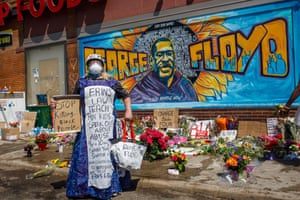
There are so many contradictions behind this word. I think the word should be banned and should be illegal. At least then it would be consigned to the world of verbal diarrhea.  A protester stands near a memorial following a day of demonstrations in a call for justice for George Floyd

Any discussion of racism needs to examine the roots of racism in order to understand it and to struggle against it effectively. There are basically three explanations for the existence of racism.

The dominant view.

Is that racism is an irrational response to the difference which causes some people with white skin to have hateful attitudes to people with black skin.

The second view is that racism is endemic in white society and that the only solution is for black people to organize “themselves separately from whites ” in order to defend themselves and to protect their interests. 

The third view is that racism based on a materialist perspective, which views racism as a historically specific and materially caused phenomenon.

My view is that racism is a product of capitalism.

It grew out of early capitalism’s use of slaves for the plantations of the New World, it was consolidated in order to justify western and white domination of the rest of the world and it flourishes today as a means of dividing the working class between white and Muslim or black, and native and immigrants or asylum seekers.

Racism is commonly assumed to be as old as society itself.

However, this does not stand up to historical examination. Racism is a particular form of oppression: discrimination against people on the grounds that some inherited characteristic, for example, skin color, makes them inferior to their oppressors.

Anti-semitism is another variety of racism. It has taken different forms over the centuries, being justified on religious grounds during the middle ages.

The term foreign workers are another form of racism labeling.

Racism and discrimination have been used as powerful weapons encouraging fear or hatred of others in times of conflict and war, and even during pandemics and the resulting economic downturns.

The abiding question is what can be done. They say educations is the solution.

I say all the education will not cure such an ingrained problem, only the removal of the obvious inequalities within society will have any hope of us seeing each other as equal.       

All human comments appreciated all like clicks and abuse chucked in the bin.   

← Back

Thank you for your response. ✨

THE BEADY EYE ASKS. WHAT IS CREATIVITY AND WHY WILL WE NEED IT NOW?

Tags

, , , , , , ,


(Four-minute read) 

“Creativity is a combinatorial force: it’s our ability to tap into our ‘inner’ pool of resources – knowledge, insight, information, inspiration and all the fragments populating our minds – that we’ve accumulated over the years just by being present and alive and awake to the world and to combine them in extraordinary new ways.” — Maria Popova, Brainpickings.

It brings to our awareness what was previously hidden and points to new life.

The current COVID-19 pandemic is propelling us to get out of commodity hell into a new age of creativity.

Creativity is the Most Crucial Factor for Future Success.

It is critical to economic growth and solving the problems of the planet.

Creativity begins with a foundation of knowledge, learning a discipline, and mastering a way of thinking.

The longer the list of ideas, the higher the quality of the final solution.

Unfortunately, all the creativity in the world without financial support to achieve sustainability that does not address the problems as a whole will only achieve further inequality.

In seeking a transition to sustainability as the organizing principle in a new world order, a piecemeal approach—emphasizing some aspects,
while neglecting others—is unlikely to yield effective, lasting results.

It requires a fundamental shift in consciousness as well as action. It calls for a fresh vision, a new dream, and new approaches for shaping evolving new realities.

We can no longer rely on governments of countries to come together on the one problem the world has that is going to affect us all for generations.

We can no longer expect us, humans, because of the or indeed without the internet to act as one.

We can no longer watch our world plundered for the sake of short term profit.

We can no longer demand change when we are unwilling to change.

WHY?

Because when one looks over the neighbor’s wall we see 

If we want a Tiger, the Amazon, Clean Air, Fresh Water, Green Energy, and Sustainable Eco-Systems, a Future, it can only be achieved in an invisible manner.

No one wants to pay for it and we know that nothing comes for free.

Widespread use of the term sustainability has led today to a growing ambiguity with the employed within a very broad spectrum of meaning, often to the point of trivialization.

The principles of sustainability are articulated in a general fashion but can receive specific operational meaning in relation to particular cases, for example, sectors of the economy, development issues, business strategies, investment guidelines, or initiatives taken by individuals.

By their very nature, sustainable principles are influenced by language, logic, and action all forcing separation, discrimination, and choice, resulting in the artificial distinction and sequencing of the five principles.

When in fact they interacting and co-defining one another.

To restore rigor to the ideas underlying the concept of sustainability we should (We have the technology) create a World Aid Fund by placing a commission on all transactions and activities that don’t contribute to the principles. ( See previous posts) 

This would raise trillions to tackle not just climate change but all other problems, infusing a common purpose, provide a common foundation, and stimulate common resolve.

All distribution of the funds would be on a grant base.

To avoid political interference and lobbying the fund revenue would be granted on a project summit bases on an annual draw of all projects deemed worthy.

To ensure that the grants are used for the purposes they are intended the fund would be open to total transparency.

It is of course totally logical that in order to establishment of such a fund a pilot scheme would have to be implemented to iron out any problems. 

The European Union has just agreed on a massive financial package to enable its members to recover for CORVID-19. 50% of this package is to be granted.

Just think what it would do if none of this money had to be borrowed in the first place.  

The concept is systemic in nature, meaning that each domain affects all the others and is affected by each in return, all are reduced to mere technicalities, an invisible fund of trillions.

Where do you find creativity?

The answer: Anywhere if you know where and how to look, in a space you yourself make.

Any creative ideas and comments appreciated. All like clicks and abuse chucked in the bin.

← Back

Thank you for your response. ✨


THE BEADY EYE SAY’S: I THINK ITS TIME WE TALKED ABOUT WHERE WE GO FROM HERE.


( Seven-minute read) 

A conversation has to start somewhere so let’s start by imagining that we are looking out of the window of the International space station at Earth.

We can see that it is enormous but have no real sense of its size in relation to the Universe.

We know that it is covered in living organisms but can see no evidence of life.

We know it is spinning and traveling at speed but have no sense of movement or gravitational balance. 

We see that it is round with colors, blue-white, yellow, and green.

It conveys a sense of wonder. Earth is our home planet.

It’s a little bit heartbreaking that we are looking at it through defunct human-made objects that contain toxic and hazardous materials.

IT IS SAID TO UNDERSTAND WHERE WE ARE YOU HAVE TO LOOK INTO THE PAST AND LEAR FROM THE MISTAKES MADE. 

THE ONE GLARING MISTAKE IS THE CONTINUING DISCONNECTION BETWEEN  NATURE AND HUMANITY IT HAS CREATED A WORLD WHERE BOTH ARE STRUGGLING TO EXIST. 

So lets with a broad brush look at the present position. 

Before we arrived nature governed, then along came the farmer, nature was harnessed to serve ownership, power, wealth, for the few, leading to greed, wars, inequality, racism, countries, and politics you name it, with one little industrialized country wanting it all at any cost.

So we formed the United Nations to sort it all out. 

So we ended up with a world of short term thinking, with long term prospects getting worse. After decades of verbal an invisible virus has brought us to an impasse either continue inflicting suffering, or change course to a sustainable world. 

Unfortunately, sustainability is misunderstood as it can only come if the world act as one.  The likely hood of that happing is zero.   

You only have to look at the differences in the ambition of countries with no vaccine on the horizon, to reopen their economies which are all heading into the biggest economic shock since the Great Depression.

So to avoid influences like panic and fear over the imperfections in our socio-economic realities we must first get a grip on Media platforms to tell the truth as their factuality paralyzes decision-makers. 

There will be no quick solutions as here is going to be financial uncertainty for months if not years.

Governments up to now have and are spending billions to stave off the inevitable which is millions unemployed, and businesses small and large going bust.

With stimulus packages drying up, things will get worse before they can get better. 

Obviously, we can’t simply re-open things all at once, or you’ll be sending off all us out to re-expose themselves to the threat and the likelihood of the second wave of COVID-19, and this might happen sooner than later with countries lifting restrictions both on movement and opening businesses.

Downplaying the severity of COVID-19 does nothing to help the problem, which is a very real threat to the health and safety of us all. Governments should not let economics become the prime driver, especially if it means risking people’s health and lives, which are far more important than their livelihoods.

We need to save people’s lives to keep the economy running. If economics remains our focus, everything will die.

We need a detailed plan.

Not something that’s hinted at.  Not “as soon as we can.” Not “we have a good idea.”

WE NEED CREATIVITY. NOT DIGITAL SLAVERY.  

What is the plan?

The European Union has laid out a vision for a green future with a financial package to promote it. 

The USA Donald Dump is slashing environmental protections.

While China can’t wait to return to Manufacturing.

All aware of the fact that about half the world’s poor reside in fragile and conflict-affected situations today. If current trends continue, by 2030, areas that are fragile/hit by conflict will account for just 10% of the global population but as many as two-thirds of the world’s poor…where COVID -19 has only just started to spread.

All aware of the fact that climate change is ticking time bomb. Fiercer weather and worsening wildfires drove more than 20 million people a year from their homes over the last decade. (The next climate change world meeting is postponed until 2021 with little time left to avert climate catastrophes, with the whole question now not urgent with countries reverting to domestic problems, reducing international cooperation. Greenhouse gasses emissions will increase as they pivot back to burning fossil fuels.)

All aware that global emissions need to fall by 7.6% every year until 2030 to limit global temperature rises to 1.5° C.

All aware that pollution continues unabated. In 2016, 44.7 million metric tonnes of e-waste was generated. This is equivalent to almost 4,500 Eiffel Towers!

All aware that more than 470 million people worldwide are currently unemployed or underemployed.

All aware that the world resources such as – freshwater, fresh air are finite.

All aware that 212.4 million suffering from diabetes worldwide unaware of their condition.

All aware that the digital age is widening inequalities.

All aware that the next pandemic is only around the corner. 

All aware that current conflicts/wars are a combination of a lack of resources fueled by the connectivity of the internet. 

All aware that rising sea levels will result in mass immigration.

All aware that almost half of the world’s wealth is now owned by just one percent of the population. 65 times the total wealth of the bottom half of the world’s population.

All aware that this is the only planet humans can live on. 

All aware of the need for social safety net programs.

All aware that I am all right jack does not work.

Its no wonder we want to go to where the sun does not shine but watch out for the tracking APP> 

In the end, the only way to effect change that has to be invisible is the creation of a World AId Fund. (See previous Posts)

All human comments appreciated. All like clicks and abuse chucked in the bin. 

← Back

Thank you for your response. ✨