• About
  • THE BEADY EYE SAY’S : THE EUROPEAN UNION SHOULD THANK ENGLAND FOR ITS IN OR OUT REFERENDUM.

bobdillon33blog

~ Free Thinker.

bobdillon33blog

Category Archives: World Trade Organisation

THE BEADY EYE SAYS. IN ORDER TO TURN THE WORLD AROUND FROM SELF DESTRUCTION WE MUST BUILD A WORLD ON TRUSTING EACH OTHER NOT ON POWER.

15 Monday Sep 2025

Posted by bobdillon33@gmail.com in #whatif.com, 2025 Another Year of change, A Constitution for the Earth., A solution to Climate change., Algorithms., Artificial Intelligence., Beady Eyes: Open Letters., Capitalism, CAPITALISM IS INCOMPATIBLE IN THE FIGHT AGAINST CLIMATE CHANGE., Carbon Emissions., Civilization., Climate Change., Climate refugees., CO2 emissions, Collective stupidity., Community., Consciousness., Cruelty., Cry for help., CULTURES COLLIDE, Dehumanization., Denial of Death., Desensitization., DIFFERENCE BETWEEN GENERATIONS, Digital age., DIGITAL DICTATORSHIP., Digital Friendship., Disaster Capitalism., Disasters., Disconnection., Donald John Trump, Donald Trump Presidency., Donald Trump., Earth, Elon Musk., Emergency powers., Environment, Erasing history., European Commission., European Elections., European Union., Evolution, Extermination., Extremism., FEAR, First past the post., Fourth Industrial Revolution., Fresh Water., Genetic engineering, Green Energy., Happiness., How to do it., HUMAN ABILITIES., Human Collective Stupidity., Human Exploration., HUMAN INTELLIGENCE, Human values., Humanity., Imagination., Inequality, Inequality., Innovation., International laws,, International solidarity., IS DATA DESTORYING THE WORLD?, Life, MISINFORMATION., Modern Day Communication., Modern day life., Modern day Slavery, Money in Politics., Mr Putin., Nato, Natural selection., Natural World Disasters, Open Letter., OUR BRAINS, Our Common Values., PAIN AND SUFFERING IN LIFE, Palestinian- Israel., Political lying., Political Trust, Political voting systems., Politics., Populism., Post - truth politics., Poverty, President of the USA., Privatization, Profiteering., Purpose of life., Reading., Real life experience's, Reality., Recession v Depression, Regenerative Medicine., Remove term: RUSSIA/ UKRAINE/ US/ NATO/RUSSIA/ UKRAINE/ US/ NATO/ EU., Renewable Energy., REPRESENTIVE DEMOCRACY, Robot citizenship., Russia / Ukraine ., RUSSIA/ UKRAINE/ US/ NATO/ EU, RUSSIA/ UKRAINE/ US/ NATO/ EU., Social Media, Social Media Regulation., Society, Sovereign wealth fund, State of the world, Survival., Sustaniability, Technology, Technology v Humanity, Technology's, Telling the truth., The art of a handshake., The common good., The cost of war., The essence of our humanity., The Future, The new year 2025, The Obvious., The power of touch., The pursuit of profit., The state of the World., THE UNITED NATIONS, The USA., The world to day., THE WORLD YOU LIVE IN., The year 2025, THIS IS THE STATE OF THE WORLD.  , Trade Agreements., Trump the president, Truth, Truthfulness., Ukraine/ Russia., Ukraine/Russian war., United Nations, Universal Basic Income ., Universal values., USA Presidential Election, VALUES, VIRTUAL REALITY., War, Wars, We can leave a legacy worthwhile., Wealth., WHAT IS BORROWING?, WHAT IS MONEY?, What is shaping our world., WHAT IS TRUTH, What Needs to change in the World, Where's the Global Outrage., World Aid., World Economy., World Leaders, World Organisations., World Politics, WORLD POVERTY WHERE'S THE GLOBAL OUTRAGE, World Trade Organisation, World View.

≈ Comments Off on THE BEADY EYE SAYS. IN ORDER TO TURN THE WORLD AROUND FROM SELF DESTRUCTION WE MUST BUILD A WORLD ON TRUSTING EACH OTHER NOT ON POWER.

Tags

Algorithms trade., Algorithms., Artificial Intelligence., Capitalism and Greed, Capitalism vs. the Climate., Climate change, Democracy, Distribution of wealth, Earth, Environment, European Union, Extinction, Global warming, Inequility, SMART PHONE WORLD, Social Media, Technology, The Future of Mankind, THE UNITED NATIONS, United Nations, Visions of the future., World aid commission

( Four minute read)

We can all see that we must change the direction we are presently persuading our lives before it’s too late. There is no point in living in a world looking over one’s shoulders afraid of being attacked just because we have not the ability to share our lives.

To achieve a peaceful world we must share its resources.

Build shared prosperity by extending the hand of friendship, building hospitals, health systems centres, retirement homes, rehabilitation facilities, schools, with grants free of charge or repayment.

We must make richer societies provide a bigger portion of its wealth to building trust between communities, cultures, countries, tying the world together, not pushing it apart for the sake of I am all right JACK.

The old proverb is true “ YOU CANNOT EAT MONEY “ but you can eat-away trust, which is exactly what Mr TRUMP & Mr PUTIN are doing for no reason other than self glorification.

WHO WANTS TO LIVE ON A WORLD RUN BY MACHINES FOR MACHINES.

NOT ME.

STOP THESE WARS AND START BUILDING TRUST. THEN AND ONLY THEN WILL WE LEAVE SOMETHING WORTH WHILE BEHIND.

THESE ARE THE WORDS OF FELLOW HUMAN, WHO IS RECOVERING FROM A TRIPLE BYPASS NOT A ARTIFICIAL GENERATED ASSHOLE ALGORITHMIC PLATFORM.

ALL HUMAN COMMENTS APPRECIATED. ALL LIKE CLICKS AND ABUSE CHUCKED INTO THE BIN.

CONTACT: bobdillon33@gmail.com

Re building trust is the only way forward

Share this:

  • Click to share on WhatsApp (Opens in new window) WhatsApp
  • More
  • Click to share on Pocket (Opens in new window) Pocket
  • Click to share on Mastodon (Opens in new window) Mastodon

THE BEADY EYE SAYS OUR CURRENT SYSTEMS ARE UNSUSTAINABLE. WE ARE All LIVING A LIE IN A WORLD DRIVEN BY SOCIETIES OVER WHICH WE HAVE LITTLE OR NO CONTROL.

21 Saturday Dec 2024

Posted by bobdillon33@gmail.com in 2024 the year of disconnection, A Constitution for the Earth., Algorithms., Artificial Intelligence., Capitalism, CAPITALISM IS INCOMPATIBLE IN THE FIGHT AGAINST CLIMATE CHANGE., Collective stupidity., Digital age., DIGITAL DICTATORSHIP., Disaster Capitalism., Human Collective Stupidity., Human Exploration., HUMAN INTELLIGENCE, Human values., Humanity., Inequality, INTELLIGENCE., Modern day life., Our Common Values., PAIN AND SUFFERING IN LIFE, Poverty, Purpose of life., Reality., Robot citizenship., Survival., Sustaniability, Technology v Humanity, Technology., Telling the truth., The essence of our humanity., The Future, The Obvious., The pursuit of profit., The state of the World., The world to day., THE WORLD YOU LIVE IN., THIS IS THE STATE OF THE WORLD.  , Truth, Unanswered Questions., Universal Basic Income, WHAT IS MONEY?, What is shaping our world., WHAT IS TRUTH, What Needs to change in the World, Where's the Global Outrage., WORLD POVERTY WHERE'S THE GLOBAL OUTRAGE, World Trade Organisation

≈ Comments Off on THE BEADY EYE SAYS OUR CURRENT SYSTEMS ARE UNSUSTAINABLE. WE ARE All LIVING A LIE IN A WORLD DRIVEN BY SOCIETIES OVER WHICH WE HAVE LITTLE OR NO CONTROL.

Tags

AI, Algorithms Democracy., Algorithms for Profit., Algorithms trade., Algorithms., Artificial Intelligence., Big Data, Capitalism, Capitalism and Greed, Climate change, Community cohesion, Current world problems, Distribution of wealth, Earth, Extinction, Globalization, Greed, Humanity, Inequility, Life, Sustainability, Technology, Technology versus Humanity, The Future of Mankind, Visions of the future.

( Three minute read)

In a world driven by money one only has to wake up in the morning to know that the above is the only truth worth taking any notice of.

It is impossible to extricate oneself from the web of labour, production, consumption that underpins modern capitalism.

Because the free market and capitalism are not synonymous.

Existing capitalist economies are hybrid systems, based on a careful balance between markets and planning.

We don’t see the whole picture when it comes to the problems we are facing, and more than likely will never do so.

The earth is not here to supply an economy it should be the other way around.

After thousands and thousands of years we are now moving into an era of technological that requires unlimited amounts of power and water.

Unfortunately:

We don’t have the right perspectives when it comes to life so we’re not ably to address the reality of the position that the world is in.

There is no such thing as them. AI or not there is only us.

Us. Yes us, who must wake up to the fact that we are destroying ourselves for the sake of an economy that is dissolving right in front of us.

For profits that in the end will be worthless.

We most come to appreciate the interlaying structure of all that exists and will exist on the planet are not attached to monetary gain.

Not to religious beliefs, but with the environment, with the knowledge of what happens to anyone of us affects all of us.

We all connect whether we like it or not.

We’re not from Earth we on Earth.

Once this is understood, the perception and perspective of the problems can be tackled by AI. Not by profit seeking algorithms but by certified human value Ai.

Certainly not by data colonisation platforms.

Our global yearning for hope and empathy is perhaps more needed now than ever before in our lifetime.

Just how brittle how fragile the earth is remains unclear.

Unfortunately developers of Ai are only concerned with making billions not with introducing regulations to manage the explosive potential of Ai.

To change the way the capitalist systems work requires a Basic Living Wage, with all future jobs governed by sustainable, rather than profit.

If everyone one has equal opportunity irrespective of colour creed or sex than we might have a peaceful world.

In this new world of technology surveillance, human development and earth protection are one and the same.

No one is coming to save us only when money becomes secondary to our needs are we going to be able to change our out of date systems.

All human comments appreciated. All like clicks and abuse chucked in the bin.

Contact: bobdillon33@gmail.com

Share this:

  • Click to share on WhatsApp (Opens in new window) WhatsApp
  • More
  • Click to share on Pocket (Opens in new window) Pocket
  • Click to share on Mastodon (Opens in new window) Mastodon

THE BEADY EYE ASKS. THESE DAYS WITH TECHNOLOGY AND CLIMATE CHANGE ARE TREATIES OR TRADE DEALS WORTH THE PAPER THEY ARE WRITTEN ON.

16 Tuesday Mar 2021

Posted by bobdillon33@gmail.com in 2021. The year for change., Climate Change Summit Scotland 2021, Climate Change., POST COVID-19., Trade Agreements., Unanswered Questions., What Needs to change in the World, World Trade Organisation

≈ Comments Off on THE BEADY EYE ASKS. THESE DAYS WITH TECHNOLOGY AND CLIMATE CHANGE ARE TREATIES OR TRADE DEALS WORTH THE PAPER THEY ARE WRITTEN ON.

Tags

Brexit v EU - Negotiations.


( Fifteen-minute read) 


Countries can do whatever they choose and there is no organization in the world with any authority over any country’s government.

An anxious, frightened nation desperately turns to the government for leadership in managing and overcoming emergencies. This does not mean that momentous events like COVID-19, which tap into our deepest feelings of insecurity and mortality, ought to rule out the airing of legitimate differences of opinion.

This is how for all intended purposes the Good Friday Agreement was arranged not Brexit and subsequent Northern Ireland Protocol. 

The burdens of office are momentous but the actions we take are a great source of information about ourselves but underestimating the significance of platforms like social media for debate has its own consequences. The Arab Spring, Donal Trump’s election, Brexit, the handover of Hongkong, and now the Northern Ireland Protocol (designed to protect the Good Friday Agreement) a debate triggered by an online petition launched by the Brexit supporting DUP. 

Perhaps it’s time that trade deals and treaties were arranged by independent third parties because I believe that the detached self is able to paint the most accurate picture of who we are and how we work.

Brexit as I predicted is a good example of the unforeseen effort and costs involved when exiting a deal that is not properly understood in the first place. 

Northern Ireland voted to stay in the European Union.

Outside the EU a border inside the EU no border. 

Any trade deal or treaty comes with rules and regulations agreed to by all parties prior to the agreement any changes must to agreed upon by the signatures to that deal before implication.  Any unilateral actions nullify the deal as there is no point in agreeing on something that is not going to adhere to.   

                                      ——————–

Trade always takes the line of least resistance.

The implementation of the protocol on Northern Ireland was always going to be difficult – Brexiters have never accepted the need for the Irish Sea border that they have nonetheless created, arguing right up until the protocol was signed, that a mixture of technology and “mutual enforcement” by both sides could obviate the need for a trade border in Ireland.

As far as the Unionist in the north of Ireland choosing to put a trade border in the Irish Sea, Boris Johnson unsettled the fundamental constitutional ambiguity at the heart of the 1998 Good Friday Agreement peace deal as the price of delivering a fully “sovereign” Brexit for the rest of the UK.

The Good Friday Agreement functions (however imperfectly) because it enables the people of Northern Ireland “to identify themselves and be accepted as Irish or British, or both”, but the protocol means the Unionist community now feels that its identity is threatened.

Alas, this week’s row — in which the UK government unilaterally granted itself more time to phase in burdensome bureaucracy, sparking a threat of legal action from the European Commission — shows how far trust and communication have broken down between both sides, obscuring the practical requirements noted above.

Government is not perfect — no human institution can be without trust.

To just exist without following any of the pre-agreed treaty clauses or simply for political gain is bad form. It also is a sign to the rest of the world that a treaty with a particular country and government in power that breaks it outside of those planned options isn’t trustworthy.

With that deadline gone and both parties have ruled out any extension to the transition period, it is now clear that there is no longer time for parliamentary approval on the EU side.

So where are we? 

The EU  which includes some large member states is not yet fully confident that a Johnson government will implement the agreement it signed — and yet in demanding demonstrations of UK willingness to implement the deal fully, it is at serious risk of testing the protocol to destruction. 

Does this mean that the UK will crash out without a deal?  

Not only the Council and the European Parliament have to ratify the agreement, but also the legislatures of all 27 member states by qualified majority voting or unanimity, depending on the scope of the agreement.

In the meantime the pandemic has flung the world into a maelstrom, we’re still not quite sure how to get out of it never mind climate change. 

We can’t build back better if we don’t know what building back better looks like.

So a good starting point is to think of the problems we have now, and what we can do to find solutions to help build back better.

With the astronomical cost of the pandemic yet to be determined radical economic or social change is the last thing governments want right now.

What’s needed is stability, to allow the economy to recover. A radical shift in policy seems unlikely when we’re in the midst of an economic crisis. It would be like taking the air supply away from a sick person fighting for their lives. It is quite literally, the last thing you would do.

We need to remember governments tend to react to problems, rather than proactively create radical reform, and herein lies one of the greatest challenges in dealing with the climate crisis never mind the No Nay Never Unionists. 

Under International law a border there must be till either Northern Ireland is reunited with the South or England rejoins the EU. 

England could leave the customs union with the EU,  Northern Ireland could not. 

                                             ——————— 

When it comes to Climate change to be sure, the governments have gotten a lot of things wrong.

Yes, we’re already in a crisis. A problem of breathtaking proportions. But does it feel like a problem? Not really.

From the perspective of people who have bills to pay, screaming children, stressful jobs, how does the climate crisis impact their lives?

For the majority of people, the climate crisis isn’t that high up on their list of priorities.

Things are going to have to get really bad for people to take notice.

It’s only when the climate crisis starts to feel like a problem affecting people’s lives that they’ll start demanding change.

At that point, it will be too late for governments to do anything about it.

The problem with government is that we are unable to make it work-work with us, not over us; to stand by our side, not ride on our back.

With public sentiment gripped by anxiety and uncertainty as we race to rationalize and intuit what COVID-19 will mean for how we live, the last thing anyone wants to see is politicians and other leaders bickering over the many prescriptions needed to address what is going to put Coivd -19 in the shade – the climate.  

To date, we’ve largely been spared that fate.

However, as technology turns climate into a product the climate movement needs to wake up to the uncomfortable realization that we need to be patient and let the system implode, but be damn sure to be ready when it does.

Lockdowns that ground society to a halt have given the environment a break. Governments would be well served to anticipate this next phase.

If they don’t accommodate what will become a loud chorus demanding, not without justification, regular demonstrations of accountability in the face of the most far-reaching encumbrances on personal liberties we’ve seen in our history.  

Climate is what shapes and defines our lives in various ways, and it is an indispensable resource during times of hardship and sacrifice.

All the “solutions” to the government’s problems promise to speed, streamline, standardize and modernize, but they rarely address the organizational changes required to actually make them effective, or the organizational changes that result.

The climate will take no prisoners so those attending the next climate change summit need to understand what is now their starting position is with economies being crushed by the Pandemic and the forthcoming Depression.

Global climate is projected to continue to change over this century and beyond. 

These meetings have been vital to find a global consensus on an issue that requires a global solution.

Among the many elements that need to be ironed out is the financing of climate action worldwide. (  See previous posts )

Because the clock is ticking on climate change, the world cannot afford to waste more time: we must collectively agree on a bold, decisive, ambitious, and accountable way forward.

This cannot be done by written agreements that are non-binding. It can only be achieved by rewards like non-repayable grants funded by placing a 0.05% World Aid Commission on all profit-seeking activities. ( See previous Posts)  

All human comments appreciated. All like clicks and abuse chucked in the bin.

Go back

Your message has been sent

Warning
Warning
Warning
Warning

Warning.


Share this:

  • Click to share on WhatsApp (Opens in new window) WhatsApp
  • More
  • Click to share on Pocket (Opens in new window) Pocket
  • Click to share on Mastodon (Opens in new window) Mastodon

Gallery

THE BEADY EYE ASK’S. WILL THE WORLD BE EVER A SAFE PLACE.

05 Sunday Apr 2020

Posted by bobdillon33@gmail.com in 2020: The year we need to change., Artificial Intelligence., Biotechnology., Capitalism, CORONA VIRUS., COVID-19, Dehumanization., Democracy, Digital age., Disasters., Disconnection., Environment, Evolution, Fake News., Fourth Industrial Revolution., HUMAN INTELLIGENCE, Human values., Humanity., Inequality., International solidarity., Life., Lock Down., Modern Day Democracy., Modern day life., Nanotechnology, Pandemic, Political Trust, Post - truth politics., Reality., Robot citizenship., Social Media, Survival., Sustaniability, Technologically Enabled Genetics., Technology v Humanity, Technology., The common good., The essence of our humanity., The Future, The Internet., The Obvious., The pursuit of profit., The state of the World., The world to day., Unanswered Questions., VALUES, WHAT IS TRUTH, What Needs to change in the World, Where's the Global Outrage., World Aid., World Economy., World Leaders, World Organisations., World Politics, World Trade Organisation

≈ Comments Off on THE BEADY EYE ASK’S. WILL THE WORLD BE EVER A SAFE PLACE.

    (Thirty-minute lockdown read )  My previous post asked the question of what skills will be needed to rebuild …

Continue reading →

THE BEADY EYE ASK’S. APART FROM THE FINANCIAL COST WHAT ARE THE UNSEEING COST OF THE UK LEAVING THE EU.

19 Sunday Jan 2020

Posted by bobdillon33@gmail.com in Brexit Language., Brexit., European Union., Political Trust, Politics., The common good., The Obvious., Trade Agreements., Transition period or Implication period., Unanswered Questions., World Trade Organisation, WTO.

≈ Comments Off on THE BEADY EYE ASK’S. APART FROM THE FINANCIAL COST WHAT ARE THE UNSEEING COST OF THE UK LEAVING THE EU.

Tags

Brexit v EU - Negotiations., The future of England out of the EU.


(Twenty-minute read)

The UK is set to leave the EU on January 31.

The article 50 process will have been completed and the country will no longer be legal in the EU.

With speculation now playing a part in almost every claim for or against the EU, it’s sometimes difficult to distinguish between legitimate risks and doom-mongering however the implications of becoming the first nation to leave the 28-state bloc are much clearer.

The term Global Britain is the moment Britain chose to step back from the world.

Confused.

Well here is the picture as I understand it.

The UK will not get a free choice on its future relationship with the EU.

It will not be quick or straightforward to establish a new relationship.

Obviously, there are two ways that Britain can leave the EU:

With a deal, or Without a deal.

A no-deal Brexit would result in a rigid position on all the issues.

If Mr Johnson’s government chooses to change course he has to so before December 31, 2022, if not then Britain will fall back on to basic World Trade Organization terms.

Under WTO rules, this would not include any preferential access to the Single Market, or to any of the 53 markets with which the EU has negotiated Free Trade Agreements.

Or

What is called a soft Brexit which would aim to keep the relationship between the UK and the EU intact?

This could be done by keeping Britain in the single market or, at the very least, arranging the terms of some sort of free-trade agreement before the 31 October deadline arrives.  However, by staying in the single market and customs union, the UK would be liable to EU rules and legislation regarding the free movement of goods, services and people across borders.

Therefore if the UK gets a deal as is the case with Norway and Iceland it could still end up being forced to comply with EU laws and regulations.

A Norway or Iceland model would give the UK considerable but not complete access to
the free-trade Single Market. We would be outside the EU Customs Union, and we
would lose access to all of the EU’s trade agreements with 53 other markets around
the world. Re-negotiating these would take years. Combined with the 27 other countries in the Single Market, and the countries in the EU Customs Union and EFTA, this is effectively more than 80 trade deals – covering over a third of the world’s economy.

No existing bilateral trade agreement will deliver the same level of access that the UK currently enjoys to the EU Single Market. In particular, none provide an equivalent
access for services, which accounts for almost 80 per cent of the UK economy.

It involves accepting most EU rules, but with little influence over the creation of those rules.

Under any of the alternative models, there is no guaranteed access to the current measures for police and security cooperation, which allow our law-enforcement agencies to work with their EU counterparts.

It is possible to fully replace the UK bilateral agreements outside the EU in these areas or demand a right to choose which to participate in will not replicate the reach and influence that is currently enjoy.

Mr Johnson has ruled out any form of an extension to the transition period.

Then both sides would need to make preparations for how they cope with the economic fallout in 2021.

After Britain leaves, its people will still have certain rights – at least for another 11 months. Freedom of movement is likely to end on 31 December next year.

The key rights that have yet to be negotiated include the continued right of British settled in the EU to move for work, leisure or retirement within the EU.

Erasmus will continue after Brexit but this depends on negotiations on the future relationship with the EU.

British citizens will still be able to apply for funding in Horizon2020 programmes during the transition period.

The EU’s Creative Europe funding stream will remain open to British applications.

Also promising a call for applications in 2020 is IPortunus, a new EU mobility fund for artists.

Little is written about cross-border healthcare or the processes involved but it is still available during the transition period,

So far, discussions of the gains and losses of Brexit have, understandably, tended to focus on the most obvious costs.

It may soon cost the UK more than its combined total of payments to the European Union budget over the past 47 years

The UK’s total projected contribution to the EU budget from 1973 to 2020 at £215 billion after adjusting for inflation is likely to keep increasing.

On leaving the Uk will be operating in a vacuum till there is a deal or not.

This comes with huge hidden dangers.

In adopting the government’s proposed model for close customs cooperation and a common rulebook, it runs the risk of finding themselves with little scope to diverge from EU regulations on goods, and unable in practice to strike new trade deals with the rest of the world.

The EU cannot change the rules of a customs union for the UK. If it does the trading bloc will fall asunder. When you’re in a customs union for goods, you become part of a common trade policy — you don’t have autonomy anymore.

Agreement with the EU, under which the UK would continue to levy EU tariffs on goods destined for the single market, but would apply a rebate on those that remain in the UK does not work and will not work.

As for a special mutual recognition arrangement in financial services, this might work.

Politicians often praise the visible benefits of public spending, e.g. the number of jobs “created”, without considering whether the funds could have been spent more wisely elsewhere – or even how the taxpayer might have spent the cash, had it remained in his or her pocket

There are a number of countries which have negotiated trade agreements with the
EU. Switzerland has a complex set of bilateral agreements with the EU. Turkey is part of the EU Customs Union and has a long-term aspiration to join the EU. Canada has agreed a Free Trade Agreement with the EU.

The status quo, or anything close to it, carries huge opportunity costs of its own.

So let’s have a look

WTO rules represent a minimum threshold.

It would be the most definitive break with the EU, offering no preferential access to the Single Market, no wider co-operation on crime or terrorism, no obligations for budgetary contributions or free movement of people.

It would, be hard even to come close to replicating the level of access and
influence from which the UK currently benefits.

Whatever alternative to membership the UK seeks following it departure the UK will lose influence over EU decisions that will still directly affect the country.

So far, the European Union has made only tentative steps towards regulating genetically modified crops and artificial intelligence and robotics.

There are of course important cultural differences between the Uk and the European continent and these may seem like small concerns in the grand scheme of things.

The free movement of persons is a fundamental pillar of EU policy … the internal market and its four freedoms are indivisible’.

Each possible approach will involve a balance between securing access to the EU’s Single Market, accepting costs and obligations and maintaining the UK’s influence.

The UK will, therefore, have to make some difficult decisions about its priorities and the voting public will be holding it very directly responsible. 

It is not the means that matter, but the ends.

All human comments appreciated. All like clicks and abuse chucked in the bin.

Go back

Your message has been sent

Warning
Warning
Warning
Warning

Warning.

Underneath is a long list of everyday EU Common day terms that might help.

Ankara Agreement The Association Agreement signed between the European
Community and Turkey in 1963 and the Additional Protocol added
in 1970. They set out basic agreed objectives for relations between
the EU and Turkey, such as the strengthening of trade and economic
relations and the establishment of a Customs Union.

Banking Union The Banking Union is an EU-level supervision and resolution system
for the banking sector in the euro area, and participating member
states. It aims to ensure that banks in the euro area are safe and
reliable and that non-viable banks are resolved without recourse to
taxpayers’ money and with minimal impact on the real economy.

The Capital Markets Union (CMU) is a plan of the European
Commission to create a true single market for capital in Europe. It
will channel increased capital to all companies, including Small and
Medium Enterprises (SMEs), and infrastructure projects.

The Common Agricultural Policy (CAP) is the agricultural policy of
the European Union. It implements a system of agricultural support
through direct income payments to farmers and guaranteed prices.

Common External Tariff A common external tariff must be introduced when a group of countries forms a customs union. The same customs duties, import
quotas, preferences or other non-tariff barriers to trade apply to all
goods entering the area, regardless of which country within the area
they are entering.

The Common Fisheries Policy (CFP) is a set of EU rules for managing
European fishing fleets and for conserving fish stocks.

Common Travel Area
A travel zone comprising Ireland and the UK. It allows for the nationals of
both countries to travel and live in each country without immigration
controls.

Council of the European Union(also known as Council of Ministers)
The Council of the EU brings together the representatives of the EU
Member States’ governments. It is the EU’s main decision-making
body and agrees EU laws, usually together with the European
Parliament.

Customs Union An agreement between two or more countries to remove customs
barriers and reduce or eliminate external customs duties on mutual
trade. Customs unions generally impose a common external tariff
(CET) on imports from non-member countries.

Dublin Regulation An established set of criteria for identifying the Member State
responsible for the examination of an asylum claim in Europe. Under
Dublin, the claim for asylum must be made in the first EU country
entered.

EU-Canada Free Trade Agreement (CETA)
The Comprehensive Economic and Trade Agreement (CETA) is a
trade agreement negotiated between the EU and Canada. Once
implemented, it will remove customs duties, end limitations in access
to public contracts, open up services markets, and help prevent
illegal copying of EU innovations and traditional products.
Eurojust is an agency of the European Union dealing with judicial
cooperation in criminal matters.

European Arrest Warrant (EAW)
A legal framework that facilitates the extradition of individuals between
The EU Member States to face prosecution or to serve a prison sentence
for an existing conviction.

European Commission (the Commission)
The European Commission is responsible for proposing draft
legislation, implementing decisions, upholding the EU Treaties and
managing the day-to-day business of the EU.
European Council The European Council is the body in which the Heads of State
or Government of the EU’s 28 Member States, together with an
appointed President and the President of the European Commission,
take strategic decisions about the direction of the EU.

European Court of Justice (ECJ)
The European Court of Justice (ECJ) is a supranational court based in
Luxembourg and made up of one judge from each of the EU Member
States. The Court deals with cases concerning the interpretation and
application of the EU Treaties.

European Criminal Records Information System (ECRIS)
A system for criminal records held by the Member States to be
exchanged with the authorities of other Member States.

European Economic Area (EEA)
The EEA is an internal market providing for the free movement of
persons, goods, services and capital. It is made up of 31 countries:
the EU’s 28 Member States plus Norway, Iceland and Liechtenstein. It
is governed by a common set of rules.

EEA Joint Committee
An institution of the European Economic Area (EEA), in which
decisions are taken by consensus to incorporate EU legislation into
the EEA Agreement.

European Economic Community (EEC) and the European Community (EC)
The European Economic Community (EEC) was a regional
cooperation organisation and precursor to the EU, as one of the
European Communities. It was founded in 1957 to promote economic
integration between its member states. When the Maastricht Treaty
created the European Union (EU) in 1993, the EEC was incorporated
and renamed the European Community (EC). In 2009 the Lisbon
Treaty provided for the EC to be fully incorporated into the European Union.

The European Free Trade Association (EFTA) has four members:
the three non-EU EEA member states – Norway, Iceland and
Liechtenstein – plus Switzerland. It has the right to conclude Free
Trade Agreements with the rest of the world on behalf of its four
members.

EFTA Court The EFTA (European Free Trade Association) Court is a supranational
judicial body that deals with cases concerning the interpretation and
application of the EEA Agreement. It is essentially the equivalent of
the ECJ for the EFTA countries that are also members of the EEA
(Norway, Liechtenstein and Iceland).

European Parliament
The European Parliament was established in 1979 in order to
represent the views of citizens directly in EU decision-making. It
shares responsibility with the Council for passing EU laws and for
agreeing the EU’s budget, although the Council enjoys broader
decision-making powers. The Parliament is made up of 751 members
(MEPs) who are directly elected across the 28 Member States and
serve a five-year term. The UK has 73 MEPs.

European Union (EU)
The European Union is an international organisation made up of 28
European countries, including the UK. The EU has its origins in the
European Coal and Steel Community, founded by six European states
after the Second World War. However, its remit has evolved and
is much broader today. The EU facilitates cooperation between its
Member States on a wide range of objectives, from facilitating trade to
protecting the environment, and security and development overseas.
The EU has created the world’s largest Single Market, enabling the
free movement of goods, services, people and capital.
Europol is an EU agency that assists Member States’ law
enforcement agencies in tackling cross-border crime. It carries out
over 18,000 cross-border investigations a year to tackle security
threats such as terrorism, international drug trafficking and money
laundering, organised fraud, counterfeiting and people smuggling.

Europol Information System
The Europol Information System (EIS) is a central criminal information
and intelligence database covering the areas under Europol’s remit.
Europol and all EU Member States can use the EIS to store and look
up to data on serious international crime and terrorism.

Free Trade Agreement (FTA)
A Free Trade Agreement (FTA) is a treaty between two or more
countries or trading blocs that reduces but does not eliminate,
barriers to trade and investment. WTO rules allow its member states
to sign FTAs granting each other preferential market access, subject
to certain conditions. FTAs usually cover agreements to reduce tariffs
and other restrictions to trade on goods and, to a lesser extent,
services.

Frontex is the EU’s Borders Agency, which manages cooperation
between national border guards to secure the EU’s external borders.
G20 The Group of Twenty (G20) is a forum for international economic
cooperation and decision-making. It comprises 19 of the world’s
leading economies, including the UK, plus the European Union.

The General Agreement on Trade in Services (GATS) is a treaty of
the World Trade Organization (WTO) that came into force in January
1995. The treaty was created to extend the multilateral trading system
to the service sector, in the same way, the General Agreement on
Tariffs and Trade (GATT) provides such a system for merchandise
trade. All members of the WTO are parties to the GATS. The basic
WTO principle of most favoured nation (MFN) applies to GATS as
well. However, upon accession, members may introduce temporary
exemptions to this rule.

The International Monetary Fund (IMF) is an international organisation
of 188 countries. It works to foster global monetary cooperation,
secure financial stability, facilitate international trade, promote high
employment and sustainable economic growth, and reduce poverty
around the world. The UK is a member.

Justice and Home Affairs (JHA) refers to EU cooperation on asylum and
immigration, judicial matters, civil protection and the fight against
serious and organised crime and terrorism, as well as the Schengen
Border-free area. The UK has secured a set of exemptions that mean
it is not required to participate in JHA matters, but can choose to do
so if it wishes.

Lugano Convention The Lugano Convention facilitates the recognition and enforcement of judgments in civil law cases in the EU and EFTA countries.

Most Favoured Nation (MFN)
Under WTO rules, countries cannot normally discriminate between
trading partners that are members of the WTO. So a country or
trading bloc cannot grant another a preferential arrangement (such as
a lower customs duty rate for one of their products) without doing so
for all other WTO members. This principle is known as Most Favoured
Nation (MFN) treatment. Non-tariff barriers A non-tariff barrier is a form of trade barrier other than a tariff. Nontariff barriers include quotas, levies, embargoes, sanctions and other restrictions. They are frequently used by large and developed
economies.

Passporting entitles a financial services firm authorised in a European
Economic Area (EEA) state to carry on permitted activities in any other
EEA state by either exercising the right of establishment (i.e. setting up
a branch and/or agents), or providing cross-border services. These
rights are subject to the fulfilment of conditions under the relevant
Single Market directive.

Preferential market access
A country or trading bloc grants preferential market access to another
when it grants it better terms of trade than as standard, for instance
by reducing tariffs or providing access to public tenders. The WTO
sets a number of rules about how countries and blocs can grant
each other preferential access. Between developed economies, this is
usually granted through Free Trade Agreements, through which each
side agrees to reduce trade barriers.

The Prüm Decisions are EU Council Decisions which embed into
EU law a pre-existing Convention between several European Union
States. They provide mechanisms to exchange information between
Member States on DNA, fingerprint and vehicle registration data for
the prevention and investigation of cross-border crime and terrorism.
The UK has recently decided to apply to re-join the regime.

Qualified Majority Voting (QMV)
Qualified Majority Voting is the principal method of reaching decisions
in the Council of Ministers. It allocates votes to the different Member
States according to an agreed formula, based partly on population
size. Under Lisbon Treaty rules, a decision or law is passed by
a qualified majority when 55% of Member States vote in favour (in
practice this means 16 out of 28) and the Member States supporting
represent at least 65% of the total EU population.

Rules of Origin are the criteria needed to determine the national
source of a product. They matter because duties and restrictions
often depend upon the source of imports. The complex supply chains
of the global economy mean that this is not always straightforward to
determine. The bureaucracy involved is a cost for businesses.

The Schengen border-free area comprises the 26 European countries
(22 EU member states and four others) that have abolished passport
and any other type of controls at their common borders. It also has a
common visa policy.

The Schengen Information System II (SIS II) is a large-scale
database that supports external border control and law enforcement
cooperation within the Schengen States. SIS II enables competent
authorities, such as police and border guards, to enter and consult
alerts on certain categories of wanted or missing persons and
objects. An SIS II alert contains not only information about a particular
person or object but also clear instructions on what to do when the
person or object has been found.

Single Market a common trade area that extends beyond the
deepest and most comprehensive Free Trade Agreements. It works
to remove all regulatory obstacles to the free movement of capital,
people, goods and services. It stimulates competition and trade,
improves economic efficiency and helps to lower prices. The EU’s
Single Market is the largest in the world.

Stabilisation and Association Agreements are bilateral agreements
between the EU and the countries of the Western Balkans designed
to promote regional peace, stability and eventual accession to the EU.
As well as establishing a Free Trade Area with the EU, the agreements
pledge the parties to work towards common political and economic
objectives and encourage regional cooperation.

State Aid refers to any advantage or subsidy granted by public
authorities through state resources on a selective basis to any
organisations that could potentially distort competition and trade
in the EU. The definition of state aid is very broad because ‘an
advantage’ can take many forms.

A tariff is a tax or duty imposed on a particular class of imports or
exports.

A trade deficit occurs when a country imports more goods and
services than it exports. The deficit equals the value of goods and
services being imported minus the value of goods and services being
exported.

United Nations (UN) is an international organisation formed in
1945 to increase international cooperation and uphold peace and
security. It has 193 members.

The WTO is the international organisation that regulates global
trade between nations. It was established in 1995 as the successor
to the General Agreement on Tariffs and Trade (GATT). The WTO
enables participating member states to agree on trade rules, negotiate
trade agreements, and resolve disputes. A total of 162 countries are
members, including the UK.

 

Share this:

  • Click to share on WhatsApp (Opens in new window) WhatsApp
  • More
  • Click to share on Pocket (Opens in new window) Pocket
  • Click to share on Mastodon (Opens in new window) Mastodon

THE BEADY EYE SAY’S: ITS TIME FOR THE SOCIAL SECTOR TO MOVE BEYOND THE US-VERSUS THEM.

28 Thursday Mar 2019

Posted by bobdillon33@gmail.com in #whatif.com, Capitalism, Climate Change., Environment, Humanity., Inequality, Life., Modern Day Democracy., Our Common Values., Politics., Populism., Purchasing Power., Reality., Sustaniability, Technology, The common good., The essence of our humanity., The Future, The Obvious., The world to day., Trade Agreements., Unanswered Questions., WHAT IS TRUTH, What needs to change in European Union., What Needs to change in the World, Where's the Global Outrage., World Leaders, World Organisations., World Politics, World Trade Organisation

≈ Comments Off on THE BEADY EYE SAY’S: ITS TIME FOR THE SOCIAL SECTOR TO MOVE BEYOND THE US-VERSUS THEM.

Tags

Capitalism and Greed, Climate change, Distribution of wealth, Environment, Global warming, Inequility, Purchasing Power., The Future of Mankind, Visions of the future.


(Twelve-minute read)

There is no point at shaking our fists at corporations whose drive is to maximize profits at the expense of communities.

The world is changing faster than ever before with levels of social inequality spiralling out of control, with most of the world’s problems resulting from this, in one way or another.

The story we have been telling ourselves about our origins is wrong and perpetuates the idea of inevitable social inequality.

There is a fundamental problem with this narrative.

It isn’t true.

Civilization meant many bad things (wars, taxes, bureaucracy, patriarchy, slavery…) but also made possible written literature, science, philosophy, and most other great human achievements.

Civilization’ does not come as a package.

Unfortunately most see civilization from their smartphones and TV sets hence inequality, as a tragic necessity.

Once we learn to throw off our conceptual shackles and perceive what’s really there one can imagine overthrowing capitalism or breaking the power of the state, but it’s very difficult to imagine eliminating ‘inequality’.

In fact, it’s not obvious that doing so would even mean since people are not all the same and nobody would particularly want them to be.

Against a background of limited resources GDP growth is still seen as the ultimate political ambition.

‘Inequality’ is a way of framing social problems appropriate to technocratic reformers, the kind of people who assume from the outset that any real vision of social transformation has long since been taken off the political table.

With billions of people hyper-connected to each other in an unprecedented global network, it allows for an almost instantaneous and frictionless spread of new ideas and innovations. Combine this connectedness with rapidly changing demographics, shifting values and attitudes, growing political uncertainty, and exponential advances in technology, and it’s clear the next decade is setting up to be one of historic transformation.

The tech invasion has already taken over retail and advertising – and now invading forces have their eyes set on healthcare, finance, manufacturing, and education, banking.

It is time we turn the page on an approach to “the economy” under which communities are passive recipients, relegated to react to its ups and downs.

If we really want to understand how it first became acceptable for some to turn wealth into power, and for others to end up being told their needs and lives don’t count, it is here that we should look.

For instance, almost everyone nowadays insists that participatory democracy, or social equality, can work in a small community or activist group, but cannot possibly ‘scale up’ to anything like a city, a region, or a nation-state.

But the evidence before our eyes, if we choose to look at it, suggests the opposite.

Popolourism or people power can take many forms depending on what kind of change you’re looking to achieve and who has the power to make that change happen — whether it’s a government, company, community or individual.

There are many ways to influence governments and politicians, all of which can shift laws, policies and regulations.

Governmental and political structures are complex and vary widely across the globe and local laws can restrict the ability of organisations to engage in politics but there is one universal power that we have not yet tapped into.Résultat de recherche d'images pour "purchasing power pictures"

That is the power of Purchase Power.

The social sector has focused for years on government as its mechanism for change, but it’s business that has the biggest potential impacts on the social and environmental crises of our time.

Some of the deepest challenges facing our democracy have to do with the interaction between money and politics.

Yet civically minded citizens have limited options: call your MP, join a one-off protest action, donate to our advocacy organization. Too often, the options posed don’t translate into tangible benefits for one’s own community.

By making every purchase a civic opportunity, we can put communities back behind the wheel of their own economic destiny.

If we really want to see change when we open up our wallets to purchase the necessities and extra goodies in our lives, we should be more conscious of what or who we are supporting.

Purchasing power is social impact power.

With purchasing power, we can help business leaders to deliver social benefits while also meeting their bottom line, creating local markets that reward those who do.

People, given a path that does not set them back economically, will make choices as consumers that do good for their world. And, just as important, business leaders will as well.

By pooling our purchasing power, people and communities can do more than gain access to services they want at lower cost; they can unlock the ability of business–and I believe, whole market sectors–to be drivers of social good.

I believe people and communities have a more powerful tool in where what, and when they use their purchasing power.  For creating social benefits they care about, one that requires no sacrifice but instead aligns with their own economic interest as consumers:

Collective purchasing power.

Just imagine if the money we routinely spend on food, clothes, gifts, and even indulgences were turned into an untapped superpower to force change.

We’re at a moment of crisis in Communities–especially low-income neighbourhoods–are no longer being meaningfully engaged by the global economy, income inequality has never been higher, and our expulsion of finite fossil fuels into the atmosphere has us all on a crash course for disaster.

Although no generation behaves the same as the last.

How can we jumpstart a new, clean economy that truly lifts up those who need it most?

As new technologies are created at a faster and faster pace – and as they are adopted at record speeds by markets – it’s fair to say that the future is coming at a breakneck speed.

The definition of wealth itself is taking on a new meaning, with millennials leading a charge towards sustainable investing rather than being entirely focused on monetary return.

Global warming is here.

Humanity has dallied so long that avoiding the worst impacts will now require extremely sharp emissions cuts and the hotter it gets, the harder it gets to adapt.

THE TECH TO PULL CARBON OUT OF THE ATMOSPHERE IS STILL UNPROVEN.

The world has now amassed $247 trillion in debt, including $63 trillion borrowed by central governments: How we view money – and how that perception evolves over time – is an underlying factor that influences our future.

The population tidal wave in the coming decades will completely reshape the global economy. Rapid urbanization will translate into the growth of megacities, holding upwards of 50 million people.

While Amazon and Apple are worth over $1 trillion, Jeff Bezos has a $100+ billion fortune, and the current bull market is the longest in modern history at 10 years.

WITH MORE AND MORE PROFIT SEEKING ALGORITHMS THE FORCES BEHIND CHANGE ARE NOT ALWAYS EVIDENT TO THE NAKED EYE.

We now seem to be trapped in a trade paradox in which politicians give lip service to free trade, but often take action in the opposite direction.

Underrepresented populations have enormous influence as consumers.

Here are a few suggestions for conscious consumerisms.

Why not follow Bogota the Capital of a poor country and ban cars from our city centre on Sundays.

With the speed at which technology now moves, expect our energy infrastructure and delivery systems to evolve at an even more blistering pace than we’ve experienced before.

Why not allow and assist communities to set up there own solar farms.

Why not lobby Apple with there RECENTLY ANNOUNCED new credit card to allocate the cash back to charities.

Why not designate one day of the year as a world day of no online purchases.

Why not promote public asset ownership.

Why not apply a 0.05% world aid commission on all High-Frequency trading, on all Sovergen wealth fund accusations, on all foreign exchange transactions over 50,000 $, on all Lotto wins to create a perpetual World Aid fund.

Why not ask people outside Super Markets not to buy products that are housed in non-recyclable plastic.

There are many facets of change that will impact our shared future.

For community-driven economic transformation, someone has to pay for all of this change, and it is still going to be us in the form of targeted advertising.

So let advertising in all its forms Pay.

The wealth landscape is not all just about billionaires and massive companies – it is changing in other interesting ways as well.

The full impact of Millennials purchasing power and brand preferences will come into full effect in 2020 when their purchasing power is projected to reach $1.4 trillion.

Eventually, our descendants will be unrecognizable.

In our consumer culture what will have an immediate beneficial effect is a bottom-up approach through purchasing power which hurts the bottom line.

Finally. I am not the first or will I be the last to recognise the above.

Portable Purchasing Power

Today’s mobile advertising industry is growing exponentially. More devices

mean more sales, more opportunities to force change with what, where, and

how you buy.

Image associée

The world we want is in our hands. Buy the changes you want to see. 

All human comments appreciated. All like clicks and abuse chucked in the bin.

Go back

Your message has been sent

Warning
Warning
Warning
Warning

Warning.


,


Share this:

  • Click to share on WhatsApp (Opens in new window) WhatsApp
  • More
  • Click to share on Pocket (Opens in new window) Pocket
  • Click to share on Mastodon (Opens in new window) Mastodon

THE BEADY EYE SAY’S: HERE WHAT YOU CAN LOOK FORWARD TO UNDER WTO AGREEMENTS.

26 Saturday Jan 2019

Posted by bobdillon33@gmail.com in Brexit v EU - Negotiations., Brexit., Democracy, England EU Referendum IN or Out., European Union., Unanswered Questions., WHAT IS TRUTH, World Trade Organisation, WTO.

≈ Comments Off on THE BEADY EYE SAY’S: HERE WHAT YOU CAN LOOK FORWARD TO UNDER WTO AGREEMENTS.

Tags

Brexit v EU - Negotiations., Brexit., World Organisations., World Trade Organisation, WTO.


( A Twenty-minute read)

The UK is now stepping up plans to trade with the EU under WTO terms in the

the event of a no-deal Brexit.

The Brexiteers can’t see the huge damage that trading on WTO terms would

inflict on the UK economy.  I don’t blame them.

Because we all have a superficial understanding of the rules of WTO.

Because the UK’s terms at the WTO are enshrined in its membership of the

EU.

Why?

Well, you only have to look at what is involved to realise why very few if any understand the operations of WTO.

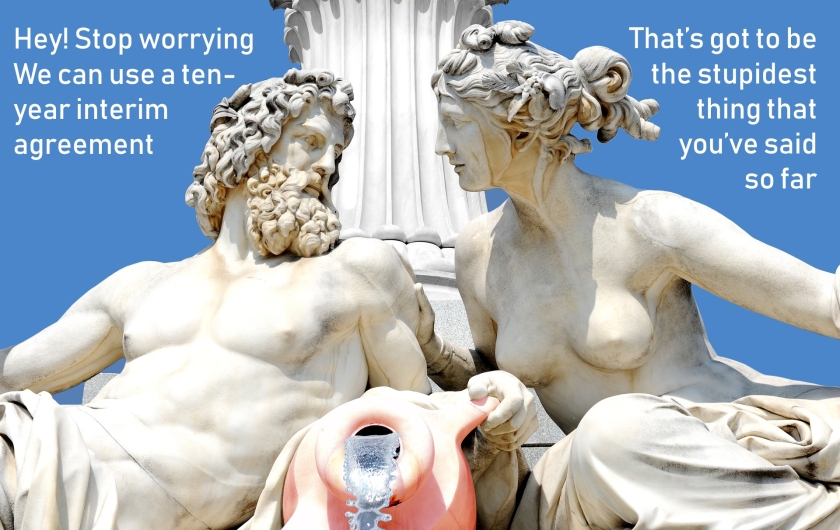
10-year interim agreement doesn't make sense

One of the WTO’s key rules is that countries should treat their trading partners equally. In WTO jargon this is called most-favoured-nation treatment (MFN) — favour one; favour all.

So what is the WTO:

It’s a system of trade agreements, which discipline governments’ trade policies so that international trade is not a free-for-all — the rule of law rather than the law of the jungle.It’s 164 member governments (the present total).

Decisions among those 164 member governments are by consensus, if anyone among them, big or small, cannot accept a decision, there’s no deal.

In fact, each country may have more than one opinion on a particular issue, but let’s not get into that here.

Some people think the WTO Secretariat is the WTO, but strictly speaking, that’s not correct. The Secretariat is a bureaucracy set up to help member governments operate the trading system.

It’s true that the head of the Secretariat is called the Director-General of the WTO, because the WTO is also an international organisation, like the United Nations, UN Environment Programme or the World Bank.

But the WTO DGs are still the servants of the members, a cause of frustration for some of them.

When the negotiators get down to specific subjects such as agriculture or fishing subsidies, those sessions are chaired by ambassadors or other delegates.

It is sufficient to say that Brexiteers misunderstand Britain’s past when it comes to trading under WTO.

They believe that Britain has a “special relationship” to world trade, this narrative ignores the prologue to the story, in which the British empire first accumulated wealth through gunboat diplomacy and enforced markets over the 18th and early 19th centuries.

Britain only embraced unilateral zero tariffs once its geopolitical power had been built up, and it would quickly depart from free trade and move towards protectionism at the start of the 20th century through the policy of imperial preference, encouraging trade within the empire.

All of this has long passed, with the result that the Brexiters are now unable to fathom the damage that relying on WTO terms to govern trade with our largest trading partner will do to the economy.

While other countries struggle to understand why any nation would willingly leave the world’s largest trading bloc to trade on WTO terms, we must understand their attraction to the myth of how in centuries past, Britain became rich through “global free trade”.

Even if it is obvious to the rest of the world it is not possible to ring up the WTO and say, “Hey, WTO! We’re negotiating a free trade agreement. It may take 10 years. While we’re doing that, we might violate some of your non-discrimination rules.”

The UK is currently a WTO member in its own right.

The issue is it does not have an independent schedule of concessions for the WTO – that’s the menu upon which Britain trades with the rest of the world.

So any future agreement has to contain details, including a plan and timetable for concluding the final agreement. This means that any formal WTO agreement between the UK and EU would obviously mean that the EU would have to be on board too.

In fact, there is no WTO definition of an interim agreement.  No country wants to go through all the above unnecessarily, which is why interim agreements are never notified to the WTO.

In theory, the transition customs union and the Protocol on Northern Ireland / Ireland (the “Backstop”) in the Withdrawal Agreement could qualify as an interim agreement.

The attached non-binding political declaration on the future relationship would not, since it’s not an agreement.

On the face of it, this is about protectionism versus access to markets (or to imports)

So what the problem?

The EU has around 100 tariff quotas:

Tariff quotas have emerged as part of the UK’s need to re-establish itself as a WTO member independent of the EU. In particular, the UK has to separate its own tariff quotas from those of the EU’s, and even if the UK wanted to take this complicated route, there’s little chance the EU would agree.

Under the WTO agreements, countries cannot normally discriminate between their trading partners.

Grant someone special favour (such as a lower customs duty rate for one of their products) and you have to do the same for all other WTO members.

Britain says it will stick to the EU’s tariff commitments, which are currently its own too, as an EU member.Seattle protests 1999 Seattle Municipal Archives, (CC BY 2.0)

Britain referendum on the left side was sold on many lies with one stating that the EU is non-democratic.

Is the WTO Democratic?

This is a difficult one:  The short answer is yes and no like the EU.

With the WTO if a country is a dictatorship, then I’m afraid the representative is probably not elected (allowing for multiple shades of grey over what those words actually mean)

In the WTO world no wants to interfere in that, so it just accepts whatever each country’s domestic system produces.

The WTO is definitely democratic among its governments.

The consensus rule means all members have equal say. Voting is available as a fallback, but so far members have rejected that option.

But does it represent the people?

At least as much as any other international organisation. Some governments are democratic; some are not.

One of the problems is that in the Brexit debate people are comparing the WTO with the European Union, which has an elected parliament as well as a council of member states meeting regularly at ministerial or head-of-government level.

The comparison is false.

The EU has a bureaucracy with executive power and a legislature which handles laws.

The WTO’s bureaucracy — the Secretariat — has no executive power.

The closest equivalent to legislation in the WTO is its trade agreements and they are negotiated by all the governments together.

Is it a good idea for the WTO to be run by directly elected representatives?

Only if you believe that directly elected politicians are better at negotiating some pretty technical and complicated trade agreements than our trade ministers and their officials. Or if you believe in world government.

Then we come to the question of Tariffs:

Tariffs remain a feature of trading under WTO rules and the EU charges a range of tariffs depending on the product or service.

For example, the tariff on food products and beverages imported into the EU is 21% of the value of a shipment. The UK’s fishing exports to the EU would be subject to a 9.6% tariff under WTO-only rules. Clothes manufactured in the UK and exported to the EU would be subject to an 11% tariff.

WTO rules on non-tariff barriers (things like regulations on product safety, rules of origin and quotas) are very limited and not recognised universally.

For example, they do not prevent the EU requiring certification for a whole host of goods and services that originate from outside the EU.

Things such as medicines, product and food safety standards in the UK are currently recognised as EU ones. But when the UK leaves the EU, UK manufacturers may need conformity assessments from the EU recognised body, which is a legal responsibility of an EU importer.

This would mean that UK exports would take longer to reach the EU markets and the UK products would be more expensive in the EU.

Under WTO-only rules, the UK will not be able to have a frictionless border with the EU.

Exporters would have to prove they meet all of the EU’s product standards and regulations, which will be costly and slow down business.

One suggestion has been that the UK scrap all tariffs and regulations for EU imports and continue to accept all products from the EU without checks. But, according to the WTO rules, the UK should extend this approach to products from all other WTO members (it has to treat everyone equally).

WTO rules barely cover trade in services, including financial services and transportation.

So, trading on only the WTO terms would mean no deal on air transport. Access to the EU single aviation market requires airline companies to have their headquarters and majority shareholdings in the EU so airlines would have to relocate.

There is also nothing in WTO rules that would allow UK-based banks to keep trading across the EU. This is why the government has said banks could set up subsidiaries in the EU.

Under WTO terms, the EU should treat the UK like any other country without providing any preferences and applying WTO tariffs – a big change from the zero tariffs that the UK has now.

FINALLY:  Where are we now.

The EU is the UK’s biggest trading partner.

In 2017, 44% of UK exports went to the EU and 53% of all UK imports came from the EU.

Both the UK and the EU filed documents in Geneva outlining the terms they will use to trade with the rest of the world after Brexit – and the two submissions are fundamentally different.

A major sticking point for them is the fact that the EU and the UK share a quota system that limits imports of sensitive goods like beef, lamb and sugar.

The UK cannot simply replicate these quotas and has proposed to split them with the EU based on historical trade flows.

All of this means that if and when any country object and ask for a better deal, Britain will be simultaneously be negotiating a trade deal with the EU and the WTO.

All human comments appreciated. All abuse and like clicks chucked in the bin.

Go back

Your message has been sent

Warning
Warning
Warning
Warning

Warning.

Share this:

  • Click to share on WhatsApp (Opens in new window) WhatsApp
  • More
  • Click to share on Pocket (Opens in new window) Pocket
  • Click to share on Mastodon (Opens in new window) Mastodon

All comments and contributions much appreciated

  • THE BEADY EYE SAYS TRUST IS DISAPPEARING THANKS TO OUR INABILITY TO RELATE TO EACH OTHER. December 19, 2025
  • THE BEADY EYE SAYS. THE WORLD NEEDS PEOPLE GOVERNMENT NOT MONEY GOVERNMENTS. December 18, 2025
  • THE BEADY EYE ASKS WHAT ARE WE THE SAME GOING TO DO TO STOP THE WORLD BEING FUCK UP FOR PROFIT BY RIPOFF MERCHANT. December 17, 2025
  • THE BEADY EYE CHRISTMAS GREETING. December 16, 2025
  • THE BEADY EYE SAYS. TO THE NEXT GENERATION TO LIVE A LIFE WORTH WHILE YOU MUST CREATE MEMORIES. December 16, 2025

Archives

  • December 2025
  • November 2025
  • October 2025
  • September 2025
  • August 2025
  • July 2025
  • June 2025
  • May 2025
  • February 2025
  • January 2025
  • December 2024
  • November 2024
  • October 2024
  • September 2024
  • August 2024
  • July 2024
  • June 2024
  • May 2024
  • April 2024
  • March 2024
  • February 2024
  • January 2024
  • December 2023
  • October 2023
  • September 2023
  • August 2023
  • July 2023
  • June 2023
  • May 2023
  • April 2023
  • March 2023
  • February 2023
  • January 2023
  • December 2022
  • November 2022
  • October 2022
  • September 2022
  • August 2022
  • July 2022
  • June 2022
  • May 2022
  • April 2022
  • March 2022
  • February 2022
  • January 2022
  • December 2021
  • November 2021
  • October 2021
  • September 2021
  • August 2021
  • July 2021
  • June 2021
  • May 2021
  • April 2021
  • March 2021
  • February 2021
  • January 2021
  • December 2020
  • November 2020
  • October 2020
  • September 2020
  • August 2020
  • July 2020
  • June 2020
  • May 2020
  • April 2020
  • March 2020
  • February 2020
  • January 2020
  • December 2019
  • November 2019
  • October 2019
  • September 2019
  • August 2019
  • July 2019
  • June 2019
  • May 2019
  • April 2019
  • March 2019
  • February 2019
  • January 2019
  • December 2018
  • November 2018
  • October 2018
  • September 2018
  • August 2018
  • July 2018
  • June 2018
  • May 2018
  • April 2018
  • March 2018
  • February 2018
  • January 2018
  • December 2017
  • November 2017
  • October 2017
  • September 2017
  • August 2017
  • July 2017
  • June 2017
  • May 2017
  • April 2017
  • March 2017
  • February 2017
  • January 2017
  • December 2016
  • November 2016
  • October 2016
  • September 2016
  • August 2016
  • July 2016
  • June 2016
  • May 2016
  • April 2016
  • March 2016
  • February 2016
  • January 2016
  • December 2015
  • November 2015
  • October 2015
  • September 2015
  • August 2015
  • July 2015
  • June 2015
  • May 2015
  • April 2015
  • March 2015
  • February 2015
  • January 2015
  • December 2014
  • November 2014
  • October 2014
  • September 2014
  • August 2014
  • July 2014
  • June 2014
  • May 2014
  • April 2014
  • March 2014
  • February 2014
  • January 2014
  • December 2013
  • November 2013
  • October 2013

Talk to me.

Jason Lawrence's avatarJason Lawrence on THE BEADY EYE ASK’S: WIT…
benmadigan's avatarbenmadigan on THE BEADY EYE ASK’S: WHA…
bobdillon33@gmail.com's avatarbobdillon33@gmail.co… on THE BEADY EYE SAYS: WELCOME TO…
Ernest Harben's avatarOG on THE BEADY EYE SAYS: WELCOME TO…
benmadigan's avatarbenmadigan on THE BEADY EYE SAY’S. ONC…

7/7

Moulin de Labarde 46300
Gourdon Lot France
0565416842
Before 6pm.

My Blog; THE BEADY EYE.

My Blog; THE BEADY EYE.
bobdillon33@gmail.com

bobdillon33@gmail.com

Free Thinker.

View Full Profile →

Follow bobdillon33blog on WordPress.com

Blog Stats

  • 94,154 hits

Blogs I Follow

  • unnecessary news from earth
  • The Invictus Soul
  • WordPress.com News
  • WestDeltaGirl's Blog
  • The PPJ Gazette
Follow bobdillon33blog on WordPress.com

The Beady Eye.

The Beady Eye.
Follow bobdillon33blog on WordPress.com

Blog at WordPress.com.

unnecessary news from earth

WITH MIGO

The Invictus Soul

The only thing worse than being 'blind' is having a Sight but no Vision

WordPress.com News

The latest news on WordPress.com and the WordPress community.

WestDeltaGirl's Blog

Sharing vegetarian and vegan recipes and food ideas

The PPJ Gazette

PPJ Gazette copyright ©

Privacy & Cookies: This site uses cookies. By continuing to use this website, you agree to their use.
To find out more, including how to control cookies, see here: Cookie Policy
  • Subscribe Subscribed
    • bobdillon33blog
    • Join 223 other subscribers
    • Already have a WordPress.com account? Log in now.
    • bobdillon33blog
    • Subscribe Subscribed
    • Sign up
    • Log in
    • Report this content
    • View site in Reader
    • Manage subscriptions
    • Collapse this bar