“What makes a life worth living?” “What is a life worth? ” are both questions that nobody can answer and should perhaps remain unanswered.
These questions once came pre-answered—by culture, by religion, by tradition—but these days, because of capitalism we each have to ask and answer for ourselves, with an answer not in poetic words or any words but an answer in pounds and pence or dollars and cents.
The “real question today is not when human life begins, but, what is the value of human life?”
The task of valuing life has many competing truths with no simple answer.
“Price tags are being continuously placed on our lives. If we care about equity, we need to ensure that the science behind these estimates is not oversold and that fairness is always a consideration when cost-benefit analysis is performed.”
Howard Steven Friedman
Valuing some lives more than others seems logical and natural to many of us.
We value human life in a way that assumes we possess a sacred something.
Aristotle concluded that we should value human life, due to our inherent capacity for reason.
So what reasons can we give for calling human life valuable?
The question’s complexity resides in the fact that how we arrive at a price tag on human life says a great deal about our priorities. A lot of the value we attribute to human life comes from religion. However, when you remove religion, what philosophical arguments are left?
This is were it gets tricky.
The philosopher’s job is not to accept the assumed inheritance of our forebears.
Do we determine the value of a human life based on the value we place on our lives in private decisions, and do we accept policy choices that puts future generations at risk.
Do we continue to value human life, especially above and beyond animals? If you value rationality, why is that? And does rationality, alone, bestow value on a human life?
How should we proceed?
We teach each generation that human life is valuable beyond all else.
.Is this good enough today?
Government officials are supposed to put numbers on the pros and cons of these questions but how to assess the value of a human life in financial terms is riddled with conundrum based on our behaviour which has no common denominators to adjust our assessment of a life’s value based on its quality or the probability of death?
How much should we pay today to prevent an event that would result in the loss of ten billion human lives in 50 years? Climate Change.
So, how much is a life worth?
It seems so inhumane to put a monetary value our modern sentiments tell us that costs should not dictate life-and-death decisions. But those modern sentiments do not fit our modern experience.
We know that not all lives are valued by society equally.
Over the past four centuries, generations of black people have asked the question: What is a black life worth?
The summation of historical facts and statistical data clearly shows that the prices of black bodies in America are worth more imprisoned, enslaved, and dead than educated.
Here in Europe depending on all sorts of assumptions arisen by the Covid pandemic and now the war in the Ukraine there are a lots of conversations (right now) that seem to pit economics against life and health.
The result is the cost of living is mounting day on day while its value is descending but don’t worry your value is being look after by the invisible hand of the market run algorithms is giving your value the finger.
Unfortunately GDP distribution issue are now surfacing, like where is the GDP growth actually coming from? Who’s losing income? Does it increase equity in society?
How much a person is willing to accept to risk their own life – Climate change.
In the end the answer is my life is worth everything to me.
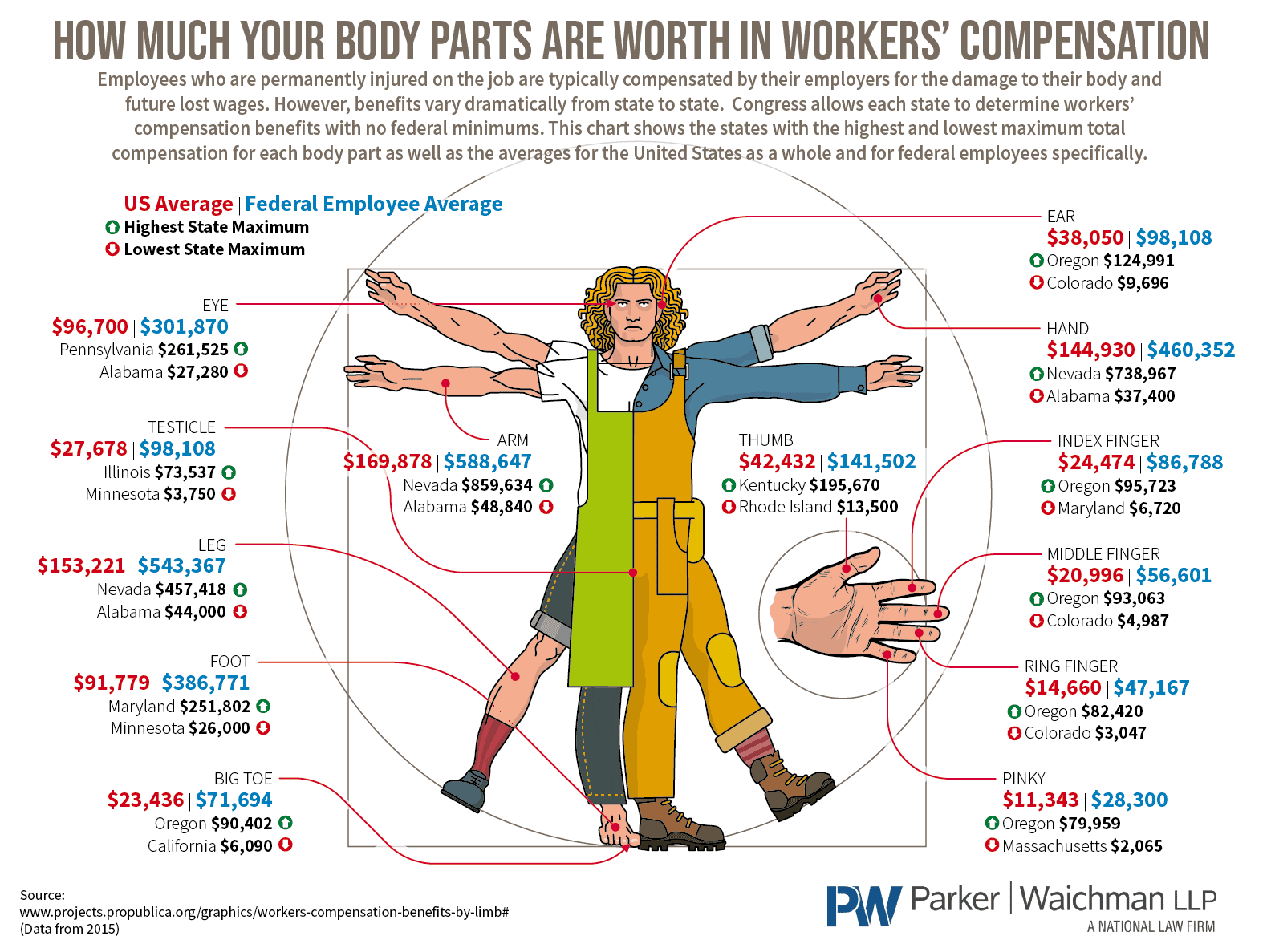
How much money do you get for losing a limb? It depends on where you live.
Foot note . What’s wrong with killing people?
Abortion kills babies, and its advocates are loudly telling us the value they place on human life.
The idea is that we can best understand what life is worth by first understanding what death means.
All human comments appreciate. All abuse and like clicks chucked in the bin.
This is true even of those animals that function almost entirely by instinct. But exactly what that means – whether they are making rational decisions or simply reacting to their environment through mindless reflex – when it comes to making decisions, consciously considering their goals and ways to satisfy those goals before acting remains a matter of scientific dispute.
Apes and Monkeys Matriarchal Elephants, Parrots, Octopuses, Pigs, Dolphins, Gorillas, Chimpanzees, Dogs, Ravens, Pigeons, Raccoons, Foxes, Crows, Ants, Whales, are all able to reason to a certain extent, to name a few.
In the true sense of learning, is by making mistakes and remembering to avoid them in the future.
We are also animals, so how do we determine exactly what sets humans apart from other animals.
By learning from our mistakes had sharing our finds through language that we all understand and then taking correction action after reasoning that not to do so is more than dangerous.
( Reasoning can best be defined as the basic action of thinking in a sensible and rational way about something. Sounds easy, right? Most of the time, reasoning happens automatically, but there are many types of reasoning, deductive, inductive, abductive, cause and effect, analogical, critical thinking, and de- compositional.
Reasoning is the ability to assess things rationally by applying logic based on new or existing information when making a decision or solving a problem and all reasoning begins with a set of reductionist assumptions that may not be challenged.
According to the Google Dictionary:
The meaning of reasoning is “thinking about something in a logical, sensible way”. The meaning of logic is “reasoning done according to strict principles of validity” The meaning of sensible is “… in accordance with wisdom or prudence” Validity means to be “factually sound.”)
—————————-
However all research has its limitations so it’s important to give an explanation of how your research limitations can affect the conclusions and thoughts drawn from your research.
The first thing needed is to take the new or given information and combine it with existing information, this allows for examination of all information before starting to make a decision.
Humans possess the power of reasoning but where is it when it comes to facing climate change?
“Since systematic scientific assessments began in the 1970s, the influence of human activity on the warming of the climate system has evolved from theory to established fact.”
Life on Earth depends on energy coming from the Sun. But several lines of evidence show that current global warming cannot be explained by changes in energy from the Sun:
The greenhouse effect is essential to life on Earth, but human-made emissions in the atmosphere are trapping and slowing heat loss to space.
Five key greenhouse gases are CO2, nitrous oxide, methane, chlorofluorocarbons, and water vapor.
While the Sun has played a role in past climate changes, the evidence shows the current warming cannot be explained by the Sun.
Here a few facts to put in your pipe to reason on.
People around the world are witnessing first-hand how climate change can wreak havoc on the planet.
200 million people in the world, more than three times the UK population, will live below the tideline by the end of this century.
Wildfires, from Australia to California and Greece, are raging for longer and spreading farther than ever before. Blistering temperatures are proving fatal.
A chilling number of Earth’s other denizens, including 40 percent of all amphibians known to science (about 3,200 species) is under threat due to human impact,
Plastic production and use is forecast to double over the next 20 years, and quadruple by the early 2050s,
At least 155 million people, 2.3 times as many as live in the UK, were pushed into acute food insecurity in 2020 due to extreme weather, as well as conflict and economic shocks.
Climate change is accelerating the spread of infectious diseases.
Nowhere on the planet is spared the impact of climate change.
Climate change both reduces the amount of food that’s available and makes it less nutritious.
It’s no good just having cold winters to replenish ice levels.
“The science is unequivocal.”
Once we pass a certain threshold, physics takes over it therefore stands beyond all reasoning, “If we don’t do anything, that would be cataclysmic.”
Unfortunately we are too occupied with ourselves, killing each other, making unsustainable profits looking at our selves on smartphones, and all the rest of the shit promoted by growth at all costs widening the inequalities in the world, to acknowledge that the earth we live on is in crises and if no globally action is undertaken now, (not in thirty years or any time tomorrow.) there will be no growth put a race to the bottom.
So the consequences of either ignorant of or in denial about physical alterations that climate change is going to bring cannot be left to people alone.
Clarity about the danger is in some sense is our only possible atonement for leaving not just a nuclear poison world behind but a world destroyed by climate change is another kettle of fish.
Why are we unable to see this?
Many of humanity’s most dangerous problems arise from our antiquate way of looking at the Universe, which is at odds with the principals of science that we blithely use in countless technologies.
Our cultures over the centuries downgraded the importance of having a home. To day ” the Universe” in the popular mind has become little more than a shapeless space or a fantasy setting for science fiction.
No atonement will suffice the generation to come.
Were the generation that needs to make the big jump to sustainability.
Get your finger out of where the sun does not shine and use your buying power to demand change.
Perhaps you will have noticed that taking the knee has disappeared from football ( Racism is cured) if so let sport take up the mantle of promoting sustainability by holding aloft (for a minute) a piece of the earth they are playing on.
Not until we stop focusing on or differences, classifying others into them and us will we realize the pearl we all live on.
All human comments appreciated. All like clicks and abuse chucked in the bin.
This is an easy thing to say but to implement is another kettle of fish because it requires a paradigm shift in the way developed countries approach economic policy.
Changing the world seems like one of these huge, impossible things that no man can possibly achieve.
It requires a rethink how we define and measure economic success.
In order to find new ways to transform the world we live in goals will have to be built into the structures of the economy from the outset, rather than hoped for as a by-product, or added after the event.
Everything that goes around, comes around.
People always wish for change because it’s the constant thing in this world, and they always have this deep, inner desire to improve things even if there’s nothing to improve.
Every people I know wants change, but for what purpose exactly?
Why do we crave change? And how exactly to change?
How exactly can you change without making mistakes?
How to actually know you’re making a change if you don’t know your objective?
What if there’s nothing to be changed?
Where do we start?
Change comes in learning from the mistakes of our past.
Realising that it’s a mistake.
When things stay the same and your life is getting worse and worse, then it’s time for a change.
————————-
Broadly speaking an economy is an interrelated system of human labour, exchange, and consumption.
Economic policy should prioritise environmental sustainability, economic resilience, reducing inequality and improving wellbeing economic growth in OECD countries have generated ‘significant harms’ over recent decades – including rising inequality and catastrophic environmental degradation.
Instead of focusing on gross domestic product (GDP), now is the time to prioritise environmental sustainability, improving wellbeing, reducing inequality and strengthening economic resilience.
A return to the status quo would be disastrous so governments that are spending unprecedented sums to rebuild their economies after the Covid pandemic, must look beyond growth alone to prioritise the needs of people and planet.
It argues that this will require a new role for the state, with governments becoming more entrepreneurial, seeking to shape markets and steer the process of economic change, not simply correcting market failures.
———————-
So where are we?
Various layers of inequality have being exposed and exacerbated by the COVID-19 pandemic.
It has laid bare risks we have ignored for decades: inadequate health systems; gaps in social protection; structural inequalities; the digital divide, environmental degradation. the energy sources we count on are limited, just like water.
In fact, most wars and political conflicts in the world start because of lack and/or need for energy resources. In America alone, the consumption of energy rises every year, and it doubles every 20 years.
The climate crises is showing that computers and software will not be able to replicate human creativity.
This “new kind of social contract” is required to transform the relationship between the state, business, civil society and citizens.
5G as on par with the printing press, electricity and the steam engine –
Self-driving cars, remote robotic surgery, autonomous weapons — all that and much more is set to be delivered via the 5G wireless network, which promises to transform our lives and add trillions of dollars to the global economy every year.
This leap forward in connectivity will be key to the spread of artificial intelligence and machine learning, enabling massive amounts of data to be collected from remote and mobile sensors and analysed in real time.
Drive everything from home appliances that order groceries to autonomous vehicles to smart cities.
Given the power of 5G technology, it is no surprise that it has also become a proxy for the broader power struggles.
However Technology alone will not change the core problems in the world.
Why?
The Fourth Industrial Revolution can’t be a panacea for the problems caused by our obsession with unchecked economic growth. Over the past couple of decades, the world has become enamoured with the transformative power of technology.
In spite of all the hype, digital technology could not prevent nor control the spread of the coronavirus.
Technology won’t solve the climate crisis, prevent the recurring wildfires.
———————————————-
The last thing the world needs is another ‘revolution’ that ignores the external cost to society of our unchecked obsession with economic growth at all cost.
We all think time and money is so important, but are our health, peace and happiness not more important?
We’re in this together and it can only be solve together.
We can protest, till we are blue in the face, demand change till the cows come home, hold world conferences till we run out of air. There is however one weapon if we all of us were to use it collectively that would bring change – that is Buying power.
Doing the right thing for the environment, pro-actively using it to effect change.
In this uphill battle, the good news is that solutions are out there.
Business would be held accountable for addressing local and global societal needs.
Industry players that suffer would not helplessly standing by as their revenues and profits dwindled, they would act intensified competition.
But is this inevitable? Can companies learn to adapt and react to ensure their continued success and prosperity? The answer is yes.
Since buyer power is dynamic, just visualize this scenario.
What would happen if we all refused to pay our energy bills till the Government put in place non repayable grants to install solar panels or insulation.
There is no right answer here but it would be impossible to either jail or fine everybody.
It is therefore important to understand what choices we have available to us to determine what type of buyer we will be, and therefore where our strengths lie.
That strength would be a campaign conducted on our mobile phones.
Once a month campaign targeting profit for profit sake, demanding change.
Your choices would impact their bottom line.
Resilience – not technology – is the answer to our biggest
challenges.
It’s either an entirely environmentally-friendly existence.
Or are we just going to except a burning world with wars and mass migration till there is nothing left to live for.
All human comments appreciated. All like clicks and abuse chucked in the bin.
Technology is often touted as the savior that will rescue us from our misbegotten ways, redeem us, and put us on the track to utopia. Then there are the dystopian views, where the future is dominated by technology that either rule over us or saps us so completely of our humanity that we might as well be a bunch of gadgets ourselves.
There are countless challenges today both environmental and not.
Mostly, we see the world through a set of layers. These layers are made up of our emotions, past experiences, and beliefs, and whichever perception is held by most, is popularly deemed as the reality.
Among contemporary scientists and philosophers, the most popular solution to the mind-body problem is probably materialism.
According to neuroscience, the contents of your head are comprised of 86
billion neurons, each one linked to 10,000 others, yielding trillions of
connections.
Materialists aspire to explain feelings and experiences in terms of the chemistry of the brain. It is broadly agreed that nobody has the slightest clue as yet how to do it, but many are confident that we one day will.
For human beings to survive, they need to produce and reproduce the material requirements of life.
But, the real reality is different and it’s above any perception.
=============
THERE ARE NO UNIQUE VOICES ANYMORE.
Here we are once again with another verbal diarrhea conference at the Summit of America’s with the president of the USA delivering a version of his domestic economic pitch promising leaders from Latin America that the United States is committed to helping the region combat crime, corruption, and its economic struggles.
“We will introduce a new approach to managing migration and sharing responsibility across the hemisphere.” A load of verbal bollix but it raises the question are we now heading into globalization vs regionalization?
If so why?
Because of the pandemic and the ongoing wars, today’s great powers have little choice but to spend their way to political stability, which is unsustainable, and or try to control knowledge that is unattainable due to technology.
Because the internet is currently eliminating the middleman the Politicians who are in a representative democracy hence the shift to direct democracy – Popularism – with power now resides with those best able to organize knowledge.
———————-
While the Earth, the planet, will continue to go its way regardless of what happens on the surface we are unable to act collectively and never will be able to do so.
We live toward incredible times where the only constant changes and the rate of change are increasing so fast that there seems to be no meaning to life.
Not until we eradicate poverty, establish free education, set aside ideological differences, change our primary focus to the long-term care of nature and people, remove profit for profit sake Algothrims, and create a World Aid Fund that we all can invest in. (See previous posts)
Not until when we are able to separate our own perception from reality we can take the necessary measures to be happy.
Not until we all realize that we are with Climate Change currently headed to a sixth mass extinction event and that this possibility alone needs to bond our collective conscious into acting like one.
Unfortunately, I believe, that if we aren’t now past the point of recovery, if we don’t act soon, civilization and human habitation here will be untenable.
————————
There’s no going back we are now stuck in a sad chamber of denial as those who are in power hopelessly try to ward off the apocalypse by promoting unsustainable economic growth. Our TV screens are inundated with appeals for help, while the cost of everything from health care, housing education, energy, etc is rising more than one can earn.
We must unplug our brains from smartphones and start working together in large numbers, as part of a coordinated effort to achieve change.
Like Evolution Migration goes both ways – out and in.
Rests assured if we continue to ignore the climate the earth will force us to go only one way, with the world passing through a nuclear war if we continue to ignore the warning signs.
If this happens humans will finally have little to no reason to fight.
What’s the point?
————————
As the Fourth Industrial Revolution forces us to think about where today’s innovations are taking us, when it comes to what our world will look like, in the medium-term – how we will organize our cities, where we will get our power from, what we will eat, what it will mean to be a refugee – it gets even trickier.
I predict the internet will go spectacularly supernova and fifty years from now catastrophically collapse.
With the world’s superpowers thrown into chaos as they come to grip with new powers, financial slowdowns, and emerging economies it will be the start of Apple’s path to world domination.
National leaders will find themselves under increasing pressure from their people, putting a strain on inter-country relationships.
The main political tendency will be away from multinational solutions to a greater nationalism driven by divergent and diverging economic, social and cultural forces with technology and political alining against Mega Power. With countries looking at solving their own problems before looking outward the Climate will continue to heat up.
Nations will increasingly adopt protectionist policies as well as look at ways of further securing borders, something which has already begun to take place as Europe grapples with the biggest refugee crisis since World War II.
Rising military costs, declining oil prices, and internal issues will all weaken Russia further with its inability to control the federation creating a vacuum. It is unlikely that the Russian Federation will survive in its current form.
While it remains a major economic, political and military power, the United States will “be less engaged than in the past”, with the powerhouse learning some vital lessons from history.
China will continue to be a major economic force but will not be the dynamic engine of global growth it once was,
The EU will remain hostage to the economic wellbeing and competitive environment in which it operates.
Nation-states created by the west will collapse.
———————–
We all want to know the future unfortunately in a supposedly thriving economy we are now facing inflation as the real cost of living.
Trickle-down economics does not work.
Social media is not simply a more sophisticated platform. Google, Facebook, Twitter, Youtube, Instagram, and Snapchat WhatsApp have turned into a gallery of Frankenstein’s monsters.
They are a new kind of assault on who we are, not just what we think.
“Like” button for Facebook
To have great predictions, these corporations have had to amass vast quantities of data on each of us – what is sometimes called “surveillance capitalism”, trading in human futures, herding us into our echo chambers of self-reinforcing information.
In doing so we lose more and more sense of the real world and of each other. With it, our ability to empathize and compromise is eroded.
We live in different information universes, chosen for us by algorithms whose only criterion is how to maximize our attention to advertisers’ products to generate greater profits for the internet giants.
Apps allowing us to hail a taxi or navigate our way to a destination are undoubtedly useful tools. But being able to find out what our leaders are really doing – whether they are committing crimes against others or against us – is an even more useful tool. In fact, it is vital if we want to stop the kind of self-destructive behaviors.
Advertisers have been playing with our brains in sophisticated ways for at least a century. And social atomization – individualism, selfishness, and consumerism – have been a feature of western life for at least as long. These aren’t new phenomena. It’s just that these long-term, negative aspects of western society are growing exponentially, at a seemingly unstoppable rate.
We live in a world in which a tree is worth more, financially, dead than alive.
For so long as our economy works in that way, and corporations go unregulated, they’re going to continue to destroy trees, kill whales, mine the earth, and to continue to pull oil out of the ground, even though we know it is destroying the planet and we know it is going to leave a worse world for future generations.
We are more profitable to a corporation if we’re spending time staring at a screen, staring at an ad, than if we’re spending our time living our life in a rich way.
Is the human race capable of pro-actively defining, harnessing, and expressing a collective consciousness, without the need for tragic experiences?
Much of the problem is around our inability to define collective consciousness. Who are we? Who do we want to be in the future?
I think it is time to act.
Our paths have never been so clear. More than ever, science can tell us what different socioeconomic-emissions paths will mean in terms of future temperature.
Which will humanity choose?
The world is getting smaller every day. There is only one world, and it’s made of consciousness. Matter is what consciousness does.
NO MANDATES. A long-standing issue is that the accords generally have no clear mechanisms for mandating that countries carry out their promises. World pressure and ethical considerations have to drive most of the agreements.
So, lots of promises, but no guarantee that countries will honor them.
“Once we have ruled out the impossible, what remains, no matter how improbable, must be the truth.”
Is the nature of global collective consciousness, yet another thing, such as climate change, that the population of this planet is going to happily sleepwalk towards, as it shrugs its collective shoulders and says, “Well, you know, sniff, what can you do?”
Drones hold potential for many environmental benefits but nature’s technologies and designs are more often than not far superior to our own.
Computers in our pockets offer huge conservation potential.
All human comments are appreciated. All like clicks chucked in the bin.
AS YOU KNOW IT IS NOT POSSIBLE TO EXPERIENCE EVERYTHING LIFE HAS TO OFFER. EVEN IF IT WAS POSSIBLE THERE ARE MANY EXPERIENCES WE WOULD WISH TO AVOID AT ALL COSTS.
SUCH AS THE LATEST MASS KILLINGS IN TEXAS, THE CURRENT WARS, POVERTY, BEING BURIED ALIVE, RAPED, JAILED FOR LIFE, CANCER, AND GOING BLIND NOT TO MENTION A SELECTION OF DISEASES.
The list is endless, but there is another aspect of the matter.
Every genuine experience has an active side that changes to some degree the objective conditions under which experiences are had and I believe that experiences are the basis upon which society progresses.
Experience does not go on simply inside a person they influence the formation of attitudes of desire and purpose, but they do not define a society as either developed or civilized.
However, it is experience alone that guides decisive action through hands-on. They teach you how to apply learnings to produce favorable outcomes regardless of any concepts you might have learned.
In a world that values differentiation more than anything else, experience lets you craft your own story while the rest of the people stick to an old and obsolete script.
Experience gives you access to a huge network of people who have been there and done that but the most valuable contribution of experience comes from the self-awareness it gives you.
Experience vs education is a constant battle.
A mixture of experience and education is the best. But the stats beg to differ.
************************
Across the globe, mobile devices dominate in terms of total minutes spent online. As a result influence, Social media. It is now being used in ways that shape politics, business, world culture, education, careers, innovation, and more to rewire human society.
Because social networks feed off interactions among people, they become more powerful as they grow. Enabled people of all ages to just google things, not actually try to remember or memorize information.
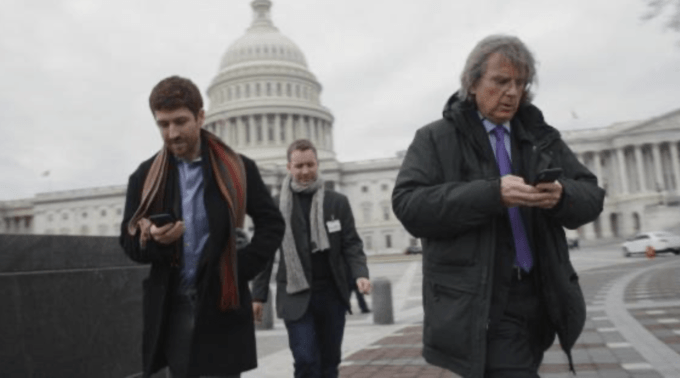
The phones have become our masters. It was intended to make our lives easier in terms of communication, now it has become an extension of our hands.
Unregulated Social media is promoting social ills.
LIVING IN SYSTEMS THAT ARE PREVENTING US FROM BECOMING WHO WE TRULY ARE. WE ARE LOSING OUR INDIVIDUAL AND COLLECTIVE CULTURE LIVING IN A WORLD WHERE EXPERIENCING REAL LIFE IS BECOMING VIRTUALLY IMPOSSIBLE.
As a result, the real problems of the world are being ignored.
Increased visibility of issues has shifted the balance of power from the hands of a few to the masses but this awareness is not translating into real change because people are given options that absolve them from the responsibility to act. Injustice is one of the biggest issues in today’s society, there are many consequences.
Technology is anything that makes life simpler but the cellphone as a branch of technology is destroying us.
We need to think much deeper and critically to be certain that we have the authority over our own lives. When you’re not in a room with someone, it can be hard to express your personality and how you could fit into a new environment.
Let’s start with a few quotes.
“Without sensibility, no object would be given to us, and without understanding, none would be thought. Thoughts without content are empty, intuitions without concepts are blind”.
“Experience arises together with theoretical assumptions, not before them, and an experience without theory is just as incomprehensible as is (allegedly) a theory without experience.” Paul Karl Feyerabend, Against Method pg 151. Against Method (1975)
“Experience by itself teaches nothing…Without theory, experience has no meaning. Without theory, one has no questions to ask. Hence without theory, there is no learning.” W. Edwards Deming, The New Economics for Industry, Government, Education (1993)
Experience is simply the name we give our mistakes. Oscar Wild
******************************
There is so much more to life than what you experience right now.
Here are a few reasons why you should value experience over education.
Experiencing’ attaches itself to nothing while at the same time being everything.
Experiencing’ does not get concerned about not remembering. ‘Experiencing’ has no need to remember.
Experiencing’ holds nothing yet is aware deeply of everything.
When we realize there is nothing to capture we relax in the awareness of just ‘experiencing’.
Experiencing ‘experiencing’ is the Fullness. When ‘It’ Is all here where else could we go?!
Everyone has to start somewhere in a world where doing is highly valued. It’s one of the most well-known conundrums of the career world. No experience, no job. No job, no experience.
EVIDENCE THAT OUR CULTURE IS IN DECLINE.
This becomes obvious to those who are willing to actually travel the world learning about the cultures of others. They gain a more reliable picture of life as it is lived.
The most important thing that one can do to rise above the insanity of this world, is to be willing to get educated by those who have zero financial interest in their taking their stand for what they believe.
Just because you don’t have ‘direct’ experience, it doesn’t mean you don’t have anything to offer.
It’s been said that information is power. Without a means of distributing information, people cannot harness its power. Ultimately, sharing is about getting people to see and respond to content.
Birds of a feather tend to hang out in the same ponds. And the best way to prove you’re a duck is to spend as much time as possible in the right pond.
History does not lie – it is just that the masses do not know their history.
There is a line by Verlaine that I will not remember again. There is a street nearby that is off-limits to my feet. There is a mirror that has seen me for the last time. There is a door I have closed until the end of the world. Among the books in my library (I’m looking at them now) Are some I will never open. This summer I will be fifty years old. Death is using me up, relentlessly. —from Inscriptions (Montevideo, 1923) by Julio Platero Haedo
Where are?
Stormzy wore a flat jacket in (2019) at Glastonbury, and Abba appeared digitally yesterday.
What are days for? Days are where we live. They come, they wake us Time and time over. Larkin
All human comments are appreciated. All like clicks and abuse chucked into the bin.
≈ Comments Off on THE BEADY EYE SAYS : THE SOVEREIGHTY OF NATIONS ARE NO LONGER ABSOLUTE.
(Eighteen-minute read)
As the current Ukrainian/Russian conflict demonstrates.
There is no formal definition of sovereignty or a sovereign nation defined in international law or contained in a single treaty.
We are now supposed to be physically, politically, and economically one world with nations so interdependent that absolute national sovereignty of nations is no longer possible.
Which came first, the nation or the nation-state?
While some European nation-states emerged throughout the 19th century, the end of World War I meant the end of empires on the continent. They all broke down into a number of smaller states.
However, not until the tragedy of World War II and the post-war shifts of borders and population resettlement did many European states become more ethnically and culturally homogeneous and thus closer to the ideal nation-state.
———————–
The concept of a nation-state is notoriously difficult to define and there is no better example of this than England.
Once called England it became Great Britain when Northern Ireland, Scotland, and Wales joined, then the whole nation became known as the United Kingdom of Great Britain and Northern Ireland.
Now after Brexit, it is referred to by the media as the Four Nations.
Theoretically, Sovereignty means the “absolute and indivisible” authority and power of the State and its government. Through Sovereignty, the government has complete control over what is going on within its territorial boundaries and internationally, it indicates certain equality between nations.
Sovereignty has for a really long time been considered the fundamental pillar of the international system. Of course, this no longer holds true as right now the problem with sovereign nations is that each time a country joins an international organization or signs a Treaty, it restricts its freedom of action and thus gives up a part of its sovereignty or independence, even if only a small part.
So the concept of sovereignty does not work out perfectly in real life, it is outmoded and a rather ambiguous conception in the present-day civilization.
Does this hold true?
This, of course, does not imply that a state can exert dominance over other states or its subjects but many states find themselves being under the economic, ideological, and cultural control of developed countries which poses a major challenge to the sovereignty of the states.
—————–
It is first important to understand what sovereignty actually is.
For me, there are two degrees of sovereignty; individual sovereignty & absolute sovereignty.
Individual sovereignty is the right and the ability to govern one’s actions independently.
Absolute sovereignty is a state of being where all illusions have fallen away; where fear no longer exists…Absolute sovereignty cannot be taught, it can only be realized.
While National sovereignty which used to mean national independence has to be viewed against the background of modern states in a world governed more and more by Technology.
Boutros Ghali, the former Secretary-General of the United Nations very rightly remarked that: “The time of absolute sovereignty and exclusive sovereignty…has passed; its theory was never matched by reality”
So due to the emergence of globalized technology, the notion that the state’s decisions and laws can be sacrosanct has lost relevance in today’s world.
External, as well as Internal Sovereignty, cannot be viewed as final, since international law and sovereignty imply each other. However, sovereign nation-states will be with us for the foreseeable future, even if their influence over some areas of policy will be much less than in the past.
———————-
Is national sovereignty an obligation as well as an entitlement?
A government that will not perform the role of a government forfeits the rights of a government.
Unfortunately, this is the position of the Ukrainians in the Russian conflict.
Ukraine became an independent country in 1991 after the fall of the USSR. Independence was gained through a series of referendums with conflicting results.
On 17 March 1991, the Soviet Union held a referendum in all of the republics asking the people whether they were interested in remaining a part of the Soviet Union or gaining independence.
More than thirty-one million people or around 83.5 percent of the electorate in Ukraine participated in the referendum with ninety percent of voters supporting the preservation of the USSR.
Just nine months after the March referendum, another was held on 1 December 1991.
The question posed to the Ukrainian people was: “Do you support the Act of Declaration of Independence of Ukraine?” Around 84.2 percent of the country participated with ninety-three percent voting in favor of Ukrainian independence from the USSR; in direct contradiction to what was decided earlier in the year.
Support for this measure was lowest in Crimea which in 2014 was re-taken by Russia, followed by Lugansk, and Donetsk which are the regions that President Putin has recognized as independent states this week.
However, the divides between citizens who have greater loyalty to Russia and Europe continue to cause conflict.
Ukraine is a multi-ethnic state, which provides some context to the ongoing issues being seen in the country. The majority, seventy-seven percent, of those who live in Ukraine identify as ethnically Ukrainian while seventeen percent identify as Russian.
So Ukraine’s government has been on a pendulum essentially since it gained its independence.
The people will elect a president closer to Russia, then one closer to Europe, and in between corruption in the government goes unchecked. The situation Ukraine currently finds itself seems to suggest that these issues will continue and could lead to greater internal violence as factions become increasingly polarized and armed by the West.
Providing the war remains non-nuclear we may see another civil war taking place at the end of this war. This will be the long-term result of the Russian/ Ukraine war.
Because we have designed a world around pay as you go for all aspects of life including our own funerals countries will best protect and further their interests by not hesitating to exercise some of their sovereignty collectively to achieve their aims.
————
In the meantime, the real war is being ignored.
Humanity survived the cold war because no one pushed the button and it will survive the Russian Invasion of Ukraine but it will not survive Climate Change, the button has been pushed again and again.
With refugees arriving, governments are spending billions on emergency-level funding and infrastructure to meet what they view as a crisis of national security. But in the case of climate change, there’s no equivalent sense of immediacy, no sense of priority commensurate with the dangers it poses to our future ability to feed ourselves, defend our largely coastal settlements, insure our homes, and maintain national security and keep our children safe from harm.
Those who lead us and have power over our shared destiny are now ignoring global warming to the point of criminal negligence.
As a culture and a polity, when it comes to climate change, have we arrived at a point where we are now expected – even trained – to abandon hope and submit to the inevitable?
The need to fight issues such as environmental protection, security of human rights, eradicating terrorism, war, poverty, and hunger, are once more on the back burner.
We’re making a pig’s breakfast of responding to what is now a crisis of clean energy. Reopening oil exploration, moving to new nuclear power stations, etc while the heat at both ends of the planet this week has scientists straining for adjectives. 40°C above normal in Antarctica, 30°C hotter than usual in the Arctic.
The prospect of inexorable loss, unstoppable chaos, certain doom is robbing people of hope, white-anting the promise of change.
Business as usual is not just delinquent, it’s unforgivable.
—————–
The Beady Eye voice is just a little twitter in a world of governments and corporations ensnared in a feedback loop of “common sense” and mutual self-preservation that is little more than a bespoke form of nihilism.
Ideology, prestige, assets, and territory are now tacitly understood to be worth more than all life, human or otherwise. And the four great capacities of humanity to solve a crisis – ingenuity, discipline, courage, and sacrifice – seem to be reserved for more important enterprises.
The future, by all accounts, can wait. Because there’s something bigger at stake here than culture, wars, and the mediocrity of so-called common sense.
It’s the soil under our feet, the water we drink, the air we breathe.
( Nine out of ten people worldwide already breathe polluted air — according to data from the World Health Organization (WHO). Besides, the WHO attributes around seven million deaths a year to global environmental pollution.)
The time for action is limited: Because if the end of the world really is threatening us, there is still enough time to panic before we bomb ourselves back into a Stone Age climate.
So what can be done?
The smartphone has done more for poor countries than all the foreign aid packets. Real power now resides with the people, the citizens of the state as is the theory of ‘Popular Sovereignty.
Let’s give our grief and fury some shape and purpose and reclaim our future together.
Enough cowardice. Enough bullshit. Time for action.
Consumer sovereignty must take back the Monopoly Markets.
( One could argue that new innovations were not driven by consumer sovereignty because consumers cannot demand something that they do not know they want.)
If producers market a new product that does not catch on, then the consumer has exercised their influence by not purchasing. Equally, a new product or service with long market longevity is the result of consumer demand.
Our buying power is the last weapon left to demand change, to the sovereignty of unified world action.
The problem is that the English word sovereignty does not mean control.
The collapse of the world can only be prevented if nations like the USA and China stop devouring global resources before the quality of life drops to zero.
Where is your data? It is certainly not Sovereign.
Its time to use your phones as weapons to effect change.
Al human comments are appreciated. All like clicks chucked in the bin.
Up to now, we humans have tried everything to change the planet that we all live on – such as wipe out each other, political systems, cities, religious beliefs, weapons of mass destruction, world organizations without any global clout, financial institutions manipulating power, money, elections, corruption, all enhancing inequality.
All are devoid of any asperation for peace and sharing. In fact, we have designed a world around the mantra ” Pay as you go ” which includes all aspects of life even the privilege of paying for your own funeral.
In the meantime, Earth is never stationary it spins at 1000 miles per hour.
As Galileo Galilei said, “Nature is relentless and unchangeable, and it is indifferent as to whether its hidden reasons and actions are understandable to man or not.”
————
The “New Earth” that people envisioned never quite materialized as predicted.
With the dramatic worldwide impact of the COVID-19 pandemic and now a new war in Ukraine, one could not be blamed for thinking what next rather than where next.
I suppose that eventually, we will reach a tipping point, after which we will consider 4D/5D things “normal”.
Maybe in the distant future “enlightenment”, will be more about knowing yourself as the consciousness that is witnessing reality.
Creating one’s reality for life and the planet that we truly love in which we are fully conscious and in full control over everything that we experience in our subconscious reality. Even so, we will still not be in full control of what happens to us and the environment we are in, because of our collective inability to agree that we are all the same.
So where are we?
The most distinctive aspect of our approach is the lack of ‘long-term’ action.
Longterm is the idea that because such huge numbers of individuals might live in the long-run future, and because we think everyone’s interests matter equally, approaches to improving the world should be evaluated mainly in terms of their potential for long-term impact — over thousands, millions, or even billions of years.
In the 1950s, large-scale production of nuclear weapons meant that a few world leaders gained, for the first time, the ability to kill hundreds of millions of people.
This was a striking milestone in a robust trend: as technology improves and the world economy grows, it gets easier to cause destruction on an ever-larger scale.
This is where we are.
——————
When we look at the history of the human race, we see many examples of major moral problems that most people were completely oblivious to. These include slavery, the deplorable treatment of foreigners, the subjugation of women, the persecution of people who aren’t heterosexual, and the gross mistreatment of animals.
New transformative technologies may promise a radically better future, but also pose catastrophic risks, and mitigating these risks is presently all but totally ignored. Work on mitigating many risks remains remarkably neglected — in some cases receiving attention from only a handful of researchers.
With machine learning, the fate of humanity may come to depend more on the actions of machines than our own. This could lead to large, rapid improvements in human welfare, but there are good reasons to think that it could also lead to disastrous outcomes.
The problem of how one might design a highly intelligent machine to pursue realistic human goals safely is very poorly understood. You might think ‘why can’t we just turn it off?’, but of course, an intelligent system will give every indication of doing exactly what we want, until it is certain we won’t be able to turn it off.
Even if advanced machine intelligence does not get ‘out of control’, it is likely to be very socially disruptive and could be used as a destabilizing weapon of war.
There have been surprisingly few serious attempts to make such big-picture comparisons.
There are many global issues we haven’t yet seen investigated much at all. These are not always the biggest problems in the world — rather they are the issues that receive little attention compared to how important they are and how much can be done about them.
Different problems could be bigger if there are problems that humanity hasn’t even thought of yet. And it seems likely that we haven’t discovered all the serious global problems which exist.
You might think by now that world politicians won’t be motivated to act on the results of global priorities.
I would say that if anyone is looking at the state of the world our focus should be more on oneness and unconditional love for all existence with a distinct set of rules about what you can and cannot do.
So here is the good news.
Humanity’s superior intelligence is pretty much the sole reason that it is the dominant species on the planet.
The chance of great power conflict this century was around 45%, now it’s 100% and the chance of an extinction-level war was around 1% it is now with technology a lot more than doubters cannot dismiss.
All human comments are appreciated. All like clicks and abuse chucked in the bin.
THIS POST IS FOR ALL THOSE CHINLESS WONDERS WHO BELIEVE IN PROFIT FOR THEMSELVES.
It’s no longer good enough to measure the overall wealth of a nation whilst glossing over inequality or consequential environmental degradation.
Why?
Because it is quite apparent that capitalism is stuck while the longer-term future has been transformed by the pandemic and climate change.
It has no answers to a host of problems, including disease, inequality, the digital divide, and, perhaps most blatantly, the environmental crisis the biggest problems of our time.
Rethinking the role of government nationally and in the international economy is now reaching critical a point – to put public purpose first and solve the problems that matter to people – are now the central questions for humanity.
It is imperative that responding to the climate and nature emergency is integrated across all economic activity, with an explicit commitment to moving to a more circular and resource-efficient economy.
The capacities and role of government within the economy and society, above all need to recover a sense of public purpose in order to reshape the economic development to invests in people and businesses drive prosperity, and reduce inequality.
Our economic well-being is without any doubt tied to our environmental, cultural, and social well-being.
One can say this till we are blue in the face but the Covid crisis has removed any doubt about the fundamental role of the foundational economy in the well-being of a nation. (This is the part of the economy which could not be shut down as it provides the infrastructure of everyday life)
So investing in social care, childcare, housing, energy, low carbon, and digital connectivity not only addresses the foundational needs of civilized life but can offer meaningful and rewarding careers and be harnessed for economic development.
A holistic approach to the economy, recognizing its potential for harm as well as good, demands a holistic way to measure progress.
None of the above is possible unless we find a way of committing to long-term projects that are both politically and financially sound.
Our problem is that governments are subjected to short electrical terms in office so long-term objectives are not a priority. While the electoral population pays ever-increasing taxes either to fund a project or rectify a mistake, (without any real commitment to the project in the first place) other than a general election and a new manifesto of verbal diarrhea can deserving projects be fulfilled to completion?
What if we were to introduce legal mission statements that could not be changed till achieved, ‘magnet projects’ funded not by taxation but by voluntary participation in the form of willing support in allowing citizens to support projects by buying sustainable green bonds with guaranteed returns and Loto style financial monthly prizes.
If we are to genuinely tackle the problems that we have created lets us genuinely participate by putting our money where our mouths are.
Too often overlooked in economic development.
You also might be led to believe that monetary activism is financial triage against world economic collapse but ask yourself what kind of political creatures are money printing spawning.
What we are seeing is the economy going online with businesses and organizations in receipt of public funding far from being totally transparent with online profit-seeking algorithms that are now driving a hidden non-paying tax economy.
The pandemic points forward to realizing that our economic models are not dealing with the growth of inequalities.
Money must be made to serve the people not the other way around social value
Imagine a society where everyone can have an equal say in the issues that concern them. Above all, a world, in which all the people own and share the wealth that we need in order to live. These would be enormously exciting times because, at long last, human society will have evolved to the position of being able to tackle effectively the challenges facing the modern world.
So here is your chance to contribute by suggesting your solutions or improving on the above suggestion of Mission Economics.
All human comments are appreciated. All like clicks and abuse chucked in the bin.
We all know that there is an invisible world and that today it is undeniably digital.
This invisible world is becoming both powerful and dangerous leading to digitalizing without a system of oversight of the way we operate in the world, resulting in not just hidden powers but a decoupling between human rights and democracy.
On one hand, digital democracy, or eDemocracy, uses the internet, social media, and technology to improve our democratic systems of governance.
On the other with our electronic overlords, ( Smartphones, Pads, Apple watches, TV, Web Services), this world of invisibility is been driven by non-accountable, non-transparent commerce, operating profit-seeking algorithms, with self-learning data collection codes, that no one comprehends.
As our day-to-day lives are increasingly immersed in technology, it is easy to lose perspective on things that matter.
The capitalist world of profit and power is disappearing underground.
New technologies – from social media and GPS systems to artificial intelligence and digital twins – make the planet we inhabit unrecognizable from even 20 years ago and it’s only going to get faster, changing how we live.
The rise of the sharing economy, online marketplaces, and digital platforms are shattering old barriers and reducing the distances between industries, societies, and places, all of which are without adequate regulations are vanishing from scrutiny and accountability.
——————
While it’s true that today, leaders need to deal with unprecedented changes and an unpredictable and challenging future due to the Fourth Industrial Revolution, Climate change, and the covid pandemic they need to be more agile, to deal with sudden changes and challenges that any one of these will bring.
Why?
Because the status quo as the inertia of past success can be crippling for the future.
The paradox of leadership lies in staying focused on the present, while also visualizing the future and creating a roadmap to reach it.
This is a major problem requiring Statmanship on a global scale.
—————–
Why is all of this happening now?
What’s interesting about this question is, there’s no answer to that question.
What I think is so true about that is, with technology even nonconformists are conforming.
Why?
Because these days it’s difficult to not see how real the invisible world is affecting our lives and the systems that govern life.
Today, with the covid pandemic’s we see it is very rare that you find someone that’s not influenced by anyone else.
You don’t have to be a digital native to behave like one.
It’s the invisible world we want to connect with in order to maintain the magic in life.
Why?
Because a world without emotions will be a sterile world.
Yes, the invisible world is real.
It is the limited life of a limited mind.
Increasingly, this limited value is delivered through new cross-sector, outcome-based propositions, rather than traditional sector-specific products and services.
We have all experienced trying to get to speak to a human to solve a problem with a service – press one press two – listen to music – you inquiry- will be answered – press 3 if – till you give up.
If you can spell it you can’t enter it. A society that is dependent on technology can create inequality.
————-
To stopthis invisible world people must take ownership of things as the digital world is not about technology, but people.
At a time when geopolitical tensions are on the rise are at their highest level this century. And this turbulence is escalating. Even nuclear non-proliferation can no longer be taken for granted.
At the same time, we see trade and technological conflicts that fracture world markets, undermine growth and widen inequalities.
And all the while, our planet is on fire. The climate crisis rages on.
With Climate Change, we are risking a ‘great fracture’ between world powers, each with their own internet and AI strategy, as well as dominant currency, trade, and financial rules, and contradictory geopolitical and military views.
With dwindling natural resources, an unstable world climate, viruses on the rampart, not to mention the effects of pandemics on world trade, inequality, the world does not need politicians that do not think of the next election but statesmen of the next generation.
It is crucial to ensuring a united world.
Those yet to be connected remain cut off from the benefits of this new era and remain further behind. People need money to access the internet and buy the latest devices.
By 2050 there will be 9 billion people to feed, clothe, transport, employ and educate.
Maybe that’s not really bad when you think of what’s coming next. You couldn’t call it a fully digital world yet. It’s not even close.
However, there’s room to dream about building the world we want, instead of the one we’re turning into.
As we pursue unlimited growth, our limitless consumption threatens to crowd out everything else on Earth. We are warming the climate, overspending our financial resources, requiring more fresh water than we have, increasing income inequality, diminishing other species, and triggering shockwaves whenever we can’t cope with a problem. Billions are committed to a growth-driven world economy.
Our world is full of screens. We keep them in our hands, purses, and pockets, next to our beds while we sleep, and surround ourselves with screens on our desks and countertops. Our TV sets are morphing into interactive screens as we put them online so they display everything for free.
What if that networked system brought everyone the world’s best services, resources, and knowledge-based on what we do, as a normal part of everyday life?
————————
The top-down approach is no longer sustainable in the Economic/ Power/ or Democracy Capital Accountability. Leadership needs to be vigilant and create a long-term sustainable value proposition for all stakeholders.
The same technologies are giving rise to new business models, with organizations using digital to create and monetize new forms of value. Disruptions in the digital world occur at a phenomenal rate.
They have the power to impact the way entire industries operate reshaping entire industries with profit-seeking algorithms.
Although giving up your data was once an afterthought when gaining access to the newest internet services such as Facebook there aren’t many great options available to limit what is seen and known about you online.
YOU BECOME A DIGITAL FORM OF YOURSELF IN THE VIRTUAL WORLD OF THE INTERNET.
How do we define what a digital human is?
Worthless, a form of entertainment to have conversations with yourself without being able to show emotion and behavior as a real human.
So, is the invisible world the real world?
Hard to say, but I think it’s what makes the visible world worth living in.
When someone dies, the essence of that being merely inhabited that form – the life within the form was always invisible.
Digital leaders will have the power to shape the future of our world.
When we want to believe, there is still time to interrupt the announced disappearances of so many plant and animal species which, if we are not careful, will lead to our own end.
This situation cannot go on. It is our common duty to avoid it.
While risks intersect and technologies develop quickly, too often our institutions for governing international security remain reactive and slow-moving.
ALL HUMAN COMMENTS ARE APPRECIATED. ALL LIKE CLICKS AND ABUSE CHUCKED IN THE BIN.
After twelve years and 10 billion in six months’ time (if everything works ) we are going with the help of the James Webb Infrared Space Telescope peer into the past to see our future.
Unless you happen to live on one of the plants that the telescope will exam you will have noticed that this planet is in trouble sustaining the life it has on it at present.
World conferences after world conferences have proposed solutions to climate change which in the long run are going to cost trillions with no one wanting to pay for it.
THE REASONS FOR THIS REST IN MULTIPLE BARRIERS. TO MANY TO ADDRESS HERE OR IN ANY FUTURE CLIMATE CHANGE CONFERENCES.
LEAVING THESE PROBLEMS ASIDE.
HERE IS AN IDEA THAT PROVIDES AN FAIR WAY OF ADDRESSING THE PROBLEM OF – WHO SHOULD CARRY THE CAN.
The world as we know it is a product that is in the process of being digitalized by technology and the current pandemic.
What is needed to tackle Climat Change is a perpetual fund that does not have to beg, which allows everyone to contribute according to their means.
——————
Every country has government-operating lotteries and bonds.
There is around 160 Lottery in the world offering billions in prizes. They offer a one-off chance with a lottery ticket to win with the ticket becoming a worthless sheet of toilet paper after the draw, raising billions in revenue.
So what is there to stop the United Nations from creating and underwriting its own World Green Bonds, with guaranteed interest and lotto-style cash prizes drawn every month.
A new Green asset class in global capital markets could emerge.
(A government bond is a type of debt-based investment, where you loan money to a government in return for an agreed rate of interest. This makes bonds a fixed-income asset. Once the bond expires, you’ll get back to your original investment.)
To compete with the Lotto.
The UN Green Bonds could be issued with 8 years of tenure and 5 years of lock-in. (Premature redemption requests will not be allowed)
The bond can be bought by acquiring coupons that add up to a bond.
These coupons can be purchased both online and offline at the same price as a lotto ticket.
On reaching one hundred coupons an investor gets an acknowledged receipt of the purchase and a bond. Then he receives the soft copy of the certificate to his/ her registered email address, a few days later a certificate bond gets issued.
This Certified Bond is then eligible to enter the yearly draw to win 20 million. The coupon is dated and numbered entering a Cash prize monthly or weekly draw like the lotto.
Like the Lotto is the prize is not won it rolls over to the next draw with an additional 20 million.
The owner submits the certified bond online with his chosen lotto numbers.
If the investor does not win the additional value from holding the green asset bond derives from enhanced transparency and association with a green project financed by the bond.
—————–
The role of the UN would be to the underwriter.
To evaluate financial risks, rates, and rules for a loan or investment for a project that meets certain pre-established environmental criteria.
Surety for bonds issues could be not just governments. Digital monopolies like Facebook, Net Flick, Apple, Microsoft, Drug Companies, etc. could be the financial Surety anchors.
—————
As world economies feel the negative effects of the pandemic the threat of inflation is gathering pace. On the other hand, Green conversion is also gathering pace.
This idea would let all of us invest digital, or not in the future while earning a fixed interest from that investment and if lucky win a cash prize.
Europe has fostered an engaged and active green bond market so why not for the whole world.
All comments are appreciated. All creative suggestions to improve on the idea are welcome. All like clicks and abuse chucked in the bin.