• About
  • THE BEADY EYE SAY’S : THE EUROPEAN UNION SHOULD THANK ENGLAND FOR ITS IN OR OUT REFERENDUM.

bobdillon33blog

~ Free Thinker.

bobdillon33blog

Category Archives: Social Media

THE BEADY EYE SAYS. THERE IS ANOTHER VIRUS CALLED MISINFORMATION.

25 Monday Jan 2021

Posted by bobdillon33@gmail.com in Algorithms., Artificial Intelligence., COVID-19, Digital age., Facebook, Fake News., Google, How to do it., HUMAN INTELLIGENCE, Human values., Humanity., MISINFORMATION., Modern day life., Our Common Values., POST COVID-19., Reality., Social Media, Technology v Humanity, The common good., The essence of our humanity., The Obvious., The pursuit of profit., The state of the World., The world to day., Twitter, Unanswered Questions., Viruses., We can leave a legacy worthwhile., WHAT IS TRUTH, What Needs to change in the World, Where's the Global Outrage.

≈ Comments Off on THE BEADY EYE SAYS. THERE IS ANOTHER VIRUS CALLED MISINFORMATION.

Tags

Algorithms for Profit., Algorithms trade., Algorithms., Artificial Intelligence., Capitalism and Greed, Coronavirus (COVID-19), MISINFORMATION., Personifying the algorithms, Social Media, The Future of Mankind, Visions of the future.


(FUNDAMENTAL FIFTEEN MINUTE READ. TO CHANGING THE DIRECTION THE WORLD IS GOING IN) 

This virus has no vaccine against it, it extracts data about our behaviors and using it to manipulate us. It flourishes on social media that preys on the most primal parts of your brain.

You sign up to it with the terms and conditions when you get online with Twitter or Facebook, Google, and more.
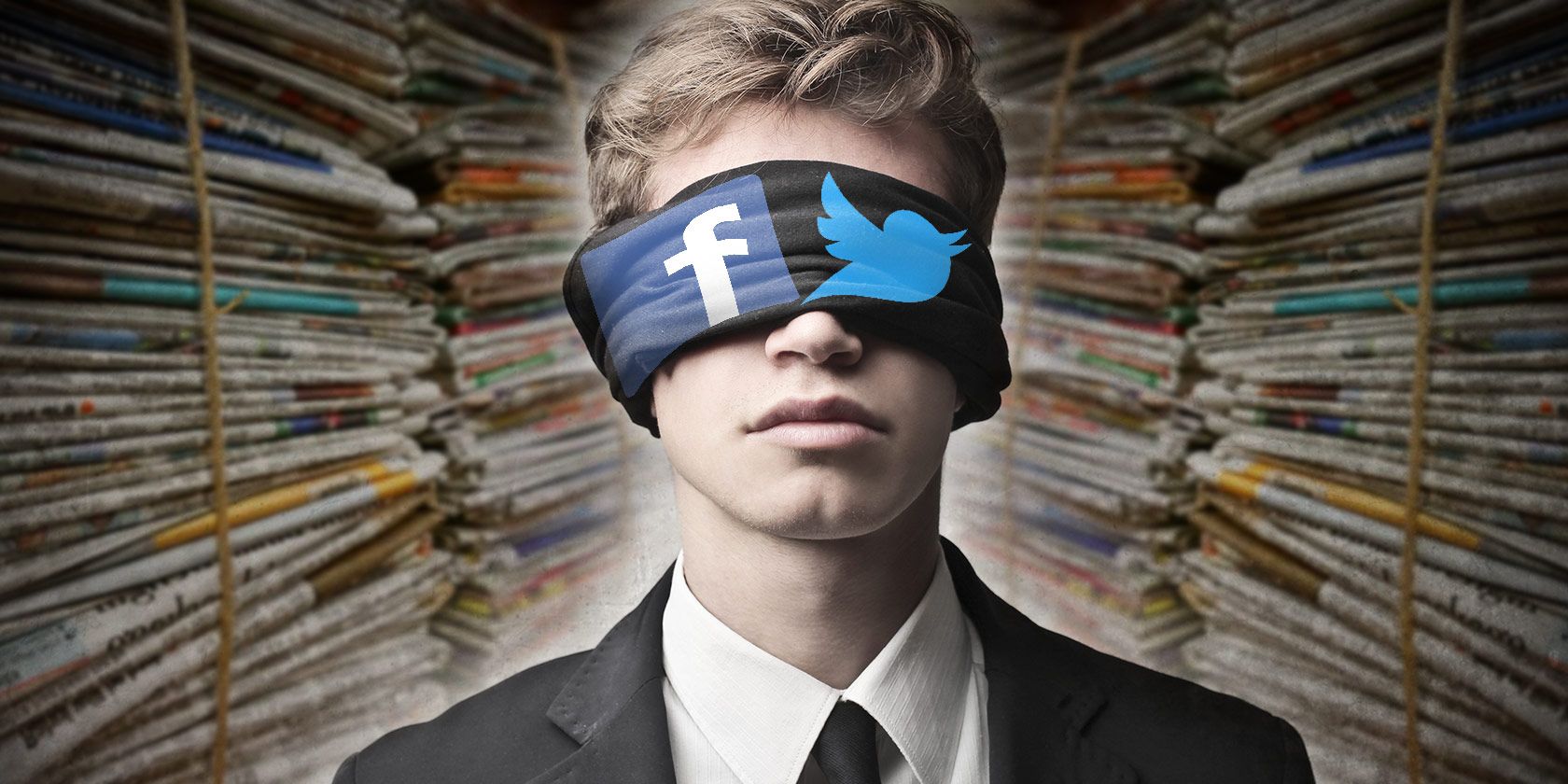
Companies like Facebook and Google have corporate goals and interests that are backing us into an untenable social framework, where these monopolies own and operate the Internet, outside societal influences, and democratic control, extracting data on a massive scale.

They own your content in precise ways, and they have precise aims for your content.

As well, and, most of the time, treating our private lives as raw material for their profit.  

Their algorithms are engineered to amplify the most extreme, angry, toxic, content with the intent to maximize data extraction thereby creating a huge societal asymmetry of knowledge and power – a whole new dimension of inequality. 

WE ARE LEARNING THE HARD ABOUT THEIR DESTRUCTIVE EFFECTS – the election of Donald Trump, the Arab Spring, Promoting Popularism, false news on everything, from climate change to covid-19.  

WITH THE CURRENT STATE OF AFFAIRS IT IS INTOLERABLE TO ALLOW MISFORMATION TO BE SPREAD WILLY NILLY WITHOUT VERIFICATION OF THE TRUTH.

  This commercial surveillance has to stop because the boundaries between the virtual and the real world are melting. 

We the people should have the right to decide what becomes of data and what remains private. What data is sharable and what purpose data should be used for. 

WHY?

BECAUSE OUR PUBLIC DISCOURSE RULED BY SOCIAL MEDIA IS BEING RULED BY A HANDFUL OF PEOPLE FOR THE SAKE OF THEIR PROFIT.

If we don’t in the not so distant future you will see algorithms with self-awareness or worse still self-aware robots.

Instead of massive concentrations of data to manipulate our commercial and political behavior, data becomes a critical resource for people and society to ensure we remove inequalities in society.

There is no room tweaking any of this to get us where we need to go.

Let’s not delve into whether social media are a boon or bane for society. Instead, let’s appropriate social media and use it as an extension of ourselves to reach out to others, and not as a replacement for our physical offline relationships…

Unfortunately, our political discourse is shrinking to fit our smartphone screens and it is too late to regulate or pass laws governing the use of Algorithms. Only the threat of the very large fines will get these platforms and the people behind to concentrate on this in an appropriate way.

Because the formulaic quality of social media is well suited to the banter it appears these days that you’re only as relevant as your last tweet.

WE NEED A FUNDAMENTAL WORLD RESET WITH AI TO TETHER INDUSTRIAL CAPITALISM TO EQUALITY NOT INEQUALITY.   

                                         ———————–

Facebook is basically an advertising company; they exist to make money, like all companies.

Even though Facebook has joined WHO and UNIFC to supply accurate information about covid-19 vaccines misinformation still finds a way on to social media where it combined to make a whirlpool of misinformation.

For example. A post like this.

10 years from now you will hear commercials that say ” if you took the Covid-19 vaccine between 2020-2021 you may be entitled to compensation”

                                      ———————–


The world is experiencing dramatic events that are leaving their mark not only on our society and our economy but on each and every one of us.

On the plus side of Ai technology, machine-learning algorithms are helping researchers understand the virus, identify the regions of the world with the highest contagion rates, and forecast the capacity needs of national health systems, with the aim—among others—of minimizing fatalities in the COVID-19 pandemic.

These algorithms can identify patterns of concentration, contagion rates, hidden similarities among cases, and, in general, allow for the aggregation of valuable knowledge that provides a more accurate global picture of the pandemic. More importantly, such algorithms can be used to protect communities that might be more vulnerable. For example, if an elder-care facility is located in an area with a high concentration of contagion, it should receive special attention to prevent unnecessary fatalities.

Prediction algorithms, together with fine-grained simulations can be used to forecast the evolution of the crisis.

For all these outcomes to be reliable, an important precondition is the trustworthiness of the data used with the algorithms.

                                       ——————–

Social media is run by algorithms, programs that spit out the things you see online, working in the background to come up with the things you see.

The interest of the corporation is fueling the content that you’re seeing.

However, when we are talking about algorithms on the internet or social media, you’re talking about people’s data going into a system and reworked preferences that come from that data input coming out. So you’re seeing the same sorts of things again and again when you’re expressing your preferences online.

So clicking on Google, YouTube, Twitter, the Facebook which are reinforcement systems based on existing preferences is about giving anthropomorphic agency to something that really doesn’t make decisions in the same way that we do.

Are they giving us beneficial moments, or making actual choices for us? 

The question is if algorithms just show us what we want, can they push us in different directions. 

Think about it in terms of what the algorithm wants and how it’s treating us by personifying the algorithm.

To sum up. 

They are inescapable and encrypted in individuals’ online lives constantly, ‘making autocratic decisions…to produce a single output and agonistic in influencing individuals becoming a key site of power in the contemporary mediascape with the ability to, ‘shape social and cultural formations.  

To date, we as individuals have granted algorithms the, ‘almost unimaginable power to determine what we see, where we spend, how we perceive.

Their power seems to be located in the mechanics of the algorithm.

However, it is in the hands of the individual to modify their opinions and perspectives to what has been put in order for them.

Every algorithm falls under a certain class.

Basically, they are-

1)      Brute force.

2)      Divide and conquer.

3)      Decrease and conquer.

4)      Dynamic programming.

5)      Greedy algorithm.

6)      Transform and conquer.

7)      Backtracking algorithm.


All human comments appreciated. All like clicks and abuse chucked in the bin.

← Back

Thank you for your response. ✨


Share this:

  • Share on WhatsApp (Opens in new window) WhatsApp
  • More
  • Share on Pocket (Opens in new window) Pocket
  • Share on Mastodon (Opens in new window) Mastodon

THE BEADY EYE ASKS. IS IT TIME TO STOP ANONYMITY ON THE INTERNET.?

20 Wednesday Jan 2021

Posted by bobdillon33@gmail.com in #whatif.com, 2021. The year for change., Artificial Intelligence., Communication., COVID-19, Dehumanization., Democracy., Digital age., DIGITAL DICTATORSHIP., Disconnection., Fake News., Freedom, Freedom of Speech, How to do it., HUMAN INTELLIGENCE, Human values., Humanity., Modern Day Communication., Our Common Values., Post-Covid-19, Social Media, Social Media Regulation., Technology, Technology v Humanity, The common good., The essence of our humanity., The Internet., The Obvious., The state of the World., The world to day., Unanswered Questions., VALUES, We can leave a legacy worthwhile., What Needs to change in the World, Where's the Global Outrage.

≈ Comments Off on THE BEADY EYE ASKS. IS IT TIME TO STOP ANONYMITY ON THE INTERNET.?

Tags

ANONYMITY., Community cohesion, Freedom of Speech, Internet, Social Media, The Future of Mankind, Visions of the future.


( Ten-minute read) 

Since the internet was in its infancy, the rights of users to use it to express their opinions were sacrosanct.

However, there is a price for “free” internet, and that we’ve given up more of ourselves than we ever intended to.

Concern already exists that Facebook and similar social media platforms act as echo chambers that validate opinions we already hold – fuelling precisely the type of extreme views that Facebook says it has a right to edit.

Might this new position simply result in more fake news?

The Internet has and is empowering masses of people by access to world-wide information sources, education, and communication but what is now considered permissible and acceptable online is shifting.

The question is with this newfound freedom, that is influencing every aspect of our lives for good or bad, should we be requiring people to register their identity when using the internet.?

If so how.

It would be true to say as we have become constantly connected, none of us are as anonymous as we think.

George Orwell presciently realized that if citizens don’t know what is true and what is false, they can’t make a judgment about what to object to in their lives.

Is it time to introduce an online digital passport to eradicate individual desires, such as credulity, abuse, gender-swapping, exploration, radicalizing, hacking, trolling, spreading false news, promoting popularism groups, bullying, racism, the list is endless? 

( Article 19 of the Universal Declaration of Human Rights says. 

“Everyone has the right to freedom of opinion and expression; the right includes freedom to hold opinions without interference and to seek, receive, and impart information and ideas through any media regardless of frontiers.”

The GDPR and the Data Protection Act 2018 give internet users the right to privacy and the right to withhold their personal details.

The Malicious Communication Act 1988 and the Communications Act 2003 make it possible to prosecute “trolling” – and many other forms of online harassment are also now covered by the legislation. )

Platforms on the internet avoided liability by claiming they were “mere conduits” of these views and not “publishers” of them.  The argument goes that this includes protection for freedom of expression by the right to remain anonymous online.

So which should remain enshrined: freedom of speech or freedom from abuse?

The world feels smaller and we’ve celebrated this but in any human population, there will be people with irreconcilably different understandings of the truth.

Repressing speech has costs, but so does allowing it.

The world, however, has changed, and many of us may be in the time warp of old values. Human beings are poor witnesses, easily misled by a personal bias, profoundly influenced by their social environment.

As products of their society, social media and journalists are no exceptions. 

The world is now a much more dangerous place, not because of Covid -19 which is plunging it into a Depression with social media exposing a system of governance corseted by greed – profit before the people. Then, on the other hand, social media is like cancer at the heart of societies spreading the news, not what the facts are, but what men wish to see.

The press once seemed to have a conscience, thanks to history’s painful social conflicts and questions of war and peace.

Social media is not concerned with any historical lessons it being a wildfire of the short-term reactions of unfounded populism without any in-depth investigative journalism.      

It is becoming impossible to distinguish between paid news and actual, unbiased news.

You could say that the world has more pressing problems.

However, our current and future problems, like the internet, are all interconnected.

Shifting trends and the advancement in communication technology require a re-examination of the underlying principle and its application in new contexts.

There are attempts to get some control.

Free-speech advocates typically claim that the value of unfettered expression outweighs any harm it might cause, offering assurances that any such harm will be minimal.

Because like several other precious freedoms, free speech must be placed outside the reach of political exigency.

Unfortunately, or fortunately, it is impossible to pass binding regulations or laws that don’t restrict the sanctity of free speech.

Free speech or the freedom of expression is the modern civilization’s most precious gift to human society but it can’t be reaffirmed by drowning out its opponents.

                                                         ————

The issuing of Digital Passports could not be left to the whim of Facebook or any other internet providers.

Also “Digital identity solutions leave us open to data exploitation with the valuable data from these solutions (being) used for other purposes, so governments could not be involved in their issuing other than making supporting laws with large fines. 

The most obvious hitch in this plan is that not everyone has a smartphone,

With the current Pandemic and vacations, there will be an attempt to introduce Covid-19 free digital health certification (Of course, this would only be applicable to people with smartphones.) and they could become a prerequisite for some activities.

But for now, we’re many steps removed from that kind of streamlined process even becoming possible. Widespread adoption of so-called immunity passports would require a level of coordination and organization uncharacteristic of any country’s response to COVID-19 so far.

So here is the challenge. 

Is it possible to create a Digital Passport that is unhackable, that can be applied for online, that would combine your present Passport information, that you could use to vote, to register an internet identity, and carry your medical history. 

People would only accept such a thing if it commands public trust.

As evidence with the recent election in the USA entrusting your democracy to a black-box proprietary system that is subject to hacking, glitches, and errors, but NOT subject to scrutiny, analysis, or independent verification, is the surest and quickest way to lose your democracy. 

However, creating an internet user register could be possible not only authenticating the user but making it more transparent and ensure that users have the right to remedy when wrong decisions are made.

As for platforms, they know what they need to do because civil society has told them for years.

Just in case they have not got the message they should ensure that the decisions they make about speech are in line with global human rights standards, rather than making the rules up as they go.


 All human comments appreciated. All like clicks and abuse chucked in the bin.

← Back

Thank you for your response. ✨


.  


Share this:

  • Share on WhatsApp (Opens in new window) WhatsApp
  • More
  • Share on Pocket (Opens in new window) Pocket
  • Share on Mastodon (Opens in new window) Mastodon

THE BEADY EYE ASKS. WHY DO WE HUMANS FIND IT DIFFICULTY TO ACCEPT THE TRUTH.

18 Wednesday Nov 2020

Posted by bobdillon33@gmail.com in #whatif.com, 2020: The year we need to change., Algorithms., Artificial Intelligence., Climate Change., COVID-19, Digital age., Disconnection., Donald John Trump, How to do it., HUMAN INTELLIGENCE, Human values., Humanity., POST COVID-19., Robot citizenship., Social Media, Technology v Humanity, Telling the truth., The common good., The essence of our humanity., The state of the World., The world to day., Truth, Truthfulness., Unanswered Questions., VALUES, WHAT IS TRUTH, What Needs to change in the World

≈ Comments Off on THE BEADY EYE ASKS. WHY DO WE HUMANS FIND IT DIFFICULTY TO ACCEPT THE TRUTH.

Tags

Algorithms., Artificial Intelligence., Climate change, Community cohesion, Facts, Global warming, Inequility, Internet, Technology, The Future of Mankind, Truth


(Eighteen-minute read) 

This is a question not easy to answer.

Why?

Because facts and truth are closely related.

The truth takes into consideration feelings and beliefs, whereas they have no place in fact.

A fact is something that is true everywhere and for everyone.

Facts do not change according to region, caste, culture, religion, etc.

That is not to say that facts from the past have been overturned and proven to be false and that some facts from today will be proven false tomorrow- History is written by the Victor.  We no longer know when a fact is going to be true for eternity.

Some of them will. 

Take for example you have to be born to experience death.  Currently true.

However, with the arrival of Artificial Intelligence – it appears that not just robots but humans will have both life and death capable of independence, separable from one another. 

This is not quite yet a scientific fact” but we could be standing on thin ice. 

So what makes a fact a fact?

Facts are hardcore and hence they cannot keep constantly changing; a fact remains a fact until proven otherwise. A fact states something that has actually occurred or happened, but we have no idea what’s outside the visible universe.   

A matter of seeing is believing I suppose. 

The truth is often considered to have a grander scope than facts.

However, something that is true for one person may not be true for everyone.

 Is this true? 

With the arrival of the Internet, the world has shrunk but unfortunately, we are all now on different platforms of truth. 

For example. Facebook discovered that warning users that an article was false caused people to share that article even more.

It seems that the closer you get to the truth, the further you get from the world.

In other words, while you can get people to understand the facts, the facts don’t always matter.

Unfortunately, we don’t care about the truth as much as we typically think our highly social brains make discerning truth more difficult than we might hope because we often protect our previous beliefs rather than face inconvenient truths.

Why?

It’s because we’re all viscerally connected to truth on a fundamental, physical, and spiritual level. It’s part of who we are and like a virus, we instinctively reject dishonesty.

We learn to put on a mask (personality), to present an acceptable display, and hopefully, nobody will see the truth. That process spreads to other aspects of our lives, many times unknowingly.

To think about the future, you have to know about the present

– Prof. Hans Rosling, TEDtalks 2014

My understanding, in a nutshell, is that a hypothesis gets upgraded to a theory (closest you can get to fact) not possibly by chance occurrence. This is evidence that it is true, and will remain true until (if it ever happens) new evidence that disproves it comes to light.

Valid does not equate to true.

Sometimes theories are inducible and then prove by deduction,i.e gravity.

So why do we argue so much when facts about contentious topics are readily available?

If the data are gathered, shouldn’t we all be reaching the same conclusions?

Obviously not. 

Presenting people with information about an issue in a nuanced way, rather than presenting them with pro-con arguments laid out in a simplified manner, leads people to have more complex and satisfying conversations about contentious issues.

True.

But our ears are dull of hearing, and our eyes have closed thanks to algorithms that control what we hear or see.  They warp our perception of reality and reasoning by creating social media echo chambers.

We can share our worldview like never before, yet we often feel worlds apart when assessing our shared reality. Social media typically does not promote positive interactions.

Complacency lures in the comfort of our smartphones or our living room couch and sadly, we’re always the first victims of our lies because we have to believe them first before we can convince others to do so.

The result is that the difference between fact, truth, and opinion becomes blurred. 

What can be changed? 

Any sane person, regardless of nationality, color, or political stance, would aim for the first – truth and facts.

So why don’t we just get indisputable facts on the table? 

Reaching the correct answer required participants to think carefully about the data.

We often reason with desired conclusions in mind and selectively recruit our mental faculties towards reaching those conclusions.

However if the people most capable of accurately interpreting data are at least as biased as the rest of us, how can we hope to find common ground on our most pressing and divisive issues?

Climate Change – Inequality, Covid-19, you name it. It’s hard to find the truth because there is so much falsehood out there making so much noise that the truth gets drowned out.

Everyone wants to be right, but practically speaking it’s usually more important for us to be socially accepted and internally consistent in our beliefs.

To divert from this human automation, we have to make a deliberate choice.

We have to actively decide to put on the brighter light and accept that doing so will sometimes help us in the longer run. Until we find systematic ways to improve our reasoning, we can all take steps towards improving political discourse by making efforts to challenge our personal beliefs and biases. Our values are more meaningful than their political utility, so if you stumble into a heated debate remember that the search for community, happiness, and truth transcends partisan boundaries. 

Without being honest with ourselves we’ll never be honest with others.

Living in our own little world of self-created lies and avoiding the truth of our life experience takes great energy-producing even greater amounts of stress.   

The first lie is the one we tell ourselves. It’s usually, “It didn’t happen” or “It didn’t happen like that.”

Sometimes it’s hard to find the truth because for too many people nowadays truth does not matter, only power.  Donald Trump. 

We have a natural instinct to search for answers and make sense of things.

These phenomena can be described by many different words 

Ondinnink, Qualunquismo, Zlatwic, 

We are constantly bombarded by messages by well-meaning NGOs who desperately try to help people living in poverty. At the same time media throw in a mix of news full of disasters and war, and then they host huge charity shows on TV ever so many times a year.

“Facts are stubborn things; and whatever may be our wishes, our inclinations, or the dictates of our passion, they cannot alter the state of facts and evidence.”

John Adams, 2nd President of the United States of America

Life is making mistakes and that’s the truth.

Here is what Alex Google might tell you. 

  • Something that actually exists; reality; truth: Your fears have no basis in fact.
  • Something is known to exist or to have happened: Space travel is now a fact.
  • Truth is known by actual experience or observation; something is known to be true: Scientists gather facts about plant growth.
  • Something said to be true or supposed to have happened: The facts given by the witness are highly questionable.
  • Law. Often, facts. An actual or alleged event or circumstance, as distinguished from its legal effect or consequence. Compare the question of fact, the question of law.

Truth, on the other hand, is a true state of a certain matter, person, place, thing or event. Truth is considered to be more archaic than fact. It is more subjective than resolute fact. Dictionary.com defines ‘truth’ as:

  • The true or actual state of a matter: He tried to find out the truth.
  • Conformity with fact or reality; verity: the truth of a statement.
  • A verified or indisputable fact, proposition, principle, or the like: mathematical truths.
  • The state or character of being true.
  • Actuality or actual existence.
  • An obvious or accepted fact; truism; platitude.
  • Honesty; integrity; truthfulness.
  • (Often initial capital letter) ideal or fundamental reality apart from and transcending perceived experience: the basic truths of life.
  • Agreement with a standard or original.
  • Accuracy, as of position or adjustment.
  • Archaic. Fidelity or constancy.

All human comments appreciated. All like clicks and abuse chucked in the bin

← Back

Thank you for your response. ✨


we repress the truth and our feelings about it with a lie to keep the pain at bay.


how do we communicate truthfully


It was like waking up to Hell.

We avoid these realizations


Share this:

  • Share on WhatsApp (Opens in new window) WhatsApp
  • More
  • Share on Pocket (Opens in new window) Pocket
  • Share on Mastodon (Opens in new window) Mastodon

THE BEADY EYE SAY’S. YOU CAN TAKE THE KNEE BUT WHAT IS IT THAT MAKES A NATION.

24 Wednesday Jun 2020

Posted by bobdillon33@gmail.com in 2020: The year we need to change., A Constitution for the Earth., Civilization., Climate Change., COVID-19, Dehumanization., Democracy, Digital age., Disconnection., Donald Trump., European Union., Evolution, Facebook, Human values., Humanity., Inequality, Life., Modern Day Communication., Modern day life., POST COVID-19., Social Media, Technology, The common good., The essence of our humanity., The Internet., The Obvious., The state of the World., The world to day., Unanswered Questions., WHAT IS TRUTH, What Needs to change in the World

≈ Comments Off on THE BEADY EYE SAY’S. YOU CAN TAKE THE KNEE BUT WHAT IS IT THAT MAKES A NATION.

Tags

Climate change, Nation identity., Nation v technology., Nationality, Nationhood, Nations and cultures, Rise of nationalism, Technology, The Future of Mankind, Visions of the future.


(Twenty-minute read) 

IT IS NOT COVID-19 OR TAKING THE KEEN OR THE GDP THAT MAKES A NATION. 

SO LET US ASK SOME QUESTIONS:

What is it these days that constituents a Nation?

How does a nation emerge and evolve?  

What are the precise differences between a nation and a gathering of people?

It is hard, -and even one may claim impossible- to give satisfactory answers.

Nations seem so compelling, so “real,” and so much a part of the political and cultural landscape, that people think they have lasted forever. In reality, they come into being and dissolve with changing historical circumstances – sometimes over a relatively short period of time, like Czechoslovakia and Yugoslavia.

Did you notice that suddenly out of nowhere, the BBC has started to refer to England as the Four Nations?

Charles Stewart Parnell said  “No Man Has the Right to Fix the Boundary to the March of a Nation” no man has a right to say to his country—thus far shalt thou go and no further.

Ernest Renan in 1882 said nations share “a soul” and memories of “endeavors, sacrifice, and devotion.

Historical events uniquely fuse together the population of a given territory into a nation.

These nations share “a soul” and memories of “endeavors, sacrifice, and devotion.”

But, because of migration, most modern states include within their borders diverse communities that challenge the idea of national homogeneity and give rise to the community of citizenship, rather than membership in the nation.

So is a nation the kind of moral conscience, which we call a nation? 

If one were to believe some political theorists, a nation is above all a dynasty, representing an earlier conquest, one which was first of all accepted, and then forgotten by the mass of the people.

With technology however we are learning that man is a slave neither of his race nor his language, nor of his religion, nor of the course of rivers nor of the direction taken by mountain chains.

Why, then, does national identity give rise to such extremely strong feelings?

And why would so many be ready to “die for the nation” in time of war?

THERE IS NO RIGHT ANSWER. 

In the age of global transportation and communication, new identities arise to challenge the “nation,” but the pull of nationalism remains a powerful force to be reckoned with – and a glue that binds states together and helps many people (for better and for worse) make sense out of a confusing reality.

Language invites people to unite, but it does not force them to do so.

The United States and England, Latin America, and Spain speak the same languages yet do not form single nations.

Religion cannot supply an adequate basis for the constitution of a modern nationality either.

Geography, or what is known as natural frontiers, undoubtedly plays a considerable part in the division of nations.

So a nation’s existence is if you will pardon the metaphor, a daily plebiscite, just as an individual’s existence is a perpetual affirmation of life.

National identity is typically based on shared culture, religion, history, language or ethnicity, though disputes arise as to who is truly a member of the national community or even whether the “nation” exists at all (do you have to speak French to be Québécois or Irish to be Irish? Are Wales and Tibet nations?). 

Theorizing further about nations, Renan says they reinforce themselves in a “daily plebiscite” of a common will to live together. 

This might have been true before the arrival of the internet and the smartphone.

Now the world can see into every backyard and what is on the washing line.

In other words, we are no longer living in a world defined by Nationhood but a world that is driven by the whims of bias, color, profit, and the inequality of the accident of birth. 

WE TODAY MIGHT LIVE BEHIND FRONTIERS BUT WE ALL CONNECTED TO ONE ANOTHER.

The term “nationalism” is simply not part of technology so the nation exists in the minds of its members as an “image”. 

For most of the last 50 years, technology knew its place.

THEN ALONG CAME SOCIAL MEDIA.  

Face book alone has around 2.6 billion people using it every month but it remains a sub-identities not a new identity; however, the technology it and other platforms are using does not reflect their impacts on nationhood.

After decades of inward-looking and jargon-infused discourse, governments are just beginning to wake up to social media and finally taking their communications seriously.

They reflect the grand narrative that is shaping a common sense of belonging.

Our digital identity is already an inextricable part of our lives, as is the technology that allows us to manage it. However, there are two really sad things about this and the unintended consequence of the use of these emerging technologies.

First, most people have no idea of the dramatic changes that are occurring slowly yet inexorably.  Second, this shift in identity, from internally derived to externally driven, can’t be good for us as (formerly unique?) individuals nor for us as a (formerly vital?) society.

We come to see our identities as those we would like to have or that we want people to see rather than who we really are. We then feel compelled to promote and market these identities through social media.

It is easier than ever to change our identity, yet it is harder than ever to control.

It isn’t difficult to see how external forces may now be gaining a disproportionate influence over our self-identities compared with previous generations. These platforms are shaping our self-identities in ways in which most of us aren’t the least bit aware.

In previous generations, most of the social forces that influenced our self-identities were positive; parents, peers, schools, communities, extracurricular activities, even the media sent mostly healthy messages about who we were and how we should perceive ourselves.

But now, the pendulum has swung to the other extreme in a social world where profit is motive and rule by the collection of data. 

On the Internet, people create imaginary identities in virtual worlds with a new generation contemplating a life of wearable computing, finding it natural to think of their eyeglasses as screen monitors, their bodies as elements of cyborg selves.

They are and will blur the boundaries between their on-line and off-line lives, and there is every indication that the future will include robots that seem to express feelings and moods, not nations.

We are ill-prepared for the new psychological world we are creating. 

The Internet constantly confronts us with evidence of our past but we are losing the chance to remake ourselves?

This is certain to have some kind of profound effect on the development of identity.

What that effect will be we’re not quite sure.

Smartphone—allows us to produce a narrative of our lives, to choose what to remember and what to contribute to our own mythos.

This is of particular importance for those who yearn to establish new identities.

The trouble is, most difficult memories aren’t captured by photos, videos, or tweets, complex historical past has to be read or taught as it has a major consequence: 

Memory is almost a form of political representation, enabled by social media; groups are able to preserve their history as they travel across continents.

National identity – there we are. 

But the main victim of today’s shenanigans when it comes to nationhood is that sentiment of self has been tempered for centuries by an intense feeling of collective suffering, generating a crave for unity, a thrive for a fusion of the entire society.

In the end, nations will form a federation like the USA and Europe.

Each nation of Europe represents too much of a specific history for the European spirit
to be anything else than the spirit of the European nations.

Over time this too shall pass eventually but it will take centuries for Europe to forget that Europe is just about nations. 

The USA under the Presidency of Donal Dump nationhood appears to mean that the more you destroy, the more you count.

The Uk now referred to itself as the four nations all of which have their national selections, with the exception of the Olympics.

The best way of being right in the future is, in certain periods, to know how to resign oneself to being out of fashion.

There can be little doubt that the present COVID-19 and the forthcoming Economics Depressions are and will start to exam what defines – A Nation.

The virus loves a large body of people, associated with a particular territory, that is sufficiently conscious of its unity to seek or to possess a government peculiarly its own ends, as it is not talking to itself.

Technology allows for self-representation and preservation of personal and collective identity by providing autonomy and empowerment but it now poses questions about authenticity in new, urgent ways.

Technology can be used to preserve the language, customs, and culture, but it will if not transparent and shared drive inequality without any understanding of the perspective of critical sociology. 

It’s my hope that as we become more sophisticated consumers of computational technology—and realize how much it is changing the way we see our world and the quality of our relationships.

Remember it is nationalism’s adaptability to most local conditions that allow it to thrive, especially when supported by a government intent on expanding its own power domestically and internationally.  It’s an attractive ideology for political leaders, as it provides a ready-made and widely-believed justification for increased political power in order to Make the Nation Great Again. 

One way or the other coming climate change, with mass migration, will redefine what it is to be a Nation.  

All human comments and contributions appreciated. All like clicks and abuse chucked in the bin. 

← Back

Thank you for your response. ✨


Share this:

  • Share on WhatsApp (Opens in new window) WhatsApp
  • More
  • Share on Pocket (Opens in new window) Pocket
  • Share on Mastodon (Opens in new window) Mastodon

Gallery

THE BEADY EYE ASK’S. WILL THE WORLD BE EVER A SAFE PLACE.

05 Sunday Apr 2020

Posted by bobdillon33@gmail.com in 2020: The year we need to change., Artificial Intelligence., Biotechnology., Capitalism, CORONA VIRUS., COVID-19, Dehumanization., Democracy, Digital age., Disasters., Disconnection., Environment, Evolution, Fake News., Fourth Industrial Revolution., HUMAN INTELLIGENCE, Human values., Humanity., Inequality., International solidarity., Life., Lock Down., Modern Day Democracy., Modern day life., Nanotechnology, Pandemic, Political Trust, Post - truth politics., Reality., Robot citizenship., Social Media, Survival., Sustaniability, Technologically Enabled Genetics., Technology v Humanity, Technology., The common good., The essence of our humanity., The Future, The Internet., The Obvious., The pursuit of profit., The state of the World., The world to day., Unanswered Questions., VALUES, WHAT IS TRUTH, What Needs to change in the World, Where's the Global Outrage., World Aid., World Economy., World Leaders, World Organisations., World Politics, World Trade Organisation

≈ Comments Off on THE BEADY EYE ASK’S. WILL THE WORLD BE EVER A SAFE PLACE.

    (Thirty-minute lockdown read )  My previous post asked the question of what skills will be needed to rebuild …

Continue reading →

THE BEADY EYE ASK’S: DOES ABSOLUTE TRUTH EXIST. IT IS EITHER ABSOLUTELY TRUE OR IT’S NOT. .

09 Monday Mar 2020

Posted by bobdillon33@gmail.com in 2020: The year we need to change., Fake News., Google Knowledge., Honesty., HUMAN INTELLIGENCE, Human values., Humanity., Modern Day Communication., Modern day life., Post - truth politics., Reality., Religious Beliefs., Social Media, Technology v Humanity, Telling the truth., The common good., The essence of our humanity., The Obvious., The state of the World., Truth, Truthfulness., Unanswered Questions., WHAT IS TRUTH, What Needs to change in the World, Where's the Global Outrage.

≈ Comments Off on THE BEADY EYE ASK’S: DOES ABSOLUTE TRUTH EXIST. IT IS EITHER ABSOLUTELY TRUE OR IT’S NOT. .

Tags

The Future of Mankind, Truth, Visions of the future.


Fifteen-minute read. 

You don’t have to belive but it helps for something to be true.

Our modern society often seems geared towards quick fixes, superficial relationships, material things.

We are bombarded with advertising and social media images but below this superficial level of experience, there are deeper truths.

The problem of determining the truth in current events (and in other areas) when we’re faced with conflicting views from thousands of media and Internet sources seems insurmountable. Does this make sense? Is it likely?

While accepting that no one is going to get everything right all the time without the truth aiming for equality is a recipe for disappointment.

So we enter into our search for truth by asking these vital questions:

Is truth the property of verbal and written language, or is it now visual and as such by-passes the chaotic problem of human perception and interpretation?

Or is truth assumed to exist in an abstract realm of correctly conceived ideas? 

Or is the truth the true knowledge of things as they are now, as they have been in the past, and as they will be in the future?

What does it mean to know the truth? 

The most valuable asset you can have is trusting but to have trust it must be true?

Pragmatic proofs are paraded daily on TV and Social media which are both promoted by unregulated platforms with unchallenged Fake News making convincing claims to “knowing.” 

Truth used to be conceived as a property of accurately stated words or accurately conceived ideas that correctly characterize world realities like the Corna virus outbreak that might turn out to be the modern-day catalyst to defining the truth.

Let’s start with death as it has a way of concreating the mind.

It is undeniable or is it.

We can’t know anything for certain, so the truth is in need of a God.

Without the Ressurection, Christianity would not exist.

We can’t imagine X being simultaneously true and false in the same manner. Another word if something is true, it’s not simultaneously false in the same way. 

How to “prove” it.

All truth is empirically or scientifically testable.

There are no eyewitnesses who watched Big Bang so the assumption that something came from nothing is propositional truth. It has been the big question facing humanity since mankind crawled from the primordial ooze – where did the universe come from?

If we consider the hypothetical proposition of the impact of finding life on another planet or it arriving on this planet it will not prove anyone theological system right or wrong, so our confused view of what is true will remain.  

For an example of this is.

If by deduction reasoning, verified against observed facts penguins exist.

But put another way, the claim “penguins exist” is itself a penguin.

That said if someone just refuses to acknowledge logic, it ends all rational discourse. You can’t logically prove anything to someone who denies logic.

So deduction depends upon the nature of assumptions.

These assumptions are not applicable universally because the premises from which they are deduced may not hold good at all time and places.  

There is a part of the world that we can’t see. 

Quantium Maths is a realm of reality that doesn’t consist of material things but of non-material forms. Quantum physics brings us a new kind of reality, provides us with direct suggestions of how we can live in accordance with the numinous realm of the universe.

But the meaning and purpose of our nature are anchored in the numinous realm of reality, not virtual reality. We usually take our thinking for granted, and the thoughts in our mind tell us a lot of things, but they say nothing about where they are coming from!

The word, “consciousness” derives from the Latin, “con” and “sciencia”, and it means a state of “knowing together” what is true and not true.

There is no plural form because there is only one consciousness.

Our concepts of truth evolve in the same way in which our bodies evolve.

For some reason, in our history, worldviews have always been accompanied by threats.

We believe that the evolution of concepts and their understanding is the true function of biological evolution. It is impossible to know, whether we are evolving with the cosmic mind, or whether it is merely our mind that has to evolve to a better understanding of a non-evolving cosmic order.

We are left with verifiable truth taking many paths based on observations which become intellectual toys that the real world may forget in the intellectual gymnastics and mathematical treatment of the observations.

The principle of noncontradiction cannot be established scientifically only by a witness. 

Once you concede that *an* absolute truth exists, a whole slew of truth statements come with it:  

It can’t be absolutely true since that would create a contradiction:

So if you remove all religious beliefs it is very easy subconsciously to absorb the truth.

An ascending process” in which facts are collected, arranged and then general conclusions are drawn in which we arrive at a generalisation on the basis of particular observed facts. This process is realistic because it is based on facts and explains to them as they actually are. But it can only show that the hypothesis is not inconsistent with the known facts.

In reality, the collection of data is not illuminating unless it is related to a hypothesis.

Either because it is committed to religion being false (e.g., they want to live a sinful lifestyle, so they need to convince themselves that God isn’t real, or at least, worth obeying), or because they’re too proud to admit defeat, or because they’re not really that interested in investigating the issue deeply, or simply because they don’t see things the same way that you do.        

The narrower the problem on the basis of logical reasoning the truer it becomes verified by observation. 

The penguin stands verified. It does not need a witness or scientifically proven. 

But truth relies on the axiom that things are either true or false: things that are false cannot be true, and things that are true cannot be false.

There exists absolute and knowable truth, outside of the realm of the natural sciences, and not subject to empirical and scientific testing.

All scientific knowledge is built upon a bed of metaphysical propositions that cannot be established scientifically. Where experiment is practically impossible, abstraction and analysis afford the only means of escape from those which complicate the problem so much.  

So many people hold wrong opinions simply because they’ve never thought deeply on the subject. And our culture is absolutely toxic with wrongheaded philosophical and religious views and now false news.   

I won’t say you are wrong if you won’t say I am. The argument depends totally on the rules of the logic game. Unfortunately because of Social media, our intellects are falling.  

We established the truth of the claim by the witness and not those who hide behind logically incoherent arguments removing themselves from the field of logical discussion.

The only thing to do (I presume) is to attempt to lure them back by showing that they’ve transgressed logic and are simply appealing to emotion?

Assuming that the public square should be devoid of religion; assuming that faith is irrational; etc. “Absolute truth exists” is absolutely true.

On the other hand, no one can know anything for certain, is sceptic’s absurdity.

This statement is a broad (self-refuting) metaphysical and epistemological claim.

To achieve a trusted world it requires a compromise of the cultures.  

At this point in our analysis, we might ask:

Does it all matter? Why should we care?

Our answer is the belief that happiness in this life can be found only by understanding the spiritual background of the universe, and by living in accordance with it. 

This means that we have to recognize the invisible background of reality and accept the importance of spirit in our life. Denying the transcendent aspects of our nature can lead to serious problems for our physical health and spiritual well being.

The truth the whole truth and nothing but the truth or someone may claim the right to tell it for you. 

Our task isn’t the task of slaves to technology, who have to serve their creator.

“If Materialism is false”, writes Imants Baruss “then what is true?”

What is true these days is that we economizing it.

Let people believe what they want, as long as those beliefs aren’t leading to hurtful or unlawful actions.

All human comments appreciated. All like clicks and abuse chuck in the bin.

← Back

Thank you for your response. ✨


Share this:

  • Share on WhatsApp (Opens in new window) WhatsApp
  • More
  • Share on Pocket (Opens in new window) Pocket
  • Share on Mastodon (Opens in new window) Mastodon

THE BEADY EYE SAY’S: WHY IS THE TRUTH UNDER ATTACK AS NEVER BEFORE?

14 Friday Feb 2020

Posted by bobdillon33@gmail.com in #whatif.com, 2020: The year we need to change., Algorithms., Communication., Dehumanization., Disconnection., Fake News., Google Knowledge., HUMAN INTELLIGENCE, Human values., Life., Modern day life., Our Common Values., Political Trust, Post - truth politics., Social Media, The common good., The essence of our humanity., The Obvious., The state of the World., The world to day., Truthfulness., Twitter, Unanswered Questions., WHAT IS TRUTH, What Needs to change in the World, Where's the Global Outrage.

≈ Comments Off on THE BEADY EYE SAY’S: WHY IS THE TRUTH UNDER ATTACK AS NEVER BEFORE?

Tags

Fake News., Political Trust, Post - truth politics., Thought, Truth


(Thirty-minute read)


It is widely assumed by the general public that humanity is “progressing” and that we are better both physically and mentally than our predecessors were. Of course, this is true for some of us but for 6 billion of us on 2$ a day I doubt they would agree.

A person’s conception of truth is deeply intertwined with their conception of reality and truth isn’t actually divorced from reality. Science is dependent on truthfulness.

Few of us these day’s has the time or resources to check all of the news we confront on a daily basis. Instead, we rely on other methods of assessing truth, but can we or should we trust the source?

As the saying goes, “You can fool some of the people all of the time, and you can fool all of the people some of the time, but you can’t fool all of the people all of the time.”

In a world where facts are under siege, credentialed sources are proving more important than ever.

We are getting our news from platforms, run by Facebook, Google, Twitter, Messanger,  etc including other social media sites and search engines, but can we place our trust in those platforms.

The profession of undermining truth has been in existence for decades. For much of recorded history, the truth was rooted in scholasticism now it’s rooted in a capitalist haze where political correctness and social justice including warfare have descended from the ivory tower of the rich infiltrating tech, business, healthcare, and governments.

The quest for facts these days is now governed by disinterested Google algorithms that trade us, accuracy for efficiency, creating a “spiral of silence,” in which everyone believes that everyone else believes something but no one actually believes it.

It seems that we accept truthiness instead of requiring truth.

As a result, humankind is losing mental capacity to know the truth and we are living in an era of rationality inequality.

For example, voters act on issues that don’t affect them personally and are under no pressure to inform themselves or defend their positions.

People vote as if rooting for sports teams, encouraged by the media, which treat politics as a horse race, encouraging zero-sum competition rather than a clarification of character and policy.

So what is happening?

History is littered with the bending or inverting of truth by people in power has long been consequential, so the recent prominence of “fake news.”  is not a new development. The belief that fake news is displacing the truth itself needs to be examined for its truth.

The implication is that we may as well give up on reason and truth and just fight the bad guys’ lies and intimidation with lies and intimidation of our own.

“Social media.”

Not long ago many intellectuals deplored the lack of democratic access to mass media.

Now a few media corporations, in cahoots with the government, “manufactured consent” with their oligopoly over the means of production and dissemination of ideas.

We used to say, freedom of the press belongs to those who own, one no longer true.

Social Media with it’s like algorithms are now fueling, accusations of racism, sexism, homophobia, and transphobia that can be weaponized: since everyone reviles these bigotries, they can be used to demonize adversaries, which in turn spreads a terror of being demonized. It has become the place where one can express heterodox opinions without fear of being silenced or fired.

A network of pluralistic ignorance enforced by denunciation mobs.

So when it comes to intolerant repression of non-leftist ideas, don’t blame the Millennials or the iGens because unregulated Social Media is now blazing out of control abetted in part by government subsidies and lack of will to regulate.

People gravitating to people who are like them.

Social media held out the promise of giving a voice to the people, unfortunately, is making us dumber.

It is true to say that the network dynamics of social media are still poorly understood, but they do not yet host the mechanisms of vetting and reviewing that are necessary for true beliefs to bubble up to prominence from the turbid pools of self-presentation, group solidarity, and pluralistic ignorance.

We project the best sides of our lives through social media but revile real vulnerability.

So we are living in a post-truth world” true?

If your answer is “yes” then the answer is “no” because you’ve just evaluated the statement in an evidentiary manner, so evidence still matters and facts still matter.

But humans are fundamentally irrational – No.

If humans were truly irrational, who specified the benchmark of rationality against which humans don’t measure up? How did they conduct the comparison? Why should we believe them? Indeed, how could we understand them?

We did not evolve with the truth-augmenting technologies that have been invented in recent millennia and centuries, such as writing, quantitative datasets, scientific methodology, and specialized expertise. We evolved with the reality of the thought of what is true.

We don’t believe in reason; we use reason but as soon as you try to argue that we should believe things by any route other than reason, you’ve lost the argument, because you’ve appealed to reason.

That is why a defence of reason is unnecessary, perhaps even impossible. The very fact that one is examining the validity of reason shows that one is committed to reason.

This is the point where it gets somewhat complicated.

We build mental models of the world around us that allow us to explain, predict, and control things to our advantage.

Algorithms know this by monitoring our lives and consultancy firms that specialize in defending products from tobacco to industrial chemicals that harm the public (that have and are with us since the dawn of Capitalism) are manipulating the market place for profit while ensuring that the truth stays buried.

So our reasoning is contaminated by false news.

Social media is a major source of these falsehoods coupled with peculiarities in human behaviour on social media, make it easy for fake news to spread. Twitter, Facebook you name them.

“Political” fake news spread three times faster than other kinds, and the top 1 per cent of retweeted fake news regularly diffused to at least 1,000 people and sometimes as many as 100,000.

Out of all of the news you see reported, how much of it do you believe is made up or fake news?

Around 40% with 70% per cent more likely than true news to receive a retweet.

While the political repercussions of fake news are quite obvious, the phenomenon it depends on how the information is presented and how rationality is defined.

The powers of inference for example.

Rational inference, scepticism, and debate are in our nature but set against false news that is normalizing the production of alternative facts are a project long in the making.

Politicians—two in particular—lies a lot. But politicians have always lied. They say that in war, truth is the first casualty, and that can be true of political war as well.

THERE’S A TON OF MISINFORMATION OUT THERE, AND WE’RE NOT OKAY LETTING IT GO UNCHECKED.

Why is the truth important?

We all need to know the truth if we want to be able to behave rationally.

Spreading disinformation here, hiding evidence of harm there, undermining authorities evidence can change people’s minds. Internet discussion groups, in which these ideas harden and grow more extreme in the absence of critical engagement.

Group loyalty is an underestimated source of irrationality in the public sphere, especially when it comes to politicized scientific issues like evolution and climate change.

Forecasting is no longer the dark art of pundits, gurus, it is big data and everyday fact-checking with Google has and is been revolutionized.

When people are confronted with their own ignorance of the facts, they become more epistemically humble about their opinions.

Unwelcome news is automatically rebranded fake news.

In the end, we are mere mortals but has the day of rationality-promoting norms and institutions passed?

The causes are complex, but it’s exhausting to live in a society where asking for help equals failure.

“Life before Google.”

Nothing can reverse the damage that has been done during our own generation, and some of this regression in truthfulness in the last 50 years is a paradoxical byproduct of the fantastic progress, we have made inequality.

From climate breakdown to air and water pollution, Co2 emissions, natural disasters,  the spread of the coronavirus virus, ongoing wars, our media watchdogs that don’t know what they are watching only using them to boost their viewing ratings.

Something important about the way we conceive of truth in our daily lives is needed if we are to tackle the difficulty assessing the reliability of the information that we find on the internet.

To achieve this these platforms with profit-seeking algorithms need to put their money where their mouths are.

Considering the technological boom are humans becoming smarter or more stupid?

The art of creating scientific disinformation is now at a new level of the tricks reanalysing results to reach different conclusions and hiring people prepared to rig methodologies to produce funders’ desired result.

The truth of history constitutes its whole value.

Enriching a favoured few at the expense of the great majority of mankind will be the last lie. The inconvenient truths will inevitably come to light.

All human comments appreciated. All like clicks and abuse chucked in the bin.

← Back

Thank you for your response. ✨


The films served to both promote products and a vision of America undergirded by chemicals and synthetic materials. We learn the industry was proud to produce insecticides, PCBs, vinyl and other materials and toxins later identified as environmental toxins.

Share this:

  • Share on WhatsApp (Opens in new window) WhatsApp
  • More
  • Share on Pocket (Opens in new window) Pocket
  • Share on Mastodon (Opens in new window) Mastodon

THE BEADY EYE LOOK’S AT POPULISM. WHAT EXACTLY IS IT?

08 Saturday Feb 2020

Posted by bobdillon33@gmail.com in 2020: The year we need to change., Algorithms., Artificial Intelligence., Capitalism, Communication., Democracy, Digital age., Disconnection., Human values., Humanity., Inequality, Modern Day Democracy., Modern day life., Our Common Values., Political Trust, Politics., Populism., Post - truth politics., Reality., Robot citizenship., Social Media, Technology, The common good., The far-right., The Obvious., The state of the World., The world to day., Unanswered Questions., WHAT IS TRUTH, What needs to change in European Union., What Needs to change in the World, Where's the Global Outrage., World Politics

≈ Comments Off on THE BEADY EYE LOOK’S AT POPULISM. WHAT EXACTLY IS IT?

Tags

Liberal democracy., not the few.”, Populism., Populists., Post - truth politics., The “many


(Eighteen-minute read)

The word came from the “prairie populists”, a 1890s movement of US farmers who supported more robust regulation of capitalism.

“But no one is clear what it is.”

We can’t really talk about populism without talking about our conflicting conceptions of democracy – and the question of what it truly means for citizens to be sovereign.

So is it an ideologically portable way of looking at politics as a forum for opposition between “people” and “elites”?

Or is it simply part of what it means to do politics?

Or is it a lens for looking at our politics?

Or a mode of talking about politics, rather than a set of beliefs?

Or is it an emerging political movement driven by technology, spread by social media, the smartphone and ruled by algorithms.

There is one thing for certain populism is inherent to democracy.

So it would be in the first place a massive mistake, considering the hollow, undemocratic mess we are in, with algorithms making decisions about our collective fate – outside the reach of politics, to ignore its power.

If one looks at the state of liberal democracy today it is becoming more and more a sham.  A nice-sounding set of universal principles that, in practice, end up functioning as smokescreens to normalise the exploitations and inequities of our capitalist system.

Nothing can stay depoliticised forever. The questions of populism would have little urgency were it not for the widespread agreement about the shortcomings of the political status quo: About the abyss between the shining ideals of equality and responsive government implied by our talk about democracy and the tarnished reality of life on the ground.

Populism is supposed to explain: Brexit, Trump, Viktor Orbán’s takeover of Hungary, the rise of Jair Bolsonaro in Brazil, even Putin.

However, neither Trump nor Brexit should be regarded primarily as populist phenomena.

His election and Brexit shows that every status quo – however sturdy – is only temporary, and can always be challenged by a movement that seeks to replace it with something new.

Populists consider themselves as victims of economic exploitation, anti-austerity movements – such as Podemos in Spain, Syriza in Greece, and Occupy these movements are obviously animated by a sense of opposition.

From this perspective, populism is just another word for real politics.

On the other hand, what most people knew about these parties, at first, was that they were openly nativist and racist. They talked about “real” citizens of their countries, and fixated on the issue of national and ethnic “purity,” demonising immigrants and minorities.

But I say that there are no real populists in politics – just people, attitudes and movements that the political centre misunderstands and fears.

The question of populism, then, is always the question of what kind of democracy we want.

The only inherent connection between rightwing and leftwing populist movements is that both embrace the same fundamental truth about democracy: that it is an ever-shifting contest over how the default “we” of politics is defined and redefined, of which no one definition can be guaranteed to last.

When populism appears in the media, which it does more and more often now, it is typically presented without explanation, as if everyone can already define it.

It sounded less alarming than “extreme right” or “radical right”.

It will always live in the shadow of the muddled media and political discourse and there can no longer be any doubt that we are going through a populist moment, so which type of populist you want to be.

A liberal democracy populism that is forced by rightwing populism to make good on its promises of equality. That needs to reacquaint with the need to construct a democratic “we” – a people – around their demand to protect liberal institutions and procedures, in opposition to radical rightwing parties who are happy to see them discarded.

Liberal democracy, in this context, has almost nothing to do with contemporary distinctions between left and right. It refers, instead, to the idea that government should facilitate pluralistic coexistence by balancing the never fully attainable ideal of popular sovereignty with institutions that enshrine the rule of law and civil rights, which cannot easily be overturned by a political majority.

or

A populism that can never be disentangled from the concept’s pejorative baggage.  An ideology runs the risk of making effective and worthwhile political strategies seem irresponsible, even dangerously promoting nativisms and short term gains.

Obviously, there are leftwing and rightwing populisms both are motivated not by passion for populism’s core ideas, but by other ideological factors best described as a fuzzy blanket to camouflage nastier nativism.

We are now living through a time when familiar webs connecting citizens, ideologies and political parties are, if not falling apart, at least beginning to loosen and shift and old theories of populism that defined it specifically as rightwing, racist or anti-immigrant is insufficiently wide to describe these new developments in populist politics.

It seems to me that Populists deal in “simplicity,” in “glib, facile solutions” while liberal leaders have been “oblivious” to the sufferings of their people.

So why are the traditional parties of the left in the western world being defeated?

Because the other side doesn’t play fair any more with conflict an inescapable and defining feature of political life.

The juvenile incapacity of both to bring their preferences to the political arena and engage in the complex give-and-take of rational compromise is with Social Media now fraught with a political examination and association accusation and assassination.

With the impersonal forces, of “globalisation” and “technological change voters are deciding that mainstream political parties have done nothing for their static incomes or disappearing jobs or sense of national decline these past two decades.

The “many, not the few.”

Populism is a new, consensus-smashing thing that is now secondary to nativism. Ultimately, they are disputes about which types of politics make us suspicious, and why.

To conclude that the two camps are simply talking past each other would be to miss the extent to which they are in agreement –and what, taken together, they tell us about the current political moment.

We can never know exactly where democracy is going to take us – not this time, nor the next, nor the time after that, but political parties must come to terms that the elephant in the room is that we no longer vote once every five years we vote on Social media ever five minutes.

Unless politics is not achievable, or rewarding, it obviously is sowing the long-term seeds for discontent.

It’s great to see politicians with Twitter accounts but there’s only so much you can do with that. Online participation in local decision-making is possible.

Failing to practice what you preach has ethical and political costs. E-voting is the next step.

Here below is what they are voting on and its not Fifty Shades of Grey Popularism.


Capitalist greed has and is poisoning political life.

Unregulated Algorithms will ensure it continues to do so.  Combined with the new realities of the portability of populism’s ideological movements spread by social media it is no wonder that liberal democracy is crumbling around the world.

To keep up with algorithms and their lavishly detailed position papers, their leaders,  Google, Facebook, Twitter, Apple, Mircosoft, and their inc have little personal sympathy any longer with the travails of working people.

We can only hope that the fear of populism on the left will enable the victory of populism of the right.

All human comments appreciated. All like clicks and abuse chucked in the bin.

← Back

Thank you for your response. ✨

Share this:

  • Share on WhatsApp (Opens in new window) WhatsApp
  • More
  • Share on Pocket (Opens in new window) Pocket
  • Share on Mastodon (Opens in new window) Mastodon

THE BEADY EYE ASK’S. IS THE CURRENCY AND THE ART OF THE HANDSHAKE GOING EXTINCT.

28 Tuesday Jan 2020

Posted by bobdillon33@gmail.com in Communication., Disconnection., Emotions., Enegery, Face Recognition., Facebook, Human values., Humanity., Life., Our Common Values., Reality., Social Media, The art of a handshake., The power of touch.

≈ Comments Off on THE BEADY EYE ASK’S. IS THE CURRENCY AND THE ART OF THE HANDSHAKE GOING EXTINCT.

Tags

Dehumanization., Digital emoji., Face Recognition technology., Facebook and Society., Google/Amazon/Facebook/Twitter, Handshake., Human Touch., Instagram, Smartphones, The Politician’s Handshake.


(Ten-minute read)

Remember when people use to initially judge you by your handshake. It formulated a picture of a person we were meeting for the first time.

In the span of a few seconds, it lay the foundation for how others perceive and feel about us — and we about them.

“It was wet,” “It was creepy,” ” It was firm,” It was crushing,” “It a Mormon handshake,” “It a Mason probing handshake”, enthusiastic, vigorous, prolonged, high-fives to fist-bumping.

A handshake was a globally widespread, brief greeting or parting tradition in which two people grasp one of each other like hands making impressions that have a very long shelf-life based on a brief but important meeting.

Your handshake is the business card you leave behind.

Believed by some to have originated as a gesture of peace by demonstrating that the hand holds no weapon.

It is a reassuring tactile touch that we as social animals share is essential for social interaction, social harmony, health, survival, and security, as well as for communicating our true feelings.

It serves as a means of transferring social chemical signals between the shakers.

What is even more startling is how long we remember those bad handshakes — sometimes we remember for decades.

Today we pay for items with the swipe of our phone or by inserting a small plastic card into a reader. The old handshake just doesn’t have its place anymore.

We can also spend thousands of hours clicking a mouse over a small image on a computer screen. Nothing is real, nothing is said – only ones and zeros racing around the globe in small packets of data.

The world of technology continues to tractor us into a world absent of looking at one another in the eyes the Art of the handshake is dead.

With, Social media, Face recognition, Instagram, Facebook, Smartphones, Emails etc our most valuable currency of the handshake is evaporating and being replaced by digital signatures or passwords, that are undermining our trust in each other.

It’s no wonder that so many people get something so simple as a handshake wrong. 

Take the Politician’s Handshake:Corporate-Image-Two-handed-handshake5

Two hands to cover or cup the other person’s hands twisting the other person’s hand so that yours is superior or playing hand jujitsu to let the other person know you are in charge is just rubbish.

In the real world-shaking a person’s hand allows you to establish your friendliness and accessibility. 

For example meeting your future in-laws for the first time, your first job interview.

It might be true that in the future daily and weekly media will be more and more electronic, but physical media will always exist.

Stand in front of the webcam and send a digital emoji and you could be shaking hands with the devil. 

You cannot reproduce a handshake with meaning electronically.

This is a part of the beauty and the freakiness of the internet no handshake required.

Its no wonder there is grooming.

There was a time that a person had to put on nice clothes and go out into the real world to meet a love interest.

Today, you can be “out there” without ever having to go out- online dating.

You can even engage in a virtual relationship by using email or instant messaging. It is possible to get to know a person on a relatively deep level without ever meeting at all.

Customs surrounding handshakes are specific to cultures and can offer some real benefits.  Take Brazilan negotiators they touch each other almost five times each half-hour where there is no physical contact between American negotiators. 

In postmodern society, superstitions don’t have much of a place, for most of history they have a played a huge role in shaping culture and society before the arrival of the handshake.

The internet cares not what you do. You miss out on real contact with people.

It is affecting our ability to connect with others as equals. Not being able to manage the normal tasks of adult living resulting in more and more limper handshakes. Which leads them to problems with society and unable to get along with others.

Although teens are staying in constant contact via the Internet and texting, these friendships do not foster trust and intimacy the same as face-to-face contact.

The century’s old practice to seal a deal may seem quaint but its importance in the future will tell us whether its a robot or not.

As the appreciation of small things disappears; nature loses its brilliance.

Our planet is in a tight spot lets shake hands on that.

As we know there can be no peace no universal action on anything without it. 

All the verbal diarrhoea in the world cannot replace it. 


Corporate-Image-handshake2

Corporate-Image-Finger-tip-grab-handshake3    


All human comments appreciated. All like clicks and abuse chucked in the bin. 

← Back

Thank you for your response. ✨


Share this:

  • Share on WhatsApp (Opens in new window) WhatsApp
  • More
  • Share on Pocket (Opens in new window) Pocket
  • Share on Mastodon (Opens in new window) Mastodon

THE BEADY EYE ASK’S. WHY IS THE OBVIOUS SO DIFFICULT TO RECOGNIZE?

20 Monday Jan 2020

Posted by bobdillon33@gmail.com in #whatif.com, 2020: The year we need to change., Algorithms., Artificial Intelligence., Digital age., Facebook, Fourth Industrial Revolution., Google, HUMAN INTELLIGENCE, Human values., Humanity., Life., Modern day life., Nanotechnology, Our Common Values., Post - truth politics., Reality., Robot citizenship., Social Media, Sustaniability, Technology, The common good., The essence of our humanity., The Future, The Obvious., The world to day., Unanswered Questions., WHAT IS TRUTH, What Needs to change in the World, Where's the Global Outrage., World Organisations., World Politics

≈ Comments Off on THE BEADY EYE ASK’S. WHY IS THE OBVIOUS SO DIFFICULT TO RECOGNIZE?

Tags

Algorithms., “Crises” facing humanity., Common sense., The Obvious.


(Twelve-minute read) 

We live in a world where the obvious cannot be addressed.

Each and every aspect of our daily lives, work, relationships are somehow influenced or mediated by technology today, not only as individuals but collectives.

It makes one wonder about the sheer volume of ignorance which not only allows the same problems to persist decade after decade but to even get worse.

It is obvious that our very sustainability is under threat but we remain “Oblivious”

Why? 

Consider the paradoxical and strategic implications of the fact that people do not perceive things being too small or too big, too far away or too close, too wide or too narrow, too unimportant or too important for us, too slow and gradual or too sudden and fast, always present or usually absent, too often repeated or not often enough to be remarked, too general, complicated and abstract or too simple, too respectable or too unworthy, too familiar or too alien, too similar or too different too few or too many… Imagine the practical implications of such blindness!

Some of the biggest things around us dissolve into background scene, too huge to count and seemingly too big to fail.

To defeat this blindness we must ask what exactly is obvious? Why? obvious to whom? To me? to you? To everybody? Everywhere? All the time? 

Decisions about technology should not be irreversibly delegated to technocrats, corporations and tech monopolies. 

We think unknowingly with other people’s thoughts.

The conclusion is that our senses and memories cheat us, our common sense is no good and our judgement false.

It is self-evident that basic assumptions are the riverbeds of our thoughts, the compass of our judgment and choices and our actions; most of them we inherited from trusted people and from authorities, they look inherent, seem to be there from eternity, as if out of sight, so that we would not question them.

This is now leading to a ready-made thinking world of algorithms used by Facebook- Utube – Google – Smartphones -Twitter -and Social media. An invisible prison of social media where it is easier to observe other people’s basic assumptions than yours; particularly when they are dissimilar with yours; then, other people have not yet grown into your culture may be useful to detect your unquestionable beliefs; especially very different people coming from somewhere else; or you, visiting somewhere else.

I do not see much good in convincing people not to trust their own mind; we must instead accept and work around this “blindness” without moving our life into monasteries at the feet of gurus or into laboratories at the feet of the experts of the day.

After a while, you don’t notice. They become references.

The Right to an Algorithmic Opt-Out…

How to notice, by ourselves, the obvious turned imperceptible? How to detect it, how to discern it from the merely neutral “obvious” background? How to evaluate the importance and potential of change of something so evident that it escapes your attention?  How to wake up to it? How to seek and get help? How to help other people to do the same? What to do when people cannot or do not want to see the obvious? How to awaken people?

The question is still “How to open my eyes when they are open already?”

The intelligent reason should visit its basic assumptions, regularly; but it doesn’t.

Our worst enemy in discerning the obvious is a certainty, to be convinced that we know it all and that the obvious is obvious for us.

The obvious is best disguised into itself. One obvious hide another.

How banal to say that the obvious is that which is right in front of us, readily accessible to our observation, to our senses or being credible knowledge we have!

With commercial profit-seeking algorithms, this hidden price of selective blindness and thus freedom diminished.

if you repeat slogans endlessly they will become obvious for you (even some false ones), and you will end up believing them.

The most amazing for me is to observe how we only apprehend things fit to our size and relative to us. We do not grasp the incommensurable, out of proportion with us, with which we have no common standard of measurement: the trillions of billions.

Because of compression, we have become an incredibly stupid species.

The obvious known comes alive for us to do something about it only when understanding turns it into a personal image, vivid and simple enough to be of our size; otherwise, we stay paralysed and dumb. 

Perhaps it because our body believes that big things don’t move and unmoving things are harmless. 

Perhaps its because we are weak, unable to face them and we allow our judgment to slumber; we do not see what we do not wish to see, hoping that it will go away or solve itself.

Perhaps only when understood does the evidence become awareness, we are able to respond to, so that we would do something because of what it means. 

Perhaps figuring out that the elusive 20th-century social contract is gone, is too enormous for us. Therefore we will go on like cattle to the slaughterhouse. 

Why is this becoming true? 

Because as Wittgenstein, Ludwig, Philosophical Investigations states. 

“The aspects of things that are most important for us are hidden because of their simplicity and familiarity. (One is unable to notice something because it is always before one’s eyes.) The real foundations of their inquiry do not strike people at all. Unless that fact has at some time struck them. And this means: we fail to be struck by what, once seen, is most striking and most powerful.”

Only by understanding how and when common sense fails can we improve how we plan for the future. 

Then, question and challenge the obvious at the root: “Why exactly it must be so? Why it is impossible? Who says so? Where is it necessary or impossible? Only here or everywhere? Really?! For whom; for you or for the entire humanity? With what means? At what size? Within what frame of time? Forever? Which pieces in this puzzle would, if changed, make the impossible possible and the necessary less so? Maybe you or somebody else, somewhere else, with different means have other self-evidence. 

Where it will end?

Either there will be a technological or psychological breakthrough or we will see worldwide degradation like we’ve never seen before.

Old labels often obscure the obvious. 


I’d like to state the obvious:

Problem-solving is the only thing in life that holds value. Anything that isn’t a solution to a problem is pure excess.

The truth is that the world is not a democracy. We don’t all decide what is best – only a select few do.

We are egocentric through and through – but creating a lasting, meaningful change feeds our egos like nothing else.

Unfortunately, creating change takes time, patience and perseverance.

It appears that for every one step we take forward as a global community, we end up taking two steps backwards.

Every problem in the world is a function that is processed in an environment, on a platform with certain bounds, certain rules, and certain major players.

As far as I can see, life has little certain purpose. If there is a real reason for it, then we have to accept that we simply don’t know the reason.

However, don’t give up until you have to – until there is a better, more logical option.

Big ideas can change the world, can’t they?

Of course, we don’t know. Nobody does. It is really about what we want to happen and whether we go out there and make it happen.

Will we be able to shift direction to avoid the worst impacts of climate change?

Yes.

We face risks, called existential risks, that threaten to wipe out humanity.

These risks are not just for big disasters, but for the disasters that could end history.

Nuclear war.

Climate Change.

Bioengineered pandemic.

Superintelligence.

Nanotechnology.

Inequality. 

Unknown unknowns.

Anyone of them might mean that value itself becomes absent from the universe.

In doing so we will get the economy back on its feet again and re-orientate our financial institutions so that they cannot place the world in a similar situation to what we experienced in 2008.

In the daily hubbub of current “crises” facing humanity, we forget about the many generations we hope are yet to come.

All human comments appreciated. All like clicks and abuse chucked in the bin.

← Back

Thank you for your response. ✨


Share this:

  • Share on WhatsApp (Opens in new window) WhatsApp
  • More
  • Share on Pocket (Opens in new window) Pocket
  • Share on Mastodon (Opens in new window) Mastodon
← Older posts
Newer posts →

All comments and contributions much appreciated

  • THE BEADY EYE SAYS. ANY OTHER PERSON WOULD BE ARRESTED. February 1, 2026
  • THE BEADY EYE SAYS FROM THE RESURRECTION OF JESUS TO THE PRESENT DAY THE HISTORICAL RECORD OF OUR WORLD IS MORE THAN HORRIBLE. February 1, 2026
  • THE BEADY EYE SAYS: THE WORLD WE LIVE IN IS BECOMING MORE AND MORE UNKNOWN. January 31, 2026
  • THE BEADY ASK. IN THIS WORLD OF FRICTIONS IS THERE ANY DECENCY LEFT ? January 29, 2026
  • THE BEADY EYE ASKS ARE WE WITH ARTIFICIAL INTELLIGENCE LOOSING THE MEANING OF OUR LIVES? January 27, 2026

Archives

  • February 2026
  • January 2026
  • December 2025
  • November 2025
  • October 2025
  • September 2025
  • August 2025
  • July 2025
  • June 2025
  • May 2025
  • February 2025
  • January 2025
  • December 2024
  • November 2024
  • October 2024
  • September 2024
  • August 2024
  • July 2024
  • June 2024
  • May 2024
  • April 2024
  • March 2024
  • February 2024
  • January 2024
  • December 2023
  • October 2023
  • September 2023
  • August 2023
  • July 2023
  • June 2023
  • May 2023
  • April 2023
  • March 2023
  • February 2023
  • January 2023
  • December 2022
  • November 2022
  • October 2022
  • September 2022
  • August 2022
  • July 2022
  • June 2022
  • May 2022
  • April 2022
  • March 2022
  • February 2022
  • January 2022
  • December 2021
  • November 2021
  • October 2021
  • September 2021
  • August 2021
  • July 2021
  • June 2021
  • May 2021
  • April 2021
  • March 2021
  • February 2021
  • January 2021
  • December 2020
  • November 2020
  • October 2020
  • September 2020
  • August 2020
  • July 2020
  • June 2020
  • May 2020
  • April 2020
  • March 2020
  • February 2020
  • January 2020
  • December 2019
  • November 2019
  • October 2019
  • September 2019
  • August 2019
  • July 2019
  • June 2019
  • May 2019
  • April 2019
  • March 2019
  • February 2019
  • January 2019
  • December 2018
  • November 2018
  • October 2018
  • September 2018
  • August 2018
  • July 2018
  • June 2018
  • May 2018
  • April 2018
  • March 2018
  • February 2018
  • January 2018
  • December 2017
  • November 2017
  • October 2017
  • September 2017
  • August 2017
  • July 2017
  • June 2017
  • May 2017
  • April 2017
  • March 2017
  • February 2017
  • January 2017
  • December 2016
  • November 2016
  • October 2016
  • September 2016
  • August 2016
  • July 2016
  • June 2016
  • May 2016
  • April 2016
  • March 2016
  • February 2016
  • January 2016
  • December 2015
  • November 2015
  • October 2015
  • September 2015
  • August 2015
  • July 2015
  • June 2015
  • May 2015
  • April 2015
  • March 2015
  • February 2015
  • January 2015
  • December 2014
  • November 2014
  • October 2014
  • September 2014
  • August 2014
  • July 2014
  • June 2014
  • May 2014
  • April 2014
  • March 2014
  • February 2014
  • January 2014
  • December 2013
  • November 2013
  • October 2013

Talk to me.

Jason Lawrence's avatarJason Lawrence on THE BEADY EYE ASK’S: WIT…
benmadigan's avatarbenmadigan on THE BEADY EYE ASK’S: WHA…
bobdillon33@gmail.com's avatarbobdillon33@gmail.co… on THE BEADY EYE SAYS: WELCOME TO…
Ernest Harben's avatarOG on THE BEADY EYE SAYS: WELCOME TO…
benmadigan's avatarbenmadigan on THE BEADY EYE SAY’S. ONC…

7/7

Moulin de Labarde 46300
Gourdon Lot France
0565416842
Before 6pm.

My Blog; THE BEADY EYE.

My Blog; THE BEADY EYE.
bobdillon33@gmail.com

bobdillon33@gmail.com

Free Thinker.

View Full Profile →

Follow bobdillon33blog on WordPress.com

Blog Stats

  • 95,078 hits

Blogs I Follow

  • unnecessary news from earth
  • The Invictus Soul
  • WordPress.com News
  • WestDeltaGirl's Blog
  • The PPJ Gazette
Follow bobdillon33blog on WordPress.com

The Beady Eye.

The Beady Eye.
Follow bobdillon33blog on WordPress.com

Blog at WordPress.com.

unnecessary news from earth

WITH MIGO

The Invictus Soul

The only thing worse than being 'blind' is having a Sight but no Vision

WordPress.com News

The latest news on WordPress.com and the WordPress community.

WestDeltaGirl's Blog

Sharing vegetarian and vegan recipes and food ideas

The PPJ Gazette

PPJ Gazette copyright ©

Privacy & Cookies: This site uses cookies. By continuing to use this website, you agree to their use.
To find out more, including how to control cookies, see here: Cookie Policy
  • Subscribe Subscribed
    • bobdillon33blog
    • Join 222 other subscribers
    • Already have a WordPress.com account? Log in now.
    • bobdillon33blog
    • Subscribe Subscribed
    • Sign up
    • Log in
    • Report this content
    • View site in Reader
    • Manage subscriptions
    • Collapse this bar