≈ Comments Off on THE BEADY EYE SAYS. IN ORDER TO TURN THE WORLD AROUND FROM SELF DESTRUCTION WE MUST BUILD A WORLD ON TRUSTING EACH OTHER NOT ON POWER.
We can all see that we must change the direction we are presently persuading our lives before it’s too late. There is no point in living in a world looking over one’s shoulders afraid of being attacked just because we have not the ability to share our lives.
To achieve a peaceful world we must share its resources.
Build shared prosperity by extending the hand of friendship, building hospitals, health systems centres, retirement homes, rehabilitation facilities, schools, with grants free of charge or repayment.
We must make richer societies provide a bigger portion of its wealth to building trust between communities, cultures, countries, tying the world together, not pushing it apart for the sake of I am all right JACK.
The old proverb is true “ YOU CANNOT EAT MONEY “ but you can eat-away trust, which is exactly what Mr TRUMP & Mr PUTIN are doing for no reason other than self glorification.
WHO WANTS TO LIVE ON A WORLD RUN BY MACHINES FOR MACHINES.
NOT ME.
STOP THESE WARS AND START BUILDING TRUST. THEN AND ONLY THEN WILL WE LEAVE SOMETHING WORTH WHILE BEHIND.
THESE ARE THE WORDS OF FELLOW HUMAN, WHO IS RECOVERING FROM A TRIPLE BYPASS NOT A ARTIFICIAL GENERATED ASSHOLE ALGORITHMIC PLATFORM.
ALL HUMAN COMMENTS APPRECIATED. ALL LIKE CLICKS AND ABUSE CHUCKED INTO THE BIN.
≈ Comments Off on THE BEADY EYE SAY’S: WHEN WE REFLECT UPON OUR ORIGINS IT IS DIFFICULT TO AVOID THE MOST ESSENTIAL QUESTION OF THEM ALL – WHAT MAKES US HUMANS DIFFERENT FROM OTHER ANIMALS?
Our brain have difficulties in accepting that we actually are animals and thus highly dependent on nature where nothing exists alone.
—————
Science has organized human evolution into six levels.
We share the first five with other creatures, while the sixth level makes us unique – language.
Our use of language and given rise to the sciences and philosophical thoughts that now are transforming the entire biosphere, while abusing it to such a degree that we are currently on the verge of destroying it completely.
It is difficult to understanding that extinctions are not features of this civilization, but virtually all past civilizations have faced this fate. We might be more advanced technologically now, but this gives little comfort as we are not immune to the threats that undid our ancestors.
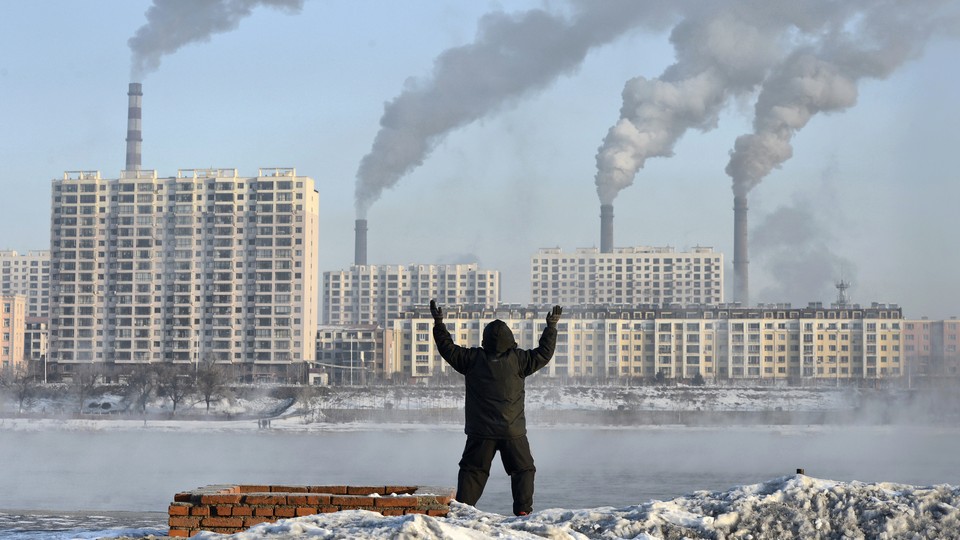
MAYBE THIS IS THE MAIN REASON THAT WE ARE UNABLE TO ADDRESS THE CLIMATE CRISIS, WHICH IS NOW AN INDUSTRY RATHER THAN A THREATH TO OUR VERY EXISTENCE,to the biodiversity, to food security, access to fresh water, the lack of which will result in wars.
Unfortunately we are still animals living in a world that is changing the atmosphere’s chemistry, which is becoming a reality, not tomorrow, but right now and that’s with the number of people we already have.
Indeed the very technology we now rely on bring new unprecedented challenges.
From the emergence of Homo sapiens, it took roughly 300,000 years before one billion of us populated the Earth, with people evolving into their current form some 200,000 years ago.
(Huts, 2 million years ago. Boats, 900,000 years ago. Cooking, 500,000 years ago. Javelins, 400,000 years ago, Glue, 200,000 years ago. Clothing possibly 170,000 years ago.)
“Behavioural modernity,” evolved 50,000-65,000 years ago. It took 15,000 to 10,000 years to start growing stable foods.
The planet most likely will surpass eight billion people sometime around mid-November. (The world population is to exceed 10 billion this century.)
Climate change – the world population – technologies inequality – you name it, will determine how many of us will be living on Earth as we approach 2100.
There can be no mistaking the import of this, as it belies the dangers of the next several decades which will see migration on a massive scale, due wars because of runaway climate change.
Unprecedented droughts or city-destroying floods would prompt mass migrations, destabilizing the rich world or giving rise to far-right nationalism. Or a global famine could send food prices surging, triggering old-fashioned resource wars.
Survival and success do not depend on brutal force. There is an empirical connection between violence and climate change that’s persists across 12,000 years of human history.
The long chain of evolutionary development has taught us with technology and political trends conflict will continue and even intensify.
“Whether we like it or not changes will be happening, and the situation will notimprove by itself.
The future well-being and actual life on earth depends on us all and our ability to express compassion and work together as the eusocial creatures we de facto are.
“No one is doing this in the right way at the moment,”
World hunger, ecological and environmental disaster, global warming, massive shifts in weather systems, the re-emergence of diseases long thought controlled, with political turmoil, in a world where a barrel of water is more expensive than a barrel of oil.
Empathy, compassion and cooperation are now so saturated by Tec that we are becoming a species totally unscrew and desentized to reality, others, and their needs, becoming algorithms predictions.
Efforts so far to incorporate climate change into future population projections have been inadequate.
————-
Where is it leading us?
To answer that, we have to think about how we got here in the first place – Greed
Currently it is estimated for that 50 million people are living on less than the $3.65 a day, with half of the global population lives on less than US$6.85.
You could add another few billons who are not poor enough to feature.
The world is divided into the very rich, and the very poor. And since everybody knows there aren’t a whole lot of very rich people, they assume the majority of the world’s population is living in extreme poverty. But that’s completely wrong; the overwhelming majority of people live somewhere in the middle.
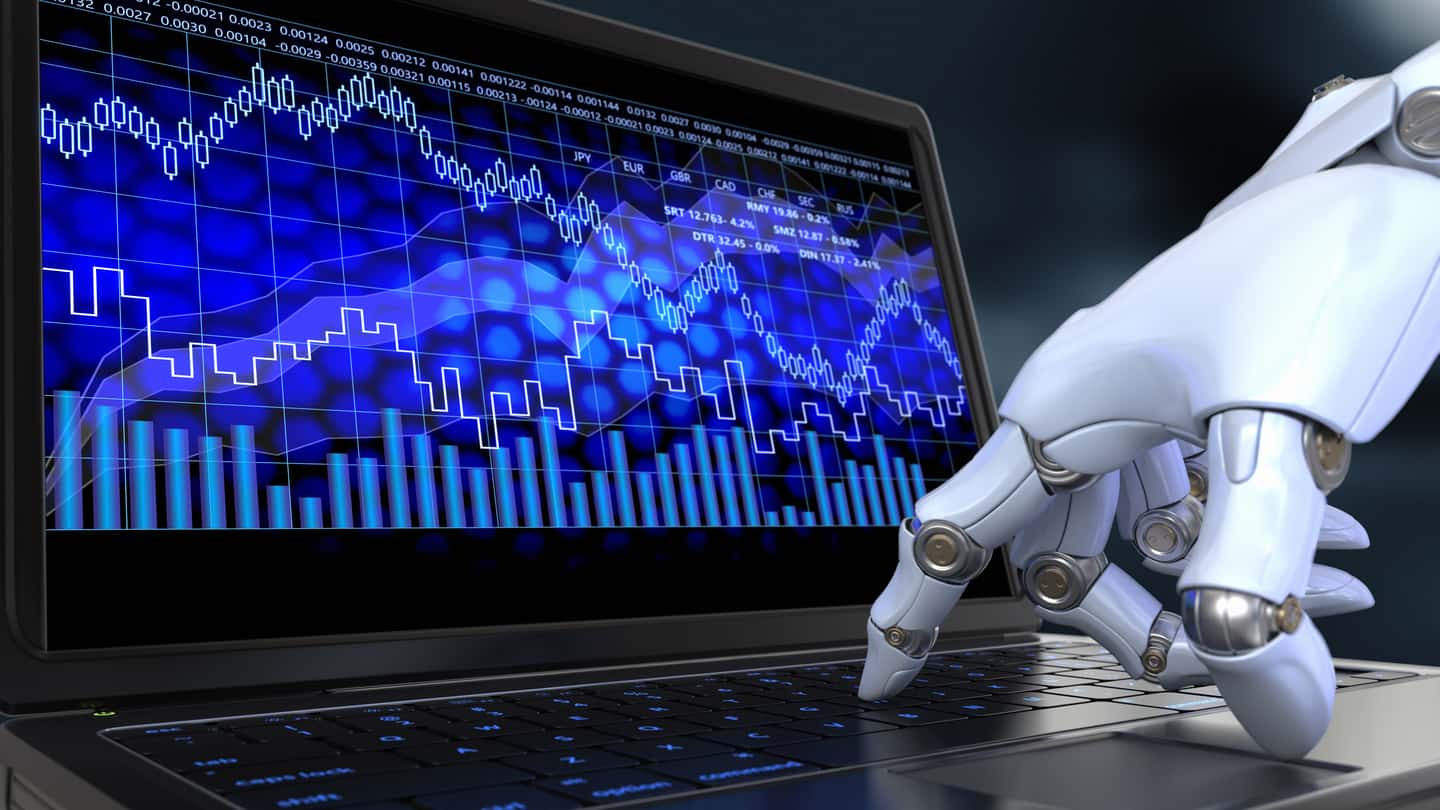
Our problem is inequality, attached to Greed, which is now plundering the world in the form of profit seeking algorithms that are generating profits for the few, using the latest technology Algorithmic trading designed to capitalize on market inefficiencies, trades can be completed at speeds and frequencies impossible for mere mortals.
Algorithm’s are creating a new social contract between a sovereign and citizens, in which the people collectively who were sovereign are becoming digitalised citizens.
Power now resides with those best able to organize knowledge.
The knowledge revolutionshouldbring a shift to direct democracy, but those who benefit from the current structure are fighting this transition. This is the source of much angst around the world, including the current wave of popular protests.
Neither, physical military strength, nor access to capital are now sufficient for economic success.
If we are to have any chance, we have to change to direct democracy which is easier to achieve than big, sprawling governments.
I’m not sure we can, but I know it will happen because capitalism or any other systems will no longer generate sufficient income to sustain social welfair states.
———————
The problem is how do we reconcile that with democracy in countries composed of millions of citizens?
Talk of artificial intelligence destroying humanity plays into the tech companies’ agenda, and hinders effective regulation of the societal harms AI is causing right now.
Barely a week seems to go by without a tech industry insider trumpeting the existential risks of artificial intelligence (AI). Fearmongering narratives about existential risks are not constructive.
Serious discussion about actual risks, and action to contain them, are.
The sooner humanity establishes its rules of engagement with AI, the sooner we can learn to live in harmony with the technology.
Algos require an uninterrupted power supply and reliable internet access. Even a brief failure in these conditions can prove cataclysmic.
———————–
What is needed are direct opportunities for all to invest in the future.
One of our fundamental challenges in the years ahead will be to mobilize the substantial sums needed for investment in everything from green infrastructure to the cutting-edge technologies that we will need to achieve net zero emissions by 2050 and slow the course of climate change.
At the moment we have Green bonds/Climate change bonds are issued exclusively to finance projects that positively impact the environment. Today, more than 50 countries have issued green bonds. However, the appeal of this market and the fact that there is no binding regulatory framework for green bonds may lead to suspicions of ‘greenwashing’ (false green claims).
There’s nothing new or specifically European about green bonds.
They’ve been around since the beginning of the 21st century. Although they weren’t yet called green bonds, the first of them are thought to have been issued in 2001 by the City of San Francisco to finance a solar power project.
Any organization – such as governments, corporations, and financial institutions – can issue a green bond.
The green bond market is a portion of the larger debt market. Historically, over US$2 trillion of green bonds have been issued globally to date, with the potential to grow to US$5 trillion by 2025.
Industry bodies and investor action groups such as Climate Action 100+, as well as large
market investors such as sovereign wealth funds and pension funds, are in a strong position to drive development of this market. However there is no universally accepted legal and commercial definition of a green bond.
Green bonds are proven to be an effective means to secure the resources required to meet the national climate change goals, so why not issue green bonds that any joe soap could invest in.
Lotteries exist in 46.67% of countries worldwide. In many countries, with the adoption of digitalization the Lottery is a lifestyle and a massive contribution to their revenues. The Lottery industry continues to grow worldwide, with an expected increase of 4.1% CAGR by 2031. The spread of online lotteries associated with the increase in smartphone and internet usage is one of many factors that can drive growth in the global market. The Lottery market is projected to grow to $405.20 billion by 2028.
US POWERBALL 59 tickets were sold every second of the year.
MEGA MILLIONS 2,817 tickets every minute or about 47 tickets every second—of the whole year!
EUROMILLIONS 342 EuroMillions tickets were sold every single second of 2019—or 20,566 tickets a minute!
UK LOTTO 122 lottery tickets for every one of the 31,536,000 seconds in 2019
They allows us all the chance to change our lives.
A staggering amount of money that goes into lotteries on a daily basis. In fact, just about every second of every day.
By making 1% OF ANY LOTTO TICKETS purchase eligible to acquire a climate Bond (with a gurantee interest return in twenty years from now..) RATHER THAN BIN THE TICKET ON LOOSING ONE COLLECTS THEM IN ORDER TO FUND SUSTAINABLE DEVELOPMENT.
It would be everyone’s collective interest to identify with the physical manifestations of climate change.
Climate change is a defining issue of our time.
All human comments appriciated. All like clicks and abuse chucked in the bin.
All organisms share a few fundamental desires: to survive, to grow.
It is only on the scale of statistics with millions of particles that a particle’s choice shapes up as a predictable radiation half-life. But even individual human wants and desires average out to weirdly predictable laws in aggregate.
If a little one-celled protozoan – a very small package – can have a choice, if a flea has urges, if a starfish has a bias towards certain things, if a mouse can want, then so can the growing, complexifying technological assemblage we have surrounded ourselves with.
Its complexity is approaching the complexity of a microscopic organism.
This tissue consists (so far) of billions of dwellings, millions of factories, billions of hectares of land modified by plant and animal breeding, trillion of motors, thousands of dammed rivers and artificial lakes, hundreds of millions of automobiles coursing along like cells, a quadrillion computer chips, millions of miles of wire, and it consumes 16 terawatts of power and None of these parts operate independently.
No mechanical system can function by itself.
Each bit of technology requires the viability and growth of all the rest of the technology to keep going and there is no communication without the nerves of electricity.
This whole grand system of interrelated and interdependent pieces forms a very primitive organism-like system. Call it the technium as in Dan Brown’s book.
The technium is the sphere of visible technology and intangible organizations that form what we think of as modern culture.
It is the current accumulation of all that humans have created. For the last 1,000 years, this technosphere has grown about 1.5% per year. It marks the difference between our lives now, versus 10,000 years ago.
Our society is as dependent on this technological system as nature itself.
Yet, like all systems, it has its own agenda. Like all organisms the technium also wants.
Of course, we humans want certain things from the technium, but at the same time, there is an inherent bias in the technium outside of our wants.
What this means is that when the future trajectory of a particular field of technology is in doubt, “all things being equal” you can guess several things about where it is headed:
The varieties of whatever will increase.
Technologies will start out general in their first version, and specialize over time. We can safely anticipate higher energy efficiency, more compact meaning, and everything getting smarter. All are headed to the ubiquity and free. Over time the fastest moving technology will become more social, more co-dependent, more ecological, more deeply entwined with other technologies. Many technologies require scaffolding tech to be born first. The trend is toward enabling technologies that become tools for inventing new technologies easiest, faster, cheaper.
This is what is suggested in the final chapters of Origin.
————————
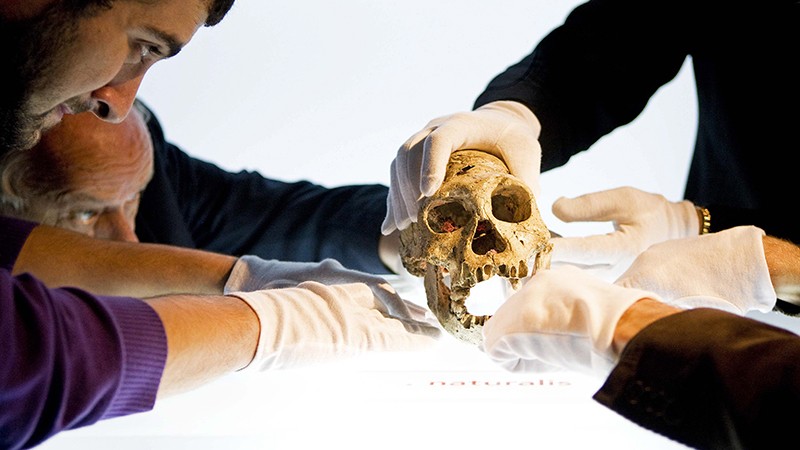
The origin of us, the modern humans (Homo sapiens), has been a topic of debate for a long time, with the place of origin of humans being great controversial, but where it is going will be more controversial.
Dan Brown’s book (Origin) advocates that our species has reached or will reach its biological pinnacle in the no so distant future when it will be no longer capable of changing.
Maybe not. As we are now all so mixed we block evolutionary change and are driving our evolution towards bio-engineer people.
Evolution is the outcome of the interaction of mutation, genetic recombination, chromosomal abnormalities, reproductive isolation, and natural selection.
We become living computers.
But it does not mean an improvement in our lot.
At the end of the day, you’re going to view the events in your day the way you want to not the way they truly are.
THE QUESTION HE ASKS IS ARE we’re all going to be small SPECKS on the tablets of history.
Human Evolution generally depends on natural selection, random genetic drift, mutation, population mating structure, and culture but the faster things die the faster they “mutate” or evolve.
Single-celled organisms evolved into more complex multicellular life, and then man gradually evolved from some unknown mammalian ancestor and reached the pinnacle of evolutionary fabric.
The ways we connect, grow, and develop as individuals are also undergoing rapid and profound changes with future generations raising their kids into a world of default connectedness (technological, emotional, cognitive), in which transparency and integrity become the easiest paths to a fulfilling life.
At the moment all arguments are based on the same tenets of Natural selection.
We don’t always have to do what technology wants, but I think we need to begin with what it wants so that we can work with these forces instead of against them.
High tech needs clean water, clean air, reliable energy just as much as humans want the same.
At the moment we are destroying the planet’s ecosystem.
However, I can imagine singular threads of the future rolling out positive — a massive, continuous, cheap, real-time connection between all humans, or total genetic control over crop plants, or synthetic solar fusion energy — but it is hard to see how all these threads weave into the other threads of climate change, population decrease, habitat loss, human attention overload, robot replacement, and accelerating AI.
Why?
Because we have no shared positive vision of tomorrow. Given what is happening today we are unable to imagine it.
Because power and money are transferring to algorithms like BitCoin and thousands of interconnected computers.
Because there is also a belief that life cannot be trusted.
In this stage, blame is placed on other individuals, society, government, nature, disease, etc., and other elements believed to be outside of one’s conscious control and influence. Control is often motivated by fear and survival. The enemy is perceived as a threat, and because of this, people believe they are morally justified to kill, eliminate or repress that enemy.
It is true as our digital trails become stronger and stronger, that Humanity is entering a Transformation Age, a new era of human civilization.
Recent breakthroughs in the field of quantum physics are revealing that consciousness is primary to our experience of reality, yet there remains no consensus as to the nature of consciousness itself nor to the nature of reality.
Yes, an inescapable dystopian future is entirely possible, but not inevitable because imagination has been unleashed upon the world in a literal sense.
How the human brain without a chip will evolve over the next million years is anyone’s guess.
Just in case we get it wrong here is the Human code.
A1 B2 C3 D4 E5 F6 G7 H8 I9 J10 K11 L12 M13 N O P Q R S T U V W X Y Z
All human comments are appreciated. All like clicks and abuse chucked in the bin.
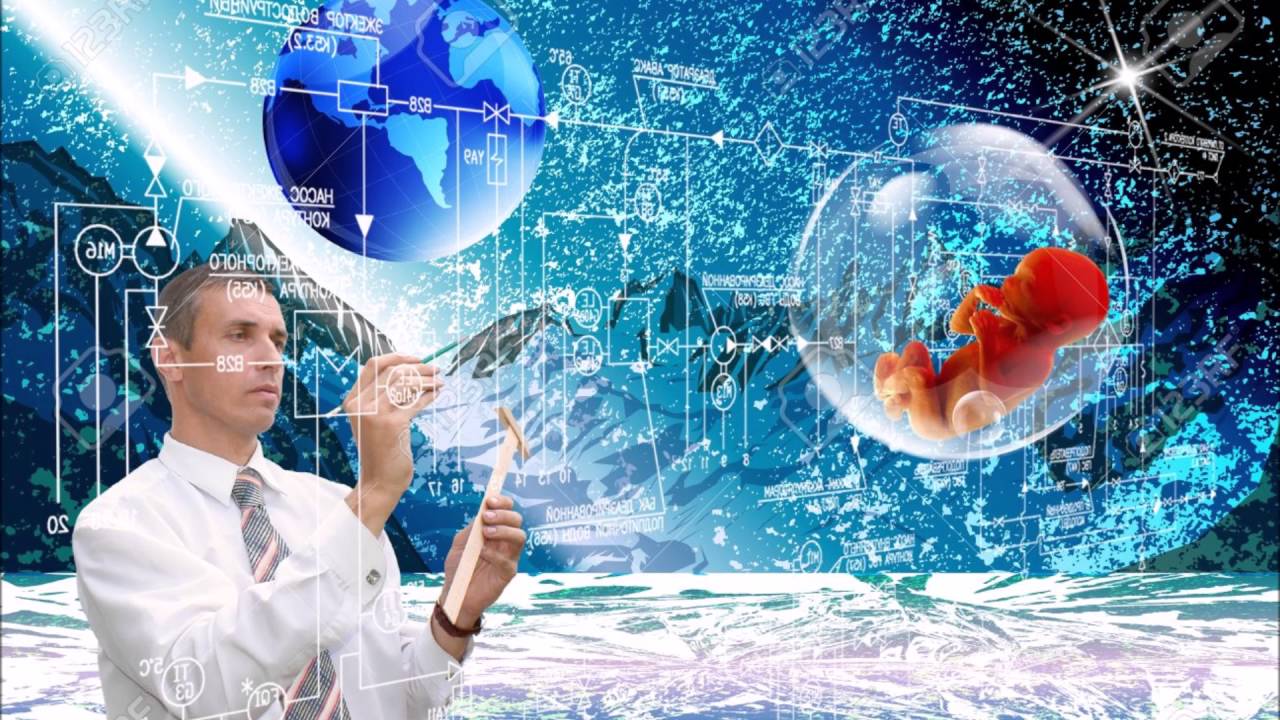
As if the world does not have enough problems regardless of the application, genetic engineering is a very controversial topic in our society.
According to most religious doctrines, life begins at conception, not anymore.
When digital technology took over the world, things we perceived as science fiction became reality. Today the same thing is happening with Genetic Engineering.
Life is made up of just four alphabets that give the instructions, and when we change the guide book we change the being carrying it.
As we are seeing it does not matter what religious beliefs you have or otherwise, the current coronavirus is not fussy who it infects.
We are on the verge of being able to transform, manipulate, and create organisms for any number of productive purposes.
Human genetic engineering may soon be possible. It might well be in its infancy from changing the course of our lives. From medicine to agriculture, to construction and even computing, we are within reach of age when manipulating the genetic codes of various organisms, or engineering entirely new organisms, promises to alter the way we relate to the natural world.
Genetically engineered food is a divisive topic that is deeply embedded in the ongoing debate around climate change, sustainability, and food security.
There are many pros and cons regarding this topic and there are many powerful arguments for and against genetic engineering and gene therapy.
We already improve crops and animals. Why not humans?
Evolution is a change in the inherited characteristics of a population of organisms from one generation to the next.
This happens anyway and genetic enhancement is just speeding up this natural process.
We will have to make difficult decisions in the future on whether we want to play god in order to be able to fight deadly diseases and colonize another planet, grow enough food, replace exhausted resources.
Of course, the big question is.
Is it wrong to play god by effectively creating and changing life?
Altering genes to improve strength, beauty or intelligence undermines the moral and legal idea that all humans are equal, creating further inequality in society – those who are genetically engineered and those who are not.
These individuals would have no say in this, but when they arrive at the pearly gates will they be allowed to enter.
Genetical engineering is an extremely controversial issue without even considering the views of religions. The ethical question becomes even more daunting when we consider genetic engineering as it applies to animal life, particularly human life.
One could say that God has no say about any of this?
The Bible does not directly address the issue of genetic engineering, because genetic engineering was unknown at the time that the Bible was written, so there is a concern that a bold pursuit of advances in genetic engineering is motivated by defiance of God.
God said, ‘Let us make mankind in our image, in our likeness, so that they may rule over the fish in the sea and the birds in the sky, over the livestock and all the wild animals, and overall the creatures that move along the ground.’
The gift of life is a product whether it comes from God or not and can be reproduced and modified to make a better product. So where are we with the artificial manipulation, modification, and recombination of DNA or other nucleic acid molecules in order to modify an organism or population of organisms.
It is my belief that genetic engineering has promised to better mankind, and it is our ethical obligation to research it but not exploit it.
Determine the genetic material of embryos in humans limiting the chances of children’s autonomy to determine their own destinies.
This means that the entire life of children is changed irrespective of their wish. This practice is immoral in nature because it is an unnatural way of molding the life of a human being to become what they themselves do not wish to be, resulting in social inequalities.
All raises a number of significant ethical issues.
From genetically modified crops, using less water to speeding up the growth of plants to adapt to the global warming problem, to the overall life expectancy of animals and humans, to designer babies, to the development of new diseases, or to miscarriages, to resistance against antibiotics, to political decisions, to the uses of genetically modified bacteria for making biofuels, to the use of genetically modified seeds to increase yields and also make plants more resistant to pests, to the whole ecological system, to human behavior.
By treating the human embryo as mere ‘laboratory material’, the concept itself of human dignity is also subjected to alteration and discrimination. Dignity belongs equally to every single human being, irrespective of his parents’ desires, social condition, educational formation, or level of physical development. To create embryos with the intention of destroying them, even with the intention of helping the sick, is completely incompatible with human dignity.
Embryology is governed by the Human Fertilisation and Embryology Act 1990.
Human embryos produced for research purposes cannot be implanted into any woman’s womb and must be discarded after 14 days.
In evaluating these concerns, we need to bear in mind that genetic engineering is still young. Some of the possibilities, such as creating new species of superhumans or subhumans, seem highly unlikely, at least for the foreseeable future.
However, there is a need to have morally correct legislation that guides the way science develops genetic engineering otherwise it will be a Pandora’s box of dangerous genetic modifications posing a threat to humanity with the rich in a society enjoying the fruits of genetic enhancements.
EcologicalEngineering, the application of science to the optimum conversion of the resources of nature to the uses of humankind.
NATURE is being distilled—among many forms—into a network, where nodes represent species and links represent interactions between them.
Ecosystem engineering combined with genetic engineering not only impacts communities on ecological timescales but will profoundly shape the evolution of life on Earth. The complexity of an ecological community can be distilled into a network, where diverse interactions connect species in a web of dependencies.
The dynamical consequences of community structure is not yet a well-defined theory for the assembly of communities that incorporates multitype interactions.
The role of these ecosystem engineers has not been considered in ecological network models.
To unravel nature’s secrets we must simplify its abundant complexities and idiosyncrasies.
On the other hand, GENETIC engineering is entering a new phase as the available techniques become much more precise. Precise genetic editing opens up the opportunity for personalized medicine, with treatments tailored to our own unique DNA.
What is becoming possible and what will the implications be?
Just imagine a genetic engineering breakthrough that brings the dream of fixing everything from a deadly disease to environmental catastrophe into reach, simply by cutting and pasting bits of DNA.
Primarily, as with any technology, once it becomes cheap and easy, it’s going to be used more and more – so we can expect an explosion of activity and innovation around genetic engineering in the coming years.
A lot of controversy surrounds “transgenic” genetically modified organisms, resulting in bureaucratic obstacles that mean GM crops are scarcely cultivated across much of the European Union, Africa, and Asia.
For example, if a gene from a pig was inserted into a banana, will people of the Muslim faith stop eating bananas and so on.
Did you know that over seventy percent of all processed foods on supermarket shelves contain at least one genetically engineered ingredient? If you are not eating 100% organic food, you are eating genetically modified foods. It is almost impossible to avoid eating GMO foods. Presently, over ninety percent of the soybeans, canola, sugar beets, and cottonseed oil are bioengineered. Seventy-two percent of the corn is genetically altered. And more and more food products are being altered every day.
Considering every five minutes, there is a new life and every eight minutes a death and none of us last forever.
We all live for a short time in the fourth dimension of time so is any of this relevant.
Leaving apart the ethical issues, let us be optimistic for a while.
Genetic engineering hasn’t, and won’t, stop it raises ethical and moral questions to which there are, as of yet, no clear answers.
How we as a species solve these problems will tell us not only something about the global landscape of moral decision-making but will define precisely where the human race will end up over the next few generations.
It’s not an exaggeration to say genetic engineering could totally alter the way we live – and these changes won’t necessarily be positive.
While we humans are gaining the powers of the gods, we aren’t at all ready to use them. We aren’t prepared to handle these Promethean technologies responsibly.
While the advance of genetic technologies is inevitable, how it plays out is anything but.
A first inkling of where we are heading can be seen in the direct-to-consumer genetic testing industry.
When genetic Engineering reaches the mass, the change is going to be permanent.
The overlapping genomics and AI revolutions may seem like distant science fiction but are closer than you think. Because we are all one species. We will ultimately need to develop guidelines that can apply to all of us.
As a first step toward making this possible, we must urgently launch a global, species-wide education effort and inclusive dialogue on the future of human genetic engineering that can eventually inform global norms that will need to underpin international regulations. This process will not be easy, but the alternative of an unregulated genetic arms race would be far worse.
Scientists today have loftier ambitions than building a new app or social media companies.
All human comments appreciated. All like clicks and abuse chucked in the bin.
Our thoughts and actions are triggered by neurological processes we don’t
control. Paradoxically, the more we integrate mindfulness with our daily
lives we realise that the only reality we have is the present moment, the more
life may seem somewhat pointless – because we are living as if this is all
there is.
Richard Dawkins, “life has no higher purpose than to perpetuate the survival of DNA…life has no design, no purpose, no evil and no good, nothing but blind pitiless indifference”
As per his perspective of a human being, we are born, we grow old and older and die.
Survival is just a part of your life.
Other words after I am gone, there is no world because there is no ‘me’ to behold it.
So, my purpose of life should be to enjoy and stay happy in those 100 years instead of worrying to make the world “a better place.”
However, I say the last thing you want to do is die and realise you haven’t truly lived.
We might not be able to help live our lives in denial of death like a flower that dies and is blooming next spring.
Of course, the Theory of Evolution does not explain the origins of life.
It explains how life, once created, changes over time. Although origins of life are related to evolution. It is an accessory topic and area of study on a planet that will come of age when it works out the reason for its own existence.
As it appears with the present virus Corona that is affecting the old and weak, sparing the young and strong there are many different ways that evolution can happen in a population, including both artificial selection and natural selection.
The realisation that we are technically on autopilot and without free will, adds another new dimension to the question – What is the point of life if not survival?
Members of the public might be able to describe natural selection as survival of the fittest but pressed for further explanation of the term, however, most answer incorrectly.
Someone not familiar with what natural selection really is might take “fittest” to mean the best physical specimen of the species and that only those in the best shape and best health will survive in nature.
That isn’t always the case.
By that definition, then, the survival of the fittest might not be the best way to describe natural selection as it applies to evolution.
Now that this idea is stuck in our lexicon, there isn’t much that can be done to help others understand the actual meaning of the phrase beyond explaining the intended definition of the word “fittest” and the context in which it was said.
It follows that individuals with favourable adaptations will live long enough to pass their genes to their offspring.
I can take full control of my life right this second. I can act in full awareness of a particular thought of my choice. I can seize this moment to take action.
I’m not fully in control of my actions in this one; then truly, what is the point to all this doing, competing, struggling, striving, working, accumulating, etc.
Both impart that our species can adapt and change in order to survive.
On the face of it survival seems like the most unanswerable question there is, a question that nags our existence from start to finish. However natural selection will “select” the trait that is more beneficial for the species’ survival.
That’s the only answer we have available.
None of us will be travelling to any distant planets so its time we started to share what is left of this one.
It is not that there’s nothing to hope for in the future; because it doesn’t exist, but everything to perceive in the now.
The Coronavirus is one of those circumstances that can drive divergent evolution include natural disasters like volcanoes, weather phenomena, the spread of disease, or an overall climate change in an area in which the species lives.
Divergent evolution becomes necessary for survival in a changing environment.
After we die what is truly reminiscent of our existence- our progeny.
I hope my guide will enlighten you because survival is not the purpose of life, it is only a necessity!
All human comments appreciated. All like clicks and abuse chucked in the bin.
We may die out as a species for one reason or another, but evolution is inevitable so there will be a change in the future. We are not done evolving yet, so it begs the question of what could Homo sapiens really become – and what is forever beyond our reach?
We were fish once, and now we eat fish for dinner!
Humankind has come a long way from a single cell floating in the ocean waters, we have managed to become the multi-cellular wonders of nature that we are today.
However, evolution doesn’t have a direction, it’s confined are of this ecosystem called Earth which decides in the long run which direction if any it goes in.
Future humans might be very different from people today but not in the way science fiction movies would lead you to think.
Combining knowledge of our past with current trends, we are entering a new phase in human evolutionary history—one that makes the future less predictable and more interesting than ever before.
SO THE FIRST THING TO APPRECIATE IS THAT:
Evolution and natural selection are not the same things.
Evolution refers to the relationship between a species (a breeding population) and its ever-changing environment. Evolution does not concern what individuals may think it is the gradual genetic change of a species over time.
Natural selection is the phenomenon that rewards certain advantageous traits and punishes others through better or worse survival or reproduction. Medical science and public health measures have enabled the developed world to escape most natural selection.
Right now most of us are the sacrificial generation.
In nature, natural selection is the most powerful evolutionary force, but other factors may take over when technology grants a second chance to those who would have died.
Consequently, even with a complete lack of natural selection, it doesn’t mean that humans will not evolve. It is a selective force that clearly has shaped human evolution in recent centuries and may still be doing so today with the Coronavirus.
With the Viruses, natural selection may not be “over for humans.”
This set aside we are more than likely going to have to adapt to climate change’s, to technologies like Biotechnology involving living systems and organisms to develop or make products.
Technology is already affecting the way our memory works and humans may eventually reach a point where they can force evolution upon themselves through the use of technology.
We now have genetic samples of complete genomes from humans around the world, and with geneticists are getting a better understanding of genetic variation and how it’s structured in a human population environmental factors are no longer the driving force for evolutionary change.
We’ve all heard of designer babies, perhaps in the future, it may be seen as unethical not to change certain genes.
The human race will one day split into two separate species one more advanced than the other.
Races, as normally understood, would still be a thing, but with two separate species that will probably still call themselves human, even if they are technically different from those before them.
Of course, we don’t know this for sure but consider it’s not really a biological question anymore, it’s a technological question it is not beyond conceptuality that humans will not evolve into a single, ubiquitous ethnic group.
However, there is also a risk that current society collapses and some new society arises with ideas of eugenesy or breading races of superhumans and slaves.
One species with hi-tech machine implants, growable limbs and cameras for eyes even with different facial features and skin colour and external aids entirely responsible for survival.
A collective thought consciousness. Thought could be converted into instant gratification, and consequences to misusing it controlled by AI.
Computers will punish you!
The human brain, being a machine striving for maximum efficiency, typically remembers where information is stored, rather than the information itself but as technology becomes more and more advanced, our brains will adapt in order to maximize efficiency – perhaps to the detriment of our memory.
Nanomachines would be part of the human form.
People could download their being into a computer system and be a part of the AI collective.
We will no longer operate within the confines of survival of the fittest.
There is still going to be selection but artificial selection, so its no surprise that much technological advancement is currently aimed at the human body.
Up to now, sexual selection has defined evolutionary paths.
This will become less and less with gene editing with many of our internal functions becoming obsolete and what we might see is differentiation along lines where people live.
And what about space?
If humans do end up colonising Mars, what would we evolve to look like?
With the lower gravity, the muscles of our bodies could change the structure. Should we spend too long as galactic explorers, it’s likely that we’d eventually lose most of our muscle mass?
“What once use to be a magic flute will become a water carrier.”
So if we survive climate change humans will not evolve just for reproduction.
Whether it is genetically enhanced humans, bionic men, or uploaded beings, technology and its advancement with our decisions will shape the future of Earth and its inhabitants, including ourselves.
It will certainly be shaping human development. Bio to Artificial transmission with no inoculations.
Google Brain / Health or Microsoft Health vaults.
However, the future might be a lot slower than we think. It will take thousands of years for us to develop technologies that allow us to colonize the solar system.
If we do manage to move to other worlds, it’s likely that we’ll need to adapt to them using a combination of genetic engineering and technology.
All these changes may mean that Homo sapiens will speciate, or evolve into multiple new species. It will mean that our progeny have survived, even if they are nothing like us.
If we consumed most of the planet’s resources in doing so that is not evolution; that is the road to extinction.
All human comments appreciated. All like clicks chucked in the bin




 bobdillon33blog