Just the other day I watched a news report on Afghanistan with shocking images of starving children.
It’s not as if this is the first time starving children grace our television screens.
It was predicted that if the country does not get aid there will be a human disaster with the loss of millions of lives.
We all could be forgiven for not remembering the Irish Potato famine that killed around a million, but not the Famine in Ethiopia 1983-85 that killed around the same number of people.
Since then the world is now confronted with the realities of climate change – streams of migration while the covid pandemic has killed 4,984,325 people so far from the outbreak to October 27, 2021, which is a contributor to our desensitization of suffering a very complex topic.
However I believe the world rich countries, paints it as something almost good, necessary, and a part of life.
The more we are exposed to these things, or let children be taught it’s normal through movies, books, and so forth, the initial shock becomes less and the stark colors in which they were viewed, become duller.
This may raise in some readers’ minds the question of what we ourselves actually believe.
Take our belief in God.
He or she or it is becoming nothing less than the process of opening our lines of contact with the unknown potential of the universe. God represents the direction of our wonder – not the destination.
Which leads to no easy answers, just more questions.
However, if we humans could come together in harmony with the real universe, our troubled species would have its best chance to enjoy this jewel of a planet, unique probably in all of the cosmos.
The hope of this happing in a throwaway world is negotiable, leaving people feeling defeated and powerless.
Every daylight hour we are bombarded by pleas for help to save something, now including the planet. Suffering seems to abound and we see it so often on the news or in movies that we’ve become desensitized.
“I think if people see this footage they’ll say, ‘Oh my God that’s horrible,’ and then go on eating their dinners.”
It’s no secret that the world is falling apart as we know it, people are becoming desensitized to the events that are shaping our society.
Desensitizing is a tool, and the world uses it to change and shape our thinking, alter our perspective and mold us into the way they want, too emotionally exhausted to feel anything.
Just because it’s “normal” in today’s age, should we be in less shock, disgust, or lessen the intensity of emotion towards it?
What’s the harm?
It is not something to just succumb to, we must choose what we allow it to impact because it takes us farther away from the rawness and reality
It is how we use it and allow it to affect us that any understanding of this relationship can we hope to achieve behavioral change.
Indeed, the world is in a chaotic and cruel place but what happens to us that we lose the deep sense of caring – something that would have been abhorrent to us in the past is not despicable anymore. We accept the fact that this is what the world has become
But it is not about pictures or videos anymore.
We are simply desensitized to tragedies happening around us because they are becoming less like tragedies and more like everyday actions.
It is very easy to point fingers at platforms such as Facebook, & Twitter. But both of them are flexible and adaptable, they are not an omnipotent force governing what the people chose to say or think.
As far as it goes, Social Media platforms are objective viewers of the world.
They are merely tools used by the people.
The question is, what are we allowing ourselves to become desensitized to?
Being sensitive is first and foremost allowing oneself to feel in great depths.
We become lethargic and we cannot hope to change behavior without first implementing a re-sensitization effort.
As our world undergoes anthropogenic changes, it is critical to examine how these changes affect our well-being and our relationship with the natural world.
What do we do when all of the chaos, all of the destruction of the world is shoved in our faces day after day?
We wonder why there isn’t a better way to go about things?
We can’t let our sensitivity be the darkness that sits on our shoulders.
Sensitivity helps us acknowledge our own consciousness.
We need to remember that it is a tool and that we do have a lot of control over it, but without thought, it appears we don’t have much control over it at all.
All human comments are appreciated. All like clicks and abuse chucked in the bin.
What if you woke up tomorrow and everything you had thought was true was a deception?
A deception formed by people that stood to profit from your ignorance. Not just on one small area but every facet of your existence.
Would you want to know? Or, would you be content with the life you had before you discovered the truth? Could you close your eyes and act as if nothing ever happened?
What if you could see the ways that you have been deceived and the way that those that came before you were made to believe a lie? How valuable would the truth become? Would it make you change your habits? your routines? the way you talk or think or speak? Would it impact you or would you brush it off and carry on with business as usual?
What if after waking up you decided to respond to that truth?
What if you started studying history and world events and, like a string of pearls, events were no longer random but contained a sequence? What if that sequence was repeating? What if while studying these events they began to seem familiar?
We live in an age in which intersecting crises are being lifted to a global scale, with unseen levels of inequality, environmental degradation, and climate destabilization, as well as new surges in populism, conflict, economic uncertainty, and mounting public health threats with Covid.
All are crises that are slowly tipping the balance, questioning our business-as-usual economic model of the past decades, and requiring us to rethink our next steps.
There is an entire media world around us, that we’re completely fine with THAT FEEDS US FOR THE MOST PART SHIT AS ENTERTAINMENT.
There is an advertising industry that is turning climate change into products to sell.
Bio this Bio that. Shop to save the world.
Our lives are taken over by technology – smartphones, Ipads, Apps. This menace is seen in the increased addiction of internet users to social media and other internet products; and the exploitation of internet users by internet companies.
The internet and social media are like a two-faced coin; one side is good and the other is bad. These inventions are now abused and used against our existence and survival.
The internet and computers are daily changing our lives and improving efficiency, almost taking over our lives with some sectors where technology is taking over how we live and do business.
Emails and social media platforms have changed communication, both individually and business-wise.
Financial transactions and business deals are now completed in a matter of seconds.
The idea of constantly visiting a doctor for medical checks is almost becoming obsolete with the invention of the wearable.
Robots are increasing the efficiency of manufacturing processes.
——————-
The Zombie Apocalypse May Not Be How You Originally Envisioned, it’s time to give ourselves a reality check.
We are shells of who we may have been because instead of looking around and experiencing the life we are dependent upon a lit-up screen.
We are lacking socialization; instead of talking to and spending time with other people, we are getting all our information from the Internet.
The Internet is an amazing resource, but there are some things it cannot teach or give you.
It cannot teach you the value of spending time with friends and family, or how to live life to the fullest by being present in the current moment. You never know just how many opportunities and experiences pass you by because you are looking down at your screen.
Each generation is becoming more and more dependent, and no longer sustain skills that were once deemed necessary. We have lost social skills, manners, and expect everything to be delivered to us as fast as the Internet does
We are all so distracted by our phones that we have not fully noticed the zombie apocalypse that is happening right in front of us.
Technology is a beautiful thing, but if we cannot learn how to use it responsibly and in moderation, our future may not be as bright as the screens we are holding.
———–
The important thing people need to realize.
The chances are, you’re probably reading this on your phone right now.
Maybe you saw it while you were scrolling through Facebook, or maybe you came across it while making random Google searches. The point is, you used some sort of technology to be able to access this article.
Nowadays, people use technology as a filler.
Try to remember what life was like before you were attached to technology by the hip.
I bet you spent your time doing totally different things than you currently are doing.
Maybe you used to read actual books, go outside and enjoy the weather, spend quality time with your family or communicate with people through handwritten letters rather than emails and text messages.
The reality is that our lives have completely changed.
But is it for the better, or worse?
The basis of democracy is the idea that people of sound judgment, wisdom, and morality should be chosen to lead the government, make decisions for the masses, and direct the force of the state/government.
“The state is the great fiction by which everyone endeavors to live at the expense of everyone else.” Frederic Bastiat
A divided people are easier to rule.
Governments act in multiple ways to seduce us into their service.
For the masses, this is done through the illusion of welfare and public spending in which the state first robs us through taxation and then bribes us into supporting it by giving us a percentage of the stolen funds back in the forms of government welfare programs.
All human comments are appreciated. All like clicks and abuse chucked in the bin.
The answer has to be both, as intelligence per se cannot guarantee that one uses it intelligently.
We can find undisputed evidence of this by looking not that far back in history.
It took humans 200,000 years to think about God, soul, nature, world, life, and themselves. Our ancestors wrote million tons of Literature on all these topics and we still haven’t figured out any of these.
There’s more food wastage in the world than ever before although a large number of people are dying in hunger, malnutrition, and gross food shortage.
Although we know we are depleting Earth’s limited resources at a break-neck speed, there’s more over-production than ever before and more over-consumption than ever before!
For the sake of energy and resource conservation, we request the poor to consume less who already consumes way less, while we shut our eyes to the rich who keep consuming exorbitantly.
We invented the first atomic bomb in 1938 and the world’s first nuclear explosion occurred on July 16, 1945.
The concept of capitalism has many debated roots, but fully-fledged capitalism is generally thought by scholars to have emerged in Northwestern Europe, especially in Great Britain and the Netherlands, in the 16th to 17th centuries.
Ever since we have plundered our planet-destroying what we love. Heating what is useful to us. We oppose what is good for us. Then, we love what is bad for us. We adore what is damaging to us. We follow what is deceitful.
We believed we were invincible, most intelligent, and just the best.
Then Corona showed us how very weak, unprepared and vulnerable we are.
With all the information we have been able to gather to help fight the virus – there are still some who cannot follow the rules. This is the height of stupidity.
So we are intelligent but only to a certain degree.
There are conflicting ideas about how intelligence is measured.
———————————–
Is intelligence overrated?
Socrates held that ‘the unexamined life is not worth living.’
Intelligence is ‘the ability to think, reason, and understand instead of
doing things automatically or by instinct.
This is not beyond animals and even plants, they too can be said to be possessed of intelligence.
The problem with artificial intelligence is that is it artificial and does not have to confine itself to methods that are biologically observable.
It leverages computers and machines to mimic the problem-solving and decision-making capabilities of the human mind.
But when one considers that intelligence at its broadest, refers to the functioning of a number of related faculties and abilities that enable us to adapt and respond to environmental pressures.
So as we move toward an increasingly digital world Artificial intelligence cannot be considered in isolation.
Take the West’s obsession with analytical intelligence. It has had and continues to have, dire political, social, and, above all, moral consequences.
Everything we love about civilization is a product of intelligence.
All this is to say that what constitutes intelligence can vary quite considerably according to our values and priorities.
After all, people deemed to be less rational—women, non-white people, the lower classes, the infirm, the ‘deviant’—were not just disenfranchised but dominated, colonized, enslaved, murdered, and sterilized, in all impunity.
History is full of technological over-hyping.
Will we control intelligent machines or will they control us? Will intelligent machines replace us, coexist with us, or merge with us? What will it mean to be human in the age of artificial intelligence? What would you like it to mean, and how can we make the future be that way?
Why should we be asking these questions?
Because with AI there’s an enormous gap and there’s a paradox at work here.
We are living at a time when great advances have been made, and are continuing to be made, in many areas of science and technology. These advances are having a major impact on our lives, and this will probably continue to be the case for the foreseeable future.
This may, at first, seem to be a very positive prospect, but there are important reasons to be concerned with its benign effects.
As a society, we have not learned how to deal properly with the risks, especially at the early stages, when knowledge is sparse.
In today’s world, the benefits of AI have been seized by a small, wealthy elite.
If anything, regulation is getting weaker. As our technological abilities grow ever more powerful, the danger of this approach is steadily increasing. What would a wiser policy look like?
The most difficult problems involve new technology that has very obvious, attractive, characteristics, while little, or nothing, is known about the effects of long-term use.
Genetically modified organisms (GMOs) in food products are one example.
Nanotechnology is another fascinating new area that is sprouting all kinds of new products. Its applications range from sunscreen lotions to more durable concrete, to improved ways to administer medication. But the same characteristics that make it so interesting and useful, also make it dangerous.
Cell phones addiction.
Whether this will lead to an intelligence explosion; and whether this is something we should welcome or fear.
Saying that “real intelligence has consciousness just pushes the problem further down the road”
The next problem is what is consciousness and can AI be consciousness.
To become so it would have to act independently.
As long as we manage to keep the technology beneficial
After all, today, we cannot go very far without having some considerable IT skills.
—————
While the large corporations profiting from this technology are strongly motivated to defend their products, often funding research to develop arguments in their favor, there is no adequate countervailing force.
Take profit-seeking algorithms that are plundering the world unregulated.
Surely they should be careful study by an independent public agency to look for possible harmful effects, especially possible consequences of long-term use before releasing for general use.
——————————————
When you look at the world we have today you could not be blamed for thinking that we are all suffering from world dementia which is disturbing our multiple higher cortical functions including memory, thinking, orientation, comprehension, calculation, learning capacity, language, and judgment.
As a consequence of our greed and our disregard for the health of our planet, we are now faced with the problem of producing energy that is carbon-free.
This is going to require a complete change in how we live our lives with our energy requirements produced from sustainable green sources.
Yes, we are currently addressing the problem with Climate Change Conferences that to date are barking down the wrong road.
Why?
Because all intelligence is telling us that there is no option but to generate energy from green renewable sources – sun – wind – water.
Taken together, this suggests that the only viable option (working alongside intelligent technologies) is to take the H out of H20 (with green energy) and convert it into Hydron gas energy totally free of CO2 when used.
When it comes to Genius AI is way behind humanity.
Genius is in contrast is more a matter of drive, vision, creativity, and luck or opportunity.
Intelligence is not in the cloud.
Whenever you use any service on the internet, you are connecting to one of many millions of servers located in one of many thousands of data centers around the world.
The energy requirements for these centers are estimates to vary from 200 terawatt-hours to 500 TWh and there are an estimated 18 million servers deployed in data centers globally.
If electricity continues to be a major source of data center energy and is generated from non-renewable sources, data center emissions could exceed the aviation industry which is currently responsible for 2% of annual human-generated CO2.
The data center industry is changing rapidly and how that will affect energy profiles is uncertain, but surely companies like Amazon, Google, Microsoft, Apple, and their like should be using green energy.
Companies all over the world use cloud storage.
Finally:
Finances are intertwined in every part of our lives, and technology is quickly following suit, finding a way into every aspect of modernity.
They’ve been on a collision course for decades, and the integration of technology into finance was, as we see it now, eventually inevitable.
You’re seeing this now with new algorithms being used to determine credit worthiness, or generating profit for profit’s sake.
For better or for worse, artificial intelligence (AI) is a natural progression for us, and something that has the potential to make life much less monotonous.
AI and finance go hand-in-hand.
One thing is clear, blockchain will indeed eventually transform how the industry works.
All human comments are appreciated. All like clicks and abuse chucked in the bin.
I don’t know if like me you are getting sick to death of hearing and reading the following phrases:
WE NEED TO. WE VALUE YOUR PRIVACY, WHAT LESSON SHOULD WE LEARN. LET ME BE VERY CLEAR. 110 PERCENT. ETC.
Unfortunately, we treat the future like a distant colonial outpost devoid of people where we can dump ecological degradation, technological risk, nuclear waste, and the public debt, and that we feel at liberty to plunder as we please.
If you have a young child, she or he will likely talk to computers — naturally, as he or she does with you — for the rest of his or her life and the computer will not need to or learn lessons.
We are standing on the precipice of life-altering technologies, but unable to break free from a continuous cycle of surprise and fear because we can’t come together to address collectively the existing problems not to mention what is awaiting us all down the road.
Global warming is the greatest existential challenge of our age, requiring massive societal changes to mitigate and adapt to it.
However, there is another threat that is being ignored to our peril.
With politicians (the vast majority of whom do not have any background in science or technology) unable to look past the next election, making important policy decisions with little regard to how they will affect the planet and country 20, 50, or 100 years from now.
This is why Governments need to set up a Department for the Future, depoliticized technology and science.
The citizens of tomorrow are granted no rights. There are no government departments or world organization bodies to represent their concerns or potential views on decisions today that will undoubtedly affect their lives.
Representative – democracy systematically ignores the interest of future people.
The world is presently experiencing a new form of colonization not by wars but by Digital Data, combined with climate change.
This colonization is presently happing between China and the USA.
—————–
The “Digital Divide,” is the gulf between those with access to both the necessary technology and the information accessible with it and those who do not.
The immediate concern is that those with the technology will acquire the necessary skills for the twenty-first century and those without will not, further widening the economic chasm between the lower-income strata and those who manage the data.
Technology has an obsoleting impact on those without the proper skills and, with the speed at which the technology changes, it is very difficult – near impossible for some – to keep current.
This will become even more of a concern when the wealthier private and public school systems began to acquire personal computer networks and internet connections while schools in poorer neighborhoods will not.
Those who grow up with technology assimilate it into themselves;
“WE value your Privacy “
—————————
There will constantly be new tools – the cloud, big data, location analysis, etc. – and ones of which we have not yet heard.
In A Data-Driven World, it will be too late unless we establish an organization
that can understand the context of all Future interactions.
Those who do not embrace them may be ambushed by them and by a younger generation pushing them out the door.
When it comes to Robots.
The Three Laws are:
A robot may not injure a human being or, through inaction, allow a human being to come to harm.
A robot must obey the orders given to it by human beings, except where such orders would conflict with the First Law.
A robot must protect its own existence as long as such protection does not conflict with the First or Second Laws.
By Isaac Asimov in his 1942 short story “Runaround.”
All human comments are appreciated. All like clicks and abuse chucked in the
≈ Comments Off on THE BEADY EYE SAY’S: IF WE CONTINUE IN THE SAME DIRECTION AS WE ARE NOW, THE CONSEQUENCES WILL BE UNPREDICATABLE/ DISASTOROUS AND CONFLICT RIDDEN.
We all know that we must shift the direction of the way we live life on Earth.
Sadly, this does not seem to be the case and hence, social conflict and civil unrest seem inevitable.
We all know that what is needed is a coordinated global response and bipartisan domestic response not just to the current pandemic but also to tackle climate change.
As Schwab writes: “The new technology age if shaped responsively and responsibly, could catalyze a new cultural renaissance that will enable us to feel part of something much larger than ourselves – a truly global civilization.
Yes, we are in a fourth industrial-technological revolution with regulators guilty of sleeping by allowing AI to develop financial weapons of mass destruction turning the world into a digitalized market for the sake of short-term profit.
Today, 43% of the world’s population is connected to the internet, mostly in developed countries.
Each time you run a Google search, scan your passport, make an online purchase, or tweet, you are leaving a data trail behind that can be analyzed and monetized. Computers are already making decisions based on this information.
In less than 10 years computer processors are expected to reach the processing power of the human brain. Socialism for the Rich and Capitalism for the Poor.
Think of apps that track how much you eat, sleep, and exercise, and being able to ask a doctor a question by simply tapping it into your smartphone.
In the future, will it ever be possible to be offline anymore?
So are the technologies that surround us tools that we can identify, grasp and consciously use to improve our lives? Or are they more than that: powerful objects and enablers that influence our perception of the world, change our behavior, and affect what it means to be human?
It is therefore worthwhile taking some time to consider exactly what kind of shifts we are experiencing and how we might, collectively and individually, ensure that it creates benefits for the many, rather than the few.
———————————
At the heart of discussions around emerging technologies, there is a critical and central question: what do we want these technologies to deliver for us?
The fourth Industrial revolution is widely taken to be the shift from our reliance on animals, human effort, and biomass as primary sources of energy to the use of fossil fuels and the mechanical power this enabled.
It however can also be described as the advent of “cyber-physical systems” involving entirely new capabilities for people and machines.
It represents entirely new ways in which technology becomes embedded within societies and even our human bodies -. examples include genome editing, new forms of machine intelligence, breakthrough materials, and approaches to governance that rely on cryptographic methods such as the blockchain. It’s just not very evenly distributed.
More people in the world have access to a mobile phone than basic sanitation.
The complexity of these technologies and their emergent nature makes many aspects of the Fourth Industrial Revolution feel unfamiliar and, to many, threatening.
Indeed, it is certain that the governments know this, but instead of helping the poor they are making it harder for them to survive and it is certain that sooner or later when the bubble burst, there will be few survivors.
Added to this is the humungous amounts of money governments are borrowed to keep the government running in the absence of real economic growth.
Since the financial crash and before interest rates were kept at near-zero levels for most of the decade in the run-up to the crisis with the West governments encouraging speculation and risk-taking.
_________________________
Currently, there are three big areas of concern: Inequality, Security, and Identity.
Inequality.
62 individuals controlled more assets than the poorer 3.6 billion people combined, half the world’s population.
Unequal societies tend to be more violent, have higher numbers of people in prison, experience greater levels of mental illness, and have lower life expectancies and lower levels of trust.
An important potential driver of increased inequality is our reliance on digital markets – increase unemployment.
Security.
The combination of the digital world with emerging technologies is creating new “battlespaces”, expanding access to lethal technologies and making it harder to govern and negotiate among states to ensure peace.
The technologies of the Fourth Industrial Revolution also offer expanded capabilities for waging war which is increasingly accessible to both state and non-state actors, such as drones, autonomous weapons, nanomaterials, biological and biochemical weapons, wearable devices, and distributed energy sources
It’s not a question of if non-state actors will use some form of neuroscientific techniques or technologies, but when, and which ones they’ll use.
Identity, voice, and community.
Already, digital media is increasingly becoming the primary driver of our individual and collective framing of society and community, connecting people to individuals and groups in new ways, fostering friendships, and creating new interest groups. Furthermore, such connections transcend many traditional boundaries of interaction.
Unfortunately, expanded connectivity does not necessarily lead to expanded or more diverse worldviews.
Emerging technologies, particularly in the biological realm, are also raising new questions about what it means to be human.
The Fourth Industrial Revolution is the first where the tools of technology can become literally embedded within us and even purposefully change who we are at the level of our genetic makeup.
The very reason why people are residents in taking the covid jab.
Martin Nowak, a professor of mathematics and biology at Harvard University, stated that cooperation is “the only thing that will redeem mankind”.
If we have the courage to take collective responsibility for the changes underway and the ability to work together to raise awareness and shape new narratives, we can embark on restructuring our economic, social, and political systems to take full advantage of emerging technologies.
This can only be achieved through the ideology of. Live and let live.
In 1969 a man stood on the moon.
The U.S. Has Only Been At Peace For 21 Years Total Since Its Birth.
This means that for 222 out of 239 years – or 93% of the time – America has been at war. The only time the U.S. went five years without war (1935-40) was during the isolationist period of the Great Depression.
It’s no wonder that the world is Fucked up.
One only has to look at the current withdrawal from Afghanistan to see the benefits of War.
This has important implications for how policymakers ought to treat future wars that are inevitable as the world struggles to feed its present direction of economic growth at whatever cost.
All human comments are appreciated. All like clicks and abuse chucked in the bin.
It’s time to cut out the bullshit and get a grip when it comes to climate change.
The effects of human activities on Earth’s climate to date are now irreversible on the timescale of human lifetimes.
So the key question is, what will our emissions of carbon dioxide and other pollutants be in the years to come?
The simple reason for this is that it is impossible to predict with any degree of accuracy just how much greenhouse gases are going to be released in the next few centuries, and just how much this is going to affect the climate.
Electrical Cars, Solar Panels, Wind turbines, and technology might all help reductions in carbon emissions but they are all products. They all use the earth’s finite resources to produce profit for companies that created the world of Profit for Profit’s sake that has to lead us down the slippery path to climate change.
In my opinion, any new normal ( which is going to be far from normal ) has to hold fossil burning industries accountable or nationalizing them till we reach a point where sustainable energy generates higher financial returns than coal and oil.
The harsh reality of climate change is now playing out in real-time before our very eyes, with some of the negative changes already locked into the climate system, while global efforts to reduce carbon emissions are not moving fast enough to avoid irreversible damage to the planet.
Any solutions are going to take years to have any effect so we need to adapt: or, in other words, get used to the realities of this new, heated-up, wet, violent, world.
We all know that the climate challenges we are facing on the planet transcend national boundaries.
At present we being told that’s, it’s not too late to stop the forthcoming climate changes totally making our planet unlivable if we move to clean energy.
However clean energy is only one part of the challenge because the inequalities in the world demand a fundamental overhaul of existing social, political, and economic norms.
It is this new perception that needs to be contagious so it is adopted globally.
The shocking truth is that climate change has only just begun.
In other words, whatever the mitigation efforts of future civilizations, climate change is here to stay. Regardless of future emission trends, the CO2 footprint from our brief passage on Earth is going to remain in the climate system and impact the well-being of all terrestrial life forms for what could almost be considered an eternity.
In the last year, we are seeing with the current Covid pandemic that we live in a world where HARMONIZATION of any actions is impossible.
We will witness this in the forthcoming Cop-out / Cop26 summit.
The above perception is highly unlikely to happen.
Why?
Because the climate change problems will probably worsen before — or indeed if — it gets better, no one wants to bear costs of change that will fall on – the poor.
Long before this ever happens, humanity must prepare itself for an inland retreat and a constant battle against rising seawater that will continue for hundreds and hundreds of years into the future.
We are incredibly adaptable, but at the psychological level, there’s going to be tremendous disruption among families, societies, nations, etc. when change occurs.
Anything that helps an organism survives in its environment is an adaptation.
Adaptation is an acknowledgment that this.
Some of that change is a given, but not all of it.
For example:
Loss of traditions, habitat, and cultural heritage, and the distress that comes with moving away from the land where your ancestors are buried, where you’ve lived all your life. Not to mention the extinction of species, animals and plants, and coral reefs, and all kinds of living things, those we depend on and those with which we simply share ecosystems.
None of the solutions so far even begin to address the possibility of an impending mental health crisis due to the upheaval associated with managed retreat and other forms of climate migration.
How do you convince a community that their home will not be habitable?
How do you make room for rural refugees to live in a crowded city?
Climate mitigation is hard, and we are running out of time to do it, but I would argue that adaptation in its absence will actually be a million times harder.
Without substantial cuts to our collective carbon imprint, many more lives will be lost trying to adapt to a changing environment, and countless more will be made meaningfully worse.
Why wouldn’t we do what we can to avoid that?
The long course of human evolution shows that climate disruption, which is what we’re going through right now and in the foreseeable future, is associated with the demise of ways of life.
As difficult as it may be, there is a vast scale of loss associated with climate change that one has to try to comprehend and accept in order to understand the urgency of the situation.
THE NEED FOR HARMONIZATION to anticipate the actual and expected effects of climate change and take appropriate action to prevent or minimize the impacts.
How will we feel when the air inside feels tinny and canned when all of this feels like our future?
The two main responses so far to climate change are Mitigation and Adaptation – they must go hand in hand.
Adaptation can be planned in advance but it must go beyond just development to include the global food system, which encompasses production, and post-farm process such as processing, and distribution is also a key contributor to emissions. And it’s a problem for which we don’t yet have viable technological solutions.
Food is responsible for approximately 26% of global GHG emissions. So we will need a menu of solutions: changes to diets; food waste reduction; improvements in agricultural efficiency; and technologies that make low-carbon food alternatives scalable and affordable.
Methane warms the world twenty times faster than carbon.
Junk-food chains, including KFC and Pizza Hut, McDonald’s have spread around the world.
Take McDonald’s.
It has about 28,000 restaurants worldwide, opening around 2,000 new ones each year
The food industry spends billions a year in advertising and promotion to persuade people to eat more food.
In short, then, this is another example of wasted wealth, wasted capital, wasted labor, and wasted resources.
On top of all this while the earth warms up it has the capability of releasing 1.5 trillion tons of organic carbon twice as much as Earths, atmosphere currently holds.
The planet is the ultimate ‘global commons’. It belongs to neither a particular individual nor a particular nation. Nor does it belong to a single generation such as us, our children, or our grandchildren.
Instead, it belongs to all living creatures both alive now and in the future. Just as all of humanity is connected ‘horizontally’ across the globe, so too are all past and future life forms bound ‘vertically’ in a continual unfolding of the story of life.
So when you buy something, you buy something that lasts; you buy it because you really need it and want to take care of it. It is none other than this consideration for future human beings and other life forms that should form the yardstick by which we set our mitigation targets — not merely what is politically and economically feasible for the industrialized world today.
Yet the political and economic institutions of our civilization are fixated on enjoying the present and unable to account for the consequences of our actions on tomorrow.
Corporations and governments are forever borrowing from the future in order to improve the present.
All human comments are appreciated. All like clicks and abuse chucked in the bin.
We are at a pivotal moment in human history not because we still don’t really know where we come from, or if we are alone in the Universe, or do we really matter.
It is, of course, impossible to put into a sentence or a paragraph what is wrong with the world never mind the Universe.
But it’s possible to describe our world in a word. Beautiful and we humans occupy an extraordinary place in it.
The strange fact is that in this age of information when data is our currency of communication, most of us have no idea how to picture the world never mind the universe.
The last time the Western culture shared a coherent understanding of our world I would say, was away back in the middle ages, when Galileo discovered that we were not the center of the universe.
Now with climate change and the current Pandemic, it is as if we have just started to see the world in color, and that changes, not just what is far away, but what’s right here.
This discovery of the state of our plant challenges us to reframe everything and there is little point in learning a lot of science unless you can do something valuable in life with that knowledge.
——–
There is only one image of our world that shows us this.
The photo shows no countries on our planet, only landmass, oceans, and clouds.
Our endless preoccupation with nations and racial or ethical groups is completely misleading our intuitions.
This image shows our glorious plant in its true state without language in all its forms, cultural identification, religious beliefs, all are just tools, to shepherding ourselves successfully through the coming state of the world
This is going to require tremendous creativity, combined with more than a large dose of common sense, which unfortunately down the centuries and now is lacking in the collective management of our planet Earth.
————–
However, we live in a world where all information is freely available at the click of a mouse, so what has changed?
We’re seeing a lazy entitlement wash over the world where everyone feels as though they deserve what they want from their government the second they want it, without thought of repercussions or the rest of the population.
It seems like people don’t actually want democracy anymore, they want a dictator who agrees with them.
The sickest and most grotesque NEWS TOPPING THE CHART, dominating our attention and the news cycle, dividing and recruiting us into its ever more polarized camps, giving us a skewed view of how other people in the world really think, act, and live.
It seems like our new brave world is JUGED by a group of people that represents 0.01%, who take refuge in their own precious identity politics with us buying more and more into a worldview that is disconnected from cold data and hard facts?
The impact of the pandemic is showing despite loud warnings that continuing economic growth is incompatible with sustainability.
——————–
So let’s take a look at the state of the world.
Even if we did stand on the moon it is a sad read and any solutions will not be found in religious beliefs or technology or in politics but in learning from history.
There have been over 250 major wars in the world since World War II, in which 23 million people have been killed., tens of millions made homeless, and countless millions injured and bereaved. Over 37 (or 42) million people have by killed by wars in the 20th century. Three times more people have been killed in wars in the last 90 years than in all the previous 500.
Over 35 major conflicts are going on in the world today.
There are approximately 30,000 nuclear warheads in the world today.
Current global military spending is approximately $800 billion per year; more than the total annual income of the poorest 45% of the global population.
Genocide and other mass murders killed more people in the 20th century than all wars combined.
33% of the world’s people live under authoritarian, non-democratic regimes. 35% of the world’s people live in countries in which basic political rights and civil liberties are denied.
1/3rd of the world’s labor force is unemployed or underemployed.
1 out of 6, children ages 5 to 17 worldwide are involved in child labor.
3 billion of the world’s people (one-half) live in ‘poverty.’
Women account for 70 percent of the world’s people who live in absolute poverty.
800 million people lack access to basic healthcare.
1.1 billion do not have safe drinking water. By 2025, at least 3.5 billion people, or nearly 2/3rd’s of the world’s population will face water scarcity.
870 million of the world’s adults are illiterate.
Over 100 million people live in slums.
The richest 1% of the world’s people earned as much income as the bottom 57%.
The wealth of the world’s 7.1 million millionaires ($27 trillion) equals the total combined annual income of the entire planet.
Poor countries (which contain 4/5th of the world’s people) pay the rich countries an estimated nine times more in debt repayments than they receive in aid.
Half of the forests that originally covered 46% of the Earth’s land surface are gone.
Between 10 and 20 percent of all species will be driven to extinction in the next 20 to 50 years.
60% of the world’s coral reefs, could be lost in the next 20-40 years.
More than 20 percent of the world’s known 10,000 freshwater fish species have become extinct.
Desertification and land degradation threaten nearly one-quarter of the land surface of the globe.
Global warming is expected to increase the Earth’s temperature by 3C (5.4F) in the next 100 years.
An estimated 40-80 million people will be forcibly evicted and displaced from their lands.
—————-
The reality no matter how one looks at it, is that the old assumptions that provided the unifying ideas within our cultures are eroding because of our technological advancement, and although we are seeing what may prove to be the emergence of a new worldview consensus based on the Critical Theory it has not solidified its hold on society as yet.
With technology and Algorithms, our cultures have and are continuing to accept the idea that objective truth is inaccessible and that truth itself is, therefore, relative and personal, but how we conduct ourselves is just as important — even more important is how we do it sustainably and so far we have made a great job of it.
The world is now facing a collision of not just climate change but is colliding with finite resources in a much that the current economic growth could end or totally collapse in the not-so-distant future.
—————
But a free and functioning democracy demands a populace that can sustain discomfort, tolerate dissatisfaction, be charitable and forgiving of groups whose views stand in contrast to one’s own, and most importantly, that can remain unswayed in the face of some violent threat.
The words ” We Need” are only words. They should be replaced the words ” Action Now”
Why?
Because we also need to be clear in our own hearts and minds about the solution to the world’s problems. If we are to do anything we must break the alignment between theological advancement – climate change and pollution.
The world is at a crossroads as the coronavirus pandemic and its impact on the global economy have combined with increasing polarization and highly charged elections.
—————
So what will we do?
Probably have a conference.
But if you could change the world, what would you do?
We live our entire lives as aspiring presidents, aspiring movie producers, aspiring artists, aspiring authors, aspiring human rights activists, aspiring world-renowned scientists, and aspiring thought leaders while we sit in front of our TV screens, walk around glued to Smartphones, or Ipads that fed us pictures of climate change, wars, the covid pandemic, racism, political/economical collapse.
All Encouraging us on one hand, to think that the world is more violent than it really is while on the other hand promoting the glamorous life of people that believe that they are better off than we are;
What I fear is that we’re seeing now is a loss of that ability to handle discomfort and dissatisfaction.
What I would do is help people think for themselves.
While governments introduce more and more taxes to pay for inequality/economic growth charities competing to raise funds to save almost everything, from adopting everything from a child to a fish or animal to a plant, in the real world.
Taxes form a key ingredient in the social contract between citizens and the economy but How taxes are raised and spent can determine a government’s very legitimacy.
Health programs:Military: Social Security:Interest on the national debt: Education programs: Food and agricultural benefits: Pensions. Government machinery.
—————————-
Our new world now needs solidarity more than ever to make the world a better place.
Presently in a year when the world is fighting a pandemic, the Olympics in Japan will once again show us what we are capable of in sport to bring our true authentic selves to every situation. ( See: Post – The Olympics games show be permanently hosted in Greece.)
It represents a true coming together not separation, in a true spirit of humanity.
Without this coming together there will be no new world but a world run by algorithms that will not treat us as equal.
But how can you take on the problems of the world when there’s so much to do already?
In science, we have been staggered by revelation after revelation that things are not what we previously thought them to be, and beneath each layer of reality we have unpeeled lies another. It is not hard to piece together all this information to comprehensively picture what the end times will look like.
If so, what are we to do about it?
The only way to beat the attention economy is to opt out of it.
As the growth models of countries cannot be sustained Countries need to overcome political hurdles to invest in infrastructure and human capital.
How?
One way is to publish the information about political capture so that the public can hold politicians to account for reforms.
Because the only way for human rights to persist is for everyone to collectively agree to accept that things don’t have to go their way 100% of the time.
Freedom can only exist when you are willing to tolerate views that oppose your own when you’re willing to give up some of your desires for the sake of a safe and healthy community when you’re willing to compromise and accept that sometimes things don’t go your way and that’s fine.
Finally, we must accept that world problems will always be with us.
The world has woken up to the need to curb emissions and invest in climate resilience. But we all need to move faster down this path, we now have less than 100 days to go until the UN climate summit, Cop26 arrives in Glasgow.
Five years on from the Paris Agreement, and with countless evidence that the climate crisis is worsening, the negotiations will focus on nationally determined contributions to stop the world from warming above 1.5 degrees. But as the countries confer with each other, it will be the people of the world who have the most to say: we need action, need more of it, and need it now.
They will not address nature and climate as one.
HOW CAN YOU GET INVOLVED?
We know that the production of energy is the biggest contributor to global warming.
If we want action not promises to reduce carbon emissions in twenty years in thirty years there is no reason that non-repayable grants could be made available to everyone to convert to green energy by installing solar panels.
So why not use the tools that are available to demand our governments to do so on
Twitter, Instagram, LinkedIn, or Emails to cop26@cabinetoffice.gov.uk.
All human comments are appreciated. All like clicks and abuse chucked in the bin.
We live in an age in which intersecting crises are being lifted to a global scale, with unseen levels of inequality, environmental degradation, and climate destabilization, as well as new surges in populism, conflict, economic uncertainty, and mounting public health threats.
All are crises that are slowly tipping the balance, questioning our business-as-usual economic model of the past decades, and requiring us to rethink our next steps.
In the next few months, we will once again witness a gathering of verbal diarrhea in Scotland all promising to go green.
There is no doubting in the last few decades that we humans have achieved advances away beyond what our ancestors would have believed possible. The irony is that to survive we have to become something very different from what we are.
Many optimists believe that technology can transform society and solve climate change.
To a great extent, this is probably true no more so than in the field of medician.
Take the discovery by Alexander Fleming in 1928 of Penicillin.
Before its discovery, we were dying thirty years early than we do today.
His discovery was down to an accidental piece of bacteria landing on one of his Petri dishes which took another ten years to develop into a drug to save lives.
Today with human intelligence and machine learning we can produce drugs in a matter of months.
The way forward to reducing CO2 emissions is not a by-pass lane it is by using the technologies that already exist.
It’s time to cut out the verbal and bull shit and make these technologies affordable to all.
Yes, the world today is in a dire state and a new kind of social and ecological environment needs to be created with green energy the price of which is toppling daily.
Comparing global problems involves lots of uncertainty and difficult judgment calls, but every problem is solvable if we devote resources to building a just world and not guns.
THE WORLD RUNS ON ELECTRICITY.
SO IF WE WANT A GREEN FUTURE NON-REPAYABLE GRANTS TO CONVERT FROM FOSSIL FUELS GENERATED ELECTRIC TO ENERGY BY NON-POLLUTING RENEWABLE MATERIALS – WIND – SUN- WATER- GEOTHERMAL – HYDROGEN.
SUCH A MOVE WOULD CREATE MILLIONS OF JOBS AND COULD BE FUNDED BY PLACING A WORLD AID COMMISSION OF 0.05% ON ALL ACTIVITIES THAT HAVE PROFIT FOR-PROFIT SAKE AT THEIR HEART. ( See previous posts)
_______________________
We are now presented with two very different futures.
The last generation that can stop devastating climate change. We have the knowledge and the tools – we just need politicians to lead the way.
or
We fail to meet climate mitigation goals.
For certain, either outcome will not be easy or cheap and it is happing faster than we wish to acknowledge.
The problem is the two outcomes are profoundly interlocked with lots of uncertainty.
HOWEVER, UNLIKE THE CURRENT PANDEMIC CLIMATE CHANGE WON’T JUST DISAPPEAR IT WILL REQUIRE A NEW MEANING OF LIFE.
To recognize that we are entering a new world with opportunities and perspectives is an enormous challenge not because of climate change but because of the current inequalities existing on the Planet.
The choice we are now confronted with is one we will have to make over and over again as we transition to a more resilient, zero-carbon, just, and healthier future.
The question is who is going to pay for the transition.
New transformative technologies may promise a radically better future but also pose catastrophic risks.
THERE IS LITTLE POINT IN REDUCING GLOBAL TEMPERATURES IF BY THE TIME IT HAS STABILIZED HALF OF THE WORLDS POPULATION HAS BEEN DESTABILIZED OR DISPLACED.
A lack of global emphasis on foreign aid, conflict, and political factors have kept poverty as a driving factor of Inequality.
To adjust to the coming new kind of social and ecological environment, how do we frame either of the above outcomes constructively.
We will have to relearn the world to do so.
We have to become more aware of the future of our planet and our future and the legacy of the human species to start a serious battle to make up for the damages.
At the moment it is difficult to know the changes in the ecosystems that surround us not to mention the social uncertainty to come.
The fundamental economic problem is related to the issue of scarcity.
Society is mostly dominated by people wishing to consume more goods and services that are available.
One in nine people in the world go hungry each day and suffer from nutritional deficiencies as a result.
Currently, 1 in 9 people lack access to clean water across the world.
The problem is not that we aren’t producing enough food, but rather that people lack access to food. Many people do not have enough money to purchase food and cannot grow their own.
To try to work out which global problems are most pressing and make progress on foundational questions about how best to address them is impossible unless we address the fundamental problem.
To recognize that scarcity will drive almost everything.
To recognize a sense of shared humanity.
To recognize that approximately 600 million children are not mastering basic mathematics and literacy while at school.
To recognize that is not just climate change that treating the world but artificial intelligence and the way we are using it.
Using only the interaction of its embedded sensors, computer programming, and algorithms in the human environment and ecosystem — is becoming a reality that cannot be ignored anymore.
Because building autonomous weapons systems are one thing but using them in algorithmic warfare with other nations and against other humans is another.
They will in no uncertain terms alter the very fundamentals of security and the future of humanity and peace.
As global temperatures continue to rise, technology improves and the world economy grows, it gets easier to cause destruction on an ever-larger scale with the weaponizing of artificial intelligence both military-wise and as a social tool.
The Weaponization Of Artificial Intelligence
The development of autonomous weapons system (AWS) is progressing rapidly, and this increase in the weaponization of artificial intelligence seems to have become a highly destabilizing development. It brings complex security challenges for not only each nation’s decision-makers but also for the future of humanity.
There are always unforeseen consequences when new technology is introduced. Those unintended outcomes of artificial intelligence will likely challenge us all.
AI algorithms must be built to align with the overarching goals of humans.
As more and more data is collected about every single minute of every person’s day, our privacy gets compromised.
Look at what is happing in China with its social credit system, it could devolve into social oppression.
Unless you choose to live remotely and never plan to interact with the modern world, your life will be significantly impacted by artificial intelligence.
The transformative impact of artificial intelligence on our society will have far-reaching economic, legal, political, and regulatory implications that we need to be discussing and preparing for.
Sure, it can transform our lives for the better.
In fact, people have gotten used to depending on AI for almost everything and can’t imagine not having these technological advancements as part of their life. Because many processes and applications are getting automated, people are getting addicted to these kinds of inventions which can be an issue for future generations to come.
Societies will face further challenges in directing and investing in technologies that benefit humanity instead of destroying it or intruding on basic human rights of privacy and freedom of access to information.
In the future, predictive analytics and artificial intelligence will play an even more fundamental role in content creation that will affect our wallets, health, safety, and lives.
The mistake we are making is to think that this situation is the only future.
That it is impossible to regulate AI because of the rate of AI change entails.
This is not true as it is possible to Audit all AI technology and algorithms to ensure that comply with human values and to make their programs totally transparent.
Why is the above urgent?
Because combined with climate change we are faced with and a transactional wealth of a new currency of unknowable value called personal data inequality will ravage the planet we all live in and on.
These are not some science fiction movie scenarios the current Pandemic is revealing a much more tragic and fragile world that requires more than trust.
The United Nations (UN) currently lists 22 “Global Issues”.
These correspond with the most important issues of our time and are known as the United Nations Sustainable Development Goals (UN SDGs).
Here is a few of them.
FOOD SECURITY.
HEALTH ISSUES.
EDUCATION.
GENDER EQUALITY.
AFRICA.
ENVIRONMENTAL ISSUES/ POLLUTION.
OCEAN CONSERVATION.
WATER SCARCITY.
GLOBAL ISSUES THAT REQUIRE POLICY SOLUTIONS.
This is not intended to be an exhaustive list. Rather, it serves as an overview of some of the major issues all global citizens should be aware of.
Artificial intelligence is not on the list.
Because the biggest challenge facing the planet needs every solution possible including technology like artificial intelligence (AI).
But AI is not a silver bullet it can only unlock new insights, pinpointing those responsible for it.
The current environmental issues pose so many problems to industry and society that not enough action has been taken to stop turning Climate change into a product.
My goal in this blog is not to convince people climate change is real, or that AI is destroying society it’s to get people who do believe that climate change is real and that Algorithms for profit’s sake are plundering the world to do more to affect change.
What can be done by any of us against the might of Capitalism that will have any effect?
There is only one weapon available to us all and that is our buying power.
If we use our collective buying power you will then see not just governments but global corporations change their tune from profit to sustainability.
We decide whether we want to look at the world in one way or another, always making tradeoffs.
As Harvey Sacks observed.
” If only we introduced some fantastic new communication machine the world will be transformed”
” But the best and brightest devices must be accommodated within existing practices and assumptions in a world that has whatever organization it already has”
All are under threat because all are happening at what scientists estimate to be about 1,000 times the normal pace and are yet to be quantified.
All human comments are appreciated. All like clicks and abuse chucked in the bin.
People think they’re free, but in reality, they don’t even understand freedom.
To live a free life, you must first be free.
Rousseau notes that the real mystery of freedom is how we can be in chains and still regard ourselves as free (Rousseau: 181).
And Kant’s argument provides us with a formidable justification for assuming that freedom is the necessary and indispensable condition of human existence given that man has the capacity to act upon the commands of reason: that is the categorical imperative.
If the will is subject to extraneous circumstances or influences it ceases to express itself freely in our actions. In this scheme of things, freedom can only be preserved if the moral laws that individuals endorse and accept as their guidance are such that they can accept them voluntarily (Kant: 57-58).
Just how true in the world of Algorithms, Data collection, Social Media, Search Platforms, Track and Trace, Potential Covid Passports, Smartphones with around-the-clock electronic surveillance to name just a few, remains to be seeing.
In fact, there is no such thing as freedom.
Is there a statement more likely to provoke consternation from people than to submit that there is no such thing as freedom?
I think not.
The modern political theory holds that “freedom” is something available to all but in the technology world and post-pandemic world, there is no such thing as freedom in the absolute sense since everyone views freedom differently.
Can you remember who you were before the world told you who you should be?
The dictionary definition of freedom is; The power or right to act, speak or think as one wants without hindrance or restraint and the power to determine action without restraint.
In other words, we have full control over the things that we choose to do.
This is simply not true.
A democratic constitution will not state that each of us is free, what it says is that we have the right to certain freedoms which the constitution is supposed to protect.
We are simply part of a system of rules that gives us certain rights referred to as freedoms.
So what have we got?
Free means that we freely make the choices we make and are thus are morally responsible for our choices. In addition, we may be held legally accountable for the choices we make.
Or does it mean I am stronger than you, so I will retain my freedoms at your expense by the use of force?
There is no such thing as “freedom” because it can’t be defined objectively.
Why?
Because too many people in the world live with the constraints of poverty, poor access to health care and education, and a structural lack of opportunity.
None of us were representation or were participants in the writing of the rules of the social contract of the Internet.
In the face of such a common reality, is it reasonable to speak of free will as a tool to change lives?
At the most, we might be able to argue that in such circumstances a person is constrained but not determined.
We are free to stop eating but we are not free to stop breathing.
————–
The truth is that our rights, beliefs, and actions are determined by our biology, neurology, life context, nature, experiences, and interpretation of our experiences.
In psychological terms, free will means that we understand the history of our determinedness; how we have come to be what we are.
However, the scope of your individual rights has one primary limit: it ends where the rights of another begin.
Apply that universally and you have the basis for all rights.
Instead of using the word “freedom” as an entity all in itself (which does not exist) should we be using rights?
Each culture defines rights differently based on the ethos of the various cultures.
“Rights” are simply arbitrary policies set up by individual societies to meet the needs of the citizens. Different people and different individuals differ on what they believe is a right.
Again, a subjective phrase depending on what is morally right.
It is my belief, and it is a belief shared by many, that these are rights that should be observed, and that the infringement upon these rights of any entity, whether it be government or individual, should be stopped.
So rights are freedoms with the caveat that it’s morally correct to collect Data without our express permission to do so in the first place. A Liberty which is taken for granted.
Take “Liberty” an abstract word that doesn’t have an absolute definition.
The word simply means whatever it is accepted to mean even if one’s man’s desired Liberty is perceived as infringing on another man’s Liberty.
Freedom, use to be the ability to legally do or think anything that does not infringe upon the rights of another human being whether or not the action or thought is popular or under a certain prevailing viewpoint.
Freedom does happen, in the brain but one’s perception of freedom changes when one can not see the freedom one owns. So freedom these days still exists though it may seem as though it is not all that it is cracked up to be.
Not any longer. To access platforms one has to agree with an untransparent Algorithm that runs that platform.
Is this morally wrong?
How do you define “morally wrong” when everyone has a different moral belief?
The problem is that data collection is now the holy grail and the fewer people in a country feel they have been severely limited in their freedom, the less free the country is as a whole.
“Freedom is nothing left to lose”
The current Pandemic has and is highlighting how freedoms that are taken for granted can be reversed.
As long as the masses do what the elite tells them to do, then they are free.
What then is freedom?
The power to live as one wishes. – Marcus Tullius Cicero.
The moment we let go is the moment we find freedom. – Rebekah Stephenson.
Freedom is never voluntarily given by the oppressor; it must be demanded by the oppressed. – Martin Luther King.
Most people do not really want freedom, because freedom assumes responsibility and most people are afraid of that. – Sigmund Freud.
Freedom is the power to choose our own chains. – Jean Jacques Rousseau.
It’s only after we’ve lost everything that we’re free to do anything. – Tyler Durden.
Money doesn’t buy you freedom, but freedom cannot be achieved without money either. Money doesn’t work for you, you work for money – you’re a slave for money.
__________________
The role of the internet and social media offered the possibility of retrieving a common space and a way for people to share and connect and to be free.
It was a chance to build an economy that wasn’t based purely on the extraction of resources and capital.
But that’s not what happened.
Instead, digital technology is used to double down on industrialism and it has evolved in everything from the spread of terrorist propaganda to the rise of authoritarianism.
At some point, technology ceased to be a tool to help us get what we want and instead became the only thing we actually want.
Technology is everywhere, and we’re all more or less dependent upon it — so how do we escape the pitfalls?
We’re talking about algorithms here. They live with us, even if we don’t see them.
We stopped using technology and it started using us.
We’re all hostage to our technologies, or we’re simply at the mercy of this system.
We’re being steamrolled by our devices, and the result is a kind of emotional slavery turning crucial decisions about people’s lives over to machines to translate the data into action.
We now live in a consumer democracy that restricts human connection and stokes “whatever appetites guarantee the greatest profit.”
Algorithms are behind the digital services that we consult daily. They are modifying the opinion of their users based on their psychological profiles and they are increasingly being extended to all businesses.
Take a platform like Facebook, and Facebook is using data from your past to dump you into a statistical bucket. Once they know what bucket you’re in, they do everything to keep you in that bucket and to make you behave in ways that are more consistent with all the things about that bucket.
The lifeblood of data science is turning what left of our identity into “filtered freedom” “predictive algorithms freedom” “governance algorithm” “risk reports algorithms, Google search algorithms, all effectively destroying human autonomy.
With a growing dependence on automated systems that are taking humans and transparency out of the process?
Where are our digital rights?
How to confront the use of algorithms.
George Orwell once predicted that those who control the information hold the power.
This is more true today than it ever was!
How do you win against a computer that is built to stop you?
How do you stop something that predetermines your fate?
There must be total and full transparency with all algorithms subject to auditable accountability.
I can’t control other people, but I can control my choices.
One of the things we need to make really clear about algorithms — is that they are hand-tailored to a particular decision.
Kant notes that man may come to approve of various rules of social co-operation for a variety of reasons, some of them ethically more obscure than others.
Algorithms are not just doing our thinking for us they are fucking up the world.
AI algorithms are worthless without a dataset to work on.
Because of this, the usefulness of an AI algorithm is intrinsically tied to the availability of high-quality data. In this regard, AI algorithms are fundamentally different from other types of software, whose code is valuable on its own without any additional data.
This is why you see companies like IBM buying Weather Channel’s data operations not because it wanted to know if it’s going to rain, but because climate change is going to be the number-one factor driving global GDP the data will allowing it to do everything from predicting winter energy demand to forecasting crop yields.
Google, Facebook, and others hold similar advantages in their respective areas, possessing vast quantities of consumer and social-media data that can be used to train highly valuable AI tasks, from sentiment analysis for marketing to object-recognition for photos to natural language processing for user interfaces.
For AI tech companies with large treasure troves of data, the sky is the limit, and rest assured it is not to stimulate broad societal benefits but to cash in on your freedoms.
Freedom is to remember your humanity what you do with what’s been done to you.
All human comments appreciated. All like clicks and abuse chucked in the bin.
Apart from the tragic human consequences of the COVID-19 epidemic, it’s impossible to measure the price of A GLOBAL DEPRESSION OR THE COMING CLIMATE CHANGE, NOT TO MENTION THE SURGING INEQUALITY DRIVEN BY AI.
But rest assured that it will be the young generation that will be saddled with the bill and the consequences and few countries are likely to be left unscathed by the covid -19 outbreak’s financial ramifications.
We have conveniently forgotten if you remember before the pandemic we had a financial meltdown in 2008.
Ireland, Portugal, Spain, Italy, economies were all operating on borrowed money with all of them amassing debts away beyond their annual tax revenues to the point that their budgets were consumed entirely by interest payments.
Greece was on the verge of causing the Euro to collapse while England was in the grips of an austerity program that resulted in Brexit the cost of which has no definitive figure.
90% of this was big banks creating debts world-wise in the knowledge that they would have to be bailed out by the taxpayers. (Too big to fail is a phrase used to describe a company that’s so entwined in the global economy that its failure would be catastrophic.)
While Wall Street hedge funds, with credit default swaps and sovereignty wealth funds, we’re making hay while the sun-shined, world debts were doubling.
Take Iceland for example. German banks pumped $21 into its banks, Sweden $400 million, England around $30billion, the Netherlands $300 million, Oxford University a mere $50 million. Iceland’s banks went bankrupt. The government couldn’t bail them out because it didn’t have the money. Instead of being too big to fail, they were too big to save. Iceland never resorted to austere budget cuts that are so prevalent in Europe.
They imposed capital controls. They let the banks fail.
Iceland’s economy successfully survived a sovereign bankruptcy and government collapse.
However, Iceland’s government today is spending a back-breaking 17.3% of its tax revenue just to pay interest on the debt.
Without a doubt, Iceland was and is the canary in the coalmine for the sovereign debt crisis that is now unfolding across the world right now.
With investors around the world suddenly wake up to a sobering reality of a major default… bigger than Iceland in 2008. It won’t be long before we see countries defaulting because of the amount of government borrowing to fight Covid-19
So what happens when governments themselves ceased to be credible?
This might be something that had been considered preposterous only months ago but when one looks at what is only the start of a global depression it is now very much on the cards.
It’s important to remember that throughout history humanity has experienced no shortage of pandemics and deadly viruses but despite the similarities, of these pandemics some of the differences are now even more striking.
The economic fallout from these pandemics was barely noticeable. (The same can be said of the Spanish Flu of 1918.)
What is making the COVID-19 pandemic so unique is not the virus itself, but our collective responseto it. Governments in their zeal to control society, have destroyed the global economy on a scale the modern world has never seen. These losses are unprecedented in modern history. The loss of human life that can never be recovered is regrettable but there’s a degree of anxiety now that’s well beyond the health scares which are still very serious and concerning.
If we take a look for example at the USA.
Its economic loss is more than twice the total monetary outlay for all the wars the US has fought since September 11, 2001, including those in Afghanistan, Iraq, and Syria.
Closer to home.
Millions out of work, industries losing billions, and that’s just the beginning. Transportation companies losing billions in market value with tourism the restaurant and foodservice industry decimated with real estate defaults looming.
Further afield the so-called least Developed Countries, whose economies are driven by the sale of raw materials, will not be spared either. Latin American region as similarly vulnerable.
In addition to global poverty, the pandemic has adversely affected vaccination rates, HIV transmission, gender equality, education, and more. Unfortunately, these problems won’t be reversed overnight—or anytime soon.
When will things go back to normal?
Never.
Our society is fundamentally flawed, with a devastating financial storm more than likely on its way we cannot simply hit the reset button and go back to normal.
As we go about rebuilding our society for a new day, it is absolutely critical that we focus our efforts on healing the wounds of the people who suffered most.
We all know that the distribution of wealth is key to any recovery and we are going to witness in this pandemic and subsequent economic depression how inequality is the main cause s of why our world is in such a mess.
So if we want a world worth living in we must address the distribution of wealth along with education.
( The Solution.
Embedding equity and empathy into our cultures by reimagining schools and the introduction of a Universal Basis Living Wage.
Rather than preparation education (to enter a world of I am all right Jack ) we should be promoting core values education.
This education should be free to all paid for by the state. Not designed by wealthy white men paying the minimum wage, awarding themselves dividends, launching profit-seeking algorithms, running plundering sovereignty wealth funds, leaving the young generation with massive debt.
After two decades of progress around the world, nearly 37 million people have lost significant amounts of income and are now living on less than $1.90 per day.
There is little point in governments spending billions on projects that enrich the few while their citizens have to resort to food banks, social welfare, etc.
While Countries’ debts are ballooning exponentially, due in part to combating Covid-19, the fourth industrial revolution in the form of Technology is eroding the opportunities of earning a living or sharing in the profits of automation, machine learning, etc.
It is not possible to stop the erosion but it is possible to share the wealth in a fair and meaningful way with a guaranteed income that would cut government costs while stimulating economic recovery.
By scrapping the concept of the welfare state a form of structural inequality and replace it with a government-guaranteed payment to provide financial security
Cash is the best thing you can do to improve health outcomes, education outcomes and lift people out of poverty.
It would stop people from emigrating not just to other countries but to cities.
The social welfare state is what prevents the poor from building their wealth to better their lives.
How could it be financed?
Place a 0.05% aid commission on revenue made by profit-seeking algorithms and tax the top 1% and allocate 10 to 12% of GDP directly to the universal income payments.
The benefit would automatically rise with national prosperity and inflation.
The simplicity of the program means it would also cost governments less.
It is inevitable. If we don’t we will rebuild an exclusionary society.)
————–
Germany, Spain, the U.K., and the U.S. are all in the top 10 spenders, all conjure money out of thin air and funnels it to the government.
There will be inquiries. How long of a sentence does someone get for railroading his nation’s economy? Life? 30-years? 10-years?
Where should we begin to rebuild our lives?
There are a number of possible futures however if we don’t take this opportunity to build a future that is more humane we will slide into something far worse.
The responses so far to the pandemic are simply the amplification of the dynamic that drives other social and ecological crises.
The overriding priority remains to save lives.
However, understanding human behavior in its wider economic context is necessary if we are to solve climate change or if we are to tackle future pandemics problems all created by our economic structure.
Both are socially driven.
With every week that passes, we learn more about the virus and understand more about how to defeat it. But the more we learn, the more we realize how little the world yet understands about the true nature of the threat – except that it is a shared one that we must all work together to defeat.
Now is the time to teach the student of society a lesson of humility which should guard him against becoming an accomplice in men’s fatal striving to control society – a striving which makes him not only a tyrant over his fellows but which may well make him the destroyer of a civilization…
The world is “not at the mercy of the virus called covid, but the fuse is burning on the bomb – Climate Change.
It is at the mercy of Profit for profit’s sake that must be harnessed to affect change.
(See previous posts)
At the end of the day, the Icelandic people are responsible back in 2008 for their collapse. They were never bailed out. They were stuck with the bill.
It does not take a genius to describe the changes that are needed.
All human comments appreciated. All like clicks and abuse chucked in the bin.


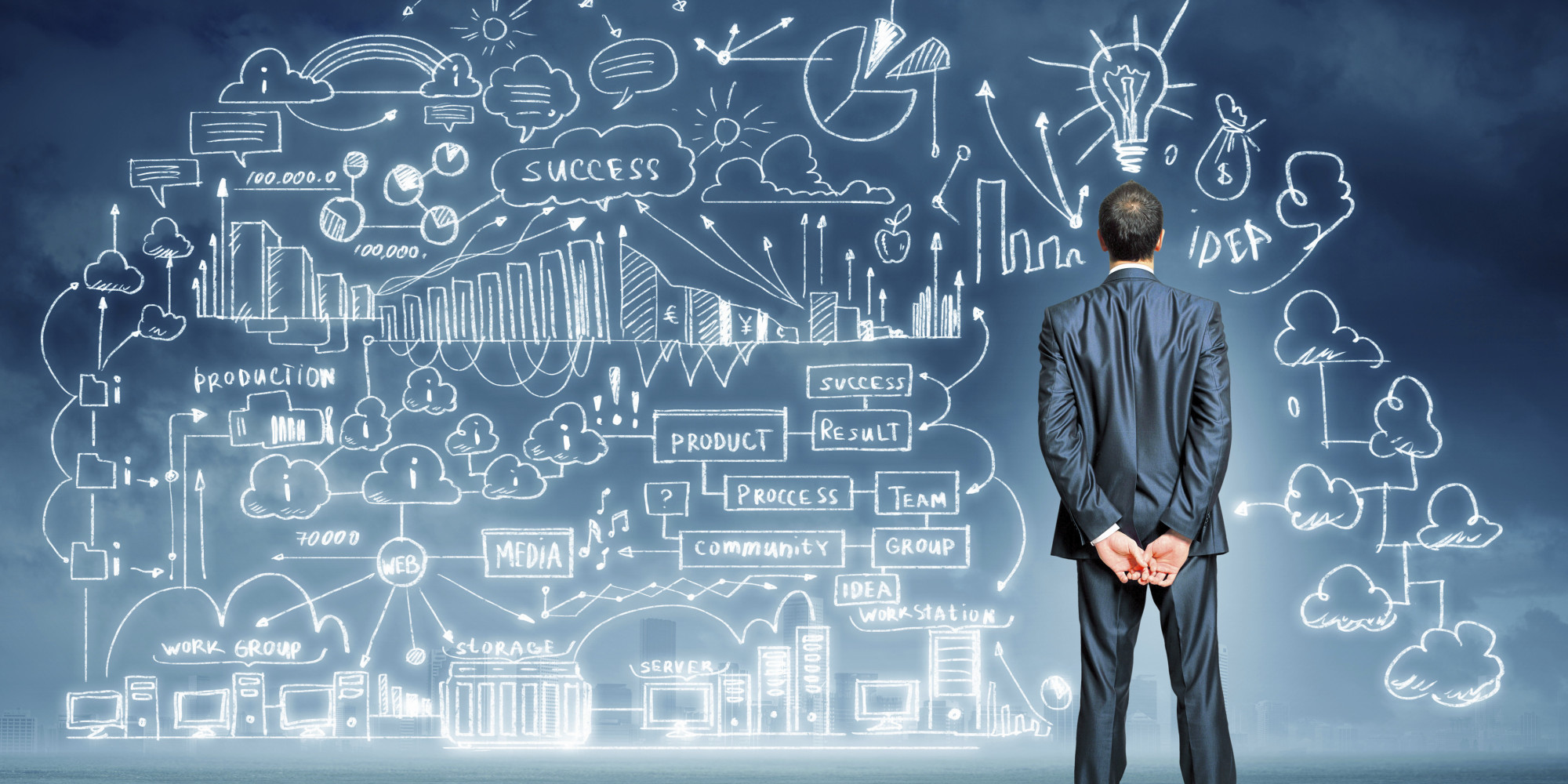





 bobdillon33blog