• About
  • THE BEADY EYE SAY’S : THE EUROPEAN UNION SHOULD THANK ENGLAND FOR ITS IN OR OUT REFERENDUM.

bobdillon33blog

~ Free Thinker.

bobdillon33blog

Category Archives: Modern Day Democracy.

THE BEADY EYE SAYS : ITS NEVER BEEN MORE CLEAR THAT CAPITALISM V TECHNOLOGICAL GREED IS CREATING A FUCKED WORLD.

21 Monday Jul 2025

Posted by bobdillon33@gmail.com in #whatif.com, 'Refugee' and 'Migrant' , 2025 Another Year of change, A Constitution for the Earth., Artificial Intelligence., Capitalism, CAPITALISM IS INCOMPATIBLE IN THE FIGHT AGAINST CLIMATE CHANGE., Collective stupidity., Cry for help., Dehumanization., Digital age., DIGITAL DICTATORSHIP., Disaster Capitalism., Google Knowledge., Heredity Monarchy., HUMAN ABILITIES., Human Collective Stupidity., Human Exploration., HUMAN INTELLIGENCE, Human values., Humanity., Inequality, Life., Modern Day Democracy., Our Common Values., Political lying., Political Trust, Political voting systems., Politics., Populism., Post - truth politics., Speed of technology., State of the world, Survival., Sustaniability, Technology v Humanity, The common good., The essence of our humanity., The Future, The world to day., THE WORLD YOU LIVE IN., The year 2025, THIS IS THE STATE OF THE WORLD.  , Truth, Truthfulness., Unanswered Questions., United Nations, VALUES

≈ Comments Off on THE BEADY EYE SAYS : ITS NEVER BEEN MORE CLEAR THAT CAPITALISM V TECHNOLOGICAL GREED IS CREATING A FUCKED WORLD.

Tags

Algorithms., Artificial Intelligence., Capitalism, Capitalism and Greed, Capitalism vs. the Climate., Climate change, Current world problems, Distribution of wealth, Environment, Future Society., Globalization, Humanity, Inequility, Life, Out of Date Democracy, SMART PHONE WORLD, Sustainability, Technology, Technology versus Humanity, The Future of Mankind, THE UNITED NATIONS, Truth, United Nations, Visions of the future.

( Seven minute read)

Just take a look at the state of our world never mind the planet we all live on.

What do you see?

Not the multibillionairs, not the bible bashing churches, not the starving, not the homeless, not the refugees, not the beauty of the planet with its finite resources, not the billions of us, not the future, not the past, and certainly not a world that after millions of years of evolution you would be proud of handing on, never mind want to live in.

Instead. What one see is.

We’ve got little understanding of what makes us human.

We’re got the capacity and ability to wipe yourself off the face of the planet.

We’ve got worthless spending on defence, when a AI cyber attack could wipe out not just computers, companies, countries but all of us.

We’ve got a world with organisations like the UN out of date, crippled by vetoes.

We’ve got NATO a war mongering USA military Organisation, spreading fear.

We’ve got an international Court that has no credibility.

We’ve got verbal diarrhoea on tackling climate change.

We’ve got Putin and Donald Dump and Benjamin along with Kim Jong to name a few with nuclear war heads, not forgetting Ali.

We’ve got terrorists.

We’ve got ripoff tax regimes.

We’ve got politicians that can’t see past the next election.

We’ve got growing inequality.

We’ve got pollution in our seas in our air in our stomach.

We’ve got sex maniacs, mentally unstable youths.

We’ve got populations with smartphones that are destroying any critical thinking.

We’ve got religious beliefs to beat the ban.

We’ve got termites hills called cities.

We’ve got artificial intelligence collecting data for free turning us into digital citizens.

We’ve got voting systems out of date.

Just look at any systems we support to elected governments.

The UK is a prime example with First pass the voting system.

The whole political system was set up on the back of military might that established an empire that enriched its self through slavery.

A country that turned its back on the Europe Union..established not to foster just a single market but peace among nations.

Like most western countries its got political parties, supporting different entities, different ideologies, promoting different philosophy, all supposedly representing the majority of the voting electorate, making promises that are lucky to last to the next salary rise.

These parties form governments with heads of state.

Heads of departments are then appointed from within the party to run the country on the taxpayers money, which is collect by taxing everything from food to football till death to do you depart, with fines for nonpayment.

On top of this there are local councils elections, made up of the parties and independents to elect councils. There are 650 councils.

Government to this day remains without a written constitution and subject to Royal approval that owns half the country.

You could say the English are still surf to a non elected King/ Dictator.

The cost to tax payers over the working career of the average Mp is 90 thousand odd plus expenses against the average Joe soap salary of 45 thousand.

So 690 MP @ 90 thousand = 64 million odd , for mps that cannot be removed from office unless the party in office expels the individual.

Then there is the upper house of parliament the House of Lords 450 of them taking home on average twice the salary of a working man, ( With 33 of them inactive taking home a meats 500,000 in tax free expenses. )

Add a few state dinner @ 400,000 and you have the bill to the tax payer.

The elected government then spends around 1.6 billion running the country.

The public can get a petition presented to parliament proving it’s has 100,000. However they cannot with a million signatures get a Mp fired.

If you think that’s bad have a look at the Eurozone and its system .

One could say we’ve got it all to turn our planet into a tax paying black hole.

Not until we recognise fully the need to protect the environment, can we place a true value on humanity, even then with enormous insecurity and uncertainty driven by short term thinking and a growing population of the haves and have nots will we be able as humans change direction.

We all know that the world is changing and that with what ever kind of technology , immigration, climate change you want to name or blame.

All pointing to we are going to have to stop killing each other and learn to live together.

The earth provides us with life not money not AI not religion, not military might, and certainly not any philosophy that does not take into account our ancestors or actions.

Our systems to govern or to protect the environment are completely out of control.

Political polarisation due to AI is destroying our self governance and our democracy institutions.

All human comments appreciated. All like clicks and abuse chucked in the bin.

Contact: bobdillon33@gmail.com

Share this:

  • Click to share on WhatsApp (Opens in new window) WhatsApp
  • More
  • Click to share on Pocket (Opens in new window) Pocket
  • Click to share on Mastodon (Opens in new window) Mastodon

THE BEADY EYE SAYS: WE HUMANS HAVE TRIED MANY DIFFERENT WAYS TO LIVE TOGETHER /BUILD SOCIETIES WITHOUT SACRIFICING OUR INDIVIDUAL IDENTITIES.

22 Wednesday Jan 2025

Posted by bobdillon33@gmail.com in 2025 Another Year of change, A Constitution for the Earth., Algorithms., Artificial Intelligence., CAPITALISM IS INCOMPATIBLE IN THE FIGHT AGAINST CLIMATE CHANGE., Civilization., Collective stupidity., Democracy, Digital age., Disaster Capitalism., Fourth Industrial Revolution., Human Collective Stupidity., Human Exploration., HUMAN INTELLIGENCE, Human values., Humanity., IS DATA DESTORYING THE WORLD?, Modern Day Democracy., Purpose of life., Robot citizenship., Social Media, Society, Speed of technology., State of the world, Sustaniability, Technology v Humanity, Technology., The cloud., The common good., The essence of our humanity., The Future, The metaverse., The new year 2025, The Obvious., The state of the World., The world to day., THE WORLD YOU LIVE IN., The year 2025, THIS IS THE STATE OF THE WORLD.  , Unanswered Questions., We can leave a legacy worthwhile., What is shaping our world., WHAT IS TRUTH, What Needs to change in the World, Where's the Global Outrage., World Leaders, World Organisations.

≈ Comments Off on THE BEADY EYE SAYS: WE HUMANS HAVE TRIED MANY DIFFERENT WAYS TO LIVE TOGETHER /BUILD SOCIETIES WITHOUT SACRIFICING OUR INDIVIDUAL IDENTITIES.

Tags

AI, Algorithms Democracy., Algorithms for Profit., Algorithms., Artificial Intelligence., Capitalism and Greed, Current world problems, Democracy, Humanity, Life, Out of Date Democracy, Sustainability, Technological revolution, Technology, Technology versus Humanity, The Future of Mankind, Truth, Visions of the future.

( Three minute read)

With many names from the bottom of the globe to the top, it has cost billions of lives and trillions of dollars, with each and every advancement predicted to cause an apocalypse end to us all.

To days artificial advancements how ever are different from previous human interventions. All previous inventions required humans in the loop. Artificial intelligence will not.

Therefore the compatibility of democracy with technological advancement is paramount to our very survival, not to mention democracy itself.

This time we got to get it right as there will not be a next time.

However given our inability to recognise our errors ( if we are to be successful with AI ) we need to install self correcting mechanisms that can id and correct mistakes as Ai becomes part of being human.

This time we will need a written constitution to protect the values that are common to all organisms that are organic

That requires a fundamental change in our thinking, ambitions, and our awareness to what makes life possible and worth living.

It’s not living life through the lens of a smartphone.

Not living life through pretend reality with in the metaverse, pandering to wealthy elites, platforms.

It’s not living life through our photos stored in the cloud.

It’s not social media which is desensitising us to world problems.

If artificial intelligence micromanages everything I do and think that will give it totalitarianism control over society.

Is that what we want?

Technology is rarely deterministic. As a as a binary all are nothing choice.

Having access to our personal life comes with a fiduciary duty to act in our best interests. This an ancient principle must be incorporated by law into all algorithms and applied to all platforms .

All human comments appreciated. All like clicks and abuse chucked in the bin.

Contact: bobdillon33@gmail.com

Share this:

  • Click to share on WhatsApp (Opens in new window) WhatsApp
  • More
  • Click to share on Pocket (Opens in new window) Pocket
  • Click to share on Mastodon (Opens in new window) Mastodon

THE BEADY EYE SAYS:THE LIFE MISSION OF ALGORITHMS ARE TO STAY RELEVANT.

22 Friday Nov 2024

Posted by bobdillon33@gmail.com in 2024 the year of disconnection, A Constitution for the Earth., Algorithms., Artificial Intelligence., Capitalism, CAPITALISM IS INCOMPATIBLE IN THE FIGHT AGAINST CLIMATE CHANGE., Climate Change., Collective stupidity., Cry for help., Dehumanization., Democracy, Digital age., DIGITAL DICTATORSHIP., Disaster Capitalism., Donald Trump., Elon Musk., Evolution, FEAR, Fourth Industrial Revolution., How to do it., HUMAN ABILITIES., Human Collective Stupidity., Human Exploration., HUMAN INTELLIGENCE, Human values., Humanity., Imagination., Inequality., INTELLIGENCE., IS DATA DESTORYING THE WORLD?, Life., Modern Day Communication., Modern Day Democracy., Modern day life., Modern day Slavery, Money in Politics., Post - truth politics., Purpose of life., Reality., Robot citizenship., Social Media., State of the world, Survival., Sustaniability, Technology, Technology v Humanity, Technology's, Telling the truth., The common good., The essence of our humanity., THE NEW NORM., The Obvious., The pursuit of profit., The state of the World., The world to day., THE WORLD YOU LIVE IN., THIS IS THE STATE OF THE WORLD.  , TRACKING TECHNOLOGY., Truthfulness., Unanswered Questions., VALUES, War., Wealth., What is shaping our world., WHAT IS TRUTH, What Needs to change in the World, Where's the Global Outrage., World Leaders, World Organisations., World Politics, World View.

≈ Comments Off on THE BEADY EYE SAYS:THE LIFE MISSION OF ALGORITHMS ARE TO STAY RELEVANT.

Tags

Algorithms., Artificial Intelligence., Capitalism and Greed, Capitalism vs. the Climate., Climate change, Distribution of wealth, Globalization, Inequility, Technology, The Future of Mankind, Visions of the future.

( Ten minute read)

As an independent institution the life mission of a parliamentarian within in government is to stay relevant within a parliament.

This is not the problem it is the first issue to solving the problems with democracy.

If we don’t wake up to what is happening with elections we will get nothing from democratic elected government.

It is time we all stand up together for equality, accountability, and transparency not wealth, and definitely not Democracy by self learning self correcting algorithms that have and are penetrated all of democracies institutions.

If we don’t take actions now it’s going to be a nightmare with parasitic profits seeking algorithms feeding on the bodies of our nations.

For an Algorithm to operate efficiently it must update its data /input constantly and have everything specify for its object.

If not it will make out of date decisions. Even if it is self learning or uses reinforcing learning, it will end up as a narrow Algorithm if it doesn’t have up to date data.

This is why it won’t be long before algorithms will be writing their own syntactic data and code, creating other algorithms, with tailored recommendations and content curation.

This is perhaps the main difference between democratic authoritarianism algorithms and self correcting elections.

( Both are run by wealth, rather than any real choice that is free of contamination by either data or money)

This is why governments are incapable of achieve anything the electorate wants – ie reducing inequalities -climate change- wars – cheap housing etc,

Why?

Because only 2% of the population is represented in elections, which are decided and rigged by wealth, not wisdom, selecting the candidates for elections in the first place in safe seats constitutional voting.

Our problem in solving problems is that our only guidance is the past.

——————

The past shows that with each and every invention of technology inequality increases.

Except perhaps the smartphone which changed a great deal of what was wrong within the free marketplace- ie curbing corruption.

Unfortunately all of these profits seeking algorithms are and will continue to widen the inequality gaps.

In fact inequality is at its greatest since World War Two because the free market is no longer free but governable by algorithms trading.

Everything you see and do on the Web is a product of Algorithms exploiting data that we feed them for free.

Perpetuating social bias, optimising everything, putting control into the hands of a few, to predict market movements, portfolios performance, credit risk etc.

AI is naught but algorithms but as to how or whom should own/ control these algorithms is very much a pending question.

If that data is slightly changed the results could be small or catastrophic.

Luckily to days AI ( even with all the hype surrounded its future ) can’t actually think for itself.

We don’t have and are very unlikely to have in the short term to have anything like that.

However as with most things that threaten us we are in a caught up situation.

It is too late to close the gate on AI as the world would not be able to function. This of course is an absolute lie.

We must preserve our innate cognitive abilities by critically assess the role of technology in our lives.

What would happen if the technology world collapsed?

Would we be back to square one?

Yes.

Our vote had no relationship with the candidates standing for election they are selected by money donors.

Yes– the roads would turn into chaotic parking lots .

Yes – our hospital without AI powered tools, would collapse.

Yes – the economy would tank.

Yes – If it existed there would be long queues at the gates of heaven.

Yes – there would be a world war.

Yes – no one would remember the internet.

Yes – religious indoctrination would increase.

Yes – we would release that we were too reliant on outsourcing our brains to machines.

Yes- Not even would AI be relevant.

All human comments appreciated. All like clicks and abuse chucked in the bin.

Contact: bobdillon33blog33@gmail.com

Share this:

  • Click to share on WhatsApp (Opens in new window) WhatsApp
  • More
  • Click to share on Pocket (Opens in new window) Pocket
  • Click to share on Mastodon (Opens in new window) Mastodon

THE BEADY EYE ASK’S: THESE DAYS WHAT CAN WE BELIEVE IN ?

21 Thursday Dec 2023

Posted by bobdillon33@gmail.com in #whatif.com, 2023 the year of disconnection., A Constitution for the Earth., Advertising, Advertising industry, Algorithms., Artificial Intelligence.,  Attention economy, Capitalism, CAPITALISM IS INCOMPATIBLE IN THE FIGHT AGAINST CLIMATE CHANGE., Carbon Emissions., Civilization., Climate Change., Collective stupidity., Consciousness., Cry for help., Dehumanization., Democracy, Digital age., DIGITAL DICTATORSHIP., Digital Friendship., Disconnection., Discrimination., Earth, Emergency powers., Enegery, Environment, Face Recognition., Facebook, Fake News., Fourth Industrial Revolution., Freedom of Speech, Freedom of the Press., Google, Google Knowledge., GPS-Tracking., Green Energy., Happy Christmas from the Beady eye., Honesty., How to do it., Human Collective Stupidity., HUMAN INTELLIGENCE, Human values., Humanity., Imagination., Inequality, INTELLIGENCE., IS DATA DESTORYING THE WORLD?, James Webb Telescope, Life., MISINFORMATION., Modern Day Communication., Modern Day Democracy., Modern day life., Modern Day Slavery., Monetization of nature, Our Common Values., PAIN AND SUFFERING IN LIFE, Political lying., Political Trust, Politics., Populism., Post - truth politics., Profiteering., Purpose of life., Real life experience's, Reality., Renewable Energy., Robot citizenship., Social Media, Social Media Regulation., Society, State of the world, Sustaniability, Technology, Technology v Humanity, Telling the truth., The common good., The essence of our humanity., The Future, The Internet., THE NEW NORM., The Obvious., The pursuit of profit., The state of the World., The world to day., THE WORLD YOU LIVE IN., THIS IS THE STATE OF THE WORLD.  , TRACKING TECHNOLOGY., Truth, Truthfulness., Twitter, Unanswered Questions., Universal values., VALUES, We can leave a legacy worthwhile., What is shaping our world., WHAT IS TRUTH, Where's the Global Outrage., World Leaders, World Organisations., World Politics

≈ Comments Off on THE BEADY EYE ASK’S: THESE DAYS WHAT CAN WE BELIEVE IN ?

Tags

bible, god, philosophy, Religion., Science

( Fifteen minute read)

The last post this year, have a peaceful Christmas.

This post is a follow up to the post, ( What is life, What does it mean to be alive). It is also an attempt to argue for as many preposterous positions as possible in the shortest space of time possible.

That there are no options other than accepting that life is objectively meaningful or not meaningful at all.

Science requires proof, religious belief requires faith.

So let’s get God and Gods out of the way.

.Could quantum physics help explain a God that could be in two places at once? (Credit: Nasa)
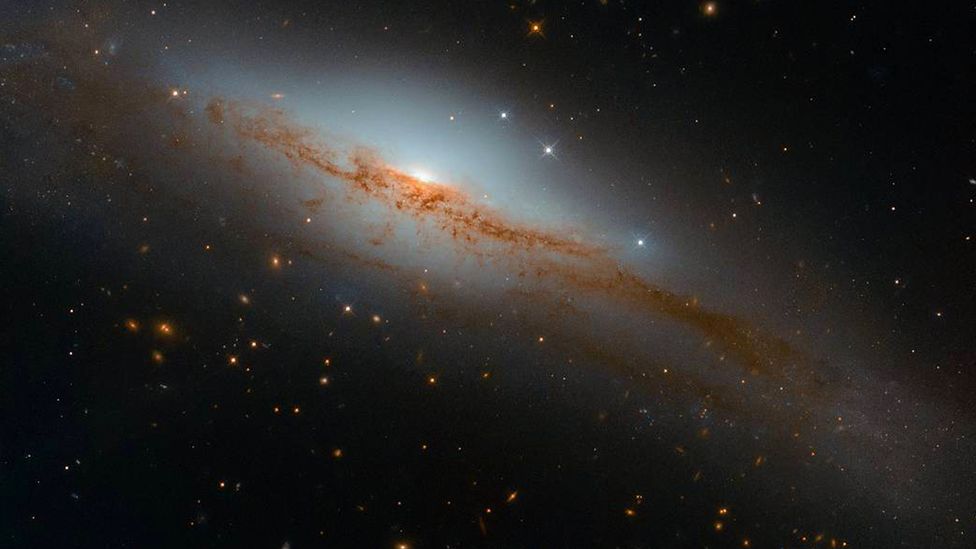
If you believe in God, then the idea of God being bound by the laws of physics is nonsense, because God can do everything, even travel faster than light. If you don’t believe in God, then the question is equally nonsensical, because there isn’t a God and nothing can travel faster than light.

Perhaps the question is really one for agnostics, who don’t know whether there is a God.

The idea that God might be “bound” by the laws of physics – which also govern chemistry and biology might not be so far stretched that the James Webb telescope might discover him or her. Whether it does or does not, if it did discovered life on another planet and the human race realizes that its long loneliness in time and space may be over — the possibility we’re no longer alone in the universe is where scientific empiricism and religious faith intersect, with NO true answer?.

Could any answer help us prove whether or not God exists, not on your nanny.

If God wasn’t able to break the laws of physics, she or he arguably wouldn’t be as powerful as you’d expect a supreme being to be. But if he or she could, why haven’t we seen any evidence of the laws of physics ever being broken in the Universe?

If there is a God who created the entire universe and ALL of its laws of physics, does God follow God’s own laws? Or can God supersede his own laws, such as travelling faster than the speed of light and thus being able to be in two different places at the same time?

Let’s consider whether God can be in more than one place at the same time.

(According to quantum mechanics, particles are by definition in a mix of different states until you actually measure them.)

There is something faster than the speed of light after all: Quantum information.

This doesn’t prove or disprove God, but it can help us think of God in physical terms – maybe as a shower of entangled particles, transferring quantum information back and forth, and so occupying many places at the same time? Even many universes at the same time?

But is it true?

A few years ago, a group of physicists posited that particles called tachyons travelled above light speed. Fortunately, their existence as real particles is deemed highly unlikely. If they did exist, they would have an imaginary mass and the fabric of space and time would become distorted – leading to violations of causality (and possibly a headache for God).

(This in itself does not say anything at all about God. It merely reinforces the knowledge that light travels very fast indeed.)

We can calculate that light has travelled roughly 1.3 x 10 x 23 (1.3 times 10 to the power 23) km in the 13.8 billion years of the Universe’s existence. Or rather, the observable Universe’s existence.

The Universe is expanding at a rate of approximately 70km/s per Mpc (1 Mpc = 1 Megaparsec or roughly 30 billion billion kilometres), so current estimates suggest that the distance to the edge of the universe is 46 billion light years. As time goes on, the volume of space increases, and light has to travel for longer to reach us.

We cannot observe or see across the entirety of the Universe that has grown since the Big Bang because insufficient time has passed for light from the first fractions of a second to reach us. Some argue that we therefore cannot be sure whether the laws of physics could be broken in other cosmic regions – perhaps they are just local, accidental laws. And that leads us on to something even bigger than the Universe.

But if inflation could happen once, why not many times?

We know from experiments that quantum fluctuations can give rise to pairs of particles suddenly coming into existence, only to disappear moments later. And if such fluctuations can produce particles, why not entire atoms or universes? It’s been suggested that, during the period of chaotic inflation, not everything was happening at the same rate – quantum fluctuations in the expansion could have produced bubbles that blew up to become universes in their own right.

How come all the physical laws and parameters in the universe happen to have the values that allowed stars, planets and ultimately life to develop?

We shouldn’t be surprised to see biofriendly physical laws – they after all produced us, so what else would we see? Some theists, however, argue it points to the existence of a God creating favourable conditions.

But God isn’t a valid scientific explanation.

We can’t disprove the idea that a God may have created the multiverse.

No matter what is believable or not, things can appear from nowhere and disappear to nowhere.

If you find this hard to swallow, what follows will make you choke.

First there is panpsychism, the idea that “consciousness pervades the universe and is a fundamental feature of it.

Even particles are never compelled to do anything, but are rather disposed, from their own nature, to respond rationally to their experience. That the universe is conscious and is acting towards a purpose of realising the full potential of its consciousness.

The radicalism of this “teleological cosmopsychism” is made clear by its implication that “during the first split second of time, the universe fine-tuned itself in order to allow for the emergence of life billions of years in the future”. To do this, “the universe must in some sense have been aware of this future possibility”.

That the universe itself has a built-in purpose, the disappointingly vague goal of which is “rational matter achieving a higher realisation of its nature.

The laws of physics are just right for conscious life to evolve that it can’t have been an accident.

It is hard to see why the universe’s purpose should give our lives one. Indeed, to believe one plays an infinitesimally small part in the unfolding of a cosmic master plan makes each human life look insignificant.

The basic question about our place in the Universe is one that may be answered by scientific investigations.

What are the next steps to finding life elsewhere?

Today’s telescopes can look at many stars and tell if they have one or more orbiting planets. Even more, they can determine if the planets are the right distance away from the star to have liquid water, the key ingredient to life as we know it.

NEXT:How to Choose Which Social Media Platforms to Use

We live in a time of political fury and hardening cultural divides. But if there is one thing on which virtually everyone is agreed, it is that the news and information we receive is biased. Much of the outrage that floods social media, occasionally leaking into opinion columns and broadcast interviews, is not simply a reaction to events themselves, but to the way in which they are reported and framed that are the problem.

This mentality now with the help of technological advances in communication spans the entire political spectrum and pervades societies around the world twisting our basic understanding of reality to our own ends.

This is not as simple as distrust.

The appearance of digital platforms, smartphones and the ubiquitous surveillance have enable to usher in a new public mood that is instinctively suspicious of anyone claiming to describe reality in a fair and objective fashion. Which will end in a Trumpian refusal to accept any mainstream or official account of the world with people become increasingly dependent on their own experiences and their own beliefs about how the world really works.

The crisis of democracy and of truth are one and the same:

Individuals are increasingly suspicious of the “official” stories they are being told, and expect to witness things for themselves.

How exactly do we distinguish this critical mentality from that of the conspiracy theorist, who is convinced that they alone have seen through the official version of events? Or to turn the question around, how might it be possible to recognise the most flagrant cases of bias in the behaviour of reporters and experts, but nevertheless to accept that what they say is often a reasonable depiction of the world?

It is tempting to blame the internet, populists or foreign trolls for flooding our otherwise rational society with lies.

But this underestimates the scale of the technological and philosophical transformations that are under way. The single biggest change in our public sphere is that we now have an unimaginable excess of news and content, where once we had scarcity. The explosion of information available to us is making it harder, not easier, to achieve consensus on truth.

As the quantity of information increases, the need to pick out bite-size pieces of content rises accordingly.

In this radically sceptical age, questions of where to look, what to focus on and who to trust are ones that we increasingly seek to answer for ourselves, without the help of intermediaries. This is a liberation of sorts, but it is also at the heart of our deteriorating confidence in public institutions.

There is now a self-sustaining information ecosystem becoming a serious public health problem across the world, aided by the online circulation of conspiracy theories and pseudo-science. However the panic surrounding echo chambers and so-called filter bubbles is largely groundless.

What, then, has to changed?

The key thing is that the elites of government and the media have lost their monopoly over the provision of information, but retain their prominence in the public eye.

And digital platforms now provide a public space to identify and rake over the flaws, biases and falsehoods of mainstream institutions.

The result is an increasingly sceptical citizenry, each seeking to manage their media diet, checking up on individual journalists in order to resist the pernicious influence of the establishment.

The problem we face is not, then, that certain people are oblivious to the “mainstream media”, or are victims of fake news, but that we are all seeking to see through the veneer of facts and information provided to us by public institutions.

Facts and official reports are no longer the end of the story.

The truth is now threatened by a radically different system, which is transforming the nature of empirical evidence and memory. One term for this is “big data”, which highlights the exponential growth in the quantity of data that societies create, thanks to digital technologies.

The reason there is so much data today is that more and more of our social lives are mediated digitally. Internet browsers, smartphones, social media platforms, smart cards and every other smart interface record every move we make. Whether or not we are conscious of it, we are constantly leaving traces of our activities, no matter how trivial.

But it is not the escalating quantity of data that constitutes the radical change.

Something altogether new has occurred that distinguishes today’s society from previous epochs.

In the past, recording devices were principally trained upon events that were already acknowledged as important.

Things no longer need to be judged “important” to be captured.

Consciously, we photograph events and record experiences regardless of their importance. Unconsciously, we leave a trace of our behaviour every time we swipe a smart card, address Amazon’s Alexa or touch our phone.

For the first time in human history, recording now happens by default, and the question of significance is addressed separately.

This shift has prompted an unrealistic set of expectations regarding possibilities for human knowledge.

When everything is being recorded, our knowledge of the world no longer needs to be mediated by professionals, experts, institutions and theories. Data can simply “speak for itself”. This is a fantasy of a truth unpolluted by any deliberate human intervention – the ultimate in scientific objectivity.

From this perspective, every controversy can in principle be settled thanks to the vast trove of data – CCTV, records of digital activity and so on – now available to us. Reality in its totality is being recorded, and reporters and officials look dismally compromised by comparison.

It is often a single image that seems to capture the truth of an event, only now there are cameras everywhere.

No matter how many times it is disproven, the notion that “the camera doesn’t lie” has a peculiar hold over our imaginations. In a society of blanket CCTV and smartphones, there are more cameras than people, and the torrent of data adds to the sense that the truth is somewhere amid the deluge, ignored by mainstream accounts.

The central demand of this newly sceptical public is “so show me”.

The rise of blanket surveillance technologies has paradoxical effects, raising expectations for objective knowledge to unrealistic levels, and then provoking fury when those in the public eye do not meet them.

Surely, in this age of mass data capture, the truth will become undeniable.

On the other hand, as the quantity of data becomes overwhelming – greater than human intelligence can comprehend – our ability to agree on the nature of reality seems to be declining. Once everything is, in principle, recordable, disputes heat up regarding what counts as significant in the first place.

What we are discovering is that, once the limitations on data capture are removed, there are escalating opportunities for conflict over the nature of reality.

Remember AI does not exist in a vacuum, its employment can and is discriminating against communities, powered by vast amounts of energy,  producing CO2 emissions.

Lastly the Advertising Industry.The impact of COVID-19 on the advertising industry - Passionate In ...

These day it seems that it has free rain to claim anything.

Like them or loathe them, advertisements are everywhere and they’re worsening not just the climate crisis, and ecological damage by promoting sustainability in consumption and inequality. Presenting a fake, idealised world that papers over an often brutal reality.

But advertising in one sense is even more dangerous, because it is so pervasive, sophisticated in its techniques and harder to see through. When hundreds of millions of people have desires for more and more stuff and for more and more services and experiences, that really adds up and puts a strain on the Earth.

The toll of disasters propelled by climate change in 2023 can be tallied with numbers — thousands of people dead, millions of others who lost jobs, homes and hope, and tens of billions of dollars sheared off economies. But numbers can’t reflect the way climate change is experienced — the intensity, the insecurity and the inequality that people on Earth are now living.

In every place that climate change makes its mark, inequality is made worse.

How are we going to protect the truth:

It goes without saying that spiritual beliefs will protect themselves. Lies, propaganda and fake news however is the challenge for our age.

Working out who to trust and who not to believe has been a facet of human life since our ancestors began living in complex societies. Politics has always bred those who will mislead to get ahead.

With news sources splintering and falsehoods spreading widely online, can anything be done?

Check Google.

Welcome to the world of “alternative facts”. It is a bewildering maze of claim and counterclaim, where hoaxes spread with frightening speed on social media and spark angry backlashes from people who take what they read at face value.

It is an environment where the mainstream media is accused of peddling “fake news” by the most powerful man in the world.

Voters are seemingly misled by the very politicians they elected and even scientific research – long considered a reliable basis for decisions – is dismissed as having little value.

Without a common starting point – a set of facts that people with otherwise different viewpoints can agree on – it will be hard to address any of the problems that the world now faces. The threat posed by the spread of misinformation should not be underestimated.

Some warn that “fake news” threatens the democratic process itself.

A survey conducted by the Pew Research Center towards the end of last year found that 64% of American adults said made-up news stories were causing confusion about the basic facts of current issues and events.

How we control the dissemination of things that seem to be untrue. We need a new way to decide what is trustworthy.

Take Wikipedia itself – which can be edited by anyone but uses teams of volunteer editors to weed out inaccuracies – is far from perfect.

These platforms and their like are simply in it for the money.

Last year, links to websites masquerading as reputable sources started appearing on social media sites like Facebook.

Stories about the Pope endorsing Donald Trump’s candidacy and Hillary Clinton being indicted for crimes related to her email scandal were shared widely despite being completely made up. The ability to share them widely on social media means a slice of the advertising revenue that comes from clicks.

Truth is no longer dictated by authorities, but is networked by peers. For every fact there is a counterfact. All those counterfacts and facts look identical online, which is confusing to most people.

Information spreads around the world in seconds, with the potential to reach billions of people. But it can also be dismissed with a flick of the finger. What we choose to engage with is self-reinforcing and we get shown more of the same. It results in an exaggerated “echo chamber” effect.

The challenge here is how to burst these bubbles.

One approach that has been tried is to challenge facts and claims when they appear on social media. Organisations like Full Fact, for example, look at persistent claims made by politicians or in the media, and try to correct them. (The BBC also has its own fact-checking unit, called Reality Check.)

This approach doesn’t work on social media because the audiences were largely disjointed.

Even when a correction reached a lot of people and a rumour reached a lot of people, they were usually not the same people. The problem is, corrections do not spread very well. This lack of overlap is a specific challenge when it comes to political issues.

On Facebook political bodies can put something out, pay for advertising, put it in front of millions of people, yet it is hard for those not being targeted to know they have done that. They can target people based on how old they are, where they live, what skin colour they have, what gender they are.

We shouldn’t think of social media as just peer-to-peer communication – it is also the most powerful advertising platform there has ever been. We have never had a time when it has been so easy to advertise to millions of people and not have the other millions of us notice.

Twitter and Facebook both insist they have strict rules on what can be advertised and particularly on political advertising. Regardless, the use of social media adverts in politics can have a major impact.

We need some transparency about who is using social media advertising when they are in election campaigns and referendum campaigns. We need watchdogs that will go around and say, ‘Hang on, this doesn’t stack up’ and ask for the record to be corrected.

We need Platforms to ensure that people have read content before sharing it to develop standards.

Google says it is working on ways to improve its algorithms so they take accuracy into account when displaying search results. “Judging which pages on the web best answer a query is a challenging problem and we don’t always get it right,”

The challenge is going to be writing tools that can check specific types of claims.

Built a fact-checker app that could sit in a browser and use Watson’s language skills to scan the page and give a percentage likelihood of whether it was true.

This idea of helping break through the isolated information bubbles that many of us now live in, comes up again and again.

By presenting people with accurate facts it should be possible to at least get a debate going.

There is a large proportion of the population living in what we would regard as an alternative reality.  By suggesting things to people that are outside their comfort zone but not so far outside they would never look at it you can keep people from self-radicalising in these bubbles.

There are understandable fears about powerful internet companies filtering what people see.

We should think about adding layers of credibility to sources. We need to tag and structure quality content in effective ways.

But what if people don’t agree with official sources of information at all?

This is a problem that governments around the world are facing as the public views what they tell them with increasing scepticism. There is an unwillingness to bend one’s mind around facts that don’t agree with one’s own viewpoint.

The first stage in that is crowdsourcing facts.  So before you have a debate, you come up with the commonly accepted facts that people can debate from.

Technology may help to solve this grand challenge of our age, but it is time for a little more self-awareness too.

In the end the world needs a new Independent Organisation to examine all technology against human values. Future war will be fought on Face recognition.

To certify and hold the original programs of all technology.

Have I been trained by robbery its manter when it comes to algorithms.

The whole goal of the transition is not to allow a handful of Westerners to peacefully go through life in a Tesla, a world in flames; it is to allow humanity – and the rest of biodiversity – to live decently.

All human comments appreciated. All like clicks and abuse chucked in the bin.

Contact: bobdillon33@gmail.com

Share this:

  • Click to share on WhatsApp (Opens in new window) WhatsApp
  • More
  • Click to share on Pocket (Opens in new window) Pocket
  • Click to share on Mastodon (Opens in new window) Mastodon

THE BEADY EYE ASK’S : ARE OUR LIVES GOING TO BE RULED BY ALGORITHMS.

20 Saturday May 2023

Posted by bobdillon33@gmail.com in 2023 the year of disconnection., Algorithms., Artificial Intelligence., Big Data., Communication., Dehumanization., Democracy, Digital age., DIGITAL DICTATORSHIP., Digital Friendship., Disconnection., Fourth Industrial Revolution., Human Collective Stupidity., Human values., Humanity., Imagination., IS DATA DESTORYING THE WORLD?, Modern Day Democracy., Our Common Values., Purpose of life., Reality., Social Media Regulation., State of the world, Technology, Technology v Humanity, The Obvious., The state of the World., The world to day., THE WORLD YOU LIVE IN., THIS IS THE STATE OF THE WORLD.  , Tracking apps., Unanswered Questions., Universal values., We can leave a legacy worthwhile., What is shaping our world., What Needs to change in the World

≈ Comments Off on THE BEADY EYE ASK’S : ARE OUR LIVES GOING TO BE RULED BY ALGORITHMS.

Tags

Algorithms., Artificial Intelligence., The Future of Mankind, Visions of the future.

( Ten minute read) 

I am sure that unless you have being living on another planet it is becoming more and more obvious that the manner you live your life is being manipulate and influence by technologies.

So its worth pausing to ask why the use of AI for algorithm-informed decision is desirable, and hence worth our collective effort to think through and get right.

A huge amount of our lives – from what appears in our social media feeds to what route our sat-nav tells us to take – is influenced by algorithms. Email knows where to go thanks to algorithms. Smartphone apps are nothing but algorithms. Computer and video games are algorithmic storytelling.  Online dating and book-recommendation and travel websites would not function without algorithms.

Artificial intelligence (AI) is naught but algorithms.

The material people see on social media is brought to them by algorithms. In fact, everything people see and do on the web is a product of algorithms. Algorithms are also at play, with most financial transactions today accomplished by algorithms. Algorithms help gadgets respond to voice commands, recognize faces, sort photos and build and drive cars. Hacking, cyberattacks and cryptographic code-breaking exploit algorithms.

Algorithms are aimed at optimizing everything.

Self-learning and self-programming algorithms are now emerging, so it is possible that in the future algorithms will write many if not most algorithms.

Yes they can save lives, make things easier and conquer chaos, but when it comes both the commercial/ social world, there are many good reasons to question the use of Algorithms.

Why? 

They can put too much control in the hands of corporations and governments, perpetuate bias, create filter bubbles, cut choices, creativity and serendipity, while exploiting not just of you, but the very resources of our planet for short-term profits, destroying what left of democracy societies, turning warfare into face recognition, stimulating inequality, invading our private lives, determining our futures without any legal restrictions or transparency, or recourse.

The rapid evolution of AI and AI agents embedded in systems and devices in the Internet of Things will lead to hyper-stalking, influencing and shaping of voters, and hyper-personalized ads, and will create new ways to misrepresent reality and perpetuate falsehoods.

———

As they are self learning, the problem is who or what is creating them, who owns these algorithms and what if there should be any controls in their usage.

Lets ask some questions that need to be ask now not later concerning them. 

1) The outcomes the algorithm intended to make possible (and whether they are ethical)

2) The algorithm’s function.

3) The algorithm’s limitations and biases.

4) The actions that will be taken to mitigate the algorithm’s limitations and biases.

5) The layer of accountability and transparency that will be put in place around it.

There is no debate about the need for algorithms in scientific research – such as discovering new drugs to tackle new or old diseases/ pandemics, space travel, etc. 

Out side of these needs the promise of AI is that we could have evidence-based decision making in the field:

Helping frontline workers make more informed decisions in the moments when it matters most, based on an intelligent analysis of what is known to work. If used thoughtfully and with care, algorithms could provide evidence-based policymaking, but they will fail to achieve much if poor decisions are taken at the front.

However, it’s all well and good for politicians and policymakers to use evidence at a macro level when designing a policy but the real effectiveness of each public sector organisation is now the sum total of thousands of little decisions made by algorithms each and every day.

First (to repeat a point made above), with new technologies we may need to set a higher bar initially in order to build confidence and test the real risks and benefits before we adopt a more relaxed approach. Put simply, we need time to see in what ways using AI is, in fact, the same or different to traditional decision making processes.

The second concerns accountability. For reasons that may not be entirely rational, we tend to prefer a human-made decision. The process that a person follows in their head may be flawed and biased, but we feel we have a point of accountability and recourse which does not exist (at least not automatically) with a machine.

The third is that some forms of algorithmic decision making could end up being truly game-changing in terms of the complexity of the decision making process. Just as some financial analysts eventually failed to understand the CDOs they had collectively created before 2008, it might be too hard to trace back how a given decision was reached when unlimited amounts of data contribute to its output.

The fourth is the potential scale at which decisions could be deployed. One of the chief benefits of technology is its ability to roll out solutions at massive scale. By the same trait it can also cause damage at scale.

 In all of this it’s important to remember that while progress isn’t guaranteed transformational progress on a global scale normally takes time, generations even, to achieve but we pulled it off in less than a decade and spent another decade pushing the limits of what was possible with a computer and an Internet connection and, unfortunately, we are beginning running into limits pretty quickly such as.

No one wants to accept that the incredible technological ride we’ve enjoyed for the past half-century is coming to an end, but unless algorithms are found that can provide a shortcut around this rate of growth, we have to look beyond the classical computer if we are to maintain our current pace of technological progress.

A silicon computer chip is a physical material, so it is governed by the laws of physics, chemistry, and engineering.

After miniaturizing the transistor on an integrated circuit to a nanoscopic scale, transistors just can’t keep getting smaller every two years. With billions of electronic components etched into a solid, square wafer of silicon no more than 2 inches wide, you could count the number of atoms that make up the individual transistors.

So the era of classical computing is coming to an end, with scientists anticipating the arrival of quantum computing designing ambitious quantum algorithms that tackle maths greatest challenges an Algorithm for everything.

———–

Algorithms may be deployed without any human oversight leading to actions that could cause harm and which lack any accountability.

The issues the public sector deals with tend to be messy and complicated, requiring ethical judgements as well as quantitative assessments. Those decisions in turn can have significant impacts on individuals’ lives. We should therefore primarily be aiming for intelligent use of algorithm-informed decision making by humans.

If we are to have a ‘human in the loop’, it’s not ok for the public sector to become littered with algorithmic black boxes whose operations are essentially unknowable to those expected to use them.

As with all ‘smart’ new technologies, we need to ensure algorithmic decision making tools are not deployed in dumb processes, or create any expectation that we diminish the professionalism with which they are used.

Algorithms could help remove or reduce the impact of these flaws.


So where are we.

At the moment modern algorithms are some of the most important solutions to problems currently powering the world’s most widely used systems.

Here are a few. They form the foundation on which data structures and more advanced algorithms are built.

Google’s PageRank algorithm is a great place to start, since it helped turn Google into the internet giant it is today.

The PageRank algorithm so thoroughly established Google’s dominance as the only search engine that mattered that the word Google officially became a verb less than eight years after the company was founded. Even though PageRank is now only one of about 200 measures Google uses to rank a web page for a given query, this algorithm is still an essential driving force behind its search engine.

The Key Exchange Encryption algorithm does the seemingly impo

Backpropagation through a neural network is one of the most important algorithms invented in the last 50 years.

Neural networks operate by feeding input data into a network of nodes which have connections to the next layer of nodes, and different weights associated with these connections which determines whether to pass the information it receives through that connection to the next layer of nodes. When the information passed through the various so-called “hidden” layers of the network and comes to the output layer, these are usually different choices about what the neural network believes the input was. If it was fed an image of a dog, it might have the options dog, cat, mouse, and human infant. It will have a probability for each of these and the highest probability is chosen as the answer.

Without backpropagation, deep-learning neural networks wouldn’t work, and without these neural networks, we wouldn’t have the rapid advances in artificial intelligence that we’ve seen in the last decade.

Routing Protocol Algorithm (LSRPA) are the two most essential algorithms we use every day as they efficiently route data.

The two most widely used by the Internet, the Distance-Vector Routing Protocol Algorithm (DVRPA) and the Link-State traffic between the billions of connected networks that make up the Internet.

Compression is everywhere, and it is essential to the efficient transmission and storage of information.

Its made possible by establishing a single, shared mathematical secret between two parties, who don’t even know each other, and is used to encrypt the data as well as decrypt it, all over a public network and without anyone else being able to figure out the secret.

Searches and Sorts are a special form of algorithm in that there are many very different techniques used to sort a data set or to search for a specific value within one, and no single one is better than another all of the time. The quicksort algorithm might be better than the merge sort algorithm if memory is a factor, but if memory is not an issue, merge sort can sometimes be faster;

One of the most widely used algorithms in the world, but in that 20 minutes in 1959, Dijkstra enabled everything from GPS routing on our phones, to signal routing through telecommunication networks, and any number of time-sensitive logistics challenges like shipping a package across country. As a search algorithm, Dijkstra’s Shortest Path stands out more than the others just for the enormity of the technology that relies on it.

——–

At the moment there are relatively few instances where algorithms should be deployed without any human oversight or ability to intervene before the action resulting from the algorithm is initiated.

The assumptions on which an algorithm is based may be broadly correct, but in areas of any complexity (and which public sector contexts aren’t complex?) they will at best be incomplete.

Why?

Because the code of algorithms may be unviewable in systems that are proprietary or outsourced.

Even if viewable, the code may be essentially uncheckable if it’s highly complex; where the code continuously changes based on live data; or where the use of neural networks means that there is no single ‘point of decision making’ to view.

Virtually all algorithms contain some limitations and biases, based on the limitations and biases of the data on which they are trained.

 Though there is currently much debate about the biases and limitations of artificial intelligence, there are well known biases and limitations in human reasoning, too. The entire field of behavioural science exists precisely because humans are not perfectly rational creatures but have predictable biases in their thinking.

Some are calling this the Age of Algorithms and predicting that the future of algorithms is tied to machine learning and deep learning that will get better and better at an ever-faster pace. There is something on the other side of the classical-post-classical divide, it’s likely to be far more massive than it looks from over here, and any prediction about what we’ll find once we pass through it is as good as anyone else’s.

It is entirely possible that before we see any of this, humanity will end up bombing itself into a new dark age that takes thousands of years to recover from.

The entire field of theoretical computer science is all about trying to find the most efficient algorithm for a given problem. The essential job of a theoretical computer scientist is to find efficient algorithms for problems and the most difficult of these problems aren’t just academic; they are at the very core of some of the most challenging real world scenarios that play out every day.

Quantum computing is a subject that a lot of people, myself included, have gotten wrong in the past and there are those who caution against putting too much faith in a quantum computer’s ability to free us from the computational dead end we’re stuck in.

The most critical of these is the problem of optimization:

How do we find the best solution to a problem when we have a seemingly infinite number of possible solutions?

While it can be fun to speculate about specific advances, what will ultimately matter much more than any one advance will be the synergies produced by these different advances working together.

Synergies are famously greater than the sum of their parts, but what does that mean when your parts are blockchain, 5G networks, quantum computers, and advanced artificial intelligence?

DNA computing, however, harnesses these amino acids’ ability to build and assemble itself into long strands of DNA.

It’s why we can say that quantum computing won’t just be transformative, humanity is genuinely approaching nothing short of a technological event horizon.

Quantum computers will only give you a single output, either a value or a resulting quantum state, so their utility solving problems with exponential or factorial time complexity will depend entirely on the algorithm used.

One inefficient algorithm could have kneecapped the Internet before it really got going.

It is now oblivious that there is no going back.

The question now is there anyway of curtailing their power.

This can now only be achieved with the creation of an open source platform where the users control their data rather than it being used and mined.  (The uses can sell their data if the want.)

This platform must be owned by the public, and compete against the existing platforms like face book, twitter, what’s App, etc,   protected by an algorithm that protects the common values of all our lives – the truth. 

Of course it could be designed by using existing algorithms which would defeat its purpose. 

It would be an open net-work of people a kind of planetary mind that has to always be funding biosphere-friendly activities.

A safe harbour perhaps called the New horizon.   A digital United nations where the voices of cooperation could be heard.   

So if by any chance there is a human genius designer out there that could make such a platform he might change the future of all our digitalized lives for the better.   

All human comments appreciated. All like clicks and abuse chucked in the bin.

Contact: bobdillon33@gmail.com  


Share this:

  • Click to share on WhatsApp (Opens in new window) WhatsApp
  • More
  • Click to share on Pocket (Opens in new window) Pocket
  • Click to share on Mastodon (Opens in new window) Mastodon

THE BEADY EYE ASKS. WHERE DO YOU THINK THE WORLD IS GOING

20 Monday Jun 2022

Posted by bobdillon33@gmail.com in 2022: The year we need to change., Climate Change., Consciousness., Cry for help., Environment, Evolution, Fourth Industrial Revolution., How to do it., Human Collective Stupidity., HUMAN INTELLIGENCE, Human values., Humanity., Life., Modern Day Democracy., Natural World Disasters, Our Common Values., Populism., President of the USA., Purpose of life., Reality., State of the world, Sustaniability, Technology v Humanity, Telling the truth., The common good., The Future, The Obvious., The state of the World., The world to day., THE WORLD YOU LIVE IN., THIS IS THE STATE OF THE WORLD.  , Truth, Unanswered Questions., We can leave a legacy worthwhile., WHAT IS TRUTH, What Needs to change in the World, Where's the Global Outrage., World View.

≈ Comments Off on THE BEADY EYE ASKS. WHERE DO YOU THINK THE WORLD IS GOING

Tags

Capitalism vs. the Climate., Climate change, Extinction, SMART PHONE WORLD, The Future of Mankind, Visions of the future.


Twenty-minute read.

Does our perception of the world reflect reality?

We hardly see the world as it is.

Technology is often touted as the savior that will rescue us from our misbegotten ways, redeem us, and put us on the track to utopia. Then there are the dystopian views, where the future is dominated by technology that either rule over us or saps us so completely of our humanity that we might as well be a bunch of gadgets ourselves.

There are countless challenges today both environmental and not.

Mostly, we see the world through a set of layers. These layers are made up of our emotions, past experiences, and beliefs, and whichever perception is held by most, is popularly deemed as the reality.

Among contemporary scientists and philosophers, the most popular solution to the mind-body problem is probably materialism.

According to neuroscience, the contents of your head are comprised of 86

billion neurons, each one linked to 10,000 others, yielding trillions of

connections.

Materialists aspire to explain feelings and experiences in terms of the chemistry of the brain. It is broadly agreed that nobody has the slightest clue as yet how to do it, but many are confident that we one day will.

For human beings to survive, they need to produce and reproduce the material requirements of life.

But, the real reality is different and it’s above any perception.

 
                                     =============
 
THERE ARE NO UNIQUE VOICES ANYMORE. 
 

Here we are once again with another verbal diarrhea conference at the Summit of America’s with the president of the USA delivering a version of his domestic economic pitch promising leaders from Latin America that the United States is committed to helping the region combat crime, corruption, and its economic struggles.

“We will introduce a new approach to managing migration and sharing responsibility across the hemisphere.”  A load of verbal bollix but it raises the question are we now heading into globalization vs regionalization?

If so why?

Because of the pandemic and the ongoing wars, today’s great powers have little choice but to spend their way to political stability, which is unsustainable, and or try to control knowledge that is unattainable due to technology. 

Because the internet is currently eliminating the middleman the Politicians who are in a representative democracy hence the shift to direct democracy – Popularism – with power now resides with those best able to organize knowledge.


                                          ———————-

While the Earth, the planet, will continue to go its way regardless of what happens on the surface we are unable to act collectively and never will be able to do so.

We live toward incredible times where the only constant changes and the rate of change are increasing so fast that there seems to be no meaning to life.

Not until we eradicate poverty, establish free education, set aside ideological differences, change our primary focus to the long-term care of nature and people, remove profit for profit sake Algothrims, and create a World Aid Fund that we all can invest in. (See previous posts)

Not until when we are able to separate our own perception from reality we can take the necessary measures to be happy.

Not until we all realize that we are with Climate Change currently headed to a sixth mass extinction event and that this possibility alone needs to bond our collective conscious into acting like one.  

Unfortunately, I believe, that if we aren’t now past the point of recovery, if we don’t act soon, civilization and human habitation here will be untenable.

                                      ————————

There’s no going back we are now stuck in a sad chamber of denial as those who are in power hopelessly try to ward off the apocalypse by promoting unsustainable economic growth. Our TV screens are inundated with appeals for help, while the cost of everything from health care, housing education, energy, etc is rising more than one can earn.

We must unplug our brains from smartphones and start working together in large numbers, as part of a coordinated effort to achieve change. 

Like Evolution Migration goes both ways – out and in. 

Rests assured if we continue to ignore the climate the earth will force us to go only one way, with the world passing through a nuclear war if we continue to ignore the warning signs.

If this happens humans will finally have little to no reason to fight.

What’s the point? 

                                           ————————
China faces further economic slowdown, according to future predictions.

As the Fourth Industrial Revolution forces us to think about where today’s innovations are taking us, when it comes to what our world will look like, in the medium-term – how we will organize our cities, where we will get our power from, what we will eat, what it will mean to be a refugee – it gets even trickier. 

I predict the internet will go spectacularly supernova and fifty years from now catastrophically collapse.

With the world’s superpowers thrown into chaos as they come to grip with new powers, financial slowdowns, and emerging economies it will be the start of Apple’s path to world domination. 

National leaders will find themselves under increasing pressure from their people, putting a strain on inter-country relationships.

The main political tendency will be away from multinational solutions to a greater nationalism driven by divergent and diverging economic, social and cultural forces with technology and political alining against Mega Power. With countries looking at solving their own problems before looking outward the Climate will continue to heat up.

Nations will increasingly adopt protectionist policies as well as look at ways of further securing borders, something which has already begun to take place as Europe grapples with the biggest refugee crisis since World War II.

Rising military costs, declining oil prices, and internal issues will all weaken Russia further with its inability to control the federation creating a vacuum. It is unlikely that the Russian Federation will survive in its current form.

While it remains a major economic, political and military power, the United States will “be less engaged than in the past”, with the powerhouse learning some vital lessons from history.

China will continue to be a major economic force but will not be the dynamic engine of global growth it once was,

The EU will remain hostage to the economic wellbeing and competitive environment in which it operates.

Nation-states created by the west will collapse. 

                                          ———————–

We all want to know the future unfortunately in a supposedly thriving economy we are now facing inflation as the real cost of living.

Trickle-down economics does not work. 

Social media is not simply a more sophisticated platform. Google, Facebook, Twitter, Youtube, Instagram, and Snapchat WhatsApp have turned into a gallery of Frankenstein’s monsters.

They are a new kind of assault on who we are, not just what we think.

“Like” button for Facebook

To have great predictions, these corporations have had to amass vast quantities of data on each of us – what is sometimes called “surveillance capitalism”, trading in human futures, herding us into our echo chambers of self-reinforcing information.

In doing so we lose more and more sense of the real world and of each other. With it, our ability to empathize and compromise is eroded.

We live in different information universes, chosen for us by algorithms whose only criterion is how to maximize our attention to advertisers’ products to generate greater profits for the internet giants.

Apps allowing us to hail a taxi or navigate our way to a destination are undoubtedly useful tools. But being able to find out what our leaders are really doing – whether they are committing crimes against others or against us – is an even more useful tool. In fact, it is vital if we want to stop the kind of self-destructive behaviors.

Advertisers have been playing with our brains in sophisticated ways for at least a century. And social atomization – individualism, selfishness, and consumerism – have been a feature of western life for at least as long. These aren’t new phenomena. It’s just that these long-term, negative aspects of western society are growing exponentially, at a seemingly unstoppable rate.

We live in a world in which a tree is worth more, financially, dead than alive.

For so long as our economy works in that way, and corporations go unregulated, they’re going to continue to destroy trees, kill whales, mine the earth, and to continue to pull oil out of the ground, even though we know it is destroying the planet and we know it is going to leave a worse world for future generations.

We are more profitable to a corporation if we’re spending time staring at a screen, staring at an ad, than if we’re spending our time living our life in a rich way.

Is the human race capable of pro-actively defining, harnessing, and expressing a collective consciousness, without the need for tragic experiences?

Much of the problem is around our inability to define collective consciousness. Who are we? Who do we want to be in the future? 

I think it is time to act.

Our paths have never been so clear. More than ever, science can tell us what different socioeconomic-emissions paths will mean in terms of future temperature.

Which will humanity choose?

The world is getting smaller every day. There is only one world, and it’s made of consciousness. Matter is what consciousness does. 

NO MANDATES. A long-standing issue is that the accords generally have no clear mechanisms for mandating that countries carry out their promises. World pressure and ethical considerations have to drive most of the agreements.

So, lots of promises, but no guarantee that countries will honor them.

“Once we have ruled out the impossible, what remains, no matter how improbable, must be the truth.”

Is the nature of global collective consciousness, yet another thing, such as climate change, that the population of this planet is going to happily sleepwalk towards, as it shrugs its collective shoulders and says, “Well, you know, sniff, what can you do?”

Drones hold potential for many environmental benefits but nature’s technologies and designs are more often than not far superior to our own. 

 Computers in our pockets offer huge conservation potential. 


All human comments are appreciated. All like clicks chucked in the bin.

Go back

Your message has been sent

Warning
Warning
Warning
Warning

Warning.


Share this:

  • Click to share on WhatsApp (Opens in new window) WhatsApp
  • More
  • Click to share on Pocket (Opens in new window) Pocket
  • Click to share on Mastodon (Opens in new window) Mastodon

THE BEADY EYE LOOKS AT THE ROLE OF MONEY IN POLOTICS.

05 Friday Nov 2021

Posted by bobdillon33@gmail.com in 2021. The year for change., Algorithms., Big Data., Corruption., Democracy, Digital age., Emergency powers., Facebook, First past the post., How to do it., Human Collective Stupidity., Modern Day Democracy., Money in Politics., Political Trust, Politics., Post - truth politics., Reality., Robot citizenship., Technology v Humanity, Telling the truth., The common good., The essence of our humanity., The Obvious., The state of the World., The world to day., Truth, Unanswered Questions., We can leave a legacy worthwhile., WHAT IS MONEY?, What Needs to change in the World

≈ Comments Off on THE BEADY EYE LOOKS AT THE ROLE OF MONEY IN POLOTICS.

Tags

Big Data, Dark money., Lobbyists., Money and power., Money in Politics., Political financing., When Money Talks

(Eighteen-minute read) 

First, money is a medium of exchange that lets us earn, buy, and sell completely different things in the same units.

On top of this, money is also a unit of account—i.e. it lets us put the prices of very different things in the same terms.

This is why private wealth impacts public life, with the world of politics full of lobbyists. 

Money has always shaped the process of political competition and influences policymaking but most of us are unaware of how money works, behind the scenes in the political theater, it is a year-round issue that dictates the daily life of the nation.

Money finds its way into politics in myriad ways — 

Any political campaign lives or dies by its funding and for a long time, there has been a popular myth about how everyday voters who outnumber the wealthy will collectively donate more money than the few donations of the wealthy.

The influence of cash within politics could be called dark money.

It turns politicians’ existence into serving their donors instead of their voters, which affects the policies they support, how they allocate government spending, and their expressed values.

Regardless of our personal feelings, money makes the world (and democracy) go round.

It seems unfathomable that these external entities have such leverage in our election process.

Whether elected officeholders betray their voters, prioritizing interest groups or single campaign donors, remains a question to be answered in the public sphere. 

The super-wealthy class is almost single-handedly funding elections, which impacts our government’s overall functionality and integrity, meaning the power lies in the hands of few.

Cash has become a determining factor for who wins the most crucial elections like the president of the USA. 

most expensive presidential campaign


Since 1980 if you add it all up it comes to $ 105 billion 349 million.   

There’s way way way too much money in politics and most of it is having a corrupting, undue influence and locking out the voices that count.

For too long, money has been the one thing that has reigned supreme in a democracy.  

The influx of cash from corporations and interest groups sways the ways our political leaders pass legislation that supports these entities, regardless of the public’s best interest.

It allows corporations to buy leverage that alters the fabric of our economy.

                              ———————————

Fighting undue influence and corruption from political financing requires a clear understanding of the difference between unlawful influence on public administration and behavior and breach of trust of voters.

The former requires precise regulation of those sectors of administration that usually lend themselves to compensate campaign donors.

The potential entry point in the public sector can vary along with several channels of influence.

Beyond political advertising and election contributions, cash is influential in the lobbying industry. 

A ridiculous game in which corporations are people and money is magically empowered to speak. Allowing people and corporate interest groups and others to spend an unlimited amount of unidentified money has enabled certain individuals to swing any and all elections.  Donal Trump and referendums like Brexit.

While banning all campaign donations is an option, a comprehensive approach will take into account private agents who can resort to lobbying, personal networks, or corruption.

The truth requires that we call the corrosion of money in politics what it is – it is a form of corruption and it muzzles more of us than it empowers, and it is an imbalance that the world has taught us can only sow the seeds of unrest.

                                               —————

Money cannot always buy the best election results – Trump – Robert Mugabe – Crown Prince Abdullah – Kim Jong-un – Bashar al-Assad –Saparmurat Niyazov –  Putin – Idi Amin Saddam Hussein – Mengistu Haile Mariam – Augusto Pinochet – Pol Pot – Charles Taylor – Suharto – Mobutu Seko to name just a few dead and alive.

As of today, there are 50 dictatorships in the world.

But the millionaire class and the billionaire class increasingly own the political process, and they own the politicians that go to them for money.

It’s time to get big money out of politics., and have a system of scrutiny to ensure that no special access or call time with rich donors or big-dollar fundraisers to permanently eliminate big money from our politics and return it to the people.

                                —————-

Our democracy shouldn’t be bought and paid for by the wealthy and powerful.

It belongs to all of us or does it with the arrival of Big data the next currency of politics now being used to directly influence our decisions.

Data brings change to much more than just the commercial side of our lives.

We have to acknowledge that our data has much more than just a “one-shot” value.

The fact that Facebook and other social networks collect data on us is presented as something outrageous but not in the political world.  

Putting you into an “opinion bubble” by better targeting political ads and thus motivating you to actually go and vote, and become (unknowingly) an ambassador for the power that has you in its aim, exists. 

Data as a Political Asset: valuable stores of existing data on potential voters exchanged between political candidates, acquired from national repositories, or sold or exposed to those who want to leverage them

Data as Political Intelligence: data that is accumulated and interpreted by political campaigns to learn about voters’ political preferences and to inform campaign strategies and priorities, including creating voter profiles and testing campaign messaging.

Data as Political Influence: data that is collected, analyzed, and used to target and reach potential voters with the aim of influencing or manipulating their views or votes.

In reality, the same problems with money and now data have existed for years, with huge amounts of personal data being sold to corporate clients. And yet, we only start panicking when we see how the illegal, or barely legal trade of our life patterns collected by social networks impacts our political choices.

Knowing where we spend our time, what media we watch, what books we read, what food we prefer, and what words are we most likely to use in our tweets makes the difference.

But what is it that makes the politicians “addicted to big data like it’s campaign cash”,

Unfortunately, this “addiction” to data has induced politicians and their campaign managers into the same illusion that businesses are struggling with right now:

Big data allows reliable prediction and, obviously, politics, as the very structure of societal governance, is heavily impacted.

It is, indeed, a problem.

The amount of information that companies have about who we are and what we are as social units is so huge, that it is this data reshaping the very fabric of our societies.

Most people believe — because of huge public buzz scandals like the one of Cambridge Analytica — that big data in politics serves the goals of better manipulation.

The issue of data collection in the interest of the political actors must not be reduced to just cynical Frank Underwood-style power brokers buying data on where we eat and what we watch on Netflix and who our friends are to better sell us their quotes about how they are gonna make our lives better.

The overwhelming power of the big brother that tracks our every step raises the question.  If societies value equality of information, open debate, and transparency, these trends should be of concern?

One thing we know for sure is that the clear trend of getting more and more data involved in political campaigning and decision-making is there.

Without considering these questions, there is a danger that any response may have unintended consequences and fail to advance the principles we want to uphold.

Bribery is human nature and the only way to expose it is with transparency requirements that enable the media, public interest groups, and parties to engage in this debate.

The manipulation of the future political result, by algorithms is only a click away.

We will still need (yes, NEED) tons of “money in politics.”

Without big donors, how many Independent candidates will be able to go up against the dark money and deep, oligarch pockets?

Ok, let’s figure out where that money goes. 

All human comments are appreciated. All like clicks chucked in the bin.

Go back

Your message has been sent

Warning
Warning
Warning
Warning

Warning.


Share this:

  • Click to share on WhatsApp (Opens in new window) WhatsApp
  • More
  • Click to share on Pocket (Opens in new window) Pocket
  • Click to share on Mastodon (Opens in new window) Mastodon

THE BEADY EYE ASK’S IS ENGLAND ENTERING A GOLDEN ERA IN MORE WAYS THAN ONE?

17 Friday Jul 2020

Posted by bobdillon33@gmail.com in 2019: The Year of Disconnection., 2020: The year we need to change., Brexit., COVID-19, Disconnection., Donald John Trump, Economic Depression., European Union., Heredity Monarchy., homelessness., Human values., Modern Day Communication., Modern Day Democracy., Modern day life., Nigel Farage., Pandemic, Politics., Populism., Post - truth politics., Post-Covid-19, President of the USA., Reality., Refugees., Robot citizenship., Sleeping Rough., Sovereign wealth fund, Technology v Humanity, Telling the truth., The common good., THE NEW NORM., The Obvious., The USA., Trade Agreements., Truth, Truthfulness., Unanswered Questions., VALUES, WHAT IS TRUTH

≈ Comments Off on THE BEADY EYE ASK’S IS ENGLAND ENTERING A GOLDEN ERA IN MORE WAYS THAN ONE?

Tags

Brexit v EU - Negotiations., Capitalism and Greed, Coronavirus (COVID-19), European Union, Visions of the future.

    (Four-minute read) 

Here is a country that is losing its marbles.

In an interconnected world where there is no such thing as sovereignty because globalization means that nation-states submit themselves to international treaties and international agreements that are not always in their best interests.  

The recent economic crisis that started in 2007 and now the coming economic depression and the continuing pandemic will prove that sovereignty of nations being subsumed by international bodies cuts both ways as the global economy is tightly interconnected and hence, cannot be regulated by nations in isolation.

Here is a country that on 30 June 1997,  the final embers of its empire came to an end with the 99- years lease on Hong Kong’s New Territories.

Never before has a country passed a colony directly to a communist regime that does not even pretend to respect conventional democratic values.

However the British Empire – for all its messy crimes and misdemeanors – was equally praiseworthy.

The empire was and is not just a story of domination and subjection but something more complicated: the creation of novel or hybrid societies in which notions of governance, economic assumptions, religious values and morals, ideas about property, and conceptions of justice, conflicted and mingled, to be reinvented, refashioned, tried out or abandoned.

The question is are we now to witnessing the final act. 

The non-recognition of England is already being used by its national broadcasting company the BBC referring to England as the four nations.  

In fact, England is already fragmented.

English nationalists if such a thing exists appear to be blind to the breakup of England.

Today, a hundred years on, the world is witnessing remarkable self-destruction in England.

An uneasy transition has or is taking place, from a decaying colonial legacy to a country that sees life through platforms like Facebook, Twitter, Snapchat, and Instagram lies, manipulation, in every area…..with a global crisis forming, which is not just a Pandemic but an Economic depression with mass unemployment.

The question now is whether British people can continue to play their part in the development of the modern world. 

It has to pump trillions of quantitative easing money into its banks at the cost of ten years of Austerity. Dumping the EU its largest market on the results of a non-legally- totally false informed non legally binding referendum while building two Aircraft carriers and replacing worthless nuclear submarines, while 8.4 million its people alone are living in sub-standard housing with 400,000 people are either homeless or at risk of being homeless relying on foodbanks. 

The people themselves – about half who no longer give a rat’s a— about England, who are now hellbent on their smartphones, Ipads, creating an unrealistic, relativistic, melting pot utopia.

These people will be living on the English purse for some time, not the stuff of which national pride is made. They have other priorities dedicated to its demise. 

One would have to wonder why migrants risking life and limb to get here. 

Perhaps it because all the servants are leaving. 

These are the strange things happening, that demonstrate quite clearly what is wrong with Britain – and, probably, the rest of the ‘developed’ world, both devotion to business and profit, not people. 

“We convinced many countries, many countries – and I did this myself for the most part – not to use Huawei because we think it’s an unsafe security risk,” the US president Donald Dump said.

(This is a man who seems to wake up every morning wondering what controversy he can provoke, what headlines he can create.

Diplomacy, or the lack of it, can be a complicated business. We’ve learned that from observing Donald Trump.

Both his campaign and presidency is marked by bursts of false and outrageous allegations, personal insults, xenophobic nationalism, unapologetic sexism and positions that shift according to his audience and his whims.

This is a man far more consumed with himself than with the nation’s well-being.

From that moment of combustion, it became clear that Mr. Trump’s views were matters of dangerous impulse and cynical pandering rather than thoughtful politics.)

With the UK now becoming the US junior partner, (one of the most unreliable partners for any country) who cares when a phenomenal’ trade deal beyond Nigel Farage is promised, providing it sends its new aircraft carrier Queen Elizabeth to the South China Seas with American warplanes, and supplies the Arabs with bombs to finish off Yeham.   

It’s one thing to get rid of the Chinese firm Huawei and its 5G infrastructure and in return to sour the world’s second-largest economy behind the US, which has more money in the bank than any other country. 

Indeed three of the world’s 10 biggest sovereign wealth funds are Chinese, together holding more than $1.5tn (£988bn) in assets.

Not too long ago the UK was one of China’s favorite places to invest – not anymore. 

Beijing’s ambassador to London, Liu Xiaoming, warned: “China wants to be UK’s friend and partner. But if you treat China as a hostile country, you would have to bear the consequences.”

 China operates an Authoritarian form of capitalism against Anglo – American capitalism which is the root of the problem. Global supremacy.

China’s investments may well be subordinate to its National Development and reform commission, but the staggering truth of Huawei is that the US does not want China to be a superpower when it comes to technology.

With the pandemic being used to push the protection of businesses the world population will eventually be tracked.  

Both the US and England might well end up as viewed as failed states due to the handling of the COVID-19 with both countries ending up with up distant and withdrawn people far from enhanced by COVID-19.

Not too long ago, the UK did a 79 million deal to import pig semen from China for stemcell research.

Its not stemcell research it needs. It needs a lot of fixing but isn’t that what the next four years are going to be about?

What is needs is some Face Recognition and a written constitution.  All human comments appreciated. All like clicks and abuse chucked in the bin.
Go back

Your message has been sent

Warning
Warning
Warning
Warning

Warning.

Share this:

  • Click to share on WhatsApp (Opens in new window) WhatsApp
  • More
  • Click to share on Pocket (Opens in new window) Pocket
  • Click to share on Mastodon (Opens in new window) Mastodon

Gallery

THE BEADY EYE ASK’S. WILL THE WORLD BE EVER A SAFE PLACE.

05 Sunday Apr 2020

Posted by bobdillon33@gmail.com in 2020: The year we need to change., Artificial Intelligence., Biotechnology., Capitalism, CORONA VIRUS., COVID-19, Dehumanization., Democracy, Digital age., Disasters., Disconnection., Environment, Evolution, Fake News., Fourth Industrial Revolution., HUMAN INTELLIGENCE, Human values., Humanity., Inequality., International solidarity., Life., Lock Down., Modern Day Democracy., Modern day life., Nanotechnology, Pandemic, Political Trust, Post - truth politics., Reality., Robot citizenship., Social Media, Survival., Sustaniability, Technologically Enabled Genetics., Technology v Humanity, Technology., The common good., The essence of our humanity., The Future, The Internet., The Obvious., The pursuit of profit., The state of the World., The world to day., Unanswered Questions., VALUES, WHAT IS TRUTH, What Needs to change in the World, Where's the Global Outrage., World Aid., World Economy., World Leaders, World Organisations., World Politics, World Trade Organisation

≈ Comments Off on THE BEADY EYE ASK’S. WILL THE WORLD BE EVER A SAFE PLACE.

    (Thirty-minute lockdown read )  My previous post asked the question of what skills will be needed to rebuild …

Continue reading →

THE BEADY EYE LOOK’S AT POPULISM. WHAT EXACTLY IS IT?

08 Saturday Feb 2020

Posted by bobdillon33@gmail.com in 2020: The year we need to change., Algorithms., Artificial Intelligence., Capitalism, Communication., Democracy, Digital age., Disconnection., Human values., Humanity., Inequality, Modern Day Democracy., Modern day life., Our Common Values., Political Trust, Politics., Populism., Post - truth politics., Reality., Robot citizenship., Social Media, Technology, The common good., The far-right., The Obvious., The state of the World., The world to day., Unanswered Questions., WHAT IS TRUTH, What needs to change in European Union., What Needs to change in the World, Where's the Global Outrage., World Politics

≈ Comments Off on THE BEADY EYE LOOK’S AT POPULISM. WHAT EXACTLY IS IT?

Tags

Liberal democracy., not the few.”, Populism., Populists., Post - truth politics., The “many


(Eighteen-minute read)

The word came from the “prairie populists”, a 1890s movement of US farmers who supported more robust regulation of capitalism.

“But no one is clear what it is.”

We can’t really talk about populism without talking about our conflicting conceptions of democracy – and the question of what it truly means for citizens to be sovereign.

So is it an ideologically portable way of looking at politics as a forum for opposition between “people” and “elites”?

Or is it simply part of what it means to do politics?

Or is it a lens for looking at our politics?

Or a mode of talking about politics, rather than a set of beliefs?

Or is it an emerging political movement driven by technology, spread by social media, the smartphone and ruled by algorithms.

There is one thing for certain populism is inherent to democracy.

So it would be in the first place a massive mistake, considering the hollow, undemocratic mess we are in, with algorithms making decisions about our collective fate – outside the reach of politics, to ignore its power.

If one looks at the state of liberal democracy today it is becoming more and more a sham.  A nice-sounding set of universal principles that, in practice, end up functioning as smokescreens to normalise the exploitations and inequities of our capitalist system.

Nothing can stay depoliticised forever. The questions of populism would have little urgency were it not for the widespread agreement about the shortcomings of the political status quo: About the abyss between the shining ideals of equality and responsive government implied by our talk about democracy and the tarnished reality of life on the ground.

Populism is supposed to explain: Brexit, Trump, Viktor Orbán’s takeover of Hungary, the rise of Jair Bolsonaro in Brazil, even Putin.

However, neither Trump nor Brexit should be regarded primarily as populist phenomena.

His election and Brexit shows that every status quo – however sturdy – is only temporary, and can always be challenged by a movement that seeks to replace it with something new.

Populists consider themselves as victims of economic exploitation, anti-austerity movements – such as Podemos in Spain, Syriza in Greece, and Occupy these movements are obviously animated by a sense of opposition.

From this perspective, populism is just another word for real politics.

On the other hand, what most people knew about these parties, at first, was that they were openly nativist and racist. They talked about “real” citizens of their countries, and fixated on the issue of national and ethnic “purity,” demonising immigrants and minorities.

But I say that there are no real populists in politics – just people, attitudes and movements that the political centre misunderstands and fears.

The question of populism, then, is always the question of what kind of democracy we want.

The only inherent connection between rightwing and leftwing populist movements is that both embrace the same fundamental truth about democracy: that it is an ever-shifting contest over how the default “we” of politics is defined and redefined, of which no one definition can be guaranteed to last.

When populism appears in the media, which it does more and more often now, it is typically presented without explanation, as if everyone can already define it.

It sounded less alarming than “extreme right” or “radical right”.

It will always live in the shadow of the muddled media and political discourse and there can no longer be any doubt that we are going through a populist moment, so which type of populist you want to be.

A liberal democracy populism that is forced by rightwing populism to make good on its promises of equality. That needs to reacquaint with the need to construct a democratic “we” – a people – around their demand to protect liberal institutions and procedures, in opposition to radical rightwing parties who are happy to see them discarded.

Liberal democracy, in this context, has almost nothing to do with contemporary distinctions between left and right. It refers, instead, to the idea that government should facilitate pluralistic coexistence by balancing the never fully attainable ideal of popular sovereignty with institutions that enshrine the rule of law and civil rights, which cannot easily be overturned by a political majority.

or

A populism that can never be disentangled from the concept’s pejorative baggage.  An ideology runs the risk of making effective and worthwhile political strategies seem irresponsible, even dangerously promoting nativisms and short term gains.

Obviously, there are leftwing and rightwing populisms both are motivated not by passion for populism’s core ideas, but by other ideological factors best described as a fuzzy blanket to camouflage nastier nativism.

We are now living through a time when familiar webs connecting citizens, ideologies and political parties are, if not falling apart, at least beginning to loosen and shift and old theories of populism that defined it specifically as rightwing, racist or anti-immigrant is insufficiently wide to describe these new developments in populist politics.

It seems to me that Populists deal in “simplicity,” in “glib, facile solutions” while liberal leaders have been “oblivious” to the sufferings of their people.

So why are the traditional parties of the left in the western world being defeated?

Because the other side doesn’t play fair any more with conflict an inescapable and defining feature of political life.

The juvenile incapacity of both to bring their preferences to the political arena and engage in the complex give-and-take of rational compromise is with Social Media now fraught with a political examination and association accusation and assassination.

With the impersonal forces, of “globalisation” and “technological change voters are deciding that mainstream political parties have done nothing for their static incomes or disappearing jobs or sense of national decline these past two decades.

The “many, not the few.”

Populism is a new, consensus-smashing thing that is now secondary to nativism. Ultimately, they are disputes about which types of politics make us suspicious, and why.

To conclude that the two camps are simply talking past each other would be to miss the extent to which they are in agreement –and what, taken together, they tell us about the current political moment.

We can never know exactly where democracy is going to take us – not this time, nor the next, nor the time after that, but political parties must come to terms that the elephant in the room is that we no longer vote once every five years we vote on Social media ever five minutes.

Unless politics is not achievable, or rewarding, it obviously is sowing the long-term seeds for discontent.

It’s great to see politicians with Twitter accounts but there’s only so much you can do with that. Online participation in local decision-making is possible.

Failing to practice what you preach has ethical and political costs. E-voting is the next step.

Here below is what they are voting on and its not Fifty Shades of Grey Popularism.


Capitalist greed has and is poisoning political life.

Unregulated Algorithms will ensure it continues to do so.  Combined with the new realities of the portability of populism’s ideological movements spread by social media it is no wonder that liberal democracy is crumbling around the world.

To keep up with algorithms and their lavishly detailed position papers, their leaders,  Google, Facebook, Twitter, Apple, Mircosoft, and their inc have little personal sympathy any longer with the travails of working people.

We can only hope that the fear of populism on the left will enable the victory of populism of the right.

All human comments appreciated. All like clicks and abuse chucked in the bin.

Go back

Your message has been sent

Warning
Warning
Warning
Warning

Warning.

Share this:

  • Click to share on WhatsApp (Opens in new window) WhatsApp
  • More
  • Click to share on Pocket (Opens in new window) Pocket
  • Click to share on Mastodon (Opens in new window) Mastodon
← Older posts

All comments and contributions much appreciated

  • THE BEADY EYE SAYS TRUST IS DISAPPEARING THANKS TO OUR INABILITY TO RELATE TO EACH OTHER. December 19, 2025
  • THE BEADY EYE SAYS. THE WORLD NEEDS PEOPLE GOVERNMENT NOT MONEY GOVERNMENTS. December 18, 2025
  • THE BEADY EYE ASKS WHAT ARE WE THE SAME GOING TO DO TO STOP THE WORLD BEING FUCK UP FOR PROFIT BY RIPOFF MERCHANT. December 17, 2025
  • THE BEADY EYE CHRISTMAS GREETING. December 16, 2025
  • THE BEADY EYE SAYS. TO THE NEXT GENERATION TO LIVE A LIFE WORTH WHILE YOU MUST CREATE MEMORIES. December 16, 2025

Archives

  • December 2025
  • November 2025
  • October 2025
  • September 2025
  • August 2025
  • July 2025
  • June 2025
  • May 2025
  • February 2025
  • January 2025
  • December 2024
  • November 2024
  • October 2024
  • September 2024
  • August 2024
  • July 2024
  • June 2024
  • May 2024
  • April 2024
  • March 2024
  • February 2024
  • January 2024
  • December 2023
  • October 2023
  • September 2023
  • August 2023
  • July 2023
  • June 2023
  • May 2023
  • April 2023
  • March 2023
  • February 2023
  • January 2023
  • December 2022
  • November 2022
  • October 2022
  • September 2022
  • August 2022
  • July 2022
  • June 2022
  • May 2022
  • April 2022
  • March 2022
  • February 2022
  • January 2022
  • December 2021
  • November 2021
  • October 2021
  • September 2021
  • August 2021
  • July 2021
  • June 2021
  • May 2021
  • April 2021
  • March 2021
  • February 2021
  • January 2021
  • December 2020
  • November 2020
  • October 2020
  • September 2020
  • August 2020
  • July 2020
  • June 2020
  • May 2020
  • April 2020
  • March 2020
  • February 2020
  • January 2020
  • December 2019
  • November 2019
  • October 2019
  • September 2019
  • August 2019
  • July 2019
  • June 2019
  • May 2019
  • April 2019
  • March 2019
  • February 2019
  • January 2019
  • December 2018
  • November 2018
  • October 2018
  • September 2018
  • August 2018
  • July 2018
  • June 2018
  • May 2018
  • April 2018
  • March 2018
  • February 2018
  • January 2018
  • December 2017
  • November 2017
  • October 2017
  • September 2017
  • August 2017
  • July 2017
  • June 2017
  • May 2017
  • April 2017
  • March 2017
  • February 2017
  • January 2017
  • December 2016
  • November 2016
  • October 2016
  • September 2016
  • August 2016
  • July 2016
  • June 2016
  • May 2016
  • April 2016
  • March 2016
  • February 2016
  • January 2016
  • December 2015
  • November 2015
  • October 2015
  • September 2015
  • August 2015
  • July 2015
  • June 2015
  • May 2015
  • April 2015
  • March 2015
  • February 2015
  • January 2015
  • December 2014
  • November 2014
  • October 2014
  • September 2014
  • August 2014
  • July 2014
  • June 2014
  • May 2014
  • April 2014
  • March 2014
  • February 2014
  • January 2014
  • December 2013
  • November 2013
  • October 2013

Talk to me.

Jason Lawrence's avatarJason Lawrence on THE BEADY EYE ASK’S: WIT…
benmadigan's avatarbenmadigan on THE BEADY EYE ASK’S: WHA…
bobdillon33@gmail.com's avatarbobdillon33@gmail.co… on THE BEADY EYE SAYS: WELCOME TO…
Ernest Harben's avatarOG on THE BEADY EYE SAYS: WELCOME TO…
benmadigan's avatarbenmadigan on THE BEADY EYE SAY’S. ONC…

7/7

Moulin de Labarde 46300
Gourdon Lot France
0565416842
Before 6pm.

My Blog; THE BEADY EYE.

My Blog; THE BEADY EYE.
bobdillon33@gmail.com

bobdillon33@gmail.com

Free Thinker.

View Full Profile →

Follow bobdillon33blog on WordPress.com

Blog Stats

  • 94,156 hits

Blogs I Follow

  • unnecessary news from earth
  • The Invictus Soul
  • WordPress.com News
  • WestDeltaGirl's Blog
  • The PPJ Gazette
Follow bobdillon33blog on WordPress.com

The Beady Eye.

The Beady Eye.
Follow bobdillon33blog on WordPress.com

Create a free website or blog at WordPress.com.

unnecessary news from earth

WITH MIGO

The Invictus Soul

The only thing worse than being 'blind' is having a Sight but no Vision

WordPress.com News

The latest news on WordPress.com and the WordPress community.

WestDeltaGirl's Blog

Sharing vegetarian and vegan recipes and food ideas

The PPJ Gazette

PPJ Gazette copyright ©

Privacy & Cookies: This site uses cookies. By continuing to use this website, you agree to their use.
To find out more, including how to control cookies, see here: Cookie Policy
  • Subscribe Subscribed
    • bobdillon33blog
    • Join 223 other subscribers
    • Already have a WordPress.com account? Log in now.
    • bobdillon33blog
    • Subscribe Subscribed
    • Sign up
    • Log in
    • Report this content
    • View site in Reader
    • Manage subscriptions
    • Collapse this bar