This is and has always been a fantasy, even with Artificial Intelligence it will remain so.
Why?
Because truth is always believed by fallible humans and Ai no matter what form it takes will never be sentient to become infallible. The world will be gone apeshit long before that will happen.
However caution had been throw to the wind when it comes to AI. All that is now need is infinite more computing power and infinite more data and hold and below we have a self learning Algorithm that will be Pope.
This is where we become unhinged.
As we are all taking the AI advancements for granted why not take this fantastic fantasise at face value.
Because when a rapid downfall in the use of Artificial Intelligence starts to bit the profit of profit seeking algorithms, governments and us will begin to see the environmental disaster ( that predictive algorithms economic manipulation is doing for short term gain)
Nothing grows exponentially for ever.
The planet cannot be paved with datacenter.
Is the Pope a Catholic.
It’s now or never we take back control and stuff all unsustainable Ai back in its box.
Before we are ruled by megalomaniacs that are unaccountable to any democratic transparency other than wealth.
All human comments appreciate. All like clicks and abuse chucked in the bin.
≈ Comments Off on THE BEADY EYE SAY’S: WHEN WE REFLECT UPON OUR ORIGINS IT IS DIFFICULT TO AVOID THE MOST ESSENTIAL QUESTION OF THEM ALL – WHAT MAKES US HUMANS DIFFERENT FROM OTHER ANIMALS?
Our brain have difficulties in accepting that we actually are animals and thus highly dependent on nature where nothing exists alone.
—————
Science has organized human evolution into six levels.
We share the first five with other creatures, while the sixth level makes us unique – language.
Our use of language and given rise to the sciences and philosophical thoughts that now are transforming the entire biosphere, while abusing it to such a degree that we are currently on the verge of destroying it completely.
It is difficult to understanding that extinctions are not features of this civilization, but virtually all past civilizations have faced this fate. We might be more advanced technologically now, but this gives little comfort as we are not immune to the threats that undid our ancestors.
MAYBE THIS IS THE MAIN REASON THAT WE ARE UNABLE TO ADDRESS THE CLIMATE CRISIS, WHICH IS NOW AN INDUSTRY RATHER THAN A THREATH TO OUR VERY EXISTENCE,to the biodiversity, to food security, access to fresh water, the lack of which will result in wars.
Unfortunately we are still animals living in a world that is changing the atmosphere’s chemistry, which is becoming a reality, not tomorrow, but right now and that’s with the number of people we already have.
Indeed the very technology we now rely on bring new unprecedented challenges.
From the emergence of Homo sapiens, it took roughly 300,000 years before one billion of us populated the Earth, with people evolving into their current form some 200,000 years ago.
(Huts, 2 million years ago. Boats, 900,000 years ago. Cooking, 500,000 years ago. Javelins, 400,000 years ago, Glue, 200,000 years ago. Clothing possibly 170,000 years ago.)
“Behavioural modernity,” evolved 50,000-65,000 years ago. It took 15,000 to 10,000 years to start growing stable foods.
The planet most likely will surpass eight billion people sometime around mid-November. (The world population is to exceed 10 billion this century.)
Climate change – the world population – technologies inequality – you name it, will determine how many of us will be living on Earth as we approach 2100.
There can be no mistaking the import of this, as it belies the dangers of the next several decades which will see migration on a massive scale, due wars because of runaway climate change.
Unprecedented droughts or city-destroying floods would prompt mass migrations, destabilizing the rich world or giving rise to far-right nationalism. Or a global famine could send food prices surging, triggering old-fashioned resource wars.
Survival and success do not depend on brutal force. There is an empirical connection between violence and climate change that’s persists across 12,000 years of human history.
The long chain of evolutionary development has taught us with technology and political trends conflict will continue and even intensify.
“Whether we like it or not changes will be happening, and the situation will notimprove by itself.
The future well-being and actual life on earth depends on us all and our ability to express compassion and work together as the eusocial creatures we de facto are.
“No one is doing this in the right way at the moment,”
World hunger, ecological and environmental disaster, global warming, massive shifts in weather systems, the re-emergence of diseases long thought controlled, with political turmoil, in a world where a barrel of water is more expensive than a barrel of oil.
Empathy, compassion and cooperation are now so saturated by Tec that we are becoming a species totally unscrew and desentized to reality, others, and their needs, becoming algorithms predictions.
Efforts so far to incorporate climate change into future population projections have been inadequate.
————-
Where is it leading us?
To answer that, we have to think about how we got here in the first place – Greed
Currently it is estimated for that 50 million people are living on less than the $3.65 a day, with half of the global population lives on less than US$6.85.
You could add another few billons who are not poor enough to feature.
The world is divided into the very rich, and the very poor. And since everybody knows there aren’t a whole lot of very rich people, they assume the majority of the world’s population is living in extreme poverty. But that’s completely wrong; the overwhelming majority of people live somewhere in the middle.
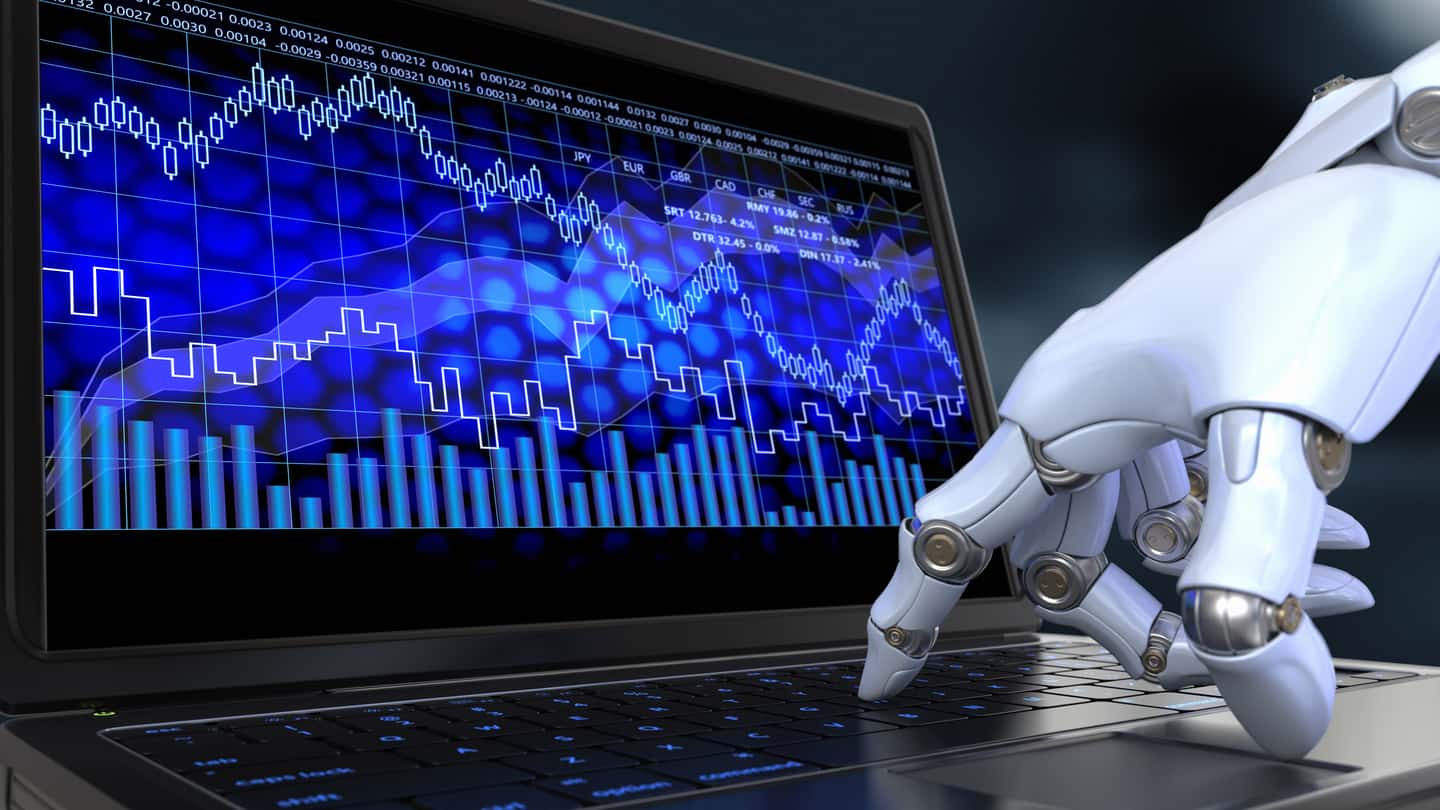
Our problem is inequality, attached to Greed, which is now plundering the world in the form of profit seeking algorithms that are generating profits for the few, using the latest technology Algorithmic trading designed to capitalize on market inefficiencies, trades can be completed at speeds and frequencies impossible for mere mortals.
Algorithm’s are creating a new social contract between a sovereign and citizens, in which the people collectively who were sovereign are becoming digitalised citizens.
Power now resides with those best able to organize knowledge.
The knowledge revolutionshouldbring a shift to direct democracy, but those who benefit from the current structure are fighting this transition. This is the source of much angst around the world, including the current wave of popular protests.
Neither, physical military strength, nor access to capital are now sufficient for economic success.
If we are to have any chance, we have to change to direct democracy which is easier to achieve than big, sprawling governments.
I’m not sure we can, but I know it will happen because capitalism or any other systems will no longer generate sufficient income to sustain social welfair states.
———————
The problem is how do we reconcile that with democracy in countries composed of millions of citizens?
Talk of artificial intelligence destroying humanity plays into the tech companies’ agenda, and hinders effective regulation of the societal harms AI is causing right now.
Barely a week seems to go by without a tech industry insider trumpeting the existential risks of artificial intelligence (AI). Fearmongering narratives about existential risks are not constructive.
Serious discussion about actual risks, and action to contain them, are.
The sooner humanity establishes its rules of engagement with AI, the sooner we can learn to live in harmony with the technology.
Algos require an uninterrupted power supply and reliable internet access. Even a brief failure in these conditions can prove cataclysmic.
———————–
What is needed are direct opportunities for all to invest in the future.
One of our fundamental challenges in the years ahead will be to mobilize the substantial sums needed for investment in everything from green infrastructure to the cutting-edge technologies that we will need to achieve net zero emissions by 2050 and slow the course of climate change.
At the moment we have Green bonds/Climate change bonds are issued exclusively to finance projects that positively impact the environment. Today, more than 50 countries have issued green bonds. However, the appeal of this market and the fact that there is no binding regulatory framework for green bonds may lead to suspicions of ‘greenwashing’ (false green claims).
There’s nothing new or specifically European about green bonds.
They’ve been around since the beginning of the 21st century. Although they weren’t yet called green bonds, the first of them are thought to have been issued in 2001 by the City of San Francisco to finance a solar power project.
Any organization – such as governments, corporations, and financial institutions – can issue a green bond.
The green bond market is a portion of the larger debt market. Historically, over US$2 trillion of green bonds have been issued globally to date, with the potential to grow to US$5 trillion by 2025.
Industry bodies and investor action groups such as Climate Action 100+, as well as large
market investors such as sovereign wealth funds and pension funds, are in a strong position to drive development of this market. However there is no universally accepted legal and commercial definition of a green bond.
Green bonds are proven to be an effective means to secure the resources required to meet the national climate change goals, so why not issue green bonds that any joe soap could invest in.
Lotteries exist in 46.67% of countries worldwide. In many countries, with the adoption of digitalization the Lottery is a lifestyle and a massive contribution to their revenues. The Lottery industry continues to grow worldwide, with an expected increase of 4.1% CAGR by 2031. The spread of online lotteries associated with the increase in smartphone and internet usage is one of many factors that can drive growth in the global market. The Lottery market is projected to grow to $405.20 billion by 2028.
US POWERBALL 59 tickets were sold every second of the year.
MEGA MILLIONS 2,817 tickets every minute or about 47 tickets every second—of the whole year!
EUROMILLIONS 342 EuroMillions tickets were sold every single second of 2019—or 20,566 tickets a minute!
UK LOTTO 122 lottery tickets for every one of the 31,536,000 seconds in 2019
They allows us all the chance to change our lives.
A staggering amount of money that goes into lotteries on a daily basis. In fact, just about every second of every day.
By making 1% OF ANY LOTTO TICKETS purchase eligible to acquire a climate Bond (with a gurantee interest return in twenty years from now..) RATHER THAN BIN THE TICKET ON LOOSING ONE COLLECTS THEM IN ORDER TO FUND SUSTAINABLE DEVELOPMENT.
It would be everyone’s collective interest to identify with the physical manifestations of climate change.
Climate change is a defining issue of our time.
All human comments appriciated. All like clicks and abuse chucked in the bin.
On July the 20th this year it will be fifty five years since one of us stood on another planet. Since then only 24 people have seen the whole of Earth. Achived with less computer power that is now in our phone’s.
In those fiftyfive years we have had fifty-five active conflicts. Eight of these 55 conflicts were classified as wars.
This is the world we got.
21st Century
Vietnam War (1962 – 1973
Persian Gulf War (1991)
War in Afghanistan (2001)
Operation Pillar of Defence (2012)
War in Iraq (2011)
2014 Gaza War (2014)
Russian Annexation of Crimea (2014)
War in Donbas (2014-present)
Yemeni Civil War (2015-present)
Turkish coup d’état attempt (2016)
2021 Israel-Palestine crisis (2021)
Russian Invasion of Ukraine (2022)
We are truly living in a very unique time in the history of our civilization, facing several simultaneous challenges and converging crises:
Because the world is a cauldron where dozens of cultures, religions and ideologies mix with each other, which always leads to a conflict. We are all born of frailty and error.
A deteriorating environment, a very unequal distribution of dwindling resources, widespread poverty, wars, climate change, oppression of many peoples, and dissatisfaction with life even in those countries with a surplus of material wealth.
What can we do about it?
The answer to such question is certainly not simple, and you will not find it in any textbook.
All these problems and converging crises are systemic.
For the most part these crises we humans have brought upon ourselves over the course of many centuries by our attitudes towards each other and towards Nature, and by the concepts we have developed regarding who we are and the very purpose of our being here — in other words, ourworldview.
The 20th century revolution of technologies that permits long distance travel and instant communication across the world has brought all cultures closer together, making us more aware than ever of the many diverse spiritual-cultural traditions that have flourished for millennia as intricate, elaborate meta-solutions to the challenges and opportunities of living in a particular place.
Now we are challenged to integrate the wealth of knowledge and capability that this remarkable period has brought us intoa new narrative of interbeing— a synthesis of ancient wisdom of our interconnectedness and interdependence with modern science and technology.
We now have a choice to make!
Either we move into a new phase in the evoloution of consciouness and a new ear of life on planet Earth, or we will witness the unraveling of the web of life and the immature end of our species and much of the community of life along with us.
The time to make this choice is now!
It starts with a fundamental shift in our dominant worldview. It is time to grow up!
A world with less gravity and more humanity.
Where people get what they deserve rather than deserve what they get. Where there is a God for everyone and no one God is better than other. Where an empty stomach is an alien concept. Where mind is held high and heart is held higher.
Where people are immaterialistic. Where people think logically, question and reason everything without blindly following anything or be superstitious.
Where people respect each other and not judge others for their actions. Where one should treat others as one would like others to treat oneself.
History shows us that none of the above is possible without AI augmentation of human intelligence to enshrin values of beauty, agency, and individuality. by benevolent, incorruptible agencies that are beyond human intelligence.
The era of Artificial Intelligence is here. AI has already started.
AI is not a living being that has been primed by billions of years of evolution to participate in the battle for the survival of the fittest, as animals are, and as we are. It is math – code – computers, built by people, owned by people, used by people, controlled by people.
Its true that AI doesn’t havegoals of its own, but its influnce on our lives is endangering the very meaning of life and instead of us embracing a worldview based on facts, it will cause us to lose our ability to focus on the things that threaten us most.
Understanding what “we” want is among the biggest challenges facing AI.
It is very difficult to encode human values in a programming language, but the problem is made more difficult by the fact that we as humanity do not agree on common values, and even parts we do agree on change with time. The question then becomes how do we aligne AI with Human values.
Whose human values?
Ah, that’s where things get tricky.
A major change is coming, over unknown timescales but across every segment of society, and the people playing a part in that transition have a huge responsibility and opportunity to shape it for the best.
So here are some of the questions we should be asking.
What does it mean to you to have artificial intelligence aligned with your own life goals and aspirations?
How can it be aligned with you and everyone else in the world at the same time?
How do we ensure that one person’s version of an ideal AI doesn’t make your life more difficult?
How do we go about agreeing on human values, and how can we ensure that AI understands these values?
If you have a personal AI assistant, how should it be programmed to behave?
If we have AI more involved in things like medicine or policing or education, what should that look like?
What else should we, as a society, be asking?
Globally, humankind must think about the kind of future we want to have.
The recently articulated United Nations Sustainable Development Goals (SDGs) offer a good starting point, but these goals are merely the preconditions necessary for survival and flourishing, so they are not
enough. A further step is needed to determine our common goals as a civilization, and more
philosophically, the purpose of human existence, and how AI will fit into it.
Generative AI is not hype.
Instead, it acts at a scale so large that it will transform how we interact with technology itself. It will far outpace what we’ve seen so far today.
AI has been used to help sequence RNA for vaccines and model human speech, technologies that rely on model- and algorithm-based machine learning and increasingly focus on perception, reasoning and generalization.
If we reach a point where AI is able to understand our languages, AI systems would be able to read and understand everything ever written. In the mean time rest assured that we will continue to fight wars against each other, as we have done since day until the end of time, or at least Earth’s time which is in about 5.4 billion years.
All human comments appriciated. All like clicks and abuse chucked in the bin.
2024, Global climate trends are cause for both deep alarm, and our continuing denial of the absurdity of the verbal discussions on the subject, a task which is now monumental.
“We have built a civilization based on a world that doesn’t exist anymore.”
“We are conducting an unprecedented experiment with our planet,”
We have now unmoored ourselves from our past, as if we have transplanted ourselves onto another planet.
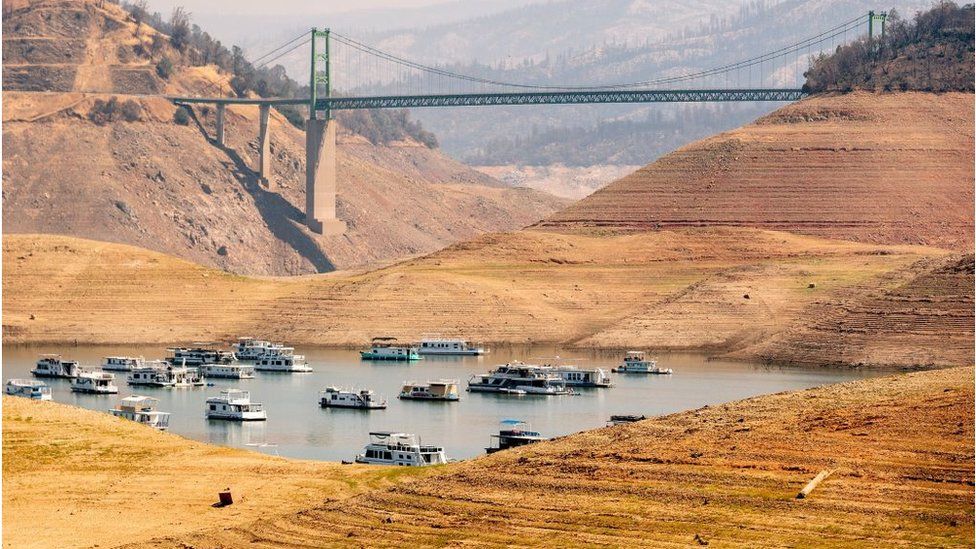
Without immediate action, we are at grave risk of crossing irreversible tipping points in the Earth’s climate system. +2.0C+3.6F with our current policies is the reality by around 2050s.
The world has already heated up by around 1.2C, on average, since the preindustrial era, pushing humanity beyond almost all historical boundaries,
AND WE STILL CANNOT EXCEPT THE INEVITABLE.
The enormous, unprecedented pain and turmoil caused by the climate crisis is often discussed alongside what can seem like surprisingly small temperature increases – 1.5C or 2C.
“The difference between 1.5C and 2C is a death sentence”. No amount of global warming can be considered safe and people are already dying from climate change.
A severe heatwave historically expected once a decade will happen every other year at 2C.
The fingerprint of climate change on recent extreme weather is quite clear, In fact, extraordinary, with the oceans alone absorbing the heat equivalent of five Hiroshima atomic bombs dropping into the water every second. The oceans have heated up at a rate not seen in at least 11,000 years.
——————
These temperature thresholds will again be the focus of upcoming UN climate talks and Climate Summits
Thirty years of climate summits: Where have they got us?
All have proved that its nearly impossible to achieve any coordination, with the whole process becoming too business-friendly, to the detriment of other perspectives and voices.
It is important to look at the bigger picture.
By most standards the world’s governments are currently failing to avert a grim fate.
To COP28 UN Climate Change Conference in Dubai, the United Arab Emirates, was the biggest of its kind. Some 85,000 participants, including more than 150 Heads of State and Government, were among the representatives of national delegations, civil society, business, Indigenous Peoples, youth, philanthropy, and international organizations in attendance at the Conference from 30 November to 13 December 2023.
Given these problems and repeated failures, why continue with the COP meetings?
Because we are arriving at tipping points that represent thresholds which, when crossed, will trigger abrupt and self-perpetuating changes to the world’s climate and oceans.
They are threats of a magnitude never before faced by humanity – one-way doors we do not want to go through.
Governments are more concerned about Energy and food price rises mean that governments face a cost of living and energy security crisis, with some threatening to respond by returning to fossil fuels, including coal.
The climate disaster is here. There is no huge chasm after a 1.49C rise.
Superimposed on top of these long-term warming trends overshadow the real-world hazards they amplify: Heat waves, floods, droughts, wars and mass migration.
Meaning that people and ecosystems are dying, that people are losing their livelihoods, that agricultural land will be unusable.
For climate scientists, this is the “I told you so” moment they never wanted.
So what we’re seeing now is only a foretaste of what could happen if efforts to reduce emissions aren’t successful.
I hope that maybe more people will realize that this is really happening and put pressure on their representative to put actions on the top of their agendas. Our individual choices can challenge the status quo, and force things to change.
Like cleaning up the Advertising Industry to sustainability rather then consumerism across all their out lets – Main Stream TV, Socially Media, Bill Boards and the like.
To cut out the hypocrisy in Trade deals that are not Green, along with home grown policies to grow the economy above genuine climate demanding Projects. To push for a consumer chapter to be included in future deals which reflects the issues that are most important to consumers.
So what’s stopping us from getting there?
The rules governing global trade policy mean that powerful countries and corporations escape accountability.
One of the biggest examples of hypocrisy is the EU’s common agricultural policy – or CAP – established over 50 years ago and currently under reform. This policy, thanks also to the support of highly protective tariffs and agro-chemical companies, has allowed destructive intensive practices to become the default way European food is produced.
Why are French farmers protesting? Their slogan reads “It doesn’t make sense” ~Shat Upon by Regulations, on environmental protection.
They are not being paid enough TO FUCK IT UP.
Perhaps our slogan should be: # ITSALLBOLLOCKS.
We can challenge the myth that we have to choose between protectionism versus free trade, and end the myth that free trade brings any meaningful benefit to the average consumer.
All human comments appreciated. All like clicks and abuse chucked in the bin.
Man is said to have evolved from monkeys and apes …but we still have monkeys and apes.
We live in a world of verball diarrhoea, another words every Joe saop has an opinion.
However the world today is being expressed as a single unified, interconnected and interdependent global system, and since we wish to remain as our individualistic egoistic selves while the world becomes more and more connected, we experience such tightening connection as suffering.
Characterized by intricate interconnections, rapid advancements in technology, globalization, diverse geopolitical challenges, and a multitude of social, economic, and environmental issues.
Since everyone understands the world from his/her own perspective which may be different from others due to religions beliefs we cannot understand what wholeness is.
Our world is beautiful but screwed.
71% water, average 93,000,000 miles away from a white star, around which it completes an elliptical orbit every 365.25 days with a dominant species are Homo Sapiens, which can live anywhere. It has one large satellite measuring 2,159 miles in diameter which is some 239,000 miles distant and is tidally locked.
—————–
With it’s current greedy drive for more – more this, more that, more me, me, me. causing greater and greater stress to the planet, earth is experiencing its hottest year on record and massive floods, fires and other climate-related disasters have taken root.
And lack of action on climate change threatens billions of lives and livelihoods.
Most of us know this but we don’t know when something amazing or horrible will happen next and it could be the greatest or worst thing for this world.
Like the opening of a massive technological gap between the global rich and the poor.
As our World becomes more disaster prone due to the extreme changes to our Climate, these vestibules of self-interest will be dumped for hardline practical leaders who will do whatever is necessary for the survival of mankind.
In the mean time all we do is fight over utterly meaningless bullshit.
———————————–
We carry affordable supercomputers in our pockets, and that is even more powerful than it sounds.
It has created multiple civilizations, none of which has been able to achieve a satisfactory minimum level of quality of life; the poorest people still live in inhumane conditions; the very few richest people own more than the all of the rest put together.
Most markets are moving online, moving from the physical world into the digital app world, until they’ll be purged there too by oligarchies; which will be the next medium?
Right wing politics and populism continue to gain ground through advocating individual freedom to prosper, while left wing politics is failing to establish and administer a necessary minimum of social equality and governmental regulation, which continues to propagate financial deregulation aka greed is good which in turn prevents a normal fluctuation of economy turning it into steep growth and catastrophic chain reaction crashes.
The extreme conservatism of certain societies founded on medieval concepts and flawed morals coupled with perpetual poverty and social stagnation certainly help maintaining inequality in the world.
Alternatively, we may destroy ourselves in the midst of our seemingly endless growth, and nature will resume its course over the centuries and millenia to come.
How can anyone with an active mind, who is aware of all this, neatly summarize his or her POV “of the world today” with A SINGLE WORD???????
Pretty nonsensical, if you take a couple of minutes to think about it.
The chances of wholeness happening now are roughly zero.
Why?
Because politicians who were starved of intelligent thinking and ARE BEING ELECTED INTO OFFICE BY DIGITLIZED CITIZENS RUN BY PROFIT SEEKING ALGORITHMS.
Recent advances in artificial intelligence raise a variety of questions about how to control a technology that could improve or threaten civilization in countless ways.
The Doomsday Clock that has been ticking for 77 years. The clock isn’t designed to definitively measure existential threats, but rather to spark conversations about difficult scientific topics such as climate change. Trends continue to point ominously towards global catastrophe.
Due to ongoing concerns about the war in Ukraine, the Israel-Gaza conflict, the potential of a nuclear arms race, and the climate crisis, its almost impossible to get people’s attention about existential threats and the required action.
We can reduce them but doing so is not easy, nor has it ever been. It requires serious work and global engagement at all levels of society.
The war in Ukraine poses an ever-present risk of nuclear escalation. And the October 7 attack in Israel and war in Gaza provides further illustration of the horrors of modern war, even without nuclear escalation.
A more realistic endpoint to both wars would be a military ceasefire, in which increasingly exhausted combatants see frontline positions harden around a line of control. That will become clearer by the summer or autumn, and will at some point prompt a question for its western backers: how long should the west continue supplying military aid at current levels to Ukraine/Israel
This requires a collective even harder stance.
A political earthquake. That’s the metaphor that stuck.
——————–
What if science itself is in some way culpable for all this?
We don’t know the real answer yet, and we probably will never know, but this is the moment to anticipate what such a finding might ultimately mean. It could obliterate the faith of millions.
This may be the great scientific meta-experiment of the 21st century. That the common people of the world have been forced into a real-life lab experiment, at tremendous cost — there is a moral earthquake on the way.
All of these disasters brought to you by the total, self-assured unanimity of the highly educated people who are supposed to know what they’re doing, plus the total complacency of the highly educated people who are supposed to be supervising them.
A perfect storm, as institutions crumpled and collapsed. with new fault lines targeting up the most powerful country on the planet.
Don’t disengage as digital technology is disrupting international politics in myriad ways.
To start, it is bringing new dimensions to the authoritarian playbook, enabling governments to more easily manipulate information consumed by citizens, to monitor dissent and track political opponents, and to censor communications.
Democracies, meanwhile, are struggling to strike the right balance between rewarding economic innovation and reaping the financial benefits of Big Tech, while protecting user privacy, guarding against surveillance misuses, and countering disinformation and hate speech.
Can democracies strike an appropriate balance between safeguarding their societies from dangerously polarizing online rhetoric while maintaining commitments to protecting free expression?
Can civic activists, independent journalists, and human rights advocates continue to find innovative ways to push back against government repression using new tools, tactics, and technologies?
The answers to these questions are not foretold—all of them represent major areas of contestation.
But one thing is clear. There is an expanding set of countries relying on facial recognition technology, big data analytics, predictive policing techniques, and safe city systems to enhance their security capabilities. There is now a close relationship between authoritarian regimes, constraints on political freedoms, and corresponding government reliance on digital repression techniques.
What technological methods are Gulf states using to enact their political agendas?
What can civil society make of the growth of internet shutdowns and social media blockages around the world?
Government disdain for international human rights principles “is pushing resistance to the breaking point.”
Disinformation has become the tool of choice for many illiberal regimes. From extreme political movements, particularly far-right groups, which harness social media to propagate falsehoods, spread conspiracy theories, and foment polarization and identity politics.
Flooding social media channels with competing or distracting information that overwhelms legitimate information sources, and deliberately post offensive content online to provoke or disrupt conversations
.A bigger question is how much governments should hold platforms responsible for facilitating the spread of bad information .
It is insufficient to blame Facebook or Twitter’s poor leadership for the much more complicated proliferation of politically motivated falsehoods.
These varying global perspectives shed light on emerging areas of contestation and highlight the complexities, urgency, and dangers involved in the advance of digital technologies and their effects on politics globally.
One has only to look at technology usage in the current wars in order to relise that Alogrithms are ruling not just how lives or dies on the battle fields but the direction we all going in our everyday lives.
All human comments appriciated. All like clicks and abuse chucked in the bin.
A global pandemic killing millions of people and forcing entire countries into lockdown.
Then inflation takes off and (not unrelated) one country invades another and the resulting war affects us all.
Whoa! Where on Earth did all that come from?
We have to think about how we got here.
As if we don’t know its all wrapped up in one word Inequality.
The cost of things average people must buy—healthcare, education, housing—tends to have risen more than wages did over the last two decades. Rising inequality across income, race and gender all demand urgent attention. It needs to made clear to leaders that in 2024 their citizens are expecting them to raise their ambition for humanity and deliver bold agreements to tackle poverty, inequality and climate change.
Government’s policy making will need to become more innovative to address such challenges other wise we going to have a left behind technological societies. We’re going to see, unfortunately, more technological unemployment. We’re going to have to think very carefully in political terms and in social terms about the implications of further automation.
Individual responsibility will play a role, too, in areas such as climate change.
To ignore the issue of inequality culture will need to adjust in terms of revisiting some of our values.
—————–
To start thinking outside of the box. We may have to consider very seriously ideas such as a universal basic income.
There are just over 7 billion people living on the planet today, spread between 196 (recognized) countries. Within each of these countries are groups of people with different ethnic backgrounds, different religious beliefs, different political beliefs. It’s because of these differences, you could argue, that the world is plagued by conflict.
Unfortunately, the future isn’t talking. It’s just coming, like it or not and we as individuals need to take ownership of this.
I dont know about you but I realized long ago that globalization was on its last legs. I also realize this isn’t pleasant to think about. Western economies have become knowledge based. This means Marx’s three factors of production (land, labor, capital) now have a fourth.
Politics as a social contract between a sovereign and citizens is no longer working. Each individual’s share of sovereignty, and therefore their freedom, diminishes as the social contract includes more people.
Power now resides with those best able to organize knowledge turning politicians into basically middlemen, bring a shift to direct democracy, with popular social media protests swamping sprawling governments.
We must do more to assertively channel technology to support progress and protect people and the planet.
As we entered the the 2020s it is clear that we are far from unlocking the potential of technology for our toughest challenges. We stand at a critical juncture to put these technologies to work in a responsible way for people and the planet.
Technology and political trends are aligning against mega-powers like the US and China.
How do we reconcile that with democracy in countries with millions of citizens?
Not with “America Alone” ” Brexit” or any other forms of isolation, which are highly problematic, as they are based on anxiety and insecurity, so inevitably create discord and division.
This is obvious to anyone with a brain looking at climate change – trade – wars – inequality – technology’s – and ideologies of I am all right Jack.
—————————
Historically, political regimes tend not to last more than a few centuries.
I’m not sure we can. Some things are so horrible, you don’t want to think about them.
Today’s great powers have little choice but to spend their way to political stability, which is unsustainable, and/or try to control knowledge, which is difficult.
Nor do we have any elder statesmen or nationally unifying figures whom everyone respects, much less agrees with. This will make our various problems worse.
Ownership rights mean little without a government to protect them and courts to settle disputes.
This world we now inhabit wasn’t always fit for human’s nothing requires it to remain so. At some point, it will develop into something else. When and how that will happen, we don’t know yet. But we know it will.
We haven’t even talked about climate change. Issues like climate change will create further exacerbations on conflicts, and new forms of technological and cyber warfare could threaten countries’ elections and manipulate populations.
In the last two years: 90% of the data in the world was created.
Now it is up – technology companies large and small, industry, policy-makers, citizens and consumers alike – to use this power for good, before we run out of time. Now is the opportunity for leaders to step up into this new wave of opportunity and expectation.
We are the first generation to know we’re destroying the world, and we could be the last that can do anything about it. Our leaders are not on track to deliver. We need to ensure we hold our politicians accountable.
Food production is a major driver of wildlife extinction. We need to make wasting our resources unacceptable in all aspects of our life. We can all do more to be more conscious about what we buy, and where we buy it from.
We can and must end poverty and hunger, in all their forms and dimensions by addressing the underlying complex issues of fragility, conflict, and displacement and the looming threat of climate change.
The challenges facing the world are complex and intertwined and require complex solutions.
Another word is about to enter our collective dictionaries: permacrisis. What we do between now and 2030 will determine whether we as a collective species are intelligent or just dumm machines
Solutions to climate change and biodiversity loss won’t come from any one sector: they’ll come from governments, finance, business and civil society.
We’re analyzing satellite images but unable to see the picture that we all live on the same planet.
Like most of us, we are brought up to think in terms of countries with borders and different nationalities.
In some cases, there are natural borders formed by sea or mountains, but often borders between nations are simply abstractions, imaginary boundaries established by agreement or conflict.
How then do we explain nationalism? Why do humans separate themselves into groups and take on different national identities? Maybe different groups are helpful in terms of organisation, but that doesn’t explain why we feel different. Or why different nations compete and fight with one another.
When people are made to feel insecure and anxious, they tend to become more concerned with nationalism, status and success. Poverty and economic instability often lead to increased nationalism and to ethnic conflict.
The world in general does not have a sense of group identity.
If a terrorist’s biggest weapon is terror, climate change is going to inflict terror beyond belief.
We must shift 85% of the world’s energy supply to non-fossil fuel sources, not grant more oil exploration licences. Our economies depend on healthy, supportive natural systems.
A more sustainable path is possible. But we need to rally individuals, governments, companies and communities around the world to take action with us over the next decade.
It’s impossible to override the fundamental interconnectedness of the human race.
People from all around the world need to take a stand a citizen’s movement using the NEW BEADY EYE HASHTAG: #movebeyonditwiththebeadyeye
All human comments appreciated. All like clicks and abuse chucked in the bin.
≈ Comments Off on THE BEADY EYE SAY’S: IT’S FAR TO LATE TO CONTROL AI.
( Six minute read)
Why?
Because the change is already taking place.
Because, There are now more cell phones in the world than people. There were less than 7% of the world on online in 2000, today over half the global population has access to the internet.
Because, technology has already radically transformed our societies and our daily lives, from smartphones to social media and healthcare. Technology touches nearly everything we do.
Because, your voice, your image, your race, your shopping habits, your health, your movement’s, your viewing habits, your voting, your financial standing, your criminal record, your interests, your decision making, down to what you are eating, not forgetting your sex life is and has being harvest for free.
All can be and are being faked.
Because, virtual interactions offers enticing financial opportunities for big businesses and digitalized Governments.
——-
Excessive use of technology can do more harm than good, and we should bear this in mind before we rush into digitizing our lives.
When all areas of human activity get rapidly digitized, it’s easy to become desensitized to the importance of innovations and advancements for the overall progress of society. Though it may be tough to predict which advancements technology would bring next, some innovations are already changing our beliefs about the world around us.
The coming generations will be living in a mixture of reality and the metaverse. Using headsets to create a 3D avatar – a representation of themselves – to enter a virtual world connecting all sorts of digital environments. Perhaps when they go online shopping, they will be able too try on digital clothes first, and then order them to arrive in the real world.
A virtual economy of inequality. Nowhere does the intersection of technology, enterprises and individuals hold greater opportunity than in the metaverse.
If it happens at all – will be fought among tech giants for the next decade, or maybe even longer.
———-
The Metaverse doesn’t exist – at least not yet, but there no way of predicting how people will react to it, or how it will be used.
( Everything transformed into line of code, augmenting reality by superimposing a computer-generated image on a user’s view of the real world. You have an experience while wearing another person’s body and you get to walk a mile in that person’s shoes.)
The next generation of the internet has the power to reshape the way that businesses and consumers engage, transact, socialize, work and learn together exploring the world on their own terms.
As of today, there isn’t anything that could legitimately be identified as a metaverse. The metaverse is essentially a massive, interconnected network of virtual spaces,
A better question might be:
What could become the metaverse?
Something that people would have considered magic just a few decades ago is now gaining popularity in business, gaming, and team building.
The combination of augmented, virtual and mixed reality – will play an important role.
The distinction between being offline and online will be much harder to delineate. So we either end up in a situation where it’s complete chaos and everyone’s allowed to do everything and you know, there’s racism, sexism, abuse and all that kind of stuff, or there’s incredibly tight moderation and no one’s allowed to do anything.
Wearable screens and gesture-based computing, other recent innovations, are predicted to soon substitute the usual PC and phone screens.
——-
Robots, another buzzword in today’s business world, have already replaced humans in some workplaces — robotic arms work at assembly or packing lines. Flying cars will soon address the issue of limited ground space and long traffic jams.
Clearly, technology by itself is neither good nor bad. It is only the way and extent to which we use it that matters.
It is indisputable that thanks to technology, we get a chance to live a life our predecessors could not even dream about.
But do all tech advancements bring sole good to our lives?
Or, maybe, the impact of tech innovations is quite ambiguous.
We are all at the mercy of machine learning algorithms, that are non transparent, non accountable, and non regulated.
So we have an open letter from those on High in the Tec world, advocating that the brakes should be applied to the creation of new tech that generates falsehood’s. You dont have to be a Tech genius to know that this is not going to happen.
My advice is.
To protect oneself.
Every person should have a secret verification word in order to authenticate the caller and a symbol to be used in all texts and emails, that if not present in any communication received or sent, marks it as False.
——–
All of which begs the question: just why is the 21st century so dystopian?
A few years ago, you might have thought: this is just a phase. It’ll pass. But it’s not. If anything, it’s getting worse, and it feels like it’s here to stay.
When I say “it”, or “dystopia,” you might wonder exactly, precisely what I mean. What I mean is very simple though. How many crises do we face? More than I can easily count. Let’s try to list them all, though we’ll run out of sanity and room before we finish, for sure. Finances? Total crisis, incomes falling around the world, debt levels soaring. Infrastructure? Mega-crisis, unless you think the infrastructure we have survives this century, let alone this decade. Social systems? Everywhere from France to Britain to America — crisis. People’s…minds? Crisis, especially in young people, depression and anxiety and suicide rates soaring. Then there are the big ones: climate change and mass extinction, not to mention politics , which has taken a notably…fascist…turn, again.
All of this is what scholars have begun to call The age of Polycrises. And in it, the better question isn’t: “what’s in crisis?
It’s: what isn’t?
Like I said, the list above is a mere brief beginning. Migration and refugees? Another one. Peace and democracy? Yup, in crisis.
How about upward mobility? Check. Faith and confidence in institutions? Super crisis. Take a look at any element of society or the world, and chances are, it’s in crisis. How about inequality? Shocking levels of crisis.
This is why the 21st century feels so dystopian.
It’s not really a “feeling,” though that’s the way it’s often made out to be by media. It’s an empirical reality. Scholars have begun to conceptualize the 21st century as a “Polycrisis” for a reason, which is that the dystopia is real.
So when media, bigwigs, wannabe intellectuals and so forth, make all this out to be exaggeration, hyperbole, imply that you are the fainting Victorian bride in the room, because, hey, Tucker!! Everything’s Great!!…they’re completely wrong. And that needs to be said. It’s a form of denialism at this point, because…
The next part is about cause and effect. We need, as a civilization and a world, to figure out what’s causing all this, so we can begin to undo it.But if all we do is deny it…then, my friends, our gooses are well and cooked. It’s fascism on a dying planet, in different bitter and poisonous flavours, maybe.
ITS NOW AGI. ( Artificial General Intelligence) Already it is transforming every walk of life.
AI is not a futuristic vision, but rather something that is here today and being integrated with and deployed into a variety of sectors.
There are numerous examples where AI already is making an impact on the world and augmenting human capabilities in significant ways. This includes fields such as finance, national security, health care, criminal justice, transportation, and smart cities, digital education, decision making, democracy’s.
Artificial intelligence algorithms are designed to make decisions, often using real-time data. They are unlike passive machines that are capable only of mechanical or predetermined responses. Using sensors, digital data, or remote inputs, they combine information from a variety of different sources, analyse the material instantly, and act on the insights derived from those data. With massive improvements in storage systems, processing speeds, and analytic techniques, they are capable of tremendous sophistication in analysis and decision making.
———-
These software systems “make decisions which normally require [a] human level of expertise” and help people anticipate problems or deal with issues as they come up. As such, they operate in an intentional, intelligent, and adaptive manner
AI generally is undertaken in conjunction with machine learning and data analytics. Machine learning takes data and looks for underlying trends. If it spots something that is relevant for a practical problem, software designers can take that knowledge and use it to analyse specific issues. All that is required are data that are sufficiently robust that algorithms can discern useful patterns. Data can come in the form of digital information, satellite imagery, visual information, text, or unstructured data.
AI systems have the ability to learn and adapt as they make decisions. In the transportation area, for example, semi-autonomous vehicles have tools that let drivers and vehicles know about upcoming congestion, potholes, highway construction, or other possible traffic impediments. Vehicles can take advantage of the experience of other vehicles on the road, without human involvement, and the entire corpus of their achieved “experience” is immediately and fully transferable to other similarly configured vehicles. Their advanced algorithms, sensors, and cameras incorporate experience in current operations, and use dashboards and visual displays to present information in real time so human drivers are able to make sense of ongoing traffic and vehicular conditions. And in the case of fully autonomous vehicles, advanced systems can completely control the car or truck, and make all the navigational decisions.
If we don’t want to end up as deglazed digital citizens here’s what should be done.
Regulate broad AI principles rather than specific algorithms,
Take bias complaints seriously so AI does not replicate historic injustice, unfairness, or discrimination in data or algorithms,
Maintain mechanisms for human oversight and control, and
Penalize malicious AI behaviour and promote cybersecurity.
All human comments appreciated. All like clicks and abuse chucked in the bin.
The message is clear Climate Change is here and is already having a significant impact.
It is inconceivable that we still have people refusing to accept the facts that surround them, even if they saw 100 more years of it plain and apparent they and unfortunately many of our present world leaders are blind to what is happing and what is to come.
How much more evidence do they and us need ?
MAKE YOUR MINDS UP!
The Evidence for Rapid Climate Change Is Compelling:
I’ve not noticed any changes in the weather outside of the norm or I don’t give a Fuck what is happing. I’d rather live on another planet, than on one where every aspect of your life is subject to rigorous scientific control is not possible.
There is unequivocal evidence that Earth is warming at an unprecedented rate.
Right now there’s nothing like enough understanding.
Observers recognise that the decisive, political steps to enable the cuts in carbon to take place will have to happen before the end of next year.
Human activity is the principal cause. It is undeniable that human activities have produced the atmospheric gases that have trapped more of the Sun’s energy in the Earth system.
However if there was meeting tomorrow of world leaders they would as before, argue that its not their responsibility, making promises that cannot be kept.
To have any chance of drilling into them the urgency of tackling climate change on a global scale perhaps it would be best to invite them all together in Gautama bay, take their mobile phone, starve them for a week and get them to write their last wills and testaments.
This might fired the starting gun on what will become a global race to eliminate fossil fuels.
At this point you might be asking why is it so difficult for the world to take action.
The effort to control climate change impacts virtually every element of a country’s economy “so countries have traditionally been nervous about what they’re going to be asked to do.”
The idea that every five years countries would be asked to come up with more ambitious targets, ramping up their efforts is therefore bull shit.
“We are living in an interconnected global village with a common stake,” says Xi.
“All countries are closely connected and we share a common future. No country can gain from others’ difficulties or maintain stability by taking advantage of others’ troubles.”
“We should embrace the vision of a community with a shared future in which everyone is bound together,” he continues. He is right! Heart-stirring stuff, eh?
A cynic might think his reassuring words were partly a ploy to reingratiate China with the climate-conscious Europeans, and isolate a climate-sceptic US President MR DUMP.
But there is a much more important broader context for his announcement:
Let’s be clear what it means:
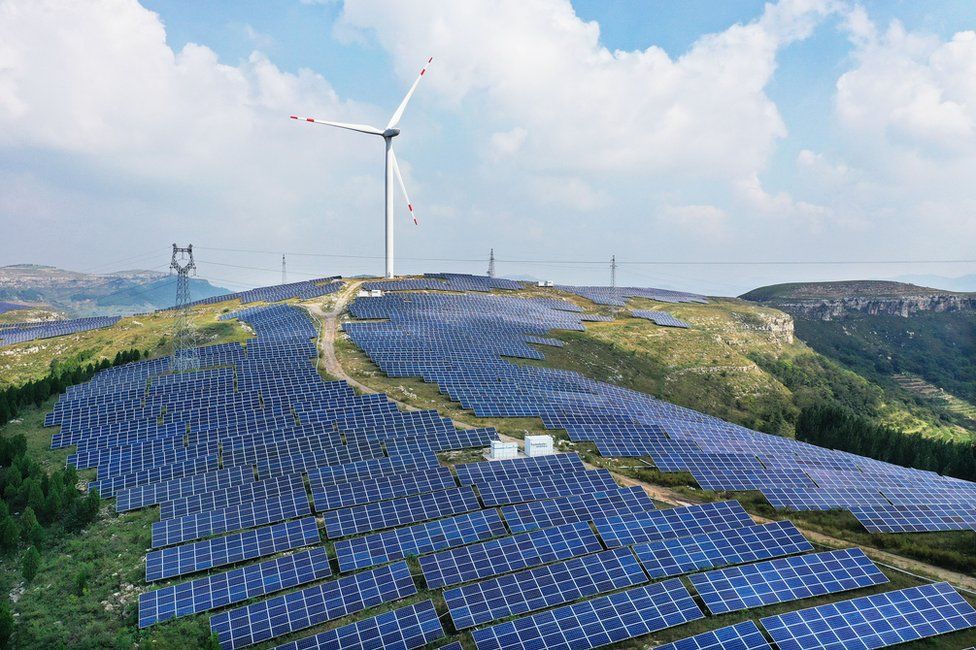
China, the most polluting nation on earth – responsible for around 28% of global greenhouse gas emissions – is saying it is going cut that back to virtually zero within 40 years. The commitment is of significant because China has never promised anything near as bold as this on climate before. President Xi’s 2060 pledge was notably unconditional – China will move ahead whether or not other countries chose to follow.
Why?
Because the cost of renewables follows the logic of all manufacturing – the more you produce, the cheaper it gets. Why invest in new oil wells or coal power stations that will become obsolete before they can repay themselves over their 20-30-year life?
Why carry carbon risk in their portfolios at all?
It looks like Xi has judged that the economics of clean energy mean that decarbonising is now the most sensible choice for the Chinese economy as well as for the world’s climate.
So can we stop worrying about climate change?
Sadly we cannot.
It is going to take eye-popping investment in wind, solar and nuclear power.
Even as the economics tilts in favour of renewables the task of decarbonisation is still enormous. However once half the world is on-board with the project of decarbonisation it is hard to see how the rest could hold out.
Evidence of environmental damage and climate change everywhere. It’s the biggest challenge humanity has ever faced. Tackling it means changing how we do virtually everything.
We are right to be anxious and afraid at the prospect. Remember that by 2050 urban centres will hold 75% of the world population and 40% of them have no resilience plans in place, and have no plans to develop one in the hear future.
Currently accounting for 70% of the worlds population and 70% of global GDP and 70% of CO2 emissions.
Don’t get me started on the food crisis.
You’ll be even more apprehensive if I was venture down that online rabbit hole.
Consider this conundrum:
When you talk to climate scientists you quickly discover they are far more worried about the dangers of global warming than most of us. Some tell you privately that they have had counselling to cope with the psychological effects of knowing the world is facing an impending disaster and not enough is being done.
Yes at this moment in history were in a mess. Wars, Natural disasters, Energy, Rampant Inequality etc. On the right, I am alright Jack on the left just of a scream that will before defang in the next few years.
Leadership is action not position.
As Henry Miller said ” No man is great enough or wise enough for any of us to surrender our destiny to. The only way in which anyone can lead us is to restore to us the belief in our own guidance. “
All human comments appreciated. All like clicks and abuse chucked in the bin.
When I first started looking at disaster capitalism, it was in the context of warfare and counter-terrorism, now it’s privatized exploitation of Pandemics and Climate Change.
During a major crisis, regular people are understandably focused on the everyday challenges of surviving. They rarely can also worry about private industries pushing local policy proposals that might negatively impact their lives never mind cashing in on Pandemics and Climate change.
Pandemics might be avoidable in the future but what is unavoidable is a Future Climate that stands to send more unprecedented emergencies, inconsistency, and destruction our way.
(Though it’s still feasible to prevent the planet from becoming completely uninhabitable, saying its crunch time is a massive understatement.)
They both provide the very conditions that give rise to disaster capitalism, which is developing more frequently with more companies and wealthy ‘Philanthropists’ seeing both as a growth sector, not to mention Sovernity Wealth Funds which are investing in everything from drinking water to you name it.
Why?
Because they stand to make substantial financial returns for their beneficiaries and if managed properly could be contributing to sustainable development in a meaningful way. However, a deeper understanding of the drivers and influences of investor organizations is required to mobilize their capital effectively.
Globally, sovereign wealth funds (SWFs) are a major source of capital that has the potential to invest for the long term in sectors that desperately need it. While Philanthropists donations usually only represent 0.05% of the billion accumulated.
(A fraction of the spoils of neoliberal tech capitalism, in the name of generosity, do not try to address the problems of wealth inequality which is created by a social and an economic system that allowed those spoils to accrue in the first place. They are small contributions to a large problem that were created by the success of the industry he or she is involved in.)
————————-
Let’s put a magnifying Glass Philanthrocapitalism.
Philanthropy serves to legitimize capitalism, as well as to extend it further and further into all domains of social, cultural, and political activity.
Now don’t get me wrong.
Their donations are welcome, however, they are not the simple act of generosity they pretend to be. In this greedy world, it is good to see wealthy individuals repaying to help fix problems that their companies have often caused in the first place.
The risk of philanthrocapitalism is a takeover of charity by business interests, such that generosity to others is appropriated into the overarching dominance of the CEO model of society and its corporate institutions.
Today, large organizations can amass significant economic and political power, on a global scale, and essentially, what we are witnessing is the transfer of responsibility for public goods and services from democratic institutions to the wealthy, to be administered by an executive class.
When this happens what we witness is, on one hand, is exploitative of labor practices or corporate malpractice being swept under the carpet while the donator is accruing significant commercial, tax, free publicity, and political benefits.
Democracy is sacrificed on that altar of executive-style empowerment.
The nature of this apparent charity should be openly questioned from the outset.
Because this reformulation of generosity – in which it is no longer considered incompatible with control and self-interest – is a hallmark of the “CEO society”: A society where the values associated with corporate leadership are applied to all dimensions of human endeavor.
What it does suggest, however, is that when it comes to giving, the CEO approach is one in which there is no apparent incompatibility between being generous, seeking to retain control over what is given, and the expectation of reaping benefits in return.
What can be done?
As historian Mikkel Thorup explains, philanthrocapitalism rests on the claim that “capitalist mechanisms are superior to all others (especially the state) when it comes to not only creating economic but also human progress, and that the market and market actors are or should be made the prime creators of the good society”.
Now take Climate change which is going to take trillions to combat.
As global warming augments cycles of fire, flood, hurricanes, and viral mutations, we learn to live in anticipation, from emergency to emergency, sometimes even before the deaths have occurred.
Disaster capitalism and philanthrocapitalism will not work to revert the outcomes of Climate Change nor will technology, the unloving God.
Why?
Because Capitalism has turns everything including us into a product to be traded, resulting in most of the wealth in the world now owned by 1% of its population.
Before ( not too long ago ) there were Markets now we have Market Societies thanks to the buying of shares and trading them, complements of the British Indian Company. So a society that is organized around the principle that companies should not be prevented from making things that kill people must also accept as ‘normal’ that many people will die in large numbers from these things.
But what makes something a disaster?
Certainly what makes a disaster is when the victim is humanly itself.
From epidemiological forecasters to genetic epidemiologists and computational and zoonosis biologists — are the new oracles upon whose prophecies financial markets rise and fall but the awaiting climate disaster will expose a world characterized by gross inequality that is getting worse and worse, year by year.
From the perspective of disaster capitalism, we might say that what makes COVID-19 a disaster is its arrival in woefully underinsured countries, unhealthy populations.
If we had a healthier population, would COVID-19 be considered a disaster? Possibly or perhaps not. To be sure, the virus is deadly, but like other disasters, the actual arrival of COVID-19 magnifies pre-existing vulnerability in ways that also figure in the calculus of disaster capitalism.
The uneven way the climate crisis will continue to impact certain countries. If private interests are already prepped to engage in disaster capitalism, those devoted to building a better world should be prepared with alternatives.
There is no such thing as a ‘natural disaster.’ There is also no such thing as a natural or certain response. But there is preparedness.
THE PROBLEM IS THAT WITH CAPITALISM IT IS UNABLE TO TACKLE SITUATIONS THAT ARE NOT TRADABLE.
As money materialized from fresh air the essentials for life will be traded – freshwater- energy- food- healthcare – education – data – etc.
We must arm ourselves with knowledge, and laws that ensure transparency.
What we have at the moment is the transfer of power to technology which we know sweet fuck all about with no regulations.
Unrivaled power.
One only has to look at Jeff Bezos, the Bransons, the Mark Zuckerberg’s, Apple, Google, etc.
We all work for one or the other for free while they entertain themselves blasting off to space with friends and worthless actors in giant phallic symbols of power.
However, the real story will unpack differently long before anyone lives on another planet. It will be how our mental well-being – is impacting every facet of our lives.
The total mortality from COVID-19 on a global scale is as yet unknown, but we have been thinking of it as a disaster for weeks now.
What exactly is the disaster, then?
Pandemics have become a dominant framework through which government and financial resources are mobilized in Global Health.
There’s been a lot of dithering about whether or not COVID-19 is a disaster, meanwhile, inequality is growing, and both corporations and the wealthy find ways to avoid the taxes that the rest of us pay.
There is the virus, and then there is the societal reaction of bringing our entire fiscal and economic infrastructure to a near-complete standstill.
Morbid diseases that persist as chronic forms for years but eventually kill more people to seem less like disasters.
It’s not a moment to sort of sit on the sidelines and hope for the best.
We all appreciate with the current pandemic that some are making hay while the sun shines, at our expense. Unfortunately, there is little point in getting the Jabs, to extend your time on earth if the earth itself is dying and what remains is been turned into trading products.
You’ve got to fight for your vision of for-profit corporate solutions that may succeed in creating company profits but ultimately fail in terms of democracy, fairness, and justice.
Conclusion:
To address the problems with greed and power create, we must create equality and this can not be done in a Profit-seeking Capitalist way of trading our way out of the pending disasters. Wall Street will never close.
So here is an idea that might help.
Non-Trading Capitalism.
Green non-tradable bonds to be issued online at a global scale, with guaranteed percentage returns, with a yearly prize draw.
Or
Place a 0.05% World Aid Commission on all tradable financial instruments. (see previous posts)
Either of the above could be implemented with the click of a switch ensuring a perpetual source of disaster non-profitable funding.
Both would create trillions and allow fairness and involvement of us all.
It is perhaps worth remembering that capitalism, like its alternatives, is an adaptation to circumstances. It is not a virtue, not a standard for judgment, not a measure of right or nobility. It’s just another ‘ism’
All human comments are appreciated. All like clicks and abuse chucked in the bin.
≈ Comments Off on THE BEADY EYE ASKS: IS THE ENVIORMENT MORE IMPORTAIN THAN THE ECONOMY?
(Five-minute read)
With the continuation of the covid pandemic, this is going to become the big question because the two are intertwined.
If this pandemic drags on, which appears it will do with new variants, the degree of economic harm will become extreme, resulting in a different kind of “ailment” worse than the one we’re supposedly trying to “cure.”
Either way, the current shackling of the economy cannot be allowed to drag on much longer, or we will find ourselves in a full-blown global depression — and then more people will die.
However, if you combine the pandemic with the other major crises Climate Change the Environment wins hands down.
Why?
Because in the long run if the environment is not protected it will inevitably lead to the depletion of economic resources and the destruction of the earth and human life.
In this world, humans are not here for only survival there are many other aspects that are necessary for the lives of humans. The economy is not, and never was intended as, “an end in itself”.
Everything that belonged to humans came from the environment but we can live without an economy, but not without our environment!
We’re all in this together.
There’s just enough truth to that to convince the average citizen — but the more insidious (and, I believe, likely intended) effect is to promote public docility;
To persuade us to go along with any and all directives issued by the authorities.
An economy is good only insofar as it satisfies our needs for freedom to enjoy the actuality of living, not valuing profit over life itself. On the physical level, human lives literally depend on the economy; not only for paying the bills and preparing for retirement but for healthcare itself.
With no economy, there is no point in having a good environment. everything in the history of the world created by humans came from the environment.
A “healthy” economy is an indicator of a “healthy” society. They live side by side.
If the goal of government policy is only “to slow the spread of infections”“
If you think the economy is more important than the environment, try holding your breath while counting your money.” — Guy McPherson.
The cure shouldn’t be worse than the disease. Government handling of any public emergency — if those in power are rational and just — will be balanced with their handling of the economy.
Pope Francis said on Sunday that people are more important than the economy, as countries decide how quickly to reopen their countries from coronavirus lockdowns.
What do you think the economy is?
It is people but unfortunately, with our present system of capitalist economies, people do not benefit equally from its growth. Essential workers versus the unemployed, shareholders versus self-employed, foodbanks versus dialing a meal, the list is endless however without humans, how can we hope to repair anything?
To remove these inequalities is impossible but an economy based on universal basic income for all would allow people to look after themselves rather than state handouts.
Providing inflation was controlled it would go a long way to leveling up.
Instead, the possibility of dictatorial governments using technology data is now on the cards. This fear is exacerbated by the average person’s lack of reflection on just what “the economy” is, and what it means to both individual freedom and the public good.
History has shown us we shouldn’t underestimate the threat to our liberty arising from the government’s response to Covid. There’s no reason to assume that after the pandemic — if there is an “after” — all democratic governments will voluntarily relinquish their newly acquired power.
Sure the government’s first obligation is to ensure people can survive both Climate change and the virus but without the means to change the way we live our lives it will be meanless.
So it’s time for the media to make the cost of human life better understood.
It’s time for the advertising industry to stop promoting consumption for profit.
It’s time to regulate Profit for-profit technology such as non-transparent Algorithms.
Either we are really all in this together or we are not.
Of course, together will remain only words till we address the weakness which is at the heart of any nation-state project ( Like the current Vaccination program)
The vast majority are unable to participate because of a lack of compensation, by the capacity ( notably economic) of the capitalist system to ensure that everybody enjoys certain equality of access to material well-being. A Basis Universal income would rectify that.
Modern societies can easily get by without cultural integration, tolerating a situation of competitive pluralism of values without automatically sinking into anarchy feared by the sociological tradition of inequality, if given the means to do so.
All human comments are appreciated. All like clicks and abuse are chucked in the bin.


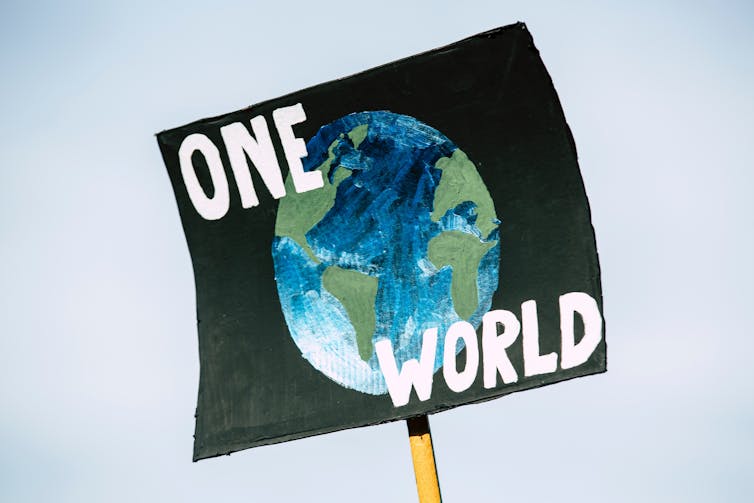


 “All countries are closely connected and we share a common future. No country can gain from others’ difficulties or maintain stability by taking advantage of others’ troubles.”
 ————————-

 bobdillon33blog