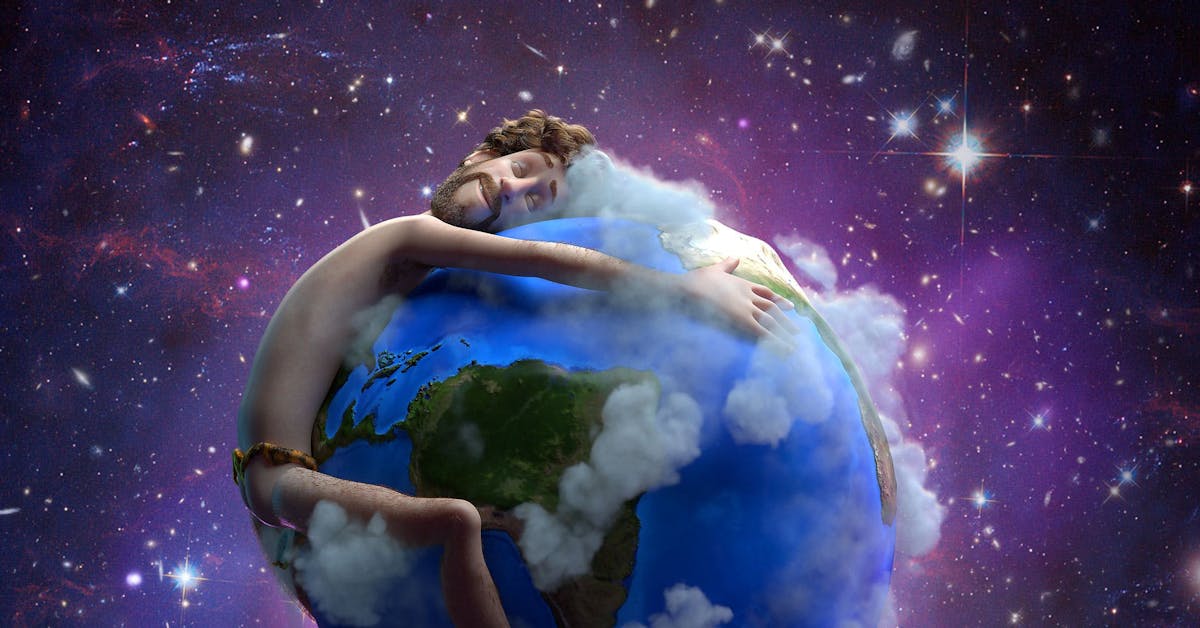
On July the 20th this year it will be fifty five years since one of us stood on another planet. Since then only 24 people have seen the whole of Earth. Achived with less computer power that is now in our phone’s.
In those fiftyfive years we have had fifty-five active conflicts. Eight of these 55 conflicts were classified as wars.
This is the world we got.
21st Century
Vietnam War (1962 – 1973
Persian Gulf War (1991)
War in Afghanistan (2001)
Operation Pillar of Defence (2012)
War in Iraq (2011)
2014 Gaza War (2014)
Russian Annexation of Crimea (2014)
War in Donbas (2014-present)
Yemeni Civil War (2015-present)
Turkish coup d’état attempt (2016)
2021 Israel-Palestine crisis (2021)
Russian Invasion of Ukraine (2022)
We are truly living in a very unique time in the history of our civilization, facing several simultaneous challenges and converging crises:
Because the world is a cauldron where dozens of cultures, religions and ideologies mix with each other, which always leads to a conflict. We are all born of frailty and error.
A deteriorating environment, a very unequal distribution of dwindling resources, widespread poverty, wars, climate change, oppression of many peoples, and dissatisfaction with life even in those countries with a surplus of material wealth.
What can we do about it?
The answer to such question is certainly not simple, and you will not find it in any textbook.
All these problems and converging crises are systemic.
For the most part these crises we humans have brought upon ourselves over the course of many centuries by our attitudes towards each other and towards Nature, and by the concepts we have developed regarding who we are and the very purpose of our being here — in other words, ourworldview.
The 20th century revolution of technologies that permits long distance travel and instant communication across the world has brought all cultures closer together, making us more aware than ever of the many diverse spiritual-cultural traditions that have flourished for millennia as intricate, elaborate meta-solutions to the challenges and opportunities of living in a particular place.
Now we are challenged to integrate the wealth of knowledge and capability that this remarkable period has brought us intoa new narrative of interbeing— a synthesis of ancient wisdom of our interconnectedness and interdependence with modern science and technology.
We now have a choice to make!
Either we move into a new phase in the evoloution of consciouness and a new ear of life on planet Earth, or we will witness the unraveling of the web of life and the immature end of our species and much of the community of life along with us.
The time to make this choice is now!
It starts with a fundamental shift in our dominant worldview. It is time to grow up!
A world with less gravity and more humanity.
Where people get what they deserve rather than deserve what they get. Where there is a God for everyone and no one God is better than other. Where an empty stomach is an alien concept. Where mind is held high and heart is held higher.
Where people are immaterialistic. Where people think logically, question and reason everything without blindly following anything or be superstitious.
Where people respect each other and not judge others for their actions. Where one should treat others as one would like others to treat oneself.
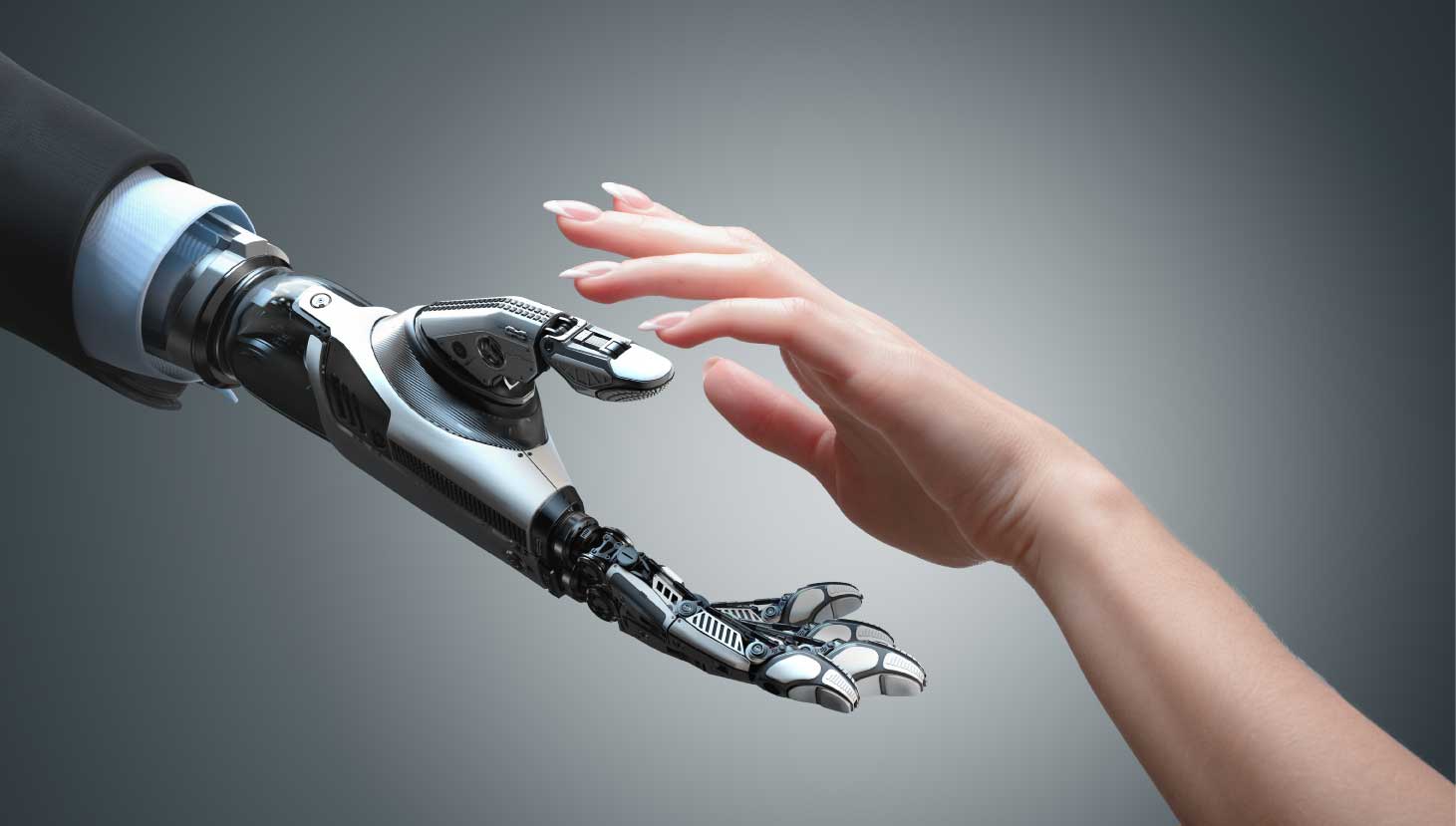
History shows us that none of the above is possible without AI augmentation of human intelligence to enshrin values of beauty, agency, and individuality. by benevolent, incorruptible agencies that are beyond human intelligence.
The era of Artificial Intelligence is here. AI has already started.
AI is not a living being that has been primed by billions of years of evolution to participate in the battle for the survival of the fittest, as animals are, and as we are. It is math – code – computers, built by people, owned by people, used by people, controlled by people.
Its true that AI doesn’t havegoals of its own, but its influnce on our lives is endangering the very meaning of life and instead of us embracing a worldview based on facts, it will cause us to lose our ability to focus on the things that threaten us most.
Understanding what “we” want is among the biggest challenges facing AI.
It is very difficult to encode human values in a programming language, but the problem is made more difficult by the fact that we as humanity do not agree on common values, and even parts we do agree on change with time. The question then becomes how do we aligne AI with Human values.
Whose human values?
Ah, that’s where things get tricky.
A major change is coming, over unknown timescales but across every segment of society, and the people playing a part in that transition have a huge responsibility and opportunity to shape it for the best.
So here are some of the questions we should be asking.
What does it mean to you to have artificial intelligence aligned with your own life goals and aspirations?
How can it be aligned with you and everyone else in the world at the same time?
How do we ensure that one person’s version of an ideal AI doesn’t make your life more difficult?
How do we go about agreeing on human values, and how can we ensure that AI understands these values?
If you have a personal AI assistant, how should it be programmed to behave?
If we have AI more involved in things like medicine or policing or education, what should that look like?
What else should we, as a society, be asking?
Globally, humankind must think about the kind of future we want to have.
The recently articulated United Nations Sustainable Development Goals (SDGs) offer a good starting point, but these goals are merely the preconditions necessary for survival and flourishing, so they are not
enough. A further step is needed to determine our common goals as a civilization, and more
philosophically, the purpose of human existence, and how AI will fit into it.
Generative AI is not hype.
Instead, it acts at a scale so large that it will transform how we interact with technology itself. It will far outpace what we’ve seen so far today.
AI has been used to help sequence RNA for vaccines and model human speech, technologies that rely on model- and algorithm-based machine learning and increasingly focus on perception, reasoning and generalization.
If we reach a point where AI is able to understand our languages, AI systems would be able to read and understand everything ever written. In the mean time rest assured that we will continue to fight wars against each other, as we have done since day until the end of time, or at least Earth’s time which is in about 5.4 billion years.
All human comments appriciated. All like clicks and abuse chucked in the bin.
We live in a world where consumerism is more important than needs.
It overshadows all of our human activities moving desires to the forefront of any aspirations of democracy.
One can ask how has this happened?
The answer is staring us in the face there is no need to look further than free-market capitalism which has married itself to democracy.
Edward Bernay’s its creator (with the help of President Roosevelt, and his uncle Fraud applied the propaganda of war to the propaganda of peace) at the World Fair in 1893 consecrated the marriage of passive consumerism with the market by Public relations, thus engineering the consent of the masses.
As a result of to this day, we are unable to make decisions on a rational base.
So what!
Just look at the state of the world today. The fourth Industrial revolution.
It makes for dismal reading.
There have been over 250 major wars in the world since World War II.
There are over 35 major conflicts going on in the world today.
There are approximately 30,000 nuclear warheads in the world today.
Current global military spending is approximately $800 billion per year; more than the total annual income of the poorest 45% of the global population.
An estimated 27 million people are enslaved around the world, including an estimated
20 million people held in bonded labour1 billion people – 1/3rd of the world’s labour force, is unemployed or underemployed. At least 700,000 people annually, and up to 2 million, mostly women and children, are victims of human trafficking worldwide (a modern form of slavery.) About 246 million, or 1 out of 6, children ages 5 to 17 worldwide are involved in child labour.
Worldwide, a quarter of all women are raped during their lifetime.
Torture occurred in 125 countries.
There are over 45 million refugees and internally displaced people in the world.
800 million people lack access to basic healthcare. 17 million people, including 11 million children, die every year from easily preventable diseases and malnutrition.
800 million people are hungry or malnourished. Nearly 160 million children are malnourished worldwide. 11 million people die every year from hunger and malnutrition.
2.4 billion people lack access to proper sanitation.
Over 100 million people live in slums.
275 million children never attend or complete primary school education. 870 million of the world’s adults are illiterate.
The richest 1% of the world’s people earned as much income as the bottom 57%.
The wealth of the world’s 7.1 million millionaires ($27 trillion) equals the total combined annual income of the entire planet.
Africa alone spends four times more on repaying its debts than it spends on health care.
Half of the forests that originally covered 46% of the Earth’s land surface are gone.
Between 10 and 20 per cent of all species will be driven to extinction in the next 20 to 50 years. Up to 47% of the world’s plant species are at risk of extinction.
60% of the world’s coral reefs will be gone.
Desertification and land degradation threaten nearly one-quarter of the land surface of the globe. Over 250 million people are directly affected by desertification, and one billion people are at risk.
Global warming is expected to increase the Earth’s temperature by 3C (5.4F) in the next 100 years, without reaching a tipping point – resulting in multiple adverse effects on the environment and human society, including widespread species loss, ecosystem damage, flooding of populated human settlements, and increased natural disasters.
All of this is only the tip of the iceberg.
The scale and nature of the world’s problems demand a full response; and the need for more unification and intensification of efforts to solve the world’s most serious and pervasive problems.
What are we doing about it since 1893?
Poured trillions in to aid to created debt.
Manufactured a financial crash.
In each country, the tendency is to blame “our” history, “our” populists, “our” media, “our” institutions, “our” lousy politicians.
When we discuss “politics”, we refer to what goes on inside sovereign states; everything else is “foreign affairs” or “international relations” – even in this era of global financial and technological integration.
its inability to withstand countervailing 21st-century forces, and its calamitous loss of influence over human circumstance.
Turning products into environmental false benefits with the loss of control over money flows.
Watching on as democracy being digitised. After decades of globalisation, our political system has become obsolete by introducing anxious volatility into the bastion of European stability.
Allowing unregulated algorithms to plunder the world for profit.
Turn a blind eye 65 million refugees – a “new normal”
Even if we wanted to restore what we once had, that moment is gone.
But to acknowledge this is to acknowledge not just the end of politics itself the end of life. Global capital and technology will rule us without any kind of democratic consultation, as naturally and indubitably as the rising oceans.
If we wish to rediscover a sense of political purpose in our era of global finance, big data, mass migration and ecological upheaval, we have to imagine political forms capable of operating at that same scale.
There is every reason to believe that the next stage of the techno-financial revolution will be even more disastrous for national political authority.
Big data companies (Google, Facebook etc) have already assumed many functions previously associated with the state, from cartography to surveillance.
With them taking over the management of all life and resources – this is a more likely vision for the future than any fantasy of a return to social democracy.
The assault on political authority is not a merely “economic” or “technological” event. It is an epochal upheaval.
What if anything can be done.
It is clear to me and by now should be clear to all of us that Capitalism is going underground. Today’s great engines of wealth creation are distributed in such a way as to elude national taxation systems (94% of Apple’s cash reserves are held offshore; this $250bn is greater than the combined foreign reserves of the British government and the Bank of England), which is diminishing all nation-states, materially and symbolically.
It is clear to me that the nation state’s rigid monopoly on political life is becoming increasingly unviable.
It is clear to me that oppressed national minorities must be given a legal mechanism to appeal over the heads of their own governments.
It is clear to me that the United Nations is effectively a gossip shope with vetos and is in needs of reform.
It is clear to me we need to find new conceptions of citizenship. Why, because the essential horizons of life on this planet are already determined at birth.(see previous posts)
It is clear to me that if democracy is supposed to give voters some control over their own conditions, for instance, should a US election not involve most people on earth?
It is clear to me that we are spending trillion trying to get off the earth when we should be spending trillions to try to stay on what is left of the earth.
It is clear to me that everything is linked.
It is time to think about how that capacity might be built.
It is time to wake up, to be conscious and take the needed steps to make a change. Stop pretending like you don’t know. Stop thinking its not going to happen in your lifetime. It will affect you and most of all your children and grandchildren. Do you still want to remain passive or pretend it’s not your problem?
What is clear to you?
They say a picture is worth a thousand words so I leave you with this video.
On viewing it.
It is beyone clear that our future generations will not thank us for their inheritance.
All human comments appreciated. All like clicks and abuse chucked in the bin.
In the sciences generally, time is usually defined by its measurement: it is simply what a clock reads. However, since the advent of relativity most physicists agree that time had a beginning and that it is measured from, and indeed came into being with, The Big Bang some 13.8 billion years ago.
Physics is the only science that explicitly studies time, but even physicists agree that time is one of the most difficult properties of our universe to understand.
We don’t really understand exactly how the universe was born in the Big Bang.
In a past post, I advocated that there was no such thing as the big bang because space-time itself is a product of the special early stage of the universe.
IN THAT POST MY UNSCIENTIFIC LOGIC ARGUED THAT ATOMS HAD TO BE IN EXISTENCE BEFORE THE BIG BANG FOR IT TO HAPPEN IN THE FIRST PLACE. THERE CANNOT BE AN EXPLOSION WITHOUT SOMETHING TO HEAT.
Now we have the first picture of a Blackhole that gives the first direct glimpse of a black hole’s accretion disc, a fuzzy doughnut-shaped ring of gas and dust that steadily “feeds” the monster within.
The illuminated dark shadow within marks the edge of the event horizon, the point of no return, beyond which no light or matter can travel fast enough to escape the inexorable gravitational pull.
The event horizon beyond which all reality as we know it is distorted beyond recognition and physical laws collapse, which cannot be seen by definition.
As far as we know black holes are stars that run out of energy and collapse in on to themselves. Depending on their mass and proximity to other black holes they eventually form a super black hole at the centre of their galaxies.
As a result, all matter within that universe orbits around the super black hole and depending on how near or fast the orbit eventually in time will be eating.
As time can’t move with respect to time. Is time an emergent property or a fundamental property?
The singularities within the black holes do not bend space. It’s not a property of time itself. So is it logical to say that time itself emanates from the black hole?
They create time its self, gravity and stars. Stars form inside dense concentrations of interstellar gas and dust called molecular clouds.
Depending on different notions of the ultimate fate of the universe time is an illusion because space-time is finite in extent, but doesn’t have any boundary or edge.
Things ~can get out of a black hole, both to the outside, and possibly, to another universe.
The images now making the rounds are of a supermassive black hole, with the mass of 6.5 million suns, lying at the centre of the galaxy Messier 87. luckily is 53 million lights years away our one is 26 thousand light-years away in a milky way.
All galaxies within the known universe have a super black hole KNOWN AS A SINGULARITY at their centre around the universe that it exists in will eventually collapse.
So perhaps the start of the known universe was two super black holes colliding.
Should we be worried? We have no time to stand and stare.
≈ Comments Off on THE BEADY EYE SAY’S. NO HUMAN IS EVER GOING TO LEAVE THIS PLANET SOON. WITH THE PLANET CRYING FOR SOME TLC WOULD IT NOT MAKE SOME COMMON SENSE TO PUT FUTURE SPACE EXPLORATION ON HOLD TILL WE CAN TRUST AI.
Exploration of space is an expression of one of our finest aspects — curiosity.
To truly satisfy that curiosity we need to be participants, but humans are heavy, fragile, dirty, vulnerable, picky about their environment, and have a low tolerance for the space environment. (i.e., high energy radiation, extreme heat and cold, etc.)
The fragility of humans, our aversion for risking human life, and the all-too-human need for consumables (food, water and oxygen) require vast amounts of money to pay for the extra engineering and multiple redundant systems we demand to reduce risk to astronauts, as well as for the vastly larger support crews needed to babysit every aspect of daily life during a manned space mission.
In any exploration, reconnaissance dominates the earliest phases and realistically there is no choice between human and robotic exploration when it comes to travelling to any planet.
Robotic exploration is the only realistic game in town.
The International Space Station is no longer a platform for cutting-edge space science.
Unmanned probes can explore Mars and other planets more cheaply and effectively than manned missions can. Robotic space programs are a far more cost-effective means of advancing our scientific knowledge of the universe. And a moon colony would be a silly destiny.
Some scientists believe that artificial-intelligence software may enhance the capabilities of unmanned probes, but so far those capabilities fall far short of what is required for even the most rudimentary forms of field study.
Building a manned base on the moon makes even less sense.
Unmanned spacecraft can study the moon quite efficiently, as the Lunar Prospector probe has shown. It is not our destiny to build a moon colony any more than it is to walk on our hands.
Considering the current limited range of human exploration the countdown to sending humans to Mars is light years away never mind the rest of the solar system.
But robots aren’t heroes. No one throws a ticker-tape parade for a telescope.
A program of purely robotic exploration is inadequate in addressing the important scientific issues that make the planets worthy of detailed study.
But is the physical presence of people really required?
Telepresence—the remote projection of human abilities into a machine—may permit field study on other planets without the danger and logistical problems associated with human spaceflight.
THIS WILL NOT BE POSSIBLE UNTIL WE DEVELOPE FULLY ACCOUNTABLE ARTIFICAL INTELLIGENCE THAT IS TRUTHFUL AND TRUSTWORTHY.
HUMAN SPACELIGHT is extremely expensive. A single flight of the space shuttle costs about $450 million. Even the most optimistic experts estimate that sending astronauts to the Red Planet would cost tens of billions of dollars. Other estimates run as high as $1 trillion.
NASA LIKE HOLLOWOOD has learned a valuable lesson about marketing in the 21st century: to promote its programs, it must provide entertaining visuals and stories with compelling human characters.
Vision is the most important sense used in a field study, and no real-time imaging system developed to date can match human vision, the technology is not yet available.
Robots will never be replacements for people. Robotic spacecraft still need human direction, of course, if explorers Lewis and Clark were alive today, they would be sitting behind a computer screen.
All exploration whether Robotic or otherwise will be worthless if we have an Earth that is void of people.
All human comments appreciated. All like clicks chucked in the bin.