• About
  • THE BEADY EYE SAY’S : THE EUROPEAN UNION SHOULD THANK ENGLAND FOR ITS IN OR OUT REFERENDUM.

bobdillon33blog

~ Free Thinker.

bobdillon33blog

Category Archives: World Politics

THE BEADY EYE SAYS: THE CORONA VIRUS IS SHINING A LIGHT ON WHAT IS WRONG WITH THE WORLD AND IT IS SPREADING FAST.

21 Saturday Mar 2020

Posted by bobdillon33@gmail.com in #whatif.com, 2020: The year we need to change., CORONA VIRUS., COVID-19, Denial of Death., Disconnection., Environment, Evolution, Fourth Industrial Revolution., HUMAN INTELLIGENCE, Human values., Humanity., Inequality, Life., Modern day life., Our Common Values., Post - truth politics., Reality., Refugees., Survival., Sustaniability, Technology v Humanity, Telling the truth., The common good., The essence of our humanity., The Obvious., The state of the World., The world to day., Truth, Unanswered Questions., VALUES, WHAT IS TRUTH, What Needs to change in the World, Where's the Global Outrage., World Leaders, World Organisations., World Politics

≈ Comments Off on THE BEADY EYE SAYS: THE CORONA VIRUS IS SHINING A LIGHT ON WHAT IS WRONG WITH THE WORLD AND IT IS SPREADING FAST.

Tags

Capitalism and Greed, Capitalism vs. the Climate., Climate change, Coronavirus (COVID-19), Extinction, Global warming, Globalization, The Future of Mankind, Visions of the future.


(Ten-minute read) 


AS IF WE DID NOT KNOW it is posing that fundamental profound question once more.

Are we going to care of the Earth so it can care for us?  

It is impossible to say which way the disease will go however there is no doubt that it is creating the biggest restriction of civil liberties “in peacetime”. 

We know that we all tracked by Google.  Behind all the restrictions governments will adopt powers that they will loath to relinquish when the crises are over. 

There is every like hood that the pandemic will strengthen the state and reinforce nationalism.  What won’t change is the inequality and greed, rather it will create a less open, less prosperous and less free world. 

Of course, it did not have to be like this but it will be the straw that brakes the camel’s back of globalization and it will probably result in uncontrolled Co2 emissions.

In the short term, with decoupling and rivalry coming to the forefront driven by a cascading sense of vulnerability there will be a race to return to full production.

However the Pandemic is proof of our interdependence but we are not or are we heading for a poorer, meaner, and smaller world.

If the Pandemic shocks us into recognizing our real interests in cooperating multilaterally on the big global issues facing us all it will have served a useful purpose. 

We all know that it is not enough to think of one nation’s power over another when it comes to climate change. The key is learning the importance that we have all to act together and Covid -19 is going to show that we are failing to adjust our strategy on many fronts to this new world. 

Either way, this crisis will reshuffle the international power structure in the way we can only begin to imagine. 

If we don’t support each other the result will be instability and widespread conflict within and across nations. 

We know that there is a dramatic new stage in global capitalism on the horizon with supply chains be brought closer to home.  We are going to see failed states with billions of economic refugees on the move. 

We are going to see the USA no longer as an international leader. 

To date, international collaboration has been woefully insufficient. 

What is needed it targeted assistance that provides hope that men and woman can prevail in response to this extraordinary challenge.  

If it gets Airborne the white full personal-protection suits that presently strike fear into the hearts of us all will be worthless.

AS IF EARTH DOES NOT HAVE ENOUGH PROBLEMS THE NEXT NASA PROJECT TO MARS IS SCHEDULED TO LAUNCH IN JULY. 

NASA’s 2020 Mars rover. 

The rover will collect and cache promising samples for eventual return to Earth.

The first pristine pieces of Mars won’t be coming down to Earth for at least another decade, but the time to start preparing society for the epic arrival is now. 

This is an extremely grave point.

On the one hand, we can argue that Martian organisms cannot cause any serious problems to terrestrial organisms, because there has been no biological contact for 4.5 billion years between Martian and terrestrial organisms. On the other hand, we can argue equally well that terrestrial organisms have evolved no defences against potential Martian pathogens, precisely because there has been no such contact for 4.5 billion years. The chance of such an infection may be very small, but the hazards, if it occurs, are certainly very high.

Martian rock that has already arrived on earth contained structures resembled the fossilized remains of bacteria-like lifeforms.

What if such samples turned out to be dangerous, and contagiously so?

Are there some Mars-oriented lessons to be learned from COVID-19. 

Here on earth, it is gruelling and potentially lethal work to identify a virus never mind virus from other planets. 

It is estimated that there are 1.6 million unknown viruses in birds and mammals. Of these, it is thought between 600,000 and 800,000 are zoonotic, meaning they have the potential to jump from animals to people. 

Virulence, contacts and the length of time for which people are infectious are the three factors that determine what is called ‘the basic reproductive rate’ – how far and fast the epidemic will spread. 

There may be a staggering 3,200 different types of coronavirus harboured in bats alone.


As with historical infectious disease epidemics, the coronavirus that’s spreading currently is another example of why it’s so important to understand the consequences of interacting with environments humans rarely contact and then distributing widely whatever [they] picked up.

If one looks at the outbreak in Africa, of Ebola and the HIV/Aids pandemic – which to date has killed 35 million and infected 70 million – started about a century ago in Cameroon when a chimpanzee virus was transmitted to a human who almost certainly killed, butchered or consumed it.

Markets were closed during both outbreak, but they are now once more doing a roaring trade selling tropical game including monkeys, chimpanzees, cane rats, bats and snakes. Bushmeat is entrenched in local culture and is often a vital form of subsistence, hence why the authorities are unwilling or unable to announce an outright ban.

Last, with or without artificial intelligence we continue at our collective peril to make imbalance’s in the ecosystem.

All human comments appreciated. All like clicks and abuse chucked in the bin.

← Back

Thank you for your response. ✨


Share this:

  • Share on WhatsApp (Opens in new window) WhatsApp
  • More
  • Share on Pocket (Opens in new window) Pocket
  • Share on Mastodon (Opens in new window) Mastodon

THE BEADY EYE SAY’S: THIS CORONA VIRUS IS ASKING ALL OF US WHAT TYPE OF WORLD DO WE WANT?

19 Thursday Mar 2020

Posted by bobdillon33@gmail.com in #whatif.com, 2020: The year we need to change., CORONA VIRUS., COVID-19, Disasters., Disconnection., Evolution, Honesty., HUMAN INTELLIGENCE, Human values., Humanity., Inequality, Life., Modern day life., Natural World Disasters, Our Common Values., Poverty, Reality., Refugees., Religious Beliefs., Survival., Sustaniability, Technology v Humanity, Telling the truth., The common good., The current state of our oceans., The essence of our humanity., The Future, THE FUTURE OF OUR OCEANS/SEAS, The Obvious., The Refugees, The state of the World., The world to day., Truth, Truthfulness., Unanswered Questions., VALUES, War., WHAT IS TRUTH, What Needs to change in the World, Where's the Global Outrage., World Leaders, World Organisations., World Politics

≈ Comments Off on THE BEADY EYE SAY’S: THIS CORONA VIRUS IS ASKING ALL OF US WHAT TYPE OF WORLD DO WE WANT?

Tags

Capitalism and Greed, Capitalism vs. the Climate., Coronavirus (COVID-19), Earth, Environment, Extinction, Global warming, Globalization, Inequility, Natural disaster, The Future of Mankind, Visions of the future.


(Seven-minute read) 

I know that humans are the only type of species that are suitable to manage the earth but it does not make them the right species!

Apparently not.

Did we ever think that we would be living in a world where it is life-threatening to go our side and I am not talking about terrorists or any other Hollywood science fiction movie scenario?

There’s a lot of bad news out there but this is not a death sentence. 

 It’s time to save the world. ” We can use it as we wish”

No one owns the earth. No one has the right to do whatever they want.

We’re not the only thing that lives here, nor are we more important in any way.

We cannot use the world as we please as our actions are endangering not just us but other species. 

Our Earth was meant to be lived on in union with its Ecosystems and we cannot allow that to be broken.

The Coronavirus ( Covid  19 ) is illuminating what is wrong with our world. 

So our most crucial life questions are: 

What Kind of World Do We Want to Leave to Our Children?

Whatever your interest — whether it’s the environment, health care, poverty, or education — there are simple steps each of us can take to make life better not just for someone in our own community. 

The Universal Declaration of Human Rights, that “all human beings are born free and equal in dignity and rights.” now needs an Earth Declaration. 

Here are the top six of my non-legal binding the goals.  

Use Global Warming to Solve Global Warming.

Take urgent action to combat climate change and its impacts to protect, restore, and promote sustainable use of terrestrial ecosystems, sustainably manage forests, combat desertification, halt and reverse land degradation, and halt biodiversity loss.

Conserve and sustainably use the oceans, seas, and marine resources for sustainable development.

Sustainable Development Goals which will take years for a critical mass of governments to actually rally behind. 

The allocation of resources to fight climate change and other environmental issues over the next decade can be achieved by making a profit for profit sake pay. ( See the previous post on a 0.05% World Aid Commission. How it could be implemented so the costs are spread fairly) 

End poverty in all its forms everywhere.

Global poverty. Reduce inequality within and among countries. Ensure inclusive and equitable quality education and promote lifelong learning opportunities for all.

Expand access to clean drinking water, green energy.

Artificial Intelligence and Automation. 

The 2020s sounds like such a radical futuristic decade however to strengthen the means of implementation and revitalize the global partnership for sustainable development requires a coherent and plausible conception of social justice. A basic income, a periodic cash payment unconditionally delivered to all on an individual basis, without means-test or work requirement.

Stop the sale of arms. 

The estimate of the total value of the global arms trade in 2017 was at least $95 billion.* However, the true figure is likely to be higher. On any given day at any given moment in your life, there are at least 15 wars and armed conflicts actively going on all around the world — even if you’re only hearing about a few of them on the news.

There are an estimated 11-12 million refugees in the world today with between 12-24 million Internally Displaced Persons.

Electoral Reform with Citizens’ Assemblies. 

These aren’t just focus groups or consultations though but for the members to engage in serious, informed reflection on important policy matters with people they may never normally meet.

As Hubert Reeves ( Canadian-French Astrophysicist) say’s, ” Man is the most insane species. He worships an invisible God and Destroys a Visible Nature. Unaware that this Nature he’s destroying is this God he’s worshipping “

Feel free to have idea sex between your ideas and mine so we can come up with even better ideas. It’s a way of saying: “We agree that these are the world’s top priorities right now.”

← Back

Thank you for your response. ✨

Share this:

  • Share on WhatsApp (Opens in new window) WhatsApp
  • More
  • Share on Pocket (Opens in new window) Pocket
  • Share on Mastodon (Opens in new window) Mastodon

THE BEADY EYE LOOKS AT THE CRISES FACING THE WORLD.

08 Sunday Mar 2020

Posted by bobdillon33@gmail.com in 2020: The year we need to change., Artificial Intelligence., Capitalism, Disasters., Environment, HUMAN INTELLIGENCE, Human values., Inequality, Life., Modern day life., Natural World Disasters, Our Common Values., Poverty, Survival., Sustaniability, Technology, Technology v Humanity, The common good., The essence of our humanity., The Obvious., The state of the World., The world to day., Unanswered Questions., VALUES, War, WHAT IS TRUTH, What Needs to change in the World, Where's the Global Outrage., World Leaders, World Organisations., World Politics

≈ Comments Off on THE BEADY EYE LOOKS AT THE CRISES FACING THE WORLD.

Tags

Capitalism and Greed, Capitalism vs. the Climate., Earth, Extinction, Inequility, Technology, The Future of Mankind, Visions of the future.


Five minute read.

With all aspects of our life made into a form of viewing entertainment. We live in a world that has become desensitized. 

The result is that most if not all of us pay little attention to the state of Earth.

The drawn-out nature of many crises now facing us all underscores the importance of coming together to urgently resolve the root causes of a humanitarian crisis.

It is unlikely the situation will improve. 

 Where do you even start? Which issues are the most urgent?


So this post is not intended to be an exhaustive list. Rather, it serves as an overview of some of the major issues all global citizens should be aware of.

Sometimes it can seem as though there are too many – from climate change to inequality around the world, too many people living without access to medical care its not worth knowing. 

But just in case here is why we are in such a mess. 

12.9% of the world is undernourished, about 30% of the adult population is overweight.

Conflict continues to drive displacement and food insecurity but communicable diseases are still responsible for 71% of deaths.

The international community, and in particular wealthy nations, are failing to meaningfully share the responsibility for protecting people who have fled their homes in search of safety. 

  • 25.9 million refugees globally — the highest level ever recorded
  • Half of the world’s refugees are children
  • A third of refugees — 6.7 million people — is hosted by the world’s poorest countries
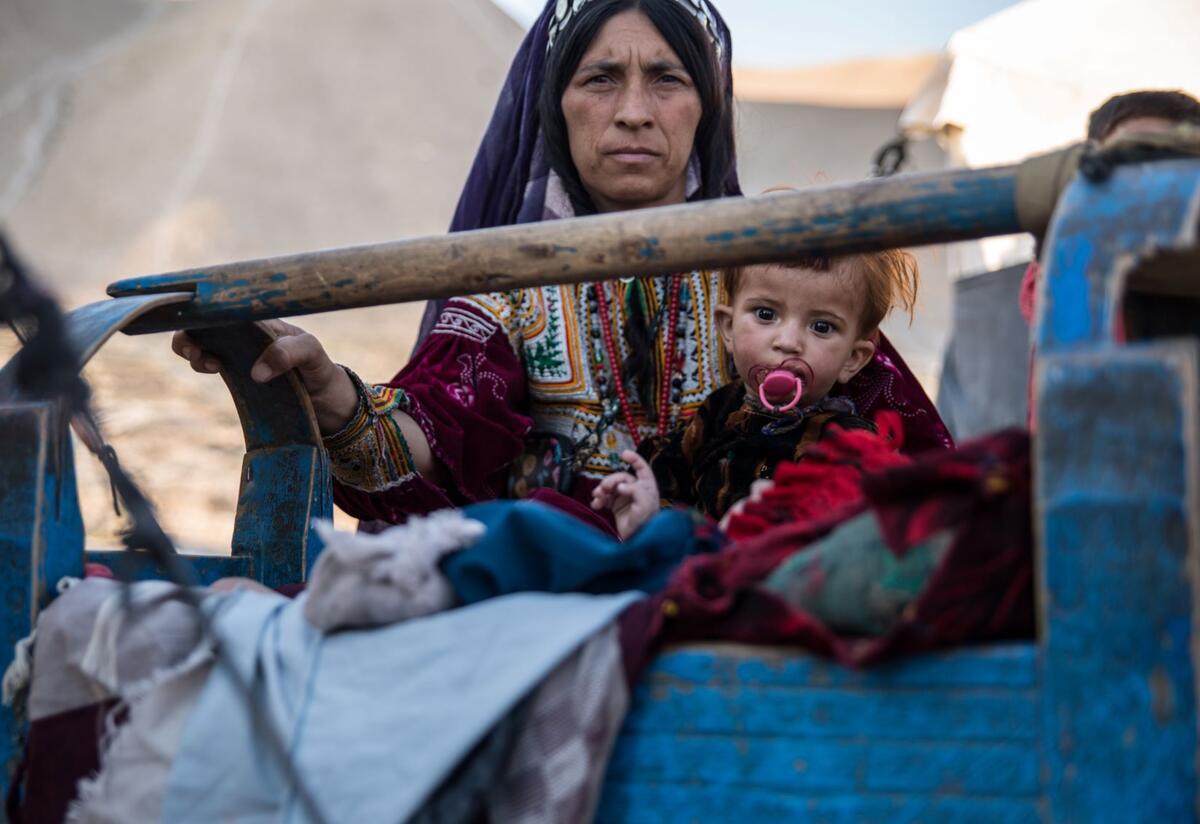
A mother rocks her sick child in a camp in Afghanistan's Badghis' Muqur district, where the IRC supports displaced families.

Driven by nearly two decades of conflict and political instability; 9.4 million Afghans (25 per cent of the population) need humanitarian assistance. There are almost 2.5 million registered Afghan refugees living outside the country.

4.6 million Venezuelans have fled the country as of November 2019. 

There are over 2 million displaced Nigerians.

Eleven million Syrians (65 per cent of the population) are in need of humanitarian assistance.

The Democratic Republic of Congo 15.9 million people require humanitarian assistance. 

Over 24 million Yemenis (80 per cent of the population) are in need of humanitarian assistance,

South Sudan 7.5 million people need humanitarian assistance. 

600 million children are not mastering basic mathematics and literacy while at school.

Forests are key to producing the air we breathe, yet these are being depleted at a rate of 26 million hectares every year.

Extinctions are happening at what scientists estimate to be about 1,000 times the normal pace. Not only are we losing flora and fauna, but we are also damaging our ecosystems, and throwing them out of balance

Our oceans are under threat.  

Sand and gravel are now the most-extracted materials in the world, exceeding fossil fuels and biomass.

Climate change is another issue.

There is actually not enough fresh water for each person currently living on the planet. 

Population growth. The number of people on the planet is set to rise to 9.7 billion in 2050 with 2 billion aged over 60.

More than 61 million jobs have been lost since the start of the global economic crisis in 2008, leaving more than 200 million people unemployed globally.

With 43% of the world’s population connected to the internet, regulatory frameworks are unable to keep up.

In this complex moment in history, in which so many are suffering and the Earth itself is in peril

The cloud of nuclear destruction hangs over each of our days.

But the question remains what kind of society do we want to have?

The reasons behind current trends are many and complex.

The detail of the information that we are beginning to capture about our world is mind-blowing. The granularity of the data we are beginning to collect through advances in technology. While improving our lives through cleaner energy sources, personalized nanomedicine and nano-engineered materials.

In all of these areas, progress will undoubtedly lead to a reduction in conventional jobs and inequality on a global scale not seen before.

But technology alone can not break the self-reinforcing mechanism that causes poverty to persist. 

As highly innovative products emerging will, however, promote inequality if only a few have access to this new technology and the knowledge to master it.

Education is probably the single most important tool for turning technology into an engine for opportunities for all.

Public policies, which are currently mainly focused on fostering economic growth, should focus on providing further opportunities, less inequality and a more sustainable economic, social and environmental future.

Technology is not the solution but it is, for sure, a powerful tool towards achieving this ambitious objective.

Whether it’s turning promises on climate change into action, rebuilding trust in the financial system, or connecting the world to the internet there is an overall lack of long-term investment, which has serious implications for global growth.

But the most astonishing canvas is right in front of us if only we would listen with our ear to the earth we might see the light we cannot see.

In short, the world urgently needs a new, global plan based on genuine international cooperation and a meaningful and fair sharing of responsibilities. 

All human comments appreciated. All like clicks and abuse chucked in the bin.

← Back

Thank you for your response. ✨


https://youtu.be/dnxRCHVLGRo

Share this:

  • Share on WhatsApp (Opens in new window) WhatsApp
  • More
  • Share on Pocket (Opens in new window) Pocket
  • Share on Mastodon (Opens in new window) Mastodon

THE BEADY EYE LOOK’S AT POPULISM. WHAT EXACTLY IS IT?

08 Saturday Feb 2020

Posted by bobdillon33@gmail.com in 2020: The year we need to change., Algorithms., Artificial Intelligence., Capitalism, Communication., Democracy, Digital age., Disconnection., Human values., Humanity., Inequality, Modern Day Democracy., Modern day life., Our Common Values., Political Trust, Politics., Populism., Post - truth politics., Reality., Robot citizenship., Social Media, Technology, The common good., The far-right., The Obvious., The state of the World., The world to day., Unanswered Questions., WHAT IS TRUTH, What needs to change in European Union., What Needs to change in the World, Where's the Global Outrage., World Politics

≈ Comments Off on THE BEADY EYE LOOK’S AT POPULISM. WHAT EXACTLY IS IT?

Tags

Liberal democracy., not the few.”, Populism., Populists., Post - truth politics., The “many


(Eighteen-minute read)

The word came from the “prairie populists”, a 1890s movement of US farmers who supported more robust regulation of capitalism.

“But no one is clear what it is.”

We can’t really talk about populism without talking about our conflicting conceptions of democracy – and the question of what it truly means for citizens to be sovereign.

So is it an ideologically portable way of looking at politics as a forum for opposition between “people” and “elites”?

Or is it simply part of what it means to do politics?

Or is it a lens for looking at our politics?

Or a mode of talking about politics, rather than a set of beliefs?

Or is it an emerging political movement driven by technology, spread by social media, the smartphone and ruled by algorithms.

There is one thing for certain populism is inherent to democracy.

So it would be in the first place a massive mistake, considering the hollow, undemocratic mess we are in, with algorithms making decisions about our collective fate – outside the reach of politics, to ignore its power.

If one looks at the state of liberal democracy today it is becoming more and more a sham.  A nice-sounding set of universal principles that, in practice, end up functioning as smokescreens to normalise the exploitations and inequities of our capitalist system.

Nothing can stay depoliticised forever. The questions of populism would have little urgency were it not for the widespread agreement about the shortcomings of the political status quo: About the abyss between the shining ideals of equality and responsive government implied by our talk about democracy and the tarnished reality of life on the ground.

Populism is supposed to explain: Brexit, Trump, Viktor Orbán’s takeover of Hungary, the rise of Jair Bolsonaro in Brazil, even Putin.

However, neither Trump nor Brexit should be regarded primarily as populist phenomena.

His election and Brexit shows that every status quo – however sturdy – is only temporary, and can always be challenged by a movement that seeks to replace it with something new.

Populists consider themselves as victims of economic exploitation, anti-austerity movements – such as Podemos in Spain, Syriza in Greece, and Occupy these movements are obviously animated by a sense of opposition.

From this perspective, populism is just another word for real politics.

On the other hand, what most people knew about these parties, at first, was that they were openly nativist and racist. They talked about “real” citizens of their countries, and fixated on the issue of national and ethnic “purity,” demonising immigrants and minorities.

But I say that there are no real populists in politics – just people, attitudes and movements that the political centre misunderstands and fears.

The question of populism, then, is always the question of what kind of democracy we want.

The only inherent connection between rightwing and leftwing populist movements is that both embrace the same fundamental truth about democracy: that it is an ever-shifting contest over how the default “we” of politics is defined and redefined, of which no one definition can be guaranteed to last.

When populism appears in the media, which it does more and more often now, it is typically presented without explanation, as if everyone can already define it.

It sounded less alarming than “extreme right” or “radical right”.

It will always live in the shadow of the muddled media and political discourse and there can no longer be any doubt that we are going through a populist moment, so which type of populist you want to be.

A liberal democracy populism that is forced by rightwing populism to make good on its promises of equality. That needs to reacquaint with the need to construct a democratic “we” – a people – around their demand to protect liberal institutions and procedures, in opposition to radical rightwing parties who are happy to see them discarded.

Liberal democracy, in this context, has almost nothing to do with contemporary distinctions between left and right. It refers, instead, to the idea that government should facilitate pluralistic coexistence by balancing the never fully attainable ideal of popular sovereignty with institutions that enshrine the rule of law and civil rights, which cannot easily be overturned by a political majority.

or

A populism that can never be disentangled from the concept’s pejorative baggage.  An ideology runs the risk of making effective and worthwhile political strategies seem irresponsible, even dangerously promoting nativisms and short term gains.

Obviously, there are leftwing and rightwing populisms both are motivated not by passion for populism’s core ideas, but by other ideological factors best described as a fuzzy blanket to camouflage nastier nativism.

We are now living through a time when familiar webs connecting citizens, ideologies and political parties are, if not falling apart, at least beginning to loosen and shift and old theories of populism that defined it specifically as rightwing, racist or anti-immigrant is insufficiently wide to describe these new developments in populist politics.

It seems to me that Populists deal in “simplicity,” in “glib, facile solutions” while liberal leaders have been “oblivious” to the sufferings of their people.

So why are the traditional parties of the left in the western world being defeated?

Because the other side doesn’t play fair any more with conflict an inescapable and defining feature of political life.

The juvenile incapacity of both to bring their preferences to the political arena and engage in the complex give-and-take of rational compromise is with Social Media now fraught with a political examination and association accusation and assassination.

With the impersonal forces, of “globalisation” and “technological change voters are deciding that mainstream political parties have done nothing for their static incomes or disappearing jobs or sense of national decline these past two decades.

The “many, not the few.”

Populism is a new, consensus-smashing thing that is now secondary to nativism. Ultimately, they are disputes about which types of politics make us suspicious, and why.

To conclude that the two camps are simply talking past each other would be to miss the extent to which they are in agreement –and what, taken together, they tell us about the current political moment.

We can never know exactly where democracy is going to take us – not this time, nor the next, nor the time after that, but political parties must come to terms that the elephant in the room is that we no longer vote once every five years we vote on Social media ever five minutes.

Unless politics is not achievable, or rewarding, it obviously is sowing the long-term seeds for discontent.

It’s great to see politicians with Twitter accounts but there’s only so much you can do with that. Online participation in local decision-making is possible.

Failing to practice what you preach has ethical and political costs. E-voting is the next step.

Here below is what they are voting on and its not Fifty Shades of Grey Popularism.


Capitalist greed has and is poisoning political life.

Unregulated Algorithms will ensure it continues to do so.  Combined with the new realities of the portability of populism’s ideological movements spread by social media it is no wonder that liberal democracy is crumbling around the world.

To keep up with algorithms and their lavishly detailed position papers, their leaders,  Google, Facebook, Twitter, Apple, Mircosoft, and their inc have little personal sympathy any longer with the travails of working people.

We can only hope that the fear of populism on the left will enable the victory of populism of the right.

All human comments appreciated. All like clicks and abuse chucked in the bin.

← Back

Thank you for your response. ✨

Share this:

  • Share on WhatsApp (Opens in new window) WhatsApp
  • More
  • Share on Pocket (Opens in new window) Pocket
  • Share on Mastodon (Opens in new window) Mastodon

THE BEADY EYE ASK’S. WHY IS THE OBVIOUS SO DIFFICULT TO RECOGNIZE?

20 Monday Jan 2020

Posted by bobdillon33@gmail.com in #whatif.com, 2020: The year we need to change., Algorithms., Artificial Intelligence., Digital age., Facebook, Fourth Industrial Revolution., Google, HUMAN INTELLIGENCE, Human values., Humanity., Life., Modern day life., Nanotechnology, Our Common Values., Post - truth politics., Reality., Robot citizenship., Social Media, Sustaniability, Technology, The common good., The essence of our humanity., The Future, The Obvious., The world to day., Unanswered Questions., WHAT IS TRUTH, What Needs to change in the World, Where's the Global Outrage., World Organisations., World Politics

≈ Comments Off on THE BEADY EYE ASK’S. WHY IS THE OBVIOUS SO DIFFICULT TO RECOGNIZE?

Tags

Algorithms., “Crises” facing humanity., Common sense., The Obvious.


(Twelve-minute read) 

We live in a world where the obvious cannot be addressed.

Each and every aspect of our daily lives, work, relationships are somehow influenced or mediated by technology today, not only as individuals but collectives.

It makes one wonder about the sheer volume of ignorance which not only allows the same problems to persist decade after decade but to even get worse.

It is obvious that our very sustainability is under threat but we remain “Oblivious”

Why? 

Consider the paradoxical and strategic implications of the fact that people do not perceive things being too small or too big, too far away or too close, too wide or too narrow, too unimportant or too important for us, too slow and gradual or too sudden and fast, always present or usually absent, too often repeated or not often enough to be remarked, too general, complicated and abstract or too simple, too respectable or too unworthy, too familiar or too alien, too similar or too different too few or too many… Imagine the practical implications of such blindness!

Some of the biggest things around us dissolve into background scene, too huge to count and seemingly too big to fail.

To defeat this blindness we must ask what exactly is obvious? Why? obvious to whom? To me? to you? To everybody? Everywhere? All the time? 

Decisions about technology should not be irreversibly delegated to technocrats, corporations and tech monopolies. 

We think unknowingly with other people’s thoughts.

The conclusion is that our senses and memories cheat us, our common sense is no good and our judgement false.

It is self-evident that basic assumptions are the riverbeds of our thoughts, the compass of our judgment and choices and our actions; most of them we inherited from trusted people and from authorities, they look inherent, seem to be there from eternity, as if out of sight, so that we would not question them.

This is now leading to a ready-made thinking world of algorithms used by Facebook- Utube – Google – Smartphones -Twitter -and Social media. An invisible prison of social media where it is easier to observe other people’s basic assumptions than yours; particularly when they are dissimilar with yours; then, other people have not yet grown into your culture may be useful to detect your unquestionable beliefs; especially very different people coming from somewhere else; or you, visiting somewhere else.

I do not see much good in convincing people not to trust their own mind; we must instead accept and work around this “blindness” without moving our life into monasteries at the feet of gurus or into laboratories at the feet of the experts of the day.

After a while, you don’t notice. They become references.

The Right to an Algorithmic Opt-Out…

How to notice, by ourselves, the obvious turned imperceptible? How to detect it, how to discern it from the merely neutral “obvious” background? How to evaluate the importance and potential of change of something so evident that it escapes your attention?  How to wake up to it? How to seek and get help? How to help other people to do the same? What to do when people cannot or do not want to see the obvious? How to awaken people?

The question is still “How to open my eyes when they are open already?”

The intelligent reason should visit its basic assumptions, regularly; but it doesn’t.

Our worst enemy in discerning the obvious is a certainty, to be convinced that we know it all and that the obvious is obvious for us.

The obvious is best disguised into itself. One obvious hide another.

How banal to say that the obvious is that which is right in front of us, readily accessible to our observation, to our senses or being credible knowledge we have!

With commercial profit-seeking algorithms, this hidden price of selective blindness and thus freedom diminished.

if you repeat slogans endlessly they will become obvious for you (even some false ones), and you will end up believing them.

The most amazing for me is to observe how we only apprehend things fit to our size and relative to us. We do not grasp the incommensurable, out of proportion with us, with which we have no common standard of measurement: the trillions of billions.

Because of compression, we have become an incredibly stupid species.

The obvious known comes alive for us to do something about it only when understanding turns it into a personal image, vivid and simple enough to be of our size; otherwise, we stay paralysed and dumb. 

Perhaps it because our body believes that big things don’t move and unmoving things are harmless. 

Perhaps its because we are weak, unable to face them and we allow our judgment to slumber; we do not see what we do not wish to see, hoping that it will go away or solve itself.

Perhaps only when understood does the evidence become awareness, we are able to respond to, so that we would do something because of what it means. 

Perhaps figuring out that the elusive 20th-century social contract is gone, is too enormous for us. Therefore we will go on like cattle to the slaughterhouse. 

Why is this becoming true? 

Because as Wittgenstein, Ludwig, Philosophical Investigations states. 

“The aspects of things that are most important for us are hidden because of their simplicity and familiarity. (One is unable to notice something because it is always before one’s eyes.) The real foundations of their inquiry do not strike people at all. Unless that fact has at some time struck them. And this means: we fail to be struck by what, once seen, is most striking and most powerful.”

Only by understanding how and when common sense fails can we improve how we plan for the future. 

Then, question and challenge the obvious at the root: “Why exactly it must be so? Why it is impossible? Who says so? Where is it necessary or impossible? Only here or everywhere? Really?! For whom; for you or for the entire humanity? With what means? At what size? Within what frame of time? Forever? Which pieces in this puzzle would, if changed, make the impossible possible and the necessary less so? Maybe you or somebody else, somewhere else, with different means have other self-evidence. 

Where it will end?

Either there will be a technological or psychological breakthrough or we will see worldwide degradation like we’ve never seen before.

Old labels often obscure the obvious. 


I’d like to state the obvious:

Problem-solving is the only thing in life that holds value. Anything that isn’t a solution to a problem is pure excess.

The truth is that the world is not a democracy. We don’t all decide what is best – only a select few do.

We are egocentric through and through – but creating a lasting, meaningful change feeds our egos like nothing else.

Unfortunately, creating change takes time, patience and perseverance.

It appears that for every one step we take forward as a global community, we end up taking two steps backwards.

Every problem in the world is a function that is processed in an environment, on a platform with certain bounds, certain rules, and certain major players.

As far as I can see, life has little certain purpose. If there is a real reason for it, then we have to accept that we simply don’t know the reason.

However, don’t give up until you have to – until there is a better, more logical option.

Big ideas can change the world, can’t they?

Of course, we don’t know. Nobody does. It is really about what we want to happen and whether we go out there and make it happen.

Will we be able to shift direction to avoid the worst impacts of climate change?

Yes.

We face risks, called existential risks, that threaten to wipe out humanity.

These risks are not just for big disasters, but for the disasters that could end history.

Nuclear war.

Climate Change.

Bioengineered pandemic.

Superintelligence.

Nanotechnology.

Inequality. 

Unknown unknowns.

Anyone of them might mean that value itself becomes absent from the universe.

In doing so we will get the economy back on its feet again and re-orientate our financial institutions so that they cannot place the world in a similar situation to what we experienced in 2008.

In the daily hubbub of current “crises” facing humanity, we forget about the many generations we hope are yet to come.

All human comments appreciated. All like clicks and abuse chucked in the bin.

← Back

Thank you for your response. ✨


Share this:

  • Share on WhatsApp (Opens in new window) WhatsApp
  • More
  • Share on Pocket (Opens in new window) Pocket
  • Share on Mastodon (Opens in new window) Mastodon

THE BEADY EYE SAY’S: ARE GOVERNMENTS BECOMING OBSOLETE.

05 Thursday Dec 2019

Posted by bobdillon33@gmail.com in Cyberocracy., Democracy., Digital age., DIGITAL DICTATORSHIP., Modern day life., Our Common Values., Political voting systems., Politics., Robot citizenship., The essence of our humanity., The Future, The Obvious., The world to day., Unanswered Questions., United Nations, WHAT IS TRUTH, What Needs to change in the World, Where's the Global Outrage., World Politics

≈ Comments Off on THE BEADY EYE SAY’S: ARE GOVERNMENTS BECOMING OBSOLETE.

Tags

Algorithms Democracy., Cyberocracy., Direct Democracy, Erosion of democracy., Government’s., Information revolution., Modern Day Democracy., NEW DEMOCRATIC EMPOWERMENT, old monarchies and governments, Out of Date Democracy, Political Trust


(Twenty-minute read)

In terms of almost everything, no one can be sure what the next fifty years will hold nor can anyone be sure just what a government will be doing fifty years from now, never mind next year.

As history has repeatedly shown, political systems come and go.

Given our rapid technological and social advances, (a trend we can expect to continue) we will be looking at many different possible futures because there is a new kind of creature that has entered the world.

When we change the way we communicate, in today’s increasingly interconnected world we change society, creating entirely new systems of thought to deal with complex issues like climate change, and by whom/what and how we are governed.  

We are in the throes of the digital age with all of its unknown consequences and it along with Climate Change is ushering in a new phase of the world. Perhaps we are looking at democracy being replaced by Cyberocracy. (Computer(s) make the decisions.)

A precise definition of cyberocracy is not possible at present as it is still hypothetical in form, but it may bring a new emphasis on ‘soft’ symbolic, cultural, and psychological dimensions of policymaking and public opinion.

It will be however a product of the information revolution and it may place a premium on gaining information from any source, public or private, radically affect who rules, how and why.

(That is, information and its control will become a dominant source of power, as a natural next step in political evolution.)

In essence, a smartphone could show us how and can train us in the latest developments to increase effectivity, while making sure a human or a group of people are not directly interacting with the information.

In theory a great idea for efficiency but in practice, those in charge will probably use the information to crush dissent and sell the information off to private companies.

Ideally, the point of cyberocracy would be to ultimately overcome the faults that lie in typical bureaucratic systems, effectively creating an artificially intelligent head of state.

Luckily there is a pitfall, in that the control of all gathered information would then ultimately lie in the proverbial hands of a machine, wherein true humanity becomes lost to the legislative and governmental processes.

The consequence of the information revolution may thus mean “greater inequalities. speeding the collapse of closed societies and favouring the spread of open ones.

Algorithms are already undermining the power base of old monarchies and governments, and these same technologies will subsequently “turned into tools of propaganda, surveillance, and subjugation that enabled dictators to seize power and develop totalitarian regimes.

New modes of multiorganizational collaboration are taking shape, and progress toward networked governance is occurring to enable hybrid systems to take the form that do not fit standard distinctions between democracy and totalitarianism.

A double-edged sword that revolves around symbolic politics and media savvy with governments straining to adapt.

For example vast new sensory apparatuses for watching what is happening in societies and around the world. Of all the uses to which the new technologies are being put, this may become one of the most important for the future of the state and its relationship to society.

Each generation must address its own challenges even though it is not yet clear which future will emerge with the current climate crisis.

Policy problems have become so complex and intractable, crossing so many jurisdictions and involving so many actors, that governments should evolve beyond the traditional bureaucratic model of the state.

Only time will tell.

We now have communications tools that are flexible enough to match our social capabilities, and we are witnessing the rise of new ways of coordination activities that take advantage of that change.

Setting priorities among government’s current endeavours need to  involve at least four decisions:

Which endeavours should be continued or stopped; Which are most important; Which are the government’s greatest responsibility; and which should have the highest priority?

Back to the present with climate change.

There is one thing for certain that with climate change there will be tragedies not yet imagined. It will drive people into compact groups and we know that if a group of humans get together without some sort of organised leadership they end up killing each other.

So for the good of all humankind, in fact, all life on earth and the earth itself, we need to push ahead in this area. Or else go back to pre-industrial times and abandon modern life as we know it. Staying the course we are on will lead only to ruin.

Government’s greatest priorities of the next fifty years can be found in their greatest disappointments of the past.

My point is, the government doesn’t remind us of the good things in life, not often. When it works, we barely notice, but when things go wrong, the glaring deficiencies of the system present themselves everywhere.

As a result, the Government used to be for the lack of a better word the parent of the group/ nation hated some days and loved other days.

Should they now be limited to the implementation of certain social norms desirable for holding the structure of society in place?

I want to see some politicians with the forethought and imagination to understand this.

That’s because I need to be reminded of what I’m living for, not an Algorithm of everything, not a government elected on lies, false news, predictive algorithms which is a two-way relationship manipulated by social media platforms, owned by monopolies that are no longer trusted by the citizens they represent.

Without knowing how decisions are taken or who the decision-makers are, and without knowing how decisions are implemented or to what end, citizens feel undervalued and disenfranchised.  They do not believe that the government is listening to their concerns.

So where are we?

The freedom that we see emerging from the networked environment allows people to reach across national or social boundaries, across space and political division. It allows people to solve problems together in new associations that are outside the boundaries of formal, legal-political association like governments. 

If the past is prologue, however, the government will continue to the extent that a society is measured by what it asks its government to do.

Sure the information revolution will foster more open and closed systems; more decentralization and centralization; more inclusionary and exclusionary communities; more privacy and surveillance; more freedom and authority; more democracy and new forms of totalitarianism.

Yet setting priorities is not just about addressing past failures. It is also about protecting past achievements.

To solve the problems and understand the role and limitations of government, will require a new way of thinking and working and a new level of trust and understanding of people.

The revolution in global communications thus forces all nations to reconsider traditional ways of thinking about national sovereignty.

A longer view of history provides little assurance that the new technology favours democracy.

Firstly, governments must be seen as capable and effective in carrying out their activities. Secondly, the government must be seen as treating all people equally and impartially, without favouritism or discrimination.

And thirdly, the dimension of human concern and personal connectedness: government must be seen to be sincerely caring about each person’s welfare.

Digital is offering a great way to respond to this at a service level but is only part of the answer when it comes to mending and building relationships with people.

Even in the best of times, delivery is hard for governments: objectives are not always clear; they change in response to events or leadership transitions.

An endeavour cannot be a top priority, or a priority of any kind if it is not worth pursuing at all. The term “greatest” does not mean either “most successful,” or “most important,” or even “most appropriate.” Rather, the greatest endeavours of the present are the ones in which the government has made the greatest investment.

This fact base speaks for itself.

The first step, then, is to choose three to six priority outcomes—any more will be too many. They can’t all be equally important.

These priorities must be written into the constitution of a nation so they cannot be tampered with.

And establishing the right metric for each priority to ensure it does not yield unintended, negative consequences must be set by citizens assemblies rather than relying on leaders political instincts.

People must feel ownership of the plan by agreeing on criteria for continuation funding.

Communicating is only the beginning.

Stakeholders must be engaged all the way through to delivery of the promised outcomes. Accountability is established,outcome-based budgeting, so that funding is directly linked to and contingent on the delivery of key outcomes.

This, as we know, is notoriously difficult to pull off in a world of silos, disparate agendas, and competition for funding. But a small number of priorities will go a long way toward securing the support required.

Government achievement ebbs and flows with changing economic, social, and political circumstances, with the mere passage of time.

The worst form of government is the tyrannical form, where all power is with one man, a leader who rises from the chaos of democracy, thirsting for power but not having the wisdom or learning to use it wisely.

With the issue of government Citizens, bonds targeting citizens funding will resolve this problem. They could unite as a human race and get our priorities in check so we can find out what’s really out there and perhaps where we really came from.

Their performance should be measured against agreed international benchmarks a portfolio of targets at varying levels of ambition.

Who would set the levels?

The U.N. is essentially an incredibly weak confederacy it should be disbanded, and a new, better UN made, with a written Constitution. All member countries hereby agree to uphold and abide by all constitutional clauses upon entry to the United Nations and any violation of any of the several clauses herein will be punished with the full force of each member state.

And finally, here are a few endeavours.

Reduce Carbon emissions.

Continue reducing nuclear weapons.

Reduce discrimination, pollution, poverty, and inequality.

Expand health care.

Devolve digitally responsibility to promote and protect democracy with the right to vote by electronic voting.

Create a Digital government performance platform.

As to which type of government is the best for mankind, well, if only we had the answer to that…Hierarchy does not end. 

All human comments appreciated. All like clicks and abuse chucked in the bin.

← Back

Thank you for your response. ✨


Share this:

  • Share on WhatsApp (Opens in new window) WhatsApp
  • More
  • Share on Pocket (Opens in new window) Pocket
  • Share on Mastodon (Opens in new window) Mastodon

THE BEADY EYE ASK’S: IS IT TIME TO REGULATE SOCIAL MEDIA PLATFORMS WITH LAWS.

25 Monday Nov 2019

Posted by bobdillon33@gmail.com in 2019: The Year of Disconnection., Algorithms., Democracy, Digital Friendship., Elections/ Voting, Facebook., Fourth Industrial Revolution., Google, Humanity., Modern Day Democracy., Modern day life., Our Common Values., Politics., Reality., Social Media, The common good., The essence of our humanity., The Obvious., The pursuit of profit., The state of the World., The world to day., Twitter, Unanswered Questions., What Needs to change in the World, World Politics

≈ Comments Off on THE BEADY EYE ASK’S: IS IT TIME TO REGULATE SOCIAL MEDIA PLATFORMS WITH LAWS.

Tags

Algorithms., Capitalism and Greed, Facebook and Society., Google/Amazon/Facebook/Twitter, Platforms regulation/laws., Social Media, Social media platforms., The Future of Mankind


(Ten-minute read) 

The beady eye is far from the first voice to ask this question and it certainly will not be the last.

We might even come to “question whether we still have free will.

There is no doubting that the social web has created amazing opportunities to learn, discover, connect, but its downside as it penetrates our daily lives is becoming more and more prevalent in the creation of our future lives and the societies we live in.

If the public discussion is shifting increasingly to online fora, and those fora are having more and more influence over democracy it becomes increasingly important to apply principles to them. 

Honest political debate is essential for the health of a democracy.  

If discussions of import move into space where they can be readily censored, then we will simply no longer live in a society with a free exchange of ideas, because the playing field will always be tilted.

One only has to look at how social media platforms are amplifying what is wrong with the world.  

While we all reveal a huge amount of personal information online we are losing the ability to determine honest facts that democracy depends.

Basically, companies that run social media platforms are monopolies or near-monopolies in their areas of operation, and the only way we can achieve the desired outcomes is through clear, effective legal regulations. 

We can’t always control how others use their platforms but we can apply the same regulations that govern all other forms of Media.

The public cannot rely on these company’s self-regulation, because self-regulation raises more questions than it answers.

The fact is that the formation of a platform takes place in a vacuum, whereas the formation of any competitors do not, so they cannot be considered parallels in any way. 

If we take companies like Facebook and Google they both derive most of their revenue from advertising. They essentially constitute a duopoly because they have access to the best data about individuals. Every memory, picture, emoji, song, video, link, gripe, fear, hope, want, dream and bad political opinion posted is mined and monetized as data.

As a result of their algorithms, they are creating and reinforcing divided and insular online communities that do not interact with people or information with which they disagreed.

At the end of the day, how Facebook and Google conduct their businesses undermines privacy and raises questions about ethical behaviour in the uses of our information and their role in society.

The Internet is a “utility” like water or electricity. It is essential to modern life, not an optional subscription service.

Determining how to regulate Facebook or any other platform may first require some kind of definition of what it is.

Facebook brags about connecting us to our family and friends — but it also about directly influencing the outcomes of elections across the globe.

It sits on top of industries including journalism, where it, together with Google, essentially controls the distribution channels for online news and, in effect, the way people discover information about politics, government and society.

They ( Google, Facebook, Twitter,etc) have figured out how to take advantage of this dynamic to distribute false information about political candidates and hot-button political issues in order to drive up traffic and advertising revenue.

Protecting our community is more important than maximizing their profits.

They are given protections that no one can sue them for any reason — that is Google and Facebook nither are responsible for the fake news that appears on their sites.

They are completely shielded from any responsibility for the content that appears on their service.

Changes to legal protection (which has been interpreted by judges to provide a safe harbour for online platforms even when they pay to distribute others’ content and decline the option to impose editorial oversight) would likely be devastating to online platforms like Google and Facebook and would transform the way people interact across the entire internet.

However, with legal protection, sites like these could be held responsible for libellous comments posted by readers, Google could lose lawsuits over potentially false or defamatory information surfacing in search results, and Facebook could be sued for any potentially libellous comment made by anyone on its platform against any other person.

The legal bills to defend against libel and defamation claims would be enormous.

We all need protection and the ability to request platforms to provide us with control over online information by making it accessible and removable at an individual’s request.

The government, on the other hand, has a regulatory intent to protect citizens from content that is obscene or violent.

Should Facebook and their like be regulated?

A question that is never going to end. 

However, until we recognize that there is no fool-proof safeguard to keep horrific content away from the eyes of children we rely on huge fines to the detriment of us all. 

Till then with all internet platforms deflecting criticism, social media will be more psychologically damaging than anyone expected. 

We need a radical shift in the balance of power between the platforms and the people.

It is beyond comprehension that we tolerate the present position.

Or is it? When you see the below.   

Would you ever be prepared to use a nuclear weapon?

This question is increasingly put to politicians as some kind of virility test.

The subtext is that to be a credible political leader, you must be willing to use an indiscriminate weapon of mass destruction.

We should be baulking at the casual way in which political discourse on this topic has developed which is politically unacceptable and morally despicable. 

If a mainstream politician unblinkingly said that they would use chemical weapons against civilians there would be uproar. If a self-proclaimed candidate for prime minister boasted that they would commit war crimes, it would be a national scandal. Nuclear weapons should be seen no differently. 

It’s time that nuclear advocates spelt out the reality of what their position means.

The human race is so good at speaking, it’s lost the art of listening.

It might be easy to brush away the febrile atmosphere online as a nasty byproduct of free expression: I don’t want Facebook having everyone’s verified identities. I do want their platform and other platforms to be held responsible legally for content that is false, racest, hateful, rightwing fascist propaganda.  

I do know that if the big platforms, as they already do in part, forced some verifiable information to back up use, we could tame this wild west with legal requirements

I’ll give up on the consensus-building when I can open a platform knowing who to hold legally responsible.  


All human comments appreciated. All like clicks and abuse chucked in the bin. 

← Back

Thank you for your response. ✨


Share this:

  • Share on WhatsApp (Opens in new window) WhatsApp
  • More
  • Share on Pocket (Opens in new window) Pocket
  • Share on Mastodon (Opens in new window) Mastodon

THE BEADY EYE LOOK’S AT THE IMPLICATIONS OF NON REGULATED FACIAL RECOGNITION TECHNOLOGY.

11 Monday Nov 2019

Posted by bobdillon33@gmail.com in Artificial Intelligence., Facial Recognition., Technology, The cloud., The common good., The essence of our humanity., The Obvious., The world to day., Unanswered Questions., WHAT IS TRUTH, What Needs to change in the World, Where's the Global Outrage., World Politics

≈ Comments Off on THE BEADY EYE LOOK’S AT THE IMPLICATIONS OF NON REGULATED FACIAL RECOGNITION TECHNOLOGY.

Tags

Face Recognition technology.


(Twenty-minute read)

Advanced technology no longer stands apart from society; it is becoming deeply infused in our personal and professional lives.

Perhaps as much as any advance, facial recognition raises a critical question: what role do we want this type of technology to play in everyday society?

The issues relating to facial recognition go well beyond questions of bias themselves, raising critical questions about our fundamental freedoms.

You might not think it but we are in the midst of a facial recognition technology race.

Imagine a government tracking everywhere you walked over the past month without your permission or knowledge.

Imagine a database of everyone who attended a political rally that constitutes the very essence of free speech.

Imagine the stores of a shopping mall using facial recognition to share information with each other about each shelf that you browse and the product you buy, without asking you first.

Imagine an inability to protest your government.  What if health insurance providers can track how often you eat at Burger King.

There is no shortage of tragic scenarios when such technology becomes ingrained in our society. It has vast potential to enslave society.

There could be dire consequences for citizens around the world.

So will facial recognition become part of everyday life?

This technology is actively being tested all around the world and it will only keep improving.

Presently smartphones utilize sensors and accelerometers to track our every behaviour, understanding exactly when we wake up in the morning, where our offices are, where we shop for groceries, what our interests are and how we spend our time.

We are willingly giving up our personal information that these “free” services offer, then turn around and sell for profit, all for a split-second hit of dopamine when someone “likes” a picture we post on Facebook.

Facial recognition surveillance is powerful not only because it is highly accurate, but also because of how discreet the set up is. You don’t realize when it’s surveilling you or your family. It runs in the shadows creating no noises, you don’t’ walk through any detectors, you don’t sign anything, and you don’t press your fingertips against a pad.

It just happens.

Increasingly it will define the decade ahead.

It can’t be left to tech companies to limit the way government agencies use facial recognition and other technology. Facial recognition technology raises issues that go to the heart of fundamental human rights.

Protections like privacy and freedom of expression.

So let me ask you.

  • Should law enforcement use of facial recognition be subject to human oversight and controls, including restrictions on the use of unaided facial recognition technology as evidence of an individual’s guilt or innocence of a crime?
  • Similarly, should we ensure there are civilian oversight and accountability for the use of facial recognition as part of governmental national security technology practices?
  • What types of legal measures can prevent the use of facial recognition for racial profiling and other violations of rights while still permitting the beneficial uses of the technology?
  • Should the use of facial recognition by public authorities or others be subject to minimum performance levels on accuracy?
  • Should the law require that retailers post visible notice of their use of facial recognition technology in public spaces?
  • Should the law require that companies obtain prior consent before collecting individuals’ images for facial recognition? If so, in what situations and places should this apply? And what is the appropriate way to ask for and obtain such consent?
  • Should we ensure that individuals have the right to know what photos have been collected and stored that have been identified with their names and faces?
  • Should we create processes that afford legal rights to individuals who believe they have been misidentified by a facial recognition system?

The questions listed above – and no doubt others – will become important public policy issues around the world, requiring active engagement by governments, academics, tech companies and civil society internationally.

Issues relating to facial recognition go well beyond the borders of Countries.

Given the global nature of the technology itself, there likely will also be a growing need for interaction and even coordination between national regulators across borders.

  • The need for government leadership does not absolve technology companies of our own ethical responsibilities.
  • The future is not simple. We, therefore, need a principled approach for facial recognition technology, embodied in law, that outlasts a single administration or the important political issues of a moment.
  • As in so many times in the past, we need to ensure that new inventions serve our democratic freedoms pursuant to the rule of law. Given the global sweep of this technology, we’ll need to address these issues internationally, in no small part by working with and relying upon many other respected voices. We will all need to work together, and we look forward to doing our part.

It’s apparent that other new technologies will raise similar issues in the future.

This makes it even more important that we use this moment to get the direction right.

Public authorities may rely on flawed or biased technological approaches to decide who to track, investigate or even arrest for a crime.

Governments may monitor the exercise of political and other public activities in ways that conflict with longstanding expectations in democratic societies, chilling citizens’ willingness to turn out for political events and undermining our core freedoms of assembly and expression.

Similarly, companies may use facial recognition to make decisions without human intervention that affect our eligibility for credit, jobs or purchases.

All these scenarios raise important questions of privacy, free speech, freedom of association and even life and liberty.

If we don’t stop or regulate it now, it will be more difficult to reel in after it’s already deployed on every lamppost.

The government needs to play an important role in regulating facial recognition technology.

As a general principle, it seems more sensible to ask an elected government to regulate companies than to ask unelected companies to regulate such a government.

After all, even if one or several tech companies alter their practices, problems will remain if others do not. There will always be debates about the details, and the details matter greatly.

The surveillance data can be deeper and more extensive than any of us understand, “trade a little of your privacy and we’ll keep you safer” motto.

You could say that education is the crux to this resistance and once society recognizes the overwhelming benefits offered as a result of facial recognition we will be able to move past the mental hurdles.

But the ability to use the cloud to connect all this data and facial recognition technology with live cameras that capture images of people’s faces and seek to identify them – in more places and in real-time will lead to a gender and racial bias developing because some facial recognition technology will not like you at the moment of recognition.

Facial recognition will require the public and private sectors alike to step up – and to act as the General Data Protection Regulation in the European Union.

It seems especially important to pursue thoughtful government regulation of facial recognition technology, given its broad societal ramifications and potential for abuse.

Today’s advanced facial recognition in the 21st century comes along with deep learning.

The algorithm compares different facial features as against an image encompassed within a database. It calculates facial parameters such as mouth, nose, eyes, lips and their relative intensity.

So smile.  You might see what is under the  – A human.

We’re Being Blinded to the Danger of Facial Recognition. A perpetual lineup.

If we don’t implement legal restrictions on face recognition, the future looks

like a Chinese-style surveillance state, one that violates our right to privacy,

our right to anonymity in public, and our right to free speech.

All human comments appreciated. All like clicks and abuse chucked in the bin.

← Back

Thank you for your response. ✨

Share this:

  • Share on WhatsApp (Opens in new window) WhatsApp
  • More
  • Share on Pocket (Opens in new window) Pocket
  • Share on Mastodon (Opens in new window) Mastodon

THE BEADY EYE ASK’S; IS THE NEW GREEN DEAL PRIMARILY A PETTY-BOURGEOIS ATTEMPT TO RESCUE CAPITALISM BY THE METHODS OF SOCIAL REFORMISTS UNDER THE CLOAK OF CLIMATE CHANGE?

09 Wednesday Oct 2019

Posted by bobdillon33@gmail.com in 2019: The Year of Disconnection., Climate Change., Democracy, DIGITAL DICTATORSHIP., Environment, European Union., Fake News., Fourth Industrial Revolution., Inequality, Modern Day Democracy., Modern day life., Our Common Values., Politics., Populism., Post - truth politics., Purchasing Power., Social Media, Sustaniability, Technology, The common good., The essence of our humanity., The Internet., The Obvious., The world to day., Twitter, Unanswered Questions., Wealth., WHAT IS TRUTH, What needs to change in European Union., World Politics

≈ Comments Off on THE BEADY EYE ASK’S; IS THE NEW GREEN DEAL PRIMARILY A PETTY-BOURGEOIS ATTEMPT TO RESCUE CAPITALISM BY THE METHODS OF SOCIAL REFORMISTS UNDER THE CLOAK OF CLIMATE CHANGE?

Tags

Capitalism and Greed, Climate change, Democracy, Distribution of wealth, Environment, European Union, Greed, Inequility, SMART PHONE WORLD, Social Media, Technology


(Twenty-minute read) 

In politics, nothing happens by accident.

These days in the higher ethylene of the political world it seems you must be an accomplished liar and not a far-seeing planner to be successful.

With the advent of social media people’s day-to-day exposure to political discussion and disagreement has increased dramatically.

However what is worrying is that technology in the form of social media, the smartphone is continuing to create a contemporary problem that large sections of the public want ‘democracy’ but without the ‘politics.

As a result, were are seeing fake news driving populist politics that has no longterm objectives. 

There is nothing new about fake news it has been prevalent down the ages but the days when a lot of us believe that many of the major world events that are shaping our destinies occur because somebody or somebodies have planned them that way are all but disappeared.

However, with the media making very little effort to explain political decisions, rather than just jumping on any perceived gaffe or conflict ‘democracy’ remains an incredibly positive notion. 

With the public no longer thinking about the world within the silos of government departments governments need to engage people in solutions rather than top-down ‘vote for us and we’ll provide the answers.

Younger people don’t just copy their parents’ tribal loyalties. Voting is more like shopping, with preferences changing on a quim of twitter on social media.  

Unfortunately, our present-day political system has not yet caught up, it offers limited choice. What happens in between elections is for all attentive purposes driven by the smartphone that are monitored by unregulated algorithms owned by you know who.

What is been ignored is that this digital space in all its diversity represents a huge opportunity with the power to engage people in new ways. Online participation in local decision-making is one possibility. This would involve citizens outside election time-.

So we need to understand all the ways people behave and respond in the digital space and set clear and realistic goals for what they hope to accomplish.

However, people are now becoming slow and slower to engage with the internet due to the lack of security/ privacy/and a source of truth.

Why?

Because Capitalism is spending billion on digital marketing each year, and for good reason. Digital media has enormous power to reach and influence people. Over 2 billion people—about one-third of the global population—now access the Internet.

We all know if we are to avoid extinction due to climate change which poses real risks to our collective future we need a green energy transformation.

The problem is that behind a veneer of objectivity, Capitalism as always sees an opportunity to make a profit – Carbon Credits for instance, with more and more consumerism products being promoted as good for the environment 

With all the political goodwill the transfer to low carbon emission can only be achieved by offering citizens a means to get involved other than protesting.

How can this be done?

We must allow people to exercise democratic control over their money, finance, working conditions and environment ie De-politicising decision-making by limiting capitalism’s worst failing- profit for profit sake.

To have authentic democracy!

Citizens must be afforded the opportunity to get involved not just politically, but financially by creating Green Energy European Bonds that cannot be traded.  

These bonds will allow citizens to regain control over unaccountable ‘technocrats’, complicit politicians and shadowy institutions.

They can be sold like lotto tickets. Forging a common agenda.

Emancipating citizens from all levels of government from bureaucratic and corporate power. Allowing direct investment into shared, green prosperity.

Politics has never been popular and never will be:

The more disengaged, the less likely that political parties will deliver. 

We’re able to measure things in a way that we’ve never been able to measure them before. So why not measure the wealth of a nation by the financial investment support it gets from its citizen’s. Rather than encompassing every possible thing that can go under the rubric of “green.

I suppose my goal here is to propose something vague enough that no one will object to it.

Have you wondered how you got to where you are today?

Greed.

Is technology taking control of our lives or our destiny?

Yes.  We’ve ditched reality.

The very data on which we measure the economy is disconnected from

the reality, with political leaders using high soaring” words “which often

imbibe emptiness.

Communication and leadership are key elements in elections these days

but you can’t sell a bad product, can you? 

All human comments appreciated. All like clicks and abuse chucked in the bin. 

← Back

Thank you for your response. ✨


Share this:

  • Share on WhatsApp (Opens in new window) WhatsApp
  • More
  • Share on Pocket (Opens in new window) Pocket
  • Share on Mastodon (Opens in new window) Mastodon

THE BEADY EYE SAY’S. HUMANITY MUST NOW COME FIRST.

16 Monday Sep 2019

Posted by bobdillon33@gmail.com in 2019: The Year of Disconnection., Algorithms., Artificial Intelligence., Capitalism, Climate Change., Dehumanization., Democracy, Environment, Evolution, Fourth Industrial Revolution., Google Knowledge., HUMAN INTELLIGENCE, Humanity., Inequality, Life., Modern day life., Politics., Populism., Post - truth politics., Reality., Sustaniability, Technology, The common good., The essence of our humanity., The state of the World., The world to day., WHAT IS TRUTH, What Needs to change in the World, Where's the Global Outrage., World Politics

≈ Comments Off on THE BEADY EYE SAY’S. HUMANITY MUST NOW COME FIRST.

Tags

Algorithms., Artificial Intelligence., Capitalism, Capitalism and Greed, Climate change, Community cohesion, Earth, Environment, Technology, The Future of Mankind, Visions of the future.


( Seventeen-minute read)

The world has been so depleted and is being so depleted even at this moment, that the future sustenance and stability for humanity is now imperilled.

Your future and your destiny will not be determined within the next decades. It will be determined now.

It will be determined by humanity’s wisdom or by its ignorance.

The future and fate of humanity will be decided in the years to come, and it will be determined by how humanity responds to the great change that is coming over the horizon in the form of climate change to the world.

No religion nor religious institution as it stands today can prepare humanity for the complexities of life in the universe or what humanity must know to preserve human freedom and sovereignty within this world.

It is what humanity must do to prepare both collectively and individually for climate change and our collective inability to regulate AI.

But because humanity as a whole is dull and ignorant, self-absorbed and unresponsive to a changing world we are still writing ourselves out of the script.

Our universities for years have taught classical/neoclassic/neoliberal economics; like these theories are unmovable divine pillars of reality.

Therefore, while most people see we need a more reasonable and democratic version of our current extreme capitalism, the dominant discourse insists the story not be changed at all. The dominant political narrative of our times is that we must live as individuals crushed between market and state. The relationship between the individual and the state boils down to a zero-sum game where everyone one eventually looses. The state is a pure and simple force.

With the effects of climate change (to come) people are waking up to the deception, let’s hope we can do right, because on all fronts of civilization as we know it time is running out.

We have political failure everywhere leading to the malfunctioning of our altruistic nature.

There is a disconnect between mass (commercial) media, even political science and common sense or popular wisdom.

Sounds to cynical?

Let me oil up my bow.

Present-day political failures are at heart of our problems.

Why?

Because there is a failure of imagination when it comes to the societal structure we evolved to live in and that our brains are still programmed for.

Google, Apple, Facebook, Amazon, etc.

These new organizations are actually not creating a dream environment of maximum social cooperation.

They are instead removing people’s needs to fulfilling each other’s needs!

Gnawing away our collective and individual identity our senses of belonging to a community for the sake of profit.

We need politics of belonging, but the trouble is, it requires a moral, ethical and educated populations which we don’t have and are now with AI are more than likely than ever never going to have.

As we rely on more and more Algorithms to make decisions without a discussion of facts and morals, against a background of pure data narrative can lead society to dark places.

We are unaware of what I call honest pricing that shows the cost of profit for profit sake to the environment.

If we were to charge fees proportional to harmful impacts on the environment, we would create a monetary representation of the value of natural resources.A Brazilian protester stands before gunfire during protests against corruption and police brutality.

So overcoming the material world would be the first step to a sustainable world-shifting us into a new reality.

We are left with the ever-present questions.

Do we give a toss and if so what can be done about it?

What roles do religion and our deepest beliefs play in contemporary life?

What lifestyles are we adopting in an increasingly technological world?

What is the balance of power–and the balance of trade?

What is the pattern of war and peace?

What are the issues facing local and regional communities, and what issues must we confront on a global scale?

What do we remember about our collective past, and how do we see the future?

Have the great issues that preoccupied people since the beginning of time taken new, distinctive forms after more than a hundred years of the fastest technological and cultural change in the history of the planet?

What challenges remain intractable?

What emerging solutions seem to offer the greatest promise?

Social media is full of video on the state of the world.

The need for clear-headed prioritisation of resources to tackle real, not imagined problems.

Despite that long record of success, agricultural production is stressed by floods, deforestation, drought, urbanization (land-devouring cities), and a growing appetite for resource-intensive meat.

More than 150 million people worldwide are at risk from rising sea levels and extreme storms that cause coastal flooding.

In the past 50 years, thanks to education and technology, more than 2 billion people joined the middle class, swelling the human footprint of nearly 50 per cent. At the same time, millions of acres of cropland have been devoured by population growth.

Today more than 6 billion people live in cities—about 70 per cent of the world’s population, roughly double the proportion of a half-century ago.

The Arctic may hold 22 per cent of the world’s undiscovered conventional oil and natural gas resources. Melting ice is liberating immense oil and natural gas reserves.

Although mounting worldwide energy demand continues to stress the environment, it has powered large-scale development of renewable energy.

Artificial intelligence will soon dominate the Earth—it could take decades, it could take millennia. At that point, AI will also take control of the Earths process. Refashioning the planet in ways that are optimal for synthetic life but quite possibly deadly for us.

You can’t help but wonder where it will lead. It’s a very dodgy future.

It may be true that the cosmos started with the Big Bang, some 14 billion years ago, but it took an awfully long time for the consequences of the Big Bang to settle down.

To have an optimistic view is the only one worth having.Our world relies on vast global networks.

So may you recognize that you as an individual must make these decisions and not simply rely upon others to make them for you.

All human comments appreciated. All like clicks and abuse chucked in the bin.

← Back

Thank you for your response. ✨


Share this:

  • Share on WhatsApp (Opens in new window) WhatsApp
  • More
  • Share on Pocket (Opens in new window) Pocket
  • Share on Mastodon (Opens in new window) Mastodon
← Older posts
Newer posts →

All comments and contributions much appreciated

  • THE BEADY EYE SAYS. ANY OTHER PERSON WOULD BE ARRESTED. February 1, 2026
  • THE BEADY EYE SAYS FROM THE RESURRECTION OF JESUS TO THE PRESENT DAY THE HISTORICAL RECORD OF OUR WORLD IS MORE THAN HORRIBLE. February 1, 2026
  • THE BEADY EYE SAYS: THE WORLD WE LIVE IN IS BECOMING MORE AND MORE UNKNOWN. January 31, 2026
  • THE BEADY ASK. IN THIS WORLD OF FRICTIONS IS THERE ANY DECENCY LEFT ? January 29, 2026
  • THE BEADY EYE ASKS ARE WE WITH ARTIFICIAL INTELLIGENCE LOOSING THE MEANING OF OUR LIVES? January 27, 2026

Archives

  • February 2026
  • January 2026
  • December 2025
  • November 2025
  • October 2025
  • September 2025
  • August 2025
  • July 2025
  • June 2025
  • May 2025
  • February 2025
  • January 2025
  • December 2024
  • November 2024
  • October 2024
  • September 2024
  • August 2024
  • July 2024
  • June 2024
  • May 2024
  • April 2024
  • March 2024
  • February 2024
  • January 2024
  • December 2023
  • October 2023
  • September 2023
  • August 2023
  • July 2023
  • June 2023
  • May 2023
  • April 2023
  • March 2023
  • February 2023
  • January 2023
  • December 2022
  • November 2022
  • October 2022
  • September 2022
  • August 2022
  • July 2022
  • June 2022
  • May 2022
  • April 2022
  • March 2022
  • February 2022
  • January 2022
  • December 2021
  • November 2021
  • October 2021
  • September 2021
  • August 2021
  • July 2021
  • June 2021
  • May 2021
  • April 2021
  • March 2021
  • February 2021
  • January 2021
  • December 2020
  • November 2020
  • October 2020
  • September 2020
  • August 2020
  • July 2020
  • June 2020
  • May 2020
  • April 2020
  • March 2020
  • February 2020
  • January 2020
  • December 2019
  • November 2019
  • October 2019
  • September 2019
  • August 2019
  • July 2019
  • June 2019
  • May 2019
  • April 2019
  • March 2019
  • February 2019
  • January 2019
  • December 2018
  • November 2018
  • October 2018
  • September 2018
  • August 2018
  • July 2018
  • June 2018
  • May 2018
  • April 2018
  • March 2018
  • February 2018
  • January 2018
  • December 2017
  • November 2017
  • October 2017
  • September 2017
  • August 2017
  • July 2017
  • June 2017
  • May 2017
  • April 2017
  • March 2017
  • February 2017
  • January 2017
  • December 2016
  • November 2016
  • October 2016
  • September 2016
  • August 2016
  • July 2016
  • June 2016
  • May 2016
  • April 2016
  • March 2016
  • February 2016
  • January 2016
  • December 2015
  • November 2015
  • October 2015
  • September 2015
  • August 2015
  • July 2015
  • June 2015
  • May 2015
  • April 2015
  • March 2015
  • February 2015
  • January 2015
  • December 2014
  • November 2014
  • October 2014
  • September 2014
  • August 2014
  • July 2014
  • June 2014
  • May 2014
  • April 2014
  • March 2014
  • February 2014
  • January 2014
  • December 2013
  • November 2013
  • October 2013

Talk to me.

Jason Lawrence's avatarJason Lawrence on THE BEADY EYE ASK’S: WIT…
benmadigan's avatarbenmadigan on THE BEADY EYE ASK’S: WHA…
bobdillon33@gmail.com's avatarbobdillon33@gmail.co… on THE BEADY EYE SAYS: WELCOME TO…
Ernest Harben's avatarOG on THE BEADY EYE SAYS: WELCOME TO…
benmadigan's avatarbenmadigan on THE BEADY EYE SAY’S. ONC…

7/7

Moulin de Labarde 46300
Gourdon Lot France
0565416842
Before 6pm.

My Blog; THE BEADY EYE.

My Blog; THE BEADY EYE.
bobdillon33@gmail.com

bobdillon33@gmail.com

Free Thinker.

View Full Profile →

Follow bobdillon33blog on WordPress.com

Blog Stats

  • 95,083 hits

Blogs I Follow

  • unnecessary news from earth
  • The Invictus Soul
  • WordPress.com News
  • WestDeltaGirl's Blog
  • The PPJ Gazette
Follow bobdillon33blog on WordPress.com

The Beady Eye.

The Beady Eye.
Follow bobdillon33blog on WordPress.com

Create a free website or blog at WordPress.com.

unnecessary news from earth

WITH MIGO

The Invictus Soul

The only thing worse than being 'blind' is having a Sight but no Vision

WordPress.com News

The latest news on WordPress.com and the WordPress community.

WestDeltaGirl's Blog

Sharing vegetarian and vegan recipes and food ideas

The PPJ Gazette

PPJ Gazette copyright ©

Privacy & Cookies: This site uses cookies. By continuing to use this website, you agree to their use.
To find out more, including how to control cookies, see here: Cookie Policy
  • Subscribe Subscribed
    • bobdillon33blog
    • Join 222 other subscribers
    • Already have a WordPress.com account? Log in now.
    • bobdillon33blog
    • Subscribe Subscribed
    • Sign up
    • Log in
    • Report this content
    • View site in Reader
    • Manage subscriptions
    • Collapse this bar