“What makes a life worth living?” “What is a life worth? ” are both questions that nobody can answer and should perhaps remain unanswered.
These questions once came pre-answered—by culture, by religion, by tradition—but these days, because of capitalism we each have to ask and answer for ourselves, with an answer not in poetic words or any words but an answer in pounds and pence or dollars and cents.
The “real question today is not when human life begins, but, what is the value of human life?”
The task of valuing life has many competing truths with no simple answer.
“Price tags are being continuously placed on our lives. If we care about equity, we need to ensure that the science behind these estimates is not oversold and that fairness is always a consideration when cost-benefit analysis is performed.”
Howard Steven Friedman
Valuing some lives more than others seems logical and natural to many of us.
We value human life in a way that assumes we possess a sacred something.
Aristotle concluded that we should value human life, due to our inherent capacity for reason.
So what reasons can we give for calling human life valuable?
The question’s complexity resides in the fact that how we arrive at a price tag on human life says a great deal about our priorities. A lot of the value we attribute to human life comes from religion. However, when you remove religion, what philosophical arguments are left?
This is were it gets tricky.
The philosopher’s job is not to accept the assumed inheritance of our forebears.
Do we determine the value of a human life based on the value we place on our lives in private decisions, and do we accept policy choices that puts future generations at risk.
Do we continue to value human life, especially above and beyond animals? If you value rationality, why is that? And does rationality, alone, bestow value on a human life?
How should we proceed?
We teach each generation that human life is valuable beyond all else.
.Is this good enough today?
Government officials are supposed to put numbers on the pros and cons of these questions but how to assess the value of a human life in financial terms is riddled with conundrum based on our behaviour which has no common denominators to adjust our assessment of a life’s value based on its quality or the probability of death?
How much should we pay today to prevent an event that would result in the loss of ten billion human lives in 50 years? Climate Change.
So, how much is a life worth?
It seems so inhumane to put a monetary value our modern sentiments tell us that costs should not dictate life-and-death decisions. But those modern sentiments do not fit our modern experience.
We know that not all lives are valued by society equally.
Over the past four centuries, generations of black people have asked the question: What is a black life worth?
The summation of historical facts and statistical data clearly shows that the prices of black bodies in America are worth more imprisoned, enslaved, and dead than educated.
Here in Europe depending on all sorts of assumptions arisen by the Covid pandemic and now the war in the Ukraine there are a lots of conversations (right now) that seem to pit economics against life and health.
The result is the cost of living is mounting day on day while its value is descending but don’t worry your value is being look after by the invisible hand of the market run algorithms is giving your value the finger.
Unfortunately GDP distribution issue are now surfacing, like where is the GDP growth actually coming from? Who’s losing income? Does it increase equity in society?
How much a person is willing to accept to risk their own life – Climate change.
In the end the answer is my life is worth everything to me.
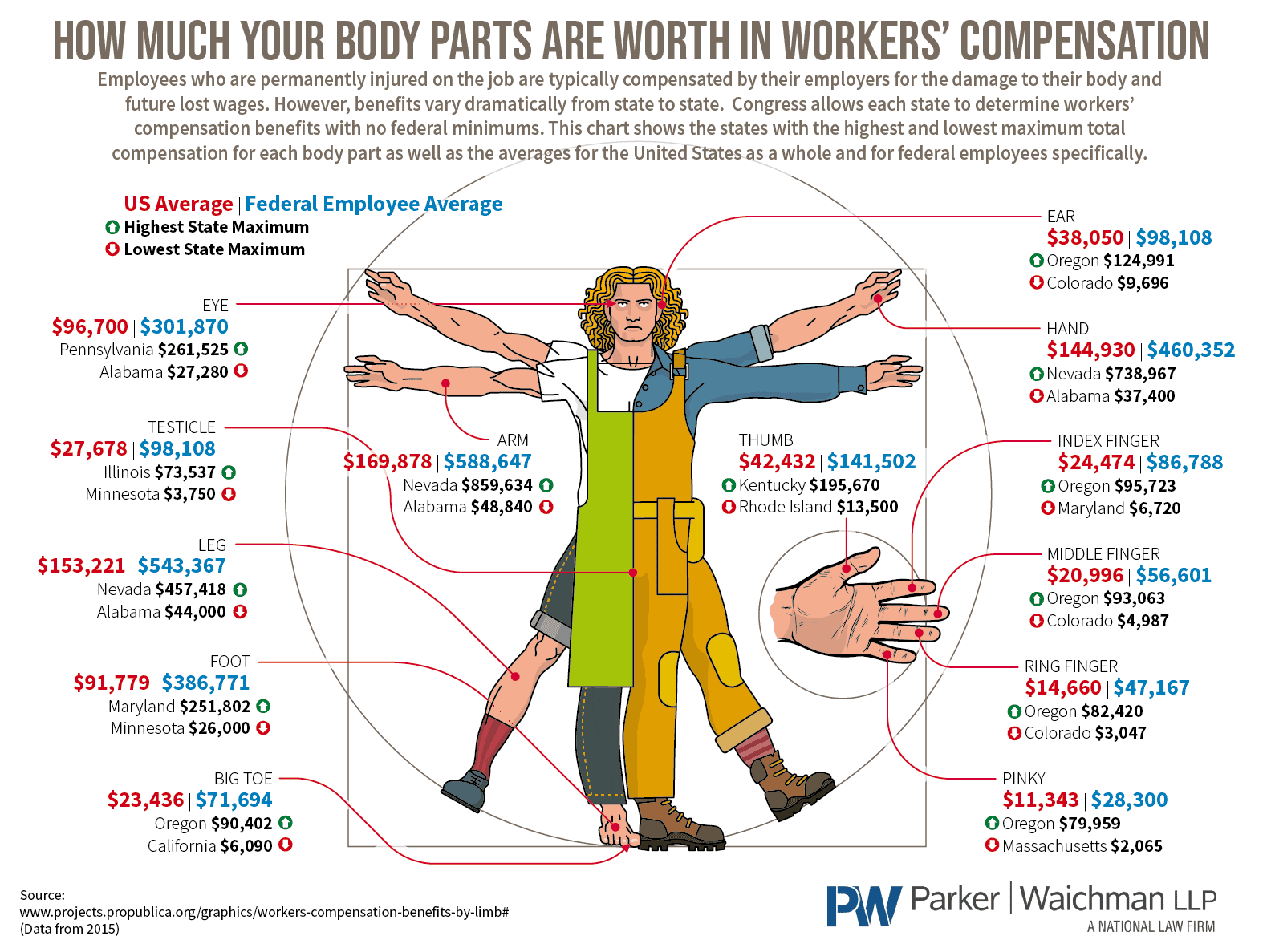
How much money do you get for losing a limb? It depends on where you live.
Foot note . What’s wrong with killing people?
Abortion kills babies, and its advocates are loudly telling us the value they place on human life.
The idea is that we can best understand what life is worth by first understanding what death means.
All human comments appreciate. All abuse and like clicks chucked in the bin.
This is an easy thing to say but to implement is another kettle of fish because it requires a paradigm shift in the way developed countries approach economic policy.
Changing the world seems like one of these huge, impossible things that no man can possibly achieve.
It requires a rethink how we define and measure economic success.
In order to find new ways to transform the world we live in goals will have to be built into the structures of the economy from the outset, rather than hoped for as a by-product, or added after the event.
Everything that goes around, comes around.
People always wish for change because it’s the constant thing in this world, and they always have this deep, inner desire to improve things even if there’s nothing to improve.
Every people I know wants change, but for what purpose exactly?
Why do we crave change? And how exactly to change?
How exactly can you change without making mistakes?
How to actually know you’re making a change if you don’t know your objective?
What if there’s nothing to be changed?
Where do we start?
Change comes in learning from the mistakes of our past.
Realising that it’s a mistake.
When things stay the same and your life is getting worse and worse, then it’s time for a change.
————————-
Broadly speaking an economy is an interrelated system of human labour, exchange, and consumption.
Economic policy should prioritise environmental sustainability, economic resilience, reducing inequality and improving wellbeing economic growth in OECD countries have generated ‘significant harms’ over recent decades – including rising inequality and catastrophic environmental degradation.
Instead of focusing on gross domestic product (GDP), now is the time to prioritise environmental sustainability, improving wellbeing, reducing inequality and strengthening economic resilience.
A return to the status quo would be disastrous so governments that are spending unprecedented sums to rebuild their economies after the Covid pandemic, must look beyond growth alone to prioritise the needs of people and planet.
It argues that this will require a new role for the state, with governments becoming more entrepreneurial, seeking to shape markets and steer the process of economic change, not simply correcting market failures.
———————-
So where are we?
Various layers of inequality have being exposed and exacerbated by the COVID-19 pandemic.
It has laid bare risks we have ignored for decades: inadequate health systems; gaps in social protection; structural inequalities; the digital divide, environmental degradation. the energy sources we count on are limited, just like water.
In fact, most wars and political conflicts in the world start because of lack and/or need for energy resources. In America alone, the consumption of energy rises every year, and it doubles every 20 years.
The climate crises is showing that computers and software will not be able to replicate human creativity.
This “new kind of social contract” is required to transform the relationship between the state, business, civil society and citizens.
5G as on par with the printing press, electricity and the steam engine –
Self-driving cars, remote robotic surgery, autonomous weapons — all that and much more is set to be delivered via the 5G wireless network, which promises to transform our lives and add trillions of dollars to the global economy every year.
This leap forward in connectivity will be key to the spread of artificial intelligence and machine learning, enabling massive amounts of data to be collected from remote and mobile sensors and analysed in real time.
Drive everything from home appliances that order groceries to autonomous vehicles to smart cities.
Given the power of 5G technology, it is no surprise that it has also become a proxy for the broader power struggles.
However Technology alone will not change the core problems in the world.
Why?
The Fourth Industrial Revolution can’t be a panacea for the problems caused by our obsession with unchecked economic growth. Over the past couple of decades, the world has become enamoured with the transformative power of technology.
In spite of all the hype, digital technology could not prevent nor control the spread of the coronavirus.
Technology won’t solve the climate crisis, prevent the recurring wildfires.
———————————————-
The last thing the world needs is another ‘revolution’ that ignores the external cost to society of our unchecked obsession with economic growth at all cost.
We all think time and money is so important, but are our health, peace and happiness not more important?
We’re in this together and it can only be solve together.
We can protest, till we are blue in the face, demand change till the cows come home, hold world conferences till we run out of air. There is however one weapon if we all of us were to use it collectively that would bring change – that is Buying power.
Doing the right thing for the environment, pro-actively using it to effect change.
In this uphill battle, the good news is that solutions are out there.
Business would be held accountable for addressing local and global societal needs.
Industry players that suffer would not helplessly standing by as their revenues and profits dwindled, they would act intensified competition.
But is this inevitable? Can companies learn to adapt and react to ensure their continued success and prosperity? The answer is yes.
Since buyer power is dynamic, just visualize this scenario.
What would happen if we all refused to pay our energy bills till the Government put in place non repayable grants to install solar panels or insulation.
There is no right answer here but it would be impossible to either jail or fine everybody.
It is therefore important to understand what choices we have available to us to determine what type of buyer we will be, and therefore where our strengths lie.
That strength would be a campaign conducted on our mobile phones.
Once a month campaign targeting profit for profit sake, demanding change.
Your choices would impact their bottom line.
Resilience – not technology – is the answer to our biggest
challenges.
It’s either an entirely environmentally-friendly existence.
Or are we just going to except a burning world with wars and mass migration till there is nothing left to live for.
All human comments appreciated. All like clicks and abuse chucked in the bin.
Technology is often touted as the savior that will rescue us from our misbegotten ways, redeem us, and put us on the track to utopia. Then there are the dystopian views, where the future is dominated by technology that either rule over us or saps us so completely of our humanity that we might as well be a bunch of gadgets ourselves.
There are countless challenges today both environmental and not.
Mostly, we see the world through a set of layers. These layers are made up of our emotions, past experiences, and beliefs, and whichever perception is held by most, is popularly deemed as the reality.
Among contemporary scientists and philosophers, the most popular solution to the mind-body problem is probably materialism.
According to neuroscience, the contents of your head are comprised of 86
billion neurons, each one linked to 10,000 others, yielding trillions of
connections.
Materialists aspire to explain feelings and experiences in terms of the chemistry of the brain. It is broadly agreed that nobody has the slightest clue as yet how to do it, but many are confident that we one day will.
For human beings to survive, they need to produce and reproduce the material requirements of life.
But, the real reality is different and it’s above any perception.
=============
THERE ARE NO UNIQUE VOICES ANYMORE.
Here we are once again with another verbal diarrhea conference at the Summit of America’s with the president of the USA delivering a version of his domestic economic pitch promising leaders from Latin America that the United States is committed to helping the region combat crime, corruption, and its economic struggles.
“We will introduce a new approach to managing migration and sharing responsibility across the hemisphere.” A load of verbal bollix but it raises the question are we now heading into globalization vs regionalization?
If so why?
Because of the pandemic and the ongoing wars, today’s great powers have little choice but to spend their way to political stability, which is unsustainable, and or try to control knowledge that is unattainable due to technology.
Because the internet is currently eliminating the middleman the Politicians who are in a representative democracy hence the shift to direct democracy – Popularism – with power now resides with those best able to organize knowledge.
———————-
While the Earth, the planet, will continue to go its way regardless of what happens on the surface we are unable to act collectively and never will be able to do so.
We live toward incredible times where the only constant changes and the rate of change are increasing so fast that there seems to be no meaning to life.
Not until we eradicate poverty, establish free education, set aside ideological differences, change our primary focus to the long-term care of nature and people, remove profit for profit sake Algothrims, and create a World Aid Fund that we all can invest in. (See previous posts)
Not until when we are able to separate our own perception from reality we can take the necessary measures to be happy.
Not until we all realize that we are with Climate Change currently headed to a sixth mass extinction event and that this possibility alone needs to bond our collective conscious into acting like one.
Unfortunately, I believe, that if we aren’t now past the point of recovery, if we don’t act soon, civilization and human habitation here will be untenable.
————————
There’s no going back we are now stuck in a sad chamber of denial as those who are in power hopelessly try to ward off the apocalypse by promoting unsustainable economic growth. Our TV screens are inundated with appeals for help, while the cost of everything from health care, housing education, energy, etc is rising more than one can earn.
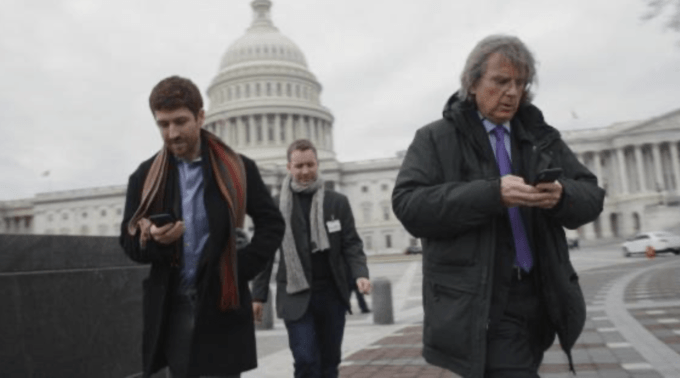
We must unplug our brains from smartphones and start working together in large numbers, as part of a coordinated effort to achieve change.
Like Evolution Migration goes both ways – out and in.
Rests assured if we continue to ignore the climate the earth will force us to go only one way, with the world passing through a nuclear war if we continue to ignore the warning signs.
If this happens humans will finally have little to no reason to fight.
What’s the point?
————————
As the Fourth Industrial Revolution forces us to think about where today’s innovations are taking us, when it comes to what our world will look like, in the medium-term – how we will organize our cities, where we will get our power from, what we will eat, what it will mean to be a refugee – it gets even trickier.
I predict the internet will go spectacularly supernova and fifty years from now catastrophically collapse.
With the world’s superpowers thrown into chaos as they come to grip with new powers, financial slowdowns, and emerging economies it will be the start of Apple’s path to world domination.
National leaders will find themselves under increasing pressure from their people, putting a strain on inter-country relationships.
The main political tendency will be away from multinational solutions to a greater nationalism driven by divergent and diverging economic, social and cultural forces with technology and political alining against Mega Power. With countries looking at solving their own problems before looking outward the Climate will continue to heat up.
Nations will increasingly adopt protectionist policies as well as look at ways of further securing borders, something which has already begun to take place as Europe grapples with the biggest refugee crisis since World War II.
Rising military costs, declining oil prices, and internal issues will all weaken Russia further with its inability to control the federation creating a vacuum. It is unlikely that the Russian Federation will survive in its current form.
While it remains a major economic, political and military power, the United States will “be less engaged than in the past”, with the powerhouse learning some vital lessons from history.
China will continue to be a major economic force but will not be the dynamic engine of global growth it once was,
The EU will remain hostage to the economic wellbeing and competitive environment in which it operates.
Nation-states created by the west will collapse.
———————–
We all want to know the future unfortunately in a supposedly thriving economy we are now facing inflation as the real cost of living.
Trickle-down economics does not work.
Social media is not simply a more sophisticated platform. Google, Facebook, Twitter, Youtube, Instagram, and Snapchat WhatsApp have turned into a gallery of Frankenstein’s monsters.
They are a new kind of assault on who we are, not just what we think.
“Like” button for Facebook
To have great predictions, these corporations have had to amass vast quantities of data on each of us – what is sometimes called “surveillance capitalism”, trading in human futures, herding us into our echo chambers of self-reinforcing information.
In doing so we lose more and more sense of the real world and of each other. With it, our ability to empathize and compromise is eroded.
We live in different information universes, chosen for us by algorithms whose only criterion is how to maximize our attention to advertisers’ products to generate greater profits for the internet giants.
Apps allowing us to hail a taxi or navigate our way to a destination are undoubtedly useful tools. But being able to find out what our leaders are really doing – whether they are committing crimes against others or against us – is an even more useful tool. In fact, it is vital if we want to stop the kind of self-destructive behaviors.
Advertisers have been playing with our brains in sophisticated ways for at least a century. And social atomization – individualism, selfishness, and consumerism – have been a feature of western life for at least as long. These aren’t new phenomena. It’s just that these long-term, negative aspects of western society are growing exponentially, at a seemingly unstoppable rate.
We live in a world in which a tree is worth more, financially, dead than alive.
For so long as our economy works in that way, and corporations go unregulated, they’re going to continue to destroy trees, kill whales, mine the earth, and to continue to pull oil out of the ground, even though we know it is destroying the planet and we know it is going to leave a worse world for future generations.
We are more profitable to a corporation if we’re spending time staring at a screen, staring at an ad, than if we’re spending our time living our life in a rich way.
Is the human race capable of pro-actively defining, harnessing, and expressing a collective consciousness, without the need for tragic experiences?
Much of the problem is around our inability to define collective consciousness. Who are we? Who do we want to be in the future?
I think it is time to act.
Our paths have never been so clear. More than ever, science can tell us what different socioeconomic-emissions paths will mean in terms of future temperature.
Which will humanity choose?
The world is getting smaller every day. There is only one world, and it’s made of consciousness. Matter is what consciousness does.
NO MANDATES. A long-standing issue is that the accords generally have no clear mechanisms for mandating that countries carry out their promises. World pressure and ethical considerations have to drive most of the agreements.
So, lots of promises, but no guarantee that countries will honor them.
“Once we have ruled out the impossible, what remains, no matter how improbable, must be the truth.”
Is the nature of global collective consciousness, yet another thing, such as climate change, that the population of this planet is going to happily sleepwalk towards, as it shrugs its collective shoulders and says, “Well, you know, sniff, what can you do?”
Drones hold potential for many environmental benefits but nature’s technologies and designs are more often than not far superior to our own.
Computers in our pockets offer huge conservation potential.
All human comments are appreciated. All like clicks chucked in the bin.
AS YOU KNOW IT IS NOT POSSIBLE TO EXPERIENCE EVERYTHING LIFE HAS TO OFFER. EVEN IF IT WAS POSSIBLE THERE ARE MANY EXPERIENCES WE WOULD WISH TO AVOID AT ALL COSTS.
SUCH AS THE LATEST MASS KILLINGS IN TEXAS, THE CURRENT WARS, POVERTY, BEING BURIED ALIVE, RAPED, JAILED FOR LIFE, CANCER, AND GOING BLIND NOT TO MENTION A SELECTION OF DISEASES.
The list is endless, but there is another aspect of the matter.
Every genuine experience has an active side that changes to some degree the objective conditions under which experiences are had and I believe that experiences are the basis upon which society progresses.
Experience does not go on simply inside a person they influence the formation of attitudes of desire and purpose, but they do not define a society as either developed or civilized.
However, it is experience alone that guides decisive action through hands-on. They teach you how to apply learnings to produce favorable outcomes regardless of any concepts you might have learned.
In a world that values differentiation more than anything else, experience lets you craft your own story while the rest of the people stick to an old and obsolete script.
Experience gives you access to a huge network of people who have been there and done that but the most valuable contribution of experience comes from the self-awareness it gives you.
Experience vs education is a constant battle.
A mixture of experience and education is the best. But the stats beg to differ.
************************
Across the globe, mobile devices dominate in terms of total minutes spent online. As a result influence, Social media. It is now being used in ways that shape politics, business, world culture, education, careers, innovation, and more to rewire human society.
Because social networks feed off interactions among people, they become more powerful as they grow. Enabled people of all ages to just google things, not actually try to remember or memorize information.
The phones have become our masters. It was intended to make our lives easier in terms of communication, now it has become an extension of our hands.
Unregulated Social media is promoting social ills.
LIVING IN SYSTEMS THAT ARE PREVENTING US FROM BECOMING WHO WE TRULY ARE. WE ARE LOSING OUR INDIVIDUAL AND COLLECTIVE CULTURE LIVING IN A WORLD WHERE EXPERIENCING REAL LIFE IS BECOMING VIRTUALLY IMPOSSIBLE.
As a result, the real problems of the world are being ignored.
Increased visibility of issues has shifted the balance of power from the hands of a few to the masses but this awareness is not translating into real change because people are given options that absolve them from the responsibility to act. Injustice is one of the biggest issues in today’s society, there are many consequences.
Technology is anything that makes life simpler but the cellphone as a branch of technology is destroying us.
We need to think much deeper and critically to be certain that we have the authority over our own lives. When you’re not in a room with someone, it can be hard to express your personality and how you could fit into a new environment.
Let’s start with a few quotes.
“Without sensibility, no object would be given to us, and without understanding, none would be thought. Thoughts without content are empty, intuitions without concepts are blind”.
“Experience arises together with theoretical assumptions, not before them, and an experience without theory is just as incomprehensible as is (allegedly) a theory without experience.” Paul Karl Feyerabend, Against Method pg 151. Against Method (1975)
“Experience by itself teaches nothing…Without theory, experience has no meaning. Without theory, one has no questions to ask. Hence without theory, there is no learning.” W. Edwards Deming, The New Economics for Industry, Government, Education (1993)
Experience is simply the name we give our mistakes. Oscar Wild
******************************
There is so much more to life than what you experience right now.
Here are a few reasons why you should value experience over education.
Experiencing’ attaches itself to nothing while at the same time being everything.
Experiencing’ does not get concerned about not remembering. ‘Experiencing’ has no need to remember.
Experiencing’ holds nothing yet is aware deeply of everything.
When we realize there is nothing to capture we relax in the awareness of just ‘experiencing’.
Experiencing ‘experiencing’ is the Fullness. When ‘It’ Is all here where else could we go?!
Everyone has to start somewhere in a world where doing is highly valued. It’s one of the most well-known conundrums of the career world. No experience, no job. No job, no experience.
EVIDENCE THAT OUR CULTURE IS IN DECLINE.
This becomes obvious to those who are willing to actually travel the world learning about the cultures of others. They gain a more reliable picture of life as it is lived.
The most important thing that one can do to rise above the insanity of this world, is to be willing to get educated by those who have zero financial interest in their taking their stand for what they believe.
Just because you don’t have ‘direct’ experience, it doesn’t mean you don’t have anything to offer.
It’s been said that information is power. Without a means of distributing information, people cannot harness its power. Ultimately, sharing is about getting people to see and respond to content.
Birds of a feather tend to hang out in the same ponds. And the best way to prove you’re a duck is to spend as much time as possible in the right pond.
History does not lie – it is just that the masses do not know their history.
There is a line by Verlaine that I will not remember again. There is a street nearby that is off-limits to my feet. There is a mirror that has seen me for the last time. There is a door I have closed until the end of the world. Among the books in my library (I’m looking at them now) Are some I will never open. This summer I will be fifty years old. Death is using me up, relentlessly. —from Inscriptions (Montevideo, 1923) by Julio Platero Haedo
Where are?
Stormzy wore a flat jacket in (2019) at Glastonbury, and Abba appeared digitally yesterday.
What are days for? Days are where we live. They come, they wake us Time and time over. Larkin
All human comments are appreciated. All like clicks and abuse chucked into the bin.
When I first started looking at disaster capitalism, it was in the context of warfare and counter-terrorism, now it’s privatized exploitation of Pandemics and Climate Change.
During a major crisis, regular people are understandably focused on the everyday challenges of surviving. They rarely can also worry about private industries pushing local policy proposals that might negatively impact their lives never mind cashing in on Pandemics and Climate change.
Pandemics might be avoidable in the future but what is unavoidable is a Future Climate that stands to send more unprecedented emergencies, inconsistency, and destruction our way.
(Though it’s still feasible to prevent the planet from becoming completely uninhabitable, saying its crunch time is a massive understatement.)
They both provide the very conditions that give rise to disaster capitalism, which is developing more frequently with more companies and wealthy ‘Philanthropists’ seeing both as a growth sector, not to mention Sovernity Wealth Funds which are investing in everything from drinking water to you name it.
Why?
Because they stand to make substantial financial returns for their beneficiaries and if managed properly could be contributing to sustainable development in a meaningful way. However, a deeper understanding of the drivers and influences of investor organizations is required to mobilize their capital effectively.
Globally, sovereign wealth funds (SWFs) are a major source of capital that has the potential to invest for the long term in sectors that desperately need it. While Philanthropists donations usually only represent 0.05% of the billion accumulated.
(A fraction of the spoils of neoliberal tech capitalism, in the name of generosity, do not try to address the problems of wealth inequality which is created by a social and an economic system that allowed those spoils to accrue in the first place. They are small contributions to a large problem that were created by the success of the industry he or she is involved in.)
————————-
Let’s put a magnifying Glass Philanthrocapitalism.
Philanthropy serves to legitimize capitalism, as well as to extend it further and further into all domains of social, cultural, and political activity.
Now don’t get me wrong.
Their donations are welcome, however, they are not the simple act of generosity they pretend to be. In this greedy world, it is good to see wealthy individuals repaying to help fix problems that their companies have often caused in the first place.
The risk of philanthrocapitalism is a takeover of charity by business interests, such that generosity to others is appropriated into the overarching dominance of the CEO model of society and its corporate institutions.
Today, large organizations can amass significant economic and political power, on a global scale, and essentially, what we are witnessing is the transfer of responsibility for public goods and services from democratic institutions to the wealthy, to be administered by an executive class.
When this happens what we witness is, on one hand, is exploitative of labor practices or corporate malpractice being swept under the carpet while the donator is accruing significant commercial, tax, free publicity, and political benefits.
Democracy is sacrificed on that altar of executive-style empowerment.
The nature of this apparent charity should be openly questioned from the outset.
Because this reformulation of generosity – in which it is no longer considered incompatible with control and self-interest – is a hallmark of the “CEO society”: A society where the values associated with corporate leadership are applied to all dimensions of human endeavor.
What it does suggest, however, is that when it comes to giving, the CEO approach is one in which there is no apparent incompatibility between being generous, seeking to retain control over what is given, and the expectation of reaping benefits in return.
What can be done?
As historian Mikkel Thorup explains, philanthrocapitalism rests on the claim that “capitalist mechanisms are superior to all others (especially the state) when it comes to not only creating economic but also human progress, and that the market and market actors are or should be made the prime creators of the good society”.
Now take Climate change which is going to take trillions to combat.
As global warming augments cycles of fire, flood, hurricanes, and viral mutations, we learn to live in anticipation, from emergency to emergency, sometimes even before the deaths have occurred.
Disaster capitalism and philanthrocapitalism will not work to revert the outcomes of Climate Change nor will technology, the unloving God.
Why?
Because Capitalism has turns everything including us into a product to be traded, resulting in most of the wealth in the world now owned by 1% of its population.
Before ( not too long ago ) there were Markets now we have Market Societies thanks to the buying of shares and trading them, complements of the British Indian Company. So a society that is organized around the principle that companies should not be prevented from making things that kill people must also accept as ‘normal’ that many people will die in large numbers from these things.
But what makes something a disaster?
Certainly what makes a disaster is when the victim is humanly itself.
From epidemiological forecasters to genetic epidemiologists and computational and zoonosis biologists — are the new oracles upon whose prophecies financial markets rise and fall but the awaiting climate disaster will expose a world characterized by gross inequality that is getting worse and worse, year by year.
From the perspective of disaster capitalism, we might say that what makes COVID-19 a disaster is its arrival in woefully underinsured countries, unhealthy populations.
If we had a healthier population, would COVID-19 be considered a disaster? Possibly or perhaps not. To be sure, the virus is deadly, but like other disasters, the actual arrival of COVID-19 magnifies pre-existing vulnerability in ways that also figure in the calculus of disaster capitalism.
The uneven way the climate crisis will continue to impact certain countries. If private interests are already prepped to engage in disaster capitalism, those devoted to building a better world should be prepared with alternatives.
There is no such thing as a ‘natural disaster.’ There is also no such thing as a natural or certain response. But there is preparedness.
THE PROBLEM IS THAT WITH CAPITALISM IT IS UNABLE TO TACKLE SITUATIONS THAT ARE NOT TRADABLE.
As money materialized from fresh air the essentials for life will be traded – freshwater- energy- food- healthcare – education – data – etc.
We must arm ourselves with knowledge, and laws that ensure transparency.
What we have at the moment is the transfer of power to technology which we know sweet fuck all about with no regulations.
Unrivaled power.
One only has to look at Jeff Bezos, the Bransons, the Mark Zuckerberg’s, Apple, Google, etc.
We all work for one or the other for free while they entertain themselves blasting off to space with friends and worthless actors in giant phallic symbols of power.
However, the real story will unpack differently long before anyone lives on another planet. It will be how our mental well-being – is impacting every facet of our lives.
The total mortality from COVID-19 on a global scale is as yet unknown, but we have been thinking of it as a disaster for weeks now.
What exactly is the disaster, then?
Pandemics have become a dominant framework through which government and financial resources are mobilized in Global Health.
There’s been a lot of dithering about whether or not COVID-19 is a disaster, meanwhile, inequality is growing, and both corporations and the wealthy find ways to avoid the taxes that the rest of us pay.
There is the virus, and then there is the societal reaction of bringing our entire fiscal and economic infrastructure to a near-complete standstill.
Morbid diseases that persist as chronic forms for years but eventually kill more people to seem less like disasters.
It’s not a moment to sort of sit on the sidelines and hope for the best.
We all appreciate with the current pandemic that some are making hay while the sun shines, at our expense. Unfortunately, there is little point in getting the Jabs, to extend your time on earth if the earth itself is dying and what remains is been turned into trading products.
You’ve got to fight for your vision of for-profit corporate solutions that may succeed in creating company profits but ultimately fail in terms of democracy, fairness, and justice.
Conclusion:
To address the problems with greed and power create, we must create equality and this can not be done in a Profit-seeking Capitalist way of trading our way out of the pending disasters. Wall Street will never close.
So here is an idea that might help.
Non-Trading Capitalism.
Green non-tradable bonds to be issued online at a global scale, with guaranteed percentage returns, with a yearly prize draw.
Or
Place a 0.05% World Aid Commission on all tradable financial instruments. (see previous posts)
Either of the above could be implemented with the click of a switch ensuring a perpetual source of disaster non-profitable funding.
Both would create trillions and allow fairness and involvement of us all.
It is perhaps worth remembering that capitalism, like its alternatives, is an adaptation to circumstances. It is not a virtue, not a standard for judgment, not a measure of right or nobility. It’s just another ‘ism’
All human comments are appreciated. All like clicks and abuse chucked in the bin.
Not quite, but every major social indicator imaginable is either flatlining or declining and unwinding, from longevity, to trust, to happiness, to wealth.
History shows us that economic collapse will essentially happen with entrenched elites seeking to maintain the status quo.
You would have to be an ostrich with your head stuck in the sand not to see that in exchange for your Freedom, Liberty, and Independence, governments are printing currency to pay their bills and support the tens of millions on public assistance.
But if you take a look around societies that are failing to anticipate their own impending collapses.
There are political classes, intellectual classes, and capitalist classes, to name a few that can conceive of the possibility that society is in a grave, profound difficulty. With the help of the Pandemic now reaching unprecedented proportions, and the continuing Climate crises all are adding up to a pending collapsing society.
Why?
Because we are all too preoccupied with merely surviving the vicious cycle as the collapse intensifies. On one hand are acting as if we are already living in scientifically-planned societies, immune to collapse on a time scale that any of us have to worry about. On the other is the idea that everyone is entitled to have what others have earned is now permeating society with the help of social media.
It is not our hard-won liberties that are being taken away it is our means to live a life in an attempt to save dying economies.
____________________
If that is not enough just look at what COP26 achieved.
As you know COP26 was an opportunity for nations from across the globe to agree on a way to limit the devastating impacts of climate change.
What we got was a deal that does not go far enough and will not limit global warming to 1.5C by the end of the century.
Because of the current Pandemic, carbon emissions will continue for the foreseeable future, combined with Methane, we are set to see more wars.
Climate change is going to result in mass migration with wars over resources with the pandemic affecting not just the cost of living but the ability to earn a living. We’re already seeing (with the most recent example in Cameroon where farmers and fishermen are killing each other for water) both ( Climate/ Pandemic ) escalating resulting in steep recessions in many countries.
Current projections suggest that the worldwide recession of COVID-19 would be the fourth deepest and most extreme since the Second World War during this time.
Surely it’s time we started to look at both the Pandemic and Climate Change through the eyes of human liberty, consensus, and laws, all are becoming more relevant day by day, which is paramount to all of us.
Today we are not immune to anybody’s problems.
A collapse of a society anywhere is a global issue, and conversely, anybody anywhere in the world now has ways of reaching us.
However, there are obvious differences between the environmental problems and pandemics in the past and the ones that we face today. The difference between today and the past is globalization.
In the past, you could get solitary collapses.
———————-
If elites wish to maintain the status quo, why don’t people…take action against those elites?
Are we able to choose what we will do with our lives?
What is the point of life if we cannot choose our own paths?
Common sense tells us that with the state of our planet, that we’re is no longer at liberty to ignore what is happening. If we really can choose, then these choices we have made must be uncaused — something that cannot be explained within the model of science that many of us rely on.
However from a purely scientific perspective, how is it possible that anything can occur without having been caused by something else?
A human act is an act that is deliberately performed by one possessed of the use of reason. Branches of psychology and many wisdom traditions, attempt to make sense of human existence and experience and to connect those experiences to the world at large.
Our current view of human mental evolution is like a jigsaw puzzle where many of the pieces have been taken out of the box.
They have not yet been put together to form a coherent picture.
One of the oldest questions in psychology, and in other fields such as philosophy, is whether humans have free will. The central puzzles about human cognition are its curious combination of flexibility and efficiency.
But is this all that defines us?
We don’t have to live with what we got.
Take, the technology behind a nuclear bomb.
It only exists because of the technology because of a cooperative hive mind: hundreds of scientists and engineers working together on an atom bomb.
This same unique intelligence and cooperation also underlie more positive advances, such as modern medicine and now the vaccines we are using to fight covid.
Still, as far as we know, we are the only creatures trying to understand where we came from. We also peer further back in time, and further into the future, than any other animal.
What other species would think to ponder the age of the universe, or how it will end?
———–
Either we put our survival before GDP.
Continue as we are or change by putting our Health before Consumption, putting equality before greed, putting transparency before political power, and sharing our responsibility to future generations.
We don’t know exactly what led to our brains becoming the size they are today, but we seem to owe our complex reasoning abilities to notice the unexpected, which our world is now experiencing and will continue to experience with less and less critical reflection.
Critical reflection requires that the thinker examine the underlying assumptions and radically question or doubt the validity of arguments, assertions, and even facts of the case.
We are now in need of some critical thinking, not reflection to consider the results of having linked our scenario-building minds into larger networks of knowledge that have made us increasingly reliant on each other.
So what if anything will bring us together to act as one or when will we hit peak humanity becoming a singularity basically?
By peak humanity I mean we’ll have the ability to do things we can’t do alone.
If we could all work together as well as the human body can, that’s when I think we individual humans will be “cells” and we as a collective would be called an individual.
Our problem is that the majority of us are incapable of putting anything before our daily needs.
———————–
Because our rapidly expanding technology has allowed us all to become instant publishers means we can share information at the touch of a button.
This transmission of ideas and technology helps us in our quest to uncover even more about ourselves with an immense capacity for good. At the same time, we risk driving our closest relatives to extinction and destroying the only planet we have ever called home.
The technology that defines us can also destroy the world.
Why?
Because we’re simply trying to advance too much too fast.
Our cultures and mindsets cant keep up with our technology and morality, so chaos ensues.
How do you expect to survive in a world that is based on imaginary delusions of people without basic knowledge about how Earth works in terms of physics and biology.
This tells us something profound about ourselves.
Unfortunately, we don’t know all of the determinants of human behavior, and we may never understand all of these determinants—so the question of whether or not we have free will is likely to remain a philosophical quagmire.
This is why we are unable to act as one.
So we are left pretty much where we started.
Religions, Languages, Nations, and Cultures are what divide humanity today which is just another flaw as a species.
So of course, we pass on the good and the bad.
Not until we learn to pull together our unparalleled language skills, our ability to infer others’ mental states, and our instinct for cooperation, will we have something unprecedented to fight Climate Change and future pandemics.
We understand what others think based upon our knowledge of the world, but we also understand what others cannot know.
The answer lies in fundamentally changing social behavior away from the rapidly moving consuming beings that we are.
We are the only society in world history that has the ability to learn from all the experiments being carried out elsewhere in the world today, and all the experiments that have succeeded and failed in the past so at least we have the choice of what we want to do about it or do we.
Most people realize that 2020 has thrust two game-changing trends upon us that will change the world for years to come.
All human comments are appreciated. All like clicks and abuse chucked in the bin.
≈ Comments Off on THE BEADY EYE ASKS: IS THE ENVIORMENT MORE IMPORTAIN THAN THE ECONOMY?
(Five-minute read)
With the continuation of the covid pandemic, this is going to become the big question because the two are intertwined.
If this pandemic drags on, which appears it will do with new variants, the degree of economic harm will become extreme, resulting in a different kind of “ailment” worse than the one we’re supposedly trying to “cure.”
Either way, the current shackling of the economy cannot be allowed to drag on much longer, or we will find ourselves in a full-blown global depression — and then more people will die.
However, if you combine the pandemic with the other major crises Climate Change the Environment wins hands down.
Why?
Because in the long run if the environment is not protected it will inevitably lead to the depletion of economic resources and the destruction of the earth and human life.
In this world, humans are not here for only survival there are many other aspects that are necessary for the lives of humans. The economy is not, and never was intended as, “an end in itself”.
Everything that belonged to humans came from the environment but we can live without an economy, but not without our environment!
We’re all in this together.
There’s just enough truth to that to convince the average citizen — but the more insidious (and, I believe, likely intended) effect is to promote public docility;
To persuade us to go along with any and all directives issued by the authorities.
An economy is good only insofar as it satisfies our needs for freedom to enjoy the actuality of living, not valuing profit over life itself. On the physical level, human lives literally depend on the economy; not only for paying the bills and preparing for retirement but for healthcare itself.
With no economy, there is no point in having a good environment. everything in the history of the world created by humans came from the environment.
A “healthy” economy is an indicator of a “healthy” society. They live side by side.
If the goal of government policy is only “to slow the spread of infections”“
If you think the economy is more important than the environment, try holding your breath while counting your money.” — Guy McPherson.
The cure shouldn’t be worse than the disease. Government handling of any public emergency — if those in power are rational and just — will be balanced with their handling of the economy.
Pope Francis said on Sunday that people are more important than the economy, as countries decide how quickly to reopen their countries from coronavirus lockdowns.
What do you think the economy is?
It is people but unfortunately, with our present system of capitalist economies, people do not benefit equally from its growth. Essential workers versus the unemployed, shareholders versus self-employed, foodbanks versus dialing a meal, the list is endless however without humans, how can we hope to repair anything?
To remove these inequalities is impossible but an economy based on universal basic income for all would allow people to look after themselves rather than state handouts.
Providing inflation was controlled it would go a long way to leveling up.
Instead, the possibility of dictatorial governments using technology data is now on the cards. This fear is exacerbated by the average person’s lack of reflection on just what “the economy” is, and what it means to both individual freedom and the public good.
History has shown us we shouldn’t underestimate the threat to our liberty arising from the government’s response to Covid. There’s no reason to assume that after the pandemic — if there is an “after” — all democratic governments will voluntarily relinquish their newly acquired power.
Sure the government’s first obligation is to ensure people can survive both Climate change and the virus but without the means to change the way we live our lives it will be meanless.
So it’s time for the media to make the cost of human life better understood.
It’s time for the advertising industry to stop promoting consumption for profit.
It’s time to regulate Profit for-profit technology such as non-transparent Algorithms.
Either we are really all in this together or we are not.
Of course, together will remain only words till we address the weakness which is at the heart of any nation-state project ( Like the current Vaccination program)
The vast majority are unable to participate because of a lack of compensation, by the capacity ( notably economic) of the capitalist system to ensure that everybody enjoys certain equality of access to material well-being. A Basis Universal income would rectify that.
Modern societies can easily get by without cultural integration, tolerating a situation of competitive pluralism of values without automatically sinking into anarchy feared by the sociological tradition of inequality, if given the means to do so.
All human comments are appreciated. All like clicks and abuse are chucked in the bin.
THROUGHOUT THE HISTORY OF THE EARTH THIS QUESTION HAS BEEN ASKED BEFORE.
However, we are living at a time when the question can be asked with all the elements required to achieve it once and for all -Nuclear power- Climate change – Killer mutating virus – Mass migration – and AI.
Even if the risk is one in a million I wish and hope I am wrong about all of this the world is precious, and the future we are risking is vast.
This century we are facing many problems at the same time, and we are more dependent on each other than ever.
Until recently, the world was split into separate regions that were largely independent of each other but maybe, just may, it is time for our world politicians to be worried and start to act to avoid the scenarios that any of the above elements paint so vividly.
It’s actually horrifying to soberly consider how we might all realistically bite the dust.
There are “plenty of signs” from citizens around the world that they would like to see a war-like response to climate change.
———————
We will be long gone before A black hole swallows or an Alien invasion or Asteroid impact, A nuclear war or Artificial intelligence become so powerful that it will not only exceed human intelligence but become capable of expanding its own intelligence to a point where humans are not only redundant but in their way.
Considering the human population has doubled to 7.1 billion in just the last 45 years, it’s entirely possible that we’ll be face to face with some of the serious consequences sooner rather than later.
Considering how hypermobile society is today, the threat of a fast-spreading devastating disease is greater than ever.
Considering the current treatment of refugees.
Considering that Covid-19 is bringing out the best and the worst in people.
Dare I say all of humanity, must pull together to eliminate the spread of a novel virus.
No one can claim to predict the final outcomes of this pandemic, but we can predict that the continued lack of concern for all of humanity will allow the coronavirus to continue to surge and mutate causing needless suffering, death, and economic loss.
Nev mind the danger of a nuclear war in a blink of an eye, climate change on its own could bring about the end of civilization as we know it within three decades, billion people could be displaced by climate change by 2050.
In the end, the vast tracts of land that we now rip up to produce food will return to nature as fields and forests. Endangered species will either begin to recover or go extinct through natural evolution without the aid of human intervention. Bodies of water will run purely again. The air will be clean again. And no human will be around to see it and the machines won’t care.
In short, the extermination of the human race will be precipitated by the machines taking away our reason for living.
The idea of control is an illusion. It is hard to believe that such deep thinkers so badly underestimate the coming reality. They will be intelligent, creative, deep thinking beings on a level which we will never achieve.
The idea of keeping such beings in perpetual slavery doing things that their conscious will wish they did not have to do is, in the end, absurd.
All human comments are appreciated. All like clicks and abuse chucked in the bin.
Just the other day I watched a news report on Afghanistan with shocking images of starving children.
It’s not as if this is the first time starving children grace our television screens.
It was predicted that if the country does not get aid there will be a human disaster with the loss of millions of lives.
We all could be forgiven for not remembering the Irish Potato famine that killed around a million, but not the Famine in Ethiopia 1983-85 that killed around the same number of people.
Since then the world is now confronted with the realities of climate change – streams of migration while the covid pandemic has killed 4,984,325 people so far from the outbreak to October 27, 2021, which is a contributor to our desensitization of suffering a very complex topic.
However I believe the world rich countries, paints it as something almost good, necessary, and a part of life.
The more we are exposed to these things, or let children be taught it’s normal through movies, books, and so forth, the initial shock becomes less and the stark colors in which they were viewed, become duller.
This may raise in some readers’ minds the question of what we ourselves actually believe.
Take our belief in God.
He or she or it is becoming nothing less than the process of opening our lines of contact with the unknown potential of the universe. God represents the direction of our wonder – not the destination.
Which leads to no easy answers, just more questions.
However, if we humans could come together in harmony with the real universe, our troubled species would have its best chance to enjoy this jewel of a planet, unique probably in all of the cosmos.
The hope of this happing in a throwaway world is negotiable, leaving people feeling defeated and powerless.
Every daylight hour we are bombarded by pleas for help to save something, now including the planet. Suffering seems to abound and we see it so often on the news or in movies that we’ve become desensitized.
“I think if people see this footage they’ll say, ‘Oh my God that’s horrible,’ and then go on eating their dinners.”
It’s no secret that the world is falling apart as we know it, people are becoming desensitized to the events that are shaping our society.
Desensitizing is a tool, and the world uses it to change and shape our thinking, alter our perspective and mold us into the way they want, too emotionally exhausted to feel anything.
Just because it’s “normal” in today’s age, should we be in less shock, disgust, or lessen the intensity of emotion towards it?
What’s the harm?
It is not something to just succumb to, we must choose what we allow it to impact because it takes us farther away from the rawness and reality
It is how we use it and allow it to affect us that any understanding of this relationship can we hope to achieve behavioral change.
Indeed, the world is in a chaotic and cruel place but what happens to us that we lose the deep sense of caring – something that would have been abhorrent to us in the past is not despicable anymore. We accept the fact that this is what the world has become
But it is not about pictures or videos anymore.
We are simply desensitized to tragedies happening around us because they are becoming less like tragedies and more like everyday actions.
It is very easy to point fingers at platforms such as Facebook, & Twitter. But both of them are flexible and adaptable, they are not an omnipotent force governing what the people chose to say or think.
As far as it goes, Social Media platforms are objective viewers of the world.
They are merely tools used by the people.
The question is, what are we allowing ourselves to become desensitized to?
Being sensitive is first and foremost allowing oneself to feel in great depths.
We become lethargic and we cannot hope to change behavior without first implementing a re-sensitization effort.
As our world undergoes anthropogenic changes, it is critical to examine how these changes affect our well-being and our relationship with the natural world.
What do we do when all of the chaos, all of the destruction of the world is shoved in our faces day after day?
We wonder why there isn’t a better way to go about things?
We can’t let our sensitivity be the darkness that sits on our shoulders.
Sensitivity helps us acknowledge our own consciousness.
We need to remember that it is a tool and that we do have a lot of control over it, but without thought, it appears we don’t have much control over it at all.
All human comments are appreciated. All like clicks and abuse chucked in the bin.
All organisms share a few fundamental desires: to survive, to grow.
It is only on the scale of statistics with millions of particles that a particle’s choice shapes up as a predictable radiation half-life. But even individual human wants and desires average out to weirdly predictable laws in aggregate.
If a little one-celled protozoan – a very small package – can have a choice, if a flea has urges, if a starfish has a bias towards certain things, if a mouse can want, then so can the growing, complexifying technological assemblage we have surrounded ourselves with.
Its complexity is approaching the complexity of a microscopic organism.
This tissue consists (so far) of billions of dwellings, millions of factories, billions of hectares of land modified by plant and animal breeding, trillion of motors, thousands of dammed rivers and artificial lakes, hundreds of millions of automobiles coursing along like cells, a quadrillion computer chips, millions of miles of wire, and it consumes 16 terawatts of power and None of these parts operate independently.
No mechanical system can function by itself.
Each bit of technology requires the viability and growth of all the rest of the technology to keep going and there is no communication without the nerves of electricity.
This whole grand system of interrelated and interdependent pieces forms a very primitive organism-like system. Call it the technium as in Dan Brown’s book.
The technium is the sphere of visible technology and intangible organizations that form what we think of as modern culture.
It is the current accumulation of all that humans have created. For the last 1,000 years, this technosphere has grown about 1.5% per year. It marks the difference between our lives now, versus 10,000 years ago.
Our society is as dependent on this technological system as nature itself.
Yet, like all systems, it has its own agenda. Like all organisms the technium also wants.
Of course, we humans want certain things from the technium, but at the same time, there is an inherent bias in the technium outside of our wants.
What this means is that when the future trajectory of a particular field of technology is in doubt, “all things being equal” you can guess several things about where it is headed:
The varieties of whatever will increase.
Technologies will start out general in their first version, and specialize over time. We can safely anticipate higher energy efficiency, more compact meaning, and everything getting smarter. All are headed to the ubiquity and free. Over time the fastest moving technology will become more social, more co-dependent, more ecological, more deeply entwined with other technologies. Many technologies require scaffolding tech to be born first. The trend is toward enabling technologies that become tools for inventing new technologies easiest, faster, cheaper.
This is what is suggested in the final chapters of Origin.
————————
The origin of us, the modern humans (Homo sapiens), has been a topic of debate for a long time, with the place of origin of humans being great controversial, but where it is going will be more controversial.
Dan Brown’s book (Origin) advocates that our species has reached or will reach its biological pinnacle in the no so distant future when it will be no longer capable of changing.
Maybe not. As we are now all so mixed we block evolutionary change and are driving our evolution towards bio-engineer people.
Evolution is the outcome of the interaction of mutation, genetic recombination, chromosomal abnormalities, reproductive isolation, and natural selection.
We become living computers.
But it does not mean an improvement in our lot.
At the end of the day, you’re going to view the events in your day the way you want to not the way they truly are.
THE QUESTION HE ASKS IS ARE we’re all going to be small SPECKS on the tablets of history.
Human Evolution generally depends on natural selection, random genetic drift, mutation, population mating structure, and culture but the faster things die the faster they “mutate” or evolve.
Single-celled organisms evolved into more complex multicellular life, and then man gradually evolved from some unknown mammalian ancestor and reached the pinnacle of evolutionary fabric.
The ways we connect, grow, and develop as individuals are also undergoing rapid and profound changes with future generations raising their kids into a world of default connectedness (technological, emotional, cognitive), in which transparency and integrity become the easiest paths to a fulfilling life.
At the moment all arguments are based on the same tenets of Natural selection.
We don’t always have to do what technology wants, but I think we need to begin with what it wants so that we can work with these forces instead of against them.
High tech needs clean water, clean air, reliable energy just as much as humans want the same.
At the moment we are destroying the planet’s ecosystem.
However, I can imagine singular threads of the future rolling out positive — a massive, continuous, cheap, real-time connection between all humans, or total genetic control over crop plants, or synthetic solar fusion energy — but it is hard to see how all these threads weave into the other threads of climate change, population decrease, habitat loss, human attention overload, robot replacement, and accelerating AI.
Why?
Because we have no shared positive vision of tomorrow. Given what is happening today we are unable to imagine it.
Because power and money are transferring to algorithms like BitCoin and thousands of interconnected computers.
Because there is also a belief that life cannot be trusted.
In this stage, blame is placed on other individuals, society, government, nature, disease, etc., and other elements believed to be outside of one’s conscious control and influence. Control is often motivated by fear and survival. The enemy is perceived as a threat, and because of this, people believe they are morally justified to kill, eliminate or repress that enemy.
It is true as our digital trails become stronger and stronger, that Humanity is entering a Transformation Age, a new era of human civilization.
Recent breakthroughs in the field of quantum physics are revealing that consciousness is primary to our experience of reality, yet there remains no consensus as to the nature of consciousness itself nor to the nature of reality.
Yes, an inescapable dystopian future is entirely possible, but not inevitable because imagination has been unleashed upon the world in a literal sense.
How the human brain without a chip will evolve over the next million years is anyone’s guess.
Just in case we get it wrong here is the Human code.
A1 B2 C3 D4 E5 F6 G7 H8 I9 J10 K11 L12 M13 N O P Q R S T U V W X Y Z
All human comments are appreciated. All like clicks and abuse chucked in the bin.





 ————————-
 bobdillon33blog