• About
  • THE BEADY EYE SAY’S : THE EUROPEAN UNION SHOULD THANK ENGLAND FOR ITS IN OR OUT REFERENDUM.

bobdillon33blog

~ Free Thinker.

bobdillon33blog

Category Archives: Inequality

THE BEADY EYE SAY’S YOU CAN’T FIGHT THE POWER YOU DON’T SEE.

01 Sunday Nov 2020

Posted by bobdillon33@gmail.com in 2020: The year we need to change., Algorithms., Artificial Intelligence., COVID-19, Democracy, Digital age., DIGITAL DICTATORSHIP., Facial Recognition., Fourth Industrial Revolution., GPS-Tracking., Honesty., Human values., Humanity., Inequality, International solidarity., Life., Modern day Slavery, Our Common Values., POST COVID-19., Reality., Technology v Humanity, Technology., The common good., The essence of our humanity., The Obvious., The pursuit of profit., The state of the World., The world to day., Tracking apps., TRACKING TECHNOLOGY., Truth, Truthfulness., Twitter, Unanswered Questions., We can leave a legacy worthwhile., WHAT IS TRUTH, What Needs to change in the World, Where's the Global Outrage., World Organisations., World Politics

≈ Comments Off on THE BEADY EYE SAY’S YOU CAN’T FIGHT THE POWER YOU DON’T SEE.

Tags

Algorithms trade., Algorithms., Artificial Intelligence., Big Data, Capitalism and Greed, Coronavirus (COVID-19), Democracy, Inequility, Technology, The Future of Mankind, Visions of the future.


(Five-minute read) 

The present Covid-19 Pandemic might be warping our sense of reality however there is another pandemic that is shaping and will shape our future reality.

We – in many ways, things are way better than they were thanks to technology.

We can work from anywhere because we have the Internet and we have Zoom and all of those platforms.

If you are able to say technology, on the whole, has done well, it probably means you’re in a fairly privileged position.

There’s still a huge digital divide.

Even – there are billions of people who don’t have access to the Internet. 


On paper, algorithms sound like the pinnacle of efficiency, but as they’ve become more ubiquitous, there’s a difference between potential and reality both must be separate for the survival of democracy and the forthcoming distribution and administration of any covid-19 vaccine worldwide.  

 The reality is that Algorithms will be used to distribute and decide who will get the Covid-19 vaccination.

When it arrives algorithms will continue to reflect the biases that it has been and is being trained into machines that are learning a representation of the world that is skewed.

Some will say that Data is neutral. It’s just numbers. It’s just data but the past dwells within our algorithms and the flaws that are in our technology are what’s the algorithm’s information it’s taking in.

I am not just talking about the U.S. presidential election in a few day’s time.

We have already seen artificial intelligence being used in voting or politics how they extend beyond the realm of computer vision.

If we’re defining success by how it’s looked like in the past and the past has been one where men like Donal trump were given an opportunity to Twitt falsehoods, spreading them with the aid of Facebook and others it’s no wonder who gets hired or fired?

Do you get that loan? Do you get insurance? Do you and I pay the same price for the same product purchased on the same platform?

Automating inequality.

Before a human looks at your resume, it gets vetted by algorithms written by software engineers who are involved in the system (without changing the system itself he the engineer is still going to reproduce algorithmic bias and algorithmic harms.)

Any sorts of algorithmic tools that are intended to be used, again, have to be verified for nondiscrimination before it’s even adopted.

We now have an AI system – right? – that can classify skin cancer as well as the top dermatologists but to change society to change what AI is learning in order to create what can be realized is going to be trusted into our lives by the inevitable economic depression.

So a Covid-19 vaccine is going to transfer real power into the world of Data and we can’t fight the power you don’t see, you don’t know about.

All human comments appreciated. All like clicks and abuse chucked in the bin.

← Back

Thank you for your response. ✨


Share this:

  • Share on WhatsApp (Opens in new window) WhatsApp
  • More
  • Share on Pocket (Opens in new window) Pocket
  • Share on Mastodon (Opens in new window) Mastodon

THE BEADY EYE ASK’S: WHEN IT COMES TO WORLD PROBLEMS WHY IS IT THAT WE HUMANS ARE UNABLE TO APPRECIATE THE GRAVITY THEY PRESENT.

03 Friday Jul 2020

Posted by bobdillon33@gmail.com in #whatif.com, 2020: The year we need to change., A Constitution for the Earth., Big Data., Capitalism, Climate Change., COVID-19, Digital age., Disconnection., Economic Depression., Environment, Evolution, Fourth Industrial Revolution., GDP., homelessness., How to do it., HUMAN INTELLIGENCE, Human values., Humanity., Inequality, Life., Micro v Macro Economics., Modern day life., Our Common Values., Post - truth politics., POST COVID-19., Survival., Sustaniability, Technology v Humanity, Technology., Telling the truth., The common good., The current state of our oceans., The essence of our humanity., The Future, THE FUTURE OF OUR OCEANS/SEAS, The Obvious., The pursuit of profit., The state of the World., The world to day., Truth, Unanswered Questions., VALUES, We can leave a legacy worthwhile., Wealth., WHAT IS TRUTH, What Needs to change in the World, Where's the Global Outrage., World Economic Depression., World Leaders, World Politics

≈ Comments Off on THE BEADY EYE ASK’S: WHEN IT COMES TO WORLD PROBLEMS WHY IS IT THAT WE HUMANS ARE UNABLE TO APPRECIATE THE GRAVITY THEY PRESENT.

Tags

Capitalism and Greed, Capitalism vs. the Climate., Climate change, Coronavirus (COVID-19), Distribution of wealth, Earth, Environment, Extinction, Global warming, Inequility, SMART PHONE WORLD, Social Media, Technology, The Future of Mankind, Visions of the future., World aid commission


(Twenty-minute read)

As global citizens, the news is packed with statistics and updates on the challenges we face. Most of these challenges have existed from time memorial and are too large to be solved by one person at a time and if they affect huge numbers of people we are numb by their enormity.  

Photographs can be effective for a while. They capture our attention — they get us to see the reality, to glimpse the reality at a scale we can understand and connect to emotionally. But then there has to be somewhere to go with it.

“There is no constant value for human life.”

Granted that certain global issues cannot be solved by on-the-ground, grassroots-style projects like human rights, climate change, wars, etc. 

So is it a perception problem? 

No matter how hard we try we are unable to perceive the whole earth never mind the Universe as one.   

We witness this many times in history when the value of a single life diminishes against the backdrop of a larger tragedy and now we are once again witnessing it with COVID-19.

We all go to great lengths to protect a single individual or to rescue someone in distress, but then as the numbers increase, we don’t respond proportionally to that.

We don’t scale up, even when we’re capable. 

There’s a hard limit to human compassion. The human mind is not very good at thinking about and empathizing with, millions or billions of individuals. As the number of victims increases, our empathy, our willingness to help, reliably decreases.

We seem unable to prevent our past from impacting our present?

However, our current behaviors are not shaped by past events but by mass media in the form of social media which is creating self-limiting beliefs.

They appear so real to the extent that we cant hardly tell whether its a self-limiting belief or a real one, as a result, we are unable to see the world correctly, so we look on as millions die. 

Numbers simply can’t convey the costs, there’s an infuriating paradox at play.

We know that we must protect the Earth but are unwilling to pay the cost of doing so.

Our problem is to replace the false beliefs we acquired with the right one.

Which issues are the most urgent?

And can one person, really, truly, make that much of a contribution?

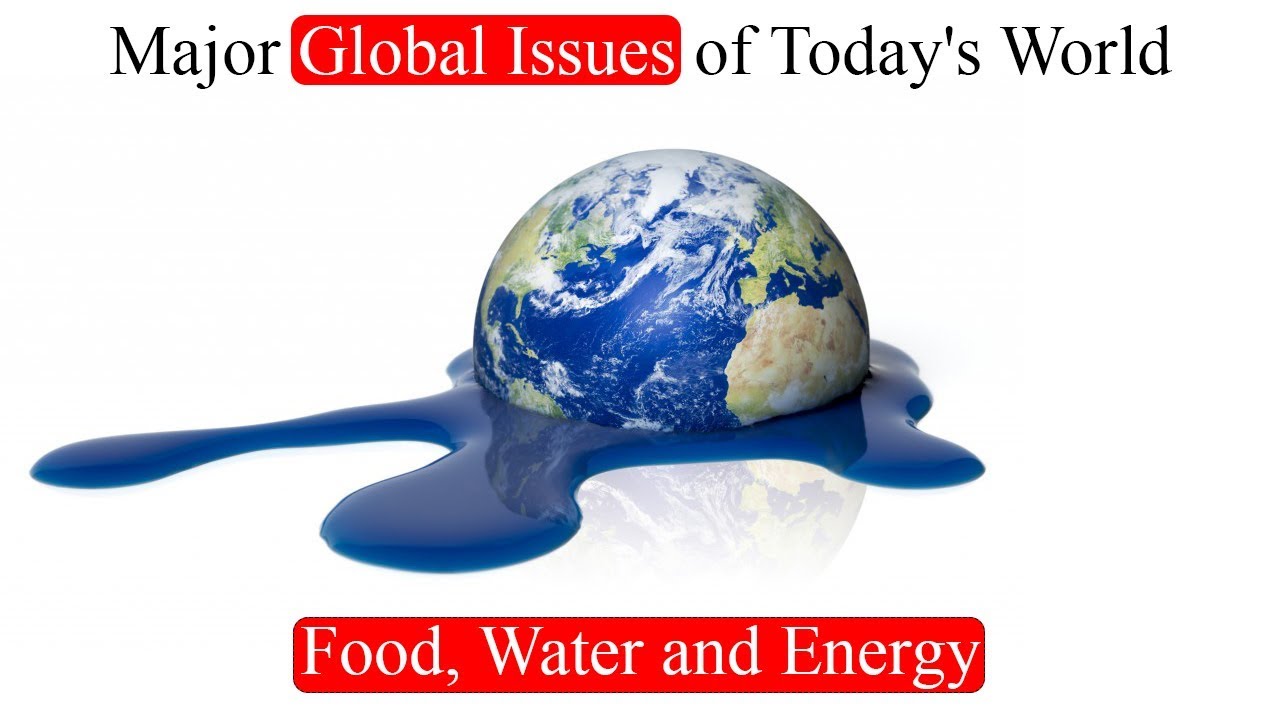
Here are some of the major issues all global citizens should be aware of if not there are living in coco land. 

FOOD.

One in nine people in the world goes hungry each day.  

It has been estimated that if women farmers could be given the same resources as men, millions of more people could be fed. 

How can it be 2020 and people are still going hungry?

Nutritious food is often more expensive. Visit your local supermarket and compare the price of a punnet of strawberries to a chocolate bar. 

Even though approximately 12.9% of the world is undernourished, about 30% of the adult population is overweight.

HEALTH.

In a world of more than 1 billion people living in extreme poverty (less than $1.25 per day) and 2.2 billion living on less than $2 per day (2011 data)

The reality is far more complex. Untold hundreds of millions of people lack access to essential health services, in fact over half of the world population do not have basic health care. We are a long way from the universal right to health.

Communicable diseases were responsible for 71%  of deaths, and low-income countries are the most severely affected. 

EDUCATION. 

It’s estimated that approximately 600 million children are not mastering basic mathematics and literacy while at school. 

HABITAT AND BIODIVERSITY LOSS. OCEAN CONSERVATION

The earth is full. Full of our waste, full of our demands.

The economy is now bigger than the earth, unimaginable, unattainable, and unsustainable. There is no infinite growth possible on a finite planet because nature sets the rules and individual issues mean nothing if they are not attached to nature.  

There are countless studies and evidence all around you indicating that the coming crises are inevitable.

If an economy grows at 2% per year, it will double in 35 years. 

Imagine twice as much human economic activity as we now have. Can our planet sustain this? Do we need to do this? Why would we want to? Why are we doing this?

Even though a lot of us know that it makes no sense to try to grow endlessly and outstrip the only planet we have. 

What if anything can be changed? 

We all know that the road to global decarbonization must involve renewable energy.

Although the Paris agreement’s goals are aligned with science, alarming inconsistencies remain between science-based targets and national commitments.

Its a no-brainer in the current emerging global political climate.

Rather than tackle mitigation measures economies are now due to Covid-19 returning to pumping more not less carbon into the atmosphere.

Climate stabilization must be placed on par with economic development, human rights democracy, and peace.       

From a money perspective, we can’t help it—we live in a grow-or-die system.?

Currently, we have a system that provides humans to have an innate cost/benefit assessment tool called the smartphone operating at all times. 

Here are a few suggestions.

It is now vital that we consider the motivation and funding sources of those who are shaping our worldview. 

Money must be created without debt so it doesn’t force us to grow and consumer beyond our means.

New Money must no longer enter circulation as credit, that is, as debt.

It will simply be money spent into circulation by the government as a permanently circulating exchange medium to enable the country’s economy to function.

This money will be equity on the national balance sheet and be our commonwealth.

It will replace bank-created debt-money ending the privilege of commercial banks to create and issue what we use as money.

Then we have trillions in the form of pension investment funds that are nontransparently invested. If we demanded that these funds were moved from fossil fuel industries to green energy industries whose returns are going to be massive we would be reducing carbon emissions by millions of tonnes.

Next, we have the advertising industry.

All advertising that does not promote sustainability should be curtailed by law.  We must turn the direction of humanity towards thriving not consumption for profit.  

With the coming economic depression, we do have room for growth—the growth of community cohesion and commons conservation. We can grow our efforts to educate our children, care for our people, and care for the planet. We can grow into a more just, caring, sustainable society. 

Because we are careering into a world of a few haves and billions of have -not.

Access to information owned by Facebook, Twitter, Microsoft, Apple, to name a few, must become transparent and available to all as the interactions of all our individual worldviews shape the condition of humanity.

Lastly, we must address inequality.   

There are now 65.3 million people displaced from their homes worldwide.

Think about that number: 65.3 million. Can you even imagine it?

It’s now or never that we make a profit for profit’s sake contribute to a World Aid fund.

(see previous posts)

As Mahatma Gandhi put it, “Earth has enough to satisfy every man’s need, but not every man’s greed.”

We can’t eat drink or shit data.


All human comments appreciate. All like clicks and abuse chucked in the bin.

← Back

Thank you for your response. ✨


Share this:

  • Share on WhatsApp (Opens in new window) WhatsApp
  • More
  • Share on Pocket (Opens in new window) Pocket
  • Share on Mastodon (Opens in new window) Mastodon

THE BEADY EYE SAY’S. YOU CAN TAKE THE KNEE BUT WHAT IS IT THAT MAKES A NATION.

24 Wednesday Jun 2020

Posted by bobdillon33@gmail.com in 2020: The year we need to change., A Constitution for the Earth., Civilization., Climate Change., COVID-19, Dehumanization., Democracy, Digital age., Disconnection., Donald Trump., European Union., Evolution, Facebook, Human values., Humanity., Inequality, Life., Modern Day Communication., Modern day life., POST COVID-19., Social Media, Technology, The common good., The essence of our humanity., The Internet., The Obvious., The state of the World., The world to day., Unanswered Questions., WHAT IS TRUTH, What Needs to change in the World

≈ Comments Off on THE BEADY EYE SAY’S. YOU CAN TAKE THE KNEE BUT WHAT IS IT THAT MAKES A NATION.

Tags

Climate change, Nation identity., Nation v technology., Nationality, Nationhood, Nations and cultures, Rise of nationalism, Technology, The Future of Mankind, Visions of the future.


(Twenty-minute read) 

IT IS NOT COVID-19 OR TAKING THE KEEN OR THE GDP THAT MAKES A NATION. 

SO LET US ASK SOME QUESTIONS:

What is it these days that constituents a Nation?

How does a nation emerge and evolve?  

What are the precise differences between a nation and a gathering of people?

It is hard, -and even one may claim impossible- to give satisfactory answers.

Nations seem so compelling, so “real,” and so much a part of the political and cultural landscape, that people think they have lasted forever. In reality, they come into being and dissolve with changing historical circumstances – sometimes over a relatively short period of time, like Czechoslovakia and Yugoslavia.

Did you notice that suddenly out of nowhere, the BBC has started to refer to England as the Four Nations?

Charles Stewart Parnell said  “No Man Has the Right to Fix the Boundary to the March of a Nation” no man has a right to say to his country—thus far shalt thou go and no further.

Ernest Renan in 1882 said nations share “a soul” and memories of “endeavors, sacrifice, and devotion.

Historical events uniquely fuse together the population of a given territory into a nation.

These nations share “a soul” and memories of “endeavors, sacrifice, and devotion.”

But, because of migration, most modern states include within their borders diverse communities that challenge the idea of national homogeneity and give rise to the community of citizenship, rather than membership in the nation.

So is a nation the kind of moral conscience, which we call a nation? 

If one were to believe some political theorists, a nation is above all a dynasty, representing an earlier conquest, one which was first of all accepted, and then forgotten by the mass of the people.

With technology however we are learning that man is a slave neither of his race nor his language, nor of his religion, nor of the course of rivers nor of the direction taken by mountain chains.

Why, then, does national identity give rise to such extremely strong feelings?

And why would so many be ready to “die for the nation” in time of war?

THERE IS NO RIGHT ANSWER. 

In the age of global transportation and communication, new identities arise to challenge the “nation,” but the pull of nationalism remains a powerful force to be reckoned with – and a glue that binds states together and helps many people (for better and for worse) make sense out of a confusing reality.

Language invites people to unite, but it does not force them to do so.

The United States and England, Latin America, and Spain speak the same languages yet do not form single nations.

Religion cannot supply an adequate basis for the constitution of a modern nationality either.

Geography, or what is known as natural frontiers, undoubtedly plays a considerable part in the division of nations.

So a nation’s existence is if you will pardon the metaphor, a daily plebiscite, just as an individual’s existence is a perpetual affirmation of life.

National identity is typically based on shared culture, religion, history, language or ethnicity, though disputes arise as to who is truly a member of the national community or even whether the “nation” exists at all (do you have to speak French to be Québécois or Irish to be Irish? Are Wales and Tibet nations?). 

Theorizing further about nations, Renan says they reinforce themselves in a “daily plebiscite” of a common will to live together. 

This might have been true before the arrival of the internet and the smartphone.

Now the world can see into every backyard and what is on the washing line.

In other words, we are no longer living in a world defined by Nationhood but a world that is driven by the whims of bias, color, profit, and the inequality of the accident of birth. 

WE TODAY MIGHT LIVE BEHIND FRONTIERS BUT WE ALL CONNECTED TO ONE ANOTHER.

The term “nationalism” is simply not part of technology so the nation exists in the minds of its members as an “image”. 

For most of the last 50 years, technology knew its place.

THEN ALONG CAME SOCIAL MEDIA.  

Face book alone has around 2.6 billion people using it every month but it remains a sub-identities not a new identity; however, the technology it and other platforms are using does not reflect their impacts on nationhood.

After decades of inward-looking and jargon-infused discourse, governments are just beginning to wake up to social media and finally taking their communications seriously.

They reflect the grand narrative that is shaping a common sense of belonging.

Our digital identity is already an inextricable part of our lives, as is the technology that allows us to manage it. However, there are two really sad things about this and the unintended consequence of the use of these emerging technologies.

First, most people have no idea of the dramatic changes that are occurring slowly yet inexorably.  Second, this shift in identity, from internally derived to externally driven, can’t be good for us as (formerly unique?) individuals nor for us as a (formerly vital?) society.

We come to see our identities as those we would like to have or that we want people to see rather than who we really are. We then feel compelled to promote and market these identities through social media.

It is easier than ever to change our identity, yet it is harder than ever to control.

It isn’t difficult to see how external forces may now be gaining a disproportionate influence over our self-identities compared with previous generations. These platforms are shaping our self-identities in ways in which most of us aren’t the least bit aware.

In previous generations, most of the social forces that influenced our self-identities were positive; parents, peers, schools, communities, extracurricular activities, even the media sent mostly healthy messages about who we were and how we should perceive ourselves.

But now, the pendulum has swung to the other extreme in a social world where profit is motive and rule by the collection of data. 

On the Internet, people create imaginary identities in virtual worlds with a new generation contemplating a life of wearable computing, finding it natural to think of their eyeglasses as screen monitors, their bodies as elements of cyborg selves.

They are and will blur the boundaries between their on-line and off-line lives, and there is every indication that the future will include robots that seem to express feelings and moods, not nations.

We are ill-prepared for the new psychological world we are creating. 

The Internet constantly confronts us with evidence of our past but we are losing the chance to remake ourselves?

This is certain to have some kind of profound effect on the development of identity.

What that effect will be we’re not quite sure.

Smartphone—allows us to produce a narrative of our lives, to choose what to remember and what to contribute to our own mythos.

This is of particular importance for those who yearn to establish new identities.

The trouble is, most difficult memories aren’t captured by photos, videos, or tweets, complex historical past has to be read or taught as it has a major consequence: 

Memory is almost a form of political representation, enabled by social media; groups are able to preserve their history as they travel across continents.

National identity – there we are. 

But the main victim of today’s shenanigans when it comes to nationhood is that sentiment of self has been tempered for centuries by an intense feeling of collective suffering, generating a crave for unity, a thrive for a fusion of the entire society.

In the end, nations will form a federation like the USA and Europe.

Each nation of Europe represents too much of a specific history for the European spirit
to be anything else than the spirit of the European nations.

Over time this too shall pass eventually but it will take centuries for Europe to forget that Europe is just about nations. 

The USA under the Presidency of Donal Dump nationhood appears to mean that the more you destroy, the more you count.

The Uk now referred to itself as the four nations all of which have their national selections, with the exception of the Olympics.

The best way of being right in the future is, in certain periods, to know how to resign oneself to being out of fashion.

There can be little doubt that the present COVID-19 and the forthcoming Economics Depressions are and will start to exam what defines – A Nation.

The virus loves a large body of people, associated with a particular territory, that is sufficiently conscious of its unity to seek or to possess a government peculiarly its own ends, as it is not talking to itself.

Technology allows for self-representation and preservation of personal and collective identity by providing autonomy and empowerment but it now poses questions about authenticity in new, urgent ways.

Technology can be used to preserve the language, customs, and culture, but it will if not transparent and shared drive inequality without any understanding of the perspective of critical sociology. 

It’s my hope that as we become more sophisticated consumers of computational technology—and realize how much it is changing the way we see our world and the quality of our relationships.

Remember it is nationalism’s adaptability to most local conditions that allow it to thrive, especially when supported by a government intent on expanding its own power domestically and internationally.  It’s an attractive ideology for political leaders, as it provides a ready-made and widely-believed justification for increased political power in order to Make the Nation Great Again. 

One way or the other coming climate change, with mass migration, will redefine what it is to be a Nation.  

All human comments and contributions appreciated. All like clicks and abuse chucked in the bin. 

← Back

Thank you for your response. ✨


Share this:

  • Share on WhatsApp (Opens in new window) WhatsApp
  • More
  • Share on Pocket (Opens in new window) Pocket
  • Share on Mastodon (Opens in new window) Mastodon

THE BEADY EYE ASK’S: ARE WE ENTERING AN ERA OF DO IT YOURSELF ECONOMICS, BASED ON PEOPLES INTUITIONS.

16 Tuesday Jun 2020

Posted by bobdillon33@gmail.com in 2020: The year we need to change., Capitalism, Climate Change., COVID-19, Enegery, Environment, Fourth Industrial Revolution., How to do it., Humanity., Inequality, Life., Micro v Macro Economics., Modern day life., Populism., Post - truth politics., POST COVID-19., Sustaniability, Technology v Humanity, The essence of our humanity., The Future, The Obvious., The pursuit of profit., The state of the World., The world to day., Unanswered Questions., United Nations, VALUES, We can leave a legacy worthwhile., WHAT IS TRUTH, What Needs to change in the World, Where's the Global Outrage., World Economic Depression., World Economy.

≈ Comments Off on THE BEADY EYE ASK’S: ARE WE ENTERING AN ERA OF DO IT YOURSELF ECONOMICS, BASED ON PEOPLES INTUITIONS.

Tags

Capitalism and Greed, Capitalism vs. the Climate., Coronavirus (COVID-19), Globalization, Inequility, Micro v Macro Economics., The Future of Mankind, THE UNITED NATIONS, World aid commission

(Twenty-minute read)

I am no economist but you don’t have to be to realize that long before the Covid-19 Pandemic, the state of the global economy was already in disarray, now with viruses the economic problems to come are in general as serious as they have ever been.

To deal with the accumulated liabilities history suggests some radical alternatives, including a burst of inflation or an organized public default, one way or the other the economic fallout defies calculation.

It makes sense with everything happening at once to take a hard look at the coming economic depression. (which is going to be deep and long)

It will require not just governments to be more visionary to lead the way out of the crisis but new economic thinking to rethink the whole Globalisation of economies before they disappear into the world of digital data and become difficult to measure, or tax.

The question, of course, is what form that will take and which political forces will control it.

We all know that economic relationships are complicated and changeable. The influence of anyone variable in an economy is not easy to isolate even with the use of sophisticated data. This is why economists are unable to agree on any course of action when it comes to deciding how the economy actually works and how it ought to work.

Even if they could agree countries have different moral and political judgments.

What I see is that we entering an era of doing it yourself economics, based on people’s intuitions,but unfortunately macroeconomic is choosing between inflation or unemployment.

With countries trying to reopen their economies and given that economists can not agree or have sufficient knowledge to predict any direction one could be forgivin to ask are they performing a useful purpose in the first place.

The coming economic depression can only be diluted by the creation of a new interrelationship with the resources of the earth, their use against their value to the ecosystems as a whole not the continuation of profit for profit sake.

We must recognize that the civilizations of the world are entwined in a global economic system that is incapable of functioning for the common good of humanity, other species, and this planet, which is our home.

It is clear that serious reflection is in order.

Simply to stand back and question what has happened and why would be to compound failure with failure: failure of vision and failure of responsibility.

A sustainable and prosperous global economy needs to be grounded in the common good of all living species, not profit.

The failure of markets, institutions, and morality during the current coronavirus crisis has shown that the emergence of global capitalism brings with it a new set of risks that call for an ethical, moral change.

Leaders are now gambling with public health, safety, and the future of younger generations. They unapologetically prioritize serving themselves over the people they were elected to serve. We have to make them raise their game.

A new approach to economics is required that puts values, compassion, generosity, kindness, people, planet, and the common good at the heart of our economic system. 

Now is the Time for a Revolution in Economic thinking.

A new definition of the “Bottom Line.”

Given today’s global challenges, such as climate change, financial crises, oil depletion, renewable energy, inequality, and poverty, what kind of new economic theory is called for?

Therefore this post is an appeal to economists, academic colleagues in business, finance, management, political economy, philosophy, theology, ethics, environmental studies, sociology, anthropology, and others to come together, so that, all of us, collectively, can prescribe a working solution to our commonly shared challenges.

As we transition from a service-based economy to a knowledge-based economy, human capital will not be enough, the next generation will see large tax increases in order to pay off the national debts.

The work, of which we are a part, which is so needed, has barely begun.

The pandemic will continue to change the economic and financial order

forever.

It will lead to permanent shifts in political and economic power in

ways that will become apparent only later.

However, the coronavirus crisis has been a powerful reminder that the basic political and economic unit is still the nation-state. Countries will have to strive for a better balance between taking advantage of globalization and a necessary degree of self-reliance.

The COVID-19 pandemic has created a wartime atmosphere in which such changes suddenly seem possible.

Perhaps the emergency payments to individuals that many governments have made are a path to a universal basic income and universal health insurance.

The pandemic has laid bare the vulnerabilities of open borders.

Firms that are part of global supply chains have witnessed first-hand the risks inherent in their interdependencies and the large losses caused by disruption.

Supply chains will have to become more local and robust—but less global.

The real risk, however, is that this organic and self-interested shift away from globalization by people and firms will be compounded by some policymakers who exploit fears over open borders. They could impose protectionist restrictions on trade under the guise of self-sufficiency and restrict the movement of people under the pretext of public health.

It is now in the hands of global leaders to avert this outcome and to retain the spirit of international unity that has collectively sustained us for more than 50 years.

The rise of populism in many countries further tilts the balance toward home bias.

Even after the pandemic is brought under control (which may itself prove a lengthy process). The post-coronavirus financial architecture may not take us all the way back to the pre globalization era, and the damage to international trade and finance is likely to be extensive and lasting.

The gap between rich countries (along with a few emerging markets) and the rest of the world in their resilience to crises will widen further. Economic nationalism will increasingly lead governments to shut off their own economies from the rest of the world.

Now and for a long time to come, central banks will become entrenched as the first and main line of defense against economic and financial crises. They may come to rue this immense new role and the unrealistic burdens and expectations it will impose on them.

We urgently need more and deeper conversations, dialogue, and engagement at all levels and from a variety of perspectives to bring the different cultures, civilizations, and viewpoints together, in order to find common ground and agreement on joint action.

The pandemic and subsequent recovery will accelerate the ongoing digitalization and automation of work changing the future composition of GDP.

The share of services in the economy will continue to rise. But the share of in-person services will decline in retail, hospitality, travel, education, health care, and government as digitalization drives changes in the way these services are organized and delivered.

The downturn will accelerate the growth of nonstandard, precarious employment—part-time workers, gig workers, and workers with multiple employers—leading to new portable benefits systems that move with workers and broaden the definition of employer. New low-cost training programs, digitally delivered, will be required to provide the skills required in new jobs.

The sudden dependence of so many on the ability to work remotely reminds us that a significant and inclusive expansion of Wi-Fi, broadband, and other infrastructure will be necessary to enable the accelerating digitalization of economic activity.

We cannot achieve our hopes and dreams without such conversations and dialogue. Only then can we hope for the understanding between civilizations, peoples, and points of view necessary to construct an economy that truly works for the common good.

No country or economic activity is going to be impervious to the drastic impacts of climate change.

It is cuckoo land to think that we can continue to ignore the pending disasters, compounded by the social problems, highlighted by the epidemic that has brought all manner of issues to the surface. From the coronavirus pandemic and police brutality to the marginalization of minority communities around the world, leadership is broken.

For years we have listened to their rhetoric without action that has given full rein to self-harming market forces.

The Normal Economy is Never Coming Back.

This much is certain:

Just as this disease has shattered lives, disrupted markets and exposed the competence (or lack thereof) of governments, it will lead to permanent shifts in political and economic power in ways that will become apparent only later.

It would be fair to say that if we are to move to Green sustainable economies the first thing that is needs is green energy that is free of costs to the user. 

The whole concept of economies becoming attached to the fundamental values required to protect and revitalize the fundamental resources of the earth that provide us all with life is idealistic and will remain so as no one wants to foot the bill to make it happen. 

However, for the first time in human history, before profit disappears into the cloud we have the technology to apply a World Aid commission of 0.005% on all activities that are in existence for profit sake only.

One of humanity’s greatest weaknesses is greed. 

One can see this throughout history, with the present-day examples personified by Wall Street and other world stock exchanges now run by high-frequency trading algorithms. 

Such a commission would create a perpetual fund of billions almost invisibly to the markets. It would spread the cost of changing world economies fairly to achieve the desired outcome both the earth’s needs and our needs.    

It would turn a begging United nation into a giving United nation. 

No one country wants to foot the cost of change and it cannot be achieved if visible to Wall Street

Micro and Macro Economics are neither different subjects, nor they are contradictory, rather, they are complementary. The only important point which makes them different is the area of application.

A fund like this could give grants, not loans. It could buy the sunshine and turn it into energy, buy the protection of forests, freshwater, fresh air, remove the need for mass farming, reduce inequality, afford education, change our lives for the better. 

All human comments appreciated. All like clicks and abuse chucked in the bin.

← Back

Thank you for your response. ✨


Share this:

  • Share on WhatsApp (Opens in new window) WhatsApp
  • More
  • Share on Pocket (Opens in new window) Pocket
  • Share on Mastodon (Opens in new window) Mastodon

THE BEADY EYE SAY’S : WE KNOW THE RIGHT WAY TO GO BUT WHY IS IT SO HARD? IS IT BECAUSE IMAGINATION IS DISAPPEARING.

09 Saturday May 2020

Posted by bobdillon33@gmail.com in 2020: The year we need to change., Big Data., COVID-19, Dehumanization., Digital age., DIGITAL DICTATORSHIP., Digital Friendship., Disconnection., Economic Depression., Emergency powers., Fourth Industrial Revolution., Freedom, GPS-Tracking., HUMAN INTELLIGENCE, Human values., Humanity., Imagination., Inequality, Innovation., Modern day life., Modern day Slavery, Our Common Values., POST COVID-19., Reality., Robot citizenship., Sustaniability, Technology, Technology v Humanity, The essence of our humanity., The Future, The Obvious., The state of the World., The world to day., Tracking apps., TRACKING TECHNOLOGY., Unanswered Questions., VALUES, We can leave a legacy worthwhile., WHAT IS TRUTH, What Needs to change in the World, Where's the Global Outrage.

≈ Comments Off on THE BEADY EYE SAY’S : WE KNOW THE RIGHT WAY TO GO BUT WHY IS IT SO HARD? IS IT BECAUSE IMAGINATION IS DISAPPEARING.

Tags

Algorithms., Artificial Intelligence., CORONA VIRUS., Coronavirus (COVID-19), Imagination., Legacy worthwhile., The Future of Mankind, Visions of the future.

(Twenty-minute read) 

If ever there was a need for imagination when this pandemic is over or is eventually under control, hopefully, imagination is going to play a massive role in redesigning not just our societies but the way we live and die on this planet.

The responses to the COVID-19 pandemic are simply the amplification of the dynamic that drives other social and ecological crises.

If we have learned anything from Covid-19 is that global problems require global solutions, whether it is a pandemic, hunger, or access to quality education, reversing climate change, poverty, and inequality, you name it.

Imagination allows us to engage in thinking about alternatives and there is no doubt that we will need some radical changes.

Here I am referring to creative imagination the role it plays in our thinking.

The key point is that in using a term such as ‘imagining’, I am not just referring to some mental activity, but also evaluating that activity in some way, with all its relations and ramifications.

So here is your chance to submit you imagine creative ideas.

(All human comments appreciated. All like clicks and abuse get chucked in the bin) 

Where to start? 

Unfortunately, this pandemic is a present-day dystopia.

It’s not the stuff of science fiction set in some distant future or on another planet it’s damage is ongoing and will only get worse as it continues.

To understand the “real world” one has to experience it not imagine it.

At the moment there is a lot of rhetoric about using a tracking App to monitor the spread of COVID_19. In other words, unregulated squealing Apps (that are owned by private corporations) that Id people that have or had the virus. 

 We recently celebrated VE day that won us freedom at the cost of millions of lives. 

In my view, such a tracking proposition is not far removed from what the Nazis did in identify Jews by marking them with a yellow star. 

It is imperative that we in their honor that we now don’t rubbish there sacrifice by becoming Data slaves. 

(As I have said in the previous post, to ensure tracking does not outlive the effort against COVID-19. Both the technology and related policies and procedures should ensure the deletion of data when there is no longer a need to hold it.)

When people feel that their phones are antagonistic rather than helpful, they will just turn location functions off or turn their phones off entirely.

Imagine living under a Chines automatism system run by a Donal Dump.

Such techniques violate some of the core values of liberal democratic regimes.)

Up to now, we thought that Capitalist Globalization was the bee’s knees when in fact it increased inequalities and undermined democracy.

Now we realize that ecological transition IS more than NECESSARY with a bottom-up economy to protect the world and not the top-down begging world we have a the moment.  

However, the big problem remains the same.

How to distribute the gains of any economy. and now the losses.  

Technology will treat people as units and as such the relentless growth and accumulation of wealth and power for the few, will continue to grow. 

Cutting-edge technologies are now powered by artificial intelligence and are fundamentally shifting the distribution of power between people who provide data and entities that can make sense and use of these data.

It will become a battle between protecting individual rights and confronting an existential threat to our collective right to health, to a basic living wage. 

Of course, all of this data helps epidemiologists model the movement and the future of the virus but beyond the privacy and data rights, there are questions of biases and discrimination built into the algorithms that power the technology. 

Machines will never be made to think like people.

We have for decades underpaid the people that we now call essential workers as interchangeable units.

Currently, the AI field is mostly controlled by corporate interests. 

As global COVID-19 cases continue to rise, the unmatched connectivity that defines our era serves as both bane and blessing. 

Let’s ask the question one more time, in taking advantage of big data to create databases to track and predict infectious risk, should we be enforcing social- distancing by squealing on each other?

If you are at risk, the odds change rapidly, you become in favor of sharing or donating data.

There’s really no way to stop the movement of microbes and we need to realize that now our citizens really need to realize that.

Mapping potential carriers with big data notwithstanding privacy concerns, analysis of personal, travel, and other data like clinical data allow accurate predictive modeling.

Imagine if we created a society where everything is predicted and determined by big data. Its presence depends on “symbolic function”, the ability to pretend that one object is another thing entirely.

It will be a massive mistake.

So is technology an imaginary friend or foe?

Will we lose that human touch?

There’s no doubt that the coronavirus pandemic has changed daily life.

But what changes will last? How will we live when it’s all over? 

Even now, when we’re seeing a massive, rapid change in most walks of life — inspired by a push in science or technology, or nudged by a freak, global health emergency — it’s hard to find sound prophecy. And that’s despite access to mountains of data.

Who would have imagined that global consumerism could be crushed by the wheels of its own industry … quite so suddenly.

But perhaps this is the kind of tipping point that we secretly crave — a slowing of society.

Many people will struggle to deal with an increasing rate of change and, as a result, suffer a social or personal shock. Whether we survive the shock depends on how well we adapt.

What complicates things is that no two societies are ever fully the same.

We’re seeing that friction today, between so-called “forces” and “anti-forces.” The push and pull of people and places adapting this way or that way. But it’s nigh impossible to predict how much of that change, and its effect on daily life, will remain, and how much — or what — will change back.

Whatever happens, it won’t be on a massive scale because our regular behavior will start to reemerge.

Who will benefit more?

We might discover that work is not really part of your life or something you like to do, but something you must do exactly seven hours and 42 minutes a day. And then your real life starts.

This Pandemic will not be a ‘one-off’ event. 

Now is the time to start investing in spare capacity, in people and equipment, to cope with such events. 

( See post on setting up World Aid Depots)  

We must envision a path that allows humans to flourish by asking: how can we protect people financially, should widespread technological unemployment happen even sooner than we anticipated?

A realization among some that the dominant ways of knowing and organizing, which characterize our modern techno-industrial cultures, cannot handle the realities of living, complex, relational, human, and non-human systems.

This may help bring into focus the need to update the conceptual foundations of our cultures.

But can tech solve everything?

That raises the question of whether privacy isn’t just a cultural construct.

If your health depended on it, wouldn’t you share your data willingly?

So we need to say goodbye to our concepts of data security.

Data security is something for healthy people.

On the other hand fear of infection is limiting “in-person” interactions, forcing us deeper into an “increasingly chilling use of online systems and all-electronic communication.

Change depends on how we see ourselves as individuals and groups living through the now.

The internet might just be facilitating.

But it’s still about the real world and a reminder that you can’t eat anything on your computer screen.

In the next Pandemic and the forthcoming Depression, there will be nowhere to hide” from economic collapse in our networked world. 

Take video conferencing.

It’s fine as an exception, but as a rule, it fails to fully translate subtle forms of communication — body language below the head and shoulders. All sound is normalized, mics get muted, along with nervous hands or a lost, downward gaze.

In the end, previous pandemics have profoundly re-shaped society and despite huge advances in medical knowledge, we are once again forced to respond in much the same ways as we did to previous pandemics.

Until a worldwide vaccine we’re really back to what our ancestors would have had in terms of dealing with this kind of disease – just stay away from each other in an effort to slow down its spread.

What we’re doing now is keeping it running at any cost.

However, it is obvious that the right path in tackling both COVID-19 and climate change is much easier if you reduce nonessential economic activity.

There is now an opportunity to change course, the earth must be respected.

So imagination without reality is the osmotic membrane between matter and mind, the antechamber between outside and inside, the free zone between the laws of nature and the requirements of reason.

Without, it indicates a lack of commitment to the truth or existence of what is thought of by the person or persons who invented big data. Thinking of something that is not present to the senses without commitment to its truth or falsity a Digital prison. 

Up to now, we live in a world of the short-term profit-driven corporate world, with the support of the trillion-dollar advertising industry and complicit governments who have fetishized economic growth.

If technology dominates us, not only is the whole struggle to imagine a world of equal opportunities betrayed but the opportunity is lost.

So it’ll only be when it’s all over that we’ll have the luxury of telling the story as a neatly bound series of logical events.

The impacts we’ll see from this is going to be far greater than what happened before. Whether imagery is a form of imagination, and whether supposition is a form of imagination as quick as you can imagine there is a depression of historic proportions coming.

Imagination makes our world an even more spectacular place.

We imagine even when we don’t think that we are imagining.

Everything that humans have achieved has started with the glimmer of imagination.

It is, in sum, the pivotal power in which are centered those mediating, elevating, transforming functions that are so indispensable to the cognitive process that philosophers are reluctant to press them very closely.

Why does it seem to diminish over time for all but the most creative among us?

My own ability to imagine up a story or new world seems far weaker than it used to be. Or is it?

It fails to exclude such things as remembering.

We can leave a legacy worthwhile.   So comment. 

← Back

Thank you for your response. ✨


Share this:

  • Share on WhatsApp (Opens in new window) WhatsApp
  • More
  • Share on Pocket (Opens in new window) Pocket
  • Share on Mastodon (Opens in new window) Mastodon

THE BEADY EYE ASK’S . WHAT ARE WE GOING TO KISS GOODBYE BECAUSE OF COVID- 19.

15 Wednesday Apr 2020

Posted by bobdillon33@gmail.com in 2020: The year we need to change., CORONA VIRUS., COVID-19, Disconnection., Honesty., HUMAN INTELLIGENCE, Human values., Humanity., Inequality, Life., Modern day life., Natural World Disasters, Our Common Values., Post-Covid-19, Reality., Survival., Sustaniability, Technology v Humanity, The common good., The essence of our humanity., The Obvious., The state of the World., The world to day., Truth, Unanswered Questions., VALUES, WHAT IS TRUTH, What Needs to change in the World, Where's the Global Outrage., World Organisations., World Politics

≈ Comments Off on THE BEADY EYE ASK’S . WHAT ARE WE GOING TO KISS GOODBYE BECAUSE OF COVID- 19.

Tags

Capitalism and Greed, Capitalism vs. the Climate., Climate change, Coronavirus (COVID-19), Post-Covid-19, The Future of Mankind, United Nations, Visions of the future., World aid commission


(Twenty-minute read)

Apart from the tragic loss of loved ones what if this epidemic is a turning point, and after it, the world is never the same?

Will the world come out of this crisis better than it was before?Ball, Earth, Glass, Globe, World

It all depends on what we do and how we behave right now.

Even in the height of the darkest of times, people are already imagining what the future world would look like.

It is, in Metzl’s words, “a convergence of the worlds of science and biology and the world of geopolitics.” And as the coronavirus crisis continues to play out, its geopolitical implications are going to become much greater.”

The old world is dying and the new world struggles to be born.

Post-WWII planners envisioned a world that shared sovereignty and curbed nationalism. But we’re now in a period of dramatic re-nationalization of the world, with the populist, extremist, or authoritarian leaders in power from Brazil to the US to China, and many countries in between.

The one thing that sticks out like a sore thumb is that we don’t have effective structures in place to address global crises—and not just coronavirus. Think of climate change, protecting the oceans, preparing for a future of automation and AI; no country can independently take on or solve these massive challenges.

Crucially, we’re more connected to each other than we’ve ever been. It used to take thousands of years for knowledge to transfer; now it can fly across the world over the internet in minutes.

The tools we’re bringing to this fight are greater than anything our ancestors could have possibly imagined.

Unforuntitly this is bottom-up energy and connectivity, as we witness the abysmal failure of our top-down institutions.

We don’t know the way out or how long it’s going to last. In the meantime, a lot of unexpected things will happen.

There will be an economic slowdown or recession, and there will be issues with our healthcare systems—and these are just the predictable things.

We may see fragile states collapsing and even the EU disintegrating.

We’re going to come out of this into a different world.

We don’t know exactly what that world will look like, but we can imagine some of it. Take the trends that were already in motion and hit the fast-forward button. Virtualization of events, activities, and interactions. Automation of processes and services. Political and economic decentralization.

In hindsight, it’s easy to picture a far better response and outcome to the COVID-19 outbreak. What if, three months ago, there’d been a global surveillance system in place, and at the first signs of the outbreak, an international emergency team led by the World Health Organization had immediately gone to Wuhan?“

We need to be articulating our long-term vision now so that we can evaluate everything against that standard.

There’s not a total lack of a positive long-term vision now: the UN sustainable development goals, for example, call for gender equality, no poverty, no hunger, decent work, climate action, and justice (among other goals) around the world.

The problem is that we don’t have institutions meaningful enough or strong enough to affect the realization of these principles; there’s a mismatch between the global nature of the problems we’re facing and the structure of national politics.

We couldn’t have done this in the industrial age or even the nuclear age. There’s never been this kind of motivation combined with this capacity around the world.

This time will be different; to succeed, the new global plan will need to have a meaningful drive from the bottom up. We need to recognize a new locus of power. And it’s us. Nobody is going to solve this for us. This is our moment to really come together.

We have to turn the United Nations from being a gossip, veto voting, begging shop to an Institution fully funded. ( See the previous post on a World Aid commission of 0.05%. So it can establish around the world Aid Silo fully equipped.)

What better way to help the damaged world economies and to prepare for the next pandemic and climate change.

There is no need for further Climate change deliberations.

If we don’t want to be haunted by COVID-19 saying one thing and doing another is over


All human comments appreciated. All like clicks and abuse chucked in the bin.

← Back

Thank you for your response. ✨


Share this:

  • Share on WhatsApp (Opens in new window) WhatsApp
  • More
  • Share on Pocket (Opens in new window) Pocket
  • Share on Mastodon (Opens in new window) Mastodon

THE BEADY EYE SAY’S: HERE IS YOUR CHANCE. WE HAVE THE UNIVERSAL DECLARATION OF HUMAN RIGHTS.

08 Wednesday Apr 2020

Posted by bobdillon33@gmail.com in #whatif.com, 2020: The year we need to change., A Constitution for the Earth., Civilization., COVID-19, Evolution, Fourth Industrial Revolution., HUMAN INTELLIGENCE, Human values., Humanity., Inequality, Life., Modern day life., Our Common Values., Reality., Survival., Sustaniability, Technology v Humanity, The common good., The essence of our humanity., The Obvious., The pursuit of profit., The state of the World., The world to day., Unanswered Questions., United Nations, VALUES, WHAT IS TRUTH, What Needs to change in the World, Where's the Global Outrage., World Economy., World Leaders, World Organisations., World Politics

≈ Comments Off on THE BEADY EYE SAY’S: HERE IS YOUR CHANCE. WE HAVE THE UNIVERSAL DECLARATION OF HUMAN RIGHTS.

Tags

Algorithms., Artificial Intelligence., Capitalism and Greed, Capitalism vs. the Climate., Climate change, CONSTITUTION FOR THE EARTH., Earth, Environment, Extinction, Globalization, Inequility, Technology, The Future of Mankind, United Nations, Visions of the future., World aid commission


(Twenty minutes read to change the world)

NOW IS THE TIME TO WRITE A CONSTITUTION FOR THE PLANET THAT WE ALL LIVE ON – THE EARTH.

We can observe our Planet from space, but many of us are still not able to see it as a unique and precious miracle of life.

Why a Constitution?

Because most of the declarations like the universal declaration of human rights or the US constitution do not, constitute viable instructions for change: they are rather moral discussion papers, containing much wishful thinking, or a list of flaws people are perceived to commit in their relation to Nature.

Because neither human beings nor culture is independent self-sufficient existences – they are dependent on the Earth.

Only the Earth can be thought of as a relatively independent existence within the Universe.

They depend on the health and prosperity of the biotic assembly that constitutes our Planet.

Because there will be no exit strategy without a healthy Earth.

The relationship between man and Earth up to now has been exploited for profit.

All noble sentiments and efforts to understand and resolve the current crisis while ignoring the splitting of the planet into two opposing systems – Culture and Nature – are doomed to failure.

The currently prevailing anthropocentric vision of the world is incorrect, not only in its details and in its specific arguments, but also in its deepest underlying principles – in short, in its entirety.

Culture is not a continuation of natural evolution by different means.

Culture is an artificial system opposing Nature.

If it were set as Nature is in biophilia, life-reverencing format, then Culture’s self-activity would grow in a desirable way.

Culture would respect Nature and both systems would co-operate at a new level.

Our world is not only surrounded by junk it is full of junk.

———————————————————————————————-

HERE: IS A DRAFT EARTH’S CONSTITUTION.

Feel free to add.

Article I

The Earth

  1. The Earth is the natural home to all of its interdependent live beings. It cannot belong to any biological species, not even to the human species. Humans, the founders of Culture, must not ravage the Earth to the detriment of themselves or of any other living beings.
  2. The Earth represents the highest value for both our species and for human Culture. It constitutes the oldest, broadest and most powerful creative activity, the unique planetary subjectivity. We have to defend its right to evolution, and its right to maintain a planet-wide balance between animate and inanimate systems.
  3. Our Culture must not expand further, neither at the expense of the natural diversity of the planet nor at the expense of human health.
  4. As a system superordinate both to humans and to their artificial Culture, the Earth is sovereign and our elected and controlled institutions must become its defenders and advocates.
  5. We commit ourselves to halting the decline, destruction, and pollution of Earth’s natural existence and, to that effect, also to advancing the recognition of a system of human responsibility, including effective and deterrent sanctions against those who fail to respect this Constitution.

Article II

Humans

  1. Human beings are not the immediate cause of the current environmental crisis. The root cause of the crisis is the systemic conflict between the artificial cultural orderliness and the natural orderliness of the Earth.
  2. Humanity is not responsible for the Earth. It is responsible for Culture, its product, which has divided the Earth into two mutually opposing systems: the Cultural and the Natural. It is the paramount task of law, politics, and science in the coming period of life-reverencing – biophilia – Culture to reconcile Culture with Nature.
  3. The human species subjectivity is restricted by the superior subjectivity of the Earth. All persons and government authorities are obliged to respect this wider subjectivity, protect the diversity and unity of the biosphere and sparingly use the inanimate products of the Earth.
  4. We hereby declare that the human species can only be biologically congruent with natural existence – not with artificial cultural existence. We acknowledge that anything that is good for the Earth is good for human beings as well.
  5. All legal systems must protect and enforce the natural orderliness of the Earth.

Article III

Culture

  1. Culture is an artificial system with its own internal, intrinsic information, and that is intellectual culture. A change in the orientation and contents of the intellectual culture, including values, knowledge, and precepts, is a prerequisite of the biophilia transformation of Culture.
  2. Culture, which is a human creation, is neither a continuation of the evolution of Nature nor a process in its improvement. It is an artificial and temporary construct, which is dependent on mass, energy, and information coming from Nature. It is a structure incongruent with the biological structure of human beings and it will cease to exist after the demise of humankind.
  3. The Culture system’s growth marginalizes and exterminates live systems and breaks up the natural structures of the Earth. Should the evolution of the Culture system’s continue, it must abandon the predatory orientation and adopt a position of a humble integration into the superior evolution of our planet.
  4. It has been political entities – States – that have made the ravaging of Nature possible, since these States have, directly or indirectly, supported the development of the predatory entrepreneurship and unrestricted extension of both materials- and energy-intensive consumer techniques. These States, therefore, bear the main responsibility for the current crisis of civilization.
  5. All States must be obliged to take steps towards a state of sustainable co-operation between Culture and the Earth. They are charged with the task of changing the predatory spiritual paradigm of Culture, starting the process of adopting biophile laws and spreading knowledge about the need for reconciliation between Culture and Nature.

Article 1V

Technology.

1. New innovations and uses of technology will be an active and integral part of the
international development story going forward. Developing a deeper understanding of how technology can impact development will better prepare everyone for the future, and help all of us drive it in new and positive directions.

2. The link between technology and governance is critical to consider in a better
understanding of how technology could be developed and deployed. The distinction between “developed” and “developing” nations should no longer apply.

3. Strong global cooperation on a range of issues drives technological
breakthroughs that combat disease, climate change, and energy shortages.

4. Governance, in turn, will play a major role in determining what technologies
are developed and who those technologies are intended, and able, to benefit.

5. Transparency allows states to glean insights from massive datasets to vastly improve the management and allocation of financial and environmental resources.

6. All technology must carry a world-recognized seal of safety verifying the authenticity of anything.

——————————————————————————————-

But no one was prepared for a world in which large-scale catastrophes would occur with such breathtaking frequency. Not surprisingly, the coronavirus pandemic has put enormous pressure on an already overstressed global economy.

Most nation-states could no longer afford their locked-in costs, let alone respond to increased citizen demands for more security, more healthcare coverage, more social programs and services, and more infrastructure repair.

So yes I can hear you saying this will never happen.

How would such a constitution be ratified, by who, at what cost, who will pay?

It can be ratified in the United Nations, passed at the next global climate summit, the cost of not doing so outweighs any alternative, and it can be paid for fairly by placing a world aid commission on all activities that are for-profit sake. ( see the previous post on world aid commission)

As you have seen, each of the scenarios, if it were to unfold, would call for different strategies and have different implications for how a range of organizations will work and relate to changes in technology. But no matter what the world might emerge, there are real choices to be made about what areas and goals to address and how to drive success toward particular objectives.

“Biodiversity is the totality of all inherited variation in the life forms of Earth, of which we are one species. We study and save it to our great benefit. We ignore and degrade it to our great peril.” Wilson, Edward O.

All comments and contributions welcome. All like clicks and abuse chucked in the bin.

← Back

Thank you for your response. ✨

Share this:

  • Share on WhatsApp (Opens in new window) WhatsApp
  • More
  • Share on Pocket (Opens in new window) Pocket
  • Share on Mastodon (Opens in new window) Mastodon

THE BEADY EYE SAY’S. YOU CAN’T MANAGE THE TRUTH. WE ARE OR WILL WE BE LOOKING A SOCIAL BOMB WITH THE CURRENT PANDEMIC.

07 Tuesday Apr 2020

Posted by bobdillon33@gmail.com in Civilization., Communication., CORONA VIRUS., COVID-19, Dehumanization., Disasters., Disconnection., Environment, Evolution, Fourth Industrial Revolution., Humanity., Inequality, International solidarity., Life., Modern day life., Our Common Values., Political Trust, Reality., Survival., Sustaniability, Technology v Humanity, Telling the truth., The common good., The essence of our humanity., The Future, The Obvious., The state of the World., The world to day., Truthfulness., Unanswered Questions., United Nations, VALUES, WHAT IS TRUTH, What Needs to change in the World, Where's the Global Outrage., World Leaders, World Organisations., World Politics

≈ 1 Comment

Tags

Capitalism and Greed, Capitalism vs. the Climate., Community cohesion, CORONA VIRUS., Coronavirus (COVID-19), Earth, Extinction, Globalization, Inequility, The Future of Mankind, Visions of the future.


(Four-minute read)

We already have the power to destroy ourselves without the wisdom that we don’t, but this Coronavirus pandemic is another kettle of fish altogether, there is no need to press a button. 

Most species live for millions of year so we are at 200,000 are teenagers. 

If we play our cards right we could be around for hundreds of thousands of years to come. 

Now that we realized the truth, of the fragility of our present times we need to revamp our World Institutions to get the risk of living down and keep it down forever. 

Perhaps after this Pandemic, we as a species need to write a constitution for humanity to set us on the right course to sustainability. 

Why? 

Because no one individual, no president or politician has been able to solve in the last century even if they wanted to, the problems that Earth our home must tackle as a species. 

———————————————————————————————-

Worldwide we are now looking at more than 838,000 cases of COVID-19 leaving the majority of citizens jobless, broke, and without options.

You’d think people would be used to it by now. Every couple of years the world is thrust into hysteria by the latest virus that is threatening to wipe out a significant portion of the population.

How many shocks can an international economy sustain?

How many shocks are likely on their way?

Forests are burning. Glaciers are melting. Ecological systems are collapsing. Resources are running out.

Coronavirus has and is changing everything and not everything.Post image

We just haven’t noticed it yet.

But those changes will become more apparent by the day.

Suddenly, we may have to think about things we’ve never needed to consider before.

Like a social bomb that can explode at any moment.

In our global society, this outbreak moved from a remote village to a major city on the other side of the world in under 36 hours.

Despite generous government-mandated disaster pay, unemployment, and stimulus checks, it’s only a matter of time before many issues combine to become the flashpoint that leads to an explosion of civil unrest.

The consequences will be very different in countries where political institutions are weaker and where the illness or death of a leader has been known to generate the kind of power vacuum that might inspire rival leaders, opposition parties, or the military to launch a power grab. 

HOWEVER, ultimately its impact will not be counted in human fatalities.

Nor in the cost of treating the sick.

It will be in our minds. It’s in our economic system. In our societies that are all linked to the overwhelming extent of globalisation, urbanisation and ecosystem collapse.

Our interconnected world – and its ultra-efficient flow of trade, investment, knowledge and people – has been revealed to have feet of clay.

Globalisation will have to be rethought because most of the population is the urbanised disassociated from even basic agriculture, NOT TO MENTION THE WORLDS ECOSYSTEMS. 

We have skewed supply chains so far to the extremes that when they are perturbed, people get into a lot of strife and our way of life isn’t built to cope with it.

What COVID19 is emphasising is that our system is set up ideally to transmit such a disease and is extremely susceptible to even small interruptions.

It jumped into a world humans have moulded to their own purposes. But that world is also nirvana to a virus.

We’ve actually put ourselves in an ideal position from the perspective of a virus, which is why we see estimates of anywhere between 30 and 60 per cent of the population likely to get it.

It has burst on an unready world.

COVID-19 will eventually pass and become more controllable with vaccines and developed natural immunity, but not yet and not before it could wreak profound change on those who currently hold political, economic and military power around the globe.

It has set in motion a chain of events that will bring consequences, that none of us  IMAGINE NOW.

Everybody is suddenly very aware of just how reliant we are on China for everything from medicines and machinery to electronic components and rare Earths.

There is a big judgement call to make such are the levels of interdependency built by reliance on global just-in-time supply chains that the developed economies will largely sink or swim together.

But it’s not just China. It’s the whole globally specialised network of supply.

Diversification is now a necessity, not just strategic aspiration.

Suddenly the logic of many belts and many roads is plain.

It is not possible to manage the truth.

When benefits run out on a national scale, fear, lack of food, employment, the number of people dying with the potential for much more yet to come there is risks of a domino effect leading to Civil unrest.

Fear becomes the default emotion. The very emotion that motivates people to take to the streets to engage in civil unrest and protest.

Exceptional conditions of imbalance between needs and available resources.

Historically, larger outbreaks of civil unrest tend to occur in largely populated areas.

But most people don’t go further and ask the question; “What exactly are people afraid of?” Is it death? Of course, that is mankind’s greatest anxiety, especially for those who have children. 

South Korean soldiers, in protective gear, disinfect the Eunpyeong district against the coronavirus in Seoul, South Korea. Picture: Woohae Cho/Getty Images

Civil unrest affects more than just the civilians involved and the law enforcement that are called on to subdue it. It isn’t limited to riots. Violence and destruction aren’t necessary to classify civil unrest. It can start for many reasons. Of course, any prediction is hard to make given that infections haven’t yet peaked.

The sooner you accept the need to go into lockdown, the better.

The sacrifice isn’t fun, and borders on tragic. Hopefully, people will see fit to prepare for such setbacks in the future as history has shown that this will not be the last impending “catastrophe” to derail us from our lives. 

All human comments appriciated. All like clicks and abuse chucked in the bin.

← Back

Thank you for your response. ✨


Share this:

  • Share on WhatsApp (Opens in new window) WhatsApp
  • More
  • Share on Pocket (Opens in new window) Pocket
  • Share on Mastodon (Opens in new window) Mastodon

THE BEADY EYE SAY’S : Where will we be in six months, a year, ten years from now?

31 Tuesday Mar 2020

Posted by bobdillon33@gmail.com in 2020: The year we need to change., Artificial Intelligence., Capitalism, Climate Change., CORONA VIRUS., COVID-19, Dehumanization., Democracy., Digital age., Disconnection., Environment, Evolution, Fourth Industrial Revolution., HUMAN INTELLIGENCE, Human values., Humanity., Inequality, Life., Lock Down., Modern day life., Our Common Values., Political Trust, Politics., Populism., Post - truth politics., Poverty, Reality., Survival., Sustaniability, Technology v Humanity, The common good., The Future, The Internet., The Obvious., The pursuit of profit., The state of the World., The world to day., Truth, Truthfulness., Unanswered Questions., VALUES, Wealth., WHAT IS TRUTH, What Needs to change in the World, Where's the Global Outrage., World Economy., World Organisations., World Politics

≈ Comments Off on THE BEADY EYE SAY’S : Where will we be in six months, a year, ten years from now?

Tags

Artificial Intelligence., Business and Economy, Capitalism, CORONA VIRUS., Coronavirus (COVID-19), Distribution of wealth, Extinction, Global warming, Globalization, Inequility, Technology, The Future of Mankind, Visions of the future.


( An essential twenty-minute read) 


It all depends on how governments and society respond to coronavirus and its economic aftermath.

As we know COVID-19 is highlighting serious deficiencies in our existing system. 

Hopefully, we will use this crisis to rebuild, produce something better and more humane. But we may slide into something worse.

My focuses on this post are on the fundamentals of the modern economy: global supply chains, wages, and productivity.

I argue that we will need a very different kind of economics if we are to build socially just and ecologically sound futures.

In the face of COVID-19, this has never been more obvious.

——————————————————————————————–

The COVID-19 pandemic is simply the amplification of the dynamic that drives other social and ecological crises: The prioritisation of one type of value over others. 

From an economic perspective, there are four possible futures:

Descent into barbarism, robust state capitalism, radical state socialism, and a transformation into a big society built on mutual aid.

Coronavirus, like climate change, is partly a problem of our economic structure. Although both appear to be “environmental” or “natural” problems, they are socially driven.

Yes, climate change is caused by certain gases absorbing heat. But that’s a very shallow explanation. To really understand climate change, we need to understand the social reasons that keep us emitting greenhouse gases.

Likewise with COVID-19. Yes, the direct cause is the virus. But managing its effects requires us to understand human behaviour and its wider economic context.

Tackling both COVID-19 and climate change is much easier if you reduce nonessential economic activity.

The epidemiology of COVID-19 is rapidly evolving. But the core logic is similarly simple. People mix together and spread infections.

We can see from Wuhan that social distancing and lockdown measures like this are effective.

Political economy is useful in helping us understand why they weren’t introduced earlier in European countries and the US.

We are now facing a serious recession and we are living with an economic system that will threaten collapse at the next sign of pandemic.

The economics of collapse is fairly straightforward.

Businesses exist to make a profit.

If they can’t produce, they can’t sell things. This means they won’t make profits, which means they are less able to employ you.

Businesses can and do (over short time periods) hold on to workers that they don’t need immediately: They want to be able to meet demand when the economy picks back up again. But, if things start to look really bad, then they won’t. So, more people lose their jobs or fear to lose their jobs. So they buy less. And the whole cycle starts again, and we spiral into an economic depression.

In a normal crisis, the prescription for solving this is simple.

The government spends, and it spends until people start consuming and working again.

This pressure has led some world leaders to call for an easing of lockdown measures.

But normal interventions won’t work here because we don’t want the economy to recover (at least, not immediately). The whole point of the lockdown is to stop people going to work, where they spread the disease.

If we want to be more resilient to pandemics in the future (and to avoid the worst of climate change) we need a system capable of scaling back production in a way that doesn’t mean loss of livelihood.

At its core, the economy is the way we take our resources and turn them into the things we need to live.

Looked at this way, we can start to see more opportunities for living differently that allow us to produce less stuff without increasing misery.

So how do you reduce the amount of stuff you make while keeping people in work?

You have to reduce people’s dependence on a wage to be able to live.

Currently, the primary aim of the global economy is to facilitate exchanges of money. The dominant idea of the current system we live in is that exchange value is the same thing as use-value.

This is why markets are seen as the best way to run society. They allow you to adapt, and are flexible enough to match up productive capacity with use-value.

What COVID-19 is throwing into sharp relief is just how false our beliefs about markets are. 

There are lots of contributing factors to this. But let’s take two.

First, it is quite hard to make money from many of the most essential societal services-key workers low-paid employee. This is in part because a major driver of profits is labour productivity growth: doing more with fewer people – automation.

Second, jobs in many critical services aren’t those that tend to be highest valued in society. Many of the best-paid jobs only exist to facilitate exchanges; to make money.

People are compelled to work pointless jobs (they serve no wider purpose to society: ie. consultants, huge advertising industry and a massive financial sector) because, in a society where exchange value is the guiding principle of the economy, the basic goods of life are mainly available through markets.

This means you have to buy them, and to buy them you need an income, which comes from a job.

Meanwhile, we have a crisis in health and social care, where people are often forced out of useful jobs they enjoy because these jobs don’t pay them enough to live.

While state-capitalist society continues to pursue exchange value as the guiding light of the economy. It also enacts a massive Keynesian stimulus by extending credit and making direct payments to businesses.

The expectation here is that this is will be for a short period.

Could this be a successful scenario?

Possibly, but only if COVID-19 proves controllable over a short period.

Limited state intervention will become increasingly hard to maintain if death tolls rise.

Increased illness and death will provoke unrest and deepen economic impacts, forcing the state to take more and more radical actions to try to maintain market functioning.

Barbarism is the future if we continue to rely on exchange value as our guiding principle and yet refuse to extend support to those who get locked out of markets by illness or unemployment. It describes a situation that we have not yet seen.

Could this happen?

The concern is that either it could happen by mistake during the pandemic, or by intention after the pandemic peaks.

Potentially just as consequential is the possibility of massive austerity after the pandemic has peaked and governments seek to return to “normal”.

This would be disastrous. The subsequent failure of the economy and society would trigger political and stable unrest, leading to a failed state and the collapse of both state and community welfare systems.

Then there is the possibility that we could see with a cultural shift that places a different kind of value at the heart of the economy.

The state steps in to protect the parts of the economy that are essential to life: so that the basic provisions of life are no longer at the whim of the market. The state nationalises hospitals and makes housing freely available. Finally, it provides all citizens with a means of accessing various goods – both basics and any consumer goods we are able to produce with a reduced workforce.

Citizens no longer rely on employers as intermediaries between them and the basic materials of life.

Payments are made to everyone directly and are not related to the exchange value they create.

Instead, payments are the same to all (on the basis that we deserve to be able to live, simply because we are alive), or they are based on the usefulness of the work.

A Basic Universal Income.

Supermarket workers, delivery drivers, warehouse stackers, nurses, teachers, and doctors are the new CEOs.

If deep recessions happen and there is a disruption in supply chains such that demand cannot be rescued by the kind of standard Keynesian policies we are seeing now (printing money, making loans easier to get and so on), the state may take overproduction.

There are risks to this approach – we must be careful to avoid authoritarianism. But done well, this may be our best hope against an extreme COVID-19 outbreak.

Mutual aid is the second future in which we adopt the protection of life as the guiding principle of our economy. But, in this scenario, the state does not take a defining role. Rather, individuals and small groups begin to organise support and care within their communities.

The most ambitious form of this future sees new democratic structures arise. Groupings of communities that are able to mobilise substantial resources with relative speed. People coming together to plan regional responses to stop disease spread and (if they have the skills) to treat patients.

This kind of scenario could emerge from any of the others.

What hopefully is clear is that all these scenarios leave some grounds for fear, but also some for hope.

The upside of this is the possibility that we build a more humane system that leaves us more resilient in the face of future pandemics and other impending crises like climate change. 

A key task for us all is demanding that emerging social forms come from an ethic that values care, life, and democracy.

The central political task in this time of crisis is living and (virtually) organising around those values.

Not low-paid workers or National Minimum Wage or National Living Wage because their work is so vital.

Successive governments had failed to reduce inequality between rich and poor despite two decades of interventions.

We must now with an uncertain future focus more on the journey, rather than the ultimate destination.

But be no doubt that we are at a crossroad where the low pay culture that has trapped people in poorly jobs is coming to an end. 

Capitalism Inequality can not be allowed to continue. 

All human comments appreciated. All like clicks chucked in the bin.

← Back

Thank you for your response. ✨


Share this:

  • Share on WhatsApp (Opens in new window) WhatsApp
  • More
  • Share on Pocket (Opens in new window) Pocket
  • Share on Mastodon (Opens in new window) Mastodon

THE BEADY EYE SAY’S: ARE WE NOW REAPING THE REWARDS OF PROFIT FOR-PROFIT SAKE?

30 Monday Mar 2020

Posted by bobdillon33@gmail.com in 2020: The year we need to change., Algorithms., Artificial Intelligence., CORONA VIRUS., COVID-19, Evolution, Fourth Industrial Revolution., Human values., Humanity., Inequality, Life., Modern day life., Our Common Values., Reality., Survival., Sustaniability, Technology, Technology v Humanity, The common good., The essence of our humanity., The Obvious., The pursuit of profit., The state of the World., The world to day., Truth, Unanswered Questions., Universal Basic Income ., VALUES, Wealth., WHAT IS TRUTH, What Needs to change in the World, Where's the Global Outrage., World Economy.

≈ Comments Off on THE BEADY EYE SAY’S: ARE WE NOW REAPING THE REWARDS OF PROFIT FOR-PROFIT SAKE?

Tags

Algorithms., Artificial Intelligence., Capitalism and Greed, Capitalism vs. the Climate., Corona Pandemic., Coronavirus (COVID-19), Earth, Environment, Greed, Inequility, Technology, Visions of the future.


(Five-minute read) 

First, let me state the obvious.

The Covid-19 doesn’t just call our bluff it is questing the way we allow our society to be run. 

It is bringing into sharp relief what some of us have always known to be true. Our current way of living must end.

Capitalism and the culture of hierarchy that props it up is now extremely screwed up. 

The story of Capitalism up to now has been selling your labour so you don’t end up on the streets.

We should not behave to exist this way.

We come into this world kicking and screaming for our own needs while our birth’s, and our eventual departure’s, have all been turned into a product by capitalism to generate profit. We leave silent.

We live in a world where nearly everything has some kind of cost and the increased workforce automation is suggesting that things will keep getting worse.

What is considered valuable by man or the people of this world are of little or no value when one is confronted by a virus (which unfortunately some of us are witnessing this very minute) that does not discriminate any grounds.  

Money, wealth, riches, gold, property, power and so on are either transitory, fading or can be destroyed in the blink of an eye and are of no value in the long term.

In the past few years, the money markets have fallen in a heap with the global financial crisis and the value of money becoming very shaky. The same can be said of shares, property and other investments. And this is nothing new for the economic cycle goes through boom and bust every seven to ten years making fortunes at one time and destroying them at other times.

However, men believe that wealth gives you the power to be able to rise above the problems and issues of the world.

How wrong he is.

The coronavirus is not the only virus we have to confront we also have to confront capitalism and the world that sustains it.

Climate Change was not enough to make the world pause.

The challenge man faces is that we think only of the here and now.

We now have a moment to consider what a rapid response to the climate emergency would look like – how we build a society that completely transforms our social order towards something that is in equilibrium with the biosphere and gives to each according to their needs.  

But will more sustainable capitalism emerge from Covid-19 highly unlikely as the protection of private interest over public interest remains the same?  

What the coronavirus has and is showing is that our cheapskate governments can provide far more in social programmes than they have. 

While none of us can predict the future let’s hope that this time the penny drops. 

The risks of Covid – 19 are now but the risks of climate change with the clock ticking needs us to wake up before the alarm goes off. 

It’s not science, not protest, that will save the planet. Science alerted us to global warming but understand the nature of the world is crucial to dealing with it. 

Everything has a function and our function is to fit into our world and not divorce ourselves from nature.

With the age of technology and its Algorithms working themselves into everything relentless, enabling profits to disappear far from the trickle-down effect the coronavirus is revealing heroes and villains across the world.

The markets might be paralysed with numerous industries entering a state of suspended animation the environment is getting a recovery period.

Covid -19  is showing us that on the horizon, capitalism in its current form threatens value. It is built on the premise of instant gratification.

Many businesses today are aware of this failing in mankind and play to it to great effect encouraging us to insure ourselves against the cost of living and dying but we are now trading for time and for eternity.

The corona-virus is certainly a much greater reward than the fleeting pleasures of this life.

The new WFH world that emerges from this will be intriguing – Universal Basic Income.

All human comments appreciated

← Back

Thank you for your response. ✨

. All like clicks and abuse chucked in the bin. 


Share this:

  • Share on WhatsApp (Opens in new window) WhatsApp
  • More
  • Share on Pocket (Opens in new window) Pocket
  • Share on Mastodon (Opens in new window) Mastodon
← Older posts
Newer posts →

All comments and contributions much appreciated

  • THE BEADY EYE SAYS. ANY OTHER PERSON WOULD BE ARRESTED. February 1, 2026
  • THE BEADY EYE SAYS FROM THE RESURRECTION OF JESUS TO THE PRESENT DAY THE HISTORICAL RECORD OF OUR WORLD IS MORE THAN HORRIBLE. February 1, 2026
  • THE BEADY EYE SAYS: THE WORLD WE LIVE IN IS BECOMING MORE AND MORE UNKNOWN. January 31, 2026
  • THE BEADY ASK. IN THIS WORLD OF FRICTIONS IS THERE ANY DECENCY LEFT ? January 29, 2026
  • THE BEADY EYE ASKS ARE WE WITH ARTIFICIAL INTELLIGENCE LOOSING THE MEANING OF OUR LIVES? January 27, 2026

Archives

  • February 2026
  • January 2026
  • December 2025
  • November 2025
  • October 2025
  • September 2025
  • August 2025
  • July 2025
  • June 2025
  • May 2025
  • February 2025
  • January 2025
  • December 2024
  • November 2024
  • October 2024
  • September 2024
  • August 2024
  • July 2024
  • June 2024
  • May 2024
  • April 2024
  • March 2024
  • February 2024
  • January 2024
  • December 2023
  • October 2023
  • September 2023
  • August 2023
  • July 2023
  • June 2023
  • May 2023
  • April 2023
  • March 2023
  • February 2023
  • January 2023
  • December 2022
  • November 2022
  • October 2022
  • September 2022
  • August 2022
  • July 2022
  • June 2022
  • May 2022
  • April 2022
  • March 2022
  • February 2022
  • January 2022
  • December 2021
  • November 2021
  • October 2021
  • September 2021
  • August 2021
  • July 2021
  • June 2021
  • May 2021
  • April 2021
  • March 2021
  • February 2021
  • January 2021
  • December 2020
  • November 2020
  • October 2020
  • September 2020
  • August 2020
  • July 2020
  • June 2020
  • May 2020
  • April 2020
  • March 2020
  • February 2020
  • January 2020
  • December 2019
  • November 2019
  • October 2019
  • September 2019
  • August 2019
  • July 2019
  • June 2019
  • May 2019
  • April 2019
  • March 2019
  • February 2019
  • January 2019
  • December 2018
  • November 2018
  • October 2018
  • September 2018
  • August 2018
  • July 2018
  • June 2018
  • May 2018
  • April 2018
  • March 2018
  • February 2018
  • January 2018
  • December 2017
  • November 2017
  • October 2017
  • September 2017
  • August 2017
  • July 2017
  • June 2017
  • May 2017
  • April 2017
  • March 2017
  • February 2017
  • January 2017
  • December 2016
  • November 2016
  • October 2016
  • September 2016
  • August 2016
  • July 2016
  • June 2016
  • May 2016
  • April 2016
  • March 2016
  • February 2016
  • January 2016
  • December 2015
  • November 2015
  • October 2015
  • September 2015
  • August 2015
  • July 2015
  • June 2015
  • May 2015
  • April 2015
  • March 2015
  • February 2015
  • January 2015
  • December 2014
  • November 2014
  • October 2014
  • September 2014
  • August 2014
  • July 2014
  • June 2014
  • May 2014
  • April 2014
  • March 2014
  • February 2014
  • January 2014
  • December 2013
  • November 2013
  • October 2013

Talk to me.

Jason Lawrence's avatarJason Lawrence on THE BEADY EYE ASK’S: WIT…
benmadigan's avatarbenmadigan on THE BEADY EYE ASK’S: WHA…
bobdillon33@gmail.com's avatarbobdillon33@gmail.co… on THE BEADY EYE SAYS: WELCOME TO…
Ernest Harben's avatarOG on THE BEADY EYE SAYS: WELCOME TO…
benmadigan's avatarbenmadigan on THE BEADY EYE SAY’S. ONC…

7/7

Moulin de Labarde 46300
Gourdon Lot France
0565416842
Before 6pm.

My Blog; THE BEADY EYE.

My Blog; THE BEADY EYE.
bobdillon33@gmail.com

bobdillon33@gmail.com

Free Thinker.

View Full Profile →

Follow bobdillon33blog on WordPress.com

Blog Stats

  • 95,078 hits

Blogs I Follow

  • unnecessary news from earth
  • The Invictus Soul
  • WordPress.com News
  • WestDeltaGirl's Blog
  • The PPJ Gazette
Follow bobdillon33blog on WordPress.com

The Beady Eye.

The Beady Eye.
Follow bobdillon33blog on WordPress.com

Create a free website or blog at WordPress.com.

unnecessary news from earth

WITH MIGO

The Invictus Soul

The only thing worse than being 'blind' is having a Sight but no Vision

WordPress.com News

The latest news on WordPress.com and the WordPress community.

WestDeltaGirl's Blog

Sharing vegetarian and vegan recipes and food ideas

The PPJ Gazette

PPJ Gazette copyright ©

Privacy & Cookies: This site uses cookies. By continuing to use this website, you agree to their use.
To find out more, including how to control cookies, see here: Cookie Policy
  • Subscribe Subscribed
    • bobdillon33blog
    • Join 222 other subscribers
    • Already have a WordPress.com account? Log in now.
    • bobdillon33blog
    • Subscribe Subscribed
    • Sign up
    • Log in
    • Report this content
    • View site in Reader
    • Manage subscriptions
    • Collapse this bar