• About
  • THE BEADY EYE SAY’S : THE EUROPEAN UNION SHOULD THANK ENGLAND FOR ITS IN OR OUT REFERENDUM.

bobdillon33blog

~ Free Thinker.

bobdillon33blog

Category Archives: Humanity.

THE BEADY EYE ASK’S: IS IT TIME TO REGULATE SOCIAL MEDIA PLATFORMS WITH LAWS.

25 Monday Nov 2019

Posted by bobdillon33@gmail.com in 2019: The Year of Disconnection., Algorithms., Democracy, Digital Friendship., Elections/ Voting, Facebook., Fourth Industrial Revolution., Google, Humanity., Modern Day Democracy., Modern day life., Our Common Values., Politics., Reality., Social Media, The common good., The essence of our humanity., The Obvious., The pursuit of profit., The state of the World., The world to day., Twitter, Unanswered Questions., What Needs to change in the World, World Politics

≈ Comments Off on THE BEADY EYE ASK’S: IS IT TIME TO REGULATE SOCIAL MEDIA PLATFORMS WITH LAWS.

Tags

Algorithms., Capitalism and Greed, Facebook and Society., Google/Amazon/Facebook/Twitter, Platforms regulation/laws., Social Media, Social media platforms., The Future of Mankind


(Ten-minute read) 

The beady eye is far from the first voice to ask this question and it certainly will not be the last.

We might even come to “question whether we still have free will.

There is no doubting that the social web has created amazing opportunities to learn, discover, connect, but its downside as it penetrates our daily lives is becoming more and more prevalent in the creation of our future lives and the societies we live in.

If the public discussion is shifting increasingly to online fora, and those fora are having more and more influence over democracy it becomes increasingly important to apply principles to them. 

Honest political debate is essential for the health of a democracy.  

If discussions of import move into space where they can be readily censored, then we will simply no longer live in a society with a free exchange of ideas, because the playing field will always be tilted.

One only has to look at how social media platforms are amplifying what is wrong with the world.  

While we all reveal a huge amount of personal information online we are losing the ability to determine honest facts that democracy depends.

Basically, companies that run social media platforms are monopolies or near-monopolies in their areas of operation, and the only way we can achieve the desired outcomes is through clear, effective legal regulations. 

We can’t always control how others use their platforms but we can apply the same regulations that govern all other forms of Media.

The public cannot rely on these company’s self-regulation, because self-regulation raises more questions than it answers.

The fact is that the formation of a platform takes place in a vacuum, whereas the formation of any competitors do not, so they cannot be considered parallels in any way. 

If we take companies like Facebook and Google they both derive most of their revenue from advertising. They essentially constitute a duopoly because they have access to the best data about individuals. Every memory, picture, emoji, song, video, link, gripe, fear, hope, want, dream and bad political opinion posted is mined and monetized as data.

As a result of their algorithms, they are creating and reinforcing divided and insular online communities that do not interact with people or information with which they disagreed.

At the end of the day, how Facebook and Google conduct their businesses undermines privacy and raises questions about ethical behaviour in the uses of our information and their role in society.

The Internet is a “utility” like water or electricity. It is essential to modern life, not an optional subscription service.

Determining how to regulate Facebook or any other platform may first require some kind of definition of what it is.

Facebook brags about connecting us to our family and friends — but it also about directly influencing the outcomes of elections across the globe.

It sits on top of industries including journalism, where it, together with Google, essentially controls the distribution channels for online news and, in effect, the way people discover information about politics, government and society.

They ( Google, Facebook, Twitter,etc) have figured out how to take advantage of this dynamic to distribute false information about political candidates and hot-button political issues in order to drive up traffic and advertising revenue.

Protecting our community is more important than maximizing their profits.

They are given protections that no one can sue them for any reason — that is Google and Facebook nither are responsible for the fake news that appears on their sites.

They are completely shielded from any responsibility for the content that appears on their service.

Changes to legal protection (which has been interpreted by judges to provide a safe harbour for online platforms even when they pay to distribute others’ content and decline the option to impose editorial oversight) would likely be devastating to online platforms like Google and Facebook and would transform the way people interact across the entire internet.

However, with legal protection, sites like these could be held responsible for libellous comments posted by readers, Google could lose lawsuits over potentially false or defamatory information surfacing in search results, and Facebook could be sued for any potentially libellous comment made by anyone on its platform against any other person.

The legal bills to defend against libel and defamation claims would be enormous.

We all need protection and the ability to request platforms to provide us with control over online information by making it accessible and removable at an individual’s request.

The government, on the other hand, has a regulatory intent to protect citizens from content that is obscene or violent.

Should Facebook and their like be regulated?

A question that is never going to end. 

However, until we recognize that there is no fool-proof safeguard to keep horrific content away from the eyes of children we rely on huge fines to the detriment of us all. 

Till then with all internet platforms deflecting criticism, social media will be more psychologically damaging than anyone expected. 

We need a radical shift in the balance of power between the platforms and the people.

It is beyond comprehension that we tolerate the present position.

Or is it? When you see the below.   

Would you ever be prepared to use a nuclear weapon?

This question is increasingly put to politicians as some kind of virility test.

The subtext is that to be a credible political leader, you must be willing to use an indiscriminate weapon of mass destruction.

We should be baulking at the casual way in which political discourse on this topic has developed which is politically unacceptable and morally despicable. 

If a mainstream politician unblinkingly said that they would use chemical weapons against civilians there would be uproar. If a self-proclaimed candidate for prime minister boasted that they would commit war crimes, it would be a national scandal. Nuclear weapons should be seen no differently. 

It’s time that nuclear advocates spelt out the reality of what their position means.

The human race is so good at speaking, it’s lost the art of listening.

It might be easy to brush away the febrile atmosphere online as a nasty byproduct of free expression: I don’t want Facebook having everyone’s verified identities. I do want their platform and other platforms to be held responsible legally for content that is false, racest, hateful, rightwing fascist propaganda.  

I do know that if the big platforms, as they already do in part, forced some verifiable information to back up use, we could tame this wild west with legal requirements

I’ll give up on the consensus-building when I can open a platform knowing who to hold legally responsible.  

All human comments appreciated. All like clicks and abuse chucked in the bin. 

← Back

Thank you for your response. ✨


Share this:

  • Share on WhatsApp (Opens in new window) WhatsApp
  • More
  • Share on Mastodon (Opens in new window) Mastodon

THE BEADY EYE ASK’S. IS THIS THE WORLD YOU WANT TO LIVE IN NEVER MIND LIVE ON.

14 Thursday Nov 2019

Posted by bobdillon33@gmail.com in 2019., Artificial Intelligence., Humanity., Modern day life., Our Common Values., Reality., Sustaniability, Technology, The common good., The essence of our humanity., The Future, The Obvious., The state of the World., The world to day., Unanswered Questions., WHAT IS TRUTH, What Needs to change in the World

≈ Comments Off on THE BEADY EYE ASK’S. IS THIS THE WORLD YOU WANT TO LIVE IN NEVER MIND LIVE ON.

Tags

Capitalism and Greed, Climate change, Distribution of wealth, Inequility, Technology, The Future of Mankind, Visions of the future., World aid commission


(Twenty-minute read) 

Never mind standing on the moon here are some depressing reality about your planet Earth.

We live in a world of trillions of living organisms and billions of humans and few millions of other species.

There are over 35 major conflicts going on in the world today.

There are nearly 210 million orphans in the world.

More than 500 million small arms and light weapons are in circulation around the world.

There are approximately 30,000 nuclear warheads in the world today.

Current global military spending is approximately $800 billion per year; more than the total annual income of the poorest 45% of the global population.

Genocide and other mass murders killed more people in the 20th century than all wars combined.

AND THAT JUST FOR OPENERS. 

35% of the world’s people live in countries in which basic political rights and civil liberties are denied (such as freedom of speech, religion, press, fair trials, democratic political processes, etc).

Over 100 million people live in slums.

1 billion people – 1/3rd of the world’s labour force, are unemployed or underemployed.

Cows earns more than 1.2 billion of the world’s poorest people.

An estimated 27 million people are enslaved around the world, including an estimated 20 million people held in bonded labour (forced to work in order to pay off a debt, also known as ‘debt bondage’). 

At least 700,000 people annually, and up to 2 million, mostly women and children, are victims of human trafficking worldwide (a modern form of slavery — bought, sold, transported and held against their will in slave-like conditions)..

About 246 million, or 1 out of 6, children ages 5 to 17 worldwide are involved in child labor

3 billion of the world’s people (one-half) live in ‘poverty’ (living on less than $2 per day). 1.3 billion people live in ‘absolute’ or ‘extreme poverty’ (living on less than $1 per day). Both in rich countries and poor, a staggering 30-50% of all food produced rots away uneaten.homeless

By 2025, at least 3.5 billion people or nearly 2/3rd’s of the world’s population will face water scarcity. More than 2.2 million people, mostly children, die each year from water related diseases.

The richest 1% of the world’s people earned as much income as the bottom 57% (2.7 billion people) The top 5% of the world’s people earn more income than the bottom 80%. One fourth of humanity lives without electricity.

The wealth of the world’s 7.1 million millionaires ($27 trillion) equals the total combined annual income of the entire planet.

The combined wealth of the world’s richest 300 individuals is equal to the total annual income of 45% of the world’s population. 

The world’s 3 wealthiest families have a combined wealth equal to the annual income of 600 million of the world’s people.  The wealthiest one-fifth of the world’s population receive an average income that is 75 times greater than the poorest one-fifth.

Half of the forests that originally covered 46% of the Earth’s land surface are gone.

Between 10 and 20 percent of all species will be driven to extinction in the next 20 to 50 years.

Almost a quarter of the world’s mammal species will face extinction within 30 years. Up to 47% of the world’s plant species are at risk of extinction.

60% of the world’s coral reefs, which contain up to one-fourth of all marine species, could be lost in the next 20-40 years.

Land degradation threaten nearly one-quarter of the land surface of the globe.

An estimated 40-80 million people have been forcibly evicted and displaced from their lands to make way for the construction of large dams,

Global warming is expected to increase the Earth’s temperature by 3C (5.4F) in the next 100 years.

While we witness the horrific events that are occurring within our society and world today now with a blink of an eye, our world is constantly changing, for the good, but also for the worst.

With technology, we are losing sight of what is important.

We have begun to categorize people based on how they act, what they wear, their political party, their skin color, where they live and so many other factors. 

We are always forgetting ourselves until someone wakes up to remind us of who we really are.  Humans?

The world was always beautiful. It’s only becoming lesser and lesser.

There is only this world, only this single reality, and its shared by everybody, everyday… Not created.

 Were economically and morally bankrupt.

THIS IS THE WORLD WE LIVE IN.

The world has no one society. Surely its time we started to vote with our eyes not our ears. 

All human comments appreciated

← Back

Thank you for your response. ✨

. All like clicks and abuse chucked in the bin. 


Share this:

  • Share on WhatsApp (Opens in new window) WhatsApp
  • More
  • Share on Mastodon (Opens in new window) Mastodon

THE BEADY EYE ASK’S: HAS FRIENDSHIP CHANGE. WHAT IS FRIENDSHIP THESE DAYS?

08 Friday Nov 2019

Posted by bobdillon33@gmail.com in 2019: The Year of Disconnection., Artificial Intelligence., Communication., Digital Friendship., Education, Emotions., Facebook, Happiness., Humanity., Life., Modern day life., Reality., Social Media, Technology, The Obvious., The world to day., Unanswered Questions., WHAT IS TRUTH, What Needs to change in the World

≈ Comments Off on THE BEADY EYE ASK’S: HAS FRIENDSHIP CHANGE. WHAT IS FRIENDSHIP THESE DAYS?

Tags

Artificial Intelligence., Digital friendships, Social Media, The Future of Mankind, Visions of the future.


(Twenty-minute read)

The dawning of the digital age has not just changed communication, facilitating individual and group interaction in previously unimaginable ways it has fundamentally changed human relationships, or more specifically, the establishment of fraternity amongst people?

The internet has made it so you don’t need to physically see people feel close to them.

I miss those days of pre-digital friendship.

Thirty years ago we asked what we would use computers for.

children-1149671_640

Facebook. Twitter. SecondLife. “Smart” phones. Robotic pets. Robotic lovers.

Now the question is what don’t we use them for.

Technology promises to let us do anything from anywhere with anyone and the introduction of social media platforms has changed the “friendship playing field”.

The way friendships are played out in the digital world is changing how young people express themselves, how they define ‘good’ friendships and interact with each other.

Now, through technology, we create, navigate, and perform our emotional lives.

In a surprising twist, relentless connection leads to a new solitude.

We turn to new technology to fill the void, but as technology ramps up, our emotional lives ramp down. At the threshold of “the robotic moment,” our devices prompt us to recall that we have human purposes and, perhaps, to rediscover what they are.

The huge role that technology plays in supporting young people’s friendships, with over half (55%) saying they interact online with their closest friends several times an hour and 63% saying they are closer to their friends because of the internet.

The basic components of friendship USE TO BE interdependence and voluntary participation but technology is now embedded throughout our relationships.

So the question is.  Has friendship changed because technology changed it? Or both?

The popular platforms 8-17-year-olds are using to chat to their friends on a daily basis are YouTube (41%), WhatsApp (32%), Snapchat (29%), Instagram (27%) and Facebook or Facebook Messenger (26%)

Technology provides an important way for them to support their peers who are going through difficult times with Social media providing a vehicle of self-promotion, a means of fixing an idea of yourself in the social sphere, without people actually knowing you at all.

Has it made friendship less personal, less connective, less real?

The distinction in the online world is that the effort it takes to present ourselves in a certain way is much less.

Not to mention the fact that technology has allowed us to maintain friendships that might have otherwise waned when time, distance, and the constant demands of parenting take hold.

The lines between real friendships and fleeting acquaintances have become

blurred in the virtual world, not just but also because of many Social media

users showcase more than 1000 friends on their profiles, while the realistic

maximum number of people we are able to maintain relationships with lies at

150 people.

Our brains are just not wired to cope with.

——————

True friendships are hallmarked by each member’s desire to engage with the other – it’s about a mutual interest in one another’s experiences and thoughts, as well as a sense of ‘belongingness’ and connection, there’s no telling when and where a friendship will develop.

The cornerstone of friendship isn’t the public nature of the relationship, but the private connection of it and that private uniqueness hasn’t been eliminated; it just looks different now.

The Internet is undoubtedly an invaluable link between people separated by distance. But this link must be built on a stronger foundation of intimacy and familiarity and a balance of online and offline interactions will pave the way to better relationships in the world.

We “met” through a mutual friend on Twitter.

(Posts Tagged With friendship in the digital age,

 “I wish I had stayed in touch with my friends.” is number five.)

Sexual online meetings themselves may be a replacement for deeper longings in couples. It may be an extension of particular needs not being met within the relationship.

They find that the relationship to their primary partner is more undervalued than in the past and that traditional definitions of intimacy are vaguer. They explain that couples who once experienced a secure relationship now struggle with the new –often ambiguous– rubrics surrounding agreed-upon Internet conduct.

Young people also need to be empowered to take control of their digital wellbeing, by recognising their emotions and the way that their use of digital technology can impact on their self-esteem and mood so that they are able to implement strategies to achieve a healthy relationship with technology.

Social exclusion can have just as much of a damaging impact on young
people but may not be easy to detect and manage in digital spaces.

Facebook has completely redefined the definition of a friend.

It wont be long before we could be seeing the following.

“We’d like to say a big ‘thank you’ every time you recommend a friend to us by rewarding you with a retail shopping voucher £250 will be paid for a friend.

Two in five adults (40%) first look at their phone within five minutes of waking up, climbing to 65% of those aged under 35. Similarly, 37% of adults check their phones five minutes before lights out, again rising to 60% of under-35s.

The average amount of time spent online on a smartphone is 2 hours 28 minutes a day. This rises to 3 hours 14 minutes among 18-24s.

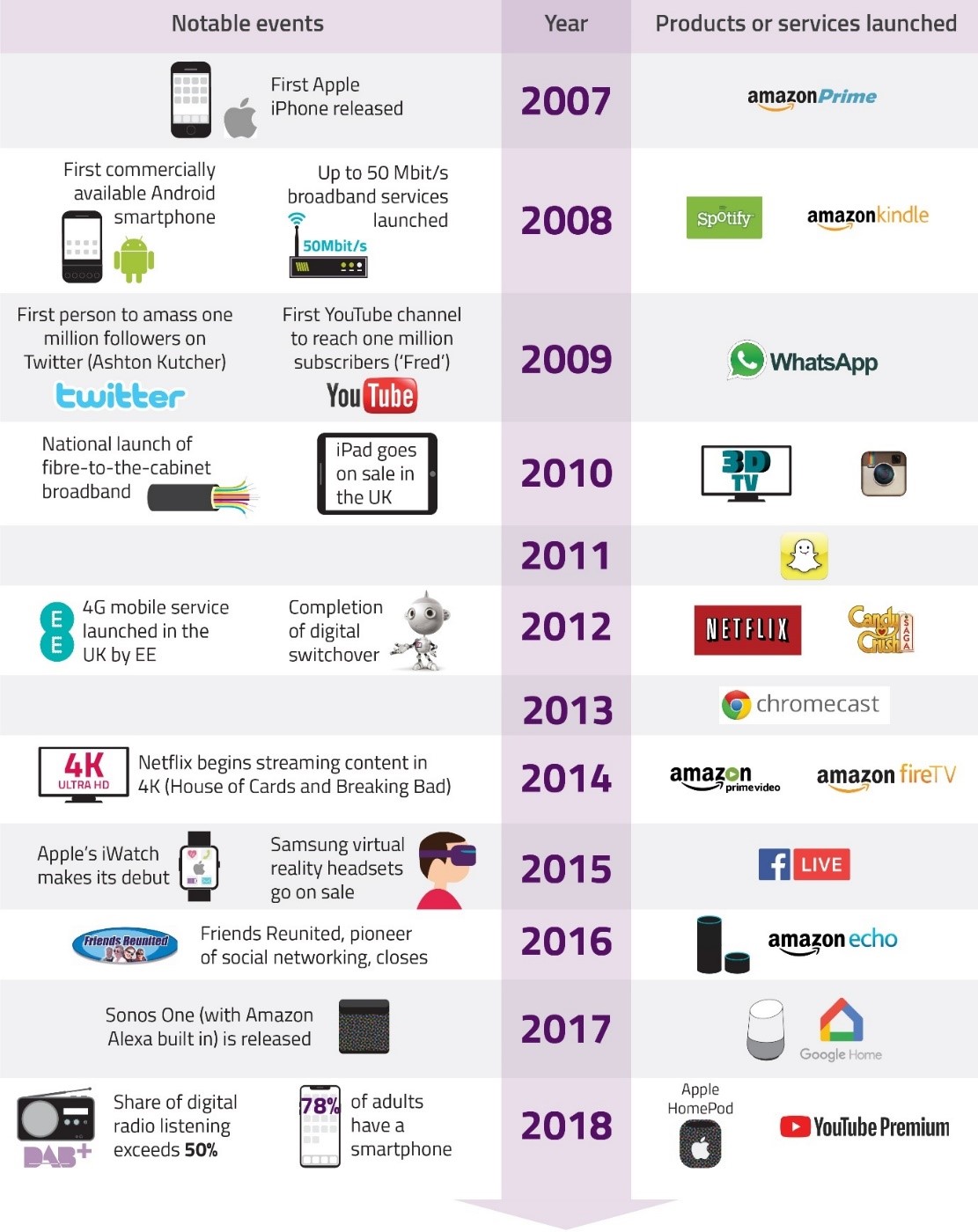
A decade of change in digital communications.

Infographic timeline showing notable events and products or services launched between 2007 and 2018. 2007: first iPhone released; Amazon Prime launched. 2008: first Android smartphone; up to 50 Mbit/s broadband launched; Spotify and Amazon Kindle launched. 2009: Ashton Kutcher becomes first person to amass one million followers; YouTubers Fred becomes first to reach one million subscribers; WhatsApp launched. 2010: National launch of fibre-to-the-cabinet broadband; iPad goes on sale in the UK; 3DTV and Instagram launched. 2011: Snapchat launched. 2012: 4G mobile service launched in UK by EE; completion of digital switchover; Netflix and Candy Crush launched. 2013: Chromecast launched. 2014: Netflix begins streaming content in 4K; Amazon Prime Video and FireTV launched. 2015: Apple iWatch makes debut; Samsung VR headsets on sale; Facebook Live launched. 2016: Friends Reunited, pioner of social networking, closes; Amazon Echo launched. 2017: Sonos (with Amazon Alexa built in) released; Google Home launched. 2018: Share of digital radio listening exceeds 50%; 78% of adults have a smartphone; Apple HomePod and YouTube Premium launched.

It is said that in the course of a normal life one is lucky to have a handfull of friends.

Now its social mobile, analytics, and cloud all want to be your friend.

When we think about social, the key is to consider why social is happening, rather than think of it as just a set of tools.

For example, Facebook, Twitter, and so on are tools, but why people use them is much more important. The same was true with the internet when we first started using that — that was a tool, but what it did to the lives of normal people in terms of access to information, increased freedom, etc., was much more important.

Mobile is a similar shape to social in that it’s the why as to why people use mobile devices as opposed to anything structural about the devices themselves.

The idea behind big data is that you can derive understanding about behaviour through statistical analysis of clumps of data. You can then take that understanding and implement some form of control to either get more of what you want, or get less of what you don’t want.

Finally, we come to the cloud.  This is really about how companies buy. There are all sorts of reasons to like outsourcing IT functions to the cloud, whether it’s just outsourcing compute power into a load of servers that you run as if they were your own, or buying functionality on an SaaS basis ( Software as a service)

Is cloud necessary for digital?

To an extent, it likely does not. However, as a fashion/trend, it’s clearly important, and a lot of the tools and services involved in digital are unlocked as part of a cloud-based approach, hence it’s likely important.

It’s a sociological change, rather than a technical one.

You can see that by the fact that this is generally all about the “why” this is happening — why are customers using social, why are they using mobile, why big data is showing the trends that it is, why are companies able to buy and use consumer products, and why is running systems in the cloud easier.

Because they all your Friend without you knowing and couldn’t care less who or how they share that friendship with or what they do with it.  Google it.

All human comments appreciated. All like clicks and abuse chucked in the bin.

← Back

Thank you for your response. ✨


Share this:

  • Share on WhatsApp (Opens in new window) WhatsApp
  • More
  • Share on Mastodon (Opens in new window) Mastodon

THE BEADY EYE ASK’S: ARE PROFIT SEEKING ALGORITHMS BUILDING A DIGITAL POORHOUSE, AUTOMATING INEQUALITY WHILE HURTING THE MOST VULNERABLE.

03 Sunday Nov 2019

Posted by bobdillon33@gmail.com in Algorithms., Artificial Intelligence., Capitalism, Fourth Industrial Revolution., Humanity., Inequality, Modern day life., Our Common Values., Poverty, Reality., Technology, The common good., The Future, The Obvious., The state of the World., The world to day., Unanswered Questions., WHAT IS TRUTH, What Needs to change in the World, Where's the Global Outrage.

≈ Comments Off on THE BEADY EYE ASK’S: ARE PROFIT SEEKING ALGORITHMS BUILDING A DIGITAL POORHOUSE, AUTOMATING INEQUALITY WHILE HURTING THE MOST VULNERABLE.

Tags

Algorithms., Artificial Intelligence., Big Data, Capitalism and Greed, Distribution of wealth, Greed, Inequility, Technology, Visions of the future.

(Twenty-minute read)

Should we worry about the rise of artificial intelligence or celebrate it?

Both is the answer.

We all inhabit this new regime of digital data but we don’t all inhabit it in the same way and the pursuit of rapid growth by way of technology won’t solve the huge challenges we face.

A more honest, humane approach is the answer.

If you believe the hype, technology is going to help us end global poverty, that’s easier said than done in a world where most product innovations are geared toward the rich.

The prospect of billions rising up from poverty with nothing more than gadgets is indeed a fanciful notion. This is because poverty is entirely a man-made creation. Capitalism is driven by greed, generating a power structure, which moves wealth disproportionately into the hands of the few.

But why are our societies becoming increasingly unequal, and what can we (or should we) do about it?A homeless man outside Victoria Station in London.

Forget where science ends and ideology begins it is the mechanisms behind the persistence of poverty that counts.

Technology cannot solve the problem of economic disparity.

We often believe that our digital decision-making tools, like algorithms or artificial intelligence or integrated databases, are more objective and more neutral than human beings.

Totally false.

We are building not just ill-conceived mathematical models now micromanage the economy, from advertising to prisons but also hiding the profit of multinational companies in the cloud.

We are building:  A DIGITAL POOR HOUSE.

Even though we live in a hyperconnected world we are watching inequality exploding as we walk past people on the street looking at our smartphones.

The spreading of these kinds of systems is now way beyond just the public service systems that they’re in now. For example, high-frequency trading algorithms that run 99.9% of the world stock exchanges are plundering not just finite resources they are jeopardising our peaceful existence.

Feel free to ignore the weight of the evidence that is now becoming crystal-clear, so stark, that the trade-off of the growth of the economy and the survival of the planet are now intertwined. So we have to go into a mode where we are first educating the people about what’s causing this inequality and acknowledging that technology is part of that cost, and then society has to decide how to proceed.

Deep cultural and political changes are needed in order to think through these technologies in order to get to better systems.

This should apply to all technology – nanotechnology, biotech.

I also really believe we need to stop using these systems to avoid some of the most pressing moral and political dilemmas of our time, which is not just poverty but racism.

Unfortunately, we have Profit-seeking Algorithms that have no moral or ethical bases.

Algorithms — a set of steps computers follow to accomplish a task — are used in our daily digital lives to do everything from making airline reservations to searching the web. They are also increasingly being used in public services, such as systems that decide which homeless person gets housing.

AI with faceless algorithms is worsening the effects and concentrating the power of the wealthy. They are likely to dramatically increase income disparity, perhaps more so than other technologies that have come about recently.

Digital innovation in the form of profit-seeking algorithms that it’s not just going to be benefitting a small fraction of the world’s population, or just a few large corporations. is reinforcing, rather than improving, inequality.

Institutions have embraced digital technologies they are outsourcing the decision to a machine to cut costs avoiding the human costs. They say, “We have this incredible overwhelming need. We don’t have enough resources, so we have to use these systems to make these incredibly difficult decisions.”

If all the resources are automated, then who actually controls the automation?

Is it every one or is it a few select people?

My great fear with these systems is we’re actually using them as a kind of empathy override, meaning that we are struggling with questions that are almost impossible for human beings to make.

We’re smuggling moral and political assumptions into them about who should share in prosperity.

There’s already an expectation that people will be forced to trade one of their human rights, like their information or their privacy, for another human right.

The economic prosperity created by AI should be shared broadly, to benefit all of humanity otherwise they will lead to an even greater disparity between the wealthy and the rest of the world.

If AI takes away people’s jobs and only leaves wealth in the hands of those people owning the robots, then that’s going to exacerbate some trends that are already happening.

People now with “predictive data” have real concerns about informed consent. About how their data is being shared, whether it’s legal and whether it’s morally right.

Why?

Because it is impossible to work out why the algorithms had gone against them, or to find a human caseworker to override the decision.

How can we change the societal mindset that currently discourages a greater sharing of wealth? Or is that even a change we should consider?

We’re using these technologies to avoid important political decisions. Exacerbating the divides between the developed and developing world, and the haves and have nots in our society.

The change will only occur when policymakers and voters understand the true scale of the problem. This is hard when we live in an era that likes to celebrate digitisation — and where the elites are usually shielded from the consequences of those algorithms.

Restoring human dignity to its central place has the potential to set off a profound rethinking of economic priorities and the ways in which societies care for their members, particularly when they are in need. If enough of us want to change the status quo for good, then with our collective creativity, with our hunger to solve really hard problems, we will find technology an incredibly powerful tool in our arsenal.

Technology can move commodities (food, jobs, wealth) from areas of surplus supply to regions with under-served markets.

Technology can only help us if we chose to make the best use of it.

Computing has long been perceived to be a culture-free zone — this needs to change.

Today more people have access to a cell phone than a toilet.

I use that metaphor specifically because I think that these systems, although we talk about them often as disruptors, are really more intensifiers and amplifiers of processes that have been with us for a long time, at least since the 1800s.

At a time of unprecedented global challenges platforms like Google Facebook, Twitter and there like must be made to use the power of their platforms to stop the DIGITAL POOR HOUSE instead of hoarding profits with profit-seeking algorithms.

If not because bias has been a historical norm, it because us the users of your platform will develop self-defence.

So, next time if you think AI is not affecting you, take out your smartphone.

If Twitter’s not your choice of poison, maybe it’s Facebook or Instagram, or Snapchat or any of the myriad of social media apps out there they are all affecting your decisions and our lifestyles every day.

They are all tailored according to what we are likely to respond to. specifically designed to attract the attention of its members – and so inevitably to confirm them in their opinions and prejudices,  with several extra bills to pay in order to remain a normal citizen. 

Its a ‘mean’ not the ultimate solution.

AI has become so successful in determining our interests and serving us ads that the global digital ad industry has crossed trillions.

artificial intelligence concept Stock Photo - 90948450

All human comments appreciated. All like clicks and abuse chucked in the bin.

← Back

Thank you for your response. ✨


Share this:

  • Share on WhatsApp (Opens in new window) WhatsApp
  • More
  • Share on Mastodon (Opens in new window) Mastodon

THE BEADY EYE ASK’S; JUST WHAT IS IT THAT A QUANTUM COMPUTER CAN OR WILL DO FOR HUMANITY.

29 Tuesday Oct 2019

Posted by bobdillon33@gmail.com in 2019: The Year of Disconnection., Fourth Industrial Revolution., Google, HUMAN INTELLIGENCE, Humanity., Quantum computers.

≈ Comments Off on THE BEADY EYE ASK’S; JUST WHAT IS IT THAT A QUANTUM COMPUTER CAN OR WILL DO FOR HUMANITY.

Tags

Quantum computers., quantum computing, Quantum reality


( Fifteen-minute read )

There’s a lot of hype floating around one specific technology that has the potential to change everything:

Google’s recent mythical achievement does not signal the arrival of quantum computing.

Quantum Computing is still far enough away that attempting to predict when it will occur and what useful tasks it will eventually be used for is a recipe for embarrassment because history teaches us that unforeseen applications will blossom as access to new tools becomes available.

In this very detached and disintegrating world, intelligence systems are learning from the environment they are exposed to and make decisions on biases they are developing.

Once you get the wrong side of an algorithm your life immediately becomes more difficult. Your perceived failures are fed into the algorithm, and your situation degrades even further.

This is why it’s imperative that we begin to take the problem of AI BIAS seriously and take steps to mitigate their effects by making our systems more transparent, explainable, and auditable.

We must shift from automation to augmentation.

They are counting on it to change the world by solving problems that are intractable for today’s classical computers.

At the moment its all in the cloud so any assessment or update of what we know about Quantum Computers is pie in the sky.

However, there are a few thoughts.

They conjure up everything from futuristic cities to talking fridges. Undoubtedly the reality is much less sci-fi.

They are supposed to offer an opportunity to manipulate information in a fundamentally different way. To tackle ever-larger questions that can help us gain a profoundly deeper understanding of the world around us.

While traditional computers operate with bits, quantum computers operate with qubits that allow superposition. Qubits enable this because instead of being constrained to one of two possible values (1 or 0), a qubit can exist as a mixture of both.

A unique quantum physics behaviour that binds the destiny of a quantity of different particles so that what happens to one will affect the others.

“Entanglement.”

This means that a Quantum Computer can manipulate all its qubits simultaneously—in other words, instead of doing a set of calculations one after another, a quantum computer could do them all at the same time.

Okay, putting the theory aside, let’s focus on the real-world applications these quantum computers will have on the world.

Optimization slicing through a mountain of variables without breaking a sweat.

Enabling better Weather and climate modelling. Better Personalized medicine. Better Space data analyzation. Better raw computing power for machine-learning software to teach artificial intelligence more like humans. Encryption will become useless. Real-time language translation will be possible.

Open-air gesture control, with the keyboard and mouse—slowly replaced by the gesture interface.

Amazon Google, virtual assistants will understand the context behind the questions you ask; they will recognize the indirect signals given off by your tone of voice; they will even engage in long-form conversations with you.

Devices you wear or even insert inside your body to help you interact digitally with the world around you. These devices will play a supporting role in how we engage with the digital space; we’ll use them for specific purposes in specific contexts with brain implants.

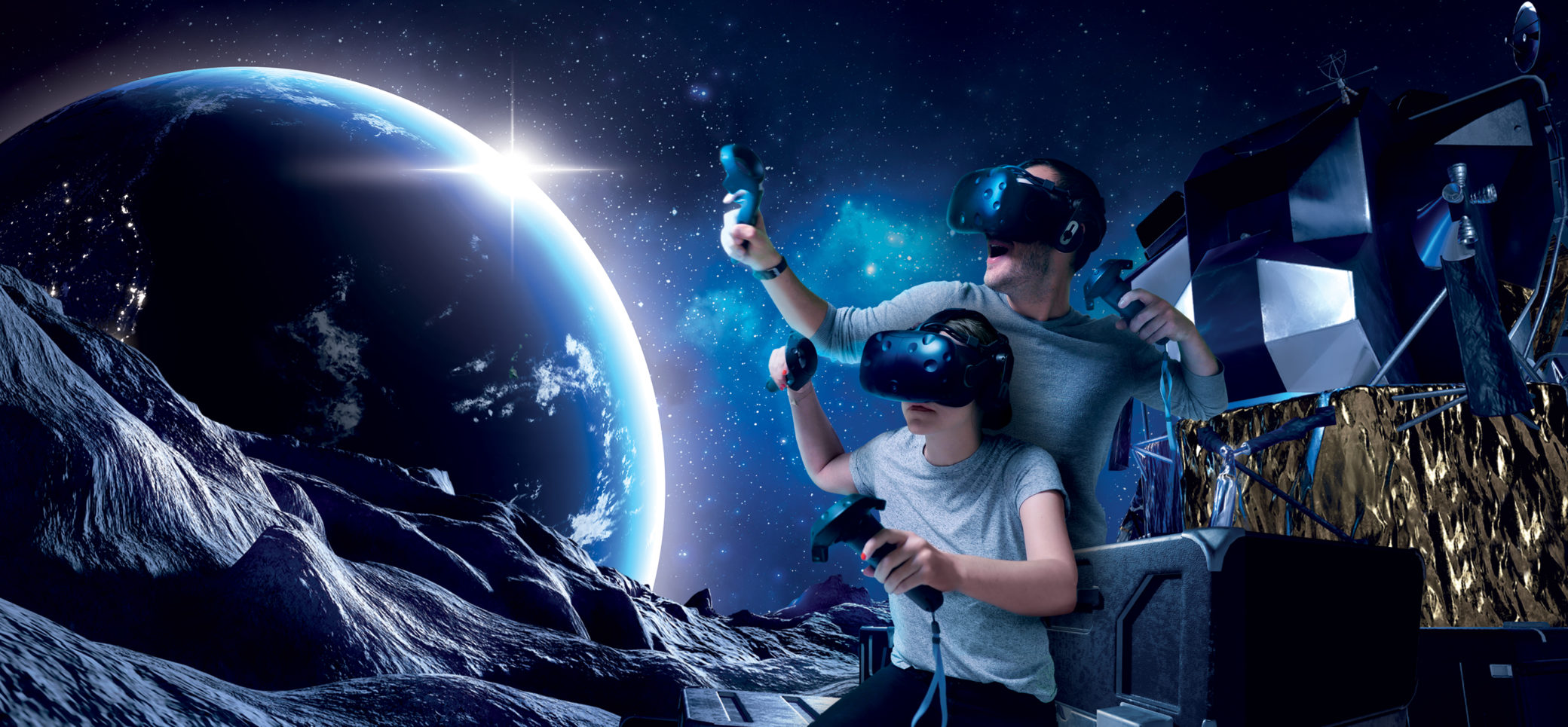
Integrating all of the technologies mentioned above represents the start of an entirely new mass-market medium virtual reality and augmented reality.

The goal of AR ( augmented reality) is to act as a digital filter on top of your perception of the real world.

Everyone’s idea of Virtual Reality and Augmented Reality is fixated towards science fiction however AR will eventually do away with most of the traditional computer interfaces consumers have grown up with thus far. AR, when it comes in Quantum form, it will too control machines:

Controlling household functions (lighting, curtains, temperature), as well as a range of other devices and vehicles.Image Credits: WT Vox

Thought itself:

Amputees are now already testing robotic limbs controlled directly by the mind, instead of through sensors attached to the wearer’s stump.

An international team of scientists were able to mimic telepathy by having one person from India think the word “hello,” and through BCI, that word was converted from brain waves to binary code, then emailed to France, where that binary code was converted back into brainwaves, to be perceived by the receiving person. Brain-to-brain communication, people

Useful quantum computers still not insight.

Needless to say, the future is not too far away.

All human comments appreciated. All like clicks and abuse chucked in the bin.

← Back

Thank you for your response. ✨

Share this:

  • Share on WhatsApp (Opens in new window) WhatsApp
  • More
  • Share on Mastodon (Opens in new window) Mastodon

THE BEADY EYE SAY’S: PERPETUAL GROWTH IS COMING TO AN END.

26 Saturday Oct 2019

Posted by bobdillon33@gmail.com in 2019: The Year of Disconnection., Enegery, Environment, Evolution, Fresh Water., Humanity., Inequality, Life., Modern day life., Our Common Values., Reality., Sustaniability, Technology, The common good., The essence of our humanity., The Obvious., The state of the World., The world to day., Unanswered Questions., WHAT IS TRUTH, What Needs to change in the World, Where's the Global Outrage.

≈ Comments Off on THE BEADY EYE SAY’S: PERPETUAL GROWTH IS COMING TO AN END.


( Seven-minute read)

Economics is not an unbiased academic discipline, it’s an ideology. Furthermore, economics is based on the false premise that perpetual growth is achievable.

Can economic growth be sustainably achieved?

Finite resources make perpetual growth theoretically impossible. No amount of technological breakthrough or creative accounting can counter that physical fact.

Is economic growth desirable?

The short answer appears to be no.

Exponential growth will eventually take you to impossible places.

Unfortunately, we live in a world of capitalists that thrive on the great Myth of Perpetual Growth, endless growth, ad infinitum, forever, till the end of time.

It seems as though we are damned if we grow and damned if we don’t.

We’ve now with Algorithms for profit sake got to a position where there’s nothing to keep us in check – so we have to do it ourselves.

It’s a waiting game now – to see if we can learn to behave differently to bacteria in a petri dish before it’s too late and we kill our host.

It’s not worth the risk.

Ecology and economics have to be intertwined, or we’re in serious trouble.

It’s time we all get our head out of the smartphone and become smart.

We can have debates about what we’re going to do about this and that, but if you can’t see the reason in the core of what I am saying, we’ll be having two very different conversations.

There is little point in arguing any longer whether Neoliberalism is to blame for damaging ecology beyond its ability to support us. It has lead to the inevitable collision between an insatiable economic model and a finite planet whose resources are stretched to the hilt.

The perception of the need for perpetual economic growth is a fraud and this assumption creates massive risk when reaching the limits of our natural systems.

With a world population nearly at 7 billion people, the implication for economic growth seems obvious as we cannot assume that the status quo will hold in a changing climatic environment. Reaching the earth’s resource limit is inevitable if it is not already occurring.

However changing our society’s behaviours cannot be achieved through some overseeing organization.

Perpetual growth has been ingrained through exposure to intensive branding and marketing by the very corporations who provide jobs and economic growth, and round and round we go…… Enacting such dramatic change through a highly centralized governing structure that dictates appropriate resource use, population levels, and actively redistributes wealth is a hard sell even in dire times.

As a result, we cannot continue consuming more and more water, spewing out more and more carbon dioxide and burning more and more coal.

In the past 22 years, half of all of the oil ever burned has been burned.

At present, the global population is increasing by 83 million people annually and we are already consuming natural resources as if we have “1.5 Earths.”

If every person used as many resources as the average North American, more than four Earths would be required to sustain the total rate of consumption. Other words if everyone lived like the average American, the Earth could sustain only 1.7 billion people — a quarter of today’s population.

27 billion people will inhabit the planet by the end of the century and hidden in every calorie of food eaten are 10 calories of fossil fuels.

Technology can lead to greater efficiencies, it requires energy — it does not create it.

Water is obviously a key component of human life. It is also vital to energy, industry, agriculture and livestock.

With all of this in mind, it’s time to abandon the perpetual growth economic model and move instead to a model that stresses conservation, efficiency, recycling and renewability. Clearly, the world is on an unsustainable path and, by definition, anything that is unsustainable won’t last.

Above all else, we must redefine the quality of life as something other than just having “more.” The goal should be to simply have enough. Our quality of life should not be measured by “stuff,” but instead by the things that make life rich; our relationships, our hobbies, our work and our passions.

GDP merely measures what people are willing to pay for, which is not necessarily connected to the use of energy, or any other physical resource.

The world will be confronting shortages of hydrocarbons, metals, water and fertilizer, which will dramatically affect global agriculture. The latter is critical.

So why are we unable to change direction.

Because of the threat, transnational organizations have over the nation-state.

Because no one is willing to bear the costs.

Because of the amount of power capital has over labour.

As it stands, nearly half the world’s population — more than 3 billion people — lives on roughly $2 per day.

The solution is to get profit for profit sake to pay:

By introducing a World Aid commission of 0.05% on all High-frequency trading, on all sovereign wealth funds acquisitions on all foreign exchange transaction over $50,000, on all gambling and lottos wins creating a perpetual world aid fund.

By issuing United Nation Green Deal non-trading Bond.

By the introduction of a World Day of non-consumerism Advertising.

By building non atomised Societies that are attached geographical – belonging not defined by competition.

By eating together one a week.

The question is how do we communicate this obvious message, in the face of corporate control of the media, and increasingly academia, science and the political system?

All human comments appreciated. All like clicks and abuse chucked in the bin.

← Back

Thank you for your response. ✨

Share this:

  • Share on WhatsApp (Opens in new window) WhatsApp
  • More
  • Share on Mastodon (Opens in new window) Mastodon

THE BEADY EYE ASK’S: IS IT TIME TO REVISIT DARWIN ASSERTION OF SURVIVAL OF THE FITTEST?

25 Friday Oct 2019

Posted by bobdillon33@gmail.com in #whatif.com, Artificial Intelligence., Dehumanization., Evolution., Humanity., Our Common Values., Reality., Technology., The essence of our humanity., The Future, The world to day., Unanswered Questions.

≈ Comments Off on THE BEADY EYE ASK’S: IS IT TIME TO REVISIT DARWIN ASSERTION OF SURVIVAL OF THE FITTEST?

Tags

Artificial Intelligence., Darwin, Dehumanization., The essence of our humanity., The Future of Mankind, Unanswered Questions., Visions of the future.


(Five-minute read)

With technology and new technique in artificial intelligence redefining how life can be created opening a research window into the early moments of a human life perhaps the above question is not so farcical, despite some thorny ethical constraints like artificial embryos.

In a breakthrough that redefines how life can be created, embryologists working at the University of Cambridge in the UK have grown realistic-looking mouse embryos using only stem cells. No egg. No sperm. Just cells plucked from another embryo.

What if they turn out to be indistinguishable from real embryos?

Then there are advances in genomic biotechnology presenting the possibility of bringing back long-extinct species.

To get from the genome work in the lab to herds of Woolly Mammoths would definitely bring the survival of the fittest into question.

Generative adversarial network, or GAN, takes two neural networks—the simplified mathematical models of the human brain that underpin most modern machine learning—and pits them against each other in a digital cat-and-mouse game. It is endeavouring to give machines imagination. 

DNA has linked 206 variants to intelligence. One day, babies will get DNA report cards at birth. BBVA-openmind

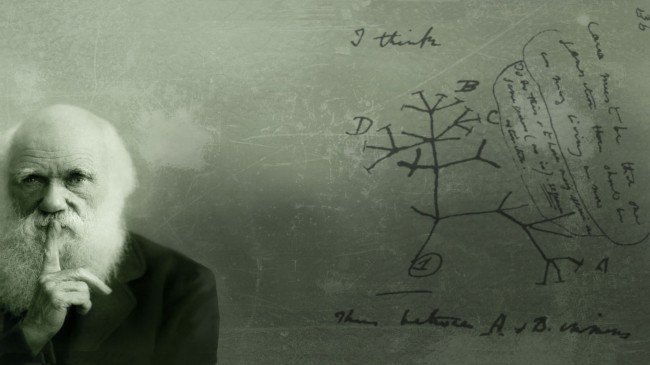
Herbert Spencer coined the term “Survival of the Fittest” in 1864.

Darwin intended “fittest” to mean the members of the species best suited for the immediate environment, the basis of the idea of natural selection.

Darwin’s distinctive idea was to emphasize natural selection as the main mechanism of evolution: if certain heritable traits increase or decrease the chances of survival and reproduction in the struggle for life, then those traits that favour survival and reproduction will increase in frequency over generations, and thus organisms will become more adapted to their environments, and over a long period of time the differences between varieties of a species can become so great that the varieties become new species.

On the one hand, he tells the reader to disregard his metaphorical personification of Nature as implying “conscious choice” or “intelligent power,” because nature should be understood as “only the aggregate action and product of many natural laws.”

On the other hand, he refuses to give up his personification of Nature, apparently because he senses that this engages the mind of the reader through the poetic imagery of Nature as a person.

The survival of the fittest that determines everything is stuck in our lexicon. With the phrase today commonly used in contexts that are incompatible with the original meaning as intended.

When it comes to technology “Survival of the fittest” is inaccurate for two important reasons.

First, survival is merely a normal prerequisite to reproduction.

Second, fitness has specialized meaning in biology different from how the word is used in popular culture. In population genetics, fitness refers to differential reproduction. “Fitness” does not refer to whether an individual is “physically fit” – bigger, faster or stronger – or “better” in any subjective sense.

It refers to a difference in reproductive rate from one generation to the next.

But in evolutionary terms, survival is only half the picture; you must also reproduce to be “fit” in the Darwinian sense.

The influence of the environment on life expectancy in the future will be far greater political, not a biological issue. It will be the survival of those best able to adapt to change.

Resources, especially those necessary for survival, will become more valued.

Artificial intelligence may gain, along with a sense of imagination, a more independent ability to make sense of what it sees in the world but is the technology ready?

If the AI revolution is going to spread Darwin natural selection it will have to be updated, then the real AI revolution can begin. Darwin always brought in information and made a whole new picture out of it. evolution

Is Darwin still relevant today?   Yes. You’d be hard-pressed to find a biology class that isn’t based on evolutionary biology. Yet the explanatory power of the evolutionary theory is not bound to biology.

Why? Because the theory of evolution is still evolving.

As the late Russian Orthodox Christian Theodosius Dobzhansky wrote, “Nothing in biology makes sense except in the light of evolution.”

Darwin not only made us aware of how nature works, but also of our place within nature. ( Unfortunately for him the discovery of DNA and that Quantum Mathematics  governs all biology had not been discovered)

Evolution now needs to be critically evaluated in the classroom, rather than dogmatically indoctrinated.

Artificial intelligence is and will take both to a whole new level and transform them into something relevant to our time and our discoveries.

Thus, we say that all the individuals of a species comprise a gene pool from which selection (either artificial or natural) can select. The important point is that we cannot select for genes that are not in the gene pool of the species. Only clones have the same genes and are essentially identical—including the same sex.

In the future, the evolutionist must look to mutations, their most ludicrous mechanism of all.

A new DARPA research program is developing brain-computer interfaces that could control “swarms of drones, operating at the speed of thought.” What if it succeeds?

All human comments appreciated. All like clicks and abuse chucked in the bin.

← Back

Thank you for your response. ✨

Share this:

  • Share on WhatsApp (Opens in new window) WhatsApp
  • More
  • Share on Mastodon (Opens in new window) Mastodon

THE BEADY EYE SAY’S: WITH ARTIFICIAL INTELLIGENCE WE ARE WELL ON THE WAY TO TOTALITARIANISM

23 Wednesday Oct 2019

Posted by bobdillon33@gmail.com in 2019: The Year of Disconnection., Algorithms., Artificial Intelligence., Dehumanization., Democracy, DIGITAL DICTATORSHIP., Enegery, Evolution, Fourth Industrial Revolution., HUMAN INTELLIGENCE, Humanity., Modern Day Democracy., Modern day life., Our Common Values.

≈ Comments Off on THE BEADY EYE SAY’S: WITH ARTIFICIAL INTELLIGENCE WE ARE WELL ON THE WAY TO TOTALITARIANISM

Tags

Algorithms., Artificial Intelligence., Community cohesion, SMART PHONE WORLD, Technology, The Future of Mankind, Visions of the future.


(Twenty-minute read.)

If we are not vigilant we might by accident and neglect combined with the erosion of civil liberties and with the increasing disenchantment of politicians easily sleepwalk into a form of a totalitarian society.

You could say at present that the world has more pressing problems but I consider this as a very dangerous trend and, sadly, unlike climate change perhaps unstoppable.

Why?

Because corporations belong to no land, no country, no people and have no loyalty to anything apart from profit – their profits and the profits today are on an unimaginable scale. 

Because individual liberty which our ancestors fought for generations to establish are now been blowing away in the wind with Artifical Intelligence turning our politics into a form of Digital Dictatorship.

Control of society above personality.

The modern sense of entertainment, for example, has led to the shallowness

of life that permeates all aspects of life, separates us from the seriousness of

existence, and fills this existence with false content.

What we are seeing is a widening of inequality, a rise in racism and ant semitic traits all of which are essential to a totalitarian society. Individualism itself is diminishing and in the end, people will embrace the totalitarian state’s ideology.

This fourth industrial revolution as it is called is presently without any AI laws other than the EU guidelines on the trustworthiness of AI – what data to use or not use to train other Algorithms.

The last industrial revolution taught us a lot about basic human rights and social values to wake us up, to help us prepare for the future however what we are seeing with smartphones is a form of doublethinking that leads to banality or to implicit acceptance of the standard of psychological normality, the lost of limits.

You are going to work with a digital colleague that has no set rules, no personal judgment. 

The threat of climate change with the rise of stateless refugees is forcing millions around the world to realistically confront a future in which their lives, at a minimum, look radically worse than they are today.

At the same time, emerging algorithms are giving a small technocratic elite the power to radically alter our species to a point when it will no longer resemble itself.

They both will call into question the basic ideas of who are and how we think about ourselves.

There are technologies now already emerging that are asking this question with the very fundamental assumptions about what it means to be human.

Why is this?

Because by limiting the choices and activities that have given us our basic sense of identity we can’t express our own opinions because they fear individual power.

There is nothing we can really do to change the course of our civilization except to patiently and persistently saying the truth about false worldviews, both on climate change and materialistic algorithms for profit both of which are and will have dramatic consequences. 

Take Climate change and  Fossil fuel:

It seems that fossil fuel owners and technology only goals are to protect their business models at all cost.

Climate change will shrink the size of the world that is livable on. while allowing unregulated technologies to rule it.

Algorithms Data Apps are tools by means of which, once installed, they start making decisions on your behalf. They will enable governments to assert their ideological and intellectual authority over party members and employees of party-run institutions, including schools and media.

Their messages becoming inescapable.

The beauty of digital media technology — disquieting for those who care about privacy and freedom from intrusion — is that our smart apps know a great deal about our actual behaviour.

Technology now interacts with you and takes the measure of you. It can determine just how “smart” you are when it comes to your devotion and your grasp of the ideological essentials.

This is where we seem to be headed for compelling materialist reasons, not ethical reasons. 

Habitual smartphone user was spending a great deal of time glued to the screen, as a result, the potential of the smartphone to be used as a tool through which authoritarian regimes can shape and reinforce dominance over the population is no longer a fantasy – China.  

It is reinventing the process of ideological dominance for the digital era.

In China, censorship, is now largely automated, reaching “unprecedented levels of accuracy, aided by machine learning and voice and image recognition.  It has an estimated 200 million surveillance cameras, with plans for 626 million surveillance cameras by 2020.

China is building a digital dictatorship to exert control over its 1.4 billion citizens. For some, “social credit” will bring privileges — for others, punishment.

If successful, it will be the world’s first digital dictatorship.

The flawless totalitarian state, powered by digital technology, where the individual has nowhere to flee from the all-seeing eye of the Communist state. who has done what (and for how long)

They can leverage digital media products to reshape the whole process of ideological control in ways that are far more personal, and far more effective, than anything we have witnessed in the reform era.

We, on the other hand, need to find out once again how to make decisions not just as individuals but as a society.  We need new economics theories of not top-down but bottom-up. Its isn’t capital that creates economic growth its people. It isn’t competition that creates prosperity its cooperation. The economics that is not inclusive will not allow modern society to thrive. 

Its painfully obvious that the fundamental assumptions of neoliberal economics are wrong.

The market now with profit-seeking algorithms can never distribute wealth because there is no equilibrium.

So is there any way of combating the technological growing algorithm market.

Inclusion will be the only brake.

We must allow people to get involved while improving all stakeholders in the market. The laws of economics are a choice.

So give people the choice to invest in the future by the creation of Nation backed non-trading Green deal bonds. ( See previous posts) This is about creating a platform for real and measurable engagement.

Algorithms all ready control 99.9% of stock exchanges. 

Taking self-responsibility and living life the fullest will not only enrich our own lives but as well the lives of others.    

Then the question arises:

No government in what used to be called “the free world” seems prepared to take the steps that can stop this inexorable decline.

Totalitarianism is a political concept of a mode of government that prohibits opposition parties, restricts individual opposition to the state and its claims, and exercises an extremely high degree of control over public and private life.

Big data:  The length of time that it took them to use unfettered free speech to subvert and undermine all of our core institutions. Thus we arrive at the present situation where the brief a historical version of freedom of speech has reverted back towards what the state deems controversial today might be very different to what it deems controversial tomorrow.

Take Brexit for example. Nostalgia is that it’s become a political weapon. Politicians are creating nostalgia for an England that never existed and selling it, really, as something we could return to.

Do we want to be told what to think and do? Or are we ready to come up with our own solutions for the consequences we’ve caused?

The idea of the totalitarian state can never be a true and effective form of government rule. Increasing state interference, a crumbing electoral system, the loss of a free press and loss of freedom of speech are grave threats to our democratic system. 

The potential consequences that come from using AI, such as giving up privacy are only the ice cubes in the bucket. 

All human comments appreciated. All like clicks and abuse chucked in the bin. 
← Back

Thank you for your response. ✨


Share this:

  • Share on WhatsApp (Opens in new window) WhatsApp
  • More
  • Share on Mastodon (Opens in new window) Mastodon

THE BEADY EYE ASK’S : IS 5 G GOING TO CHANGE THE WORLD WE LIVE IN?

17 Tuesday Sep 2019

Posted by bobdillon33@gmail.com in 2019: The Year of Disconnection., Algorithms., Artificial Intelligence., Capitalism, Dehumanization., DIGITAL DICTATORSHIP., Evolution, Fourth Industrial Revolution., Humanity., Inequality, Medical, Modern day life., Reality., Robot citizenship., Sustaniability, Technology, The cloud., The common good., The essence of our humanity., The Future, The Internet., The state of the World., The world to day., Unanswered Questions., War, WHAT IS TRUTH, What Needs to change in the World, Where's the Global Outrage.

≈ Comments Off on THE BEADY EYE ASK’S : IS 5 G GOING TO CHANGE THE WORLD WE LIVE IN?

Tags

Algorithms., Artificial Intelligence., Capitalism and Greed, Distribution of wealth, Environment, Inequility, SMART PHONE WORLD, Technology, The Future of Mankind, Visions of the future.


(Ten-minute read)


Right now nobody knows for sure but it is going to radically upend many aspects of our lives, as it is a technological paradigm shift.

3G or 4G was just a trailer, and the movie is about to begin.This picture, posted on Twitter by Inga Sarda-Sorensen, shows dark storm clouds over the New York skyline

Why?

Because it is going to marry data collection and computation with billions of devices.

But there is a debate on the necessity for it, considering human physical and mental limitations.

It will become the underlying fabric of an entire ecosystem of fully connected intelligent sensors and devices, capable of overhauling economic and business policies, and further blurring geographical and cultural borders.

It will create a world populated by digital citizens in continual interaction with their surroundings, their peers and public services.

It will enable communications & computing power to come together creating a hyperconnected ‘Internet of everything’ world.

It will release the spectrum for mobile devices, bring about dramatic transformations in our daily lives.

It is going to change everything about everything else.

It will rock the world economy over the next decade as we haven’t yet

conceived that will be tied into the 5G network.

For example:

Your car will know your every move faster than your mind. Cars will be able to use 5G to talk to other cars and sensors built around cities, from street lamps to gas stations.

Think about your relationship between the smart city and an autonomous car.

Think about predictive care. It will enable advanced data transfer from wearables and sensors, facilitating remote clinical decisions and robotic surgery

Think about bring virtual reality into the classroom, allowing students to face real-life situations without real-life consequences.

Think about living in a world of always-on, always-sharing, cloud applications and services.

Think about it leading to seamless and ubiquitous information control.

It will potential to unlock trillions of revenue across a broad range of industries creating a different hidden economy with wireless consumption.

This revenue will be equivalent to total U.S. consumer spending in 2016, and more than the combined spending of China, Japan, France, Germany, and the U.K. This revenue also represents about 4.6 per cent of all global real output in 2035.

Another words countries without 5G will become less competitive globally, spreading inequality on a scale not seen before. This inequality leads to more than just differences in consumption and wealth distribution. It affects access to healthcare, education, nutrition, employment, financial and technological platforms; it exacerbates poverty, exclusion and violence.

By 2020, analysts estimate that there will be more than 20 billion installed IoT devices around the world, supporting 22 million jobs generating massive amounts of data.

With access to this kind of information, industries of all kinds will be able to reach new levels of efficiency as they add products, services, and capabilities.

It will mean that a surgeon may not need to be in the same room as a patient in the future. A surgeon could use a VR headset and special glove to control a robot arm that would perform an actual operation in another location.

With haptic feedback, you’ll be able to transmit the tactile sensation of experience, enhancing the sights and sounds of a video experience.

It will make drone warfare affordable and drone defence essential.

It will make consumption and production distant and broad concepts that are somehow unattached from us.

So what can we, as consumers, do, instead of feeling powerless and distraught?

We must ensure that 5G respect nature, and the interconnectedness of everything that matters for humanity.

An unofficial trade war is already afoot in the tech industry due to the imminent rise of 5G technology.

But it will not happen overnight. Think in terms of a decade or more for it to fully unfold.

All human comments appreciated. All like clicks and abuse chucked in the bin.

← Back

Thank you for your response. ✨


Share this:

  • Share on WhatsApp (Opens in new window) WhatsApp
  • More
  • Share on Mastodon (Opens in new window) Mastodon

THE BEADY EYE SAY’S. HUMANITY MUST NOW COME FIRST.

16 Monday Sep 2019

Posted by bobdillon33@gmail.com in 2019: The Year of Disconnection., Algorithms., Artificial Intelligence., Capitalism, Climate Change., Dehumanization., Democracy, Environment, Evolution, Fourth Industrial Revolution., Google Knowledge., HUMAN INTELLIGENCE, Humanity., Inequality, Life., Modern day life., Politics., Populism., Post - truth politics., Reality., Sustaniability, Technology, The common good., The essence of our humanity., The state of the World., The world to day., WHAT IS TRUTH, What Needs to change in the World, Where's the Global Outrage., World Politics

≈ Comments Off on THE BEADY EYE SAY’S. HUMANITY MUST NOW COME FIRST.

Tags

Algorithms., Artificial Intelligence., Capitalism, Capitalism and Greed, Climate change, Community cohesion, Earth, Environment, Technology, The Future of Mankind, Visions of the future.


( Seventeen-minute read)

The world has been so depleted and is being so depleted even at this moment, that the future sustenance and stability for humanity is now imperilled.

Your future and your destiny will not be determined within the next decades. It will be determined now.

It will be determined by humanity’s wisdom or by its ignorance.

The future and fate of humanity will be decided in the years to come, and it will be determined by how humanity responds to the great change that is coming over the horizon in the form of climate change to the world.

No religion nor religious institution as it stands today can prepare humanity for the complexities of life in the universe or what humanity must know to preserve human freedom and sovereignty within this world.

It is what humanity must do to prepare both collectively and individually for climate change and our collective inability to regulate AI.

But because humanity as a whole is dull and ignorant, self-absorbed and unresponsive to a changing world we are still writing ourselves out of the script.

Our universities for years have taught classical/neoclassic/neoliberal economics; like these theories are unmovable divine pillars of reality.

Therefore, while most people see we need a more reasonable and democratic version of our current extreme capitalism, the dominant discourse insists the story not be changed at all. The dominant political narrative of our times is that we must live as individuals crushed between market and state. The relationship between the individual and the state boils down to a zero-sum game where everyone one eventually looses. The state is a pure and simple force.

With the effects of climate change (to come) people are waking up to the deception, let’s hope we can do right, because on all fronts of civilization as we know it time is running out.

We have political failure everywhere leading to the malfunctioning of our altruistic nature.

There is a disconnect between mass (commercial) media, even political science and common sense or popular wisdom.

Sounds to cynical?

Let me oil up my bow.

Present-day political failures are at heart of our problems.

Why?

Because there is a failure of imagination when it comes to the societal structure we evolved to live in and that our brains are still programmed for.

Google, Apple, Facebook, Amazon, etc.

These new organizations are actually not creating a dream environment of maximum social cooperation.

They are instead removing people’s needs to fulfilling each other’s needs!

Gnawing away our collective and individual identity our senses of belonging to a community for the sake of profit.

We need politics of belonging, but the trouble is, it requires a moral, ethical and educated populations which we don’t have and are now with AI are more than likely than ever never going to have.

As we rely on more and more Algorithms to make decisions without a discussion of facts and morals, against a background of pure data narrative can lead society to dark places.

We are unaware of what I call honest pricing that shows the cost of profit for profit sake to the environment.

If we were to charge fees proportional to harmful impacts on the environment, we would create a monetary representation of the value of natural resources.A Brazilian protester stands before gunfire during protests against corruption and police brutality.

So overcoming the material world would be the first step to a sustainable world-shifting us into a new reality.

We are left with the ever-present questions.

Do we give a toss and if so what can be done about it?

What roles do religion and our deepest beliefs play in contemporary life?

What lifestyles are we adopting in an increasingly technological world?

What is the balance of power–and the balance of trade?

What is the pattern of war and peace?

What are the issues facing local and regional communities, and what issues must we confront on a global scale?

What do we remember about our collective past, and how do we see the future?

Have the great issues that preoccupied people since the beginning of time taken new, distinctive forms after more than a hundred years of the fastest technological and cultural change in the history of the planet?

What challenges remain intractable?

What emerging solutions seem to offer the greatest promise?

Social media is full of video on the state of the world.

The need for clear-headed prioritisation of resources to tackle real, not imagined problems.

Despite that long record of success, agricultural production is stressed by floods, deforestation, drought, urbanization (land-devouring cities), and a growing appetite for resource-intensive meat.

More than 150 million people worldwide are at risk from rising sea levels and extreme storms that cause coastal flooding.

In the past 50 years, thanks to education and technology, more than 2 billion people joined the middle class, swelling the human footprint of nearly 50 per cent. At the same time, millions of acres of cropland have been devoured by population growth.

Today more than 6 billion people live in cities—about 70 per cent of the world’s population, roughly double the proportion of a half-century ago.

The Arctic may hold 22 per cent of the world’s undiscovered conventional oil and natural gas resources. Melting ice is liberating immense oil and natural gas reserves.

Although mounting worldwide energy demand continues to stress the environment, it has powered large-scale development of renewable energy.

Artificial intelligence will soon dominate the Earth—it could take decades, it could take millennia. At that point, AI will also take control of the Earths process. Refashioning the planet in ways that are optimal for synthetic life but quite possibly deadly for us.

You can’t help but wonder where it will lead. It’s a very dodgy future.

It may be true that the cosmos started with the Big Bang, some 14 billion years ago, but it took an awfully long time for the consequences of the Big Bang to settle down.

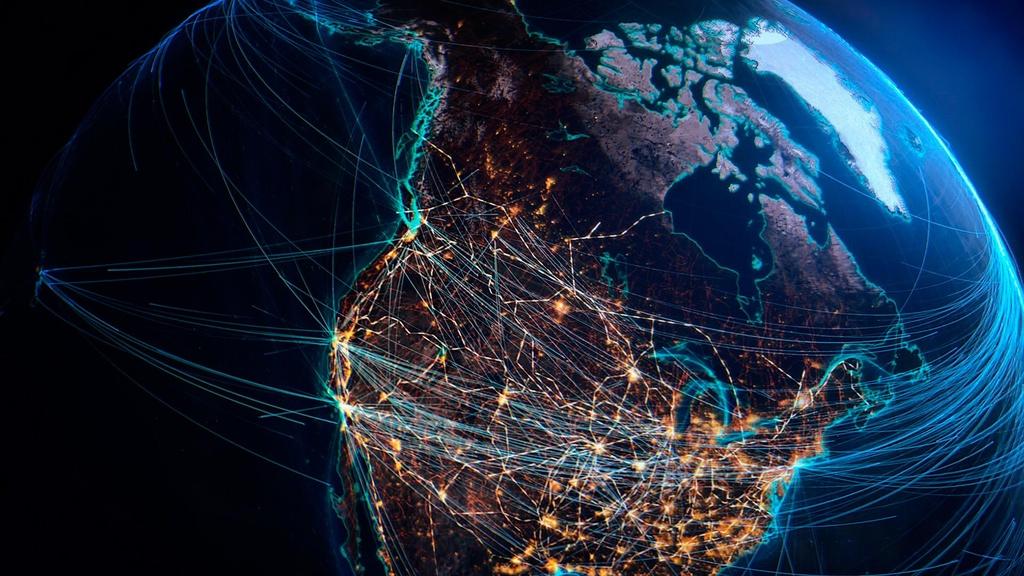
To have an optimistic view is the only one worth having.Our world relies on vast global networks.

So may you recognize that you as an individual must make these decisions and not simply rely upon others to make them for you.

All human comments appreciated. All like clicks and abuse chucked in the bin.

← Back

Thank you for your response. ✨


Share this:

  • Share on WhatsApp (Opens in new window) WhatsApp
  • More
  • Share on Mastodon (Opens in new window) Mastodon
← Older posts
Newer posts →

All comments and contributions much appreciated

  • THE BEADY EYE SAYS., NONE OF US UNDERSTAND WHAT IS COMING WITH ARTIFICIAL INTELLIGENCE. February 19, 2026
  • THE BEADY EYE ASKS WHAT HAPPENS WHEN PEOPLE NO LONGER MAKE DECISIONS. February 18, 2026
  • THE BEADY EYE: ASK WHY IS IT IMPOSSIBLE FOR HUMANS TO GET ALONG WITH EACH OTHER? February 17, 2026
  • THE BEADY EYE SAYS. AT 130 THOUSAND OF TAX PAYERS MONEY ITS TIME TO RETIRE THE ROYAL FAMILY. THE EPSTEIN FILES CAST A SPOT LIGHT ON THEIR WORTH. February 17, 2026
  • THE BEADY EYE SAYS. WITH THE EPSTEIN FILES IT IS BECOMING CLEAR THAT THE TRAFFICKING OF YOUNG WOMEN IS LESS REPULSIVE WHEN THE WEALTHY ARE INVOLVED. February 12, 2026

Archives

  • February 2026
  • January 2026
  • December 2025
  • November 2025
  • October 2025
  • September 2025
  • August 2025
  • July 2025
  • June 2025
  • May 2025
  • February 2025
  • January 2025
  • December 2024
  • November 2024
  • October 2024
  • September 2024
  • August 2024
  • July 2024
  • June 2024
  • May 2024
  • April 2024
  • March 2024
  • February 2024
  • January 2024
  • December 2023
  • October 2023
  • September 2023
  • August 2023
  • July 2023
  • June 2023
  • May 2023
  • April 2023
  • March 2023
  • February 2023
  • January 2023
  • December 2022
  • November 2022
  • October 2022
  • September 2022
  • August 2022
  • July 2022
  • June 2022
  • May 2022
  • April 2022
  • March 2022
  • February 2022
  • January 2022
  • December 2021
  • November 2021
  • October 2021
  • September 2021
  • August 2021
  • July 2021
  • June 2021
  • May 2021
  • April 2021
  • March 2021
  • February 2021
  • January 2021
  • December 2020
  • November 2020
  • October 2020
  • September 2020
  • August 2020
  • July 2020
  • June 2020
  • May 2020
  • April 2020
  • March 2020
  • February 2020
  • January 2020
  • December 2019
  • November 2019
  • October 2019
  • September 2019
  • August 2019
  • July 2019
  • June 2019
  • May 2019
  • April 2019
  • March 2019
  • February 2019
  • January 2019
  • December 2018
  • November 2018
  • October 2018
  • September 2018
  • August 2018
  • July 2018
  • June 2018
  • May 2018
  • April 2018
  • March 2018
  • February 2018
  • January 2018
  • December 2017
  • November 2017
  • October 2017
  • September 2017
  • August 2017
  • July 2017
  • June 2017
  • May 2017
  • April 2017
  • March 2017
  • February 2017
  • January 2017
  • December 2016
  • November 2016
  • October 2016
  • September 2016
  • August 2016
  • July 2016
  • June 2016
  • May 2016
  • April 2016
  • March 2016
  • February 2016
  • January 2016
  • December 2015
  • November 2015
  • October 2015
  • September 2015
  • August 2015
  • July 2015
  • June 2015
  • May 2015
  • April 2015
  • March 2015
  • February 2015
  • January 2015
  • December 2014
  • November 2014
  • October 2014
  • September 2014
  • August 2014
  • July 2014
  • June 2014
  • May 2014
  • April 2014
  • March 2014
  • February 2014
  • January 2014
  • December 2013
  • November 2013
  • October 2013

Talk to me.

Jason Lawrence's avatarJason Lawrence on THE BEADY EYE ASK’S: WIT…
benmadigan's avatarbenmadigan on THE BEADY EYE ASK’S: WHA…
bobdillon33@gmail.com's avatarbobdillon33@gmail.co… on THE BEADY EYE SAYS: WELCOME TO…
Ernest Harben's avatarOG on THE BEADY EYE SAYS: WELCOME TO…
benmadigan's avatarbenmadigan on THE BEADY EYE SAY’S. ONC…

7/7

Moulin de Labarde 46300
Gourdon Lot France
0565416842
Before 6pm.

My Blog; THE BEADY EYE.

My Blog; THE BEADY EYE.
bobdillon33@gmail.com

bobdillon33@gmail.com

Free Thinker.

View Full Profile →

Follow bobdillon33blog on WordPress.com

Blog Stats

  • 97,423 hits

Blogs I Follow

  • unnecessary news from earth
  • The Invictus Soul
  • WordPress.com News
  • WestDeltaGirl's Blog
  • The PPJ Gazette
Follow bobdillon33blog on WordPress.com

The Beady Eye.

The Beady Eye.
Follow bobdillon33blog on WordPress.com

Create a free website or blog at WordPress.com.

unnecessary news from earth

WITH MIGO

The Invictus Soul

The only thing worse than being 'blind' is having a Sight but no Vision

WordPress.com News

The latest news on WordPress.com and the WordPress community.

WestDeltaGirl's Blog

Sharing vegetarian and vegan recipes and food ideas

The PPJ Gazette

PPJ Gazette copyright ©

Privacy & Cookies: This site uses cookies. By continuing to use this website, you agree to their use.
To find out more, including how to control cookies, see here: Cookie Policy
  • Subscribe Subscribed
    • bobdillon33blog
    • Join 222 other subscribers
    • Already have a WordPress.com account? Log in now.
    • bobdillon33blog
    • Subscribe Subscribed
    • Sign up
    • Log in
    • Report this content
    • View site in Reader
    • Manage subscriptions
    • Collapse this bar