• About
  • THE BEADY EYE SAY’S : THE EUROPEAN UNION SHOULD THANK ENGLAND FOR ITS IN OR OUT REFERENDUM.

bobdillon33blog

~ Free Thinker.

bobdillon33blog

Category Archives: Climate Change.

THE BEADY EYE ASKS. ARE WE LOOSING OUR WORKING MEMORY OR IS GOOGLE DESTROYING THEM.

23 Thursday Apr 2020

Posted by bobdillon33@gmail.com in #whatif.com, 2020: The year we need to change., Algorithms., Artificial Intelligence., Big Data., Climate Change., CORONA VIRUS., COVID-19, Digital age., DIGITAL DICTATORSHIP., Disasters., Disconnection., Environment, Google, Google it., Google Knowledge., HUMAN INTELLIGENCE, Human values., Humanity., International solidarity., Life., Lock Down., Modern day life., Our Common Values., Pandemic, Post-Covid-19, Reality., Survival., Sustaniability, Technology, Technology v Humanity, The common good., The essence of our humanity., The Future, The Internet., The Obvious., The state of the World., The world to day., Unanswered Questions., VALUES, WHAT IS TRUTH, What Needs to change in the World, Where's the Global Outrage.

≈ Comments Off on THE BEADY EYE ASKS. ARE WE LOOSING OUR WORKING MEMORY OR IS GOOGLE DESTROYING THEM.

Tags

Algorithms., Artificial Intelligence., Big Data, Capitalism vs. the Climate., CORONA VIRUS., Coronavirus (COVID-19), Extinction, Global warming, SMART PHONE WORLD, Technology, The Future of Mankind, Visions of the future.


(Twenty-minute read) 

Post COVID-19 this will become a question that we will all have to ask yourselves. 

Coronavirus came after a series of wake-up calls.

Perhaps the COVID-19 outbreak is the wake-up call the world needs to get people accustomed to the fact that because of climate change, we all now need to change our lifestyles to protect our lives. 

The COVID-19 outbreak should be a wake-up call that the economic and social costs of climate change will likely be so catastrophic – potentially many times worse than what we’re currently witnessing – that as a nation and the community of nations, we can’t afford not to take massive measures to combat and mitigate the dangers.

Confronting climate change will take a global effort far beyond any that’s been on the table so far, and far beyond the voluntary commitments in the Paris Climate accord.

We don’t yet know how long the COVID-19 outbreak will last, how many people will get sick or die, or the ultimate cost to global wealth and to people’s jobs and homes.

However, it seems obvious to say that, if we can transform the economy for a virus, we can also do so to prevent climate change.

Acres of column inches have already been written about how the Coronavirus is going to change our economies, politics, and societies forever. 

We can choose to prioritize something – in this case, human life – above the maximization of profit and even our individual freedom.

Unchecked, climate change will wreak far greater damage on our ability to live safe, profitable, happy, and free lives than COVID-19.

Despite the brief dip in emissions due to COVID-19, there is a risk that the pandemic – which is likely to dominate politics for months or even years to come – will overshadow environmental concerns. 

Mortimer Adler Said ” To regard anyone except yourself as responsible for your judgment is to be a slave, not a free man. It is this fact that the liberal arts acquire their name.”

For most of human history, the only other reliable sources of information were other people.

We are becoming symbiotic with our computer tools, growing into interconnected systems that remember less by knowing information than by knowing where the information can be found. If we know that a fact is only a Google away, then we’re not going to waste precious synaptic space on it. Better to let a server remember.

Or is it?
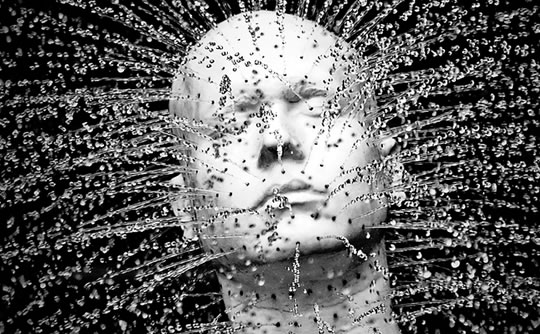
Feel like you’re losing grip of your memory. Google it.

Every time we recall a memory we also remake it, subtly tweaking the neuronal details. (This is why the more we remember something, the less accurate the memory becomes.) Although we like to think of our memories as being immutable impressions, somehow separate from the act of remembering them, they aren’t.

A memory is only as real as the last time you remembered it.

The brain has no interest immaculate recall – it’s only interested in the past to the extent it helps us make sense of the future.

By having memories that constantly change, we ensure that the memories stored inside our mental file cabinets are most relevant.

Although our memories always feel true – as a literal recording of the past – they’re mostly not, since they’re always being edited and bent by what we think now. And now. And now. 

And this is where the internet comes in. One of the virtues of transactive memory is that it acts like a fact-check, helping ensure we don’t all descend into selfish solipsism. ( Solipsism: The theory that the self is the only thing that can be known and verified)

By sharing and comparing our memories, we can ensure that we still have some facts in common, that we all haven’t disappeared down the private rabbit hole of our own reconsolidations.

I don’t think it’s a sign that technology is rotting our cortex – I think it shows that we’re wise enough to outsource a skill we’re not very good at.

Because while the web enables all sorts of other biases – it lets us filter news, for instance, to confirm what we already believe – the use of the web as a vessel of transactive memory is mostly virtuous. We save hard drive space for what matters, while at the same time improving the accuracy of recall.

But if a fact stored externally were the same as a memory of that fact stored in our mind, then the loss of internal memory wouldn’t much matter.

External storage and biological memory are not the same things.

When we form, or “consolidate,” a personal memory, we also form associations between that memory and other memories that are unique to ourselves and also indispensable to the development of deep, conceptual knowledge.

The associations, moreover, continue to change with time, as we learn more and experience more.

The essence of personal memory is not the discrete facts or experiences we store in our mind but “the cohesion” which ties all those facts and experiences together.

What is the self but the unique pattern of that cohesion?

Our over-reliance on google and the smartphone search engines is destroying our memories – ‘digital amnesia’. 

Google in its very nature is making us stupid, making us more likely to recall where the facts are rather than the facts themselves.

We hold the answers to just about all of life’s questions in our palms today. But that means our brains are feeling free to take some R & R.

If you have no working memory, you can have no longterm memory and you understand very little.

The growing reliance on the world wide web for fact-checking is rotting our memories.

We off-load memories to the cloud just as readily as we would to a family member, friend, or lover.

Almost all information today is readily available through a quick internet search. It may be that the internet is taking the place not just of other people as external sources of memory but also of our own cognitive faculties becoming an extension of our own intelligence, rather than a separate tool.

At this point, you might be asking why is any of this important.

Indeed, As the specter of creeping authoritarianism – as emergency disaster measures become normalized, or even permanent – it should be at the forefront of our minds. 

Because the consequences of COVID-19 will reorder society in a dramatic way, and this combined with climate change we are witnessing a tipping point as to how the world is going to work.

Unfortunately, we constructed a world that could not be more suited to a Pandemic – density everywhere- inward rural migration and now Data harvesting.

We can expect greater efforts to digitally capture and record our behavior in urban areas – and fiercer debates over the power such surveillance hands to corporations and states.

One consequence of coronavirus could be an entrenchment of exclusionary political narratives, calling for new borders to be placed around urban communities – overseen by leaders who have the legal and technological capacity, and the political will, to build them.

In other words an intensification of digital infrastructure in our cities to track the spread of COVID-19 using “big data” analysis to anticipate where transmission clusters will emerge next.
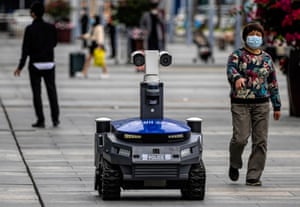
A police security robot drives on the high-speed railway station platform in Shenzhen, Guangdong province. The device, which patrols public places, warns people when they are not wearing masks, checks their body temperature and identity.

This much is certain:

Just as this disease has shattered lives, disrupted markets and exposed the competence (or lack thereof) of governments, it will lead to permanent shifts in political and economic power in ways that will become apparent only later.

It will be a time of contradictions.

Internationally, many issues that appeared pressing prior to the pandemic will likely recede in prominence once the world begins its recovery. All non-coronavirus issues will be pushed aside.

Not only because of a shared experience but also because of the mutual assistance that will be required at the same time, democracies must prevent the emergence of a big brother-style intrusion into the personal sphere by the security apparatus.

Such a thing can only occur in the absence of massive civilian oversight.

Many countries will set up committees of inquiry to find out why they and their healthcare systems were caught unprepared, humanity is destined to return to its old self after the adjustment period ends. And that, on balance, is a good thing.

Coronavirus will not end globalization, but it will change it by disrupting our lives and causing painful tragedy —it may introduce a new acceptance of unpredictability into our thinking.

This is certainly not the last time that we’re going to have these kinds of disease eruptions if we deny, delude, and delay on climate change.

We know what to do to halt climate change, we just have to do it.

Our current sense of risk — such as when it is safe to cross a road — is insufficient to deal with threats that are so dire they must be minimized; we need a complete rethink.

If we don’t we will have unregulated algorithms run the world.

How much of life can now be conducted digitally?

If we can accept canceled flights, closed schools, postponed sporting fixtures now, perhaps we can accept restraints in the future.

If we can rely on international co-operation now, perhaps we can summon the same spirit again.

At some point, a nudge will be required. If the shock of coronavirus disruption isn’t enough for us to recalibrate, what will be? 

Our Memories!

We have to recognize there will be other pandemics and be better prepared. We must also recognize that climate change is a deeper and bigger threat that doesn’t go away, and is just as urgent.

All human comments appreciated. All like clicks and abuse chucked in the bin.


← Back

Thank you for your response. ✨


get inscribed into our biological memory banks. 


Share this:

  • Share on WhatsApp (Opens in new window) WhatsApp
  • More
  • Share on Pocket (Opens in new window) Pocket
  • Share on Mastodon (Opens in new window) Mastodon

THE BEADY EYE SAY’S : Where will we be in six months, a year, ten years from now?

31 Tuesday Mar 2020

Posted by bobdillon33@gmail.com in 2020: The year we need to change., Artificial Intelligence., Capitalism, Climate Change., CORONA VIRUS., COVID-19, Dehumanization., Democracy., Digital age., Disconnection., Environment, Evolution, Fourth Industrial Revolution., HUMAN INTELLIGENCE, Human values., Humanity., Inequality, Life., Lock Down., Modern day life., Our Common Values., Political Trust, Politics., Populism., Post - truth politics., Poverty, Reality., Survival., Sustaniability, Technology v Humanity, The common good., The Future, The Internet., The Obvious., The pursuit of profit., The state of the World., The world to day., Truth, Truthfulness., Unanswered Questions., VALUES, Wealth., WHAT IS TRUTH, What Needs to change in the World, Where's the Global Outrage., World Economy., World Organisations., World Politics

≈ Comments Off on THE BEADY EYE SAY’S : Where will we be in six months, a year, ten years from now?

Tags

Artificial Intelligence., Business and Economy, Capitalism, CORONA VIRUS., Coronavirus (COVID-19), Distribution of wealth, Extinction, Global warming, Globalization, Inequility, Technology, The Future of Mankind, Visions of the future.


( An essential twenty-minute read) 


It all depends on how governments and society respond to coronavirus and its economic aftermath.

As we know COVID-19 is highlighting serious deficiencies in our existing system. 

Hopefully, we will use this crisis to rebuild, produce something better and more humane. But we may slide into something worse.

My focuses on this post are on the fundamentals of the modern economy: global supply chains, wages, and productivity.

I argue that we will need a very different kind of economics if we are to build socially just and ecologically sound futures.

In the face of COVID-19, this has never been more obvious.

——————————————————————————————–

The COVID-19 pandemic is simply the amplification of the dynamic that drives other social and ecological crises: The prioritisation of one type of value over others. 

From an economic perspective, there are four possible futures:

Descent into barbarism, robust state capitalism, radical state socialism, and a transformation into a big society built on mutual aid.

Coronavirus, like climate change, is partly a problem of our economic structure. Although both appear to be “environmental” or “natural” problems, they are socially driven.

Yes, climate change is caused by certain gases absorbing heat. But that’s a very shallow explanation. To really understand climate change, we need to understand the social reasons that keep us emitting greenhouse gases.

Likewise with COVID-19. Yes, the direct cause is the virus. But managing its effects requires us to understand human behaviour and its wider economic context.

Tackling both COVID-19 and climate change is much easier if you reduce nonessential economic activity.

The epidemiology of COVID-19 is rapidly evolving. But the core logic is similarly simple. People mix together and spread infections.

We can see from Wuhan that social distancing and lockdown measures like this are effective.

Political economy is useful in helping us understand why they weren’t introduced earlier in European countries and the US.

We are now facing a serious recession and we are living with an economic system that will threaten collapse at the next sign of pandemic.

The economics of collapse is fairly straightforward.

Businesses exist to make a profit.

If they can’t produce, they can’t sell things. This means they won’t make profits, which means they are less able to employ you.

Businesses can and do (over short time periods) hold on to workers that they don’t need immediately: They want to be able to meet demand when the economy picks back up again. But, if things start to look really bad, then they won’t. So, more people lose their jobs or fear to lose their jobs. So they buy less. And the whole cycle starts again, and we spiral into an economic depression.

In a normal crisis, the prescription for solving this is simple.

The government spends, and it spends until people start consuming and working again.

This pressure has led some world leaders to call for an easing of lockdown measures.

But normal interventions won’t work here because we don’t want the economy to recover (at least, not immediately). The whole point of the lockdown is to stop people going to work, where they spread the disease.

If we want to be more resilient to pandemics in the future (and to avoid the worst of climate change) we need a system capable of scaling back production in a way that doesn’t mean loss of livelihood.

At its core, the economy is the way we take our resources and turn them into the things we need to live.

Looked at this way, we can start to see more opportunities for living differently that allow us to produce less stuff without increasing misery.

So how do you reduce the amount of stuff you make while keeping people in work?

You have to reduce people’s dependence on a wage to be able to live.

Currently, the primary aim of the global economy is to facilitate exchanges of money. The dominant idea of the current system we live in is that exchange value is the same thing as use-value.

This is why markets are seen as the best way to run society. They allow you to adapt, and are flexible enough to match up productive capacity with use-value.

What COVID-19 is throwing into sharp relief is just how false our beliefs about markets are. 

There are lots of contributing factors to this. But let’s take two.

First, it is quite hard to make money from many of the most essential societal services-key workers low-paid employee. This is in part because a major driver of profits is labour productivity growth: doing more with fewer people – automation.

Second, jobs in many critical services aren’t those that tend to be highest valued in society. Many of the best-paid jobs only exist to facilitate exchanges; to make money.

People are compelled to work pointless jobs (they serve no wider purpose to society: ie. consultants, huge advertising industry and a massive financial sector) because, in a society where exchange value is the guiding principle of the economy, the basic goods of life are mainly available through markets.

This means you have to buy them, and to buy them you need an income, which comes from a job.

Meanwhile, we have a crisis in health and social care, where people are often forced out of useful jobs they enjoy because these jobs don’t pay them enough to live.

While state-capitalist society continues to pursue exchange value as the guiding light of the economy. It also enacts a massive Keynesian stimulus by extending credit and making direct payments to businesses.

The expectation here is that this is will be for a short period.

Could this be a successful scenario?

Possibly, but only if COVID-19 proves controllable over a short period.

Limited state intervention will become increasingly hard to maintain if death tolls rise.

Increased illness and death will provoke unrest and deepen economic impacts, forcing the state to take more and more radical actions to try to maintain market functioning.

Barbarism is the future if we continue to rely on exchange value as our guiding principle and yet refuse to extend support to those who get locked out of markets by illness or unemployment. It describes a situation that we have not yet seen.

Could this happen?

The concern is that either it could happen by mistake during the pandemic, or by intention after the pandemic peaks.

Potentially just as consequential is the possibility of massive austerity after the pandemic has peaked and governments seek to return to “normal”.

This would be disastrous. The subsequent failure of the economy and society would trigger political and stable unrest, leading to a failed state and the collapse of both state and community welfare systems.

Then there is the possibility that we could see with a cultural shift that places a different kind of value at the heart of the economy.

The state steps in to protect the parts of the economy that are essential to life: so that the basic provisions of life are no longer at the whim of the market. The state nationalises hospitals and makes housing freely available. Finally, it provides all citizens with a means of accessing various goods – both basics and any consumer goods we are able to produce with a reduced workforce.

Citizens no longer rely on employers as intermediaries between them and the basic materials of life.

Payments are made to everyone directly and are not related to the exchange value they create.

Instead, payments are the same to all (on the basis that we deserve to be able to live, simply because we are alive), or they are based on the usefulness of the work.

A Basic Universal Income.

Supermarket workers, delivery drivers, warehouse stackers, nurses, teachers, and doctors are the new CEOs.

If deep recessions happen and there is a disruption in supply chains such that demand cannot be rescued by the kind of standard Keynesian policies we are seeing now (printing money, making loans easier to get and so on), the state may take overproduction.

There are risks to this approach – we must be careful to avoid authoritarianism. But done well, this may be our best hope against an extreme COVID-19 outbreak.

Mutual aid is the second future in which we adopt the protection of life as the guiding principle of our economy. But, in this scenario, the state does not take a defining role. Rather, individuals and small groups begin to organise support and care within their communities.

The most ambitious form of this future sees new democratic structures arise. Groupings of communities that are able to mobilise substantial resources with relative speed. People coming together to plan regional responses to stop disease spread and (if they have the skills) to treat patients.

This kind of scenario could emerge from any of the others.

What hopefully is clear is that all these scenarios leave some grounds for fear, but also some for hope.

The upside of this is the possibility that we build a more humane system that leaves us more resilient in the face of future pandemics and other impending crises like climate change. 

A key task for us all is demanding that emerging social forms come from an ethic that values care, life, and democracy.

The central political task in this time of crisis is living and (virtually) organising around those values.

Not low-paid workers or National Minimum Wage or National Living Wage because their work is so vital.

Successive governments had failed to reduce inequality between rich and poor despite two decades of interventions.

We must now with an uncertain future focus more on the journey, rather than the ultimate destination.

But be no doubt that we are at a crossroad where the low pay culture that has trapped people in poorly jobs is coming to an end. 

Capitalism Inequality can not be allowed to continue. 

All human comments appreciated. All like clicks chucked in the bin.

← Back

Thank you for your response. ✨


Share this:

  • Share on WhatsApp (Opens in new window) WhatsApp
  • More
  • Share on Pocket (Opens in new window) Pocket
  • Share on Mastodon (Opens in new window) Mastodon

THE BEADY EYE OPEN LETTER TO THE DELEGATES OF THE FORTHCOMING UNITED NATIONS CLIMATE CHANGE CONFERENCE IN GLASGOW: If you thinks they we have a problem with migration today … wait 20 years.

06 Friday Mar 2020

Posted by bobdillon33@gmail.com in Climate Change.

≈ Comments Off on THE BEADY EYE OPEN LETTER TO THE DELEGATES OF THE FORTHCOMING UNITED NATIONS CLIMATE CHANGE CONFERENCE IN GLASGOW: If you thinks they we have a problem with migration today … wait 20 years.

Tags

Capitalism and Greed, Capitalism vs. the Climate., Climate change, Climate Change Solution's., Climate refugees., Delegates Paris Climate change Summit Glasgow 2020, Earth, Environment, Extinction, Mediterranean refugee crisis., Migrants/Refugees., Reality of Climate Change, The cost of Climate Change., The Future of Mankind, THE UNITED NATIONS, What Needs to change in the World, World Climate Change refugees


Fifteen-minute read.

Dear Delegate,

Although climate change undoubtedly posed an “existential threat to our world” it is not too late to take decisive action.

So far we had the Cop-out 15 to Cop 25, the Kyoto Protocol in 1997 the Paris Agreement in December 2015 and now the 2020 United Nations climate change conference in Glasgow.

As you know dealing with climate change will require coordinated action by nations around the world.

Up to this point what we have seen are countries and industries trying to gut, block or water down all efforts, in a rearguard manoeuvre that mirrors President Donald Trump’s rollback of climate policy in Washington.

24 million people were displaced by weather-related disasters this year.

As climate change begins to alter patterns of disasters, we can imagine these figures will get worse. Understand how changing weather patterns and disasters will alter patterns of migration. This will be both difficult and almost impossible to predict.

Reduction of carbon emissions has no chance of being reached through a voluntary cap and trade system utilizing the free market system. Why would countries strongly enforce caps and targets on their emissions if it puts them at a competitive disadvantage in the market place?

The fact is that if we are to save the planet from a devastating ecological meltdown, it is going to require an immediate and I mean immediate, reduction in greenhouse gases.

We must abandon the absurd notion that the invisible hand of the free market system will solve the crisis.

Why?

Because a market-driven voluntary system will not work.  

Because they are traded for huge profits. There is no baseline from which true carbon reductions can be measured, verification is lacking. 

Because it is cheaper to pollute and buy credits than it is to change production processes.

It is totally unrealistic to believe that carbon reductions on a large scale can be attained unless mandatory reductions are implemented and a full scale global. 

While rewarding carbon-reducing technologies makes sense we will only be able to take worthwhile actions if they are funded by a self-perpetuating fund with outright non-repayable subsidies. 

However, I don’t have to tell you that when it comes down to the wire as who and how we are going to fund the way forward to tackle fairly any actions the simple answer is that we do not have enough time to haggle about it. 

It can be achieved tomorrow by placing a 0.005% commission on all world activities that seek profit for profit sake. ( See previous posts)

The world stock markets are 99% run by high-frequency algorithms. Exploiting market conditions that can’t be detected by the human eye.

Of course, this begs an important question will such a commission affect the free market and can it be applied worldwide. 

Yes to both. 

It will not be climate change that creates another refugee crisis.

Rather, it will be the attempts to stop this migration that will be creating a crisis.

Climate change will not wait. Neither can we for climate refugees.

Regardless of how fast we cut emissions, we are going to see more and more people on the move and there is no single global agreement that can be signed and ratified to change this fact. 

Most of what you know about climate-linked migration is probably wrong.

We all know that climate change is the unpredictable ingredient in our rapidly changing world – and it’s potential to trigger both violent conflict and mass migration – needs to be considered as an urgent priority for policymakers.

As its effects spread, it will destabilise entire economies and overwhelm poorer countries lacking resources and infrastructure. 

When added to existing social, economic and political tensions, it has the potential to ignite violence and conflict with disastrous consequences.

Poland is highly dependent on polluting coal for power (Pic: Beemwej)
You cannot strike a bargain with Climate. 

The choice faced by politicians and all of us is not about how to prevent climate-linked migration.

That possibility is gone, several decades ago.

There is now a stark choice between two very different options:

One: Trying to stop people from moving—which will lead to something that looks like a crisis—or helping people migrate out of the most badly hit areas.

Two: Is to facilitate climate-linked migration in a legal and organised way.

Support for migrants and refugees is at an all-time low. People are already using migration as a way of adapting climate change, with little or no help.

When migration isn’t illegal there is no need to do it secretly. No need for traffickers and smugglers. And no need for migrants to hide as soon as they arrive.

There is no simple law that could be passed that would “fix” climate-linked migration.

The problem is this won’t stop people moving so we need to start by defining exactly what a climate refugee is.

Droughts, hurricanes, floods and sea-level rise are all forcing people to move but picking out one group of people to call “climate refugees” is very difficult.

WHY?

Political responses to climate-linked migration are complicated, and it’s a field where the answers are often not simple.

Because if climate change plays a role in displacement it becomes difficult to draw the line.

What do we know about the links between climate change and conflict?

Climate-linked migration is very often from rural areas into cities.

So if the seas do rise to the predicted levels and people move within there own countries they will not be refugees climate or otherwise.  

To be a refugee you have to have crossed an international border which is part of the official definition of what makes someone a refugee. But, as the impacts of climate change worsen, more people will want to migrate across borders.

Therefore there is only one course of action and that is to open approved channels into the EU and other world nations in order to determine who is a genuine refugee and who is not. 

Few politicians will risk making bold statements about making provision for more people. Climate change is also a low priority for electorates in developed countries.

This is the climate crisis, not the coronavirus. tomorrow is too late. 

These changes cannot take place tomorrow. They should have been implemented yesterday!

Capitalism caused the problem now it should pay to resolve it.

Climate change is unequivocal, that we are responsible, and that our choices before us matter”.

We were never going to get there in one go unless we spread the cost in a way that is acceptable to one and all.  

Yours Faithfully 

The Beady Eye. 

Footnote: All supportive comments appreciated.

← Back

Thank you for your response. ✨


Share this:

  • Share on WhatsApp (Opens in new window) WhatsApp
  • More
  • Share on Pocket (Opens in new window) Pocket
  • Share on Mastodon (Opens in new window) Mastodon

THE BEADY EYE ASK’S. WILL THE WORLD EVER BE ABLE TO ACT AS ONE?

26 Wednesday Feb 2020

Posted by bobdillon33@gmail.com in 2020: The year we need to change., Algorithms., Artificial Intelligence., Climate Change., Dehumanization., Digital age., DIGITAL DICTATORSHIP., Disconnection., Environment, Fourth Industrial Revolution., Google, Human values., Humanity., Life., Our Common Values., Reality., Robot citizenship., Sustaniability, Technology, Technology v Humanity, The cloud., The common good., The essence of our humanity., The Future, The Obvious., The state of the World., The world to day., Unanswered Questions., WHAT IS TRUTH, What Needs to change in the World, Where's the Global Outrage.

≈ Comments Off on THE BEADY EYE ASK’S. WILL THE WORLD EVER BE ABLE TO ACT AS ONE?

Tags

Algorithms., Artificial Intelligence., Big Data, Capitalism vs. the Climate., Climate change, Extinction, Technology, The Future of Mankind, Visions of the future.


Twenty-five minute read.

If humanity stopped fighting and competing against one another; if we bound together in a common cause, we could accomplish spectacular things.

Not true.

We would basically become mindless drones of no culture because it’d all just be one culture with no distinct forms.

If this were to become a reality, Ummm how would govern it.

China’s premier Wen Jiabao put forward the following equation in a speech: “Internet + Internet of Things = Wisdom of the Earth.”

How wrong he was, however, by 2025 there will be 1 trillion networked devices worldwide in the consumer and industrial sectors combined.

He should have said, “Internet + Internet of Things = Becoming what we do not think? Because people are truly not that intelligent.

In our houses cars and factories, we’re surrounded by tiny, intelligent devices that capture data about how we live and what we do. Now they are beginning to talk to one another. Soon we’ll be able to choreograph them to respond to our needs, solve our problems, even save our lives.

Intelligent things all around us, coordinating their activities.

Coffee pots that talk to alarm clocks. Thermostats that talk to motion sensors. Factory machines that talk to the power grid and to boxes of raw material.

We might be seeing the dawn of an era when the most mundane items in our lives can talk wirelessly among themselves, performing tasks on command, giving us data we’ve never had before? This intelligence once locked in our devices will flow into the universe of physical objects.

We are already struggling to name this emerging phenomenon.

Some have called it the Internet of Things or the Internet of Everything or the Industrial Internet—despite the fact that most of these devices aren’t actually on the Internet directly but instead communicate through simple wireless protocols.

Others are calling it the Sensor Revolution.

I call it the Programmable Profitable in a World of profit-seeking algorithms.

It’s the fact that once we get enough of these objects onto our networks, they’re no longer one-off novelties or data sources but instead become a coherent system, a vast ensemble that can be choreographed, a body that can dance in the era of the cloud and apps and the walled garden— of Google, Apple, etc, which connotes a peer-to-peer system in which each node will not be equally empowered.

These connected objects will act more like a swarm of drones, a distributed legion of bots, far-flung and sometimes even hidden from view but nevertheless coordinated as if they were a single giant machine, relying on one another, coordinating their actions to carry out simple tasks without any human intervention.

So the world will act as one. Or will it?

Once we get there, that system will transform the world of everyday objects into a design­able environment, a playground for coders and engineers.

It will change the whole way we think about the division between the virtual and the physical putting intelligence from the cloud into everything we touch.

Call it “smart exploration.” 

The rises of the smartphone have supplied us with a natural way to communicate with those smart objects. So far they include watches, heart rate monitors, and even some new Nike shoes. Smartphone making payments to merchants wirelessly instead of swiping a card, and some billboards are using the protocol to beam content to passersby who ask for it. As a way to sell more products and services—particularly Big Data–style analysis—to their large corporate customers.

The yoking together of two or more smart objects—is the trickiest, because it represents the vertiginous shift from analysis, the mere harvesting of helpful data, to real automation.

In my view no matter how thoroughly we might use data to fine-tune our lives and businesses, it’s scary to take any decisions out of human hands.

It can be hard to imagine the automation you might someday want or even need, in your daily life. There are all sorts of adjustments you make over the course of any given day that is reducible to simple if-then relationships.

Facebook, which has famously described the underlying data it owns as a social graph—the knowledge of who is connected to whom and how.

Would you want to automate all of these relationships?

A world where every one of us would have a sensor on us. “Presence” tags—low-energy radio IDs that sit on our keychains or belt loops and announce our location, verify our identity.

This is the principle behind Square Wallet and a number of other nascent payment systems, including ones from PayPal and Google. (When you walk into a participating store today, Square can let the cashier know you’re there; you pay simply by giving your name.)

A tracking tool that monitors not just your pet’s movements, but your movements.

GPS reliably know our location within 100 feet, give or take, and that knowledge has and is transforming our lives immeasurably: turn-by-turn driving directions, local restaurant recommendations, location-based dating apps, and so on.

With presence technology, Google has already the potential to know our location absolutely, down to a foot or even a few inches. That means knowing not merely which bar your friend is at but which couch she’s sitting on if you walk through the door.

It means receiving a coupon for a grocery item on the endcap at the moment you walk by.

Think about a liquor cabinet that auto-populated your shopping list based on the levels in the bottles—but also locked automatically if your stock portfolio dropped more than 3 per cent.

Think about a home medical monitoring system that didn’t just feedback data from diabetic patients but adjusted the treatment regimen as the data demanded.

Think about how much more intelligent your sprinklers could be if they responded to the weather report as well as to historical patterns of soil moisture and rainfall.

It does not stop just there think about applications on top of these connected objects.

This means not just tying together the behaviour of two or more objects—like the sprinkler and the moisture sensor—but creating complex interrelationships that also tie in outside data sources and analytics. 

Plugged into that information, your system wouldn’t just know how much water is in the soil it could predict how much there will be, based on whether it’s going to rain or the sun will be baking hot that day.

It means walking through an art museum and having your phone interpret the paintings as you pause in front of them.

This simple link—between a tag on us and a tag in the world—stands to become the culmination of the location revolution, delivering on all the promises it hasn’t quite fulfilled yet. A simple link—between a tag on us and a tag in the world—will complete the location revolution.

The treasure that it digs up could be considerable.

This is obviously true for retailers:

It’s a future where the intelligence once locked in our devices will now flow into the universe of physical objects. Users and developers can share their simple if-then apps and, in the case of more complex relationships, make money off of apps, just like in the mobile marketplaces.

Processing it all in the cloud in a language unheard of.

On Google Maps, you can now navigate inside certain airports and stores, with Wi-Fi triangulation helping out your GPS. 

And according to a mobile couponing firm called Koupon Media, some 80 per cent of customers who buy gas at one major convenience-store chain never walk inside the store, so presence-based coupons could make a huge impact on the bottom line.

But it’s also true for our everyday lives. Have you ever lost an object in your house and dreamed that you could just type a search for it, as you would for a wayward document on your hard drive? With location stickers, that seemingly impossible desire has become a reality:

A startup called StickNFind Technologies already sells these quarter-sized devices for $25 apiece.

Think about a thermostat app pulling in readings from any other device on that platform—motion sensors that might say which room you’re in, presence tags that identify individual family members (with different temperature preferences)—as well as outside data sources like weather or variable power price.

An even more natural category for apps is security. It locks itself up, shuts down the lights and thermostat, and activates an alarm system complete with siren, flashing lights, and auto-notifications, and notifications with an on-call platoon of off-duty cops all coordinated through the Smart­Things.

This, finally, is the Programmable World, the point at which the full power of developers, entrepreneurs, and venture capitalists are brought to bear on the realm of physical objects—improving it, customizing it, and groping toward new business plans for it that we haven’t dreamed of yet. Indeed, it will marshal all the forces that made the Internet so transformational and put them to work on virtually everything around us.

However, there are obviously some pitfalls lurking in this future of connected objects.

As a sanity check.

Our fears about malicious hackers preying on our email and bank accounts via the cloud might pale in comparison to how we’ll feel about those same miscreants pwning our garage doors and bathroom light fixtures.

The mysterious Stuxnet and Flame exploits have raised the issue of industrial security in the era of connected devices.

Vanity Fair recently detailed nightmare scenarios in which hackers could hit connected objects, from our high tech cars (university researchers have figured out how to exploit an OnStar-type system to cause havoc in a vehicle) to our utility “smart meters” (which collect patterns of energy use that can reveal a great deal about our activities at home) to even our pacemakers.

The idea of animating the inanimate, of compelling the physical world to do our bidding, has been a staple of science fiction for half a century or more.

No, the main existential threat to the Programmable World is the considerably more mundane issue of power. Every sensor still needs a power source, which in most cases right now means a battery; low-energy protocols allow those batteries to last a long time, even a few years, but eventually, they’ll need to be replaced.

Just as with social networking, the privacy concerns of a sensor-­connected world will be fast outweighed by the strange pleasures of residing in a hyperconnected world.

A bigger concern, perhaps, is simple privacy. Just because we’ve finally warmed up to oversharing in the virtual world doesn’t mean we’ll be comfortable doing the same in the physical world, as all our interactions with objects capture more and more data about where we are and what we’re doing. iStock_000049614472Medium1

What’s coming is ubiquitous connectivity that will accelerate how people collaborate, share, learn, gather, do business, and exchange knowledge.

There will one day be universal access to all human knowledge by everyone on the planet.
So based on our collective knowledge, will we be able to act as one.
How will you use global connectivity to enhance our lives?
We automatically sort people into “like us” or “not like us.”
We are currently in a new era, combating mass species extinction and climate change with a Virus Pandemic all bring humans and the natural world together as one. 
Humanity as a whole needs to be united if we are to preserve what’s left on Earth.
One in three of the population of earth died in the Black Death, they had no idea why it was happening.
As a result, they had no responsibility, because they didn’t know.
Our problem is that we do know, and therefore, we have absolute responsibility.
We have only a very small window and if we don’t use that window in the next 10 years, not the next thirty or fifty years connectivity will be the least of our worries.
In November this year, the world will descend on Scotland, and states from across the globe will be given a choice between cooperating or continuing as they have until now.Toxic-leaders

All human comments appreciated. All like clicks and abuse chucken in the bin.

← Back

Thank you for your response. ✨

Share this:

  • Share on WhatsApp (Opens in new window) WhatsApp
  • More
  • Share on Pocket (Opens in new window) Pocket
  • Share on Mastodon (Opens in new window) Mastodon

THE BEADY EYE ASK’S: IS THE CLASS SYSTEM GOING TO BE EVENTUALLY REPLACED BY BIOLOGICAL STATUS

11 Tuesday Feb 2020

Posted by bobdillon33@gmail.com in #whatif.com, 2020: The year we need to change., Algorithms., Artificial Intelligence., Biotechnology., Cellular Biology, Climate Change., Dehumanization., Evolution, Fourth Industrial Revolution., Genetics., HUMAN INTELLIGENCE, Human values., Humanity., Life., Nanotechnology, Natural selection., Our Common Values., Reality., Robot citizenship., Sustaniability, Technology, The common good., The Future, The Obvious., The state of the World., The world to day., Unanswered Questions., WHAT IS TRUTH, What Needs to change in the World, Where's the Global Outrage.

≈ Comments Off on THE BEADY EYE ASK’S: IS THE CLASS SYSTEM GOING TO BE EVENTUALLY REPLACED BY BIOLOGICAL STATUS

Tags

Evolution, Nano biotechnology, Natural selection., Separate species


(Fifteen-minute read) 

We may die out as a species for one reason or another, but evolution is inevitable so there will be a change in the future. We are not done evolving yet, so it begs the question of what could Homo sapiens really become – and what is forever beyond our reach?

We were fish once, and now we eat fish for dinner!

Humankind has come a long way from a single cell floating in the ocean waters, we have managed to become the multi-cellular wonders of nature that we are today.

However, evolution doesn’t have a direction, it’s confined are of this ecosystem called Earth which decides in the long run which direction if any it goes in. 

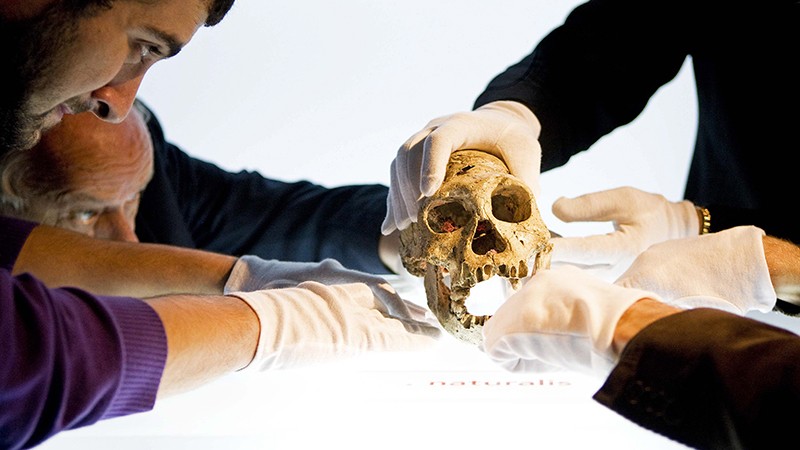
Skull D2700 discovered in 2001 at Dmanisi in Georgia is held by museum staff as they prepare it for an exhibition in Netherlands

Future humans might be very different from people today but not in the way science fiction movies would lead you to think.

Combining knowledge of our past with current trends, we are entering a new phase in human evolutionary history—one that makes the future less predictable and more interesting than ever before.

SO THE FIRST THING TO APPRECIATE IS THAT:

Evolution and natural selection are not the same things.

Evolution refers to the relationship between a species (a breeding population) and its ever-changing environment. Evolution does not concern what individuals may think it is the gradual genetic change of a species over time.

Natural selection is the phenomenon that rewards certain advantageous traits and punishes others through better or worse survival or reproduction. Medical science and public health measures have enabled the developed world to escape most natural selection.  

Right now most of us are the sacrificial generation.

In nature, natural selection is the most powerful evolutionary force, but other factors may take over when technology grants a second chance to those who would have died. 

Consequently, even with a complete lack of natural selection, it doesn’t mean that humans will not evolve. It is a selective force that clearly has shaped human evolution in recent centuries and may still be doing so today with the Coronavirus.

 With the Viruses, natural selection may not be “over for humans.”

This set aside we are more than likely going to have to adapt to climate change’s, to technologies like Biotechnology involving living systems and organisms to develop or make products.

Technology is already affecting the way our memory works and humans may eventually reach a point where they can force evolution upon themselves through the use of technology.Will our descendants be cyborgs? © Daniel Haug/Getty

We now have genetic samples of complete genomes from humans around the world, and with geneticists are getting a better understanding of genetic variation and how it’s structured in a human population environmental factors are no longer the driving force for evolutionary change.

We’ve all heard of designer babies, perhaps in the future, it may be seen as unethical not to change certain genes.

The human race will one day split into two separate species one more advanced than the other.

Races, as normally understood, would still be a thing, but with two separate species that will probably still call themselves human, even if they are technically different from those before them.

Of course, we don’t know this for sure but consider it’s not really a biological question anymore, it’s a technological question it is not beyond conceptuality that humans will not evolve into a single, ubiquitous ethnic group.

However, there is also a risk that current society collapses and some new society arises with ideas of eugenesy or breading races of superhumans and slaves.

One species with hi-tech machine implants, growable limbs and cameras for eyes even with different facial features and skin colour and external aids entirely responsible for survival.

A collective thought consciousness. Thought could be converted into instant gratification, and consequences to misusing it controlled by AI.

Computers will punish you! 

The human brain, being a machine striving for maximum efficiency, typically remembers where information is stored, rather than the information itself but as technology becomes more and more advanced, our brains will adapt in order to maximize efficiency – perhaps to the detriment of our memory.

Nanomachines would be part of the human form.

People could download their being into a computer system and be a part of the AI collective.

We will no longer operate within the confines of survival of the fittest. 

There is still going to be selection but artificial selection, so its no surprise that much technological advancement is currently aimed at the human body.

Up to now, sexual selection has defined evolutionary paths.

This will become less and less with gene editing with many of our internal functions becoming obsolete and what we might see is differentiation along lines where people live.

And what about space?

If humans do end up colonising Mars, what would we evolve to look like?

With the lower gravity, the muscles of our bodies could change the structure. Should we spend too long as galactic explorers, it’s likely that we’d eventually lose most of our muscle mass?

“What once use to be a magic flute will become a water carrier.”

So if we survive climate change humans will not evolve just for reproduction.

Whether it is genetically enhanced humans, bionic men, or uploaded beings, technology and its advancement with our decisions will shape the future of Earth and its inhabitants, including ourselves.

It will certainly be shaping human development. Bio to Artificial transmission with no inoculations.

Google Brain / Health or Microsoft Health vaults.

However, the future might be a lot slower than we think. It will take thousands of years for us to develop technologies that allow us to colonize the solar system.

If we do manage to move to other worlds, it’s likely that we’ll need to adapt to them using a combination of genetic engineering and technology.

All these changes may mean that Homo sapiens will speciate, or evolve into multiple new species. It will mean that our progeny have survived, even if they are nothing like us.

If we consumed most of the planet’s resources in doing so that is not evolution; that is the road to extinction.

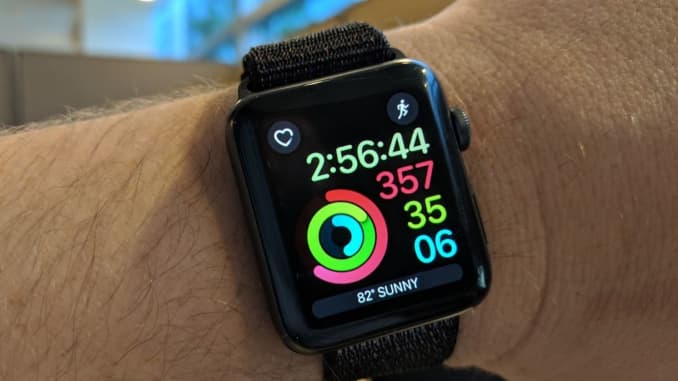
CNBC Tech: Apple Watch  2

All human comments appreciated. All like clicks chucked in the bin 

← Back

Thank you for your response. ✨


Share this:

  • Share on WhatsApp (Opens in new window) WhatsApp
  • More
  • Share on Pocket (Opens in new window) Pocket
  • Share on Mastodon (Opens in new window) Mastodon

THE BEADY EYE ASK’S: WHY IS IT THAT WE ARE ALLOWING ALGORITHMS TO RUN OUR LIVES.

28 Tuesday Jan 2020

Posted by bobdillon33@gmail.com in 2020: The year we need to change., Algorithms., Artificial Intelligence., Climate Change., Digital age., DIGITAL DICTATORSHIP., Evolution, Fourth Industrial Revolution., HUMAN INTELLIGENCE, Human values., Humanity., Inequality, Innovation., Modern day life., Post - truth politics., Reality., Robot citizenship., Sustaniability, Technology, The common good., The Future, The Internet., The Obvious., The state of the World., The world to day., Unanswered Questions., WHAT IS TRUTH, What Needs to change in the World, Where's the Global Outrage., WiFi communication.

≈ Comments Off on THE BEADY EYE ASK’S: WHY IS IT THAT WE ARE ALLOWING ALGORITHMS TO RUN OUR LIVES.

Tags

Algorithms trade., Algorithms., Artificial Intelligence., Big Data, Distribution of wealth, Inequility, Technology, The Future of Mankind, Visions of the future.

(Twenty-minute read)

Technology is getting increasingly personal.

With algorithms becoming the masters of social media are we all just becoming clickbait?

Devices are providing immediate information about our health and about what we see, where we go and where we have been.

Our lives are being shaken to their very core.

With 5G technology what we experienced at the moment will pale in comparison to the vast array of possibilities carried under its belt by this new generation of wireless connectivity, which is being built over the foundations of the previous one.

It will allow millions of devices to be connected simultaneously.

All stakeholders – business, government, society and individuals – will have to work together to adjust so these technologies and rapid changes are harnessed for the development of all, not just profit.

Swathes of the globe will be left behind.

Regardless it is no longer just about repetitive factory jobs rather an increase in inequality globally.

It is not only a moral imperative to ensure that such a scenario does not happen as it will pose a risk to global stability through channels such as global inequality, but migration also flows, and even geopolitical relations and security.

We already live in a world that has been profoundly altered by the Fourth Industrial Revolution. Yet there is not much debate on the likely size of the impact.

Why?

Because there are such divergent views it is difficult to measure.

But within the next decade, it is expected that more than a trillion sensors will be connected to the internet. By 2024, more than half of home internet traffic will be used by appliances and devices that are connected to internet platforms.

With almost everything connected, it will transform how we live never mind how we do business.

If there is no trusted institution to regulate it we can kiss our arses.

Now is the time to make sure it is changed for the better.

The internet of things will create huge amounts of data, raising concerns over who will own it and how it will be stored. And what about the possibility that your home or car could be hacked?

The internet is great for ideas, but ultimately, the things that will amaze you are not on your computer screen.

Artificial Intelligence may well invent new life forms but if we as humans do not contrive and manage global acceptable ethical parameters for all its forms – (bioengineering, gene editing, nanotechnology, and the algorithms) that run them we are more than idiots.

As Yuval Noah Harari says in his most recent book ( 21 Lessons for the 21st Century) ” There is no such thing as ‘Christian economics’, ‘Muslim economics’ or ‘Hindu economics’ ” but there will be Algorithms economics run by big brother. 

The digital age has brought us access to so much information in just a few clicks of the mouse button or the remote control everything from the news, Tv programmes with the internet becoming somewhat glorifying sensationalism rather than giving us the truth.

The question is.

Are the technologies that surround us tools that we can identify, grasp and consciously use to improve our lives?

Or are they more than that:

Powerful objects and enablers that influence our perception of the world, change our behaviour and affect what it means to be human?

What can we do?

The Second Industrial Revolution and the Third Industrial Revolution have lead us to this revolution the Fourth Industrial Revolution which can be described as the advent of “cyber-physical systems” involving entirely new capabilities for people and machines.

Unlike previous revolutions, it is not the world as a whole that will see any of its benefits or disadvantages it is individuals and groups that could win – or lose – a lot.

Unfortunately, expanded connectivity does not necessarily lead to expanded or more diverse worldviews it will be the opposite with our increased reliance on digital markets.

At the moment it’s just not very evenly distributed nor will it be.

At best we can moan about it and hope that climate change shifts our reliance on biomass as primary sources of energy.

Back to Clickbait.

The issue with clickbait is that the reader or site visitor is being manipulated into clicking something that is misleading.

Clickbait is not one-dimensional. Each time you run a Google search, scan your passport, make an online purchase or tweet, you are leaving a data trail behind that can be analysed and monetized.

Most clickbait links forward a user to a page that requires payment, registration or a series of pages that help drive views for a specific site.

It can also point to any web content that is aimed at generating online advertising revenue.

We’re all guilty of being gullible of clicking links online but Clickbait websites are notorious for spreading misinformation and creating controversy in the name of generating hits.

Have you not ever felt that you’re being played as dumb individuals whenever you watch the news or scroll through a media site?

Thanks to supercomputers and algorithms, we can make sense of massive amounts of data in real-time. Computers are already making decisions based on this information, and in less than 10 years computer processors are expected to reach the processing power of the human brain. A convergence of the digital, physical and biological spheres challenging our notion of what it means to be human.

Today, 43% of the world’s population is connected to the internet, mostly in developed countries.

Cooperation is “the only thing that will redeem mankind”.

We can use the Fourth Industrial Revolution to lift humanity into a new collective and moral consciousness based on a shared sense of destiny, and that’s until 6G comes along or living robots.

All human comments appreciated. All like clicks and abuse chucked in the bin.

← Back

Thank you for your response. ✨

Share this:

  • Share on WhatsApp (Opens in new window) WhatsApp
  • More
  • Share on Pocket (Opens in new window) Pocket
  • Share on Mastodon (Opens in new window) Mastodon

THE BEADY EYE SAY’S. IS IT TO BE GDP OR RIP. THERE IS NO REASON THAT EVERY BUILDING SHOULD NOT HAVE SOLAR PANELS.

17 Friday Jan 2020

Posted by bobdillon33@gmail.com in Climate Change.

≈ Comments Off on THE BEADY EYE SAY’S. IS IT TO BE GDP OR RIP. THERE IS NO REASON THAT EVERY BUILDING SHOULD NOT HAVE SOLAR PANELS.

Tags

Capitalism vs. the Climate., Climate change, Extinction, The Future of Mankind, World aid commission


(fifteen-minute read)

Irreversible by 2030. 

Up to 200 million people could be displaced by climate change by 2050.

50% of all carbon emissions are emitted by the richest 10% of the world’s

population.

Half of the world’s coral reefs have died in the last 30 years.

 At our current rate of consumption, we’d need 1.7 planets to support the

demand on the earth’s ecosystems.

Greenhouse gas levels are at an all-time high.

Have we lost all common sense!

So why are governments not enacted a simple law requiring solar panels on homes?

The main reason is.

None wants to foot the bill – GDP greed- 

it is being turned into a product to sell – Bio this Bio that  – Carbon Credits – etc.  

climate change

It’s a vicious circle.

What is required is a step towards a circular CO2 economy.

Take Air condition for example.

As the climate grows hotter, there’s more need to stay cool.

It is projected that there will be 1.6 billion new AC units to be in use by 2050 throughout the world.

Air conditioners consume huge amounts of energy and that’s adding to climate change. It pumps out heat straight into the atmosphere. Using powerful greenhouse gases called hydrofluorocarbons (HFCs), thousands of times more potent than carbon dioxide.

Surely it would be not that difficult technically to add CO2 capture functionality to an A/C system. The necessary technology is already commercially available.

Once collected, water and CO2, can be converted into renewable hydrocarbon fuels into renewable synthetic oil.

Office buildings throughout cities could produce more than 120 million gallons. The same process could happen on buildings everywhere.

If this additional cost was added to the mortgage of a new home, the purchaser would actually be in the pocket, because the mortgage costs on the additional £2,000 will be less than the energy costs savings that the solar panels bring.

When will we come to our senses?Solar panels

The amount of sunlight received by the earth in one hour is more than the total energy used by the entire world for an entire year!

Solar panels and wind turbines coupled with energy storage offer better hope for tackling climate change.

Harmless benign solar panels producing useful heat energy and saving harmful emissions.

There is no valid reason to wait ten twenty or thirty years not to start using it.

It could replace current fossil fuels like coal and gas for generation of electricity that produces air, water, and land pollution.

It could be achieved in five years.

We all know.

That, Climate Change has led to an increase in flooding and hurricanes due to disturbed weather patterns.

That climate change is happening and perhaps faster than expected.

That, Higher carbon dioxide concentration is making oceans acidic and killing marine life, like corals.

That, Climate change causes extinct of species from Sub-Arctic Boreal forests to tropical Amazon forests.

That, Higher temperatures result melting of polar ice caps, reducing habitats for wildlife and also increase sea level.

That, Irregular rainfall or increasing droughts affect agriculture and livelihoods of the weaker sections of society globally.

That Emissions are blamed for the rise in global temperatures, and changes in weather patterns leading to a cascade of effects.

That, the momentum for change is currently too slow.

That, given that climate change is inevitable, we are not doing nearly enough to save hundreds of millions of people from a miserable future.

That, the worst effects are yet to come. Submersion and loss of land displacing people.

That, the current targets would put the world on track for 3C of warming, which will ultimately lock in irreversible sea-level rises of perhaps two metres.

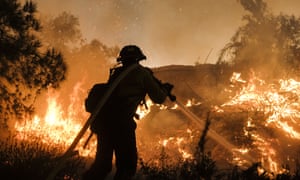
That, the greatest difference would be to nature. Insects, which are vital for pollination of crops, and plants are almost twice as likely to lose half their habitat at 2C compared with 1.5C. Corals would be 99% lost at the higher of the two temperatures, but more than 10% have a chance of surviving if the lower target is reached.A firefighter battles a wildfire in California

Against the above background it’s a line in the sand and what it says to our species is that this is the moment and we must act now.

What we are witnessing is patchy international efforts to prevent it from happening.

On one hand, we have Sir David Attenborough, “So we have to realise that this is not playing games. This is not just having nice little debates and arguments and then coming away with a compromise. This is an urgent problem that has to be solved.

”https://youtu.be/r-91umZ7cQE

On the other hand, I am sure he would puke at hippocras of countries declaring Climate Emergency and then bailing out Airlines.

The truth is that this is a global problem that will require a global solution.

We can’t shy away from that.

The Glasgow 2020 event with 30,000 delegates could be key to the fight against climate change only if China, India and—most importantly the US, participation in any future multilateral agreements.

If the UK is not stable enough to act as a diplomatic facilitator ahead of the summit (The Conservative manifesto devoted just two pages to climate change, skirted the issue) perhaps it might be a good idea to move it to Australia where the 30,000 delegates can witness first hand the effects A HEATING CLIMATE CAN DO.

Of course, this is not going to happen.

So how might be achieved other than Boris “Get Net Zero Done.”

It will be one of the first major tests of the UK’s influence on the world stage after it leaves the EU.

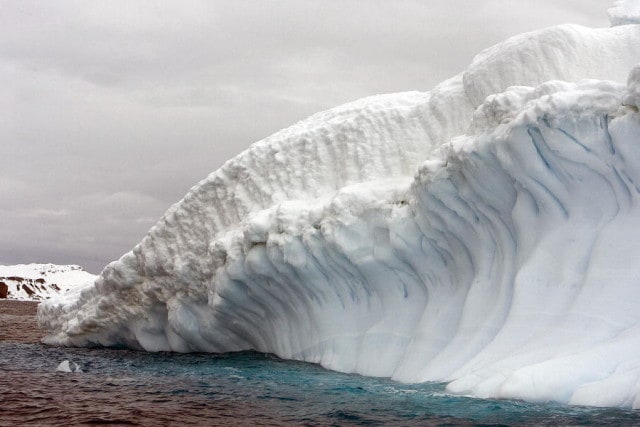
Collins Glacier in King George Island, Antarctica.

The main sticking points of international climate diplomacy are well known.

There are tensions between so-called ‘Global North’ and ‘Global South’ countries over financial and technological flows in aid of decarbonisation, and debates over how best to support those most vulnerable to climate risks, such as island nations.

If we are unwilling to make profit pay market-based instruments need to be sensibly designed to not negate the disproportionate costs of climate change on different groups.

What appears fundamental to the success of market-based instruments to reduce emissions is how government actually spend the revenue they generate.

If revenue is reinvested in other, complementary policies—especially supporting those on low incomes—and there is a consistent political and public dialogue, market-based instruments might work like Green Government bonds.

The problem is that none of the market-based instruments can be policed and will not produce the necessary funds to tackle the problems.

Because climate change does not affect everyone equally there is only one just solution we must make a profit for profit sake foot the bill, it will produce a perpetual world fund. ( See the previous post on a world aid commission of 0.05%)

All human comments appreciated. All like clicks and abuse chucked in the bin.

← Back

Thank you for your response. ✨

Share this:

  • Share on WhatsApp (Opens in new window) WhatsApp
  • More
  • Share on Pocket (Opens in new window) Pocket
  • Share on Mastodon (Opens in new window) Mastodon

THE BEADY EYE ASK’S. WILL 2020 BE THE YEAR OF THE BIG MELT OR THE BIG FRY.

02 Thursday Jan 2020

Posted by bobdillon33@gmail.com in #whatif.com, 2020: The year we need to change., Climate Change., Evolution, HUMAN INTELLIGENCE, Humanity., Life., Modern day life., Our Common Values., Politics., Populism., Post - truth politics., Purchasing Power., Reality., Social Media, Sustaniability, Technology, The common good., The essence of our humanity., The Future, The Obvious., The state of the World., The world to day., Unanswered Questions., WHAT IS TRUTH, What needs to change in European Union., What Needs to change in the World, Where's the Global Outrage., World Aid., World Leaders, World Organisations.

≈ Comments Off on THE BEADY EYE ASK’S. WILL 2020 BE THE YEAR OF THE BIG MELT OR THE BIG FRY.

Tags

Apathy., Artificial Intelligence., Capitalism and Greed, Capitalism isn't working, Capitalism vs. the Climate., Earth, Environment, Global warming, Inequility, Information gap., Technology, The Future of Mankind, Visions of the future.


(Fifteen-minute read) 


It looks like being both.

We are the first generation to know we’re destroying the world, and we could be the last that can do anything about it.

SO AS IF YOU DON’T ALREADY KNOW WHAT NEEDS TO CHANGE HERE IS YOUR CHANCE TO DO SOMETHING ABOUT IT.  

We need to recognize that everything we do, every step we take, every sentence we write, every word we speak—or don’t speak—counts. Nothing is trivial.

Take personal responsibility.

We need to use social media – this is one of the most effective ways to get brands to listen to you, so tell them that you want a change.

Why?

Because, unfortunately, the politicians who dominate the world stage are, depressingly, mostly cut from the old cloth, and the leadership challenges they face, are particularly complex and will require different skills — notably a clearer vision among leaders of organisation’s shared purpose.

Because the digital revolution is far from over the pace of change only seems to be quickening when in fact it is causing isolation. 

Because, we are allowing non-regulated large technology platforms to become too powerful, using their size to dominate markets and we are not paying enough attention to how the tools they create can be used for ill –  like device addictions, as we drown in notifications and false news feed posts.

Because there is an increasing imperative for all of us to respond to climate change.  Which will and is challenging our lives developing on a daily bases right in front of our eyes into our biggest need to act as one.

How can any of this be achieved? 

How will the changing political, economic and environmental landscapes shape the world?

Don’t get caught up in the how of things. Don’t wait for things to be right in order to begin.

Because in our age of tectonic geopolitical shifts, “alternative facts,” and conflicting narratives, our routine everyday life is losing sight of our true goals and aspirations.

Because with the rise of short-sighted populism we will solve nothing, other than feeding the great unwashed with short term gratification.

We need to write a piece of software that eliminated malware, viruses and all of that crap. 

We need to show our political leaders that they want to change, to understand our common humanity.

We need to try to put yourself into another person’s headspace and accept people for who they are and what their beliefs are.

We need to collaborate and push for policies that complement both sides of the political spectrum.

We need to make wasting our resources unacceptable in all aspects of our life.  Every product we buy has an environmental footprint and could end up in a landfill. The impact of plastic pollution on our oceans is becoming increasingly clear, having drastic impacts on marine life.

We need to be more conscious about what we buy, and where we buy it from. Living a less consumerist lifestyle can benefit you and our planet.

We need to use our purchasing power and make sure our money is going towards positive change.

We need to realize that what we eat contributes around a quarter of global greenhouse gas emissions and is responsible for almost 60% of global biodiversity loss.

We need to be supporting eco-friendly products.

We need to try to waste as little food as possible, and compost the organic waste we can’t eat.

We need to make education free for all.  Start educating not for profit but for a better understanding of what is the common values of life.

We need to stop asking the world’s smartest scientists to find us more time and to reverse gravity’s effect on our lives.

We need to stop killing each other. Countries start wars and people die and more people are in poverty.

We need to create out of profit for profit sake a World Aid fund with perpetual funding. (See previous posts) A new nonprofit called Carbon Offsets to alleviate address Climate change and Poverty. 

We need to realize that all significant change throughout history has occurred not because of nations, armies, governments and certainly not committees. They happened as a result of the courage and commitment of individuals. Believe that you can and will make a difference. 

The genesis for change is awareness so I need to stop. 

This year will not only be another opportunity for the leading minds in media in all its forms to highlight consumption for consumption sake.

However, if they wanted to spread a message that helps us all they would ban advertising that promotes consumption for consumption sake/profit. 

Feel free to add your priorities. With rapid innovations in technology and open access to data its no longer “wait and see.” We need to stop the huge feeling of apathy. 

The coming year, let alone the next decade looks unpredictable.

All human comments appreciated. All like clicks and abuse chucked in the bin.  

← Back

Thank you for your response. ✨


Share this:

  • Share on WhatsApp (Opens in new window) WhatsApp
  • More
  • Share on Pocket (Opens in new window) Pocket
  • Share on Mastodon (Opens in new window) Mastodon

THE BEADY EYE SAY’S; WE ARE ABOUT TO ENTER THE END GAME.

29 Sunday Dec 2019

Posted by bobdillon33@gmail.com in 2019: The Year of Disconnection., Climate Change.

≈ 1 Comment

Tags

Capitalism vs. the Climate., Climate change, Climate change and Intelligence, Climate Change Solution's., global climate change, Reality of Climate Change, The cost of Climate Change.


(Sixteen-minute read) 

WHY?

Because there is no point any longer carry on claiming that we are a victim of world events…Climate change, Artificial intelligence, Capitalist greed etc. 

If Everyone’s Finger–Pointing, Who’s to Blame?

The answer, it seems, is someone else.

We think blaming means we get away with it.

Getaway with what?

If we stop it may become evident that this blame game is getting us nowhere and maybe, we need to look deeper at that word RESPONSIBILITY.

Could it be possible that our choices got us in the mess and our new responsible choices could get us out of the blame game forever?

The issue at hand is a vicious circle. Greed versus Common sense.

It is important that the leadership of countries are responsible for governing but does anyone remember the last time that a government actually took responsibility for their own actions?

No.

Politicians — hostage to the tyranny of short election cycles — instead wooed voters seeking instant gratification, the protection of unsustainable entitlements, and shortcuts to continued prosperity they pander to popularism. 

Its no wonder we use blame like an auto-pilot switch?

At no point do we want to think that our choices may be contributing to what is going on in our life.

The media changed our perception of so many things preventing us from coming to a consensus not only on how to dig ourselves out of this mess but also on how to prevent it from happening again.

All that has been positive is slowly being replaced with only more negative.

And so no goes the endless, useless recriminations.

The blame game, however, is a lot more dangerous than it sounds. This never-ending cycle not only diverts responsibility but distracts from coherent responses.

That has two immediate consequences.

First, it is virtually impossible to generate a sense of shared responsibility that must underpin any sustainable, effective solution.

Second, the temptation increases for each country to turn inward, significantly raising the risk of protectionism.

As the species that have taken over the planet.

The world is looking for bold leadership, and in the absence of it, dysfunction that will make 2019 merely a flesh wound risks is becoming an ever more likely reality.

There is the possibility that our struggle to halt destructive climate change is going to make most of the people around the world very conscious of changes on the planetary level that need to be stopped, and species extinction is in that category. . . .However, unless humanity learns a great deal more about global biodiversity we will soon lose most of the species composing life on Earth.

WHY?

Because we need to do one big thing that people could get together on that would solve the problem and it needs to happen politically, globally in order to fulfil this vision? 

We might have achieved many small victories in a losing war but what is immediately relevant at the present time is our collective inability to act as one. If not what we will see soon—it is on the horizon—is a second great environmental crisis, and that’s a shortage of freshwater.

It’s a shortage of fresh water that is rapidly growing, that’s causing some of the most tragic humanitarian problems . . .  and it’s going to get worse and worse.

We the grownups we have to start somewhere.

The era that we have to create ahead of us is going to have to include action and research in multiplicity.

I mean, lots and lots of people involved in order to keep the whole planet and all the plants and animals in it, in order to understand how the living world works….where life came from, where we came from, and what we need to be preserving in order to make Earth a livable, habitable place—a planet to be our home. 

Billion of us live in our technologic bubble called cities, indifference to what is taking place outside our own worlds thanks to the Smartphone. If that remains true for the next decade what is left won’t be worth saving.

Where to start?

We now face a substantial possibility of seeing a complete collapse of the ecosystem which will have an irreversible impact of human activity.

The slide toward extinction with all our efforts around the world has not slowed, nor will it in the near future. 

Like conservation efforts around the world had consisted of targeted procedures to save a species here or there or to save a habitat here or there.

Rather than point the finger of blame here a few things we could change.

Hope is after all one of the great attributes we are all ushered towards…

Profit-seeking Algorithms. Regulation

Technology leapfrogging.  Transparency.

Currency manipulator. Emerging economies gained a competitive advantage by manipulating their currencies, weakening labour standards, degrading the environment, or engaging in various forms of implicit protectionism.  Unsustainable national policies. 

Consumption.  Ban Media/TV Advertising that is promoting consumption for consumption. 

Multilateral institutions.  The UN are only as strong as our member nations let it be.  When push came to shove, these institutions shie away from their duties, hindered by widespread representation and legitimacy deficits. Remove the Veto.

Bogus blame:  Remove False News from Social media 

All those things together intrinsic, to human instinctive behaviour?  

They could go long way to helping us remain in the game.The End Game

Politicians, of course, will say: “It’s not our fault. They are right as to do not hold them to account. 

Education. Stop educating for the market place. Children have to take out of the classroom and learn where fresh air, fresh water, fresh vegetables, fresh everything comes from. To learn true human instinct are not a Tweet, a Like, a Smartphone, a Virtual game.

And trust me — no one will want to take the blame for that tragedy.

Our evolution now is a competition, greed against all of us. 

Everyone can get it eventually, if they just think.

 All human comments appreciated. All like clicks and abuse chucked in the bin. 

← Back

Thank you for your response. ✨


Share this:

  • Share on WhatsApp (Opens in new window) WhatsApp
  • More
  • Share on Pocket (Opens in new window) Pocket
  • Share on Mastodon (Opens in new window) Mastodon

THE BEADY EYE SAY’S; WE CANNOT TRUST TECHNOLOGY TO COME TO THE RESCUE.

10 Tuesday Dec 2019

Posted by bobdillon33@gmail.com in Climate Change.

≈ Comments Off on THE BEADY EYE SAY’S; WE CANNOT TRUST TECHNOLOGY TO COME TO THE RESCUE.

Tags

Capitalism vs. the Climate., Climate change, Earth, Environment, Extinction, Technology, The Future of Mankind, World aid commission


( A Crucial twenty-minute read)

Climate change is accelerating and we know that it is the world’s greatest collective action problem.

The global climate is probably the most complex of all complex systems to which humans belong.

It’s more than a quarter of a century since the leaders of the world, gathered in Rio de Janeiro in 1992, committed their countries to avoiding “dangerous anthropogenic interference in the climate system” by signing the UN convention on climate change.

Climate protesters prior to the COP23 talks in Bonn, Germany

We know we have to tackle climate change –as do the politicians.

We know that it’s rational for an individual country not to drastically reduce greenhouse gases, given most economies are heavily based on energy resources that emit them.

Yet, if all nations act that way — indeed, that’s what’s happening — most countries will eventually be worse off due to the cumulative impacts of all our emissions.

Put another way, what’s better for each individual country in isolation is actually worse for the planet as a whole. Conversely, what is worse for each individual country, overtime would be better for the planet.

Unlike other policies, climate change is cumulative.

We know that climate summits highlight the science, but achieve little or nothing-

The First World Climate Conference was held on 12–23 February 1979 in Geneva as was the second the third.

Here is the list

Contents

1995:  Berlin, Germany

1996:  Geneva, Switzerland

1997: Kyoto, Japan

1998: Buenos Aires, Argentina

1999: Bonn, Germany

2000: The Hague, Netherlands

2001: Bonn, Germany

2001: Marrakech, Morocco

2002: New Delhi, India

2003: Milan, Italy

2004: Buenos Aires, Argentina

2005: Montreal, Canada

2006: Nairobi, Kenya

2007: Bali, Indonesia

2008: Poznań, Poland

2009: Copenhagen, Denmark

2010: Cancún, Mexico

2011: Durban, South Africa

2012: Doha, Qatar

2013: Warsaw, Poland

2014: Lima, Peru

2015: Paris, France

2016: Marrakech, Morocco

2017:  Bonn, Germany

2018: Katowice, Poland

2019: Bonn, Germany

2019: Madrid, Spain

A lot of talking while the ice melts, our lands burn, and our oceans rise and our Co2 emissions are traded on an Ecosystem Marketplace’s – Carbon offsetting- Cardon Cap and trade systems.

The longer we wait to address it, the bigger the problem it becomes and the harder it gets to solve, fueling a feedback loop that makes solutions ever more difficult.

Imagine getting taxed before you put that money into your fund and then not living long enough to reap the payoffs of your fund.

That’s happening with climate change, on a global scale.

However, we must realize that climate is a much broader, systemic problem that can not be tackled solely by making how important our everyday choices are.

We know that behind the energy and climate change hypocrisy is in all of us.

You’re a hypocrite for advocating on climate change while using fossil fuels.

Such arguments are shallow because virtually everyone depends on these fuels somehow.

Trying to make people feel guilty for their carbon-intensive activities doesn’t actually get them to change their behaviour.

Nobody wants to change unless they really, really have to.

We know that transforming endemic corporate behaviours that are devastating the planet requires whole industries to move together, and fast.

We need bold, industry-wide coalitions for change.

We need to bring industry leaders together to agree on reforms to the parts of the business that are irrelevant to customers but of grave importance for our environment.

However business cannot tackle climate change on its own and we don’t have time to wait for individual companies to each go on their own sustainability journeys.

We know that enacting policies today to cut greenhouse gas emissions won’t have a discernible impact on global warming for decades, if not centuries.

We know that investors are in effect expecting returns on assets in companies that eventually must be written off for the planet to be safe.

The private sector can either destroy the planet or replenish it.

We know what needs to be done.

This means that sustainable savings are the number one solution to climate change and the effects are larger than rooftop solar, solar farms, afforestation and electric vehicles combined.

To do this is laying down a clear challenge.

But unfortunately, not all carbon footprints are created equally.

This makes it a tough sell and begs the question to what degree people are willingly taking concrete steps to lower their lifestyle’s impact on climate change, or why people are not.

The why not, is because for most people it’s still intangible and not well understood even considered a Hoax because of Fake news’ or ‘inconvenient truth that there is no problem and hope that it disappears by itself.

The willingness is rhetoric like flight shaming which is near the top of the list of hypocrisy charges.

No press release can obscure the fact that time is not on our side.

We need to cap our carbon emissions now not in ten years.

Increasingly missing from this picture above is the support of governments that operate on 2- to 6-year election cycles.

Technology is bringing down the price of switching to green alternatives, not least renewable energy. So what is stopping governments from making these technologies available with affordable Green Grants to one and all Now?

With most countries more engrossed by their internal domestic political squabbles the reasons are political or financial, not scientific.

The science isn’t that difficult to explain but instead of explanations we are presented with statements of facts with an only simple explanation and no real substance, CO2 is like a blanket.

A Chinese man wears a mask to guard against air pollution in Beijing. Much of Eastern and Central China is regularly blanketed by a thick smog caused by coal power plants and industrial production, both of which fuel global warming and climate change, direct results of consumer culture.

Yet there is a troubling gap between the serious reality depicted by climate change science and the level of concern among all of us.

Worry and action are two different things.

Climate change is a direct consequence of the widespread, now globalized, mass production and consumption of goods, and of the material construction of our habitat that has accompanied it. Yet, despite this reality, production and construction continue unabated.

If we believed that a systemic response to climate change was an equally shared responsibility, was our responsibility, we would be responding to it.

Until we do that, we’re all climate change deniers.

( See Post – suggestion a World Aid commission of 0.05% )

All human comments appreciated. All like clicks and abuse chucked in the bin.

← Back

Thank you for your response. ✨


There are no right or wrong answers, just your insights.


Share this:

  • Share on WhatsApp (Opens in new window) WhatsApp
  • More
  • Share on Pocket (Opens in new window) Pocket
  • Share on Mastodon (Opens in new window) Mastodon
← Older posts
Newer posts →

All comments and contributions much appreciated

  • THE BEADY EYE SAYS. ANY OTHER PERSON WOULD BE ARRESTED. February 1, 2026
  • THE BEADY EYE SAYS FROM THE RESURRECTION OF JESUS TO THE PRESENT DAY THE HISTORICAL RECORD OF OUR WORLD IS MORE THAN HORRIBLE. February 1, 2026
  • THE BEADY EYE SAYS: THE WORLD WE LIVE IN IS BECOMING MORE AND MORE UNKNOWN. January 31, 2026
  • THE BEADY ASK. IN THIS WORLD OF FRICTIONS IS THERE ANY DECENCY LEFT ? January 29, 2026
  • THE BEADY EYE ASKS ARE WE WITH ARTIFICIAL INTELLIGENCE LOOSING THE MEANING OF OUR LIVES? January 27, 2026

Archives

  • February 2026
  • January 2026
  • December 2025
  • November 2025
  • October 2025
  • September 2025
  • August 2025
  • July 2025
  • June 2025
  • May 2025
  • February 2025
  • January 2025
  • December 2024
  • November 2024
  • October 2024
  • September 2024
  • August 2024
  • July 2024
  • June 2024
  • May 2024
  • April 2024
  • March 2024
  • February 2024
  • January 2024
  • December 2023
  • October 2023
  • September 2023
  • August 2023
  • July 2023
  • June 2023
  • May 2023
  • April 2023
  • March 2023
  • February 2023
  • January 2023
  • December 2022
  • November 2022
  • October 2022
  • September 2022
  • August 2022
  • July 2022
  • June 2022
  • May 2022
  • April 2022
  • March 2022
  • February 2022
  • January 2022
  • December 2021
  • November 2021
  • October 2021
  • September 2021
  • August 2021
  • July 2021
  • June 2021
  • May 2021
  • April 2021
  • March 2021
  • February 2021
  • January 2021
  • December 2020
  • November 2020
  • October 2020
  • September 2020
  • August 2020
  • July 2020
  • June 2020
  • May 2020
  • April 2020
  • March 2020
  • February 2020
  • January 2020
  • December 2019
  • November 2019
  • October 2019
  • September 2019
  • August 2019
  • July 2019
  • June 2019
  • May 2019
  • April 2019
  • March 2019
  • February 2019
  • January 2019
  • December 2018
  • November 2018
  • October 2018
  • September 2018
  • August 2018
  • July 2018
  • June 2018
  • May 2018
  • April 2018
  • March 2018
  • February 2018
  • January 2018
  • December 2017
  • November 2017
  • October 2017
  • September 2017
  • August 2017
  • July 2017
  • June 2017
  • May 2017
  • April 2017
  • March 2017
  • February 2017
  • January 2017
  • December 2016
  • November 2016
  • October 2016
  • September 2016
  • August 2016
  • July 2016
  • June 2016
  • May 2016
  • April 2016
  • March 2016
  • February 2016
  • January 2016
  • December 2015
  • November 2015
  • October 2015
  • September 2015
  • August 2015
  • July 2015
  • June 2015
  • May 2015
  • April 2015
  • March 2015
  • February 2015
  • January 2015
  • December 2014
  • November 2014
  • October 2014
  • September 2014
  • August 2014
  • July 2014
  • June 2014
  • May 2014
  • April 2014
  • March 2014
  • February 2014
  • January 2014
  • December 2013
  • November 2013
  • October 2013

Talk to me.

Jason Lawrence's avatarJason Lawrence on THE BEADY EYE ASK’S: WIT…
benmadigan's avatarbenmadigan on THE BEADY EYE ASK’S: WHA…
bobdillon33@gmail.com's avatarbobdillon33@gmail.co… on THE BEADY EYE SAYS: WELCOME TO…
Ernest Harben's avatarOG on THE BEADY EYE SAYS: WELCOME TO…
benmadigan's avatarbenmadigan on THE BEADY EYE SAY’S. ONC…

7/7

Moulin de Labarde 46300
Gourdon Lot France
0565416842
Before 6pm.

My Blog; THE BEADY EYE.

My Blog; THE BEADY EYE.
bobdillon33@gmail.com

bobdillon33@gmail.com

Free Thinker.

View Full Profile →

Follow bobdillon33blog on WordPress.com

Blog Stats

  • 95,091 hits

Blogs I Follow

  • unnecessary news from earth
  • The Invictus Soul
  • WordPress.com News
  • WestDeltaGirl's Blog
  • The PPJ Gazette
Follow bobdillon33blog on WordPress.com

The Beady Eye.

The Beady Eye.
Follow bobdillon33blog on WordPress.com

Blog at WordPress.com.

unnecessary news from earth

WITH MIGO

The Invictus Soul

The only thing worse than being 'blind' is having a Sight but no Vision

WordPress.com News

The latest news on WordPress.com and the WordPress community.

WestDeltaGirl's Blog

Sharing vegetarian and vegan recipes and food ideas

The PPJ Gazette

PPJ Gazette copyright ©

Privacy & Cookies: This site uses cookies. By continuing to use this website, you agree to their use.
To find out more, including how to control cookies, see here: Cookie Policy
  • Subscribe Subscribed
    • bobdillon33blog
    • Join 222 other subscribers
    • Already have a WordPress.com account? Log in now.
    • bobdillon33blog
    • Subscribe Subscribed
    • Sign up
    • Log in
    • Report this content
    • View site in Reader
    • Manage subscriptions
    • Collapse this bar