≈ Comments Off on THE BEADY EYE’S: HOW TO AVOID DOWNLOADING MALICIOUS APPS.
(One minute read)
As with any software, there’s no foolproof way to know whether an app is malicious.
Pay attention to permissions, the number of times an app has been installed, the reviews, and the general reputation of the developer.
Be sure to keep an eye on permissions when installing apps. If an app you don’t trust much requires too many permissions, that’s a red flag that the app will potentially abuse those permissions.
It’s normal to come across apps that require too many permissions, but it’s often because that app actually is using your phone number, address book, and location to an advertising network’s servers so they can track you and serve ads to you.
For example, if an App requires permission to read your address book, access your location, and connect to the Internet, this is awfully suspicious.
Most malicious Android apps come from outside the Google Play Store. If you download a pirated app from a shady website, you shouldn’t be surprised if it brings malware onto your system.
Donald John Trump, (born June 14, 1946, New York, New York, U.S. ), 45th president of the United States (2017– ).
A real-estate developer and businessman who owned, managed, or licensed his name to several hotels, casinos, golf courses, resorts, and residential properties in the New York City area and around the world.
Married three times.
Also lent his name to scores of retail ventures—including branded lines of clothing, cologne, food, and furniture—and to Trump University.
In 1968, during the Vietnam War, he secured a diagnosis of bone spurs, which qualified him for a medical exemption from the military draft (he had earlier received four draft deferments for education).
In 1973 his daddy and him, along with their company, were sued by the U.S. Department of Justice for allegedly violating the Fair Housing Act (1968) in the operation of 39 apartment buildings in New York City. The Trumps initially countersued the JusticeDepartment for $100 million, alleging harm to their reputations. The suit was settled two years later under an agreement that did not require the Trumps to admit guilt.
Became only the third president in U.S. history to be impeached.
He has in his first term has been a relentless drive for unfettered fossil energy development revealing the striking disconnect between President Donald Trump and essentially every authoritative institution on the threat of global warming.
Occasionally he feigns concern about climate.
So what happened that he got elected in the first place.
A Bloke named Steve Bannon the owner of Cambridge Analytica “microtargeted” the Facebook/ Twitter Group, relentlessly on social media (by harvesting and weaponizing personal Facebook data without asking permission), and the results speak for themselves:
Cambridge Analytica harvested 30 MILLION certified voters through Facebook and targeted them with fake news tailored to their individually profiled fears and trigger points.
The Trump campaign fed them exactly what it wanted them to hear, whether it was true or not.
People from across the political spectrum happily shared his memes in their own personal outrage-amplifying social media echo chambers. For Free.
He was elected by those that rarely look beyond the messaging they see on TV.
Incapable of coherent speech he uses Twitter as his bitch.
But in the early hours of the greatest threats to the world especially American political history, here are a few thoughts.
Trump was not elected by the people but by Social Media. He was never a legitimate political leader.
Though Trump has legal legitimacy, he totally lacks political legitimacy.
He did not win the popular vote.
It is this fear of being illegitimate is the reason why he tries to delegitimize America’s intelligence community.
What does that say about the state of democracy in America?
Articles and dissertations that try to answer the question will occupy us for years.
For now, we can only hope that HIS HANDLING OF COVID-19 will be his DOWNFALL.
And quickly, very quickly. As with anything said by Trump, it remains unclear if he was lying, under-informed, or uninterested in becoming so. (Or all three.)
And as in so many other instances, Trump’s lies and/or carelessness have had disastrous effects.
The first time Trump tweeted about the virus came on 24 January. “It will all work out well,” he reassured Americans. He followed up again later with Domestos or is it Parazone kills all known Klingons so why not have a swig.
Trump’s intentions, and his administration’s deleterious impact on global climate progress, will be evident to voters in 2020 in a way that many failed to grasp four years earlier. The only question is whether those who care about the planet’s future can unite as a political force in a way that eluded them in 2016.
Almost every time he opens his mouth he tried to divert responsibility as the full horror of the Pandemic and the economic implications dawned on Trump the usual playbook of denying and distracting will prove futile against a nimble germ without an ego.
There’s a little more than six months left before the election.
LET’S HOPE!
NOW THAT HE HAS STOPPED FUNDING THE WORLD HEALTH ORGANISATION AND OPTED OUT OF GLOBAL CORPORATION TO DEVELOPE A VACCINE THAT SUCH A VACCINE IS NOT DISCOVERED IN THE USA BEFORE November 3, 2020.
OTHERWISE, WE WILL HAVE ANOTHER TERM OF DONAL DUMP.
All comments appreciated. All like clicks and abuse chucked in the bin
Post COVID-19 this will become a question that we will all have to ask yourselves.
Coronavirus came after a series of wake-up calls.
Perhaps the COVID-19 outbreak is the wake-up call the world needs to get people accustomed to the fact that because of climate change, we all now need to change our lifestyles to protect our lives.
The COVID-19 outbreak should be a wake-up call that the economic and social costs of climate change will likely be so catastrophic – potentially many times worse than what we’re currently witnessing – that as a nation and the community of nations, we can’t afford not to take massive measures to combat and mitigate the dangers.
Confronting climate change will take a global effort far beyond any that’s been on the table so far, and far beyond the voluntary commitments in the Paris Climate accord.
We don’t yet know how long the COVID-19 outbreak will last, how many people will get sick or die, or the ultimate cost to global wealth and to people’s jobs and homes.
However, it seems obvious to say that, if we can transform the economy for a virus, we can also do so to prevent climate change.
Acres of column inches have already been written about how the Coronavirus is going to change our economies, politics, and societies forever.
We can choose to prioritize something – in this case, human life – above the maximization of profit and even our individual freedom.
Unchecked, climate change will wreak far greater damage on our ability to live safe, profitable, happy, and free lives than COVID-19.
Despite the brief dip in emissions due to COVID-19, there is a risk that the pandemic – which is likely to dominate politics for months or even years to come – will overshadow environmental concerns.
Mortimer Adler Said ” To regard anyone except yourself as responsible for your judgment is to be a slave, not a free man. It is this fact that the liberal arts acquire their name.”
For most of human history, the only other reliable sources of information were other people.
We are becoming symbiotic with our computer tools, growing into interconnected systems that remember less by knowing information than by knowing where the information can be found. If we know that a fact is only a Google away, then we’re not going to waste precious synaptic space on it. Better to let a server remember.
Or is it?
Feel like you’re losing grip of your memory. Google it.
Every time we recall a memory we also remake it, subtly tweaking the neuronal details. (This is why the more we remember something, the less accurate the memory becomes.) Although we like to think of our memories as being immutable impressions, somehow separate from the act of remembering them, they aren’t.
A memory is only as real as the last time you remembered it.
The brain has no interest immaculate recall – it’s only interested in the past to the extent it helps us make sense of the future.
By having memories that constantly change, we ensure that the memories stored inside our mental file cabinets are most relevant.
Although our memories always feel true – as a literal recording of the past – they’re mostly not, since they’re always being edited and bent by what we think now. And now. And now.
And this is where the internet comes in. One of the virtues of transactive memory is that it acts like a fact-check, helping ensure we don’t all descend into selfish solipsism. ( Solipsism: The theory that the self is the only thing that can be known and verified)
By sharing and comparing our memories, we can ensure that we still have some facts in common, that we all haven’t disappeared down the private rabbit hole of our own reconsolidations.
I don’t think it’s a sign that technology is rotting our cortex – I think it shows that we’re wise enough to outsource a skill we’re not very good at.
Because while the web enables all sorts of other biases – it lets us filter news, for instance, to confirm what we already believe – the use of the web as a vessel of transactive memory is mostly virtuous. We save hard drive space for what matters, while at the same time improving the accuracy of recall.
But if a fact stored externally were the same as a memory of that fact stored in our mind, then the loss of internal memory wouldn’t much matter.
External storage and biological memory are not the same things.
When we form, or “consolidate,” a personal memory, we also form associations between that memory and other memories that are unique to ourselves and also indispensable to the development of deep, conceptual knowledge.
The associations, moreover, continue to change with time, as we learn more and experience more.
The essence of personal memory is not the discrete facts or experiences we store in our mind but “the cohesion” which ties all those facts and experiences together.
What is the self but the unique pattern of that cohesion?
Our over-reliance on google and the smartphone search engines is destroying our memories – ‘digital amnesia’.
Google in its very nature is making us stupid, making us more likely to recallwhere the facts are rather than the facts themselves.
We hold the answers to just about all of life’s questions in our palms today. But that means our brains are feeling free to take some R & R.
If you have no working memory, you can have no longterm memory and you understand very little.
The growing reliance on the world wide web for fact-checking is rotting our memories.
We off-load memories to the cloud just as readily as we would to a family member, friend, or lover.
Almost all information today is readily available through a quick internet search. It may be that the internet is taking the place not just of other people as external sources of memory but also of our own cognitive faculties becoming an extension of our own intelligence, rather than a separate tool.
At this point, you might be asking why is any of this important.
Indeed, As the specter of creeping authoritarianism – as emergency disaster measures become normalized, or even permanent – it should be at the forefront of our minds.
Because the consequences of COVID-19 will reorder society in a dramatic way, and this combined with climate change we are witnessing a tipping point as to how the world is going to work.
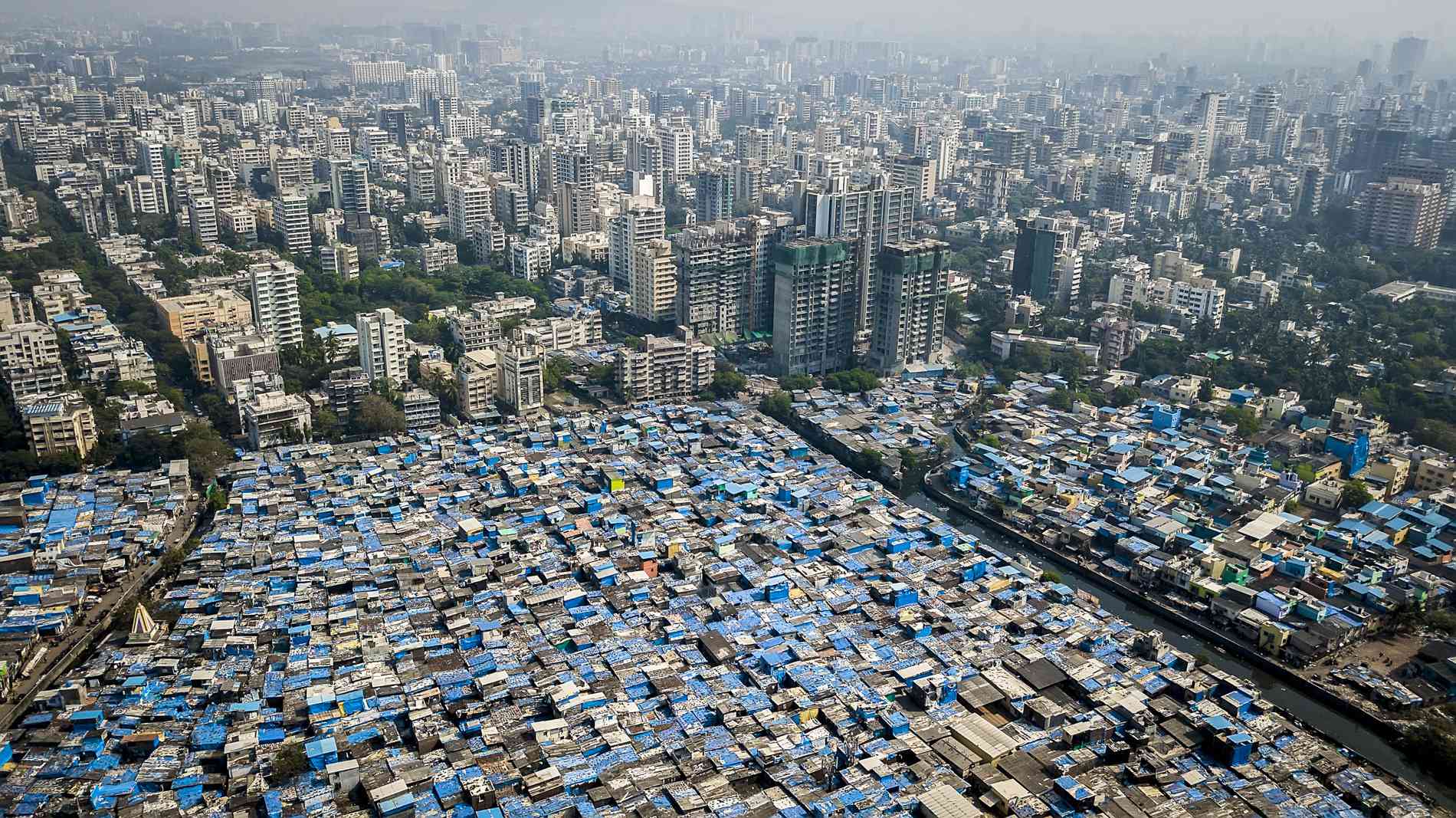
Unfortunately, we constructed a world that could not be more suited to a Pandemic – density everywhere- inward rural migration and now Data harvesting.
We can expect greater efforts to digitally capture and record our behavior in urban areas – and fiercer debates over the power such surveillance hands to corporations and states.
One consequence of coronavirus could be an entrenchment of exclusionary political narratives, calling for new borders to be placed around urban communities – overseen by leaders who have the legal and technological capacity, and the political will, to build them.
In other words an intensification of digital infrastructure in our cities to track the spread of COVID-19 using “big data” analysis to anticipate where transmission clusters will emerge next.
This much is certain:
Just as this disease has shattered lives, disrupted markets and exposed the competence (or lack thereof) of governments, it will lead to permanent shifts in political and economic power in ways that will become apparent only later.
It will be a time of contradictions.
Internationally, many issues that appeared pressing prior to the pandemic will likely recede in prominence once the world begins its recovery. All non-coronavirus issues will be pushed aside.
Not only because of a shared experience but also because of the mutual assistance that will be required at the same time, democracies must prevent the emergence of a big brother-style intrusion into the personal sphere by the security apparatus.
Such a thing can only occur in the absence of massive civilian oversight.
Many countries will set up committees of inquiry to find out why they and their healthcare systems were caught unprepared, humanity is destined to return to its old self after the adjustment period ends. And that, on balance, is a good thing.
Coronavirus will not end globalization, but it will change it by disrupting our lives and causing painful tragedy —it may introduce a new acceptance of unpredictability into our thinking.
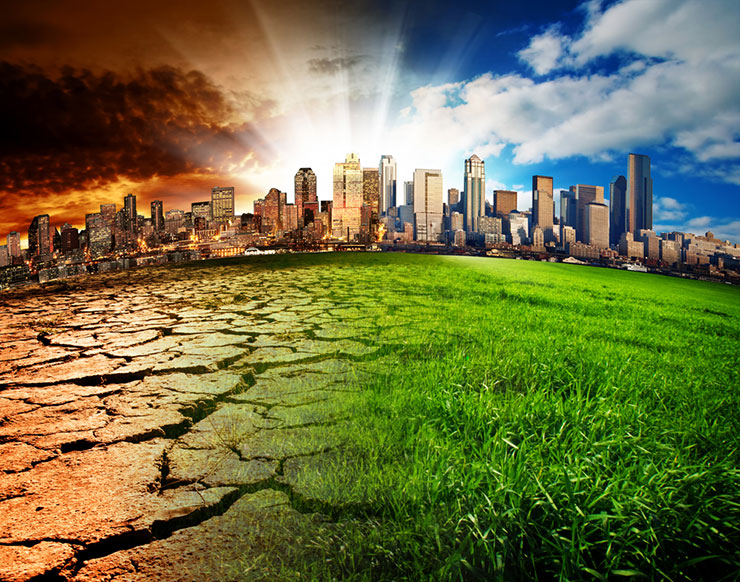
This is certainly not the last time that we’re going to have these kinds of disease eruptions if we deny, delude, and delay on climate change.
We know what to do to halt climate change, we just have to do it.
Our current sense of risk — such as when it is safe to cross a road — is insufficient to deal with threats that are so dire they must be minimized; we need a complete rethink.
If we don’t we will have unregulated algorithms run the world.
How much of life can now be conducted digitally?
If we can accept canceled flights, closed schools, postponed sporting fixtures now, perhaps we can accept restraints in the future.
If we can rely on international co-operation now, perhaps we can summon the same spirit again.
At some point, a nudge will be required. If the shock of coronavirus disruption isn’t enough for us to recalibrate, what will be?
Our Memories!
We have to recognize there will be other pandemics and be better prepared. We must also recognize that climate change is a deeper and bigger threat that doesn’t go away, and is just as urgent.
All human comments appreciated. All like clicks and abuse chucked in the bin.
≈ Comments Off on THE BEADY EYE SAY’S: THREE CHEERS FOR COVID-19 IT HAS EXPOSED INEQUALITY.
( TWELVE MINUTE READ)
I have come across ‘world-changing’ technologies more times than I care to mention.
While all of this changed something, it really changed nothing.
Until now.
Social inequality is characterized by the existence of unequal opportunities and rewards for different social positions or statuses within a group or society.
It contains structured and recurrent patterns of unequal distributions of goods, wealth, opportunities, rewards, and punishments.
Inequality of opportunities refers to the unequal distribution of life chances across individuals. This is reflected in measures such as level of education, health status.
Functionalist theorists believe that inequality is inevitable and desirable and plays an important function in society. While conflict theorists, on the other hand, view inequality as resulting from groups with power dominating less powerful groups.
COVID-19 ignores both.
What will be the impact? The truth is nobody knows. Human nature, however, will not have changed even if there is a big change in the way we live.
The Coronavirus is a dress rehearsal for what awaits us if we continue to ignore inequality not to mention the laws of science- ie climate change.
Unfortunately, governments and policy authorities seem incapable of accepting or listing to the clear warnings or to plan strategically long term, and to plan for how to avoid and or manage a series of catastrophic risks that are mounting and threatening our lives and in the end our survival.
We continue to threaten significant harm to ourselves and to the planet by prioritizing economic growth while ignoring its social, political, and environmental consequences.
We are exhausting scarce resources, wasting food, polluting the seas and atmosphere, diminishing resilience to disease, disadvantaging poor countries with trade deals, fostering military and economic competition, collapsing our ecosystems, while allowing unregulated technologies to plunder the world for profit, eroding public trust, destroying transparency,, removing accountability, turning a blind eye to corruption in and out of governments, BECOMING GOVERNED BY APPS.
Only one of these risks recognizes national boundaries-trade.
So with that off my chest, it is up to all of us to become proactive than just reactive.
How do we become proactive?
BY follow COVID-19 example, spreading ourselves with reprussions.
Today, social media plays a large role in social reform campaigns. It allows citizens to be the source of ideas, plans, and initiatives.
We are now using it for every part of our lives – in our personal relationships, for entertainment, at work, and in our studies. It is not just changing the way we communicate – it’s changing the way we do business, the way we are governed, and the way we live in society.
However, no matter how much we howl on social media if we don’t back it up with our buying power nothing much will change.
When the economy of the world reopen we will have Bio Corna free products been promoted by unsustainable advertising, supported by unregulated online profit-seeking algorithms.
As we see with Oil when the demand disappears the price tumbles.
Before the dawn of social media, governments, along with the traditional media, were the gatekeepers of information. Nowhere is this now been challenged more acutely than in the world of international affairs and conflict, where the rise of digitally native international actors has challenged the state’s dominance.
It is now commonplace for people around the world to use social media during emergencies, and the volume of online information coupled with its rapid arrival is becoming increasingly overwhelming to humanitarian organizations.
Seeking a way to “do something,” more and more people are answering the call to action on social media after each emergency. There are numerous platforms to post petitions for support, but none that are really proactive.
The fact is that every day there is a local or global emergency happening somewhere.
However, the surge for action is chaotic. Humanitarian organizations and the citizens they serve are overwhelmed by the speed of change and the onslaught of information.
People who create user-generated content are often considered outliers and have not yet gained the trust of leaders within official institutions.
Across the world, there are branded hubs, labs, fellowships, meetings, conferences, and research. Governments, international non-governmental organizations (INGOs), and non-governmental organizations (NGOs) are all working on various projects.
How can these voices and communities become part of the humanitarian apparatus?
In times of crisis, data becomes the lifeblood of managing humanitarian operations.
But as access to data increases, how will people safeguard the privacy and security of those who need help?
What role should the main social platforms play during disasters?
Can these social networks work together more closely to coordinate their responses?
The thing no one can predict is always a good indicator of a fundamental we have missed. Coronavirus and Social media have provided it.
I can here, get a little banal, and explain how social media connects people and brands, it allows companies to become more responsive to their customers and it empowers consumers to interact with the companies they like.
All of this we know and much of it we had forecast.
It is not why social media is changing the world.
Social change of the type we are witnessing in our times does not happen unless there is an accumulation of detail at a personal level which can bring about a tipping point that can reach critical mass in a national pool.
A true break down of national borders and cultural barriers. It allows connection across billions of lives on a one-to-one basis.
Social media has been instrumental in creating cohesion amongst disparate rebel groups in Libya and it has been used to communicate and get organized by the demonstrators in Syria.
It has kept news and images coming out in real-time, appearing on Twitter and Google+ and has maintained the world’s attention and momentum in movements which might otherwise have fizzled or been squashed by their own governments.
For world leaders and governments, it represents a genie that has granted their wish for communicating with their people during election campaigns and the current Pandemic.
For the individual social media represents a challenge when it comes to filtering out ‘noise’ and finding out what’s real.
The true impact of social media in marketing, communications, and gradual social change is something which I think we will not see until we see it.
As the last scene of The Matrix: “I know you’re out there. I can feel you now. I know that you’re afraid. You’re afraid of us. You’re afraid of change. I don’t know the future. I didn’t come here to tell you how this is going to end. I came here to tell you how it’s going to begin. I’m going to hang up this phone, and then I’m going to show these people what you don’t want them to see. I’m going to show them a world … without you. A world without rules and controls, without borders or boundaries; a world where anything is possible. Where we go from there is a choice I leave to you.“
COVID-19 HAS CLAIMED AND IS CLAIMING MANY INNOCENT LIVES AND IS EXPOSING THE INEQUALITIES OF LIFE. BUT MORE IMPORTANTLY, IT IS ARMING SOCIAL MEDIA SO THAT THERE IS NO LONGER ANYWHERE TO HIDE.
Finally: What I am looking for here is the creation of an App that we can all support to effect change.
All serious suggestions considered provided they are nonprofit making.
All human comments appreciated. All like clicks and abuse chucked in the bin.
All of the worst disasters in recorded history have been natural disasters — earthquakes, tsunamis, cyclones, and floods.
A natural disaster depends on the size and location of the event and is generally only catastrophic if they take place in an area where they affect human populations.
There is often a relationship between past events and future events, but the fact remains that we cannot predict or control natural events., but they are thanks to our help surging exponentially affecting around 217 million people a year.
80% of this growth is the direct result of Climate Change.
Most of these disasters killed around 250,000 people.
The world death toll from the Coronavirus/ COVID-19 is unknown but the figure we are all watching is likely to be an under-report.
The truth is we don’t know how many deaths have or are taking place.
If we assume that 2% of the world population ( 7 Billion) get the virus that is 140,000,000 million and if only 0.05% died as a result that is 35,000,000.
Scary.
With a vaccine some months away it’s more than scary.
As of 20 April 2020, approximately 165,000 deaths had been attributed to COVID-19.
To put some perspective on the above the 1918 influenza pandemic killed as many as 50 million. If a similar contagion happened today it could kill up to 80 million and wipe out more than 5% of the global economy.
Correct me if I am wrong both started with the infection of one person.
When one looks at COVID-19 it will be catastrophic when it hits countries that do not have the capabilities to stop its spread.
This is why we need NATO to step up to the plate.
The WHO has neither the means nor the organization to administer a vaccine on a global scale and rest assured if we are to get to grips with COVID-19 on a global scale ( which is an ongoing world pandemic with over 2 million cases) we will need a military-style response.
Here is my suggestion.
NATO needs to reinvent itself and now is the time to do so.
It is going to take an army of trained people to administrate a vaccine when it arrives.
If you support this idea please copy the below letter to NATO and email it to the following email address.
As you know the world is in the grip of a war with an invisible enemy call COVID-19.
Never in your history or the world’s history is an alliance so needed to defeat this enemy.
To do so your military clout is needed urgently to coordinate and administrate worldwide a vaccine WHEN IT COMES.
What’s wrong with this picture?
As much as one can admire your new headquarters that cost somewhere around 1.6 billion, here is an opportunity to justify its cost and show the world that you can indeed protect and defeat an enemy.
WE ARE ASKING YOU TO PREPARE YOUR MEMBERS BY TRAINING ALL THEIR PERSONEL TO BE ABLE TO ADMINISTER THE VACCINE ON A WORLD SCALE.
TO COORDINATE AND TRACK ITS SUPPLY AND DISTRIBUTION.
Emergency powers have a tendency to kindle emergencies.
Granted most of these powers adopted by countries to stop the spread of the coronavirus are needed.
At the moment we are not concerned and willing to give up liberties that were won by the sacrifice of millions of lives before us for the common good.
We also know that in order that contact tracing could be more effective if it wasn’t voluntary. But it is vital, that our governments, that these powers (granted to governments during times of crisis) do not continue once COVID-19 is over.
The COVID-19 pandemic is barely four months old and there is no doubt that when it is over that “big data” will present new challenges as well as opportunities.
The threat of a disease as a “pretense” to justify authoritarian impulses to amass power and that technology can be used as a tool in that process could create a Big Data surveillance machine.
One present-day example comes from South Korea, which introduced an electronic system that sends out an automatic alert to people living nearby a known COVID-19 case.
Or Chinese authorities that are using software to sort citizens into color-coded categories — red, yellow, green — corresponding to their level of risk for having the virus.
Or for instance what if Google introduces a smartphone App that monitors social distancing. It will know your whereabouts down to 2 meters -7/7.
Or Governments introduce GPS to track the movements of citizens without their consent to prohibit gatherings of other 250 people. But what if the governor used that measure to stop a rival’s political rally?
But more importantly, if consumers don’t trust a smartphone-based tracking system, they can simply leave their phones at home. That would render the technology useless.
Even if voluntary it might provide people with a false sense of security if they don’t get an alert. Those who have opted out of tracking might be walking around with COVID-19 and infecting others without ever being picked up with the system.
Just think about it.
The potential in using new technology for public health surveillance to get ahead of an infectious disease outbreak must be tempting, so-called contact tracing,
There is a real danger that we could end up creating a society of untouchables. (The former name for any member of a wide range of low-caste Hindu groups and any person outside the caste system.)
Moreover, unless public health officials are involved, there’s potential to “game” the system by falsely claiming a person has the virus when they haven’t tested positive for it. That could lead to other harms, like a business intentionally undermining a rival or a political party suppressing participation.
A terror attack and a pandemic are vastly different, but both present opportunities for governments and the private sector to take on new powers in the name of keeping citizens safe.
The September 11th terror attacks led to the Patriot Act, in the USA, which gave the federal government vast new investigative powers that it claimed were necessary for the fight against terrorism.
During the HIV crises in many cases, public health officials would notify an HIV patient’s past sexual partners that they may have been in contact with somebody who had the disease, but never identified or named them.
One of the big issues at the time was the idea of doctors reporting the names of HIV patients to the states. Some states refused to accept name-based reporting so for years because they feared that it would discourage people from getting tested.
Public health and privacy rights do not need to be in opposition.
Good public health must respect civil liberties, and anything that advances human rights and civil liberties would advance public health.
So we are going to be faced with the rights of Individual freedoms against collectivism.
The behaviors that define individualism may also enhance the likelihood of pathogen transmission, and thus may be functionally maladaptive under conditions in which pathogens are highly prevalent.
By contrast, the behaviors that define collectivism may function in the service of anti-pathogen defense, and thus be especially adaptive under conditions of high pathogen prevalence.
The question is which one will we choose or will we have a choice when all this is over.
An open-air prison-like the Gaza Strip or Equality among all.
All human comments appreciated. All like clicks and abuse chucked in the bin.
John F Kennedy said ” Those who look only to the past, or the present are certain to miss the future”
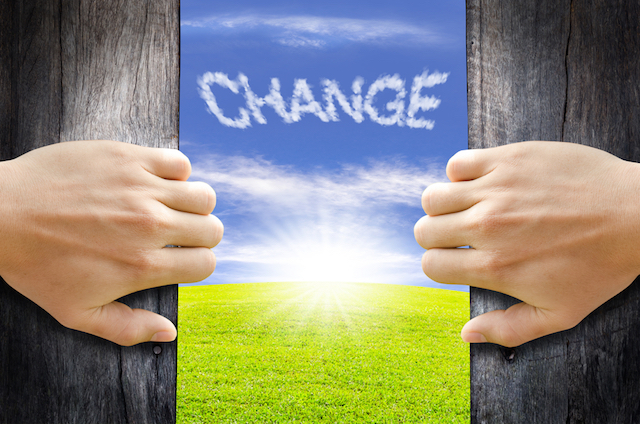
We are surrounded by change and it is the one thing that has the most dramatic impact on our lives.
There is no avoiding change it will find you, challenge you and force you to reconsider how to live your life.
Our lives now with the coronavirus are reactionary rather than an activator of change.
It has forced us to step out of our comfort zones and see the realities that need to change. There is no escaping the fact that change is a disruptor but it is the power of our choice that enables us to activate positive changes in our lives.
“Progress is impossible without change and those who cannot change their minds cannot change anything.” George Bernard Shaw.
We all know what we don’t want…
We have been talking about it for years and our consensus is that climate change is happening and the risks are real. There is overwhelming evidence that both current impacts with significant costs and extraordinary future risks to society and natural systems.
That the reality of climate change means that there are climate change impacts we can expect, but we also must consider what might happen, especially the small, but real, chance that we may face abrupt changes with massively disruptive impacts. Moreover, while the public is becoming aware that climate change is increasing the likelihood of certain local disasters, many people do not yet understand that there is a small, but real chance of abrupt, unpredictable and potentially irreversible changes with highly damaging impacts on people around the world.
97% of climate experts have concluded that human-caused climate change is happening.
The sooner we respond, the better off we will be.
We don’t need to debate if the climate is changing anymore. By making informed choices now, we can reduce risks for future generations and ourselves, and help communities adapt to climate change.
Climate change puts the well-being of people of all nations at risk.
The problem is that the world is now and for the foreseeable future will have its attention on the effects of COVID-19 for some time.
When the Pandemic is over, or under control what needs to change in the world.
Think about it for a minute.
There are so many changes that stick out like sore thumb it is impossible to believe that we have tolerated there existence.
So let’s fantasize.
There is such inequality, pain and suffering in the world we could start by ensuring that everyone on the planet should have access to electricity, fresh air, drinking water, green technologies, free education, and decent housing.
The world today is definitely not a paradise. Hunger, abuse, poverty, pollution, and violence are all too common.
Granted, the world never has been, and probably never will be perfect, but that means there’s lots of room for improvement!
If we are going to move forward we need to collaborate and push for policies that complement both sides of the political spectrum. We need to put yourself into another person’s headspace.
We don’t have to take on everything at once, in fact, it’s better if we don’t.
If there is one lesson we can and should learn from the present crises it is this:
When the experts tell us the sky is going to fall if we don’t take action we had better take action or the sky really may fall.
We may be able to prevent the emergence of some new pathogens, but for most, we can only prepare.
We can, however, prevent the looming climate disaster.
We can ensure that emerging Technologies serve us all and not just profit.
We can reform our world organizations.
We can reinvent Nato ( See previous posts)
We can fund the United Nations and the WHO.
We can establish World aid silos fully equipped to handle disasters.
We can with our buying power have a sustainable economy.
So the question is why have we not?
Because no one wants to pay for it.
In fact, no one country or the economy or individual has to.
It can be achieved by making a profit for profit sake pay. By applying a 0.05% World aid commission on activities that are profit-seeking like Algorithms, High-Frequency Trading, Currency Transactions, Sovereign Wealth Fund accusations, Lottos, Gambling, etc. ( see previous posts)
We can become educated on the issues and what’s being done to address it. Especially now with social media, your message can go viral on the internet, spreading the word even faster. Bring your true, authentic self to every situation.
The crucial first step is getting the forces for change off the ground. Having a roadmap to success is crucial for establishing a sense of trust that the change is possible.
Maybe COVID-19 might save the world it has created a sense of urgency.
≈ Comments Off on THE BEADY EYE ASKS: WHAT IS SLAVERY NOW? IT’S NOT LOCKDOWN DUE TO A PANDEMIC. IT’S NOT ISOLATION. IT IS STILL AN EUPHEMISMS FOR FORCED BONDAGE.
Every 30 seconds, someone is abducted into slavery. That means, by the time you are done reading this blog article, there will be 4-5 more slaves in the world. This equates to 5.4 victims of modern slavery for every 1,000 people in the world.
It exists today in over 130 countries with billions in profits linked to forced labor. Modern slavery is very cheap. The average cost of a slave today is $90. Compare that to 1809 when average the price was $40,000
So what’s the connection to you?
At the moment you hear the world will never be the same due to COVID-19.
I am sure the same was said after world war one, world war two, and all previous pandemics.
Slavery is not simply a thing of the past.
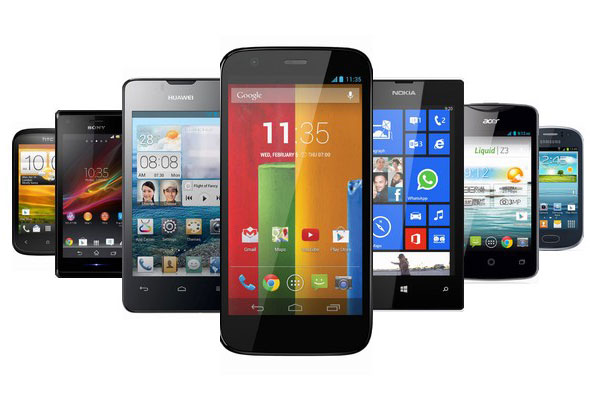
As you read this post, you are probably using a smartphone, tablet, or laptop. Each device requires minerals – including gold. Perhaps the gold in your electronic device was mined by slaves.
Slave-owners often use euphemisms instead of the term “slavery” to avoid getting caught. Such euphemisms include domestic servitude, debt bondage, bonded labor, attached labor, restavec (a French word that means “one who stays with”), forced labor and indentured servitude.
The other forms of forced labor and servitude in the world today may share some slave‐like properties, and are no doubt as pernicious in their victimization and exploitation, indeed may in some cases be even more brutal than some high-end forms of sexual slavery, but they are not slavery, which is quite distinctive in its perfidy and its social, economic, cultural and psychological attributes and consequences.
Inflating these already horrendously high figures by conflating slavery with all forms of human domination and forced labor, however well-meaning, and whatever the rhetorical payoffs, simply invite skepticism and the charge of waging moral crusades undermining the desperately needed effort to abolish, once and for all, these evils from the world.
Although slavery is illegal in every country in the modern world there are at any given time, an estimated 40.3 million people worldwide are in modern slavery. And it is still as brutal and inhuman today as it was in history.
Human Trafficking is ranked as the 3rd largest international crime industry – just behind Drugs and Arms Trafficking.
The complexity of the crimes makes it very difficult to quantify the scale of those living in modern-day slavery but it is estimated that 800,000 people are illegally trafficked across international borders every year.
Nowadays slavery doesn’t only come in the obvious form in which one person owns another person (which is traditionally called ‘chattel slavery’).
Migrant workers often become bonded labor to pay off those who smuggled them to the new country – they dare not break free for fear of being deported. Passports are confiscated from migrant workers to keep them in bondage.
In fact, 65% of the world’s slaves are in a forced labor situation.
I’m not sure what the average price of a slave is today, but it can’t be more than fifty or sixty dollars.
Almost half of the world’s slaves are found in India.
Every item we buy has a back story some good some bad.
Just think when we come out of this current Pandemic with a world economically on its knees what it is going to mean for those who have to earn a living to stay alive.
We might not be transporting slaves but if we don’t question where and who or what produced it, we will be contributing not to a global recovery but too enhanced slavery.
All human comments appreciated. All like clicks and abuse chucked in the bin.
(Twelve-minute read)
As much as one has to admire the initiative and courage of Tom.
The generosity of the public and the power of social media in raising millions for the NHS he high lights what is wrong with a Government, that put the economy before its people’s needs.
One key question to ask ourselves about the current pandemic of COVID-19 is: Why are we so unprepared?
After all, this is far from the first pandemic and three to four of them were in the last six decades.
Anyone with even a modicum of historical knowledge is aware of the infamous Black Death. (Between 1346 and 1353.)
Even though none of us were alive then in that pandemic, Eurasia suffered between 75 and 200 million deaths, at a time when the entire global population was less than 500 million.
Just over 100 years ago, the so-called Spanish flu killed some 100 million people in the closing months of the First World War and into 1919. The pandemic killed about five times the number of people killed in that war.
Why humans kept making the same mistakes over and over again over a period of many centuries.
Essentially, it can be blamed on our arrogance — a psychological condition that affects most of us most of the time — drove people to believe that they had nothing to learn from the past.
Today, we are smarter. We have learned more. We are more aware of the traps that lead to disaster. But we really are not. We say that we learn the lessons of history, but we do not.
Did anyone really believe that no global pandemics were ever again going to wreak havoc on human life?
We now spend hundreds of millions of dollars, if not billions, on detecting space objects that might crash into the Earth, potentially causing many deaths, and maybe even leading to extinction.
In the last 10 years, we have started to take this prospect very seriously. And it is good that we do.
But aside from small numbers of immunologists working in different countries on different vaccines, how much effort was put into deflecting a new pandemic? Or preparing governments or people for how to cope with one? Not much, overall. We now know that a vaccine was in the works years ago, but that work on it was halted because no money was available to fund the research.
Will we learn from this?
The major lesson is that we will not unless we take these lessons to heart.
We will have more Troys, Vietnams, Afghanistan’s and COVID-19s, unless we really, truly, smarten up.
It is only a matter of time before we face a deadlier and more contagious pathogen.
We also face the specter of novel and mutated pathogens that could spread and kill faster than diseases we have seen before. With the advent of genome-editing technologies, bioterrorists could artificially engineer new plagues.
We can start by learning four lessons from the gaps exposed by the Ebola and Zika pandemics and now this COVID 19.
The most effective way to stop pandemics is with vaccines.
Therefore the world must come together to develop preemptively vaccines for diseases predicted to cause outbreaks in the near future.
What’s needed are point-of-care diagnostics that, like pregnancy tests, can be used by frontline responders or patients themselves to detect infection right away, where they live.
We need to help developing countries establish health systems that can provide routine care and, when needed, coordinate with international responders to contain new outbreaks.
Local health systems could be established for half the price of battling future pandemics. They would be essential for knowing when an outbreak is taking root and establishing trust.
International actors are essential but cannot parachute into countries and navigate local dynamics quickly enough to contain outbreaks.
Investing in our ability to prevent and contain pandemics through revitalized national and international institutions should be our shared goal.
We need stronger global coordination. The responsibility for controlling pandemics is fragmented, spread across too many players with no unifying authority.
So Mr. Tom you have inspired me to suggest this.
If we are going to keep NATO that has reinvented itself and built a new headquarter at a cost of €1billion let it be the global coordinator to fight future Pandemics.
What better enemy could it have. Pandemics are an existential threat on par with climate change and nuclear conflict.
We are at a critical crossroads, where we must either take the steps needed to prepare for this threat or become even more vulnerable. It is only a matter of time before we are hit by a deadlier, more contagious pandemic. Will we be ready?
WHO, which is taking a battering from prevailing political headwinds in the United States, should continue to anchor global action.
All human comments appreciated. All like clicks and abuse chucked in the bin

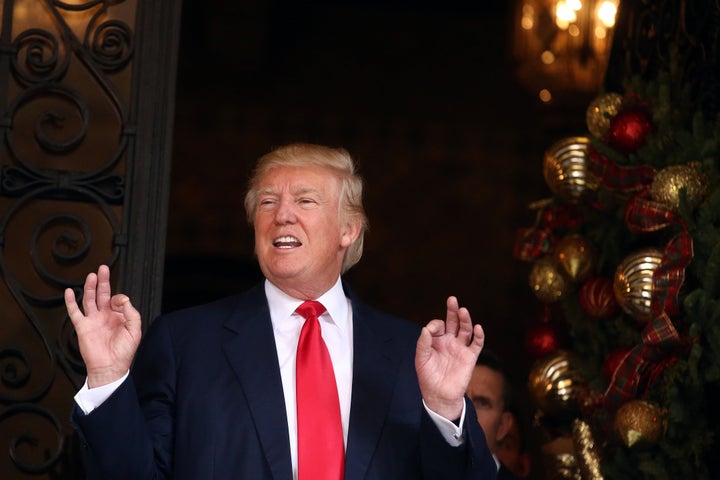
 The first time Trump tweeted about the virus came on 24 January. “It will all work out well,” he reassured Americans. He followed up again later with Domestos or is it Parazone kills all known Klingons so why not have a swig.








 If we are going to keep NATO that has reinvented itself and built a new headquarter at a cost of €1billion let it be the global coordinator to fight future Pandemics.
What better enemy could it have. Pandemics are an existential threat on par with climate change and nuclear conflict.
We are at a critical crossroads, where we must either take the steps needed to prepare for this threat or become even more vulnerable. It is only a matter of time before we are hit by a deadlier, more contagious pandemic. Will we be ready?
WHO, which is taking a battering from prevailing political headwinds in the United States, should continue to anchor global action.
All human comments appreciated. All like clicks and abuse chucked in the bin
If we are going to keep NATO that has reinvented itself and built a new headquarter at a cost of €1billion let it be the global coordinator to fight future Pandemics.
What better enemy could it have. Pandemics are an existential threat on par with climate change and nuclear conflict.
We are at a critical crossroads, where we must either take the steps needed to prepare for this threat or become even more vulnerable. It is only a matter of time before we are hit by a deadlier, more contagious pandemic. Will we be ready?
WHO, which is taking a battering from prevailing political headwinds in the United States, should continue to anchor global action.
All human comments appreciated. All like clicks and abuse chucked in the bin

