• About
  • THE BEADY EYE SAY’S : THE EUROPEAN UNION SHOULD THANK ENGLAND FOR ITS IN OR OUT REFERENDUM.

bobdillon33blog

~ Free Thinker.

bobdillon33blog

Tag Archives: Visions of the future.

THE BEADY EYE ASK’S IS ENGLAND ENTERING A GOLDEN ERA IN MORE WAYS THAN ONE?

17 Friday Jul 2020

Posted by bobdillon33@gmail.com in 2019: The Year of Disconnection., 2020: The year we need to change., Brexit., COVID-19, Disconnection., Donald John Trump, Economic Depression., European Union., Heredity Monarchy., homelessness., Human values., Modern Day Communication., Modern Day Democracy., Modern day life., Nigel Farage., Pandemic, Politics., Populism., Post - truth politics., Post-Covid-19, President of the USA., Reality., Refugees., Robot citizenship., Sleeping Rough., Sovereign wealth fund, Technology v Humanity, Telling the truth., The common good., THE NEW NORM., The Obvious., The USA., Trade Agreements., Truth, Truthfulness., Unanswered Questions., VALUES, WHAT IS TRUTH

≈ Comments Off on THE BEADY EYE ASK’S IS ENGLAND ENTERING A GOLDEN ERA IN MORE WAYS THAN ONE?

Tags

Brexit v EU - Negotiations., Capitalism and Greed, Coronavirus (COVID-19), European Union, Visions of the future.

    (Four-minute read) 

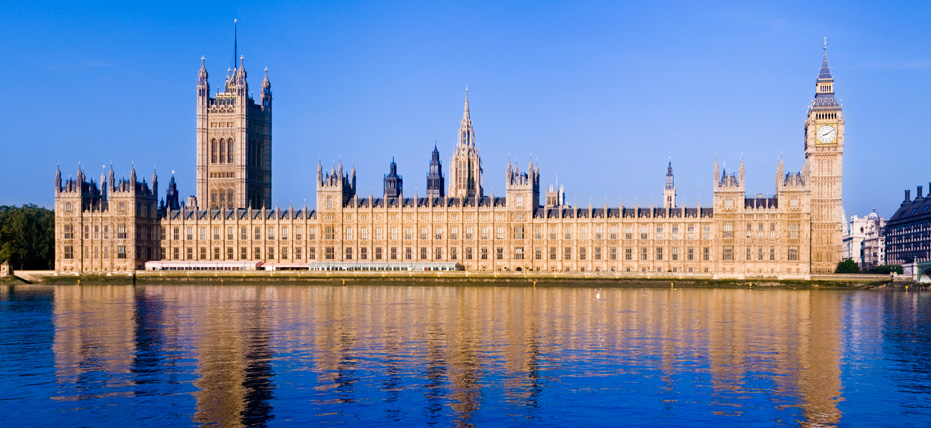
Here is a country that is losing its marbles.

In an interconnected world where there is no such thing as sovereignty because globalization means that nation-states submit themselves to international treaties and international agreements that are not always in their best interests.  

The recent economic crisis that started in 2007 and now the coming economic depression and the continuing pandemic will prove that sovereignty of nations being subsumed by international bodies cuts both ways as the global economy is tightly interconnected and hence, cannot be regulated by nations in isolation.

Here is a country that on 30 June 1997,  the final embers of its empire came to an end with the 99- years lease on Hong Kong’s New Territories.

Never before has a country passed a colony directly to a communist regime that does not even pretend to respect conventional democratic values.

However the British Empire – for all its messy crimes and misdemeanors – was equally praiseworthy.

The empire was and is not just a story of domination and subjection but something more complicated: the creation of novel or hybrid societies in which notions of governance, economic assumptions, religious values and morals, ideas about property, and conceptions of justice, conflicted and mingled, to be reinvented, refashioned, tried out or abandoned.

The question is are we now to witnessing the final act. 

The non-recognition of England is already being used by its national broadcasting company the BBC referring to England as the four nations.  

In fact, England is already fragmented.

English nationalists if such a thing exists appear to be blind to the breakup of England.

Today, a hundred years on, the world is witnessing remarkable self-destruction in England.

An uneasy transition has or is taking place, from a decaying colonial legacy to a country that sees life through platforms like Facebook, Twitter, Snapchat, and Instagram lies, manipulation, in every area…..with a global crisis forming, which is not just a Pandemic but an Economic depression with mass unemployment.

The question now is whether British people can continue to play their part in the development of the modern world. 

It has to pump trillions of quantitative easing money into its banks at the cost of ten years of Austerity. Dumping the EU its largest market on the results of a non-legally- totally false informed non legally binding referendum while building two Aircraft carriers and replacing worthless nuclear submarines, while 8.4 million its people alone are living in sub-standard housing with 400,000 people are either homeless or at risk of being homeless relying on foodbanks. 

The people themselves – about half who no longer give a rat’s a— about England, who are now hellbent on their smartphones, Ipads, creating an unrealistic, relativistic, melting pot utopia.

These people will be living on the English purse for some time, not the stuff of which national pride is made. They have other priorities dedicated to its demise. 

One would have to wonder why migrants risking life and limb to get here. 

Perhaps it because all the servants are leaving. 

These are the strange things happening, that demonstrate quite clearly what is wrong with Britain – and, probably, the rest of the ‘developed’ world, both devotion to business and profit, not people. 

“We convinced many countries, many countries – and I did this myself for the most part – not to use Huawei because we think it’s an unsafe security risk,” the US president Donald Dump said.

(This is a man who seems to wake up every morning wondering what controversy he can provoke, what headlines he can create.

Diplomacy, or the lack of it, can be a complicated business. We’ve learned that from observing Donald Trump.

Both his campaign and presidency is marked by bursts of false and outrageous allegations, personal insults, xenophobic nationalism, unapologetic sexism and positions that shift according to his audience and his whims.

This is a man far more consumed with himself than with the nation’s well-being.

From that moment of combustion, it became clear that Mr. Trump’s views were matters of dangerous impulse and cynical pandering rather than thoughtful politics.)

With the UK now becoming the US junior partner, (one of the most unreliable partners for any country) who cares when a phenomenal’ trade deal beyond Nigel Farage is promised, providing it sends its new aircraft carrier Queen Elizabeth to the South China Seas with American warplanes, and supplies the Arabs with bombs to finish off Yeham.   

It’s one thing to get rid of the Chinese firm Huawei and its 5G infrastructure and in return to sour the world’s second-largest economy behind the US, which has more money in the bank than any other country. 

Indeed three of the world’s 10 biggest sovereign wealth funds are Chinese, together holding more than $1.5tn (£988bn) in assets.

Not too long ago the UK was one of China’s favorite places to invest – not anymore. 

Beijing’s ambassador to London, Liu Xiaoming, warned: “China wants to be UK’s friend and partner. But if you treat China as a hostile country, you would have to bear the consequences.”

 China operates an Authoritarian form of capitalism against Anglo – American capitalism which is the root of the problem. Global supremacy.

China’s investments may well be subordinate to its National Development and reform commission, but the staggering truth of Huawei is that the US does not want China to be a superpower when it comes to technology.

With the pandemic being used to push the protection of businesses the world population will eventually be tracked.  

Both the US and England might well end up as viewed as failed states due to the handling of the COVID-19 with both countries ending up with up distant and withdrawn people far from enhanced by COVID-19.

Not too long ago, the UK did a 79 million deal to import pig semen from China for stemcell research.

Its not stemcell research it needs. It needs a lot of fixing but isn’t that what the next four years are going to be about?

What is needs is some Face Recognition and a written constitution.  All human comments appreciated. All like clicks and abuse chucked in the bin.
← Back

Thank you for your response. ✨

Share this:

  • Share on WhatsApp (Opens in new window) WhatsApp
  • More
  • Share on Mastodon (Opens in new window) Mastodon

THE BEADY ASK’S: IS GREEN ENERGY REALLY GREEN?

15 Wednesday Jul 2020

Posted by bobdillon33@gmail.com in Green Energy., Renewable Energy., Uncategorized

≈ Comments Off on THE BEADY ASK’S: IS GREEN ENERGY REALLY GREEN?

Tags

Capitalism and Greed, Capitalism vs. the Climate., Global warming, Green Economics., Green Energy., Green infrastructure, Technology, The Future of Mankind, Visions of the future.


(Ten-minute read) 

If you thought that governments’ new energy grants are going to solve all our energy woes think again. 

One of the greatest problems with green energy like fossil energy is that it is controlled by the energy giants. The very term Carbon Footprint was introduced by BP.  

If green energy had the ability to produce electricity and placing it in the hands of the people rather than those of oil, gas, coal, and utility companies, we would than see its benefits.

It could also lead to some fundamental changes in the way we consume energy.

Electricity access is essential to people’s lives but cost equals pollution.

We need to start shifting our use of energy to when it is there and available rather than shifting the energy production to match our use.

There is already solar technology that allows the establishment of Solar-powered mini-grids, and it is essentially mini-grids are independent, decentralized electricity networks that can function separately from a national grid.

They can generate electricity for local consumption.

When combined with efficient and environmentally sustainable battery storage, solar mini-grids present a compelling economic case.

By 2050 we will still be getting 75% of our energy from fossil fuels’ – it is

estimated that by 2040, the world’s energy consumption will have increased

by almost 50% so watch this video below and tell me is to days rush to move

to alternative renewable energies, such as biomass, geothermal, tidal or

wave, solar, anaerobic digestion really green?

By then with climate change, the demands for cooling will outstrip the demands for heating.

There can be no doubt that implementing a shift in where we get our energy from is one of the grand challenges facing our planet today.Since commercial oil drilling began, we have sucked over 135 billion tonnes of crude oil to drive our cars, fuel our power stations and heat our homes (Credit: Getty Images)

 
In the two videos below, you will see growing evidence of the non-inclusion of social conscience in the name of renewable energy development, as well as severe environmental damage, with fossil, fuel investment unmasked, exposing the dark side of renewables.

The question is:  Are we all been taken for suckers when we hear that renewable energy is clean, that electric cars will save the world by not contributing to greenhouse gas emissions and climate change.

How to quantify the overall environmental impact of energy technologies has actually been a subject of the academic literature for some time.

Engineers use a process called life cycle assessment to count up all of the interactions between a complete energy system and the environment.

For example, life cycle assessments of electricity generation typically consider power plant raw materials extraction, plant construction, fuel extraction, fuel processing, fuel delivery, fuel combustion, electricity transmission, and other upstream and downstream processes in order to paint a complete picture of the energy and emissions required to produce and deliver a unit of electricity.

There is no argument that total GHG emissions from natural gas, oil, and coal electricity are far greater than those from any renewable energy technology.

Even if it takes more energy and emissions to build a solar farm than, say, a natural gas power plant, the fact that the solar farm produces zero emissions during operation causes it to be cleaner overall. The same holds for all other forms of renewable energy—and nuclear to.

The facts are out there and they clearly show natural gas, oil, and coal electricity emissions vastly exceed those from renewables and nuclear.

But the question remains.

Every day, our species chews its way through more than a million terajoules of energy.

Humanity’s hunger for energy will reach unprecedented levels.

It is estimated that since commercial oil drilling began in the 1850s, we have sucked up more than 135 billion tonnes of crude oil to drive our cars, fuel our power stations, and heat our homes.

So let’s look at six of the main contenders.  

Biomass – Recently-living natural materials like wood waste, sawdust, and combustible agricultural wastes can be converted into energy with far fewer greenhouse gas emissions than petroleum-based fuel sources. That’s because these materials, known as biomass, contain stored energy from the sun.

Biofuels – Rather than burning biomass to produce energy, sometimes these renewable organic materials are transformed into fuel. Notable examples include ethanol and biodiesel. Biofuels provided 2.7 percent of the world’s fuels for road transport in 2010, and have the potential to meet more than 25 percent of world demand for transportation fuels by 2050.

Hydropower – Also called hydroelectric power, hydropower is generated by the Earth’s water cycle, including evaporation, rainfall, tides, and the force of water running through a dam. Hydropower depends on high precipitation levels to produce significant amounts of energy.

Geothermal energy – Just under the earth’s crust are massive amounts of thermal energy, which originates from both the original formation of the planet and the radioactive decay of minerals. Geothermal energy in the form of hot springs has been used by humans for millennia for bathing, and now it’s being used to generate electricity. In North America alone, there’s enough energy stored underground to produce 10 times as much electricity as coal currently does.

Solar power – The most prevalent type of renewable energy, solar power is typically produced using photovoltaic cells, which capture sunlight and turn it into electricity. Solar energy is also used to heat buildings and water, provide natural lighting, and cook food. Solar technologies have become inexpensive enough to power everything from small hand-held gadgets to entire neighborhoods.

Wind power – Air flow on the earth’s surface can be used to push turbines, with stronger winds producing more energy. High-altitude sites and areas just offshore tend to provide the best conditions for capturing the strongest winds. According to a study published in the Proceedings of the National Academy of Sciences, a network of land-based, 2.5-megawatt wind turbines in rural areas operating at just 20% of their rated capacity could supply 40 times the current worldwide consumption of energy.

Nuclear 

Its problem is the radioactive waste and its disposal. 

These energy resources are renewable, meaning they’re naturally replenished and they utilize energy sources that are readily available however I suppose that there remain three pertinent points when it comes to renewable green energy.

Availability – Cost – Sustainability.  

‘How do I know if green electricity is really green?’

Leaving aside that some renewable energy technologies might produce more overall emissions than fossil fuels because they cost so much if you don’t have control over the type of energy, and its cost it’s equivalent to the pollution with all of us condemned to global warming.  

Take Solar thermals for instance. 

Really good but if it costs twice as much as burning coal the manufacturing cost was all dirty energy to produce clean energy…If you had a solar cell that took two Joules of dirty energy to make it and it only returned one Joule of clean energy in its life—it’s a loss…

Hydropower/Dams 

Have environmental impacts, presenting social sustainability issues.

Wind and solar energy are highly dependent on the weather – and the time of day. 

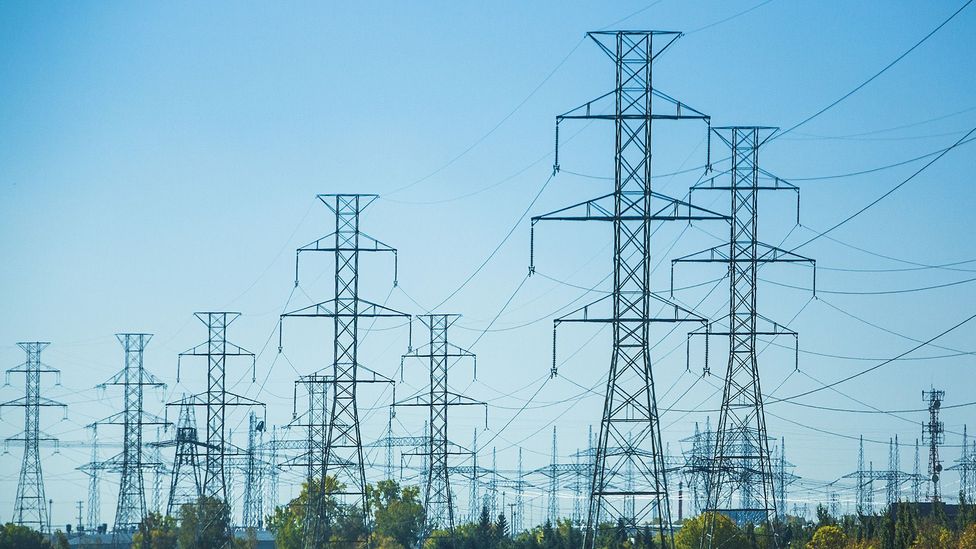
Fossil fuels have one major advantage over renewable energy sources – they are very easy to store and transport. Green energy requires the energy to be transmitting over long distances and currently, there is no easy way to store the electricity produced by wind or solar energy for appreciable periods of time.

Battery technology is not yet good enough to efficiently store large amounts of energy. This is an area that is really ripe for innovation and we are really only at the start of deploying and testing potential solutions.

The supply must match the demand.

So we have a quandary, do we continue to develop super grids like large-scale wind and solar power stations in the Mongolian Gobi desert or the Sahara, in the sea, or on land not suitable for agriculture or establish Solar-powered mini-grids with power-sharing deals. 

One of the biggest challenges is how to transport electricity to people where and when it is needed (Credit: Getty Images)

Nearly a quarter of the natural gas consumed in the European Union comes from Russia far from green. 

As new technology is developed it will shift the geopolitics of energy, It will change relationships between not just countries but cities, towns, villages, and apps. 

A major energy transition is underway, creating opportunities while increasing uncertainty and developing the need to ensure sustainability, affordability, inclusiveness, and security.

By many measures, the world is still in the early stages of a deep and profound transformation in energy and industrial and agricultural processes. This transformation will not be easy, for mobilizing meaningful economic change is rarely a simple process that proceeds without opposition. 

So where are we at the moment the vast majority of the country – nae, the world – is dependent on fossil fuels which are contributing to the destruction of the Earth’s atmosphere and ultimately our planet? 

So throughout the course of our lifetimes, we can expect some big changes.

A large amount of responsibility falls to major energy suppliers who rely heavily on policy initiatives to drive deep decarbonization. Thinking more clearly about power and stimulating that broader narrative are the purposes of this post. 

All human comments appreciated. All like clicks and abuse chucked in the bin.

← Back

Thank you for your response. ✨


Share this:

  • Share on WhatsApp (Opens in new window) WhatsApp
  • More
  • Share on Mastodon (Opens in new window) Mastodon

THE BEADY ASK’S THE QUESTION TO WHICH THERE IS NO ANSWER: WHERE IS THE WORLD GOING?

11 Saturday Jul 2020

Posted by bobdillon33@gmail.com in #whatif.com, 2020: The year we need to change., A Constitution for the Earth., Artificial Intelligence., Capitalism, Climate Change., COVID-19, Digital age., Disconnection., Economic Depression., Environment, Fourth Industrial Revolution., G20., G7., GDP., How to do it., Human values., Humanity., Inequality., Life., Micro v Macro Economics., Modern day Slavery, Our Common Values., POST COVID-19., Reality., Sustaniability, Technology v Humanity, The common good., The current state of our oceans., The essence of our humanity., The Future, The Obvious., The pursuit of profit., The state of the World., The world to day., Trade Agreements., Unanswered Questions., VALUES, We can leave a legacy worthwhile., Wealth., WHAT IS TRUTH, What Needs to change in the World, Where's the Global Outrage., World Economic Depression., World Economy.

≈ Comments Off on THE BEADY ASK’S THE QUESTION TO WHICH THERE IS NO ANSWER: WHERE IS THE WORLD GOING?

Tags

Algorithms., Artificial Intelligence., Capitalism and Greed, Capitalism vs. the Climate., Distribution of wealth, Inequility, The Future of Mankind, Visions of the future.

(Twenty-minute read) 

The answer lies basically in this question -why is it that governments can afford a fighter plane, but teachers need to hold a bake sale to buy school supplies.

Understanding how the balance of payments work is key to understanding the monetary leverage that one country holds over another. Based on the modern method of money creation, the functionality of the balance of payments is really a zero-sum game.

Wealth used to be defined as the accumulation of human time and labor.

This is why human time and labor are consolidated under ideologies (eg. Socialism, democracy, communism, etc.), which are framed with borders around cultures, religions, and historical significance. Time and labor are consolidated as a measure of GDP.

World GDP can now be considered the measurement by which human time and labor are used to manage the debt which is a product of the money creation process.

As Yanis Varoufakis says ” It is pointless to continue to do macroeconomics analysts focusing on a single country”  “It is not any more trading volumes or fiscal data it is the ebb and flow of financial capital”

There was or there is no need for the Coronavirus to expose still more flaws in economic structures. Inequality is to be seen in foodbanks, people sleeping on the street, the color of your skin, not least the increasing precarity of work, owing to the rise of the gig economy and a decades-long deterioration of workers’ bargaining power.

A Clap will not save nine, but thanks to Covid-19 the bastions of global Capitalism are on hold.  

There has never being a more important time to effect change to Capitalism.

So will or can we use the current state of emergency to start building a more inclusive and sustainable economy.  

If we don’t, we will stand no chance against the major crisis – an increasingly uninhabitable planet – and all the smaller crises that will come with it in the years and decades ahead.

Capitalism is facing at least three major crises.

A pandemic-induced health crisis that is rapidly igniting an economic crisis with yet unknown consequences for financial stability and all of this is playing out against the backdrop of a climate crisis that cannot be addressed by “business as usual.”

The COVID-19 crisis is exacerbating all these problems with governments playing a leading role, in delivering immediate solutions in the short term. However, the solutions are still not designed in such a way as to serve the public interest over the long term, and therefore they will not lay the foundation for a robust and inclusive recovery.

With reports on the seriousness of the coronavirus evolving each day if not each hour, the eyes of commerce are on epidemiology.

The effort to develop a COVID-19 vaccine could become yet another one-way relationship in which corporations reap massive profits by selling back to the public a product that was born of taxpayer-funded research.

The ongoing coronavirus crises are forcing governments to cash out in order to keep businesses, workers, and their economies afloat, but extending loans to businesses at a time when private debt is already historically high. Flooded the world with liquidity without directing it toward good long term investment opportunities like renewable green energy will result in the money ended up back in a financial sector that was (and remains) unfit for purpose.

The ability of companies to service any of this debt is debatable never mind the economies of countries.   

This time, rescue measures absolutely must come with conditions attached, bailouts should be designed to steer larger companies but to reward value creation instead of value extraction, preventing share buybacks, and encouraging investment in sustainable growth and a reduced carbon footprint.

It was the high private debt that caused the global financial crisis in 2008. The result of this has been to erode the very public-sector institutions that we need to overcome crises like the coronavirus pandemic.

On top of these self-inflicted wounds, an overly “financialized” business sector has been siphoning value out of the economy by rewarding shareholders through stock-buyback schemes.

If one really looks at Capitalism at its basic modeling – its beating heart is profit for profit sake.

To day’s Capitalist Economics is set up with this mantra, not to serve people’s needs, or to protect the environment, or to spread the rewards, rather to enslave people to the world of consumption- produce something at the lowest cost to produce the highest profit.     

Apart from the tragic human consequences of the COVID-19 coronavirus epidemic, the economic uncertainty it has sparked will likely cost the global economy trillions in 2020, the UN’s trade and development agency, UNCTAD, said on Monday.

What is clear is that if politics and trade wars emerged as uncertainties in recent years, now a third leg in the stool holding up global confidence has suddenly gone wobbly.

It is also clear this is going to be a slow-rolling, highly consequential event, that has all the ingredients required for internal strife in many countries.

It is clear that if we keep exploiting wildlife and destroying our ecosystems, then we can expect to see a steady stream of these diseases jumping from animals to humans in the years ahead.

It is clear that we need to invest in ending the over-exploitation of wildlife and other natural resources, farming sustainably, reversing land degradation, and protecting ecosystem health. 

It is clear that the virus is already robbing the world of carbon reduction and it’s only a matter of time before climate change dwarfs the impact of COVID-19.

It is clear that all country’s fates are intertwined.

It is clear that if there is some message here, it’s that this is totally predictable other than without proper oversight, that AI may replicate or even exacerbate human bias and discrimination, cause potential job displacement, and lead to other unintended and harmful consequences.

It is clear given the growing importance of this powerful technology, AI regulation should not be designed in a haphazard manner. As governments struggle to keep up with the unprecedented speed and scale of technological change, companies are facing a crisis of trust amid the growing “techlash” and are increasingly being called on to self‑regulate the technology they are developing and deploying.

It is clear despite vast efforts worldwide to address the symptoms of the coronavirus pandemic, the root causes have been largely ignored, to rebalance the needs of people, the planet, and animals.

It is clear that there’s a lot still to learn about the virus – and therefore how extensive its impact on the global economy could become. Some of the most basic aspects of the virus remain unknown. It all depends on the eventual scale of the epidemic, and at any given point, no one has been able to say whether it has peaked. We don’t know whether it will burn out, like SARS, or come back seasonally like the flu.

It is clear that the impact on markets not to mention human behavior is far from normal never mind the new normal. We are operating in the uncharted territory and the stark reality is that we as a species are unable to act as one. 

It is clear that the last thing we need to hear from brands is that we all in this together. They are simply trying to remain relevant and in demand. They need to rethink engagement data-driven empathy no longer cuts the ice. 

It is clear that Humanity must become the killer app.

It is clear that we’re living in a world of transparency and in such a world inequality cannot be tolerated.

It is clear that nowadays, it is no longer enough for a business to figure out how it was going to turn a profit. The social goals of the business – are not mere “add-ons or marketing ploys” they must be “part of the DNA of the business.”

It is clear that an unregulated algorithm-driven world will put its riches into the hands of the few. 

The problem that we have is not globalization it is a lack of global governance, a lack of means to address global issues.

To solve social problems such as pollution, poor nutrition, and poverty, climate change, you name it there is only one solution.

At the end of Yanis Varoufakis, The Combination That Changed Capitalism Forever, he promotes the establishment of what he calls a political movement that he calls a progressive international movement that is globally and act like activists locally by using purchasing power, he also puts forward a vision of Capitalism where there is no stock exchange, replaced by private ownership and Greene every bonds backed by treasuries.

The green energy bonds are a must So the young generation is able to buy into the process that creates their destiny. 

Purchasing power as an economic power to effect change, unfortunately, is visible and like all things that are visible will not work due to greed, cultural differences, etc.     

THE SOLUTION MUST BE INVISIBLE AND APPLICABLE WORLDWIDE.  

To create a perpetual ongoing fund that spread the cost fairly to tackle climate change and inequalities worldwide. 

Make a profit for profit sake pay by placing a 0.005% commission on all, Hight frequency trading, on all foreign exchange transactions over £50 thousand, on all sovereign fund acquisitions, on all gambling and world lottos, on all consumption advertising, on all dividend payments.   

Profit for a Purpose- with-Purpose.

Nearly a third of the world’s oceans and land areas could be placed under environmental protections without harming the global economy.

You cannot put a price tag on nature, but a recent independent report, commissioned by the Campaign for Nature charity, found about $140bn (£110bn) a year would be required by 2030 to place 30% of land and sea under protection.

Achieving the target of 30% protection would lead to increased economic output of between $64bn and $454bn a year.

The benefits to humanity are incalculable and the cost of inaction is unthinkable. 

To younger generations, the state of the planet is even more alarming but if they
don’t get their proveable faces out of their smartphones and their fingers out of where the light shines we all going to witness horrors unimaginable. 

It is clear that a coalition of old folks in the establishment won’t cut it.

All our efforts have to be inclusive, integrating all stakeholders, the earth and all that live, grow, and die on it.

All human comments appreciated. All like clicks and abuse chucked in the bin.

← Back

Thank you for your response. ✨


Share this:

  • Share on WhatsApp (Opens in new window) WhatsApp
  • More
  • Share on Mastodon (Opens in new window) Mastodon

THE BEADY EYE ASK’S: WHEN IT COMES TO WORLD PROBLEMS WHY IS IT THAT WE HUMANS ARE UNABLE TO APPRECIATE THE GRAVITY THEY PRESENT.

03 Friday Jul 2020

Posted by bobdillon33@gmail.com in #whatif.com, 2020: The year we need to change., A Constitution for the Earth., Big Data., Capitalism, Climate Change., COVID-19, Digital age., Disconnection., Economic Depression., Environment, Evolution, Fourth Industrial Revolution., GDP., homelessness., How to do it., HUMAN INTELLIGENCE, Human values., Humanity., Inequality, Life., Micro v Macro Economics., Modern day life., Our Common Values., Post - truth politics., POST COVID-19., Survival., Sustaniability, Technology v Humanity, Technology., Telling the truth., The common good., The current state of our oceans., The essence of our humanity., The Future, THE FUTURE OF OUR OCEANS/SEAS, The Obvious., The pursuit of profit., The state of the World., The world to day., Truth, Unanswered Questions., VALUES, We can leave a legacy worthwhile., Wealth., WHAT IS TRUTH, What Needs to change in the World, Where's the Global Outrage., World Economic Depression., World Leaders, World Politics

≈ Comments Off on THE BEADY EYE ASK’S: WHEN IT COMES TO WORLD PROBLEMS WHY IS IT THAT WE HUMANS ARE UNABLE TO APPRECIATE THE GRAVITY THEY PRESENT.

Tags

Capitalism and Greed, Capitalism vs. the Climate., Climate change, Coronavirus (COVID-19), Distribution of wealth, Earth, Environment, Extinction, Global warming, Inequility, SMART PHONE WORLD, Social Media, Technology, The Future of Mankind, Visions of the future., World aid commission


(Twenty-minute read)

As global citizens, the news is packed with statistics and updates on the challenges we face. Most of these challenges have existed from time memorial and are too large to be solved by one person at a time and if they affect huge numbers of people we are numb by their enormity.  

Photographs can be effective for a while. They capture our attention — they get us to see the reality, to glimpse the reality at a scale we can understand and connect to emotionally. But then there has to be somewhere to go with it.

“There is no constant value for human life.”

Granted that certain global issues cannot be solved by on-the-ground, grassroots-style projects like human rights, climate change, wars, etc. 

So is it a perception problem? 

No matter how hard we try we are unable to perceive the whole earth never mind the Universe as one.   

We witness this many times in history when the value of a single life diminishes against the backdrop of a larger tragedy and now we are once again witnessing it with COVID-19.

We all go to great lengths to protect a single individual or to rescue someone in distress, but then as the numbers increase, we don’t respond proportionally to that.

We don’t scale up, even when we’re capable. 

There’s a hard limit to human compassion. The human mind is not very good at thinking about and empathizing with, millions or billions of individuals. As the number of victims increases, our empathy, our willingness to help, reliably decreases.

We seem unable to prevent our past from impacting our present?

However, our current behaviors are not shaped by past events but by mass media in the form of social media which is creating self-limiting beliefs.

They appear so real to the extent that we cant hardly tell whether its a self-limiting belief or a real one, as a result, we are unable to see the world correctly, so we look on as millions die. 

Numbers simply can’t convey the costs, there’s an infuriating paradox at play.

We know that we must protect the Earth but are unwilling to pay the cost of doing so.

Our problem is to replace the false beliefs we acquired with the right one.

Which issues are the most urgent?

And can one person, really, truly, make that much of a contribution?

Here are some of the major issues all global citizens should be aware of if not there are living in coco land. 

FOOD.

One in nine people in the world goes hungry each day.  

It has been estimated that if women farmers could be given the same resources as men, millions of more people could be fed. 

How can it be 2020 and people are still going hungry?

Nutritious food is often more expensive. Visit your local supermarket and compare the price of a punnet of strawberries to a chocolate bar. 

Even though approximately 12.9% of the world is undernourished, about 30% of the adult population is overweight.

HEALTH.

In a world of more than 1 billion people living in extreme poverty (less than $1.25 per day) and 2.2 billion living on less than $2 per day (2011 data)

The reality is far more complex. Untold hundreds of millions of people lack access to essential health services, in fact over half of the world population do not have basic health care. We are a long way from the universal right to health.

Communicable diseases were responsible for 71%  of deaths, and low-income countries are the most severely affected. 

EDUCATION. 

It’s estimated that approximately 600 million children are not mastering basic mathematics and literacy while at school. 

HABITAT AND BIODIVERSITY LOSS. OCEAN CONSERVATION

The earth is full. Full of our waste, full of our demands.

The economy is now bigger than the earth, unimaginable, unattainable, and unsustainable. There is no infinite growth possible on a finite planet because nature sets the rules and individual issues mean nothing if they are not attached to nature.  

There are countless studies and evidence all around you indicating that the coming crises are inevitable.

If an economy grows at 2% per year, it will double in 35 years. 

Imagine twice as much human economic activity as we now have. Can our planet sustain this? Do we need to do this? Why would we want to? Why are we doing this?

Even though a lot of us know that it makes no sense to try to grow endlessly and outstrip the only planet we have. 

What if anything can be changed? 

We all know that the road to global decarbonization must involve renewable energy.

Although the Paris agreement’s goals are aligned with science, alarming inconsistencies remain between science-based targets and national commitments.

Its a no-brainer in the current emerging global political climate.

Rather than tackle mitigation measures economies are now due to Covid-19 returning to pumping more not less carbon into the atmosphere.

Climate stabilization must be placed on par with economic development, human rights democracy, and peace.       

From a money perspective, we can’t help it—we live in a grow-or-die system.?

Currently, we have a system that provides humans to have an innate cost/benefit assessment tool called the smartphone operating at all times. 

Here are a few suggestions.

It is now vital that we consider the motivation and funding sources of those who are shaping our worldview. 

Money must be created without debt so it doesn’t force us to grow and consumer beyond our means.

New Money must no longer enter circulation as credit, that is, as debt.

It will simply be money spent into circulation by the government as a permanently circulating exchange medium to enable the country’s economy to function.

This money will be equity on the national balance sheet and be our commonwealth.

It will replace bank-created debt-money ending the privilege of commercial banks to create and issue what we use as money.

Then we have trillions in the form of pension investment funds that are nontransparently invested. If we demanded that these funds were moved from fossil fuel industries to green energy industries whose returns are going to be massive we would be reducing carbon emissions by millions of tonnes.

Next, we have the advertising industry.

All advertising that does not promote sustainability should be curtailed by law.  We must turn the direction of humanity towards thriving not consumption for profit.  

With the coming economic depression, we do have room for growth—the growth of community cohesion and commons conservation. We can grow our efforts to educate our children, care for our people, and care for the planet. We can grow into a more just, caring, sustainable society. 

Because we are careering into a world of a few haves and billions of have -not.

Access to information owned by Facebook, Twitter, Microsoft, Apple, to name a few, must become transparent and available to all as the interactions of all our individual worldviews shape the condition of humanity.

Lastly, we must address inequality.   

There are now 65.3 million people displaced from their homes worldwide.

Think about that number: 65.3 million. Can you even imagine it?

It’s now or never that we make a profit for profit’s sake contribute to a World Aid fund.

(see previous posts)

As Mahatma Gandhi put it, “Earth has enough to satisfy every man’s need, but not every man’s greed.”

We can’t eat drink or shit data.


All human comments appreciate. All like clicks and abuse chucked in the bin.
← Back

Thank you for your response. ✨


Share this:

  • Share on WhatsApp (Opens in new window) WhatsApp
  • More
  • Share on Mastodon (Opens in new window) Mastodon

THE BEADY EYE : LOOKS AT WHAT IS NOW BEEN CALLED THE NEW NORM.

26 Friday Jun 2020

Posted by bobdillon33@gmail.com in 2020: The year we need to change., Climate Change., COVID-19, Digital age., DIGITAL DICTATORSHIP., Economic Depression., Environment, Evolution, Fourth Industrial Revolution., Human values., Humanity., Modern day life., Modern day Slavery, POST COVID-19., Sustaniability, Technology v Humanity, Technology., Telling the truth., The common good., The essence of our humanity., THE NEW NORM., The Obvious., The state of the World., The world to day., TRACKING TECHNOLOGY., Unanswered Questions., VALUES, Viruses., We can leave a legacy worthwhile., What Needs to change in the World, Where's the Global Outrage., World Economy.

≈ Comments Off on THE BEADY EYE : LOOKS AT WHAT IS NOW BEEN CALLED THE NEW NORM.

Tags

Capitalism vs. the Climate., Coronavirus (COVID-19), Environment, Extinction, NORMALITY., Post-Covid-19, SMART PHONE WORLD, The Future of Mankind, THE NEW NORM., Visions of the future.


(Fifteen-minute read) 

While the pandemic continues to turn the world upside down, new realizations are beginning to dawn on us, there’s no going back to normality.

There is no doubt that we are getting close to the “new abnormal”.

We are all in this together and no one really knows what the future holds but you only have to look at the advertising industry to see what is coming. 

We are now in a digital dance in which the use of surveillance and testing to find and control outbreaks will eventually determine who gets to make or earn a living or not.

Under the cloak of preventing the virus from spreading governments are either already deploying, or actively considering, surveillance technology of such intrusiveness that it would have caused outrage and furious protests even a month ago. 

As the human and economic impact unfold, how massive this change will become is still unclear.

Indeed, it is a real question as to whether normal or abnormal can be sensibly used at all, given their tremendous baggage and built-in biases and the general confusion they create.

However, there are a few new norms becoming clearer.

The current devastating pandemic is likely to happen again and again and the digital dance to avoid the next outbreak will not be to the tune of governments, but two powerful global corporations laying down the law to territorial sovereigns and restructuring the economic order. 

Whole industries grossing billions of dollars are built on the words “normal” and “abnormal” and on the ideas of “well” and “disordered.”

It is therefore inconceivable that the right thing can be done and that the situation can change. Given that even the best and the brightest in the field of advertising are attached to an illegitimate naming game, from Bio this and Bio that there is probably no hope for change other than COVID free. 

Add the coming World economic depression, with unemployment and climate migration one thing is clear, slowing the pace of climate change and adapting to its impacts, must become a central organizing principle of society at all levels, from local to global through national and regional.

The declarations of climate emergency must start meaning that, rather than being just an additional agenda item for busy executives and politicians.

Why? 

Because climate change and the erosion of wildlife habitats will ensure a ready supply of zoonotic viruses.

Up to now, the emphasis is on lifting the lockdown has centered solely on the necessity of bringing the economy out of its cryogenic chamber to take in the world it has inherited.

We’re all online now, new conformity which is developing a serious digital divide between the young and older generations. And if the impact of Covid19 is another step in the collapse of modern societies, then it is likely it will have been another climate-driven step in that collapse.

The new normal, in other words, change what was wrong but keeps what was right with the old normal.

But if the old normal was wrong, then why did we call it normal?

The word “normal” appears straightforward enough it possesses a certain kind of authority or “power to divide and distinguish things” since a person’s mental model of “what is normal?” is tremendously influenced by how society and its institutions define “normal.”

But like many of our words, as soon as we begin thinking about it, it starts to fall apart at the seams. The fact with which we started our process of categorization becomes the standard or norm, and everything that diverges from that norm is not just different but abnormal and therefore less than normal.

Our concept of normal pulls double duty; it tells us that what is, ought to be.

Nor can it mean “free of discomfort,” as if “normal” were the equivalent of oblivious.

Normality forces upon us are that “in most cases, no formal rules or standards indicate what conditions are normal” In the absence of such rules, those who wish to identify normality will normally turn to one of three different definitions.

The first is the statistical view, “where ‘the normal’ is whatever trait most people in a group display”. Normal is what is typical, what most people do – which means it is impossible for any individual to be normal.

Second, the norm provided a concrete standard that, if followed, allowed the user to reproduce a specific pattern. Normal-as-ideal, then, might be in harmony with normal-as-ubiquitous, but it might be quite different.

What is normal for a human being, then, are all those behaviors that make it fit to thrive in its particular niche. The capacity to feel shame when betraying a loved one is normal in this scheme, as is the desire for one’s offspring to survive.

When it comes to defining normality, we start with what we think is normal before even considering what is abnormal with all three above end up sliding into each.

The new normal will mean that most of us will go back to most of what we were doing before the pandemic struck (1), but that our societies will make changes for the better (2), which will end up being good for the survival of our communities (3).

The question, then, is why would you use the word “normal” at all? 

Normal is safe. It’s familiar. In the face of fear, people long to go back to a time before the fear set in.

Covid-19 causes us to experience a great deal of anxiety, and then we imagine a carefree time before these feelings set in. We don’t begin with normality and then categorize those instances where it is transgressed.

If we begin with all of those things that we instinctively feel are “abnormal” and then try to find comfort by erecting a norm that resolves our anxieties. We then locate this norm “in the past”, which gives us the benefit of claiming the norm as our own. This, after all, may seem easier to attain than one that requires all the hard work of creation.

It is not something we need to build from scratch; all that is necessary is that we return home to it.

We will all continue to face daunting challenges for which we are not prepared. Modern medicine, as advanced as it is, is still, in the grand scheme of things, relatively young.

We’re not sure what exactly the future will look like – which is why we prefer to discuss it in the familiar terms of the good ole’ days – but we know that it’s coming to greet us.

Bergson used the term élan vital to describe the mysterious impulse toward an open future that seems to animate all life. In fact, this impulse is what life is. Life, says Bergson, “since its origins, has been the continuation of one and the same impetus which separates itself into diverging lines of evolution”.

If we are careful two huge tech companies that control mobile phone technology will enable governments to build and deploy proximity-tracking apps on every smartphone in the world.

 Your online appointments for everything IS JUST AROUND THE CORNER.  

Here is a shortlist of Normal abnormalities in the world. 

  • 640 million without adequate shelter (1 in 3)
  • 750 million with no access to safe water (1 in 5)
  • 270 million with no access to health services (1 in 7)
  • In developing countries, some 2.5 billion people are forced to rely on biomass—fuelwood.
  • The wealthiest 20% of the world accounted for 76.6% of total private consumption. The poorest fifth just 1.5%. In other words, about 0.13% of the world’s population controlled 25% of the world’s financial assets
  • A quarter of humanity — live without electricity.
  • 51 percent of the world’s 100 hundred wealthiest bodies are corporations.

A strong economy in a nation doesn’t mean much when a significant percentage (even a majority) of the population is struggling to survive.

THE NEW NORM.

Thinking about it, I much prefer the new COVID-19 normal, as I am certain you do too. After all, it has, in some bizarre way, opened our eyes to the infinite treasures that lie within us and in front of us, that we may have been too numb to notice until now.

What was once the unknown and frightening becomes your new normal.

We can make the new normal any way we want providing we make it GREEN. 

If “the new normal” means giving up to technology then THE NEW NORMAL MUST BE REJECTED WITH EXTREME PREJUDICE.

These temporary measures are just that; temporary. They need to be observed, but NOT FOREVER. New normal or not, every day really is a miracle.

The new normal that activity tracks your steps, whether you are black or white, rich or poor, left or right-wing, gay or straight, Muslim or other, Facebook or Twitter, contaminated or not, is irrelevant to living life and appreciating the world we all live on. 

It’s the powerful combination of humanity and values that count. We are living in a world of continuous change “Technology Rules The World.”

The new norm requires that we consider our systems as a platform for scaling value.

An investment that needs to be made by leadership. The time has passed for small commitments, hyperbole, and delays in embracing sustainable investing.

All human comments appreciated. All like clicks and abuse chucked in the bin. 
← Back

Thank you for your response. ✨


Share this:

  • Share on WhatsApp (Opens in new window) WhatsApp
  • More
  • Share on Mastodon (Opens in new window) Mastodon

THE BEADY EYE SAY’S. YOU CAN TAKE THE KNEE BUT WHAT IS IT THAT MAKES A NATION.

24 Wednesday Jun 2020

Posted by bobdillon33@gmail.com in 2020: The year we need to change., A Constitution for the Earth., Civilization., Climate Change., COVID-19, Dehumanization., Democracy, Digital age., Disconnection., Donald Trump., European Union., Evolution, Facebook, Human values., Humanity., Inequality, Life., Modern Day Communication., Modern day life., POST COVID-19., Social Media, Technology, The common good., The essence of our humanity., The Internet., The Obvious., The state of the World., The world to day., Unanswered Questions., WHAT IS TRUTH, What Needs to change in the World

≈ Comments Off on THE BEADY EYE SAY’S. YOU CAN TAKE THE KNEE BUT WHAT IS IT THAT MAKES A NATION.

Tags

Climate change, Nation identity., Nation v technology., Nationality, Nationhood, Nations and cultures, Rise of nationalism, Technology, The Future of Mankind, Visions of the future.


(Twenty-minute read) 

IT IS NOT COVID-19 OR TAKING THE KEEN OR THE GDP THAT MAKES A NATION. 

SO LET US ASK SOME QUESTIONS:

What is it these days that constituents a Nation?

How does a nation emerge and evolve?  

What are the precise differences between a nation and a gathering of people?

It is hard, -and even one may claim impossible- to give satisfactory answers.

Nations seem so compelling, so “real,” and so much a part of the political and cultural landscape, that people think they have lasted forever. In reality, they come into being and dissolve with changing historical circumstances – sometimes over a relatively short period of time, like Czechoslovakia and Yugoslavia.

Did you notice that suddenly out of nowhere, the BBC has started to refer to England as the Four Nations?

Charles Stewart Parnell said  “No Man Has the Right to Fix the Boundary to the March of a Nation” no man has a right to say to his country—thus far shalt thou go and no further.

Ernest Renan in 1882 said nations share “a soul” and memories of “endeavors, sacrifice, and devotion.

Historical events uniquely fuse together the population of a given territory into a nation.

These nations share “a soul” and memories of “endeavors, sacrifice, and devotion.”

But, because of migration, most modern states include within their borders diverse communities that challenge the idea of national homogeneity and give rise to the community of citizenship, rather than membership in the nation.

So is a nation the kind of moral conscience, which we call a nation? 

If one were to believe some political theorists, a nation is above all a dynasty, representing an earlier conquest, one which was first of all accepted, and then forgotten by the mass of the people.

With technology however we are learning that man is a slave neither of his race nor his language, nor of his religion, nor of the course of rivers nor of the direction taken by mountain chains.

Why, then, does national identity give rise to such extremely strong feelings?

And why would so many be ready to “die for the nation” in time of war?

THERE IS NO RIGHT ANSWER. 

In the age of global transportation and communication, new identities arise to challenge the “nation,” but the pull of nationalism remains a powerful force to be reckoned with – and a glue that binds states together and helps many people (for better and for worse) make sense out of a confusing reality.

Language invites people to unite, but it does not force them to do so.

The United States and England, Latin America, and Spain speak the same languages yet do not form single nations.

Religion cannot supply an adequate basis for the constitution of a modern nationality either.

Geography, or what is known as natural frontiers, undoubtedly plays a considerable part in the division of nations.

So a nation’s existence is if you will pardon the metaphor, a daily plebiscite, just as an individual’s existence is a perpetual affirmation of life.

National identity is typically based on shared culture, religion, history, language or ethnicity, though disputes arise as to who is truly a member of the national community or even whether the “nation” exists at all (do you have to speak French to be Québécois or Irish to be Irish? Are Wales and Tibet nations?). 

Theorizing further about nations, Renan says they reinforce themselves in a “daily plebiscite” of a common will to live together. 

This might have been true before the arrival of the internet and the smartphone.

Now the world can see into every backyard and what is on the washing line.

In other words, we are no longer living in a world defined by Nationhood but a world that is driven by the whims of bias, color, profit, and the inequality of the accident of birth. 

WE TODAY MIGHT LIVE BEHIND FRONTIERS BUT WE ALL CONNECTED TO ONE ANOTHER.

The term “nationalism” is simply not part of technology so the nation exists in the minds of its members as an “image”. 

For most of the last 50 years, technology knew its place.

THEN ALONG CAME SOCIAL MEDIA.  

Face book alone has around 2.6 billion people using it every month but it remains a sub-identities not a new identity; however, the technology it and other platforms are using does not reflect their impacts on nationhood.

After decades of inward-looking and jargon-infused discourse, governments are just beginning to wake up to social media and finally taking their communications seriously.

They reflect the grand narrative that is shaping a common sense of belonging.

Our digital identity is already an inextricable part of our lives, as is the technology that allows us to manage it. However, there are two really sad things about this and the unintended consequence of the use of these emerging technologies.

First, most people have no idea of the dramatic changes that are occurring slowly yet inexorably.  Second, this shift in identity, from internally derived to externally driven, can’t be good for us as (formerly unique?) individuals nor for us as a (formerly vital?) society.

We come to see our identities as those we would like to have or that we want people to see rather than who we really are. We then feel compelled to promote and market these identities through social media.

It is easier than ever to change our identity, yet it is harder than ever to control.

It isn’t difficult to see how external forces may now be gaining a disproportionate influence over our self-identities compared with previous generations. These platforms are shaping our self-identities in ways in which most of us aren’t the least bit aware.

In previous generations, most of the social forces that influenced our self-identities were positive; parents, peers, schools, communities, extracurricular activities, even the media sent mostly healthy messages about who we were and how we should perceive ourselves.

But now, the pendulum has swung to the other extreme in a social world where profit is motive and rule by the collection of data. 

On the Internet, people create imaginary identities in virtual worlds with a new generation contemplating a life of wearable computing, finding it natural to think of their eyeglasses as screen monitors, their bodies as elements of cyborg selves.

They are and will blur the boundaries between their on-line and off-line lives, and there is every indication that the future will include robots that seem to express feelings and moods, not nations.

We are ill-prepared for the new psychological world we are creating. 

The Internet constantly confronts us with evidence of our past but we are losing the chance to remake ourselves?

This is certain to have some kind of profound effect on the development of identity.

What that effect will be we’re not quite sure.

Smartphone—allows us to produce a narrative of our lives, to choose what to remember and what to contribute to our own mythos.

This is of particular importance for those who yearn to establish new identities.

The trouble is, most difficult memories aren’t captured by photos, videos, or tweets, complex historical past has to be read or taught as it has a major consequence: 

Memory is almost a form of political representation, enabled by social media; groups are able to preserve their history as they travel across continents.

National identity – there we are. 

But the main victim of today’s shenanigans when it comes to nationhood is that sentiment of self has been tempered for centuries by an intense feeling of collective suffering, generating a crave for unity, a thrive for a fusion of the entire society.

In the end, nations will form a federation like the USA and Europe.

Each nation of Europe represents too much of a specific history for the European spirit
to be anything else than the spirit of the European nations.

Over time this too shall pass eventually but it will take centuries for Europe to forget that Europe is just about nations. 

The USA under the Presidency of Donal Dump nationhood appears to mean that the more you destroy, the more you count.

The Uk now referred to itself as the four nations all of which have their national selections, with the exception of the Olympics.

The best way of being right in the future is, in certain periods, to know how to resign oneself to being out of fashion.

There can be little doubt that the present COVID-19 and the forthcoming Economics Depressions are and will start to exam what defines – A Nation.

The virus loves a large body of people, associated with a particular territory, that is sufficiently conscious of its unity to seek or to possess a government peculiarly its own ends, as it is not talking to itself.

Technology allows for self-representation and preservation of personal and collective identity by providing autonomy and empowerment but it now poses questions about authenticity in new, urgent ways.

Technology can be used to preserve the language, customs, and culture, but it will if not transparent and shared drive inequality without any understanding of the perspective of critical sociology. 

It’s my hope that as we become more sophisticated consumers of computational technology—and realize how much it is changing the way we see our world and the quality of our relationships.

Remember it is nationalism’s adaptability to most local conditions that allow it to thrive, especially when supported by a government intent on expanding its own power domestically and internationally.  It’s an attractive ideology for political leaders, as it provides a ready-made and widely-believed justification for increased political power in order to Make the Nation Great Again. 

One way or the other coming climate change, with mass migration, will redefine what it is to be a Nation.  

All human comments and contributions appreciated. All like clicks and abuse chucked in the bin. 

← Back

Thank you for your response. ✨


Share this:

  • Share on WhatsApp (Opens in new window) WhatsApp
  • More
  • Share on Mastodon (Opens in new window) Mastodon

THE BEADY EYE ASKS. WHAT IS CREATIVITY AND WHY WILL WE NEED IT NOW?

01 Monday Jun 2020

Posted by bobdillon33@gmail.com in #whatif.com, 2020: The year we need to change., Civilization., COVID-19, Digital age., Economic Depression., European Commission., European Union., How to do it., HUMAN INTELLIGENCE, Human values., Humanity., Imagination., Innovation., Our Common Values., Politics., Populism., POST COVID-19., Stimulus package., Sustaniability, Technology v Humanity, The common good., The Future, The Obvious., The world to day., VALUES, We can leave a legacy worthwhile., What needs to change in European Union., What Needs to change in the World, World Economic Depression.

≈ Comments Off on THE BEADY EYE ASKS. WHAT IS CREATIVITY AND WHY WILL WE NEED IT NOW?

Tags

Capitalism and Greed, Coronavirus (COVID-19), Creative Thinking., Creativity., Distribution of wealth, Post-Covid-19, The Future of Mankind, Visions of the future.


(Four-minute read) 

“Creativity is a combinatorial force: it’s our ability to tap into our ‘inner’ pool of resources – knowledge, insight, information, inspiration and all the fragments populating our minds – that we’ve accumulated over the years just by being present and alive and awake to the world and to combine them in extraordinary new ways.” — Maria Popova, Brainpickings.

It brings to our awareness what was previously hidden and points to new life.

The current COVID-19 pandemic is propelling us to get out of commodity hell into a new age of creativity.

Creativity is the Most Crucial Factor for Future Success.

It is critical to economic growth and solving the problems of the planet.

Creativity begins with a foundation of knowledge, learning a discipline, and mastering a way of thinking.

The longer the list of ideas, the higher the quality of the final solution.

Unfortunately, all the creativity in the world without financial support to achieve sustainability that does not address the problems as a whole will only achieve further inequality.

In seeking a transition to sustainability as the organizing principle in a new world order, a piecemeal approach—emphasizing some aspects,
while neglecting others—is unlikely to yield effective, lasting results.

It requires a fundamental shift in consciousness as well as action. It calls for a fresh vision, a new dream, and new approaches for shaping evolving new realities.

We can no longer rely on governments of countries to come together on the one problem the world has that is going to affect us all for generations.

We can no longer expect us, humans, because of the or indeed without the internet to act as one.

We can no longer watch our world plundered for the sake of short term profit.

We can no longer demand change when we are unwilling to change.

WHY?

Because when one looks over the neighbor’s wall we see 

If we want a Tiger, the Amazon, Clean Air, Fresh Water, Green Energy, and Sustainable Eco-Systems, a Future, it can only be achieved in an invisible manner.

No one wants to pay for it and we know that nothing comes for free.

Widespread use of the term sustainability has led today to a growing ambiguity with the employed within a very broad spectrum of meaning, often to the point of trivialization.

The principles of sustainability are articulated in a general fashion but can receive specific operational meaning in relation to particular cases, for example, sectors of the economy, development issues, business strategies, investment guidelines, or initiatives taken by individuals.

By their very nature, sustainable principles are influenced by language, logic, and action all forcing separation, discrimination, and choice, resulting in the artificial distinction and sequencing of the five principles.

When in fact they interacting and co-defining one another.

To restore rigor to the ideas underlying the concept of sustainability we should (We have the technology) create a World Aid Fund by placing a commission on all transactions and activities that don’t contribute to the principles. ( See previous posts) 

This would raise trillions to tackle not just climate change but all other problems, infusing a common purpose, provide a common foundation, and stimulate common resolve.

All distribution of the funds would be on a grant base.

To avoid political interference and lobbying the fund revenue would be granted on a project summit bases on an annual draw of all projects deemed worthy.

To ensure that the grants are used for the purposes they are intended the fund would be open to total transparency.

It is of course totally logical that in order to establishment of such a fund a pilot scheme would have to be implemented to iron out any problems. 

The European Union has just agreed on a massive financial package to enable its members to recover for CORVID-19. 50% of this package is to be granted.

Just think what it would do if none of this money had to be borrowed in the first place.  

The concept is systemic in nature, meaning that each domain affects all the others and is affected by each in return, all are reduced to mere technicalities, an invisible fund of trillions.

Where do you find creativity?

The answer: Anywhere if you know where and how to look, in a space you yourself make.

Any creative ideas and comments appreciated. All like clicks and abuse chucked in the bin.

← Back

Thank you for your response. ✨


Share this:

  • Share on WhatsApp (Opens in new window) WhatsApp
  • More
  • Share on Mastodon (Opens in new window) Mastodon

THE BEADY EYE SAYS. WE WILL NEVER HAVE A PERFECT WORLD, BUT WE DO STILL HAVE A WORLD OF INDESCRIBABLE BEAUTY.

21 Thursday May 2020

Posted by bobdillon33@gmail.com in #whatif.com, 2020: The year we need to change., A Constitution for the Earth., Climate Change., CORONA VIRUS., COVID-19, Disasters., Disconnection., Economic Depression., Environment, Evolution., How to do it., HUMAN INTELLIGENCE, Human values., Humanity., Life., Modern day life., Our Common Values., Pandemic, POST COVID-19., Reality., Survival., Sustaniability, Technology v Humanity, The common good., The essence of our humanity., The Future, The Internet., The Obvious., The state of the World., The world to day., Unanswered Questions., WHAT IS TRUTH, What Needs to change in the World, World Aid., World Economic Depression.

≈ Comments Off on THE BEADY EYE SAYS. WE WILL NEVER HAVE A PERFECT WORLD, BUT WE DO STILL HAVE A WORLD OF INDESCRIBABLE BEAUTY.

Tags

Artificial Intelligence., Capitalism and Greed, Capitalism vs. the Climate., Coronavirus (COVID-19), Earth, Environment, The Future of Mankind, Visions of the future., World aid commission


(Ten-minute read) 

There is no such thing as a perfect world here or anywhere else especially when it is inhabited by a species that thinks that it can survive at the cost of all that surrounds it.

They say that beauty is in the eye of the beholder.

This is true if you can behold what you are looking at while accepting that it can’t be perfect in the true sense of the earthly word. 

We might be living in history’s most peaceful era, with violence of all kinds – from deaths in wars to mass shootings, streets stabbings, in a world as interconnected and algorithmically driven that it could simply spiral out of control with an invisible virus that could kill untold numbers worldwide. 

In some sense, unlike our precedents who had gods for everything, from Wars to Famines we live a great deal of our lives in a reality of only what is visible but there is more and more becoming invisible. 

If all this were really true, it would suggest that an overwhelming proportion of the energy we dedicate to debating the state of humanity – all the political outrage, the warnings of imminent disaster, the exasperated op-ed columns, all our anxiety and guilt about the misery afflicting people all over the world – is wasted.

This is not an irrational thought.

Perhaps we should have or will have enough good reason to assume things will continue to improve but when you live in a world where everything seems to be getting better, yet it could all collapse tomorrow, “it’s perfectly rational to be freaked out,” by COVID-19.

It wasn’t so long ago that dogs gnawed at the abandoned corpses of plague victims in the streets of European cities.

With countries now endeavoring to kick start their economies, lurking behind everything else is our collective inability to act as one, to appreciate or understand that we all live on the same planet with all of its invisibility.  

Rational optimism holds that the world will pull out of the current crisis, but what if it’s the very strength of democracy – and our complacency about its capacity to withstand almost anything – that augurs its eventual collapse. 

We have created – the very engine that is so complex, volatile, and unpredictable that catastrophe might befall us at any moment. If it happens no one will remember the internet.

The worlds we live in are now so self-centered that we see charities begging to save everything from donkeys to starving children, all saturated in a media-era, that is constantly misleading us, with an advertising industry promoting unsustainable consumption for profit.   

Digital technology has unquestionably helped fuel a worldwide surge in economic growth but it has turned us into digital slaves detached from a genuine knowledge of how our world works and concern for the future.  

In these hyper-connected times, our addiction to bad news just leads us to vacuum up depressing or enraging stories from across the globe, whether they threaten us or not, and therefore to conclude that things are much worse than they are.

We live now in the Age of the Take, in which a seemingly infinite supply of blog posts, opinion columns, books, and TV talking heads compete to tell us how to feel about the news. (Including this blog.)

While the usual intractable political disagreements about the state of the planet improvements in sanitation and life expectancy we can’t prevent rising sea levels from destroying your country.

This shouldn’t really come as a surprise:

The internet economy is fuelled by attention, and it’s far easier to seize someone’s attention with emotionally charged argument than mere information – plus you don’t have to pay for the expensive reporting required to ferret out the facts.

Or, worse, is the internet with its social media platforms now counterproductive, insofar as a belief that things are irredeemably awful seems like a bad way to motivate people to make things better, and thus in danger of becoming a self-fulfilling prophecy.

The point is that if something does go seriously wrong in our societies, it’s really hard to see where it stops.

We are not merely ignorant of the facts; we are actively convinced of depressing “facts” that aren’t true.

You might argue that comparing the present with the past is stacking the deck.

Of course, things are better than they were. But they’re surely nowhere near as good as they ought to be.

Humanity indisputably has the capacity to eliminate extreme poverty, end famines, or radically reduce human damage to the climate. But we’ve done none of these, and the fact that things aren’t as terrible as they were in 1800 is arguably beside the point.

If you start from the fact that plague victims once languished in the streets of European cities, it’s natural to conclude that life these days is wonderful. But if you start from the position that we could have eliminated famines, or reversed global warming, the fact that such problems persist may provoke a different kind of judgment.

They’d say, the world’s getting better, but it doesn’t feel like that around here.

For people to feel deeply uneasy about the world we inhabit now, despite all most indicators pointing up, seems to be reasonable, given the relative instability of the evidence of this progress, and the [unpredictability] that overhangs it.

And I would say, ‘Yes, but this isn’t the whole world!

Should we be a  little bit cheered by the fact that really poor Africans are getting a bit less poor? There is a sense in which this is a fair point. But there’s another sense in which it’s a completely irrelevant one.

When we don’t see the progress we have made, we begin to search for scapegoats for the problems that remain.

Progress isn’t inevitable, progress is problem-solving but not problem solving that addresses the whole problem.  

Everything really is pretty fragile and it is now beyond a doubt that the world is going into an economic depression. The pandemic has exposed our failings in many ways with the need to reverse that last four decades of the prevailing policies of growth at any cost.

Observations alone, however, will not bring transformation.

God forbid we should be naive to think that once ideas are discussed and made popular they will permeate policymaking and bring about change. In reality in a pandemic it is more than likely with a world economic depression the first thing that happens is not a radical reengineering of the economy. 

What happens is, what is dispensable, how many death can we afford before the economy suffers? Is the loss of life at a level acceptable to big business and the government?

So we will for the foreseeable future lurch forward with broken economies while millions are made scapegoats. Yes, your data will be centralized. The data doesn’t lie. Just look at the numbers, whatever happens, things could always, in principle, have been worse.

If we are not vigilant history shows, that whatever horrors the crises expose they will be covered up in the shattered aftermath.   

It took millions and millions of lives to win your freedom so why should we give it up to AI apps that are non-transparent, non-regulated, owned by you-know-who. 

To save lives Yes. To control lives NO.

We should look at things like climate change and nuclear war and pandemics as problems to be solved, not apocalypses in waiting. But they aren’t newsworthy. And you’ll rarely see a headline about a bad event that failed to occur.

Nature might be healing and the green deal looks like to way to go but a sustainable world requires that we address the world as a whole not just piecemeal solving one problem after another. 

There can be no sustainability with economies that don’t have their activities vetted against the knock-on effects they have on the whole ecosystem of our planet.    

Can this be achieved?

As I have said our problem is that we humans cannot act as one or see ourselves as a whole, inhabiting a planet that is interconnected to each and every one of us.

We will never be able to do so. 

How do we overcome this problem before the damage may not be repairable?

It has to achieve by invisibly means and on a sufficiently long timescale.

There is no reason with the computer power now at our disposal that we could not tap into the greed( profit for profit sake) by placing a world Aid commission of 0.005% on all activities that are not contributing to the health of our planet. ( See previous posts) 

Frankly, we have the knowledge so our prevailing mood of despair is irrational, and a bit self-indulgent.

Stay Alert. 

All human comments appreciated. All like clicks and abuse chucked in the bin

← Back

Thank you for your response. ✨


Share this:

  • Share on WhatsApp (Opens in new window) WhatsApp
  • More
  • Share on Mastodon (Opens in new window) Mastodon

THE BEADY EYE SAY’S. NOW MORE THAN EVER IT’S IMPORTANT TO MOVE PEOPLE BEYOND JUST DREAMING INTO DOING.

14 Thursday May 2020

Posted by bobdillon33@gmail.com in #whatif.com, 2020: The year we need to change., A Constitution for the Earth., Artificial Intelligence., Big Data., Biotechnology., Civilization., Climate Change., COVID-19, Dehumanization., Digital age., Disasters., Disconnection., Environment, Evolution, Fourth Industrial Revolution., HUMAN INTELLIGENCE, Human values., Humanity., Modern day life., Nanotechnology, Our Common Values., Post - truth politics., POST COVID-19., Reality., Survival., Sustaniability, Technology v Humanity, The common good., The essence of our humanity., The state of the World., The world to day., Unanswered Questions., We can leave a legacy worthwhile., WHAT IS TRUTH, What Needs to change in the World, Where's the Global Outrage.

≈ Comments Off on THE BEADY EYE SAY’S. NOW MORE THAN EVER IT’S IMPORTANT TO MOVE PEOPLE BEYOND JUST DREAMING INTO DOING.

Tags

Artificial Intelligence., Big Data, Capitalism and Greed, Capitalism vs. the Climate., Community cohesion, Coronavirus (COVID-19), Earth, Environment, Extinction, Technology, The Future of Mankind, Visions of the future.


(Fifteen-minute read) 

It is now or never to stop dreaming.

No one has the ability to control the outcome of the ovarian lottery, and whether you were born into a life of privilege or disadvantage this COVID-19 business is beginning to ask us all questions about the Capitalist system that has and is failed us.

The one thing that this crisis is doing is making more space to acknowledge that our losses and our failures aren’t our individual faults.

This is now blatantly and brutely clear.

Let’s start with a few very basic questions.

Do people exist to serve the economy, or should the economy exist to serve people?

Can we create an economy that operates on anti-capitalist principles, rather than for private profit? 

With COVID-19, it turns out that we’ve created a whole society with culture and institutions around the idea that people exist to serve the economy.

And now millions of people are waking up to the reality that that’s a misplaced priority.

What we need is a money system that actually is connecting real resources with real needs, creating real community wealth at the community level.

That requires a financial system that is rooted in the community and accountable to community interest and that operates by life values rather than financial values.

The biggest problem with our current financial system is that it’s very short-term obsessed.

So we need to change that whole culture. And that means changing what we measure and that now will come with either rewards or unintended consequences of all of us.

Without fundamentally changing as to how we see the economy the current system which is organized around financial values over life values will continue. 

If we don’t take the same attitude toward nurturing the human life cycle as we do toward saving the environment from global warming and industrial pollutants were fooling ourselves. 

WHAT WE ARE NOW WITTISING ARE COUNTRIES STRUGGLING TO RESTART THEIR ECONOMIES AS IF NOTHING HAS HAPPENED. RETURNING TO WORK WITHOUT ANY NEW VISION AS TO HOW TO CHANGE THE SYSTEM. 

So our era is intensifying the almost daily choice for each of us – faced with a moment of unknowing, a new challenge, do I:

In other words, we all facing a lethal challenge with a profound urge to survive and yet without any guarantee of success.

This current ruthless system where the individual desire to succeed overrule all common sense to look after the real rewards of the value of life has kept us up to now quiet about our countries failures.

There are still nurturant values: Freedom, opportunity and prosperity, fairness, open two-way communication, community building, service to the community, and cooperation in a community, trust, honesty.

The world is a dangerous place and it always will be, so let us not seek to fix the blame for the past. Let us accept our own responsibility for the future.

We’ve come a long way but the question remains do our lives have any meaning, any purpose?
Every life has two bookends—the day we’re born and the day we die.

Each of us is born with tremendous potential, but ironically, we often end our lives much like we began—weak and helpless and if we are to learn anything from this pandemic it is that the meaning of life is a demanding question, and many dismiss it as simply unanswerable.

The truth of the matter is that every stage of life is equally significant and necessary. 

Where do you fit into this story of human life?

In general, worldview has been most influenced by religion and science.

The belief system determines what we think is possible, and what we think is possible influences the results we create or allow in life.

If you think that you are connected with all of life, you will be more apt to steward your environment with care and treat others with compassion. However, if you think that only your race or social class should rule, your behavior will most likely be very brutal.

On a larger scale, however, our beliefs are predominantly determined by those who control our access to information (media) and our social structures, (including schools), because these institutions dictate what beliefs and behaviors are rewarded and which are punished.

So the prevailing worldview of the 21st century, in which war is considered a viable or necessary means of problem-solving, that starvation is inevitable for some people on this planet, and that it is right for some people to tax and control others against their will, is the result of a well-organized elite who own the systems through which information and values are disseminated.

We are careening into a world of a few haves and billions of suffering have-nots.

It is critical to consider this if we want to protect one another, as well as our planetary home, and to turn the direction of humanity toward thriving.

Above all what we need is. To consider the motivation and funding sources of those who are shaping our worldview.

We are at a critical crossroads where our information and our courage enables us to choose to create a thriving world based on protecting the rights of every individual or as our recent trajectory of misinformation and confusion continues to lead us into a global  Data police state – seeking daily permission to act from the dictators of one-world tyranny run by Global Data platforms. 

We must learn ethical evolution quickly…

What can be done? 

First, we must stabilize our climate. 

Our sentience, our feelings of wonder and awe emerge out of the universe… These profound feelings are not just ours; they are the universe reflecting upon itself… To live is to enter this beauty, surrounded by enchantment, summoned by magnificence.

Secondly, we must overcome the powerful addiction of our smartphones, of money, power, career, and ego needs of every type. This momentum has kept suffering alive despite the enormous changes in human existence from age to age.

Then, we must not allow Artificial Intelligence to control our minds. Rather than just doing the next centralization of power into the hands of a few as we wake up, do our own thinking, connect with others, and take action, humanity has what it takes to thrive. 

Furthermore, we must stop experience every aspect of our lives through the lens of our set of beliefs, personalized social media filters, racism, greed,.    

Which is more primary in finding our way, the rights of the individual, or the opinion of the majority about what’s good for the group?

Finally,  “Everything we need is already here and we can access it by recognizing and acting from our oneness.”
      – Kimberly Gamble

Will we do any of it? 

Not likely. 

Why?

Because we are unable to act as one.

The world’s population is expected to hit seven billion in the next few weeks.

The number of people on Earth has more than doubled in the last 50 years.

As I see it, the economy is just a social construction that lets people produce and exchange goods and services. You can’t serve a social contract. In the end, the agreed-upon valuation between sellers and buyers is all that matters.

What’s it all mean then? 

I think the worst thing we could do would be to actually throw out capitalism and I think what we…the second-worst thing we could do would be to actually fail to reform it.

We need to re-orientate capitalism and the financial markets to make them more long-term focused, not let’s put it back in a box.

There is only one way that we might act together is by creating a perpetual funded World Aid fund, ( See previous posts) with a Constitution for the Earth and the use of all technology.

Remember that the economy depends on millions of factors that can have both a positive and negative impact, while the stock market is only affected by one factor, the supply and demand of stocks.

So, again, the stock market is not the economy. And the economy is not the stock market.

GDP is not a means to a healthy economy unless it protects the smallest ant to the biggest 

All of us will be a long time dead so hopefully, your legacy will continue after your stages of life have ended.

All human comments appreciated. All like clicks and abuse chucked in the bin.
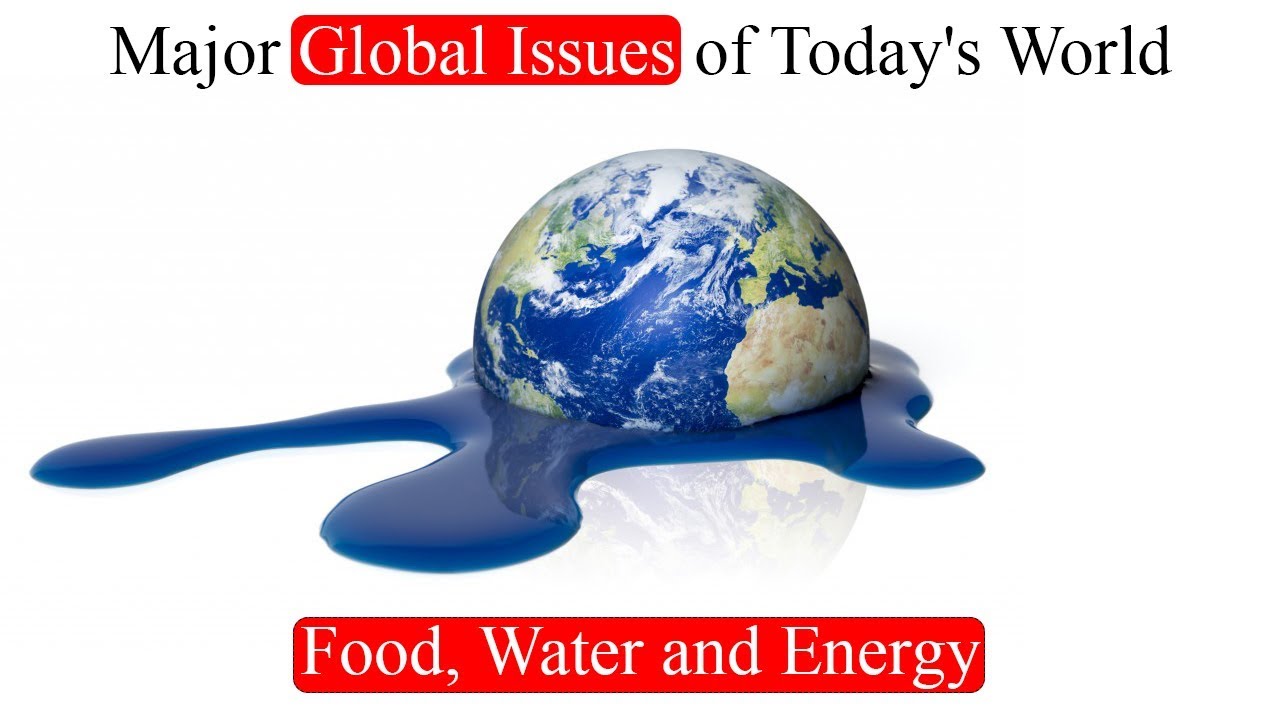
← Back

Thank you for your response. ✨


Share this:

  • Share on WhatsApp (Opens in new window) WhatsApp
  • More
  • Share on Mastodon (Opens in new window) Mastodon

THE BEADY EYE SAY’S : WE KNOW THE RIGHT WAY TO GO BUT WHY IS IT SO HARD? IS IT BECAUSE IMAGINATION IS DISAPPEARING.

09 Saturday May 2020

Posted by bobdillon33@gmail.com in 2020: The year we need to change., Big Data., COVID-19, Dehumanization., Digital age., DIGITAL DICTATORSHIP., Digital Friendship., Disconnection., Economic Depression., Emergency powers., Fourth Industrial Revolution., Freedom, GPS-Tracking., HUMAN INTELLIGENCE, Human values., Humanity., Imagination., Inequality, Innovation., Modern day life., Modern day Slavery, Our Common Values., POST COVID-19., Reality., Robot citizenship., Sustaniability, Technology, Technology v Humanity, The essence of our humanity., The Future, The Obvious., The state of the World., The world to day., Tracking apps., TRACKING TECHNOLOGY., Unanswered Questions., VALUES, We can leave a legacy worthwhile., WHAT IS TRUTH, What Needs to change in the World, Where's the Global Outrage.

≈ Comments Off on THE BEADY EYE SAY’S : WE KNOW THE RIGHT WAY TO GO BUT WHY IS IT SO HARD? IS IT BECAUSE IMAGINATION IS DISAPPEARING.

Tags

Algorithms., Artificial Intelligence., CORONA VIRUS., Coronavirus (COVID-19), Imagination., Legacy worthwhile., The Future of Mankind, Visions of the future.

(Twenty-minute read) 

If ever there was a need for imagination when this pandemic is over or is eventually under control, hopefully, imagination is going to play a massive role in redesigning not just our societies but the way we live and die on this planet.

The responses to the COVID-19 pandemic are simply the amplification of the dynamic that drives other social and ecological crises.

If we have learned anything from Covid-19 is that global problems require global solutions, whether it is a pandemic, hunger, or access to quality education, reversing climate change, poverty, and inequality, you name it.

Imagination allows us to engage in thinking about alternatives and there is no doubt that we will need some radical changes.

Here I am referring to creative imagination the role it plays in our thinking.

The key point is that in using a term such as ‘imagining’, I am not just referring to some mental activity, but also evaluating that activity in some way, with all its relations and ramifications.

So here is your chance to submit you imagine creative ideas.

(All human comments appreciated. All like clicks and abuse get chucked in the bin) 

Where to start? 

Unfortunately, this pandemic is a present-day dystopia.

It’s not the stuff of science fiction set in some distant future or on another planet it’s damage is ongoing and will only get worse as it continues.

To understand the “real world” one has to experience it not imagine it.

At the moment there is a lot of rhetoric about using a tracking App to monitor the spread of COVID_19. In other words, unregulated squealing Apps (that are owned by private corporations) that Id people that have or had the virus. 

 We recently celebrated VE day that won us freedom at the cost of millions of lives. 

In my view, such a tracking proposition is not far removed from what the Nazis did in identify Jews by marking them with a yellow star. 

It is imperative that we in their honor that we now don’t rubbish there sacrifice by becoming Data slaves. 

(As I have said in the previous post, to ensure tracking does not outlive the effort against COVID-19. Both the technology and related policies and procedures should ensure the deletion of data when there is no longer a need to hold it.)

When people feel that their phones are antagonistic rather than helpful, they will just turn location functions off or turn their phones off entirely.

Imagine living under a Chines automatism system run by a Donal Dump.

Such techniques violate some of the core values of liberal democratic regimes.)

Up to now, we thought that Capitalist Globalization was the bee’s knees when in fact it increased inequalities and undermined democracy.

Now we realize that ecological transition IS more than NECESSARY with a bottom-up economy to protect the world and not the top-down begging world we have a the moment.  

However, the big problem remains the same.

How to distribute the gains of any economy. and now the losses.  

Technology will treat people as units and as such the relentless growth and accumulation of wealth and power for the few, will continue to grow. 

Cutting-edge technologies are now powered by artificial intelligence and are fundamentally shifting the distribution of power between people who provide data and entities that can make sense and use of these data.

It will become a battle between protecting individual rights and confronting an existential threat to our collective right to health, to a basic living wage. 

Of course, all of this data helps epidemiologists model the movement and the future of the virus but beyond the privacy and data rights, there are questions of biases and discrimination built into the algorithms that power the technology. 

Machines will never be made to think like people.

We have for decades underpaid the people that we now call essential workers as interchangeable units.

Currently, the AI field is mostly controlled by corporate interests. 

As global COVID-19 cases continue to rise, the unmatched connectivity that defines our era serves as both bane and blessing. 

Let’s ask the question one more time, in taking advantage of big data to create databases to track and predict infectious risk, should we be enforcing social- distancing by squealing on each other?

If you are at risk, the odds change rapidly, you become in favor of sharing or donating data.

There’s really no way to stop the movement of microbes and we need to realize that now our citizens really need to realize that.

Mapping potential carriers with big data notwithstanding privacy concerns, analysis of personal, travel, and other data like clinical data allow accurate predictive modeling.

Imagine if we created a society where everything is predicted and determined by big data. Its presence depends on “symbolic function”, the ability to pretend that one object is another thing entirely.

It will be a massive mistake.

So is technology an imaginary friend or foe?

Will we lose that human touch?

There’s no doubt that the coronavirus pandemic has changed daily life.

But what changes will last? How will we live when it’s all over? 

Even now, when we’re seeing a massive, rapid change in most walks of life — inspired by a push in science or technology, or nudged by a freak, global health emergency — it’s hard to find sound prophecy. And that’s despite access to mountains of data.

Who would have imagined that global consumerism could be crushed by the wheels of its own industry … quite so suddenly.

But perhaps this is the kind of tipping point that we secretly crave — a slowing of society.

Many people will struggle to deal with an increasing rate of change and, as a result, suffer a social or personal shock. Whether we survive the shock depends on how well we adapt.

What complicates things is that no two societies are ever fully the same.

We’re seeing that friction today, between so-called “forces” and “anti-forces.” The push and pull of people and places adapting this way or that way. But it’s nigh impossible to predict how much of that change, and its effect on daily life, will remain, and how much — or what — will change back.

Whatever happens, it won’t be on a massive scale because our regular behavior will start to reemerge.

Who will benefit more?

We might discover that work is not really part of your life or something you like to do, but something you must do exactly seven hours and 42 minutes a day. And then your real life starts.

This Pandemic will not be a ‘one-off’ event. 

Now is the time to start investing in spare capacity, in people and equipment, to cope with such events. 

( See post on setting up World Aid Depots)  

We must envision a path that allows humans to flourish by asking: how can we protect people financially, should widespread technological unemployment happen even sooner than we anticipated?

A realization among some that the dominant ways of knowing and organizing, which characterize our modern techno-industrial cultures, cannot handle the realities of living, complex, relational, human, and non-human systems.

This may help bring into focus the need to update the conceptual foundations of our cultures.

But can tech solve everything?

That raises the question of whether privacy isn’t just a cultural construct.

If your health depended on it, wouldn’t you share your data willingly?

So we need to say goodbye to our concepts of data security.

Data security is something for healthy people.

On the other hand fear of infection is limiting “in-person” interactions, forcing us deeper into an “increasingly chilling use of online systems and all-electronic communication.

Change depends on how we see ourselves as individuals and groups living through the now.

The internet might just be facilitating.

But it’s still about the real world and a reminder that you can’t eat anything on your computer screen.

In the next Pandemic and the forthcoming Depression, there will be nowhere to hide” from economic collapse in our networked world. 

Take video conferencing.

It’s fine as an exception, but as a rule, it fails to fully translate subtle forms of communication — body language below the head and shoulders. All sound is normalized, mics get muted, along with nervous hands or a lost, downward gaze.

In the end, previous pandemics have profoundly re-shaped society and despite huge advances in medical knowledge, we are once again forced to respond in much the same ways as we did to previous pandemics.

Until a worldwide vaccine we’re really back to what our ancestors would have had in terms of dealing with this kind of disease – just stay away from each other in an effort to slow down its spread.

What we’re doing now is keeping it running at any cost.

However, it is obvious that the right path in tackling both COVID-19 and climate change is much easier if you reduce nonessential economic activity.

There is now an opportunity to change course, the earth must be respected.

So imagination without reality is the osmotic membrane between matter and mind, the antechamber between outside and inside, the free zone between the laws of nature and the requirements of reason.

Without, it indicates a lack of commitment to the truth or existence of what is thought of by the person or persons who invented big data. Thinking of something that is not present to the senses without commitment to its truth or falsity a Digital prison. 

Up to now, we live in a world of the short-term profit-driven corporate world, with the support of the trillion-dollar advertising industry and complicit governments who have fetishized economic growth.

If technology dominates us, not only is the whole struggle to imagine a world of equal opportunities betrayed but the opportunity is lost.

So it’ll only be when it’s all over that we’ll have the luxury of telling the story as a neatly bound series of logical events.

The impacts we’ll see from this is going to be far greater than what happened before. Whether imagery is a form of imagination, and whether supposition is a form of imagination as quick as you can imagine there is a depression of historic proportions coming.

Imagination makes our world an even more spectacular place.

We imagine even when we don’t think that we are imagining.

Everything that humans have achieved has started with the glimmer of imagination.

It is, in sum, the pivotal power in which are centered those mediating, elevating, transforming functions that are so indispensable to the cognitive process that philosophers are reluctant to press them very closely.

Why does it seem to diminish over time for all but the most creative among us?

My own ability to imagine up a story or new world seems far weaker than it used to be. Or is it?

It fails to exclude such things as remembering.

We can leave a legacy worthwhile.   So comment. 

← Back

Thank you for your response. ✨


Share this:

  • Share on WhatsApp (Opens in new window) WhatsApp
  • More
  • Share on Mastodon (Opens in new window) Mastodon
← Older posts
Newer posts →

All comments and contributions much appreciated

  • THE BEADY EYE SAYS. EQUALITY, FAIRNESS, JUSTICE ARE INDIVISIBLE CONCEPTS IF ARE ANYTHING. March 18, 2026
  • THE BEADY EYE SAYS. IT DOES MATTER WHAT YOU THINK ABOUT WAR WHETHER ITS JUSTIFIED OR NOT. March 17, 2026
  • THE BEADY EYE ASKS HOW ARE WE TO MAINTAIN HUMAN DIGNITY IN A WORLD DOMINATED BY TECHNOLOGY. March 15, 2026
  • THE BEADY EYE SAYS THANKS TO CURRENT TECHNOLOGIES WE ARE UNABLE TO BELIEVE ANYTHING WE SEE OR HEAR? March 15, 2026
  • THE BEADY EYE SAYS LET’S PUT THE IRAN/ ISRAEL/ USA WAR IN CONTEX. March 12, 2026

Archives

  • March 2026
  • February 2026
  • January 2026
  • December 2025
  • November 2025
  • October 2025
  • September 2025
  • August 2025
  • July 2025
  • June 2025
  • May 2025
  • February 2025
  • January 2025
  • December 2024
  • November 2024
  • October 2024
  • September 2024
  • August 2024
  • July 2024
  • June 2024
  • May 2024
  • April 2024
  • March 2024
  • February 2024
  • January 2024
  • December 2023
  • October 2023
  • September 2023
  • August 2023
  • July 2023
  • June 2023
  • May 2023
  • April 2023
  • March 2023
  • February 2023
  • January 2023
  • December 2022
  • November 2022
  • October 2022
  • September 2022
  • August 2022
  • July 2022
  • June 2022
  • May 2022
  • April 2022
  • March 2022
  • February 2022
  • January 2022
  • December 2021
  • November 2021
  • October 2021
  • September 2021
  • August 2021
  • July 2021
  • June 2021
  • May 2021
  • April 2021
  • March 2021
  • February 2021
  • January 2021
  • December 2020
  • November 2020
  • October 2020
  • September 2020
  • August 2020
  • July 2020
  • June 2020
  • May 2020
  • April 2020
  • March 2020
  • February 2020
  • January 2020
  • December 2019
  • November 2019
  • October 2019
  • September 2019
  • August 2019
  • July 2019
  • June 2019
  • May 2019
  • April 2019
  • March 2019
  • February 2019
  • January 2019
  • December 2018
  • November 2018
  • October 2018
  • September 2018
  • August 2018
  • July 2018
  • June 2018
  • May 2018
  • April 2018
  • March 2018
  • February 2018
  • January 2018
  • December 2017
  • November 2017
  • October 2017
  • September 2017
  • August 2017
  • July 2017
  • June 2017
  • May 2017
  • April 2017
  • March 2017
  • February 2017
  • January 2017
  • December 2016
  • November 2016
  • October 2016
  • September 2016
  • August 2016
  • July 2016
  • June 2016
  • May 2016
  • April 2016
  • March 2016
  • February 2016
  • January 2016
  • December 2015
  • November 2015
  • October 2015
  • September 2015
  • August 2015
  • July 2015
  • June 2015
  • May 2015
  • April 2015
  • March 2015
  • February 2015
  • January 2015
  • December 2014
  • November 2014
  • October 2014
  • September 2014
  • August 2014
  • July 2014
  • June 2014
  • May 2014
  • April 2014
  • March 2014
  • February 2014
  • January 2014
  • December 2013
  • November 2013
  • October 2013

Talk to me.

Jason Lawrence's avatarJason Lawrence on THE BEADY EYE ASK’S: WIT…
benmadigan's avatarbenmadigan on THE BEADY EYE ASK’S: WHA…
bobdillon33@gmail.com's avatarbobdillon33@gmail.co… on THE BEADY EYE SAYS: WELCOME TO…
Ernest Harben's avatarOG on THE BEADY EYE SAYS: WELCOME TO…
benmadigan's avatarbenmadigan on THE BEADY EYE SAY’S. ONC…

7/7

Moulin de Labarde 46300
Gourdon Lot France
0565416842
Before 6pm.

My Blog; THE BEADY EYE.

My Blog; THE BEADY EYE.
bobdillon33@gmail.com

bobdillon33@gmail.com

Free Thinker.

View Full Profile →

Follow bobdillon33blog on WordPress.com

Blog Stats

  • 97,817 hits

Blogs I Follow

  • unnecessary news from earth
  • The Invictus Soul
  • WordPress.com News
  • WestDeltaGirl's Blog
  • The PPJ Gazette
Follow bobdillon33blog on WordPress.com

The Beady Eye.

The Beady Eye.
Follow bobdillon33blog on WordPress.com

Create a free website or blog at WordPress.com.

unnecessary news from earth

WITH MIGO

The Invictus Soul

The only thing worse than being 'blind' is having a Sight but no Vision

WordPress.com News

The latest news on WordPress.com and the WordPress community.

WestDeltaGirl's Blog

Sharing vegetarian and vegan recipes and food ideas

The PPJ Gazette

PPJ Gazette copyright ©

Privacy & Cookies: This site uses cookies. By continuing to use this website, you agree to their use.
To find out more, including how to control cookies, see here: Cookie Policy
  • Subscribe Subscribed
    • bobdillon33blog
    • Join 222 other subscribers
    • Already have a WordPress.com account? Log in now.
    • bobdillon33blog
    • Subscribe Subscribed
    • Sign up
    • Log in
    • Report this content
    • View site in Reader
    • Manage subscriptions
    • Collapse this bar