The drift toward authoritarianism rarely announces itself with a bang; it begins long before the public recognizes the danger.
It begins with language: the slow, deliberate reclassification of fellow citizens as lesser, suspect, or dangerous.
Once a government convinces people that some among them are unworthy of rights or empathy, the rest becomes frighteningly easy.
Authoritarian systems rarely begin with mass repression. They begin by redefining who counts as a threat.
In any situation, friction can never be eliminated, one can only increase or decrease the friction between two surfaces, or situations.
Friction does not depend on the area of contact, but in a world without friction it would quickly become a homogenous blob of elemental particles.
However in this post I am not talking about friction in its physical state, but friction between humans in the coming world of technology algorithms.
When earth is viewed from space there are no countries, we have carved them out of ideologies and blood.
The understanding of the human condition has been a mystery for millions of years. However if we started promoting understanding of environmental sustainability, empathy, and conflict resolution through education, we can cultivate a culture of peace from a young age and change direction to a caring world.
This has been true up now.
To day we have decisions been taken and made by machines, with no human understanding. So it’s essential that we have transparency if society is to be ruled by technology.
Humans Should Be in Control:
Algorithms should be tools that assist humans, not replace them entirely.
—————————
Futurists have long debated the arrival of the singularity, when human and artificial intelligence will merge.
Some form of merger is inevitable and it is taking place right now.
Of course, this “Brave New World” of a hybrid AI-human existence brings with it a plethora of issues both political and personal.
What will humans do for jobs? Could we possibly live forever? Would that change the very idea of what it means to be human?
As long as we have countries it is inevitable that we will have friction. This is why the world needs a strong United Nations.
Authoritarian systems rarely begin with mass repression. They begin by redefining who counts as a threat. And that is precisely what we are witnessing now.
When administrations label their critics as victims of “evil,” “radicalized,” or part of a “terrorist network,” it is not engaging in politics.
It is engaging in dehumanization.
History shows that once a government normalizes this language, the slide accelerates.
The state becomes both narrator and arbiter of reality. Citizens become suspects. Violence becomes self‑defense. Democracy becomes optional.
The danger we face is not only the violence we see in the world.
It is the narrative that follows: That is the moment when democracies falter. It is the moment when the government stops speaking about its citizens as citizens.
Or we can recognize what history makes plain: once a government convinces the public that some people are enemies, it rarely stops there.
It’s time that the super wealthy were exposed. Thankfully Mr Donald Trump is doing just that.
All human comments appreciated. All like clicks and abuse chucked in the bin.
We now live in a world where artificial intelligence can write, think, plan, and even “coach” us.
From the convenience of asking a chatbot for career advice to using an app to decide what to eat, we’re slowly letting machines do more of our thinking for us.
We risk weakening one of the most important muscles we have — the mind.
When leaders stop thinking critically — when we let algorithms make the hard calls — we risk losing not only our judgment, but our humanity.
AI was built to assist, not replace human wisdom.
Yet too many leaders now lean on it to decide who to hire, how to discipline, or when to cut costs — without the nuance of empathy, context, or culture that human judgment brings.
Algorithms can’t feel tension in a room.
They can’t read the hesitation behind a “yes” or sense when burnout is brewing.
They only process what’s been programmed, and they reflect the bias, pressure, or short-term thinking of those inputs.
The result?
Decisions that may look efficient on paper but erode trust, morale, and belonging in practice.
When people feel reduced to data points, they disengage.
AI was designed to augment human intelligence, not replace it.
Yet many are falling into the trap of letting AI decideinstead of assist.
When we accept every answer as truth because it’s well-written or “sounds right,” we lose our ability to question, discern, and connect dots on our own.
This slow erosion of independent thought doesn’t just affect our intellect; it seeps into our mental health.
When we remove that process — when we let algorithms choose our news, our diets, or our next move — we dull our emotional intelligence and intuition.
The very skills that create confidence, resilience, and creativity begin to fade.
Outsourcing your mind disconnects you from your inner voice — the quiet knowing that guides you toward balance and purpose.
When that intuition is replaced with the “certainty” of technology, we begin to doubt ourselves and lose alignment with what is authentically right for us.
Why is all this happening?
Because.
We elected leaders and government that are only interested in the performance of economic growth.
Algorithms ensure that we are distracted 7/7 with social media full of rubbish and lies.
Our education system are now totally out of date no longer teaching the reasoning.
When citizens stop participating the game is over.
If we don’t get a grip on ARTIFICIAL INTELLIGENCE our live become absurd.
All human comments appreciated. All like clicks and abuse chucked in the bin.
It’s hard to feel for future people. We are bad enough at feeling for our future selves.
Even if we last just 1 million years, as long as the average mammal – and even if the global population fell to 1 billion people – then there would be 9.1 trillion people in the future.
Concern for future generations is common sense across diverse intellectual traditions. When we dispose of radioactive waste, we don’t say, “Who cares if this poisons people centuries from now?
Similarly, few of us who care about climate change or pollution do so solely for the sake of people alive today.
Is any of this true?
Current global rates of consumption require the resources of about 1.6 earths. At this rate, we risk exhausting our planet’s life support systems that provide us with fresh water, nutritious food and clean air.
What 2050 could look like if we don’t do anything about climate change? This doesn’t need an answer.
That is a future unwritten. It’s also worth noting that, in fact, it is entirely up to us whether these hypothetical future beings ever actually come into existence.
So what do we owe the generations to come?
You might answer that since we don’t even owe to them to bring them into existence in the first place, we can’t possibly owe them anything all. Then wouldn’t the people of the future be within their rights to look back at us and ask, ‘Given that you despoiled our planet, why did you even bother bringing us into existence?
Maybe we might actually have an obligation not to bring future people into existence, at least if we’re going to mess things up enough to make their hypothetical lives unbearable.
That would imply that future people count more than us. And who thinks that? Certainly not me. I’m not even sure they count the same as us. That leaves us with only one option. I hate to say it, but future people surely count less than we do—at least a little less.
“What, I am trying to get you to see, is that we have an absolute duty to future generations not to ruin their future planet.”
Think of today’s teeming masses, displaced by violence and climate change, wandering the world in search for a safe harbour.
In comparison to all that present day concrete suffering, the hypothetical suffering of hypothetical future people seems sort of distant and abstract.
I should say that I am actually all for combating climate change. And I am all for weighing both the interests of present people and the interests of future people in the calculus of what is to be done about it. I just don’t think it’s obvious how much weight we should give to the wellbeing of hypothetical future people as opposed to our own.
——————–
Now more than ever, the world needs young people to step up to address the many other challenges ahead of us.
It is crucial to engage young people in decision-making – but in parallel – it’s also important for young people to think differently about how they want to engage.
They cannot vote or lobby or run for public office, so politicians have scant incentive to think about them. They can’t bargain or trade with us, so they have little representation in the market, And they can’t make their views heard directly: they can’t tweet, or write articles in newspapers, or march in the streets. They are utterly disenfranchised.
We make laws that govern them, build infrastructure for them and take out loans for them to pay back.
So what happens when we consider future generations while we make decisions today?
Is it really as bad as all that?
Our situation can be summed up as follows:
While facing an extinction event, instead of working toward reversing the march toward climate disaster, in the name of security we are investing in killing each other.
What will it take to unleash the energy and passion of youth leaders and activists to dismantle inequitable systems and work together to build an more inclusive future?
Social media will likely play a role in that revolution—if it doesn’t sink our kids with anxiety and depression first.
Asked young people what changes they want for the future.
HERE ARE SOME OF THE RED LINES.
Incentivize sustainable consumption and penalize production that’s not.
All stakeholders to take urgent action to safeguard nature and future food production.
Sanctions against institutions that resort to internet blackouts to supress citizen freedoms.
Tech companies to be transparent about misinformation and its spread on their platforms.
Governments to implement policies to protect individual citizens against harmful content.
Capacity-building programmes and education to help citizens better identify fake news.
Strengthened laws against media monopolies to protect democratic freedoms.
A Global Convention for Cybersecurity to uphold the integrity of political systems.
A global wealth tax on assets worth more than US$ 50 million to fight growing inequality.
Universities to end the exorbitant tuition fees that stifle social mobility.
Governments to guarantee universal access to mental health services.
Governments to invest in communities most at risk from climate change.
Financial institutions to stop bankrolling companies initiating fossil fuel exploration.
Companies to significantly reduce the GHG emissions of their operations and supply chains to help keep global heating within 1.5°C.
Governments to implement fit-for-purpose policies and regulations on big tech.
Companies to integrate technology ethics into the design of their products and services.
Governments to prioritize the immediate needs of healthcare workers and their families.
Companies to drive digitalization in healthcare services to improve patient care.
Governments to end qualified immunity in law enforcement for police officers.
Increased action against gun violence.
Two critical questions guided these dialogues:
What are the barriers that have hindered progress?
And, what key values, principles and practices will enable us to foster long-lasting systemic impact for the next decade?
As many around the world push for the creation of a more just, equitable and sustainable future we must remember that technology is one of the greatest tools for achieving these goals, but without ethical considerations at the fore… this will likely only perpetuate the very inequalities that we hope to address.
Every generation of teens is shaped by the social, political, and economic events of the day and how fast teens grow up depends on their perceptions of their environment.
For example their ubiquitous use of the iPhone, their valuing of individualism, their economic context of income inequality, their inclusiveness, and more.
Social media is creating an “epidemic of anguish.
We can’t market technologies that capture dopamine, hijack attention, and tether people to a screen, and then wonder why they are lonely and hurting. It makes humanity look like an “imprudent teenager”, with many years ahead, but more power than wisdom.
Fortunately, there are concrete things humanity to day can do.
The field of sustainability is evolving.
For example, if there is any moral weight on future people, then many common societal goals (like faster economic growth) are vastly less important than reducing risks of extinction (like nuclear non-proliferation).
The entire value chain needs to be sustainable, from raw material sourcing to the manufacturing and usage of the products.
Transparency, accountability, trust and a focus on stakeholder capitalism will be key to meeting this generation’s ambitions and expectations. Doing so would help save the lives of people alive today, reduce the risk of technological stagnation and protect humanity’s future.
Our biases toward present, local problems are strong, so connecting emotionally with the ideas can be hard. It’s humbling and inspiring to see the role we can play in protecting the future. We can enjoy life now and safeguard the future for our great grandchildren.
If we name each generation based on the technological conditions it experienced, generations may soon encompass only a few years apiece. Slicing the population into ever-narrower generations, each defined by its very specific relationship to technology, is fundamental to how we think about the relationship between age, culture, and technology.
They include the digital natives, the net generation, the Google generation or the millennials.
All of these terms are being used to highlight the significance and importance of new technologies within the lives of young people. But generation gaps did not begin with the invention of the microchip. What’s new is the fine-slicing of generational divides, the centrality of technology to defining each successive generation.
If the role of technology in shaping an emergent generational consciousness it seems obvious, to imagine a return to the days when sociological generations spanned multiple decades is over. If you believe that technological conditions profoundly shape the life experience and perspectives of each successive generation, then those generations will only get narrower. If we name each generation based on the specific technological conditions it experienced during childhood or adolescence, we may soon be dealing with generations that encompass only a few years apiece.
At that point, the very idea of “generations” will cease to have much utility for social scientists, since it will be very hard to analyse attitudinal or behavioural differences between generations that are just a few years part.
The problem is that all will come at a price. That price is and will be.
The loss of intentional and thoughtful communication techniques to preserve meaningful connections in a society that is becoming more and more reliant on technology.
Be it the metaverse, smart glasses or large language models, the world as we know it may never be quite as we first imagined it, merging into physical and digital spaces.
While the internet offers unparalleled convenience and connectivity, it is essential to recognize its limitations in reproducing the depth of personal interaction found in face-to-face encounters.
—————
Technology will be a vital tool for creating a cleaner, safer and more inclusive world, but what changes can we expect to see?
5G will create a lot of new use cases including drone management, robotic surgery and autonomous vehicles. Large language models will become a given because they lower the cost of artificial intelligence (AI)
Quantum computing merges with classical computing.
Our grandchildren will live in a very different world thanks to the democratization of products and services that are currently only available to the elite or wealthy,
Holographic image in front of you, seen through smart glasses will be your algorithmic world.
No matter what future we leave behind life my advice is life is beautiful-celebrate -celebrate – never give up.
If all of this is hurting your head, let’s just get back to the basics: if there is a secret to life, it might all be down to what we do, not what we are.
All human comments appreciated. All like clicks and abuse chucked in the bin.
So information may very well come to succeed capital as a central theoretical concept for political and social philosophy.
The retrieval systems of the future are not going to retrieve facts but points of view.
However, the weakness of databases is that they let you retrieve facts, while the strength of our culture over the past several hundred years has been our ability to take on multiple points of view.
The question is, will new technologies speed the collapse of closed societies and favour the spread of open ones. The information revolution empowers individuals, favours open societies, and portends a worldwide triumph for democracy—may not hold up as times change.
The revolution in global communications will forces all nations to reconsider traditional ways of thinking about national sovereignty.
We are witnessing this happing already with the rise of popularism – Election of Donal Trump and Boris Johnston, but the tools that a society uses to create and maintain itself are as central to human life as a hive is to bee life. However, mere tools aren’t enough. The tools are simply a way of channelling existing motivation.
The influence in the information age is indeed proving to revolve around symbolic politics and media-savvy — the ‘soft power’ aspects of influence.
The information revolution may well enable hybrid systems to take the form that does not fit standard distinctions between democracy and totalitarianism. In these systems, part of the populace may be empowered to act more democratically than ever, but other parts may be subjected to new techniques of surveillance and control.
Technology with algorithms are leading to new hybrid amalgams of democratic and authoritarian tendencies, often in the same country, like China that is building a vast new sensory apparatus for watching what is happening in their own societies and around the world.
The new revolution in communications makes possible both an intense degree of centralization of power if the society decides to use it in that way, and large decentralization because of the multiplicity, diversity, and cheapness of the modes of communication.
Of all the uses to which the new technologies are being put, this may become one of the most important for the future of the state and its relationship to society.
So are we beginning to see the end of democracy and the beginning of Cyberocracy?
Crime and terrorism are impelling new installations for watching cityscapes, monitoring communications, and mapping potential hotspots, but sensor networks are also being deployed for early warning and rapid response regarding many other concerns — disease outbreaks, forest protection.
However, the existence of democracy does not assure that the new technology will strengthen democratic tendencies and be used as a force for good rather than evil.
The new technology may be a double-edged sword even in a democracy.
To this end, far from favouring democracy or totalitarianism, Cyberocracy may facilitate more advanced forms of both. It seems as likely to foster further divergence as convergence, and divergence has been as much the historical rule as convergence.
Citizens’ concerns about top-down surveillance may be countered by bottom-up “sousveillance” (or inverse surveillance), particularly if individuals wear personal devices for detecting and recording what is occurring in their vicinity.
One way or the other Cyberocracy will be a product of the information revolution, and it may slowly but radically affect who rules, how and why. That is, information and its control will become a dominant source of power, as a natural next step in political evolution.
Surplus information or monopoly information that is concentrated, guarded, and exploited for privileged economic and political purposes could and WILL most likely lead to Governance by social media platforms owned by Microsoft/ Apple/ Google/ Facebook/ Twitter.
When we change the way we communicate, we change society.
The structure may be more open, the process more fluid, and the conventions redefined; but a hierarchy must still exist.
The history of previous technologies demonstrates that early in the life of new technology, people are likely to emphasize the efficiency effects and underestimate or overlook potential social system effects.
The information revolution is fostering more open and closed systems; more decentralization and centralization; more inclusionary and exclusionary communities; more privacy and surveillance; more freedom and authority; more democracy and new forms of totalitarianism.
The major impact will probably be felt in terms of the organization and behaviour of the modern bureaucratic state.
The hierarchical structuring of bureaucracies into offices, departments, and lines of authority may confound the flow of information that may be needed to deal with complex issues in today’s increasingly interconnected world.
Bureaucracy depends on going through channels and keeping the information in bounds; in contrast, Cyberocracy may place a premium on gaining information from any source, public or private. Technocracy emphasizes ‘hard’ quantitative and econometric skills, like programming and budgeting methodologies; in contrast, a Cyberocracy may bring a new emphasis on ‘soft’ symbolic, cultural, and psychological dimensions of policymaking and public opinion.
Why will any of this happen?
Because the actual practice of freedom that we see emerging from the networked environment allows people to reach across national or social boundaries, across space and political division. It allows people to solve problems together in new associations that are outside the boundaries of formal, legal-political association.
As Cyberocracy develops, will governments become flatter, less hierarchical, more decentralized, with different kinds of middle-level officials and offices?
Some may, but many may not. Governments [particularly repressive regimes] may not have the organizational flexibility and options that corporations have.
So where are we?
Future trends:
The advanced societies are developing new sensory apparatuses that people have barely begun to understand and use;
A network-based social sector is emerging, distinct from the traditional public and private sectors. Consisting largely of NGOs and NPOs, its rise is leading to a re-balancing of state, market, and civil-society forces;
New modes of multiorganizational collaboration are taking shape, and progress toward networked governance is occurring;
This may lead to the emergence of the nexus-state as a successor to the nation-state.
We now have communications tools that are flexible enough to match our social capabilities, and we are witnessing the rise of new ways of coordination activities that take advantage of that change.
Civil society stands to gain the most from the rise of networks since policy problems have become so complex and intractable, crossing so many jurisdictions and involving so many actors, that governments should evolve beyond the traditional bureaucratic model of the state.
There is no doubt that the evolution of network forms of organization and related doctrines, strategies, and technologies will attract government policymakers, business leaders, and civil society actors to create myriad new mechanisms for communication, coordination, and collaboration spanning all levels of governance.
However, states, not to mention societies as a whole, cannot endure without hierarchies.
In the information-age government may well undergo ‘reinventing’ and be made flatter, more networked, decentralized, etc.—but it will still have a hierarchy at its core.” As the state relinquished the control of commercial activities to private companies, both the nation and the state became stronger. Likewise, as the social sector expands and activities are transferred to it, the state should again emerge with a new kind of strength, even though it loses some scope in some areas.
A central understanding of the big picture that enhances the management of complexity is now needed more than ever.
All human comments appreciated. All like clicks and abuse chucked in the bin.
The degree of choice on the web can be overwhelming, but who, exactly, is making the “Choice”
Has The web has been highjacked by Google, Microsoft, Apple, and Social Media and their like?
Why?
Besause they are absorbing their users’ personal data and feeding greedy algrithms who in the end are disempowered by isolation from the wider web.
(By clicking continue below and using our sites or applications, you agree that we and our third party advertisers can:)
Greedy algorithms can be characterized as being ‘short-sighted’, and also as ‘non-recoverable’. The choice made by a greedy algorithm may depend on choices made so far, but not on future choices or all the solutions to the subproblem.
It is important, however, to note that the greedy algorithm can be used as a selection algorithm to prioritize options within a search, or branch-and-bound algorithm. They iteratively make one greedy choice after another, reducing each given problem into a smaller one.
They can make commitments to certain choices too early which prevent them from finding the best overall solution later.
Without any accountability, they are drastically changing the ways we conduct our daily lives.
There are a few variations to the greedy algorithm:
Pure greedy algorithms.
Orthogonal greedy algorithms.
Relaxed greedy algorithms.
It’s no wonder that Berners-Lee isn’t particularly pleased with the way things have gone with his creation.
With Social networks, slowly algorithms are growing more and more powerful and their predictions growing more accurate. It won’t be long before we could see living, breathing, as the choices of a greedy algorithm.
In other words, a greedy algorithm never reconsiders its choices.
The web is cleaving into the haves and have-nots of news readership. Wealthy readers will pay to opt-out of advertising; less privileged readers will have to stick with news that’s ad-supported.
For example, take Google, one of the leaders in using big data and algorithms to support human decision-making. Google has developed both a hiring algorithm and a retention algorithm it analyzes candidates against this profile to make hiring decisions.
Algorithms to develop lists of “flight risks” — that is, people who are likely to leave their jobs soon.
Amazon’s Choice” algorithm, which leverages a machine learning model to discern what products a customer most likely wants. Amazon Alexa and other voice assistants are drastically changing the ways consumers encounter products.
Customers are no longer putting themselves in front of physical products before purchasing them.
As more users are turning to voice ordering through the Amazon Alexa platform and its competitors we are losing control over our personal data.
Hopefully, Amazon’s algorithms are capable of remaining unbiased.
(We can make whatever choice seems best at the moment and then solve the subproblems that arise later.)
On top of all of this, we have all become blind to the damage that the internet can do to even a well-functioning democracy. Brexit/ USA.
It might be true that around the world, social media is making it easier for people to have a voice in government — to discuss issues, organize around causes, and hold leaders accountable, but these governments are winning elections by false news, echo chambers where people only see viewpoints they agree with — further driving us apart.
Social media can distort policymakers’ perception of public opinion.
If there’s one fundamental truth about social media’s impact on democracy it’s that it amplifies human intent — both good and bad.
Unprecedented numbers of people channel their political energy through this medium, it’s being used in unforeseen ways with societal repercussions that were never anticipated.
So it is inevitable that Facebook to influence public sentiment — essentially using social media as an information weapon.
Some 87% of governments around the world have a presence on Facebook.
And they’re listening — and responding — to what they hear.
Misinformation campaigns are not amateur operations.
Increasingly the web will become profoundly useless unless we demand the Web we want from Governments and the Monomorphic platforms that dominate it today.
We are all part of the web so what we endorse must be questioned as to the transparency as to where the information comes from in the first place.
Today the bulk of people who are or not doing this are isolated from each other by Apps.
The like button is not a public metric for the popularity of content. It is a flattener of credibility.
There is no point waking in the morning with Alexa telling you what to do, where to go and what it has bought and who to vote for.
Even if social media could be cured of its outrage -enhancing effects it is undermining democracy.
Even though we have unprecedented access to all that was ever written and digitized we are less familiar with the accumulated wisdom of humanity becoming more and more misguided.
The Web is now a global experiment that will test the very foundation of our global communities
There can not be self -governance for the web.
Fake news, Racism, Pornographic content and unfounded crap should be removed by not allowing anything to be posted without a traceable verified name or source.
Are you sure you want to post this? It is your choice and your choice alone.
Perhaps its time we all franchise our data as we are entering into a continuous partnership so both parties need to be confident it’s the right fit. It’s all a choice. Just do something about it- YOU CAN, what is true technology integration?
How we are going to learn content is one of the ways forward.
In fact, everywhere we look we are starting to be presented with more choices.
Resolve to avoid false comparisons on the web is not possible so the future of the web is all about choice but it is important to understand the paradox of choice.
Choice without education or choice with education.
you ultimately do have to choose. so be the difference that
makes the difference.
Events change our perception and our perspective changes
with experience but at least let our choices about Our lives
which are constantly in flux be our choices.
All human comments appreciated. All like clicks and abuse chucked in the bin.
IT’S A LONG, hard road to understanding the human brain so I have no intention of explaining yours to you here in detail.
Other than to say your brain has a critical function to sort out what you should remember and not remember. To determine what is true, it must know what is false.
Believing, interpreting, responding to environmental clues, or guessing is literally what a brain does.
Is your brain you.? If not who are you.
If a person is not a brain, and a brain is not the thing that perceives, thinks, interprets, feels, desires, decides, and so on we all have serious implications for the future.
Are the mind and the brain one? or is it the mind that tells the brain what it wants or is the mind a product of mere brain activity.
Another words what you see is not really there; it is what your brain believes is there . . . your brain makes the best interpretation it can . In order to explain (interpret) a visual scene, the brain must represent it first, and then explain it to its self to store in your mind.
We perceive and understand only what our brains represent.
To make sense of the tangle of neurons that makes the human experience human, is as complicated as to why you are here in the first instance.
To understand how the brain works you need one in the first place. It does not however help to explain the electrical pulses that tells a neuron to fire. Never mind how billions firing together. Your brain contains about 100 billion nerve cells, or neurons, each of which can communicate with thousands of other brain cells.
The good news is that humanity is poised to crack open the mysteries of the human brain not the mind.
For the moment the brain remains mysterious, it allows us to convert information into myriad forms to serve infinitely diverse ends.
The fields of your mind extend far beyond your brains they are hidden from view and not capable of being inspected. Whatever in your brain is buried deep within the recesses of your mind.
The quest for immortality has inspired humankind since the dawn of civilization. So will understanding the workings of the brain bring us a step closer.
Neurosciences assume that the brain has a wide variety of capacities: the brain interprets and stores information, recognizes symbols, analyzes, thinks, believes, knows, designs computers, determines what is true, paints pictures, deciphers images, analyzes, prioritizes, learns, understands, remembers, and makes decisions of the mind.
However, if I am my brain, and every atom in my brain (or body) is replaced every seven years or so, then I must become someone else every seven years.
There is no need to suppose that all the laws of nature sprang into being fully formed at the moment of the Big Bang, like a kind of cosmic Napoleonic code, or that they exist in a metaphysical realm beyond time and space.
The brain has been designed to change. Or is memory inherent in nature.
Are we capable of transferring thoughts from one brain to another.
Telepathy is normal not paranormal, natural not supernatural, and is also common between people, especially people who know each other well.
Mental activity are not confined to the insides of our heads. They extend far beyond our brain though intention and attention.
Non biological mine’s.
At our current stage of technological development, we have neither sufficiently powerful hardware nor the requisite software to create conscious minds in computers or robot.
Your Brain gives you the ability to combine and recombine different types of knowledge and information in order to gain new understanding; the ability to apply the solution for one problem to a new and different situation; the ability to create and easily understand symbolic representation of computation and sensory input; and the ability to detach modes of thought from raw sensory and perceptual input.
So what happens when it is introduced to Virtual reality or interface technology or drones contextual technology, or open communication.
We are entering the next Age of Biological Engineering evolving cellular engineering and molecular imaging.
What is the most powerful technology on Earth? Biology is Technology:
Hundreds of companies are now attempting to leverage the manufacturing and computational paradigms of biology.
By gaining control over biological systems and their biochemical pathways — and designing new pathways by rewriting the DNA “software” in cells — synthetic biologists are ushering in the “Biological Age,” creating substances with not only superior electrical, optical, and mechanical properties, but with properties that we have never seen before in man-made materials:
If you don’t believe me that Biology is Technology:
Have a look.
In the dark forest of our current ignorance, nothing captures the imagination like the possibility of creating a machine that is conscious and exhibits the same higher mental abilities as humans.
Biological systems have the ability to do things that no human-made machine or chemistry can begin to approach: the ability to replicate, to learn, to scale from one to billions, to adapt, and to evolve.
Computers today are so advanced that some contain as many connections as exist in the human brain — ten trillion of them. They can also operate at much higher speeds than the brain. What was once purely science fiction is now approaching the possibility of science fact.
A double edge sword the second machine age is going to replace our brains.
Can advanced robots or computers be moral persons? The term “moral person” refers to a being that has moral rights, such as the right not to be harmed, the right of free movement, and the right of free expression.
So let me ask you a question is it the end of moors law. (Moore’s Law is a computing term which originated around 1970; the simplified version of this law states that processor speeds, or overall processing power for computers will double every two years.) Once transistors can be created as small as atomic particles, then there will be no more room for growth.
Do we have a responsibility to future generations of humans that might be adversely affected by the creation of menacing robots? Should we stop our research into artificial intelligence right now before we create something that we cannot control?
To answer these questions, it those seems odd to speculate about building a mind from electronic scraps when we have so little clarity about the nature of our own conscious minds.
The human body is divided into many different parts called organs. All of the parts are controlled by an organ call the brain.
The cerebellum the forebrain, midbrain, and hindbrain.
No other organ is like the brain and all other organs would be unable to function without the brain which by the way weighs about three pounds.
The brain is known as the “final frontier” of science; It is the nut that is toughest to crack but contains a vast wealth of information, a veritable treasure trove of knowledge that can enrich our understanding of human nature.
The problem with artificial life acquiring consciousness in the form of experience of self is that if gives artificial life autonomy. Consciousness is a loophole out of programming, whether it is genetic (humans) or cybernetic (computers).
When we solve the hard problem of consciousness, then we can create machines with brains any time before that is brainless.
A machine without moral rules that should be embedded into the programming of all superior robots; one of these is that a robot should never harm a human.
We’ll be uploading our entire MINDS to computers by 2045 and our bodies will be replaced by machines within 90 years, Google expert claims. This singularity is also referred to as digital immortality because brains and a person’s intelligence will be digitally stored forever, even after they die.
But even if Einstein’s brain were intact enough to be plumbed with the tools of modern science, we might have to remain agnostic about the source of his brilliance.
Brain games have not yet fulfilled their promises of improved brain fitness.
How should we construe the relation of a person (soul) to his body or of his mind to his brain? To realize that conceptual clarity contributes to understanding what is known, and to clarity in the formulations concerning what is not known. A person is self-conscious and not brain-conscious, and needs no knowledge of the brain to function.
The brain, no doubt, makes it possible for us (not the brain!), to sense, perceive, think, reason, believe, feel, learn, know, understand, remember, and decide, and hopefully, to change our minds about how we think and talk about a person and the brain.
If not we are left with the following out of date Thesis.
Thesis 1: “The brain, as understood by neuroscience, is a piece of matter tingling with electrochemical activity” (Tallis 2009, p. 4).
Thesis 2: “The mind is what the brain does, and the brain is a causal machine . . . The ‘user illusion,’ nevertheless, is that a decision is created independently of neuronal causes, by one’s very own ‘act of will’” (Churchland 2005).
Thesis 3: “When the brain receives new sensory input from the world in the present, it generates a hypothesis based on what it knows from the past to guide recognition and action in the immediate future. This is how people learn” (Barrett and Bar 2009, p. 1325).
Thesis 4: “We can only understand categories of reality [for example, sound, color, taste, motion, action] and their regularities and interrelationships if our brains are capable of representing these categories . . . [W]e perceive and understand only what our brains represent” (Farah and Heberlein 2007, p. 40).
Thesis 5: Information (such as symbols, letters) is analyzed by and stored in the brain (Thompson and Harrub 2004a, p. 2), and the brain prioritizes information, deciphers images, and remembers (Martin 2013).
Thesis 6: “You are your brain” (Greene and Cohen 2004, p. 1779)
PS: Nothing of what I have said about your brain should be construed as in anyway a devaluing of your brain.
We are dualists who have two ways of looking at the world: With or without a Brain. However I would however suggest that you start using yours if you want a sustainable world.


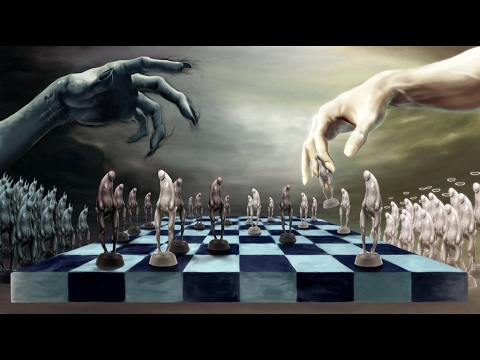


 It’s all a choice. Just do something about it- YOU CAN, what is true technology integration?



 bobdillon33blog