Thirty-minute read.
Who owns what? What’s our purpose in life? What are the values that we believe in? How do we think and make decisions? What do we mean by work? Can our work ever have true meaning unless it is to serve others?
What will help us all think deeply about the questions we need to ask and answer?
Climate change or technology.
However, for many of us, the answers to these questions differ in our working lives, compared with our personal lives, with family, friends and neighbours.
Were a ruling elite like Google to impose a command-and-control, fear-driven culture in which power is abused and the outcomes are social and economic misery for the vast majority?
Our reaction, if we are to go by what is now observable, will be So what? Now what?
MAKING sure companies compete fairly is a tricky business. The firms being regulated know far more about their business than those doing the regulating;
“Artificial intelligence is the future, not only for Russia but for all of humankind.” Says Putin. “Whatever country comes to dominate this technology will be the “ruler of the world.”
His rhetoric is entirely appropriate. Automation and digitalization have already had a radical effect on international systems and structures.
Technology can easily be referred to as the scientific knowledge to the practical problems we are experiencing in the world today.
On the other hand, its core strategy is to gobble up market share with profit-seeking algorithms.
Our environments are all so full of technology to the point that most of the time we take it for granted.
So are we all becoming personified idiots?
Technology has a great impact on all the fundamental aspects of all our cultures including laws and how they are enforced, language, art, health care, mobility, education and religion.
The obvious problem with all of this is that countries will not own or be in control of the technologies.
While we all sit back and accept the benefits technology it also brings manipulation on a worldwide scale with our future in the hands of only a handful of corporations and the vast amount of people that are okay with that.
It’s hard to argue against innovation. It’s hard to argue against greater choice, more convenience and lower prices.
One way or the other it is also hard to underestimate the fundamentally different rules that Google /Amazon/ Facebook/ Apple/ Baidu play by.
Hiding behind forked rhetoric that the data they collect does no harm as it is anonymous.
You do not need to know who you are. It is enough to know what you consume, your habits, your tastes, and where you are, through the IP address, the GPS of the mobile, or your Google account. Your name, or your phone number, is not important to sell you things.
Blurring the borders of privacy. Replacing real-life communication.
And on top of it, violent games and videos killing empathy and bring destruction into an individual’s life. Plagiarism and cheating are increase while analysis and critical thinking decline, ending up in social isolation.
(We now have a new perverse sexual harassment of Cyber flashing which is not against any law. Why? Because our laws cannot keep up with the speed of change)
Commercial technology like Smartphones, I pads, Home Alexa/Echo and there like is about creating another consumer touchpoint for their robust ecosystem of e-commerce, services, and media taking advantage of less sophisticated consumers and trick them into consuming items for short-term satisfaction and long-term pain.
Originally created to serve faithfully to humanity, digital devices are revealing their harmful impact on our lives.
We should all be careful what we wish for.
There’s an argument made by big corporations for each country to charge corporations the lowest possible tax rate, to loosen environmental regulations down to zero, and to eliminate employee protections. All so that a country’s commodity producers can be the cheapest ones.
The voice market war has only just begun.
The contenders:
Amazon-Echo v Google-Alexa.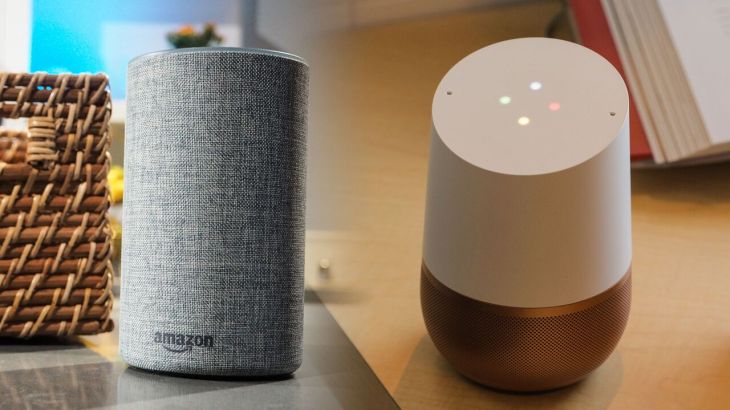
Once they figure out how to improve their recommendations and push more people to make regular household purchases via voice it will lead to an explosion in voice-based shopping.
Google already has one of the most valuable brands in the world.
Google maps have virtually no meaningful rival. Gmail…Google basically controls our handheld existence.
Google controls your life, literally, even if it costs you to believe it.
Google trackers have been found on 75% of the top million websites.
When you search on Google, they keep your search history forever.
Google is a company that offers almost all its products for free because the money is earned by selling the data it collects with those products, to advertisers and companies.
Last year Google made over $161 billion in total revenues.
As it is the premier search engine in the U.S., Europe, and many developing countries Google has the tools to control much of the world.
That’s just Google then you have Amazon.
With around 225 million customers around the world, Amazon wants to deliver everything you want to your doorstep, including Foods anywhere in the world. ( 300 items a second) These days half of all product searches start on Amazon.
Our lust for cheap, discounted goods delivered to our doors promptly and efficiently has a price.
Amazon has done a lot of good for consumers by expanding choice, making shopping far more convenient and by delivering extraordinary product value.
Yet, we can’t–and shouldn’t–ignore the profound effect that Amazon is having on just about every corner of the retail world they set their sights on.
Amazon is selling its facial recognition technology, known as Rekognition, to law enforcement agencies.
First and foremost, Amazon isn’t required by its investors to make any real money.
For us the Great unwashed there’s always the opportunity to cut a corner, sacrifice lifestyle quality and suck it up as they race to grab a little more market share.
With their algorithms, they tell you what restaurants you have to eat in, choose your music, label your photos associating them with each family member or friend that appears in them, pay for your purchases, suggest the movies you should see, and the apps that may interest you.
When in fact the searches we do, what websites we visit, what products we look at, where are we, your medical history, your political beliefs, your associations with others your employment prospects, everything from the womb to the grave is collected and analyzed
Before I hear you calling me a hypocrite I also have used Amazon.
If this scenario prevails, would this be really the way information is supposed to be organized?
In short, does the fact that an algorithm is able to provide more relevant information than a human justify this scenario?
These big brands platforms are more powerful than governments. They’re wealthier. If they were countries, they would be pretty large economies. They’re multinational and the global financial situation allows them to ship money all over the world.
Can we do anything to make a difference?
We need to be supporting the development of an efficient circular economy.
Why?
Because sustainability is an unstoppable force.
Let’s not race to the bottom.
Country’s population size will become less important for national power as small countries that develop a significant edge in AI technology will move far above their weight.
Ultimately, however, winning and losing will not be determined by which country gains the most growth through AI. It will be determined by how the entire global community chooses to leverage AI — as a tool of war or as a tool of progress.
They can eliminate rules protecting clean water, air or consumer safety, but they will always find a way to be cheaper or more brutal than you.
We all assume that Google, Facebook, Amazon, Apple, are spying our activity and up to now advertiser is not interested in your name when they are it will be too late and the winner will be Inequality.
So what does all this mean and what are we all going to do about it when we’ve stopped talking about it?
Once you start to connect all the invisible dots together the impact on society will, in the end, be down to the people that use the technology they have to be responsible for it and if they use it irresponsibly they have to be held accountable.
A Footnote:
For me, there is little point in Jeff Bezos setting up an Earth fund when Amazon is one of the biggest promoters of pollution. Pretending to be a do-gooder.
The brown box doesn’t begin to address the larger issue: Each year in the United States alone thrown paper in the trash that represents approximately 640 million trees or roughly 915,000 acres of forest land.
Amazon ships an average of 608 million packages each year, which equates to (an estimated) 1,600,000 packages a day.
Then when we talk about energy consumption, we’re talking about the sources of energy that generate our power: oil, coal, natural gas and alternatives like solar, wind, hydropower and biofuels.
How much electricity they use and the bill is, god only knows, so its no wonder that they have contracts with oil and gas companies.
Now consider that people conduct over 1,6 billion searches per day, and you get a massive energy footprint of roughly 12.5 million watts.
Is e-commerce reducing or increasing our carbon footprint?
Google’s worldwide operations, collectively worldwide use about 2.26 million megawatt-hours per year to power its global data centre operations, which is equivalent to the power necessary to sustain 200,000 homes.
In 2018 Google generated 39.12 billion dollars earnings out of which it paid 243 Million a day in electricity.
This is only an educated guess.
The link between global warming and energy demands is obvious. Surely both of these players should be investing in Green energy.
There’s a deafening silence from pundits and elites and columnists and politicians on our joint self-destruction.
They are simply going on pretending it isn’t happening.
We don’t, as societies or cultures, value learning or knowledge or magnanimity or great and noble things, anymore.
The average person has become a tiny microcosm of the aspirations and norms of elites. We’re the only people on earth who thwart our own social progress, over and over again — and cheer about it.
We are caught in a death spiral now. A vicious cycle from which there is probably no escape. The average person is too poor to fund the very things — the only things — which can offer him a better life:
The result is that a whole society grows poorer and poorer.
Unable to invest in themselves or one another, people’s only real way out is to fight each other for self-preservation, by taking away their neighbour’s rights, privileges, and opportunities — instead of being able to give any new ones to anyone.
Though it’s too late to escape for them, let us hope our governments regulate their algorithms for profit sake.
All human comments appreciated. All like clicks chucked in the bin.
.



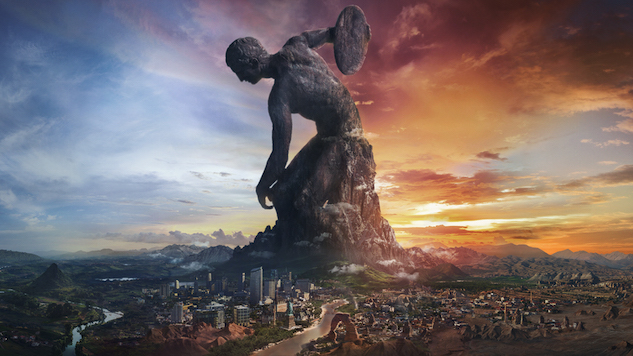 The problem is that most people have no clear understanding of what civilization is or, perhaps as important, what it isn’t.
Wikipedia. According to this seemingly omniscient cyber-seer, civilization is defined most broadly as “any complex state-society characterized by a social hierarchy, symbolic communication forms (typically, writing systems), and a perceived separation from and domination over the natural environment”.
How many of us would fight for civilization if we thought that we were fighting for the increasing complexity of the state and its social hierarchy?
How many of the agrarians amongst us would fight for a civilization that defined itself as being separate from the natural environment and as seeking to dominate it?
How many of us would fight for incessant urbanization, centralization, and the passive domestication of ourselves alongside the domestication of other organisms?
How many of us had realized that being civilized was the willingness to make ourselves cattle in the service of increasingly complex social hierarchies?
How many of us thought that civilization was marked by the sort of “specialization of labour” that had reduced human work to that of a disposable cog in an increasingly large and complex mechanism?
How many of us guessed that civilization was defined by culturally ingrained progressivism and other supremacist ideologies?
How many of us perceived that taxation was civilized and that increasing taxation was therefore and presumably a mark of increasing civilization?
If this is civilization we would be justified in hoping that civilization would go to hell and that, indeed, we would be equally justified in believing that it was all too evidently going there.
However, it is still a helpful framework with which to view how humans come together and form a society.
All civilizations have certain characteristics. These include: (1) large population centres; (2) monumental architecture and unique art styles; (3) shared communication strategies; (4) systems for administering territories; (5) a complex division of labour; and (6) the division of people into social and economic classes.
Again according to Wikipedia, “civilization” is merely an ideological construct of the eighteenth century! It is not a reality in itself but an idea by which an irreligious and irrational “rationalism” can explain and explain away, to its own prejudiced satisfaction, the history of human culture.
This is how civilization is defined on the internet.
Is civilization worth defending?
Should we aim to conform to it so that we can be considered civilized?
Maggie Thatcher once said that there is no such thing as a society. How wrong she was
What is civilization? It is the conforming of the heart of humanity – equality for all.
Culture is everything about human society, i.e. it refers to the knowledge and features of a specific group of people living in a region.
Many forget that a culture is only as great as the rival cultures around it, and all history was written by the winners. So if we are to reinvent anything it won’t be civilisation, but the culture that makes us civilised that will have to change.
To do this we will have to ask what has been tried before and what the results were?
What resources are available, what new theories are there?
WE CAN’T CHANGE ANYTHING UNTILL EDUCATION/ HEALTH IS FREE FOR ALL.
WE CAN’T CHANGE ANYTHING TILL WE SHARE THE RICHES OF THE EARTH– FRESHWATER, FRESH AIR, GREEN ENERGY. ALL FOODS ARE NON-MODIFIED AND SOLD UNDER ITS NATURAL CONDITIONS.
WE CAN’T CHANGE ANYTHING UNLESS INEQUALITY DISAPPEARS. THE RICHEST 1% NOW OWN HALF OF THE WORLD’S WEALTH. THE GAP BETWEEN THE HAVES AND HAVE – NOT’S WHERE ONLY A FRACTION OF SOCIETY REAPS THE BENEFITS OF ECONOMIC GROWTH WILL HAVE TO BE TACKLED – THE BIFURCATED ECONOMY.
(Forty years of neoliberal policy means that wealthy individuals and large companies today have so much “surplus of capital” that they don’t know what to do with it. billions parkEed in tax havens.)
WE CAN’T CHANGE ANYTHING TILL RACISM AND RELIGIOUS BIGOTRY IS ABOLISHED
WE CAN’T CHANGE ANYTHING BY CREATING LOTTO MILLIONAIRES WHILE SLUMS EXIST.
WE CAN’T CHANGE ANYTHING WHILE THE ARMS INDUSTRY EXISTS.
WE CAN’T CHANGE ANYTHING WHILE SOVERGIN FUNDS EXIST.
WE CAN’T CHANGE ANYTHING WHILE PROFIT SEEKING ALGORITHMS EXIST.
WE CAN’T CHANGE ANYTHING TILL WE REALISE THAT EARTH COMES FIRST THEN ITS PEOPLE.
WE CAN’T CHANGE ANYTHING TILL WE ACT AS ONE.
WE CAN’T CHANGE ANYTHING TILL ALL WORLD DEBT IS WRITTEN OFF. TOTAL PUBLIC DEBT WILL BE IN THE TRILLIONS. WORLDWIDE, THE TOTAL MOUNTAIN OF DEBT HAS REACHED A RECORD AMOUNT OF 322% OF THE WORLD GDP.
WE CAN’T CHANGE ANYTHING TILL WE UNDERSTAND THAT ONE’S REACH MUST GO BEYOND ONE GRASP. THE CORONAVIRUS IS THE PERFECT TIME TO LAUNCH A NEW GREEN DEAL THAT IS AMBITIOUS ENOUGHT TO SAVE THE PLANET. NEVER MIND WORLD CONFERENCES TALKING ABOUT IT DO IT. THINK BIG. ACT NOW. TOGETHER.
WE CAN’T CHANGE ANYTHING UNTILL WE DO AWAY WITH DIVIDENDS AND REPLACE THEM WITH A BASIC LIVING INCOME.
WE CAN’T CHANGE ANYTHING UNLESS WE REFORM THE UNITED NATIONS REMOVE THE VETO AND TURN IT FROM A BEGGING SHOP TO A FULLY FUNDED ORGANISATION WITH A PERTUPITUAL INCOME FROM A 0.05% WORLD AID FUND. ( See previous posts.)
WE CAN’T CHANGE ANYTHING UNLESS WE CURBE CONSUMERISM AND MOVE TO SUSTAINABILITY. WE’VE CONSUMED BEYOND OUR MEANS FOR A GENERATION AND NOW THE BILL IS COMING DUE SUDDENLY.
WE CAN’T CHANGE ANYTHING WITH GDP AS OUR CULTURAL GOAL.
WE CAN’T CHANGE ANYTHING WHILE WE TOLERATE ZOMBIE BANKS. NO FEWER THAN 147 INDIVIDUAL NATIONAL BANKS CRISES ACCURED BETWEEN 1970 AND 2011 ACCORDING TO THE IMF. IT’S TIME TO PUT THE BANKING SYSTEM IN GOVERNMENT HANDS AND TO DISMANTLE CASION CAPITALISM.
My point is the pandemic and its aftermath will be super-consequential for how we live the rest of our lives. There will be implications across the board; for business, government, culture, sports and the arts, as well as behaviour.
It’s not too soon to think about that.
Smartphones have given us an always-on connection to the world’s information but history develops our researching skills and our understanding of human behaviour.
What we’ve done in the last generation is we’ve replaced normal human interactions and social capital with technology and money.
And we’ve done that with a deleterious impact on our health and our happiness because technology and money hijack our brains in a stronger way than slow, kind of boring conversations do and yet that’s our heritage.
Our culture is systems blind.
Monetary stability, public safety and all manner of civilised goals have grown too complicated and big. The idea of the trickle-down effect of the free capitalist market is no longer true it continually funnels things towards the top. It doesn’t speak to the bottom half of society now.
They say that the best things in life are free, that adage is only true if basic needs are covered. A lot of people are living paycheck to paycheck, week to week, month to month.
A universal basic income is the way to go.
A basic income that supports the bottom half of society with enough to pay for basic needs.
There is no doubt that many businesses that are booming during the pandemic will continue to thrive.
But we continue to look at issues like climate change or renewable energy or poverty and we don’t think of how everything fits together. And right now we’re lacking a map of how to go forward.
No matter how this all unfolds, the biggest thing that’s going to contribute to better futures is social nodes of communication and social capital.
WE CAN’T GO BACK JUST TO GO OUT AND HAVE AN ORGY OF CONSUMPTION AND BACK TO NORMAL WITHOUT LEARNING ANYTHING FROM THIS.
WE CAN’T ALLOW GOVERNMENTS TO BECOME AUTHORITARIAN. NOR ALLOW SOCIAL MEDIA NETWORKS TO REMAIN UNREGULATED.
It is already clear that in future we will look back on 2020 as a turning point, the beginning of a new era.
The problem is that most people have no clear understanding of what civilization is or, perhaps as important, what it isn’t.
Wikipedia. According to this seemingly omniscient cyber-seer, civilization is defined most broadly as “any complex state-society characterized by a social hierarchy, symbolic communication forms (typically, writing systems), and a perceived separation from and domination over the natural environment”.
How many of us would fight for civilization if we thought that we were fighting for the increasing complexity of the state and its social hierarchy?
How many of the agrarians amongst us would fight for a civilization that defined itself as being separate from the natural environment and as seeking to dominate it?
How many of us would fight for incessant urbanization, centralization, and the passive domestication of ourselves alongside the domestication of other organisms?
How many of us had realized that being civilized was the willingness to make ourselves cattle in the service of increasingly complex social hierarchies?
How many of us thought that civilization was marked by the sort of “specialization of labour” that had reduced human work to that of a disposable cog in an increasingly large and complex mechanism?
How many of us guessed that civilization was defined by culturally ingrained progressivism and other supremacist ideologies?
How many of us perceived that taxation was civilized and that increasing taxation was therefore and presumably a mark of increasing civilization?
If this is civilization we would be justified in hoping that civilization would go to hell and that, indeed, we would be equally justified in believing that it was all too evidently going there.
However, it is still a helpful framework with which to view how humans come together and form a society.
All civilizations have certain characteristics. These include: (1) large population centres; (2) monumental architecture and unique art styles; (3) shared communication strategies; (4) systems for administering territories; (5) a complex division of labour; and (6) the division of people into social and economic classes.
Again according to Wikipedia, “civilization” is merely an ideological construct of the eighteenth century! It is not a reality in itself but an idea by which an irreligious and irrational “rationalism” can explain and explain away, to its own prejudiced satisfaction, the history of human culture.
This is how civilization is defined on the internet.
Is civilization worth defending?
Should we aim to conform to it so that we can be considered civilized?
Maggie Thatcher once said that there is no such thing as a society. How wrong she was
What is civilization? It is the conforming of the heart of humanity – equality for all.
Culture is everything about human society, i.e. it refers to the knowledge and features of a specific group of people living in a region.
Many forget that a culture is only as great as the rival cultures around it, and all history was written by the winners. So if we are to reinvent anything it won’t be civilisation, but the culture that makes us civilised that will have to change.
To do this we will have to ask what has been tried before and what the results were?
What resources are available, what new theories are there?
WE CAN’T CHANGE ANYTHING UNTILL EDUCATION/ HEALTH IS FREE FOR ALL.
WE CAN’T CHANGE ANYTHING TILL WE SHARE THE RICHES OF THE EARTH– FRESHWATER, FRESH AIR, GREEN ENERGY. ALL FOODS ARE NON-MODIFIED AND SOLD UNDER ITS NATURAL CONDITIONS.
WE CAN’T CHANGE ANYTHING UNLESS INEQUALITY DISAPPEARS. THE RICHEST 1% NOW OWN HALF OF THE WORLD’S WEALTH. THE GAP BETWEEN THE HAVES AND HAVE – NOT’S WHERE ONLY A FRACTION OF SOCIETY REAPS THE BENEFITS OF ECONOMIC GROWTH WILL HAVE TO BE TACKLED – THE BIFURCATED ECONOMY.
(Forty years of neoliberal policy means that wealthy individuals and large companies today have so much “surplus of capital” that they don’t know what to do with it. billions parkEed in tax havens.)
WE CAN’T CHANGE ANYTHING TILL RACISM AND RELIGIOUS BIGOTRY IS ABOLISHED
WE CAN’T CHANGE ANYTHING BY CREATING LOTTO MILLIONAIRES WHILE SLUMS EXIST.
WE CAN’T CHANGE ANYTHING WHILE THE ARMS INDUSTRY EXISTS.
WE CAN’T CHANGE ANYTHING WHILE SOVERGIN FUNDS EXIST.
WE CAN’T CHANGE ANYTHING WHILE PROFIT SEEKING ALGORITHMS EXIST.
WE CAN’T CHANGE ANYTHING TILL WE REALISE THAT EARTH COMES FIRST THEN ITS PEOPLE.
WE CAN’T CHANGE ANYTHING TILL WE ACT AS ONE.
WE CAN’T CHANGE ANYTHING TILL ALL WORLD DEBT IS WRITTEN OFF. TOTAL PUBLIC DEBT WILL BE IN THE TRILLIONS. WORLDWIDE, THE TOTAL MOUNTAIN OF DEBT HAS REACHED A RECORD AMOUNT OF 322% OF THE WORLD GDP.
WE CAN’T CHANGE ANYTHING TILL WE UNDERSTAND THAT ONE’S REACH MUST GO BEYOND ONE GRASP. THE CORONAVIRUS IS THE PERFECT TIME TO LAUNCH A NEW GREEN DEAL THAT IS AMBITIOUS ENOUGHT TO SAVE THE PLANET. NEVER MIND WORLD CONFERENCES TALKING ABOUT IT DO IT. THINK BIG. ACT NOW. TOGETHER.
WE CAN’T CHANGE ANYTHING UNTILL WE DO AWAY WITH DIVIDENDS AND REPLACE THEM WITH A BASIC LIVING INCOME.
WE CAN’T CHANGE ANYTHING UNLESS WE REFORM THE UNITED NATIONS REMOVE THE VETO AND TURN IT FROM A BEGGING SHOP TO A FULLY FUNDED ORGANISATION WITH A PERTUPITUAL INCOME FROM A 0.05% WORLD AID FUND. ( See previous posts.)
WE CAN’T CHANGE ANYTHING UNLESS WE CURBE CONSUMERISM AND MOVE TO SUSTAINABILITY. WE’VE CONSUMED BEYOND OUR MEANS FOR A GENERATION AND NOW THE BILL IS COMING DUE SUDDENLY.
WE CAN’T CHANGE ANYTHING WITH GDP AS OUR CULTURAL GOAL.
WE CAN’T CHANGE ANYTHING WHILE WE TOLERATE ZOMBIE BANKS. NO FEWER THAN 147 INDIVIDUAL NATIONAL BANKS CRISES ACCURED BETWEEN 1970 AND 2011 ACCORDING TO THE IMF. IT’S TIME TO PUT THE BANKING SYSTEM IN GOVERNMENT HANDS AND TO DISMANTLE CASION CAPITALISM.
My point is the pandemic and its aftermath will be super-consequential for how we live the rest of our lives. There will be implications across the board; for business, government, culture, sports and the arts, as well as behaviour.
It’s not too soon to think about that.
Smartphones have given us an always-on connection to the world’s information but history develops our researching skills and our understanding of human behaviour.
What we’ve done in the last generation is we’ve replaced normal human interactions and social capital with technology and money.
And we’ve done that with a deleterious impact on our health and our happiness because technology and money hijack our brains in a stronger way than slow, kind of boring conversations do and yet that’s our heritage.
Our culture is systems blind.
Monetary stability, public safety and all manner of civilised goals have grown too complicated and big. The idea of the trickle-down effect of the free capitalist market is no longer true it continually funnels things towards the top. It doesn’t speak to the bottom half of society now.
They say that the best things in life are free, that adage is only true if basic needs are covered. A lot of people are living paycheck to paycheck, week to week, month to month.
A universal basic income is the way to go.
A basic income that supports the bottom half of society with enough to pay for basic needs.
There is no doubt that many businesses that are booming during the pandemic will continue to thrive.
But we continue to look at issues like climate change or renewable energy or poverty and we don’t think of how everything fits together. And right now we’re lacking a map of how to go forward.
No matter how this all unfolds, the biggest thing that’s going to contribute to better futures is social nodes of communication and social capital.
WE CAN’T GO BACK JUST TO GO OUT AND HAVE AN ORGY OF CONSUMPTION AND BACK TO NORMAL WITHOUT LEARNING ANYTHING FROM THIS.
WE CAN’T ALLOW GOVERNMENTS TO BECOME AUTHORITARIAN. NOR ALLOW SOCIAL MEDIA NETWORKS TO REMAIN UNREGULATED.
It is already clear that in future we will look back on 2020 as a turning point, the beginning of a new era.