THE BEADY EYE. ASKS YOU TO HELP.

(One minute read) 

Every day of our lives we are bombarded with appeals for money for help – from saving the environment to saving people, children, and donkeys.

The purpose of this new Flipboard Magazine ” #SILENT WITNESS TO SCREAMS OF HELP” is to afford a platform for projects that do not get much attention. 

The second reason is to enable you the individual to act without donating money directly.

So if you are like me here is a giving that you or your children could do tomorrow.

I recently watched a documentary about a school for deaf children.

This school is in Kabul Afaganstian run by a few individuals on fresh air.

The words here are silent, but the classrooms are full of life. And for these children just coming here during a war has not been easy.

In Afghanistan, one of the poorest countries in the world, people with disabilities are stigmatized. 10,000 children in Afghanistan have no communication with the world. They are left to lead lives of solitude, without the opportunity for education, or often, work. These children have committed no crime, they have nothing to be ashamed of — they are deaf.

If (deaf children) don’t go to this school, they literally have no way of learning how to communicate with anyone else. 

The operational needs of the school are big.

There is a lack of teaching material and books and no money to buy them.

 You could lend a helping hand.

They need children’s books. Old laptops, Paint bruises & paint, coloring pencils, or any other items.

All that is necessary is to put a box together and post it to them. 

The School for Deaf Children. Kabul Afaganstian.

To send a box from the UK/ Europe – 15cm X15cm weighing 5 kilos would roughly cost £60. which is quite expensive. 

Here is the solution. 

For instance, there is a total of 8.82 million pupils in 25000 schools in England.

As a school project to send a box, the cost would be minable plus the benefits of educating surrounding such a project would totally outweigh any costs.  

← Back

Thank you for your response. ✨

THE BEADY ASK’S. WHERE NOW IN DEMOCRACY DOES REAL POWER EXIST?

( Four minute read)

It is well known that the word ‘democracy’ originates from Ancient Greece and means ‘power of the people.

In its literal sense, democracy as an idea encompassing economic, political, the vote and not a flag however if democratic governments do not assume more power in technology governance as authoritarian governments grow more powerful, the digital world—which is a part of our everyday lives—will not be democratic.

Because capitalism, on the one hand, and genuine democracy, on the other, are completely incompatible with one another social democracy does not exist anywhere in the world.

The reason for this is that under capitalism, wealth is concentrated in the hands of a very small minority of the population.

A recent study by the World Institute for Development Economics Research at the United Nations University reports that the richest 1 percent of adults owned 40 percent of global assets in the year 2000, and that the richest 10 percent of adults accounted for 85 percent of the world’s assets. In contrast to this, the bottom half of the world adult population owned barely 1 percent of global wealth.

This is the basic reason why the working class majority feel powerless and not really ‘free.

Why?

Because they do not own any significant amount of the means for producing and distributing wealth, which people need in order to live. It means that the vast majority of us are forced by circumstances, to become economic slaves to the rich minority that are now with technology domineering the free market in all its forms.

—————-

So Democracy is not a society where everyone can have an equal say in the issues that concern them.

Capitalism’s leaders having little or no interest in public involvement in politics, outside of election time. This meant that the capitalists had no economic interest in maintaining those, who worked for them. After all, these workers could always be replaced by others in the queue, looking for work.

This was the thinking of the employers in the earlier period of capitalism and, still is today in the less developed parts of the planet. Such is the sophistication of modern wage slavery.

The key element has been private ownership of resources, by a small minority, right from slave owning societies through to feudalism and then, to capitalism. 

Even now, many people realise that there is something seriously wrong with the present system (wars, poverty, pollution, inequality, covid-19 etc.).

However, it is the awareness of an alternative to this which is missing.

It is quite obvious now that we are rapidly become indifferent to democracy because of social media populisms, artificial machine learning, all reducing our world organisations and governing parliaments into talking shop.

With AI knowledge becoming the driving power that is going to shape the future any new systems will require free education, and a universal basic wage in order to share wealth we need in order to live. 

It is time to imagine what real democracy would look like and to create institutions and mechanisms that could be the building blocks of genuinely democratic societies.

What is lacking is a more radical agenda, an international grassroots-based network promoting and struggling for participatory democracy as an alternative and ultimately a replacement to the existing system.

Through such a network, social movements, activists and ordinary citizens across the world could exchange ideas and experiences, learn from each other, and develop common campaigns and struggles.

Citizens acting collectively to express their demands and the political system has begun to adjust according.

In short, all protests reflect precisely the way democracy should work:

—————–

One could ask how has capitalism got such a grip on Democracy.

The prime reason is the planet’s resources. They do not belong to the people as a whole. Instead, they are in the hands of a small, privileged, rich minority. As a result capitalism’s ideology and indoctrination dominate the thinking of the vast majority of participants.

Up to now those who administer capitalism want the electorate to vote for the main parties but power within Democratic society is now shifting with Technology companies taking many aspects of tech governance from democratically elected leaders.

Increasingly, companies are taking over state roles or develop products that affect fundamental rights.

Systematically scoop up private data, often without consent.

Since technologies evolve faster than laws, discrepancies between private agency and public oversight are growing and this disparity between the public and private sectors is spiralling out of control.

There’s an information gap, a talent gap, and a compute gap. Together, these add up to a power and accountability gap. An entire layer of control of our daily lives thus exists without democratic legitimacy and with little oversight.

Why?

Because decisions that companies make about digital systems may not adhere to essential democratic principles such as freedom of choice, fair competition, nondiscrimination, justice, and accountability. Unintended consequences of technological processes, wrong decisions, or business-driven designs could create serious risks for public safety and national security. And power that is not subject to systematic checks and balances is at odds with the founding principles of most democracies.

With Artificial Intelligence the outcome of elections are not going to make any real difference to their way of doing business or our way of life.

Employment is accurately described as being exploitation since the value of what the workers produce in the form of goods and services is much greater than the value of the wages/salaries which they receive. The surplus value is pocketed by the capitalist class and is a very important source of the wealth of the ruling class.

Without a system of clear legitimacy for those who govern—without checks, balances, and mechanisms for independent oversight—it’s impossible to hold technology companies accountable. 

Only by building a global coalition for technology governance can democratic governments once again put democracy first.

Right now, though, there are no international criteria that define when a cyberattack counts as an act of war. 

All human comments appreciated. All like clicks and abuse chucked in the bin.

THE BEADY SAYS: UNLESS WE REFRAME THE PROBLEM AND THE SOLOUTIONS CLIMATE SUMMITS ARE USELESS.

Tags

, ,

( Seven minute read)
There have been trillions and trillions of words spoken, written , and not heard about climate change. I don’t know about you but I am tired of hearing that there is going to be another summit on climate change. There have been proposed changes in absolute emissions that for all intensive purposes are a joke. We all know that the capitalist world has little interest in reversing or addressing climate change as any action to do so is also politically tarnished by national self interested.  The whole business of a climate crises is much larger conversation than reducing CO2 emissions on HP of country by country. The whole problem must be reframed. Words matter. Climate change is not the problem. It is not the threat to Earth. Take note: I didn’t say it was a threat to Earth. Because it’s not. It is only a threat to the things that live here — and that’s how we need to frame it Climate change prevention must become the effort to “Save The Humans.” The idea of saving humans isn’t tough to grasp. We also all know that Climate change is in fact the result of an world economic system that has been built for a few to extract every precious value out of this planet for the sake of profit – from natural resources to the fruits of human labour. It is this system that has created climate change and if not changed it not pandemics that will create massive global migration and wars. ————— To survive the fourth industrial technical revolution which is the next phase of our human existence we will need to restructure our social and economical systems and repair the earth. Environmentalists should appeal to people’s enlightened self interests because we don’t think we need saving. This is where we start. So as I have said words matter. For example there is little point in John Kerry going to China to talk about climate while accusing Chinees of genocide. Because the Chinees will say so what you the USA exterminate the Indians. When in fact they should be talking about the world climate as a reality and our cities and communities are not prepared only to make profit off people who will have to migrate. We must all have the courage to admit we’ve taken too much. To open our eyes to the fact that the entire world is paying a price for the privilege and the comfort of just a few people on the planet. It’s time for us to make society – wide changes to a system that incentivise consumption to the point of global imbalance. Our social, political and economic systems of extraction must be transformed into a systems that regenerate the earth and advance human liberty globally. It is arrogance to think that technology will save us and it is ego to think that we can continue this unjust and extractive approach to living on the planet and survive. We must establish a new social attitude with technology by passing laws that make it and its use transparent and tax all profit seeking algorithms before all income disappears into the cloud.
—————– Earth you might like to think belongs to all of us, but the assertion that climate activists are ” Saving the Planet,” or even “saving life on Earth ” is scientifically baseless. The majority of humans will only see a small amount of Earth in their lifetime, and only a fortunate few will ever look through the window of a spacecraft at Earth’s true vastness As much as we may think otherwise, we are profoundly, astronomically insignificant. Earth is a big concept to grasp but it not difficult to grasp that most of the CO2 emissions come from CHINA, USA, INDIA, RUSSIA, AND JAPAN. It’s difficult for humans to find the motivation to save something that they don’t truly comprehend but the threat of climate change is looming. It is a threat to all species. When world leaders sit round the table to try and tackle what has become possibly the greatest moral crisis of my generation they are powerless to make any solution’s work without financial support – no country wants to carry the can or implement tax rises – levies etc. Instead they introduced carbon credits that turned CO2 emission into a product to trade on the stock market. The underlying theory OF CARBON CREDITS is simple. If one party can’t stop emitting CO2, it can ask another to emit less so that, even as the first carries on producing CO2, the total amount of carbon in the atmosphere is reduced. But climate change is not just an environmental problem, it is a human rights issue. We are already calling people refugees when they are displaced by climate disaster even when they don’t cross international borders. Despite this, the idea of ensuring justice between those generations responsible for the effects of climate change and those who will have to pay the heaviest price for it is not mentioned. So we must stop borrowing from the future and act now —————- Climate change or whatever it is called next year is something we all better get used to adapting to. Instead of taking action on this problem what are we doing? We are fighting wars all over the world, planning the next Olympic games, carbon-trading, bailing-out the bankers, worshiping consumerism, developing more weapons, flying, planning the next election. In other words: business as usual.  There is no doubt whatever that the world is warming up – the evidence is there for all to see – a  BIG problem that is not going away, which has no respect for empty promises, targets and resolutions. It is, with the greatest respect, totally useless to produce such stupid arguments as “the rich western countries have had their turn at exploiting the world’s resources and now it is our turn”.  Let us remember that global warming is not the only serious problem. In the long term depletion of minerals of food, oil, freshwater and other essentials is equally critical. The fact is that you cannot blame the past. Unfortunately Politicians have hijacked “Global Warming” which is now a massive revenue generator for Governments. Greed rules our modern world so it must be the solution. There is no reason with the technology we have not to place a world aid commission of 0.05% on all activities that are Profit for profit sake. This would spread the cost fairly across the world, create a preputial fund out of which nonrepayable grants could be given to all projects to reverse climate change. ( See previous posts)
All human comments appreciated. All like clicks and abuse chucked in the bin.  

THE BEADY EYE ASKS; WHY DO WE THINK WE ARE HUMAN AND NOT ANIMAL?

Tags

( Three minute read.)

One way humans gain self-esteem, importance, and significance, and hence assuage mortality concerns, is by raising themselves above other animals’ status.

We attribute fewer thoughts and emotions to animals and this is only true when people are primed to think about human-animal similarities – death.

All human beings begin life by being born – and all human beings die.

In these two ways, we are finite: our lives are not endless, but they begin and they come to an end. We thereby come into the world with a specific body, and in a given place, set of relationships and situation in society, culture, and history.

We share a common ancestor with Apes but unlike an animal that has instinct we begin life utterly dependent on the people who care for us physically and emotionally. 

First and foremost, we are inheritors and receivers of culture and history. We may develop capacities to question, criticise and change what we have received, but this happens on the prior basis of reception.

So being born is a fundamental, not a trivial or accidental, feature of human life – and human existence overall has the shape it does because we are born.

However an animal is also conceived and born.

But, as far as I know, no species except mankind can think about thought itself, can reason, can form alliances and coordinate wars to destroy other thinking people, can create a global interdependent society, can allow millions to starve in third world countries (“We’ve got to think of our own economies…”), can pollute the environment to dangerous levels, and can mess with the very stuff of life itself in their search to challenge God. 

What future lies ahead for humans in space?

None.

We can manipulate the human genome as we like, we could manufacture a new set of beings designed for space travel but there will never be any humans colonizing any other plant.

If we can’t solve humanity’s problem on our home planet, we seem highly unlikely to be able to do so by establishing ourselves in space.

Any lunar or planetary colonists will bring the same human attributes that have caused problems on Earth.

Maybe if we got excited enough to treat Earth as though it were Mars, some of the energy currently pointed towards the stars could be repurposed to doing something even more audacious—ensure that the space station we already have can take us into the next millennium.

Wherever we land, we inevitably leave behind traces of our own forms of life. 

We won’t survive here on this planet unless we learn to live in a resource neutral way. We are in the process of destroying this planet with nowhere to go.

All human comments appreciated. All like clicks and abuse chucked in the bin.

This image has an empty alt attribute; its file name is 1*QQ4HModozwLUHXMn5qqI8g.jpeg

THE BEADY EYE WISHES TO REMIND YOU THAT THIS EASTER WE LIVE IN A WORLD WITH TEN CURRENT WARS.


(Six-minute read)

Here in this part of the world, we have just celebrated Easter.

If we remove its religious consequences in the end the Roman authorities and the Jewish council wanted Jesus dead.

He was a political and social trouble-maker.

He was killed – like so many people before and after him – because of the kind of life he lived, because of what he said and what he did. To Jesus, the whole institution fundamentally misrepresented God. The system was wrong.

Since our arrival on earth, we have excelled in one thing killing each other and all most everything around us.

On May 8, 2021, we will be marking 76 years since the end of the Second World War in Europe.Security Council members often use their veto power in high-stakes conflicts.

 Understanding world history would be impossible without understanding the conflicts that have shaped it.

Although there are many inventions and technological developments that were created by militaries throughout history, we can fairly say that most people would prefer to avoid military service. 

Worldwide in 2020, there are 30,277,850 million people serving in the armed forces, not including paramilitary units, according to Wikipedia.

The problem today is that our traditional definition of “war” is outdated, and so is our imagination of what war means.

Wars and conflicts may decide political boundaries, move populations, and generally shape just about everything but future wars will be driven by a multiplicity of different drivers such as climate change, artificial intelligence, lack of freshwater,  ( Already a factor in many of the below-listed wars) mass migration all coming together to create a major open conflict.

As a result war as the term’s very definition will not only become subject to debate, both politically and philosophically but difficult to catalog.

The world is a battlefield and we are at war for all the wrong reasons. 

The easy answer might just be too many and this is a 21st reality.

According to the International Crisis Group at the end of January 2021, there were at least 70 worldwide outbreaks of crisis/wars.

The Syrian Civil War. (15,898 deaths.) Afghanistan war. (143,958 deaths) The Iraq war. ( 25,223 deaths) The Yemeni War. ( 3,473 deaths) The Somali War. ( 26,418 deaths) The South Sudan war. (50,859 deaths) The Darfur war. The Ethiopian war.

With the arrival of Covid-19, these wars have all but disappeared from our TV screens.

FOR EXAMPLE THE CURRENT Genocide Emergency TAKING PLACE IN MYANMAR.

Today’s with Social Media local difficulties have a habit of becoming to morrow’s international crises/wars.

The Middle East makes it the most war-torn region in the world.

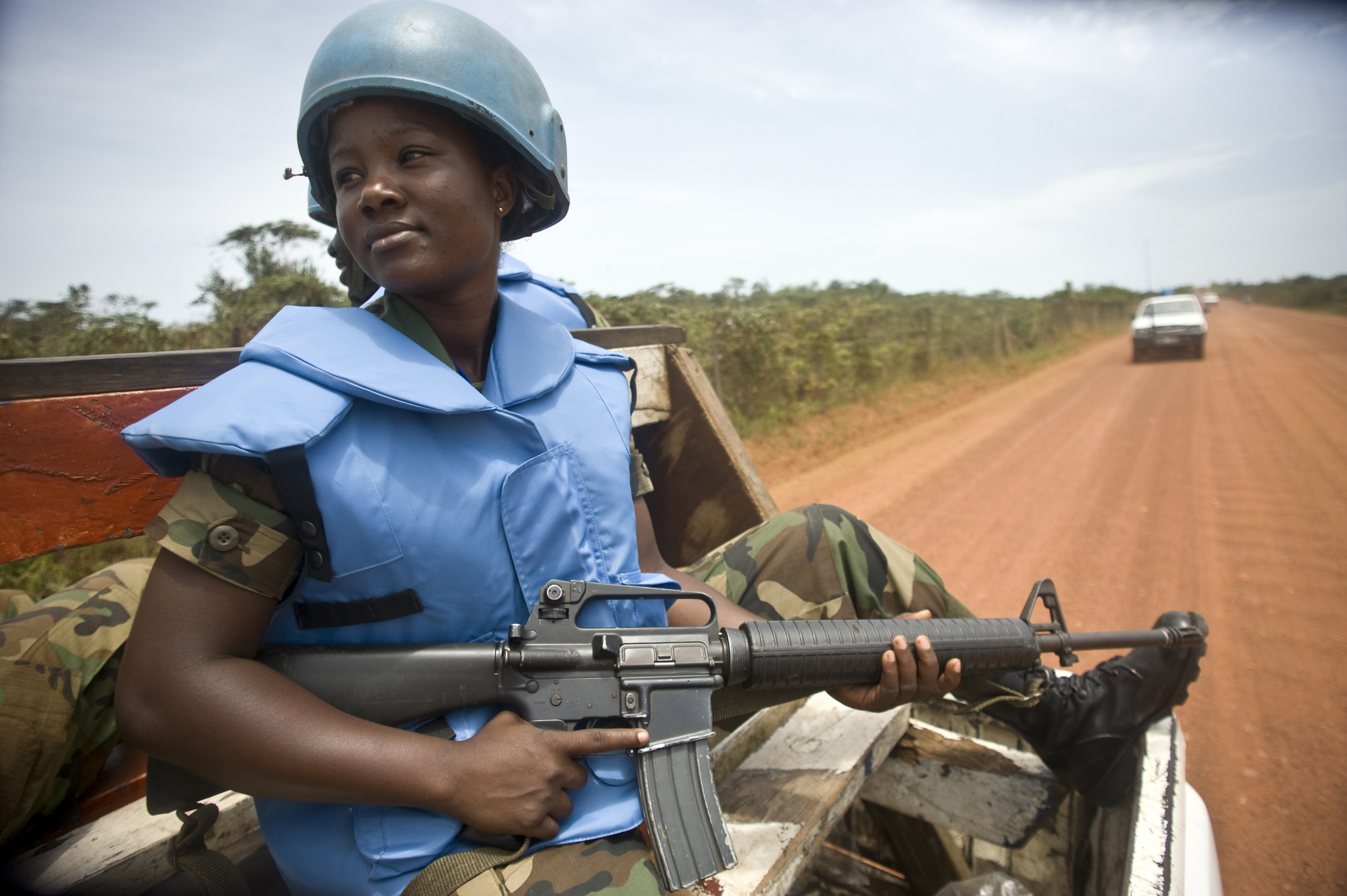
In the last 3,400 years, people have been in peace for only 268 years, and the total number of casualties from wars since the dawn of history is estimated between 150 million and 1 billion. Worldwide in 2020, there are 30,277,850 million people serving in the armed forces, not including paramilitary units, according to Wikipedia. One of the 41 female members serving with Ghanbat 10 with UNMIL in Buchana on patrol about the Liberian Port City of Buchanan

With almost half of the world war-torn.

What Then Must We Do?

The intent of the United Nations’ is not questioned, but in principle, it has been unable to achieve peace and in fact, things are only worsening.

The war in Afghanistan has been ongoing for 17 years. The Syrian war has been active since 2011. Since 2015 Saudi Arabia and its allies have attacked Yemen. God only knows how long the Palestinians in Gaza will have to endure to achieve peace.  

The 15-member Council of the Un has been unable to end these conflicts.

Why? 

Because the UN can never take an initiative without the approval of 5 countries including Russia, the USA, England, France, and China. An interesting fact is that these countries confront each other in the Syrian war.

As of 31 August 2020, the United nations has13 peacekeeping operations involving around 125 thousand personal, but even though it has over 125 nations contributing it remains fairly unrepresentative and ineffective due to the power of veto. 

Despite its imperfections, it would be unfair to suggest that the UN is irreformable.

Its time that the veto was removed and that all states should have the same influence. There should be no veto power in cases of mass atrocities.

The UN is now outdated and obsolete because it lacks openness, and therefore a vital component of a liberal democratic body. There should be at least one representative from each continent

 The illusion that countries can intervene in conflicts or that a few UN blue helmets are enough to sustain peace is shattered by Syria, Yemen, Iraq, the present global marketplace of death. 

With drones, we have isolated war’s physical and emotional costs. War crimes and human rights abuse are prevalent everywhere.

Do we need a UN which fails to address all of these?

We must create a moral movement against mass murder, even when the mass murder is accompanied by flags or music or assertions of authority and promotion of irrational fear.  We must make war abolition the sort of cause that slavery abolition was. We must oppose wars for rational, fact-based reasons, as opposed to fictions and misperceptions.

War-profiteering could be banned or rendered impractical.

Spreading subservience under the banner of “democracy” won’t save us while countries sell arms.  Imposing peace through armed “peace-keepers” prepared to kill won’t work. Disarming only so much, while continuing to suppose that a “good war” might be needed, won’t get us far when foreign Aid is a political football. 

How the world would look like after the Covid 19 outbreak subsides.

Therefore, if and when this present crisis abates, humanity will have to reckon with differing and extreme positions shaped by both the Utopian fantasies as well as baser emotions.

In other words, it is up to us to choose the path that is amenable to future generations instead of giving in to the hate and the vitriol that is passing around.

Having said that, there are some things that would remain the same even in the New Normal – Killing.  

We must use the present crisis to transition and transformation from killing to protection of everything that gives life. 

All human comments appreciated. All like clicks and abuse chucked in the bin.  


THE BEADY EYE SAYS. WE ARE NOT TAKING THE DEVELOPMENT OF AI SERIOUSLY ENOUGHT.

Tags

, ,


(Twelve-minute read)


Artificial Intelligence might be a term for collecting concepts that allow computer systems to vaguely work like a brain. However, the use of numbers to represent complex social reality is flawed.

AI might seem factual and precise when it isn’t as the results that AI produces depend on how it is designed and what data it uses. 

At the moment in our everyday world, AI performs narrow tasks such as facial recognition, natural language processing, or internet searches but the pace of its progress is exponential and regardless of its benefits.

The impact it is having is hard to ignore with more and more of the world’s commerce becoming automated and trading going online.

It’s transforming our world and will impact all facets of society, economy, living, working, healthcare, and technology in the not-so-distant future. It’s poised to have a major effect on sustainability, climate change, and environmental issues. 

Anybody making assumptions about the capabilities of intelligent software is capping out at some point is mistaken.

The applications of AI is now in, industry, healthcare, and medical diagnostics, transport, agriculture, education, and economics, machine and deep learning, data analytics, knowledge reasoning, and discovery, natural language processing, computer vision, robotics, as well as social sciences, ethics, legal issues, and regulation all have implementations in modern society.

And that is only a drop in the ocean.

It’s in automated reasoning and inference, autonomous agents and multi-agent systems, artificial consciousness, case-based reasoning, representation, neuro-inspired computing, process improvement and planning, robotic process automation, symbolic reasoning. 

AI-augmented immersive (VR, AR, MR & XR) reality, AI-enabled customized manufacturing, AI-enabled data-driven techniques, AI in cyber-physical systems, AI in image analysis and video processing, AI in perception and multimedia sensing, AI-supported sensors, IoT and smart cities, AI in education, autonomous vehicles, business and legal applications of AI, cognitive automation, hyper-automation, digital twins, healthcare, medical diagnosis and rehabilitation, robotics and robot learning, human-robot/machine interaction, industrial AI and optimization, symbiotic autonomous systems, as well as many others relating to AI.

Unless you have direct exposure to groups like Deepmind most of us have no idea where it is leading us and the possibility of something, seriously dangerous happening is in the five-year timeframe. 10 years at most.

The time is now to determine what dangers artificial intelligence poses.

Already the legal, political, societal, financial, and regulatory issues are so complex and wide-reaching that it’s necessary to take a look at them no not tomorrow.

AI’s role is now so widely accepted that most people are completely unaware of it.

If we don’t its usage will lead to separation and polarisation in the public sphere and manipulate elections.


It has permeated the key sectors of most developed economies with profit-seeking Algorithms that are promoted as if they are flawlessly but they are built on human bias.

It is removing the ability to make judgments and our sense of responsibility.

It cannot explain or justify reaching a decision or action in the first place.

It is creating impersonal bureaucracies and leaders.

It feeds on historical data.

Russia’s President Vladimir Putin said: “Whoever becomes the leader in this sphere will become the ruler of the world.”

Apart from autonomous weapons gaining  “minds of their own, AI’s power for social manipulation has already proven itself – Brexit – the 2016 U.S. presidential election – the Arab spring – China’s social credit system – the invasion of privacy which is quickly turning to social oppression.

At the present, we are not designing accident-free artificial intelligence, or are we aligning current systems’ behavior with our goals or core values.

Mitigating risk and achieving the global benefits of AI will present unique governance challenges, and will require global cooperation and representation.

More advanced and powerful AI systems will be developed and deployed in the coming years, these systems could be transformative with negative as well as positive consequences.

As AI systems become more powerful and more general they may become superior to human performance in many domains. If this occurs, it could be a transition as transformative economically, socially, and politically as not the Fourth Industrial Revolution but the Revolution of Monopolies.  

It’s now possible to track and analyze an individual’s every move online, and if a covid-19 passport comes into existence it will be issued by AI. 

It’s capable of generating misinformation at a massive scale and if not already we won’t be able to tell what’s true or real online and what’s fake including Covid passports. 

If we aren’t clear with the goals we set for AI machines, it could be dangerous if a machine isn’t armed with the same goals we have.

It’s not hard to imagine an insurance company telling you you’re not insurable based on the number of times you were caught on camera talking on your phone. 

While there are many uncertainties, we should dedicate serious effort to laying the foundations for future systems’ safety and better understanding the implications of such advances.

The international governance of artificial intelligence (AI) is at a crossroads: should it remain fragmented or be centralized?

Fragmentation will likely persist for now.

Society’s collective governance efforts may need to be put on a different footing.

An important challenge is to determine who is responsible for damage caused by an AI-operated device or service:

It is undesirable from a human rights perspective that there are powerful
publicly-relevant algorithmic systems that lack a meaningful form of public scrutiny. 

Without proper regulations and self-imposed limitations, critics argue, the situation will get even worse. It is gobbling up everything it can learn about you and trying to monetize it.

There is a real risk that commercial and state use has a detrimental impact on human rights.

Our situation with technology is complicated, but the big picture is rather simple. 

All AI should be under law required to have a transparency switch.


The human brain is a magnificent thing that is capable of enjoying the simple pleasures of being alive. Ironically, it’s also capable of creating machines that, for better or worse, become smarter and more and more lifelike every day.

AI will affect what it means to be human, be productive, and exercise

free will. People will become even more dependent on networked artificial

intelligence (AI) in complex digital systems.

Every time we program our environments, we end up programming ourselves

and our interactions. AI have massive short-term benefits, along with long-

term negatives that can take decades to be recognizable. AI is a tool that will

be used by humans for all sorts of purposes, including in the pursuit of

power. At stake is nothing less than what sort of society we want to live in

and how we experience our humanity. We already face an ungranted

assumption when we are asked to imagine human-machine ‘collaboration.

We cannot expect our AI systems to be ethical on our behalf – they won’t be,

as they will be designed to kill efficiently, not thoughtfully.

For now, AI will continue to concentrate power and wealth in the hands of a

few big monopolies based on the U.S. and China. Most people – and parts of

the world – will be worse off.

Unfortunately, we are still unripe for the unity of humanity.

We require further development until we develop a sincere desire for

humanity’s unity, as well as the realization that it is impossible to achieve

that goal on our own. If we just bumble into this world of AI unprepared, it

will probably be the biggest mistake in human history.

The COVID-19 virus will one day be all but forgotten, but the dystopian

systems that the New World Order is right now putting in place will not.

All human comments are appreciated. ll like clicks and abuse chucked in the bin.

← Back

Thank you for your response. ✨

THE BEADY EYE ASKS: ARE WE RIGHT TO BE TALKING ABOUT GOING BACK TO NORMAL OR ARE WE JUST FOOLING OURSELVES.

Tags

, , , , , , , , , , , , , , ,


( Twenty-minute read) 


Apart from the tragic human consequences of the COVID-19 epidemic, it’s impossible to measure the price of A GLOBAL DEPRESSION OR THE COMING CLIMATE CHANGE, NOT TO MENTION THE SURGING INEQUALITY DRIVEN BY AI.

But rest assured that it will be the young generation that will be saddled with the bill and the consequences and few countries are likely to be left unscathed by the covid -19 outbreak’s financial ramifications.

We have conveniently forgotten if you remember before the pandemic we had a financial meltdown in 2008.

Ireland, Portugal, Spain, Italy, economies were all operating on borrowed money with all of them amassing debts away beyond their annual tax revenues to the point that their budgets were consumed entirely by interest payments.

Greece was on the verge of causing the Euro to collapse while England was in the grips of an austerity program that resulted in Brexit the cost of which has no definitive figure. 

90% of this was big banks creating debts world-wise in the knowledge that they would have to be bailed out by the taxpayers. (Too big to fail is a phrase used to describe a company that’s so entwined in the global economy that its failure would be catastrophic.)

While Wall Street hedge funds, with credit default swaps and sovereignty wealth funds, we’re making hay while the sun-shined, world debts were doubling. 

Take Iceland for example. German banks pumped $21 into its banks, Sweden $400 million, England around $30billion, the Netherlands $300 million, Oxford University a mere $50 million. Iceland’s banks went bankrupt. The government couldn’t bail them out because it didn’t have the money. Instead of being too big to fail, they were too big to save. Iceland never resorted to austere budget cuts that are so prevalent in Europe.

They imposed capital controls. They let the banks fail.

Iceland’s economy successfully survived a sovereign bankruptcy and government collapse.

However, Iceland’s government today is spending a back-breaking 17.3% of its tax revenue just to pay interest on the debt.

Without a doubt, Iceland was and is the canary in the coalmine for the sovereign debt crisis that is now unfolding across the world right now.

With investors around the world suddenly wake up to a sobering reality of a major default… bigger than Iceland in 2008. It won’t be long before we see countries defaulting because of the amount of government borrowing to fight Covid-19 

So what happens when governments themselves ceased to be credible? 

This might be something that had been considered preposterous only months ago but when one looks at what is only the start of a global depression it is now very much on the cards.

It’s important to remember that throughout history humanity has experienced no shortage of pandemics and deadly viruses but despite the similarities, of these pandemics some of the differences are now even more striking.

The economic fallout from these pandemics was barely noticeable. (The same can be said of the Spanish Flu of 1918.)

What is making the COVID-19 pandemic so unique is not the virus itself, but our collective response to it. Governments in their zeal to control society, have destroyed the global economy on a scale the modern world has never seen. These losses are unprecedented in modern history. The loss of human life that can never be recovered is regrettable but there’s a degree of anxiety now that’s well beyond the health scares which are still very serious and concerning.

If we take a look for example at the USA.

Its economic loss is more than twice the total monetary outlay for all the wars the US has fought since September 11, 2001, including those in Afghanistan, Iraq, and Syria.

Closer to home. 

Millions out of work, industries losing billions, and that’s just the beginning. Transportation companies losing billions in market value with tourism the restaurant and foodservice industry decimated with real estate defaults looming.

Further afield the so-called least Developed Countries, whose economies are driven by the sale of raw materials, will not be spared either. Latin American region as similarly vulnerable.

In addition to global poverty, the pandemic has adversely affected vaccination rates, HIV transmission, gender equality, education, and more. Unfortunately, these problems won’t be reversed overnight—or anytime soon.

When will things go back to normal?

Never.  

Our society is fundamentally flawed, with a devastating financial storm more than likely on its way we cannot simply hit the reset button and go back to normal.

As we go about rebuilding our society for a new day, it is absolutely critical that we focus our efforts on healing the wounds of the people who suffered most.

We all know that the distribution of wealth is key to any recovery and we are going to witness in this pandemic and subsequent economic depression how inequality is the main cause s of why our world is in such a mess. 

So if we want a world worth living in we must address the distribution of wealth along with education.

( The Solution.

Embedding equity and empathy into our cultures by reimagining schools and the introduction of a Universal Basis Living Wage. 

Rather than preparation education (to enter a world of I am all right Jack ) we should be promoting core values education.

This education should be free to all paid for by the state. Not designed by wealthy white men paying the minimum wage, awarding themselves dividends, launching profit-seeking algorithms, running plundering sovereignty wealth funds, leaving the young generation with massive debt.

After two decades of progress around the world, nearly 37 million people have lost significant amounts of income and are now living on less than $1.90 per day. 

There is little point in governments spending billions on projects that enrich the few while their citizens have to resort to food banks, social welfare, etc. 

While Countries’ debts are ballooning exponentially, due in part to combating Covid-19, the fourth industrial revolution in the form of Technology is eroding the opportunities of earning a living or sharing in the profits of automation, machine learning, etc. 

It is not possible to stop the erosion but it is possible to share the wealth in a fair and meaningful way with a guaranteed income that would cut government costs while stimulating economic recovery. 

By scrapping the concept of the welfare state a form of structural inequality and replace it with a government-guaranteed payment to provide financial security

Cash is the best thing you can do to improve health outcomes, education outcomes and lift people out of poverty.  

It would stop people from emigrating not just to other countries but to cities.

The social welfare state is what prevents the poor from building their wealth to better their lives.

How could it be financed?  

Place a 0.05% aid commission on revenue made by profit-seeking algorithms and tax the top 1% and allocate 10 to 12% of GDP directly to the universal income payments.

The benefit would automatically rise with national prosperity and inflation.

The simplicity of the program means it would also cost governments less.

It is inevitable. If we don’t we will rebuild an exclusionary society.) 

                                                ————–

Germany, Spain, the U.K., and the U.S. are all in the top 10 spenders, all conjure money out of thin air and funnels it to the government.

There will be inquiries.  How long of a sentence does someone get for railroading his nation’s economy? Life? 30-years? 10-years?

Where should we begin to rebuild our lives?

There are a number of possible futures however if we don’t take this opportunity to build a future that is more humane we will slide into something far worse.

The responses so far to the pandemic are simply the amplification of the dynamic that drives other social and ecological crises.

The overriding priority remains to save lives.

However, understanding human behavior in its wider economic context is necessary if we are to solve climate change or if we are to tackle future pandemics problems all created by our economic structure.

Both are socially driven. 

With every week that passes, we learn more about the virus and understand more about how to defeat it. But the more we learn, the more we realize how little the world yet understands about the true nature of the threat – except that it is a shared one that we must all work together to defeat. 

Now is the time to teach the student of society a lesson of humility which should guard him against becoming an accomplice in men’s fatal striving to control society – a striving which makes him not only a tyrant over his fellows but which may well make him the destroyer of a civilization…

The world is “not at the mercy of the virus called covid, but the fuse is burning on the bomb – Climate Change. 

It is at the mercy of Profit for profit’s sake that must be harnessed to affect change.

(See previous posts) 

At the end of the day, the Icelandic people are responsible back in 2008 for their collapse. They were never bailed out. They were stuck with the bill.

It does not take a genius to describe the changes that are needed.   


All human comments appreciated. All like clicks and abuse chucked in the bin.

← Back

Thank you for your response. ✨


THE BEADY EYE SAYS; THE RIGHT TO PROTEST MUST BE PROTECTED AS IT IS INTERGAL TO DEMOCARCY.


( Fifteen-minute read) 
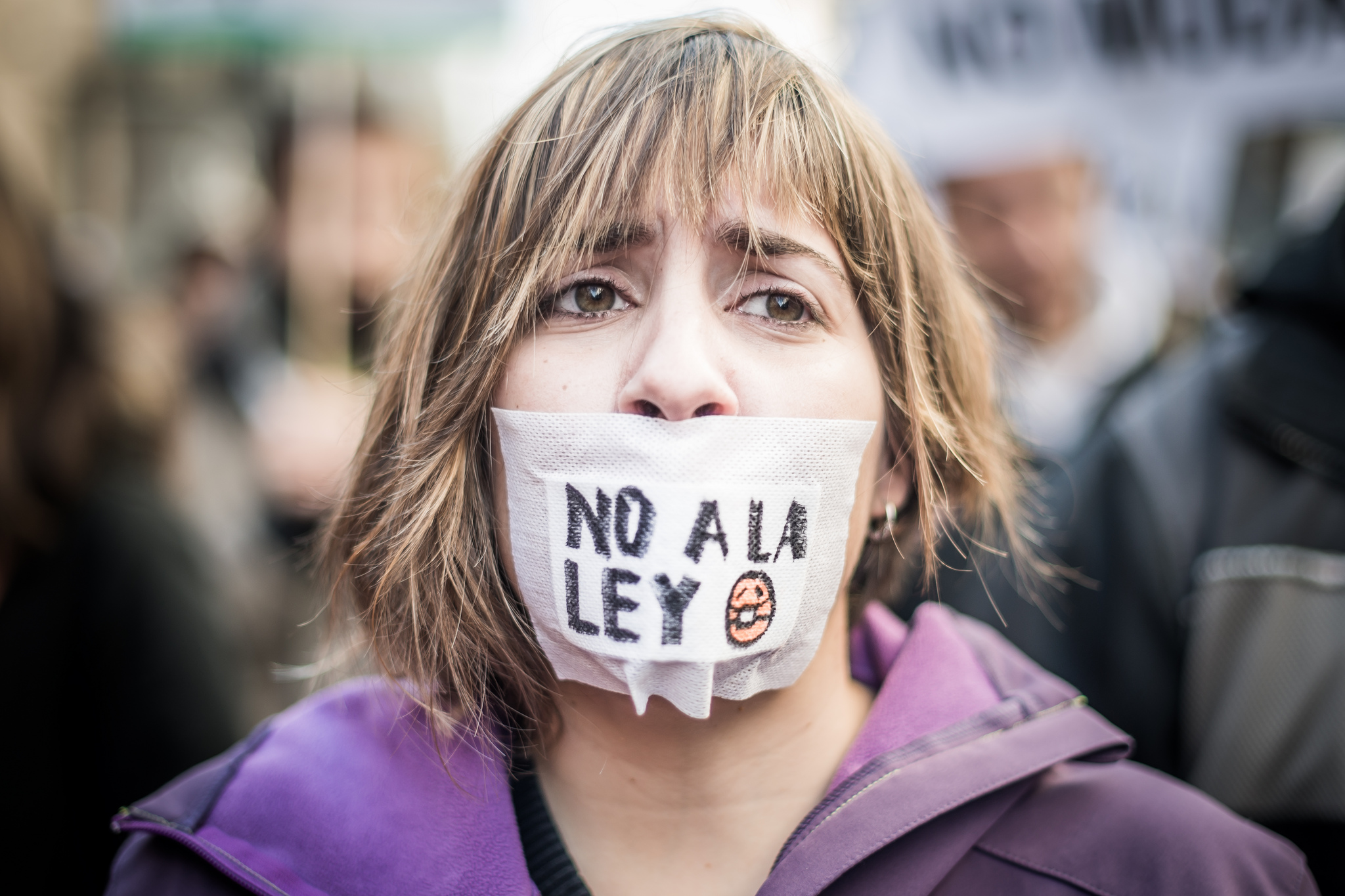

In these days of fake news, machine learning, online capitalism, AI data mining, popularism politics, algorithms, Growing economic and social inequalities IT CAN NOT BE OVER STATED that the right to protest must be protected.

WHY?

Because we are moving to clientelism in which powerful interests — either businesses, trades unions, civil servants, key professions, or religious groupings — are bought-off.

Because politicians seem to be able to lie with impunity with us the great unwashed having little redress when they do.

Because freedom to protest occupies the space that should be reserved for the sovereignty of ordinary citizens.

Because the post-pandemic world will be different. 

Because corporations and bureaucracies can push elected politicians around too easily.

Because bankers or civil servants, for example, seem to be allowed to dictate what regulations they will have applied to them.

Because global trade-treaties signed by existing governments bind nation-states into rules and structures that make the voters of the future powerless.

Because these trade decisions are often made in a too short-termist way. Partly because of the way electoral cycles promote short-termism and now because of the pandemic and the developing economic depression to generate revenue freedoms are second class values. 

That’s some of what we are up against this year.

If we lose the fight, our freedom to demand that our leaders receive consent will vanish as quickly as our free-market economy.  

I have no expectation of, or desire for, democratic perfection but I hope that readers accept that the beliefs or the desires of citizens will have a strong influence on democratic outcomes and as there are circumstances where a perfectly good democratic decision will result in an outcome we don’t like.

Freedom flows from the people.

It is not something bestowed on us by the government and we must understand that equal justice under the law is at stake. Our voting rights are at stake. Workers’ rights are at stake. Consumer rights are at stake, and holding corporations accountable is at stake. And again there is so much more.

It’s true that no one can change how we think or what we believe, but we can be forced to adopt values and ideologies we don’t agree with by legislation or a simple court decision.

When the threat of peaceful protest becomes a political tool our right to peaceful assembly is in jeopardy.

Remember, life, liberty, and the pursuit of happiness can’t be found in silence. 


                                             ——————-

There is nothing like an economic shutdown to show that freedom rests in the hands of the government and not the people.

In a year that has seen spectacular curbs on our liberties, freedom to protest is more important than ever because when the government gives something away it is very difficult to take it back.

Under the cloak of the pandemic, we are now not only looking at the introduction of Covid-19 passports but restrictions to peaceful protest.

It’s a lot easier to serve the needs of small groups of people and use them to push legislation that opens the door to larger social change than it is to serve the needs of all the people.

So the government takes and doles out as it sees fit so it can promote itself and preserve the freedoms of the politicians who control it.

You probably haven’t given a lot of thought to the consequences for our fundamental freedoms.

Business shutdowns and other coronavirus pandemic-era restrictions raise an ugly question we can’t ask right now, but is democracy in retreat?

There should be no illusions about what the deterioration of established democracies could mean for the cause of freedom globally.

The future of democracy depends on our ability to show that it is more than a set of bare-minimum defenses against the worst abuses of tyrants—it is a guarantee of the freedom to choose and live out one’s own destiny. 

In Syria and Myanmar, hundreds of thousands of civilians from certain ethnic and religious groups have been killed or displaced as world powers either fail to respond adequately or facilitate the violence.

In Hongkong, we are witnessing what’s left of democratic freedoms being quashed by China. 

In England, we are seeing a country trading freedom for desperately needed revenue.

In  Europe, even long-standing democracies are being shaken by populist political forces. 

The crisis of confidence in these societies has intensified, with many citizens expressing doubts that democracy still serves their interests. That’s the problem with not understanding how freedom works.

SO THE QUESTION should be what happens when protecting our individual liberty threatens the liberty and lives of others?

That’s a conundrum we won’t solve any time soon, if ever.

The people we elect to lead don’t know what to do so their solution is to separate, isolate, and enforce. If you have no contact with other people you can’t spread this bug, so as the bug spreads our freedoms slip away.

Many, if not most of us are just as blindsided and even panicked by what the coronavirus can do. 

Overreaction is understandable, but this is also a valuable lesson about how easily our freedoms can be taken away without our consent by the same people we gave consent to in the first place.

That’s the problem when politicians are charged with ensuring that our society is just they turn justice into a battle over what best suits their needs and these are judgment calls that only hindsight can evaluate.

This is pretty basic.

When economic success is in jeopardy our freedoms are disappearing one by one without a whimper of protest. 

We all have the right to get up and go about our affairs without getting killed by random, out-of-control violence.

This is a concept at the root of democracy. 

But we also have the right when we see politicians that sought office vowing to defend and now plan to take away with everything with crushing tax hikes, to hijacking our health care system, to destroying our sovereignty to abolishing free-market capitalism, to sneaking in WOKE-inspired legislation, to control what we say and the media we can access. 

The government has now morphed into a cult that seeks to silence all of those that disagree.

What started with PR about the right to peaceful protest is now a political issue with no solution except to sit back and hope for the best until peaceful assembly becomes too-dangerous a freedom of the past.

Our freedom to do something as simple as leaving our houses to visit with friends or attend a crowded church is so basic we don’t even think about it as one of the fundamental rights we enjoy. 

Just a handful of disrupters with rocks, frozen water bottles, fireworks, or other weapons in a crowd of thousands completely destroys the notion of peaceful protest.

If a just society means the government pacifies the people by paying for everything then that no longer matters. The crowd is a danger and the freedom of assembly turns against us with the taxpayers eventually have to pony up.

That’s not the point, though.

We are now so numbed to the words, War, Killed, Murder, Rape, Racism, (even when they are applied to children), that we don’t pay much attention anymore so it’s not surprising when it comes to freedom that we have enjoyed which our forefathers gave their lives to protect we make little effort to ensure that they prevail.  

Finally, of course, these days protests can be more than just physical peaceful assembly. If used collectively Social media protests with buying power it is probably the most effective way to make our voices heard.

Campaigns grounded in human rights/ values that affect profit will not just demand change but will achieve change.  Because they would hit the bottom line – profit.   

James Madison warned us:

“The accumulation of all powers legislative, executive and judiciary in the same hands, whether of one, a few or many, and whether hereditary, self-appointed, or elective, may justly be pronounced the very definition of tyranny.

If we were able to create a perfect democracy, it would be as participative, efficient, and consensual as possible. It would be sustainable, resolute, and robust in itself. It would be as wise as it wants to be. All of these features would be subordinate to the need for it to be as fair as possible.


All human comments appreciated. All like clicks and abuse chucked in the bin.

← Back

Thank you for your response. ✨


We should be smart enough not to repeat the mistakes of the past and angry, take no prisoners. 


The capricious nature of these restrictive orders shows just how fragile our constitutional rights can be in a time of crisis. 


in lieu of a vaccine the freedoms we take for granted were all but erased in a few short months. That includes the most important freedom we have, the freedom to simply live our day-to-day lives and maybe eke out a little happiness in the process.


telling us to hide in our homes until they think it’s safe to come out isn’t good enough if it destroys everything that makes us what we are as Americans. 


I vehemently stand against any sort of racial, cultural, or religious intolerance that threatens to divide the melting pot our country has become


When do we start checking protest mobs for implements of destruction because they are a threat to the safety and freedom of law-abiding citizens who understand that political dissent doesn’t mean destruction?  The answer is never.


We need a Green New Deal based in climate and environmental justice, which means building a clean economy that protects communities that have been neglected by policymakers for far too long.

We already lost our freedom to give consent with the COVID-19 clampdowns that flourished in Democrat-run states and jurisdictions. Picture that kind of dictatorial governing on a national scale. 

.


Progress is glacial, given what we’re up against.


THE BEADY EYE ASKS. THESE DAYS WITH TECHNOLOGY AND CLIMATE CHANGE ARE TREATIES OR TRADE DEALS WORTH THE PAPER THEY ARE WRITTEN ON.

Tags


( Fifteen-minute read) 


Countries can do whatever they choose and there is no organization in the world with any authority over any country’s government.

An anxious, frightened nation desperately turns to the government for leadership in managing and overcoming emergencies. This does not mean that momentous events like COVID-19, which tap into our deepest feelings of insecurity and mortality, ought to rule out the airing of legitimate differences of opinion.

This is how for all intended purposes the Good Friday Agreement was arranged not Brexit and subsequent Northern Ireland Protocol. 

The burdens of office are momentous but the actions we take are a great source of information about ourselves but underestimating the significance of platforms like social media for debate has its own consequences. The Arab Spring, Donal Trump’s election, Brexit, the handover of Hongkong, and now the Northern Ireland Protocol (designed to protect the Good Friday Agreement) a debate triggered by an online petition launched by the Brexit supporting DUP. 

Perhaps it’s time that trade deals and treaties were arranged by independent third parties because I believe that the detached self is able to paint the most accurate picture of who we are and how we work.

Brexit as I predicted is a good example of the unforeseen effort and costs involved when exiting a deal that is not properly understood in the first place. 

Northern Ireland voted to stay in the European Union.

Outside the EU a border inside the EU no border. 

Any trade deal or treaty comes with rules and regulations agreed to by all parties prior to the agreement any changes must to agreed upon by the signatures to that deal before implication.  Any unilateral actions nullify the deal as there is no point in agreeing on something that is not going to adhere to.   

                                      ——————–

Trade always takes the line of least resistance.

The implementation of the protocol on Northern Ireland was always going to be difficult – Brexiters have never accepted the need for the Irish Sea border that they have nonetheless created, arguing right up until the protocol was signed, that a mixture of technology and “mutual enforcement” by both sides could obviate the need for a trade border in Ireland.

As far as the Unionist in the north of Ireland choosing to put a trade border in the Irish Sea, Boris Johnson unsettled the fundamental constitutional ambiguity at the heart of the 1998 Good Friday Agreement peace deal as the price of delivering a fully “sovereign” Brexit for the rest of the UK.

The Good Friday Agreement functions (however imperfectly) because it enables the people of Northern Ireland “to identify themselves and be accepted as Irish or British, or both”, but the protocol means the Unionist community now feels that its identity is threatened.

Alas, this week’s row — in which the UK government unilaterally granted itself more time to phase in burdensome bureaucracy, sparking a threat of legal action from the European Commission — shows how far trust and communication have broken down between both sides, obscuring the practical requirements noted above.

Government is not perfect — no human institution can be without trust.

To just exist without following any of the pre-agreed treaty clauses or simply for political gain is bad form. It also is a sign to the rest of the world that a treaty with a particular country and government in power that breaks it outside of those planned options isn’t trustworthy.

With that deadline gone and both parties have ruled out any extension to the transition period, it is now clear that there is no longer time for parliamentary approval on the EU side.

So where are we? 

The EU  which includes some large member states is not yet fully confident that a Johnson government will implement the agreement it signed — and yet in demanding demonstrations of UK willingness to implement the deal fully, it is at serious risk of testing the protocol to destruction. 

Does this mean that the UK will crash out without a deal?  

Not only the Council and the European Parliament have to ratify the agreement, but also the legislatures of all 27 member states by qualified majority voting or unanimity, depending on the scope of the agreement.

In the meantime the pandemic has flung the world into a maelstrom, we’re still not quite sure how to get out of it never mind climate change. 

We can’t build back better if we don’t know what building back better looks like.

So a good starting point is to think of the problems we have now, and what we can do to find solutions to help build back better.

With the astronomical cost of the pandemic yet to be determined radical economic or social change is the last thing governments want right now.

What’s needed is stability, to allow the economy to recover. A radical shift in policy seems unlikely when we’re in the midst of an economic crisis. It would be like taking the air supply away from a sick person fighting for their lives. It is quite literally, the last thing you would do.

We need to remember governments tend to react to problems, rather than proactively create radical reform, and herein lies one of the greatest challenges in dealing with the climate crisis never mind the No Nay Never Unionists. 

Under International law a border there must be till either Northern Ireland is reunited with the South or England rejoins the EU. 

England could leave the customs union with the EU,  Northern Ireland could not. 

                                             ——————— 

When it comes to Climate change to be sure, the governments have gotten a lot of things wrong.

Yes, we’re already in a crisis. A problem of breathtaking proportions. But does it feel like a problem? Not really.

From the perspective of people who have bills to pay, screaming children, stressful jobs, how does the climate crisis impact their lives?

For the majority of people, the climate crisis isn’t that high up on their list of priorities.

Things are going to have to get really bad for people to take notice.

It’s only when the climate crisis starts to feel like a problem affecting people’s lives that they’ll start demanding change.

At that point, it will be too late for governments to do anything about it.

The problem with government is that we are unable to make it work-work with us, not over us; to stand by our side, not ride on our back.

With public sentiment gripped by anxiety and uncertainty as we race to rationalize and intuit what COVID-19 will mean for how we live, the last thing anyone wants to see is politicians and other leaders bickering over the many prescriptions needed to address what is going to put Coivd -19 in the shade – the climate.  

To date, we’ve largely been spared that fate.

However, as technology turns climate into a product the climate movement needs to wake up to the uncomfortable realization that we need to be patient and let the system implode, but be damn sure to be ready when it does.

Lockdowns that ground society to a halt have given the environment a break. Governments would be well served to anticipate this next phase.

If they don’t accommodate what will become a loud chorus demanding, not without justification, regular demonstrations of accountability in the face of the most far-reaching encumbrances on personal liberties we’ve seen in our history.  

Climate is what shapes and defines our lives in various ways, and it is an indispensable resource during times of hardship and sacrifice.

All the “solutions” to the government’s problems promise to speed, streamline, standardize and modernize, but they rarely address the organizational changes required to actually make them effective, or the organizational changes that result.

The climate will take no prisoners so those attending the next climate change summit need to understand what is now their starting position is with economies being crushed by the Pandemic and the forthcoming Depression.

Global climate is projected to continue to change over this century and beyond. 

These meetings have been vital to find a global consensus on an issue that requires a global solution.

Among the many elements that need to be ironed out is the financing of climate action worldwide. (  See previous posts )

Because the clock is ticking on climate change, the world cannot afford to waste more time: we must collectively agree on a bold, decisive, ambitious, and accountable way forward.

This cannot be done by written agreements that are non-binding. It can only be achieved by rewards like non-repayable grants funded by placing a 0.05% World Aid Commission on all profit-seeking activities. ( See previous Posts)  

All human comments appreciated. All like clicks and abuse chucked in the bin.

← Back

Thank you for your response. ✨


THE BEADY EYE ASKS; DOES DEMOCRACY DEPEND UPON SOME PEOPLE BEING NON-CONFORMISTS?

Tags

, , , , , ,


(Six-minute read) 

THANKS TO TRACK AN TRACE millions of bits of information about each of us circulate through the internet, but our freedom and democracy don’t seem to have been substantially impacted as yet. 

We might still feel free to do as we please but will the introduction of Covid-19 passports turn us all into Dalits? ( Better known as Untouchables)

These people in the Hindu religion face discrimination and even violence from members of higher castes, or traditional social classes, particularly in terms of access to jobs, education, and marriage partners.

The concept of vaccine passports is no longer theoretical.

The premise for such passports (whether digital or otherwise) will indicate whether individuals have received A COVID-19 VACCINATION OR BEEN TESTED RECENTLY.

Are those that are not vaccinated to be marked with a yellow star.

There are also many privacy concerns to be addressed with vaccine passports that will result in benefits been distributed unequally, not removing them but perpetuating them.

We all know that data in the form of knowledge is the manner born to the digital age of algorithms.  

These days we are constantly asked by pop-ups to agree to the website’s privacy policy – us of one’s data and so on in order to personalize your experience and share your data. ( We value your privacy offers a choice – I accept or change consent – manage your choices) 

Why is this happening? 

Because the General Data Protection Regulations ( GDPR) have come into force with fines up to 20 million Euros.

How can such a privacy policy be legal?

They claim to value my privacy and I can review what they mean by that in the policy. However, at the same time, they do not commit to keeping it like that and might not “value my privacy” at any later point in time.

Now think this further.

If this clause is in fact legal, we could set up a website with a volatile privacy policy. That would be a privacy policy that changes on every visit to the website.

As an example, on the first visit, we happily tell the visitor that we do not collect any information, do not use personal information, and of course, also do not sell any kinds of data to advertising networks. However, as soon as the visitor accepted this policy (of course they are privacy-aware and read the policy), it will suddenly change to the opposite. The visitor will never be informed or even asked for consent again.

Clearly, we all place some value on privacy, but why?

We’ve seen how we use privacy as a commodity, if we can give out some of our private information and receive a bargain at the store then we call that a fair trade. 

If we use our privacy as a commodity, then we ought to think about how much we should ask for in return for our privacy. In setting that price, it would be a good idea to think about what sort of value our privacy has.

What if the situation with Covid Passports becomes considerable direr – Stigmatised for life – Contaminated from birth.

Democracy is a social good, and privacy is instrumental to that social good but we ought to think about how much we should ask for in return for our privacy. 

                                  ———————–

The non-conformist can take unpopular stances on government policy that might shine a light on issues that others hadn’t thought of. They’re the ones who get meaningful conversations going in public.

Now most of us are perfectly happy for our lives to be an open book even if there is a price to be paid.  

In setting that price, with the arrival of Covid-19 passports it would be a good idea to think about what sort of value our privacy has.

The argument for Covid -19 passports draws on the concept that people who are being watched will behave differently than people who aren’t being watched.

We don’t do things when we think it’s possible that someone is watching.

Security cameras serve this function even when they aren’t being monitored because the possibility of being watched is often enough to alter our behavior.

There is more at stake here than our preference to maintain sole control of our information. Privacy also serves as a social good.

We can use privacy to delineate our relationships with other people and we can make use of our private information in order to get those things that we want and need.

Now, it might seem like our loss of privacy is necessary to save lives but the flu kills around 650.000 of us a year. 

One thing however remains constant throughout this pandemic and the history of the world. 

WE ALL HAVE TO DIE SOMETIME. SADLY STATISTICALLY YOU ARE STILL YOUR OWN WORST ENEMY. 

All human comments appreciated. All like clicks and abuse chucked in the bin. 

← Back

Thank you for your response. ✨