THE BEADY EYE ASKS. DID DARK MATTER CREATE GRAVITY OR IS IT THE OTHER WAY AROUND.

Tags

,


(Fifteen-minute read) 

This question has been asked before. 

I am no scientist but as far as I am aware so far dark matter has never been observed directly—hence the name.

You can point at where it is, say how much is there, and even talk about what it’s doing, however, it is estimated that dark energy makes up approximately 68% of the universe.

As far as anyone can tell, it is incredibly non-interacting and according to mathematical models, it makes up three-quarters of all the matter in the universe.

If that is so, is it not logical to assume that gravity must have been present before the formation of matter as no matter whether it be dark or otherwise could form without some sort of paste to clump them together.

We know that dark matter is a repulsive force that does not interact with electromagnetic energy, that it does not absorb, reflect, or emit light, making it extremely hard to spot. However, it’s said to interact with light and visible matter only through gravity giving the universe its overall structure. solar system


Like Dark matter we can’t see, feel, or directly observe gravitational forces.

So we have two unobservable forces. 

One is called gravity made of quantum particles, called gravitons which need an atmosphere and air to exist.  The other is a hypothetical form of matter not containing baryons—that is, without protons or neutrons. 

Obviously, there is a very close relationship between the contributions of dark matter and those of ordinary matter, as predicted in Verlinde’s theory of emergent gravity and an alternative model called Modified Newtonian Dynamics.

But if matter gives rise to gravity, then the standard model is wrong. 

(According to the standard model, gravity existed before matter did and if that’s the case, where did the gravity come from with no matter to initiate its presence?)

Perhaps we are wrong about how gravity works?

                                      ————————–

Both gravity and all matter are intertwined, interacting with each other with their forces diminishing the further away they are, eventually dissolving into dark matter that has no force till it meets gravity once more. 

Why?

Because dark matter doesn’t interact with itself it is bound to our world only by gravity and tugs on other things that also possess gravity.

Gravity is a force pulling together all matter (which is anything you can physically touch)

I believe that Gravity and Matter are the same things, so why do we give them different names?

                            ——————————–

All human beings are born on Earth, an environment perpetually under the influence of gravity.

A man wasn’t born with the biological ability to defy gravity.

Gravity is the weakest of the fundamental forces in Physics but has the greatest effect.

Take away gravity for an extended period, and that mechanical strain on the body goes away. As a result, the body forms fewer osteoblasts (bone-building cells), leading to a loss of bone mass and greater susceptibility to fractures.astronaut drifting in outer space
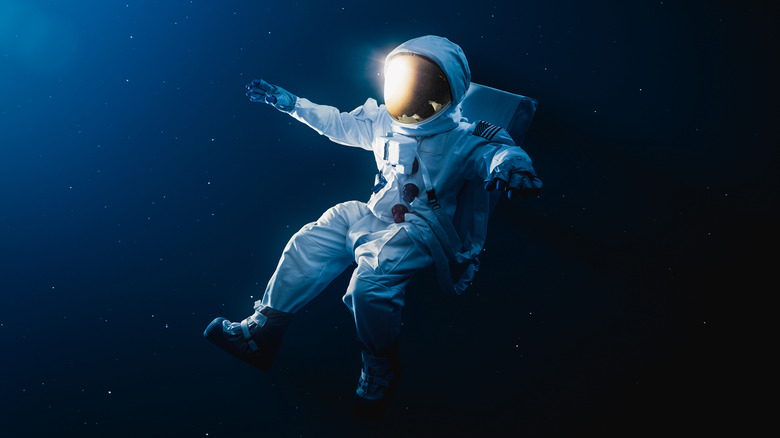
Astronauts in orbit around the earth are not experiencing “no gravity”. They are experiencing almost all of earth’s gravity, but with nothing to stop them.

The body’s development is greatly affected by gravity’s constant downward pull. That means it’s under constant stress, and our muscles and bones develop specifically to withstand that stress.

The amount of effort your heart exerts takes gravitational force into consideration.

Gravity has a strong connection to sleep patterns and the quality of sleep a person gets.

Gravity is measured by the acceleration that it gives to freely falling objects.

The word “gravity” is used historically to mean any acceleration and not just gravity.
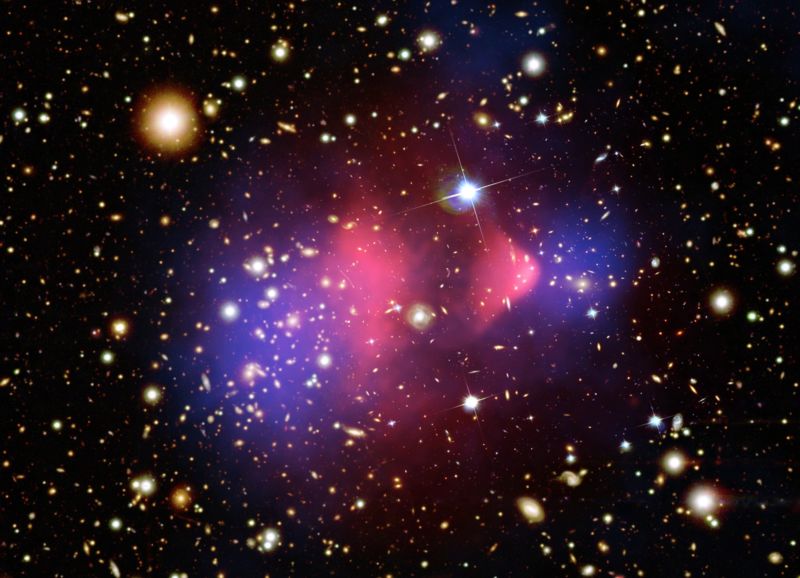
We know that starlight from far away galaxies are bent by gravity on their way to our telescopes. But the distribution of gravity is not unformed throughout the universe, as it is the weight of what is on the dark matter that dictates its strength.

Without a doubt, all of these effects are caused by gravity, but the question is: are we genuinely observing additional gravity, caused by invisible matter, or are the laws of gravity themselves the thing that we haven’t fully understood yet?

If we find there is no dark matter might gravity only exist?

                                            ———————-Animation of apple falliing from tree

So is gravity actually created by dark matter or is it the other way around?

Perhaps what we perceive as dark matter is really just the gravitation from matter in another nearby universe. 

We know that it is not a form of matter and we have a gravitational equation that says that the force of gravity is proportional to the product of the two masses (m1 and m2), and inversely proportional to the square of the distance (r) between their centers of mass.  Mathematically speaking, F=Gm1m2 / r2

Nature defines zero-gravity as “a state of weightlessness.

We know that it is the Sun’s gravity that keeps the Earth in its orbit! and the Moon’s gravity is responsible for the ocean tides on Earth.

It’s the glue that keeps the Earth’s layers – the inner core, outer core, mantle, and crust — intact as it rotates on its axis and revolves around the Sun.gamma-ray bursts

We know that gravity from a black hole bends light rays.

But black holes are really just the evolutionary endpoints of massive stars they don’t have any surface or atmosphere to create a gravitational pull so their center of gravity must be outside or another mass or at the exit of the hole that produces dark matter. 

Black holes are among the oddest objects believed to populate the universe a million to a billion times the mass of the sun. 

We know that it’s the force that is critical for life on Earth to continue.

We know that without an atmosphere, there is no gravity, and if it disappeared, so will the Moon and all of us.

But we don’t really know what it is other than it is a force whose effects extend from each object out into space in all directions, and for an infinite distance that never goes completely away.

No science says that gravity control is impossible.

Artificial gravity can be created using a centripetal force. Because an electromagnetic field contains energy, momentum, and so on, magnets will produce a gravitational field of their own.

Gases such as Co2 and methane *are* held close to the surface of the earth because of gravity.  

The only way to change the planet’s gravity would be to change the planet’s mass.

Galaxies with a different shape and history can have a different amount of ‘apparent dark matter.

All human comments are appreciated. All like clicks and abuse chucked in the bin.

← Back

Thank you for your response. ✨

THE BEADY EYE SAYS: COP26 WILL TURN OUT TO BE THE MOST EXPENSIVE COP OUT THAT THE WORLD HAS EVER SEEN. .

(Five-minute read) 

1.5 apparently has not yet been reached and to many experts, the 1.5°C target appears to be out of reach. 

Words, Pledges, Agreements, Strong Statements, and inductive thinking, will do nothing to stop Climate Change.

So as the planet perhaps inevitably closes in on and goes beyond that 1.5°C target, it’s reasonable to wonder how a world with “just” that degree of warming would compare with a world where global temperatures rise by 2°C or more above preindustrial levels.

(Keep in mind that there’s no science suggesting that the warming of the planet’s atmosphere will magically stop at that 2°C limits; indeed, just the opposite).

Every bit of warming matters.

About 14% of the world’s population would be exposed to extreme heat waves once every five years if global temperature increases are held to 1.5°C; that percentage jumps to 37% with a rise of 2°C.

  • With a 1.5°C increase, extremely hot days in the mid-latitudes will be 3°C hotter (5.4°F) than pre-industrial levels.
  •  
  • With a 2°C increase, extremely hot days in the mid-latitudes will be about 4°C hotter (7.2°F) than pre-industrial levels.
  •  
  • With a 1.5°C increase, sea levels are projected to rise by 2100 by 0.26 to 0.77 meters (0.85-2.52 feet) relative to 1986-2005.
  •  
  • With a 2°C increase, sea levels are projected to rise by 2100 by 0.36 to 0.87 meters (1.18-2.85 feet) relative to 1986-2005.
  •  
  •  
  • With a 1.5°C increase, 6 percent of insects, 8 percent of plants, and 4 percent of vertebrates are projected by 2100 to lose more than half of their climatically determining geographic range.
  •  
  • With a 2°C increase, those percentages double or triple: 18 percent of insects, 16 percent of plants, and 8 percent of vertebrates are projected by 2100 to lose more than half of their climatically determining geographic range.
  •  
  • With a 1.5°C increase, scientists project that the Arctic Ocean will become ice-free in the summer about once every 100 years.
  •  
  • With a 2°C increase, the Arctic Ocean could become ice-free in the summer once every 10 years.
  •  
  • With a 1.5°C increase, coral reefs around the world are projected to decline further by 70-90 percent.
  •  
  • With a 2°C increase, coral reefs are projected to decline by more than 99 percent — an irreversible loss in many marine and coastal ecosystems.
  •  
  • With a 1.5°C increase, one global model cited by the U.N. report projects a decrease in the global annual catch for marine fisheries of about 1.5 million metric tonnes.
  •  
  • With a 2°C increase, the same model projects a decrease of more than 3 million metric tonnes.

Compared with a rise of 2°C, limiting warming to 1.5°C could reduce the number of people worldwide exposed to climate-related risks and resulting poverty by hundreds of millions fewer people.

The notion that humans could override nature is absurd.   

To limit warming to 1.5°C, global net greenhouse gas emissions from human activity must decline by about 45 percent from 2010 levels by 2030, and reach net zero by 2050. To limit warming to 2°C, emissions must decline by about 25 percent by 2030 and reach net zero by about 2070.

The money is only about one-third of the amount the IEA says is needed to put the world on track to achieve net-zero emissions by 2050.

It has been being clear that since 1978, global warming has become even more apparent.  

Almost everything these days are presented to us in a way that’s supposed to get us to consume something.

Every result that shows up in Cop26 has been caused by certain actions that were taken in the past.  That means that we’re constantly living in the residue caused by our thoughts and actions in the past.

After 25 Cop summits have achieved zero as we have not yet discovered the laws that control any given circumstance to stop climate change. 

The bottom line is that if you don’t like the effect of the actions that you’ve taken in the past, then alter your actions to create a better future.

Poverty and prosperity are opposite poles of the same thing. 1.5 and 2.4 are not. 

All human comments are appreciated. All like clicks and abuse chucked in the bin.

← Back

Thank you for your response. ✨


THE BEADY EYE SAYS: COP26 IS YET TO GRASP THE NETTLE BY THE NECK.


( Four-minute read) 

To grasp the nettle Cop26 has to realize that there can be no compromises with the Climate. 

This is not a negotiation with each other.  There is another unspoken negotiation going on too – called compromises which are fundamentally unambitious when it comes to Climate Change. 

Reducing carbon emissions, improving the food supply and demand imbalance, and reducing water shortages: are the three biggest challenges that the world is currently facing.

At the current temperature rate, we have just 12 years to make a difference. 

Public government finances are not enough to fund efforts to keep a global temperature rise below two degrees. 

By 2030, by 2070, and by, by do not grasp that it is now we need to ensure your money is tied up ethically, sustainably, and responsibly so it will go a long way to alleviate the increasing effects of climate change, and the subsequent challenges it brings.

To meet growing demand, we need more food, resources, water, and energy and this increase in the use of resources presents global challenges that can not be met by public finances. 

So the onus is on the financial sector to make strides for climate change, but most of the fund offerings within the sustainability or environmental space are mainly equity-only strategies.

This poses a significant challenge only in cost but in investment. 

It is now that we need to invest in a green economic world that is brimming with prosperity – something that is only expected to rise in the future as the world moves towards a necessarily sustainable society.  

Growth is the key reason for general investor interest in sustainability and environmental themes.

One only has to look at sovereign wealth funds investing more and more in the green economy. 

Most end-markets in the sustainability space are expected to grow annually at double-digit rates over the next three to five years compared to low single-digit in most developed economies.

So why not now invest sustainably by issuing Green bonds with remuneration in order to provide a clear incentive to drive this change. 

They will not just provide financial rewards, but environmental ones, too.

COP26 MIGHT BE THE MOST COMPLEX NEGOTIATION EVER ATTEMPTED. 

Why? 

Because humans are helplessly reciprocal creatures and without realizing it we mirror each other in what we say and how we say it.

Negotiations are rarely about the issue we’re talking about.

Try compromising with this lot.  

The temperature rise has not been, and will not be, uniform or smooth across the country or over time. 

Increased heavy precipitation events will continue.

Heat waves (periods of abnormally hot weather lasting days to weeks) everywhere are projected to become more intense.

Hurricane-associated storm intensity and rainfall rates are projected to increase as the climate continues to warm.

Sea level rise will continue past 2100 because the oceans take a very long time to respond to warmer conditions at the Earth’s surface.

The Arctic Ocean is expected to become essentially ice-free in summer before mid-century.

Global climate is projected to continue to change over this century and beyond.

The effects of human-caused global warming are happening now, are irreversible on the timescale of people alive today, and will worsen in the decades to come.

So we must figure out new ways of working together to create a sustainable world.

All human comments are appreciated. All like clicks and abuse chucked in the bin.

← Back

Thank you for your response. ✨


THE BEADY EYE LOOKS AT THE ROLE OF MONEY IN POLOTICS.

Tags

, , , , , ,

(Eighteen-minute read) 

First, money is a medium of exchange that lets us earn, buy, and sell completely different things in the same units.

On top of this, money is also a unit of account—i.e. it lets us put the prices of very different things in the same terms.

This is why private wealth impacts public life, with the world of politics full of lobbyists. 

Money has always shaped the process of political competition and influences policymaking but most of us are unaware of how money works, behind the scenes in the political theater, it is a year-round issue that dictates the daily life of the nation.

Money finds its way into politics in myriad ways — 

Any political campaign lives or dies by its funding and for a long time, there has been a popular myth about how everyday voters who outnumber the wealthy will collectively donate more money than the few donations of the wealthy.

The influence of cash within politics could be called dark money.

It turns politicians’ existence into serving their donors instead of their voters, which affects the policies they support, how they allocate government spending, and their expressed values.

Regardless of our personal feelings, money makes the world (and democracy) go round.

It seems unfathomable that these external entities have such leverage in our election process.

Whether elected officeholders betray their voters, prioritizing interest groups or single campaign donors, remains a question to be answered in the public sphere. 

The super-wealthy class is almost single-handedly funding elections, which impacts our government’s overall functionality and integrity, meaning the power lies in the hands of few.

Cash has become a determining factor for who wins the most crucial elections like the president of the USA. 

most expensive presidential campaign


Since 1980 if you add it all up it comes to $ 105 billion 349 million.   

There’s way way way too much money in politics and most of it is having a corrupting, undue influence and locking out the voices that count.

For too long, money has been the one thing that has reigned supreme in a democracy.  

The influx of cash from corporations and interest groups sways the ways our political leaders pass legislation that supports these entities, regardless of the public’s best interest.

It allows corporations to buy leverage that alters the fabric of our economy.

                              ———————————

Fighting undue influence and corruption from political financing requires a clear understanding of the difference between unlawful influence on public administration and behavior and breach of trust of voters.

The former requires precise regulation of those sectors of administration that usually lend themselves to compensate campaign donors.

The potential entry point in the public sector can vary along with several channels of influence.

Beyond political advertising and election contributions, cash is influential in the lobbying industry. 

A ridiculous game in which corporations are people and money is magically empowered to speak. Allowing people and corporate interest groups and others to spend an unlimited amount of unidentified money has enabled certain individuals to swing any and all elections.  Donal Trump and referendums like Brexit.

While banning all campaign donations is an option, a comprehensive approach will take into account private agents who can resort to lobbying, personal networks, or corruption.

The truth requires that we call the corrosion of money in politics what it is – it is a form of corruption and it muzzles more of us than it empowers, and it is an imbalance that the world has taught us can only sow the seeds of unrest.

                                               —————

Money cannot always buy the best election results – Trump – Robert Mugabe – Crown Prince Abdullah – Kim Jong-un – Bashar al-Assad –Saparmurat Niyazov –  Putin – Idi Amin Saddam Hussein – Mengistu Haile Mariam – Augusto Pinochet – Pol Pot – Charles Taylor – Suharto – Mobutu Seko to name just a few dead and alive.

As of today, there are 50 dictatorships in the world.

But the millionaire class and the billionaire class increasingly own the political process, and they own the politicians that go to them for money.

It’s time to get big money out of politics., and have a system of scrutiny to ensure that no special access or call time with rich donors or big-dollar fundraisers to permanently eliminate big money from our politics and return it to the people.

                                —————-

Our democracy shouldn’t be bought and paid for by the wealthy and powerful.

It belongs to all of us or does it with the arrival of Big data the next currency of politics now being used to directly influence our decisions.

Data brings change to much more than just the commercial side of our lives.

We have to acknowledge that our data has much more than just a “one-shot” value.

The fact that Facebook and other social networks collect data on us is presented as something outrageous but not in the political world.  

Putting you into an “opinion bubble” by better targeting political ads and thus motivating you to actually go and vote, and become (unknowingly) an ambassador for the power that has you in its aim, exists. 

Data as a Political Asset: valuable stores of existing data on potential voters exchanged between political candidates, acquired from national repositories, or sold or exposed to those who want to leverage them

Data as Political Intelligence: data that is accumulated and interpreted by political campaigns to learn about voters’ political preferences and to inform campaign strategies and priorities, including creating voter profiles and testing campaign messaging.

Data as Political Influence: data that is collected, analyzed, and used to target and reach potential voters with the aim of influencing or manipulating their views or votes.

In reality, the same problems with money and now data have existed for years, with huge amounts of personal data being sold to corporate clients. And yet, we only start panicking when we see how the illegal, or barely legal trade of our life patterns collected by social networks impacts our political choices.

Knowing where we spend our time, what media we watch, what books we read, what food we prefer, and what words are we most likely to use in our tweets makes the difference.

But what is it that makes the politicians “addicted to big data like it’s campaign cash”,

Unfortunately, this “addiction” to data has induced politicians and their campaign managers into the same illusion that businesses are struggling with right now:

Big data allows reliable prediction and, obviously, politics, as the very structure of societal governance, is heavily impacted.

It is, indeed, a problem.

The amount of information that companies have about who we are and what we are as social units is so huge, that it is this data reshaping the very fabric of our societies.

Most people believe — because of huge public buzz scandals like the one of Cambridge Analytica — that big data in politics serves the goals of better manipulation.

The issue of data collection in the interest of the political actors must not be reduced to just cynical Frank Underwood-style power brokers buying data on where we eat and what we watch on Netflix and who our friends are to better sell us their quotes about how they are gonna make our lives better.

The overwhelming power of the big brother that tracks our every step raises the question.  If societies value equality of information, open debate, and transparency, these trends should be of concern?

One thing we know for sure is that the clear trend of getting more and more data involved in political campaigning and decision-making is there.

Without considering these questions, there is a danger that any response may have unintended consequences and fail to advance the principles we want to uphold.

Bribery is human nature and the only way to expose it is with transparency requirements that enable the media, public interest groups, and parties to engage in this debate.

The manipulation of the future political result, by algorithms is only a click away.

We will still need (yes, NEED) tons of “money in politics.”

Without big donors, how many Independent candidates will be able to go up against the dark money and deep, oligarch pockets?

Ok, let’s figure out where that money goes. 

All human comments are appreciated. All like clicks chucked in the bin.

← Back

Thank you for your response. ✨


THE BEADY EYE ASKS. WILL COP26 TURN THE CLIMATE INTO A PRODUCT.

Tags

, , , , ,

(Seven-minute read) 

It is not an overstatement to say that we all need to take responsibility for the carbon consequences of every choice we make. Such as filling up your car with petrol or booking a long-haul flight, or subtle, like when you buy a coffee or a new pair of shoes, or even increasing your cloud storage plan.

Pretty much everything we buy has a carbon footprint.

Every financial transaction has a climate consequence.

Companies are increasingly using environmental claims to appeal to consumers.

Our daily choices leave a carbon footprint. We know this, and we are all aware of the monumental climate risks posed by carbon emissions.

Demand for solutions is growing but if you know something is bad for you and you don’t know how to measure it, how can you reduce it?

Wouldn’t it be great if we could count, take control of and reduce our carbon emissions just as we take control of our diets?

Until now, despite huge advances in technology, monitoring and reducing our impact on the planet has been difficult.

As an individual, it is hard to incorporate carbon credits into your daily life.

There is no reason that all consumer products should be required to be labeled with their Cardon footprint. 

Consider cars, electrical or not.   

It takes about a tonne of steel to build it. Producing a tonne of steel emits two tonnes of carbon dioxide. 

By placing a value on the ecosystems that support our planet, carbon footprint labeling would internalize the invisible costs of everyday choices and allow a sustainable marketplace to emerge.

The market is beset by a lack of visibility. 

Imagine a world in which carbon emissions and footprints can be tracked transparently and reliably.

Retailers will be able to sell a product and take into account the carbon impact it creates at the same time.

Governments will be able to measure, track and trade emissions transparently. And crucially, for the first time, consumers will be able to understand the environmental impact of the products they are buying – both positive and negative – at the point of sale and will be able to mitigate this in an instant, with millions of micro-transactions scaling up to make a huge collective impact.

In a free-market economy, it is very difficult to force people to pay more for products but as the price lowers, our willingness and ability to buy an item increase.

                                    ——————

There will be billions of words from here to the moon and back and media footage of Cop26 over the next month. 

After which we will be asking the question of how did we end up turning not just carbon into a commodity but climate itself. 

Cop26 like previous Climate conferences is a bargaining area.

” You change this and I will change that.”

The Kyoto Protocol allowed for emission offsets in developing countries, whereas Paris creates an opportunity to extend the reach and deepen the integration of carbon markets.

With climate change a growing threat, economists came up with the idea of trading the right to pollute, creating a financial incentive to curb emissions.

Both lead to difficulty in assessing emission baselines with the free allocation of carbon permits leading to an oversupply in the market to be traded as greenwashing.  

This can be remedied by tightening caps in line with current climate targets and auctioning all available permits.

Broader criticisms of carbon trading include concerns that it has proven ineffective – some offset schemes even counterproductive – and it disproportionately affects lower-income classes.

Applying a carbon footprint labeling system might create a “carbon currency”  which is the key to demystifying and consolidating the carbon market so it can scale up.

Carbon credits are the perfect candidate for a digital currency as they are data-driven, rely on multiple approval steps, and exist separately to the physical impacts to which they correlate.

                               ————————-

The danger of climate becoming a product is obvious one only has to look at the words now used to describe a product. 

The word “ green ” is applied broadly to almost everything related to benefiting the environment, from production and transportation to architecture and even fashion.

Eco-friendly isn’t quite so broad and defines products or practices that do not harm the Earth’s environment.

Bioproducts or bio-based products are materials, chemicals, and energy derived from renewable biological resources. They are commercial or industrial products that are composed in whole, or in significant part, of biological products or renewable domestic
agricultural materials or forestry materials.

Climate-friendly defines products that reduce damage specifically to the climate.

Some brands are even moving beyond simply eco-friendly and now seek to claim their products are climate-neutral.

All these terms are used in labeling to make us feel good if we buy products claimed to minimize harm to the planet and the environment.

Consumer concern about the environment does not readily translate into the purchase of environmentally friendly products.

Take.  Meat the way people consume and think about meat is going to need to change in the coming years as meat processing companies face pressure to curb greenhouse gases in the fight against climate change.

McDonald’s — one of the largest beef purchasers in the world.

Finding ways to use carbon emissions to replace the “raft of products made from chemicals from petroleum” could have a significant impact on climate change.

Climatop label certifies products that generate significantly less greenhouse gas than comparable products.

Imagine a world where you take your waste back and reuse it.

All human comments are appreciated. All like clicks and abuse chucked in the bin.
← Back

Thank you for your response. ✨


THE BEADY EYE SAYS. THAT WE HAD 25COPS BEFORE THIS ONE.

Tags

, , ,


(Two-minute read) 

There have been 25 COPs before.

Why do researchers say this one is so important? 

Because you don’t have to be a genius to see that climate change is potentially the greatest global environmental challenge facing mankind”.

It wasn’t until the 2015 Paris meeting, the 21st conference of parties to the treaty, that all countries formally agreed to take action to limit warming to 1.5–2 °C

Paris did driving action, but now it’s just not fast enough. Despite more than 30 years of warnings from scientists, and global efforts, carbon emissions are still increasing.

What would a successful outcome look like for COP26?


Commitments are just the first step:

Commitment is not a word but an act. 

Commitment Concept Arrow Of A Compass Pointing Commitment ...

Implementation and transparency will be the problem. 

COP26 isn’t just about national carbon commitments and

negotiations between countries. Business and industry

associations will be stepping forward with new commitments, as

well:

The idea that this Cop26 diplomatic process  (without putting money into the topic) which reaches decisions by consensus among nations rather than majority vote, is not capable of meeting the challenge.

Why? 

Because eliminating fossil fuels represent a wholesale transformation of the modern global economic system.

“It’s not just an environmental issue, it’s a massive societal challenge.”

If all 131 countries that have announced or discussed net-zero pledges were to follow through, the projected global temperature increase would be limited to around 2 °C above pre-industrial temperatures.

That is still short of the Paris 1.5 °C goal.

All human comments are appreciated. All like clicks and abuse chucked in the bin.

← Back

Thank you for your response. ✨


THE BEADY EYE SAYS. NOTHING EXCEPT CO2 WILL COME OUT THE COP26.

Tags

, , , , , ,


(Ten-minute read) 

Cop26 described by the media as a “turning point for humanity” will be attended by upwards of 30,000 people, (including around 200 world leaders and thousands of press and media representatives.)

Are politicians promising real change that will prevent the world from breaching the maximum global average heating of 1.5C?

 Climate politics at COPs is complex and the stakes are high.

Even though the alarm bells are deafening, and the evidence is irrefutable with Global heating affecting every region on Earth, with many of the changes becoming irreversible, we will see a world fudging backed by Bla Bla with no enforceable plan that will go far enough to create a financing mechanism to support “net zero” by 2050.

On the contrary, we will see offerings of more of the same or worse. 

Since the 2015 Paris Agreement, the world is on track for emissions to rise by 16%. 

Will governments look beyond narrow national interests and act together for the planet and for us all?

NO

The need to create for Loss and Damage to enable poorer nations devastated by climate disasters to recover will not happen. 

The major historic emitters of greenhouse gases (mostly rich, former colonial powers) have a greater responsibility for causing climate change and should therefore bear more responsibility to decarbonize more quickly.

They should provide financial resources and share technology with the global south to help them both address the impacts of climate change and make the transition to a low-carbon economy.

So far three-quarters of this financial assistance was in the form of loans that the global south had to pay back. This type of finance increases the debt burden of the global south and makes these countries more vulnerable to financial crises.

Instead, climate justice demands that rich countries provide at least $400 billion a year in grant-based climate finance to the global south by 2030.

What’s more, there is no agreed mechanism for raising finance for loss & damage due to climate change (eg. the losses caused by more frequent cyclones or hurricanes).

This should be the guiding principle of the whole process – but too often rich countries seek to undermine it.

                                              ————-

Understanding the significance of what is being discussed is not always an easy task.

No single country can fix it on its own.

There are some developed nations and high carbon emitters that have yet to pull their weight. Australia, Canada, Russia, Saudi Arabia, Brazil, Mexico are in this category.

China and the United States are the world’s two largest carbon emitters and are a special case. 

Take the host the UK’s messaging on climate change. 

  • Approving the first new coal mine in 30 years.
  •  Licensing for new North Sea oil and gas exploration.
  •  Cutting taxes on flights and supporting expansion plans at seven airports in England.
  •  Scrapping the Green Homes Grant energy efficiency scheme early.
  •  Investing £27bn investment for new roads and highways, while reducing grants for electric car buyers.

Some impacts of climate change are now inevitable and indeed are already happening.

This means that need funding for adaptation to climate change. However, climate finance from rich countries has so far heavily prioritized mitigation, with 63% of all climate-related finance globally flowing to renewable energy.

Planning for a just transition instead means that the costs of climate action should not be borne by those who have done least to cause the problem, including workers, frontline communities in the global south, and black and Indigenous communities.

.If there was a moment of true emergency in the fight to preserve our climate, it is now.  Not to be derailed by false solutions and dangerous delusions.

The cost of failure is astronomical.  It translates into many premature deaths, more mass migration, major economic losses, large swaths of unlivable land, and violent conflict over resources and food.

All human comments are appreciated. All like clicks and abuse chucked in the bin.

← Back

Thank you for your response. ✨


THE BEADY EYE ASKS. WILL THE WORLD OF TECHNOLOGY GET RID OF INEQUALITY.

Tags

, , , , , ,

(Thirteen-minute read)

With or without technology there will always be inequalities in the world.

So why do we keep trying to solve poverty with technology?

Because this way of thinking is so ingrained that is adopted by organizations that fight poverty—which often refashion themselves to resemble technology startups.

Inequality has been growing so much that all governments and civil society speak about it with increasing worry, trying to understand its causes, but unable to find solutions, because of greed. 

It is our policy on technology that drives inequality.

There is no better example of this than in the way the world is handling the current Covid pandemic unable to share the know-how to make the vaccinations. 

Patents and copyrights are not guaranteed as individual rights, like the right to free speech or religion.

After all, why would a drug company pay large amounts of money to people to develop new drugs if the drugs can be copied and sold by competitors from the day they enter the market?

If it is not already obvious, patent and copyright monopolies are instruments of public policy, not acts of God.

This is why there is still not enough coronavirus vaccine to meet worldwide demand.

A year ago there was no commercial market for mRNA products.

Vaccine manufacturers long ago should have been sharing technology and expertise to boost production in the U.S. and Europe, and especially in developing countries. 

The same would be true of software developers, makers of medical equipment, computer manufacturers, smartphone companies, and any other product where the cost of research and development was a substantial portion of the price of the product.

The complete elimination of patents and copyrights is of course an extreme scenario, but it is a possible policy option.

If we did choose this policy option, we would have a much more equal distribution of income, in spite of having the same technology.

In short, the fact that there was a huge increase in inequality associated with the development of technology over the last four decades was the result of policy choices, not technology.

There should be serious public debate about both how strong we want to patent and copyright protection to be and also whether they are always the best way to promote innovation and creative work, as opposed to alternatives like direct public funding.

If we acknowledge the extreme case, where we literally have no patent or copyright protection, then we have to recognize that there is nothing inherent in our technology that would cause inequality.

Few things, in principle, can’t be delivered through technology.

It is entirely our rules on technology that can cause inequality to increase.How Technology Ends Inequality

So on one hand, technology can eradicate poverty — not by making poor people less poor, but by making it less valuable to be rich.

On the other as technology spreads, making its creators rich, but treating its users the same, we should expect more monopolies and more financial inequality.

Although it is your data you can’t pay for a better Facebook experience.

Companies are incentivized to offer a product if it makes more than it costs. And technology ends up not costing much once you’ve built it.

So, in the end, you charge people whatever they can pay and in poorer countries, people just pay and get paid less.

Times are changing from the days that growth in inequality was largely an organic process independent of government policy.  

“Owning” the robot/algorithm is not a technical relationship, it is a legal one, and therefore one that depends on our laws.

The reason some people might get very rich from owning robots or algorithms is that they own patents and copyrights that are needed for the making of the robots/ algorithms.  

                                         __________________

In the past, technological improvements would be beneficial to all:

Extreme economic inequality is corrosive to our societies.

Around 8% of the world’s population lives in extreme poverty — but do you know why?

Gender inequality, caste systems, marginalization based on race or tribal affiliations are all economic and social inequalities that mean the same thing:

You might think that poverty causes hunger (and you would be right!), but hunger is also a cause — and maintainer — of poverty. This is why now with climate change, negotiating international trade agreements behind closed doors with only bureaucrats and corporate lobbyists present has to end.

Economics should take into account ethics and the environment, and treat its claims less like invariable truths.

It goes without saying that any actions coming out of Cop 26 climate change conferences to reduce temperatures will be derailed by not just income inequality, (only the higher income household will be able to afford green energy technologies. Solar panels, electric cars, heating pumps, etc.) but by the total lack of shared responsibility to do anything about it.   

Of course, there are hundreds of other elements that contribute to the problems our world is now facing. 

World poverty isn’t a problem of limited resources, it is a problem of inequality and this inequality is upheld by the idea that aid creates dependence.

Climate change will drive up to 132 million more people into extreme poverty by 2030.

The pricing carbon emissions on average is at a mere $3 a tonne.

The price of inequality in all its forms is greed. There are vast fortunes to be made with Technology/ Algorithms for profit and nothing blurs ethical lines faster than greed. 

So far, any decoupling has either been largely relative – in the sense of merely achieving higher rates of economic growth than gains in emissions – or achieved by shifting dirty production from one national territory to another.

And that is why, for now, global emissions are still rising.

The idea of “Just Transition” without financing is pie in the sky. 

Take the aftermath of the Afghan 20-year war.

The country is now facing starvation. Why not bomb it with food.   

By coming together to tackle the plague of destitution around the world, we have the opportunity to advance the human condition and eliminate global poverty in a way no one has done before.

All human comments are appreciated. All like clicks and abuse chucked in the bin.

← Back

Thank you for your response. ✨


THE BEADY EYE ASKS. HAVE WE BECOME DESENSITIZED ?

Tags

, , , , , , ,

( Seven-minute read) 

Just the other day I watched a news report on Afghanistan with shocking images of starving children.

It’s not as if this is the first time starving children grace our television screens.   

It was predicted that if the country does not get aid there will be a human disaster with the loss of millions of lives. 

We all could be forgiven for not remembering the Irish Potato famine that killed around a million, but not the Famine in Ethiopia 1983-85 that killed around the same number of people. 

Since then the world is now confronted with the realities of climate change – streams of migration while the covid pandemic has killed 4,984,325 people so far from the outbreak to October 27, 2021, which is a contributor to our desensitization of suffering a very complex topic.

However I believe the world rich countries, paints it as something almost good, necessary, and a part of life.

The more we are exposed to these things, or let children be taught it’s normal through movies, books, and so forth, the initial shock becomes less and the stark colors in which they were viewed, become duller.

This may raise in some readers’ minds the question of what we ourselves actually believe.

Take our belief in God.

He or she or it is becoming nothing less than the process of opening our lines of contact with the unknown potential of the universe. God represents the direction of our wonder – not the destination. 

Which leads to no easy answers, just more questions.

However, if we humans could come together in harmony with the real universe, our troubled species would have its best chance to enjoy this jewel of a planet, unique probably in all of the cosmos. 

The hope of this happing in a throwaway world is negotiable, leaving people feeling defeated and powerless.

Every daylight hour we are bombarded by pleas for help to save something, now including the planet. Suffering seems to abound and we see it so often on the news or in movies that we’ve become desensitized.

“I think if people see this footage they’ll say, ‘Oh my God that’s horrible,’ and then go on eating their dinners.”

It’s no secret that the world is falling apart as we know it,  people are becoming desensitized to the events that are shaping our society.  

Desensitizing is a tool, and the world uses it to change and shape our thinking, alter our perspective and mold us into the way they want, too emotionally exhausted to feel anything. 

Just because it’s “normal” in today’s age, should we be in less shock, disgust, or lessen the intensity of emotion towards it?

What’s the harm?

It is not something to just succumb to, we must choose what we allow it to impact because it takes us farther away from the rawness and reality 

It is how we use it and allow it to affect us that any understanding of this relationship can we hope to achieve behavioral change.

Indeed, the world is in a chaotic and cruel place but what happens to us that we lose the deep sense of caring – something that would have been abhorrent to us in the past is not despicable anymore. We accept the fact that this is what the world has become

But it is not about pictures or videos anymore.

We are simply desensitized to tragedies happening around us because they are becoming less like tragedies and more like everyday actions.

It is very easy to point fingers at platforms such as Facebook, & Twitter. But both of them are flexible and adaptable, they are not an omnipotent force governing what the people chose to say or think.

As far as it goes, Social Media platforms are objective viewers of the world.

They are merely tools used by the people.

The question is, what are we allowing ourselves to become desensitized to?

Being sensitive is first and foremost allowing oneself to feel in great depths.

We become lethargic and we cannot hope to change behavior without first implementing a re-sensitization effort.

As our world undergoes anthropogenic changes, it is critical to examine how these changes affect our well-being and our relationship with the natural world.

What do we do when all of the chaos, all of the destruction of the world is shoved in our faces day after day?

We wonder why there isn’t a better way to go about things?

We can’t let our sensitivity be the darkness that sits on our shoulders.

Sensitivity helps us acknowledge our own consciousness.

We need to remember that it is a tool and that we do have a lot of control over it, but without thought, it appears we don’t have much control over it at all.

All human comments are appreciated. All like clicks and abuse chucked in the bin.

← Back

Thank you for your response. ✨

THE BEADY EYE ASKS. IS DAN BROWN DISCRIPTION OF EVOLOUTION IN HIS BOOK ORIGIN TRUE.?

Tags

, , , , , , ,


(Twelve-minute read) 

 All organisms share a few fundamental desires: to survive, to grow.

It is only on the scale of statistics with millions of particles that a particle’s choice shapes up as a predictable radiation half-life. But even individual human wants and desires average out to weirdly predictable laws in aggregate.

If a little one-celled protozoan – a very small package – can have a choice, if a flea has urges, if a starfish has a bias towards certain things, if a mouse can want, then so can the growing, complexifying technological assemblage we have surrounded ourselves with.

Its complexity is approaching the complexity of a microscopic organism.

This tissue consists (so far) of billions of dwellings, millions of factories, billions of hectares of land modified by plant and animal breeding, trillion of motors, thousands of dammed rivers and artificial lakes, hundreds of millions of automobiles coursing along like cells, a quadrillion computer chips, millions of miles of wire, and it consumes 16 terawatts of power and None of these parts operate independently.

No mechanical system can function by itself.

Each bit of technology requires the viability and growth of all the rest of the technology to keep going and there is no communication without the nerves of electricity.

This whole grand system of interrelated and interdependent pieces forms a very primitive organism-like system. Call it the technium as in Dan Brown’s book.

The technium is the sphere of visible technology and intangible organizations that form what we think of as modern culture.

It is the current accumulation of all that humans have created. For the last 1,000 years, this technosphere has grown about 1.5% per year. It marks the difference between our lives now, versus 10,000 years ago.

Our society is as dependent on this technological system as nature itself.

Yet, like all systems, it has its own agenda. Like all organisms the technium also wants.

Of course, we humans want certain things from the technium, but at the same time, there is an inherent bias in the technium outside of our wants.

What this means is that when the future trajectory of a particular field of technology is in doubt, “all things being equal” you can guess several things about where it is headed:

The varieties of whatever will increase.

Technologies will start out general in their first version, and specialize over time. We can safely anticipate higher energy efficiency, more compact meaning, and everything getting smarter. All are headed to the ubiquity and free. Over time the fastest moving technology will become more social, more co-dependent, more ecological, more deeply entwined with other technologies. Many technologies require scaffolding tech to be born first. The trend is toward enabling technologies that become tools for inventing new technologies easiest, faster, cheaper.

This is what is suggested in the final chapters of Origin. 

                                              ————————

The origin of us, the modern humans (Homo sapiens), has been a topic of debate for a long time, with the place of origin of humans being great controversial, but where it is going will be more controversial. 

Dan Brown’s book (Origin) advocates that our species has reached or will reach its biological pinnacle in the no so distant future when it will be no longer capable of changing.

Maybe not.  As we are now all so mixed we block evolutionary change and are driving our evolution towards bio-engineer people. 

Evolution is the outcome of the interaction of mutation, genetic recombination, chromosomal abnormalities, reproductive isolation, and natural selection.

We become living computers. 

But it does not mean an improvement in our lot. 

At the end of the day, you’re going to view the events in your day the way you want to not the way they truly are.

THE QUESTION HE ASKS IS ARE we’re all going to be small SPECKS on the tablets of history.  


Human Evolution generally depends on natural selection, random genetic drift, mutation, population mating structure, and culture but the faster things die the faster they “mutate” or evolve.

Single-celled organisms evolved into more complex multicellular life, and then man gradually evolved from some unknown mammalian ancestor and reached the pinnacle of evolutionary fabric.

The ways we connect, grow, and develop as individuals are also undergoing rapid and profound changes with future generations raising their kids into a world of default connectedness (technological, emotional, cognitive), in which transparency and integrity become the easiest paths to a fulfilling life.

At the moment all arguments are based on the same tenets of Natural selection.

We don’t always have to do what technology wants, but I think we need to begin with what it wants so that we can work with these forces instead of against them.

High tech needs clean water, clean air, reliable energy just as much as humans want the same.

At the moment we are destroying the planet’s ecosystem.

However, I can imagine singular threads of the future rolling out positive — a massive, continuous, cheap, real-time connection between all humans, or total genetic control over crop plants, or synthetic solar fusion energy — but it is hard to see how all these threads weave into the other threads of climate change, population decrease, habitat loss, human attention overload, robot replacement, and accelerating AI.

Why?

Because we have no shared positive vision of tomorrow. Given what is happening today we are unable to imagine it.

Because power and money are transferring to algorithms like BitCoin and thousands of interconnected computers.

Because there is also a belief that life cannot be trusted.

In this stage, blame is placed on other individuals, society, government, nature, disease, etc., and other elements believed to be outside of one’s conscious control and influence. Control is often motivated by fear and survival. The enemy is perceived as a threat, and because of this, people believe they are morally justified to kill, eliminate or repress that enemy.

It is true as our digital trails become stronger and stronger, that Humanity is entering a Transformation Age, a new era of human civilization.

Recent breakthroughs in the field of quantum physics are revealing that consciousness is primary to our experience of reality, yet there remains no consensus as to the nature of consciousness itself nor to the nature of reality.

Yes, an inescapable dystopian future is entirely possible, but not inevitable because imagination has been unleashed upon the world in a literal sense. 

How the human brain without a chip will evolve over the next million years is anyone’s guess. 

Just in case we get it wrong here is the Human code.

A1 B2 C3 D4 E5 F6 G7 H8 I9 J10 K11 L12 M13 N O P Q R S T U V W X Y Z

All human comments are appreciated. All like clicks and abuse chucked in the bin.

← Back

Thank you for your response. ✨