With algorithms becoming the masters of social media are we all just becoming clickbait?
Devices are providing immediate information about our health and about what we see, where we go and where we have been.
Our lives are being shaken to their very core.
With 5G technology what we experienced at the moment will pale in comparison to the vast array of possibilities carried under its belt by this new generation of wireless connectivity, which is being built over the foundations of the previous one.
It will allow millions of devices to be connected simultaneously.
All stakeholders – business, government, society and individuals – will have to work together to adjust so these technologies and rapid changes are harnessed for the development of all, not just profit.
Swathes of the globe will be left behind.
Regardless it is no longer just about repetitive factory jobs rather an increase in inequality globally.
It is not only a moral imperative to ensure that such a scenario does not happen as it will pose a risk to global stability through channels such as global inequality, but migration also flows, and even geopolitical relations and security.
We already live in a world that has been profoundly altered by the Fourth Industrial Revolution. Yet there is not much debate on the likely size of the impact.
Why?
Because there are such divergent views it is difficult to measure.
But within the next decade, it is expected that more than a trillion sensors will be connected to the internet. By 2024, more than half of home internet traffic will be used by appliances and devices that are connected to internet platforms.
With almost everything connected, it will transform how we live never mind how we do business.
If there is no trusted institution to regulate it we can kiss our arses.
Now is the time to make sure it is changed for the better.
The internet of things will create huge amounts of data, raising concerns over who will own it and how it will be stored. And what about the possibility that your home or car could be hacked?
The internet is great for ideas, but ultimately, the things that will amaze you are not on your computer screen.
Artificial Intelligence may well invent new life forms but if we as humans do not contrive and manage global acceptable ethical parameters for all its forms – (bioengineering, gene editing, nanotechnology, and the algorithms) that run them we are more than idiots.
As Yuval Noah Harari says in his most recent book ( 21 Lessons for the 21st Century) ” There is no such thing as ‘Christian economics’, ‘Muslim economics’ or ‘Hindu economics’ ” but there will be Algorithms economics run by big brother.
The digital age has brought us access to so much information in just a few clicks of the mouse button or the remote control everything from the news, Tv programmes with the internet becoming somewhat glorifying sensationalism rather than giving us the truth.
The question is.
Are the technologies that surround us tools that we can identify, grasp and consciously use to improve our lives?
Or are they more than that:
Powerful objects and enablers that influence our perception of the world, change our behaviour and affect what it means to be human?
What can we do?
The Second Industrial Revolution and the Third Industrial Revolution have lead us to this revolution the Fourth Industrial Revolution which can be described as the advent of “cyber-physical systems” involving entirely new capabilities for people and machines.
Unlike previous revolutions, it is not the world as a whole that will see any of its benefits or disadvantages it is individuals and groups that could win – or lose – a lot.
Unfortunately, expanded connectivity does not necessarily lead to expanded or more diverse worldviews it will be the opposite with our increased reliance on digital markets.
At the moment it’s just not very evenly distributed nor will it be.
At best we can moan about it and hope that climate change shifts our reliance on biomass as primary sources of energy.
Back to Clickbait.
The issue with clickbait is that the reader or site visitor is being manipulated into clicking something that is misleading.
Clickbait is not one-dimensional. Each time you run a Google search, scan your passport, make an online purchase or tweet, you are leaving a data trail behind that can be analysed and monetized.
Most clickbait links forward a user to a page that requires payment, registration or a series of pages that help drive views for a specific site.
It can also point to any web content that is aimed at generating online advertising revenue.
We’re all guilty of being gullible of clicking links online but Clickbait websites are notorious for spreading misinformation and creating controversy in the name of generating hits.
Have you not ever felt that you’re being played as dumb individuals whenever you watch the news or scroll through a media site?
Thanks to supercomputers and algorithms, we can make sense of massive amounts of data in real-time. Computers are already making decisions based on this information, and in less than 10 years computer processors are expected to reach the processing power of the human brain. A convergence of the digital, physical and biological spheres challenging our notion of what it means to be human.
Today, 43% of the world’s population is connected to the internet, mostly in developed countries.
Cooperation is “the only thing that will redeem mankind”.
We can use the Fourth Industrial Revolution to lift humanity into a new collective and moral consciousness based on a shared sense of destiny, and that’s until 6G comes along or living robots.
All human comments appreciated. All like clicks and abuse chucked in the bin.
We live in a world where the obvious cannot be addressed.
Each and every aspect of our daily lives, work, relationships are somehow influenced or mediated by technology today, not only as individuals but collectives.
It makes one wonder about the sheer volume of ignorance which not only allows the same problems to persist decade after decade but to even get worse.
It is obvious that our very sustainability is under threat but we remain “Oblivious”
Why?
Consider the paradoxical and strategic implications of the fact that people do not perceive things being too small or too big, too far away or too close, too wide or too narrow, too unimportant or too important for us, too slow and gradual or too sudden and fast, always present or usually absent, too often repeated or not often enough to be remarked, too general, complicated and abstract or too simple, too respectable or too unworthy, too familiar or too alien, too similar or too different too few or too many… Imagine the practical implications of such blindness!
Some of the biggest things around us dissolve into background scene, too huge to count and seemingly too big to fail.
To defeat this blindness we must ask what exactly is obvious? Why? obvious to whom? To me? to you? To everybody? Everywhere? All the time?
Decisions about technology should not be irreversibly delegated to technocrats, corporations and tech monopolies.
We think unknowingly with other people’s thoughts.
The conclusion is that our senses and memories cheat us, our common sense is no good and our judgement false.
It is self-evident that basic assumptions are the riverbeds of our thoughts, the compass of our judgment and choices and our actions; most of them we inherited from trusted people and from authorities, they look inherent, seem to be there from eternity, as if out of sight, so that we would not question them.
This is now leading to a ready-made thinking world of algorithms used by Facebook- Utube – Google – Smartphones -Twitter -and Social media. An invisible prison of social media where it is easier to observe other people’s basic assumptions than yours; particularly when they are dissimilar with yours; then, other people have not yet grown into your culture may be useful to detect your unquestionable beliefs; especially very different people coming from somewhere else; or you, visiting somewhere else.
I do not see much good in convincing people not to trust their own mind; we must instead accept and work around this “blindness” without moving our life into monasteries at the feet of gurus or into laboratories at the feet of the experts of the day.
After a while, you don’t notice. They become references.
The Right to an Algorithmic Opt-Out…
How to notice, by ourselves, the obvious turned imperceptible? How to detect it, how to discern it from the merely neutral “obvious” background? How to evaluate the importance and potential of change of something so evident that it escapes your attention? How to wake up to it? How to seek and get help? How to help other people to do the same? What to do when people cannot or do not want to see the obvious? How to awaken people?
The question is still “How to open my eyes when they are open already?”
The intelligent reason should visit its basic assumptions, regularly; but it doesn’t.
Our worst enemy in discerning the obvious is a certainty, to be convinced that we know it all and that the obvious is obvious for us.
The obvious is best disguised into itself. One obvious hide another.
How banal to say that the obvious is that which is right in front of us, readily accessible to our observation, to our senses or being credible knowledge we have!
With commercial profit-seeking algorithms, this hidden price of selective blindness and thus freedom diminished.
if you repeat slogans endlessly they will become obvious for you (even some false ones), and you will end up believing them.
The most amazing for me is to observe how we only apprehend things fit to our size and relative to us. We do not grasp the incommensurable, out of proportion with us, with which we have no common standard of measurement: the trillions of billions.
Because of compression, we have become an incredibly stupid species.
The obvious known comes alive for us to do something about it only when understanding turns it into a personal image, vivid and simple enough to be of our size; otherwise, we stay paralysed and dumb.
Perhaps it because our body believes that big things don’t move and unmoving things are harmless.
Perhaps its because we are weak, unable to face them and we allow our judgment to slumber; we do not see what we do not wish to see, hoping that it will go away or solve itself.
Perhaps only when understood does the evidence become awareness, we are able to respond to, so that we would do something because of what it means.
Perhaps figuring out that the elusive 20th-century social contract is gone, is too enormous for us. Therefore we will go on like cattle to the slaughterhouse.
Why is this becoming true?
Because as Wittgenstein, Ludwig, Philosophical Investigations states.
“The aspects of things that are most important for us are hidden because of their simplicity and familiarity. (One is unable to notice something because it is always before one’s eyes.) The real foundations of their inquiry do not strike people at all. Unless that fact has at some time struck them. And this means: we fail to be struck by what, once seen, is most striking and most powerful.”
Only by understanding how and when common sense fails can we improve how we plan for the future.
Then, question and challenge the obvious at the root: “Why exactly it must be so? Why it is impossible? Who says so? Where is it necessary or impossible? Only here or everywhere? Really?! For whom; for you or for the entire humanity? With what means? At what size? Within what frame of time? Forever? Which pieces in this puzzle would, if changed, make the impossible possible and the necessary less so? Maybe you or somebody else, somewhere else, with different means have other self-evidence.
Where it will end?
Either there will be a technological or psychological breakthrough or we will see worldwide degradation like we’ve never seen before.
Old labels often obscure the obvious.
I’d like to state the obvious:
Problem-solving is the only thing in life that holds value. Anything that isn’t a solution to a problem is pure excess.
The truth is that the world is not a democracy. We don’t all decide what is best – only a select few do.
We are egocentric through and through – but creating a lasting, meaningful change feeds our egos like nothing else.
Unfortunately, creating change takes time, patience and perseverance.
It appears that for every one step we take forward as a global community, we end up taking two steps backwards.
Every problem in the world is a function that is processed in an environment, on a platform with certain bounds, certain rules, and certain major players.
As far as I can see, life has little certain purpose. If there is a real reason for it, then we have to accept that we simply don’t know the reason.
However, don’t give up until you have to – until there is a better, more logical option.
Big ideas can change the world, can’t they?
Of course, we don’t know. Nobody does. It is really about what we want to happen and whether we go out there and make it happen.
Will we be able to shift direction to avoid the worst impacts of climate change?
Yes.
We face risks, called existential risks, that threaten to wipe out humanity.
These risks are not just for big disasters, but for the disasters that could end history.
Nuclear war.
Climate Change.
Bioengineered pandemic.
Superintelligence.
Nanotechnology.
Inequality.
Unknown unknowns.
Anyone of them might mean that value itself becomes absent from the universe.
In doing so we will get the economy back on its feet again and re-orientate our financial institutions so that they cannot place the world in a similar situation to what we experienced in 2008.
In the daily hubbub of current “crises” facing humanity, we forget about the many generations we hope are yet to come.
All human comments appreciated. All like clicks and abuse chucked in the bin.
The Dead Sea will be almost completely dried up, nearly half of the Amazon rainforest will have been deforested, wildfires will spread like, umm, wildfire, and the polar ice caps will be only 60 per cent the size they are now.
Wars will involve not only land and sea but space. Superhurricanes will become a regular occurrence.
Should you be worried, of course not AI/Algorithms are here to guide you.
AI-related advancements have grown from strength to strength in the last decade.
Right now there are people coming up with new algorithms by applying evolutionary techniques to the vast amounts of big data via genetic programming to find optimisations and improve your life in different fields.
The amount of data we have available to us now means that we can no longer think in discrete terms. This is what big data forces us to do.
It forces us to take a step back, an abstract step back to find a way to cope with the tidal wave of data flooding our systems. With big data, we are looking for patterns that match the data and algorithms are enabling us to find patterns via clustering, classification, machine learning and any other number of new techniques.
To find the patterns you or I cannot see. They create the code we need to do this and give birth to learner algorithms that can be used to create new algorithms.
So do you remember a time, initially, when it was possible to pass on all knowledge through the form of dialogue from generation to generation, parent to child, teacher to student? Indeed, the character of Socrates in Plato’s “Phaedrus” worried that this technological shift to writing and books was a much poorer medium than dialogue and would diminish our ability to develop true wisdom and knowledge.
Needless to say that I don’t think Socrates would have been a fan of Social Media or TV.
The machine learning algorithms have become like a hammer at the hands of data scientists. Everything looks like a nail to be hit upon.
In due process, the wrong application or overkill of machine learning will cause disenchantment among people when it does not deliver value.
It will be a self-inflicted ‘AI Winter’.
So here is what your day at 70th might be.
Welcome to the world of permanent change—a world defined not by heavy industrial machines that are modified infrequently, but by software that is always in flux.
Algorithms are everywhere. They decide what results you see in an internet search, and what adverts appear next to them. They choose which friends you hear from on social networks. They fix prices for air tickets and home loans. They may decide if you’re a valid target for the intelligence services. They may even decide if you have the right to vote.
7.30 am
Personalised Health Algorithm report.
Sleep pattern good. Anxiety normal, deficient in vitamin C. Sperm count normal.
Results of body scan sent health network.
7.35 am
House Management Algorithm Report.
Temperature 65c. House secure. Windows/ Doors closed Catflap open. Heating off. Green Energy usage 2.3 Kwh per minute. (Advertisement to change provider.) Shower running, Water flow and temperature adjusted, shower head hight adjusted. House Natural light adjusted. Confirmation that smartphone and I pad fully charges. Robotic housemaid programmed.
Refrigerators will be seamlessly integrated with online supermarkets, so a new tub of peanut butter will be on its way to your door by drone delivery before you even finish the last one.
8.45 am. Appointments Algorithm.
Virtual reality appointment with a local doctor.
Voice mails and emails and the calendar check.
A device in your head might eliminate the need for a computer screen by projecting images (from a Skype meeting, a video game, or whatever) directly into your field of vision from within. It checks
9 am.
Personalised Financial Algorithm.
Balance of credit cards and bank accounts including citizen credit /loyalty points. Value of shares/ pension fund updated.
10 am. Still in your Dressing gown.
11 am. The self-drive car starts. Seats automatically shift and rearrange themselves to provide maximum comfort. Personalised News and Weather Algorithm gives a report. The car books parking spot places order for coffee. Over coffee, you rent out a robot in Dublin and have it do the legwork for your forthcoming visiting – hotels.
12 pm.
Hologram of your boss in your living room.
1 pm.
Virtual work meeting to discuss the solitary nature of remote work.
Face-to-face meeting arranged.
2 pm. Home. Lunch delivered.
3 pm. Sporting activity with a virtual coach.
5 pm. Home
7 30 pm.
Discuss and view the Dubin robot walk around containing video and audio report.
Dinner delivered. Six quests. The home management algorithm rearranges the furniture.
8 30 pm
Virtual helmets on for some after-dinner entertainment.
10 pm
Ask Alixia to shut the house down not before you answer Alixia question to score points and a chance to win — Cash- Holiday- Dinner for two- a discount on Amazon- e bay- or a spot of online gambling.
———
The fourth industrial revolution is not simply an opportunity. It matters what kind of opportunity is for whom and under what terms.
We need to start thinking about algorithms.
The core issue here is of course who will own the basic infrastructure of our future which is going to be effect all sectors of society.
They are not just for mathematicians or academics. There are algorithms all around us and you don’t need to know how to code to use them or understand them.
We need to better understand them to better understand, and control, our own futures. To achieve this we need to better understand how these algorithms work and how to tailor them to suit our needs. Otherwise, we will be unable to fully unlock the potential of this abstract transition because machine learning automates automation itself.
The new digital economy, akin to learning to read, has obscured our view of algorithms. Algorithms are increasingly part of our everyday lives, from recommending our films to filtering our news and finding our partners.
Building a solid foundation now for governance for AI the need to use AI responsibly
and to consider the broader reaching implications of this transformational technology’s use.
The world population will be over 9 billion with the majority of people will live in cities.
So here are a few questions at 30 you might want to consider.
How does the software we use influence what we express and imagine?
Shall we continue to accept the decisions made for us by algorithms if we don’t know how they operate?
What does it mean to be a citizen of a software society?
These and many other important questions are waiting to be analyzed.
If we reduce each complex system to a one-page description of its algorithm, will we capture enough of software behaviour?
Or will the nuances of particular decisions made by software in every particular case be lost?
You don’t need a therapist; they need an algorithm.
We may never really grasp the alienness of algorithms. But that doesn’t mean we can’t learn to live with them.
Unfortunately, their decisions can run counter to our ideas of fairness. Algorithms don’t see humans the same way other humans do.
What are we doing about confronting any of this – Nothing much.
So its no wonder that people start to worry about what’s left for human beings to do.
All human comments appreciated. All like clicks and abuse chucked in the bin.
We are the first generation to know we’re destroying the world, and we could be the last that can do anything about it.
SO AS IF YOU DON’T ALREADY KNOW WHAT NEEDS TO CHANGE HERE IS YOUR CHANCE TO DO SOMETHING ABOUT IT.
We need to recognize that everything we do, every step we take, every sentence we write, every word we speak—or don’t speak—counts. Nothing is trivial.
Take personal responsibility.
We need to use social media – this is one of the most effective ways to get brands to listen to you, so tell them that you want a change.
Why?
Because, unfortunately, the politicians who dominate the world stage are, depressingly, mostly cut from the old cloth, and the leadership challenges they face, are particularly complex and will require different skills — notably a clearer vision among leaders of organisation’s shared purpose.
Because the digital revolution is far from over the pace of change only seems to be quickening when in fact it is causing isolation.
Because, we are allowing non-regulated large technology platforms to become too powerful, using their size to dominate markets and we are not paying enough attention to how the tools they create can be used for ill – like device addictions, as we drown in notifications and false news feed posts.
Because there is an increasing imperative for all of us to respond to climate change. Which will and is challenging our lives developing on a daily bases right in front of our eyes into our biggest need to act as one.
How can any of this be achieved?
How will the changing political, economic and environmental landscapes shape the world?
Don’t get caught up in the how of things. Don’t wait for things to be right in order to begin.
Because in our age of tectonic geopolitical shifts, “alternative facts,” and conflicting narratives, our routine everyday life is losing sight of our true goals and aspirations.
Because with the rise of short-sighted populism we will solve nothing, other than feeding the great unwashed with short term gratification.
We need to write a piece of software that eliminated malware, viruses and all of that crap.
We need to show our political leaders that they want to change, to understand our common humanity.
We need to try to put yourself into another person’s headspace and accept people for who they are and what their beliefs are.
We need to collaborate and push for policies that complement both sides of the political spectrum.
We need to make wasting our resources unacceptable in all aspects of our life. Every product we buy has an environmental footprint and could end up in a landfill. The impact of plastic pollution on our oceans is becoming increasingly clear, having drastic impacts on marine life.
We need to be more conscious about what we buy, and where we buy it from. Living a less consumerist lifestyle can benefit you and our planet.
We need to use our purchasing power and make sure our money is going towards positive change.
We need to realize that what we eat contributes around a quarter of global greenhouse gas emissions and is responsible for almost 60% of global biodiversity loss.
We need to be supporting eco-friendly products.
We need to try to waste as little food as possible, and compost the organic waste we can’t eat.
We need to make education free for all. Start educating not for profit but for a better understanding of what is the common values of life.
We need to stop asking the world’s smartest scientists to find us more time and to reverse gravity’s effect on our lives.
We need to stop killing each other. Countries start wars and people die and more people are in poverty.
We need to create out of profit for profit sake a World Aid fund with perpetual funding. (See previous posts) A new nonprofit called Carbon Offsets to alleviate address Climate change and Poverty.
We need to realize that all significant change throughout history has occurred not because of nations, armies, governments and certainly not committees. They happened as a result of the courage and commitment of individuals. Believe that you can and will make a difference.
The genesis for change is awareness so I need to stop.
This year will not only be another opportunity for the leading minds in media in all its forms to highlight consumption for consumption sake.
However, if they wanted to spread a message that helps us all they would ban advertising that promotes consumption for consumption sake/profit.
Feel free to add your priorities. With rapid innovations in technology and open access to data its no longer “wait and see.” We need to stop the huge feeling of apathy.
The coming year, let alone the next decade looks unpredictable.
All human comments appreciated. All like clicks and abuse chucked in the bin.
So information may very well come to succeed capital as a central theoretical concept for political and social philosophy.
The retrieval systems of the future are not going to retrieve facts but points of view.
However, the weakness of databases is that they let you retrieve facts, while the strength of our culture over the past several hundred years has been our ability to take on multiple points of view.
The question is, will new technologies speed the collapse of closed societies and favour the spread of open ones. The information revolution empowers individuals, favours open societies, and portends a worldwide triumph for democracy—may not hold up as times change.
The revolution in global communications will forces all nations to reconsider traditional ways of thinking about national sovereignty.
We are witnessing this happing already with the rise of popularism – Election of Donal Trump and Boris Johnston, but the tools that a society uses to create and maintain itself are as central to human life as a hive is to bee life. However, mere tools aren’t enough. The tools are simply a way of channelling existing motivation.
The influence in the information age is indeed proving to revolve around symbolic politics and media-savvy — the ‘soft power’ aspects of influence.
The information revolution may well enable hybrid systems to take the form that does not fit standard distinctions between democracy and totalitarianism. In these systems, part of the populace may be empowered to act more democratically than ever, but other parts may be subjected to new techniques of surveillance and control.
Technology with algorithms are leading to new hybrid amalgams of democratic and authoritarian tendencies, often in the same country, like China that is building a vast new sensory apparatus for watching what is happening in their own societies and around the world.
The new revolution in communications makes possible both an intense degree of centralization of power if the society decides to use it in that way, and large decentralization because of the multiplicity, diversity, and cheapness of the modes of communication.
Of all the uses to which the new technologies are being put, this may become one of the most important for the future of the state and its relationship to society.
So are we beginning to see the end of democracy and the beginning of Cyberocracy?
Crime and terrorism are impelling new installations for watching cityscapes, monitoring communications, and mapping potential hotspots, but sensor networks are also being deployed for early warning and rapid response regarding many other concerns — disease outbreaks, forest protection.
However, the existence of democracy does not assure that the new technology will strengthen democratic tendencies and be used as a force for good rather than evil.
The new technology may be a double-edged sword even in a democracy.
To this end, far from favouring democracy or totalitarianism, Cyberocracy may facilitate more advanced forms of both. It seems as likely to foster further divergence as convergence, and divergence has been as much the historical rule as convergence.
Citizens’ concerns about top-down surveillance may be countered by bottom-up “sousveillance” (or inverse surveillance), particularly if individuals wear personal devices for detecting and recording what is occurring in their vicinity.
One way or the other Cyberocracy will be a product of the information revolution, and it may slowly but radically affect who rules, how and why. That is, information and its control will become a dominant source of power, as a natural next step in political evolution.
Surplus information or monopoly information that is concentrated, guarded, and exploited for privileged economic and political purposes could and WILL most likely lead to Governance by social media platforms owned by Microsoft/ Apple/ Google/ Facebook/ Twitter.
When we change the way we communicate, we change society.
The structure may be more open, the process more fluid, and the conventions redefined; but a hierarchy must still exist.
The history of previous technologies demonstrates that early in the life of new technology, people are likely to emphasize the efficiency effects and underestimate or overlook potential social system effects.
The information revolution is fostering more open and closed systems; more decentralization and centralization; more inclusionary and exclusionary communities; more privacy and surveillance; more freedom and authority; more democracy and new forms of totalitarianism.
The major impact will probably be felt in terms of the organization and behaviour of the modern bureaucratic state.
The hierarchical structuring of bureaucracies into offices, departments, and lines of authority may confound the flow of information that may be needed to deal with complex issues in today’s increasingly interconnected world.
Bureaucracy depends on going through channels and keeping the information in bounds; in contrast, Cyberocracy may place a premium on gaining information from any source, public or private. Technocracy emphasizes ‘hard’ quantitative and econometric skills, like programming and budgeting methodologies; in contrast, a Cyberocracy may bring a new emphasis on ‘soft’ symbolic, cultural, and psychological dimensions of policymaking and public opinion.
Why will any of this happen?
Because the actual practice of freedom that we see emerging from the networked environment allows people to reach across national or social boundaries, across space and political division. It allows people to solve problems together in new associations that are outside the boundaries of formal, legal-political association.
As Cyberocracy develops, will governments become flatter, less hierarchical, more decentralized, with different kinds of middle-level officials and offices?
Some may, but many may not. Governments [particularly repressive regimes] may not have the organizational flexibility and options that corporations have.
So where are we?
Future trends:
The advanced societies are developing new sensory apparatuses that people have barely begun to understand and use;
A network-based social sector is emerging, distinct from the traditional public and private sectors. Consisting largely of NGOs and NPOs, its rise is leading to a re-balancing of state, market, and civil-society forces;
New modes of multiorganizational collaboration are taking shape, and progress toward networked governance is occurring;
This may lead to the emergence of the nexus-state as a successor to the nation-state.
We now have communications tools that are flexible enough to match our social capabilities, and we are witnessing the rise of new ways of coordination activities that take advantage of that change.
Civil society stands to gain the most from the rise of networks since policy problems have become so complex and intractable, crossing so many jurisdictions and involving so many actors, that governments should evolve beyond the traditional bureaucratic model of the state.
There is no doubt that the evolution of network forms of organization and related doctrines, strategies, and technologies will attract government policymakers, business leaders, and civil society actors to create myriad new mechanisms for communication, coordination, and collaboration spanning all levels of governance.
However, states, not to mention societies as a whole, cannot endure without hierarchies.
In the information-age government may well undergo ‘reinventing’ and be made flatter, more networked, decentralized, etc.—but it will still have a hierarchy at its core.” As the state relinquished the control of commercial activities to private companies, both the nation and the state became stronger. Likewise, as the social sector expands and activities are transferred to it, the state should again emerge with a new kind of strength, even though it loses some scope in some areas.
A central understanding of the big picture that enhances the management of complexity is now needed more than ever.
All human comments appreciated. All like clicks and abuse chucked in the bin.
In terms of almost everything, no one can be sure what the next fifty years will hold nor can anyone be sure just what a government will be doing fifty years from now, never mind next year.
As history has repeatedly shown, political systems come and go.
Given our rapid technological and social advances, (a trend we can expect to continue) we will be looking at many different possible futures because there is a new kind of creature that has entered the world.
When we change the way we communicate, in today’s increasingly interconnected world we change society, creating entirely new systems of thought to deal with complex issues like climate change, and by whom/what and how we are governed.
We are in the throes of the digital age with all of its unknown consequences and it along with Climate Change is ushering in a new phase of the world. Perhaps we are looking at democracy being replaced by Cyberocracy. (Computer(s) make the decisions.)
A precise definition of cyberocracy is not possible at present as it is still hypothetical in form, but it may bring a new emphasis on ‘soft’ symbolic, cultural, and psychological dimensions of policymaking and public opinion.
It will be however a product of the information revolution and it may place a premium on gaining information from any source, public or private, radically affect who rules, how and why.
(That is, information and its control will become a dominant source of power, as a natural next step in political evolution.)
In essence, a smartphone could show us how and can train us in the latest developments to increase effectivity, while making sure a human or a group of people are not directly interacting with the information.
In theory a great idea for efficiency but in practice, those in charge will probably use the information to crush dissent and sell the information off to private companies.
Ideally, the point of cyberocracy would be to ultimately overcome the faults that lie in typical bureaucratic systems, effectively creating an artificially intelligent head of state.
Luckily there is a pitfall, in that the control of all gathered information would then ultimately lie in the proverbial hands of a machine, wherein true humanity becomes lost to the legislative and governmental processes.
The consequence of the information revolution may thus mean “greater inequalities. speeding the collapse of closed societies and favouring the spread of open ones.
Algorithms are already undermining the power base of old monarchies and governments, and these same technologies will subsequently “turned into tools of propaganda, surveillance, and subjugation that enabled dictators to seize power and develop totalitarian regimes.
New modes of multiorganizational collaboration are taking shape, and progress toward networked governance is occurring to enable hybrid systems to take the form that do not fit standard distinctions between democracy and totalitarianism.
A double-edged sword that revolves around symbolic politics and media savvy with governments straining to adapt.
For example vast new sensory apparatuses for watching what is happening in societies and around the world. Of all the uses to which the new technologies are being put, this may become one of the most important for the future of the state and its relationship to society.
Each generation must address its own challenges even though it is not yet clear which future will emerge with the current climate crisis.
Policy problems have become so complex and intractable, crossing so many jurisdictions and involving so many actors, that governments should evolve beyond the traditional bureaucratic model of the state.
Only time will tell.
We now have communications tools that are flexible enough to match our social capabilities, and we are witnessing the rise of new ways of coordination activities that take advantage of that change.
Setting priorities among government’s current endeavours need to involve at least four decisions:
Which endeavours should be continued or stopped; Which are most important; Which are the government’s greatest responsibility; and which should have the highest priority?
Back to the present with climate change.
There is one thing for certain that with climate change there will be tragedies not yet imagined. It will drive people into compact groups and we know that if a group of humans get together without some sort of organised leadership they end up killing each other.
So for the good of all humankind, in fact, all life on earth and the earth itself, we need to push ahead in this area. Or else go back to pre-industrial times and abandon modern life as we know it. Staying the course we are on will lead only to ruin.
Government’s greatest priorities of the next fifty years can be found in their greatest disappointments of the past.
My point is, the government doesn’t remind us of the good things in life, not often. When it works, we barely notice, but when things go wrong, the glaring deficiencies of the system present themselves everywhere.
As a result, the Government used to be for the lack of a better word the parent of the group/ nation hated some days and loved other days.
Should they now be limited to the implementation of certain social norms desirable for holding the structure of society in place?
I want to see some politicians with the forethought and imagination to understand this.
That’s because I need to be reminded of what I’m living for, not an Algorithm of everything, not a government elected on lies, false news, predictive algorithms which is a two-way relationship manipulated by social media platforms, owned by monopolies that are no longer trusted by the citizens they represent.
Without knowing how decisions are taken or who the decision-makers are, and without knowing how decisions are implemented or to what end, citizens feel undervalued and disenfranchised. They do not believe that the government is listening to their concerns.
So where are we?
The freedom that we see emerging from the networked environment allows people to reach across national or social boundaries, across space and political division. It allows people to solve problems together in new associations that are outside the boundaries of formal, legal-political association like governments.
If the past is prologue, however, the government will continue to the extent that a society is measured by what it asks its government to do.
Sure the information revolution will foster more open and closed systems; more decentralization and centralization; more inclusionary and exclusionary communities; more privacy and surveillance; more freedom and authority; more democracy and new forms of totalitarianism.
Yet setting priorities is not just about addressing past failures. It is also about protecting past achievements.
To solve the problems and understand the role and limitations of government, will require a new way of thinking and working and a new level of trust and understanding of people.
The revolution in global communications thus forces all nations to reconsider traditional ways of thinking about national sovereignty.
A longer view of history provides little assurance that the new technology favours democracy.
Firstly, governments must be seen as capable and effective in carrying out their activities. Secondly, the government must be seen as treating all people equally and impartially, without favouritism or discrimination.
And thirdly, the dimension of human concern and personal connectedness: government must be seen to be sincerely caring about each person’s welfare.
Digital is offering a great way to respond to this at a service level but is only part of the answer when it comes to mending and building relationships with people.
Even in the best of times, delivery is hard for governments: objectives are not always clear; they change in response to events or leadership transitions.
An endeavour cannot be a top priority, or a priority of any kind if it is not worth pursuing at all. The term “greatest” does not mean either “most successful,” or “most important,” or even “most appropriate.” Rather, the greatest endeavours of the present are the ones in which the government has made the greatest investment.
This fact base speaks for itself.
The first step, then, is to choose three to six priority outcomes—any more will be too many. They can’t all be equally important.
These priorities must be written into the constitution of a nation so they cannot be tampered with.
And establishing the right metric for each priority to ensure it does not yield unintended, negative consequences must be set by citizens assemblies rather than relying on leaders political instincts.
People must feel ownership of the plan by agreeing on criteria for continuation funding.
Communicating is only the beginning.
Stakeholders must be engaged all the way through to delivery of the promised outcomes. Accountability is established,outcome-based budgeting, so that funding is directly linked to and contingent on the delivery of key outcomes.
This, as we know, is notoriously difficult to pull off in a world of silos, disparate agendas, and competition for funding. But a small number of priorities will go a long way toward securing the support required.
Government achievement ebbs and flows with changing economic, social, and political circumstances, with the mere passage of time.
The worst form of government is the tyrannical form, where all power is with one man, a leader who rises from the chaos of democracy, thirsting for power but not having the wisdom or learning to use it wisely.
With the issue of government Citizens, bonds targeting citizens funding will resolve this problem. They could unite as a human race and get our priorities in check so we can find out what’s really out there and perhaps where we really came from.
Their performance should be measured against agreed international benchmarks a portfolio of targets at varying levels of ambition.
Who would set the levels?
The U.N. is essentially an incredibly weak confederacy it should be disbanded, and a new, better UN made, with a written Constitution. All member countries hereby agree to uphold and abide by all constitutional clauses upon entry to the United Nations and any violation of any of the several clauses herein will be punished with the full force of each member state.
And finally, here are a few endeavours.
Reduce Carbon emissions.
Continue reducing nuclear weapons.
Reduce discrimination, pollution, poverty, and inequality.
Expand health care.
Devolve digitally responsibility to promote and protect democracy with the right to vote by electronic voting.
Create a Digital government performance platform.
As to which type of government is the best for mankind, well, if only we had the answer to that…Hierarchy does not end.
All human comments appreciated. All like clicks and abuse chucked in the bin.
Everyone sees the world in different ways however the greatest innovations of man are found in the most simple things:
Starting with Fire, Language, Tools, and Wheel writing has been the sole reason that mankind has been able to accumulate knowledge.
Since then the use of our inventions have taken us a long way, they’ve allowed us to land on the moon, travel over oceans, and even eliminate major health threats with various medicines.
You could not be blamed for asking what was actually gained by landing on the moon — a handful of rocks and a game of low-gravity golf — was of virtually no value and yet the act of the journey was invaluable beyond all measure as it personified our continuing evolution.
The same is true with technology today.
The development of it is mind-blowing but its application is almost entirely mindless – profit-seeking algorithms and weaponized drones.
Setting aside why do we exist and what is the purpose of life? (These are hard questions that demand answers) it is what we have not achieved that will be judged by future generations.
Karl Marx once famously observed that capitalism carried within it the seeds of its own destruction but he was wrong. It’s not capitalism that’s the problem, it’s people.
The human race ended the 20th century in pretty good shape, at least comparatively speaking.
The first half of the 1900s was almost certainly the most bloody and brutal phase of humanity’s existence.
Now we have all the information in the world yet it has made us only more ideological and more ignorant; we have access to limitless opinions yet we seek to criminalise those who don’t agree with us. We are so advanced and yet so backward, so cynical and yet so stupid, that we can no longer even agree on what constitutes a fact.
Welcome to the 21st century.
Consider the internet itself, probably the most revolutionary invention in the history of humankind. Its potential to share information thus to accelerate the advancement of science and keep the world running in the event of a catastrophic disaster — the purpose for which it was first intended — is all but limitless.
And what do we use it for most? Porn.
Consider the smartphone, the match to the powder keg of the worldwide web. Almost everyone in every half-developed part of the world, even people living on the streets, has a device more powerful than supercomputers that once took up whole buildings. We can access virtually any image, any idea, any information from anywhere in the world.
And what do we overwhelmingly use it for? Taking pictures of ourselves.
Let’s look at medical technology — the smartest minds on the planet developing machines and medicines that keep the average person today alive for longer than was once ever dreamt of.
And what is the result?
We are fatter and lazier than ever, resulting in spiralling hospital costs that will send most Western governments broke in a matter of decades. It was once said that the only two certainties in life were death and taxes and yet now we are defying death and there aren’t enough taxes to pay for it.
We are too dumb to even know when to die.
It may well be impossible to connect a full chronological series of species, leading to Homo sapiens, but over millions of years of evolution, we’ve picked up some less than ideal characteristics.
Why? Because of greed.
It will take the efforts of several scientific disciplines and sophisticated technology, probably over many years, to discover the underlying nature of our mental faculties, their neurological basis, and their development over time.
And it’s fair to say that we have little idea of what we’ll evolve to in the future, but there is one thing for certain, evolution is about adapting to your environment – Weaponized drones, Climate change, Algorithms.
Algorithms that are feeding Social media, are stripping us of a collective understanding of what is going on in the world.
People like to blame fake news on Facebook, and that is true enough.
But the far greater truth is far worse than that. Neither fake news nor Facebook emerged like Athena fully-formed from nothing. They were made by us. By us and for us and of us.
While the positive uses for technology are endless I marvel as I read Asimov to see the way in which he foresaw the ethical conundrum in which we now find ourselves embroiled.
Of course, when they (the future generations) look at our achievements the one thing they will not be able to comprehend is why we have not been able to stop killing each other.
Weaponized drones are now more acceptable than land mines, cluster bombs, or chemical weapons.
It might be argued that this would be a way of sparing human beings who could stay comfortably at home and let our intelligent machines do the fighting for us. If some of them were destroyed — well, they are only machines. This approach to warfare would be particularly useful if we had such machines and the enemy didn’t.
Just like those tried at Nuremberg who attempted to wash their hands of mass killings we have now developed weaponized drones to kill, with a Punches Pilot immunity, that is violating all existing international law.
So humans through the use of technology may eventually reach a point where they can force evolution upon themselves.
Perhaps the result (if we are not already wiped out by Nuclear or a Weather bomb) will be that we’re no longer subject to the driving force of evolution – but unnatural selection by drones.
Now the question is, how accurate is this statement?
Is technological progress actually taking us backwards?
Are we advancing ourselves to death? At what point do many deaths become too many deaths?
This is the first problem with technology.
If it is accurate, we’re already screwed.
Of course, none of this is important given the glacial pace of evolutionary change, we probably won’t have to worry about that for thousands of years.
Wrong.
We’ve come to believe that, with enough information, human behaviour is predictable.
But number-crunching algorithms are leading us perilously wrong. There’s something unsettling in the idea that, amid the vagaries of choice, chance, and circumstance, mathematics can tell us something about what it is to be human.
Who we are together, as a collective entity?
Despite the grand promises of Big Data, uncertainty remains so abundant that specific human lives remain boundlessly unpredictable. The more data that are collected, cross-referenced, and searched for correlations, the easier it becomes to reach false conclusions.
It might be true that in large groups, the natural variability among human beings cancels, however, if we end up with algorithms setting thresholds extremely unlikely outcomes are bound to arise eventually.
The gift is not a technology to enable us to realise evolution for the cruel being it is, but giving mankind the intelligence and tools to exclude ourselves from the other species on the planet and take a step back to interpret for ourselves where we as a race are going?
Leaving the brutality of evolution behind is not a gift given to us by evolution.
We have evolved to the point whereby we stand on the threshold of controlling our genetic and ultimately evolutionary destiny. Unfortunately, the problem with humans is, whenever we encounter a problem we have evolved to the point where we think that we can overcome it with technology.
Advances in technology, medicine and culture mean it isn’t just the fittest who get to pass their genes on to the next generation.
External aids could be entirely responsible for our survival.
All of this relies on earth’s natural resources which are supposedly gonna be gone by 2050!
The problems in this world are manmade therefore man can solve them.
The sad truth is that we have Governments and World Organisations that pay lip service when the real debate is a knowledge- and research-based exchange of argument and counterargument that should be focused at the analysis of a specific question, our survival.
Passion and competition, yes, but, more than anything else, debate is an exercise in critical thinking! The human brain, being a machine striving for maximum efficiency, typically remembers where information is stored, rather than the information itself.
Technology has already affected the way our memory works.
AI. After all, natural evolution wouldn’t be able to mould and program devices to a point of sophistication that may lead to sentience, but we may be able to and maybe at that point even though its not natural, it is an evolution born of natural origins and most likely would go on to create newer better versions of itself.
In theory, humans are exercising their judgement in the process, but in reality, the computer system is viewed as too “smart” to be second-guessed by a human being.
So . . . what do we need to be more afraid of?
Robots with a compulsion to out-think humans? or humans that are afraid to second-guess the robots?
We must confront an urgent problem related to technology: the automation of “pre-emptive violence” – front-loaded with a bias to kill, with little impetus to contradict that bias.
At present drones are the most devastating driving forces for terrorism and destabilization around the world.
So are we at the peak of human evolution?
Certainly not. Certainly not as long as there are humans, there will be human evolution.
We are not even close to the peak of evolution.
Just look at wthat werecently found > The Higgs Boson, Mapped the Human Genome, Cloned a sheep, built the International Space Station, discovery the Double Helix Structure of DNA, Split the Atom, invented the Internet, we’re revisiting the theories of Relativity with Quantum Mechanics.
We have Created Nuclear Weapons, the Periodic Table of the Elements, Created the Internet Developed Vaccines, Created Music, Created Photography, Flight, Electronic Devices, Traveled to the Moon, Eradicated Small Pox, Created the Television, Discovered Mathematics, Invented the Printing Press, The Phone, Discovery and Control of Electricity, Cars, Invented Zero, Created of United Nations, Discovered World is Round.
AND STILL, WE ARE UNABLE TO ACT TOGETHER.
Why?
Because you know the downfall of civilisation has really passed the point of no return when even a rich white guy can’t get anything done.
Humans are the only organism that can alter their environment to suit them (instead of the other way around)
Finally, people must take into account that nature will commence exerting its own controls LONG BEFORE the human race has reached the point where it can step off the evolutionary treadmill.
With our increasing reliance on technology – and in particular machinery – to do our dirty (but muscle-enhancing) work. The less each generation depends on physical strength, the more likely it is that the whole species will grow weaker to the point of stagnation.
As evolution relies on the survival of the fittest, evolution itself will evolve everything else in all our lives will be transitory and every other artificial intelligent goodwill application will become visionary.
Only when we’ll be able to repair and augment our children’s DNA. Then we really will have triumphed over evolution. Race” will no longer be an issue. Perhaps we will stop killing each other.
Yet we’ve got our problems. A lot of them but the very things we invented to sustain us will destroy us.
The exact nature of our evolutionary relationships with the planet and AI will be the subject of debate for the foreseeable future.
It doesn’t matter if we’re uncovering evidence for climate change or deciding whether a drug has an effect: the concept is identical.
By setting an arbitrary threshold, and agreeing that anything beyond that point gives you grounds for suspicion with greed this is the evolutionary path we are setting our selves.
Mentally the world appears to be de-evolving with smartphones and social media platforms.
All human comments appreciated. All like clicks chucked in the bin.
Advanced technology no longer stands apart from society; it is becoming deeply infused in our personal and professional lives.
Perhaps as much as any advance, facial recognition raises a critical question: what role do we want this type of technology to play in everyday society?
The issues relating to facial recognition go well beyond questions of bias themselves, raising critical questions about our fundamental freedoms.
You might not think it but we are in the midst of a facial recognition technology race.
Imagine a government tracking everywhere you walked over the past month without your permission or knowledge.
Imagine a database of everyone who attended a political rally that constitutes the very essence of free speech.
Imagine the stores of a shopping mall using facial recognition to share information with each other about each shelf that you browse and the product you buy, without asking you first.
Imagine an inability to protest your government. What if health insurance providers can track how often you eat at Burger King.
There is no shortage of tragic scenarios when such technology becomes ingrained in our society. It has vast potential to enslave society.
There could be dire consequences for citizens around the world.
So will facial recognition become part of everyday life?
This technology is actively being tested all around the world and it will only keep improving.
Presently smartphones utilize sensors and accelerometers to track our every behaviour, understanding exactly when we wake up in the morning, where our offices are, where we shop for groceries, what our interests are and how we spend our time.
We are willingly giving up our personal information that these “free” services offer, then turn around and sell for profit, all for a split-second hit of dopamine when someone “likes” a picture we post on Facebook.
Facial recognition surveillance is powerful not only because it is highly accurate, but also because of how discreet the set up is. You don’t realize when it’s surveilling you or your family. It runs in the shadows creating no noises, you don’t’ walk through any detectors, you don’t sign anything, and you don’t press your fingertips against a pad.
It just happens.
Increasingly it will define the decade ahead.
It can’t be left to tech companies to limit the way government agencies use facial recognition and other technology. Facial recognition technology raises issues that go to the heart of fundamental human rights.
Protections like privacy and freedom of expression.
So let me ask you.
Should law enforcement use of facial recognition be subject to human oversight and controls, including restrictions on the use of unaided facial recognition technology as evidence of an individual’s guilt or innocence of a crime?
Similarly, should we ensure there are civilian oversight and accountability for the use of facial recognition as part of governmental national security technology practices?
What types of legal measures can prevent the use of facial recognition for racial profiling and other violations of rights while still permitting the beneficial uses of the technology?
Should the use of facial recognition by public authorities or others be subject to minimum performance levels on accuracy?
Should the law require that retailers post visible notice of their use of facial recognition technology in public spaces?
Should the law require that companies obtain prior consent before collecting individuals’ images for facial recognition? If so, in what situations and places should this apply? And what is the appropriate way to ask for and obtain such consent?
Should we ensure that individuals have the right to know what photos have been collected and stored that have been identified with their names and faces?
Should we create processes that afford legal rights to individuals who believe they have been misidentified by a facial recognition system?
The questions listed above – and no doubt others – will become important public policy issues around the world, requiring active engagement by governments, academics, tech companies and civil society internationally.
Issues relating to facial recognition go well beyond the borders of Countries.
Given the global nature of the technology itself, there likely will also be a growing need for interaction and even coordination between national regulators across borders.
The need for government leadership does not absolve technology companies of our own ethical responsibilities.
The future is not simple. We, therefore, need a principled approach for facial recognition technology, embodied in law, that outlasts a single administration or the important political issues of a moment.
As in so many times in the past, we need to ensure that new inventions serve our democratic freedoms pursuant to the rule of law. Given the global sweep of this technology, we’ll need to address these issues internationally, in no small part by working with and relying upon many other respected voices. We will all need to work together, and we look forward to doing our part.
It’s apparent that other new technologies will raise similar issues in the future.
This makes it even more important that we use this moment to get the direction right.
Public authorities may rely on flawed or biased technological approaches to decide who to track, investigate or even arrest for a crime.
Governments may monitor the exercise of political and other public activities in ways that conflict with longstanding expectations in democratic societies, chilling citizens’ willingness to turn out for political events and undermining our core freedoms of assembly and expression.
Similarly, companies may use facial recognition to make decisions without human intervention that affect our eligibility for credit, jobs or purchases.
All these scenarios raise important questions of privacy, free speech, freedom of association and even life and liberty.
If we don’t stop or regulate it now, it will be more difficult to reel in after it’s already deployed on every lamppost.
The government needs to play an important role in regulating facial recognition technology.
As a general principle, it seems more sensible to ask an elected government to regulate companies than to ask unelected companies to regulate such a government.
After all, even if one or several tech companies alter their practices, problems will remain if others do not. There will always be debates about the details, and the details matter greatly.
The surveillance data can be deeper and more extensive than any of us understand, “trade a little of your privacy and we’ll keep you safer” motto.
You could say that education is the crux to this resistance and once society recognizes the overwhelming benefits offered as a result of facial recognition we will be able to move past the mental hurdles.
But the ability to use the cloud to connect all this data and facial recognition technology with live cameras that capture images of people’s faces and seek to identify them – in more places and in real-time will lead to a gender and racial bias developing because some facial recognition technology will not like you at the moment of recognition.
Facial recognition will require the public and private sectors alike to step up – and to act as the General Data Protection Regulation in the European Union.
It seems especially important to pursue thoughtful government regulation of facial recognition technology, given its broad societal ramifications and potential for abuse.
Today’s advanced facial recognition in the 21st century comes along with deep learning.
The algorithm compares different facial features as against an image encompassed within a database. It calculates facial parameters such as mouth, nose, eyes, lips and their relative intensity.
So smile. You might see what is under the – A human.
We’re Being Blinded to the Danger of Facial Recognition. A perpetual lineup.
If we don’t implement legal restrictions on face recognition, the future looks
like a Chinese-style surveillance state, one that violates our right to privacy,
our right to anonymity in public, and our right to free speech.
All human comments appreciated. All like clicks and abuse chucked in the bin.
The Internet is an incredibly spectacular thing, and only now — after so many years — we are understanding its power.
In spite (and many times because of) all the social media and internet news, we tend to have a skewed view of the world around us.
But there is one thing that is certain.
It has given rise to highly profitable digital platform monopolies, ‘superstar firms’ which are able to use aggregation and analysis of data to make supernormal profits which are disappearing into the cloud.
But what’s really happening in the global economy?
These multi-conglomerations dominate not just the current digital markets but future ones in artificial intelligence and machine learning, with workforces which are relatively small proportional to value-added, putting downward pressure on labour’s share of income.
It is becoming easier and cheaper to replace human work by increasingly
capable robots and artificial intelligence, this automation will accentuate existing trends in the capital and labour shares.
Whatever the future path of the global economy, with growing automation in
the economies of the world substituting capital for labour more and more
of the wealthiest fortunes are held almost exclusively in financial assets.
—-
We’re not just entering into a period of severe distress with climate change
we are also entering a period of a new uneven distribution of capital
ownership that is now the driver of inequality.
It’s a “new, harsh reality”, ( from weapons of mass destruction, water crises, large-scale involuntary migration and severe energy price shock, extreme weather events, failure of climate change mitigation and adaptation, interstate conflict with regional consequences and major natural catastrophes) that the spending power of governments is dimensioning.
Most of us haven’t quite realized there is something extraordinary happening.
Isn’t it absurd that we, 7 billion of us living on the same planet, have grown further apart from each other? Everything is going through change and that most of us are unaware of that.
What sense does it make to turn your back on the thousands, maybe millions, of people living around you in the same city on the same planet in poverty?
You might be lead to believe that the Internet is taking down mass control and the small are no longer speechless. This might well be true when it comes to the rising failure of climate change mitigation and adaptation or if you look at the Arab Spring, Brexit, and the people’s climate revolution/ pollution.
But its not true when one looks at how and by whom the economy of the world that is driven by growth at all costs.
Why?
Because the natural resources industry is owned by sovereignty wealth funds with financial instability around the world as the net result.
But don’t panic.
With Climate change and Ai, and with all of us exchanging half-truths civilisation is in for a rough ride.
However, technological crises have yet to impact economies or securities in a systemic way.
Which panic button to press?
The only category not to feature in the above harsh realities is algorithm profit from profit technological that is spreading inequalities between individuals and families, between countries, generations and genders, as well as between people from different ethnicities and class backgrounds.
Normally revenue, as you know, is generated by profit/taxes but most revenue sources are already accounted for in government budgeting except the supernormal profits made by in no particular order – Apple, Google, Microsoft, Facebook, Cisco Systems, Intel, to mention just a few.
It’s sometimes hard to fathom the sheer scope of profits made by the world’s most profitable companies.
1. Saudi Aramco: $304.04 M daily – Earns $1 M in 4.7 minutes
2. Apple: $163.1 M daily – Earns $1 M in 8.8 minutes
3. Industrial & Commercial Bank of China: $123.29 M daily – Earns $1M in 11.7 minutes
4. Samsung Electronics: $109.3 M daily – Earns $1 M in 13.2 minutes
5. China Construction Bank: $105.48 M daily – Earns $1 M in 13.7 minutes
6. JPMorgan Chase & Co.: $88.97 M daily – Earns $1 M in 16.2 minutes
7. Alphabet: $84.21 M daily – Earns $1 M in 17.1 minutes
8. Agricultural Bank of China: $83.99 M daily – Earns $1 M in 17.1 minutes
9. Bank of America Corp.: $77.12 M daily – Earns $1 M in 18.7 minutes
10. Bank of China: $74.59 M daily – Earns $1 M in 19.3 minutes
and these are not Sovereign Wealth Funds.
They exist somewhere between the murky grey of return-maximizing, mega-cap asset managers, and clandestine government agencies quietly used to further sovereign agendas.
It is estimated that SWFs combined to hold more than $7.4 trillion in AUM, (Assets under management) representing approximately 6% of global assets under institutional management.
And you wonder with government print trillions to stimulate sagging economies why the world is and still is in a state of meltdown not just climate-wise but capitalistic wise.
We now have both the EU and the UK floating the idea of establishing Citizens wealth funds.
The trouble is that existing wealth funds have already bought up most of the world. Latecomers like THE UK/EU will have nothing to invest in other than technologies that produce profits.
The character of a sovereign wealth fund depends on its purpose and is shaped by how it is capitalised and governed, how it invests its funds and how returns are spent.
A Sovereign Wealth Fund is a state-owned investment vehicle established to channel balance of payments surpluses, official foreign currency operations, proceeds of privatizations, government transfer payments, fiscal surpluses, and/or receipts from resource exports, into global investments on behalf of sovereigns and in the advance of goals that are not transparent.
Economic theory wise, it is important to understand that SWFs form part of their respective country’s total national capital base, where total national capitalis defined as the total combination of net financial assets, total physical capital stock (e.g., real estate, machines, infrastructure), unexploited environment, human capital, and unexploited natural resources.
Commodity SWFs are financed from the proceeds of non-renewable commodity exports (oil, gas, precious metals), which grow the AUM base in times of high prices but destabilize their source economies and budgets in times of low. Non-commodity funds, on the other hand, are typically financed from currency reserves or current account surpluses, driven by corporate or household saving rates.
They were once the mainstays of the global investment landscape.
Despite is name the era of neoliberalism was far from liberal.
We are now experiencing the political consequences of this great deception with the rise of popularism.
This blog has been suggesting for some time the setting up of a perpetual funded World Aid fund by applying a 0.05% commission on all profit for profit sake seeking financial activities. ( See previous posts)
All human comments appreciated. All like clicks and abuse chucked in the bin.
≈ Comments Off on THE BEADY EYE ASK’S: ARE PROFIT SEEKING ALGORITHMS BUILDING A DIGITAL POORHOUSE, AUTOMATING INEQUALITY WHILE HURTING THE MOST VULNERABLE.
Should we worry about the rise of artificial intelligence or celebrate it?
Both is the answer.
We all inhabit this new regime of digital data but we don’t all inhabit it in the same way and the pursuit of rapid growth by way of technology won’t solve the huge challenges we face.
A more honest, humane approach is the answer.
If you believe the hype, technology is going to help us end global poverty, that’s easier said than done in a world where most product innovations are geared toward the rich.
The prospect of billions rising up from poverty with nothing more than gadgets is indeed a fanciful notion. This is because poverty is entirely a man-made creation. Capitalism is driven by greed, generating a power structure, which moves wealth disproportionately into the hands of the few.
But why are our societies becoming increasingly unequal, and what can we (or should we) do about it?
Forget where science ends and ideology begins it is the mechanisms behind the persistence of poverty that counts.
Technology cannot solve the problem of economic disparity.
We often believe that our digital decision-making tools, like algorithms or artificial intelligence or integrated databases, are more objective and more neutral than human beings.
Totally false.
We are building not just ill-conceived mathematical models now micromanage the economy, from advertising to prisons but also hiding the profit of multinational companies in the cloud.
We are building: A DIGITAL POOR HOUSE.
Even though we live in a hyperconnected world we are watching inequality exploding as we walk past people on the street looking at our smartphones.
The spreading of these kinds of systems is now way beyond just the public service systems that they’re in now. For example, high-frequency trading algorithms that run 99.9% of the world stock exchanges are plundering not just finite resources they are jeopardising our peaceful existence.
Feel free to ignore the weight of the evidence that is now becoming crystal-clear, so stark, that the trade-off of the growth of the economy and the survival of the planet are now intertwined. So we have to go into a mode where we are first educating the people about what’s causing this inequality and acknowledging that technology is part of that cost, and then society has to decide how to proceed.
Deep cultural and political changes are needed in order to think through these technologies in order to get to better systems.
This should apply to all technology – nanotechnology, biotech.
I also really believe we need to stop using these systems to avoid some of the most pressing moral and political dilemmas of our time, which is not just poverty but racism.
Unfortunately, we have Profit-seeking Algorithms that have no moral or ethical bases.
Algorithms — a set of steps computers follow to accomplish a task — are used in our daily digital lives to do everything from making airline reservations to searching the web. They are also increasingly being used in public services, such as systems that decide which homeless person gets housing.
AI with faceless algorithms is worsening the effects and concentrating the power of the wealthy. They are likely to dramatically increase income disparity, perhaps more so than other technologies that have come about recently.
Digital innovation in the form of profit-seeking algorithms that it’s not just going to be benefitting a small fraction of the world’s population, or just a few large corporations. is reinforcing, rather than improving, inequality.
Institutions have embraced digital technologies they are outsourcing the decision to a machine to cut costs avoiding the human costs. They say, “We have this incredible overwhelming need. We don’t have enough resources, so we have to use these systems to make these incredibly difficult decisions.”
If all the resources are automated, then who actually controls the automation?
Is it every one or is it a few select people?
My great fear with these systems is we’re actually using them as a kind of empathy override, meaning that we are struggling with questions that are almost impossible for human beings to make.
We’re smuggling moral and political assumptions into them about who should share in prosperity.
There’s already an expectation that people will be forced to trade one of their human rights, like their information or their privacy, for another human right.
The economic prosperity created by AI should be shared broadly, to benefit all of humanity otherwise they will lead to an even greater disparity between the wealthy and the rest of the world.
If AI takes away people’s jobs and only leaves wealth in the hands of those people owning the robots, then that’s going to exacerbate some trends that are already happening.
People now with “predictive data” have real concerns about informed consent. About how their data is being shared, whether it’s legal and whether it’s morally right.
Why?
Because it is impossible to work out why the algorithms had gone against them, or to find a human caseworker to override the decision.
How can we change the societal mindset that currently discourages a greater sharing of wealth? Or is that even a change we should consider?
We’re using these technologies to avoid important political decisions. Exacerbating the divides between the developed and developing world, and the haves and have nots in our society.
The change will only occur when policymakers and voters understand the true scale of the problem. This is hard when we live in an era that likes to celebrate digitisation — and where the elites are usually shielded from the consequences of those algorithms.
Restoring human dignity to its central place has the potential to set off a profound rethinking of economic priorities and the ways in which societies care for their members, particularly when they are in need. If enough of us want to change the status quo for good, then with our collective creativity, with our hunger to solve really hard problems, we will find technology an incredibly powerful tool in our arsenal.
Technology can move commodities (food, jobs, wealth) from areas of surplus supply to regions with under-served markets.
Technology can only help us if we chose to make the best use of it.
Computing has long been perceived to be a culture-free zone — this needs to change.
Today more people have access to a cell phone than a toilet.
I use that metaphor specifically because I think that these systems, although we talk about them often as disruptors, are really more intensifiers and amplifiers of processes that have been with us for a long time, at least since the 1800s.
At a time of unprecedented global challenges platforms like Google Facebook, Twitter and there like must be made to use the power of their platforms to stop the DIGITAL POOR HOUSE instead of hoarding profits with profit-seeking algorithms.
If not because bias has been a historical norm, it because us the users of your platform will develop self-defence.
So, next time if you think AI is not affecting you, take out your smartphone.
If Twitter’s not your choice of poison, maybe it’s Facebook or Instagram, or Snapchat or any of the myriad of social media apps out there they are all affecting your decisions and our lifestyles every day.
They are all tailored according to what we are likely to respond to. specifically designed to attract the attention of its members – and so inevitably to confirm them in their opinions and prejudices, with several extra bills to pay in order to remain a normal citizen.
Its a ‘mean’ not the ultimate solution.
AI has become so successful in determining our interests and serving us ads that the global digital ad industry has crossed trillions.
All human comments appreciated. All like clicks and abuse chucked in the bin.

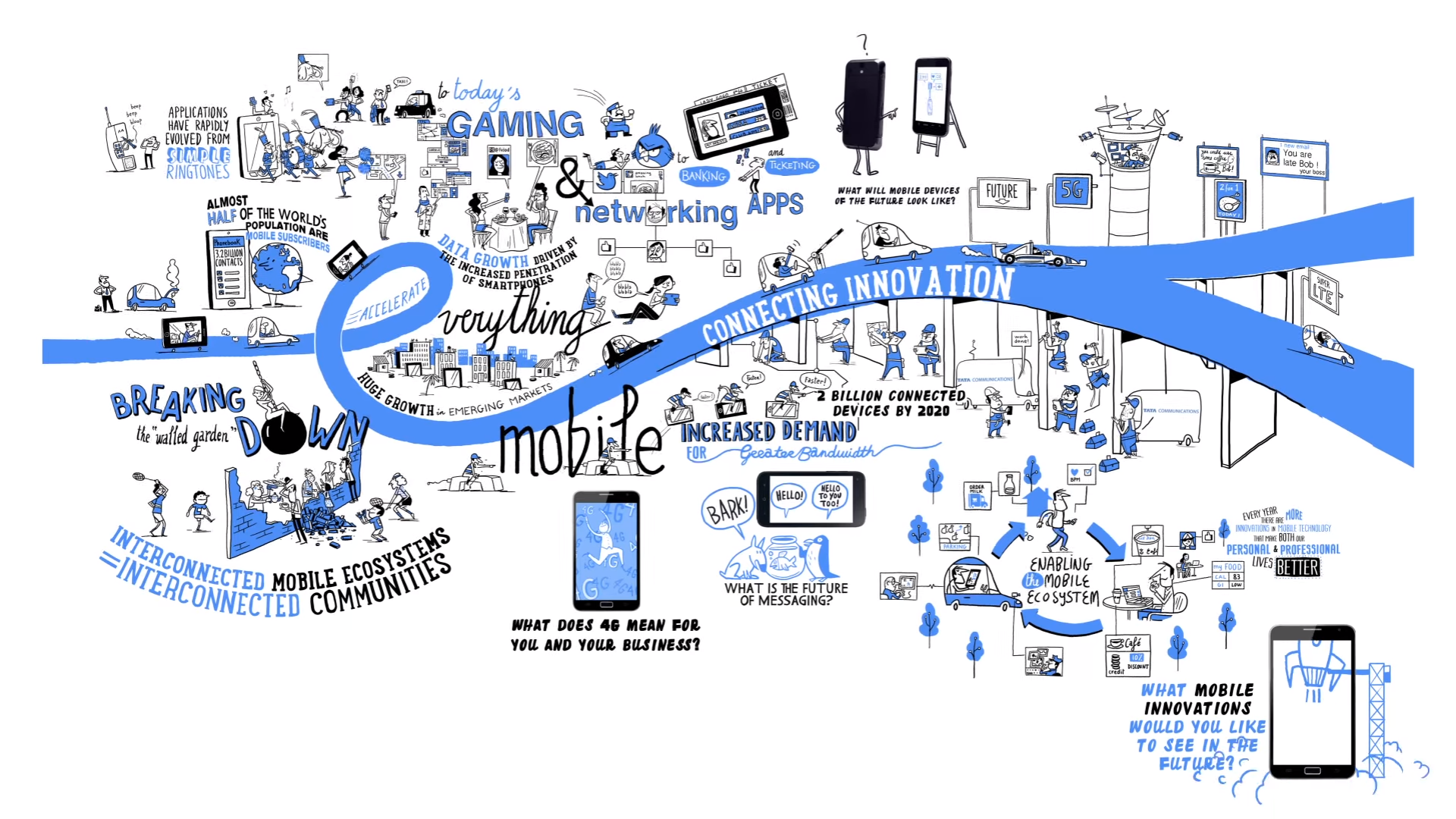




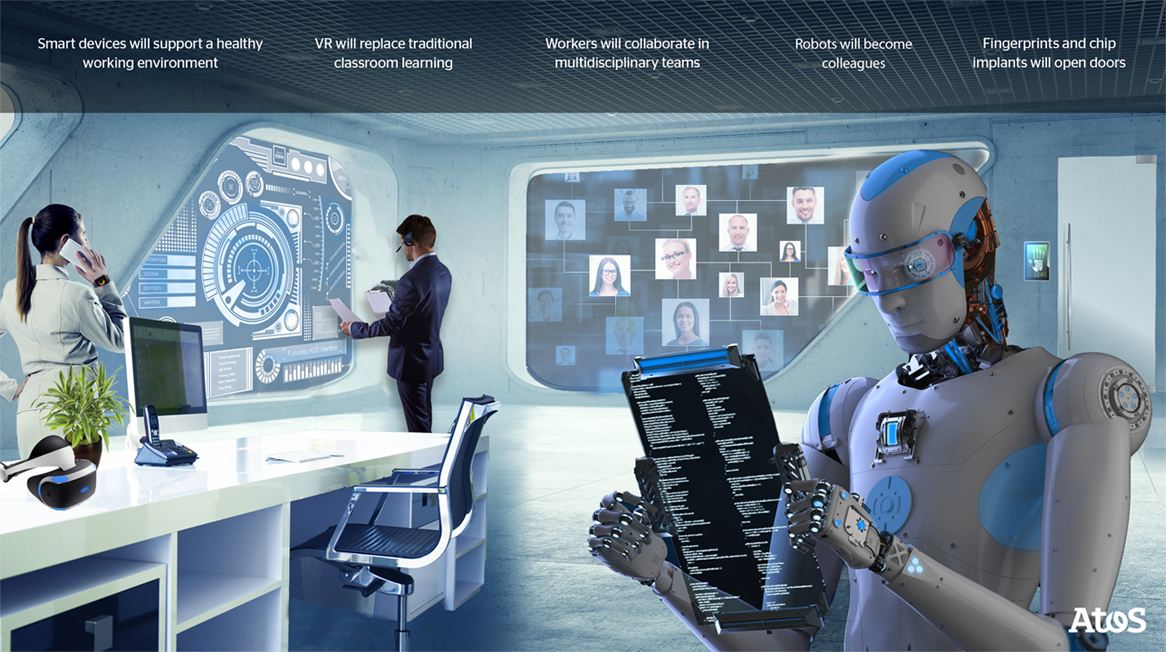











 bobdillon33blog