• About
  • THE BEADY EYE SAY’S : THE EUROPEAN UNION SHOULD THANK ENGLAND FOR ITS IN OR OUT REFERENDUM.

bobdillon33blog

~ Free Thinker.

bobdillon33blog

Category Archives: Our Common Values.

THE BEADY EYE ASK’S : ARE OUR LIVES GOING TO BE RULED BY ALGORITHMS.

20 Saturday May 2023

Posted by bobdillon33@gmail.com in 2023 the year of disconnection., Algorithms., Artificial Intelligence., Big Data., Communication., Dehumanization., Democracy, Digital age., DIGITAL DICTATORSHIP., Digital Friendship., Disconnection., Fourth Industrial Revolution., Human Collective Stupidity., Human values., Humanity., Imagination., IS DATA DESTORYING THE WORLD?, Modern Day Democracy., Our Common Values., Purpose of life., Reality., Social Media Regulation., State of the world, Technology, Technology v Humanity, The Obvious., The state of the World., The world to day., THE WORLD YOU LIVE IN., THIS IS THE STATE OF THE WORLD.  , Tracking apps., Unanswered Questions., Universal values., We can leave a legacy worthwhile., What is shaping our world., What Needs to change in the World

≈ Comments Off on THE BEADY EYE ASK’S : ARE OUR LIVES GOING TO BE RULED BY ALGORITHMS.

Tags

Algorithms., Artificial Intelligence., The Future of Mankind, Visions of the future.

( Ten minute read) 

I am sure that unless you have being living on another planet it is becoming more and more obvious that the manner you live your life is being manipulate and influence by technologies.

So its worth pausing to ask why the use of AI for algorithm-informed decision is desirable, and hence worth our collective effort to think through and get right.

A huge amount of our lives – from what appears in our social media feeds to what route our sat-nav tells us to take – is influenced by algorithms. Email knows where to go thanks to algorithms. Smartphone apps are nothing but algorithms. Computer and video games are algorithmic storytelling.  Online dating and book-recommendation and travel websites would not function without algorithms.

Artificial intelligence (AI) is naught but algorithms.

The material people see on social media is brought to them by algorithms. In fact, everything people see and do on the web is a product of algorithms. Algorithms are also at play, with most financial transactions today accomplished by algorithms. Algorithms help gadgets respond to voice commands, recognize faces, sort photos and build and drive cars. Hacking, cyberattacks and cryptographic code-breaking exploit algorithms.

Algorithms are aimed at optimizing everything.

Self-learning and self-programming algorithms are now emerging, so it is possible that in the future algorithms will write many if not most algorithms.

Yes they can save lives, make things easier and conquer chaos, but when it comes both the commercial/ social world, there are many good reasons to question the use of Algorithms.

Why? 

They can put too much control in the hands of corporations and governments, perpetuate bias, create filter bubbles, cut choices, creativity and serendipity, while exploiting not just of you, but the very resources of our planet for short-term profits, destroying what left of democracy societies, turning warfare into face recognition, stimulating inequality, invading our private lives, determining our futures without any legal restrictions or transparency, or recourse.

The rapid evolution of AI and AI agents embedded in systems and devices in the Internet of Things will lead to hyper-stalking, influencing and shaping of voters, and hyper-personalized ads, and will create new ways to misrepresent reality and perpetuate falsehoods.

———

As they are self learning, the problem is who or what is creating them, who owns these algorithms and what if there should be any controls in their usage.

Lets ask some questions that need to be ask now not later concerning them. 

1) The outcomes the algorithm intended to make possible (and whether they are ethical)

2) The algorithm’s function.

3) The algorithm’s limitations and biases.

4) The actions that will be taken to mitigate the algorithm’s limitations and biases.

5) The layer of accountability and transparency that will be put in place around it.

There is no debate about the need for algorithms in scientific research – such as discovering new drugs to tackle new or old diseases/ pandemics, space travel, etc. 

Out side of these needs the promise of AI is that we could have evidence-based decision making in the field:

Helping frontline workers make more informed decisions in the moments when it matters most, based on an intelligent analysis of what is known to work. If used thoughtfully and with care, algorithms could provide evidence-based policymaking, but they will fail to achieve much if poor decisions are taken at the front.

However, it’s all well and good for politicians and policymakers to use evidence at a macro level when designing a policy but the real effectiveness of each public sector organisation is now the sum total of thousands of little decisions made by algorithms each and every day.

First (to repeat a point made above), with new technologies we may need to set a higher bar initially in order to build confidence and test the real risks and benefits before we adopt a more relaxed approach. Put simply, we need time to see in what ways using AI is, in fact, the same or different to traditional decision making processes.

The second concerns accountability. For reasons that may not be entirely rational, we tend to prefer a human-made decision. The process that a person follows in their head may be flawed and biased, but we feel we have a point of accountability and recourse which does not exist (at least not automatically) with a machine.

The third is that some forms of algorithmic decision making could end up being truly game-changing in terms of the complexity of the decision making process. Just as some financial analysts eventually failed to understand the CDOs they had collectively created before 2008, it might be too hard to trace back how a given decision was reached when unlimited amounts of data contribute to its output.

The fourth is the potential scale at which decisions could be deployed. One of the chief benefits of technology is its ability to roll out solutions at massive scale. By the same trait it can also cause damage at scale.

 In all of this it’s important to remember that while progress isn’t guaranteed transformational progress on a global scale normally takes time, generations even, to achieve but we pulled it off in less than a decade and spent another decade pushing the limits of what was possible with a computer and an Internet connection and, unfortunately, we are beginning running into limits pretty quickly such as.

No one wants to accept that the incredible technological ride we’ve enjoyed for the past half-century is coming to an end, but unless algorithms are found that can provide a shortcut around this rate of growth, we have to look beyond the classical computer if we are to maintain our current pace of technological progress.

A silicon computer chip is a physical material, so it is governed by the laws of physics, chemistry, and engineering.

After miniaturizing the transistor on an integrated circuit to a nanoscopic scale, transistors just can’t keep getting smaller every two years. With billions of electronic components etched into a solid, square wafer of silicon no more than 2 inches wide, you could count the number of atoms that make up the individual transistors.

So the era of classical computing is coming to an end, with scientists anticipating the arrival of quantum computing designing ambitious quantum algorithms that tackle maths greatest challenges an Algorithm for everything.

———–

Algorithms may be deployed without any human oversight leading to actions that could cause harm and which lack any accountability.

The issues the public sector deals with tend to be messy and complicated, requiring ethical judgements as well as quantitative assessments. Those decisions in turn can have significant impacts on individuals’ lives. We should therefore primarily be aiming for intelligent use of algorithm-informed decision making by humans.

If we are to have a ‘human in the loop’, it’s not ok for the public sector to become littered with algorithmic black boxes whose operations are essentially unknowable to those expected to use them.

As with all ‘smart’ new technologies, we need to ensure algorithmic decision making tools are not deployed in dumb processes, or create any expectation that we diminish the professionalism with which they are used.

Algorithms could help remove or reduce the impact of these flaws.


So where are we.

At the moment modern algorithms are some of the most important solutions to problems currently powering the world’s most widely used systems.

Here are a few. They form the foundation on which data structures and more advanced algorithms are built.

Google’s PageRank algorithm is a great place to start, since it helped turn Google into the internet giant it is today.

The PageRank algorithm so thoroughly established Google’s dominance as the only search engine that mattered that the word Google officially became a verb less than eight years after the company was founded. Even though PageRank is now only one of about 200 measures Google uses to rank a web page for a given query, this algorithm is still an essential driving force behind its search engine.

The Key Exchange Encryption algorithm does the seemingly impo

Backpropagation through a neural network is one of the most important algorithms invented in the last 50 years.

Neural networks operate by feeding input data into a network of nodes which have connections to the next layer of nodes, and different weights associated with these connections which determines whether to pass the information it receives through that connection to the next layer of nodes. When the information passed through the various so-called “hidden” layers of the network and comes to the output layer, these are usually different choices about what the neural network believes the input was. If it was fed an image of a dog, it might have the options dog, cat, mouse, and human infant. It will have a probability for each of these and the highest probability is chosen as the answer.

Without backpropagation, deep-learning neural networks wouldn’t work, and without these neural networks, we wouldn’t have the rapid advances in artificial intelligence that we’ve seen in the last decade.

Routing Protocol Algorithm (LSRPA) are the two most essential algorithms we use every day as they efficiently route data.

The two most widely used by the Internet, the Distance-Vector Routing Protocol Algorithm (DVRPA) and the Link-State traffic between the billions of connected networks that make up the Internet.

Compression is everywhere, and it is essential to the efficient transmission and storage of information.

Its made possible by establishing a single, shared mathematical secret between two parties, who don’t even know each other, and is used to encrypt the data as well as decrypt it, all over a public network and without anyone else being able to figure out the secret.

Searches and Sorts are a special form of algorithm in that there are many very different techniques used to sort a data set or to search for a specific value within one, and no single one is better than another all of the time. The quicksort algorithm might be better than the merge sort algorithm if memory is a factor, but if memory is not an issue, merge sort can sometimes be faster;

One of the most widely used algorithms in the world, but in that 20 minutes in 1959, Dijkstra enabled everything from GPS routing on our phones, to signal routing through telecommunication networks, and any number of time-sensitive logistics challenges like shipping a package across country. As a search algorithm, Dijkstra’s Shortest Path stands out more than the others just for the enormity of the technology that relies on it.

——–

At the moment there are relatively few instances where algorithms should be deployed without any human oversight or ability to intervene before the action resulting from the algorithm is initiated.

The assumptions on which an algorithm is based may be broadly correct, but in areas of any complexity (and which public sector contexts aren’t complex?) they will at best be incomplete.

Why?

Because the code of algorithms may be unviewable in systems that are proprietary or outsourced.

Even if viewable, the code may be essentially uncheckable if it’s highly complex; where the code continuously changes based on live data; or where the use of neural networks means that there is no single ‘point of decision making’ to view.

Virtually all algorithms contain some limitations and biases, based on the limitations and biases of the data on which they are trained.

 Though there is currently much debate about the biases and limitations of artificial intelligence, there are well known biases and limitations in human reasoning, too. The entire field of behavioural science exists precisely because humans are not perfectly rational creatures but have predictable biases in their thinking.

Some are calling this the Age of Algorithms and predicting that the future of algorithms is tied to machine learning and deep learning that will get better and better at an ever-faster pace. There is something on the other side of the classical-post-classical divide, it’s likely to be far more massive than it looks from over here, and any prediction about what we’ll find once we pass through it is as good as anyone else’s.

It is entirely possible that before we see any of this, humanity will end up bombing itself into a new dark age that takes thousands of years to recover from.

The entire field of theoretical computer science is all about trying to find the most efficient algorithm for a given problem. The essential job of a theoretical computer scientist is to find efficient algorithms for problems and the most difficult of these problems aren’t just academic; they are at the very core of some of the most challenging real world scenarios that play out every day.

Quantum computing is a subject that a lot of people, myself included, have gotten wrong in the past and there are those who caution against putting too much faith in a quantum computer’s ability to free us from the computational dead end we’re stuck in.

The most critical of these is the problem of optimization:

How do we find the best solution to a problem when we have a seemingly infinite number of possible solutions?

While it can be fun to speculate about specific advances, what will ultimately matter much more than any one advance will be the synergies produced by these different advances working together.

Synergies are famously greater than the sum of their parts, but what does that mean when your parts are blockchain, 5G networks, quantum computers, and advanced artificial intelligence?

DNA computing, however, harnesses these amino acids’ ability to build and assemble itself into long strands of DNA.

It’s why we can say that quantum computing won’t just be transformative, humanity is genuinely approaching nothing short of a technological event horizon.

Quantum computers will only give you a single output, either a value or a resulting quantum state, so their utility solving problems with exponential or factorial time complexity will depend entirely on the algorithm used.

One inefficient algorithm could have kneecapped the Internet before it really got going.

It is now oblivious that there is no going back.

The question now is there anyway of curtailing their power.

This can now only be achieved with the creation of an open source platform where the users control their data rather than it being used and mined.  (The uses can sell their data if the want.)

This platform must be owned by the public, and compete against the existing platforms like face book, twitter, what’s App, etc,   protected by an algorithm that protects the common values of all our lives – the truth. 

Of course it could be designed by using existing algorithms which would defeat its purpose. 

It would be an open net-work of people a kind of planetary mind that has to always be funding biosphere-friendly activities.

A safe harbour perhaps called the New horizon.   A digital United nations where the voices of cooperation could be heard.   

So if by any chance there is a human genius designer out there that could make such a platform he might change the future of all our digitalized lives for the better.   

All human comments appreciated. All like clicks and abuse chucked in the bin.

Contact: bobdillon33@gmail.com  



Share this:

  • Share on WhatsApp (Opens in new window) WhatsApp
  • More
  • Share on Mastodon (Opens in new window) Mastodon

THE BEADY EYE SAY’S: IT’S FAR TO LATE TO CONTROL AI.

01 Saturday Apr 2023

Posted by bobdillon33@gmail.com in 2023 the year of disconnection., Artificial Intelligence., Dehumanization., Democracy., Digital age., DIGITAL DICTATORSHIP., Disaster Capitalism., Fake News., Fourth Industrial Revolution., How to do it., Human Collective Stupidity., Human Exploration., Human values., Humanity., Inequality, Life., Modern day life., Modern day Slavery, Our Common Values., Post - truth politics., Purpose of life., Reality., Robot citizenship., Social Media Regulation., State of the world, Sustaniability, Technology v Humanity, Technology., The essence of our humanity., The Future, The Internet., The metaverse., The Obvious., The state of the World., The world to day., TRACKING TECHNOLOGY., Unanswered Questions., VALUES, VIRTUAL REALITY., What is shaping our world., WHAT IS TRUTH, What Needs to change in the World

≈ Comments Off on THE BEADY EYE SAY’S: IT’S FAR TO LATE TO CONTROL AI.

( Six minute read)

Why?

Because the change is already taking place.

Because,  There are now more cell phones in the world than people. There were less than 7% of the world on online in 2000, today over half the global population has access to the internet.

Because, technology has already radically transformed our societies and our daily lives, from smartphones to social media and healthcare. Technology touches nearly everything we do.

Because, your voice, your image, your race, your shopping habits, your health, your movement’s, your viewing habits, your voting, your financial standing, your criminal record, your interests, your decision making, down to what you are eating, not forgetting your sex life is and has being harvest for free.

All can be and are being faked.

Because, virtual interactions offers enticing financial opportunities for big businesses and digitalized Governments.

——-

Excessive use of technology can do more harm than good, and we should bear this in mind before we rush into digitizing our lives.

When all areas of human activity get rapidly digitized, it’s easy to become desensitized to the importance of innovations and advancements for the overall progress of society. Though it may be tough to predict which advancements technology would bring next, some innovations are already changing our beliefs about the world around us.

The coming generations will be living in a mixture of reality and the metaverse. Using headsets to create a  3D avatar – a representation of themselves –  to enter a virtual world connecting all sorts of digital environments. Perhaps when they go online shopping, they will be able too try on digital clothes first, and then order them to arrive in the real world.

A virtual economy of inequality.  Nowhere does the intersection of technology, enterprises and individuals hold greater opportunity than in the metaverse.

If it happens at all – will be fought among tech giants for the next decade, or maybe even longer.

———-

The Metaverse doesn’t exist – at least not yet, but there no way of predicting how people will react to it, or how it will be used.

( Everything transformed into line of code, augmenting reality by superimposing a computer-generated image on a user’s view of the real world. You have an experience while wearing another person’s body and you get to walk a mile in that person’s shoes.)

The next generation of the internet has the power to reshape the way that businesses and consumers engage, transact, socialize, work and learn together exploring the world on their own terms.

As of today, there isn’t anything that could legitimately be identified as a metaverse. The metaverse is essentially a massive, interconnected network of virtual spaces,

A better question might be:

What could become the metaverse?

Something that people would have considered magic just a few decades ago is now gaining popularity in business, gaming, and team building.

The combination of augmented, virtual and mixed reality – will play an important role.

The distinction between being offline and online will be much harder to delineate. So we either end up in a situation where it’s complete chaos and everyone’s allowed to do everything and you know, there’s racism, sexism, abuse and all that kind of stuff, or there’s incredibly tight moderation and no one’s allowed to do anything.

Wearable screens and gesture-based computing, other recent innovations, are predicted to soon substitute the usual PC and phone screens.

A red-haired woman wears the Oculus Quest 2 headset in white, holding two controllers

——-

Robots, another buzzword in today’s business world, have already replaced humans in some workplaces — robotic arms work at assembly or packing lines. Flying cars will soon address the issue of limited ground space and long traffic jams.

Clearly, technology by itself is neither good nor bad. It is only the way and extent to which we use it that matters.

It is indisputable that thanks to technology, we get a chance to live a life our predecessors could not even dream about.

But do all tech advancements bring sole good to our lives?

Or, maybe, the impact of tech innovations is quite ambiguous.

We are all at the mercy of machine learning algorithms, that are non transparent, non accountable, and non regulated.

So we have an open letter from those on High in the Tec world,  advocating that the brakes should be applied to the creation of new tech that generates falsehood’s. You dont have to be a Tech genius to know that this is not going to happen.

My advice is.

To protect oneself.

Every person should have a secret verification word in order to authenticate the caller and a symbol to be used in all texts and emails, that if not present in any communication received or sent,  marks it as False.

——–

All of which begs the question: just why is the 21st century so dystopian?

A few years ago, you might have thought: this is just a phase. It’ll pass. But it’s not. If anything, it’s getting worse, and it feels like it’s here to stay.

When I say “it”, or “dystopia,” you might wonder exactly, precisely what I mean. What I mean is very simple though. How many crises do we face? More than I can easily count. Let’s try to list them all, though we’ll run out of sanity and room before we finish, for sure. Finances? Total crisis, incomes falling around the world, debt levels soaring. Infrastructure? Mega-crisis, unless you think the infrastructure we have survives this century, let alone this decade. Social systems? Everywhere from France to Britain to America — crisis. People’s…minds? Crisis, especially in young people, depression and anxiety and suicide rates soaring. Then there are the big ones: climate change and mass extinction, not to mention politics , which has taken a notably…fascist…turn, again.

All of this is what scholars have begun to call The age of Polycrises.  And in it, the better question isn’t: “what’s in crisis?

It’s: what isn’t?

Like I said, the list above is a mere brief beginning. Migration and refugees? Another one. Peace and democracy? Yup, in crisis.

How about upward mobility? Check. Faith and confidence in institutions? Super crisis. Take a look at any element of society or the world, and chances are, it’s in crisis. How about inequality? Shocking levels of crisis.

This is why the 21st century feels so dystopian.

It’s not really a “feeling,” though that’s the way it’s often made out to be by media. It’s an empirical reality. Scholars have begun to conceptualize the 21st century as a “Polycrisis” for a reason, which is that the dystopia is real.

So when media, bigwigs, wannabe intellectuals and so forth, make all this out to be exaggeration, hyperbole, imply that you are the fainting Victorian bride in the room, because, hey, Tucker!! Everything’s Great!!…they’re completely wrong. And that needs to be said. It’s a form of denialism at this point, because…

The next part is about cause and effect. We need, as a civilization and a world, to figure out what’s causing all this, so we can begin to undo it. But if all we do is deny it…then, my friends, our gooses are well and cooked.  It’s fascism on a dying planet, in different bitter and poisonous flavours, maybe.

ITS NOW AGI. ( Artificial General Intelligence) Already it is transforming every walk of life.

AI is not a futuristic vision, but rather something that is here today and being integrated with and deployed into a variety of sectors.

There are numerous examples where AI already is making an impact on the world and augmenting human capabilities in significant ways. This includes fields such as finance, national security, health care, criminal justice, transportation, and smart cities, digital education, decision making, democracy’s.

Artificial intelligence algorithms are designed to make decisions, often using real-time data. They are unlike passive machines that are capable only of mechanical or predetermined responses. Using sensors, digital data, or remote inputs, they combine information from a variety of different sources, analyse the material instantly, and act on the insights derived from those data. With massive improvements in storage systems, processing speeds, and analytic techniques, they are capable of tremendous sophistication in analysis and decision making.

———-

These software systems “make decisions which normally require [a] human level of expertise” and help people anticipate problems or deal with issues as they come up. As such, they operate in an intentional, intelligent, and adaptive manner

AI generally is undertaken in conjunction with machine learning and data analytics. Machine learning takes data and looks for underlying trends. If it spots something that is relevant for a practical problem, software designers can take that knowledge and use it to analyse specific issues. All that is required are data that are sufficiently robust that algorithms can discern useful patterns. Data can come in the form of digital information, satellite imagery, visual information, text, or unstructured data.

AI systems have the ability to learn and adapt as they make decisions. In the transportation area, for example, semi-autonomous vehicles have tools that let drivers and vehicles know about upcoming congestion, potholes, highway construction, or other possible traffic impediments. Vehicles can take advantage of the experience of other vehicles on the road, without human involvement, and the entire corpus of their achieved “experience” is immediately and fully transferable to other similarly configured vehicles. Their advanced algorithms, sensors, and cameras incorporate experience in current operations, and use dashboards and visual displays to present information in real time so human drivers are able to make sense of ongoing traffic and vehicular conditions. And in the case of fully autonomous vehicles, advanced systems can completely control the car or truck, and make all the navigational decisions.

If we don’t want to end up as deglazed digital citizens here’s what should be done.

  • Regulate broad AI principles rather than specific algorithms,
  • Take bias complaints seriously so AI does not replicate historic injustice, unfairness, or discrimination in data or algorithms,
  • Maintain mechanisms for human oversight and control, and
  • Penalize malicious AI behaviour and promote cybersecurity.

All human comments appreciated. All like clicks and abuse chucked in the bin.

Contact: bobdillon33@gmail.com
Share this:

  • Share on WhatsApp (Opens in new window) WhatsApp
  • More
  • Share on Mastodon (Opens in new window) Mastodon

THE BEADY EYE SAY’S. ARE WE ALL FOOLING OURSELVES IN THINKING THAT THE WAR IN THE UKRAINE IS NOT GOING TO SPREAD.

20 Monday Feb 2023

Posted by bobdillon33@gmail.com in #whatif.com, 2023 the year of disconnection., Mr Putin., Our Common Values., RUSSIA/ UKRAINE/ US/ NATO/ EU., Russia’s invasion of Ukraine, The cost of war., The state of the World., The world to day., Truth, Ukraine/ Russia., Ukraine/Russian war., Unanswered Questions., United Nations, War, Wars, WHAT IS TRUTH

≈ Comments Off on THE BEADY EYE SAY’S. ARE WE ALL FOOLING OURSELVES IN THINKING THAT THE WAR IN THE UKRAINE IS NOT GOING TO SPREAD.

Tags

The Future of Mankind, Visions of the future.

( Seventeen minute read)

I don’t have to tell you that wars expose the barbarity in all of us.

They say that its impossible to deal with Mr Putin. Call him what you like there have been many like him that have come and gone that did almost anything to survive in power.

Most probably during the next week we will observe the intensification of the Russian military aggression in the Donetsk and Luhansk regions as well as the rest of Ukraine.

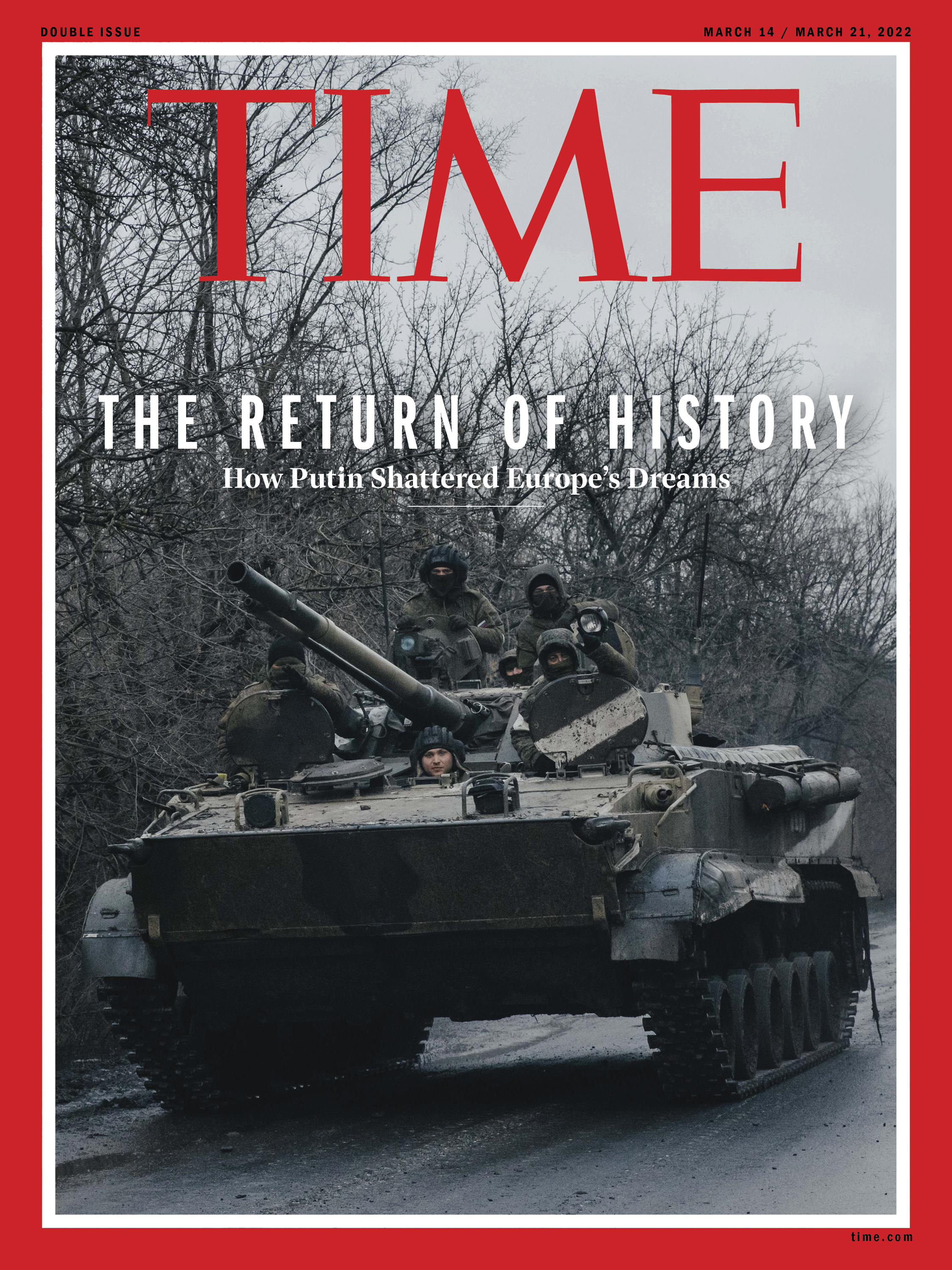
A Russian tank enters a region controlled by Moscow-backed rebels in eastern Ukraine on Feb. 24, 2022. (Nanna Heitmann—Magnum Photos)

War by its nature is unpredictable.

Whether a larger war happens will depend partly on President Vladimir Putin’s ambitions, partly on the West’s military response, and partly on plain luck.

Aside from the risk of an unintended or unexpected incident, like a missile that goes astray along Ukraine’s western border, fired by either Russia or the Ukraine or a nuclear accident at the Zaporizhzhya nuclear power plant (which demands more action) the war could be catapult into a disaster beyond belief.

The question everyone has to ask—if this is going to be a large-scale war, if there is Ukrainian resistance and the conflict is prolonged over years—is whether the fighting can be contained to Ukraine or whether it will spill over into the rest of Europe.

You don’t have to be a  military general, or strategists to know that the more fuel you put on a fire the hotter it gets and the more likely it will spread.

Weapons might have changed, but wars have not, they run their course till there is no one left to kill, or to be killed, or the combating get sick of the killing and opt for peace.

What past wars tell us about how to Save Ukraine?Photo: SERGEY BOBOK/AFP/Getty Images

Most conflict since the end of the Second World War tends to involve counterinsurgency campaigns and proxy wars, making large-scale invasions—like what is currently happening in Ukraine—rare events.

Wars that end within a month last on average eight days, and 44 percent end in a ceasefire or peace agreement.

When interstate wars last longer than a year, they extend to over a decade on average, resulting in sporadic clashes.

Why?

Because the longer a war lasts with absent concessions by both parties, the more likely it is to escalate into a protracted conflict, despite the bravery of the Ukrainian people in the face of Russian aggression, that is a dangerous prospect.

The refugee crisis will grow. More civilians will die. Russia will become even more paranoid and irrational.

Mr Putin could declare Western arms supplies to Ukrainian forces are an act of aggression that warrant retaliation. He could threaten to send troops into the Baltic states – which are members of NATO – such as Lithuania, to establish a land corridor with the Russian coastal exclave of Kaliningrad.

This would be hugely dangerous and risk war with NATO. (Under Article 5 of the military alliance’s charter, an attack on one member is an attack on all.) But Mr Putin might take the risk if he felt it was the only way of saving his leadership. If he was, perhaps, facing defeat in Ukraine, he might be tempted to escalate further.

What is needed is a viable diplomatic offramp that addresses the concerns of all parties.

The time for crisis diplomacy is now.

How this might be achieved?

This is about Russia wanting to restore a sphere of influence in the post-Soviet space, and particularly about Putin wanting Russia to reabsorb Ukraine. Russia doesn’t just want a neutral Ukraine. It’s also demanding that Ukraine formally give up Crimea and parts of the Donbas.

Amid the fog of war, it can be hard to see the way forward or potential outcomes. Most are bleak.

The sense of outrage and injustice on the part of Ukraine will be difficult to overcome.

Moscow demands recognition of the independence of Donetsk and Luhansk, the “states” in eastern Ukraine’s Donbas region recognised by Russia at the outset of the conflict. Their supposed independence was cynically used by Russia to argue a right of self-defence of these purportedly sovereign states.

Perhaps if the Ukraine we to offer a form of “asymmetrical federation,” would see overall claims of statehood abandoned, but areas – or Oblasts – within the Donbas that have ethnic or linguistic majorities be given greatly enhanced local self-governance.

A settlement that keeps them as Ukrainian provinces but in an environment of self-government – almost virtual statehood, offering plenty of autonomy to both districts yet keeping them within Ukraine’s sovereign territory.

This could be balanced by internationally guaranteed rights to genuine local elections and safeguards for the right of minority populations – whether Russian speaking or Ukrainian.” with cross-border links to the Russian Federation to placate separatist groups.

However, Ukraine must not suffer de-facto division forever more as a consequence of turning the invasion into a frozen conflict. The Ukrainian government and the Ukrainian people who must have their sovereignty, their independence and their territorial integrity. It is vital the Ukrainian government is not pressured into accepting outcomes that reward a war of aggression.

So after an agreed period of lets say twenty years the asymmetrical federation decides by Referendum to stay as such, or join Russia or Ukraine.

During these twenty years providing Russians return to negotiations on limitations of intermediate-range nuclear weapons (and providing there is no further conflict ) NATO agrees to stop its enlargement, as part of “confidence-building”

Till than nuclear arms controlled by the United States remain in Europe.

NATO is a defensive alliance.

NATO’s world view is simple. The world is divided between two kinds of states. Those that defend something called a “rules-based international order,” called democracies, and those who don’t know what on earth they’re talking about, called authoritarians. The remedy for this unfortunate condition is of course, always more NATO.

(NATO holds its expansion to be a sacred right. It has spread across 14 countries of the former Eastern bloc to the borders of Russia. It has brought war to Europe by encircling a country that suffered about 27 million deaths the last time panzers rolled from the West.)

Ukraine is not a member of the North Atlantic Treaty Organization (NATO), but it borders four nations that are—Poland, Slovakia, Hungary and Romania. Biden and other NATO allies have pledged to protect their eastern and central European members under the NATO treaty’s mutual defence commitments.

For Ukraine to give up its ambitions to join NATO, since that has long been a Russian red line.

I think what we’ll ultimately arrive at is something that satisfies no one, but at least is better than a hot war.

When Putin first came to power, his forces levelled the Chechen capital, Grozny, in order to recapture it. And more recently, Russian forces helped the Syrian government besiege cities and towns, a strategy now playing out in Ukraine. The war has sparked some protests inside of Russia, but don’t expect a popular uprising in a country that is imposing an Iron Curtain. You would have had a hard time convincing  Russians them that there country has actually invading Ukraine.

We that is the west are not going to invade Russia to effect an regime change, its not a realistic policy goal.

Why?

Because changing the regime in Russia and doing our utmost to weaken the Russian state, you cannot do that and claim that you are actually acting in the interest of the Ukrainian people because you’re not.

You are condemning them to an endless war for U.S. geopolitical purposes. There is nothing moral about that – nothing.

Where are we with the war.?

No matter how this conflict plays out, the world has changed.

It will not return to the status quo ante. Russia’s relationship with the outside world will be different. European attitudes to security will be transformed. And the liberal, international rules-based order might just have rediscovered what it was for in the first place.

This is now a proxy war “to weaken Russia” is destroying Ukraine, impoverishing Europe, and escalating, without an off-ramp, it has all the hall marks of spreading into an all-out war that threatens all of humanity with nuclear annihilation.

The bloc politics of NATO is, from the perspective of those who recall the tender mercies of its European and Japanese practitioners, nothing but the politics of imperialism in a world it no longer comprehends.

Putin will not deliberately extend an offensive beyond Ukraine unless he believed Biden would be unwilling to go to war to defend NATO allies, however he will retaliate in the cyber world, broadening the conflict quickly and dangerously.

A Russian takeover of Ukraine would deliver a blow to European order like none since World War II.

After the most recent wars with American involvement the United States will not get drawn into it unless it is dragged by NATO.

——————

In all ages war has been an important topic of analysis.

In the latter part of the 20th century, in the aftermath of two World Wars and in the shadow of nuclear, biological, and chemical holocaust, more was written on the subject than ever before. Endeavours to understand the nature of war, to formulate some theory of its causes, conduct, and prevention, are of great importance, for theory shapes human expectations and determines human behaviour.

Utilizing psychological approaches emphasize the significance of psychological maladjustments or complexes and of false, stereotyped images held by decision makers of other countries and their leaders.

This is insufficient because man behaves differently in different social contexts and nearly all wars are wage against the wishes of peacefully inclined people.

The ideal of the nation-state is never fully achieved. In no historical case does one find all members of a particular nation gathered within one state’s boundaries.

There is no rational basis for deciding on the extent to which the self-determination principle should be applied in allowing national minorities to break away.

As a rule, the majority group violently opposes the breakaway movement with violent conflicts ensue and, through foreign involvement, turn into international wars.

Nationalism not only induces wars but, through the severity of its influence, makes compromise and acceptance of defeat more difficult.

Although industrialists in all the technologically advanced systems are undoubtedly influential in determining such factors as the level of armaments to be maintained, it is difficult to assume that their influence is or could be decisive when actual questions concerning war or peace are being decided by politicians.

Improving the rationality of the decision making of individual states through a better understanding of the international environment, through eliminating misperceptions and irrational fears, and through making clear the full possible costs of engaging in war and the full destructiveness of an all-out war, possible in our age.

War can only be abolished by a full-scale world government.

Of course the likelihood of this happing is zero. 

The complex phenomenon of war represents a potential calamity of such a magnitude that all theorists must endeavour to understand it and to apply their understanding to the prevention and mitigation of war with all the means at their disposal.

Yes, as many as 200 million people may have died in wars throughout the 1900s, but roughly 10 billion lives were lived during that period. One may argue that this has merely been a matter of food production outpacing the production of assault rifles, so that violence has not so much been suppressed as overwhelmed by science.

Keep in mind, though, that these optimistic scenarios and others may, among other things, be products of their times. For we still live in the relatively benign aftermath of World War II, in which the greatest interstate war in history has led to 70 years without interstate war between the great powers.

We have a world full of beauty, with inherent call to protect that which is true, good, and beautiful.

Humanity after millennia of war may reach a culmination point, in which the number of humans killed by other humans continues to drop dramatically.

All human comments appreciated. All like clicks and abuse chucked in the bin.

Contact: bobdillon33@gmail.com

Share this:

  • Share on WhatsApp (Opens in new window) WhatsApp
  • More
  • Share on Mastodon (Opens in new window) Mastodon

THE BEADY EYE SAY’S. THERE IS NO SUCH THING AS RENEWABLE GREEN ENERGY.

14 Tuesday Feb 2023

Posted by bobdillon33@gmail.com in 2023 the year of disconnection., Green Energy., HUMAN INTELLIGENCE, Life., Our Common Values.

≈ Comments Off on THE BEADY EYE SAY’S. THERE IS NO SUCH THING AS RENEWABLE GREEN ENERGY.

Tags

The Future of Mankind

(Twenty minute read) 

There is not a day that goes bye when we are presented with the rhetoric of replacing fossil fuel energy with green energy in order to reduce carbon emissions.  renew effective enviro

YOU WOULD  THINK THAT OUR WORLD HAS ENOUGHT PROBLEMS ON ITS PLATE TO BE CREATING AN OTHER.  

But here is now a developing problem –  Called Green Energy. 

There is a difference between green, clean and renewable energy. Renewable energy is often seen as being the same, but there is still some debate around this. For example, can a hydroelectric dam which may divert waterways and impact the local environment really be called ‘green?’ This is slightly confused by people often using these terms interchangeably, but while a resource can be all of these things at once, it may also be, for example, renewable but not green or clean (such as with some forms of biomass energy).

At the forefront of this rhetoric we have the  three big contenders –  Wind – Sun – Water and  now Electric Cars.

What is green Energy? What is Green Energy


Green energy is any energy type that is generated from natural resources, such as sunlight, wind or water. It often comes from renewable energy sources although there are some differences between renewable and green energy, which we will explore, below.

Renewable energy technologies such as solar energy, wind power, geothermal energy, biomass and hydroelectric power all

work differently, whether that is by taking power from the sun, as with solar panels, or using wind turbines or the flow of water to

generate energy.

All of the above require rare metals to transform them into energy products. 

—————————————————————

In order to be deemed green energy, a resource cannot produce pollution, such as is found with fossil fuels.

This means that not all sources used by the renewable energy industry are green. For example, power generation that burns organic

material from sustainable forests may be renewable, but it is not necessarily green, due to the CO2 produced by the burning

process itself. 

Green energy sources are usually naturally replenished, as opposed to fossil fuel sources like natural gas or coal, which can take

millions of years to develop.

Green sources also often avoid mining or drilling operations that can be damaging to eco-systems.

This is not true.

Green energy has many a dark holes. 

Above: Lithium carbonate mine in Argentina.

DEMAND FOR LITHIUM, A KEY INGREDIENT IN RECHARGEABLE BATTERIES, IS EXPECTED TO SOAR IN THE

COMING YEARS AS THE POPULARITY OF ELECTRIC VEHICLES (EVS) PICKS UP.

Below:  The Escondida surface mine situated in Antofagasta, Chile. Owned by BHP, the greenfield mine produced an estimated 1,011 thousand tonnes of copper in 2021. The mine will operate until 2078. 

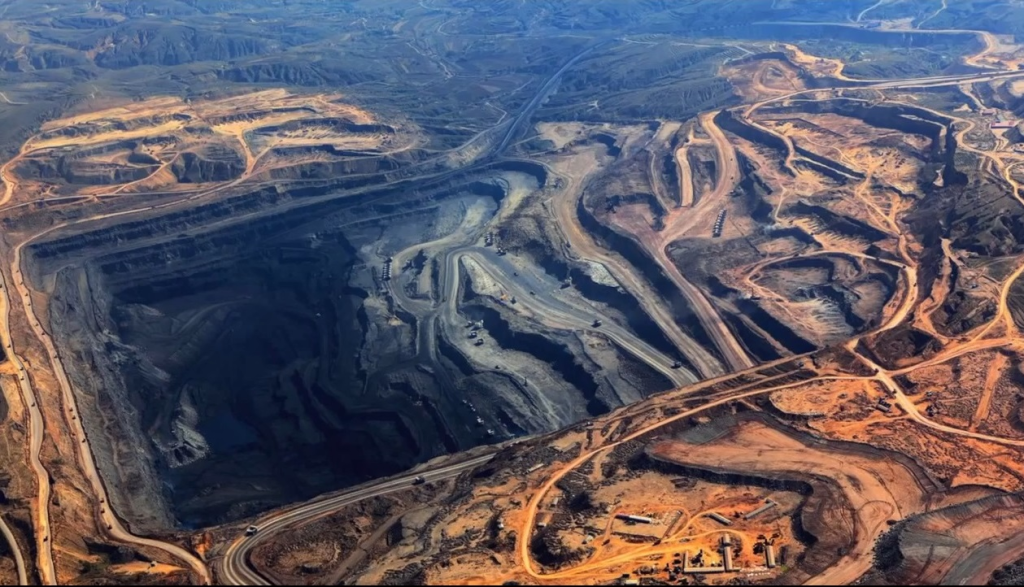
Below: Copper and coal mines in China. 

This image has an empty alt attribute; its file name is image.png

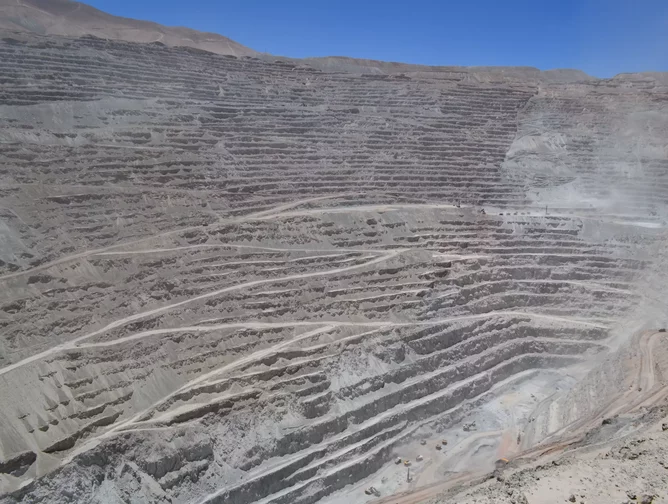
Below: The Chequicamata Copper mine – Chile

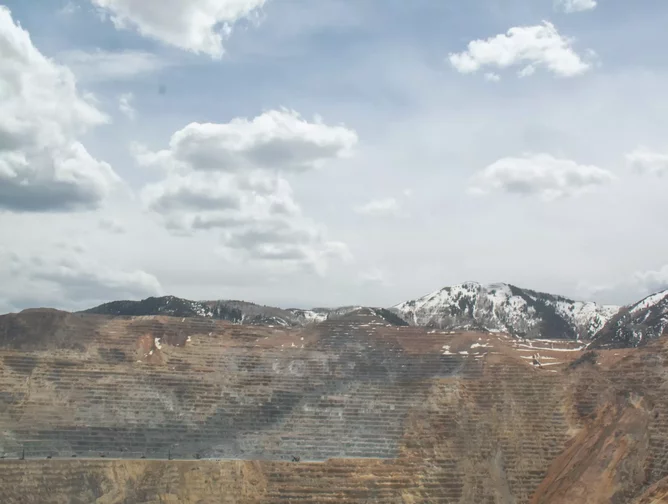
Below: Bingham Cannon Mine -copper USA

The world’s demand for copper could be catastrophic for communities and environments.

Why?

Because, Copper is critical for solar panels, wind turbines, electric vehicles and battery storage.

The world will need 10 Million tons more Copper to meet demand.

New copper mines will likely be located in politically and ecologically sensitive areas

This will add to the devastating impacts existing mines have already caused.

Why?

Because sacrificing the interests of local people in the interests of a greater good would not be considered responsible, as it does

not align with the concepts of equity and fairness that underpin the Paris Agreement.

———————————-

We must start to ask:

What kind of justice are we seeking in the “just transition”, and for whom?

This includes assessing the energy used to create the green energy resource, working out how much energy can be translated into

electricity and any environmental clearing that was required to create the energy solution. Of course, environmental damage

would prevent a source truly being ‘green,’ but when all of these factors are combined it creates what is known as a ‘Levelised

Energy Cost’ (LEC).

————————————————————-

The good news.

Creating energy with a zero carbon footprint is a great stride to a more environmentally friendly future. If we can use it to meet our

power, industrial and transportation needs, we will be able to greatly reduce our impact on the environment.

Even when the full life cycle of a green energy source is taken into consideration, they release far less greenhouse gases than fossil fuels.

Renewable energy saw the creation of 11 million jobs worldwide

There are plenty of examples of green energy in use today, from energy production through to thermal heating for

buildings, renewable heat for industrial processes.

Green energy has the capacity to replace fossil fuels in the future. However we are still some years away from this happening.

Efficiency in green energy is slightly dependent on location.

The fact is that fossil fuels need to become a thing of the past as they do not provide a sustainable solution to our energy needs.

The copper gold rush by now – well-known for causing many socio-environmental conflicts in different countries,

This post is to raise awareness for the harmful and ruthless practices of such big multinational corporations.

While we know a great deal about how they might impact our daily lives, we don’t yet understand the entirety of their impact upon

the already damaged environment. Climate change remains one of the most serious threats to the integrity of life on earth.

Still, the question of how to source metals and minerals ethically remains a legitimate and urgent one.

Why?

Because renewable technologies create ethical issues at both ends of their life cycle.

Corporate sustainability is not enough to address all the ethical issues in the mining supply chain. There is a limit to what corporate

social responsibility can achieve.

For Example.

The sheer size of solar panels, which often contain lead, cadmium, and other toxic metals, makes them one the largest global

contributors of electronic waste. By 2050, which is the rough expiration date of solar panels manufactured today, the technology

is estimated to produce 78 million metric tons of waste—some 80 percent more than the total annual waste from all combined

technologies today.

THE FALLACY OF ELECTIC CARS.

Building a car – or any moderately complex mechanical or electrical machine – will naturally require a lot of different materials, which are then put together using a variety of manufacturing methods. This places two different burdens on the environment:

Carbon emissions from the manufacturing process and the harvesting (and depleting) rare metals.

Every type of car (whether it’s ‘green’ or not) has an environmental impact. 

When looking at the overall environmental footprint of cars, there are two main components which need to be considered:

  1. Emissions from building the car (and its components)
  2. Emissions from powering the car.

The massive 300-550 kg lithium-ion battery packs that go into electric cars is the most important component by far.

Electric cars emit 8.8 tonnes (8,800 kg!) of CO2, compared to 5.6 tonnes (5,600 kg) of CO2 for gasoline cars.

Neither of which make for great reading!

However, the journey that these lithium-ion batteries make when being produced is a very interesting one: 

The short answer is that a number of rare metals need to be dug out of the earth from various mines.

These are then packaged into small individual battery cells (alongside other materials such as plastic, aluminum, and steel),

before themselves being packed into battery modules. The end result is a battery pack which is made up of multiple battery

modules, a cooling system/mechanism and a small electrical power management system.

Many of these rare earth mining processes also unleashes plumes of sulphur dioxide into the atmosphere, and can harm aquatic

life in nearby rivers and streams too. Finally, 50-60% of cobalt comes from the Congo, which unfortunately has a poor human

rights record with 40,000 children working in cobalt mines for $1-2 per day.

.How Rare Metals Are Mined.

The process of mining the rare metals varies depending on the mine, however our ‘Electric Cars Aren’t Green?’ sums up how some of the mines operate:

At a mine in Jiangxi, China, workers use ammonium sulfate poured into big holes to dissolve the clay.

What’s left is hauled out of the ever-expanding hole, before being run through multiple acid baths to dissolve other unwanted

compounds. The resulting compounds are baked in a kiln, finally revealing the rare metals required in electric car batteries.

Just 0.2% of the result is the rare metals; the other 99.8% is waste. This 99.8% waste earth (and other compounds) – which is now

contaminated with toxic material – is dumped back into the originally-created holes.

Catch 22 they have to be plugged in to charge.

So all-in-all, the summary here is that building an electric car is not good for the environment.

It’s certainly worse than building a gas-guzzling car, unfortunately.

Hence the main thing to consider is how the electricity is generated. Naturally, electricity from wind or solar power will be a

lot more eco-friendly than generating electricity from oil or burning coal. Indeed, generating electric from oil leads to 91g of

CO2 per 1 kilometre travelled (which is close to the overall 125g of CO2 emissions that a gas car has). Whereas electrical power

generated entirely from wind energy will naturally have 0g of CO2 emissions.

Electric vehicles are not emissions-free they obviously run on electricity, and that electricity typically

comes from a mix of emissions-intensive fossil fuels, nuclear energy, and power from renewables.

It is very unlikely that we are going to go back the horse and cart.

 A different set of solutions is needed to tackle the growing pile of e-waste at the end of the green energy supply chain.

The problem can only be solved through cooperation across the green energy supply chain that incorporates technological and

social strategies. In this way, green energy could be truly sustainable.

To summarise whether the oft-stated “electric cars aren’t green” is fact or fiction… it’s a little bit of both!

All human comments appreciated. All like clicks and abuse chucked in the bin

Contact: bobdillon33@gmail.com.

.

Share this:

  • Share on WhatsApp (Opens in new window) WhatsApp
  • More
  • Share on Mastodon (Opens in new window) Mastodon

THE BEADY EYE ASKS; WHEN ARE WE GOING TO WAKE UP TO THE POWER OF PERSONALIZE TECHNOLOGY THAT IS CREATING AN OPEN AIR (INVISABLE) PRISON – WHERE THE FUTURE IS NO LONGER THE FUTURE?

12 Saturday Nov 2022

Posted by bobdillon33@gmail.com in 2022: The year we need to change., Artificial Intelligence., Biometric technology., Climate Change., Dehumanization., Digital age., DIGITAL DICTATORSHIP., Evolution., Facial Recognition., Fake News., GPS-Tracking., Human Exploration., HUMAN INTELLIGENCE, Human values., Humanity., Life., Modern day life., Our Common Values., Privatization, Purpose of life., Social Media, Social Media Regulation., Society, Speed of technology., State of the world, Technology, Technology v Humanity, The cloud., The common good., The essence of our humanity., The Future, The Obvious., The state of the World., THE WORLD YOU LIVE IN., THIS IS THE STATE OF THE WORLD.  , TRACKING TECHNOLOGY., Unanswered Questions., Universal values., VALUES, What is shaping our world., WHAT IS TRUTH, What Needs to change in the World, Where's the Global Outrage.

≈ Comments Off on THE BEADY EYE ASKS; WHEN ARE WE GOING TO WAKE UP TO THE POWER OF PERSONALIZE TECHNOLOGY THAT IS CREATING AN OPEN AIR (INVISABLE) PRISON – WHERE THE FUTURE IS NO LONGER THE FUTURE?

Tags

Algorithms., Artificial Intelligence., Capitalism and Greed, Climate change, Personalized technology, Technology, The Future of Mankind, Visions of the future.

( Ten minute read)

Technology is here to stay and we are supposedly on an unstoppable path towards driverless vehicles, fully automated internet-connected “smart homes”, and godlike artificial intelligence, when if fact we are on a path to the oblivion of our private lives.

As society is moving away from social interactions we take these technologies for granted and lose sight of reality.

So when are we going to wake up to the the pitfalls of personalized technologies that are targeting our lives, and what it is all ready doing, to what is left of what are supposed to be democratic societies.

It is difficult to manage the awesome power that is embedded in today’s technology however should we just sit back and let it exploited us with unregulated profit seeking algorithms and unauthorised data collection.

Its never to late to start asking questions.

We are so used to hearing that technological progress is smooth and inevitable these days, that it just seems like common sense.

However this idea may not be unrelated to the fact that the people who promote personalized technology are mainly the people with a large financial interest in the adoption of new technology -Facebook-Twitter-Google-Apple- LinkedIn – Instagram – Snapchat – Pinterest – Reddit and the rest.

Today, a plethora of personalization software tools, including AI and machine learning algorithms that are destroying individualism.

Just as our past futures need not be dead to us, our present future, with our reliance on devices, are becoming habitual, and if  not already could be compulsory.

There’s is no app for that.

On a social level, the two dimensional world of the flat screen does not support the development of communication.

It’s just sad that people really don’t even have to use their brains anymore. If you don’t use it, you lose it.

It is estimated that as much as 93% of communication is non-verbal, leaving only 7% to the words themselves.

( Not much less alarming, and far closer, is the moment when “deep fakes” – computer-generated pictures and video – become indistinguishable from the real thing.) People who buy into this garbage is being taken for such a ride every month.

The vast majority of people were simply never given the choice to accept the trade-off between personalized technology for profit or technology for the common good. For example tracking due the Covid Pandemic against tracking for profits.

Not convinced?

It is now increasingly clear that many, if we had understood what was at risk, would have never agreed to tracking Apps.

For example, back in 2018, Amazon filed a patent that would allow its Echo device to detect when someone is ill from the change in their voice, nasal tones, and stuffed nose. When synced with Amazon’s website personalization engine, this is invaluable information to make personalized recommendations for cold medicine, recipes, etc.  It allow them to achieve 1:1 personalization like never before. 

 Mobile devices themselves are truly turning people into mindless zombies and simpletons with personalized technology turning into the enemy. Yet most people are too blind to see it.  89% of businesses are investing in personalization.

I.E.  Target the right person, at the right time, with the right offer. Analysing every aspect of the customer journey, companies can incorporate real-time dynamic pop-ups.

 Here’s a fraction of the stats showing the power and importance of personalization:

80% of consumers are more likely to purchase from a brand that provides personalized experiences.

The idea of greater convergence and connectivity between personal electronics is correct. One only has to look at the smartphone that trigger customised adverts or programme your phone based on where you are.  A company could tie itself to the Apple ecosystem, using an API to acquire data captured by each user’s Watch device into its own cloud-based system.

———————————-

As society pressures leaders for a more environmentally-friendly agenda the world of 2050 will be unimaginably different in many ways –  other than climate change.

Carbon management solutions will be an integral part of emission reductions.

For that, real-time measurement, abatement, and offset integration will help ensure companies not only talk the talk but also walk the walk and transparently meet their net-zero targets. Setting a target is just the first step; the second is to understand and quantify the real emission baseline into measurable units.  This can only be achieved with massive data collection. and analyzation

———————————–

The amount of information we share shared on social media networks is phenomenal.

A media company is now any company that helps pass information across the globe.  Before mobile technology, you had to search through a dictionary to understand the meaning of a word. Now you can look words up in a dictionary app or quickly search the Internet. Communication has even evolved beyond mobile devices and personal computers. We can now send messages through tablets, voice assistants, smartwatches, and more. That’s right. Your fridge needs a Facebook account. It can e-mail you when your shopping time comes around with what all groceries you need to buy.

So one can see so clearly that society is not going to stop moving away from using technology as our primary communication methods, but here is a word of advice do not rely heavily on technology to live your lives, learn skills.  Your life is yours to control.  Because without them, you will struggle to move on as a society.

It is said that by 2050, “computational machines will have surpassed the processing power of all the living human brains on Earth.

It is said that a AI – a machine that can do everything a human can do – will arrive, they think it’s about 50/50 whether it will be before 2050.

By this time if we dont tackle climate change the cloud will have absorbed the thinking of the many dead brain on Earth.

If we assume that transcendentally brilliant artificial minds won’t be along to save or destroy us, and live according to that outlook, then what is the worst that could happen – we build a better world for nothing?

It is said that AGI will develop. If it does, every other prediction we could make is moot, and this story, and perhaps humanity as we know it, will be forgotten.

With the destruction of genuine human interaction you know, that technology will  happen anyway, so I predict that we will see a lasting cooperation between the human race and the computational machines of the future.

However we are mow just beginning to see the down side to all of this  technology.

Technology has changed how we entertain ourselves, meet each other, and consume all types of media.

We might be walking around with biometric healthcare data chips on your clothes, in a world in which mega scale injections of sulphur dioxide into the stratosphere turn the heavens a milky-white, and a whole generation never sees a clear blue sky, in order to reflect more of the sun’s rays and pause the greenhouse effect. Artificial intelligence brains simply cannot cope with change and unpredictable events such as the climate change will create, whole cities that are abandoned and populations relocated, to avoid the worst effects we can’t prevent. We all need to work together to survive.

Society used to be able to make a long-term plan, now it is driven by data with its chaotic effect on our lives shows no sign of abating, it is at least predictably unpredictable.

We need a cultural change in values, to enable more deliberate decision-making.

Future technology is sure to transform our lives in unbelievable ways, but how among us wants to live a life based on private data collected – by the fridge – the smart TV – your clothes – your mobile devices -whether you looked left or right – how many shits you had a day- face recognition – what emotions you had at looking at an emoji- what your are eating, reading, saying- what twitters you like or don’t,- where you were, where you going – all analysed by an invisible algorithm that has no oversight, or conscious.

Unfortunately, there’s not much we can do with this information and data except hope that people come to realize it needs to be regulated.

The changes in the world over the next 30 years, wont be down to technology nor will they be online, thanks to climate change they will metalize mostly through low-cost smartphones receiving increasingly ubiquitous cellular connections as the world fights for resources that are necessary for life.

Remember when people used to sleep and dream at night?

Now all we do is zone out in front of a computer screen all night. It’s time to unplug from all this craziness and go back to nature.

Nature does not spy on itself , in order to evolve. PRISM -- It's the end of the Internet as we know it

All human comments appreciated. All like clicks and abuse chucked in the bin.

Contact: bobdillon33@gmail,com

Share this:

  • Share on WhatsApp (Opens in new window) WhatsApp
  • More
  • Share on Mastodon (Opens in new window) Mastodon

THE BEADY EYE SAY’S. TO SECURE A FUTURE ALL OF US MUST FIGHT THE RIGHT WAR RIGHT NOW.

19 Wednesday Oct 2022

Posted by bobdillon33@gmail.com in 2022: The year we need to change., Climate Change., Disconnection., Earth, Education., Energy, Environment, Evolution, Extermination., Human Collective Stupidity., Human Exploration., Human values., Humanity., Life., Modern day life., Natural World Disasters, Nuclear power., Our Common Values., Profiteering., Purpose of life., Real life experience's, Reality., Renewable Energy., State of the world, Sustaniability, Technology v Humanity, The common good., The essence of our humanity., The Future, The Obvious., The state of the World., THE WORLD YOU LIVE IN., THIS IS THE STATE OF THE WORLD.  , Truth, Unanswered Questions., Uncategorized, VALUES, We can leave a legacy worthwhile., What is shaping our world., WHAT IS TRUTH, What Needs to change in the World, Where's the Global Outrage.

≈ Comments Off on THE BEADY EYE SAY’S. TO SECURE A FUTURE ALL OF US MUST FIGHT THE RIGHT WAR RIGHT NOW.

Tags

Capitalism vs. the Climate., Climate change, The Future of Mankind, Visions of the future.

If humanity wants to hope to contain global warming below 1.5°C – Governments must close the gap between net zero rhetoric and reality.

There can be no more hiding, and no more denying deluding yourself with a lot of greenwashing.

Political leaders, blinded by capital and powerful private interests, have long decided Earth is a small price to pay for the yachts, mansions, private jets and record profits of the one percent.

In Glasgow at the COP26 climate conference we watched as world leaders came up with new excuses, symbolic targets and new ways to silence the progressive voices who opposed them.

Global heating is supercharging extreme weather at an astonishing speed, this life-altering issue which we are NOW all witnessing daily – Somalia, Nigeria, Pakistan, is not getting the urgency and attention it demands.

Exploitation and development of new oil and gas fields must stop this year.

If governments are serious about the climate crisis, there can be no new investments in oil, gas and coal, from now – from this year.

It’s Now or Never.

A huge part can be done with existing technologies.

These technologies can and will create billions of jobs to drive a sustainable world, but it remains a fight of David against Goliath, because of how we measure our well being.

How we evaluate what we are doing needs to change.

GDP is a totally numbers-driven index that does not produce the true picture.

There are growing calls to find GDP alternatives to measure countries’ wealth and welfare.

GDP can’t accurately represent the wealth of a country when it ignores how money is divvied up.

Considering GDP alone, a rich country where 10% of the population controls 75% of the wealth (looking at you, United States) may rank higher than a poorer country with a more even distribution of wealth.

One of GDP’s biggest flaws is that it counts tragedies as economic bonuses. If a hurricane or tornado hits and a country spends millions of dollars rebuilding, those expenses boost GDP, even though people lost their homes, jobs, and lives.

GDP ignores many crucial ways to measure the wealth of a country: clean air, health, life span, gender equality, opportunity, education, and more. This is understandable – GDP wasn’t developed to rank countries’ welfare, but simply to measure money as the world recovered from the Great Depression.

Of course GDP cant be replaced over night, but it can be complemented by a Thriving Places Index (TPI) and this index could easily be expanded to other parts of the world.

TPI’s primary focuses are sustainability, equality, and local conditions. Unlike GDP, this index measures equality by investigating how evenly distributed life expectancy and wellbeing are across a country.

Interestingly, the U.N. encourages nations to use it alongside their gross national income data. They say that it can help governments assess national policy by “asking how two countries with the same level of GNI per capita can end up with different human development outcomes.”

By factoring in the ecological footprint, inequality, wellbeing, and life expectancy of a country, it provides a simple but rounded glance at the wealth of a country.

This alone will not however solve the problems that are now on the horizon.

We must implement measurements by monetising environmental damage factors to help countries better understand exactly where they stand environmentally.

The Green GDP is a noble effort to factor in the cost of climate change in a way that people whose focus is money can appreciate. While subjective data can immediately turn some financially conservative parties off, putting a number on the impact of environmental negligence could potentially hit home.

Our Profit driven societies focused too much on an idea that futuristic technologies will save the world from climate chaos, rather than focusing on what can be done today. If cuts to carbon are left to the future and not made in this decade, it will be too late to stay within the 1.5C limit.

What are the crucial new technologies in development for combatting Climate Change?

Clean energy is perhaps the biggest issue to tackle.

Convert carbon dioxide into a usable energy source using sunlight.

There are numerous projects trying to achieve this, but most of the hydrogen used today is extracted from natural gas NG00, -3.93% in a process that emits carbon dioxide as well as the more-fleeting, but more-potent, methane.

Electrical transport and advanced batteries?

Particularly for use in electric vehicles; hydrogen; and carbon capture appears to be the miracle solution to reduce the heavy ecological impact of transport. This technology is not all green under the hood. Even before having driven a single kilometre, the electric vehicle has emissions almost twice as high as those of a thermal vehicle.

Big data has big implications in creating awareness about the consequences of climate change but it’s harvesting with the use of non transparent and unregulated algorithms.

Crowdsourcing for environmental solutions by gathering journalists, scientists, technologists, and people passionate about sustainability is creating a new wave of environmentalism.

Mobile apps such as Oroeco is an app that tracks your carbon footprint by placing a carbon value on everything you buy, eat, and do. However most Apps are profit seeking and like Big data they remain un -transparent and unregulated.

Interactive maps really drive home the point of climate change.

All of these technologies use microchips in order to operate and these are made from rare finite resources.

For the first time, a mining company is preparing to mine the seabed to collect rocks rich in metals for the batteries of electric cars. A practice that promises to destroy ecosystems that are still unexplored and that could constitute a ticking “climate bomb”. Poisoning of fresh water reserves, artificialization and loss of biodiversity, toxicity for humans, radioactive pollution, occupation of agricultural land… The extraction and transformation of raw materials are much more polluting than for the fossil car.

In the end here is where we are.

Some of the highlights included a prediction of violent conflicts and civil wars, extreme poverty and the loss of several points of gross domestic product in some developing nations, mass extinctions, and an intense, regular pattern of natural disasters.

The average decline of the species analysed was 68% in 2020, and 60% in 2018, revealing an accelerating collapse of biodiversity around the world. “We can tell ourselves that 1% is not much, but losing 1% in two years is absolutely colossal. The mere fact that this index is not improving is a disaster in itself

Taking into account a global population rise of about 2 billion people, as well as the need to supply electricity to 785 million people who do not have access to it, and clean cooking to the 2.6 billion people who currently lack it there is no more time for multinationals to obtain justice.

Governments must fine them.

Instead we see governments like the UK licensing new oil and gas fields in the North Sea and has also mooted a new coalmine for coking coal alongside introducing fracking.

Instead we see Energy being use a a weapon of war.

We all know what is necessary for life however in the age of instant gratification, we have little appreciation of where it all come from and we remain unwilling to pay for a future that only exists on the planet we all inhabit.

A large-scale nuclear war would, by all scientific projections, be a planetary disaster of the highest order.

A large -scale climate event would be far worse. Here to day gone to morrow against watch our demise over a few generations.

So every one of us must engage now. ( See previous posts as how this can be achieved)

The simplest thing you can do is educate others.

Tell people there are other ways to measure a country’s wealth.

All human comments appreciated. All like clicks and abuse chucked in the bin.

Contact: bobdillo33@bobdillon33

Share this:

  • Share on WhatsApp (Opens in new window) WhatsApp
  • More
  • Share on Mastodon (Opens in new window) Mastodon

THE BEADY EYE ASKS. WILL RUSSIA INVADING UKRAINE LEAD TO WW3?

16 Sunday Oct 2022

Posted by bobdillon33@gmail.com in #whatif.com, 2022: The year we need to change., Human Collective Stupidity., Mr Putin., Our Common Values., Reality., Russia / Ukraine ., RUSSIA/ UKRAINE/ US/ NATO/ EU., Russia’s invasion of Ukraine, Telling the truth., The cost of war., The state of the World., The Ukraine., The world to day., Truth, Unanswered Questions., Uncategorized, War, We can leave a legacy worthwhile., Where's the Global Outrage.

≈ Comments Off on THE BEADY EYE ASKS. WILL RUSSIA INVADING UKRAINE LEAD TO WW3?

Tags

Our world problems, Russia’s invasion of Ukraine, The Future of Mankind, The World, THIS IS THE STATE OF THE WORLD., Ukraine, Ukraine>Russian war ., Visions of the future., What Needs to change in the World, world war three

No one knows and no one wants to find out.

Let’s cut right to the chase here:

The only certainty about the war over Ukraine is that all existing certainties have been shattered.

If one listens to main media it would be fair to say that it is in a warp way encouraging Mr Putin to use nuclear weapons, ( not that he needs encouragement )

So how worried should you be?   How does this end?

It is difficult to see how Putin “wins.” But he cannot accept defeat.

As long as there is no direct conflict between Russia and NATO then there is no reason for this crisis, bad as it is, to descend into a full-scale world war.

Is this true?

It’s always hard to predict what Mr. Putin is going to do, and anyone who says they know him really well … would not be telling you the complete truth.”

The hard facts are that this has now developed into a NATO backed war.

So what are the likely outcomes?

The spectrum of possible outcomes ranges from a volatile new cold or hot war involving the United States, Russia, and China; to a frozen conflict in Ukraine; to a post-Putin settlement in which Russia becomes part of a revised European security architecture.

That is as honest an assessment as anyone who isn’t Vladimir Putin can give you.

But the wild card here is the state of Putin’s mind.

The whole idea after the Second World War was we’re going to try to set up a system whereby we live in a world in which big countries cannot just decide we’re going to send in our military and take this territory that belongs to this other country has never worked.

There is almost zero mutual trust remaining between Russia and the West.

While the conflict is tragic for the Ukrainian people, it’s unlikely to lead to World War III because, at the moment, it appears that no world leaders want it to escalate to that degree, and efforts are being made to make sure fighting stays within Ukraine’s borders.

There are three major factors that make Europe today different from in the 1930s and ’40s and could prevent World War III.

The first is the NATO alliance.

The second factor is the presence of nuclear weapons.

The third is that the Ukraine is not a NATO member, so there is no formal obligation to come to its defence.

Where is this war going to go is however the big question keeping the world on edge:

It is fair to say that China or the USA would not allow their countries to be surrounded by nuclear missiles.

So be in now doubt that intellectual laziness, historical amnesia and dishonesty will take lives in the years to come.

History is indeed little more than the register of the crimes, follies and misfortunes of mankind.” – Edward Gibbon (1737-1794) or to quote the late Norman Mailer, “Whatever else it is, history is a bitch.”

There is a saying that nothing unites a country better than being invaded by an enemy but Putin’s actions have far-reaching implications for global politics and democracy.

This is a dangerous backdrop against which to have a blazing public row over who is to blame for the ongoing crisis in Ukraine.

Europeans need to ask themselves hard questions. Are they willing to confront Russia? Is Russia going to challenge the borders of NATO? And how should Europe respond?

The immediate question is how to diminish Russia’s ability to threaten its neighbours.

The West’s political, economic, and military posture toward Russia is obviously in a state of flux at the moment. As a result unlike the Soviet Union, Russia is no longer a global competitor to the United States and there is no strong ideological component that unifies and divides the international community with regard to Russia.

Rather, what we see is a revisionist Russia (with somewhat limited capabilities to project force beyond its borders) that is challenging core principles of the international community.

So we have a long and potentially very unsettled period ahead of us that no radiation will cure.

All human comments appreciated. All like clicks and abuse chucked in the bin.

Contact: bobdillon33@gmail.com

Share this:

  • Share on WhatsApp (Opens in new window) WhatsApp
  • More
  • Share on Mastodon (Opens in new window) Mastodon

THE BEADY EYE ASK’S. WHO OWNS ENGLAND AND IS IT GOING DOWN THE PAN?

04 Sunday Sep 2022

Posted by bobdillon33@gmail.com in #whatif.com, 2022: The year we need to change., British Culture., Climate Change., England in five years., England's future., England., English General Election., European Union., EU_UK relations for the foreseeable future., How to do it., Human values., Life., Modern day life., Modern day Slavery, Money in Politics., Our Common Values., Political Trust, Politics., Privatization, Profiteering., Robot citizenship., Russia / Ukraine ., Stimulus package., The common good., The Obvious., The pursuit of profit., The UK Class system., Universal values., We can leave a legacy worthwhile., WHAT IS TRUTH

≈ Comments Off on THE BEADY EYE ASK’S. WHO OWNS ENGLAND AND IS IT GOING DOWN THE PAN?

Tags

Capitalism vs. the Climate., Climate change, Distribution of wealth, England., Visions of the future.

( Ten minute read)

This is a country that sold is nations assets to private enterprises – energy, water, rail, etc, (In the ideology of Maggie Thatcher, shop till you drop), believing that the free market would give its citizens the best deal.

The massive privatisations of public assets undertaken by Mrs Thatcher and subsequent Tory governments since the 1980s now with the help of multilabel other world problems have come home to roost.

Below are a few examples of this.

[ARM Holdings, one the key British companies for research and innovation in electronics, was sold off in 2017 for £24bn to the Japanese company Softbank.

Amazon, a US corporation, now dominates retail in the UK.

Apple has shifted its tax liability in the UK to Ireland.

The key national airports in the UK – Heathrow and Gatwick – are both in foreign ownership.

Liverpool, Glasgow and Great Yarmouth ports are owned by Deutsche Bank. Felixstowe, is owned by one of Asia’s richest men and incorporated in the Cayman Islands.

Even Associated British Ports, which manages many UK ports, is owned by the Singapore foreign reserve fund and Kuwait’s sovereign wealth fund and registered offshore in Jersey.

Waterstones, the only surviving national book chain in UK, is also Russian owned.

Facebook and Twitter are now the main source of news for most British people despite its biases and its inadequate constraints on the dissemination of fake news. Both of these companies are effectively unregulated despite their critical social media roles, and both make enormous sums of money from advertising that goes untaxed.

The NHS, which is thought of as the great British innovation, is also increasingly being infiltrated by American health providers. Social care Southern Cross purchased by Blackstone, a US company.

Boots, which has 2,500 shops in the UK acquired by private equity in 2007, asset stripped and saw its HQ moved to Switzerland to avoid UK taxes. It is now wholly owned by the giant US pharmacy chain Walgreens.]

What are the common elements in the above?

With London becoming the global centre of such transactions because of weak regulatory systems, especially in respect of privatised utilities, it has been price gouging at the expense of consumers in the UK.

It is now clear that some at least of the purchasers of domestic assets have used the opportunity to launder illegally acquired money.  Russian millionaires had a field day.

We are now looking at a country that recently spent nearly $8 billion building two new large, conventionally-fuelled aircraft carriers, spending between £72.1bn and £80.4bn, on a high-speed rail HS2 to save thirty minutes traveling time, while its people can’t afford their energy bills, to feed themselves, to house themselves, or afford the cost of a rail ticket.

A country that turned its back on the biggest market on its door step the EU with £25bn left to pay by 2057.

A country that in the first year of the pandemic, from April 2020 to 2021,  borrowed £299bn, the highest figure since records began in 1946, to save it economy more than its people with, the cost of Government measures announced so far range from about £310 to £410 billion.

Most of this extra money was spent on public services (such as the NHS), and support for businesses.

In the space of 15 months, from March 2020, the three main Covid loan schemes – bounce back, CBILS and a scheme for larger loans, CLBILS – handed out nearly £80bn to businesses with fraud losses estimated at £4.9bn at the end of March, money the government is unlikely to ever recover.

The UK government wasted hundreds of millions of pounds of taxpayers’ money on poor quality and unusable personal protective equipment (PPE) while leaving frontline workers insufficiently protected from covid-19. The decision to prioritise hospitals meant that social care providers were left exposed by the lack of PPE contributing significantly to deaths in care homes in the first wave.

Among the government deals was a contract with a jeweller worth £70.5m (€80.5m; $97.6m) to buy sterile gowns. It also signed contracts for millions of face masks, which were not usable in the NHS because they had the wrong type of fixing.

The question of whether greater investments in health care in non-crisis times may have reduced the level of emergency funding needed to respond effectively to the pandemic warrants important reflection.


Money

Now with more money going out and less coming in, the English government has only one option – to borrow.

When a government spends more than it collects, it runs an annual budget deficit. The level of the national debt in the UK equates to 108% of national output (GDP) and the average amount of debt owed per person in the UK to day is ten thousand pounds.

This is a country that sold it soul to consumerism,  which is still spending millions on football with millions of lotto funds spent to win medals, with a homicide rate was 11.7 per million population, while small businesses and charities are going bust.

Like most of Europe it is in a downward spiral economically, with inflation and energy cost mounting ( due in part to the Russian invasion of the Ukraine,) and will have to borrow another £200bn by the end of the year.

 Its’ no wonders it is going down the Pan.

————————

 In the back ground there are other reason for its troubles–  its class system, its colonial history, its antiquated education system, its benefits system, its first past the post election system, to mention a few.

Its colonial past making it a very ethnically diverse nation,( People born outside of the UK account for 10% of the UK’s population.)

It has lost its once dominance as an empirical power in the world.

Once a rich country the crimes of your past are catching-up with you.

Britain was the world’s largest market for transportation of human lives, bowing to the new citadel whose tentacles reached out into great swathes of colonial wealth – and steadily drank it dry until the slave trade was finally banned by an act of parliament.  The arrogance and greed of your masters could not go unnoticed – could not pass-by unatoned for.  Nor could the pacifistic stance taken by the greater populous when confronted with such frequent acts of national and international vandalism.

Like most of us it has now become enslaved to the smart phone.

Now a country of digitalized citizens, with short term ambitions, in desperate need of a written constitution.

Why?

Despite considerable social change, and strong policy intervention, it still have some way to go to address equality of opportunity and racism.

—————————-

In the next few days the Conservative party will elect a new leader to take control of the country, without a general election.

He or she is facing social, unrest, as the UK economy is now too weak for sharp spending cuts due to the recent financial crisis, and Covid  pandemic, it is now currently facing serious issues in terms of cutting its unemployment rate and reducing its national debt.

Not to mention other current issues such as immigration, internal ethnic relationship, internal security, economic recovery, and Britain’s relationship with the EU all acting as major blocks to the progress of the British society.

Whatever the next British government may be, these are the issues that party has to address and solve. 

Modern British society has to find ways to deal with these crucial issues in order to move towards a brighter future.

So who owns the country?

Private no right of way sign

Behind this simple question lies England’s oldest and best-kept secret. It’s a secret that goes back to the Domesday Book – and an issue that goes to the heart of many of the biggest problems the country face to day.

Central government owns more than 16 million square metres of property and land across the UK – six times the area of the City of London. There are over 97,000 properties owned by foreign firms in England and Wales.

Collectively, the Royal family owns 180,550 acres of land, or roughly 282 square miles with an elite of less than 1% of the population owning half of England with a few thousand dukes, baronets and City bankers now owning far more land than all of Middle England put together.

As Mark Twain once said, “buy land: they’re not making it anymore” – and in England, its scarcity has made it so sought-after that land values have increased fivefold since 1995.

Just over 400 hectares (1,000 acres) of central London’s super-prime real estate belongs to the Crown, the Church, and four wealthy aristocratic estates.

Over 200,000 hectares (500,000 acres) of the English uplands are tied up in huge grouse-moor estates owned by around 150 people. The Duke of Northumberland, whose family lineage stretches back to Domesday, owns 40,468 hectares (100,000 acres) – a tenth of his home county.

Corporations own around 18% of England and Wales.

The Crown Estate owns London’s Regent Street, including the freehold for Apple’s flagship UK store, from which the Crown collects more rent than from all its agricultural land.

The National Trust owns around a fifth of the Lake District National Park in Cumbria.

The Duchy of Cornwall owns London’s Oval Cricket Ground, Maiden Castle in Dorset (above) and Ham Hill in Somerset.

Paternoster Square in the City of London, home of the London Stock Exchange, is owned by the Church Commissioners.

The Crown still owns the freehold OF the Houses of Parliament.

The housing crisis hasn’t been caused by a sudden rise in the price of bricks and mortar, but rather in the value of the land on which homes are built.

The vast gap in living standards between the precariat and the executive class are all to some extent the result of increased foreign ownership of almost everything that continue to call ‘British’.


There is hope, however to be fair few countries will escape the fever that’s upon this world – Climate change.

A fever for which the only cure is the unconditional metamorphosis of man himself, washed through and through, cleansed of that reckless hubris which has brought us to this tipping point of all of us having to live without the all gentle arts that nature had so diligently taught us.

The tide is turning upon mankind. Now it is our turn to be on the receiving end.

In the coming years Climate Change will make the cost of living we see to day ingenuous, compared to what is in store.

No man or woman can turn his or hers back for long upon her simmering powers.

When it comes to climate no man can lay claim to having pacified and sold her soul – because passivity was not on her agenda, and her soul was never for sale. And those who sought to profit from her bounty will soon leave empty handed; for that time, prophesied of old, has finally come. And yes, nature it is that once again rises up in defiance of all attempts to bring her under the control of those who would use and abuse her for their private wealth and make of her a platform for staging their profit driven foreign wars.

Not even the vicious technologically engineered destruction of our climate can suppress the rising winds of change that are upon this scarred and battered jewel called Earth. It can only increase their velocity.

The result is only too obvious with unstable work, often poorly paid, and increasingly inadequate to support a family. It is unsurprising therefore that there has been a sharp increase in poverty much of it in families in full-time work.

Prepare yourselves for the deluge – a great cleansing is upon the island; a cleansing that will jolt befuddled minds into memories of great stories of other eras, when lands were not swallowed by mighty acts of nature.

You were so proud to turn away from nature and forge your industrial steel into the wheels of the brave new world of mass consumerism  you new face a heavy price for its blinkered, stubborn occupants, who for so long turned a blind eye on deeper truths and refused to look upon the blood encrusted pages of your colonial history.

Oh England, my England, so where is your soul today?

————————

At this point you may well be asking what if anything can be done?

The master Conservative plan is levelling up. The big idea for post – Brexit Britain.

It identifies six capitals: physical capital (i.e. infrastructure and housing), human capital (skills and health), intangible capital (ideas and innovations), financial capital (business finance), social capital (community and public trust), and institutional capital  (local leadership).

The plan comes at a defining moment but it will fail to devolve enough power and money.

Why?

Because the places that have an abundance are now in a virtuous circle, where the different capitals reinforce one another.

Because is not matched by the scale of investment or the proposed solutions. Missing are a clear set of mechanisms that break the vicious cycles in places that are lacking in the six capitals.

Because this work has to be done at the local level because places face different challenges and have different growth potential.

Because if there is going to any levelling up is going to happen centrally from Whitehall.

Because the existing system for distributing money is highly complex  inequality will be aggravated and come to the forefront in the next general election.

Levelling up is a scatter gun approach for votes and it is on this feeling that the Government’s future electoral hopes hang.

IN THE END HERE IS THE BEADY EYE’S ADVICE TO WHO EVER GETS INTO POWER.

APART FROM A WRITTEN CONSTITUTION,  MAKE EDUCATION FREE AND BRING BACK A YEAR OF NATIONAL SERVICE TO TEACH THE VALUES THAT ARE NECESSARY AND FUNDEMENTAL TO THE FONDATIONS OF ANY NATION.  PUT THE PEOPLE FIRST NOT THE GDP.

All human comments appreciated. All like clicks and abuse chucked in the bin..

Contact: bobdillon33@gmail.com

.

Share this:

  • Share on WhatsApp (Opens in new window) WhatsApp
  • More
  • Share on Mastodon (Opens in new window) Mastodon

THE BEADY EYE ASKS. WHAT IN TODAYS WORLD IS THE VALUE OF A HUMAN LIFE?

23 Tuesday Aug 2022

Posted by bobdillon33@gmail.com in 2022: The year we need to change., Algorithms.,  Attention economy, Capitalism, Civilization., Dehumanization., Fourth Industrial Revolution., Human Collective Stupidity., Human Exploration., Inequality, Life., Modern day life., Modern day Slavery, Money in Politics., Our Common Values., Profiteering., State of the world, Technology v Humanity, Telling the truth., The common good., The Obvious., The state of the World., The world to day., THE WORLD YOU LIVE IN., Unanswered Questions., Universal values., VALUES, What is shaping our world., What Needs to change in the World, World Economy.

≈ Comments Off on THE BEADY EYE ASKS. WHAT IN TODAYS WORLD IS THE VALUE OF A HUMAN LIFE?

Tags

Algorithms., Capitalism and Greed, Distribution of wealth, The Future of Mankind, Visions of the future.

( Five minute read)

A profoundly ethical issue.

“What makes a life worth living?” “What is a life worth? ” are both questions that nobody can answer and should perhaps remain unanswered.

These questions once came pre-answered—by culture, by religion, by tradition—but these days, because of capitalism we each have to ask and answer for ourselves, with an answer not in poetic words or any words but an answer in pounds and pence or dollars and cents.

The “real question today is not when human life begins, but, what is the value of human life?”

The task of valuing life has many competing truths with no simple answer.

“Price tags are being continuously placed on our lives. If we care about equity, we need to ensure that the science behind these estimates is not oversold and that fairness is always a consideration when cost-benefit analysis is performed.”

Howard Steven Friedman

Valuing some lives more than others seems logical and natural to many of us.

We value human life in a way that assumes we possess a sacred something.

Aristotle concluded that we should value human life, due to our inherent capacity for reason.

So what reasons can we give for calling human life valuable?

The question’s complexity resides in the fact that how we arrive at a price tag on human life says a great deal about our priorities. A lot of the value we attribute to human life comes from religion. However, when you remove religion, what philosophical arguments are left?

This is were it gets tricky.

The philosopher’s job is not to accept the assumed inheritance of our forebears.

Do we determine the value of a human life based on the value we place on our lives in private decisions, and do we accept policy choices that puts future generations at risk.

Do we continue to value human life, especially above and beyond animals? If you value rationality, why is that? And does rationality, alone, bestow value on a human life?

How should we proceed?

We teach each generation that human life is valuable beyond all else.

.Is this good enough today?

Government officials are supposed to put numbers on the pros and cons of these questions but how to assess the value of a human life in financial terms is riddled with conundrum based on our behaviour which has no common denominators to adjust our assessment of a life’s value based on its quality or the probability of death?

How much should we pay today to prevent an event that would result in the loss of ten billion human lives in 50 years?    Climate Change.

So, how much is a life worth?

It seems so inhumane to put a monetary value our modern sentiments tell us that costs should not dictate life-and-death decisions. But those modern sentiments do not fit our modern experience.

We know that not all lives are valued by society equally.

Over the past four centuries, generations of black people have asked the question: What is a black life worth?

The summation of historical facts and statistical data clearly shows that the prices of black bodies in America are worth more imprisoned, enslaved, and dead than educated.

Here in Europe depending on all sorts of assumptions arisen by the Covid pandemic and now the war in the Ukraine there are a lots of conversations (right now) that seem to pit economics against life and health.

The result is the cost of living is mounting day on day while its value is descending but don’t worry your value is being look after by  the invisible hand of the market  run algorithms is giving your value the finger.

Unfortunately GDP distribution issue are now surfacing, like where is the GDP growth actually coming from?  Who’s losing income?  Does it increase equity in society?

How much a person is willing to accept to risk their own life – Climate change.

In the end the answer is my life is worth everything to me.

How much money do you get for losing a limb? It depends on where you live.

How much body parts worth workers compensation 4

Foot note . What’s wrong with killing people?

Abortion kills babies, and its advocates are loudly telling us the value they place on human life.

The idea is that we can best understand what life is worth by first understanding what death means.

All human comments appreciate. All abuse and like clicks chucked in the bin.

Contact:  bobdillon33@gmail.com
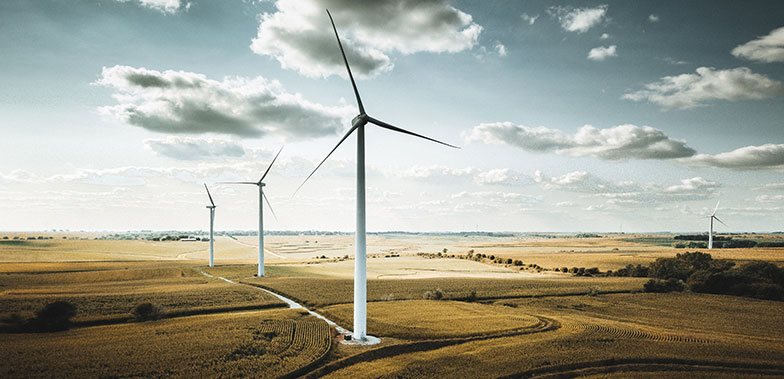
Share this:

  • Share on WhatsApp (Opens in new window) WhatsApp
  • More
  • Share on Mastodon (Opens in new window) Mastodon

THE BEADY EYE SAYS: GOVERNMENTS MUST GO BEYOND GROWTH (GDP) AND FOCUS INSTEAD ON A NEW SOCIAL CONTRACT.

02 Tuesday Aug 2022

Posted by bobdillon33@gmail.com in 2022: The year we need to change., Climate Change., Fourth Industrial Revolution., GDP., How to do it., Human Collective Stupidity., Human values., Humanity., Imagination., Life., Our Common Values., Purchasing Power., Purpose of life., State of the world, Survival., Sustaniability, Technology v Humanity, The common good., The Obvious., The pursuit of profit., The state of the World., The world to day., THE WORLD YOU LIVE IN., THIS IS THE STATE OF THE WORLD.  , We can leave a legacy worthwhile., What Needs to change in the World, Where's the Global Outrage.

≈ Comments Off on THE BEADY EYE SAYS: GOVERNMENTS MUST GO BEYOND GROWTH (GDP) AND FOCUS INSTEAD ON A NEW SOCIAL CONTRACT.

Tags

Capitalism and Greed, Capitalism vs. the Climate., Climate change, Post-Covid-19, The Future of Mankind


(Twelve minute read) 

This is an easy thing to say but to implement is another kettle of fish because it requires a paradigm shift in the way developed countries approach economic policy.

Changing the world seems like one of these huge, impossible things that no man can possibly achieve.

It requires a rethink how we define and measure economic success.

In order to find new ways to transform the world we live in goals will have to be built into the structures of the economy from the outset, rather than hoped for as a by-product, or added after the event.

Everything that goes around, comes around.

People always wish for change because it’s the constant thing in this world, and they always have this deep, inner desire to improve things even if there’s nothing to improve.

Every people I know wants change, but for what purpose exactly?

Why do we crave change?   And how exactly to change? 

How exactly can you change without making mistakes?

How to actually know you’re making a change if you don’t know your objective?

What if there’s nothing to be changed?

Where do we start?

Change comes in learning from the mistakes of our past.

Realising that it’s a mistake.

When things stay the same and your life is getting worse and worse, then it’s time for a change.

                                   ————————-

Broadly speaking an economy is an interrelated system  of human labour, exchange, and consumption. 

Economic policy should prioritise environmental sustainability, economic resilience, reducing inequality and improving wellbeing economic growth in OECD countries have generated ‘significant harms’ over recent decades – including rising inequality and catastrophic environmental degradation.

Instead of focusing on gross domestic product (GDP), now is the time to  prioritise environmental sustainability, improving wellbeing, reducing inequality and strengthening economic resilience. 

A return to the status quo would be disastrous so governments that are spending unprecedented sums to rebuild their economies after the Covid pandemic, must look beyond growth alone to prioritise the needs of people and planet.

It argues that this will require a new role for the state, with governments becoming more entrepreneurial, seeking to shape markets and steer the process of economic change, not simply correcting market failures.

                                    ———————-

So where are we?

Various layers of inequality have being exposed and exacerbated by the COVID-19 pandemic.

It has laid bare risks we have ignored for decades: inadequate health systems; gaps in social protection; structural inequalities; the digital divide, environmental degradation. the energy sources we count on are limited, just like water.

In fact, most wars and political conflicts in the world start because of lack and/or need for energy resources. In America alone, the consumption of energy rises every year, and it doubles every 20 years. 

The climate crises is showing that computers and software will not be able to replicate human creativity.

This “new kind of social contract” is required to transform the relationship between the state, business, civil society and citizens.Industryweek 34572 Understanding 5g 5g 623431736

5G as on par with the printing press, electricity and the steam engine –

Self-driving cars, remote robotic surgery, autonomous weapons — all that and much more is set to be delivered via the 5G wireless network, which promises to transform our lives and add trillions of dollars to the global economy every year.

This leap forward in connectivity will be key to the spread of artificial intelligence and machine learning, enabling massive amounts of data to be collected from remote and mobile sensors and analysed in real time.

Drive everything from home appliances that order groceries to autonomous vehicles to smart cities.

Given the power of 5G technology, it is no surprise that it has also become a proxy for the broader power struggles. 

However Technology alone will not change the core problems in the world. 

Why?

  • The Fourth Industrial Revolution can’t be a panacea for the problems caused by our obsession with unchecked economic growth. Over the past couple of decades, the world has become enamoured with the transformative power of technology.
  •  In spite of all the hype, digital technology could not prevent nor control the spread of the coronavirus.
  • Technology won’t solve the climate crisis, prevent the recurring wildfires.

                     ———————————————-

The last thing the world needs is another ‘revolution’ that ignores the external cost to society of our unchecked obsession with economic growth at all cost.

We all think time and money is so important, but are our health, peace and happiness not more important?

We’re in this together and it can only be solve together. 

We can protest, till we are blue in the face, demand change till the cows come home, hold world conferences till we run out of air.  There is however one weapon if we all of us were to use it collectively that would bring change – that is  Buying power.

Doing the right thing for the environment, pro-actively using it to effect change.

In this uphill battle, the good news is that solutions are out there.  

Business would  be held accountable for addressing local and
global societal needs.

Industry players that suffer would not helplessly standing by as their revenues and profits dwindled, they would act intensified competition.

But is this inevitable? Can companies learn to adapt and react to ensure their continued success and prosperity? The answer is yes.

Since buyer power is dynamic, just visualize this scenario.

What would happen if we all refused to pay our energy bills till the Government put in place non repayable grants to install solar panels or insulation. 

There is no right answer here but it would be impossible to either jail or fine everybody.

It is therefore important to understand what choices we have available to us to determine what type of buyer we will be, and therefore where our strengths lie.

That strength would be a campaign conducted on our mobile phones. 

Once a month campaign targeting profit for profit sake, demanding change.

Your choices would impact their bottom line.

Resilience – not technology – is the answer to our biggest

challenges.

It’s either an entirely environmentally-friendly existence. 

Or are we just going to except a burning world with wars and mass migration till there is nothing left to live for. 


All human comments appreciated. All like clicks and abuse chucked in the bin.

← Back

Thank you for your response. ✨


Share this:

  • Share on WhatsApp (Opens in new window) WhatsApp
  • More
  • Share on Mastodon (Opens in new window) Mastodon
← Older posts
Newer posts →

All comments and contributions much appreciated

  • THE BEADY EYE SAYS. IF WE ARE TO SURVIVE. WE NEED TO RADICALLY CHANGE THE WAY WE DO EVERYTHING. October 31, 2026
  • THE BEADY EYE SAYS. The AI industry’s boldest promise right now is that AI will soon improve itself, with almost no need for human oversight.  October 30, 2026
  • THE BEADY EYE ASKS. WHY DO WE PUT UP WITH IODOITS IN POWER? October 29, 2026
  • THE BEADY EYE LOOKS AT AMERICAN CULTURE. October 28, 2026
  • THE BEADY EYE SAYS POLITICS HAS LOST TOUCH WITH YOUNG PEOPLE. October 26, 2026

Archives

  • October 2026
  • September 2026
  • August 2026
  • July 2026
  • June 2026
  • May 2026
  • April 2026
  • March 2026
  • February 2026
  • January 2026
  • December 2025
  • November 2025
  • October 2025
  • September 2025
  • August 2025
  • July 2025
  • June 2025
  • May 2025
  • February 2025
  • January 2025
  • December 2024
  • November 2024
  • October 2024
  • September 2024
  • August 2024
  • July 2024
  • June 2024
  • May 2024
  • April 2024
  • March 2024
  • February 2024
  • January 2024
  • December 2023
  • October 2023
  • September 2023
  • August 2023
  • July 2023
  • June 2023
  • May 2023
  • April 2023
  • March 2023
  • February 2023
  • January 2023
  • December 2022
  • November 2022
  • October 2022
  • September 2022
  • August 2022
  • July 2022
  • June 2022
  • May 2022
  • April 2022
  • March 2022
  • February 2022
  • January 2022
  • December 2021
  • November 2021
  • October 2021
  • September 2021
  • August 2021
  • July 2021
  • June 2021
  • May 2021
  • April 2021
  • March 2021
  • February 2021
  • January 2021
  • December 2020
  • November 2020
  • October 2020
  • September 2020
  • August 2020
  • July 2020
  • June 2020
  • May 2020
  • April 2020
  • March 2020
  • February 2020
  • January 2020
  • December 2019
  • November 2019
  • October 2019
  • September 2019
  • August 2019
  • July 2019
  • June 2019
  • May 2019
  • April 2019
  • March 2019
  • February 2019
  • January 2019
  • December 2018
  • November 2018
  • October 2018
  • September 2018
  • August 2018
  • July 2018
  • June 2018
  • May 2018
  • April 2018
  • March 2018
  • February 2018
  • January 2018
  • December 2017
  • November 2017
  • October 2017
  • September 2017
  • August 2017
  • July 2017
  • June 2017
  • May 2017
  • April 2017
  • March 2017
  • February 2017
  • January 2017
  • December 2016
  • November 2016
  • October 2016
  • September 2016
  • August 2016
  • July 2016
  • June 2016
  • May 2016
  • April 2016
  • March 2016
  • February 2016
  • January 2016
  • December 2015
  • November 2015
  • October 2015
  • September 2015
  • August 2015
  • July 2015
  • June 2015
  • May 2015
  • April 2015
  • March 2015
  • February 2015
  • January 2015
  • December 2014
  • November 2014
  • October 2014
  • September 2014
  • August 2014
  • July 2014
  • June 2014
  • May 2014
  • April 2014
  • March 2014
  • February 2014
  • January 2014
  • December 2013
  • November 2013
  • October 2013

Talk to me.

benmadigan's avatarbenmadigan on THE BEADY EYE LOOKS AT THE EXP…
Jason Lawrence's avatarJason Lawrence on THE BEADY EYE ASK’S: WIT…
benmadigan's avatarbenmadigan on THE BEADY EYE ASK’S: WHA…
bobdillon33@gmail.com's avatarbobdillon33@gmail.co… on THE BEADY EYE SAYS: WELCOME TO…
Ernie's avatarOG on THE BEADY EYE SAYS: WELCOME TO…

7/7

Moulin de Labarde 46300
Gourdon Lot France
0565416842
Before 6pm.

My Blog; THE BEADY EYE.

My Blog; THE BEADY EYE.
bobdillon33@gmail.com

bobdillon33@gmail.com

Free Thinker.

View Full Profile →

Follow bobdillon33blog on WordPress.com

Blog Stats

  • 107,137 hits

Blogs I Follow

  • unnecessary news from earth
  • The Invictus Soul
  • WestDeltaGirl's Blog
  • The PPJ Gazette
Follow bobdillon33blog on WordPress.com

The Beady Eye.

The Beady Eye.
Follow bobdillon33blog on WordPress.com

Create a free website or blog at WordPress.com.

unnecessary news from earth

WITH MIGO

The Invictus Soul

The only thing worse than being 'blind' is having a Sight but no Vision

WestDeltaGirl's Blog

Sharing vegetarian and vegan recipes and food ideas

The PPJ Gazette

PPJ Gazette copyright ©

Privacy & Cookies: This site uses cookies. By continuing to use this website, you agree to their use.
To find out more, including how to control cookies, see here: Cookie Policy
  • Subscribe Subscribed
    bobdillon33blog
    Join 218 other subscribers

    Have a WordPress.com account? Log in now.

  • bobdillon33blog
    View site in Reader
    Manage subscriptionsSign upLog in
    Report this content
    Collapse this bar
Loading Comments...

You must be logged in to post a comment.