( Fifteen minute read)
We could be the first in human history to leave our children nothing.
No greenhouse-gas emissions, no poverty, and no biodiversity loss but they say that the attention spam of the generation of social media is only eighth minute.
So here are a few facts.
We have 8 billon of us on the earth, with around 35 mega cities, built on the back of fossil fuels, feed by monocultural farming. 4% of all animals are wild, all the rest are domestic. There is no technology that will save humanity against Climate change.
Only if we put the Earth first will there be a future generation.
There will be no encore.
————

When we talk about generational differences, we no longer can just identify differences between generations, but we can identify differences within generations as well.
Technology is the catalyst for the rapidity with which generations now evolve. Change, hitherto that was a gradual process, has become, for us, cataclysmic.
It has become a tidal wave that threatens to overwhelm us.
A decade to-day is the equivalent of a generation, and standards and values topple over like ninepins.
Take smartphones for example. They have only been in widespread use for a decade, but they’re now so fundamental to our daily lives that it’s hard to remember life without them.
How could we possibly see those who can remember life before the smartphone as part of the same generation as those who’ve known nothing else?
If we name each generation based on the technological conditions it experienced, generations may soon encompass only a few years apiece. Slicing the population into ever-narrower generations, each defined by its very specific relationship to technology, is fundamental to how we think about the relationship between age, culture, and technology.
They include the digital natives, the net generation, the Google generation or the millennials.
But generation gaps did not begin with the invention of the microchip. What’s new is the fine-slicing of generational divides, the centrality of technology to defining each successive generation.
It’s not politics or sociology, because they don’t move fast enough, it has to be video based.
We’ve moved from a view of generations as biological “in the sense of the generation of a butterfly from a caterpillar,” as Hentea puts it, to a view of generations as sociological. By no longer limiting political power to a defined group but rather encouraging political participation across social strata.
At the same time, democratization paradoxically created generational categories.
With aristocratic privileges abolished and duties diminished, the Internet generation provided a fall-back for social belonging:
Not everyone can belong to my generation, so the vestigial desire for distinction is satisfied, but at the same time, no one remains without a generation, so the democratic impulse toward equality is met.
Since the dotcom bubble burst back in 2000, technology has radically transformed our societies and our daily lives. Today over half the global population has access to the internet. At the same time, technology was also becoming more personal and portable greatly shaped how and where we consume media.
While these new online communities and communication channels have offered great spaces for alternative voices, their increased use has also brought issues of increased disinformation and polarization.
It is indisputable that thanks to technology, we are getting a chance to live a life our predecessors could not even dream about.
The next generation is not going to sit and read policy and procedure manuals. Nor are they going to spend their time dealing with complex reports.
If the role of technology in shaping an emergent generational consciousness seems obvious, but no one attributes the evils of the age to its machines. By growing up with mobile devices and social networks, the skills they bring into the workplace for collaborative capabilities is profound compared to what we saw with Millennials just 10 years prior.
————-
However as we know each generations live in the shadow of the generation before it.
The technology there are using are filtrated with all the positives and negative of the generation before them.
But do all tech advancements bring sole good to our lives?
Or, maybe, the impact of tech innovations is quite ambiguous.
It’s easy to become desensitized to the importance of innovations and advancements for the overall progress of society.
All countries share responsibility for the long-term stability of Earth’s natural cycles, on which the planet’s ability to support us depends. We are the first generation that can make an informed choice about the direction our planet will take. Either we leave our descendants an endowment of zero poverty, zero fossil-fuel use, and zero biodiversity loss, or we leave them facing a tax bill from Earth that could wipe them out.
There’s no sugar-coating the truth that different generations interact with technology differently.
Advancements in technology have already tapped into every area of life. There is a dedicated mobile app for everything.
Every living person today can be considered part of a digital generation, because — no matter how much we engage with technology — we are living in a digital-first world. Of course, the degree to which each person is comfortable and willing to embrace technology is also dependent on when and where they entered the world.
To some degree, it’s actually something we’re born into, depending on how tech-forward the world was when we entered it.
Technology is ever-evolving and each digital generation adapts to these advancements at their own pace.
However the digital generation can be considered as encompassing only people who were born into or raised in the digital era, meaning with wide-spread access to modern-age technology such as smartphones, tablets, computers, and digital information like the internet.
There are differences in the motivations underlying technology behaviour in each generational group, and there may be variances in the way each generational group uses and gets engaged with technology.
Research findings indicate that millennials mostly use and get engaged with technologies for entertainment and hedonic purposes. They use technology as a means to go after their aspirations and dreams, looking to gather and share information that quickly moves them and their ideas forward.
They are prone to act faster once they make a decision and technology has made a true quantum leap, with augmented reality, blockchain, artificial intelligence, and 3D printing being just a few examples of the most recent inventions.
The days of simple demographic segmentation are gone.
With every new generation, the access to limitless amounts of data has created a much more complex level of fragmentation and micro-segmentation.
To day the average person has an attention span of just 8 seconds.
Digital citizenship now applies to everyone but not everyone is the same in any generation, and everyone is subject to different economic circumstances regardless of their generation.
Though it may be tough to predict which advancements technology would bring next, some innovations are already changing our beliefs about the world around us.
Clearly, technology by itself is neither good nor bad.
It is only the way and extent to which we use it that matters.
While some people want just, to sit back and watch the world burn.
We are now the generation under constant surveillance, sharing our data with companies all the time online. Tracing our shadows that allows them to get a glimpse into the digital traces you’re leaving – how many, what kinds, and from what devices.
The use of surveillance cameras in modern society has always been divisive, requiring governing bodies to perform a fine balancing act between respecting the nation’s civil liberties and keeping its citizens safe and secure. It’s a multi-layered issue incorporating many dimensions, including technology, legislation, code of ethics and conduct, and one that triggers conversation year-round.
When the Covid pandemic hit, a number of governments rolled out or extended surveillance programs of unprecedented scale and intrusiveness, in the belief, however misguided, that perpetual monitoring would help restrict people’s movements and therefore the spread of the virus.
It’s important to ask when technology adds value, and for whom.
If technology can indeed aid in pandemic response and recovery, it is essential to have open, inclusive, transparent, and honest public discussions on the appropriate type of public digital infrastructure people need to thrive.
The rush to embrace digital contact tracing has opened a Pandora’s box of privacy.
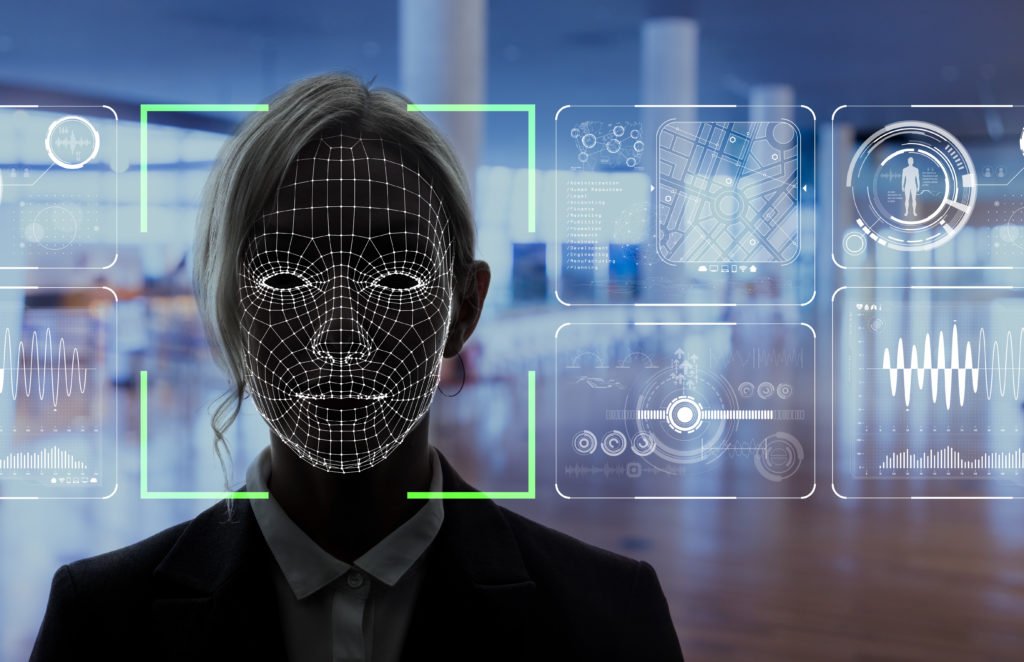
As the technology develops, we are seeing more sophisticated AI being integrated into surveillance systems and facial recognition technology, in particular, is creating a stir in terms of practice and legislation. Surveillance is a vast and varied topic and one that can present some very emotive and social issues, as well as legislative and technological ones. Without real reflection on the rights implications, there’s a real risk of deepening inequality and vesting considerable power to coerce and control people in governments and the private sector.
Any deployment of technology should be rooted in human rights standards, centred on enabling people to live a dignified life.
It’s up to every digital citizen — whether they’re a digital native or digital immigrant — to practice cyber safety and, in turn, instil it in digital generations to come.
New technologies such as virtual visits, chatbots are being used to delivery healthcare to individuals, especially during Covid-19.
The ability to understand and respect someone else’s feelings is always important but even more so online. That’s because written communications and online interactions, such as text messages and social media comments, are often missing the nonverbal cues we have in the physical world that give us a well-rounded understanding of someone else’s stance.
Every user of the internet has a right to privacy. Still, we share The law still applies when we’re online
On the downside, some technological developments prove to be a curse rather than a blessing. Overindulgence in the use of digital apps and smart devices, overreliance on online tools may sometimes lead to tragic effects.
If you believe that technological conditions profoundly shape the life experience and perspectives of each successive generation, then those generations will only get narrower.
Doesn’t the leap from Facebook to Snap Chat constitute its own profound generational divide?
If we name each generation based on the specific technological conditions it experienced during childhood or adolescence, we may soon be dealing with generations that encompass only a few years apiece. At that point, the very idea of “generations” will cease to have much utility for social scientists, since it will be very hard to analyse attitudinal or behavioural differences between generations that are just a few years part.
I do expect new social platforms to emerge that focus on privacy and ‘fake-free’ information, or at least they will claim to be so. Proving that to a jaded public will be a challenge. Resisting the temptation to exploit all that data will be extremely hard. And how to pay for it all? If it is subscriber-paid, then only the wealthy will be able to afford it. But at the end of the decade, humans will still be humans, and both greed and generosity, love and hate, truth and lies, will likely still exist in the same proportions as they do today.
We are looking to technology to lead us towards a carbon-neutral world but there are other factors at work, [to] the growth of authoritarian governments and social inequalities.
Climate change will change the temperatures up or down till a tipping point plunges us into a non reversible disaster, with consequence of unimaginable survival.
We are headed toward an increasingly panoptic society, as represented by the Chinese government’s emerging social credit scale. In other words, just as digital world is shaping the physical world, physical world shapes our digital world as well.
All human comments appreciated. All like clicks and abuse chucked in the bin.
Contact : bobdillon33@gmail.com

 bobdillon33blog