This question tends to arise in the face of a moral dilemma or existential crisis but in this world of technology, social media, and advanced scientific discoveries, it’s important to keep asking this crucial question.
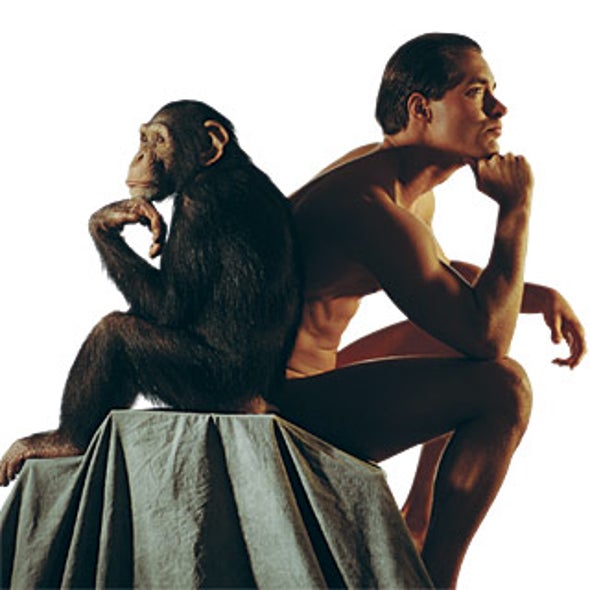
Are humans really biologically and socially different from the rest of the created world?
The physical similarities between humans and other mammals are quite plain. We are made of the same flesh and blood; we go through the same basic life stages but how is the value of a human determined?
—————————–
One of the key characteristics that make us human appears to be that we can think about alternative futures and make deliberate choices accordingly.
But we are living in an age that makes defining what makes humans human tricky, not because we are both unique and paradoxical but because technological advancements are changing our very existence.
While we are the most advanced species intellectually, technologically, and emotionally—extending human lifespans, creating artificial intelligence, traveling to outer space, showing great acts of heroism, altruism and compassion—we also have the capacity to engage in primitive, violent, cruel, and self-destructive behavior.
It is particularly challenging to name all of the distinctly human traits or reach an absolute definition of “what makes us human” for a species as complex as ours.
So we remain even in this age of modernity and intellectual freedom, no closer to any concrete answers.
It is our intellect that transcends us from simply existing.
Apart from the obvious intellectual capabilities that distinguish us as a species, humans have several unique physicals, social, biological, and emotional traits which are also changing.
Not too long ago as a species we humans used storytelling for communicating and transmitting our ideas. Now we use smartphones and internet platforms without much consideration for what effect they are having on our minds.
(The mind consists of the intangible realm of thoughts, feelings, beliefs, and consciousness.)
We assume that others have minds somewhat like ours—filled with beliefs and desires—but we can only infer those mental states. We cannot see, feel, or touch them. We largely rely on language to inform each other about what is on our minds.
Our memories are stored in the Cloud adding to the data collected by machine learning algorithms that shape them into products.
(Memory allows human beings to make sense of their existence and to prepare for the future, increasing their chances of survival, not only individually but also as a species.)
“As far as we know, humans have the unique power of forethought to think consciously: The ability to imagine the future in many possible iterations and then to actually create the future we imagine.
This awareness gives meaning to humanity and the awareness of our mortality. We are human because of our reason.
We are determined and capable of knowledge, and the ability to act on it, without depending on anyone else, even religion or some divine intervention but we are not self-sufficient. We need others.
because of this, we interact with the world based on our perception of it.
Regardless of one’s religious beliefs and thoughts about what happens after death, the truth is that, unlike other species who live blissfully unaware of their impending demise, most humans are conscious of the fact that someday they will die.
The story of what made us human is probably not going to focus on changes in our protein building blocks but rather on how evolution assembled these blocks in new ways by changing when and where in the body different genes turn on and off.
Species evolve to fit the particular environment that they are occupying at a given time, not to “advance” to a different evolutionary stage.
So us of us who are alive today with this realization yet to come are the guinea pigs of the future. In the meantime, we can only be human in society not driven by machine learning harvesting data but by the planet, we live on.
It will be a big moment in what truly makes us human when we do so.
All human comments are appreciated. All like clicks and abuse chucked in the bin.
You might say that with all that is going on in the world that this question should be put on the back burner.
However, the history of humans is littered with the lives of the youth’s struggle for self-determination so the process of taking a view on this has to be impeccable if not surreally decorous.
The days of Royalty, Knights, and Lords, being ruled as a subject by the Magna Carta, and lying politicians, have long gone thanks to the Smartphone.
Data is now the king.
With baying popularism, and the coming mass migration, ( due to climate change ) a written constitution is inevitable, so why not write your own.
—————–
Nothing is inevitable, but any view of the future of the UK must comprehend the possibility of independence for Scotland within the next decade.
Scotland would be a foreign country;
Even as a friendly one, its cooperation would have to be sought to maintain the integrity of the defense of the British Isles.
Some sort of trade border would have to be negotiated, made more fraught by the possibility of an independent Scotland re-joining the EU- another protocol.
An agreement would need to be reached as to Scotland’s share of the United Kingdom’s existing national debt burden.
The government of an independent Scotland would have a critical decision to make on its currency, but in any circumstance, it would have to set up a central bank.
Systems of governance and cultural interdependency would have to be teased apart, on everything from the national debt and Revenue and Customs databases to the BBC and artifacts held in national museums.
It is very hard to say what independence would look like, other than to say that Scotland would no longer send politicians to sit in the UK parliament in Westminster and that the UK parliament would have no say on how Scotland was governed.
How the two countries would separate themselves would be an enormous question for decision-makers on both sides of the border.
Who or what would be the Head of State of an independent Scotland?
There is no doubt that the UK’s international reputation would take a hit. A country that had turned its back on its near abroad and then fallen apart would not walk tall in international counsel.
For Northern Ireland, the UK shorn of Scotland would hardly make continued adherence to the union more attractive.
The secession of Scotland would probably accelerate the already evident trend of increasing support for the reunification of Ireland.
It would leave England, with a truculent Wales in tow, turning England into a rump state off the northwest European continent, surrounded by the EU. What sort of country would that be?
Leaving the family of the UK would mean a load of tough decisions for Scotland with either higher taxes or lower spending. The issues would range from what people would have to do to travel between the two countries – would you need a passport, for example – but also how to divide up resources like the UK’s military or power plants.
The most difficult practical issue will be European Union membership.
Will Scotland somehow stay on in the Union, or be expected to negotiate as a brand new member?
What will Scotland have to pay to – and get from – the EU Budget?
Can Scotland join without committing to joining the eurozone?
Will (say) Spain stand against Scotland joining the Union for fear of encouraging its own separatist tendencies?
In practice, (and after lots of bad-tempered meetings), an independent Scotland will end up joining the EU and NATO, and other European/international organizations.
All of this is the price of self-determination.
At present, over 60% of Scottish exports go to England, Wales, and Northern Ireland.
Scottish Independence would lead to the removal of nuclear weapons from Scotland and probably also the G7 and the G20 and a permanent place on the United Nations Security Council.
An independent Scotland may find it difficult to deny the same rights to those in the Orkneys and the Shetland Islands should they wish for it.
Unionism has no new songs.
Brexit has been and will remain to loosen the social contract binding the Britains union. It is reveling the Union as the English, by the English, for the English.
The Scottish question now occupies the place held by the Irish Question which still after seven hundred years of occupation has to be resolved.
All human comments are appreciated. All like clicks and abuse chucked in the bin.
Technology is often touted as the savior that will rescue us from our misbegotten ways, redeem us, and put us on the track to utopia. Then there are the dystopian views, where the future is dominated by technology that either rule over us or saps us so completely of our humanity that we might as well be a bunch of gadgets ourselves.
There are countless challenges today both environmental and not.
Mostly, we see the world through a set of layers. These layers are made up of our emotions, past experiences, and beliefs, and whichever perception is held by most, is popularly deemed as the reality.
Among contemporary scientists and philosophers, the most popular solution to the mind-body problem is probably materialism.
According to neuroscience, the contents of your head are comprised of 86
billion neurons, each one linked to 10,000 others, yielding trillions of
connections.
Materialists aspire to explain feelings and experiences in terms of the chemistry of the brain. It is broadly agreed that nobody has the slightest clue as yet how to do it, but many are confident that we one day will.
For human beings to survive, they need to produce and reproduce the material requirements of life.
But, the real reality is different and it’s above any perception.
=============
THERE ARE NO UNIQUE VOICES ANYMORE.
Here we are once again with another verbal diarrhea conference at the Summit of America’s with the president of the USA delivering a version of his domestic economic pitch promising leaders from Latin America that the United States is committed to helping the region combat crime, corruption, and its economic struggles.
“We will introduce a new approach to managing migration and sharing responsibility across the hemisphere.” A load of verbal bollix but it raises the question are we now heading into globalization vs regionalization?
If so why?
Because of the pandemic and the ongoing wars, today’s great powers have little choice but to spend their way to political stability, which is unsustainable, and or try to control knowledge that is unattainable due to technology.
Because the internet is currently eliminating the middleman the Politicians who are in a representative democracy hence the shift to direct democracy – Popularism – with power now resides with those best able to organize knowledge.
———————-
While the Earth, the planet, will continue to go its way regardless of what happens on the surface we are unable to act collectively and never will be able to do so.
We live toward incredible times where the only constant changes and the rate of change are increasing so fast that there seems to be no meaning to life.
Not until we eradicate poverty, establish free education, set aside ideological differences, change our primary focus to the long-term care of nature and people, remove profit for profit sake Algothrims, and create a World Aid Fund that we all can invest in. (See previous posts)
Not until when we are able to separate our own perception from reality we can take the necessary measures to be happy.
Not until we all realize that we are with Climate Change currently headed to a sixth mass extinction event and that this possibility alone needs to bond our collective conscious into acting like one.
Unfortunately, I believe, that if we aren’t now past the point of recovery, if we don’t act soon, civilization and human habitation here will be untenable.
————————
There’s no going back we are now stuck in a sad chamber of denial as those who are in power hopelessly try to ward off the apocalypse by promoting unsustainable economic growth. Our TV screens are inundated with appeals for help, while the cost of everything from health care, housing education, energy, etc is rising more than one can earn.
We must unplug our brains from smartphones and start working together in large numbers, as part of a coordinated effort to achieve change.
Like Evolution Migration goes both ways – out and in.
Rests assured if we continue to ignore the climate the earth will force us to go only one way, with the world passing through a nuclear war if we continue to ignore the warning signs.
If this happens humans will finally have little to no reason to fight.
What’s the point?
————————
As the Fourth Industrial Revolution forces us to think about where today’s innovations are taking us, when it comes to what our world will look like, in the medium-term – how we will organize our cities, where we will get our power from, what we will eat, what it will mean to be a refugee – it gets even trickier.
I predict the internet will go spectacularly supernova and fifty years from now catastrophically collapse.
With the world’s superpowers thrown into chaos as they come to grip with new powers, financial slowdowns, and emerging economies it will be the start of Apple’s path to world domination.
National leaders will find themselves under increasing pressure from their people, putting a strain on inter-country relationships.
The main political tendency will be away from multinational solutions to a greater nationalism driven by divergent and diverging economic, social and cultural forces with technology and political alining against Mega Power. With countries looking at solving their own problems before looking outward the Climate will continue to heat up.
Nations will increasingly adopt protectionist policies as well as look at ways of further securing borders, something which has already begun to take place as Europe grapples with the biggest refugee crisis since World War II.
Rising military costs, declining oil prices, and internal issues will all weaken Russia further with its inability to control the federation creating a vacuum. It is unlikely that the Russian Federation will survive in its current form.
While it remains a major economic, political and military power, the United States will “be less engaged than in the past”, with the powerhouse learning some vital lessons from history.
China will continue to be a major economic force but will not be the dynamic engine of global growth it once was,
The EU will remain hostage to the economic wellbeing and competitive environment in which it operates.
Nation-states created by the west will collapse.
———————–
We all want to know the future unfortunately in a supposedly thriving economy we are now facing inflation as the real cost of living.
Trickle-down economics does not work.
Social media is not simply a more sophisticated platform. Google, Facebook, Twitter, Youtube, Instagram, and Snapchat WhatsApp have turned into a gallery of Frankenstein’s monsters.
They are a new kind of assault on who we are, not just what we think.
“Like” button for Facebook
To have great predictions, these corporations have had to amass vast quantities of data on each of us – what is sometimes called “surveillance capitalism”, trading in human futures, herding us into our echo chambers of self-reinforcing information.
In doing so we lose more and more sense of the real world and of each other. With it, our ability to empathize and compromise is eroded.
We live in different information universes, chosen for us by algorithms whose only criterion is how to maximize our attention to advertisers’ products to generate greater profits for the internet giants.
Apps allowing us to hail a taxi or navigate our way to a destination are undoubtedly useful tools. But being able to find out what our leaders are really doing – whether they are committing crimes against others or against us – is an even more useful tool. In fact, it is vital if we want to stop the kind of self-destructive behaviors.
Advertisers have been playing with our brains in sophisticated ways for at least a century. And social atomization – individualism, selfishness, and consumerism – have been a feature of western life for at least as long. These aren’t new phenomena. It’s just that these long-term, negative aspects of western society are growing exponentially, at a seemingly unstoppable rate.
We live in a world in which a tree is worth more, financially, dead than alive.
For so long as our economy works in that way, and corporations go unregulated, they’re going to continue to destroy trees, kill whales, mine the earth, and to continue to pull oil out of the ground, even though we know it is destroying the planet and we know it is going to leave a worse world for future generations.
We are more profitable to a corporation if we’re spending time staring at a screen, staring at an ad, than if we’re spending our time living our life in a rich way.
Is the human race capable of pro-actively defining, harnessing, and expressing a collective consciousness, without the need for tragic experiences?
Much of the problem is around our inability to define collective consciousness. Who are we? Who do we want to be in the future?
I think it is time to act.
Our paths have never been so clear. More than ever, science can tell us what different socioeconomic-emissions paths will mean in terms of future temperature.
Which will humanity choose?
The world is getting smaller every day. There is only one world, and it’s made of consciousness. Matter is what consciousness does.
NO MANDATES. A long-standing issue is that the accords generally have no clear mechanisms for mandating that countries carry out their promises. World pressure and ethical considerations have to drive most of the agreements.
So, lots of promises, but no guarantee that countries will honor them.
“Once we have ruled out the impossible, what remains, no matter how improbable, must be the truth.”
Is the nature of global collective consciousness, yet another thing, such as climate change, that the population of this planet is going to happily sleepwalk towards, as it shrugs its collective shoulders and says, “Well, you know, sniff, what can you do?”
Drones hold potential for many environmental benefits but nature’s technologies and designs are more often than not far superior to our own.
Computers in our pockets offer huge conservation potential.
All human comments are appreciated. All like clicks chucked in the bin.
That means a settlement to end the war which is now becoming another proxy American war.
Preventative wars do more than just violate international humanitarian law; when powerful countries claim the right to invade other countries and topple their governments based on imagined scenarios that they declare unacceptably, they make the world an even more dangerous place.
Social media has enabled much sound and fury, proving about as productive as a dog’s attempt to chase its tail, albeit much less amusing.
It is ultimately up to the belligerents, Russia and Ukraine, to negotiate an end to the war with a political settlement.
Ukraine has paid a terrible price, while NATO has paid none at all.
This war might have started with Ukrain aspiration to join Nato but Ukraine was part of the Russian empire for centuries and was also part of the USSR.
It became independent in 1991 when the Soviet Union dissolved after the Cold War.
There has been tension between Ukraine’s old ties to Russia and new allegiances with Western nations ever since. More than 14,000 people have died in the fighting in the region, known as the Donbas, and at least two million people have been forced to flee their homes.
Russia did recognize the independence of two eastern provinces in Ukraine and followed up by sending Russian troops across the Ukrainian border.
Even if Russia does win in Ukraine, it would inherit “40 million mostly hostile Ukrainians.
In reality, Putin’s vision of a single people bound together by a common heritage and religion ignores a lot. because the story of Ukraine is not one of uninterrupted Russian brotherhood, but an extended tug-of-war over religion, language, and political control.
There was an effort to set up a separate pro-Russian Donetsk–Krivoy Rog Soviet Republic, which presaged the struggle a century later in the eastern portions of Ukraine.
Putin’s error comes in his insistence on transforming a complex, entangled history between the two countries into a simplistic morality tale that serves his own interests.
————————-
Russia is likely to de-escalate only if it can find a face-saving way to end its invasion.
The question, therefore, is how to achieve this on both sides.
Here is a viable solution.
The Donbas, region becomes a natural non-nato federal providence with open borders.
Ukraine is assimilated into the EU with a special trade deal for the federal providence.
This might satisfy Putin’sanimosity toward democracy while getting the EU to look at the larger context with a deeper view of the role of NATO, and to think about the European security order we might hope for in the future.
We need a new structure for Pan-European security, not old ones!
All human comments are appreciated. All like clicks and abuse chucked in the bin.
To know a world it has to be explored and this list contains many explorers down the centuries for the title.
From Robinson Crusoe to Armstrong. Marco Polo to Drake. Columbus to Vasco da Gama. Captian Cook to Mungo Parks. Magellan to Livingston, too many you probably never heard of and some that you will no doubt add.
In no critical classification or historical order here are some to consider.
ZHENG HE. His real name was Ma He (1387 – 1433)
One of the greatest admirals and diplomats in world history is considered one of the first conquerors of the oceans. Setting out six centuries ago on the first of seven landmark voyages, he reached south-east Asia, India, the Persian Gulf, the Red Sea, and as far as the east coast of Africa. Some say he may even have made it to America.
Was he the first to discover America? Read
MARCO POLO.
Discovered the Far East.
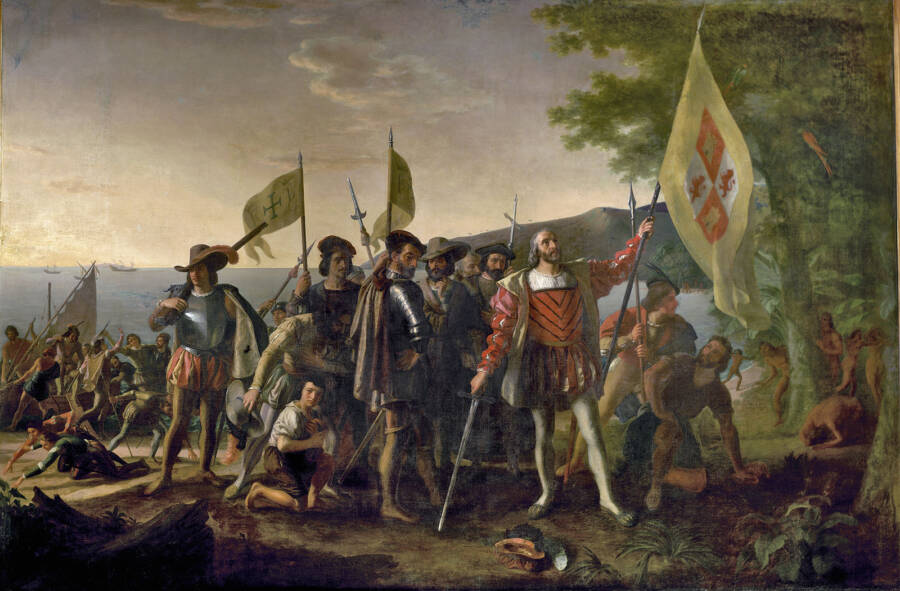
CRISTOBAL COLON – CHRISTOPHER COLUMBUS.
Christopher Columbus commandeered the three ships Nina, Santa Maria, and Pinta during his voyage which started off from Palos, Spain on August 3, 1492.
Did Christopher Columbus discover America before other Europeans?
Modern research has suggested that wasn’t even the case. It’s clear that plenty of people got there thousands of years before Columbus.
Who discovered America can’t be fully answered without also asking what it means to find a place that is already inhabited by millions of people.
Perhaps most famously, a group of Icelandic Norse explorers led by Leif Erikson likely beat Columbus to the punch by around 500 years. Perhaps a band of Irish monks who made it to America in the sixth century. There is no evidence that Columbus ever set foot on mainland North America.
As for Columbus, he was plagued with ship trouble during his final trip back to Spain and was marooned in Jamaica for a year. The place he actually landed was the island of the Bahamas. Columbus returned to Spain after this voyage.
Chinese Admiral Zheng was the first to discover America or maybe it was a Buddhist monk from China named Hai-Shen is said to have reached North America.
Hai-Shen reached a fabled land of Fu-Sang upon traveling to the east.
If we set the question of the discovery of America aside for some time, it can be said that Columbus took the world into a new age of colonialism. His discovery encouraged many people to take voyages to the Americas.
Carbot John and his son Sabastian. 1497
Five years after Columbus they rediscovered Newfoundland. In May 1497 John Cabot and his crew, under the commission of England’s King Henry VII, left Bristol with a ship called Matthew. He is said to have reached North America on 24th June 1497 and returned to Bristol on 6th August 1497.
Captain Verrazano John.1524.
Sailed from Maderia to what is now known as the state of North Carolina in the USA encountering Indians of the south-eastern coast.
JACQUES CARTIER. 1534.
Sailed up the St LAWRENCE.
JOHN DAVIS. 1585.
Discovered the Davis straits. Sailed around the southern extremity of Greenland.
VASCO DA GAMA.
On his first voyage to India (1497–99), he traveled around the Cape of Good Hope with four ships, visiting trading cities in Mozambique and Kenya en route to India. His voyages to India opened the sea route from western Europe to the East.
FERNAO MAGELHAENS.
Ferdinand Magellan, Portuguese Fernão de Magalhães, Spanish Fernando de Magallanes or Hernando de Magallanes, (born 1480, Sabrosa or Porto?, Portugal—died April 27, 1521, Mactan, Philippines), In 1519 he left Sevilla with five ships and about 270 men. He sailed around South America, quelling a mutiny on the way and discovering the Strait of Magellan. With three ships left, Magellan crossed the “Sea of the South,” later called the Pacific Ocean because of their calm crossing. He was killed by inhabitants of Mactan Island in the Philippines.
FRANCIS DRAKE.
Sailed the Pelican. Drake is best known for his circumnavigation of the world in a single expedition, from 1577 to 1580.
CAPTAIN JAMES COOK.
Had to be an incredible man that set out on Endeavour to discover whether there was a continent lying nearer the south pole than Africa or South America. He sailed around the world three times discovering New Zealand, Eastern Australia, most of North-Eastern Asia, and Northwestern North America. He sailed within 19 degrees of the South Pole.
WILLIAM DAMPIER.
Was an English explorer, pirate,privateer, navigator, and naturalist who became the first Englishman to explore parts of what is today Australia, and the first person to circumnavigate the world three times.
WALTER RALEIGH.
An English statesman, soldier, writer, and explorer, led an expedition in search of El Dorado. Undertook a circumnavigation of the globe during the War of Jenkins’ Ear.
MUNGO PARK.
Scottish explorer of West Africa. After an exploration of the upper Niger River around 1796,
BRUCE JAMES.
Set off in search of the source of the Nile. He traveled from Cairo to the Red Sea by way of the desert, then struck south eventually reaching Gondar Ethiopia. He then headed westward across the terrible landscapes of Sudan with mountains and deserts. It would be two years before he reached Cairo.
JOHN HANNING SPEKE.
Made three exploratory expeditions to Africa. He is most associated with the search for the source of the Nile and was the first European to reach Lake Victoria,
BAKER SAMUEL.
He is mostly remembered as the first European to visit Lake Albert, as an explorer of the Nile and interior of central Africa, and for his exploits as a big game hunter in Asia, Africa, Europe, and North America.
BURTON RICHARD.
Burton’s best-known achievements include a well-documented journey to Mecca in disguise and a journey with John Hanning Speke as the first Europeans to visit the Great Lakes of Africa in search of the source of the Nile.
LIVINGSTON DAVID.
Livingstone was constantly on the move into the African interior: He was the first European to reach Lake Mweru (November 8, 1867) and Lake Bangweulu (July 18, 1868). Assisted by Arab traders, Livingstone reached Lake Tanganyika in February 1869. Despite illness, he went on and arrived on March 29, 1871, at his ultimate northwesterly point, Nyangwe, on the Lualaba leading into the Congo River. This was farther west than any European had penetrated. responsible for the first European sighting of Lake Ngami (August 1, 1849). He named the Victoria Falls.
Livingstone may well have influenced Western attitudes toward Africa more than any other individual before him. His discoveries—geographic, technical, medical, and social—provided a complex body of knowledge that is still being explored.
STANLEY HENRY.
Besides his discovery of Livingstone, he is mainly known for his search for the sources of the Nile and Congo rivers.
ERNEST HENRY SHACKLETON.
Born in County Kildare, Ireland. After the race to the South Pole ended in December 1911, with Roald Amundsen’s conquest, Shackleton turned his attention to the crossing of Antarctica from sea to sea, via the pole. He died of a heart attack while his ship was moored in South Georgia.
LEIF ERICSSON.
Decided to find the New World. Ericsson is said to have reached what is today’s L’Anse aux Meadows in Newfoundland, Canada with his crew of 35.
SAMUEL WHITE BAKER.
Baker is best known for his discovery of Lake Albert in Central Africa, along with his exploration of the Nile
YURI GARARIN.
First to orbit the earth
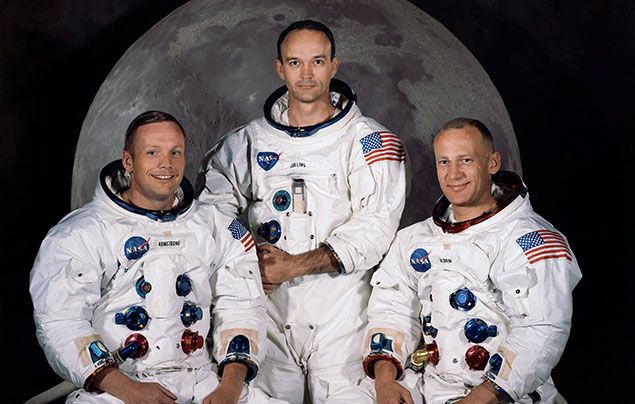
NEIL ALDEN ARMSTRONG, BUWW ALDRINEIL, MICHAEL COLLINS.
It was a feat for the ages. They sat on top of a rocket as tall as a 36-story building with engines burning 735,000 gallons of liquid propellant to create two million pounds of thrust accelerating the Shuttle from 4,828 kilometers (3,000 mph) to over 27,358 kilometers (15,000 mph) before taking it on a trajectory into orbit in mere minutes.
Watched by around 530 million people they Traveled 240,000 miles from the Earth to the moon in 76 hours. Neil and Buzz were the first humans to step foot on the moon and the first Peaceful Exploration for Humanity because there were no resident inhabitants.
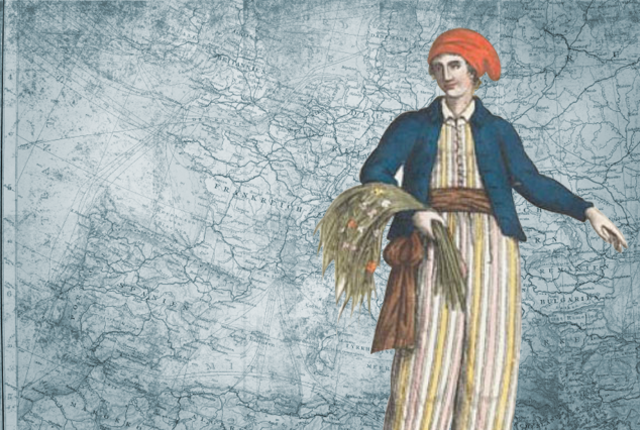
Jeanne Baret.
Back in the late 18th century, French explorer Jeanne Baret became the first woman ever to circumnavigate the Earth. Unfortunately, she had to do it in the guise of a man.
———————–
For me, it’s a toss-up between Cook and the Space boys.
Cook was the first white many a tribe laid eyes on. With the arrival of his ship Resolution with his men, he knew that his men were riddled with gonorrhea and syphilis, killing a lot of them by bringing Venereal Disease (VD) and Tuberculosis which ended up devastating populations.
It turned out that Cook was not a god, killed by Hawaiian Islanders, who were not cannibals. They believed that the power of a man was in his bones, so they cooked part of Cook’s body to enable the bones to be easily removed.
The Space boys are the last human form of exploration.
From here on exploration of distant stars and worlds will be electrical! bio-engineered robots.
All opinions are appreciated. All like clicks chucked in the bin.
Science shows that Europe is a continent of immigrants and always has been. All Europeans today are a mix. The people who live in a place today are not the descendants of people who lived there long ago.
When one looks back on history most countries were established by migration with the removable of the Aboriginal (original) inhabitants. The tribes of America, the Maori of New Zealand, the Aborigines of Australia, and three waves of immigrants settled in prehistoric Europe.
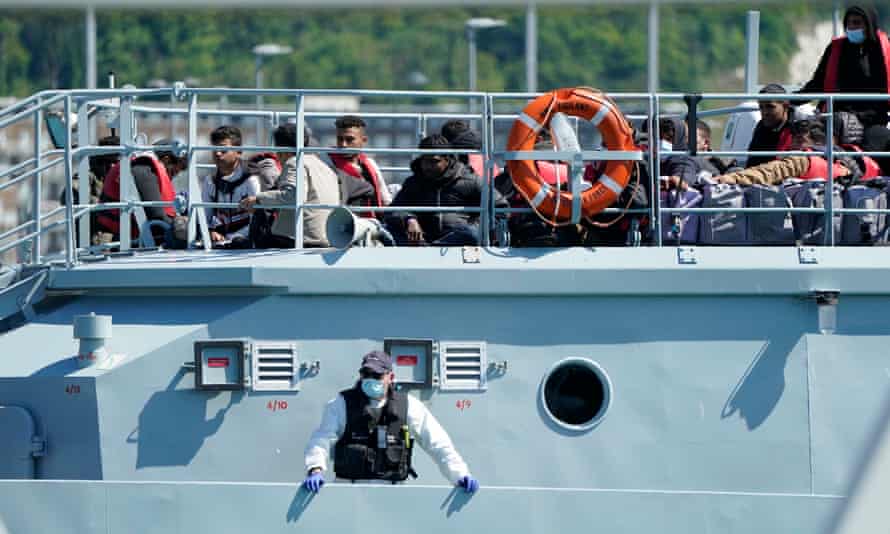
In an era of debate over migration and borders, Migrant and refugee are just two of the many terms we use to describe people who are seeking new homes in other countries. It is becoming increasingly common to see the terms ‘refugee’ and ‘migrant’ being used interchangeably in media and public discourse.
But is there a difference between the two, and does it matter?
Simply speaking, a migrant is someone who chooses to move, and a refugee is someone who has been forced from their home.
The distinction is an important one, as there are certain rights for people deemed refugees, whereas migrants have no such rights.
All people are born with fundamental rights and dignity. That includes migrants.
Behind every migrant family and host community is a story. The stories can be positive or negative, but we cannot hope to understand migration without hearing them. There are presently around 258 million international migrants. That figure is proliferating since the turn of the millennium when there were 173 million.
Migrants are subjected to a country’s immigration laws and procedures and can be turned away or deported back to their homeland.
No matter what name migration is given it is just not the movement of people from one place to another it is a mixing of cultures. (Cultural diffusion is the spread of cultural beliefs and social activities from one group of people to another. The mixing of world cultures through different ethnicities, religions, and nationalities has only increased with advanced communication, transportation, and technology.)
An asylum seeker is someone who has asked the government for refugee status and is waiting to hear the outcome of his or her application.
It becomes clear that we cannot just look at migration at the national level. Of course, governments decide on their own migration laws and policies – whether they have to do with security, education, health, or employment. They have done this throughout history. They do it today.
Our current response to international migration is sustainable.
In general, migrants pay more taxes than receive benefits. Newcomers also enrich the cultures of their host communities, and those who return to their countries of origin bring back new skills and ideas. Yet irregular migration is a continuous challenge that exposes migrants themselves to exploitation and abuse. And host communities also have legitimate concerns that we need to listen to.
For example.
The recent UK and Rwanda migration and economic development partnership to address shared international challenge of illegal migration and break the business model of people-smuggling gangs. Rwanda where a genocidal war killed 800,000 people has already around 150,000 refugees from neighboring Burundi and DR Congo.
( It is not the first time England has exported the unwanted. Today, one in five Australians is the descendant of a convict from Ireland or England. Australia’s oldest city Sydney in the late 18th century was a penal colony to house its surplus of petty criminals — a murky past that continues to leave its mark on the country today.)
——————————
The reality of migration as seen in statistics does not always correspond to what we hear in public discussions.
There are an estimated 272 million international migrants – 3.5% of the world’s population. Although refugees and internally displaced persons make up a relatively small portion of the total number of migrants, they are often most in need of help.
India remains the main origin of international migrants, with 17.5 million Indian-born people living abroad. Mexico and China both also have more than 10 million former residents spread around the world.
Asia hosts the most migrants, with 80 million residing in the region.
In fact, almost 80 percent of English speakers in the world are non-native speakers due to the spread of the language through imperialism and trade.
Cultural diffusion is rapidly becoming the human face of climate change.
Internal climate migrants are Sub-Saharan Africa, South Asia, and Latin America could see more than 140 million people move within their countries’ borders by 2050.
Although migration is a global phenomenon, there is still no global understanding of how to manage it. No single country can manage migration on its own because it is motivated, first and foremost, by the lack of economic opportunities at home.
If migration is managed properly, migrants can boost economic growth by filling gaps in fast-growing sectors and by increasing the working-age population.
This is the true beauty of cultural diffusion, that expansion of the mind.
——————————-
The global approach to asylum and migration is broken.
We have a small window now, before the effects of climate change deepen, to prepare the ground for this new reality.
Together with the increasing volume, we are seeing changing demographics, advancing technology, evolving needs of labor markets, and continued challenges posed by wars, shortages, human rights violations, and climate change WHEN ANY HOPE OF ORDERLY AND REGULATED MIGRATION WILL DISAPPEAR WITH THE GLOBAL SOUTH POURING INTO THE THE GLOBAL NORTH.
Moreover, climate change, as indicated by a recent World Bank report, will accelerate the trend, by driving an estimated 140 million people from their homes in the coming decades.
Be under no illusion; people smugglers are not humanitarians. They are organized criminals whose evil business finances other serious crimes. The challenge, then, is to find a sustainable solution that is fair to everybody. There is no single solution.
All human comments are appreciated. All like clicks and abuse chucked in the bin.
An economist will tell you that inflation is the term used to describe the general rise in the price of goods and services over a certain period. Put another way, inflation is when money loses value over time.
I SAY THERE IS MORE TO IT THAN THAT.
Inflation doesn’t impact all consumers equally but plays a significant role in an economy by redistributing wealth, with consumers becoming poorer, limiting their disposable income.
Ever since the pandemic outbreak, the woes of the common man have been multiplying every day with gas and energy price increases leading the way to higher inflation with no gaps to stop it.
We and governments are unable to cut short our expenses so there’s a domino effect with the UK going through a ringer, especially when it comes to its economy.
A combination of Quantitive Easing, Brexit, the Pandemic, the Ukrainian-Russian war, and Supply/demand shortages, not to mention other hair brain projects have all added to inflation.
It certainly appears that things are going to get worse. Maybe much worse, so what can be done?
Much of the economy depends on consumer confidence, right?
We can agree that a healthy economy is the only solution to maintaining or gaining a better standard of living for everyone. Without that, we can forget about solving any “existential problems.”
Taxpayers already toil half their working lives just to pay off the taxman.
Governments get their revenue from taxation.
It’s been calculated that tax revenue will total £873 billion in 2020/2021, £63 billion more than in 2019/2020 (£810 billion). Public spending is expected to be £928 billion, £86 billion more than it was last year (£842 billion). This is £55 billion more than what the tax revenue will be this year.
The Covid-19 pandemic resulted in very high levels of public spending. Current estimates of the cost of Government measures announced range from about £310 to £410 billion. This is the equivalent of about £4,600 to £6,100 per person in the UK.
Yet taxes should be transparent and understandable. But how many people know how much tax is on a pint of beer? Or a flight to Marbella? Or a liter of petrol? Having so many different indirect taxes removes transparency and makes ethical decision-making more difficult.
Currently, 31.4 million must file an often complicated tax return.
In the United Kingdom, the value-added tax or value-added tax, VAT was introduced in 1973, replacing Purchase Tax, and is the third-largest source of government revenue, after income tax and National Insurance.
As VAT is levied on revenues and not profits it harms low-margin businesses disproportionately. As any fool knows, the first principle of VAT is that you should be able to calculate it in your head.
It is the one stealth tax that the right doesn’t seem to mind.
It seems that this tax is the wrong way round.
We shouldn’t be taxing businesses that add value, but those that do not.
For instance, are Internet sales taxable?
Here is the problem. Knowing and understanding are two different things.
There are two different sorts of inflation.
Demand-pull inflation is when demand for a particular product or service outstrips supply, forcing businesses to raise costs.
This combined with Cost-push inflation is caused by the rise in raw materials prices.
We know that capitalism for profits is out of control.
We know that what’s vital is for people to feel empowered to hold corporations accountable but don’t hamstring them.
We know that government interventions lag behind what is needed and this puts additional strain on businesses that will start the cycle again by laying off more workers.
We know that the latest inflation surge is primarily driven by soaring energy and fuel prices and the war in Ukraine also pushing food prices higher and the Russia-Ukraine conflict is expected to drive these even higher.
We know that tax reform is now essential and the question is whether the various tax reliefs that people currently enjoy are ‘fit for purpose. The ever-widening gap between the nations’ income from tax take and expenditure on social and health care now makes a review an imperative to put the UK’s public finances back on a more sustainable footing.
We know that the National Debt has steadily grown as a result of essential expenditure during both war and peace, and the payment of ‘interest’ on it has long been an unavoidable item of annual expenditure
“Taxation is the price we pay for civilization.” Taxation represents the replacement of the handshakes of commerce with the threat of force as an instrument for human governance.
Taxation is an instrument in a continuing war over how human relationships are to be constituted.
As taxation recedes, handshakes and promises become more prominent in human governance. As taxation expands, duress, threats, and force take on greater significance.
Because the mere possession of the power to employ force almost inevitably expand its use beyond its necessary limits
If taxes were replaced by voluntary contributions, it would be impossible for anyone to claim that the state was involved in expropriating private property. At the same time, it is argued, that people would have strong incentives to take free rides on the contributions of others. As a result, services such as civil order and national security, which we all value, are likely to be underfunded.
A central tenet of democratic ideology is the belief that taxation is something we do to ourselves for our common benefit and nondiscriminatory taxation impedes efforts to use taxation to reward or punish certain forms of activity. Yet a great deal of tax legislation rewards or punishes specific forms of activity.
Once a government acquires the power to reward or punish particular types of activity, the principle of broad-based, nondiscriminatory taxation quickly evaporates under the heat of politics. The result is unlimited power to tax, where the only limit on the reach of the tax collector is the pragmatic one of political pressure and votes.
|s there any solution?
What are all benefits that were withdrawn over a period of ten years and replaced by a basic living wage?
The vat was replaced by a sales tax not applicable to essentials. Sales tax hits consumption instead of income. That means we’ll consume less and thus decrease the national carbon footprint.
Then at least people would have the power over where when and how they spend.
“Taxation is theft”
When the government plans to spend money on something (support for the arts, a space program, a national retirement program, and so on), one should ask: would it be permissible to steal from people in order to run this sort of program? If not, then it is not permissible to tax people in order to run the program, since taxation is theft.
As we see over and over allowing some individuals to assume the role of a government, possessed of the unique powers associated therewith, is unlikely to compel those individuals to act more nobly or selflessly.
All human comments are appreciated. All like clicks and abuse chucked in the bin.
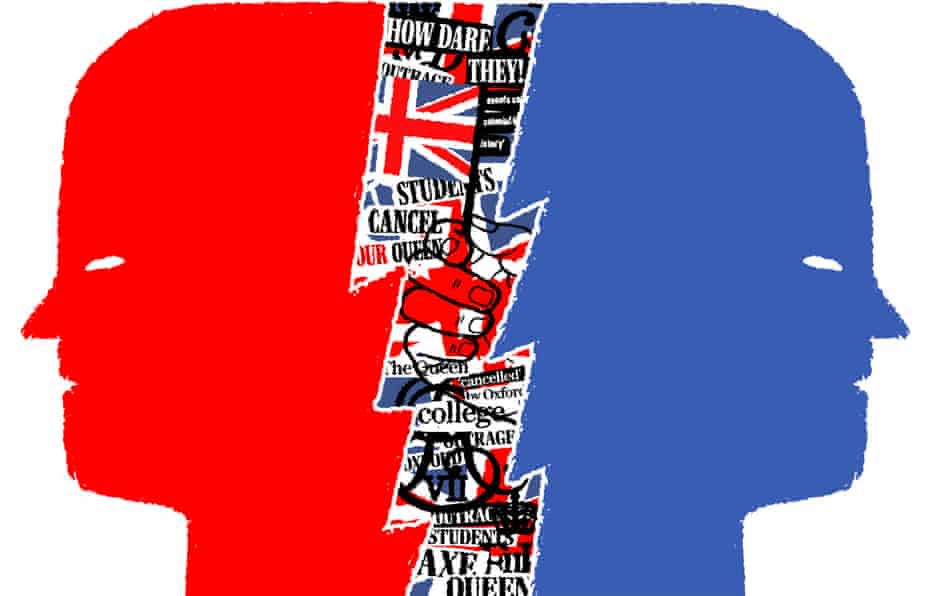
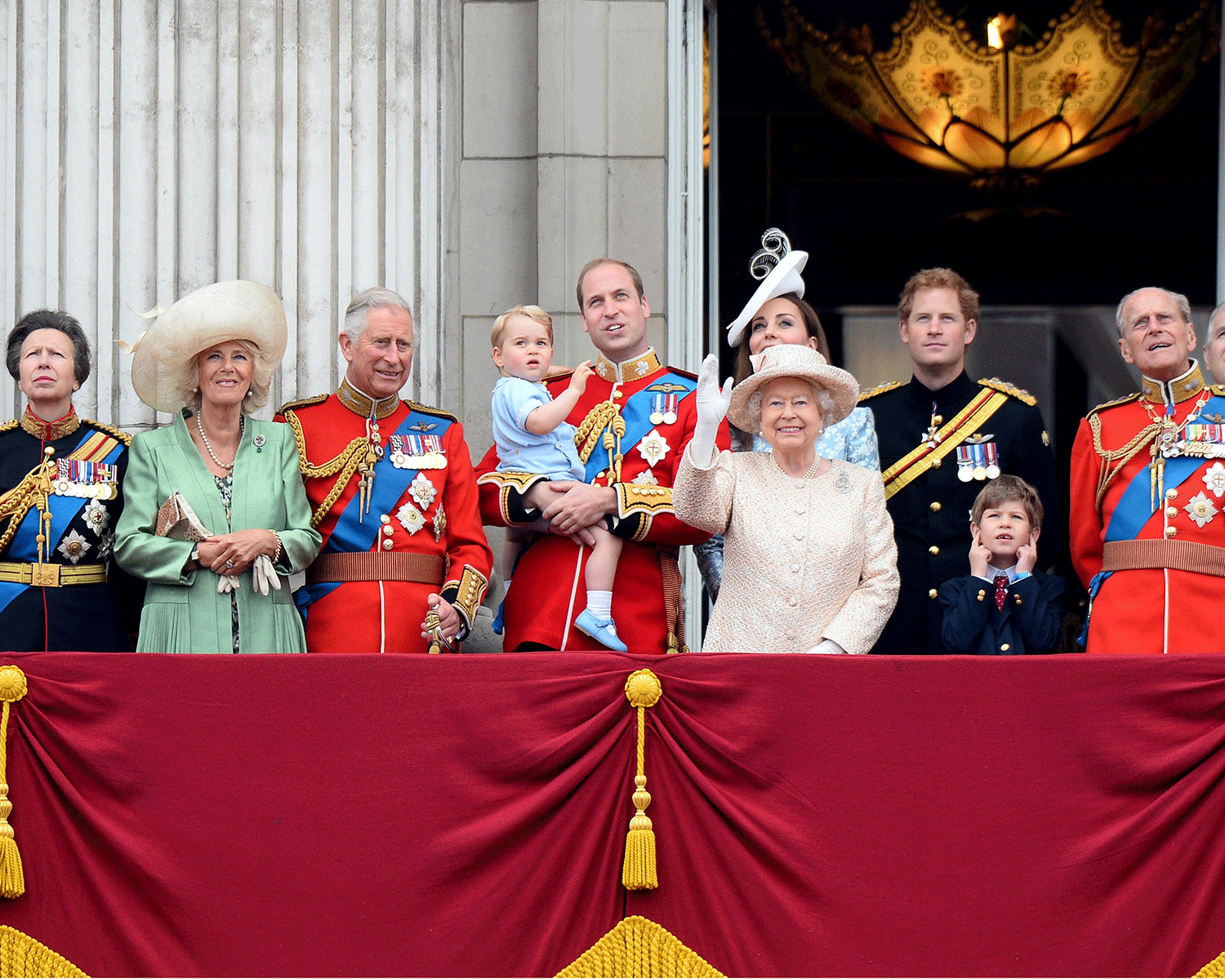
According to the current presentation of the Queen’s Jubilee Celebrations by the BBC, you would think that there was nobody else created other than the Queen.
The four-day celebrations are estimated to cost 1.2bn and 3.66 bn with the tax contributing 28 million.
This is a country in the middle of a cost of living crisis with approximately 2.17 billion people using food banks, that in 2020/21 spent approximately 44.6 billion pounds on arms.
——————
In reality, she is a privileged female born by chance into a culture that is totally out of date.
The days of the Empire have gone with the British monarchy representing the last of its recent colonial history.
If she remains on the throne until the summer of 2024, the Queen will become the longest-reigning European monarch of all time, eclipsing even the 72 years of the Sun King himself, Louis XIV of France.
Time to face change.
What should happen in the future to the constitutional monarchy is an entirely proper question for modern Britain to consider, especially now.
There is nothing wrong with an outpouring of national affection for the Queen and a feel-good event for a country that has been noticeably deprived of fun recently but the old order is passing.
The British monarchy is on the threshold of a new phase after a long, stable – and feminized – period in its history.
I believe this is the time that Britain needs to talk more – and talk more publicly and seriously – about what should come next.
Why?
Because of the role of the monarchy and its place within a democracy, the state, and the rule of law, are serious questions that should be embodying today’s values.
These could include the appropriate constitutional, political, and military roles of the monarch, including with other nations; the regulation, financing, and accountability of the monarchy; the size of the royal household maintained by the state.
The laws of succession and the appropriate ceremonies for the inauguration of the new monarch, including their religious dimension, the coronation, and the coronation oath.
The next coronation will be a tourist money-spinner for Britain. But it will also have immense constitutional meaning.
The oath that the new monarch swears embody issues of church and state that are especially problematic in a nation with an established church, and in which less than half of the public describe themselves as religious believers of any kind.
Should the whole institution be moved sole a tourist attraction?
Because behind the screen of the monarch a person is set apart from the nation.
Charles the next in line would become a benign figure, a symbol on whom everyone can project whatever they want him and Britain to stand for.
It’s too late to be analyzing all the mutually contradictory things the Queen has seemed fine with over her exceptionally long reign that isn’t going to help the country and would be very unfair on an elderly woman who has handled the frankly surreal circumstances of her existence with stoicism and dignity.
So the British monarchy could be on its “last legs” It is linked to the Queen and not the institution itself.
England is on the precipice of breaking up and the Queen can’t be in two places at once or ware several crowns.
On her departure, the “The Firm” The Monarchy – its purpose, what it’s about, will be questioned and challenged in a way that it hasn’t been before.
As an Irishman, I say God save the Queen. After all, after 700 years of occupation, she had the balls to make a state visit to the Republic of Ireland from 17 to 20 May 2011.
It was the first visit by a reigning British monarch to the Republic of Ireland since the 1911 tour by Elizabeth’s grandfather King George V when the entire island of Ireland was still part of the United Kingdom of Great Britain and Ireland.
Thomas Cromwell tried to crush the church and destroy all symbolic attachment to the Monarchy, he was beheaded.
All human comments are appreciated. All like clicks and abuse chucked in the bin.
Just imagine a world where there are two of you, one real and the other existing in the metaverse.
Social media has revolutionized the information world but whether it is a boon or a curse, remains a matter of debate because the online world blurs the lines between reality and virtual reality, the metaverse will be the final straw.
Today, we often perceive anyone who shuns social media as old or out of touch. However, they might be the most mentally fit among us.
The more grounded you are in your authentic value as a human being, the less likely you are to be a heavy user of social media and also to be negatively affected by it.
No matter which side you are on it has impacted the way we communicate, collaborate, and consume everyday life, from work and shopping to politics.
Now, it’s impossible to separate the role of social media from society.
It has become such an integral part of our lives that people actually cannot live without it.
There was a time when people were not able to go to the courts and ask for justice but social media has become a very powerful source to share every injustice happening in society.
Social media helps to express all the oppression, abuse, and injustice that happened to the people. It supports every person publicly speaking for their rights and talking against violence. Thus social media also serves the purpose of fighting for human rights in society.
At the moment it would only take one day of no social media to cause chaos and world markets to collapse.
Why?
Because you don’t even need a computer or a fixed-line internet connection anymore. You can pull out your phone and send a message.
Several studies and researchers have associated social media with several psychiatric disorders, including depressive symptoms, anxiety, and low self-esteem.
Today, the internet makes shopping more efficient because it’s quicker and cheaper than going into a store. The tradeoff is in losing visual and tactile experiences, and the sensation of being in a crowd or a shared sense of reality and place.
Because participating on the different social media platforms is no longer a privilege but a mandate.
That said, does social media provide benefits and benefits alone?
Not at all.
These platforms also come with a dark side that can damage you in many ways. Anybody can make a fake account and do anything without being traced.
Social media is removing the gap between higher authorities and the public.
Excessive addictive use of Social media has destroyed mental health as it influences individuals’ soundness, which I am sure has contributed not just to Brexit but the mass killings we are now witnessing.
==================
So what is the metaverse?
In short, the metaverse is (conceivably) the next frontier for the internet.
It seeks to create embodied experiences that will push many parts of the web as we know to their limits.
We don’t yet know the full repercussions of what making the virtual a little more life-like could be; just as it was difficult to predict how the World Wide Web would impact society the metaverse will remove us further from reality.
There will be many unanswered questions.
They cover the creator economy, tribalism, and the real costs associated with the metaverse – and maybe show how little we know.
Will there be one metaverse or many? (And why might one be better than the other?“
It depends.” Is there a single internet, or are there multiple internets?)
Even if a single implementation of the metaverse becomes mainstream, we’ll find ways to divide it into mini-metaverses that serve our gathering needs. This is neither a good nor a bad thing – it’s simply part of being human.
The metaverse will reconstruct the web from a flat two-dimensional experience into an immersive, interactive three-dimensional experience that resembles a massive multiplayer video game.
The metaverse might allow us to reclaim our past while still preserving the efficiencies of going digital.
This sense of freedom from physical limitations spans all aspects of identity. On a vast scale, people will be able to recreate themselves and be anything they want to be – no matter their race, gender, or size.
If you could experience reality virtually, why would you leave your home?
So it is that the metaverse presents a contradiction:
In the absence of UGC, User-generated contentthe metaverse would be nothing more than a static environment where people could look but not interact (like watching a movie).
If the metaverse is to be as interactive, immersive, and experiential as professed, the world cannot rely only on companies to flesh it out.
We won’t just have social media, but very social media. “Holding” crypto could take on a literal meaning. Our online identities would have substance and form, and might, therefore, be treated with a higher level of respect than we currently give our avatars and usernames.
Living a virtual life.
=========================
All human comments are appreciated. All like clicks and abuse chucked in the bin.
AS YOU KNOW IT IS NOT POSSIBLE TO EXPERIENCE EVERYTHING LIFE HAS TO OFFER. EVEN IF IT WAS POSSIBLE THERE ARE MANY EXPERIENCES WE WOULD WISH TO AVOID AT ALL COSTS.
SUCH AS THE LATEST MASS KILLINGS IN TEXAS, THE CURRENT WARS, POVERTY, BEING BURIED ALIVE, RAPED, JAILED FOR LIFE, CANCER, AND GOING BLIND NOT TO MENTION A SELECTION OF DISEASES.
The list is endless, but there is another aspect of the matter.
Every genuine experience has an active side that changes to some degree the objective conditions under which experiences are had and I believe that experiences are the basis upon which society progresses.
Experience does not go on simply inside a person they influence the formation of attitudes of desire and purpose, but they do not define a society as either developed or civilized.
However, it is experience alone that guides decisive action through hands-on. They teach you how to apply learnings to produce favorable outcomes regardless of any concepts you might have learned.
In a world that values differentiation more than anything else, experience lets you craft your own story while the rest of the people stick to an old and obsolete script.
Experience gives you access to a huge network of people who have been there and done that but the most valuable contribution of experience comes from the self-awareness it gives you.
Experience vs education is a constant battle.
A mixture of experience and education is the best. But the stats beg to differ.
************************
Across the globe, mobile devices dominate in terms of total minutes spent online. As a result influence, Social media. It is now being used in ways that shape politics, business, world culture, education, careers, innovation, and more to rewire human society.
Because social networks feed off interactions among people, they become more powerful as they grow. Enabled people of all ages to just google things, not actually try to remember or memorize information.
The phones have become our masters. It was intended to make our lives easier in terms of communication, now it has become an extension of our hands.
Unregulated Social media is promoting social ills.
LIVING IN SYSTEMS THAT ARE PREVENTING US FROM BECOMING WHO WE TRULY ARE. WE ARE LOSING OUR INDIVIDUAL AND COLLECTIVE CULTURE LIVING IN A WORLD WHERE EXPERIENCING REAL LIFE IS BECOMING VIRTUALLY IMPOSSIBLE.
As a result, the real problems of the world are being ignored.
Increased visibility of issues has shifted the balance of power from the hands of a few to the masses but this awareness is not translating into real change because people are given options that absolve them from the responsibility to act. Injustice is one of the biggest issues in today’s society, there are many consequences.
Technology is anything that makes life simpler but the cellphone as a branch of technology is destroying us.
We need to think much deeper and critically to be certain that we have the authority over our own lives. When you’re not in a room with someone, it can be hard to express your personality and how you could fit into a new environment.
Let’s start with a few quotes.
“Without sensibility, no object would be given to us, and without understanding, none would be thought. Thoughts without content are empty, intuitions without concepts are blind”.
“Experience arises together with theoretical assumptions, not before them, and an experience without theory is just as incomprehensible as is (allegedly) a theory without experience.” Paul Karl Feyerabend, Against Method pg 151. Against Method (1975)
“Experience by itself teaches nothing…Without theory, experience has no meaning. Without theory, one has no questions to ask. Hence without theory, there is no learning.” W. Edwards Deming, The New Economics for Industry, Government, Education (1993)
Experience is simply the name we give our mistakes. Oscar Wild
******************************
There is so much more to life than what you experience right now.
Here are a few reasons why you should value experience over education.
Experiencing’ attaches itself to nothing while at the same time being everything.
Experiencing’ does not get concerned about not remembering. ‘Experiencing’ has no need to remember.
Experiencing’ holds nothing yet is aware deeply of everything.
When we realize there is nothing to capture we relax in the awareness of just ‘experiencing’.
Experiencing ‘experiencing’ is the Fullness. When ‘It’ Is all here where else could we go?!
Everyone has to start somewhere in a world where doing is highly valued. It’s one of the most well-known conundrums of the career world. No experience, no job. No job, no experience.
EVIDENCE THAT OUR CULTURE IS IN DECLINE.
This becomes obvious to those who are willing to actually travel the world learning about the cultures of others. They gain a more reliable picture of life as it is lived.
The most important thing that one can do to rise above the insanity of this world, is to be willing to get educated by those who have zero financial interest in their taking their stand for what they believe.
Just because you don’t have ‘direct’ experience, it doesn’t mean you don’t have anything to offer.
It’s been said that information is power. Without a means of distributing information, people cannot harness its power. Ultimately, sharing is about getting people to see and respond to content.
Birds of a feather tend to hang out in the same ponds. And the best way to prove you’re a duck is to spend as much time as possible in the right pond.
History does not lie – it is just that the masses do not know their history.
There is a line by Verlaine that I will not remember again. There is a street nearby that is off-limits to my feet. There is a mirror that has seen me for the last time. There is a door I have closed until the end of the world. Among the books in my library (I’m looking at them now) Are some I will never open. This summer I will be fifty years old. Death is using me up, relentlessly. —from Inscriptions (Montevideo, 1923) by Julio Platero Haedo
Where are?
Stormzy wore a flat jacket in (2019) at Glastonbury, and Abba appeared digitally yesterday.
What are days for? Days are where we live. They come, they wake us Time and time over. Larkin
All human comments are appreciated. All like clicks and abuse chucked into the bin.