• About
  • THE BEADY EYE SAY’S : THE EUROPEAN UNION SHOULD THANK ENGLAND FOR ITS IN OR OUT REFERENDUM.

bobdillon33blog

~ Free Thinker.

bobdillon33blog

Tag Archives: The Future of Mankind

THE BEADY EYE SAY’S: IN THE PAST TWO HUNDRED YEARS WE HAVE ALL WORKED TOGETHER TO COME UP EVEN WITH MORE INNOVATIVE WAYS TO END LIFE ON EARTH..

04 Wednesday Mar 2020

Posted by bobdillon33@gmail.com in CORONA VIRUS.

≈ Comments Off on THE BEADY EYE SAY’S: IN THE PAST TWO HUNDRED YEARS WE HAVE ALL WORKED TOGETHER TO COME UP EVEN WITH MORE INNOVATIVE WAYS TO END LIFE ON EARTH..

Tags

CORONA VIRUS., The Future of Mankind


Five minutes read. 

The coronavirus story is breaking as you read this, causing what we think is a technologically developed connected world to be more polarised.

Social media has a huge role to play in helping people protect themselves in case of an epidemic. 

There’s a need to evaluate how an important part of our daily interaction — the Internet — comes to play at a time like this.

While it is true that social media can be a reliable source for current trends, you may have to be careful about what you choose to believe.

It goes without saying that social media plays an important role during an outbreak, especially for information dissemination.

The Internet or social media, if not well managed will result in hysteria or cause panic.

Misleading information is the strong bane of the Internet.

So here are some hard facts. 

We’ve forgotten that the biggest threat to human life isn’t nukes or anything else, but pandemics.  Even with all our advanced technology – some of which may even work against us during this outbreaks – the threat of a virus coming from nowhere and ending human civilization as we know it is still as real as it always was.

So now, with vast, interconnected networks to transport people around the world but no way to tell if they’re infected, outbreaks can reach much further and develop defences before we can even detect them. 

While it’s true that recent advancements in detection and treatment of pathogens have made us better at fighting them, there are also many more of them now, including strains that have never infected humans before.

For the death count, deaths from pandemics outnumber any other disaster event in history by a long shot.

The AIDS virus has killed around 40 million people by now. The influenza flu causes around 80,000 – 100,000 annual deaths in the U.S. alone, which is only a fraction of its global death count of 650,000.

The Spanish Flu killed over 100 million in a matter of months, which started during the four-year-long WW1  

It just decided to get milder as time went by.

It begs the question; why do we find ourselves so unprepared for disease outbreaks every few years?

It’s simple, our medical technology is still not advanced enough to detect and find cures for new outbreaks. Previous medical knowledge doesn’t apply to new strains, which require new assessment and diagnosis. Every new outbreak still requires understanding the pathogen from scratch, which in turn affects our ability to effectively respond to the crisis

These outbreaks prove what biologists have been saying for years. Newer and more powerful strains of viruses evolving against our medicines are one of the biggest threats to human life.

Vaccines are making viruses – especially the deadly ones – even deadlier.  

Unless we come up with an alternative way to build vaccines, a possible out-of-control pandemic that kills us all may just be one of its side effects we’d have to deal with.

A more pressing relationship between climate change and virus-related extinction events lies somewhere on the top of the world map. The permafrost set all over the Arctic – particularly in Siberia – is believed to house a number of dormant and dangerous diseases.

In a recent post addressing the subject of compliance by comparison, I highlight what Bacteria is to our existence on earth.

We simply have no idea how many types of microbes exist on Earth.

They recently found a type of bacteria in the human gut that the scientists had never seen before. It was so alien that they had to make a whole separate branch of life for it, which must have separated from ours in the early years of evolution.

It’s only one of the examples of many ways we don’t – and never will – fully understand the almost-alien world of microbes, which is crucial to fighting serious, civilization-threatening pandemics.

Realize that no other creature compares to microbes in numbers, diversity, types of habitat they live in etc. You’d find microbes living everywhere you can imagine; from the most inhospitable depths of the ocean to outer space. While there’s no doubt that they’ve done for themselves, their diversity makes them difficult to study and counter for us.

If there’s one thing that the coronavirus outbreak proves, it’s that we’re still highly dependent on nature’s mercy to keep us alive.

This will remain so untill inequalities in the world are address and we become intelligent enough to realise that we all live on the same planet.

We live in an age of connectivity and exteriority.

Interior thoughts are plastered across our phone screens and transparency is, at this point, mandatory.

The result of this is if not controlled which is the responsibility of the platform owners the continual spreading of rumours and suspicion via social media will breed uncertainty, falsehood and panic.

Social media can be a wonderful tool that increases global connectivity and understanding, yet in the case of the coronavirus and other potential crises, it tends to breed uncertainty, falsehood and panic.

The fact that people on sites such as Twitter and Facebook are so susceptible to random pieces of clickbait and cannot be satisfied with the official reports, suggests a general mistrust of the institutions at the forefront of this global health emergency.

The Corona virus does not ask you what politics you are nor does it ask you what religion or color you are. It couldn’t care who is in power.

All human comments appreciated. All like clicks and abuse chucked in the bin.

← Back

Thank you for your response. ✨


Share this:

  • Share on WhatsApp (Opens in new window) WhatsApp
  • More
  • Share on Mastodon (Opens in new window) Mastodon

THE BEADY EYE LOOK’S AT THE TRUTH: ARE WE BECOMING MORE THAN COMPLACENT WHEN IT COMES TO HONESTY.

03 Tuesday Mar 2020

Posted by bobdillon33@gmail.com in 2020: The year we need to change., CORONA VIRUS., Dehumanization., Digital age., Disconnection., Fake News., Honesty., Human values., Humanity., Inequality, Life., Modern day life., Political Trust, Post - truth politics., Reality., Social Media., Technology v Humanity, Telling the truth., The essence of our humanity., The Obvious., The state of the World., The world to day., Truthfulness., Unanswered Questions., VALUES, WHAT IS TRUTH, What Needs to change in the World, Where's the Global Outrage.

≈ Comments Off on THE BEADY EYE LOOK’S AT THE TRUTH: ARE WE BECOMING MORE THAN COMPLACENT WHEN IT COMES TO HONESTY.

Tags

Genuine values, Honesty., Moral values, Our Common Values., The Future of Mankind, VALUES, Visions of the future.


Seventeen minutes read.

We must reclaim reality if not reality will reclaim us.

In a profound and globally interconnected world all our actions and in-actions matter. Nothing on this planet happens in a bubble.

Honesty is truth and the truth sets us free.

To be honest, everything you do directly affects everyone around you and everyone on the planet; and not just what you do, but also what you think, say, feel and believe.

We must all become completely responsible for ourselves and the global society we live in, and especially for all the problems that our global society has created and perpetuated. We don’t solve the problems of the world by blaming others, punishing them or shifting responsibility on to them or others who appear to be in charge, including governments, countries, religions, political systems, economic systems or anything else.

Perhaps with the Corona Virus, we are just beginning to learn this long and hard lesson.

What does it take to be honest?

To be free from deceit.

William Shakespeare ” No legacy is so rich as honesty”

Although often invoked, the concept of honesty is quite tricky to characterize in a world that is driven by inequality, inflicted by false news-Social media, plundered by unregulated profit-seeking algorithms, torn apart by wars, facing mass climate immigration, undermined by world institutions that are out of date.

George Grant, the Canadian philosopher, said ” “values language is an obscuring language for morality, used when the idea of purpose has been destroyed.”

The German philosopher Nietzsche saw all this last century but in all disciplines and at all levels (judges in law, ethics professors in medicine, university professors in a host of disciplines, politicians in all parties and, alas, religious leaders in all traditions) have not realized this point and continue to speak about “values” when they often seem to be discussing something they believe is true.

What is interesting is, these things are not simply, “you have yours, I have mine.” They are not values. They are a world away from “values.” We cannot say, “you have your courage and I have mine.”

I say we “cannot have a meaningful notion of “tolerance” “respect” or “dignity” or “honesty” based on an incoherent base of “values.”

That is why we no longer have any confidence that there are any shared purposes for human life.

spiritual materialism

To tell the truth is one thing, but the whole truth requires far more detail and doesn’t allow for the omission of anything, including the thought process associated with action or conclusion.

Despite its centrality in ordinary life as well as ethics and philosophy of psychology, honesty is not a major trend of research in the contemporary philosophical debate.

We have become so complacent that the conduct of elected governments is questionable.

Telling the truth — the whole truth — is, at times, practically and theoretically impossible as well as morally not required or even wrong.


Hypocrisy and intellectual dishonesty are character traits so deeply embedded in our Political worlds that we no longer even take notice.

But honesty means more than not lying it is the language of values.

Integrity, Honour, Virtue, Morality, Fidelity, Probity, Rectitude, Veracity, Faithfulness, Truthfulness, Trustworthiness, Straightness, Incorruptibility, Scrupulousness, Uprighttness, Reputability, Plain speaking, Frankness.

It is not “imposing values” but “teaching in truth”

These day’s honesty is on an entirely different level.

As we have seen with Julian Assange revealing what is actually happening can be less than ideal to the ego-mind.

If honesty is not telling the whole truth, what is it?

That is indeed a major question, who in this world of false news is to say which particulars are relevant?

What we need is a TRANSPARENT society, where all the values and virtues of democracy and the free market are really at the service of all of us.

This is what democracy is supposed to be.

But this concept is so far from reality, even in the perceptions of the people in the most consolidated political democracies, that we really need to question what is wrong with our society.

Not just changing this single moment in time but rather gifting all future generations to come.

We Are Living in “The Time of Great Awakening!”

What will our descendants in 200 years say about us?

That our lives were terrible because our cars could not fly, our computers had no protobio-chips and so could not think like humans, our planes could not fly around the planet in 30 minutes?

I think not.

The honest truth is that it is too complicated.

All the virtues are shared as objectively true but they are personal in how they apply to us as persons.

Does it even make sense to say that most of us are not honest and also not dishonest?

We assume, that most of us go through our day with the best intention of being truthful. All our conduct, in a sense, hinges on justice, wisdom/prudence, temperance/moderation, and courage/fortitude.

Only those who can face themselves, in all their own peculiarity, seem to be capable of developing a persona that is true to the self — hence, authentic if not honest.

It appears that much of our learning and education is to learn what the word means.

It is not simply or at all a question of “you have yours, I have mine”?

The day we will be able to push our evolution towards a point to achieve these goals, these values, that day and only that day, we can ask ourselves again:  “Is our world we live in really better?”

To be honest, as this world goes its one truth at a time at the point of a gun that

makes honesty into a disposition?

Consequently, we cannot order any human action towards an end, because all means are related to ends.

Is honesty genetic?

Honesty comes with a different lens, and it has a knack of revealing certain truths and they come with different levels of discomfort attached to them. So there comes a point at which honesty becomes something else.

That something else is survival.

The kind of world we are living in, there are economic/social benefits of dishonesty. Given this, and the concept of natural selection, will the truth gene(s), gradually become extinct?

It may take years of science to discover.

As the man-made “lie-gene” is still blessed by every government in every nation.

WE’VE LONG BEEN TOLD OUR GENES ARE OUR DESTINY AND THERE ARE SEVERAL WAYS THE GENETIC CODE CAN BE ALTERED.

All human comments appreciated. All like clicks and abuse chucked in the bin.

← Back

Thank you for your response. ✨


Our egos are the parts of our identities created by external influences to boost their own sense of self.


posting about it all over social media. which closes us off from the world  

It’s pandering to a market the world seems to want right now. 

Were sold algorithms that only add to the materialism.

An honest action is that with no intent of harm.

One primary reason is the influence of social media despise the truth from  life,

can’t get away with lying

There are a few ways to tell if you’ve fallen victim to this superficial, materialistic spirituality. We’re told we need stuff in order to be the best, but no one tells us there is no best.


Share this:

  • Share on WhatsApp (Opens in new window) WhatsApp
  • More
  • Share on Mastodon (Opens in new window) Mastodon

THE BEADY EYE SAY’S OK. WITH THE CORONA-VIRUS LETS TRY AND PUT WHERE WE ALL LIVE AND HAVE LIVED EARTH INTO PERSPECTIVE.

27 Thursday Feb 2020

Posted by bobdillon33@gmail.com in 2020: The year we need to change., Evolution, HUMAN INTELLIGENCE, Human values., Humanity., Modern day life., Our Common Values., Reality., Sustaniability, Technology v Humanity, The common good., The essence of our humanity., The Future, The Obvious., The state of the World., The world to day., Unanswered Questions., WHAT IS TRUTH, What Needs to change in the World, Where's the Global Outrage., World Leaders, World Organisations.

≈ Comments Off on THE BEADY EYE SAY’S OK. WITH THE CORONA-VIRUS LETS TRY AND PUT WHERE WE ALL LIVE AND HAVE LIVED EARTH INTO PERSPECTIVE.

Tags

Capitalism vs. the Climate., Earth, Environment, The Future of Mankind


Twenty minutes read. 

Most of us struggle with seeing things from a different perspective but our perception of how the world is changing matters for what we believe is possible in the future.

So the purpose of this post is an attempt to take the complexity of the world and simplify it into some sort of graphic that will either help you understand it or motivate you to do something differently.

Dire predictions for the future are nothing new. There is a connection between our perception of the past and our hope for the future.

When one considers our world from a compressed perspective, the need for acceptance, understanding and education becomes glaringly apparent.

The state of the world today with Social media and profit-seeking algorithms is one of distrust. There are things that are certain in this world and there are lots of uncertainty attached to many things. Sometimes the only way to understand the world at its extremes is to put it in terms we use every day.

The fact is that at least two of the world’s largest powers have been at war with each other more than 50% of the time since about 1500. 

The only problem we have here is us and therefore we cannot kill our way to a solution.

The Earth is about 3.5 million times larger than a human.

If you can read this message, you are more blessed than over two billion people in the world that cannot read at all.

Here’s what we’ve got.

We see our earth as big, and in a relative way, it is.

There are about 7 billion people currently on Earth.  Over its existence, around 106 billion people have lived on Earth.

It exists on a blue dot, 24,901 miles in circumference that is over 4 1/2 billion years old, weighing in a 13,170,000,000,000,000,000,000,000 pounds (or 5,974,000,000,000,000,000,000,000 kilograms)

(Since Earth is too big to be placed on a scale, scientists use mathematics and the laws of gravity to figure out Earth’s weight.)

It has a solid iron ball in the middle that is 1,500 miles wide. 

It makes up about 0.0003% of the total mass of our solar system.

75% of the Earth is covered in water only 2.5 per cent of it is fresh essential for producing food, clothing, and computers, moving our waste stream, and keeping us and the environment healthy.

About 321 billion gallons per day of surface water is used by humans.

Humans who are just 0.01% of all life have destroyed 83% of wild mammals.

Plants overshadow everything, representing 82% of all living matter. All other creatures, from insects to fungi, to fish and animals, make up just 5% of the world’s biomass.

It takes light a little over 8 light-minutes to travel from the Sun to Earth and it can circle our planet about seven and a half times in a single second.

Our closest star is Proxima Centauri at a distance of four light-years.

The Milky Way itself is about 100,000 light-years across and is home to about 400 billion stars.

(A light-year is the distance light travels in one Earth year. One light-year is about 6 trillion miles (9 trillion km). That is a 6 with 12 zeros behind it!)

According to the Big bang theory which happened about 13.7 billion years ago all the matter in the universe came into existence at the same time.

So anything can serve as a symbol as long as it refers to something beyond itself.

In our daily activities to give such things more than a passing glance.

However, our planet only seems large until we take a look at the rest of the cosmos around us.

Where do start? Its age., its place in the cosmic, or it’s future.

“Statistical facts don’t come to people naturally. Quite the opposite.

We’re visual creatures.

So perhaps a sense of scale might help.

Let’s start with a few comparisons

Life on Earth first emerged about 600 million years and we are the first generations whose decisions will determine for good or ill the future of human life on this planet, and we seem stuck in a way of thinking that is obsolete in a globalized world of growing populations. The widespread ignorance about these truly important changes in the world feeds into a general discontent about how the world is changing.

To our brains, a million, billion, and trillion all seem like large, vague numbers. 

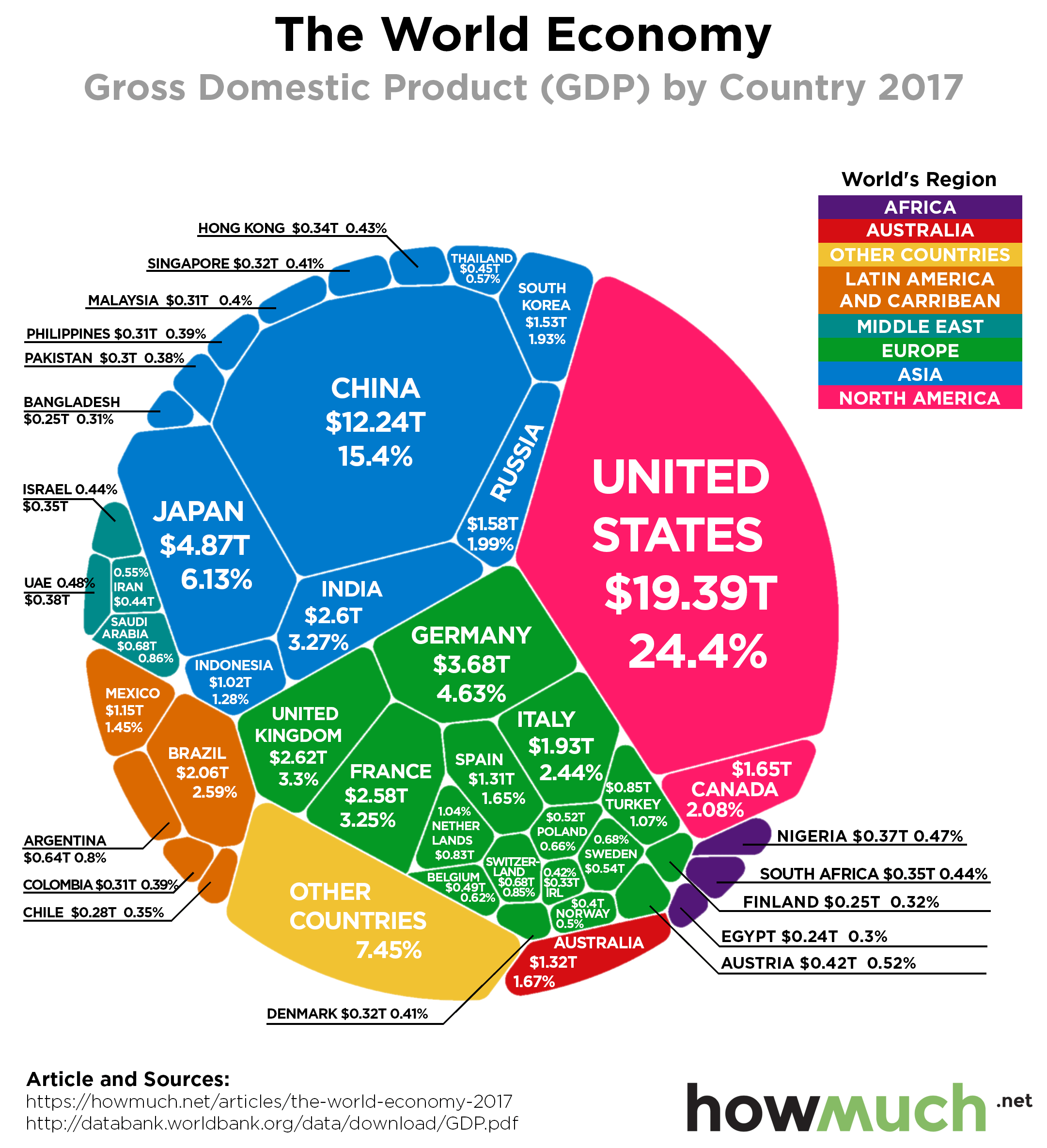
Today (January 2020) Bill Gates fortune amounts to around $108,5 billion around 0.5% of the GDP of the United States. By the time I complete this post, $1436400 amount will be added to his net worth and is predicted to hit the trillion mark by the age of 86.

If you are one of the so-called “rich” and you were lucky enough to make a million dollars per year, it would take you almost 80,000 YEARS to catch up. 

We share the Earth with an estimated 1 quadrillion ants. Insects outweigh us by a factor of 17.

For every human, there are about one million ants and the total weight termites are more than the weight of all the humans in the world. They alone make up 10% of all animal biomass and 95% of soil and insect biomass in tropical regions.­ Colonies of multi-drug resistant EBSL E. coli

Bacteria were one of the first life forms to appear on Earth, about 3.8 billion years ago, and they will most likely survive long after humans are gone.

The number of bacteria on our planet is estimated to be five million trillion trillion – that’s a five with 30 zeroes after it.

All the bacteria on Earth combined are about 1,166 times more massive than all the humans. For every human walking over the face of the planet. 

Bacteria are the huddled masses of the microbial world, performing tasks that include everything from causing diseases to fixing nitrogen in the soil.

The number of bacteria makes the globe’s human population look downright puny.

Because the number of bacteria is so large, events that would occur once in 10 billion years in the laboratory would occur every second somewhere on the Earth.

We may have been underestimating our own humanness for the past several decades when it comes to Bacteria. The average human has over 100 trillion microbes in and on their body microbial cells outnumber human cells in your body by a ratio of around 10:1.

Our modus operandi was to kill them, rather than synchronize with them.

Bills and coins are the best way to transfer bacteria between people worldwide; 

The debate over the microbiome will rage on, as the fear of the invisible and little understood will drive the masses in the short-term.

It is a fact that bacteria live in a whole series of worlds which stretch our imagination, be it the clouds in the sky, an Antarctic ice flow, a 100 degree C hot sulphur spring, 10 km down at the bottom of the sea, 1500 m below the surface of the earth in solid rock, in a rotting peach, in the roots of plants, the stomachs of animals and even your mouth, bacteria can be found there.

The vast majority of life is land-based and a large chunk – an eighth – is bacteria buried deep below the surface but bacteria also now found circling the Earth in the most upper layers of our atmosphere.

Recent findings on animal-bacteria interactions will likely require biologists to significantly alter their view of the fundamental nature of the entire biosphere.

“And that’s the way it is.”

My preference would be to avoid mentioning any ratio at all – you don’t need to it convey the importance of the microbiome. 

Some 70 per cent of the global consumption of the drugs are used in animal and fish farming and to spray on crops.

Antibiotics in the environment do not do any good, they only contribute to risks which we are now witnessing with the Coronavirus. A rapidly spreading virus that is establishing itself across the world through international travel, trade and tourism.

We are now living in a bacterial world, and it’s impacting us more than

previously thought.  No matter what process you think you are studying, you

must look for and consider a major role for bacteria. 

The World Bank has estimated that drug-resistant infections could cost the world economy $1 trillion every year after 2030.

By 2050 costing the world around $100 trillion in lost output: more than the size of the current world economy, and roughly equivalent to the world losing the output of the UK economy every year, for 35 years not to mention killing an extra 10 million people across the world every year.

Back to earth.

This is what a quadrillion looks like written out: 1,000,000,000,000,000.

If it survives us it has 6.5 billion years before the sun (which is 92,960,000 miles away) about 109 times larger than the earth. That means you could fit around 1.3 million earth’s inside the sun which is actually considered a dwarf star — By contrast, UY Scuti is the largest star we humans are aware of; it is a hypergiant around 1.7 billion miles in diameter. UY Scuti is around 5 billion times larger than our sun.

Its no wonder we a pixel.

The diameter of our solar system is around 5,580,000,000,000 miles — that is, about five and a half trillion miles across.  Expanding outward from here, we have to start talking about things in terms of light-years, as the scale is just too massive to discuss in miles. (One light-year is about 6 trillion miles (9 trillion km).

Our Milky Way Galaxy is about 100,000 light-years in diameter of which since the dawn of man we have observed the equivalent of the top of rubber on a pencil.

This is about one 24-millionth of the entire night sky visible from earth.

The diameter of the observable universe is estimated at about 28 billion parsecs (93 billion light-years).

Ok, the numbers are pretty hard to comprehend even when you know what each unit represents. To even think of how long 10 trillion kilometres might be, let alone 93 billion times that distance, can cause your brain to hurt.

Earth, in turn, is nothing more than a molecule in the incomprehensibly vast cosmic ocean. 

Without a global jurisdiction, no government can enforce any kind of coherent rights doctrine, particularly in the face of borderless problems like terrorism or environmental crisis. 

It is up to the people of earth to dissolve the strains between each-other in an equitable, harmonious way. 

The planet you were born on is dying.

We’re on a timeline that leaves little space for politicians to gamble. This is a world that requires nations, corporations and individuals to think not in terms of quarterly reports or midterm elections, but in decades.

For transformative change to be possible, we sometimes need marginalized peoples to speak out, in a loud voice, against the status quo.

The guardians for future generations, representing the children of 2050, can be that voice that says we are spending too much on conflict and too little on peace.

Thus  as Irving John Good said, “The survival of man depends on the early construction of an ultra-intelligent machine.” 

“The first ultra-intelligent machine is the last invention that man need ever make, provided that the machine is docile enough to tell us how to keep it under control.”

If I took a personal guess the way we are going there will be no need for such an intelligent machine as there will be nothing to be intelligent with. 

ALL HUMAN COMMENTS APPRECIATED. ALL LIKE CLICKS AND ABUSE CHUCKED IN THE BIN. 

← Back

Thank you for your response. ✨


https://youtu.be/jYtXoUZbUCQ


Share this:

  • Share on WhatsApp (Opens in new window) WhatsApp
  • More
  • Share on Mastodon (Opens in new window) Mastodon

THE BEADY EYE ASK’S. WILL THE WORLD EVER BE ABLE TO ACT AS ONE?

26 Wednesday Feb 2020

Posted by bobdillon33@gmail.com in 2020: The year we need to change., Algorithms., Artificial Intelligence., Climate Change., Dehumanization., Digital age., DIGITAL DICTATORSHIP., Disconnection., Environment, Fourth Industrial Revolution., Google, Human values., Humanity., Life., Our Common Values., Reality., Robot citizenship., Sustaniability, Technology, Technology v Humanity, The cloud., The common good., The essence of our humanity., The Future, The Obvious., The state of the World., The world to day., Unanswered Questions., WHAT IS TRUTH, What Needs to change in the World, Where's the Global Outrage.

≈ Comments Off on THE BEADY EYE ASK’S. WILL THE WORLD EVER BE ABLE TO ACT AS ONE?

Tags

Algorithms., Artificial Intelligence., Big Data, Capitalism vs. the Climate., Climate change, Extinction, Technology, The Future of Mankind, Visions of the future.


Twenty-five minute read.

If humanity stopped fighting and competing against one another; if we bound together in a common cause, we could accomplish spectacular things.

Not true.

We would basically become mindless drones of no culture because it’d all just be one culture with no distinct forms.

If this were to become a reality, Ummm how would govern it.

China’s premier Wen Jiabao put forward the following equation in a speech: “Internet + Internet of Things = Wisdom of the Earth.”

How wrong he was, however, by 2025 there will be 1 trillion networked devices worldwide in the consumer and industrial sectors combined.

He should have said, “Internet + Internet of Things = Becoming what we do not think? Because people are truly not that intelligent.

In our houses cars and factories, we’re surrounded by tiny, intelligent devices that capture data about how we live and what we do. Now they are beginning to talk to one another. Soon we’ll be able to choreograph them to respond to our needs, solve our problems, even save our lives.

Intelligent things all around us, coordinating their activities.

Coffee pots that talk to alarm clocks. Thermostats that talk to motion sensors. Factory machines that talk to the power grid and to boxes of raw material.

We might be seeing the dawn of an era when the most mundane items in our lives can talk wirelessly among themselves, performing tasks on command, giving us data we’ve never had before? This intelligence once locked in our devices will flow into the universe of physical objects.

We are already struggling to name this emerging phenomenon.

Some have called it the Internet of Things or the Internet of Everything or the Industrial Internet—despite the fact that most of these devices aren’t actually on the Internet directly but instead communicate through simple wireless protocols.

Others are calling it the Sensor Revolution.

I call it the Programmable Profitable in a World of profit-seeking algorithms.

It’s the fact that once we get enough of these objects onto our networks, they’re no longer one-off novelties or data sources but instead become a coherent system, a vast ensemble that can be choreographed, a body that can dance in the era of the cloud and apps and the walled garden— of Google, Apple, etc, which connotes a peer-to-peer system in which each node will not be equally empowered.

These connected objects will act more like a swarm of drones, a distributed legion of bots, far-flung and sometimes even hidden from view but nevertheless coordinated as if they were a single giant machine, relying on one another, coordinating their actions to carry out simple tasks without any human intervention.

So the world will act as one. Or will it?

Once we get there, that system will transform the world of everyday objects into a design­able environment, a playground for coders and engineers.

It will change the whole way we think about the division between the virtual and the physical putting intelligence from the cloud into everything we touch.

Call it “smart exploration.” 

The rises of the smartphone have supplied us with a natural way to communicate with those smart objects. So far they include watches, heart rate monitors, and even some new Nike shoes. Smartphone making payments to merchants wirelessly instead of swiping a card, and some billboards are using the protocol to beam content to passersby who ask for it. As a way to sell more products and services—particularly Big Data–style analysis—to their large corporate customers.

The yoking together of two or more smart objects—is the trickiest, because it represents the vertiginous shift from analysis, the mere harvesting of helpful data, to real automation.

In my view no matter how thoroughly we might use data to fine-tune our lives and businesses, it’s scary to take any decisions out of human hands.

It can be hard to imagine the automation you might someday want or even need, in your daily life. There are all sorts of adjustments you make over the course of any given day that is reducible to simple if-then relationships.

Facebook, which has famously described the underlying data it owns as a social graph—the knowledge of who is connected to whom and how.

Would you want to automate all of these relationships?

A world where every one of us would have a sensor on us. “Presence” tags—low-energy radio IDs that sit on our keychains or belt loops and announce our location, verify our identity.

This is the principle behind Square Wallet and a number of other nascent payment systems, including ones from PayPal and Google. (When you walk into a participating store today, Square can let the cashier know you’re there; you pay simply by giving your name.)

A tracking tool that monitors not just your pet’s movements, but your movements.

GPS reliably know our location within 100 feet, give or take, and that knowledge has and is transforming our lives immeasurably: turn-by-turn driving directions, local restaurant recommendations, location-based dating apps, and so on.

With presence technology, Google has already the potential to know our location absolutely, down to a foot or even a few inches. That means knowing not merely which bar your friend is at but which couch she’s sitting on if you walk through the door.

It means receiving a coupon for a grocery item on the endcap at the moment you walk by.

Think about a liquor cabinet that auto-populated your shopping list based on the levels in the bottles—but also locked automatically if your stock portfolio dropped more than 3 per cent.

Think about a home medical monitoring system that didn’t just feedback data from diabetic patients but adjusted the treatment regimen as the data demanded.

Think about how much more intelligent your sprinklers could be if they responded to the weather report as well as to historical patterns of soil moisture and rainfall.

It does not stop just there think about applications on top of these connected objects.

This means not just tying together the behaviour of two or more objects—like the sprinkler and the moisture sensor—but creating complex interrelationships that also tie in outside data sources and analytics. 

Plugged into that information, your system wouldn’t just know how much water is in the soil it could predict how much there will be, based on whether it’s going to rain or the sun will be baking hot that day.

It means walking through an art museum and having your phone interpret the paintings as you pause in front of them.

This simple link—between a tag on us and a tag in the world—stands to become the culmination of the location revolution, delivering on all the promises it hasn’t quite fulfilled yet. A simple link—between a tag on us and a tag in the world—will complete the location revolution.

The treasure that it digs up could be considerable.

This is obviously true for retailers:

It’s a future where the intelligence once locked in our devices will now flow into the universe of physical objects. Users and developers can share their simple if-then apps and, in the case of more complex relationships, make money off of apps, just like in the mobile marketplaces.

Processing it all in the cloud in a language unheard of.

On Google Maps, you can now navigate inside certain airports and stores, with Wi-Fi triangulation helping out your GPS. 

And according to a mobile couponing firm called Koupon Media, some 80 per cent of customers who buy gas at one major convenience-store chain never walk inside the store, so presence-based coupons could make a huge impact on the bottom line.

But it’s also true for our everyday lives. Have you ever lost an object in your house and dreamed that you could just type a search for it, as you would for a wayward document on your hard drive? With location stickers, that seemingly impossible desire has become a reality:

A startup called StickNFind Technologies already sells these quarter-sized devices for $25 apiece.

Think about a thermostat app pulling in readings from any other device on that platform—motion sensors that might say which room you’re in, presence tags that identify individual family members (with different temperature preferences)—as well as outside data sources like weather or variable power price.

An even more natural category for apps is security. It locks itself up, shuts down the lights and thermostat, and activates an alarm system complete with siren, flashing lights, and auto-notifications, and notifications with an on-call platoon of off-duty cops all coordinated through the Smart­Things.

This, finally, is the Programmable World, the point at which the full power of developers, entrepreneurs, and venture capitalists are brought to bear on the realm of physical objects—improving it, customizing it, and groping toward new business plans for it that we haven’t dreamed of yet. Indeed, it will marshal all the forces that made the Internet so transformational and put them to work on virtually everything around us.

However, there are obviously some pitfalls lurking in this future of connected objects.

As a sanity check.

Our fears about malicious hackers preying on our email and bank accounts via the cloud might pale in comparison to how we’ll feel about those same miscreants pwning our garage doors and bathroom light fixtures.

The mysterious Stuxnet and Flame exploits have raised the issue of industrial security in the era of connected devices.

Vanity Fair recently detailed nightmare scenarios in which hackers could hit connected objects, from our high tech cars (university researchers have figured out how to exploit an OnStar-type system to cause havoc in a vehicle) to our utility “smart meters” (which collect patterns of energy use that can reveal a great deal about our activities at home) to even our pacemakers.

The idea of animating the inanimate, of compelling the physical world to do our bidding, has been a staple of science fiction for half a century or more.

No, the main existential threat to the Programmable World is the considerably more mundane issue of power. Every sensor still needs a power source, which in most cases right now means a battery; low-energy protocols allow those batteries to last a long time, even a few years, but eventually, they’ll need to be replaced.

Just as with social networking, the privacy concerns of a sensor-­connected world will be fast outweighed by the strange pleasures of residing in a hyperconnected world.

A bigger concern, perhaps, is simple privacy. Just because we’ve finally warmed up to oversharing in the virtual world doesn’t mean we’ll be comfortable doing the same in the physical world, as all our interactions with objects capture more and more data about where we are and what we’re doing. iStock_000049614472Medium1

What’s coming is ubiquitous connectivity that will accelerate how people collaborate, share, learn, gather, do business, and exchange knowledge.

There will one day be universal access to all human knowledge by everyone on the planet.
So based on our collective knowledge, will we be able to act as one.
How will you use global connectivity to enhance our lives?
We automatically sort people into “like us” or “not like us.”
We are currently in a new era, combating mass species extinction and climate change with a Virus Pandemic all bring humans and the natural world together as one. 
Humanity as a whole needs to be united if we are to preserve what’s left on Earth.
One in three of the population of earth died in the Black Death, they had no idea why it was happening.
As a result, they had no responsibility, because they didn’t know.
Our problem is that we do know, and therefore, we have absolute responsibility.
We have only a very small window and if we don’t use that window in the next 10 years, not the next thirty or fifty years connectivity will be the least of our worries.
In November this year, the world will descend on Scotland, and states from across the globe will be given a choice between cooperating or continuing as they have until now.Toxic-leaders

All human comments appreciated. All like clicks and abuse chucken in the bin.

← Back

Thank you for your response. ✨

Share this:

  • Share on WhatsApp (Opens in new window) WhatsApp
  • More
  • Share on Mastodon (Opens in new window) Mastodon

THE BEADY EYE SAY’S; HERE ARE THE BIG QUESTIONS THAT ARE YET TO COME WHEN IT COMES TO TECHNOLOGY.

19 Wednesday Feb 2020

Posted by bobdillon33@gmail.com in #whatif.com, 2020: The year we need to change., Algorithms., Artificial Intelligence., Big Data., Digital age., DIGITAL DICTATORSHIP., Digital Friendship., Fourth Industrial Revolution., Google, Google it., Google Knowledge., Human values., Humanity., Life., Modern day life., Our Common Values., Reality., Sustaniability, Technology, Technology v Humanity, The common good., The Future, The Obvious., The state of the World., The world to day., Unanswered Questions., War, WHAT IS TRUTH, What Needs to change in the World, Where's the Global Outrage., World Leaders

≈ Comments Off on THE BEADY EYE SAY’S; HERE ARE THE BIG QUESTIONS THAT ARE YET TO COME WHEN IT COMES TO TECHNOLOGY.

Tags

Algorithms trade., Algorithms., Artificial Intelligence., Big Data, Capitalism and Greed, Distribution of wealth, Inequility, Technology, The Future of Mankind, Visions of the future.


Thirty-minute read.

Who owns what?  What’s our purpose in life?  What are the values that we believe in? How do we think and make decisions?  What do we mean by work?  Can our work ever have true meaning unless it is to serve others?

What will help us all think deeply about the questions we need to ask and answer?

Climate change or technology.

However, for many of us, the answers to these questions differ in our working lives, compared with our personal lives, with family, friends and neighbours.

Were a ruling elite like Google to impose a command-and-control, fear-driven culture in which power is abused and the outcomes are social and economic misery for the vast majority?

Our reaction, if we are to go by what is now observable, will be So what? Now what?

MAKING sure companies compete fairly is a tricky business. The firms being regulated know far more about their business than those doing the regulating;

“Artificial intelligence is the future, not only for Russia but for all of humankind.” Says Putin. “Whatever country comes to dominate this technology will be the “ruler of the world.”

His rhetoric is entirely appropriate. Automation and digitalization have already had a radical effect on international systems and structures.

Technology can easily be referred to as the scientific knowledge to the practical problems we are experiencing in the world today.

On the other hand, its core strategy is to gobble up market share with profit-seeking algorithms.

Our environments are all so full of technology to the point that most of the time we take it for granted.

So are we all becoming personified idiots?

Technology has a great impact on all the fundamental aspects of all our cultures including laws and how they are enforced, language, art, health care, mobility, education and religion.

The obvious problem with all of this is that countries will not own or be in control of the technologies.negative effects of technology
While we all sit back and accept the benefits technology it also brings manipulation on a  worldwide scale with our future in the hands of only a handful of corporations and the vast amount of people that are okay with that.

It’s hard to argue against innovation. It’s hard to argue against greater choice, more convenience and lower prices.

One way or the other it is also hard to underestimate the fundamentally different rules that Google /Amazon/ Facebook/ Apple/ Baidu play by.

Hiding behind forked rhetoric that the data they collect does no harm as it is anonymous.

You do not need to know who you are. It is enough to know what you consume, your habits, your tastes, and where you are, through the IP address, the GPS of the mobile, or your Google account. Your name, or your phone number, is not important to sell you things.

Blurring the borders of privacy. Replacing real-life communication.

And on top of it, violent games and videos killing empathy and bring destruction into an individual’s life. Plagiarism and cheating are increase while analysis and critical thinking decline, ending up in social isolation.

(We now have a new perverse sexual harassment of Cyber flashing which is not against any law. Why? Because our laws cannot keep up with the speed of change)

Commercial technology like Smartphones, I pads, Home Alexa/Echo and there like is about creating another consumer touchpoint for their robust ecosystem of e-commerce, services, and media taking advantage of less sophisticated consumers and trick them into consuming items for short-term satisfaction and long-term pain.

Originally created to serve faithfully to humanity, digital devices are revealing their harmful impact on our lives.

We should all be careful what we wish for.

There’s an argument made by big corporations for each country to charge corporations the lowest possible tax rate, to loosen environmental regulations down to zero, and to eliminate employee protections. All so that a country’s commodity producers can be the cheapest ones.

The voice market war has only just begun.

The contenders:

Amazon-Echo v Google-Alexa.amazon-echo-google-home
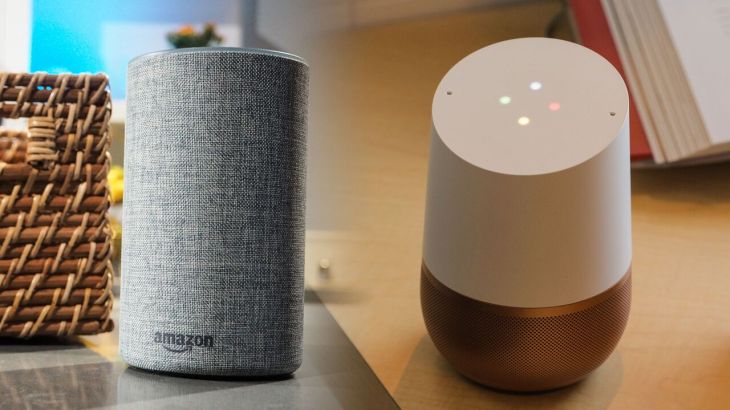
Once they figure out how to improve their recommendations and push more people to make regular household purchases via voice it will lead to an explosion in voice-based shopping.

Google already has one of the most valuable brands in the world.

Google maps have virtually no meaningful rival.  Gmail…Google basically controls our handheld existence.

Google controls your life, literally, even if it costs you to believe it.

Google trackers have been found on 75% of the top million websites.

When you search on Google, they keep your search history forever.

Google is a company that offers almost all its products for free because the money is earned by selling the data it collects with those products, to advertisers and companies.

Last year Google made over $161 billion in total revenues.

As it is the premier search engine in the U.S., Europe, and many developing countries Google has the tools to control much of the world.

That’s just Google then you have Amazon.

With around 225 million customers around the world, Amazon wants to deliver everything you want to your doorstep, including Foods anywhere in the world. ( 300 items a second) These days half of all product searches start on Amazon.

Our lust for cheap, discounted goods delivered to our doors promptly and efficiently has a price.

Amazon has done a lot of good for consumers by expanding choice, making shopping far more convenient and by delivering extraordinary product value.

Yet, we can’t–and shouldn’t–ignore the profound effect that Amazon is having on just about every corner of the retail world they set their sights on.

Amazon is selling its facial recognition technology, known as Rekognition, to law enforcement agencies.

First and foremost, Amazon isn’t required by its investors to make any real money.

For us the Great unwashed there’s always the opportunity to cut a corner, sacrifice lifestyle quality and suck it up as they race to grab a little more market share.

With their algorithms, they tell you what restaurants you have to eat in, choose your music, label your photos associating them with each family member or friend that appears in them, pay for your purchases, suggest the movies you should see, and the apps that may interest you.

When in fact the searches we do, what websites we visit, what products we look at, where are we, your medical history, your political beliefs, your associations with others your employment prospects, everything from the womb to the grave is collected and analyzed

Before I hear you calling me a hypocrite I also have used Amazon.

If this scenario prevails, would this be really the way information is supposed to be organized?

In short, does the fact that an algorithm is able to provide more relevant information than a human justify this scenario?

These big brands platforms are more powerful than governments. They’re wealthier. If they were countries, they would be pretty large economies. They’re multinational and the global financial situation allows them to ship money all over the world.

Can we do anything to make a difference?

We need to be supporting the development of an efficient circular economy.

Why?

Because sustainability is an unstoppable force.

Let’s not race to the bottom.

Country’s population size will become less important for national power as small countries that develop a significant edge in AI technology will move far above their weight.

Ultimately, however, winning and losing will not be determined by which country gains the most growth through AI. It will be determined by how the entire global community chooses to leverage AI — as a tool of war or as a tool of progress.

They can eliminate rules protecting clean water, air or consumer safety, but they will always find a way to be cheaper or more brutal than you.

We all assume that Google, Facebook, Amazon, Apple, are spying our activity and up to now advertiser is not interested in your name when they are it will be too late and the winner will be Inequality.

So what does all this mean and what are we all going to do about it when we’ve stopped talking about it?

Once you start to connect all the invisible dots together the impact on society will, in the end, be down to the people that use the technology they have to be responsible for it and if they use it irresponsibly they have to be held accountable.

A Footnote:

For me, there is little point in Jeff Bezos setting up an Earth fund when Amazon is one of the biggest promoters of pollution. Pretending to be a do-gooder.

The brown box doesn’t begin to address the larger issue: Each year in the United States alone thrown paper in the trash that represents approximately 640 million trees or roughly 915,000 acres of forest land.

Amazon ships an average of 608 million packages each year, which equates to (an estimated) 1,600,000 packages a day.

Then when we talk about energy consumption, we’re talking about the sources of energy that generate our power: oil, coal, natural gas and alternatives like solar, wind, hydropower and biofuels.

How much electricity they use and the bill is, god only knows, so its no wonder that they have contracts with oil and gas companies.

Now consider that people conduct over 1,6 billion searches per day, and you get a massive energy footprint of roughly 12.5 million watts.

Is e-commerce reducing or increasing our carbon footprint?

Google’s worldwide operations, collectively worldwide use about 2.26 million megawatt-hours per year to power its global data centre operations, which is equivalent to the power necessary to sustain 200,000 homes.

In 2018 Google generated 39.12 billion dollars earnings out of which it paid 243 Million a day in electricity.

This is only an educated guess.

The link between global warming and energy demands is obvious. Surely both of these players should be investing in Green energy.

There’s a deafening silence from pundits and elites and columnists and politicians on our joint self-destruction.

They are simply going on pretending it isn’t happening.

We don’t, as societies or cultures, value learning or knowledge or magnanimity or great and noble things, anymore.

The average person has become a tiny microcosm of the aspirations and norms of elites. We’re the only people on earth who thwart our own social progress, over and over again — and cheer about it.

We are caught in a death spiral now. A vicious cycle from which there is probably no escape. The average person is too poor to fund the very things — the only things — which can offer him a better life:

The result is that a whole society grows poorer and poorer.

Unable to invest in themselves or one another, people’s only real way out is to fight each other for self-preservation, by taking away their neighbour’s rights, privileges, and opportunities — instead of being able to give any new ones to anyone.

Though it’s too late to escape for them, let us hope our governments regulate their algorithms for profit sake.

All human comments appreciated. All like clicks chucked in the bin.

← Back

Thank you for your response. ✨


.


Share this:

  • Share on WhatsApp (Opens in new window) WhatsApp
  • More
  • Share on Mastodon (Opens in new window) Mastodon

THE BEADY EYE SAY’S: WE CAN NO LONGER BE CERTAIN ABOUT ANYTHING.

06 Thursday Feb 2020

Posted by bobdillon33@gmail.com in 2020: The year we need to change., Algorithms., Artificial Intelligence., Digital age., Fourth Industrial Revolution., Human values., Life., Technology, The essence of our humanity., The Obvious., The world to day., Unanswered Questions., WHAT IS TRUTH, What Needs to change in the World, Where's the Global Outrage.

≈ Comments Off on THE BEADY EYE SAY’S: WE CAN NO LONGER BE CERTAIN ABOUT ANYTHING.

Tags

Algorithms trade., Algorithms., Artificial Intelligence., Big Data, Technology, The Future of Mankind


 Twenty four-minute read.   

We have no idea how the world will look in twenty years never mind fifty when most of this generation will be in their seventies but it is now becoming clear beyond any doubt that AI and its algorithms are drastically changing the world we live in both for the good and bad.

There is one thing for certain artificial intelligence will have and is having a more profound effect than electricity or fire. 

It will not just hack our lives our brains, it will hack or very existence.

It might well warn us about climate change, the coronavirus but it will as it is manipulate our needs and wants and beliefs. It will effectively be controlling people for both commercial and political purposes. 

Given the force of this technology to have any control left we need meaningful regulations, if not we might as well just surrender to the algorithm, which is becoming so complex that no one will understand them.

The reality is that most of us are giving rivers of free information to Big data to an extent that we will soon be unable to think for ourselves.

If we don’t get a grip by the time you reach the seventies your futures and the future of the next generations will be decided at random by nonelected platforms.  

If this is so, the decision-making process for us all become a thing of the past.

The outlook for Ai is both grim and exciting. 

Already we see data collected affecting elections, with our ability to know what is fake and what is true at the mercy of Social Media run by algorithms.  

We all know their faces: Google, Microsoft, Amazon, Facebook, Apple, Baidu in China, Twitter, Alibaba, to name a few who are already transforming the basic structure of life.

Taken together they form a global oligopoly.

These unregulated platforms are competing for dominance all with a conflict of interests. Hence their algorithms.

The chances of self introducing regulations that will affect or stop their development is pie in the sky. 

Its time we stopped thinking about AI in kind of scientific terms.

Why?

Because algorithms are making critical decisions about our lives and the tech-driven approach to governance is growing. Because any particular scenario will be far from what we think is true today and we are running out of time to do anything about it.

If we are to call a spade a spade there is no or little understanding as to how to regulate these emerging technologies.  Even if there were governments and world institutions that could do so they are largely unequipped to create and enforce any meaningful regulation for the public benefit.

 The problem is how does one regulate an Algorithm that learns. 

You might happy ceding all authority to algorithms and their owners if so you don’t have to do anything they will take care of everything.

If not algorithms are watching you right now to ensure that you do not read this post and if you do read this post they will use one of the most powerful tools in their arsenal of big data – split and divide – False News and repetition thereof for example. 

It won’t happen overnight since development cycles often take years but our collective past will become a less reliable guide and we will have to adapt to the unknown. 

Unfortunately teaching the unknown without mental balance is a disaster in waiting. 

It might be easy now to laugh at this but unless we make our voices heard instead of like clicks it will not be climate change that changes us but race bias that is already programmed into Tec world.

We’re starting to see money examples where these algorithms are prone to the kinds of biases and limitations that we see in human decision making and increasingly we are moving towards algorithms that are learning more and more from data.

 I say, learning from this data almost institutionalizes the biases.

Why?

Because they are trying to personalize the media they curate for us. They’re trying to find for us more and more of the kinds of content that we already consume.  

So what if anything can be done?

Even if we do eventually introduce regulations they will have little effect unless we find a way of sharing the benefits of AI.

The problem is that our institutions, our education models are not able to keep up with the developments in Artificial Intelligence. We are becoming more and more detached from and in decision making, contributing, and rewards.

So our governments are leaving it to the market, to the big Tec companies themselves.

If you are expecting some kind of warning when AI finally get smarter than us then think again.

I say our algorithms are hanging out with the wrong data, profit for profit sake. 

In reality, our electronic overlords are just getting started with the smartphone, the I.Pads, Alex etc taking control.  We have to think about other measures, like is there a social contribution, and what is the impact of this algorithm on society?

This requires transparency.

But how do you create transparency in a world that is getting so complex?

Here is my solution.

Pharmaceuticals are considered as the most highly regulated industries worldwide and every country has its own regulatory authority when it comes to the drug development process.

(World Health Organization (WHO), Pan American Health Organization (PAHO), World Trade Organization (WTO), International Conference on Harmonization (ICH), World Intellectual Property Organization (WIPO) are some of the international regulatory agencies and organizations which play essential role in all aspects of pharmaceutical regulations related to drug product registration, manufacturing, distribution, price control, marketing, research and development, and intellectual property protection.)

Why not put in place a new World Governing Body to test and control Al algorithms. To act as a guardian of our Basic Human Values.

If this is not done it will remain impossible to truly cooperate with an AI or a corporation until such entities have values in the same sense that we do.

So:

All Companies already using algorithms should be legally required to submit the software programs running their algorithms for audit, by an independent team to ensure that our human values are complied with.

This audit could be done by a United Nation’s programme that is agreed to world wide.

The audit process (Because algorithms are constantly evolving as they gather more data.) has to be somewhat continuous like every ten years similar to Control technique. We might also need an algorithm to monitor the auditing algorithm to ensure it is not contaminated while it goes through its refresh-cycle of the Algorithm it is auditing. 

Then they must be made transparent with a certification of acceptable behaviour.   

Transparency for end users actually is very basic.

It’s not like an end-user wants to know the inner details of every algorithm we use.

But we would actually benefit knowing what’s going on at the high level.

For example, what kinds of data are being used by the algorithms to make decisions?

Recommend transparency measures.

Keeping in mind that these algorithms are being deployed and used by humans, and for humans, anyone impacted by decisions made by algorithms should have the right to a description of the data used to train them, and details as to how that data was collected.

The public, have little understanding or access to information about how governments are using data, much of it collected quietly, to feed the algorithms that make decisions about everyday life. And, in an uncomfortable twist, the government agencies themselves often do not fully understand how algorithms influence their decisions.

Having more and more data alone will not solve the problems, gender bias, race bias.

Perhaps the notion of control may only be an illusion.

It won’t be long before they are latching on to life forms.  For example, there’s a type of machine learning algorithm known as neuro labs, and these are modelled on the human brain. What’s happening in these algorithms is they’ve taken lots of data, and they learn how to make decisions like humans have made.

I think this field hasn’t yet emerged.

Humans aren’t changing that much. But the algorithms, the way they’re created, the technological side of it, continues to change, continues to evolve. And trying to keep those things in sync seems to be the greatest challenge.

In a world where algorithms are deciding who gets what, how machine decisions are made, and how the two, can work together.

Because we are going to use these systems so much that we have to understand them at a deeper level, and we can’t be passive about it anymore because the consequences are very significant, whether we’re talking about a democracy or you know, I’m curating news stories for citizens, or we talking about use by doctors in medicine, or used in the courtroom, and so on.

It is going to be extremely important as we roll out algorithms in more and more important settings going forward we start understanding what drives trust in these machines. Understanding what are some socially important outcomes of interest, so that we order these algorithms against these socially important outcomes, like fairness and so on.

Given everything we know about the world and indeed the universe as a whole does anyone seriously believe that nationalism and popularism will help us with this technological problem. 

Let’s talk about what data are collected about us.

It is far too late to be talking about privacy that is what gets abused.

Let’s fight against everything that we can control that limits our freedom. Whether it’s an algorithm, hungry judge or greedy state backed the wrong econometric model…

We need to rethink how we do education, we have to rethink how we do regulation, and firms also need to stand up and do a better job of auditing and taking responsibility as well.

Of course, none of this will happen.

Humans are more likely to be divided between those who favour giving Algorithms and Ai significant authority to make decisions and those opposed to it with both justifying whichever position while Algorithmic logic drives greed and inequality to a point where we will lose control of transparency completely.

To stay relevant as Yuval Noha Harari says in his Book 21 Lessons for the 21st Century “we will need to be asking the questions -how am I where am I.”

There testing rarely go beyond technical measures which are causing society to become more polarized making it more unlikely that we can appreciate other viewpoints.

Just knowing that an algorithm made the decision would be a good place to start.

Was an algorithm used?

If so who does it belong to?

What kinds of data did the algorithm used?

Today, algorithms and artificial intelligence are creating a much more frightening world. High-frequency trading algorithms already rule the stock exchanges of the world.

Personally, I would neither overestimate nor underestimate the role and threat of algorithms. Behind every smart web service is some smarter web code.

So we need to make sure their design is not only informed by knowledge of the human users, but the knowledge of their design is also suitably conveyed to human users so we don’t eliminate the human from the loop completely.

If not they will become a black box, even to the engineer.

All our lives are constrained by limited space and time, limits that give rise to a particular set of problems that are being exploited by profit-seeking algorithms. 

There’s so much data out there to be analyzed. And right now it’s just sitting there not doing anything. So maybe we can come up with a solution that will at least get us started on it.

It is a fascinating topic because there are so many variables involved.

All human comments appreciated. All like clicks and abuse chucked in the bin. 

← Back

Thank you for your response. ✨


Share this:

  • Share on WhatsApp (Opens in new window) WhatsApp
  • More
  • Share on Mastodon (Opens in new window) Mastodon

THE BEADY EYE ASK’S: WHY IS IT THAT WE ARE ALLOWING ALGORITHMS TO RUN OUR LIVES.

28 Tuesday Jan 2020

Posted by bobdillon33@gmail.com in 2020: The year we need to change., Algorithms., Artificial Intelligence., Climate Change., Digital age., DIGITAL DICTATORSHIP., Evolution, Fourth Industrial Revolution., HUMAN INTELLIGENCE, Human values., Humanity., Inequality, Innovation., Modern day life., Post - truth politics., Reality., Robot citizenship., Sustaniability, Technology, The common good., The Future, The Internet., The Obvious., The state of the World., The world to day., Unanswered Questions., WHAT IS TRUTH, What Needs to change in the World, Where's the Global Outrage., WiFi communication.

≈ Comments Off on THE BEADY EYE ASK’S: WHY IS IT THAT WE ARE ALLOWING ALGORITHMS TO RUN OUR LIVES.

Tags

Algorithms trade., Algorithms., Artificial Intelligence., Big Data, Distribution of wealth, Inequility, Technology, The Future of Mankind, Visions of the future.

(Twenty-minute read)

Technology is getting increasingly personal.

With algorithms becoming the masters of social media are we all just becoming clickbait?

Devices are providing immediate information about our health and about what we see, where we go and where we have been.

Our lives are being shaken to their very core.

With 5G technology what we experienced at the moment will pale in comparison to the vast array of possibilities carried under its belt by this new generation of wireless connectivity, which is being built over the foundations of the previous one.

It will allow millions of devices to be connected simultaneously.

All stakeholders – business, government, society and individuals – will have to work together to adjust so these technologies and rapid changes are harnessed for the development of all, not just profit.

Swathes of the globe will be left behind.

Regardless it is no longer just about repetitive factory jobs rather an increase in inequality globally.

It is not only a moral imperative to ensure that such a scenario does not happen as it will pose a risk to global stability through channels such as global inequality, but migration also flows, and even geopolitical relations and security.

We already live in a world that has been profoundly altered by the Fourth Industrial Revolution. Yet there is not much debate on the likely size of the impact.

Why?

Because there are such divergent views it is difficult to measure.

But within the next decade, it is expected that more than a trillion sensors will be connected to the internet. By 2024, more than half of home internet traffic will be used by appliances and devices that are connected to internet platforms.

With almost everything connected, it will transform how we live never mind how we do business.

If there is no trusted institution to regulate it we can kiss our arses.

Now is the time to make sure it is changed for the better.

The internet of things will create huge amounts of data, raising concerns over who will own it and how it will be stored. And what about the possibility that your home or car could be hacked?

The internet is great for ideas, but ultimately, the things that will amaze you are not on your computer screen.

Artificial Intelligence may well invent new life forms but if we as humans do not contrive and manage global acceptable ethical parameters for all its forms – (bioengineering, gene editing, nanotechnology, and the algorithms) that run them we are more than idiots.

As Yuval Noah Harari says in his most recent book ( 21 Lessons for the 21st Century) ” There is no such thing as ‘Christian economics’, ‘Muslim economics’ or ‘Hindu economics’ ” but there will be Algorithms economics run by big brother. 

The digital age has brought us access to so much information in just a few clicks of the mouse button or the remote control everything from the news, Tv programmes with the internet becoming somewhat glorifying sensationalism rather than giving us the truth.

The question is.

Are the technologies that surround us tools that we can identify, grasp and consciously use to improve our lives?

Or are they more than that:

Powerful objects and enablers that influence our perception of the world, change our behaviour and affect what it means to be human?

What can we do?

The Second Industrial Revolution and the Third Industrial Revolution have lead us to this revolution the Fourth Industrial Revolution which can be described as the advent of “cyber-physical systems” involving entirely new capabilities for people and machines.

Unlike previous revolutions, it is not the world as a whole that will see any of its benefits or disadvantages it is individuals and groups that could win – or lose – a lot.

Unfortunately, expanded connectivity does not necessarily lead to expanded or more diverse worldviews it will be the opposite with our increased reliance on digital markets.

At the moment it’s just not very evenly distributed nor will it be.

At best we can moan about it and hope that climate change shifts our reliance on biomass as primary sources of energy.

Back to Clickbait.

The issue with clickbait is that the reader or site visitor is being manipulated into clicking something that is misleading.

Clickbait is not one-dimensional. Each time you run a Google search, scan your passport, make an online purchase or tweet, you are leaving a data trail behind that can be analysed and monetized.

Most clickbait links forward a user to a page that requires payment, registration or a series of pages that help drive views for a specific site.

It can also point to any web content that is aimed at generating online advertising revenue.

We’re all guilty of being gullible of clicking links online but Clickbait websites are notorious for spreading misinformation and creating controversy in the name of generating hits.

Have you not ever felt that you’re being played as dumb individuals whenever you watch the news or scroll through a media site?

Thanks to supercomputers and algorithms, we can make sense of massive amounts of data in real-time. Computers are already making decisions based on this information, and in less than 10 years computer processors are expected to reach the processing power of the human brain. A convergence of the digital, physical and biological spheres challenging our notion of what it means to be human.

Today, 43% of the world’s population is connected to the internet, mostly in developed countries.

Cooperation is “the only thing that will redeem mankind”.

We can use the Fourth Industrial Revolution to lift humanity into a new collective and moral consciousness based on a shared sense of destiny, and that’s until 6G comes along or living robots.

All human comments appreciated. All like clicks and abuse chucked in the bin.

← Back

Thank you for your response. ✨

Share this:

  • Share on WhatsApp (Opens in new window) WhatsApp
  • More
  • Share on Mastodon (Opens in new window) Mastodon

THE BEADY EYE SAY’S. IS IT TO BE GDP OR RIP. THERE IS NO REASON THAT EVERY BUILDING SHOULD NOT HAVE SOLAR PANELS.

17 Friday Jan 2020

Posted by bobdillon33@gmail.com in Climate Change.

≈ Comments Off on THE BEADY EYE SAY’S. IS IT TO BE GDP OR RIP. THERE IS NO REASON THAT EVERY BUILDING SHOULD NOT HAVE SOLAR PANELS.

Tags

Capitalism vs. the Climate., Climate change, Extinction, The Future of Mankind, World aid commission


(fifteen-minute read)

Irreversible by 2030. 

Up to 200 million people could be displaced by climate change by 2050.

50% of all carbon emissions are emitted by the richest 10% of the world’s

population.

Half of the world’s coral reefs have died in the last 30 years.

 At our current rate of consumption, we’d need 1.7 planets to support the

demand on the earth’s ecosystems.

Greenhouse gas levels are at an all-time high.

Have we lost all common sense!

So why are governments not enacted a simple law requiring solar panels on homes?

The main reason is.

None wants to foot the bill – GDP greed- 

it is being turned into a product to sell – Bio this Bio that  – Carbon Credits – etc.  

climate change

It’s a vicious circle.

What is required is a step towards a circular CO2 economy.

Take Air condition for example.

As the climate grows hotter, there’s more need to stay cool.

It is projected that there will be 1.6 billion new AC units to be in use by 2050 throughout the world.

Air conditioners consume huge amounts of energy and that’s adding to climate change. It pumps out heat straight into the atmosphere. Using powerful greenhouse gases called hydrofluorocarbons (HFCs), thousands of times more potent than carbon dioxide.

Surely it would be not that difficult technically to add CO2 capture functionality to an A/C system. The necessary technology is already commercially available.

Once collected, water and CO2, can be converted into renewable hydrocarbon fuels into renewable synthetic oil.

Office buildings throughout cities could produce more than 120 million gallons. The same process could happen on buildings everywhere.

If this additional cost was added to the mortgage of a new home, the purchaser would actually be in the pocket, because the mortgage costs on the additional £2,000 will be less than the energy costs savings that the solar panels bring.

When will we come to our senses?Solar panels

The amount of sunlight received by the earth in one hour is more than the total energy used by the entire world for an entire year!

Solar panels and wind turbines coupled with energy storage offer better hope for tackling climate change.

Harmless benign solar panels producing useful heat energy and saving harmful emissions.

There is no valid reason to wait ten twenty or thirty years not to start using it.

It could replace current fossil fuels like coal and gas for generation of electricity that produces air, water, and land pollution.

It could be achieved in five years.

We all know.

That, Climate Change has led to an increase in flooding and hurricanes due to disturbed weather patterns.

That climate change is happening and perhaps faster than expected.

That, Higher carbon dioxide concentration is making oceans acidic and killing marine life, like corals.

That, Climate change causes extinct of species from Sub-Arctic Boreal forests to tropical Amazon forests.

That, Higher temperatures result melting of polar ice caps, reducing habitats for wildlife and also increase sea level.

That, Irregular rainfall or increasing droughts affect agriculture and livelihoods of the weaker sections of society globally.

That Emissions are blamed for the rise in global temperatures, and changes in weather patterns leading to a cascade of effects.

That, the momentum for change is currently too slow.

That, given that climate change is inevitable, we are not doing nearly enough to save hundreds of millions of people from a miserable future.

That, the worst effects are yet to come. Submersion and loss of land displacing people.

That, the current targets would put the world on track for 3C of warming, which will ultimately lock in irreversible sea-level rises of perhaps two metres.

That, the greatest difference would be to nature. Insects, which are vital for pollination of crops, and plants are almost twice as likely to lose half their habitat at 2C compared with 1.5C. Corals would be 99% lost at the higher of the two temperatures, but more than 10% have a chance of surviving if the lower target is reached.A firefighter battles a wildfire in California

Against the above background it’s a line in the sand and what it says to our species is that this is the moment and we must act now.

What we are witnessing is patchy international efforts to prevent it from happening.

On one hand, we have Sir David Attenborough, “So we have to realise that this is not playing games. This is not just having nice little debates and arguments and then coming away with a compromise. This is an urgent problem that has to be solved.

”https://youtu.be/r-91umZ7cQE

On the other hand, I am sure he would puke at hippocras of countries declaring Climate Emergency and then bailing out Airlines.

The truth is that this is a global problem that will require a global solution.

We can’t shy away from that.

The Glasgow 2020 event with 30,000 delegates could be key to the fight against climate change only if China, India and—most importantly the US, participation in any future multilateral agreements.

If the UK is not stable enough to act as a diplomatic facilitator ahead of the summit (The Conservative manifesto devoted just two pages to climate change, skirted the issue) perhaps it might be a good idea to move it to Australia where the 30,000 delegates can witness first hand the effects A HEATING CLIMATE CAN DO.

Of course, this is not going to happen.

So how might be achieved other than Boris “Get Net Zero Done.”

It will be one of the first major tests of the UK’s influence on the world stage after it leaves the EU.

Collins Glacier in King George Island, Antarctica.

The main sticking points of international climate diplomacy are well known.

There are tensions between so-called ‘Global North’ and ‘Global South’ countries over financial and technological flows in aid of decarbonisation, and debates over how best to support those most vulnerable to climate risks, such as island nations.

If we are unwilling to make profit pay market-based instruments need to be sensibly designed to not negate the disproportionate costs of climate change on different groups.

What appears fundamental to the success of market-based instruments to reduce emissions is how government actually spend the revenue they generate.

If revenue is reinvested in other, complementary policies—especially supporting those on low incomes—and there is a consistent political and public dialogue, market-based instruments might work like Green Government bonds.

The problem is that none of the market-based instruments can be policed and will not produce the necessary funds to tackle the problems.

Because climate change does not affect everyone equally there is only one just solution we must make a profit for profit sake foot the bill, it will produce a perpetual world fund. ( See the previous post on a world aid commission of 0.05%)

All human comments appreciated. All like clicks and abuse chucked in the bin.

← Back

Thank you for your response. ✨

Share this:

  • Share on WhatsApp (Opens in new window) WhatsApp
  • More
  • Share on Mastodon (Opens in new window) Mastodon

THE BEADY EYE ASK’S: IS THE ACCELERATING TECHNOLOGY AND THE ONGOING REVOLUTION IN INFORMATION MAKING THE WORLD SO COMPLICATED IT IS NOW BEYOND OUR UNDERSTANDING.

11 Saturday Jan 2020

Posted by bobdillon33@gmail.com in Algorithms., Artificial Intelligence.

≈ Comments Off on THE BEADY EYE ASK’S: IS THE ACCELERATING TECHNOLOGY AND THE ONGOING REVOLUTION IN INFORMATION MAKING THE WORLD SO COMPLICATED IT IS NOW BEYOND OUR UNDERSTANDING.

Tags

Algorithms trade., Algorithms., Artificial Intelligence., Big Data, Community cohesion, Distribution of wealth, Earth, Technology, The Future of Mankind, Visions of the future.


The plain truth can often be so obvious as to be invisible.

There are so many obstacles to change on the scale we so desperately need.

We are fast reaching a point that no humans can or will be able to understand the world we live in.

We pass this way just once.

Artificial algorithms are taking over.

Yuval Noah Harari in his latest book ( 21 lessons for the 21st Century) puts his finger on the problem.

” In the coming century biotech and infotech will give us the power to manipulate the world inside us and reshape ourselves, but because we don’t understand our own minds, the changes we will make might upset our mental system to such an extent that it too might brake down.

Surely its time we stop being the free fodder that feds big data. It’s much harder to struggle against irrelevance than against exploitation.

What will be the point to education if algorithms make us redundant?

It is difficult to discern world-wise whether there is any sincere conversation on AI Ethics.

Is it being addressed by any of the big tech companies or are they just giving token nods to what is right or wrong, while taking advantage of all human beings out there?

Are there just pushback from the outside organisations.

What we are witnessing is their profit growth with economic disparity worldwide increases at a starting rate. This certainly rings true if one looks at the state of the world with people judged by their wealth.

So what is the ethics of creating a sentient life form on a planet that is burning?

Perhaps it will be for the best if we continue not to understand the planet we all live on and leave it to AI to sort us out.

Or can we now start contributing to better governance solutions?

If we don’t grasp the nettle soon there will be no coming back.

To have any relevance now and in the future, we need billions to take to the streets to demand the sustainability of our planet (Human vote with their feet, not Social media) before profit-making goes underground.

When it comes to making the world a better place, corporations are often accused of apathy (the flip-side of blind self-interest). But if consumers are truly committed to social change, they must answer the same challenge.

If we can get consumers to make mindful shopping choices, to support brands that act responsibly and to purchase goods from those that dedicate a portion of the sale proceeds to causes, we are well on our way to re-purposing everyday purchases.

All human comments appreciated. All like clicks and abuse chucked in the bin.

← Back

Thank you for your response. ✨


and become

Share this:

  • Share on WhatsApp (Opens in new window) WhatsApp
  • More
  • Share on Mastodon (Opens in new window) Mastodon

THE BEADY EYE ASK’S. WILL 2020 BE THE YEAR OF THE BIG MELT OR THE BIG FRY.

02 Thursday Jan 2020

Posted by bobdillon33@gmail.com in #whatif.com, 2020: The year we need to change., Climate Change., Evolution, HUMAN INTELLIGENCE, Humanity., Life., Modern day life., Our Common Values., Politics., Populism., Post - truth politics., Purchasing Power., Reality., Social Media, Sustaniability, Technology, The common good., The essence of our humanity., The Future, The Obvious., The state of the World., The world to day., Unanswered Questions., WHAT IS TRUTH, What needs to change in European Union., What Needs to change in the World, Where's the Global Outrage., World Aid., World Leaders, World Organisations.

≈ Comments Off on THE BEADY EYE ASK’S. WILL 2020 BE THE YEAR OF THE BIG MELT OR THE BIG FRY.

Tags

Apathy., Artificial Intelligence., Capitalism and Greed, Capitalism isn't working, Capitalism vs. the Climate., Earth, Environment, Global warming, Inequility, Information gap., Technology, The Future of Mankind, Visions of the future.


(Fifteen-minute read) 


It looks like being both.

We are the first generation to know we’re destroying the world, and we could be the last that can do anything about it.

SO AS IF YOU DON’T ALREADY KNOW WHAT NEEDS TO CHANGE HERE IS YOUR CHANCE TO DO SOMETHING ABOUT IT.  

We need to recognize that everything we do, every step we take, every sentence we write, every word we speak—or don’t speak—counts. Nothing is trivial.

Take personal responsibility.

We need to use social media – this is one of the most effective ways to get brands to listen to you, so tell them that you want a change.

Why?

Because, unfortunately, the politicians who dominate the world stage are, depressingly, mostly cut from the old cloth, and the leadership challenges they face, are particularly complex and will require different skills — notably a clearer vision among leaders of organisation’s shared purpose.

Because the digital revolution is far from over the pace of change only seems to be quickening when in fact it is causing isolation. 

Because, we are allowing non-regulated large technology platforms to become too powerful, using their size to dominate markets and we are not paying enough attention to how the tools they create can be used for ill –  like device addictions, as we drown in notifications and false news feed posts.

Because there is an increasing imperative for all of us to respond to climate change.  Which will and is challenging our lives developing on a daily bases right in front of our eyes into our biggest need to act as one.

How can any of this be achieved? 

How will the changing political, economic and environmental landscapes shape the world?

Don’t get caught up in the how of things. Don’t wait for things to be right in order to begin.

Because in our age of tectonic geopolitical shifts, “alternative facts,” and conflicting narratives, our routine everyday life is losing sight of our true goals and aspirations.

Because with the rise of short-sighted populism we will solve nothing, other than feeding the great unwashed with short term gratification.

We need to write a piece of software that eliminated malware, viruses and all of that crap. 

We need to show our political leaders that they want to change, to understand our common humanity.

We need to try to put yourself into another person’s headspace and accept people for who they are and what their beliefs are.

We need to collaborate and push for policies that complement both sides of the political spectrum.

We need to make wasting our resources unacceptable in all aspects of our life.  Every product we buy has an environmental footprint and could end up in a landfill. The impact of plastic pollution on our oceans is becoming increasingly clear, having drastic impacts on marine life.

We need to be more conscious about what we buy, and where we buy it from. Living a less consumerist lifestyle can benefit you and our planet.

We need to use our purchasing power and make sure our money is going towards positive change.

We need to realize that what we eat contributes around a quarter of global greenhouse gas emissions and is responsible for almost 60% of global biodiversity loss.

We need to be supporting eco-friendly products.

We need to try to waste as little food as possible, and compost the organic waste we can’t eat.

We need to make education free for all.  Start educating not for profit but for a better understanding of what is the common values of life.

We need to stop asking the world’s smartest scientists to find us more time and to reverse gravity’s effect on our lives.

We need to stop killing each other. Countries start wars and people die and more people are in poverty.

We need to create out of profit for profit sake a World Aid fund with perpetual funding. (See previous posts) A new nonprofit called Carbon Offsets to alleviate address Climate change and Poverty. 

We need to realize that all significant change throughout history has occurred not because of nations, armies, governments and certainly not committees. They happened as a result of the courage and commitment of individuals. Believe that you can and will make a difference. 

The genesis for change is awareness so I need to stop. 

This year will not only be another opportunity for the leading minds in media in all its forms to highlight consumption for consumption sake.

However, if they wanted to spread a message that helps us all they would ban advertising that promotes consumption for consumption sake/profit. 

Feel free to add your priorities. With rapid innovations in technology and open access to data its no longer “wait and see.” We need to stop the huge feeling of apathy. 

The coming year, let alone the next decade looks unpredictable.

All human comments appreciated. All like clicks and abuse chucked in the bin.  

← Back

Thank you for your response. ✨


Share this:

  • Share on WhatsApp (Opens in new window) WhatsApp
  • More
  • Share on Mastodon (Opens in new window) Mastodon
← Older posts
Newer posts →

All comments and contributions much appreciated

  • THE BEADY EYE SAYS. THANK’S TO ALGORITHMS WE ARE NOW LIVING LIVES SO COMPLICATED AND EXPENSIVE THEY COULD BE DESCRIBED AS EXISTENCE RATHER THAN LIVING. March 27, 2026
  • THE BEADY EYE ASKS. HOW LONG MORE IS THE WORLD GOING TO PUT UP WITH DONALD DUMP? March 26, 2026
  • THE BEADY EYE ASKS. WHY IS DONAL TRUMP NOT REMOVED FROM OFFICE. March 25, 2026
  • THE BEADY EYE ASKS. HOW CAN WE CHANGE THE CAPITALIST SYSTEM FOR THE BENEFIT OF ALL? March 24, 2026
  • THE BEADY EYE ASKS. HAVE YOU EVER WONDERED OR ASKED YOUR SELF. WHERE OR WHY IS THE WORLD IN SUCH A MESS. March 23, 2026

Archives

  • March 2026
  • February 2026
  • January 2026
  • December 2025
  • November 2025
  • October 2025
  • September 2025
  • August 2025
  • July 2025
  • June 2025
  • May 2025
  • February 2025
  • January 2025
  • December 2024
  • November 2024
  • October 2024
  • September 2024
  • August 2024
  • July 2024
  • June 2024
  • May 2024
  • April 2024
  • March 2024
  • February 2024
  • January 2024
  • December 2023
  • October 2023
  • September 2023
  • August 2023
  • July 2023
  • June 2023
  • May 2023
  • April 2023
  • March 2023
  • February 2023
  • January 2023
  • December 2022
  • November 2022
  • October 2022
  • September 2022
  • August 2022
  • July 2022
  • June 2022
  • May 2022
  • April 2022
  • March 2022
  • February 2022
  • January 2022
  • December 2021
  • November 2021
  • October 2021
  • September 2021
  • August 2021
  • July 2021
  • June 2021
  • May 2021
  • April 2021
  • March 2021
  • February 2021
  • January 2021
  • December 2020
  • November 2020
  • October 2020
  • September 2020
  • August 2020
  • July 2020
  • June 2020
  • May 2020
  • April 2020
  • March 2020
  • February 2020
  • January 2020
  • December 2019
  • November 2019
  • October 2019
  • September 2019
  • August 2019
  • July 2019
  • June 2019
  • May 2019
  • April 2019
  • March 2019
  • February 2019
  • January 2019
  • December 2018
  • November 2018
  • October 2018
  • September 2018
  • August 2018
  • July 2018
  • June 2018
  • May 2018
  • April 2018
  • March 2018
  • February 2018
  • January 2018
  • December 2017
  • November 2017
  • October 2017
  • September 2017
  • August 2017
  • July 2017
  • June 2017
  • May 2017
  • April 2017
  • March 2017
  • February 2017
  • January 2017
  • December 2016
  • November 2016
  • October 2016
  • September 2016
  • August 2016
  • July 2016
  • June 2016
  • May 2016
  • April 2016
  • March 2016
  • February 2016
  • January 2016
  • December 2015
  • November 2015
  • October 2015
  • September 2015
  • August 2015
  • July 2015
  • June 2015
  • May 2015
  • April 2015
  • March 2015
  • February 2015
  • January 2015
  • December 2014
  • November 2014
  • October 2014
  • September 2014
  • August 2014
  • July 2014
  • June 2014
  • May 2014
  • April 2014
  • March 2014
  • February 2014
  • January 2014
  • December 2013
  • November 2013
  • October 2013

Talk to me.

Jason Lawrence's avatarJason Lawrence on THE BEADY EYE ASK’S: WIT…
benmadigan's avatarbenmadigan on THE BEADY EYE ASK’S: WHA…
bobdillon33@gmail.com's avatarbobdillon33@gmail.co… on THE BEADY EYE SAYS: WELCOME TO…
Ernest Harben's avatarOG on THE BEADY EYE SAYS: WELCOME TO…
benmadigan's avatarbenmadigan on THE BEADY EYE SAY’S. ONC…

7/7

Moulin de Labarde 46300
Gourdon Lot France
0565416842
Before 6pm.

My Blog; THE BEADY EYE.

My Blog; THE BEADY EYE.
bobdillon33@gmail.com

bobdillon33@gmail.com

Free Thinker.

View Full Profile →

Follow bobdillon33blog on WordPress.com

Blog Stats

  • 97,988 hits

Blogs I Follow

  • unnecessary news from earth
  • The Invictus Soul
  • WordPress.com News
  • WestDeltaGirl's Blog
  • The PPJ Gazette
Follow bobdillon33blog on WordPress.com

The Beady Eye.

The Beady Eye.
Follow bobdillon33blog on WordPress.com

Create a free website or blog at WordPress.com.

unnecessary news from earth

WITH MIGO

The Invictus Soul

The only thing worse than being 'blind' is having a Sight but no Vision

WordPress.com News

The latest news on WordPress.com and the WordPress community.

WestDeltaGirl's Blog

Sharing vegetarian and vegan recipes and food ideas

The PPJ Gazette

PPJ Gazette copyright ©

Privacy & Cookies: This site uses cookies. By continuing to use this website, you agree to their use.
To find out more, including how to control cookies, see here: Cookie Policy
  • Subscribe Subscribed
    • bobdillon33blog
    • Join 222 other subscribers
    • Already have a WordPress.com account? Log in now.
    • bobdillon33blog
    • Subscribe Subscribed
    • Sign up
    • Log in
    • Report this content
    • View site in Reader
    • Manage subscriptions
    • Collapse this bar