When it comes to the moral question, humanity has historically failed the test over and over, again and again and will continue to do so till we are all blue in the face with verbal diarrhoea as to how we might change the situation from inequality to equal opportunity for all.
The greatest innovations are yet to come as both AIG or ASI is as yet a hypothetical form of AI .
Instead of asking what we evolved from we must start asking and answering what we are evolving towards.
AGI may or may not come to our rescue in answering this question. However it is farcical to think that we will be able to contribute to control AIG once it happens.
How will the human life value in relation to a sentient biological machine for the Capitalist economy?
Will AGI need anything from us to begin with?
How will it judge procreation, suffering, and existence?
It will have non of these things, so it will make no difference unless it’s in its own interest to do so.
The reality will not be a red eye robot that wants to kill us, but a form of Artificial Intelligence that begins to write its own codes in order to reorganise societies and all our places within them, in ways we can’t imagine.
Algorithms will run and rule the world, along with the future exploration of Space. It won’t be humans unless we have implants to compensate our biological weakness.
With the real question becoming – will AIG be the final straw to what’s called freedom, transcending religious beliefs. While producing a new type of tyrannical tyranny of empty, meaningless, variety, a never ending stream of unnecessary options, arming us with weapons so devastating that we could wipe ourselves out.
Basically the biological race will be over, replaced by the best survival information processing AIG.
Resulting in biological Algorithms ie Us – versus AIG algorithms war-fair.
————————-
We are a self- hating, self-destructive species which is about to handover the evolutionary buttons to machines that could whether by accident or design wipe us all out.
The only way of stopping such an event is to enshrine now the virtues of liberty, privacy, dignity, not just in new AI regulations but also in Social Media, business models and institutions.
To have any chance we must clean up Social Media by imposing large fines on platforms that post discriminatory content, racism, violence related rhetoric, propaganda, pornographers content. Ban all non – sustainable advertising, all non ethical non verifiable content, all fake surveys, all exploitation for profit, returning Social Media to its Name.
We know nothing about the ethic of AIG, nor will we ever know other than the biases it has been exposed to. But rest assured in the long run it will remove what we call individualism or individuality, expanding all to perceivable reality.
We must demand transparency and accountability. There is no more room for batting around the edges. We must bring AI into alignment with something better than just being human, where people are not just treated as products but always as ends.
The Beady Eye is here in New Zealand visiting his eight week old grandson who arrived into the world five weeks premature and would not be with us to day without advancing technology.
Maybe someday we get to be more than human. We presently have no clue to what consciousness is, but it will become an entanglement of the quantum of existence in one form or another.
However we will still need our live to mean something even if we integrate or transcend the evolutionary bridge, into the cosmic horizons with eternal memories and hope for a better future.
All human comments appreciated. All like clicks and abuse chuck in the bin.
SMART PNONES ARE NOW A PART OF THE FABRIC OF OUR CULTURE.
Virtually everyone carries a smartphone today. these things didn’t exist until just over 15 years ago and there are now your web browser, camera and camcorder, music player, gaming console, navigation unit, step counter, flashlight, personal AI assistant, and digital wallet and makes calls, too.
As new generations grow up as digital natives, with iPads and smartphones in their hands before they can even walk, we also could be living in a world with even more screens, and smartphones may be only the beginning.
Surely our reliance on smartphones will evolve into something else. Perhaps blending into our bodies and clothing, telling us when to turn left or right, buy that, speak.
In fact, many believe screens will become even more ubiquitous, including (but not limited to) a world steeped in mixed reality, a combination of a virtual world and physical spaces, with most of us experiencing this hybrid via high-tech goggles.“
As of right now, I believe we are still going towards an era of more screens, screens everywhere, in the bathroom, on doors, and it’s already happening in cars and on fridges with these screens becoming more personalized, calling you by name, entering the era of holographic displays.
Mixed reality experiences are going to get “wild” in the coming years.
The future is already here — it’s just not evenly distributed.
Clearly, what our post-smartphone future looks like is subject to speculation — especially in an industry that not only moves at a torrential pace but could take an unexpected detour at any time.
In other words, ambient computing and mixed reality are both likely to happen, simultaneously and overlappingly.
Ten years from now, when we gaze upon the devices in our hands (or, less likely, consider the implant in our spinal columns), I expect we’re going to be telling one of those two stories again.
Humane’s AI Pin, for example, is a small device you can attach to your shirt or jacket, and it works as a nonphysical smartphone by projecting calls, messages, and info from apps onto a surface (like your hand).
Powered by artificial intelligence, this screen less solution will also have location data and contextual awareness.
we’ll also have a deeper and more self-conscious awareness of the smartphone’s place in our culture.
I could spin a tale about phones that project their displays into mid-air between your fingers. I could predict that we won’t have phones at all but, instead, high-bandwidth jacks plugged right into our brains, connecting us into a 6 or 7G network of wordless, emotive communication.
I could predict that we don’t need to store our lives in our phones — all that data can live in the cloud.
I could predict that our phones will stop consolidating into a single device and instead explode out into a mesh network of tinier, more bespoke gadgets.
I could predict that our phones could shape-shift into a size fit for the task at hand. Morph and upgrade as needed, adding on better cameras, different sensors, and surprising new capabilities.
But in 10 years, maybe the mobile industry will have evolved to a point where modular phones make a comeback.
at least relegated to our pockets more often than not — by smart eyeglasses. Think of how often you check your phone throughout the day. No one would want to be constantly futzing with swipe and tap gestures on their glasses that frequently
a phone isn’t something we carry around with us — it’s everywhere. Every room in your home has a smart speaker, a screen, a lamp, and who knows what, that’s connected to the network and ready to do whatever you would have asked of your phone.
Rather than face the onerous task of taking a phone out of your pocket, unlocking it, opening the right app, and typing words on its little screen, the world around us will simply be equipped to do the tedious stuff for us. There are very obvious and serious ethical problems with this scenario. Equipping the world around us to anticipate and solve our needs requires us to surrender an incredible amount of information about ourselves.
Maybe a fully ambient computing life isn’t in our future, whether it’s sight issues or vertigo and motion sickness, it’s not for everyone and will not replace a smartphone for many.
Smartphones will remain as a bedrock to our overall computing experience for a while yet, but we’ll no doubt see the technology evolve in different directions, as it always does — just not so fast.
Those born after 1995 are the first people in history to go through puberty with a portal to an alternative universe in their pockets – and the toll this has taken on their wellbeing has been devastating.
Companies that strive to maximise “engagement” by using psychological tricks to keep young people clicking are the worst offenders. They hooked children during vulnerable developmental stages, while their brains were rapidly rewiring in response to incoming stimulation. This included social media companies, which inflicted their greatest damage on girls, and video game companies and pornography sites, which sank their hooks deepest into boys.
How do we escape from these traps? Collective action problems require collective responses:
Given that AI and spatial computing (such as Apple’s new Vision Pro goggles) are about to make the virtual world far more immersive and addictive, I think we’d better start today.
Something in our culture is devastating the next generation.
The culprit is a massive, sudden switch from raising kids on play to raising kids on phones—specifically, smartphones loaded with life-sucking social media apps.
The user is not the customer—the user is the product.
This is the business model behind social media platforms, where you try to maximize the amount of time that kids and other users spend there. Children were becoming “merchandise.”
We need to have thousands of experiences every single year, every single day, to practice interacting with others in the real world, navigating conflict and struggle by finding more meaning in one’s lifetime.
I’m going to give my child a smartphone at age 9 or 10 is to destroy that life.
Perhaps its time to pass laws (just like acquiring a fire arm) restricting the acquisition of a smart phone till 18 of age is attend. Or restriction on accessing conventional social media such as TikTok, Instagram and Snapchat until they are 18.
Tech is and will remain a fantastic tool, but it has to act in people’s service, not people being reduced to serving a product.
Algorithms that re-engage and stimulate the pleasure system and are built to avoid you losing interest in the content have a type of addictive dynamic.
All human comments appreciated. All like clicks and abuse chucked in the bin.
≈ Comments Off on THE BEADY EYE SAY’S. AI IS NOT LIKE ANY PREVIOUS TECHNOLOGY. ITS GOING TO NEED GLOBAL ACTION TO HARNESS THE EFFECTS IT IS NOW HAVING, NEVER MIND IN THE FUTURE.
Humanity is not approaching this issue remotely with the leave of serious it requires.
Given the speed of development in the field, it’s long past time to move beyond a reactive mode, one where we only address AI’s downsides once they’re clear and present.
We can’t only think about today’s systems, but where the entire enterprise is headed.
While continuing to talk in vague terms about the potential economic or scientific benefits of AI, we are perpetuating historical patterns of technological advancement at the expense of not just vulnerable people but all of us.
When we fail to address these harms, as an inevitable by-product of technological progress we are turning a blind eye to the ethical needs in which powerful AI systems are developed and deployed.
The rapid pace of progress is feeding on itself, creating something smarter than us, which may have the ability to deceive and mislead us — and then just hoping it doesn’t want to hurt us — is a terrible plan.
————-
We humans have already wiped out a significant fraction of all the species on Earth.
SHOULD WE BE WORRRIED THAT WE ARE NOW ARE WITH AI ON THE PATHWAY TO EXTERMINATION.
That is what you should expect to happen as a less intelligent species – which is what we are likely to become, given the rate of progress of artificial intelligence.
AI is probably the most important thing humanity has ever worked on.
It’s not simply what AI can do, but where it is going will be key to managing the resultant fear of AI that permeates society. Gargantuan amounts of data are at this very moment been harvested so machine learning can accomplish tasks that had previously been accomplished only by humans.
With deep learning, improving systems doesn’t necessarily involve or require understanding what they’re doing. If anything, as the systems get bigger, interpretability — the work of understanding what’s going on inside AI models, and making sure they’re pursuing our goals rather than their own — gets harder.
We should be clear about what these conversations do and don’t demonstrate.
In a world increasingly dominated by AI-powered tools that can mimic human natural language abilities, what does it mean to be truthful and authentic?
Take GPT-Chat, which is used by millions around the globe, is churning out human-sounding answers to requests, ranging from the practical to the surreal. It is being used by millions of people, many of whom don’t have any training or education about when it is ethical to use these systems or how to ensure that they are not causing harm.
Even if you don’t use AI-generated responses, they influence how you think.
It has drafted cover letters, composed lines of poetry, pretended to be William Shakespeare, crafted messages for dating app users to woo matches, and even written news articles, all with varying results.
Bots now sound so real that it has become impossible for people to distinguish between humans and machines in conversations, which poses huge risks for manipulation and deception at mass scale.
What does it mean for a machine to be deceptive?
Is it evil and plotting to kill us. Rather, the AI model is responding to my command and playing — quite well — the role of a system that’s evil and plotting to kill us.
If the system doesn’t have that intent, is it deceptive? Does it come back to the person that was asking the questions or getting the system to be deceptive? I don’t know.
There are more questions than answers at this point.
The fact that these technologies are limited at the moment is no reason to be reassured.
Ai has the potential to transform and exacerbate the problem of misinformation, and so we need to start working on solutions now.
—————
The trajectory we are on is one where we will make these systems more powerful and more capable.
A new tool called Co-pilot uses machine learning to predict and complete lines of computer code, bringing the possibility of an AI system that could write itself one step closer. DeepMind’s Alpha Fold system, which uses AI to predict the 3D structure of just about every protein in existence.
We need to design systems whose internals we understand and whose goals we are able to shape to be safe ones. However, we currently don’t understand the systems we’re building well enough to know if we’ve designed them safely before it’s too late.
Right now, the state of the safety field is far behind the soaring investment in making AI systems more powerful, more capable, and more dangerous.
These harms are playing out every day, with powerful algorithmic technology being used to mediate our relationships between one another and between ourselves and our institutions and environment.
The reason is that systems designed this way generalize, meaning they can do things outside what they were trained to do.
These questions around authenticity, deception, and trust are going to be incredibly important, and we need a lot more research to help us understand how AI will influence how we interact with other humans.
If you have machines that control the planet, and they are interested in doing a lot of computation and they want to scale up their computing infrastructure, it’s natural that they would want to use our land for that.
If you believe there is even a small chance of that happening. Now is the time to use the power of your mobile phones to demand responsible, transparent Ai and to remove profit seeking algorithms.
Each day, we hear about countless instances of greed, hatred, violence, and destruction, and all of the pain, suffering, and sorrow that ensues, while we remain deaf to what is really happing in the world of technology.
With the never-ending list of atrocities, it may seem fruitless to try to identify a single contributing factor to all of society’s collective dilemmas, but it is becoming more and more apparent that AI in the hands of a few global mega companies is a recipe for DIASTER.
—————-
Ever since humans picked up a rock and hurled it at another human or animal technology has been shaping the world for yonks’, unfortunately both for good and bad.
DOWN THE CENTURIES ALL OF THESE ADVANCES WERE INCAPABLE OF EFFECTING CHANGE WITHOUT HUMAN ASSISTANCE AND THEIR DECISIONS. Not any longer.
The AI technology we are witnessing today is the first to make decisions without human supervision’s so the future doesn’t look so bright in terms of keeping the planet in peace, as it will lead to a brainwashed society with no values and no real purpose to evolve, other than being herded by an AI sheep dog into predictions.
——————–
AI’s impact in the next five years?
Human life will speed up, behaviours will change and industries will be transformed — and that’s what can be predicted with certainty. AI will rattle society at large.
A threshold will be crossed.
Thinking machines will have left the realm of sci-fi and entered the real world with Human-AI teaming.
We can already see this happening voluntarily in use cases such as algorithmic trading in the finance industry, outpacing the quickest human brains by many orders of magnitude.
Society will also see its ethical commitments tested by powerful AI systems, especially privacy.
As the cost of peering deeply into our personal data drops and more powerful algorithms capable of assessing massive amounts of data become more widespread, we will probably find that it was a technological barrier more than an ethical commitment that led society to enshrine privacy.
AI technologies that are being empowered to code themselves through new generative AI capabilities and simultaneously having less human oversight.
We all must slow down and take steps to bring about more trustworthy technology, but we won’t be able to build trustworthy AI systems unless we know what trustworthy AI means to us.
It is imperative that all AI describe its purpose, rationale and decision-making process in a way that the average person can understand. In other words fairness, accountability and transparency -algorithmic accountability.
AI is the bedrock of world-impacting systems.
———————-
At the micro level, AI affects individuals in everything from landing a job to retirement planning, securing home loans, job and driver safety, health diagnoses and treatment coverage, arrests and police treatment, political propaganda and fake news, conspiracy theories, and even our children’s mental health and online safety.
Without having proper insight into how the AI is making its decisions. Developers should pay close attention to the training data to ensure it doesn’t have any bias, stating from where the information came.
If the data is biased, then developers should explore what can be done to mitigate it. In addition, any irrelevant data should be excluded from training.
——————-
The list of “screwed up” things is a bit overwhelming to comprehend, because there are so many problems affecting so many different people, places, and things.
When you hear politics speak they always mention stuff like health care, transportation, city infrastructure, human rights, free markets. Even though these things are of importance, they don’t set a path for others to follow in the long term.
In all of these instances, both today and throughout history, the underlying reason one group of people has chosen to exploit, oppress, and harm another group of people, has been because of an exaggerated emphasis on their differences rather then what is common to us all – life.
Shouldn’t there be a greater purpose?
What we have are governments focusing on quick fixes and band-aid solutions which don’t address the real problems we’re experiencing as a species.
In an automated world where fun and feeling good are a click away, people can hardly focus on one task.
We grow up demanding to feel good all the time and careless of everything else.
A well-defined message which all presidents/ governments, pass along to their nations and heirs with the intention of making the world a better place to live in is now more than a peroxidative ( self- propagating chain reaction) if we are to avoid a despot future – Climate Change – AI – Wars.
Social media is feeding our false self. Our phones are our best friends. It’s tragic.
People grow up hating education and never building a habit of learning by creating a false self, through filtered images and phony statuses and eventually they start believing in their own shit more than they should.
Unfortunately, their real self remains weak and lacks the qualities it actually needs to handle the hurdles of life.
We are already losing the ability to interact with one another, this is honestly the next step in the evolution of humans and it is absolutely terrifying.
I’d say that it’s not the world that’s fucked up, it’s people who are fucked up. People have become so materialistic, impatient, self-centred, and greedy that they are easy prey for exploitation.
Fortunately, there is a way out.
Humanity has the potential to change, but only with a conscious collective effort.
If you want to make a change, start caring more about others.
Google it. They know everything.
Will the world get a grip?
For humanity to grab on to life and live it to the fullest we must demand transparency when it comes to technologies such as Algorithms.
So, now ask yourself do you want to become a product or service or live your life with your own identity.
Ask yourself do you want to “meander” through life, wandering aimlessly, as the term is commonly (mis)understood to mean to this very day.
Teenagers aren’t stupid. They can sense that what’s being taught in school is hardly something they can later use in real life. Not like us, the generation that can’t find the grocery store without using the navigation on their smartphone.
No matter what you’re doing everything is more complicated than you think.
You only see a tenth of what is true. There are a million little strings attached to every choice you make; you can destroy your life every time you choose.
Governments’ plans to limit climate change to internationally agreed safer levels will currently not limit global warming enough. Governments must not only agree what stronger climate actions will be taken but also start showing exactly how to deliver the changes.
——————
We all get sucked into the day-to-day, lose focus, or just get bored.
We’vegot to removethatbolt, so get a grip on thewrenchandturn it as hard as youcan!
Don’t be fooled.
AI’s impact in the next five years?
Human life will speed up, behaviours will change and industries will be transformed — and that’s what can be predicted with certainty.
Significant AI advances significant have only just started to rattle society at large.
Governments will be compelled to implement AI in the decision-making processes and in their public- and consumer-facing activities. AI will allow these organizations to make most of the decisions much more quickly. As a result, we will all feel life speeding up.
Society will also see its ethical commitments tested by powerful AI systems, especially privacy.
Presently all across the planet, governments at every level, local to national to transnational, are seeking to regulate the deployment of AI.
But dramatic depictions of artificial intelligence as an existential threat to humans, are buried deep in our collective psyche.
Arguably the most realistic form of this AI anxiety is a fear of human societies losing control to AI-enabled systems. We can already see this happening voluntarily in use cases such as algorithmic trading in the finance industry. The whole point of such implementations is to exploit the capacities of synthetic minds to operate at speeds that outpace the quickest human brains by many orders of magnitude.
The more likely long-term risk of AI anxiety in the present is missed opportunities.
To the extent that organizations in this moment might take these claims seriously and underinvest based on those fears, human societies will miss out on significant efficiency gains, potential innovations that flow from human-AI teaming, and possibly even new forms of technological innovation, scientific knowledge production and other modes of societal innovation that powerful AI systems can indirectly catalyse.
While Western eyes are fixed on Tehran and Tel Aviv, Ukraine’s frontlines, unless we get a grip fast, we will not be going anywhere.
So AI is scary and poses huge risks.
But what makes it different from other powerful, emerging technologies like biotechnology, which could trigger terrible pandemics, or nuclear weapons, which could destroy the world?
No one holds the secret to our ultimate destiny.
AI is dangerous precisely because the day could come when it is no longer in our control at all.
Let us now assume, for the sake of argument, that these machines are a genuine possibility, and look at the consequences of constructing them. … There would be plenty to do in trying, say, to keep one’s intelligence up to the standard set by the machines, for it seems probable that once the machine thinking method had started, it would not take long to outstrip our feeble powers. … At some stage therefore we should have to expect the machines to take control.
I think it’s going to be the most beneficial thing ever to humanity, things like curing diseases, helping with climate, all of this stuff. But it’s a dual-use technology — it depends on how, as a society, we decide to deploy it — and what we use it for.
It’s worth pausing on that for a moment. Nearly half of the smartest people working on AI believe there is a 1 in 10 chance or greater that their life’s work could end up contributing to the annihilation of humanity.
As the potential of AI grows, the perils are becoming much harder to ignore.
AI safety faced the difficulty of being a research field about a far-off problem, NOT ANY MORE The challenge is here, and it’s just not clear if we’ll solve it in time.
You may face unexpected challenges. We all do. Changing your mindset won’t guarantee that everything will be okay. But it will give you the insight and strength to believe that you will be okay and that you can handle what life dishes up.
But I guarantee if you don’t do anything you will regret it, and you will wake up one day wondering where your life went and how you got to the place you are. As AI evolves, the consequences for the economy, national security, and other vital parts of our lives will be enormous, along with many other questions as yet unforeseen legal, ethical, and cultural questions will be to arise across all kinds of military, medical, educational, and manufacturing uses.
Open AI, Google, Microsoft, and Anthropic, are not constrained by guardrails and their financial incentives are not aligned with human values. AI-enabled wars already happing, combined with Climate change.
Believe me it’s an unsolved problem, mistakenly believed that the inability to gain access to vast datasets is what’s kept AI out of the hands of all, but a few companies.
In a world full of false material that’s promulgated by AI, there will be lots of AI that can detect the false stuff. We will start to build economies around the whack-a-mole problem of the Good Guys AI staying slightly ahead of the Bad Guys most of the time — but not always.
And some people will make some real money doing this.
All human comments appreciated. All like clicks and abuse chucked in the bin,
It’s hard to feel for future people. We are bad enough at feeling for our future selves.
Even if we last just 1 million years, as long as the average mammal – and even if the global population fell to 1 billion people – then there would be 9.1 trillion people in the future.
Concern for future generations is common sense across diverse intellectual traditions. When we dispose of radioactive waste, we don’t say, “Who cares if this poisons people centuries from now?
Similarly, few of us who care about climate change or pollution do so solely for the sake of people alive today.
Is any of this true?
Current global rates of consumption require the resources of about 1.6 earths. At this rate, we risk exhausting our planet’s life support systems that provide us with fresh water, nutritious food and clean air.
What 2050 could look like if we don’t do anything about climate change? This doesn’t need an answer.
That is a future unwritten. It’s also worth noting that, in fact, it is entirely up to us whether these hypothetical future beings ever actually come into existence.
So what do we owe the generations to come?
You might answer that since we don’t even owe to them to bring them into existence in the first place, we can’t possibly owe them anything all. Then wouldn’t the people of the future be within their rights to look back at us and ask, ‘Given that you despoiled our planet, why did you even bother bringing us into existence?
Maybe we might actually have an obligation not to bring future people into existence, at least if we’re going to mess things up enough to make their hypothetical lives unbearable.
That would imply that future people count more than us. And who thinks that? Certainly not me. I’m not even sure they count the same as us. That leaves us with only one option. I hate to say it, but future people surely count less than we do—at least a little less.
“What, I am trying to get you to see, is that we have an absolute duty to future generations not to ruin their future planet.”
Think of today’s teeming masses, displaced by violence and climate change, wandering the world in search for a safe harbour.
In comparison to all that present day concrete suffering, the hypothetical suffering of hypothetical future people seems sort of distant and abstract.
I should say that I am actually all for combating climate change. And I am all for weighing both the interests of present people and the interests of future people in the calculus of what is to be done about it. I just don’t think it’s obvious how much weight we should give to the wellbeing of hypothetical future people as opposed to our own.
——————–
Now more than ever, the world needs young people to step up to address the many other challenges ahead of us.
It is crucial to engage young people in decision-making – but in parallel – it’s also important for young people to think differently about how they want to engage.
They cannot vote or lobby or run for public office, so politicians have scant incentive to think about them. They can’t bargain or trade with us, so they have little representation in the market, And they can’t make their views heard directly: they can’t tweet, or write articles in newspapers, or march in the streets. They are utterly disenfranchised.
We make laws that govern them, build infrastructure for them and take out loans for them to pay back.
So what happens when we consider future generations while we make decisions today?
Is it really as bad as all that?
Our situation can be summed up as follows:
While facing an extinction event, instead of working toward reversing the march toward climate disaster, in the name of security we are investing in killing each other.
What will it take to unleash the energy and passion of youth leaders and activists to dismantle inequitable systems and work together to build an more inclusive future?
Social media will likely play a role in that revolution—if it doesn’t sink our kids with anxiety and depression first.
Asked young people what changes they want for the future.
HERE ARE SOME OF THE RED LINES.
Incentivize sustainable consumption and penalize production that’s not.
All stakeholders to take urgent action to safeguard nature and future food production.
Sanctions against institutions that resort to internet blackouts to supress citizen freedoms.
Tech companies to be transparent about misinformation and its spread on their platforms.
Governments to implement policies to protect individual citizens against harmful content.
Capacity-building programmes and education to help citizens better identify fake news.
Strengthened laws against media monopolies to protect democratic freedoms.
A Global Convention for Cybersecurity to uphold the integrity of political systems.
A global wealth tax on assets worth more than US$ 50 million to fight growing inequality.
Universities to end the exorbitant tuition fees that stifle social mobility.
Governments to guarantee universal access to mental health services.
Governments to invest in communities most at risk from climate change.
Financial institutions to stop bankrolling companies initiating fossil fuel exploration.
Companies to significantly reduce the GHG emissions of their operations and supply chains to help keep global heating within 1.5°C.
Governments to implement fit-for-purpose policies and regulations on big tech.
Companies to integrate technology ethics into the design of their products and services.
Governments to prioritize the immediate needs of healthcare workers and their families.
Companies to drive digitalization in healthcare services to improve patient care.
Governments to end qualified immunity in law enforcement for police officers.
Increased action against gun violence.
Two critical questions guided these dialogues:
What are the barriers that have hindered progress?
And, what key values, principles and practices will enable us to foster long-lasting systemic impact for the next decade?
As many around the world push for the creation of a more just, equitable and sustainable future we must remember that technology is one of the greatest tools for achieving these goals, but without ethical considerations at the fore… this will likely only perpetuate the very inequalities that we hope to address.
Every generation of teens is shaped by the social, political, and economic events of the day and how fast teens grow up depends on their perceptions of their environment.
For example their ubiquitous use of the iPhone, their valuing of individualism, their economic context of income inequality, their inclusiveness, and more.
Social media is creating an “epidemic of anguish.
We can’t market technologies that capture dopamine, hijack attention, and tether people to a screen, and then wonder why they are lonely and hurting. It makes humanity look like an “imprudent teenager”, with many years ahead, but more power than wisdom.
Fortunately, there are concrete things humanity to day can do.
The field of sustainability is evolving.
For example, if there is any moral weight on future people, then many common societal goals (like faster economic growth) are vastly less important than reducing risks of extinction (like nuclear non-proliferation).
The entire value chain needs to be sustainable, from raw material sourcing to the manufacturing and usage of the products.
Transparency, accountability, trust and a focus on stakeholder capitalism will be key to meeting this generation’s ambitions and expectations. Doing so would help save the lives of people alive today, reduce the risk of technological stagnation and protect humanity’s future.
Our biases toward present, local problems are strong, so connecting emotionally with the ideas can be hard. It’s humbling and inspiring to see the role we can play in protecting the future. We can enjoy life now and safeguard the future for our great grandchildren.
If we name each generation based on the technological conditions it experienced, generations may soon encompass only a few years apiece. Slicing the population into ever-narrower generations, each defined by its very specific relationship to technology, is fundamental to how we think about the relationship between age, culture, and technology.
They include the digital natives, the net generation, the Google generation or the millennials.
All of these terms are being used to highlight the significance and importance of new technologies within the lives of young people. But generation gaps did not begin with the invention of the microchip. What’s new is the fine-slicing of generational divides, the centrality of technology to defining each successive generation.
If the role of technology in shaping an emergent generational consciousness it seems obvious, to imagine a return to the days when sociological generations spanned multiple decades is over. If you believe that technological conditions profoundly shape the life experience and perspectives of each successive generation, then those generations will only get narrower. If we name each generation based on the specific technological conditions it experienced during childhood or adolescence, we may soon be dealing with generations that encompass only a few years apiece.
At that point, the very idea of “generations” will cease to have much utility for social scientists, since it will be very hard to analyse attitudinal or behavioural differences between generations that are just a few years part.
The problem is that all will come at a price. That price is and will be.
The loss of intentional and thoughtful communication techniques to preserve meaningful connections in a society that is becoming more and more reliant on technology.
Be it the metaverse, smart glasses or large language models, the world as we know it may never be quite as we first imagined it, merging into physical and digital spaces.
While the internet offers unparalleled convenience and connectivity, it is essential to recognize its limitations in reproducing the depth of personal interaction found in face-to-face encounters.
—————
Technology will be a vital tool for creating a cleaner, safer and more inclusive world, but what changes can we expect to see?
5G will create a lot of new use cases including drone management, robotic surgery and autonomous vehicles. Large language models will become a given because they lower the cost of artificial intelligence (AI)
Quantum computing merges with classical computing.
Our grandchildren will live in a very different world thanks to the democratization of products and services that are currently only available to the elite or wealthy,
Holographic image in front of you, seen through smart glasses will be your algorithmic world.
No matter what future we leave behind life my advice is life is beautiful-celebrate -celebrate – never give up.
If all of this is hurting your head, let’s just get back to the basics: if there is a secret to life, it might all be down to what we do, not what we are.
All human comments appreciated. All like clicks and abuse chucked in the bin.
≈ Comments Off on THE BEADY EYE SAY’S: WHEN WE REFLECT UPON OUR ORIGINS IT IS DIFFICULT TO AVOID THE MOST ESSENTIAL QUESTION OF THEM ALL – WHAT MAKES US HUMANS DIFFERENT FROM OTHER ANIMALS?
Our brain have difficulties in accepting that we actually are animals and thus highly dependent on nature where nothing exists alone.
—————
Science has organized human evolution into six levels.
We share the first five with other creatures, while the sixth level makes us unique – language.
Our use of language and given rise to the sciences and philosophical thoughts that now are transforming the entire biosphere, while abusing it to such a degree that we are currently on the verge of destroying it completely.
It is difficult to understanding that extinctions are not features of this civilization, but virtually all past civilizations have faced this fate. We might be more advanced technologically now, but this gives little comfort as we are not immune to the threats that undid our ancestors.
MAYBE THIS IS THE MAIN REASON THAT WE ARE UNABLE TO ADDRESS THE CLIMATE CRISIS, WHICH IS NOW AN INDUSTRY RATHER THAN A THREATH TO OUR VERY EXISTENCE,to the biodiversity, to food security, access to fresh water, the lack of which will result in wars.
Unfortunately we are still animals living in a world that is changing the atmosphere’s chemistry, which is becoming a reality, not tomorrow, but right now and that’s with the number of people we already have.
Indeed the very technology we now rely on bring new unprecedented challenges.
From the emergence of Homo sapiens, it took roughly 300,000 years before one billion of us populated the Earth, with people evolving into their current form some 200,000 years ago.
(Huts, 2 million years ago. Boats, 900,000 years ago. Cooking, 500,000 years ago. Javelins, 400,000 years ago, Glue, 200,000 years ago. Clothing possibly 170,000 years ago.)
“Behavioural modernity,” evolved 50,000-65,000 years ago. It took 15,000 to 10,000 years to start growing stable foods.
The planet most likely will surpass eight billion people sometime around mid-November. (The world population is to exceed 10 billion this century.)
Climate change – the world population – technologies inequality – you name it, will determine how many of us will be living on Earth as we approach 2100.
There can be no mistaking the import of this, as it belies the dangers of the next several decades which will see migration on a massive scale, due wars because of runaway climate change.
Unprecedented droughts or city-destroying floods would prompt mass migrations, destabilizing the rich world or giving rise to far-right nationalism. Or a global famine could send food prices surging, triggering old-fashioned resource wars.
Survival and success do not depend on brutal force. There is an empirical connection between violence and climate change that’s persists across 12,000 years of human history.
The long chain of evolutionary development has taught us with technology and political trends conflict will continue and even intensify.
“Whether we like it or not changes will be happening, and the situation will notimprove by itself.
The future well-being and actual life on earth depends on us all and our ability to express compassion and work together as the eusocial creatures we de facto are.
“No one is doing this in the right way at the moment,”
World hunger, ecological and environmental disaster, global warming, massive shifts in weather systems, the re-emergence of diseases long thought controlled, with political turmoil, in a world where a barrel of water is more expensive than a barrel of oil.
Empathy, compassion and cooperation are now so saturated by Tec that we are becoming a species totally unscrew and desentized to reality, others, and their needs, becoming algorithms predictions.
Efforts so far to incorporate climate change into future population projections have been inadequate.
————-
Where is it leading us?
To answer that, we have to think about how we got here in the first place – Greed
Currently it is estimated for that 50 million people are living on less than the $3.65 a day, with half of the global population lives on less than US$6.85.
You could add another few billons who are not poor enough to feature.
The world is divided into the very rich, and the very poor. And since everybody knows there aren’t a whole lot of very rich people, they assume the majority of the world’s population is living in extreme poverty. But that’s completely wrong; the overwhelming majority of people live somewhere in the middle.
Our problem is inequality, attached to Greed, which is now plundering the world in the form of profit seeking algorithms that are generating profits for the few, using the latest technology Algorithmic trading designed to capitalize on market inefficiencies, trades can be completed at speeds and frequencies impossible for mere mortals.
Algorithm’s are creating a new social contract between a sovereign and citizens, in which the people collectively who were sovereign are becoming digitalised citizens.
Power now resides with those best able to organize knowledge.
The knowledge revolutionshouldbring a shift to direct democracy, but those who benefit from the current structure are fighting this transition. This is the source of much angst around the world, including the current wave of popular protests.
Neither, physical military strength, nor access to capital are now sufficient for economic success.
If we are to have any chance, we have to change to direct democracy which is easier to achieve than big, sprawling governments.
I’m not sure we can, but I know it will happen because capitalism or any other systems will no longer generate sufficient income to sustain social welfair states.
———————
The problem is how do we reconcile that with democracy in countries composed of millions of citizens?
Talk of artificial intelligence destroying humanity plays into the tech companies’ agenda, and hinders effective regulation of the societal harms AI is causing right now.
Barely a week seems to go by without a tech industry insider trumpeting the existential risks of artificial intelligence (AI). Fearmongering narratives about existential risks are not constructive.
Serious discussion about actual risks, and action to contain them, are.
The sooner humanity establishes its rules of engagement with AI, the sooner we can learn to live in harmony with the technology.
Algos require an uninterrupted power supply and reliable internet access. Even a brief failure in these conditions can prove cataclysmic.
———————–
What is needed are direct opportunities for all to invest in the future.
One of our fundamental challenges in the years ahead will be to mobilize the substantial sums needed for investment in everything from green infrastructure to the cutting-edge technologies that we will need to achieve net zero emissions by 2050 and slow the course of climate change.
At the moment we have Green bonds/Climate change bonds are issued exclusively to finance projects that positively impact the environment. Today, more than 50 countries have issued green bonds. However, the appeal of this market and the fact that there is no binding regulatory framework for green bonds may lead to suspicions of ‘greenwashing’ (false green claims).
There’s nothing new or specifically European about green bonds.
They’ve been around since the beginning of the 21st century. Although they weren’t yet called green bonds, the first of them are thought to have been issued in 2001 by the City of San Francisco to finance a solar power project.
Any organization – such as governments, corporations, and financial institutions – can issue a green bond.
The green bond market is a portion of the larger debt market. Historically, over US$2 trillion of green bonds have been issued globally to date, with the potential to grow to US$5 trillion by 2025.
Industry bodies and investor action groups such as Climate Action 100+, as well as large
market investors such as sovereign wealth funds and pension funds, are in a strong position to drive development of this market. However there is no universally accepted legal and commercial definition of a green bond.
Green bonds are proven to be an effective means to secure the resources required to meet the national climate change goals, so why not issue green bonds that any joe soap could invest in.
Lotteries exist in 46.67% of countries worldwide. In many countries, with the adoption of digitalization the Lottery is a lifestyle and a massive contribution to their revenues. The Lottery industry continues to grow worldwide, with an expected increase of 4.1% CAGR by 2031. The spread of online lotteries associated with the increase in smartphone and internet usage is one of many factors that can drive growth in the global market. The Lottery market is projected to grow to $405.20 billion by 2028.
US POWERBALL 59 tickets were sold every second of the year.
MEGA MILLIONS 2,817 tickets every minute or about 47 tickets every second—of the whole year!
EUROMILLIONS 342 EuroMillions tickets were sold every single second of 2019—or 20,566 tickets a minute!
UK LOTTO 122 lottery tickets for every one of the 31,536,000 seconds in 2019
They allows us all the chance to change our lives.
A staggering amount of money that goes into lotteries on a daily basis. In fact, just about every second of every day.
By making 1% OF ANY LOTTO TICKETS purchase eligible to acquire a climate Bond (with a gurantee interest return in twenty years from now..) RATHER THAN BIN THE TICKET ON LOOSING ONE COLLECTS THEM IN ORDER TO FUND SUSTAINABLE DEVELOPMENT.
It would be everyone’s collective interest to identify with the physical manifestations of climate change.
Climate change is a defining issue of our time.
All human comments appriciated. All like clicks and abuse chucked in the bin.
≈ Comments Off on THE BEADY EYE SAYS: WHILE BECOMING THE MOST DANGERIOUS THREATH TO ALL OUR LIVES, TECHNOLOGY HAS AND STILL IS CHANGING HOW WE INTERACT AMONG OURSELVES.
Advancements in technology is now completely re-shaped the everyday routine of the Modern Human.
Developing a chokehold on our lives, to the point of corverting us all into product to be harvested on a 24/24 bases by profit seeking algorithms.
Our brains have become wired to process social information, and we usually feel better when we are connected. Social media taps into this tendency.
When you develop a population-scale technology that delivers social signals to the tune of trillions per day in real-time, the rise of social media isn’t unexpected.
It’s like tossing a lit match into a pool of gasoline.
The once-prevalent, gauzy utopian vision of online community is disappearing,
Why?
BECAUSE ITS NOT GETTING ANY EASYER AT BEING A PERSON, IN THIS TECHNOLOGICALLY FUCKED UP SUPPOSELY CONNECTED WORLD.
Along with the benefits of eaiser connectivity and increased information, social media has also become a vehicle for disinformation and political attacks from beyond sovereign borders.
With little or now privacy left, we are now left to endure, rather than enjoye a life on social media, gorging on the most lurid speculation which one feels kind of stuck and unconsciously obliged to check it way more than you want to
I dont know about you butI am sick of seeing people so drawn to their phones at social events and in general I wonder are we are all just becoming AI predictions as what we are and how we live our lives.
Companies like Google, X, and Meta collect vast amounts of user data, in part to better understand and improve their platforms but largely to be able to sell targeted advertising.
Collection of sensitive information around users’ race, ethnicity, sexuality, or other identifiers are now not just putting people at risk, they are also desentizing us at large to the state of the world.
Even for users who want to opt out of ravenous data collection, privacy policies remain complicated and vague, and many users don’t have the time or knowledge of legalese to parse through them.
At best, users can figure out what data won’t be collected, but either way, the onus is really on the users to sift through policies, trying to make sense of what’s really happening with their data.
There’s a very strong corollary between the data that’s collected about us and current state of the world -wars – growing inequality – demishing democracy – lack of long term actions, such as on Climate Change that has now turned into an industry not a threat to our very existence.
————–
The emergence of smartphones in 2007 generated macro data, which uses artificial intelligence transforming our daily routines.
There are no laws that require platforms to show how they use or sell the data collected.
So far, attempts to curtail the collection of users’ data has been piecemeal, largely driven by state-level laws and individual enforcement actions. Regulation continues to be extraordinarily behind.
The companies are not going to change on their own.
However it barely scratches the surface of what they have enabled, with few arenas of human endeavour left untouched by the smartphone.
Against the backdrop of the constant rise in time spent by young people on social media, a staggering 74% of them are checking their social media accounts more than they would like to. Instagram, TikTok and other social media have become daily fixtures in their lives with 59% of young people now spending more than two hours of their average day on social media.
The five most popular platforms are Instagram, YouTube, TikTok, Snapchat and Facebook.
Whilst YouTube and TikTok dominate as sources of entertainment, Instagram, Snapchat and BeReal are the platforms most widely posted on by young people.
Addictive platform design take on young people’s mental health and their feeling of powerlessness in the face of global companies’ constant nudging to participate in a vicious cycle of personal data sharing and content consumption.
The “addictive” lure of the constant stream of updates and personalized recommendations, often feeling “overstimulated” and “distracted”, but algorithms pick up on mental health issues and expose users to ever more related content, bombarding us with bad news as it stimulated more viewings, till we are all officially desensitized.
Something bad happens across the country? We hear about it. Something bad happens across the world? We hear about it. Something good news happens, for all intitive purpose it is ignored.
—————————
The natural question at this point, it would seem, would be to ask where we should draw the line.
Why tragedies stop seeming so tragic – and why this needs to stop.
The sheer amount of violence present in the world only seems to be increasing with Netflicks quietly capitalizing on another form of content. More than other entertainment outlets, Netflix’s hit shows spotlight gruesome violence. More than other entertainment outlets, a number of Netflix’s hit shows spotlight gruesome violence, often committed against women.
Escalating violence on-screen can make us more tolerant of it in real life.
Gone are the days of bang bang ypur dead Graphic, realistic violent content is considered the ‘norm’ post-watershed.
This is not necessarily because people are becoming more violent in their nature, but is rather due to increased methods of communication brought on by technological improvements like playing violent video games.
Is it possible that individuals who consume violent media not only become more aggressive, but also make their friends and family more aggressive, even if those do not consume violent media themselves? The consumer is actively influencing her/his friend to make her/him more alike.
We don’t process large numbers as well as we do smaller numbers.
How sad should we be over the news of those dead in Gaza? Utterly distraught, significantly, not much?
—————
Mobile phones are now extraordinarily multi-functional, but mass access to knowledge in the age of communications threatens basic concepts such as individual identity and autonomy.
To maintain our empathy for others, it is important to first extend it to ourselves and to those within our immediate circle.
The Smart phone is destroying this empathy, one of the most ubiquitous technology devices of all time, with the ability to take the device everywhere comes the idea that no one is ever far from the things that matter most to them.
With the death of proximity, the smartphone has become your home, but home is no longer a refuge.
We don’t know about how our smartphones are affecting us.
Are they alienating people from each other, or helping them to connect with others?
Do they affect children differently than adults?
And how do we step away from our phones if our whole lives are on them?
Smartphones are basic necessities but it is only by looking at the vastly different uses and contexts that we can fully understand the consequences of smartphones for people’s lives around the world.
Combining artificial intelligence with the extraordinary data-gathering capabilities of smartphones, is creating other opportunities. Millions of people across many parts of the world that are conflict-bound or subject to some of the worst effects of the climate crisis have left their homeland behind completely in search of a new life are using their smartphone to navigate their circumstances and situations.
(According to the UN, there were 110 million forcibly displaced people in the world.)
If you ask people how much they care about all people on earth dying, it’s not seven-and-half billion times more concern, than if you told them one person would die.
————————
If we assume that transcendentally brilliant artificial minds won’t be along to save or destroy us, and live according to that outlook, then what is the worst that could happen – we build a better world for nothing?
We need a cultural change in values, to enable more deliberate decision-making.
If we don’t the future of society, as defined by the scientific and technological revolutions needs a custom ethical and philosophical direction, as the world is rapidly moving to each person doing what’s best for themselves.
Or to put it more bluntly.
Someday in the future, someone will arrive at another turning point where the fate of the species is theirs to decide.
If our extinction proceeds slowly enough to allow a moment of horrified realisation, the doers of the deed will likely be quite taken aback… if the Earth is destroyed, it will probably be by mistake.
Society used to be able to make a long-term plan and that’s not something that happens now.
We go to quick fixes.
———————-
Clearly, technology by itself is neither good nor bad.
It is only the way and extent to which we use it that matters. It is indisputable that thanks to technology, we get a chance to live a life our predecessors could not even dream about. However reality does not take place in Smartphones.
There is no economy or individual that is unaffected by climate change. By 2050, this problem could force 216 million people to relocate within their own nations.
When all areas of human activity get rapidly digitized, it’s easy to become desensitized to the importance of innovations and advancements for the overall progress of society.
Those in the tech industry know that the opportunities on this horizon are endless.
——————
What are today’s challenges for artificial intelligence?
Building technology for the sake of technology won’t cut it in a globalized society.
There’s a juxtaposition between the need for a more connected world and hesitation from people toward technology that tech innovators need to account for and solve.
The development of new advancements must be rooted in a holistic mindset balancing desire for more conveniences with feasible solutions to meet the needs of future generations.
To accomplish this, education will play a critical role in bridging perceptions and fostering authentic trust between technology and humans.
Indeed it is my belief that all teenagers are now in need to be educated in classroom in the use of mobiles.
Do you believe technology should be more focused on the problems of society or individual needs?
Is technology being used sufficiently to tackle society’s major issues?
—————
The human species will change with genetic editing, artificial intelligence challenges the concept of “I” and “individual;” and robotics will bring new “companion robots,” which we need to define and adopt socially.
In the last 10 years, genetics has made it possible to analyse old DNA and, as a result, revealed the history of the planet’s first inhabitants. We are now a single human species but we finally know that descend from other species. We now have unprecedented tools to inform and transform society and to protect the environment.
How should we harness this potential in the future?
How does this perspective change our understanding of the current human diversity?
Excessive use of gadgets, lack of offline communication, and social media abuse were proven to cause negative effects on mental health.
It is indispensable to give machines “common-sense knowledge” in order to move toward the ambitious goal of building “truly intelligent” general AI.
This is the time to make the necessary decisions to outline this path.
When robots take the final leap from our imagination to our homes and workplaces, they will become our companions; they will add new possibilities and countless variables to our patterns of behaviour: they will change how and where we build, how we move or the materials we use to create things.
——————–
How, exactly, could AI destroy us?
We humans have already wiped out a significant fraction of all the species on Earth.
That is what you should expect to happen as a less intelligent species – which is what we are likely to become, given the rate of progress of artificial intelligence. For example, in many cases, we have wiped out species just because we wanted resources.
The worst-case scenario is that we fail to disrupt the status quo, in which very powerful companies develop and deploy AI in invisible and obscure ways.
As AI becomes increasingly capable, and speculative fears about far-future existential risks gather mainstream attention, we need to work urgently to understand, prevent and remedy present-day harms.
These harms are playing out every day, with powerful algorithmic technology being used to mediate our relationships between one another and between ourselves and our institutions.
—————————–
How would AI get physical agency?
In the very early stages, by using humans as its hands.
You feel as though you are encountering absolute reality, whatever the hell that is, enlightenment is nothing more than a “pure consciousness event which is just a stepping-stone, at best, to true enlightenment, which does not make you permanently happy, let alone ecstatic. It is a state that incorporates all human emotions and qualities: love and hate, desire and fear, wisdom and ignorance.
Enlightenment does not give you answers to scientific riddles such as the origin of the universe, or of conscious life, just as electrons can be described as waves and particles, so ultimate reality might be timeless and aimless—and also have some directionality and purpose.
The ability to hold opposites, emotional opposites, at the same time is really what we’re after.
However the mind remains in many respects unchanged, you discover a void at the heart of reality.
Not until you realize you’re the same jerk you were all along.
The biggest power trip you can imagine” and an “aphrodisiac.” you think you’re God.
The object vanishes and only consciousness remains, it becomes its own subject and object.
It becomes aware of itself, seeing life as an illusion that makes accepting death easier.
What you are, and what the world is.
I must be missing something. What can we do about it?”
I want to bring us back to a more practical reality, which is that technology is what we make it, and we are abdicating our responsibility to steer technology toward good and away from bad.
That is the path I try to illuminate in this post an issue of social responsibility.
All human comments appreciated. All like clicks and abuse chunked in the bin.
On July the 20th this year it will be fifty five years since one of us stood on another planet. Since then only 24 people have seen the whole of Earth. Achived with less computer power that is now in our phone’s.
In those fiftyfive years we have had fifty-five active conflicts. Eight of these 55 conflicts were classified as wars.
This is the world we got.
21st Century
Vietnam War (1962 – 1973
Persian Gulf War (1991)
War in Afghanistan (2001)
Operation Pillar of Defence (2012)
War in Iraq (2011)
2014 Gaza War (2014)
Russian Annexation of Crimea (2014)
War in Donbas (2014-present)
Yemeni Civil War (2015-present)
Turkish coup d’état attempt (2016)
2021 Israel-Palestine crisis (2021)
Russian Invasion of Ukraine (2022)
We are truly living in a very unique time in the history of our civilization, facing several simultaneous challenges and converging crises:
Because the world is a cauldron where dozens of cultures, religions and ideologies mix with each other, which always leads to a conflict. We are all born of frailty and error.
A deteriorating environment, a very unequal distribution of dwindling resources, widespread poverty, wars, climate change, oppression of many peoples, and dissatisfaction with life even in those countries with a surplus of material wealth.
What can we do about it?
The answer to such question is certainly not simple, and you will not find it in any textbook.
All these problems and converging crises are systemic.
For the most part these crises we humans have brought upon ourselves over the course of many centuries by our attitudes towards each other and towards Nature, and by the concepts we have developed regarding who we are and the very purpose of our being here — in other words, ourworldview.
The 20th century revolution of technologies that permits long distance travel and instant communication across the world has brought all cultures closer together, making us more aware than ever of the many diverse spiritual-cultural traditions that have flourished for millennia as intricate, elaborate meta-solutions to the challenges and opportunities of living in a particular place.
Now we are challenged to integrate the wealth of knowledge and capability that this remarkable period has brought us intoa new narrative of interbeing— a synthesis of ancient wisdom of our interconnectedness and interdependence with modern science and technology.
We now have a choice to make!
Either we move into a new phase in the evoloution of consciouness and a new ear of life on planet Earth, or we will witness the unraveling of the web of life and the immature end of our species and much of the community of life along with us.
The time to make this choice is now!
It starts with a fundamental shift in our dominant worldview. It is time to grow up!
A world with less gravity and more humanity.
Where people get what they deserve rather than deserve what they get. Where there is a God for everyone and no one God is better than other. Where an empty stomach is an alien concept. Where mind is held high and heart is held higher.
Where people are immaterialistic. Where people think logically, question and reason everything without blindly following anything or be superstitious.
Where people respect each other and not judge others for their actions. Where one should treat others as one would like others to treat oneself.
History shows us that none of the above is possible without AI augmentation of human intelligence to enshrin values of beauty, agency, and individuality. by benevolent, incorruptible agencies that are beyond human intelligence.
The era of Artificial Intelligence is here. AI has already started.
AI is not a living being that has been primed by billions of years of evolution to participate in the battle for the survival of the fittest, as animals are, and as we are. It is math – code – computers, built by people, owned by people, used by people, controlled by people.
Its true that AI doesn’t havegoals of its own, but its influnce on our lives is endangering the very meaning of life and instead of us embracing a worldview based on facts, it will cause us to lose our ability to focus on the things that threaten us most.
Understanding what “we” want is among the biggest challenges facing AI.
It is very difficult to encode human values in a programming language, but the problem is made more difficult by the fact that we as humanity do not agree on common values, and even parts we do agree on change with time. The question then becomes how do we aligne AI with Human values.
Whose human values?
Ah, that’s where things get tricky.
A major change is coming, over unknown timescales but across every segment of society, and the people playing a part in that transition have a huge responsibility and opportunity to shape it for the best.
So here are some of the questions we should be asking.
What does it mean to you to have artificial intelligence aligned with your own life goals and aspirations?
How can it be aligned with you and everyone else in the world at the same time?
How do we ensure that one person’s version of an ideal AI doesn’t make your life more difficult?
How do we go about agreeing on human values, and how can we ensure that AI understands these values?
If you have a personal AI assistant, how should it be programmed to behave?
If we have AI more involved in things like medicine or policing or education, what should that look like?
What else should we, as a society, be asking?
Globally, humankind must think about the kind of future we want to have.
The recently articulated United Nations Sustainable Development Goals (SDGs) offer a good starting point, but these goals are merely the preconditions necessary for survival and flourishing, so they are not
enough. A further step is needed to determine our common goals as a civilization, and more
philosophically, the purpose of human existence, and how AI will fit into it.
Generative AI is not hype.
Instead, it acts at a scale so large that it will transform how we interact with technology itself. It will far outpace what we’ve seen so far today.
AI has been used to help sequence RNA for vaccines and model human speech, technologies that rely on model- and algorithm-based machine learning and increasingly focus on perception, reasoning and generalization.
If we reach a point where AI is able to understand our languages, AI systems would be able to read and understand everything ever written. In the mean time rest assured that we will continue to fight wars against each other, as we have done since day until the end of time, or at least Earth’s time which is in about 5.4 billion years.
All human comments appriciated. All like clicks and abuse chucked in the bin.
≈ Comments Off on THE BEADY EYE SAYS: No matter what era we are in — or what new technology comes along — our fundamental beliefs will always be with us. Not True. Algorithms are exploiting the very foundations of everything.
You can write volumes on the state of the world, but one has only to look at the state of the world to see what algorithms are doing.
Algorithms form an increasingly important part of our daily lives, even if we are often unaware of it.
Most of us have no idea what they are — or how we’re being influenced by them.
They have become instrumental in our everyday lives.
Algorithms are making hugely consequential decisions in our society on everything from medicine to transportation to welfare benefits to criminal justice and beyond. Subtly shifting the way our society is operating.
We can see them at work in the world. We know they’re shaping outcomes all around us.
Are we making a mistake by handing over so much decision-making authority to these programs?
This paradox—that the internet is both saviour and executioner of democracy is part of a massive unfolding social experiment.
The proliferation of algorithms is eroding our ability to think and decide for ourselves. They are turning people into products, and they don’t even realize it.
Billions of people around the world are interacting with these technologies, which is why the tiniest changes can have such a gigantic impact on all of humanity.
We will blindly follow them wherever they lead us. There is no one assessing whether or not they are providing a net benefit or cost to society.
WE DON’T HAVE TO CREATE A WORLD IN WHICH MACHINES ARE TELLING US WHAT TO DO OR HOW TO THINK, ALTHOUGH WE MAY VERY WELL END UP IN A WORLD LIKE THAT WHERE ALGORITHMS DECIDE WHO LIVES OR WHO DIES.
How you see the world matters.
————————
Beliefs are the things we holdtrue, regardless of whether we have any proof of their objective truth.
You see, in time, beliefs become labels.
We plaster them on our foreheads and use them to justify our action or inaction. That belief will then drive how you behave as you interpret it as being damning or empowering.
We all would be a lot happier if everyone else around us had the same beliefs as we do, or at least, that they would not challenge us on them. Of course, that is impossible, and this is precisely what fuels most of the world’s conflicts.
And here comes the kicker:
You can decide the direction you take. Your beliefs do not control you, so long as you become self-aware and take charge of your life. Or maybe if you assume everything will fall apart, you never get disappointed.
So, herein lies the persistent conflict of our society:
All of us are driven by our life experiences and by merely being human, but the creeping influence of algorithms in our lives are fucking up the world. We’re increasingly moving towards government by algorithm.
Automated systems are being rolled out with little transparency or public debate, and risk exacerbating existing inequalities.
The algorithm takes the biases and prejudices of the real world and ‘bakes them in’, and gives them a veneer that makes it seem like a policy choice is actually neutral and technical. But it isn’t,”
The problem is, both beliefs and values have strong momentum and seem glued to our character.
How do these beliefs played out in real life?
Are we just becoming throwaway survival machines, following our genetic and neurological programming in an indifferent world?
I believe that human life and the world mean much more than that.
There’s beauty everywhere—we have only to open our eyes to see it.
——————–
When it comes to climate change, the science is settled.
When it comes to technology its all together the opposite.
The sobering truth is that both the climate and technology are out of control.
Given the difficulty of getting the human brain or our political system to tackle anything beyond immediate crises, our attempts to rectify what’s wrong are usual puny compared to what’s really needed.
If you listen to our politicians, there is a strong consensus on climate change.
It consists of four parts.
First, carbon emissions are causing significant changes to our climate. Second, we need to take urgent action to reduce those emissions, including reaching net zero by 2050. Third, we have already made good progress in reducing emissions. And fourth, the steps we need to take to reduce emissions further will also bring many positive benefits for society.
We have a pretty clear understanding of the threat climate change poses to us, our children and our grandchildren. We are already being forced to cope with more droughts, more floods, more extreme storms. At the same time, we have in our arsenal effective policies that are difficult for rational people to demagogue as crippling to the economy or as a subversion of our cherished way of life.
So why does climate misinformation continue to spread online and in our media?
Dire warnings of the looming climate disaster may just make people throw up their hands in despair, sink into denial, or dig their heels in deeper against government action.
Instead, we seem to firmly believe that climate solutions inevitably mean more government, higher taxes and less freedom — and thus are threats to all our core values and identity.
———————-
Technology’s benefits are numerous in all fields, however in the system’s that effect our daily lives it is becoming a threat to our core values, through the use of algorithms. Pushing us like a digital slave army to mindlessly, unwittingly and unwillingly livestream our digital existences into the commercial coffers of companies that see us as nothing more than walking dollar signs.
Examples:
Every time you pick up your smartphone, you’re summoning algorithms. At this point, they are responsible for making decisions about pretty much every aspect of our lives.
The right to an explanation of an algorithm-generated decision does little to fix “systemic injustices” Getting an explanation but no democratic say in how systems work is like getting a privacy policy without a ‘do not consent’ button.
Deciding who gets access to welfare. Using automated interviews with a virtual border guard, based on “deception detection algorithm. Using algorithms to model when and where crime will happen — an area known as predictive policing — is on the rise. Using algorithms to come up with a personality assessment. Having your credit rating scored decided by an algorithm based on questionable data.
Grading algorithm does not not relied solely on automated means. Substituting a mathematical approach for human judgment does not automatically make it fair.
Profit seeking algorithms. Market making algorithms. Execution algorithms Scheduled algorithms. Participation algorithms. VWAP and TWAP algorithms are time-slicing algorithms. Liquidity-seeking algorithms (a.k.a. opportunistic algorithms) Arrival price algorithms seek to trade close to market prices.
Recent developments in algorithmic trading include clustering and high-frequency market forecasting are playing a central role in finance.
The worst-case scenario is that we fail to disrupt the status quo, in which very powerful companies develop and deploy AI in invisible and obscure ways.
We have no right to see all of the data these companies collect about us, no right to get a percentage when they resell our data without our knowledge or informed consent, no right to ask them to stop. We are for all purposes indentured servants, offered free digital room and board in return for paying with our digital souls and our real-world time.
Social media companies have managed only to create a toxic brew of horrific hate speech that they cannot seem to get rid of.
Algorithms really are so powerful that a few lines of code can push us into any behaviour.
The right message targeted at the right time could mass convert the entire population of a country into mindless zombies who would readily convert even their most deeply held beliefs in an instant.
When it is obvious to all is that the world is changing, responding faster than expected to Technology’s
Why are we being such idiots?
What gives? It’s not that we are stupid or blind our core values are under attack.
If everything is a core value, then nothing is really a priority.
In this age where technology is dominant, core values may seem like something from the past. So core values may not seem like they have a place.
All of this data is used first and foremost to make money from us.
There is a really frustrating lag between what AI is capable of and what it’s legislated for.
Core values are the foundational beliefs held by an individual or an organisation.
Anyone can go to Google and search the meaning of core values,. There are another thing on your to-do list that you don’t have time for, but what about the bigger picture?
When you hear about core values, what comes to mind?
Core values make the biggest difference between successful and failure.
There are more than just words on a wall — it’s how you behave. It’s who you are at your core.
Everyone knows their role, what is expected of them, and they are empowered to act in accordance with their core values.
Once upon a time voting or making decisions in alignment with your core values were the foundation of who we are as individuals. Not any longer with Algorithms running social media.
——————–
To look at it simply, culture is just a collection of people. It is the environment created by the cumulative behaviour of the people.
We all have things that we value deeply, whether we realize it or not.
You remember values, don’t you? You know, those moral thoughts and behaviours we used to hold dear, like decency, civility, honesty and respect, as well ascaring, optimism, empathy, and tolerance?
They were once a beacon of idealism. Rewarding behaviour based on them, and align all of our decisions with them.
Core values represent the lens which we view the world. They must be embedded in everything we do.
These “alt” credos and codes of behaviour are the trademarks of the incivility we witness on a daily basis, often expressed with rancour and rage. They have become commonplace on television, in social media and in everyday life. Of even more concern is that these new “moral standards” serve as models of behaviour for our impressionable children and youth.
Hold one another accountable for staying aligned with the values—it’s better not to profess any values at all.
———————
Education and knowledge were cornerstones of our achievement.
We are now living in society that at large looks to social media /television and film personalities for political advice.
You must ensure they are accurate, meaningful, relatable and fully operationalized.
If we continue our descent into callousness, selfishness and hostility, we negatively impact and harm the quality of our lives. We could lose sight of our basic human values and diminish the essence of what MAKES THE WORLD BEAUTIFUL.
Achieving a more transparent and less manipulative media may well be the defining political battle of the 21st century.
Just as we are using our formidable intellect and creativity to reduce our carbon footprint, we can similarly mobilize our resources to improve our emotional footprint, or how we treat and affect each other.
Values are the criteria by which individuals judge ideas, objects, people, situations, and actions as good, worthwhile, desirable, wrong, worthless, or undesirable
.Values are individuals’ embedded abstract motivations. They guide individuals to understand, justify, and explain norms, attitudes, and actions. One of the limitations of examining values is that values cannot be generalized because they vary between a person and another, culture and another, society and another, even a country and another, thus scrutinizing values will be different in the future.
Core values can be only be fostered in Education, not in schools but with compulsory NATIONAL SERVICE.
ALL HUMAN COMMENTS APPRICIATED. ALL LIKE CLICKS AND ABUSE CHUCKED IN THE BIN.
The technology behind the atomic bomb only exists because of a cooperative hive mind: hundreds of scientists and engineers working together. The same unique intelligence and cooperation also underlies more positive advances, such as modern medicine and technology.
We owe our complex reasoning abilities to it, but we have similarities with everything else in nature; it would be astonishing if we didn’t.
We were once “rational animals” pursuing knowledge for its own sake. Now more and more of us, thanks to the smart phone, are becoming Know it all Google it ‘brainless dead.
Human societies are built on collaborative activities. That means that the interactions of humans beings in their environmental contexts, situated in their historical locations, and with available technologies are always subject to the ecological and survival pressures that have existed since time immemorial.
In the world of self learning algorithms this is no longer true.
Take Mr Musk hopes that #Neuralink can be used to merge humans with computers, allowing them to interact with artificial intelligence simply by thinking, for instance.
It stands to reason, that It won’t be long in coming. Digitalised algorithmic citizenship, with a Neuralink’ Brain chips in the head owned by a Tec company. Driven by blockchain, without any reasoning, who will only cooperate if there is something in it for them.
Thank all the gods I wont be around to see it. AI intelligence demonstrated by machines, as opposed to the natural intelligence displayed by humans.
Consequently.
AI allows machines to increasingly approach human capacities for perception and reasoning.
This process is resulting in a hollowing-out of nation-state space through rescaling, undermining its heretofore privileged position as the only natural platform and geographical expression for the monopoly of sensory and political power so far.
Such frameworks cover demands for data privacy, ownership, sovereignty, donation, co-operation, self-determination, trust, access, and ethics as well as AI transparency, algorithmic automatization, and, ultimately, democratic accountability for digital citizenship, which inevitably may transform our current interpretation of the nation-state as ‘the clear and coherent mapping of a relatively culturally homogeneous group onto a territory with a singular and organized state apparatus of rule’ (Agnew Citation2017, 347) and its relationship with digital citizenship.
On the one hand, regarding the techno-political awareness of data, these dynamics involve addressing concerns about biometric technologies (e.g. vaccine passports), rolling out algorithmic identity tools for citizenship (e.g. the ongoing e-Residency policy framework) and engaging in counter-reaction to extractives data models (e.g. through digital rights claims).
The technology that defines us can also destroy worlds.
When we – Homo sapiens – first appeared about 200,000 years ago we weren’t alone. We shared the planet at least four other upright cousins; Neanderthals, Denisovans, the “hobbit” Homo floresiensis and a mysterious fourth group.
Humans aren’t the only species that kill each other. We’re not even the only species that fight wars. But our intelligence and social prowess mean we can do so on an unprecedented scale.
We have an immense capacity for good. At the same time we risk driving our closest relatives to extinction and destroying the only planet we have ever called home.
It’s impossible to get a good clear understanding of people’s thoughts about their future without talking directly with them.
Somehow, our language abilities need to be “switched on”,
As far as we know, we are the only creatures trying to understand where we came from. We also peer further back in time, and further into the future, than any other animal.
Digital Citizenship Education is now vital.
All human comments appreciated. All like clicks and abuse chucked in the bin.
Man is said to have evolved from monkeys and apes …but we still have monkeys and apes.
We live in a world of verball diarrhoea, another words every Joe saop has an opinion.
However the world today is being expressed as a single unified, interconnected and interdependent global system, and since we wish to remain as our individualistic egoistic selves while the world becomes more and more connected, we experience such tightening connection as suffering.
Characterized by intricate interconnections, rapid advancements in technology, globalization, diverse geopolitical challenges, and a multitude of social, economic, and environmental issues.
Since everyone understands the world from his/her own perspective which may be different from others due to religions beliefs we cannot understand what wholeness is.
Our world is beautiful but screwed.
71% water, average 93,000,000 miles away from a white star, around which it completes an elliptical orbit every 365.25 days with a dominant species are Homo Sapiens, which can live anywhere. It has one large satellite measuring 2,159 miles in diameter which is some 239,000 miles distant and is tidally locked.
—————–
With it’s current greedy drive for more – more this, more that, more me, me, me. causing greater and greater stress to the planet, earth is experiencing its hottest year on record and massive floods, fires and other climate-related disasters have taken root.
And lack of action on climate change threatens billions of lives and livelihoods.
Most of us know this but we don’t know when something amazing or horrible will happen next and it could be the greatest or worst thing for this world.
Like the opening of a massive technological gap between the global rich and the poor.
As our World becomes more disaster prone due to the extreme changes to our Climate, these vestibules of self-interest will be dumped for hardline practical leaders who will do whatever is necessary for the survival of mankind.
In the mean time all we do is fight over utterly meaningless bullshit.
———————————–
We carry affordable supercomputers in our pockets, and that is even more powerful than it sounds.
It has created multiple civilizations, none of which has been able to achieve a satisfactory minimum level of quality of life; the poorest people still live in inhumane conditions; the very few richest people own more than the all of the rest put together.
Most markets are moving online, moving from the physical world into the digital app world, until they’ll be purged there too by oligarchies; which will be the next medium?
Right wing politics and populism continue to gain ground through advocating individual freedom to prosper, while left wing politics is failing to establish and administer a necessary minimum of social equality and governmental regulation, which continues to propagate financial deregulation aka greed is good which in turn prevents a normal fluctuation of economy turning it into steep growth and catastrophic chain reaction crashes.
The extreme conservatism of certain societies founded on medieval concepts and flawed morals coupled with perpetual poverty and social stagnation certainly help maintaining inequality in the world.
Alternatively, we may destroy ourselves in the midst of our seemingly endless growth, and nature will resume its course over the centuries and millenia to come.
How can anyone with an active mind, who is aware of all this, neatly summarize his or her POV “of the world today” with A SINGLE WORD???????
Pretty nonsensical, if you take a couple of minutes to think about it.
The chances of wholeness happening now are roughly zero.
Why?
Because politicians who were starved of intelligent thinking and ARE BEING ELECTED INTO OFFICE BY DIGITLIZED CITIZENS RUN BY PROFIT SEEKING ALGORITHMS.
Recent advances in artificial intelligence raise a variety of questions about how to control a technology that could improve or threaten civilization in countless ways.
The Doomsday Clock that has been ticking for 77 years. The clock isn’t designed to definitively measure existential threats, but rather to spark conversations about difficult scientific topics such as climate change. Trends continue to point ominously towards global catastrophe.
Due to ongoing concerns about the war in Ukraine, the Israel-Gaza conflict, the potential of a nuclear arms race, and the climate crisis, its almost impossible to get people’s attention about existential threats and the required action.
We can reduce them but doing so is not easy, nor has it ever been. It requires serious work and global engagement at all levels of society.
The war in Ukraine poses an ever-present risk of nuclear escalation. And the October 7 attack in Israel and war in Gaza provides further illustration of the horrors of modern war, even without nuclear escalation.
A more realistic endpoint to both wars would be a military ceasefire, in which increasingly exhausted combatants see frontline positions harden around a line of control. That will become clearer by the summer or autumn, and will at some point prompt a question for its western backers: how long should the west continue supplying military aid at current levels to Ukraine/Israel
This requires a collective even harder stance.
A political earthquake. That’s the metaphor that stuck.
——————–
What if science itself is in some way culpable for all this?
We don’t know the real answer yet, and we probably will never know, but this is the moment to anticipate what such a finding might ultimately mean. It could obliterate the faith of millions.
This may be the great scientific meta-experiment of the 21st century. That the common people of the world have been forced into a real-life lab experiment, at tremendous cost — there is a moral earthquake on the way.
All of these disasters brought to you by the total, self-assured unanimity of the highly educated people who are supposed to know what they’re doing, plus the total complacency of the highly educated people who are supposed to be supervising them.
A perfect storm, as institutions crumpled and collapsed. with new fault lines targeting up the most powerful country on the planet.
Don’t disengage as digital technology is disrupting international politics in myriad ways.
To start, it is bringing new dimensions to the authoritarian playbook, enabling governments to more easily manipulate information consumed by citizens, to monitor dissent and track political opponents, and to censor communications.
Democracies, meanwhile, are struggling to strike the right balance between rewarding economic innovation and reaping the financial benefits of Big Tech, while protecting user privacy, guarding against surveillance misuses, and countering disinformation and hate speech.
Can democracies strike an appropriate balance between safeguarding their societies from dangerously polarizing online rhetoric while maintaining commitments to protecting free expression?
Can civic activists, independent journalists, and human rights advocates continue to find innovative ways to push back against government repression using new tools, tactics, and technologies?
The answers to these questions are not foretold—all of them represent major areas of contestation.
But one thing is clear. There is an expanding set of countries relying on facial recognition technology, big data analytics, predictive policing techniques, and safe city systems to enhance their security capabilities. There is now a close relationship between authoritarian regimes, constraints on political freedoms, and corresponding government reliance on digital repression techniques.
What technological methods are Gulf states using to enact their political agendas?
What can civil society make of the growth of internet shutdowns and social media blockages around the world?
Government disdain for international human rights principles “is pushing resistance to the breaking point.”
Disinformation has become the tool of choice for many illiberal regimes. From extreme political movements, particularly far-right groups, which harness social media to propagate falsehoods, spread conspiracy theories, and foment polarization and identity politics.
Flooding social media channels with competing or distracting information that overwhelms legitimate information sources, and deliberately post offensive content online to provoke or disrupt conversations
.A bigger question is how much governments should hold platforms responsible for facilitating the spread of bad information .
It is insufficient to blame Facebook or Twitter’s poor leadership for the much more complicated proliferation of politically motivated falsehoods.
These varying global perspectives shed light on emerging areas of contestation and highlight the complexities, urgency, and dangers involved in the advance of digital technologies and their effects on politics globally.
One has only to look at technology usage in the current wars in order to relise that Alogrithms are ruling not just how lives or dies on the battle fields but the direction we all going in our everyday lives.
All human comments appriciated. All like clicks and abuse chucked in the bin.

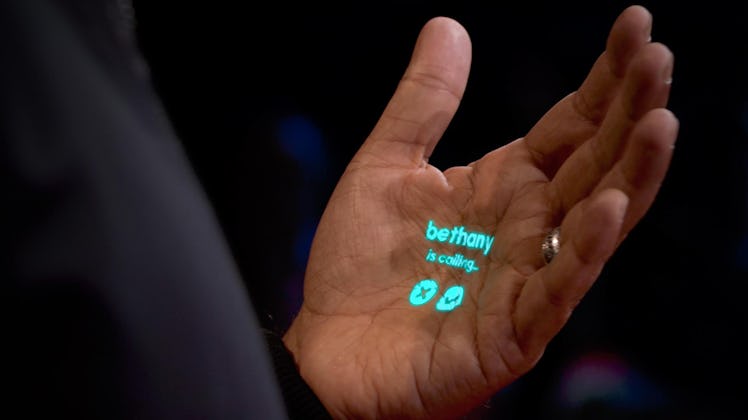




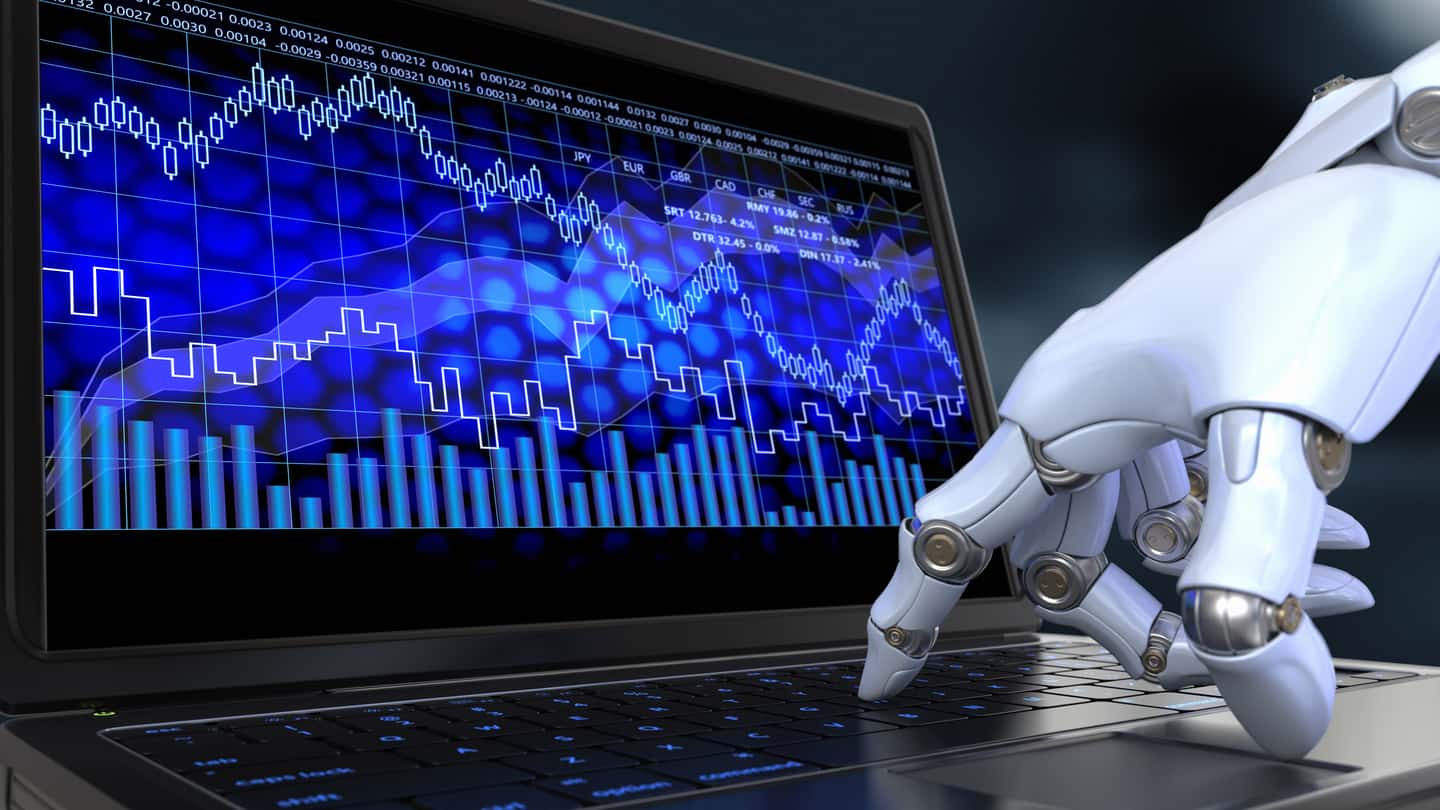


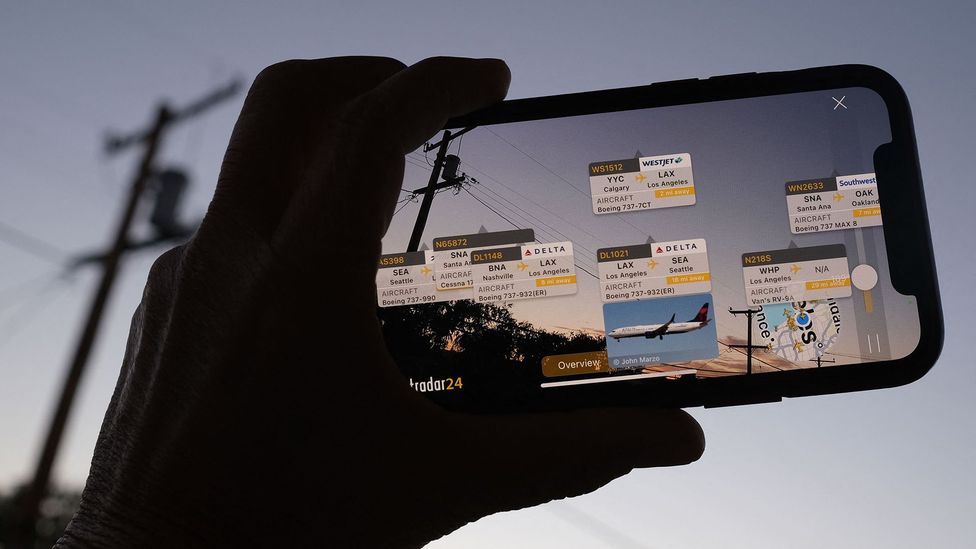
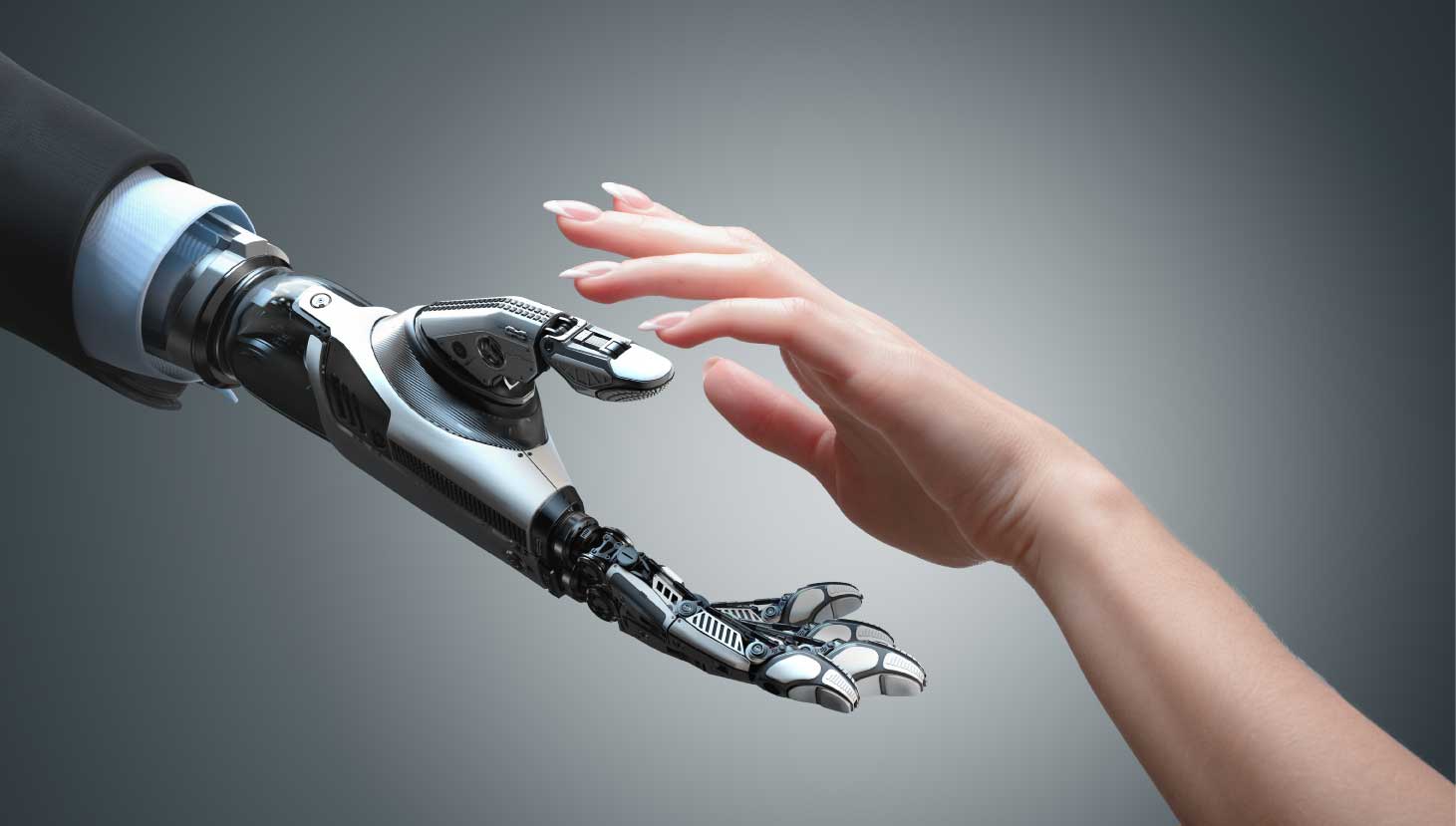

 bobdillon33blog