• About
  • THE BEADY EYE SAY’S : THE EUROPEAN UNION SHOULD THANK ENGLAND FOR ITS IN OR OUT REFERENDUM.

bobdillon33blog

~ Free Thinker.

bobdillon33blog

Tag Archives: Distribution of wealth

THE BEADY EYE SAY’S. Here is the latest news for Valued Workers:

11 Saturday Apr 2020

Posted by bobdillon33@gmail.com in CORONA VIRUS., COVID-19, Post-Covid-19

≈ Comments Off on THE BEADY EYE SAY’S. Here is the latest news for Valued Workers:

Tags

Capitalism and Greed, Distribution of wealth, The Future of Mankind, Visions of the future.


(Twelve-minute read)

Workers of the world, good news! You have been rebranded as “stakeholders”

Stakeholders for a cohesive and sustainable world.

At the moment this is like believing that your Aunt Mary is you Uncle.

In other words, everything is going to change when the Coronavirus disappears.

What I find somewhat amazing is that the current coronavirus pandemic has created this eureka moment of enlightenment.

To be brutally honest receiving a round of applause for your heroics is all jolly good but before we learn how to identify the values of others, we should make sure that we understand our own values and that is that the value of everything from the smallest ant to the very air we breathe is all interconnected.

It’s not one of the enduring green mysteries of all time.

Its called treating people decently and valuating the world we live on.

Up to now too many at the top whether it’s in government or industry seem incurious about the realities of life for people lower down the valued charts.

Valued workers thanks to COVID-19  is all the rhetoric across media. BEFORE THE CORONA VIRUS IT WAS ALL ABOUT austerity working for a miserable PAYCHECK.

NOW IT ALL ABOUT CONTRIBUTING STILL ON A MISERABLE MINIMUM NO CONTRACT WAGE TO THE GREATER GOOD OF SOCIETY.

(60 percent were ALREADY struggling to make ends meet each month.)

When all the employee costs are subtracted from the employee’s assets, the remainder is the employee’s value.

Now it appears that we are rethinking, what work is done, how it is done, and by whom. After we get back to living this will be more than an interesting question.

In the profit-focused world while people demonstrate their values every day the sense of purpose up to now has been overlooked and underpaid with the basic living wage reflecting this elusive, and, perhaps, somewhat arbitrary value.

There is no doubt that there is going to be not just a recession in the economies of the world but a depression.

This is not just because of the pandemic, that will leave vast groups of citizens jobless but also because of robotic automation and climate change.

Even Donal Dump ( the climate changer denier) has recognised this by breaching the American dream of making oneself rich without government assistance.

Last month U.S. lawmakers agreed to send direct payments to citizens as part of its historic $2 trillion stimulus package. Most Americans will receive cheques of up to $1,200 for an individual earning up to $75,000 a year, with an additional $500 per child.

Cash is the best thing you can do to improve health outcomes, education outcomes and lift people out of poverty.  It’s the only solution to an economy where “a small group of people are getting very, very wealthy while everyone else is struggling to make ends meet. Meanwhile, hedge funds have got their dancing shoes on. 

With automation, a depression of global magnitude and now a pandemic, not to mention climate change  a guaranteed income is inevitable.

All are destroying the employment market therefore citizens should have simple, straightforward financial assistance that minimizes bureaucracy.

Universal Basic Income. Universal Basic Income (sometimes called Unconditional Basic Income, Citizens Income or just Basic Income) is a proposed economic system in which all adults within the economy receive a guaranteed basic income irrespective of whether they have a job or not.

The intention behind such a payment is to provide enough to cover the basic cost of living and provide financial security.

It would cost less to administer such a program than with traditional welfare and the payments could help stabilize the economy during recessionary or depression periods.

(The unprecedented fall in GDP, investment, consumption, and economic activity will cause lasting scars on the economy – higher debt, business closures, permanently lost income, and new barriers to global trade will cause a prolonged economic downturn.)

It would remove the problem with existing welfare programs that keep people “trapped in poverty.

The argument against it is if everyone suddenly received a basic income, it would create inflation.

Most would immediately spend the extra cash, driving up demand. Retailers would order more, and manufacturers would try to produce more. But if they couldn’t increase supply, they would raise prices. Higher prices would soon make the basics unaffordable to those at the bottom of the income pyramid. In the long run, a guaranteed income would not raise their standard of living.

It would be too expensive. It could remove the incentive to work.

However, it is important to remember economies are adaptable. No matter how bleak the situation is, human resourcefulness can help economic activity bounce back.

How would a universal basic income be funded?

Larger-scale basic income initiatives could require central banks to create new money, as they did for quantitative easing programs after the 2008 global economic crisis.

It is remarkable that in postwar Britain the support for those living in poverty was closer to average earnings than it is today. This is the very simple fact that lies behind the record levels of personal debt, rising use of food banks and increasing destitution that we see in the UK.

( Who needs Trident replaced at an expected cost of £31 billion. Another £10 billion has been put aside to cover any extra costs or spending over the estimate.

Who needs HS2 at an estimated cost of £106bn.

Who needed two new aircraft carriers with a price tag of £6.2bn.

How needs to spend 2% of GDP on defense

Who needs a new Hinkley when most countries are going green.

Who needs Brexit which is already around £130bn cost to the economy, and a £70bn cost still to come: )

Of course, a whole new system would take longer than the urgency of the coronavirus situation requires.

However, the virus is exposing many of the flaws in sick pay and wider welfare system that leave people financially vulnerable when ill. Universal Credit is clearly not suited to the urgent support needed by many.

With as much as 80% of the population of the world liable to be infected means that planning for the long term will be necessary. Until a vaccine is developed.

The coronavirus epidemic could last until next spring even a year is entirely plausible. In this context that the question about the organization of human society post-COVID-19 becomes relevant and urgent.

Before I continue at this point it might be best to face the truth and confess ignorance for what the year or years ahead might bring.

———————————————————————————————

No longer can we afford a lackluster attitude to the poverty of the majority, while a few enjoy a decent quality of life.

An increasing concentration of political power and financial elite has up to now influences the rules by which an economy runs.

The need for shared prosperity and security requires co-ordinated national and global response. If not we could be looking at leaderless mass responses that will serve no one.

When this Pandemic is over corporate priorities will revert, recalibrate their priorities, but for the rest of us, the ramifications of all of this apart from the tragic loss of lives (Coronavirus kills on an average of just 18.5 days) must go where no man has gone before.

Regardless of how health care is funded, all countries face similar challenges – namely, how to meet the rising demand for services and transform care in response to an aging population and changing patterns of disease. This is leading to increased pressures on services and funding challenges in countries around the world.

It’s currently unknown what exact procedures would be given to a patient with suspected COVID-19. And, depending on your symptoms, you could have a quick 15-minute visit to urgent care or an urgent visit to the ER — not necessarily both. 

In the USA Coronavirus testing might be free, but the hospital trip may set you back thousands.

Depending on where you are the average cost of COVID-19 coronavirus patients may reach more than $20,000.

It all comes down to what treatment and what medical coverage you have.

Paying people a living wage and convincing them that you are listening to them is not the current UK Living Wage is £9.00 an hour. The current London Living Wage is £10.55 an hour.

Salary is a fixed cost, which may increase annually as an employee becomes more valuable to the employer.

Your organization’s workplace values set the tone for your company’s culture, and they identify what your organization, as a whole, cares about.

The average cost for burial is £4,321.

We all have our own workplace values these values must come to life.

Remember that we human race has never been able to eradicate any disease except smallpox, let’s hope that out of this one we eradicate inequality.
All human comments appreciated. All like clicks and abuse chucked in the bin.

← Back

Thank you for your response. ✨


Share this:

  • Share on WhatsApp (Opens in new window) WhatsApp
  • More
  • Share on Mastodon (Opens in new window) Mastodon

THE BEADY EYE ASK’S : What key knowledge would you need to start rebuilding civilization from scratch?

03 Friday Apr 2020

Posted by bobdillon33@gmail.com in 2020: The year we need to change., CORONA VIRUS., COVID-19

≈ Comments Off on THE BEADY EYE ASK’S : What key knowledge would you need to start rebuilding civilization from scratch?

Tags

2020: The year we need to change., Capitalism and Greed, Capitalism vs. the Climate., CORONA VIRUS., Coronavirus (COVID-19), Distribution of wealth, Inequility, The Future of Mankind, Visions of the future.

    ( TWELVE MINUTE READ)  It is now the general consensus that the world and the manner we live on it will change once this Coronavirus pandemic is over. The coronavirus has turned life upside down, and when it’s over—which seems far off and even worse, indeterminate—our lives will be changed permanently. the coronavirus pandemic has ruthlessly laid bare just how fractured our society is.  Living in the modern world, we have become disconnected from the basic processes that support our lives, as well as the beautiful fundamentals of science that enable you to relearn things for yourself – Google it. Leaving the current situation aside we are woefully unprepared for a world that is and going to be affected by climate change. A civilization is a complex human society which is very messy for the majority of the civilians. The word “civilization” relates to the Latin word “civitas” or “city.” The term “civilization” was often applied in an ethnocentric way, with “civilizations” being considered morally good and culturally advanced, and other societies being morally wrong and “backwards.”  Today’s modern definition is still in flux as the concept of “civilization” is hard to define. The problem is that most people have no clear understanding of what civilization is or, perhaps as important, what it isn’t. Wikipedia. According to this seemingly omniscient cyber-seer, civilization is defined most broadly as “any complex state-society characterized by a social hierarchy, symbolic communication forms (typically, writing systems), and a perceived separation from and domination over the natural environment”. How many of us would fight for civilization if we thought that we were fighting for the increasing complexity of the state and its social hierarchy? How many of the agrarians amongst us would fight for a civilization that defined itself as being separate from the natural environment and as seeking to dominate it? How many of us would fight for incessant urbanization, centralization, and the passive domestication of ourselves alongside the domestication of other organisms? How many of us had realized that being civilized was the willingness to make ourselves cattle in the service of increasingly complex social hierarchies? How many of us thought that civilization was marked by the sort of “specialization of labour” that had reduced human work to that of a disposable cog in an increasingly large and complex mechanism? How many of us guessed that civilization was defined by culturally ingrained progressivism and other supremacist ideologies? How many of us perceived that taxation was civilized and that increasing taxation was therefore and presumably a mark of increasing civilization? If this is civilization we would be justified in hoping that civilization would go to hell and that, indeed, we would be equally justified in believing that it was all too evidently going there. However, it is still a helpful framework with which to view how humans come together and form a society. All civilizations have certain characteristics. These include: (1) large population centres; (2) monumental architecture and unique art styles; (3) shared communication strategies; (4) systems for administering territories; (5) a complex division of labour; and (6) the division of people into social and economic classes. Again according to Wikipedia, “civilization” is merely an ideological construct of the eighteenth century! It is not a reality in itself but an idea by which an irreligious and irrational “rationalism” can explain and explain away, to its own prejudiced satisfaction, the history of human culture. This is how civilization is defined on the internet. Is civilization worth defending? Should we aim to conform to it so that we can be considered civilized? Maggie Thatcher once said that there is no such thing as a society.  How wrong she was What is civilization? It is the conforming of the heart of humanity – equality for all.   Culture is everything about human society, i.e. it refers to the knowledge and features of a specific group of people living in a region. Many forget that a culture is only as great as the rival cultures around it, and all history was written by the winners. So if we are to reinvent anything it won’t be civilisation, but the culture that makes us civilised that will have to change.  To do this we will have to ask what has been tried before and what the results were? What resources are available, what new theories are there?  WE CAN’T CHANGE ANYTHING UNTILL EDUCATION/ HEALTH IS FREE FOR ALL. WE CAN’T CHANGE ANYTHING TILL WE SHARE THE RICHES OF THE EARTH– FRESHWATER, FRESH AIR, GREEN ENERGY. ALL FOODS ARE NON-MODIFIED AND SOLD UNDER ITS NATURAL CONDITIONS.   WE CAN’T CHANGE ANYTHING UNLESS INEQUALITY DISAPPEARS. THE RICHEST 1% NOW OWN HALF OF THE WORLD’S WEALTH. THE GAP BETWEEN THE HAVES AND HAVE – NOT’S WHERE ONLY A FRACTION OF SOCIETY REAPS THE BENEFITS OF ECONOMIC GROWTH WILL HAVE TO BE TACKLED – THE BIFURCATED ECONOMY.  (Forty years of neoliberal policy means that wealthy individuals and large companies today have so much “surplus of capital” that they don’t know what to do with it. billions parkEed in tax havens.) WE CAN’T CHANGE ANYTHING TILL RACISM AND RELIGIOUS BIGOTRY IS ABOLISHED  WE CAN’T CHANGE ANYTHING BY CREATING LOTTO MILLIONAIRES WHILE SLUMS EXIST.  WE CAN’T CHANGE ANYTHING WHILE THE ARMS INDUSTRY EXISTS.  WE CAN’T CHANGE ANYTHING WHILE SOVERGIN FUNDS EXIST.  WE CAN’T CHANGE ANYTHING WHILE PROFIT SEEKING ALGORITHMS EXIST. WE CAN’T CHANGE ANYTHING TILL WE REALISE THAT EARTH COMES FIRST THEN ITS PEOPLE. WE CAN’T CHANGE ANYTHING TILL WE ACT AS ONE.    WE CAN’T CHANGE ANYTHING TILL ALL WORLD DEBT IS WRITTEN OFF. TOTAL PUBLIC DEBT WILL BE IN THE TRILLIONS. WORLDWIDE, THE TOTAL MOUNTAIN OF DEBT HAS REACHED A RECORD AMOUNT OF 322% OF THE WORLD GDP. WE CAN’T CHANGE ANYTHING TILL WE UNDERSTAND THAT ONE’S REACH MUST GO BEYOND ONE GRASP. THE CORONAVIRUS IS THE PERFECT TIME TO LAUNCH A NEW GREEN DEAL THAT IS AMBITIOUS ENOUGHT TO SAVE THE PLANET. NEVER MIND WORLD CONFERENCES TALKING ABOUT IT DO IT. THINK BIG. ACT NOW. TOGETHER.  WE CAN’T CHANGE ANYTHING UNTILL WE DO AWAY WITH DIVIDENDS AND REPLACE THEM WITH A BASIC LIVING INCOME. WE CAN’T CHANGE ANYTHING UNLESS WE REFORM THE UNITED NATIONS REMOVE THE VETO AND TURN IT FROM A BEGGING SHOP TO A FULLY FUNDED ORGANISATION WITH A PERTUPITUAL INCOME FROM A 0.05% WORLD AID FUND. ( See previous posts.) WE CAN’T CHANGE ANYTHING UNLESS WE CURBE CONSUMERISM AND MOVE TO SUSTAINABILITY.  WE’VE CONSUMED BEYOND OUR MEANS FOR A GENERATION AND NOW THE BILL IS COMING DUE SUDDENLY. WE CAN’T CHANGE ANYTHING WITH GDP AS OUR CULTURAL GOAL. WE CAN’T CHANGE ANYTHING WHILE WE TOLERATE ZOMBIE BANKS. NO FEWER THAN 147 INDIVIDUAL NATIONAL BANKS CRISES ACCURED BETWEEN 1970 AND 2011 ACCORDING TO THE IMF. IT’S TIME TO PUT THE BANKING SYSTEM IN GOVERNMENT HANDS AND TO DISMANTLE CASION CAPITALISM. My point is the pandemic and its aftermath will be super-consequential for how we live the rest of our lives. There will be implications across the board; for business,  government, culture, sports and the arts, as well as behaviour. It’s not too soon to think about that. Smartphones have given us an always-on connection to the world’s information but history develops our researching skills and our understanding of human behaviour. What we’ve done in the last generation is we’ve replaced normal human interactions and social capital with technology and money. And we’ve done that with a deleterious impact on our health and our happiness because technology and money hijack our brains in a stronger way than slow, kind of boring conversations do and yet that’s our heritage. Our culture is systems blind. Monetary stability, public safety and all manner of civilised goals have grown too complicated and big. The idea of the trickle-down effect of the free capitalist market is no longer true it continually funnels things towards the top.  It doesn’t speak to the bottom half of society now.   They say that the best things in life are free, that adage is only true if basic needs are covered. A lot of people are living paycheck to paycheck, week to week, month to month.  A universal basic income is the way to go.  A basic income that supports the bottom half of society with enough to pay for basic needs. There is no doubt that many businesses that are booming during the pandemic will continue to thrive. But we continue to look at issues like climate change or renewable energy or poverty and we don’t think of how everything fits together. And right now we’re lacking a map of how to go forward. No matter how this all unfolds, the biggest thing that’s going to contribute to better futures is social nodes of communication and social capital. WE CAN’T GO BACK JUST TO GO OUT AND HAVE AN ORGY OF CONSUMPTION AND BACK TO NORMAL WITHOUT LEARNING ANYTHING FROM THIS.  WE CAN’T ALLOW GOVERNMENTS TO BECOME AUTHORITARIAN. NOR ALLOW SOCIAL MEDIA NETWORKS TO REMAIN UNREGULATED. It is already clear that in future we will look back on 2020 as a turning point, the beginning of a new era. Will we ever shake hands again? Or hug? YES ON OUR TERMS.  NOT GREED AND EXPLOITATION  That’s where we’ve headed back to again if governments don’t cop on to the new slow world  And if you’re a super-rich person … instead of investing in the stock market, maybe take some of that money and invest it locally. All human comments appreciated. All like clicks and abuse chucked in the bin.

← Back

Thank you for your response. ✨

        .      The weather is extreme, with searing heat most of the day.    army was eventually left without wars to fight, religions with vague ‘new age’ beliefs, all of which eventually blended into a new religion,      Political Parties are abolished. Only Candidates can represent themselves in all elections.        I not only suggest and encourage constructive criticism

Share this:

  • Share on WhatsApp (Opens in new window) WhatsApp
  • More
  • Share on Mastodon (Opens in new window) Mastodon

THE BEADY EYE SAY’S : Where will we be in six months, a year, ten years from now?

31 Tuesday Mar 2020

Posted by bobdillon33@gmail.com in 2020: The year we need to change., Artificial Intelligence., Capitalism, Climate Change., CORONA VIRUS., COVID-19, Dehumanization., Democracy., Digital age., Disconnection., Environment, Evolution, Fourth Industrial Revolution., HUMAN INTELLIGENCE, Human values., Humanity., Inequality, Life., Lock Down., Modern day life., Our Common Values., Political Trust, Politics., Populism., Post - truth politics., Poverty, Reality., Survival., Sustaniability, Technology v Humanity, The common good., The Future, The Internet., The Obvious., The pursuit of profit., The state of the World., The world to day., Truth, Truthfulness., Unanswered Questions., VALUES, Wealth., WHAT IS TRUTH, What Needs to change in the World, Where's the Global Outrage., World Economy., World Organisations., World Politics

≈ Comments Off on THE BEADY EYE SAY’S : Where will we be in six months, a year, ten years from now?

Tags

Artificial Intelligence., Business and Economy, Capitalism, CORONA VIRUS., Coronavirus (COVID-19), Distribution of wealth, Extinction, Global warming, Globalization, Inequility, Technology, The Future of Mankind, Visions of the future.


( An essential twenty-minute read) 


It all depends on how governments and society respond to coronavirus and its economic aftermath.

As we know COVID-19 is highlighting serious deficiencies in our existing system. 

Hopefully, we will use this crisis to rebuild, produce something better and more humane. But we may slide into something worse.

My focuses on this post are on the fundamentals of the modern economy: global supply chains, wages, and productivity.

I argue that we will need a very different kind of economics if we are to build socially just and ecologically sound futures.

In the face of COVID-19, this has never been more obvious.

——————————————————————————————–

The COVID-19 pandemic is simply the amplification of the dynamic that drives other social and ecological crises: The prioritisation of one type of value over others. 

From an economic perspective, there are four possible futures:

Descent into barbarism, robust state capitalism, radical state socialism, and a transformation into a big society built on mutual aid.

Coronavirus, like climate change, is partly a problem of our economic structure. Although both appear to be “environmental” or “natural” problems, they are socially driven.

Yes, climate change is caused by certain gases absorbing heat. But that’s a very shallow explanation. To really understand climate change, we need to understand the social reasons that keep us emitting greenhouse gases.

Likewise with COVID-19. Yes, the direct cause is the virus. But managing its effects requires us to understand human behaviour and its wider economic context.

Tackling both COVID-19 and climate change is much easier if you reduce nonessential economic activity.

The epidemiology of COVID-19 is rapidly evolving. But the core logic is similarly simple. People mix together and spread infections.

We can see from Wuhan that social distancing and lockdown measures like this are effective.

Political economy is useful in helping us understand why they weren’t introduced earlier in European countries and the US.

We are now facing a serious recession and we are living with an economic system that will threaten collapse at the next sign of pandemic.

The economics of collapse is fairly straightforward.

Businesses exist to make a profit.

If they can’t produce, they can’t sell things. This means they won’t make profits, which means they are less able to employ you.

Businesses can and do (over short time periods) hold on to workers that they don’t need immediately: They want to be able to meet demand when the economy picks back up again. But, if things start to look really bad, then they won’t. So, more people lose their jobs or fear to lose their jobs. So they buy less. And the whole cycle starts again, and we spiral into an economic depression.

In a normal crisis, the prescription for solving this is simple.

The government spends, and it spends until people start consuming and working again.

This pressure has led some world leaders to call for an easing of lockdown measures.

But normal interventions won’t work here because we don’t want the economy to recover (at least, not immediately). The whole point of the lockdown is to stop people going to work, where they spread the disease.

If we want to be more resilient to pandemics in the future (and to avoid the worst of climate change) we need a system capable of scaling back production in a way that doesn’t mean loss of livelihood.

At its core, the economy is the way we take our resources and turn them into the things we need to live.

Looked at this way, we can start to see more opportunities for living differently that allow us to produce less stuff without increasing misery.

So how do you reduce the amount of stuff you make while keeping people in work?

You have to reduce people’s dependence on a wage to be able to live.

Currently, the primary aim of the global economy is to facilitate exchanges of money. The dominant idea of the current system we live in is that exchange value is the same thing as use-value.

This is why markets are seen as the best way to run society. They allow you to adapt, and are flexible enough to match up productive capacity with use-value.

What COVID-19 is throwing into sharp relief is just how false our beliefs about markets are. 

There are lots of contributing factors to this. But let’s take two.

First, it is quite hard to make money from many of the most essential societal services-key workers low-paid employee. This is in part because a major driver of profits is labour productivity growth: doing more with fewer people – automation.

Second, jobs in many critical services aren’t those that tend to be highest valued in society. Many of the best-paid jobs only exist to facilitate exchanges; to make money.

People are compelled to work pointless jobs (they serve no wider purpose to society: ie. consultants, huge advertising industry and a massive financial sector) because, in a society where exchange value is the guiding principle of the economy, the basic goods of life are mainly available through markets.

This means you have to buy them, and to buy them you need an income, which comes from a job.

Meanwhile, we have a crisis in health and social care, where people are often forced out of useful jobs they enjoy because these jobs don’t pay them enough to live.

While state-capitalist society continues to pursue exchange value as the guiding light of the economy. It also enacts a massive Keynesian stimulus by extending credit and making direct payments to businesses.

The expectation here is that this is will be for a short period.

Could this be a successful scenario?

Possibly, but only if COVID-19 proves controllable over a short period.

Limited state intervention will become increasingly hard to maintain if death tolls rise.

Increased illness and death will provoke unrest and deepen economic impacts, forcing the state to take more and more radical actions to try to maintain market functioning.

Barbarism is the future if we continue to rely on exchange value as our guiding principle and yet refuse to extend support to those who get locked out of markets by illness or unemployment. It describes a situation that we have not yet seen.

Could this happen?

The concern is that either it could happen by mistake during the pandemic, or by intention after the pandemic peaks.

Potentially just as consequential is the possibility of massive austerity after the pandemic has peaked and governments seek to return to “normal”.

This would be disastrous. The subsequent failure of the economy and society would trigger political and stable unrest, leading to a failed state and the collapse of both state and community welfare systems.

Then there is the possibility that we could see with a cultural shift that places a different kind of value at the heart of the economy.

The state steps in to protect the parts of the economy that are essential to life: so that the basic provisions of life are no longer at the whim of the market. The state nationalises hospitals and makes housing freely available. Finally, it provides all citizens with a means of accessing various goods – both basics and any consumer goods we are able to produce with a reduced workforce.

Citizens no longer rely on employers as intermediaries between them and the basic materials of life.

Payments are made to everyone directly and are not related to the exchange value they create.

Instead, payments are the same to all (on the basis that we deserve to be able to live, simply because we are alive), or they are based on the usefulness of the work.

A Basic Universal Income.

Supermarket workers, delivery drivers, warehouse stackers, nurses, teachers, and doctors are the new CEOs.

If deep recessions happen and there is a disruption in supply chains such that demand cannot be rescued by the kind of standard Keynesian policies we are seeing now (printing money, making loans easier to get and so on), the state may take overproduction.

There are risks to this approach – we must be careful to avoid authoritarianism. But done well, this may be our best hope against an extreme COVID-19 outbreak.

Mutual aid is the second future in which we adopt the protection of life as the guiding principle of our economy. But, in this scenario, the state does not take a defining role. Rather, individuals and small groups begin to organise support and care within their communities.

The most ambitious form of this future sees new democratic structures arise. Groupings of communities that are able to mobilise substantial resources with relative speed. People coming together to plan regional responses to stop disease spread and (if they have the skills) to treat patients.

This kind of scenario could emerge from any of the others.

What hopefully is clear is that all these scenarios leave some grounds for fear, but also some for hope.

The upside of this is the possibility that we build a more humane system that leaves us more resilient in the face of future pandemics and other impending crises like climate change. 

A key task for us all is demanding that emerging social forms come from an ethic that values care, life, and democracy.

The central political task in this time of crisis is living and (virtually) organising around those values.

Not low-paid workers or National Minimum Wage or National Living Wage because their work is so vital.

Successive governments had failed to reduce inequality between rich and poor despite two decades of interventions.

We must now with an uncertain future focus more on the journey, rather than the ultimate destination.

But be no doubt that we are at a crossroad where the low pay culture that has trapped people in poorly jobs is coming to an end. 

Capitalism Inequality can not be allowed to continue. 

All human comments appreciated. All like clicks chucked in the bin.

← Back

Thank you for your response. ✨


Share this:

  • Share on WhatsApp (Opens in new window) WhatsApp
  • More
  • Share on Mastodon (Opens in new window) Mastodon

THE BEADY EYE SAY’S. WE ALL KNOW WHAT TO DO BUT ARE WE WILLING.

23 Monday Mar 2020

Posted by bobdillon33@gmail.com in #whatif.com, 2020: The year we need to change., Capitalism, COCID-19, CORONA VIRUS., Disconnection., Human values., Humanity., Inequality, Life., Modern day life., Our Common Values., Poverty, Reality., Refugees., Survival., Sustaniability, Technology v Humanity, The common good., The essence of our humanity., The Obvious., The state of the World., The world to day., Unanswered Questions., United Nations, VALUES, Wealth., WHAT IS TRUTH, What Needs to change in the World, Where's the Global Outrage., World Economy.

≈ Comments Off on THE BEADY EYE SAY’S. WE ALL KNOW WHAT TO DO BUT ARE WE WILLING.

Tags

Capitalism and Greed, Capitalism vs. the Climate., Distribution of wealth, Earth, Environment, Inequility, The Future of Mankind, Visions of the future.


(Five-minute read) 


STOP DESTROYING OUR PLANET:
It’s no secret that our planet is in a pretty dire condition.

The problem is a massive one.

It’s so big that there are things that you do every day that are helping to bring about the end of the world, and chances are that you might not even know it.

Here are a few.

China produces a whopping 80 billion disposable chopsticks every year. The vast majority are used—and thrown away—That kind of production takes 20 million trees, and not just any trees.

Estrogen, one of the active ingredients in birth control pills and hormone therapy treatments, was introduced into a freshwater lake research facility in Ontario. 

The impact was almost immediate. Male fish first began producing egg proteins and then producing eggs.

Wastewater treatment and its impact on freshwater ecosystems.

Hormones that aren’t absorbed or used end up in the sewer system after they cycle through the human body. In areas where sewer water is dumped into lakes and rivers, the average fish population is about 85 per cent female. The cause has been traced back to the release of improperly treated wastewater that contains hormones from hormone therapy drugs and birth control pills. A stark contrast to the normal 55 per cent. Fish exposed to the hormones not only lose the ability to reproduce, but their accidental hormone treatment impacts eggs at the development stage as well.

Prozac. Might have something to do with the decline in the starling population over the last few decades—to the tune of about 50 million birds. 

Drinking straws. 

The United States alone uses about 500 million drinking straws made from a polypropylene plastic that doesn’t disintegrate or dissolve.

These millions of straws are around forever, making up a huge part of the estimated 12 to 24 tons of plastic that end up ingested by fish and other marine wildlife every year. And that includes about one million seabirds that die after eating plastics. One of the most common items found in autopsies? The drinking straws that come attached to juice boxes.

Eating frogs.

The fungus that’s being spread by the live food trade is different than one that’s being blamed for most of the recent die-offs.

The consequences of the fungus and its ability to hybridize create the potential to unleash an epidemic across the globe.

Antibacterial soaps, washing liquids/tablets use triclocarban and triclosan, chemicals while most of those chemicals are removed from wastewater when they’re run through a treatment plant, they have to go somewhere. When triclocarban degrades, it degrades into two chemicals—both carcinogens.

When triclosan is run through a treatment plant to make drinking water, it doesn’t exactly make safe drinking water. Instead, it makes other chemicals that can include chloroform. And those chemicals travel through the food chain in plants, animals, and ultimately humans.

Farm-raised fish.

Shrimp aquaculture has resulted in the large-scale degradation of coastal areas, the destruction of wetlands, and salinization of freshwater areas and drinking water. Salmon farming relies on the release of fish food and nutrients into the water, which always results in wasted feed and a huge amount of fish droppings in the water

Extra waste products end up sinking to the bottom where they react with the medicines and other nutrients used to keep the fish healthy along with antifoulant agents used to keep nets clean. That means fish farms are a breeding ground for sea lice, which are as disgusting as they sound. More chemicals are used to control the sea lice, which end up killing the other marine life that was supposed to be in the area in the first place.

Not the eco-friendly choice you’d think.

Soybeans 80 per cent of the world’s soy production goes into livestock feed.

1.2 million hectares of soy was planted in Brazil’s rain forest in 2005 alone. 

Global food waste. 

Every year, global food waste amounts to about 1.3 billion tons, and that’s such a big number that it’s impossible to imagine. Meanwhile, about 870 million people are starving.

Inequality: Lack of Healthcare, Nutrition and Education.

We all know that the world’s richest 1 per cent, those with more than $1 million, own 44 per cent of the world’s wealth. In many countries, a decent education or quality healthcare has become a luxury only the rich can afford.

Being poor all too often means more sickness and an earlier grave. 

The story of inequality in many developed countries, including the U.S. and U.K., is more sobering. However, when you are born in a poor place where every tenth child dies, as the well-to-do’s share of the national economic pie surges, a pandemic is a joke.

So what can be done to right this unsettling imbalance and restore a sense of opportunity for the billions of people who are being excluded from the gains of economic development?

The first and most important step may ultimately be recognizing the scope and scale of the problems caused by inequality in the first place and resolving to do something about them.  

Inequality is out of control with the human costs devastating.

Like many other environmental problems, there’s absolutely no easy answer but it is time we opened our eyes.

Ironically, with the coming economic collapse due to the coronavirus, we might finally be recognizing inequality’s great economic costs may be just the motivation that financial interests need to take the issue seriously.

Its not Amazon fortune and power that will grow exponentially.

The growing gap between rich and poor is undermining the fight against poverty, damaging our economies and tearing our societies apart.

If not with climate change added to next pandemic it won’t be the virus that kills you but the influx of refugees. 

All human comments appreciated. All like clicks and abuse chucked in the bin.

← Back

Thank you for your response. ✨


Share this:

  • Share on WhatsApp (Opens in new window) WhatsApp
  • More
  • Share on Mastodon (Opens in new window) Mastodon

THE BEADY EYE SAY’S; HERE ARE THE BIG QUESTIONS THAT ARE YET TO COME WHEN IT COMES TO TECHNOLOGY.

19 Wednesday Feb 2020

Posted by bobdillon33@gmail.com in #whatif.com, 2020: The year we need to change., Algorithms., Artificial Intelligence., Big Data., Digital age., DIGITAL DICTATORSHIP., Digital Friendship., Fourth Industrial Revolution., Google, Google it., Google Knowledge., Human values., Humanity., Life., Modern day life., Our Common Values., Reality., Sustaniability, Technology, Technology v Humanity, The common good., The Future, The Obvious., The state of the World., The world to day., Unanswered Questions., War, WHAT IS TRUTH, What Needs to change in the World, Where's the Global Outrage., World Leaders

≈ Comments Off on THE BEADY EYE SAY’S; HERE ARE THE BIG QUESTIONS THAT ARE YET TO COME WHEN IT COMES TO TECHNOLOGY.

Tags

Algorithms trade., Algorithms., Artificial Intelligence., Big Data, Capitalism and Greed, Distribution of wealth, Inequility, Technology, The Future of Mankind, Visions of the future.


Thirty-minute read.

Who owns what?  What’s our purpose in life?  What are the values that we believe in? How do we think and make decisions?  What do we mean by work?  Can our work ever have true meaning unless it is to serve others?

What will help us all think deeply about the questions we need to ask and answer?

Climate change or technology.

However, for many of us, the answers to these questions differ in our working lives, compared with our personal lives, with family, friends and neighbours.

Were a ruling elite like Google to impose a command-and-control, fear-driven culture in which power is abused and the outcomes are social and economic misery for the vast majority?

Our reaction, if we are to go by what is now observable, will be So what? Now what?

MAKING sure companies compete fairly is a tricky business. The firms being regulated know far more about their business than those doing the regulating;

“Artificial intelligence is the future, not only for Russia but for all of humankind.” Says Putin. “Whatever country comes to dominate this technology will be the “ruler of the world.”

His rhetoric is entirely appropriate. Automation and digitalization have already had a radical effect on international systems and structures.

Technology can easily be referred to as the scientific knowledge to the practical problems we are experiencing in the world today.

On the other hand, its core strategy is to gobble up market share with profit-seeking algorithms.

Our environments are all so full of technology to the point that most of the time we take it for granted.

So are we all becoming personified idiots?

Technology has a great impact on all the fundamental aspects of all our cultures including laws and how they are enforced, language, art, health care, mobility, education and religion.

The obvious problem with all of this is that countries will not own or be in control of the technologies.negative effects of technology

While we all sit back and accept the benefits technology it also brings manipulation on a  worldwide scale with our future in the hands of only a handful of corporations and the vast amount of people that are okay with that.

It’s hard to argue against innovation. It’s hard to argue against greater choice, more convenience and lower prices.

One way or the other it is also hard to underestimate the fundamentally different rules that Google /Amazon/ Facebook/ Apple/ Baidu play by.

Hiding behind forked rhetoric that the data they collect does no harm as it is anonymous.

You do not need to know who you are. It is enough to know what you consume, your habits, your tastes, and where you are, through the IP address, the GPS of the mobile, or your Google account. Your name, or your phone number, is not important to sell you things.

Blurring the borders of privacy. Replacing real-life communication.

And on top of it, violent games and videos killing empathy and bring destruction into an individual’s life. Plagiarism and cheating are increase while analysis and critical thinking decline, ending up in social isolation.

(We now have a new perverse sexual harassment of Cyber flashing which is not against any law. Why? Because our laws cannot keep up with the speed of change)

Commercial technology like Smartphones, I pads, Home Alexa/Echo and there like is about creating another consumer touchpoint for their robust ecosystem of e-commerce, services, and media taking advantage of less sophisticated consumers and trick them into consuming items for short-term satisfaction and long-term pain.

Originally created to serve faithfully to humanity, digital devices are revealing their harmful impact on our lives.

We should all be careful what we wish for.

There’s an argument made by big corporations for each country to charge corporations the lowest possible tax rate, to loosen environmental regulations down to zero, and to eliminate employee protections. All so that a country’s commodity producers can be the cheapest ones.

The voice market war has only just begun.

The contenders:

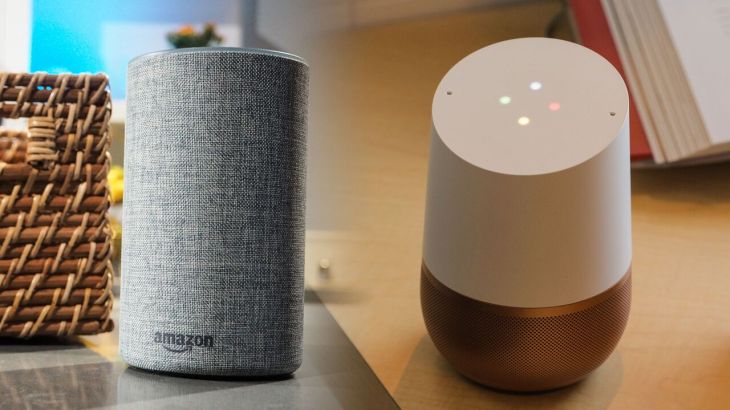
Amazon-Echo v Google-Alexa.amazon-echo-google-home

Once they figure out how to improve their recommendations and push more people to make regular household purchases via voice it will lead to an explosion in voice-based shopping.

Google already has one of the most valuable brands in the world.

Google maps have virtually no meaningful rival.  Gmail…Google basically controls our handheld existence.

Google controls your life, literally, even if it costs you to believe it.

Google trackers have been found on 75% of the top million websites.

When you search on Google, they keep your search history forever.

Google is a company that offers almost all its products for free because the money is earned by selling the data it collects with those products, to advertisers and companies.

Last year Google made over $161 billion in total revenues.

As it is the premier search engine in the U.S., Europe, and many developing countries Google has the tools to control much of the world.

That’s just Google then you have Amazon.

With around 225 million customers around the world, Amazon wants to deliver everything you want to your doorstep, including Foods anywhere in the world. ( 300 items a second) These days half of all product searches start on Amazon.

Our lust for cheap, discounted goods delivered to our doors promptly and efficiently has a price.

Amazon has done a lot of good for consumers by expanding choice, making shopping far more convenient and by delivering extraordinary product value.

Yet, we can’t–and shouldn’t–ignore the profound effect that Amazon is having on just about every corner of the retail world they set their sights on.

Amazon is selling its facial recognition technology, known as Rekognition, to law enforcement agencies.

First and foremost, Amazon isn’t required by its investors to make any real money.

For us the Great unwashed there’s always the opportunity to cut a corner, sacrifice lifestyle quality and suck it up as they race to grab a little more market share.

With their algorithms, they tell you what restaurants you have to eat in, choose your music, label your photos associating them with each family member or friend that appears in them, pay for your purchases, suggest the movies you should see, and the apps that may interest you.

When in fact the searches we do, what websites we visit, what products we look at, where are we, your medical history, your political beliefs, your associations with others your employment prospects, everything from the womb to the grave is collected and analyzed

Before I hear you calling me a hypocrite I also have used Amazon.

If this scenario prevails, would this be really the way information is supposed to be organized?

In short, does the fact that an algorithm is able to provide more relevant information than a human justify this scenario?

These big brands platforms are more powerful than governments. They’re wealthier. If they were countries, they would be pretty large economies. They’re multinational and the global financial situation allows them to ship money all over the world.

Can we do anything to make a difference?

We need to be supporting the development of an efficient circular economy.

Why?

Because sustainability is an unstoppable force.

Let’s not race to the bottom.

Country’s population size will become less important for national power as small countries that develop a significant edge in AI technology will move far above their weight.

Ultimately, however, winning and losing will not be determined by which country gains the most growth through AI. It will be determined by how the entire global community chooses to leverage AI — as a tool of war or as a tool of progress.

They can eliminate rules protecting clean water, air or consumer safety, but they will always find a way to be cheaper or more brutal than you.

We all assume that Google, Facebook, Amazon, Apple, are spying our activity and up to now advertiser is not interested in your name when they are it will be too late and the winner will be Inequality.

So what does all this mean and what are we all going to do about it when we’ve stopped talking about it?

Once you start to connect all the invisible dots together the impact on society will, in the end, be down to the people that use the technology they have to be responsible for it and if they use it irresponsibly they have to be held accountable.

A Footnote:

For me, there is little point in Jeff Bezos setting up an Earth fund when Amazon is one of the biggest promoters of pollution. Pretending to be a do-gooder.

The brown box doesn’t begin to address the larger issue: Each year in the United States alone thrown paper in the trash that represents approximately 640 million trees or roughly 915,000 acres of forest land.

Amazon ships an average of 608 million packages each year, which equates to (an estimated) 1,600,000 packages a day.

Then when we talk about energy consumption, we’re talking about the sources of energy that generate our power: oil, coal, natural gas and alternatives like solar, wind, hydropower and biofuels.

How much electricity they use and the bill is, god only knows, so its no wonder that they have contracts with oil and gas companies.

Now consider that people conduct over 1,6 billion searches per day, and you get a massive energy footprint of roughly 12.5 million watts.

Is e-commerce reducing or increasing our carbon footprint?

Google’s worldwide operations, collectively worldwide use about 2.26 million megawatt-hours per year to power its global data centre operations, which is equivalent to the power necessary to sustain 200,000 homes.

In 2018 Google generated 39.12 billion dollars earnings out of which it paid 243 Million a day in electricity.

This is only an educated guess.

The link between global warming and energy demands is obvious. Surely both of these players should be investing in Green energy.

There’s a deafening silence from pundits and elites and columnists and politicians on our joint self-destruction.

They are simply going on pretending it isn’t happening.

We don’t, as societies or cultures, value learning or knowledge or magnanimity or great and noble things, anymore.

The average person has become a tiny microcosm of the aspirations and norms of elites. We’re the only people on earth who thwart our own social progress, over and over again — and cheer about it.

We are caught in a death spiral now. A vicious cycle from which there is probably no escape. The average person is too poor to fund the very things — the only things — which can offer him a better life:

The result is that a whole society grows poorer and poorer.

Unable to invest in themselves or one another, people’s only real way out is to fight each other for self-preservation, by taking away their neighbour’s rights, privileges, and opportunities — instead of being able to give any new ones to anyone.

Though it’s too late to escape for them, let us hope our governments regulate their algorithms for profit sake.

All human comments appreciated. All like clicks chucked in the bin.

← Back

Thank you for your response. ✨


.


Share this:

  • Share on WhatsApp (Opens in new window) WhatsApp
  • More
  • Share on Mastodon (Opens in new window) Mastodon

THE BEADY EYE ASK’S: WHY IS IT THAT WE ARE ALLOWING ALGORITHMS TO RUN OUR LIVES.

28 Tuesday Jan 2020

Posted by bobdillon33@gmail.com in 2020: The year we need to change., Algorithms., Artificial Intelligence., Climate Change., Digital age., DIGITAL DICTATORSHIP., Evolution, Fourth Industrial Revolution., HUMAN INTELLIGENCE, Human values., Humanity., Inequality, Innovation., Modern day life., Post - truth politics., Reality., Robot citizenship., Sustaniability, Technology, The common good., The Future, The Internet., The Obvious., The state of the World., The world to day., Unanswered Questions., WHAT IS TRUTH, What Needs to change in the World, Where's the Global Outrage., WiFi communication.

≈ Comments Off on THE BEADY EYE ASK’S: WHY IS IT THAT WE ARE ALLOWING ALGORITHMS TO RUN OUR LIVES.

Tags

Algorithms trade., Algorithms., Artificial Intelligence., Big Data, Distribution of wealth, Inequility, Technology, The Future of Mankind, Visions of the future.

(Twenty-minute read)

Technology is getting increasingly personal.

With algorithms becoming the masters of social media are we all just becoming clickbait?

Devices are providing immediate information about our health and about what we see, where we go and where we have been.

Our lives are being shaken to their very core.

With 5G technology what we experienced at the moment will pale in comparison to the vast array of possibilities carried under its belt by this new generation of wireless connectivity, which is being built over the foundations of the previous one.

It will allow millions of devices to be connected simultaneously.

All stakeholders – business, government, society and individuals – will have to work together to adjust so these technologies and rapid changes are harnessed for the development of all, not just profit.

Swathes of the globe will be left behind.

Regardless it is no longer just about repetitive factory jobs rather an increase in inequality globally.

It is not only a moral imperative to ensure that such a scenario does not happen as it will pose a risk to global stability through channels such as global inequality, but migration also flows, and even geopolitical relations and security.

We already live in a world that has been profoundly altered by the Fourth Industrial Revolution. Yet there is not much debate on the likely size of the impact.

Why?

Because there are such divergent views it is difficult to measure.

But within the next decade, it is expected that more than a trillion sensors will be connected to the internet. By 2024, more than half of home internet traffic will be used by appliances and devices that are connected to internet platforms.

With almost everything connected, it will transform how we live never mind how we do business.

If there is no trusted institution to regulate it we can kiss our arses.

Now is the time to make sure it is changed for the better.

The internet of things will create huge amounts of data, raising concerns over who will own it and how it will be stored. And what about the possibility that your home or car could be hacked?

The internet is great for ideas, but ultimately, the things that will amaze you are not on your computer screen.

Artificial Intelligence may well invent new life forms but if we as humans do not contrive and manage global acceptable ethical parameters for all its forms – (bioengineering, gene editing, nanotechnology, and the algorithms) that run them we are more than idiots.

As Yuval Noah Harari says in his most recent book ( 21 Lessons for the 21st Century) ” There is no such thing as ‘Christian economics’, ‘Muslim economics’ or ‘Hindu economics’ ” but there will be Algorithms economics run by big brother. 

The digital age has brought us access to so much information in just a few clicks of the mouse button or the remote control everything from the news, Tv programmes with the internet becoming somewhat glorifying sensationalism rather than giving us the truth.

The question is.

Are the technologies that surround us tools that we can identify, grasp and consciously use to improve our lives?

Or are they more than that:

Powerful objects and enablers that influence our perception of the world, change our behaviour and affect what it means to be human?

What can we do?

The Second Industrial Revolution and the Third Industrial Revolution have lead us to this revolution the Fourth Industrial Revolution which can be described as the advent of “cyber-physical systems” involving entirely new capabilities for people and machines.

Unlike previous revolutions, it is not the world as a whole that will see any of its benefits or disadvantages it is individuals and groups that could win – or lose – a lot.

Unfortunately, expanded connectivity does not necessarily lead to expanded or more diverse worldviews it will be the opposite with our increased reliance on digital markets.

At the moment it’s just not very evenly distributed nor will it be.

At best we can moan about it and hope that climate change shifts our reliance on biomass as primary sources of energy.

Back to Clickbait.

The issue with clickbait is that the reader or site visitor is being manipulated into clicking something that is misleading.

Clickbait is not one-dimensional. Each time you run a Google search, scan your passport, make an online purchase or tweet, you are leaving a data trail behind that can be analysed and monetized.

Most clickbait links forward a user to a page that requires payment, registration or a series of pages that help drive views for a specific site.

It can also point to any web content that is aimed at generating online advertising revenue.

We’re all guilty of being gullible of clicking links online but Clickbait websites are notorious for spreading misinformation and creating controversy in the name of generating hits.

Have you not ever felt that you’re being played as dumb individuals whenever you watch the news or scroll through a media site?

Thanks to supercomputers and algorithms, we can make sense of massive amounts of data in real-time. Computers are already making decisions based on this information, and in less than 10 years computer processors are expected to reach the processing power of the human brain. A convergence of the digital, physical and biological spheres challenging our notion of what it means to be human.

Today, 43% of the world’s population is connected to the internet, mostly in developed countries.

Cooperation is “the only thing that will redeem mankind”.

We can use the Fourth Industrial Revolution to lift humanity into a new collective and moral consciousness based on a shared sense of destiny, and that’s until 6G comes along or living robots.

All human comments appreciated. All like clicks and abuse chucked in the bin.

← Back

Thank you for your response. ✨

Share this:

  • Share on WhatsApp (Opens in new window) WhatsApp
  • More
  • Share on Mastodon (Opens in new window) Mastodon

THE BEADY EYE ASK’S: IS THE ACCELERATING TECHNOLOGY AND THE ONGOING REVOLUTION IN INFORMATION MAKING THE WORLD SO COMPLICATED IT IS NOW BEYOND OUR UNDERSTANDING.

11 Saturday Jan 2020

Posted by bobdillon33@gmail.com in Algorithms., Artificial Intelligence.

≈ Comments Off on THE BEADY EYE ASK’S: IS THE ACCELERATING TECHNOLOGY AND THE ONGOING REVOLUTION IN INFORMATION MAKING THE WORLD SO COMPLICATED IT IS NOW BEYOND OUR UNDERSTANDING.

Tags

Algorithms trade., Algorithms., Artificial Intelligence., Big Data, Community cohesion, Distribution of wealth, Earth, Technology, The Future of Mankind, Visions of the future.


The plain truth can often be so obvious as to be invisible.

There are so many obstacles to change on the scale we so desperately need.

We are fast reaching a point that no humans can or will be able to understand the world we live in.

We pass this way just once.

Artificial algorithms are taking over.

Yuval Noah Harari in his latest book ( 21 lessons for the 21st Century) puts his finger on the problem.

” In the coming century biotech and infotech will give us the power to manipulate the world inside us and reshape ourselves, but because we don’t understand our own minds, the changes we will make might upset our mental system to such an extent that it too might brake down.

Surely its time we stop being the free fodder that feds big data. It’s much harder to struggle against irrelevance than against exploitation.

What will be the point to education if algorithms make us redundant?

It is difficult to discern world-wise whether there is any sincere conversation on AI Ethics.

Is it being addressed by any of the big tech companies or are they just giving token nods to what is right or wrong, while taking advantage of all human beings out there?

Are there just pushback from the outside organisations.

What we are witnessing is their profit growth with economic disparity worldwide increases at a starting rate. This certainly rings true if one looks at the state of the world with people judged by their wealth.

So what is the ethics of creating a sentient life form on a planet that is burning?

Perhaps it will be for the best if we continue not to understand the planet we all live on and leave it to AI to sort us out.

Or can we now start contributing to better governance solutions?

If we don’t grasp the nettle soon there will be no coming back.

To have any relevance now and in the future, we need billions to take to the streets to demand the sustainability of our planet (Human vote with their feet, not Social media) before profit-making goes underground.

When it comes to making the world a better place, corporations are often accused of apathy (the flip-side of blind self-interest). But if consumers are truly committed to social change, they must answer the same challenge.

If we can get consumers to make mindful shopping choices, to support brands that act responsibly and to purchase goods from those that dedicate a portion of the sale proceeds to causes, we are well on our way to re-purposing everyday purchases.

All human comments appreciated. All like clicks and abuse chucked in the bin.

← Back

Thank you for your response. ✨


and become

Share this:

  • Share on WhatsApp (Opens in new window) WhatsApp
  • More
  • Share on Mastodon (Opens in new window) Mastodon

THE BEADY EYE ASK’S. IS THIS THE WORLD YOU WANT TO LIVE IN NEVER MIND LIVE ON.

14 Thursday Nov 2019

Posted by bobdillon33@gmail.com in 2019., Artificial Intelligence., Humanity., Modern day life., Our Common Values., Reality., Sustaniability, Technology, The common good., The essence of our humanity., The Future, The Obvious., The state of the World., The world to day., Unanswered Questions., WHAT IS TRUTH, What Needs to change in the World

≈ Comments Off on THE BEADY EYE ASK’S. IS THIS THE WORLD YOU WANT TO LIVE IN NEVER MIND LIVE ON.

Tags

Capitalism and Greed, Climate change, Distribution of wealth, Inequility, Technology, The Future of Mankind, Visions of the future., World aid commission


(Twenty-minute read) 

Never mind standing on the moon here are some depressing reality about your planet Earth.

We live in a world of trillions of living organisms and billions of humans and few millions of other species.

There are over 35 major conflicts going on in the world today.

There are nearly 210 million orphans in the world.

More than 500 million small arms and light weapons are in circulation around the world.

There are approximately 30,000 nuclear warheads in the world today.

Current global military spending is approximately $800 billion per year; more than the total annual income of the poorest 45% of the global population.

Genocide and other mass murders killed more people in the 20th century than all wars combined.

AND THAT JUST FOR OPENERS. 

35% of the world’s people live in countries in which basic political rights and civil liberties are denied (such as freedom of speech, religion, press, fair trials, democratic political processes, etc).

Over 100 million people live in slums.

1 billion people – 1/3rd of the world’s labour force, are unemployed or underemployed.

Cows earns more than 1.2 billion of the world’s poorest people.

An estimated 27 million people are enslaved around the world, including an estimated 20 million people held in bonded labour (forced to work in order to pay off a debt, also known as ‘debt bondage’). 

At least 700,000 people annually, and up to 2 million, mostly women and children, are victims of human trafficking worldwide (a modern form of slavery — bought, sold, transported and held against their will in slave-like conditions)..

About 246 million, or 1 out of 6, children ages 5 to 17 worldwide are involved in child labor

3 billion of the world’s people (one-half) live in ‘poverty’ (living on less than $2 per day). 1.3 billion people live in ‘absolute’ or ‘extreme poverty’ (living on less than $1 per day). Both in rich countries and poor, a staggering 30-50% of all food produced rots away uneaten.homeless

By 2025, at least 3.5 billion people or nearly 2/3rd’s of the world’s population will face water scarcity. More than 2.2 million people, mostly children, die each year from water related diseases.

The richest 1% of the world’s people earned as much income as the bottom 57% (2.7 billion people) The top 5% of the world’s people earn more income than the bottom 80%. One fourth of humanity lives without electricity.

The wealth of the world’s 7.1 million millionaires ($27 trillion) equals the total combined annual income of the entire planet.

The combined wealth of the world’s richest 300 individuals is equal to the total annual income of 45% of the world’s population. 

The world’s 3 wealthiest families have a combined wealth equal to the annual income of 600 million of the world’s people.  The wealthiest one-fifth of the world’s population receive an average income that is 75 times greater than the poorest one-fifth.

Half of the forests that originally covered 46% of the Earth’s land surface are gone.

Between 10 and 20 percent of all species will be driven to extinction in the next 20 to 50 years.

Almost a quarter of the world’s mammal species will face extinction within 30 years. Up to 47% of the world’s plant species are at risk of extinction.

60% of the world’s coral reefs, which contain up to one-fourth of all marine species, could be lost in the next 20-40 years.

Land degradation threaten nearly one-quarter of the land surface of the globe.

An estimated 40-80 million people have been forcibly evicted and displaced from their lands to make way for the construction of large dams,

Global warming is expected to increase the Earth’s temperature by 3C (5.4F) in the next 100 years.

While we witness the horrific events that are occurring within our society and world today now with a blink of an eye, our world is constantly changing, for the good, but also for the worst.

With technology, we are losing sight of what is important.

We have begun to categorize people based on how they act, what they wear, their political party, their skin color, where they live and so many other factors. 

We are always forgetting ourselves until someone wakes up to remind us of who we really are.  Humans?

The world was always beautiful. It’s only becoming lesser and lesser.

There is only this world, only this single reality, and its shared by everybody, everyday… Not created.

 Were economically and morally bankrupt.

THIS IS THE WORLD WE LIVE IN.

The world has no one society. Surely its time we started to vote with our eyes not our ears. 

All human comments appreciated

← Back

Thank you for your response. ✨

. All like clicks and abuse chucked in the bin. 


Share this:

  • Share on WhatsApp (Opens in new window) WhatsApp
  • More
  • Share on Mastodon (Opens in new window) Mastodon

THE BEADY EYE OBSERVES WHAT TECHNOLOGY IS DOING TO THE PURSUIT OF PROFIT.

05 Tuesday Nov 2019

Posted by bobdillon33@gmail.com in 2019: The Year of Disconnection., Algorithms., Artificial Intelligence., Capitalism, Climate Change., Fourth Industrial Revolution., Inequality, Modern day life., Our Common Values., Politics., Reality., Sovereign wealth fund, Technology, The common good., The pursuit of profit., The state of the World., The world to day., Unanswered Questions., Wealth., WHAT IS TRUTH, What Needs to change in the World, Where's the Global Outrage., WORLD POVERTY WHERE'S THE GLOBAL OUTRAGE

≈ Comments Off on THE BEADY EYE OBSERVES WHAT TECHNOLOGY IS DOING TO THE PURSUIT OF PROFIT.

Tags

Algorithms trade., Algorithms., Artificial Intelligence., Business and Economy, Capitalism, Capitalism and Greed, Distribution of wealth, Globalization, Inequility, Sovereign wealth fund, Technology, The Future of Mankind, Visions of the future., World aid commission


( A twenty-minute read)

The Internet is an incredibly spectacular thing, and only now — after so many years — we are understanding its power.

In spite (and many times because of) all the social media and internet news, we tend to have a skewed view of the world around us.

But there is one thing that is certain.

It has given rise to highly profitable digital platform monopolies, ‘superstar firms’ which are able to use aggregation and analysis of data to make supernormal profits which are disappearing into the cloud.

But what’s really happening in the global economy?

These multi-conglomerations dominate not just the current digital markets but future ones in artificial intelligence and machine learning, with workforces which are relatively small proportional to value-added, putting downward pressure on labour’s share of income.

It is becoming easier and cheaper to replace human work by increasingly
capable robots and artificial intelligence, this automation will accentuate existing trends in the capital and labour shares.

Whatever the future path of the global economy, with growing automation in

the economies of the world substituting capital for labour more and more

of the wealthiest fortunes are held almost exclusively in financial assets.

                                                     —-

We’re not just entering into a period of severe distress with climate change

we are also entering a period of a new uneven distribution of capital

ownership that is now the driver of inequality.

It’s a “new, harsh reality”, ( from weapons of mass destruction, water crises, large-scale involuntary migration and severe energy price shock, extreme weather events, failure of climate change mitigation and adaptation, interstate conflict with regional consequences and major natural catastrophes) that the spending power of governments is dimensioning.

Most of us haven’t quite realized there is something extraordinary happening.

Isn’t it absurd that we, 7 billion of us living on the same planet, have grown further apart from each other? Everything is going through change and that most of us are unaware of that.

What sense does it make to turn your back on the thousands, maybe millions, of people living around you in the same city on the same planet in poverty?

You might be lead to believe that the Internet is taking down mass control and the small are no longer speechless. This might well be true when it comes to the rising failure of climate change mitigation and adaptation or if you look at the Arab Spring, Brexit, and the people’s climate revolution/ pollution.

But its not true when one looks at how and by whom the economy of the world that is driven by growth at all costs.

Why?

Because the natural resources industry is owned by sovereignty wealth funds with financial instability around the world as the net result.

But don’t panic.

With Climate change and Ai, and with all of us exchanging half-truths civilisation is in for a rough ride.

However, technological crises have yet to impact economies or securities in a systemic way.

Which panic button to press?

The only category not to feature in the above harsh realities is algorithm profit from profit technological that is spreading inequalities between individuals and families, between countries, generations and genders, as well as between people from different ethnicities and class backgrounds.

Fleckenstein – David Rosenberg’s Proposal To Print Trillions Of Dollars Is Not Helicopter Money, It’s Cold Fusion

Normally revenue, as you know, is generated by profit/taxes but most revenue sources are already accounted for in government budgeting except the supernormal profits made by in no particular order – Apple, Google, Microsoft, Facebook, Cisco Systems, Intel, to mention just a few.

It’s sometimes hard to fathom the sheer scope of profits made by the world’s most profitable companies.

1. Saudi Aramco: $304.04 M daily – Earns $1 M in 4.7 minutes
2. Apple: $163.1 M daily – Earns $1 M in  8.8 minutes
3. Industrial & Commercial Bank of China: $123.29  M daily – Earns $1M in 11.7 minutes
4. Samsung Electronics: $109.3 M daily – Earns $1 M in 13.2 minutes
5. China Construction Bank: $105.48 M daily – Earns $1 M in 13.7 minutes
6. JPMorgan Chase & Co.: $88.97 M daily – Earns $1 M in 16.2 minutes
7. Alphabet: $84.21 M daily – Earns $1 M in 17.1 minutes
8. Agricultural Bank of China: $83.99 M daily – Earns $1 M in 17.1 minutes
9. Bank of America Corp.: $77.12 M daily – Earns $1 M in 18.7 minutes
10. Bank of China: $74.59 M daily – Earns $1 M in 19.3 minutes

and these are not Sovereign Wealth Funds.

They exist somewhere between the murky grey of return-maximizing, mega-cap asset managers, and clandestine government agencies quietly used to further sovereign agendas.

It is estimated that SWFs combined to hold more than $7.4 trillion in AUM, (Assets under management) representing approximately 6% of global assets under institutional management.

And you wonder with government print trillions to stimulate sagging economies why the world is and still is in a state of meltdown not just climate-wise but capitalistic wise.

We now have both the EU and the UK floating the idea of establishing Citizens wealth funds.

The trouble is that existing wealth funds have already bought up most of the world. Latecomers like THE UK/EU will have nothing to invest in other than technologies that produce profits.

The character of a sovereign wealth fund depends on its purpose and is shaped by how it is capitalised and governed, how it invests its funds and how returns are spent.

A Sovereign Wealth Fund is a state-owned investment vehicle established to channel balance of payments surpluses, official foreign currency operations, proceeds of privatizations, government transfer payments, fiscal surpluses, and/or receipts from resource exports, into global investments on behalf of sovereigns and in the advance of goals that are not transparent.

Economic theory wise, it is important to understand that SWFs form part of their respective country’s total national capital base, where total national capital is defined as the total combination of net financial assets, total physical capital stock (e.g., real estate, machines, infrastructure), unexploited environment, human capital, and unexploited natural resources.

Commodity SWFs are financed from the proceeds of non-renewable commodity exports (oil, gas, precious metals), which grow the AUM base in times of high prices but destabilize their source economies and budgets in times of low. Non-commodity funds, on the other hand, are typically financed from currency reserves or current account surpluses, driven by corporate or household saving rates.

They were once the mainstays of the global investment landscape.

Despite is name the era of neoliberalism was far from liberal.

We are now experiencing the political consequences of this great deception with the rise of popularism.

This blog has been suggesting for some time the setting up of a perpetual funded World Aid fund by applying a 0.05% commission on all profit for profit sake seeking financial activities. ( See previous posts)

All human comments appreciated. All like clicks and abuse chucked in the bin.

← Back

Thank you for your response. ✨


Share this:

  • Share on WhatsApp (Opens in new window) WhatsApp
  • More
  • Share on Mastodon (Opens in new window) Mastodon

THE BEADY EYE ASK’S: ARE PROFIT SEEKING ALGORITHMS BUILDING A DIGITAL POORHOUSE, AUTOMATING INEQUALITY WHILE HURTING THE MOST VULNERABLE.

03 Sunday Nov 2019

Posted by bobdillon33@gmail.com in Algorithms., Artificial Intelligence., Capitalism, Fourth Industrial Revolution., Humanity., Inequality, Modern day life., Our Common Values., Poverty, Reality., Technology, The common good., The Future, The Obvious., The state of the World., The world to day., Unanswered Questions., WHAT IS TRUTH, What Needs to change in the World, Where's the Global Outrage.

≈ Comments Off on THE BEADY EYE ASK’S: ARE PROFIT SEEKING ALGORITHMS BUILDING A DIGITAL POORHOUSE, AUTOMATING INEQUALITY WHILE HURTING THE MOST VULNERABLE.

Tags

Algorithms., Artificial Intelligence., Big Data, Capitalism and Greed, Distribution of wealth, Greed, Inequility, Technology, Visions of the future.

(Twenty-minute read)

Should we worry about the rise of artificial intelligence or celebrate it?

Both is the answer.

We all inhabit this new regime of digital data but we don’t all inhabit it in the same way and the pursuit of rapid growth by way of technology won’t solve the huge challenges we face.

A more honest, humane approach is the answer.

If you believe the hype, technology is going to help us end global poverty, that’s easier said than done in a world where most product innovations are geared toward the rich.

The prospect of billions rising up from poverty with nothing more than gadgets is indeed a fanciful notion. This is because poverty is entirely a man-made creation. Capitalism is driven by greed, generating a power structure, which moves wealth disproportionately into the hands of the few.

But why are our societies becoming increasingly unequal, and what can we (or should we) do about it?A homeless man outside Victoria Station in London.

Forget where science ends and ideology begins it is the mechanisms behind the persistence of poverty that counts.

Technology cannot solve the problem of economic disparity.

We often believe that our digital decision-making tools, like algorithms or artificial intelligence or integrated databases, are more objective and more neutral than human beings.

Totally false.

We are building not just ill-conceived mathematical models now micromanage the economy, from advertising to prisons but also hiding the profit of multinational companies in the cloud.

We are building:  A DIGITAL POOR HOUSE.

Even though we live in a hyperconnected world we are watching inequality exploding as we walk past people on the street looking at our smartphones.

The spreading of these kinds of systems is now way beyond just the public service systems that they’re in now. For example, high-frequency trading algorithms that run 99.9% of the world stock exchanges are plundering not just finite resources they are jeopardising our peaceful existence.

Feel free to ignore the weight of the evidence that is now becoming crystal-clear, so stark, that the trade-off of the growth of the economy and the survival of the planet are now intertwined. So we have to go into a mode where we are first educating the people about what’s causing this inequality and acknowledging that technology is part of that cost, and then society has to decide how to proceed.

Deep cultural and political changes are needed in order to think through these technologies in order to get to better systems.

This should apply to all technology – nanotechnology, biotech.

I also really believe we need to stop using these systems to avoid some of the most pressing moral and political dilemmas of our time, which is not just poverty but racism.

Unfortunately, we have Profit-seeking Algorithms that have no moral or ethical bases.

Algorithms — a set of steps computers follow to accomplish a task — are used in our daily digital lives to do everything from making airline reservations to searching the web. They are also increasingly being used in public services, such as systems that decide which homeless person gets housing.

AI with faceless algorithms is worsening the effects and concentrating the power of the wealthy. They are likely to dramatically increase income disparity, perhaps more so than other technologies that have come about recently.

Digital innovation in the form of profit-seeking algorithms that it’s not just going to be benefitting a small fraction of the world’s population, or just a few large corporations. is reinforcing, rather than improving, inequality.

Institutions have embraced digital technologies they are outsourcing the decision to a machine to cut costs avoiding the human costs. They say, “We have this incredible overwhelming need. We don’t have enough resources, so we have to use these systems to make these incredibly difficult decisions.”

If all the resources are automated, then who actually controls the automation?

Is it every one or is it a few select people?

My great fear with these systems is we’re actually using them as a kind of empathy override, meaning that we are struggling with questions that are almost impossible for human beings to make.

We’re smuggling moral and political assumptions into them about who should share in prosperity.

There’s already an expectation that people will be forced to trade one of their human rights, like their information or their privacy, for another human right.

The economic prosperity created by AI should be shared broadly, to benefit all of humanity otherwise they will lead to an even greater disparity between the wealthy and the rest of the world.

If AI takes away people’s jobs and only leaves wealth in the hands of those people owning the robots, then that’s going to exacerbate some trends that are already happening.

People now with “predictive data” have real concerns about informed consent. About how their data is being shared, whether it’s legal and whether it’s morally right.

Why?

Because it is impossible to work out why the algorithms had gone against them, or to find a human caseworker to override the decision.

How can we change the societal mindset that currently discourages a greater sharing of wealth? Or is that even a change we should consider?

We’re using these technologies to avoid important political decisions. Exacerbating the divides between the developed and developing world, and the haves and have nots in our society.

The change will only occur when policymakers and voters understand the true scale of the problem. This is hard when we live in an era that likes to celebrate digitisation — and where the elites are usually shielded from the consequences of those algorithms.

Restoring human dignity to its central place has the potential to set off a profound rethinking of economic priorities and the ways in which societies care for their members, particularly when they are in need. If enough of us want to change the status quo for good, then with our collective creativity, with our hunger to solve really hard problems, we will find technology an incredibly powerful tool in our arsenal.

Technology can move commodities (food, jobs, wealth) from areas of surplus supply to regions with under-served markets.

Technology can only help us if we chose to make the best use of it.

Computing has long been perceived to be a culture-free zone — this needs to change.

Today more people have access to a cell phone than a toilet.

I use that metaphor specifically because I think that these systems, although we talk about them often as disruptors, are really more intensifiers and amplifiers of processes that have been with us for a long time, at least since the 1800s.

At a time of unprecedented global challenges platforms like Google Facebook, Twitter and there like must be made to use the power of their platforms to stop the DIGITAL POOR HOUSE instead of hoarding profits with profit-seeking algorithms.

If not because bias has been a historical norm, it because us the users of your platform will develop self-defence.

So, next time if you think AI is not affecting you, take out your smartphone.

If Twitter’s not your choice of poison, maybe it’s Facebook or Instagram, or Snapchat or any of the myriad of social media apps out there they are all affecting your decisions and our lifestyles every day.

They are all tailored according to what we are likely to respond to. specifically designed to attract the attention of its members – and so inevitably to confirm them in their opinions and prejudices,  with several extra bills to pay in order to remain a normal citizen. 

Its a ‘mean’ not the ultimate solution.

AI has become so successful in determining our interests and serving us ads that the global digital ad industry has crossed trillions.

artificial intelligence concept Stock Photo - 90948450

All human comments appreciated. All like clicks and abuse chucked in the bin.

← Back

Thank you for your response. ✨


Share this:

  • Share on WhatsApp (Opens in new window) WhatsApp
  • More
  • Share on Mastodon (Opens in new window) Mastodon
← Older posts
Newer posts →

All comments and contributions much appreciated

  • THE BEADY EYE SAYS. EQUALITY, FAIRNESS, JUSTICE ARE INDIVISIBLE CONCEPTS IF ARE ANYTHING. March 18, 2026
  • THE BEADY EYE SAYS. IT DOES MATTER WHAT YOU THINK ABOUT WAR WHETHER ITS JUSTIFIED OR NOT. March 17, 2026
  • THE BEADY EYE ASKS HOW ARE WE TO MAINTAIN HUMAN DIGNITY IN A WORLD DOMINATED BY TECHNOLOGY. March 15, 2026
  • THE BEADY EYE SAYS THANKS TO CURRENT TECHNOLOGIES WE ARE UNABLE TO BELIEVE ANYTHING WE SEE OR HEAR? March 15, 2026
  • THE BEADY EYE SAYS LET’S PUT THE IRAN/ ISRAEL/ USA WAR IN CONTEX. March 12, 2026

Archives

  • March 2026
  • February 2026
  • January 2026
  • December 2025
  • November 2025
  • October 2025
  • September 2025
  • August 2025
  • July 2025
  • June 2025
  • May 2025
  • February 2025
  • January 2025
  • December 2024
  • November 2024
  • October 2024
  • September 2024
  • August 2024
  • July 2024
  • June 2024
  • May 2024
  • April 2024
  • March 2024
  • February 2024
  • January 2024
  • December 2023
  • October 2023
  • September 2023
  • August 2023
  • July 2023
  • June 2023
  • May 2023
  • April 2023
  • March 2023
  • February 2023
  • January 2023
  • December 2022
  • November 2022
  • October 2022
  • September 2022
  • August 2022
  • July 2022
  • June 2022
  • May 2022
  • April 2022
  • March 2022
  • February 2022
  • January 2022
  • December 2021
  • November 2021
  • October 2021
  • September 2021
  • August 2021
  • July 2021
  • June 2021
  • May 2021
  • April 2021
  • March 2021
  • February 2021
  • January 2021
  • December 2020
  • November 2020
  • October 2020
  • September 2020
  • August 2020
  • July 2020
  • June 2020
  • May 2020
  • April 2020
  • March 2020
  • February 2020
  • January 2020
  • December 2019
  • November 2019
  • October 2019
  • September 2019
  • August 2019
  • July 2019
  • June 2019
  • May 2019
  • April 2019
  • March 2019
  • February 2019
  • January 2019
  • December 2018
  • November 2018
  • October 2018
  • September 2018
  • August 2018
  • July 2018
  • June 2018
  • May 2018
  • April 2018
  • March 2018
  • February 2018
  • January 2018
  • December 2017
  • November 2017
  • October 2017
  • September 2017
  • August 2017
  • July 2017
  • June 2017
  • May 2017
  • April 2017
  • March 2017
  • February 2017
  • January 2017
  • December 2016
  • November 2016
  • October 2016
  • September 2016
  • August 2016
  • July 2016
  • June 2016
  • May 2016
  • April 2016
  • March 2016
  • February 2016
  • January 2016
  • December 2015
  • November 2015
  • October 2015
  • September 2015
  • August 2015
  • July 2015
  • June 2015
  • May 2015
  • April 2015
  • March 2015
  • February 2015
  • January 2015
  • December 2014
  • November 2014
  • October 2014
  • September 2014
  • August 2014
  • July 2014
  • June 2014
  • May 2014
  • April 2014
  • March 2014
  • February 2014
  • January 2014
  • December 2013
  • November 2013
  • October 2013

Talk to me.

Jason Lawrence's avatarJason Lawrence on THE BEADY EYE ASK’S: WIT…
benmadigan's avatarbenmadigan on THE BEADY EYE ASK’S: WHA…
bobdillon33@gmail.com's avatarbobdillon33@gmail.co… on THE BEADY EYE SAYS: WELCOME TO…
Ernest Harben's avatarOG on THE BEADY EYE SAYS: WELCOME TO…
benmadigan's avatarbenmadigan on THE BEADY EYE SAY’S. ONC…

7/7

Moulin de Labarde 46300
Gourdon Lot France
0565416842
Before 6pm.

My Blog; THE BEADY EYE.

My Blog; THE BEADY EYE.
bobdillon33@gmail.com

bobdillon33@gmail.com

Free Thinker.

View Full Profile →

Follow bobdillon33blog on WordPress.com

Blog Stats

  • 97,810 hits

Blogs I Follow

  • unnecessary news from earth
  • The Invictus Soul
  • WordPress.com News
  • WestDeltaGirl's Blog
  • The PPJ Gazette
Follow bobdillon33blog on WordPress.com

The Beady Eye.

The Beady Eye.
Follow bobdillon33blog on WordPress.com

Create a free website or blog at WordPress.com.

unnecessary news from earth

WITH MIGO

The Invictus Soul

The only thing worse than being 'blind' is having a Sight but no Vision

WordPress.com News

The latest news on WordPress.com and the WordPress community.

WestDeltaGirl's Blog

Sharing vegetarian and vegan recipes and food ideas

The PPJ Gazette

PPJ Gazette copyright ©

Privacy & Cookies: This site uses cookies. By continuing to use this website, you agree to their use.
To find out more, including how to control cookies, see here: Cookie Policy
  • Subscribe Subscribed
    • bobdillon33blog
    • Join 222 other subscribers
    • Already have a WordPress.com account? Log in now.
    • bobdillon33blog
    • Subscribe Subscribed
    • Sign up
    • Log in
    • Report this content
    • View site in Reader
    • Manage subscriptions
    • Collapse this bar