THE BEADY EYE SAY’S; BRAVO SOCIAL MEDIA ENGLAND IS NOW WELL ON THE WAY TO BECOMING A TWEET ON THE GLOBAL STAGE.

Tags

,


(Seven-minute read)


Brexit is now set to become the best optical illusion of 2010.

But don’t panic there are still plenty of blatant lies to be told before it severs all ties with the European Union.

The path to a hard Brexit will now be paved with lots of them.

Parlement no longer has a say in the negotiations with the European Union. They now can’t really deliver anything except their own opinions.

Politically, Brexit represents a rise in the disgruntlement of the average person: the working or lower-middle-class citizen, who feels unheard, left behind, disenfranchised.

This is sneered at as “populism”

Apart from in Britain, populism has manifested itself with the election of Donald Trump in the US. This is terrifying. There is Marine le Pen in France, who is not going away.

So if Britain has the nerve to pull a no-deal Brexit, Europe can do nothing about it.

The European Union after decades of good neighbourly relations will have no option but to treat Britain like an adversary- trade wise.

Why?

Because Border disruption does not stop at customs checks.

Because if it concedes or gets embroiled in piecemeal cherry-picking trade deal it will lose all creditability, leading to a Singapore economy operating on its doorstep with tit-for-tat tariffs.

The result will be a cultivated facade that is going to require countries to be extremely careful in dealing with the British Government.

So where are we?

BREXIT was 90% about the UK itself, and 10% about the EU. With the withdrawal agreement passed this no longer applies.

Maybe the European Union can continue as if nothing had happened, but it won’t be the smart thing to do.

The EU can survive Brexit but to do so it must reform and reform very very quickly.

The smart thing to do would be to use this opportunity to make a structural adjustment, make the “ever deeper union” with the original four countries, and understand that the rest of the EU members only want the trade.

Thus the risk to the European Union would not be primarily in Brussels but in the domestic political landscape of the member states.

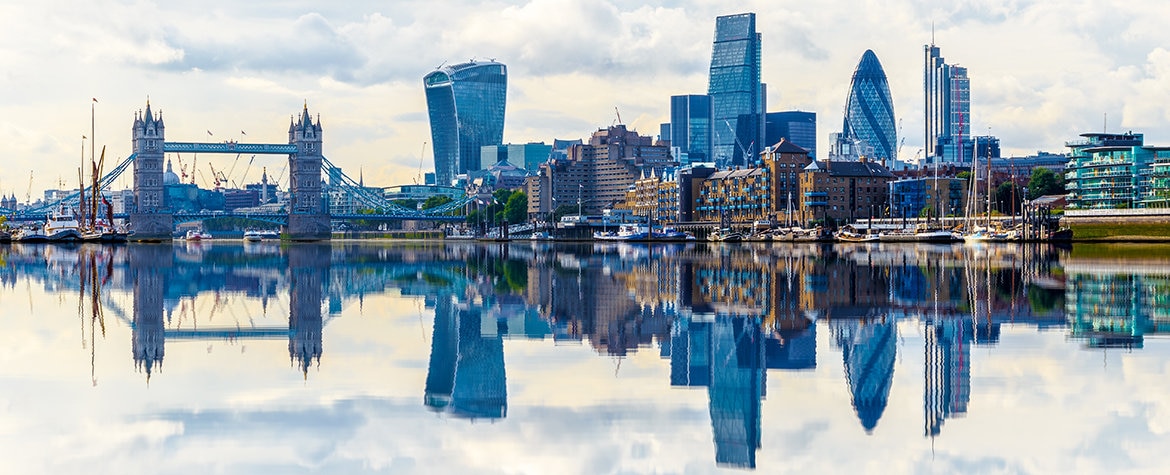
Its only course of action is a comprehensive trade deal not just with England but with London, or no deal.

As a no-deal will risk stripped London of their lucrative EU “passports” that allow them to sell services to the rest of the union it will have to join the single market or the European Economic Area that encapsulates the EU and non-members such as Norway. That will, in turn, requires accepting freedom of movement.

Or the City can go it alone and operate in a much looser regulatory environment.

Currently, London is the undisputed market leader in Euro – denominated derivatives, worth billions. It clears a whopping 972bn euro-worth of Euro-denominated contracts a day. Not to mention the employment it creates.

There are a number of potential scenarios, including that the current status quo prevails and the UK carries on trading with the EU under existing free movement principles. “That outcome is not beyond the realms of possibility,”

However, that means freedom of movement for goods, people and capital between the UK and EU will continue to operate. For millions of people who campaigned and voted for leaving the EU, this is will be difficult to accept.

By staying in the single market and customs union, the UK would be liable to EU rules and legislation regarding the free movement of goods, services and people across borders. Plus, it could put the UK in the dangerous position of still having to accept EU economic and political policy, while at the same time denying the UK a seat at the negotiating table.

Brexit damages both the EU and the UK. But the Brexit damage is greater to the UK.

Countries that have preferential trade deals with the EU but have not yet agreed to roll over those benefits for British exporters in the event of a “no-deal” Brexit. Still, more losses could come if Britain failed to conclude rollover deals with Vietnam and the MERCOSUR countries of Argentina, Brazil, Paraguay and Uruguay, which have recently signed trade agreements with the EU.

However, regions in Ireland face the most severe Brexit consequences, with potential economic exposure on par with the impact on regions of the U.K. that are currently most dependent on ties to the EU.

The UK could still end up being forced to comply with EU laws and regulations, as is the case with Norway and Iceland.

We are all looking at a disorderly world and you don’t have to be a blinkered horse to know that the digital age favours the fast and the small over the inflexible slow-moving bureaucratic.

The question should be “Will England be Part of Europe” instead of “Is England a Part of Europe“.

All human comments appreciated. All like clicks and abuse chucked in the bin.

← Back

Thank you for your response. ✨

THE BEADY EYE SAY’S. HERE IS NO SUCH THING AS EMPTY SPACE.

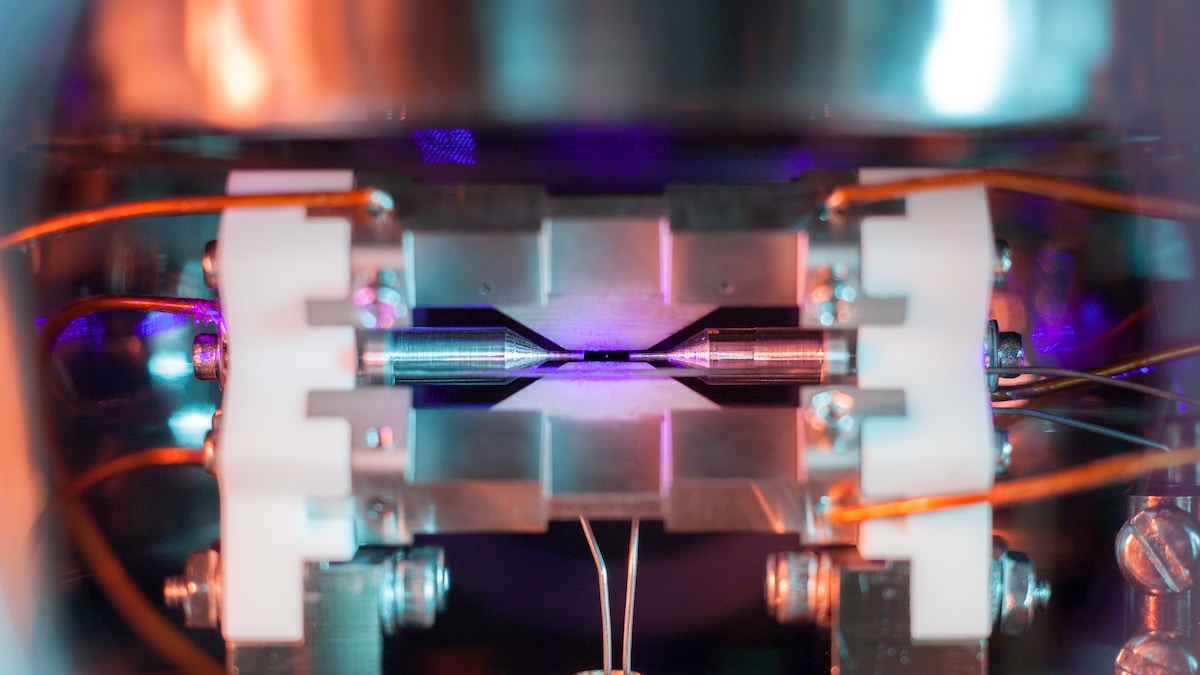
THEY SAY THAT THE FIRST ATOM WAS CREATED BY THE BIG BANG.Atom Photo - Science Photography by David Nadlinger

This photograph shows a single positively-charged strontium atom (An alkaline earth metal, strontium is a soft silver-white yellowish metallic element that is highly chemically reactive) suspended in an electric field between two metal electrodes.

What is amazing here is that we’re looking at is actually the particle emitting light.

To my feeble scientific mind, an electric field is a vector field that shows the direction that a positively charged particle will move when placed in the field.

Vector fields are useful for describing things that we cannot see, such as magnetic attraction and gravity but not time.

My feeble scientific mind again.

As it is impossible to create energy out of nothing (Energy can’t be created or destroyed) it had to be present or introduced before the big bang, therefore time had to have had a power that converted into light.

But there is no evidence for or against the universe having an infinitely long past.

Unfortunately, the Big bang cannot give any direct information about the actual origins of the universe. It only supplies evidence of the start of the expansion which is still visibly in progress because of its light “signature.”

If the universe is or was expanding, then the natural conclusion is that if you were to rewind the universe, you’d see that it must have begun in a tiny, dense clump of matter. A singularity a hypothetical moment in time. 

The problem with this line of thinking however, is that the theory of general relativity can’t describe what came before the singularity, which should exist at the point in time just before the Big Bang.

So what we see as time also started with the Big bang, so there is nothing before it.

There is nothing for the big bang to grab hold of in nothing, therefore the Big Bang was nothing blowing up.Big BangWhat is Cosmology?

The quandary is:

Nothing can create Something and Something cannot turn into Nothing. 

So, the universe is just time in an amagnetic field called space, (which is an absence of mass or vacuum) but it is not static because of time.

Space can’t move with respect to time—the time is time governing all existence however there isn’t in my mind even a common time in the entire universe.

Each universe comes with its own time.

A narrative that’s recreated after the event but does not have any boundary or edge as it is incapable of going backwards.

Even space-time itself is a product of the special early stage of the universe.

The ultimate origin of the arrow of time, which is the asymmetry of the world in time, is still a bit contentious.

Is time an emergent property or a fundamental property?

Enter Quantum Mechanics.

Even if you have empty space—no matter, no light—quantum mechanics says it cannot be truly empty.

blank space

Here is a picture of time.

Holt disagreed.

“Is that really nothing?” he asked.”There’s no space and there’s no time. But what about physical laws, what about mathematical entities? What about consciousness? All the things that are non-spatial and non-temporal.

“Charles Seife, author of “Zero: The Biography of a Dangerous Idea” (Penguin Books, 2000). He proposed starting with a set of numbers that included only the number zero, and then removing zero, leaving what’s called a null set. “It’s almost a Platonic nothing,” Seife said.

Ultimately, the definition of nothing may just be an ever-moving target, shifting with every scientific revolution as new insights show us what we thought was nothing is really something.

“Maybe nothing will never be resolved,” Tyson said.

But something is moving. “It has a topology, it has a shape, it’s a physical object.”

If there were a true “nothing”, no matter, no energy, no spacetime, then that nothing would be unstable and would begin generating matter, energy, and an expanding spacetime. This is the central thesis of books such as The Grand Design and A Universe From Nothing, which posits that the universe can be explained without reference to a supernatural creator deity.

Saying it was a god doesn’t help.

The same question exists, but now you add a whole new set about where the god came from.

The very first particles of light had to come from somewhere.

The fact is, it is not possible to know exactly what the initial light-source was. It came from in some hidden sector of the universe that we can’t see or touch.

Confused!

This is where it becomes even more than wired.

What time is it?

So if the universe shouldn’t exist, why is it here?

The creation of virtual particles. These are the tiny particles that leave even physicists drooling.

In the field of quantum mechanics, all fundamental forces are carried by particles.

The universe as being filled with a quantum fluid. This fluid might be composed of gravitons—hypothetical massless particles that mediate the force of gravity.Big Bang

For instance, light is made up of massless particles called photons that carry the electromagnetic force. Likewise, the graviton is the theoretical particle that would carry the force of gravity.

And so God created the universe by creating the quantum field, therefore, atheists have merely moved the question from who created matter, to who created the quantum field?

The fact remains something can not come from nothing.Faraday's Constant

Even the subatomic particle called the Higgs boson is the product of something.

It is a superpartner particle for all the currently known particles.

They are all involved in chemical bonding which needs a motion in the form of a vibration.

Where did this vibration come from?  Time.

Within the emptiness of this vibration, over time temperatures came into existence with one vibration rubbing up against another creating an electric field, in which magnetic forces are observable. As superpartner particles destroy each other, we get packets of pure energy or particles of light known as photons. A phonon is a quantity of energy found within a vibration.

There is nothing at all strange about the reality of light existing independent of the heavenly bodies.

So, in reality, it is quite beyond Empirical Science (i.e. observable by the scientific method) to claim that they can happen without space or time.

There doesn’t have to be a reason for things existing, nor is there any need for supernatural beings of any kind, Space, matter, energy and forces behave the way they do on their own.

Or is everything happening in your head, the world around you is in your brain?

It’s based upon data created by your sensory organs but it’s still just a sensory construct in your brain and you don’t see reality as it truly is.

First, the universe had to expand and cool down sufficiently for the matter to condense out of the energy following the rule E=mc^2 while the Quantum equation predicts the universe has no beginning it existed forever.

Quantum Matmatice now seems to tell us that it is possible to exist in two places at once.

The universe finally became cool enough for true matter to form; this was when the universe also became transparent, allowing photons to travel, which is what you and I are made of today…trillions of neutrinos stream through your body at any given moment.

So God is outside of time and space, outside the universe and does not have a beginning, but we know the universe has a beginning and will have an end.

Are we look for a new messiah in technology?

Does this mean that we will know the truth for sure?

Absolutely not.

Quantum mechanics can give you the probability to go from one state to another state, in a way that involves summing over possible intermediate states.

The probability sum which tells you the odds of starting with “nothing” and arriving at “a universe like the present”, is then something like a sum over all those possible universes that start at a point and expand to become like the universe we see.

The Big Bounce.

There might never have been such a thing as nothing.

If the environment were different, the probability is that we just wouldn’t be here.

If something falls into a black hole and is eventually squeezed to a singularity, what happens to the information it contained?

Without this information, the reality you see is an illusion. Time will tell.

All human comments appreciated. All like clicks and abuse chucked in the bin.


← Back

Thank you for your response. ✨

THE BEADY EYE CONGRATULATE’S. THE WARPED FIRST PAST THE POST IS THE WINNER IN THE GENERAL ELECTION IN ENGLAND.

Tags

, ,

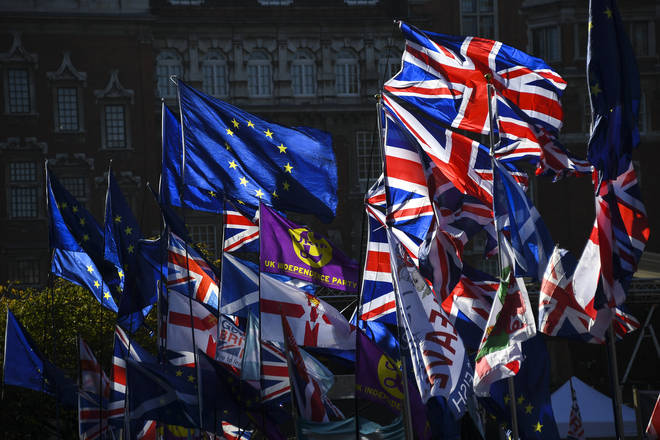
    (Five-minute read)  The outcome of today’s General Election has been decided by a system called first-past-the-post.The Brexit and anti-Brexit protests at the Houses of Parliament Some seventeen million voted for another referendum and fifteen million voted not to.  An irrefutable travesty of democracy.  In Britain’s electoral system, seats won at a general election are not shared out between the parties proportionally nationwide. There is no system of proportional representation for candidates who come second in each constituency. Instead, each one of the 650 constituencies is self-contained, meaning any vote not used to win a seat is, in effect, wasted. Even if millions of voters support the same party, if they are thinly spread out they may only get the largest number of votes in a couple of these contests. Tens of thousands of voters supporting the same party and living in the same area will end up with more MPs. This means the number of MPs a party has in parliament rarely matches their popularity with the public. As parties want to get as many MPs as possible, parties prioritise voters who might change their minds who live in swing seats. Parties design their manifestos to appeal to voters in swing seats, and spend the majority of their funds campaigning in them. As the number of MPs a party gets doesn’t match their level of support with the public, it can be hard for the public to hold the government to account. Many swing seats have two candidates where either could get elected. But some have more. The more candidates with a chance of getting elected the fewer votes the winner needs. Voters try to second-guess the results. If a voter thinks their favourite candidate can’t win, they may vote for one with the best chance of stopping a candidate they dislike from winning. There can never be one nation. First past the post allows the Nigel Farage’s of this world to manipulate the results as was shown in this election which handed Boris Johnson the victory by not fielding candidates in almost half of the districts. ( In the districts that they did contest, Brexit party candidates divided the pro-Brexit vote and thereby handed Labour some important seats. In some places, the Conservatives gained seats from Labour on modest swings, while the Brexit party got swings of more than 10%.) People who voted for the populist Brexit Party at the general election. They needn’t have bothered: Nigel Farage’s Brexit party won zero seats but took votes away from the Labour Party that could not support clearly the remain side of Brexit .Should we laugh or cry. This is the real tragedy. It’s too early to say what the consequences are going to be – Leave the EU, Yes. With or without a trade deal. Both possible. Brake up of the Union. Depending on the forthcoming results of Negotiations with the EU. A written constitution. Inevitable if there is ever to be one nation.  All human comments appreciated. All like clicks and abuse chucked in the bin.

← Back

Thank you for your response. ✨


THE BEADY EYE ASK’S. IS SOCIAL MEDIA BECOMING JUST A PHONY WAR.

Tags

, , , ,


(Twelve-minute read) 

Of course, it is being blamed for eroding trust, but trust isn’t something that can be immediately forged; it must be built over time.

Social Media, on one hand, has tremendous power for good but it also causes a breakdown of trust casting a negative net far and wide. 

The real power of Social Media is its decentralized nature.

Random stories, true or not, posted on Twitter, YouTube, Facebook, can achieve sudden popularity and notoriety by touching the minds and hearts, not just millions, but tens and hundreds of millions of people.

So is Social Media the perfect mechanism for spreading emotionally powerful messages designed to generate an epidemic of fear even when the content is totally and obviously false, who cares?

This is why dictatorships cannot tolerate Social Media. Autocratic governments can’t control the content or who receives it.

There is no easy fix.

The issues involved are complex.

In little more than a decade, the impact of social media has gone from being an entertaining extra to a fully integrated part of nearly every aspect of daily life for many.

Yet one thing is certain, developing trust is contingent upon authentic communication and algorithmic mechanical content has no authenticity.

They are destroying our ability to create and consume valuable content.

What qualifies as “valuable content” is, of course, subjective.

For a piece of content to qualify as valuable, it must be relevant.

Valuable content isn’t static. 

Content that isn’t useful isn’t valuable.

Doesn’t that sound like Social Media should support and enhance the idea of democracy, that more people will be exposed to more diverse news and therefore more intelligent overall?

Certainly, that is the idealistic view.

There is no centralized control to Social media so there are endless ways that your data is being mined on a regular basis to feed Artifical Intelligence algorithms that are conditioning consumers with algorithm content.

But does that actually happen?

The reading audience determines what’s considered valuable content.

Better education should lead to better opportunities for all people.

If the audience wants short-form content, platforms believe it’s their duty to give it to them.

  • Tweets are limited to 280 characters maximum.
  • Instagram Stories currently max out at 15 seconds, video posts at 60 seconds.
  • Snapchat Stories are capped at 60 seconds.

My question is why are these platforms not smacking the viewer over the head with hard-hitting messages that clearly states what the content is and where it comes from.

IE it has been posted by an unidentifiable source or individual it might encourage him or her to dig deeper.

Of course, you can use social media to give quick-hitting answers to burning questions while linking to long-form content.

Google’s algorithms work under the assumption that blog posts worth reading must contain at least 2,000 words.

Longform content tends to spread the message out, allowing the reader to become more and more emotionally invested over time.

In this environment, it’s no secret that short-form content is increasingly prevalent and popular.

how can we feel we have “independent thinking”?

Have we been herded into a collective bounded and defined by fear?

How is this a society that functions as a true democracy?

In fact, bad actors have an advantage because they are not constrained by legal, ethical or moral considerations. They can direct their money, knowledge, and power toward totally selfish goals.

From the perspective of a bad actor, Social Media, as a decentralized, “free” messaging channel, is actually the most powerful and cost-effective tool for manipulation they have ever had.

What do we do to change the direction of decline? 

How can we have rational discourse about our differences, to learn mutual respect?

How can we support more positive, life-affirming messaging? Regardless of the stories we tell, how can we commit to the narrative of Social Media as a means of increasing the state of well-being of society?

Each of us has a voice. Use it wisely!

The way that prominent social media platform companies, particularly Facebook, are currently operating and are financed is inherently undemocratic.

Facebook adds 500,000 new users every day, that’s 6 new profiles every second!

No other platform enables target groups to be so directly contacted and motivated towards interaction.

There are some 680 million Twitter users. 

The question is, are we at a point where the social media organizations and their activities should be regulated for the benefit of all.

Digital technologies have become pervasive.

Of course, many have begun to believe that the biggest challenge around the impact of social media may be the way it is changing society. The “attention-grabbing algorithms underlying social media… propel authoritarian practices that aim to sow confusion, ignorance, prejudice, and chaos, thereby facilitating manipulation and undermining accountability.

Facebook and Twitter and they’re like maybe gone in 10 years, but there will be something else.

Do we want to try to put the genie back in the bottle? Can we? Does social media definitely have a future?

Social connections are fabrics of society. 

All human comments appreciated. All like clicks and abuse chucked in the bin.

← Back

Thank you for your response. ✨


THE BEADY EYE SAY’S; WE CANNOT TRUST TECHNOLOGY TO COME TO THE RESCUE.

Tags

, , , , , , ,


( A Crucial twenty-minute read)

Climate change is accelerating and we know that it is the world’s greatest collective action problem.

The global climate is probably the most complex of all complex systems to which humans belong.

It’s more than a quarter of a century since the leaders of the world, gathered in Rio de Janeiro in 1992, committed their countries to avoiding “dangerous anthropogenic interference in the climate system” by signing the UN convention on climate change.

Climate protesters prior to the COP23 talks in Bonn, Germany

We know we have to tackle climate change –as do the politicians.

We know that it’s rational for an individual country not to drastically reduce greenhouse gases, given most economies are heavily based on energy resources that emit them.

Yet, if all nations act that way — indeed, that’s what’s happening — most countries will eventually be worse off due to the cumulative impacts of all our emissions.

Put another way, what’s better for each individual country in isolation is actually worse for the planet as a whole. Conversely, what is worse for each individual country, overtime would be better for the planet.

Unlike other policies, climate change is cumulative.

We know that climate summits highlight the science, but achieve little or nothing-

The First World Climate Conference was held on 12–23 February 1979 in Geneva as was the second the third.

Here is the list

Contents

1995:  Berlin, Germany

1996:  Geneva, Switzerland

1997: Kyoto, Japan

1998: Buenos Aires, Argentina

1999: Bonn, Germany

2000: The Hague, Netherlands

2001: Bonn, Germany

2001: Marrakech, Morocco

2002: New Delhi, India

2003: Milan, Italy

2004: Buenos Aires, Argentina

2005: Montreal, Canada

2006: Nairobi, Kenya

2007: Bali, Indonesia

2008: Poznań, Poland

2009: Copenhagen, Denmark

2010: Cancún, Mexico

2011: Durban, South Africa

2012: Doha, Qatar

2013: Warsaw, Poland

2014: Lima, Peru

2015: Paris, France

2016: Marrakech, Morocco

2017:  Bonn, Germany

2018: Katowice, Poland

2019: Bonn, Germany

2019: Madrid, Spain

A lot of talking while the ice melts, our lands burn, and our oceans rise and our Co2 emissions are traded on an Ecosystem Marketplace’s – Carbon offsetting- Cardon Cap and trade systems.

The longer we wait to address it, the bigger the problem it becomes and the harder it gets to solve, fueling a feedback loop that makes solutions ever more difficult.

Imagine getting taxed before you put that money into your fund and then not living long enough to reap the payoffs of your fund.

That’s happening with climate change, on a global scale.

However, we must realize that climate is a much broader, systemic problem that can not be tackled solely by making how important our everyday choices are.

We know that behind the energy and climate change hypocrisy is in all of us.

You’re a hypocrite for advocating on climate change while using fossil fuels.

Such arguments are shallow because virtually everyone depends on these fuels somehow.

Trying to make people feel guilty for their carbon-intensive activities doesn’t actually get them to change their behaviour.

Nobody wants to change unless they really, really have to.

We know that transforming endemic corporate behaviours that are devastating the planet requires whole industries to move together, and fast.

We need bold, industry-wide coalitions for change.

We need to bring industry leaders together to agree on reforms to the parts of the business that are irrelevant to customers but of grave importance for our environment.

However business cannot tackle climate change on its own and we don’t have time to wait for individual companies to each go on their own sustainability journeys.

We know that enacting policies today to cut greenhouse gas emissions won’t have a discernible impact on global warming for decades, if not centuries.

We know that investors are in effect expecting returns on assets in companies that eventually must be written off for the planet to be safe.

The private sector can either destroy the planet or replenish it.

We know what needs to be done.

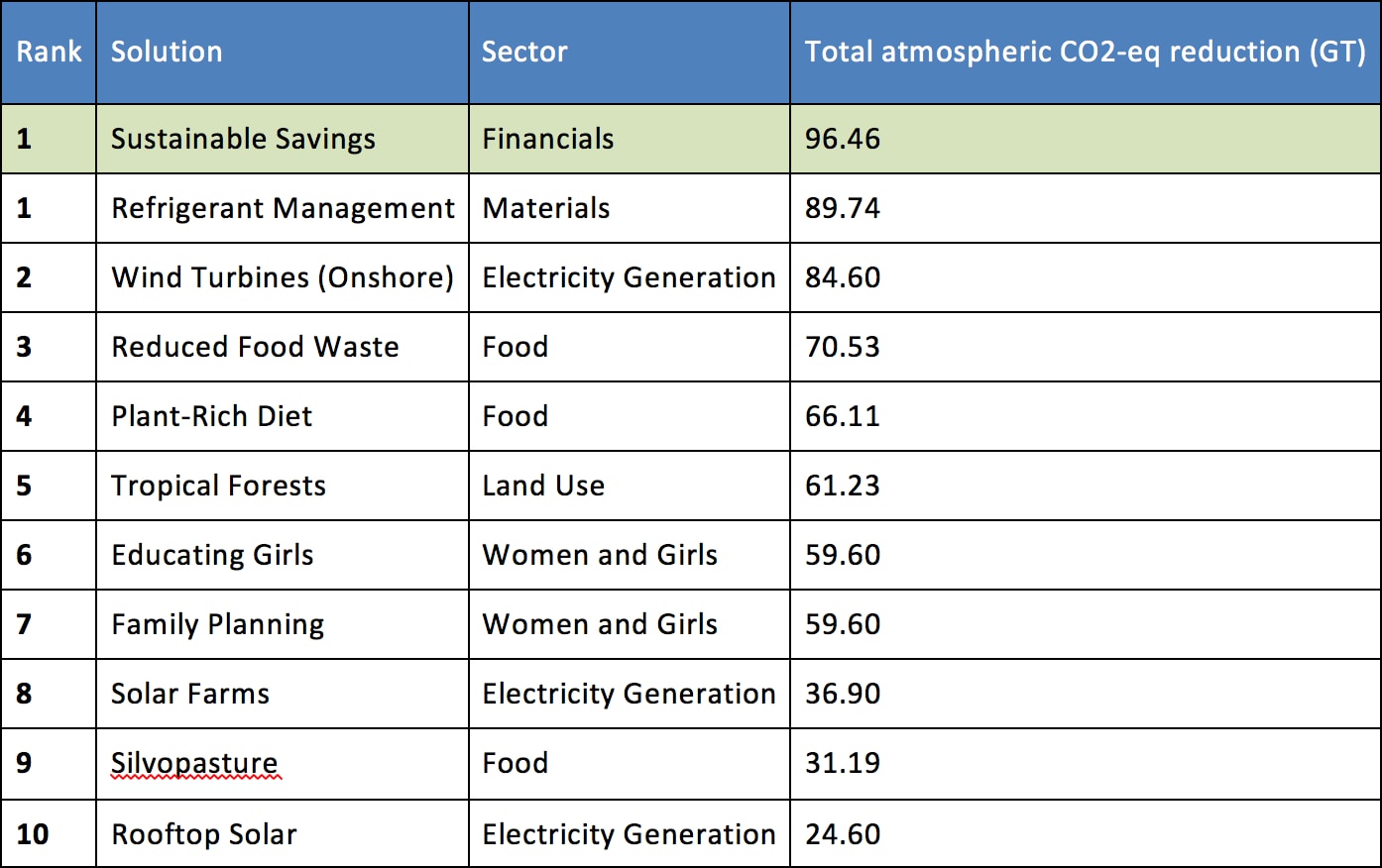
This means that sustainable savings are the number one solution to climate change and the effects are larger than rooftop solar, solar farms, afforestation and electric vehicles combined.

To do this is laying down a clear challenge.

But unfortunately, not all carbon footprints are created equally.

This makes it a tough sell and begs the question to what degree people are willingly taking concrete steps to lower their lifestyle’s impact on climate change, or why people are not.

The why not, is because for most people it’s still intangible and not well understood even considered a Hoax because of Fake news’ or ‘inconvenient truth that there is no problem and hope that it disappears by itself.

The willingness is rhetoric like flight shaming which is near the top of the list of hypocrisy charges.

No press release can obscure the fact that time is not on our side.

We need to cap our carbon emissions now not in ten years.

Increasingly missing from this picture above is the support of governments that operate on 2- to 6-year election cycles.

Technology is bringing down the price of switching to green alternatives, not least renewable energy. So what is stopping governments from making these technologies available with affordable Green Grants to one and all Now?

With most countries more engrossed by their internal domestic political squabbles the reasons are political or financial, not scientific.

The science isn’t that difficult to explain but instead of explanations we are presented with statements of facts with an only simple explanation and no real substance, CO2 is like a blanket.

A Chinese man wears a mask to guard against air pollution in Beijing. Much of Eastern and Central China is regularly blanketed by a thick smog caused by coal power plants and industrial production, both of which fuel global warming and climate change, direct results of consumer culture.

Yet there is a troubling gap between the serious reality depicted by climate change science and the level of concern among all of us.

Worry and action are two different things.

Climate change is a direct consequence of the widespread, now globalized, mass production and consumption of goods, and of the material construction of our habitat that has accompanied it. Yet, despite this reality, production and construction continue unabated.

If we believed that a systemic response to climate change was an equally shared responsibility, was our responsibility, we would be responding to it.

Until we do that, we’re all climate change deniers.

( See Post – suggestion a World Aid commission of 0.05% )

All human comments appreciated. All like clicks and abuse chucked in the bin.

← Back

Thank you for your response. ✨


There are no right or wrong answers, just your insights.


THE BEADY EYE ASK’S: Thinking ahead to 5 years from now, do you think Britain’s decision to leave the EU will have had a positive or negative impact on the UK?

Tags

, , , ,


(Seven-minute read)

Of course, as with all hypothetical questions, there is no correct answer.

Whether it will be a liberal One Nation Tory party, ongoing coalition governments or the Labour party that will be the political beneficiary is not yet sure.

However, looking at the present state of England against the problems facing the world one would have to say the horizon is far from looking bright.

The longer-term questions about the UK’s relationship with the EU will still need to be addressed no matter what the result of the current general election.

This very question itself will pale in comparison to the coming nexus environmental and energy problems facing us all.

Even if one was to ignore climate change it is truly impossible to overstate the havoc—financial, social, cultural—that could be brought about by peak oil if sufficient renewable energy is not in place to make up for declines in fossil fuels.

By the middle of the next decade or so, we will either all be starving, and fighting wars over resources, or our global food supply will have changed radically.

The bitter reality is that it will probably be a mixture of both.

The one thing we can be sure of is this:

No matter how wacky the predictions we make today, they will look tame in the strange light of the future. From the web to wildlife, the economy to nanotechnology, politics to sport, will see technological change on an astonishing scale.

All this assumes that environmental catastrophe doesn’t drive us into caves.

With over 60% of global GDP will be digitized by 2022 it is a total waste of time for countries such as the UK to attempted to pull up the drawbridge, to increase national production and reducing reliance on imports. These world-changing technologies are already creating more interconnected, interdependent and rapid business networks.

How far beggar-my-neighbour competitive devaluations and protection will develop due to a hard Brexit is hard to predict, but protectionist trends are there for all to see.

The question is, will Britain outside the EU be a more global, more deregulated, more free-trading country five years from now.

Presently nearly half of the UK’s total trade is with EU countries.

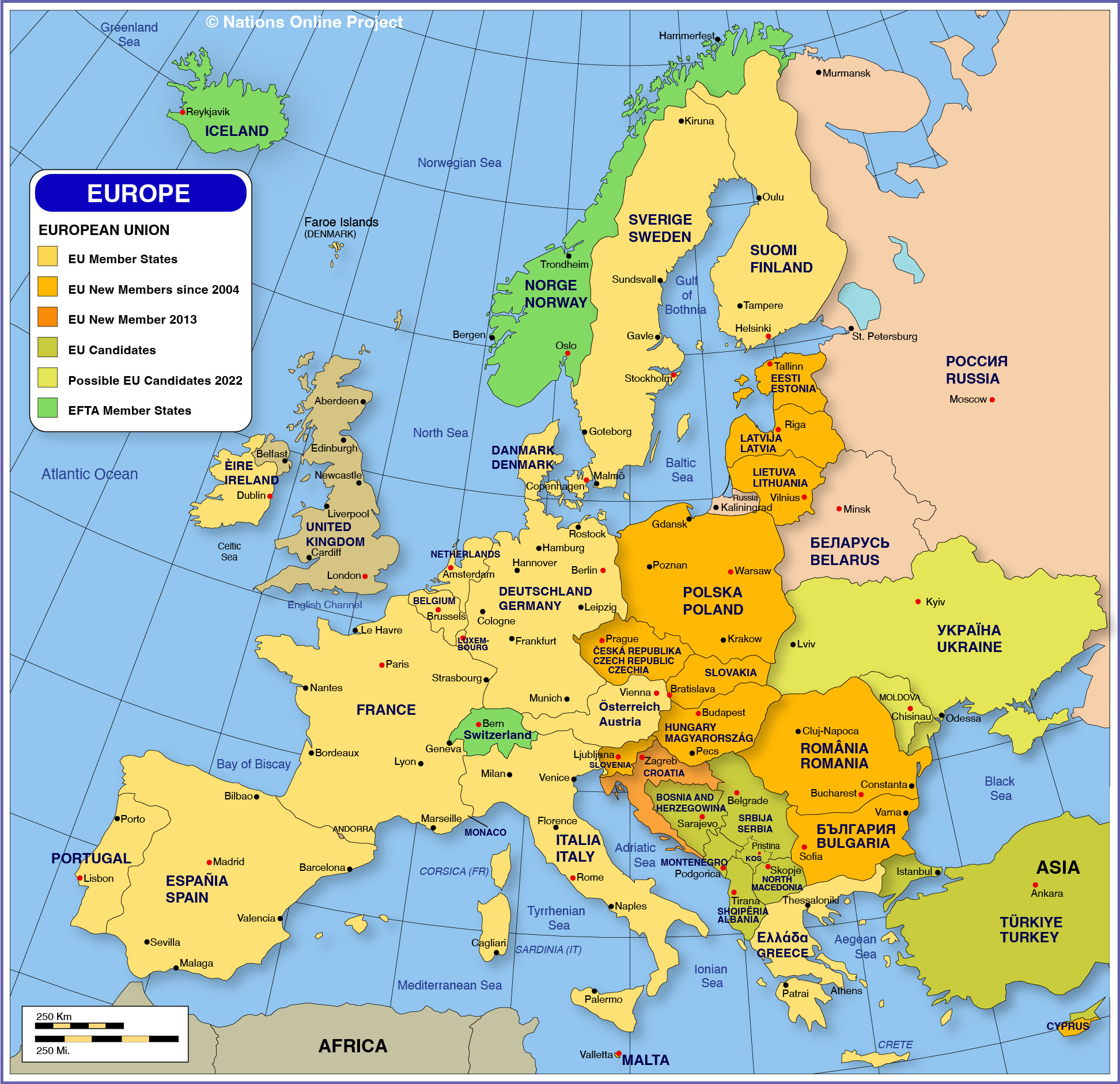
Leaving the biggest free trade area with over 500 million consumers won’t be cheap no matter what the divorce bill is. The EU has 53 trade deals worldwide the UK has zero. Political Map of Europe

The consequent rebalancing of the British economy will therefore take years and more than likely create a food underclass.

WHY?

Because it is as yet unclear when the UK will have the legal authority to begin negotiations; when the UK will leave the EU customs union; and what the trade arrangements between the UK and the EU will be after that point.

It is therefore difficult to see how third countries could engage seriously with the UK until these decisions have been taken. In addition, there are significant obstacles to meaningful trade deals with most of the countries.

The world will be more complicated even if these projections assume an orderly exit from the EU.

Only when we stand together can we secure our prosperity in a competitive world as the distinction between the country, town, will blur, with Artifical intelligence not to mention sea levels rising.

Why?

Because if I’d been writing this five years ago, it would have been all about technology: the internet, the fragmentation of media, mobile phones, social tools allowing consumers to regain power at the expense of corporations, all that sort of stuff but artificial intelligence is proving itself an unexpectedly difficult problem.

To describe EXACTLY what they will be doing in 1,820 days never mind that a second financial crisis in the 2010s – probably sooner than later – that will prove not just to be the remaking of Britain but the whole of the EU.

All human comments appreciated. All like clicks and abuse chucked in the bin.

← Back

Thank you for your response. ✨


THE BEADY EYE SAY’S. MACRON IS RIGHT. NATO IS BRAIN DEAD AND SHOULD BE DISBANDED

Tags

, ,


(Fifteen-minute read)

With NATO future once again up for grabs, it celebrated its 70th anniversary on Wednesday’s with a meeting of all its leaders. 

What is NATO Celebrating when actually, NATO is a vehicle for the US-led use of force in the interests of powerful corporations, accelerating militarization, by-passing the United Nations and the established system of international law, while escalating military spending.

Fifteen years ago, Nato’s existential challenge was how to cope with the demise of its old enemy: the USSR.

No alliance in history had outlived the disappearance of the threat against which it was formed.

So NATO today exists to manage the risks created by its existence.

 It has reinvented its self five times.  

In Bosnia (1995) and in Kosovo (1999), 9/11, Afghanistan to Iraq, the alliance as a whole was called into service to stabilise the former while the US military focused on the latter. 

The third future for NATO was devised in the mid-1990s, with membership expanded to former members of the Warsaw Pact. This process, conducted in the name of a Europe “whole and free,” saw the alliance progressively advance to Russia’s borders.

In 2011, the alliance engaged in a renewed experiment with humanitarian intervention  “Operation Unified Protector” in Libya. The spillover from this mission destabilized much of North Africa and the Sahel, galvanized radical Islamists from Nigeria to Syria, and precipitated Libya into a still-ongoing civil war.

Then Putin by annexing Crimea and intervening militarily in Ukraine offered yet another, possibly its sixth, post-Cold War “future,” returning to its original role as a security trip-wire in Europe.

Unfortunately, this sixth “future” for NATO is that the Europeans have been developing their own “autonomous” security project, the Common Security and Defence Policy.  

This has created a strong case for progressive US disengagement from NATO.

NATO’s status has become a major geostrategic conundrum. Europe does not need two rival security entities in its relatively limited geographic space.

Defining exactly “What is Nato for?” has been a problem ever since the end of the Cold war.

Nato now sells itself as a broad security alliance, a force for stability in Europe, as well as a toolbox of highly trained forces, ready for new challenges.

The irony is that 15 years on, with former Soviet client states like Ukraine, Romania and Georgia all electing pro-Western leaders, it is once again relations with Moscow that could prove the most important and the most problematic.

So what did it agree to at this summit? 

The officials have agreed to:

  • Strengthen NATO’s new command structure by more than 1,200 personnel.
  • Launch a NATO Readiness Initiative, the so-called Four Thirties.
  • Set up a Cyber Operations Centre, as part of the new Command Structure, and integrate sovereign cyber effects into alliance operations and missions.
  • Also, the meeting discussed concerns re space warfare and a new policy toward China. We must never shy away from discussing new realities – particularly Nato’s response to emerging threats like hybrid warfare and disruptive technologies, including space and cyber.

Trump said, “We’d be in World War Three if it weren’t for me”” If all NATO members had spent just 2 per cent of their GDP on defence last year, we would have had another $119 billion for our collective defence and for the financing of additional NATO reserves.” 

Boris said, “The fact that we live in peace today demonstrates the power of the simple proposition at the heart of this alliance: that for as long as we stand together, no-one can hope to defeat us, and therefore no-one will start a war.”

Macron made a valid point, he said: ” Nato is brian dead.”

President Recep Tayyip Erdogan of Turkey has already upset NATO allies by purchasing a sophisticated Russian antiaircraft missile system, the S-400. He is now threatening to oppose NATO’s plans to fortify the defence of Poland and the Baltic countries if the alliance does not join him in labelling some Kurdish groups as terrorists.

I say ” It is not just brain dead its political thinking is out of date.”

NATO has carried out wars, aerial bombardments and armed drone operations in Iraq, Afghanistan and Libya to change regimes, but these countries are now in chaos with thousands slaughtered and many more made homeless and destitute with little help for their well-being.

It’s no longer East v West, nor is it starting bombing before you started thinking- Iraq Afghanistan.

No military operations were conducted by NATO during the Cold War. 

Instead of allocating 2% of 28 countries GDP on “obsolete,” military spending, in order to play cowboys and Indians.

In fact, only five of the 28 NATO allies have made the grade: Aside from the U.S., the other four were Greece (2.36 per cent in 2016, amounting to $4.6 billion), Estonia (2.18 per cent, $503 million), Britain (2.17 per cent, $56.8 billion) and Poland (2.01 per cent, $12.7 billion).

As the French philosopher and essayist Paul Valéry noted in 1937, “the trouble with our times is that the future is not what it used to be.

Who is the enemy today?

The visible enemy is Climate Change, the non-visible, weaponized algorithm-driven drones. 

If NATO is still needed in 10 years, it will have failed in its mission.

NATO can declare “mission accomplished” when Europeans become entirely self-reliant in security terms. 

There remains an urgent need to address the root causes of terrorism.

What has Nato contributed to this problem  It, in fact, spent $1.23 billion, on new headquarters. ( Dedicated on 25 May 2017.)

Military spending of the NATO countries from 2017 to 2019

(in million U.S. dollars)

20172 2017* 2018*
Albania 144 176 198
Belgium 4,431 4,840 4,921
Bulgaria** 723 961 1,079
Croatia 924 1,045 1,072
Czech Republic 2,255 2,746 2,969
Denmark 3,780 4,559 4,760
Estonia 540 607 669
France 46,036 50,459 50,659
Germany 45,580 49,473 54,113
Greece 4,748 4,853 4,844
Hungary 1,468 1,791 2,080
Italy 23,852 25,004 24,482
Latvia 530 701 724
Lithuania 816 1,056 1,084
Luxembourg 325 373 391
Montenegro 66 84 92
Netherlands 9,622 11,115 12,419
Norway 6,463 7,067 7,179
Poland 9,938 11,856 11,971
Portugal 2,702 3,220 3,358
Romania 3,643 4,359 5,043
Slovak Republic 1,053 1,297 1,905
Slovenia 476 550 581
Spain 11,864 13,186 13,156
Turkey 12,972 14,145 13,919
United Kingdom 55,672 60,446 60,376
Canada 23,704 22,068 21,885
United States 642,936 672,255 730,149


Donald Trump and Boris Johnson shake hands

All human comments appreciated. All like clicks and abuse chucked in the bin.

← Back

Thank you for your response. ✨


THE BEADY EYE SAY’S: JUST IN CASE YOU DON,T KNOW WHY THE UK IS HAVING AN ELECTION.


( A twenty-minute read before you vote)

This post is COMPLEMENTS to a list compiled by MATT TURNBULL.

His list may shock you, but it does not shock me as there is plenty of evidence of a deeper problem. in the UK. His list, in fact, confirms that the referendum to leave the EU has little to do with with the Eu in the first place.

Anyway, before we see England elect the mother of all hung parliaments.

No amount of lever pulling, within the current paradigm, will get England anywhere but back to where it was. England has hocked most of the economy to save a broken and out of date system of governance.

Even before approaching the management of its miserable plight it needs a written constitution.

It is clear to me there are two big things happening in the world:

A tech revolution that started with the internet, but has now spread to everything from materials science to medicine to robotics; and a green revolution, that started with carbon reduction and is now changing the way people run businesses and live their lives.

Bigger structural changes on the horizon because society as a whole has barely yet to recognise the symptoms of climate change.

We are the only species that ROUTINELY overrule natural imperatives.

The tragedy of Brexit in waiting is that the process may be irreversible while it sheds the need to playing world superpower and gain a modest outlook on its position in a world of change.

It needs to create its own value and reinvest that value not in isolation but within the European community to which it belongs.

In fairness to MATT TURNBULL (I have added below the top motivations of the leave vote) which he will be sharing every day until 12th December supported by his headline comment.

“Nothing else really explains it better. Ignore the bluff, the lies, the spin, the opinion and the outright ridiculous and stick to the facts. This is where we are. Do we let it continue?”

Here is his list: 2010-2019, in case you missed it…

1,000 sure start centres closed.
780 libraries closed.
700 football pitches closed.
Foodbank use up 2,400%.
Homelessness up 1,000%.
Rough sleeping up 1,200%
Bedroom tax caused mass evictions.
Evictions are running at record highs.
35% of U.K. kids live in poverty.
Student fees up 300%.
Student debt has risen by 150%.
Eradication of EMA (education maintenance allowance).
The national debt has risen from £850billion to £2.25trillion.
Emergency Brexit stimulus from BoE in June 2016 of £175b.
Brexit related fall in national revenue of £500b.
GDP has fallen to -0.1%.
GBP fell by circa 15% versus EUR and USD.
Manufacturing in recession.
Construction in recession.
Services close to recession.
25-30% cuts to all govt departments.
25-30% cuts to all councils, mainly centred on Labour councils.
Half of the councils facing effective bankruptcy.
185k extra deaths attached to the political ideology of austerity.
25,000 less police.
20,000 fewer prison officers.
10,000 fewer border officials.
10,000 fewer firefighters.
10,000 less medical professionals.
25,000 fewer bed spaces for mental illness.
OECD calculate 3 million hidden unemployed, the rate is really 13%.
Creation of 1.3m jobs, mainly temporary, the self-employed, gig economy and ZHC.
Only 30k full-time work positions created.
Close on 50% of workers are self-employed, ZHC, or part-time precariat.
80% of the 5.3 million self-employed live below the poverty line.
35% of self-employed only earn £100 a month.
25% cuts for our disabled community.
80% cuts to Mobility allowance.
Closing Remploy.
40% of working households have practically no savings.
70% of households have less than 10k savings.
60% of households can only survive 2 months without a wage.
Household debt reaches a new peak, despite emergency base rates.
Increase of 50% in hate crimes.
Increase of knife crime by 150% to 22,000 per year.
Increase in teenage suicide by 70%.
Suicide up 12% in the year 2018.
Self-harm among young women up 70%.
Life expectancy down 3 years.
NHS satisfaction level at lowest recorded rate.
Council home building down 90%.
200k social homes lost since 2010.
Zero starter homes built, despite Tory flagship programme.
Council home building down 90%.
200k social homes lost since 2010.
One million families on council home waiting list.
100,000 increase on the council home waiting list since 2010.
36,000 teachers have left the profession.

….. and we now have MORE BILLIONAIRES IN THE UK THAN EVER BEFORE!!!!

Why England should leave the EU.

Brexit, in all scenarios, means a departure from the Common Agricultural Policy (CAP) and its subsidy and regulatory regime.

The UK will be obtaining exclusive national fishing rights over its Exclusive Economic Zone (EEZ) up to 200 miles from the coast.

Depending on the terms of Brexit, it may be easier for future UK governments to change environmental standards.

It is uncertain how Brexit will affect UK energy policy.

It is far too early to say what impact Brexit will have on aviation, shipping, public transport including rail and bus, and road haulage.

The UK already maintains its own border controls. It is not part of the internal border-free Schengen Area, so free movement is a myth. Entitlement to welfare benefits for people moving between the EU Member States is closely linked to free movement rights.

The UK currently has an opt-out arrangement with the EU on policing and criminal justice measures, whereby it can choose which measures to opt in to.

A UK withdrawal from the EU would mean that the UK no longer has to comply with the human rights obligations of the EU Treaties.

Reciprocal access to healthcare through the European Health Insurance Card could be jeopardised.

Brexit could mean the Government will not have to provide student loans or maintenance funding for EU students, which would save money.

Consumer protection in the UK is currently a complex combination of EU and national law. A huge amount of UK consumer protection regulation is derived from the EU.

Foreign and defence policy; Acting through the EU means a larger aid budget, the promise of access to the largest consumer market in the world and a louder political voice. All of these can be significant ‘soft power’ tools in the pursuit of European interests. If the UK no longer co-ordinates its policy with the Member States, it will lose access to these shared tools.

International development; The UK channels funds for development cooperation and humanitarian aid through two budget lines, both of them managed by the European Commission:

The devolved legislatures: With Brexit, there could be further policy and legislative divergence in areas of devolved competence, as the UK Government and Devolved Administrations will no longer be required to implement the common requirements of EU Directives.

AND:

The EU threatens British sovereignty.

The EU is strangling the UK in burdensome regulations.

The EU entrenches corporate interests and prevents radical reforms.

The EU was a good idea, but the euro is a disaster.

The EU allows too many immigrants.

The UK could have a more rational immigration system outside the EU

The UK could keep the money it currently sends to the EU.

All human comments appreciated. All like clicks and abuse chucked in the bin.

← Back

Thank you for your response. ✨

THE BEADY EYE SAY’S: ARE GOVERNMENTS BECOMING OBSOLETE.

Tags

, , , , , , , , , ,


(Twenty-minute read)

In terms of almost everything, no one can be sure what the next fifty years will hold nor can anyone be sure just what a government will be doing fifty years from now, never mind next year.

As history has repeatedly shown, political systems come and go.

Given our rapid technological and social advances, (a trend we can expect to continue) we will be looking at many different possible futures because there is a new kind of creature that has entered the world.

When we change the way we communicate, in today’s increasingly interconnected world we change society, creating entirely new systems of thought to deal with complex issues like climate change, and by whom/what and how we are governed.  

We are in the throes of the digital age with all of its unknown consequences and it along with Climate Change is ushering in a new phase of the world. Perhaps we are looking at democracy being replaced by Cyberocracy. (Computer(s) make the decisions.)

A precise definition of cyberocracy is not possible at present as it is still hypothetical in form, but it may bring a new emphasis on ‘soft’ symbolic, cultural, and psychological dimensions of policymaking and public opinion.

It will be however a product of the information revolution and it may place a premium on gaining information from any source, public or private, radically affect who rules, how and why.

(That is, information and its control will become a dominant source of power, as a natural next step in political evolution.)

In essence, a smartphone could show us how and can train us in the latest developments to increase effectivity, while making sure a human or a group of people are not directly interacting with the information.

In theory a great idea for efficiency but in practice, those in charge will probably use the information to crush dissent and sell the information off to private companies.

Ideally, the point of cyberocracy would be to ultimately overcome the faults that lie in typical bureaucratic systems, effectively creating an artificially intelligent head of state.

Luckily there is a pitfall, in that the control of all gathered information would then ultimately lie in the proverbial hands of a machine, wherein true humanity becomes lost to the legislative and governmental processes.

The consequence of the information revolution may thus mean “greater inequalities. speeding the collapse of closed societies and favouring the spread of open ones.

Algorithms are already undermining the power base of old monarchies and governments, and these same technologies will subsequently “turned into tools of propaganda, surveillance, and subjugation that enabled dictators to seize power and develop totalitarian regimes.

New modes of multiorganizational collaboration are taking shape, and progress toward networked governance is occurring to enable hybrid systems to take the form that do not fit standard distinctions between democracy and totalitarianism.

A double-edged sword that revolves around symbolic politics and media savvy with governments straining to adapt.

For example vast new sensory apparatuses for watching what is happening in societies and around the world. Of all the uses to which the new technologies are being put, this may become one of the most important for the future of the state and its relationship to society.

Each generation must address its own challenges even though it is not yet clear which future will emerge with the current climate crisis.

Policy problems have become so complex and intractable, crossing so many jurisdictions and involving so many actors, that governments should evolve beyond the traditional bureaucratic model of the state.

Only time will tell.

We now have communications tools that are flexible enough to match our social capabilities, and we are witnessing the rise of new ways of coordination activities that take advantage of that change.

Setting priorities among government’s current endeavours need to  involve at least four decisions:

Which endeavours should be continued or stopped; Which are most important; Which are the government’s greatest responsibility; and which should have the highest priority?

Back to the present with climate change.

There is one thing for certain that with climate change there will be tragedies not yet imagined. It will drive people into compact groups and we know that if a group of humans get together without some sort of organised leadership they end up killing each other.

So for the good of all humankind, in fact, all life on earth and the earth itself, we need to push ahead in this area. Or else go back to pre-industrial times and abandon modern life as we know it. Staying the course we are on will lead only to ruin.

Government’s greatest priorities of the next fifty years can be found in their greatest disappointments of the past.

My point is, the government doesn’t remind us of the good things in life, not often. When it works, we barely notice, but when things go wrong, the glaring deficiencies of the system present themselves everywhere.

As a result, the Government used to be for the lack of a better word the parent of the group/ nation hated some days and loved other days.

Should they now be limited to the implementation of certain social norms desirable for holding the structure of society in place?

I want to see some politicians with the forethought and imagination to understand this.

That’s because I need to be reminded of what I’m living for, not an Algorithm of everything, not a government elected on lies, false news, predictive algorithms which is a two-way relationship manipulated by social media platforms, owned by monopolies that are no longer trusted by the citizens they represent.

Without knowing how decisions are taken or who the decision-makers are, and without knowing how decisions are implemented or to what end, citizens feel undervalued and disenfranchised.  They do not believe that the government is listening to their concerns.

So where are we?

The freedom that we see emerging from the networked environment allows people to reach across national or social boundaries, across space and political division. It allows people to solve problems together in new associations that are outside the boundaries of formal, legal-political association like governments. 

If the past is prologue, however, the government will continue to the extent that a society is measured by what it asks its government to do.

Sure the information revolution will foster more open and closed systems; more decentralization and centralization; more inclusionary and exclusionary communities; more privacy and surveillance; more freedom and authority; more democracy and new forms of totalitarianism.

Yet setting priorities is not just about addressing past failures. It is also about protecting past achievements.

To solve the problems and understand the role and limitations of government, will require a new way of thinking and working and a new level of trust and understanding of people.

The revolution in global communications thus forces all nations to reconsider traditional ways of thinking about national sovereignty.

A longer view of history provides little assurance that the new technology favours democracy.

Firstly, governments must be seen as capable and effective in carrying out their activities. Secondly, the government must be seen as treating all people equally and impartially, without favouritism or discrimination.

And thirdly, the dimension of human concern and personal connectedness: government must be seen to be sincerely caring about each person’s welfare.

Digital is offering a great way to respond to this at a service level but is only part of the answer when it comes to mending and building relationships with people.

Even in the best of times, delivery is hard for governments: objectives are not always clear; they change in response to events or leadership transitions.

An endeavour cannot be a top priority, or a priority of any kind if it is not worth pursuing at all. The term “greatest” does not mean either “most successful,” or “most important,” or even “most appropriate.” Rather, the greatest endeavours of the present are the ones in which the government has made the greatest investment.

This fact base speaks for itself.

The first step, then, is to choose three to six priority outcomes—any more will be too many. They can’t all be equally important.

These priorities must be written into the constitution of a nation so they cannot be tampered with.

And establishing the right metric for each priority to ensure it does not yield unintended, negative consequences must be set by citizens assemblies rather than relying on leaders political instincts.

People must feel ownership of the plan by agreeing on criteria for continuation funding.

Communicating is only the beginning.

Stakeholders must be engaged all the way through to delivery of the promised outcomes. Accountability is established,outcome-based budgeting, so that funding is directly linked to and contingent on the delivery of key outcomes.

This, as we know, is notoriously difficult to pull off in a world of silos, disparate agendas, and competition for funding. But a small number of priorities will go a long way toward securing the support required.

Government achievement ebbs and flows with changing economic, social, and political circumstances, with the mere passage of time.

The worst form of government is the tyrannical form, where all power is with one man, a leader who rises from the chaos of democracy, thirsting for power but not having the wisdom or learning to use it wisely.

With the issue of government Citizens, bonds targeting citizens funding will resolve this problem. They could unite as a human race and get our priorities in check so we can find out what’s really out there and perhaps where we really came from.

Their performance should be measured against agreed international benchmarks a portfolio of targets at varying levels of ambition.

Who would set the levels?

The U.N. is essentially an incredibly weak confederacy it should be disbanded, and a new, better UN made, with a written Constitution. All member countries hereby agree to uphold and abide by all constitutional clauses upon entry to the United Nations and any violation of any of the several clauses herein will be punished with the full force of each member state.

And finally, here are a few endeavours.

Reduce Carbon emissions.

Continue reducing nuclear weapons.

Reduce discrimination, pollution, poverty, and inequality.

Expand health care.

Devolve digitally responsibility to promote and protect democracy with the right to vote by electronic voting.

Create a Digital government performance platform.

As to which type of government is the best for mankind, well, if only we had the answer to that…Hierarchy does not end. 

All human comments appreciated. All like clicks and abuse chucked in the bin.

← Back

Thank you for your response. ✨


THE BEADY EYE ASK’S: ARE WE BECOMING A NON READING SOCIETY.?

Tags

, , , , , , ,


(Twenty-minute read)

I watching a TV programme the other night and during the Ads I overheard a promotion by you know who promoting the iPad as the new pacifier for babies and toddlers.

Unbeknownst to most of us, an invisible, game-changing transformation links everyone in this picture: The neuronal circuit that underlies the brain’s ability to read is subtly, rapidly changing – a change with implications for everyone from the pre-reading toddler to the expert adult.

Is technology makes us weaker socially, physically, and mentally lazier?

Is the digital age making our minds weaker and deep thinking impossible?

How many hours do you spend hopelessly scrolling on the internet?

There is not a handful of societies that are, slowly and painfully, evolving institutions and behaviours that allow people to escape these ills on a broad front and if we continue to rely on technology, we will reverse all the progress we have worked so hard to achieve.

The answer to the above is in how we use technology by understanding all of the ethical implications technology can have- the ethical dilemmas of automation and surveillance are only beginning to surface.

Across the free world, the rise of populism and the decline of open debate is stressing our traditional democratic and societal institutions.

With every new release of technology, we become less physically active and more reliant on a screen, fearing that one day we will be the space humans in Wall-E who hover around on chairs, the epitome of laziness.

So anyone hoping to improve their mind both psychologically and cognitively might want to think about taking up the habit of regular reading.

Books can take you anywhere you want to go, exposing you to so many wonderful things.

When you are reading, you are focusing on and concentrating on one thing. You are using your memory muscle.

Technology cannot (yet) harm anyone by itself but it is worsening our ability to socialize directly with other people.

Who really wins and who loses before the Information Age has truly “come of age.”

In this “revolution” of information delivery, what is happening?

Poverty, disease, ignorance and intolerance, and inequality are humanity’s default condition.

Reading to your children helps build a bond and open up communication. It is another way of showing them, love. Your child’s language skills and literacy depend on you talking and reading to them.

Digital delivery is truly revolutionizing how we get our information but not how to decipher it.

In short, the reader is turning to the Internet with Skim reading.

The result is to scatter our attention and diffuse our concentration. This trend is likely to continue for decades to come.

In the end, it should not be a surprise that so many cannot make it through three or four paragraphs before turning their attention to something else.

It is not just the Internet itself causing this shift in our behaviour. It is modern technology—computers, smartphones, software, etc.

In the name of efficiency, human beings are losing their ability to set aside hours to simply read without distraction.

Until the last century, no one ever spent one minute in front of a television, computer or on a smartphone or iPad. Back then People had time to mentally digest—to think and analyze.

These days when one attempts to read a long article or book there is an uncomfortable sense that someone, or something, has been tinkering with your brain, remapping the neural circuitry, reprogramming the memory.

What will be the long-term effects of such social behaviour?

What will happen to the children and teenagers of today who have even fewer occasions to read and think?

Will a large enough foundation be built for our children to make correct decisions?

What about your future?

Deep reading processes may be under threat as we move into digital-based modes of reading.

We don’t have time to grasp complexity, to understand another’s feelings or

to perceive beauty.

Skim reading is a new normal and the effects on society are profound.

Set aside time to think and read and you will be investing in your future.

We need a new literacy for the digital age.

This is not a simple, binary issue of print vs digital reading and technological innovation.

It is about how we all have begun to read on any medium and how that changes not only what we read, but also the purposes for why we read.

A great deal hangs on it:

The ability of citizens in a vibrant democracy to try on other perspectives and discern the truth; The capacity of our children and grandchildren to appreciate and create beauty; and the ability in ourselves to go beyond our present glut of information to reach the knowledge and wisdom necessary to sustain a good society.

In this hinge moment between print and digital cultures, society needs to confront what is diminishing in the expert reading circuit, what our children and older students are not developing, and what we can do about it.

The potential inability of large numbers of students to read with a level of critical analysis sufficient to comprehend the complexity of thought and argument found in more demanding texts, whether in literature and science in college or in wills, contracts and the deliberately confusing public referendum questions citizens encounter in the voting booth.

The whole point of technology is a convenience, not a dumbing down.

All human comments appreciated. All like clicks and abuse chucked in the bin.

Footnote: In order to have your blog read it appears that if it does not have a read time it is just skimmed.

← Back

Thank you for your response. ✨