THE BEADY EYE ASK’S. HAS THE BBC NEWS LOST ITS BALLS.

( Three minute read)

Recently the BBC spent millions up dating its News broadcasting Room. The result appears to be that the new format is crippling the quality of its reporting, with the weather taking up five minutes.

The World’s Newsroom is supposed to be a fusion of the BBC’s international journalism and state-of-the-art technology, pulled together under one roof.

But it appears since England left the European Union the BBC is now rapidly becoming a news platform that is afraid to express a view, because its priorities are all wrong.

The BBC could learn a lot from its competitor – Al – Jazeera.  They broadcast the sort of foreign news reports which the BBC used to be brilliant at.  It is the news to go to for a world view.

The BBC’s foreign news coverage is a shadow of what it was.

Lets hope it gets its balls back.

In order to offer the rationality behind the news stories, not with its broadcaster’s repeating line like parrots, as if their brains can only cope with sounds bit.  Dumping mush in the form of needless padding and pointing at graphs that they appear to think we cannot see – the line going up is bad the line going down is good.

What does ‘public service broadcasting’ actually mean? How does the BBC adapt to a world in which TV (not radio) audiences are on an apparently inexorable decline as young people consume their media via anything other than a TV screen?

We are now seeing the results of misguided policy, of having no new voices where politicians are held to account through rigorous interviewing.

Andrew Marr quit the show that bore his name last year, saying he wanted to get his “own voice back”.

His Sunday morning politics show was a staple of British political discourse. Marr hosted it for 16 years.

Laura Kuenssberg had been in discussions about a move to the Today programme. It is expected she will receive a pay rise from her existing £260,000 salary. Marr received £335,000 in his role.

His show was axed and replaced by Sunday morning Politics where the interviewed barely gets a couple of sentences out before someone butts in. It’s not a format in which it’s really possible to hold a politician to account because the time for follow-up questions isn’t there,  lamentable.

The trouble with most current affairs shows nowadays is that the interviewee is well aware that the interview is only likely to last a maximum of 5 minutes, so they pre-prepare all their soundbite lines and trot them out whatever they’re asked.

If the BBC can’t cover news and politics properly, you really have to wonder what it’s for.

So for crying out get a grip and report the news that matters not the number of gold medal but the numbers that really count.

All human comments appreciated. All like clicks and abuse chucked in the bin.

Contact:  bobdillon33@gmail.com

THE BEADY EYE SAY’S. LIVING A LIFE IS BECOMING SO COMPLICATED THAT WE NOT LIVING BUT EXISTING.

Tags

, , , ,


( Four minute read) 

The paradox of our time is that we have so many choices available to us that many of us struggle to make any choice at all.

It like if real life is happing somewhere very far away, happing with out us and we will never find out where to become part of it. 

Why is this? 

Because our smart phone and the inter net has and is creating a world of such complexity 

much of the beauty of the world is hidden in its influence on life. 

They day of slipping off into the desert for forth days and nights have long gone.

Because every human is so different and complex in there own ways between ,religious differences, political differences, moral differences, ego and greed ext.…that it is impossible for life, the world, or mankind to ever not be complicated place.

Probably the reality is much more complicated than that. 

It can be complicated by our genetic history; it can be complicated by environmental issues; it can be complicated by our own social circumstances; it can be complicated by things we aren’t even aware of–and really that’s the point.

The world itself is extremely simple, if we just get over ourselves and look at things for what they really are instead of centring everything around us, we would find this world as too simple yet too beautifully connected.

Instead most of us live life in clutter of anxiety comparing yourself with others constantly.  Facebook, Twitter, Instagram, Pinterest, Snapchat, etc.

We’re in danger of letting life pass us by while we click away.

Every time we try to simplify the world–which makes sense that we’d want to–but every time we try, we end up becoming essentially somewhat delusional. Delusional in that we believe things to be true when they are not true. So we simplify our view of politics by saying, “Oh, those politicians, they are all crooked.”

We lose the ability to see beauty and experience beauty and even become part of that beauty. It’s the complexity and intertwining of nature, that when we go out into nature it satisfies us.

Man Working At Home On His Desk Stock

One way to efficiently cut your time of social media is creating time blocks in which you can access social media. 

Go backpacking and embrace complexity then you will see the inherent  beauty in it.

Any small change in one variable can vastly transform your life.

  “You will never know all the variables”, the vast size of earth and its population alone is complex in itself.

It’s the same reason their will always be war, corruption and political upheaval ,humans most lusted “addiction” is CONFLICT….This then creates even more complexity since people are striving for different goals.

Can anything be done about making the world more simple? 

If there is you would have a completely different story to tell.

Unfortunately its too late to go back and correct it. That moment is forever gone. Everyone is going about life in a different way.

We have stopped being ourselves. We hide ourselves way too much from the outside world.

Consumerism has dominated and become synonymous with western society.

We fall into the trap of needing more and more and more. The most advanced technology, a bigger house, the newest fashion style, the upgraded car. We end up continually chasing fake needs to enlarge our fake egos and maintain a fake status in this illusionary world of consumerisms we’ve created.

Money can’t buy everything, but without money, you can’t buy anything.

If I possess the ability to wield capital as a weapon, then I too can influence the world like the smartest man.

There’s an unlimited amount of future knowledge for the human race to learn.

“Unexpressed emotions will never die. They are buried alive and will come forth later in uglier ways”.
-Sigmund Freud.

Actions taking place on the atomic scale is just so hard to be perceived by the human brain that we simply use equations to describe them, without fully understanding the quantum processes that make these reactions possible.

The universe is unimaginably complex. The more you add, the more life gets complicated.

Nobody talks about the life skills you actually be needing when you become an adult.

But the positive side of all this drama is you get the satisfaction of doing and knowing things when you do it yourself. 

Gratitude is the key to living a meaningful life, practice it and you find that life’s complexities are manageable.


THE BEADY EYE ASKS. WHAT IN TODAYS WORLD IS THE VALUE OF A HUMAN LIFE?

Tags

, , , ,

( Five minute read)

A profoundly ethical issue.

“What makes a life worth living?” “What is a life worth? ” are both questions that nobody can answer and should perhaps remain unanswered.

These questions once came pre-answered—by culture, by religion, by tradition—but these days, because of capitalism we each have to ask and answer for ourselves, with an answer not in poetic words or any words but an answer in pounds and pence or dollars and cents.

The “real question today is not when human life begins, but, what is the value of human life?”

The task of valuing life has many competing truths with no simple answer.

“Price tags are being continuously placed on our lives. If we care about equity, we need to ensure that the science behind these estimates is not oversold and that fairness is always a consideration when cost-benefit analysis is performed.”

Howard Steven Friedman

Valuing some lives more than others seems logical and natural to many of us.

We value human life in a way that assumes we possess a sacred something.

Aristotle concluded that we should value human life, due to our inherent capacity for reason.

So what reasons can we give for calling human life valuable?

The question’s complexity resides in the fact that how we arrive at a price tag on human life says a great deal about our priorities. A lot of the value we attribute to human life comes from religion. However, when you remove religion, what philosophical arguments are left?

This is were it gets tricky.

The philosopher’s job is not to accept the assumed inheritance of our forebears.

Do we determine the value of a human life based on the value we place on our lives in private decisions, and do we accept policy choices that puts future generations at risk.

Do we continue to value human life, especially above and beyond animals? If you value rationality, why is that? And does rationality, alone, bestow value on a human life?

How should we proceed?

We teach each generation that human life is valuable beyond all else.

.Is this good enough today?

Government officials are supposed to put numbers on the pros and cons of these questions but how to assess the value of a human life in financial terms is riddled with conundrum based on our behaviour which has no common denominators to adjust our assessment of a life’s value based on its quality or the probability of death?

How much should we pay today to prevent an event that would result in the loss of ten billion human lives in 50 years?    Climate Change.

So, how much is a life worth?

It seems so inhumane to put a monetary value our modern sentiments tell us that costs should not dictate life-and-death decisions. But those modern sentiments do not fit our modern experience.

We know that not all lives are valued by society equally.

Over the past four centuries, generations of black people have asked the question: What is a black life worth?

The summation of historical facts and statistical data clearly shows that the prices of black bodies in America are worth more imprisoned, enslaved, and dead than educated.

Here in Europe depending on all sorts of assumptions arisen by the Covid pandemic and now the war in the Ukraine there are a lots of conversations (right now) that seem to pit economics against life and health.

The result is the cost of living is mounting day on day while its value is descending but don’t worry your value is being look after by  the invisible hand of the market  run algorithms is giving your value the finger.

Unfortunately GDP distribution issue are now surfacing, like where is the GDP growth actually coming from?  Who’s losing income?  Does it increase equity in society?

How much a person is willing to accept to risk their own life – Climate change.

In the end the answer is my life is worth everything to me.

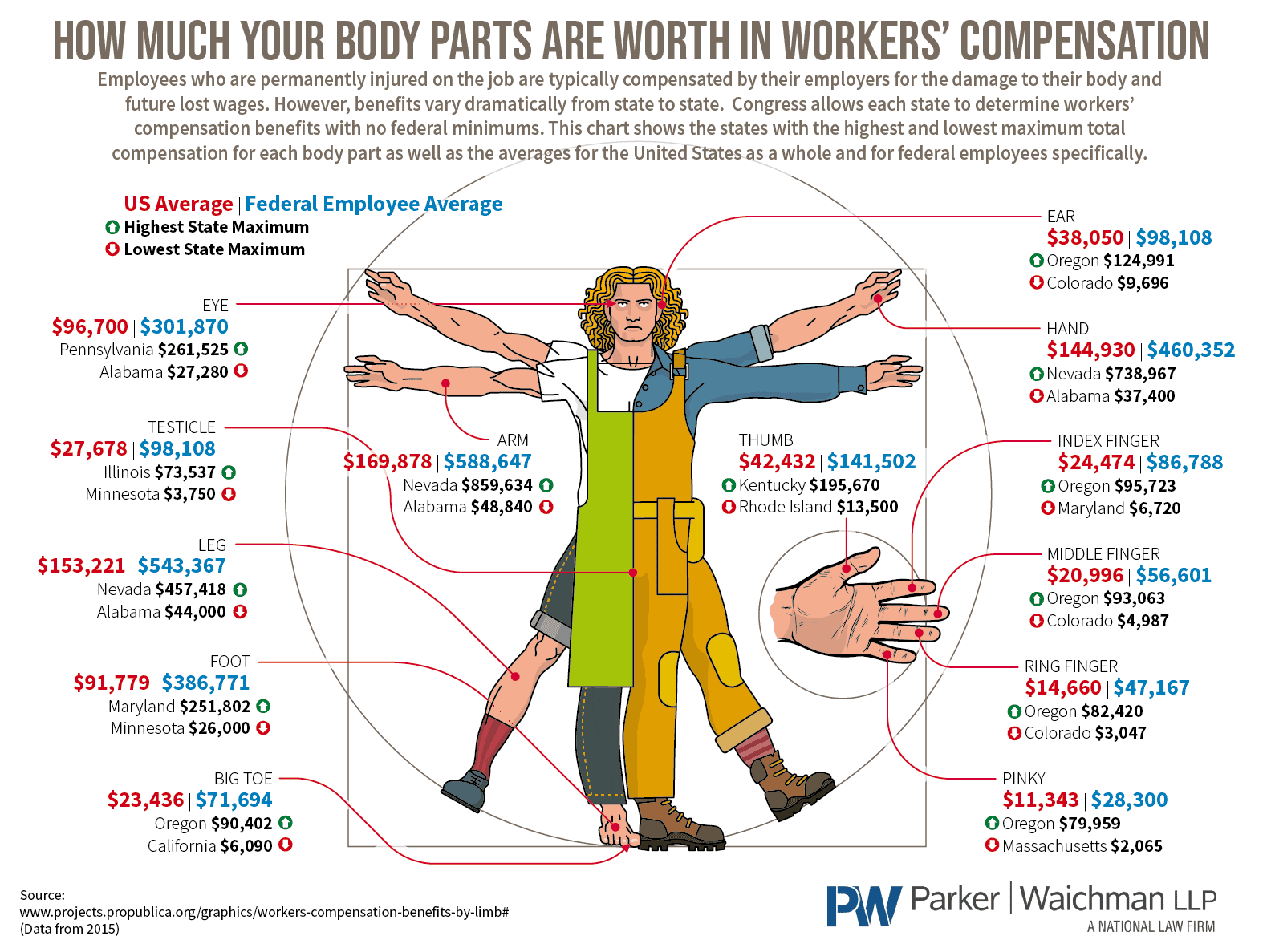
How much money do you get for losing a limb? It depends on where you live.

How much body parts worth workers compensation 4

Foot note . What’s wrong with killing people?

Abortion kills babies, and its advocates are loudly telling us the value they place on human life.

The idea is that we can best understand what life is worth by first understanding what death means.

All human comments appreciate. All abuse and like clicks chucked in the bin.

Contact:  bobdillon33@gmail.com

THE BEADY EYE ASKS; WHAT IS THE PROBABLE TRAJECTERY OF EDUCATION IN THE FUTURE?

( Six minute read)

When considering the future impact of technology on teaching and learning there is an element of crystal ball gazing so, I am sure that there will be many critics of this post.

We still have a long way to go, though, in terms of how we are taking advantage of technology within the classroom for education is actually a way for telling us how far we haven’t come.Recapturing The Human Imagination - Transcending Times

Albert Einstein famously asserted, “Imagination is more important than knowledge.

Up to now education it is too directed to earning a living rather than the values that allow us to live in the first place.

We live in a fully globalized world in which more people than ever are connected via the web. One of the significant results of this greater communication and access to advanced technology is the deluge of information we receive – news, entertainment, opinions, advertisements and so on but non of them will replace teachers.

Learning is a natural part of us and what defines us as a species.

As artificial intelligence and other technologies transform various professions, the most valued and secure jobs will be those that require complex social skills such as teaching.

They as the world we live in changes to embrace tech, will have to proactively manage how innovations unfold. 

Why?

Because what we teach in our education system will be reshaped to keep up to date with the growing demands of the 21st century.

The problem is what to teach.

When it comes todays education we have intellectualized it too much, we have complicated and over tinkered with something that should be a beautiful part of our existence.

Putting back values in education.

The problems and question now concerning education are.

We are now outsource thinking and rely on supposedly smart tech to micromanage our daily lives for the sake of cheap convenience?

Are smartphones lowering our IQ?

Should creativity be the sole focus?

Is an emphasis on learning how to learn the key, or do children need to develop a vast general fund of information?

Is google responsible for dimming our ability to think for ourselves, making us dumber?

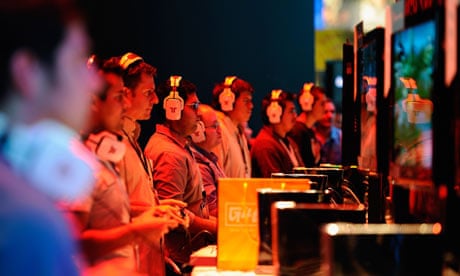
Is online learning the way forward or is the screen right in the palm of our hands—or the screen in front of our faces turning us into digital citizens?Latest Electronic Games Debut At E3 Expo

The over-reliance on technology for basic knowledge may be replacing humans’ general fund of information.

The challenge we face worldwide is how teachers, parents, leadership, and communities will help learners design intelligently and innovate with compassion, to teach non-discrimination and respect for others.

To understand that prejudices can hinder the ability to think and live in peace.

To understand the challenges to the natural world and bio-diversity.

To become familiar with examining and understanding different points of view.

To handle social media which now dominates as a real-time feed for news, stories and world sentiment.

To understand sustainability when its comes to values.

In order for us to truly create and contribute to the world, we have to be able to connect countless dots, to cross-pollinate ideas from a wealth of disciplines, to combine and recombine these pieces. In essence, knowledge matters, as our brains will not develop ideas that will change—and improve—the world without an adequate general fund of information.

What is needed.

Free education to make educational background irrelevant with a year of citizen conscription without the smartphone, I pad or laptop, to teach respect and a understanding of what it means to be human, to stand on one’s own feet.

Retrieval practice is one of the best methods to learn information. If you aren’t trying to retrieve information to bring it to your thoughts—instead pulling out your phone—this may be problematic for not only a general fund of knowledge but also for the ability to initiate creative contemplations in the future.

Using search engines and voice-assistants for things we previously had to retrieve from our memories is continually affecting our kids (and us) in rather unforeseen ways.

The changes in lifestyle could be what’s behind these lower IQs, perhaps its due to the way children are educated, the way they’re brought up, and the things they spend time doing more and less (the types of play they engage in, ( whether they read books, and so on).

To thrive in the workplace of the future, skills such as creativity, collaboration, communication and problem-solving will become must-have competencies for future specialists as the market will see a huge increase in jobs requiring a set of skills incorporating virtual reality and multiple perspectives on mew platform that will give students an opportunity to learn how to negotiate issues and exchange ideas online.

Due to the need to give education more individual approach with students covering the material with study tools adapted to capabilities of a student online education will become more and more revealing in the cloud as more ubiquitous connectivity drives a significant increase in the blending of informal and formal learning.

In the end it will not be the device that will make the learner smarter, it will be the teacher.

All human comments appreciated. All like clicks and abuse chucked in the bin.

Contact:    bobdillon33@gmail.com.

THE BEADY EYE ASKS. WILL WE FIND GOD WITH THE JAMES WEBB TELESCOPE

Tags


( Five minute read) 

This isn’t an easy question, because in order to understand where something came from, we have to first know precisely what it is.

Despite all we know, there are some epic unknowns that have no solution at present.

When it comes to the Universe if we want to know how it got to be that way, we have to apply the laws of physics to the Universe, and follow the evolution of the physical systems that we know exist.

To answer any physical question, you must ask the Universe itself.

Newton stands on Einstein who in turn stands on the work of some future theorist. Each offers a closer approximation to a core reality, but not necessarily the “whole truth.”

But no matter when in the past or the future we would’ve asked this question, taking a scientific approach to it would always yield the same cosmic story.

Here’s where we are today.

We know that our planet, like every other planet in the Universe, is made of atoms.

We know that planets both float freely through the galaxy and also orbit stars.

We know how gravitation works.

We know how electromagnetism works.

We know how the nuclear forces work.

We know hydrogen and helium, when we examine the cosmos, are everywhere. In fact, they’re so abundant that they make up over 99% of the atoms in the Universe; fewer than 1% of the atoms out there, by number, are anything heavier.

We know, based on the observed facts of the Universe, that it must have been born with the seeds of what would become its large-scale structure: an initial spectrum of over dense and under dense regions.

We know it is expanding, cooling, and becoming gravitationally “clumpier” over time, that tells us that, early on, the Universe was smaller, denser, hotter, and more uniform than it is today.

We know how to time-evolve any physical system that we start off with.

Put simply, if you give a physicist a set of initial conditions that describe the system, they can write down equations that govern the evolution of that system, and can tell you — to the limits of the uncertainty and indeterminism inherent to nature — what the outcome (or probabilistic set of outcomes) of that system will be at any point in the future.

Fortunately, when we look out into the Universe, we see the very processes that are required for this to occur in action.

__________________________

What could be more complicated than the universe itself, which contains everything complicated we know, including galaxies, proteins and manuals for assembling robots.

That’s what the Universe is.

But what happens when the answers aren’t around anymore? The farther back we go, we find we run into an inevitable problem:  The Universe cannot provide answers beyond a certain point.

                                           ————————–

Scientific facts are not simply discovered but rather constructed through a social process that depends partly on the status and prestige of the people involved.

Unlike philosophers of the ancient world, cosmologists are not just trying to out-argue one another with their theories. They are measuring, sometimes with breath-taking precision, the concrete physical parameters on which our understanding of the universe is based.

Reality abides by rules of logic and that theories can be improved based on how well their predictions fit with observations.  Something that is independent of human belief systems and political rhetoric.

Scientists, whatever their initial starting points, are converging on a singular truth.

In other words, the evidence we draw from the natural world should ultimately be pointing us toward the same description of reality.

In an era when scientific facts guide our responses to pandemics, climate change and other pressing challenges our understanding of the universe of galaxies, stars, penguins and people is never more important. Our universe is the only piece of reality seemingly capable of producing life, including creatures with the capacity to wonder what reality is all about.

Is life just a chance by-product of nature’s laws or necessary aspect of them?

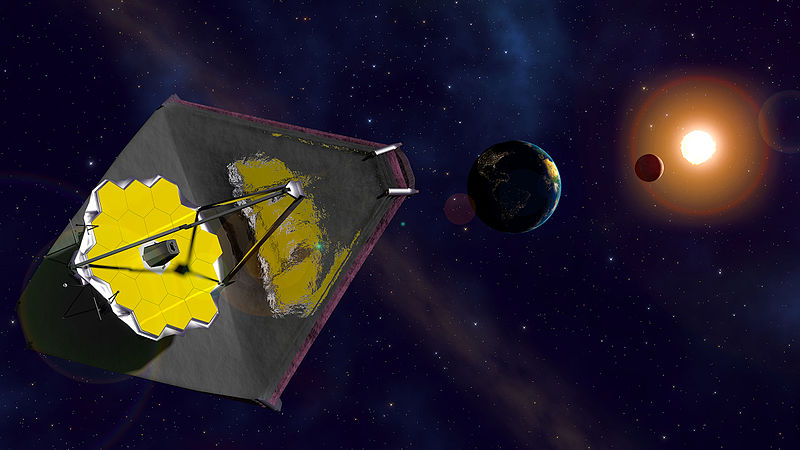
James Webb Space Telescope

Recent images from the newly commissioned James Webb Space Telescope are revealing something bigger than humans and their social networks.

Light from the cosmic dawn of the universe has always been there, coming down towards us, carrying tales from the edge of time itself.

Now, with the help of the James Weep telescope , we can finally meet the faint luminous glow from the period immediately following the Big Bang.

                                                    —————————-

The James Webb Space Telescope is already discovering new worlds. Filling the gaps in chemical evolution?

It will allow for the detection of chemical signatures from galaxies formed billions of years ago and compare them with newer systems.

I suppose its real goal is explain the natural phenomena of the Universe without resorting to spirits, evil influences, established authority, or God, but rather on the basis of principles or laws of nature. 

Psychologically the Universe was once filled with gods and angels that are now vanishing replaced with emptiness except for matter and forces.

So heaven if it exists is in a separate spiritual realm that does not lie within the physical universe. Neither we or gods are essential to the universe.  Yet Physics claims to define physical reality, treating humans as objects, so we are left wondering whether anything in the Universe recognized us as more than that.

Perhaps we were just a random occurrence on a average planet and uncaring scheme of things.

                                                               ——————

If you want to see what the Webb is looking at the next time you look up at the stars imagine that you have lost you memory and there is only this moment. 

You are not conscious of any moment before this one.

You are alive but how did you get to this spot on which you are standing or lying down.

You have no idea. Who are you?  There is no answer. 

You are like a robot with hormones. You have lost your soul.  You are the latest improved model, believing in the latest programs. This is all you know. 

Instead imagine that you can send your consciousness back at the speed of light.  Down the countless generations to your primate ancestors, thought all the animals that ever existed, into a single cell with the complex chemicals that made it possible, into the elementary particles in the Big Bang. 

This is science of the Webb. 

You are all this. The sum total of all history.  Who much of your own identity do you claim – its up to you but the story of origins continues to belong solely to religion.

The trouble with finding god will be as always which god will it be. 

In the end the James Webb has comparatively simpler problem of understanding the nature of the universe at large.

Anything could happen.

We may not have teleportation yet, but we are going boldly (visually) where no human has ever gone before!  

All human comments appreciated. All like clicks and abuse chucked in the bin. 

Contact.   bobdillon33@gmail.com

https://anchor.fm/s/54b17390/podcast/rss


THE BEADY EYE ASKS. IS IT NOW TIME FOR THE WORLD TO SHOW COMPASSION TO THE TALIBAN?

( Seven minute read)

Afghanistan is a beautiful country with a long history and rich culture, but for decades it has been torn apart by war.

Since returning to power in Afghanistan the Taliban government has reintroduced a draconian interpretation of Islamic law such as public executions of convicted murderers and adulterers, as well as amputations for those found guilty of theft.

Men were required to grow beards and women had to wear the all-covering burka, girls are banned from  secondary education. (The only gender-based ban on studying in the world.)

In the year since they returned to power no country has recognised the Taliban government.  Meaning that desperately needed foreign-held funds are unlikely to be released any time soon.

Who are the Taliban?

In 1973, a coup deposed Afghanistan’s King Mohammad Zahir Shah. After the coup, the monarchy was abolished and the Republic of Afghanistan was formed, establishing close ties with the then-Soviet Union.

Six years later, the USSR invaded Afghanistan to support the pro-Soviet government, which was facing attacks from armed groups. The decade long war forced millions of Afghans to flee and attracted foreign fighters, including Osama bin Laden, who joined the battle against the Soviets.

In 1989, the Soviets withdrew after agreeing to a peace deal.

The Taliban, or “students” in the Pashto language, emerged in the early 1990s in northern Pakistan following the withdrawal of Soviet troops from Afghanistan.

By 1998, the Taliban were in control of almost 90% of Afghanistan.

In the wake of the 11 September 2001 World Trade Centre attacks in New York the attention of the world was drawn to the Taliban in Afghanistan.  The Taliban were accused of providing a sanctuary for the prime suspects, Osama Bin Laden and his al-Qaeda movement

In October 2001, the U.S. and its allies invaded Afghanistan after the Taliban refused to hand over the Al Qaeda leader and author of 9/11. By December, the Taliban had surrendered control of the country, but already in 2006, Taliban attacks were intensifying in the form of raids, ambushes, rocket attacks, kidnappings and assassinations.

Osama bin Laden, the founder and first leader of the Islamist militant group al-Qaeda, was killed in Pakistan on May 2, 2011.

In February 2020, then-President Donald Trump signed a peace deal with the Taliban that included the withdrawal of all foreign troops from Afghanistan by May 2021.

The agreement was upheld by President Joe Biden, who extended the deadline to Aug. 31, two decades to the day since the felling of the World Trade Centre.

US President Joe Biden announced in April 2021 that all American forces would leave the country by 11 September.

By 15 August, the Taliban were at the gates of Kabul and we all know what happened then.

Departing American forces along with the Brits abandoned millions of dollars worth of weapons, vehicles and other military equipment, which was immediately seized by the Taliban after they returned to power.

Now years later, militant Islamic extremism has hardly recede, with his replacement, Ayman al-Zawahiri, killed on July 31, 2022, in a U.S. drone strike in Afghanistan.

The withdrawal was criticized for being rushed, disorganized and chaotic with millions are now struggling to survive.

More than 40% of the population is living on less than one meal a day and 97% are expected to be living under the poverty line by the end of the year.
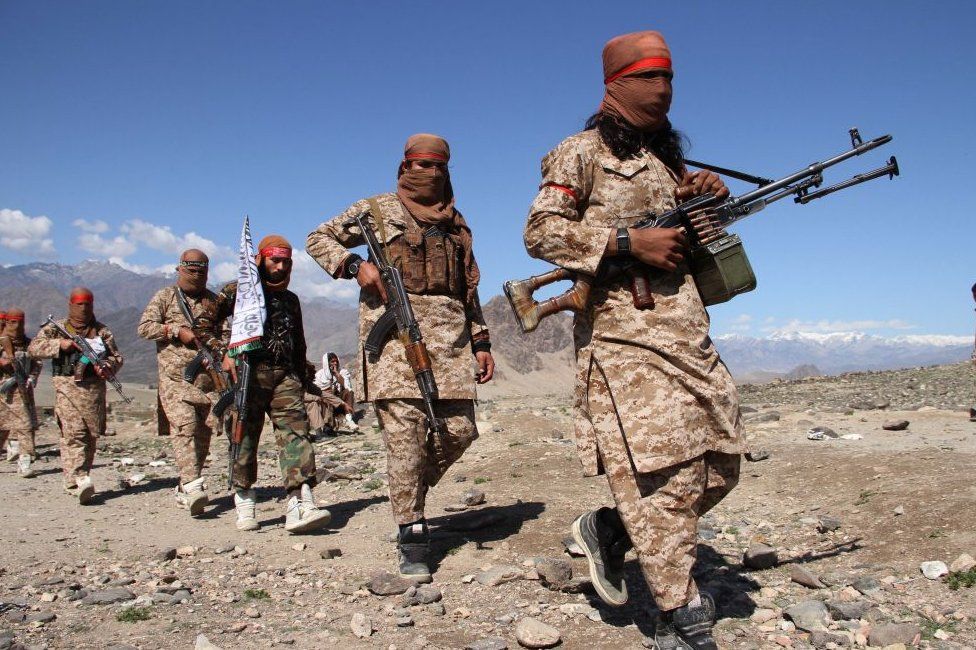
Afghan Taliban fighters and villagers attend a gathering as they celebrate the peace deal signed between US and Taliban in Laghman Province, Alingar district on March 2, 2020.

The war in Afghanistan was America’s longest conflict, lasting almost two decades. In that time, 2,248 U.S. soldiers lost their lives and 47,245 Afghan civilians were killed.

The death toll for members of the Afghan National Army and police is 66,000, while the number of Taliban fighters and other insurgents killed during the war is 51,191.

The U.S. government spent more than $2 trillion funding the war.

For the most of the last 20 years, the US have supported the government in Afghanistan that was put in place following the war. As global leaders sought to economically isolate the Taliban, their policy approaches have crippled the economy, destroyed the banking sector and plunged the country into a humanitarian catastrophe that has left more than 24 million without enough food to eat each day.

In one short year, the economy is now on the brink of collapse, millions are unemployed and close to starvation with anyone opposed to the Taliban rule risking being tortured.

Is there a difference between al-Qaeda ISIS  and the Taliban?

Al-Qaeda grew out of battlefield bonds forged in the Afghan insurgency against the Soviet Union its primarily targets being the United States and Europe as their far enemy. Its propaganda tries to convince Muslims over time to follow Al-Qaeda’s vision of “global jihad.”

ISIS prioritizes the creation of an Islamic state in the Muslim world but its military losses has undermine its appeal and ultimately discredit jihadist groups in general. They have  metastasized into Boko Haram and Al-Shabaab. And so continues to be very much a threat that the world have to focus on.

However one does not have to be a military, political or a Taliban to know that the magnets for jihadi recruitment is the continuing killing, whether its by legalizer violence in the form of war or not.

If the world now stands by an allows the children of a nation die by starvation as a form of revenge it will be committing the very things it has fought against since world war two.

We can rest assured that those who survive will be looking for revenge.

You only have to look at the number of young people fleeing high levels of violence, crime, natural disasters, food insecurity, and poverty to realize this.

It is naïve to demand that Taliban give up terrorism — the very method that has given them some significance for more than a quarter of a century. Terror is the very raison d’etre of this outfit.

Why should the group listen to Western powers when they have neither a coherent policy nor the hard power needed to back any of their policies other than the gun.

In the final analysis, however, a regime that treats its own people with utter contempt is unlikely to offer foreigners, especially the “infidel,” a better deal.

But the choice is not limited to another full scale invasion or abject surrender or to recognize the gun-toting “religious students” as the legitimate government of that long-suffering land.

The conditions set by the Defeated are about giving up terrorism, respecting human rights, allowing Afghans who wish to leave the country to do so, and stop oppressing women.

Isn’t that all a bit premature?  As the Taliban actually do not control Afghanistan in any meaningful way.

The key concern right now is the disarray in the so-called democratic camp, thanks to  the war in the Ukraine

Right now, the Talban need the outside world more than the outside world needs them.

Confront the reality of the situation” in Afghanistan.

In other words, while admitting that they are there, we have two options.

The Taliban have won, militarily, however there wasn’t really a healthy democracy bringing widespread freedom, there was a corrupt client government siphoning off cash in return for doing the occupying powers’ bidding, and this came at the cost of brutal war which caught up entirely innocent Afghans.

Without Aid and the realise foreign-held funds Afghanistan even with food aid cannot pay hospital workers or the people who maintain urban water supply or deliver the food aid.

One way or the other we have a very short window of opportunity now to make it happen through our decisions we make in terms of international aid and the relations we form with the current Taliban.

If we ignore Afghanistan, denying the aid we will drive a fissure between the moderate wing of the Taliban, the Kandahari Taliban and the hardliners, the Haqannis, and there is every like hood  we will have created a civil war upon Afghanistan, inflicting  upon Afghanistan a catastrophe that follows this disaster.

We must swallow our pride and support the moderate wing of the Taliban, who are not committed to international terrorism and want a conservative country which will not be in line with Western values but will be better than the extremism of the Taliban.

At the same time one must ask where are the liberal Afghanistan opposition voices, over 100,000-plus Afghans left.

The media, which focused instead on claims of “betrayal” by the United States in order to avoid discussing the depth of the defeat and deep failures of the Afghan occupation, avoiding the question how long before the west recognises  a humanitarian crisis or even a civil war in Afghanistan.

I just don’t think there is a political will in the West to avoid a disaster of biblical proportions that will spill over and destabilize the rest of this part of the world.

All human comments appreciated. All like clicks and abuse chucked in the bin.

Contact:  bobdillon33@gmail.com

THE BEADY EYE SAYS: WITH CLIMATE CHANGE WE HAVE NOT SEEN ANYTHING YET! WHAT’S COMING WILL DEWARF OUR WOREST NIGHTMARES AND FEARS.

Tags

, , ,


( Seven minute read) 

Playing down the potential worst effects of global heating and climate breakdown is nothing less than climate appeasement.

It does nothing to help spur the urgent action that is required, and by underplaying the climate threat, works – intentionally or not – to encourage a grudging and cautionary approach to emissions cuts that we simply can no longer afford.

If we can encourage the green shoots and return to vigorous growth or leaders assume everything will be honky dory.   This is utter bollox.  As it is nature that will decide the outcome. It’s up to the planet to handle what we have created.

International negotiations on climate change have been going on for over 20 years. The vast majority of governments now agree that urgent steps are needed to reduce our impact on global warming.

So far, they have failed to sign up to a universal plan of action.

It is now more than obvious that we humans are only capable of acting on a limited scale as individual countries and it is now already too late to prevent terrible damage and the resulting consequence’s.

So we can only use our ingenuity to manage the consequence’s. 

                                   ——————————- 

Climate is sometimes mistaken for weather.  It is not weather it is everything that makes weather.

So far, during this decade, we have seen no sign whatsoever that real climate action is coming and that has to change.  Instead while the earth fries we are more interested in growth, the cost of living, and we need now more than ever to be told the whole story – warts and all because the human influence which is happening now is changing at a much faster rate then we think. 

 But is that the truth too bleak for general consumption?

If drastic, life-changing, action is being mooted, people need to know – have a right to know.

Why?

Because people simply don’t place their daily behaviours in an environmental context. 

Humans have destroyed a tenth of Earth’s remaining wilderness in the last 25 years.

Whether we like it or not here is what to come.

Once we pass a certain threshold, physics takes over.

We are approaching a critical tipping point that could spin global warming completely out of control with no possibility of reversing developments.

The pace and degree of climate change are about more than just anthropogenic emissions. It is now about tipping points and feedback loops.

Suddenly, climate change has ceases to be something vaguely inconvenient that we can leave future generations to deal with. Instead, it becomes far more of an immediate threat capable of tearing our world apart.

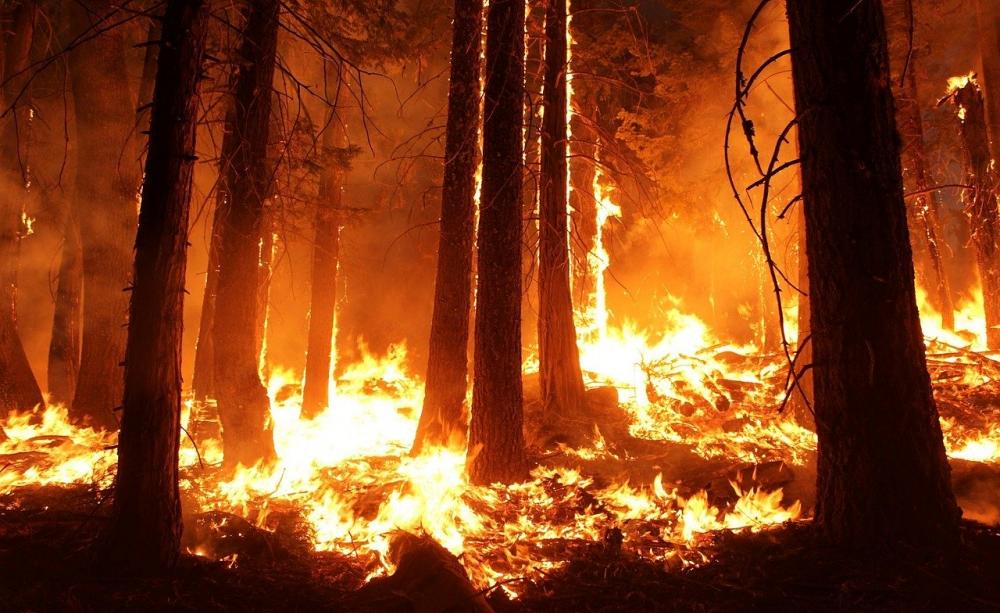
Wildfires are devastating hundred  of thousand of acres, even happing where you might least expect them – the boreal forests that encircle the globe in the Arctic North, for example, have in recent years experienced wildfires at a rate and scale not seen in at least 10,000 years.” 

Sudden changes in the behaviour of ice sheets, carbon sources and sinks, and ocean currents, are accelerate warming and its consequences go way beyond the expected.

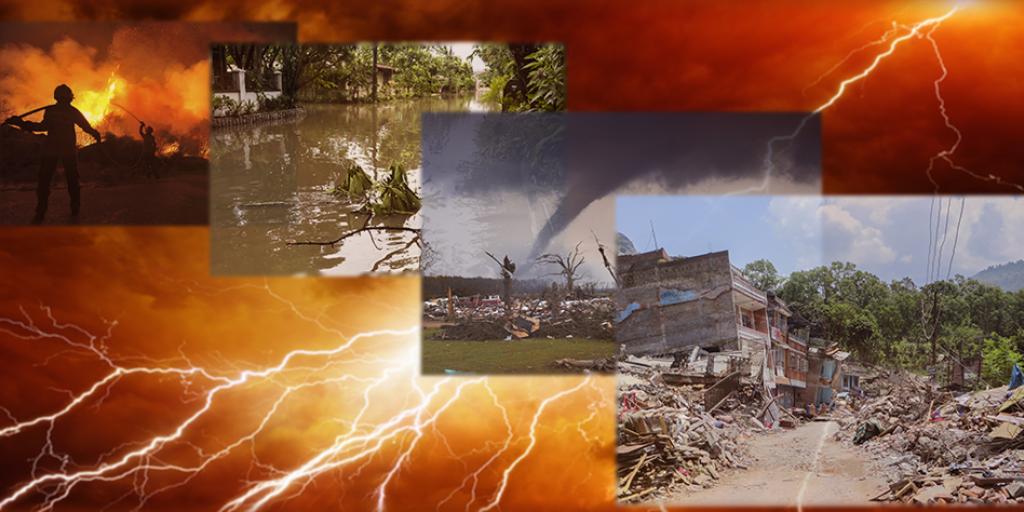
Extreme heat and heatwaves have happened since the beginning of time, but across the board.  Climate change is making heatwaves more common, severe, and long-lasting. As seas get warmer, they add more water vapor and heat energy into the atmosphere. This extra heat and water, just happens to be the perfect fuel for hurricanes and in the right conditions, can make dangerous storms even more powerful.

In 2007, for example, water scarcity, crop failures and livestock deaths stemming in part from climate-related drought drove an estimated 1.5 million people to the cities from rural areas in Syria, helping spark the horrifying civil war that displaced millions more.

It is beginning to look as though a climate-changed jet stream is driving conditions that lead to episodes of extreme weather being ‘locked in’, so that both their intensity and duration are elevated. 

Nearly 20,000 species of plants and animals are at a high risk of extinction and if trends continue, Earth could see another mass extinction event within a few centuries.

Viruses love hot dry conditions to thrive and climate change will ideal conditions for waterborne pathogens like bacteria, viruses, and protozoa, which flourish in warmer waters.

Oceans are warming and becoming more acidic, and sea level is rising.

Changes in the patterns and amount of rainfall, as well as changes in the timing and amount of stream flow, can affect water supplies and water quality and the production of hydroelectricity.

The homes of 200 million people will be below sea level in 70 years.

At least 155 million people were pushed into acute food insecurity in 2020 due to extreme weather.

What’s clear is that the climate we are accustomed to is no longer a reliable guide for what to expect in the future.

Change Is Not Merely An Environmental Problem.

Anyone still convinced that climate change is purely an environmental problem should open there eyes.  

Migration on an unprecedented scale in areas of already high tension; drought and crop-failure, leading to intensified competition for food, water and energy in regions where resources are already stretched to the limit.  (And economic disruption on the scale predicted in the 2006 Stern Review on the Economics of Climate Change, and not seen since the end of the Second World War.)

 “This will not be the first time people have fought over land, water and resources, but this time it will be on a scale that dwarfs the conflicts of the past”, an unstable climate will create the very kind of tensions and conflicts for this to happen.

For too long, we have been waging a senseless and suicidal war on nature. 

    Wildfire

Notwithstanding the unlikelihood of achieving net zero global emissions in a little more than three decades “climate change is a threat that can bring us together if we are wise enough to stop it from driving us apart”.,

If we don’t take collective action and protect our Mother Earth, the forthcoming generation might not be able to see it. The earth is precious and we need to save it from destruction.

Unfortunately the solutions have become perceived as a problem by the moneyman!

They tend to try to make us believe that the solutions will bring down the economy! 

Let me tell them, it is coming for your wine, your coffee beans, and your ill founded gains … as well as for your health and safety. The cost of inaction on climate change is predicted to reach a staggering $44 trillion. There will be no economy by 2060.The dry, salt-crusted Lake Poopo. Poorly irrigated land, logging or evaporation can cause desertification. The amount ...

WHAT CAN BE DONE?

Science speaks for itself as to whether it is convincing or not, but what climate change will mean is not determined by the science but our relationship with the larger reality of climate change.

The real problem is that our relationship is presently putting humanity at the centre rather then a common consensus on what reality is and how it all came about. 

The Egyptian in the days of Pharaohs tied our existence to the stars. the Hebrews had god already on the scene while the Greeks philosophers invented the founding idea of science and by the middle ages the nature of the Universe was no longer a topic of debate.    

This relationship is now unfortunately driven by inequality and technology, resulting in a complete upheaval of reality on a mental and social transformations, as one picture is replaced by another. 

Are our societies primed to re-envision our planet?   Not yet!

There is one thing that is certain all organisms must bend to the forces of nature.

We will unable replant a new ecosystem returning to a primeval slug. 

So the overriding question is to figure out how we humans might fit into the story. 

All human comments appreciated. All like clicks and abuse chucked in the bin.  


Contact;  bobdillon33@gmail.com 

THE BEADY EYE ASKS: FINDING IT HARD TO SLEEP IN THIS HEAT,WHAT DO YOU KNOW ABOUT SLEEP?

Evolution endowed us, like other creatures, with sleep that is malleable in its timing and readily interruptible, so it can be subordinated to higher priorities.

Around 350 B.C., Aristotle wrote an essay, “On Sleep and Sleeplessness,” wondering just what we were doing and why. For the next 2,300 years no one had a good answer.

Most of what we know about sleep has only been discovered in the last 25 years.

Maybe, we’ve been asking the wrong question about sleep, ever since Aristotle.

The real wonder isn’t why we sleep. It’s why, with such an incredible alternative available, do we bother to stay awake?

Sleep is ancient, its original and universal function, is not about organizing memories or promoting learning but more about the preservation of life itself.

The problem is that in the modern world, our ancient, innate wake-up call is constantly triggered by non–life-threatening situations.

Every animal, without exception, exhibits at least a primitive form of sleep.

Giraffes sleep less than five. Horses typically sleep part of the night standing up and part lying down. Dolphins sleep one hemisphere at a time—half the brain sleeps while the other half is awake, allowing them to swim continuously. Great frigate birds can nap while gliding, and other birds may do the same. Nurse sharks rest in a pile on the ocean floor. Cockroaches lower their antennae while napping, and they’re also sensitive to caffeine.

While we humans nod off into a surreal descent of sleep, into an alternative world, our heart rate slows and our core temperature drops. Any remaining awareness of the external environment disappears.

Our sleep-wake pattern is a central feature of human biology—an adaptation to life on a spinning planet.

The average human today sleeps less than seven hours a night, about two hours less than a century ago.

The floodlit chaos of our waking life of mobile screens are now overworking our neurons, (some 86 billion of them, the cells that form the World Wide Web of the brain, communicating with each other via electrical and chemical signals) and has made sleep deprivation a lifestyle, overloading the sleeping brain to be able to consolidate the information that’s been collected during our awaking hours.  

What makes us sleepy?

Everyone needs sleep, but its biological purpose remains a mystery.

Sleep affects almost every type of tissue and system in the body – from the brain, heart, and lungs to metabolism, immune function, mood, and disease resistance. 

Many mysteries remain about the association between sleep and  health problems.  Does the lack of sleep lead to certain disorders, or do certain diseases cause a lack of sleep?  These, and many other questions about sleep, represent the frontier of sleep research, like what effect do different foods have on sleep. 

The strength of one’s nightly spindles, some experts have suggested, might even be a predictor of general intelligence.

Sleep literally makes connections you might never have consciously formed, an idea we’ve all intuitively realized that it may be more essential to us than food. 

We have yet to find a truly sleepless creature however there’s is only one species that has been called ‘biologically immortal.  Jellyfish do not breath and there are plenty of other unusually long-lived species that seem to defy the passing of time.

We all love life and we wish to live as long as possible, but in spite of this we sacrifice about 1/4 of more of our lives to sleeping.  

James Webb can see the origins of the universe – something our minds can hardly begin to grasp as we sleep into the future.

All human comments appreciated. All like clicks and abuse chucked in the bin.

Contact: bobdillon33@gmail.com

THE BEADY EYE SAYS. EVERY RESEARCH HAS ITS LIMATIONS AND SO IT WILL BE WHEN IT COMES TO HUMANITY PENDING DEMISE.

Tags

, , ,


( Five minute read) 

All animals must learn to do some things.

This is true even of those animals that function almost entirely by instinct. But exactly what that means – whether they are making rational decisions or simply reacting to their environment through mindless reflex – when it comes to making decisions, consciously considering their goals and ways to satisfy those goals before acting remains a matter of scientific dispute.

Apes and Monkeys  Matriarchal Elephants, Parrots, Octopuses, Pigs, Dolphins, Gorillas, Chimpanzees, Dogs, Ravens, Pigeons, Raccoons, Foxes, Crows,  Ants,  Whales, are all able to reason to a certain extent, to name a few.

In the true sense of learning, is by making mistakes and remembering to avoid them in the future.

We are also animals, so how do we  determine exactly what sets humans apart from other animals.

By learning from our mistakes had sharing our finds through language that we all understand and then taking correction action after reasoning that not to do so is more than dangerous. 

( Reasoning can best be defined as the basic action of thinking in a sensible and rational way about something. Sounds easy, right? Most of the time, reasoning happens automatically, but there are many types of  reasoning,  deductive, inductive, abductive, cause and effect, analogical, critical thinking, and de- compositional.

Reasoning is the ability to assess things rationally by applying logic based on new or existing information when making a decision or solving a problem and all reasoning begins with a set of reductionist assumptions that may not be challenged.

According to the Google Dictionary:

The meaning of reasoning is “thinking about something in a logical, sensible way”.
The meaning of logic is “reasoning done according to strict principles of validity”
The meaning of sensible is “… in accordance with wisdom or prudence”
Validity means to be “factually sound.”)

                                              —————————-

However all research has its limitations so it’s important to give an explanation of how your research limitations can affect the conclusions and thoughts drawn from your research.

The first thing needed is to take the new or given information and combine it with existing information, this allows for examination of all information before starting to make a decision.

Humans possess the power of reasoning but where is it when it comes to facing climate change?

“Since systematic scientific assessments began in the 1970s, the influence of human activity on the warming of the climate system has evolved from theory to established fact.”

Life on Earth depends on energy coming from the Sun. But several lines of evidence show that current global warming cannot be explained by changes in energy from the Sun:

  • The greenhouse effect is essential to life on Earth, but human-made emissions in the atmosphere are trapping and slowing heat loss to space.
  • Five key greenhouse gases are CO2, nitrous oxide, methane, chlorofluorocarbons, and water vapor.
  • While the Sun has played a role in past climate changes, the evidence shows the current warming cannot be explained by the Sun.

The dry, salt-crusted Lake Poopo. Poorly irrigated land, logging or evaporation can cause desertification. The amount ...

Here a few facts to put in your pipe to reason on.

People around the world are witnessing first-hand how climate change can wreak havoc on the planet.

200 million people in the world, more than three times the UK population, will live below the tideline by the end of this century.

Wildfires, from Australia to California and Greece, are raging for longer and spreading farther than ever before. Blistering temperatures are proving fatal.

A chilling number of Earth’s other denizens, including 40 percent of all amphibians known to science (about 3,200 species) is under threat due to human impact,

Plastic production and use is forecast to double over the next 20 years, and quadruple by the early 2050s,

At least 155 million people, 2.3 times as many as live in the UK, were pushed into acute food insecurity in 2020 due to extreme weather, as well as conflict and economic shocks.

Climate change is accelerating the spread of infectious diseases.

Nowhere on the planet is spared the impact of climate change.

Climate change both reduces the amount of food that’s available and makes it less nutritious.

It’s no good just having cold winters to replenish ice levels.

“The science is unequivocal.”

Once we pass a certain threshold, physics takes over it therefore stands beyond all reasoning, “If we don’t do anything, that would be cataclysmic.”

Unfortunately we are too occupied with ourselves, killing each other, making unsustainable profits looking at our selves on smartphones, and all the rest of the shit promoted by growth at all costs widening the inequalities in the world,  to acknowledge that the earth we live on is in crises and if no globally action is undertaken now, (not in thirty years or any time tomorrow.) there will be no growth put a race to the bottom.   

So the consequences of either ignorant of or in denial about physical alterations that climate change is going to bring cannot be left to people alone. 

Clarity about the danger is in some sense is our only possible atonement for leaving  not just a nuclear poison world behind but a world destroyed by climate change is another kettle of fish.

Why are we unable to see this? 

Many of humanity’s most dangerous problems arise from our antiquate way of looking at the Universe, which is at odds with the principals of science that we blithely use in countless technologies. 

Our cultures over the centuries downgraded the importance of having a home. To day ” the Universe” in the popular mind has become little more than a shapeless space or a fantasy setting for science fiction.

No atonement will suffice the generation to come. 

Were the generation that needs to make the big jump to sustainability. 

Get your finger out of where the sun does not shine and use your buying power to demand change.

Perhaps you will have noticed that taking the knee has disappeared from football ( Racism is cured)  if so let sport take up the mantle of promoting sustainability by holding aloft (for a minute) a piece of the earth they are playing on. 

Not until we stop focusing on or differences, classifying others into them and us will we realize the pearl we all live on. 

All human comments appreciated. All like clicks and abuse chucked in the bin.     


Contact:

bobdillon33@bobdillon33

THE BEADY ASKS : WHERE IS THE WORLD GOING ?

Tags

, , , , , , ,

To answer that, we have to think about how we got here.

With the power of the gun, greed, colonization, religion, exploitation, wars, to name just a few.

There have been over 250 major wars in the world since World War II, in which 23 million people have been killed. Three times more people have been killed in wars in the last 90 years than in all the previous 500.  More than 500 million small arms and light weapons are in circulation around the world.

There are approximately 30,000 nuclear warheads in the world today.

Current global military spending is more than the total annual income of the poorest 45% of the global population.

Between 54 and 80 million people have been killed in genocides in the the last century. Between 170 and 360 million people have been killed, in total, by governments (democide) in the 20th century, apart from war.

About 246 million, or 1 out of 6, children ages 5 to 17 worldwide are involved in child labour.

Half of the forests that originally covered 46% of the Earth’s land surface are gone.

 Based on current trends, an estimated 34,000 plant and 5,200 animal species – including one in eight of the world’s bird species – face extinction.  Almost a quarter of the world’s mammal species will face extinction within 30 years. Up to 47% of the world’s plant species are at risk of extinction.

There are over 45 million refugees and internally displaced people in the world.

And all of this is just scratching the top of the iceberg.  

At the present time we have the added darkness of  – climate change – pandemics – social media tearing what left of dotmocracy asunder, out of date world organisations, politicians now middle men to the internet, and governments trying to buy there way to economic success.

How people who are already struggling will deal with it is unclear never mind  where is it leading us?

On top of this we have technology and political trends aligning against mega power like Russia- China – the USA.


10 Things Going On In The World Right Now That You Need To Know About

It is however clear that globalization is on its last legs and it replacement probably wont go well.

We all want to know the future, and unfortunately the future is coming like it or not.

Accordance with Moore’s Law, we’ll see an acceleration in the rate of change as we move closer to a world of true abundance or true disaster. There will be will 100 billion connected devices, each with a dozen or more sensors collecting data.

This will lead to a trillion-sensor economy driving a data revolution beyond our imagination .

With a trillion sensors gathering data everywhere (autonomous cars, satellite systems, drones, wearables, cameras), you’ll be able to know anything you want, anytime, anywhere, and query that data for answers and insights.

Biometric sensing (wearables) and AI will make each of us the CEOs of our own health.

The screen as we know it — on your phone, your computer and your TV — will disappear and be replaced by eyewear.

The result will be a massive disruption to the fundamental ways we operate as humans.

In a decade, it will be normal for you to give your AI access to listen to all of your conversations, read your emails and scan your biometric data because the upside and convenience will be so immense.

As well as processing lots of data on us, they must gradually grind down our distinctiveness, our individuality, our eccentricities so that we become a series of archetypes. Then, our emotions – our fears, insecurities, desires, cravings – can be more easily gauged, exploited and plundered by advertisers.

With it, our ability to empathise and compromise is eroded.

We live in different information universes, chosen for us by algorithms whose only criterion is how to maximise our attention for advertisers’ products to generate greater profits for the internet giants.

WITH DATA COLLECTION our rulers are better positioned than ever to manipulate our thinking and control what we do. They can dictate the political discourse more quickly, more comprehensively, more cheaply than ever before.

If so, what are we to do about it?

It is hard to piece together all this information in a way that gives a comprehensive picture of what the end times will look like.

Social media and the AI behind it are one of the multiple crises we can no longer ignore as capitalism reaches the end of a trajectory it has long been on.

We are fast reaching a kind of human “event horizon”, with our societies standing on the brink of collapse.

Why?

Because we are unable to enact long term thinking against short-term thinking based on religion of profit at all costs.

As if somehow, magically, each corporation acting in its selfish interest is going to produce the best result. … What’s frightening – and what hopefully is the last straw and will make us wake up as a civilisation as to how flawed this theory is in the first place – is to see that now we are the tree, we are the whale.

We are more profitable to a corporation if we’re spending time staring at a screen, staring at an ad, than if we’re spending our time living our life in a rich way.

Our attention is being mined by worthless platforms, as our world is falling apart the biggest wipe-out of wealth in history is coming.

Humanity is greater than the rules of a state, or Wall street.

There is now digital transfers of value and assets.

Earth can sometimes feel like the last place you’d want to be.

It’s important to realize that no combination of renewable energy sources can power the modern industrial world at current levels of consumption.

“Progress has nowhere to go, without a unliveable earth and it is going there in a hurry.”

What Are We Going to Do about It?

Evolution doesn’t run backward.

We face an unliveable future, yet we can’t go back. We are stuck with knowledge, and knowledge is dangerous in the hands of humans. There’s no solution to that problem, and all we can do is be more aware of our weaknesses.

Climate change will eventually force us to do,  “whatever is conducive to sustainable participation in Earth’s ecosystems

When we better understand the world and our place in it perhaps we come to an understanding that we have to live together to survive together .

All human comments appreciated. All like clicks and abuse chucked in the bin.

https://bobdillon33blog.com