THE BEADY EYE SAYS: FOR CRYING OUT LOUD. DO SOMETHING.

Tags

,

( A four minute read)

For wonks now we have had scientific paper after scientific paper, world climate summits, TV coverage of storms, glaciers melting, Greenland disappearing, Lakes lighting with methane, rivers disappearing, dust storms, vines freezing, cities covered in smog, and the rest.Résultat de recherche d'images pour "pictures of climate change"

You would think that we get it by now THAT WE ALL NEED TO DO SOMETHING, but no.

Instead because we have world leaders who think that Growth in the economy is the holy grail that rules all our lives we are selling carbon credits on the stock market, making promises to reduce carbon admission that are not worth the paper they are written on.

In the mean time the loss of biodiversity and ecosystems, including marine ecosystems are accelerating to the point of no return.

Global warming may well be the source of climate change but neither adaptation to new climate conditions nor the reduction of emissions alone can ensure that major negative climate change impacts can be avoided over the coming decades.

Addressing climate change will therefore require planning for sustainable development and measures to tackle the oncoming impacts of climate change.

Specific actions are now what is required.

Concerted efforts will need to be made locally and internationally by governments, public agencies, businesses, industries, communities and individuals.

Achieving major reductions in the use of fossil fuels is essential along with sustainable transport and agricultural practices aimed at reducing emissions are also urgently needed.

Development and deployment of low-carbon technologies and new technologies such as carbon capture and storage and management systems will also arise.

If we are to avoid mass migration it is obvious that globally assisting developing countries to address the impacts of climate change and to establish a sustainable pathway for their development is a must.

The rapid expansion of climate change control as a regulatory programme calls for a thorough consideration of its underlying ideas, objectives, and strategies. Climate change is understood as a major global environmental risk, and climate change regulation can be seen as a variant of risk regulation.

Unfortunately in the meantime we will be faced with the impact of climate change for at least the next 50 years.

Its effects increase daily on the quality and quantity of water and soil. It will not just have a devastating effect on the markets, but will create a new distribution of species both human and animal.

Now, we’re beginning to feel the effects of climate change around the globe.

While we can’t undo the damage caused to the environment, we can help decelerate the rate of change – and long-term, change the fate of the planet altogether. Half the problem for us as individuals, however, is the knowing where TO START.

Résultat de recherche d'images pour "pictures of frozen vineyards"

Résultat de recherche d'images pour "pictures of heating vineyards"

So what can to done now, that might enable all of us to contribute.

Climate science must be integrated as practical knowledge into society so that understanding the complex physical and biological interconnections are relevant to decision-making in social, economic, political, cultural, and educational systems.

While information alone is not enough to prepare society for the immediate and long-term challenges of human influences on climate, without a scientifically informed understanding of the causes and effects of climate change, it will be difficult or impossible to reduce vulnerabilities or enhance the resilience of communities and ecosystems affected by climate change.

How about: One day a month city traffic free day . No privately owned cars on the road only essential service vehicles.

How about:  No Flying one day a month.

How about:  All TV weather forecast programs dedicating one a week, a report on the very subject.

How About: Take a few minutes to contact your political representatives and the media to tell them you want immediate action on climate change. Remind them that reducing greenhouse gas emissions will also build healthier communities, spur economic innovation and create new jobs. And next time you’re at the polls, vote for politicians who support effective climate policies.

Though you might feel like your lifestyle is insignificant compared to things like oil extraction or vehicle emissions, the choices we make in our day-to-day life — how we get around, what we eat, how we live — play a major role in slowing climate change.

Global warming is not expected to end anytime soon.

How about:  adding your suggestion.

All like clicks will be chucked in the BIN.

← Back

Thank you for your response. ✨


THE BEADY EYE OPEN LETTER TO THE UK ELECTORAL: HERE IS WHAT THE SNAP UK ELECTION SHOULD BE ABOUT.

Tags

,

( A TWO MINUTE READ)

Why a snap election ?


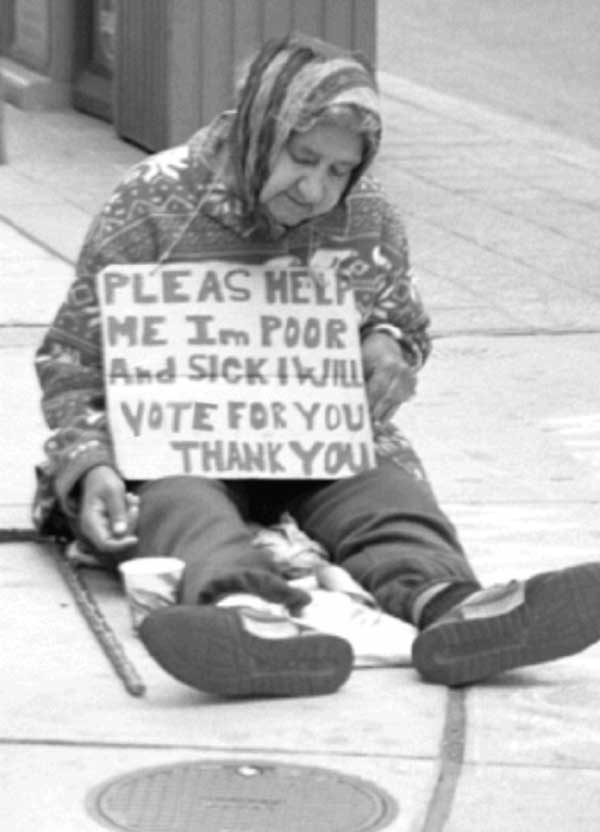
Résultat de recherche d'images pour "pictures of homeless people"                   Résultat de recherche d'images pour "pictures of homeless people"          Résultat de recherche d'images pour "pictures of homeless people"


THEY SAY A PICTURE IS WORTH A THOUSAND WORDS.

HERE IS ANOTHER. Résultat de recherche d'images pour "pictures of homeless people"

FOR ALL INTENTIONAL PURPOSES IT IS ACADEMIC HOW IS IN POWER.

STRONG MANDATE OR NOT.

THERE IS NO RESETTING THE OUT BUTTON.

Britain has already triggered Article 50 – the formal starting gun on Brexit, and withdrawal from the EU is all but a certainty at this point.

EU27 leaders meet on April 29 to agree on the negotiating guidelines. After that, there is a window, likely to last until June or July, during which the European Commission will draw up detailed negotiating plans for final approval by EU leaders. Until that time, nothing substantive can be agreed between the EU and the U.K. — and May has decided to squeeze a general election into this window.

SHE IS IN FACT PUTTING THE COUNTRY TO UNNECESSARY EXTRAVAGANT EXPENSE (UNLESS THE EU TOLD HER SHE WAS ANOINTED PRIME MINISTER AND WAS IN NEED OF A MANDATE TO NEGOTIATE).

BRITAIN HAS CHANGED PRIME MINISTER 24 TIMES IN THE LAST CENTURY, HALF OF THOSE WITHOUT A GENERAL ELECTION.

AFTER THE RESULT OF THE FIRST ROUND OF ELECTIONS IN FRANCE.

YOU DON’T NEED TO BE A POLITICAL ANALYST TO SEE WHAT IS GOING TO HAPPEN.

The negotiations with Europe over Britain’s exit from the EU are likely to be fraught negotiations.

The June election date means a new Parliament will have been formed just in time for the likely start date for the Brexit negotiations.

May’s problem was simple: She had a majority in parliament to trigger Article 50 but for almost nothing else — the final Brexit package included.
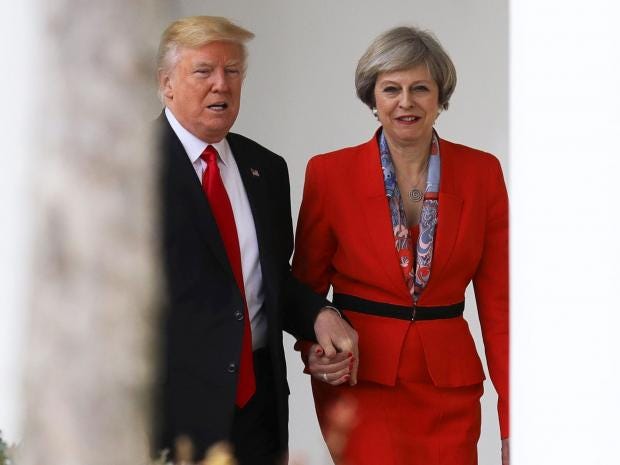
Résultat de recherche d'images pour "pictures of may and trump"

How the election influences the direction of the Brexit talks depends on the outcome.

There is already a democratic mandate for Brexit. This election could become a democratic mandate for her specific kind of Brexit — out of the single market, but with favorable access via a hasty free-trade agreement.

If the election delivers a small Conservative majority, as already exists, little will change. If the election wipes out the Tory majority — which would throw all assumptions about the U.K.’s Brexit strategy into the air.

The risk is that she ends up muddying the waters with an inconclusive result.

WHAT IS On the ballot paper is Britain’s future outside the European Union.

It might seem foolish to call anything a certainty now in politics but If Jeremy Corbyn was to agree PRIOR TO THE ELECTION to STEP DOWN ON WINNING THE ELECTION ( replacing himself with a more popular, centrist candidate he would win hands down)  Why not have another unelected prime minister. 

Parliament took you into Europe, and only parliament can take you out.

Both major parties seem wedded to the claim that “the British people have decided to leave”, the British people have done no such thing. At the referendum last June, 37% of those eligible to vote supported Brexit, 35% wanted to remain and 28% did not vote at all – many, in my view, misled by opinion polls indicating a pro-Europe result. Since 63% of the British public did not vote to leave, there would seem plenty for parliament to debate: whether a non-binding referendum should be allowed to produce a further fall in the currency, for example, or diminish human rights.

WAKE UP:  Britain great again, or turn it into a bargain-basement offshore tax haven with sunken sterling.

wHICH ONE IS IT TO BE:  MADAME MAY OR MRS LE PEN.  NEITHER WOULD BE MY STRONG ADVICE.  What is certain the most tumultuous period in post-war British history just got more tumultuous.

← Back

Thank you for your response. ✨


THE BEADY EYE SAYS: UNLESS EUROPE LOOKS AT ITS HOMELESS IT WILL NEVER BE UNITED.

Tags

, , ,

( A THREE MINUTE READ)

In  Europe alone, there are 3 million people on the streets.

Résultat de recherche d'images pour "pictures of homeless people"

We all know that the  Eu has many problems and is need of reform. All EU countries face major challenges in relation to finding sufficient resources to tackle social problems and it cannot be expected that one country like Germany is going to sort out other country’s homeless.

However it appears to me that homelessness is increasing across a considerable number of EU Member States.

The growing number of people in Europe facing situations of housing vulnerability due to shifting dynamics in housing and labour markets, as well as the diminishing role of states in housing provision requires policies that target different types of homelessness (temporary, long-term) with customized interventions (prevention, supported housing) that are flexible and effective at engaging individuals “where they are.”

As EU member states grapple with immigration and other social changes wrought by EU integration, globalization, and the economic crisis

We are now caught in VICIOUS circular, with the whole area in needs of a fresh approach.

Prevention of homelessness is strongest in social democratic regimes, and the weakest in Mediterranean countries and some eastern European transition nations.

Which strategies in particular are best suited to responding to homelessness, either from a preventive or remedial vantage point is debatable however the provision of housing must ultimately be seen as the primary solution to homelessness, and that, while distinct from their housing needs, the additional health and social service needs of individuals need to be addressed as well.

Housing and services should NOT be linked.

A right to housing for all homeless persons will only be successful to the extent that such a right is legally enforceable.  

Another words in the hands of courts rather than in those of elected governments.

While the numbers of people experiencing homelessness may be relatively low compared to those experiencing other social problems within the EU, the unique distress of homelessness and the potential costs for individuals, families and wider society from homelessness must never be forgotten.

Quantifying homelessness isn’t straightforward and I don’t think it would be beneficial here to list the thousands that are sleeping rough in Europe, country by country.

It is sufficient to state that Homelessness is a violation of fundamental human rights. When you walk by a homeless person it personifies whether the European Union is working or not.

In total, the United Nations Commission on Human Rights estimates that the world has 100 million homeless people.

And we wonder why we have such an unstable political world.

By comparison in Australia and Canada, hundreds of thousands of people are homeless.

There are over 9.5 million homeless people in Columbia and 24.4 million in Nigeria.
Image associée

The argument can be made for approaching homelessness as a problem that affects a set of distinct sub-groups and consequently, for tailoring solutions according to each group’s respective needs. Homeless youth, Homeless women  Homeless migrants. Homeless mentally ill.

This places homelessness interventions squarely within the broader context of poverty.

But poverty is also the inability to use the resources offered.  Poverty should be understood as not merely a problem of access to resources but also as implying a lack of ability in taking advantage of resources.

If the EU does not want social exclusion within its ranks it must address homeless with a Rooflessness subsidy, like it help the farming communities through the Common Agricultural Policy.

Homelessness in Greece has significantly increased to 20,000 homeless people in recent years.

About 50% of the homeless population roams the streets of Athens.

Measuring the scope and extent of homelessness in Europe still remains a significant obstacle along with the whole set of processes that generate homelessness and what results in different histories of homelessness.

The POOR AND HOMELESS WILL CONTINUE TO GROW, BOTH WILL UNDERMINE THE ECONOMIC GROWTH AND UNITY OF THE EU. Résultat de recherche d'images pour "pictures of homeless people"

All comments welcome, all like clicks chucked in the bin.

← Back

Thank you for your response. ✨

THE BEADY EYE ASKS: Before we welcome our AI overlords, Do you really want to give control over your life and your loved ones’ lives to a worm?

Tags

( A ten minute read)

BEFORE WE: Hand over our lives and jobs to robots, we ought to pause and think about the kind of intelligences we are creating.Résultat de recherche d'images pour "pictures of  AI"

Every day countless headlines emerge from myriad sources across the globe, both warning of dire consequences and promising utopian futures – all thanks to artificial intelligence.

We don’t really understand what interacting with AI will be like – or what it should be like.

How we ought to think about, approach and interact with artificial intelligence

How we can properly conceive of their limitations, even as we celebrate AI’s new possibilities.

Technologists often try to explain AI in terms of how it is built. Take, for instance, advancements made in deep learning. This is a technique that uses multi-layered networks to learn how to do a task. The networks need to process vast amounts of information. But because of the volume of the data they require, the complexity of the associations and algorithms in the networks, it is often unclear to humans how they learn what they do.

AI researchers are working on teaching computers to reason, perceive, plan, move and make associations. AI can see patterns in large data sets, predict the likelihood of an event occurring, plan a route, manage a person’s meeting schedule and even play war-game scenarios.

A benevolent super intelligence might analyze the human genetic code at great speed and unlock the secret to eternal youth. At the very least, it might know how to fix your back.

By the time a machine develops the ability to speak and think it will be too late.

When a computer became capable of independently devising ways to achieve goals, it would very likely be capable of introspection—and thus able to modify its software and make itself more intelligent.

In short order, such a computer would be able to design its own hardware.

Such machines would have the insight and patience (measured in picoseconds) to solve the outstanding problems of nanotechnology and spaceflight; they would improve the human condition and let us upload our consciousness into an immortal digital form.

All wonderful.Résultat de recherche d'images pour "pictures of  AI"

BUT PRESENT DAY REALITY IS:

The company that controls A.I. could and will steer the tech industry for years to come and at the moment  60 percent of applications run on the platform software of four companies — Amazon, Google, IBM and Microsoft.

Because Google, Facebook, and other companies are actively looking to create an intelligent, “learning” machine, it just seems daft that we all turn a blind eye to aligning computers and AI with human needs and not profit.

How, then, do we program values into our (potential) super intelligences? What sort of mathematics can define them?

AI might show us the way to Mars, and since humans will never fully agree on anything, we’ll sometimes need it to decide for us—to make the best decisions for humanity as a whole.

This will be impossible if we don’t vet all Technology.

After all, if we develop an artificial intelligence that doesn’t share the best human values, it will mean we weren’t smart enough to control our own creations.

Our AI systems must do what we want them to do and if not,does that created them in the first place must be held responsible.

A platform, in technology, is essentially a piece of software that other companies build on and that consumers cannot do without. Become the platform and huge profits will follow. Microsoft dominated personal computers because its Windows software became the center of the consumer software world. Google has come to dominate the Internet through its ubiquitous search bar. It wants to capture all human knowledge and then to make us pay for it.

It’s early days, but the long-term goal is to have hundreds of millions of people useing platforms is already happening.

Microsoft offers 18 machine learning services, including face recognition, text analysis and product recommendations.

Google is opening its A.I. technology to outsiders, seeking to attract developers.

Facebook’s image-recognition software was now used to select what pictures or videos to show in a user’s news feed, based on a person’s friend network and interests.

Today, only about 1 percent of all software apps have A.I. features.

The next million+ years of human lives are all quietly looking at us, hoping as hard as they can hope that we don’t mess this up. We have a chance to be the humans that gave all future humans the gift of life, and maybe even the gift of painless, everlasting life. If we manage to get there, we’ll be impervious to extinction forever—we’ll have conquered mortality and conquered chance.

I want is for us to take our time and be incredibly cautious about AI.

Nothing in existence is as important as getting this right—no matter how long we need to spend in order to do so.

WE NEED TO ESTABLISH A INDEPENDENT NEW WORLD ORGANISATION: TO VET VERIFY AND APPROVE ALL TECHNOLOGY AGAINST WHAT MAKES US HUMAN.Résultat de recherche d'images pour "pictures of  AI"

The first ASI we birth will also probably be the last.

All intelligent comments appreciated all AI like clicks chucked in the bin.

← Back

Thank you for your response. ✨

THE BEADY EYE SAYS MAYBE IT’S TIME TO SET NEW CRITERIA TO SELECT COUNTRIES LEADERS.

Tags

, , , , , , , ,


( Eight minute read)

There is no doubt that the work of modern-day leaders is complicated
around the world. Leaders will need to demonstrate a different set of behaviors IF WE ARE TO SAVE THIS ARTIFICIAL INTELLIGENT DRIVEN WORLD FROM GOOGLE, FACEBOOK, TWITTER, AND SOCIAL MEDIA.

It is  true that today’s leaders are already facing challenges and changes that are rapidly transforming where, how, and with whom they do business.

WHY?

Because of the shrinking talent pool.

Unfortunately with climate change the world now needs:

Agility, Authenticity, Talent, Sustainability, with better deliver value that embrace social responsibility, all combining to give a distinctive leadership framework of connectivity for the further.


Résultat de recherche d'images pour "Pictures of the current world leaders "


We all know that in the past the world has seen some good, some rotten to the core, however some of the current bunch take the biscuit.

So let’s have a look at a few of them.

Résultat de recherche d'images pour "Pictures of the current world leaders "

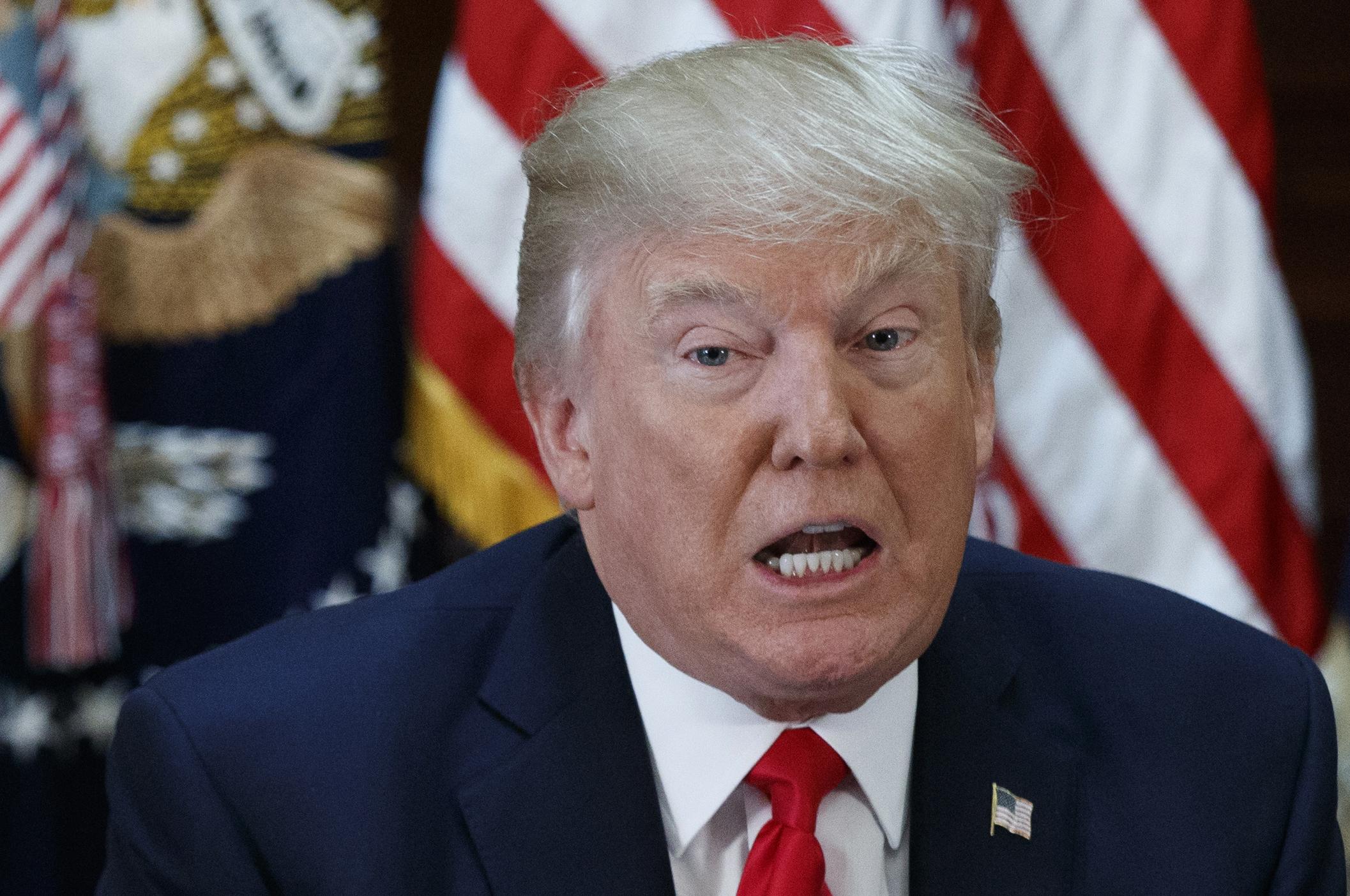
Donald Trump: Age 71. Elected by the power of money, twitter, and social media. Woman grouper. A real estate developer, reality television star. Turned his name into a brand. Three marriages. 5 children. Filed for bankruptcy several times. Represents 325 million people.


Résultat de recherche d'images pour "Pictures of the current world leaders"

Chinese President Xi Jinping: Installed.  Undergraduate degree in chemical engineering and a doctorate degree in law. Not much is known about Xi’s policies. Supports the large state-owned enterprises that have allowed high-ranking Communist Party officials to make millions of dollars. Represents 1 billion 342 million people.

Image associée

Vladimir Putin: Age 65. Married Divorced. Two children. KGB.Appointed acting president after Boris Yeltsin’s resignation. Named Time Person of the Year. Represents 143 million people.


Image associée

Narendra Modi. Age Teetotaler. Bachelor’s degree in Political Science.Unsuccessful arranged marriage. Childless. Poet. 26 million followers on Twitter. Represents 1 billion 342 million people.


Résultat de recherche d'images pour "Pictures of the current world leaders "

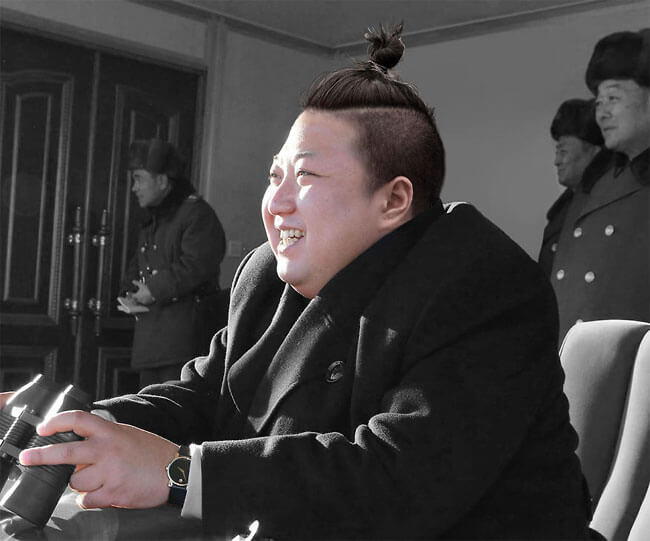
Kim Jong-il  World’s youngest head of state, believed to be turning 33 on 8 January. Married to Ri Sol-Ju. Move over Jesus. Based on Kim Jong-iI’s official biography, he was born on Korea’s most sacred mountain, Mt. Baekdu. Fashion icon. Invented The Hamburger. Never used a toilet.  Head of one of the largest armies in the world. Awarded an honorary doctorate in economics by a private Malaysian university called the HELP University.To break from its “imperialist past”, North Korea announced it would follow “Pyongyang time” in August 2015 – which is half an hour later than the previous time zone it shared with South Korea and Japan. In 2014, a UN report found: “The gravity, scale and nature of these [human rights] violations reveal a state that does not have any parallel in the contemporary world.” Represents 25 million people.


Résultat de recherche d'images pour "PAPERS ON THE LEADERS IN THE WORLD"

Bashar al-Assad : Age 52. Married 3 children. Elected unopposed. The second son of former Syrian President Hafez al-Assad. Study medicine at the University of Damascus, graduating in 1988. Leader of the Ba’ath Party and commander-in-chief of the military. Using chemical weapons against civilians with assistance from Russian president Vladimir Putin. April 2017, following news of another round of chemical weapons unleashed on civilians, new U.S. president Donald Trump ordered airstrikes on a Syrian airbase. By February 2016, the conflict had led to an estimated 470,000 deaths in Syria. Controls 25 percent of Syrian territory, and he’ll hold on to it as if his life depends on it. Controls 25 percent of Syrian territory, and he’ll hold on to it as if his life depends on it. 4 million people have left the country and another 7.6 million Syrians have been forced from their homes but remain inside Syria. Turkey highlights the fundamental problem with the war in Syria: every actor has his own agenda. Turkey wants to fight Kurds, Iran wants to beat back Syrian rebels backed by Saudi Arabia, the US is focused on ISIS, and Putin gains political ground by “standing up to the West.” Alliances and rivalries overlap, with just one clear winner: Bashar al-Assad. He may be fighting ISIS for control of Syria, but it’s the rise of ISIS that’s keeping him in power. Represents himself.

Résultat de recherche d'images pour "pictures of the iran leader"

Ayatollah Khamenei:  Age 78. Married  6 children. The supreme religious leader of the Islamic Republic of Iran in 1979, now the religious and political leader of Iran for life.Well known for releasing a fatwa (a legal document issued by a Muslim cleric) calling for the death of Indian-British author Salman Rushdie for his book The Satanic Verses in 1989. No friend of Israel.  Recently stated “We however thank this new guy in the White House, since he largely did the job we had been trying to do in the past decades: to divulge the true face of the US. We had been working to show the world the depth of corruption in US government and ranks and files of the ruling elite; Trump did it in few days after coming to the White House.” Represents 81 million people.


Image associée

Angela Merkel: Chancellor of Germany, Age 53. Married divorced. No Children. University of Leipzig, B.S., 1978; German Academy of Sciences, Ph. D, 1986. Named Person of the Year by Time magazine 2015. Forbes named her as the “Most Powerful Woman in the World” in May, 2016. A former research scientist. The only leader in the history of G20, to have attended every meeting, since the first in 2008. The longest-serving incumbent head of government in the history of European Union, as of March 2014. Described as the “Liberal West’s Last Defender.” Honored with the Grand Cross Special Class of the Order of Merit of the Federal Republic of Germany, the highest class of the Order. Awarded with the President’s Medal the highest civil medal given by the State of Israel, in the year 2014. Awarded the title Doctor Honoris Causa, by the Comenius University in Bratislava in 2014, the University of Bern in 2015 and the Ghent University and Katholieke Universiteit Leuven in the year 2017. Awarded the Presidential Medal of Freedom, the highest civilian award of the United States.Had “private and informal talks,” with the 14th Dalai Lama in the Chancellery in Berlin in the year 2007, amid China’s protests. Following this meeting, China cancelled any kind of separate talks with all the officials from Germany. Opened the doors to Syrian Refugees. Presidential Medal of Freedom, the highest civilian award of the United States. Represents 81 million people.


Image associéeFrancois Gerard Georges Hollande. Age 53. Married divorced. 4 children.  First Socialist president since Francois Mitterrand left office in 1995. Taught economics at the elite Institut d’Études Politiques de Paris, or Sciences Po.Receives 28.6% of the vote in France’s presidential election in April 2012. Won in runoff election for the presidency of France by 51.62% of the vote. Enjoys a wide range of holiday residences. Commander-in-Chief of the French Armed Forces and may order the use of nuclear weapons. At the forefront of securing a global climate deal and after the Paris attacks he persuaded Europe and the US to step up the fight against Isis. One of the very last European leaders to believe in Europe. Represents 65 million.


Résultat de recherche d'images pour "Pictures of the current world leaders "

Theresa May:  Age 60. Married. No children. Incumbent Prime Minister of the United Kingdom. A graduate in Geography from Oxford University. Suffering with Type 1 diabetes and Brexit. Worked at the Bank of England. Head of the European Affairs Unit of the Association for Payment Clearing Services. The second longest-serving home secretary in the past 100 years. Fashion-conscious. Instinctively secretive and very rigid. Holds herself at one remove.. Her wider political appeal is, as yet, untested. Mrs May will not have to face a general election until May 2020 unless she decides to seek a fresh mandate – something she has seemingly ruled out but the folly of brexit ill see her overseeing the brake up of the UK.One does not know unless one is educated about or knows the culture. Represents 65 million people. 

Résultat de recherche d'images pour "pictures of dilma rousseff"Dilma Rousseff. (suspended) Age 70. Married,divorced twice. One child. Democratized Brazil’s electricity sector through the “Luz Para Todos” (Light for All) program, which made electricity widely available, even in rural areas. Her chairmanship of the state oil company Petrobras and misuse of election funds, all of which she denies, soon plunged her presidency into crisis. Impeach. Petrobras are accused of illegally “diverting” billions from the company’s accounts for their personal use or to pay off officials. Rousseff served as chair of Petrobras during many of the years when the alleged corruption took place. Did Represent 211 million people. 

Résultat de recherche d'images pour "pictures of Turnbull"

Malcolm Turnbull. Age 63. Married Two children. The country’s fourth Prime Minister since 2013. One of Australia’s wealthiest and most prominent lawmakers. Prone to remind the people of his intelligence and their stupidity. A journalist, a barrister, a banker, a developer of shopping centres, a businessman, a politician, a Rhodes scholar, a student at Oxford. Represents 25 million people.


Résultat de recherche d'images pour "facts about Muhammadu Buhari."Muhammadu Buhari. Age 73. Married Divorced. 10 Children. A farmer, cattle rearer. Retired Major General in the Nigerian Army Latest in a family of 23 children. He contested four times (2003,2007,2011 and 2015) under the platform of CPC, ANPP and APC. The first man to overthrow (by the poll) a sitting Nigerian president. He was one of the two African “not in government ” individuals invited to President Barack Obama’s inauguration. Represent 175 million people.


Turkish President Erdogan on Syria ISIS and PKK _00013804.jpg

Recep Tayyip Erdogan. Age 53. Married. 4 children. Semi-professional football player. Accused of autocratic tendencies, corruption and extravagance, including the 1,000 room-plus palace he built on publicly protected land. Erdogan has also been heavily criticized for failing to protect women’s and human rights, curbing freedom of speech and attempting to curb Turkey’s secular identity. Mayor of Istanbul. Co-founds the Islamist-rooted Justice and Development Party (AKP). Elected president during the first-ever direct elections. Recent attempted coup by a faction of the military squashed, at least 161 people are killed and 1,140 wounded. Says that women and men are not equal “because their nature is different. Wants to transfer power from parliament to the presidency. Represents 81 million people. 

Prime-minister of Samoa Tuilaepa_Sailele_Malielegaoi

Susuga Tuilaepa Sailele Malielegaoi  Age 63. Married has been in office for eighteen years and is the leader of the Human Rights Protection Party. Bachelor of Commerce and Master of Commerce degrees. He holds Chairman positions in many organisations and corporations in Samoa as well as in international organisations. Represents 195 thousand people. 


Considering there are 195 countries in the world, 6,909 distinct languages and  4,200 different religions, it’s no wonder that the world is in a mess. 

Some behaviors may be the norm in one country but different in another.

What is accepted in one culture may be unacceptable or taboo in another.

It is essential to be aware of the cultural nuances. One does not know unless one is educated about or knows the culture

All existing human speech is one in the essential characteristics which we have to consider, even as humanity is one in its distinction from the lower animals; the differences are in nonessential.

If your actions inspire others to dream more, learn more, do more and become more, you are a leader.”

Résultat de recherche d'images pour "PAPERS ON THE LEADERS IN THE WORLD"

<iframe src=’//players.brightcove.net/2111767321001/default_default/index.html?videoId=4814799920001′ allowfullscreen frameborder=0>

← Back

Thank you for your response. ✨


THE BEADY EYE SAYS: DON’T CRY FOR THE G7: IT’S MOSTLY A WASTE OF TIME WITHOUT NO 8.

Tags

, , , , ,

If you can’t remember all—or even any—of them, don’t be too hard on yourself.Résultat de recherche d'images pour "pictures of the  g7 meeting"

Originally, it was the G5: the United States, the United Kingdom, France, Japan, and West Germany. By 1976, Italy and Canada had joined.

The first G8 meeting took place in 1998, in Birmingham, and the final one we should all hope ended yesterday in the Tuscan walled city of Lucca.

Given the gaping gap between rhetoric and action, these get-togethers are so tedious and inconsequential it’s not exactly surprising that, in recent years the G7  is viewed like its G20 mainly as a talking shop.

The G20 at least it gives a notional voice to the billions of people who don’t live in the G7 or G8 countries.  China and India are members of the G20, and so are many other big countries that were previously excluded from the annual photo-op.

All that either seem to achieve these days is to create expectations that couldn’t be fulfilled or spur opposition from those who dismissed both as a rich man’s club, or an agents of globalized capitalism.

Yesterday while pretending—to be an organization of global governance efforts to reach an agreement on statements were replaced with an hypocritical buffoon called Boris, (who represents a country that has just voted to leave the EU) summing up the meeting in a word, that can only be described as  –  Gobbledygook. Image associée

We being treated once again to hot air, with relations between Russia and the US looking set to enter a new chapter you can rest assured that climate change will go on back burner.

New global goals for a brighter future for people and planet is fantasy stuff if the real problems are not tackled or given a mention.

No matter how you cut it – socially, economically, legally it is a worthless club.

Whatever pledges G7 leaders make to the world’s poorest people, they should be more Than Hot Air.  We want detailed plans of how they’ll follow up and make change actually happen.

Ironically, the last G20 summit took place in St. Petersburg, last September, and Putin was the host. (At the time, he was in the United States’s good books for Russia’s help in brokering an agreement on Syria’s chemical weapons.)

The next G20 meeting is scheduled for this November, in Brisbane, Australia.

It will be interesting to see if Putin attends, and, if he does, whether the other leaders of the G7 will agree to sit down with him.

← Back

Thank you for your response. ✨


THE BEADY EYE SAYS: WE NEED TO BE SUPER CAREFUL WITH AI.

Tags

, , ,


( A seven to eight  minute read)Résultat de recherche d'images pour "pictures of AI eyes"

There are a lot of things that can go and have gone wrong throughout history — earthquakes and wars and plagues and whatnot.

The present state of our planet does not have to be highlighted by me in this post but a major change is coming, over unknown timescales but across every segment of society, and the people playing a part in that transition have a huge responsibility and opportunity to shape it for the best.

What is triggering this change?   Artificial intelligence.Résultat de recherche d'images pour "pictures of artificial intelligence court"

Although most of us are unaware of it, AI systems are everywhere, from bank apps that let us deposit checks with a picture, to everyone’s favorite Snapchat filter, to our handheld mobile assistants.

While many countries’ laws are deficient in terms of artificial intelligence (“AI”) – which is defined as the simulation of human intelligence processes by computer systems and other machines,should we ignore the risks of any technology and not take precautions?

Until we have concrete evidence to confirm what an AI can someday achieve, it’s safer to assume that there are no upper limits – that is, for now, anything is possible and we need to plan accordingly.

How do we prepare for an AI more intelligent than we can imagine?

We can imagine all sorts of catastrophic risks from AI or robotics or genetic engineering. The task of developing this technology therefore calls for extraordinary care.

Since machine learning is at the core of pretty much every AI success story, it’s really important for us to be able to understand *what* it is that the machine learned.

I think it’s really important for us to develop techniques so machines can explain what they learned so humans can validate that understanding. …

Of course we are all so preoccupied with our own lives,  turning a blind eye to the world of technology. Given the expectation that advanced AI will far surpass any technology seen to date — and possibly surpass even human intelligence we do this at our peril.

Even if these things are still far off and we’re not clear if we’ll ever reach them, even with a small probability of a very high consequence we should be serious about these issues.

Staving off future catastrophes (assuming that is possible) would bring far more benefit to far greater numbers of people than solving present-day problems such as cancer or extreme poverty.

Regulation and control instruments need to be thought of and established beforehand, not subsequent to the invention a powerful AGI.

There is no governing world body with the goal of keeping AI’s impact on society beneficial, to vet and hold those how create software, responsible.

Human history is rife with learning from mistakes, but in the case of the catastrophic and existential risks that AI could present, we can’t allow for error – but how can we plan for problems we don’t know how to anticipate? AI safety research is critical to identifying unknown unknowns, but is there more the AI community or the rest of society can do to help mitigate potential risks?

When AI becomes very general and very powerful, aligning it with human interests will be challenging. If we fail, AI could plausibly become an existential risk for humanity.

Automation threatens millions of jobs and this is only the beginning. It’s important to remember that AI is a tool and, as such, not inherently good or bad. As with any other technology or tool, there could be unintended consequences.

If I were ranking the existential threats facing us, than runaway ‘superintelligence’ would not even be in the top 10. It is a second half of the 21st century problem with its seeds being sown now.

We don’t know what the future of artificial intelligence will look like. However if we allow it to exploit us and the planet for Greed and profit we are the same as Og standing in front of his cave.

Almost every sector of society is feeling the headwinds of the digital revolution and it is hard to find sectors where robots or technology cannot take humans’ jobs.Résultat de recherche d'images pour "pictures of AI eyes"

The immaturity of our conduct is mind-boggling. AI is not just a cool gadget or a nifty little thing called a smart phone, an I Pad, Google, Facebook, Twitter, or the Internet of Every think run by system’s with no autonomy.

The mismatch between the power of our playthings and the benefits they may well impart now and in the future should not be up for negotiation.  As long as we manage to keep the technology beneficial to all and not to itself, learning human values and doing things humans would consider good upon sufficient reflection – 

We might avoid a world not worth living in. It’s not profitable to discuss the might have been.

Now is the time to make all technology responsible to our core values.

The extraordinary promise of machine intelligence will be worthless if we do not understand what it learned.

The real threat with advances in AI will stem from our failure to create a policy framework for emerging technology.

AI is not simply an extension of our culture and values. “The problems and solutions are us. AI enhances human power — it’s just a way of making us smarter, of letting us know more things sooner.”

AGI system that are not task-directed, without a defined goal are a nightmare scenario.

One can imagine [AI] outsmarting financial markets, out-inventing human researchers, out-manipulating human leaders, and developing weapons we cannot even understand, that chose their own targets and cannot be recalled.

It is unlikely that we will enter a dystopian future where AI is held responsible for its own actions > given personhood and hauled into court.

Oversight is called for because, over the coming decades, AI equipped (‘smart’) machines will increasingly acquire two unique attributes: some degree of autonomous decision-making and the ability to learn from experience. As a result, over time, smart machines could stray from their programmers’ instruction further than happens at present.

AI use will need some kind of oversight but hardly a regulatory regime.

Why?

Because AI by design is artificial, and thus ideas such as liability or a jury of peers appears meaningless.

It will be impossible to control.

Because with reinforcement learning AI integrated with more hardware and software solutions and there is no legal system that can treat reinforcement learning?  Whether and when a machine can have intent is more a metaphysical question than a legal or scientific one, and it is difficult to define “goal” in a manner that avoids requirements pertaining to intent and self-awareness without creating an over-inclusive definition.

The world will need to adopt a standard for AI where the manufacturers and developers agree to abide by general ethical guidelines, such as through a technical standard mandated by treaty or international regulation. And this standard will be applied only when it is foreseeable that the algorithms and data can cause harm.

Meanwhile the complexity behind the creation of the AI, when paired with the automation and machine learning of the system, could make it difficult to determine who is at fault if something catastrophic goes wrong.

However if we create a world organization that bans the production of uncertified AI systems, it will provide a strong incentive for AI developers to incorporate safety features and internalize the external costs that AI systems generate

For such an Organisation to actually have any power, we will most likely need some sort of government interference

It is vital that careful scrutiny of the ethical, legal and societal dimensions of artificially intelligent systems begins now.”Résultat de recherche d'images pour "pictures of artificial intelligence court"Our smartphones are increasingly giving us advice and directions based on their best Internet searches.

Regardless, we are entering an era where we will rely upon autonomous and learning machines to perform an ever-increasing variety of tasks. At some point, the legal system will have to decide what to do when those machines cause harm and whether direct regulation would be a desirable way to reduce such harm.

It will be very interesting to see the position being taken by the insurance industry in relation to AI and robotics as both the technology and the law develops.

(Once the parties bearing the ultimate responsibility have been identified, their liability should be proportional to the actual level of instructions given to the robot and of its degree of autonomy.)

Increasingly capable and ubiquitous AI systems will have a huge effect on society over the coming decades.

Deal more comprehensively with AI cannot be let to itself, to the free marketplace, to anyone set of values, to anyone country, to anyone of the Tech monopolies Company, to anyone obsolete world organisation, to anyone algorithms, to anyone post.

There being no consensus, we should avoid strong assumptions regarding upper limits on future AI capabilities.

I for one have no ambition to live in a world run by GOOGLE.

All comments and suggestions welcome. All like clicks chucked in the Bin.

Unfortunately like most problems in the world, GREED’ drives just about everything.

← Back

Thank you for your response. ✨


THE BEADY EYES OPEN LETTER: CALLING ON THE YOUTH OF ENGLAND AND THE EU.

Tags

, , ,

( A five minute read)

Where are your voices?

The decision to leave the EU affects your future more than anyone, so tell me why you are now so silent.

Luckily the responsibility for the outcome of the next two years negotiations still rests on the shoulders of the British people—and specifically, on the young English people.

Do young Englanders really want to isolate their Island even more from the rest of Europe?

It is now imperative you make your young voices heard on the final deal, if any.

If you do not there is little point sitting on you behinds, chastising older Brits, when less of you voted in the referendum than those who did not.

The 51.9 percent to 48.1 percent was so close – if the rest of you had voted, the outcome could have been very different, and if 16-and 17-year-olds were given the chance to have their say in this momentous decision England would not now be clinging on to its colonial history.

(It seems ludicrous that 16 and 17-year-olds weren’t allowed to vote in the referendum that was going to define much of their future. Truly idiotic.)

There is no such thing as a perfect future or for that matter a correct past but the coming decisions will pitted rich against poor like no other.

So here is my plea to the Youth of England and the Youth of the EU.

If you look at the sign at the entrance of your town and you’ll spot a phrase that goes something like this: “Twinned with.

(Town twinning, as an official relationship-builder, started in Europe after the second world war. The idea was simple: repair damaged relationships between France, Germany and the UK.)

You and your twin share something. A history, some DNA.

You’re twinned for a reason and that reason will be positive if you now twin your efforts to have a final say and vote on the final result.

We have seen in Greece the rise of a far-left government. In Spain, there is a similar upsurge. In France, Marine Le Pen and the Front National are closer to power than at any time previously. In Britain, the anger of the ‘have-nots’ has so far been contained — probably because unemployment has been kept down. But it would only take mismanagement of welfare benefits and an excessively high national living wage to change that.

Clearly not everyone who voted Leave is a racist thicko, just like not every immigrant is a jihadi. There are legitimate concerns on both sides of the debate, but I do not see how it is helpful to characterise millions of people in this way.

It can seem like a language that the privileged use to sneer at the poor: a kind of moral snobbery. A striking social division has been exposed in this vote.

I dont know about you but I’m ashamed that the world of ever-closer union among countries which for centuries would kill each other by the million—came to a shattering end on Thursday.

I am also embarrassed and disappointed that your country has been manipulated by the xenophobic, racist and above all incorrect facts that have been spread by a vocal minority of U.K. citizens.

Business and government officials have long grumbled about EU rules and regulations but the 2008 financial crisis, subsequent economic turmoil, rise of immigration and terrorism and general European malaise accelerated concerns about the relative merits of EU membership, particularly on the political right

British advocates of Brexit argue that issues of sovereignty and self-government should override economic ones but as a generation that is digitally connected to other young people across the world, you should be the generation which understands what the European Union is about more than any other, because you have grown up as European citizens.

So clearly, this all comes down to whether life is better or worse separate from the EU.

It is difficult to foresee any tangible benefits in leaving – economic, political or security –  that would outweigh remaining and helping to reform the EU, unless the EU disintegrates. 

Whatever the outcome of the British and EU negotiations, afterwards Europe will not be able to shy away from a few much-needed debates and significant reforms.

WE ALL KNOW:  WHETHER YOUR ENGLISH, SPANISH, FRENCH OR FROM ONE OF THE OTHER COUNTRIES CURRENTLY IN THE EU, BLACK OR WHITE- MUSLIM OR WHAT EVER RELIGION, THAT THE WORLD WE ALL LIVING IN IS IN A MESS IN MORE WAYS THAN ONE.

Theresa May explains how her government will balance seeking control of immigration and access to the single market

The picture above is not the world. The picture below is the world.Frontiers of Intercultural Clash and Dialogue - Armenia - abroadship.org

We are better together and celebrating our multi-cultural, immigration-shaped society.

This isn’t about saying whether young people in England were right and wrong, but it’s clear that they see themselves as citizens of Europe, and quite possibly the world, rather than the UK.

Is there a future for the European Union?

If so, what is it necessary to do, to give a future to this European Union?

More specifically, what is the role of new generations in the rescue operations and in ensuring continuity to the European project?

In the world we live in, acting alone is neither possible nor desirable.

Total independence from others is not possible, even outside the context of the European project, because in a global world we are all deeply connected. Thus, when dealing with issues that go beyond any single state’s borders, it is in every country’s interests to be able to participate in the international regulation and decision-making process.

Europe is obviously much more than a market, after all; it is a cultural space, simultaneously bemusing and splendidly diverse, complementary and enriching.

Europe is more than “Brussels”.

And Europe is not a bureaucratic monster, not a tribe of petty-minded technocrats making the lives of decent citizens a misery with their rules and regulations, but it will never be possible to preserve all the things we value about Europe without a European political framework.

Capitalism, we should not forget, is still capitalism.

Anyone who believes that the blessings of the market can spare us the hard work of solving political, social and ecological problems, who thinks that a single nation alone can triumph in the arena of global financial capitalism, is making a terrible mistake.

Such a fragile cultural entity as Europe can only survive in today’s world of conflict if it is politically strong and – whatever the differences – fundamentally united.

Is it too much to hope that a continent that has succeeded since 1945 – after two horrific wars – in turning enemies into neighbours and mistrustful neighbours into cooperative partners and sometimes even friends might turn out to be a reliable force for peace in the turmoil of the twenty-first century, a bastion of freedom and democracy, a promoter of fruitful communication with other influential regions?

The political Europe was never the great leveler, and never will be. Its raison d’être is its diversity, its vital energy, its obstinacy.

Europe is not the navel of the world, not the yardstick by which all other regions of the world are to be judged.

Europe is a historic continent, perhaps the historic continent par excellence. What singles Europe out most of all is that all the greatest crimes and mistakes have already been made here, and we Europeans have felt the punishment.

None of our problems can be solved by isolating ourselves or expanding into supposedly empty lands. We cannot just “go west!” Unlike the Americans, we know – even if we sometimes appear to forget it – that we can only live in peace if we also pay heed to the other side’s interests.

Don’t let anyone persuade you that we – the rest of Europe – want to take away your different-ness, your obstinacy, your trouble-making.

We need you in Europe precisely because you are so different from us. And you?

Would it be impertinent to suggest that you need us too, if you are to fulfil your potential? And if that is true – or at least not completely false – would it not be a rather poor idea to abandon Project Europe? I think so.

Of course, if the United Kingdom were to leave the EU, it would still be a member of NATO – and it is noteworthy that precisely its most significant partner in the alliance has stated its preference for a strong and united European Union that can act decisively in matters of security and defence.

Now is not the time to turn inwards.

It is obvious, therefore, that the Eurozone project is not solely a matter of a technical-parametric economic optimum calculation, but primarily a political issue.

So what is ultimately at stake in the Brexit debate?

It is only partially about Britain. A British exit would return the UK to its pre-modern constitution. For the EU, Brexit could favour a rebalancing of EU law in favour of social and environmental rights. But it is more likely that the neoliberal turn in EU law would continue as there are many factors now driving it, separately from British influence.

The EU, as much as the UK, is in need of a constitutional settlement which addresses the risks posed by market fundamentalism.

The notion of regaining sovereignty as a solution to the problems we face as Europeans, and Britons, is an oversimplification on the part of those who believe that it is possible to live in a world that no longer exists.

I am certain that the British do not really want to turn their backs on us continental Europeans after all we have been through together.

Europe is above all an ever-changing cultural cosmos that can only flourish if all its parts are permitted to be themselves. Anything else is codswallop.

If you get any group in society that doesn’t have a voice, they’re always going to feel nervous and out of control for the future.

Its time for the Youth of England with the support of Young Europeans to combine in a movement to be heard.

If not should I comfort myself with the thought that national egotisms and separatists are proliferating in many other European countries too.

Never. I deeply love the world, but it would be nothing without its people. Résultat de recherche d'images pour "pictures of beautiful eyes with tears"

All the selfies, or social media won’t make you a better person, or help you with a fantastic opportunity to engage with politics and have your opinions heard.

Let’s call it Smart by not leaving it to Money, Profit, Arms Sales and I am all right Jacks to shape our lives.

← Back

Thank you for your response. ✨


THE BEADY EYE SAYS: TO ENGLAND > ADIOS! SLAN ABHAILE! AUF WIEDERSEHAN ! OUT’ZA’NY ! WITH THE BUM’S RUSH

Tags

,

( Sorry: This is a rather long read )

It’s hard to shed a tear as Britain formally triggers the doleful negotiations to exclude itself from the mainstream of European politics and economics.

In this post I am interested in exploring the Hidden aspects of ‘Brexit’ and the Hidden Costs of the FORTHCOMING negotiations.

Article 50 is a one-way street, once it is invoked there is no procedural route for going back and, if an agreement is not reached and an extension of time not given, then the United Kingdom will exit the European Union two years from the date of notification of intention to exit

Even an amicable deal risks major legal hurdles. Any exit deal struck outside Article 50 would risk legal challenge before the EU courts. What is more, any treaty changes would trigger a referendum in other EU countries, which could either stop the process dead and/or infuriate those on the other side of the table.

The UK has a long history in which it abused its relative power over other populations. Jean Claude Juncker and Theresa May

So as we now watch the inevitable turmoil which will follow UK withdrawal from the EU it would be wise to  remember that according to constitutional practice in the United Kingdom, Parliament has no formal role in treaty-making, as the power to do so is vested in the executive, acting on behalf of the Crown.

However Treaties with direct financial implications require the assent of Parliament because they affect revenue.

( The most common type are bilateral agreements to avoid double taxation. The texts are laid in the form of draft Orders in Council and are occasionally debated.

 Many treaties require a change to domestic legislation which will be subject to the usual parliamentary procedures.

 Treaties which stipulate Parliamentary approval – where an agreement is of a political nature and is known to be controversial, one or both of the governments involved may wish to safeguard its position by writing an express requirement for parliamentary approval into the text.

 Treaties which require ratification are subject to the Ponsonby procedure (see below)

 Other treaties and international agreements may be subject to some degree of parliamentary scrutiny if a Member raises the issue through a Parliamentary Question or early Day Motion, for example.

The UK has over 14,000 treaties.

The Vienna Convention on the Law of Treaties (in force since 1980) defines a treaty as: ‘an international agreement concluded between States in written form and governed by international law, whether embodied in a single instrument or in two or more related instruments and whatever its particular designation’ Only a minority of such agreements have “treaty” in their title. Other common names include “convention”, “protocol” and “agreement”.

As we all know looking back on history treaties are not worth the paper they are written on. For example : The Treaty of Waitangi, New Zealand’s founding document, was meant to be a partnership between Māori and the British Crown. Although it was intended to create unity, different understandings of the treaty, and breaches of it, are still causing conflict.

or

Hitler’s had said in (1924) that he would abolish the Treaty of Versailles. It can be argued that it was not just Hitler who broke the Treaty of Versailles, but also Britain and France, when they allowed him to do what he did.

Britain has not been as insular an island as some people take it to be.

Separated by just 20 miles (33 kilometers) of water at the Strait of Dover its reigning royal family (which is German) to its exports (overwhelmingly to Europe), have both shaped and been shaped by developments in the rest of Western Europe.

England joined the European Union through the Royal Prerogative, and will negotiate and leave the European Union through the same.

So what is the Royal Prerogative ?

The royal prerogative has been called “a notoriously difficult concept to define adequately”,

The prerogative appears to be historically and as a matter of fact nothing else than the residue of discretionary or arbitrary authority which at any given time is legally left in the hands of the crown. The prerogative is the name of the remaining portion of the Crown’s original authority … Every act which the executive government can lawfully do without the authority of an Act of Parliament is done in virtue of the prerogative.

or

By the word prerogative we usually understand that special pre-eminence which the King hath, over and above all other persons, and out of the ordinary course of common law, in right of his regal dignity … it can only be applied to those rights and capacities which the King enjoys alone, in contradiction to others, and not to those which he enjoys in common with any of his subjects.

Hopeful and aspirational international declarations of human rights have led progressively towards the adoption and implementation of more robust and justiciable instruments for the protection of fundamental rights in the domestic sphere.

Amid political, social, legal and economic crisis, – this narrative is dying.

UK (a day after invoking Article 50, setting Brexit negotiations in motion), is now proposing to using powers dating back to Henry VIII. to convert European laws into domestic legislation without any parliamentary scrutiny.

The  fact that the UK unwritten magna carta constitution allowed these sorts of powers to survive is “a wondrous thing” as he was all about essentially dictatorial powers.

The scope, and the definition of these powers and when they can be used, in what circumstances, is a black hole of the future of the UK and can only be viewed as a power grab by Mother Theresa.

This is not only undemocratic, but may well lead to the loss of individual rights.

In the current climate, it is perhaps more than the ghost of Henry VIII that will haunt them.

EU law still applies in the U.K pending an exit.

“A bill that limits the powers of the European Court of Justice is a plain contradiction of EU treaty obligations.”

The right to complain to, or seek a decision from, EU institutions will be beheaded by Brexit.

The EU’s court system could be similarly cut off by Brexit, relying on the domestic judicial system and common law and ECHR rights.

The U.K. courts would face a constitutional crisis. Judges would have, on the one hand, the 1972 Act telling them to apply EU law and, on the other, legislation restricting it.

A fundamental tenet of EU treaty law is that it trumps all national law.

There will be a “constitutional conflict [that] would antagonize and politicize the judiciary on both sides.

Governments of Scotland and Wales and NI could also raise constitutional concerns.

“It is hard to imagine that unilateral action to stop applying EU law, while still under a treaty obligation to so, will create a lot of goodwill in subsequent negotiations.”

EU citizens could sue the U.K. government for compensation if they suffer damages as a result of conduct contrary to EU law.

All of this points to the need for absolute transparence in the forthcoming negotiations.

This is not a war in the true sense of endangering lives, but as Brexit becomes more of a reality, the UK’s financial services sector will be the foot soldiers in a financial war over costs, tariffs, stock exchanges, and the European bond marketplace.

Money wars always turn ugly quickly.

It could easily sour the rest of the Brexit talks process, and the “new relationship” process to follow. You can see how the politics of this could get toxic quite quickly.

Britain’s exit bill is a potential slaughterhouse for the idea of a smooth and orderly negotiated settlement.

Britain as a full member state has agreed to current EU budget, so the European Commission expects it to honour its commitments and pay up its share – somewhere in the region of €29 – €36 billion.

Getting a deal done is a political tight-rope walk, with one major sensitivity being the issue of where the combined Agencies will be based.

The European Medicines Agency, which, like the Food and Drug Administration, oversees the approval of drugs for use across Europe, is a European Union agency, so it will almost certainly have to leave Britain. Drug companies might require two authorizations for new products — one British, one European — pushing up the prices of medicine.

The European Banking Authority will also have to re locate.

Brexit will jeopardize the creation of a single European capital market.

THEN WE HAVE 45, European Union agencies, or similar bodies, and they are considered trophies for member countries because they bring both prestige and economic benefits – WITH THEIR PENSIONS.

The pensions of EU civil servants are not paid from an invested pension fund – they are paid on a pay-as-you-go basis from each year’s EU budget. The pension liability is about €67 billion. Who wants to get stuck for a pension bill for Eurocrats (average retirement benefit €67,149 a year)

The British will argue that their obligation stops the day they leave the EU, or might continue with pension payments for the British staff of the Commission (about 4% of staff) – this would cost about €80m this year.

And there is a whole stack of off-balance sheet items.

It will add tens of millions to Ireland’s annual legal costs and severely limit the government’s ability to protect the country’s interests in EU legislation.

Michel Barnier’s EU negotiating team will argue they have an ongoing commitment to pay, because they gave a commitment as a member state to cover the retirement cost of all staff hired, and must pay the UK share of that cost – between 12 and 15% – giving a cost this year of around €120m. But the pension funding commitment won’t peak until 2049, when it will hit €218m for the UK share.

There are also a stack of other liabilities – such as the €16 billion Juncker fund for economic stimulus, or the €3 billion Galileo satellite navigation system, €10 billion for the Connecting Europe fund. And there are contingent liabilities and guarantees on loans made to the European Investment bank (€23 billion), and the various EU bailout schemes, which amount to €56 billion. The UK has a share of some of the guarantees that allow this money to be borrowed at low rates (adding its heft to the ratings agencies’ AAA rating for EU debt).

But just as the EU has liabilities, it also has assets on its balance sheet, and the UK would be due a share of these to offset the exit bill. These include €8.6 billion of property, plant and equipment – including the Commission’s Berlaymont Building in Brussels, and the Galileo satellites – and €13.9 billion of assets available for sale.

The UK is also due a share of EU spending over the next few years, so about €9 billion is netted off the final figure for that. And there is some of Mrs Thatcher’s famous budget rebate due to the UK as well. So that has to come off to arrive at a net figure for the British bill.

A key point of contention is what is the British share of the EU budget – is it calculated from Gross National Income (GNI) in which case Britain has to pay up 15% of the overall EU bill. Or is it calculated (as the British would prefer) from an average of actual contributions after the rebate – in which case it is 12.1%.

If the UK share of the bills is set at 12% they would have to pay €57.4 billion. At 15% share, the cost to the UK would be €72.8 billion.

The exit costs will be settled by politics, not law. That’s how pretty much all EU money fights end – by a political compromise. The entire system is set up to produce political compromises.

Yes the EU could simply refuse to budge and run down the two-year Article 50 clock to extract concessions from the British. But the danger is if the talks with Britain collapse completely there is no deal of any sort – on trade as much as the terms of departure – and the EU states are left to fight among themselves over filling a €60 billion budget hole, or cutting aid to the most needy states (who are already enjoying less generous terms than we got when we were net beneficiaries of the EU budget ).

With pressure on both sides to do a deal, how the departure payment issue is dealt with will set the tone for most of the other negotiations over the terms of Brexit.

The effects will be more far-reaching than anyone imagined.

TO GET ALL OF THIS DONE IN TWO YEARS IS FARCICAL.  HOWEVER YOU CAN REST ASSURED IF ANY OF IT IS DONE BY BACK DOOR DEALS WE WILL NOT BE SAYING GOODBYE TO ENGLAND BUT TO THE EU.

All contributions welcome. All like clicks chucked in the bin

← Back

Thank you for your response. ✨


THE BEADY ASKS: WHY IS OUR WORLD SO COCKED UP.

Tags

, , , , , , ,


( A five-minute follow on read:  Broadening the Subject of Brexit to a Global view)

Because we never see or experience time and space; they are like glasses through which we view the world. Each day, we hear about countless instances of greed, hatred, violence, and destruction, and all of the pain, suffering, and sorrow that ensues.Résultat de recherche d'images pour "pictures of a global eye"

About 100 years ago, the world sleepwalked into World War 1, which lead to world War 11.

Today the world sleepwalking  into the next global disaster.

WE ARE INCAPABLE OF ACTING TOGETHER FOR THE COMMON GOOD.

BRIXIT BEING THE MOST RECENT EXAMPLE.

Take your choice CLIMATE CHANGE or UN-REGULATED ARTIFICIAL INTELLIGENCE.

Technology increasingly prevents us from seeing ourselves in others – we increasingly see others as data, which tell us all about their employment outcomes or what degrees they have, but which keeps their dignity out of plain sight.

How is it that technology has and still is superseding human intelligence, when it’s the humans that are discovering new technologies?

The question is how to change human being, since we are the root cause of everything.

The earth is on the brink of environmental disaster because human beings (at least those in power during the modern age) have drawn sharp distinctions between the human and non-human world.

The world is and has always been divided into two opposing camps: female/male; non-white/white; haves/have-nots; young/old; conflict theorists/functionalists; developed nations/less developed nations; oppressed/oppressors; industrialized/non-industrialized; Western/non-Western, etc.

They all stem from a mindset that envisions a world of you versus me, us versus them, self versus other.

We can look at almost any social problem—racism, sexism, poverty, homophobia, ableism, bullying, terrorism, domestic violence, human trafficking, slavery, religious fundamentalism, immigration —and at the core, is a dualistic orientation.

A dualistic orientation is one that focuses on our differences instead of our similarities, promotes arbitrary divisions at the expense of social cohesion, neglects our interdependence by nurturing our sense of independence, and fashions a deeply polarized world where if you are not with us (or like us) then you are against us (and therefore, we are against you).

The world is certainly a mess of socially created divisions. And while these differences seem real, and have very real effects, we must not forget that they are indeed social creations.

When we speak about problems between women and men, people of color and whites, Christians and Muslims, or any of the other numerous dualisms that we regularly invoke, we are implicitly (and sometimes explicitly) suggesting that these two groups are essentially and inherently distinct, that at the core of these two groups is some fundamental difference.

Although the ubiquity of these problems makes them seem so normal and ordinary that we may not even question.

We need to question and challenge the way we unreflectively describe and divide the world into dichotomous and opposing camps.

In both our words and our actions we need to construct real alternatives to these arbitrary constructions, emphasize our similarities instead of our differences, build bridges instead of borders, and recognize that interdependence sustains us while independence tears us apart.

It may seem fruitless to try to identify a single contributing factor to all of society’s collective dilemmas. Ultimately, the challenge is to see others as us.

We first need to recognize ourselves in others before we can treat them like we would want to be treated.

Treating everyone equal, but in a real scenario, this is not possible.

Leave apart treating humans equal, we do not even spare the nature that lets us live or wildlife that maintains the ecological balance.

We destroy them all if it is serving our purpose.

We need to end the era of easy money. We need to stop subsidizing financial markets. We need to let our economy reorient itself from its short-term and transactional focus back to one based on long-term investment and long-term relationships.

We must encourage not discourage immigration. Immigration is morally correct, is good foreign policy and is economically beneficial. Immigrants must be viewed as assets, which they are, not liabilities.

Populists continue to come to power but it has no long term objectives.

The rich stay rich, the powerful stay powerful and the poor stay poor. Trade suffers, immigrants are shunned. Economic growth is weak. Capitalism continues to be viewed as the problem, big government as the solution. Maybe another financial crises that we can inflate our way out of. Maybe another financial crises that we can’t.

Sooner or later the music stops. It’s time for us to be better.

We are nowhere near as free as everyone thinks, and that makes my skin crawl.

All in all, of course there is a lot of good in this world, but even with all that good, the bad shines, so bright and with that brightness it sometimes gets hard to see the good.

Why settle other planets when ours is in danger of an impending doom?

It’s easy to assume that we’ll charge into our new home disregarding the existing ecosystem or any potential inhabitants. We’ll change shit around so it works for us and in doing so we’ll make the same mistakes we’ve made for centuries on Earth.

What the hell is going on in the world?

IT’S TIME WE PUT ON Résultat de recherche d'images pour "pictures of a global eye"

IT’S TIME TO REVANT THE UNITED NATIONS. TO ESTABLISH A NEW WORLD ORGANISATION TO VET ALL TECHNOLOGY, ARTIFICIAL NOR NOT TO ENSURE IT COMPLIES WITH CORE HUMAN VALUES AND NOT PROFIT.

IT’S TIME TO GET OFF YOUR SMART PHONES AND PAY ATTENTION TO YOUR REAL WORLD.

All comments appreciated. All like clicks chucked in the bin.

← Back

Thank you for your response. ✨