THE BEADY EYE ASKS: WHERE DO WE FIT INTO ALL THIS TECHNOLOGY.

( A ten minute read)

Too often technology is discussed as if it has come from another planet and has just arrived on Earth.

I have dedicated quite a few posts to the need for a New World Organization to vet all Technology, Software, AIs, prior to their release into the world, to ensure that they all complied with our core human values. (see previous posts)Résultat de recherche d'images pour "picture of tech machines and humans"

So where do you fit into all of this TECHNOLOGY:

The ways that we as users and consumers experience devices will change greatly; every touch, scroll, pinch, zoom, tap, click and so on will be rich with unique animations and feedback – attention devoted to the most minute of interactions may well  create far more engaging experiences for us all but the whole notion of an organized professional ethics is an absurdity when it comes to AI.

This is why it is so vital to think about humanity’s new agenda. 

No one is an expert on seeing the full picture. Different fields of technology are now effecting other fields. Artificial intelligence, nanotechnology, big data, genetics, you name it.  No one understands the System any more so no one can stop it. Nobody can can absorb all the latest scientific discoveries.

Nobody has the slightest clue where we are heading in such a rush.

Never mind the expense of loosing our identity, or privacy, the world around us is changing – there is no doubt about that – yet the inexorable march of time and technology is at times so profound, so alien, and so overwhelming, that we often retreat to our safe spaces – of comfort and ritual and practice – rather than embracing those changes head-on as they come.

It is becoming abundantly clear that humanity’s relationship both with nature and technology needs to be undertaken by cooperative, collective action at all levels – local, regional, and global.  

Our products are becoming increasingly anonymous, autonomous, automated and homogenous, but we’re still to see a push back from the users. The significance of trust in digital products has yet to be fully realized. With growing concerns over security and data we are loosing sight of what Technological AIs are doing to society and the world as a whole.

Dozens  if not hundreds of virtual machine brains are making decisions inside AI Algorithms for you, and every other facet of your daily lives. 

Artificial General Intelligence is still the stuff of science fiction — but lesser, more practical AI’s, virtual assistants and digital concierges are right at our doorstep — most notably Apple’s Siri, Amazon’s Echo, Alexa, Cortana, Google Now, Jibo, M, Clara, Amy and S Voice.

These personal “intelligent” assistants are entering our lives at a staggering pace — everyone that owns a smart phone has access to at least one of these AIs, and the world is coming to terms with the reality that AI is here to stay. As we begin to welcome multiple AIs into our lives, we’re beginning to find that our intelligent helpers aren’t being so “helpful” with one another.

Why?

Because these smart helpers are not designed to negotiate any division of labor amongst one another, leading to redundancy, contradiction, and overall dysfunction when their original purpose was to simplify things.

The world of apps and services is becoming increasingly more granular with us the users left in the dark — powerless and confused — caught between seams.

Are we going to be forced to interact with content in a fixed order along a linear path or are going to see the intelligence of the user being given more paths to navigate through, more decisions to make throughout each process, and more divergent ways to complete each touchpoint other than LIKE.

Every time we open Facebook or visit LinkedIn, we are subconsciously engaging in dozens of microinteractions—many invisible, too small to even notice.

We’re moving towards further atomization of microinteractions, where individual interactions are being broken down into even smaller segments within a greater interaction.

Over half the world’s population is now online and the enormous influx of new users will bring about a disproportionate amount of digital-novices, such as the elderly and the Global South. Unfortunately, the people of these nations also bear the brunt of some of the greatest challenges facing the international community in the next millennium: poverty, environmental degradation, human and civil rights abuses, ethnic and regional conflicts, mass displacements of refugees, hunger, and disease.

It won’t be long before we’ll be passively engaging in thousands of micro-mini interactions every time we take out our phones: with conflicting messages exist for us to truly communicate our message and see it implemented in the workforce. Even worse, our message is becoming abstracted, reduced to bullet points and slide shares, our ideas included solely for the benefit of others’ SEOs.

Designers will find new ways to capitalize on newfound user-engagement, both in terms of designing new features around these “interactions within interactions”, as well as devising new interfaces for the abundance of new interactions that the apps of tomorrow will bring!

Where the real paradigm shifting trends of tomorrow lie in wait, is anyone’s guess. It is not enough to look in front of you—you must look ahead to the future.

All of this is giving  birth to a new era of mobile friendliness and device agnosticism, and the web as a whole experienced. A shift in consciousness as sites became easier to use, apps became more intuitive to navigate, and services became all the more delightful and engaging to interact with.

You could say that we live in a time of exceptional opportunity, a time of rapid scientific, medical and technological advances.Résultat de recherche d'images pour "picture of tech machines and humans"

BUT ARE WE?

LET ME ASK YOU THIS:

WHAT HAPPENS WHEN A SINGLE SYSTEM COULD MAKE USE OF COUNTLESS SPECIALIST SYSTEMS IN THE HANDS OF A SINGLE INVESTOR.

THE ANSWERS ARE CATASTROPHIC ON ALL FRONTS.

BACK TO NOW.

That social media is mobilizing citizens to take political action while technological advances are driving down the price of solar power and creating new market opportunities THAT WILL DEVASTATE DEVELOPING COUNTRIES.

Reality is that Extreme global poverty persists, with 702 million people (9.6 percent of the world’s population) estimated to be living on less than US$1.90 a day.

Of the world’s poor, 72 percent (960 million) live in middle-income countries, where they do not experience the benefits of growth and lack access to opportunities and resources, including education, health care, financial services and formal employment—all of which limits socio-economic mobility.

Inequality is fueling violent conflict and political instability. Today’s conflicts are increasingly complex and harder to resolve, and they have a disproportionate impact on civilians.

Current patterns of economic growth are unsustainable and contribute to the acceleration of climate change, posing huge risks for the planet, including its people and their prosperity.

It is increasingly likely that the combined effects of rapid population growth in high-risk areas, environmental degradation and the impacts of climate change will increase the frequency and scale of environmental migration and displacement.

Worldwide, one in every 122 persons is now either a refugee, internally displaced or seeking asylum.

This is a staggering statistic.

In Jordan, for example, one in every 13 people is a Syrian refugee. In Lebanon, one in five persons are refugees.

For millions of people in developing countries, the effects of climate change, such as changing weather patterns and rising sea levels, directly jeopardize their livelihoods, health and security.

The United Nations’ global humanitarian appeal has almost quadrupled in the last 10 years, rising from US$5.9 billion to US$20.1 billion.

We will soon HAVE TO LOOK at the world in a whole new—and much more accurate—way.  A future born of new ideas as to how we create a world that is peaceful, prosperous, just and inclusive—a world where human rights are protected for all. We must urgently address climate change and support inclusive clean growth, including through support for clean energy and sustainable agriculture.

We must protect human rights, including for women and refugees, while promoting accountable governance, peaceful pluralism and respect for diversity.

We must generate new opportunities for youth, so that their despair does not become a risk for global stability and security. And we must continue to respond to human suffering and instability brought on by crisis and disaster, including the hardships facing refugees and displaced populations.

The challenges are clear.

Our collective challenge lies in giving practical expression to this fundamental understanding. For better or worse, weather is an integral part of our world. It impacts our every experience, however subtle, and is thus an omnipresent variable in the way we experience everything else in our lives – including the apps on our phones.

Unsustainable consumption coupled with a record human population and the uses of inappropriate technologies are causally linked with the destruction of the world’s sustainability and resilience. Widening inequalities of wealth and income.

The world-wide disruption of the physical climate system and the loss of millions of species that sustain life are the grossest manifestations of unsustainability.

We must find ways to protect and conserve as large as possible a fraction of the tens of millions of plants, animals, fungi and microorganisms that make up the living fabric of the world.

We depend on them for the maintenance of the sustainable properties of the earth and for virtually every facet of our existence, and yet we have recognized only a very small fraction of them up to the present date.

If we don’t save them now, we clearly will not be able to save them later.

Up to now we’ve had a very fixed view of ourselves but globalization has expanded a country’s presence beyond its physical borders. No developing country has been able to reduce poverty without sustainable economic growth.

AI for Profit is going to ensure that they remain so.

This is where we fit into technology by developing an algorithm that can translate information culled from depth maps of virtual surfaces into dynamic tactile experiences. Another words real-time maps on our flat screen that show the state of the world.

The dramatic climate shifts of the near-future will bring about extreme environmental conditions that necessitate the need for ever more vigilant weather tracking maps.

In view of the persistence of poverty, the widening of economic and social inequalities, and the continued destruction of the environment is it not sensible that we get a handle on Technology before it condemns us all to slavery.

The evidence is that technology is destroying jobs and indeed creating new and better ones but also fewer ones.

Only through the empowerment and education of women and children throughout the world will we be able to attain a world that is both just and sustainable. We have a clear moral obligation to do this, and will benefit greatly by succeeding in this goal.

This will not be achieved by AI or technology.Résultat de recherche d'images pour "picture of tech machines and humans"

So I leave you with these two further questions:

Who Will Own the Robots?

If the rewards of new technologies go largely to the very richest, as

has been the trend in recent decades, then dystopian visions could

become reality. The rapid advances in automation and digital

technology provoke social upheaval by eliminating the livelihoods of

many people, even as they produce great wealth for others?

——–

How can we get better at sharing the wealth that technology creates?

No one knows the answer.

As Algorithms become more intelligent and more powerful it is not only the the financial industry that will require safeguards against exploitation and risk, we all will.

But the machines are tools, and if their ownership is more widely shared, the majority of people could use them to boost their productivity and increase both their earnings and their leisure. If that happens, an increasingly wealthy society could restore the middle-class dream that has long driven technological ambition and economic growth.

If you want to get your head around any of this I would recommend that you read: Homo Deus by Yuval Noah Harari ISBN 9781910701874.

All comments appreciated. All like click chucked in the Bin

← Back

Thank you for your response. ✨


THE BEADY EYE ASKS: ARE WE ALL STARING AT SCREENS SO WE DON’T HAVE TO SEE THE PLANET DIE.

Tags

, , , , , , , ,

( A Seven Minute Read)

Planet Earth is dying all around us on a scale not seen since the annihilation of the dinosaurs thanks to one species and flat screensRésultat de recherche d'images pour "pictures of earth from space high resolution"

It is a story that is both a world away and yet deeply personal because of our flat screens

Humanity could soon be living on a planet stripped of much of its biodiversity — and that’s not even considering the potentially devastating effects of global climate change, which has only recently started to really kick into gear.

Our Screens provide shocking proof that we humans have to change our behaviour.

You would think irrevelent of our different belief, political and religiously, we would all recognise the value of our planet. Instead we are preoccupied with satisfying our short-term greed or power to fuel a world of globalisation that is reflected in the stock exchanges which are run by Artificial Intelligence that also runs our flat screens.

Nothing is real, it’s all entertainment.

It strikes me even if (when) we fall prey to artificial intelligence, nuclear war, GMO viruses, climate change, or an array of other disasters, that we might be better off using our massive resources, technology, and brain power to save the planet we’ve already got rather than trying to colonize others.

Science may well have the power to redeem and inspire, and indeed with the power of flat screens we are sharing the wonder of science, exploration and adventure but it is an antidote, in some small measure, to suffering and destruction going on about us.

There will be around 6.1B Smartphone Users Globally By 2020. Those 6.1 billion smart phone users works out to some 70 percent of the world’s population using smartphones in five years’ time.

In the USA there are 14,728 full power radio stations: 1,774 full power TV stations: with unofficial global figure of approximately 15,000 channels. earning around 400 billion in revenue.

 We are now on the breaking tip of a sixth great wave of extinction.

It is the kind of bad news that makes historical catastrophes like World War II or the Black Death look like picnics.

If the currently elevated extinction pace is allowed to continue, humans will soon (in as little as three human lifetimes) be deprived of many biodiversity benefits.

The principle culprits are human “reproduction, consumption in general and especially agriculture, leading to habitat destruction, burning of fossil fuels [and] spreading of toxic chemicals.” The world economy is a wholly owned subsidiary of the planet’s environment with us being a byproduct.

The Zoological Society of London, has found that the number of vertebrates – mammals, birds, reptiles, amphibians and fish – on earth has fallen by more than half since 1970. In all, the report concludes, there are 52 per cent fewer vertebrates alive on Earth than there were when someone now in their forties was born.

It is the number of animals in an ecosystem that decides its health and functionality. 6.5 percent of all people ever born are alive today. Preventing a sixth great dying requires a rapid return to equilibrium.

The number of insects worldwide had fallen by 45 per cent since the Seventies, while human populations had almost doubled.

But how long does it have, and what will it take to sterilise the entire planet? There’s no shortage of potential apocalypses.

Which of them will finally render the Earth barren?Résultat de recherche d'images pour "pictures of earth from space high resolution"

Researchers can hypothesise almost no end of threats to life on Earth.

Today we worry about the destructive power of Super Volcanoes like Yellowstone. Asteroid that could wipe out all life on Earth, the Earth’s core mysteriously stopping to rotate, the Earth’s magnetic field deflecting ionising particles from the sun, intense waves of radiation called gamma-ray bursts (GRBs), genetically engineered viruses, artificial intelligence and robots could be the end of us all, the Sun exploding in 6.5 billion years time or the arrival of an Alien life form.

All of which would be very unlikely to wipe out all life except the Sun.

Forty per cent of the planet’s forests, for example, have been felled since the 18th century, while 60 per cent of the globe’s “ecosystem services” have been degraded in the past half century alone.

In fact, the take-home message from all of this is that there isn’t a plausible catastrophic agent from outside the solar system that could wipe out life on Earth within the next few billion years.

Life’s biggest threat will come from within.The Sun will expand, and eventually swallow the Earth (Credit: AlgolOnline/Alamy)

The sun is getting hotter as it ages, and as a consequence the Earth will warm up. That means the chemical reaction between rocks and atmospheric carbon dioxide will speed up – a process that’s accelerated even more by the action of plant roots.

Eventually, so much carbon dioxide will have been removed from the air that plants can no longer perform photosynthesis. All plants will die, and animal life won’t be far behind. This could happen surprisingly soon, perhaps in just 500 million years.

Beginning around 5 billion years from now, the Sun will expand, becoming a swollen star called a red giant. By 7.5 billion years in the future, its surface will be past where Earth’s orbit is now. So the expanding Sun will engulf, and destroy, the Earth.

If that’s true, the only hope lies with us. If any humans are still around, they might have the technology to move the Earth to safety. Otherwise, life on Earth has a maximum life expectancy of 7.5 billion years.

Alien forensic scientists might well conclude that life on Earth had a hand in its own demise.

But we also can have a hand in stopping what is destroying our planet. That does not mean living less well, only less wastefully.

WE COULD DEMAND THAT GREED AND PROFIT BE MADE TO PAY 0,05% ON ALL HIGH FREQUENCY TRADING, ON ALL FOREIGN EXCHANGE TRANSACTIONS OVER $ 50,000, ON ALL SOVEREIGN WEALTH FUNDS ACQUISITIONS. CREATING A PERPETUAL FUND TO TACKLE INEQUALITY THE DRIVING FORCE THAT LEADS TO DEFORESTATION, POACHING, POLLUTION, WARS ETC. (See previous posts)

WE COULD REPLACE THE PARIS CLIMATE AGREEMENT WITH FAIR TRADE.

WE COULD REPLACE THE PARIS CLIMATE AGREEMENT WITH FAIR TRADE.

WE COULD ASK OUR GOVERNMENTS TO BAN FLIGHTS ONE DAY A MONTH LIKE WISE PRIVATE CARS.

WE COULD GET EVERY WEATHER FORECAST TO INCLUDE A CLIMATE CHANGE REPORT ONCE A MONTH.

WE COULD LOVE OUR PLANET NOT DESTROY IT.

WE COULD DEMAND THAT EVERY FLAT SCREEN TELLS THE TRUTH.

All comments appreciated. All like clicks chucked in the bin.

← Back

Thank you for your response. ✨


THE BEADY EYE ASKS: WHAT WILL ENGLAND LOOK LIKE AFTER ITS EXIT THE EU. IT IS NOT PRETTY.

Tags

Certainly Britain cannot be rewarded and it will not be allowed to pick and choose at will policies that it wants to participate in or abstain from.

SO WHAT IS THE HYPOTHETICAL FUTURE OF ENGLAND OUTSIDE THE EU?Résultat de recherche d'images pour "picture of europe after britain leaves"

THERE ARE SOME EFFECTS THAT ARE OBVIOUS AND OTHER THAT ONLY TIME WILL TELL.

Reality Check:

It is obvious that there is going to be a political ‘price’ to be paid by the UK.  Significantly less political influence compared to EU membership.

It is obvious that England exit from the EU will inevitably affect the future of the EU.

It is obvious that there will be costs in the way of replacing  trade with the EU with trade with other, more distant countries due to the gravity law in international trade.The PM wants to guarantee the rights of EU citizens already in the UK

It is obvious that if the Conservatives secure a landslide victory in the forthcoming general election in July the UK will descend into one-party statehood in a vortex of economic failure.

It is obvious that it will impose immigration quotas on individual EU countries. Discriminated between the different EU member states. As of 2014, there were 5.3 million non-UK nationals resident in the UK, of whom EU nationals accounted for 3.3 million. Of those, 2.2 million currently work in the UK. Around 84 per cent of them already have the right to stay post-Brexit. Those advocating the exit of the UK from the EU as a solution to unwanted intra-EU immigration do not seem to have grasped the unpalatable nature of the alternatives even in the terms of their own anti-immigration agenda.

It is obvious that a reciprocal deals on emergency healthcare like the ones it already has with a number of non-EU countries around the world can be arranged.

It is obvious that the byzantine complexity of withdrawal negotiations and harsh trade agreement terms dictated by the EU will sent the pound into a corkscrew spin, unstabilizing stock markets worldwide.

It is obvious that it will make futile efforts to protect sterling.

It is obvious that interest rates will raise to prevent a falling pound leading to higher inflation.

It is obvious that the knock on effect of this will increase the price of exports and imports, plus tariffs will lead to the privatize the NHS.

It is obvious that there will be a reduction in in tax receipts resulting in higher government borrowing, large tax rises or major cuts in public spending.

It is obvious that the form of subsidies and grants that British farmers get from the Common Agricultural Policy along with various economic development and scientific research projects get from the EU ( £6 billion a year. Taking account of the money that comes back and the aid spending, Britain in 2015 gave almost £6.5 billion to the EU) will change.

In 2015, the UK’s full membership fee was £17.8 billion. However, Britain doesn’t pay that full fee it receives a reduction making its contribution  £12.9 billion.

It is not so obvious that it will need an IMF loan.

It is obvious that any special relationship with the USA will not be worth the paper it is written on. America’s $45trn debt prohibits a loan.

It is obvious that any financial settlements will have to be met on the never-never.

It is obvious that such an arrangement will have to be agreed under both English law and EU laws.

It is obvious that Britain will have to start negotiating with the people you turned our backs on. 

It is obvious that if there is any default in payments it will affect any trade agreement. Weakening any trade deals outside the EU.

It is obvious that the Scots will voted decisively for independence.

It is obvious that it will sour relationships with Ireland. An important part of the EU single market is that tariffs are not imposed on goods and services traded across national boundaries within the trading bloc.

It is obvious that it could destabilise the Northern Ireland peace process if border controls have to be reintroduced, stoking sectarian sentiment.

It is obvious that Scotland will rejoin the EU.

It is obvious that there will be an exodus from the City of financial services firms, to Paris, Frankfurt and Dublin.

It is obvious that the property market will be in decline.

It is obvious that any form of a continental partnership will not work.

It is obvious that wages in real terms will decline, exploited by firms freed from EU employment legislation.

It is obvious that the UK Parliament will face congestion as MPs unpick EU laws.

It is obvious that it could cause a constitutional crisis if pro-EU MPs, who are in a majority, carry out their threat to hold a vote to keep the UK in the single market.

It is obvious that the EU is by far the main market for UK products.

It is obvious that the UK leaving the EU will cause great damage, economic and otherwise, to both the Union and the United Kingdom.

At the end of the day the UK is up against 27 other countries, each of which will all have their own goals in these negotiations.

It is obvious that in the longer term England will find out if can prosper as an independent nation or it has inflicted a massive act of economic self harm.

It is obvious that there will be a growing divide between cities and rural areas, identity, and the future of the nation-state.

It is obvious that the UK has two years to negotiate its exit with the EU. If no deal is forthcoming it can ask for an extension but that would require the approval of all EU member states.

It is obvious that we are all going to have to Brace yourself for a lot of horse trading.

Britain does not just have to negotiate a new trade deal with the EU. It will have to re negotiate trade deals with 53 other countries currently covered by our membership of the EU.

It is obvious it will have to strike new agreements with Europe on policing, consumer rights, border control and the environment. These could all take years to resolve.

It is obvious that there are still a lot of unknowns.

It is not obvious if UK citizens will need to be given new passports that state if they live in the EU or in England or Wales.

Here are a few hard facts:Résultat de recherche d'images pour "picture of europe after britain leaves"

With about €14 trillion in terms of goods and services, its economy surpasses the U.S. Brexit will be a watershed event for Europe and for the European process of unification and integration.

Apart from the EU, there is also the Council of Europe, which is an international organization in Strasbourg with 47 member states, including the UK. It’s Europe’s leading human rights organization and is known for its European Convention on Human Rights, which restricts the death penalty. It also makes judgments through the European Court of Human Rights.

To complicate matters further, there will not be one set of negotiations (between the UK and the EU27) but several: Its assembly is more convoluted than the U.S. federal government, because there are different languages, histories, cultures and different degrees of economic development among these countries.

Never mind the Article 50 procedure. An annoyance and a waste of time, it is ultimately inconsequential. The UK will withdraw the request to leave the European Union.

It can do this at any time until the end of the two-year period, whenever the government has come to its senses and found a better strategy to get what the British people want.

The intention can be reversed at any time over two years.

At present it is dragging its EU relatives along against their will, in chains made of unwritten constitution?

What if the departure causes pain to all others in the EU and destabilizes the whole neighbourhood? Then there is an obligation to speak up and recall that it is only England and Wales, that wants to leave the EU.

Some 63 per cent of the registered electorate did not vote for Brexit in the EU referendum on June 23, 2016; only 37 per cent did.

The UK is a federation by any definition.

It may be politically centralized, but the nations that share the British Isles have retained their clearly demarcated territories, identities, flags and their separate laws, institutions and customs.

They have everything that marks sovereign states and they even field separate national football teams.

The Swiss know that legitimacy of a referendum requires super-majorities of the people and the constituent parts of the federation. This lesson is applied in the voting rules in the EU Council of Ministers, but wilfully ignored by David Cameron when he set up the EU referendum.

The whole thing is a sham that is going to line the pockets of the rich.

The Big Bang of Brexit is only the start of a new era.

Let’s hope the thunder of 29 March doesn’t signal a storm to come.

What has been sadly and persistently lacking in all of this is the political will and ability to put its people first.

And we shouldn’t feel reassured even if the U.K. ends up still in the EU. At stake are the daily lives and interests of millions of people on both sides of the Channel.

The big question is: Is this merely a local British affliction, or does it portend a more global anger against the governing structures of our time?

All comments appreciated. All like clicks chucked in the bin.

← Back

Thank you for your response. ✨


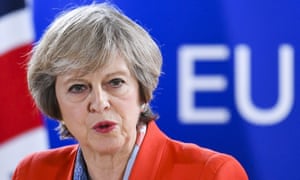
THE BEADY EYE: HAS A FURTHER THOUGHT ON BREXIT.

Tags

, ,


( A one minute read)

The meaning of Brexit is yet to become clear.Résultat de recherche d'images pour "pictures of the eu english negotiations 2016"

However it is clear that a British exit from the EU will carry with it large economic and political costs.

It is also evident that none of the alternative relations with the EU presents itself as more advantageous compared to EU membership.

It is also clear that leaving the EU will be a historical mistake of paramount proportions and it will impact on the UK for many years to come.

It is also clear that they will become impossible.

These set aside the above and you don’t have to be a genius to know that it is going to be a money war with us ( by us I mean Eu citizens living in England and vice a versa English living in the Eu) becoming political footballs.

The signs are already out in the open.

Tough leaked documents say EU wants Britain to have to pay off obligations to Brussels for years after Brexit, remain subject to European Union courts and continue to let relatives of European immigrants settle in the UK, according to draft EU negotiating documents.

On the English side: Résultat de recherche d'images pour "pictures of the eu english negotiations 2016"

Ending free movement of workers from EU states, budget contributions to Brussels and oversight by the European court of justice (ECJ) are central to Theresa May’s plans for leaving the EU, due to happen in March 2019 after a two-year negotiating period.

This put her at odds with EU negotiators.

The chances of  Agreeing reciprocal guarantees to safeguard the status and rights derived from EU law at the date of withdrawal of EU and UK citizens, and their families, affected by the UK’s withdrawal from the union should be the first priority for the negotiations.

The money separation costs of 50 billion or 100 billion will become a gold mine for lawyers for years.

There is another option.

Secure the agreed reciprocal guarantees to safeguard the status and rights of all.  On agreement write off the money costs with no further negotiations on trade or otherwise.

It would save both sides a fortune.

If we all stand back and take a ruthless, non-tribal, unheroic look at the standards on offer in political leaders the incompetence on offer is near universal.

We can only hope for a Messy Brexit or a Clean Brexit.

The belief in free markets does not extend to the electoral marketplace, which would be in all of our interests. In the last 30 years, has any one thing actually ever been sorted out properly and left well alone to function?

None of this is the fault of the political parties: they have been born into a system that makes them incompetent in government. But they are to blame for not changing it. We all get so sucked into the low-level debates that today’s politics depend upon.

The main concern of the people is neither unemployment nor immigration, but the reform of EU institutions.Résultat de recherche d'images pour "pictures of the eu english negotiations 2016"

It’s a mixture of the bare essentials of basic democracy, human rights, and rule of law, and stuff bolted on as the EU role has expanded hugely, and its operation become complex.

All comments appreciated. All like clicks chucked in the Bin.

← Back

Thank you for your response. ✨


THE BEADY EYE SAYS: IT WILL NOT BE LONG BEFORE HUMAN LIFE IS NOT THE MOST SACRED THING IN THE UNIVERSE.


( A Five minute read)

Since death violates the right to life we ought to wage war against it.Résultat de recherche d'images pour "images of life and death"

Death and attendant matters have been seminal topics of reflection, disputatious debate, and other modes of social discourse since the dawn of civilization and, presumably, also among the people who predate civilization.

Philosophers and non-philosophers stand on a level of equality with respect to death.

There are no experts on death, for there is nothing to know about it. Not even those who study the death process have an edge on the rest of us. We are all equals in thinking about death, and we all begin and end thinking about it from a position of ignorance.

The concept of death has a use for the living, while death itself has no use for anything.

Whether we think of death as a wall or a door, we cannot avoid using one metaphor or another. We often say that a person who dies is relieved of suffering. However, if death is real, then it is metaphorical even to say that the dead do not suffer, as though something of them remains not to suffer.

Death is always described from the perspective of the living. All we see when we look at death is a reflection of our own lives. The concept of death is absolutely without any object whatsoever. There is no method for getting to know death better, because death cannot be known at all.

Birth and death are the bookends of our lives.

The young have an intellectual understanding that death comes to us all, but their mortality has not become real to them. Ignoring death leaves us and them with a false sense of life’s permanence and perhaps encourages us to lose ourselves in the minutiae of daily of life.

In the twenty-first century, death and dying will be more visible, more omnipresent, more seminal topics of social concern, and a much more pressing economic reality.

All this had and is still having an impact on our culture and our social lives.

In short, in the future people can be aided to die slowly instead of dropping dead or dying quickly. More persons will be dying slowly, and more attention will be given to dying.

We are now entering an age where the tolerance of death is no longer a one way ticket to afterlife. It is a technical problem to be overcome, that can and should be overcome.

The Flagship of Science and technology is to defeat death.

The human declaration to life has no expiry date.

Google company called Calico state mission is to solve death. “We’re tackling aging, one of life’s greatest mysteries.” Calico is a research and development company whose mission is to harness advanced technologies to increase our understanding of the biology that controls lifespan.

Image associée

There are less and fewer reasons to accept death.  A world without death could well put pay to religion as we know it.

The writing’s on the wall:

Equality is out – immortality is in.  Upgrades or are we on the way that will make our lives as a young person only a distant memory.

The big question is with humanity destined becoming a ripple in the cosmic data flow will it make any difference?

Not really if we have destroyed the planet.

Long life will definitely trigger bitter political conflicts and wars as it will cause misery not happiness.

We might well conquer the pain of death  but misery is another matter.

Like most things, death has both a good side and a bad one.” Life and death depend on each other.  You can’t have one without the other, and if you think life is a good thing, you have to see death as desirable as well.

However if death did not exist, life would continue by definition.

Death might be necessary for uncontrolled procreation under constrained resources, but it is not “absolutely necessary for the continuance of life.”

In truth mortality will be still with us:

Once gone, gone forever or maybe not. If the normal lifespan were a thousand years, death at 80 would be a tragedy. As things are, it may just be a more widespread tragedy. If there is no limit to the amount of life that it would be good to have, then it may be that a bad end is in store for us all.

Each one of us will die, yet the individual’s death is merely a part of the human continuum.

So death is only an unknown, unperceivable or experienceable idea of consciousness. Death of consciousness can’t be perceived by itself. However, if the Consciousness is unfragmented, there is no conditioning and hence no fear at all, and hence the need of coming to terms with death also doesn’t arise.

Greek philosopher Epicurus:

So death, the most terrifying of ills, is nothing to us, since so long as we exist, death is not with us; but when death comes, then we do not exist. It does not then concern either the living or the dead, since for the former, it is not, and the latter are no more.

It is useful to think about death only to the point that it frees us to live fully immersed in the life we have yet to live. 

I certainly don’t want to die any time soon, and you probably don’t either. This is not merely because we can’t see the future. Death deprives us of many futures, good, bad, and middling.

One might argue, future lives could benefit from the knowledge, but why should that matter to us?

For the dead, death is nothing. The best thing about death is that you don’t know you’re dead.

Perhaps it will all come down too: Within this urn my ashes dwell add H20 and stir them well. A pinch of salt perhaps and then I’ll walk upon this earth again.

All comments appreciated. All like clicks chucked in the Bin.

← Back

Thank you for your response. ✨


THE BEAD EYE SAYS; IT TIME TO GET A GRIP, IT’S NOT ALL A LIE.

Tags

, , , , ,


( A seven minute truth read)

IN A WORLD THAT IS LOSING ITS GRIP THE TROUBLE IS KNOWING WHAT TO GET A GRIP OF.

There is nothing new about this, other than the manner and the pace it is happening at where facts are deemed less important than beliefs.

For Example: In an age of Post – truth politics we now have a  President of the USA that appears not to care whether his words bear any relation to reality.  Résultat de recherche d'images pour "pictures of post-truth politics"

The declining societal respect for facts, the rise of deceptive partisan media outlets are creating  an echo chamber effect in public discussion.

If people only knew the truth, we wouldn’t have the problems of global warming, economic recession, poverty, War, any Famine. 

Most people now get their news about the world around them pre-digested and customised by social media. They do not get the breadth of information supplied by an even moderately impartial news source.

Material is allotted them not by whether it is true but by whether they might like it.

Which is institutionally biased, and more vulnerable to the dissemination of lies.

Something must be surely be done about this.

Our post-truth era, in short, need not be an obstacle to taking common action.

Feelings trump facts and the power of truth as a tool to solve problems is being diluted by False News. For example the EU is now in danger of breaking up due to a campaign of blatant misinformation.

The lost of truth has many roots, and indeed it is a human failing not to seek it out.  Life at this juncture is practically unimaginable without the technology we enjoy today.

A large amount of social media feeds on getting strangers to follow each other’s random thoughts or tracking our idle page visits to target advertising, and as a society we seem more than happy to provide.

If you OK-ed the latest update for your Facebook app on your phone, you’ve given Facebook permission to read your text messages?

Everybody knows Google has questionable privacy rules, but Gmail is a really good email provider, and most people don’t tend to make their Twitter private.

Today it is almost heresy to suggest that scientific knowledge is not the sum of all knowledge. Unorganized knowledge is the king, driving Climate Change, down to the survival of the cutest.

The continued societal focus on economic growth, both personally and as a society driven by algorithms for profit are all forcing a consumer society.

With the continued societal focus on economic growth, privacy is now arguably subject to consumerism. Critical thinking is sacrificed in favour of having feelings, reinforced by soundbite.

The problem is that Facebook (which has somewhere in the region of 2 billion users) and other so-called net works do not see themselves as media companies and are for the most part run by algorithms that have put artificial intelligence in charge of spreading False News.

As capitalism really gaining a grip on everyday life technology is a society constant. The majority of the Facebook users tend to share every mundane detail of their lives.

The inverted distinction between public and private.

What can we do about it?

We’ve built an awesome, sprawling web of technology with a astonishing bit rates entering the human mind and emotions through eyes, ears and even noses, all creating an accelerating escalation of intensity which is now out of control.

In a world increasingly devoid of person to person contact we are becoming more and more attached to morally ambiguous technologies. Given such biases it is no wonder we are unable to even agree on facts.

Precious little is said about the human, societal and environmental impact of such intense and increasing post-truth politics.

Are we more or are we less?

What is happening to our relationships, to our sensitivities, to our abilities to be moved, to our abilities to perceive?

Content is no longer a fixed format so there is no provenance as to what is true or false. With countervailing views filtered it is no wonder we get like clicks or news to boost hits.

Most of us now get our news on social media with anyone becoming a publisher. This information revolution can now play havoc with political falsehood.Résultat de recherche d'images pour "papers on post-truth politics"

So when Trump says we need to go to war now. We won’t know if he’s telling the truth.

What then?

We might even see this proliferation of belief systems and worldviews as an opportunity for human development. We can agree to disagree and still engage in pragmatic action in the world.

Modern democracy is not indeed flawless, but so far it is the most advanced political system the human kind could come up with. However the features of modern democracy for which we consider it as the most ‘human’ form of governance now comes with shortcomings.

These shortcomings like poor access to institutions, low-level of participation, rising level of elitism, ossification of state authorities, etc., are often the root of discontent among the public. Such reasons are making the discontent more than just and as a matter of fact.

But without opposition and discontent, there can be no democracy.

We as an audience must take into account the nature of media and subsequently different sources before making any assumptions on the content itself. Things like lack of critical thinking, an absence of fact-checking before accepting statements, inability to put things perspective and so on, provide opportunities for the rise of unpleasantly phenomena like post-truth and post-truth politics.

The concept of ‘post-truth’ has reached a point of saturation in present-day popular discourse and media punditry. Driven by digitally mediatized representations of reality and social interaction. Resulting in many of our world organisation becoming irrelevant.

Democracy requires a citizenship that meets, deliberates and interacts without fear and hatred. It requires organisations that give people a “voice” and a feeling that they have a stake and some influence in the system.

The pervasiveness of presumed causal linkages between environmental degradation, violent conflict and human mobility has been utilized by policy makers and pundits to shape public opinion.

Democracy now needs online innovation.

When Microsoft created Windows, it created the possibility of multiple lenses or views of any issue. Why not build on that? Before we all become Twit’s.

The problem which remains is purely one of logic.

The world is populated by other people who aren’t you. This is one of the major tools of democracy.

What does post-truth tell us about the current and future state of democratic engagement and of democracy itself?

Truth must no longer legitimize the politics of Brexit and Trump. No matter how democratic it is, the rug must be pulled out from under Post – truth politics. We have lost our power to them; we cannot lose our truth too. 

The pervasiveness of presumed causal linkages between environmental degradation, violent conflict and human mobility has been utilized by policy makers and pundits to shape public opinion about the predicament we are now in.

What can be done?

“Take back control”

The least we can do to make the United Nations a place where minds, hearts and nations connect for the sake of so many people all over the world.

Obviously, don’t vote for fibbers.

Bombard social media platforms to remove filters.

Create an Online Political platform for the Truth.

Remember that knowledge is power.

All comments appreciated. All like clicks chucked in the bin.

← Back

Thank you for your response. ✨


THE BEADY EYE ASKS: WHAT CAN BE EXPECTED IN THE NEGOTIATIONS BETWEEN ENGLAND AND THE EU.

Tags

( A two-minute read)

YOU DON’T NEED BLINKERS TO REALIZE THE FOLLOWING.

After four decades of legal, economic and administrative convergence, the scope of this the forthcoming negotiations is truly vast: from labour mobility to customs checks, fishing rights to patents, scientific research to counter-terrorism.

The challenge is all the greater because Article 50 stipulates that (unless the other Member States agree by unanimity to extend the period) the UK will cease to be a member of the EU within 2 years – deal or no deal.

At its core, the EU has been a political project.

It is not just a group of states that cooperate, but a group of states which have created supranational institutions that have executive and judicial authority over EU member states and that can pass laws that are directly applicable throughout the EU.

So what can be expected?

The UK starts from a weaker position than the EU because it needs a deal more.

Certainly Britain cannot be rewarded and it will not be allowed to pick and choose at will policies that it wants to participate in or abstain from.Résultat de recherche d'images pour "pictures of the uk -eu negotiation "

It must decide what it is willing to concede in exchange for achieving its objectives.

On the other hand the EU will wish to avoid an acrimonious divorce that damages all parties.

Both sides must take a long-term view, beyond the possibly drawn-out negotiations that will begin in the coming months.. The EU and the UK economic links are now so interwoven that their prospects cannot be independent over any foreseeable horizon.

The big question might well boil down to, can or will the Uk pay, whatever the economical price. The British government has no legal obligation to pay for Brexit or outstanding payments into EU budget.

The EU’s €1tn, seven-year budget was negotiated in late 2013 by EU leaders including the British prime minister. It is due to expire at the end of 2020, although bills may be trickling in until 2023. This reflects that payments for EU-funded infrastructure projects, such as roads or airports, are not settled until two to three years after being promised.

It is more than likely that payment will be a principle of liability with the British government (with estimates ranging from €20bn to more than €70bn.)

A large payment would be a political problem for any UK government. however to have any negotiations they should be honoured in full.

If not in an increasingly volatile world the chill winds of solitude points to no deal.Résultat de recherche d'images pour "pictures of negotiation skills"

At the end of the two-year period  EU Treaties will cease to apply to the UK, even if no agreement has been reached. This will lead  to a short, sharp shock, rather than a lengthy period of economic dislocation and political acrimony.

So it stands to reason that if the UK government wants goodwill from EU countries and a deal on access to European markets, agreement on the budget will be important.

For some, the most controversial question is likely to be whether it is possible to have close economic integration comparable to the single market while partly limiting labour mobility.

This will turn into a political football : EU citizens in the UK and English citizens living and working in the EU.Résultat de recherche d'images pour "pictures of negotiation skills"

Reorganise Europe in two circles to accommodate the Uk will not work.

So what will be the result? It’s a tough one this.

Negotiation is crucial in all organisations and in virtually every aspect of life. In essence, negotiating is deciding what to agree on and persuading the other party to agree. The outcome does matter. Good negotiators focus on value while sellers often focus on price.

Everything go straight to the wall. May day, May Day.

All comments welcome. All like clicks chucked in the bin.

← Back

Thank you for your response. ✨


This will be an essential element of the negotiations on the orderly separation.”


THE BEADY EYE SAYS: COMPUTER ALGORITHMS THAT ARE FILTERING CONTENT ARE STARTING TO ISOLATE US FROM ONE ANOTHER. 

Tags

, , , , , , ,


( A five-minute read)

We all know or at least we should all be aware that our world is becoming less and less transparent thanks to what we call Artificial Intelligence.

Résultat de recherche d'images pour "pictures of cloud computing"

The challenge there is:

The false promise of the Internet was that it can connect people from different backgrounds, with different beliefs and across disparate locations.

The trend toward personalization by AI is impeding the fulfillment of that promise?

What is becoming more and more apparent is that while most personalization on the web is algorithmically driven, aren’t we implicitly, informing the algorithms based on the choices we’ve previously made interacting with content?

Couldn’t you then, in theory, manipulate the filter so you see what you want to see or are there too many factors beyond our control?

Consider:

Even if you’re completely logged out of Google, on a new computer, the company can track 57 signals about you — from what kind of laptop you’re using to what your IP address is to what the font size in your browser is. Already, that gives a lot of important clues about age, income and demographics.

It’s ironic — the promise of personalization is that it gives us our own personal view of the world.

But the challenge is that a lot of the time, it’s actually pushing us toward a stereotyped, simplified version of ourselves: “This person is male, so we’ll show him more gadget and car news.”

So let me ask you.

Many of the major social, discovery and media sites on the Internet now implement some type of personalization. Do you feel these sites have a responsibility to educate consumers about how their information is being filtered? Do you think users should be able to opt out of personalization?

I would say Yes, on both counts.

In an increasingly complex and vast media landscape it is crucial that me maintain our private lives.

Why?

Because: Algorithms of all shapes and sizes are monitoring, analyzing, making
decisions, dictating our credit scores etc.  They are shaping our lives and economies, our future, so shouldn’t we know what code and mathematical equations, or deep learning go into making them work.
However Transparency alone won’t help.
Algorithms are complicated so exposing the code behind them won’t make them more understandable. Knowing how an algorithm is coded is useless without knowing the data that has being fed into it in the first place.

There is only one solution and that is the:

The Creation of a New World Organisation that is totally transparent, and self financing:  To vet all Technology. To ensure that they comply with the core world gold standard of human values.
(See previous Posts)
Let me ask you two further questions.
Can some level of personalization be useful?
What are we missing that we need to see?
Some amount of algorithmic personalization is necessary — there’s just too much stuff to sort through for humans to do it all. However you don’t know who Google thinks you are or on what basis it’s editing your results, and therefore you don’t know what you’re missing.

A lot of the personalization that exists today just serves up information junk food, but a growing portion is being curated by robots — computer algorithms that are filtering content and deciding what we get to see.

It may be delicious, but it doesn’t feed the soul.

Now it’s possible to live in a bubble where that stuff doesn’t ever show up — you’d never know it’s happening.

Take the Facebook “Like” button — the main way that information gets spread on Facebook. “Like” isn’t a neutral word — it’s easy to Like “I just finished a marathon,” and hard to Like “cell phones may cause cancer.”

So some kinds of information get through, and others don’t, and when that’s happening in the Facebook News Feed, where an increasing number of folks get their news, it’s a real problem.

Most people aren’t aware that their Google search results, Yahoo News links, or Facebook feed is being tailored in this way.

Filters can provide relevance and combat information overload, but with so much riding on automated decisions to ensure algorithms deal with humans fairly is now more relevant than ever.

I recently read that in five-year your smartphone could be reading your mind.

Brain- computer interface.

Personalization couldn’t exist without the massive dossiers of personal data being collected by big companies online these days. And it’s a problem because consumers don’t have much control over that.

The current laws around personal data just don’t contemplate a world in which a click on one website changes what you see on an entirely different one.

Almost all popular websites, from search engines to social networks to media outlets, are now utilizing filters in some way to personalize content for visitors.

When websites show us only what we like, we get cut off from the diverse points of view that can enrich our understanding of the world.

We get Donald Trumps.

Privacy is about controlling what the world is allowed to know about you. This is about controlling what you’re able to see of the world — what your filters let through and what they don’t.

Its time to wake up.

We can lose sight of our common problems, but they don’t lose sight of us.

It’s only a matter of time before our Fidelity/ Loyalty cards are linked up to our personal data held by banks, e-commerce sites and social media. If not already.

We will then be looking at citizen character score, which will bring credit scores to a whole new level, turning them more into to life scores, by tracking anything and everything we do. The scary bit is what is tracked and by who.  

I hear you saying that this will never be accepted.

It is already on the cards for people living in China and Singapore. Humans and robot algorithms, living in peaceful harmony. Where you go, what you buy, who you know, how many points are on your driving licence, how your friends rate you.

The scores will serve not just to indicate an individual’s credit risk, but could be used in a vast array of applications and organisations such as Governments, Benefits, Hospital Operations, Visa, Education, down to all fields that makes Society including prison sentences, landlords, employers, and even romantic partners to gauge an individual’s character.

Résultat de recherche d'images pour "pictures of cloud computing"

All stored in the Cloud. Which comes in many different models forms.

Ubiquitous access to the network: Self-service and on-demand access to computing capabilities. This service will most often be performed by the service provider automatically without the need for human interaction.

Cloud Computers is not the easiest of terms to define, or explain what it all actually means. Owned by Google, Twitter, Gmail and Facebook the Cloud is elusive as grabbing a cloud itself.

Perhaps we can blame it all on Leonhard Euler one of the most prolific mathematicians in history, and also a prolific inventor of canonical notation.

( An Euler path is a path that uses every edge of a graph exactly once.)

One way or the other to use a Trumpetism:  It’s ain’t going to be great unless we build algorithms that have a sense of civic purpose embedded in them, giving us both entertainment and the information we really need, not profit.

All comments appreciated. All like clicks chucked in the bin.

O sorry about the line spacing in this post just cannot figure out how to correct it.

← Back

Thank you for your response. ✨


THE BEADY EYE SAYS: HERE IS WHAT WORLD LEADERS AND ALL OF US SHOULD BE CONCERNED ABOUT.

Tags

, , , , ,

( A survival read of eight minutes)


These question have plagued mankind down the ages.Résultat de recherche d'images pour "images of earth from space"

While some may consider such a discussion a waste of time, more and more people are coming to the conclusion that preparations of some sort are warranted in our current troubled environment — on many fronts.

What exactly are the “existential risks” that threaten the future of our species;

How do we measure them; and what can we do to prevent them?

Or to put it another way: In a world of multiple fears, what precisely should we be most terrified of?

Any single event or combination of events could cause terrible and debilitating circumstances for a short or long period of time: but what is the one to most likely to wipe us out?

The Philosophical answer is:

For the most part that mankind itself is the by far the most threatening threat to our existence we creating two more in the last blink of evolution. A cursory glance around the world reveals that, given the enormous problems facing our planet, it would be surprising if climate change did not crack a list of the top 10 immediate concerns.

Perhaps threat is not climate change, nor pandemic, nor nuclear winter; it is the possibly imminent creation of a general machine intelligence greater than our own.

However the rise of the machines isn’t the biggest threat to humanity.

It’s climate change, extreme weather and other environmental factors.

To be sure, the machines, rise of illiberalism, income inequality and a raft of other problems all could disrupt the global order, but they will not destroy it.

Here is my list:

The single biggest threat facing humanity is Climate Change > in terms of water crises, fresh air, food shortages, constrained economic growth, weaker societal cohesion and increased security risks resulting in large-scale involuntary migration.

The impacts of climate change are becoming clearer with each passing day as we continue to pour carbon pollution into our atmosphere at an unprecedented pace.

What are we doing about it?

Little or nothing. We appear to be passing the problem on to Technology.

Next: We have Technology. Not in itself but the unregulated software called Algorithms

What are we doing about it?

Nothing. We are in a hype cycle with expectations far beyond the technical reality.

Happy to hand our future to the black box of machine learning systems. Plug and play while we allow algorithms exploit the world for profit creating technological black holes around the globe.

Sophisticated algorithms can complete tasks we once thought impossible. Whether they decide to pulp us into human meat paste, or simply make our work completely unnecessary we will have to wait and see. ( See previous post re: A new world Organisation to vet all Technology to ensure it abides by our core human values)

Next: The terrifying rise of multi-drug resistant bacteria, as well as the ever-present threat of deadly viruses going pandemic, such as influenza and MERS.

What are we doing about it. Creating genetically modified crops, fiddling with DNA. Antibiotics do not create resistance per se.The rate of development of new antimicrobial agents has failed to keep pace with the “ingenuity” of bacteria to mutate and become resistant to antibiotics. When we should be minimize antibiotic usage and sneezing into our elbows.

Next: Nuclear proliferation, terrorism, weapons of mass destruction.

What are we doing about it.  Not much. Nuclear warfare is not necessary to cause a breakdown of our society. Our society is so fragile, so dependent on the interworking of things to provide us with the goods and services that you don’t $1.25 r warfare to fragment us anymore than the Romans needed it to cause their eventual downfall. What is more likely is a coordinated cyber-attack. Money becomes worthless. We should ban all countries that sell arms from Trade deals.

Next:  Poverty. One of the $1.25 realizations you see firsthand as you travel extensively worldwide is the extreme wealth, extreme poverty, and extreme corruption that exists in all of its world flavors. About 1.3 billion people don’t have electricity never mind food.

What are we doing about it.

We turn a blind eye to High frequency trading, and Sovereign wealth funds that are blundering the earth resources.

We raise the poverty line from $1.25 to  $1.90. Just over 900 million people globally lived under this line in 2012 (based on the latest available data), and the project that in 2015, just over 700 million are living in extreme poverty. According to the most recent estimates, in 2013, 10.7 percent of the world’s population lived on less than US$1.90 a day, compared to 12.4 percent in 2012. That’s down from 35 percent in 1990. This means that, in 2013, 767 million people lived on less than $1.90 a day, down from 881 million in 2012 and 1.85 billion in 1990. Moreover, for those who have been able to move out of poverty, progress is often temporary: economic shocks, food insecurity and climate change threaten to rob them of their hard-won gains and force them back into poverty. It will be critical to find ways to tackle these issues as we make progress.

Next: Global financial panic. Derivative, debt crisis, economic collapse and/or bond implosion will cause  currencies to implode and governments to topple.

What are we doing about it. We are propping up Finical Institution with quantitative easing while subjecting the rest of us to Austerity.

Next:  Problems with the exploration, deliver

y, or production of oil, the lifeblood of modern economies is coming to an end.

What can we do about it.  Nothing, except to go back to bartering.

Next: Religion Beliefs.

What can we do about it. Adopted Dave Allen saying,  “goodnight, thank you and may your God go with you”

Next: Asteroid Impact or an Electromagnetic pulse event.

What can we do about it:  Get rid of all our nuclear weapons in an attempt to destroy or deflect the Asteroid.  Electromagnetic pulse event. Nothing.

Last: The Sun.

What can we do about it. Sweet Fanny Adam, other than have left earth as transhuman.Résultat de recherche d'images pour "images of earth from space"


With any of these scenarios listed above (and there is a host of others I have probably not even thought about), you could have localized, national, or global unrest and even war for an indefinite period of time depending on the scope and duration of the event(s).

The world in general seems afflicted on so many different fronts.

When you look at the list above, any rational person could easily see one or more of these scenarios occur within their lifetime. Aside from the geophysical things that seem to be going haywire, and could be explained simply as the planet’s cycles, there are plenty of man-made catastrophes that loom on the horizon…

Take your pick.

Never has the planet had as many people as it does now. With increased population numbers, there is increased pressure for resources, like water for example.  As a result we are beginning to see the rise of extreme political parties as a consequence of the total and utter desperation of the populace.

However the main event is staring us in the face, and the whole of the world has front-row seats. Climate Change. 

If things unravel at the core we can kiss our arse good-bye, Donal Trump nor religion will preserve life.

So I will sign off this post with this thought.

These events are never properly covered by the news media, Social media, (what a surprise!) my intent is to at least get you thinking about the most important things.

Individuals can still hope for the best (that things can and will eventually work out), but what good is your prosperity going to do if you don’t have anything to eat or a safe place to hang out for an extended period of time?

Risks appeared to be rising. After the shit hits the fan people will not behave normally.  There’s no place like home. Most risks are rising. It’s a riskier world right now.

No matter how you slice it, things worldwide are getting very strange very quickly.

Ayn Rand: “Man’s mind is his basic tool of survival.”

USE IT.

Otherwise, robots may end up owning the world after all.

Feel free to add to the list. All comments appreciated and needed. All like clicks chucked din the bin.

By the way this is what home looks like from 1.5 billion kilometers away complements of  Cassini.

Résultat de recherche d'images pour "images of earth from space"


← Back

Thank you for your response. ✨

THE BEADY EYE SAYS: DEMOCRATIC EMPOWERMENT NO LONG REST WITH POLITICAL PARTIES.

Tags

, , , , , , , ,


(A Ten minute read)

You might be asking yourself like many why it is that we are inflicted by the like of Donald Trump, Madame La Pen, Brexit, ect.

Any fool on the street can tell you that technology is changing at a whiplash-inducing pace. What’s much more difficult to predict is which technologies specifically are about to hit big.

To me it is obvious: Artificial Intelligent.Résultat de recherche d'images pour "PICTURES OF DEMOCRACY EYE"

Platforms that serve manipulative interests of political elites, in which leaders do most of the conversing and democratic discussion is reduced to campaigning for elections and the casting of votes.

The result of elections and referendums are becoming more individualistic than they are democratic with Democracy becoming, trivial, incoherent, or manipulative across all sorts of domestic debates, military interventions, consumer advertisements, and television specials.

Democracy use to stirred up by:

The public relations agencies, the direct-mail companies, and opinion-polling firms work in concert with the infrastructure of think tanks, tax-exempt foundations, and other centers.  With the press and television industry as the principle gatekeepers of political debate. Other channels of political information are almost nonexistent.

Today, tremendous changes in advanced computing technologies are giving rise TO A NEW DEMOCRATIC EMPOWERMENT, THAT HAS NOTHING TO DO WITH VOTING.Résultat de recherche d'images pour "PICTURES OF DEMOCRACY"The smart phone rules as to which party is the best in more way than one.

On-line computer services and networks, which are oriented toward spontaneous communication among citizens is limiting their exposure only to the affairs that match their interests.  Populist appeal.

The application of Artificial Intelligence (AI) technology will and is expanding this type of public involvement with information-driven politics, the politics of knowledge, not necessarily the politics of winning elections.

But does the public really want a daily digest of political information?

IN WHICH IT HAS LITTLE OR NO SAY.

We are witnessing an ominous trend toward political dysfunction as the number who vote in national elections continues to slide below fifty percent.

One possible reason for this trend is that many people believe that political representatives have little to offer in terms of solving the immediate daily concerns of employment, health care, education, housing, transportation, drugs, crime, social decay, injustice, and so on.

Maybe, if the right tools were available, people would have a better chance to communicate with representatives, know and protect their own rights, engage in deliberation, test hypotheses, discover knowledge, discuss theory, and better understand world events

At the moment AI is all about analyzing the content of candidate appeals and making informed guesses about candidates.

Obviously, merit exists in the public becoming more politically astute and “awakening from the dormant state.” Success may depend partially on whether participation can be achieved in such a way as to impinge minimally upon the matters of private life.

The old politics often depicted as canned debates and public spectacle is becoming unacceptable to an intelligent populace.

New politics demands semantic understanding and identifying the chains of reasoning. These goals require building new tools and networks for the next generation of machine politics.

We are in the middle of a technological upheaval that will transform the way society is organized. We must make the right decisions now.

Every minute we produce hundreds of thousands of Google searches and Facebook posts. These contain information that reveals how we think and feel. Soon, the things around us, possibly even our clothing, also will be connected with the Internet. It is estimated that in 10 years’ time there will be 150 billion networked measuring sensors, 20 times more than people on Earth. Then, the amount of data will double every 12 hours.

Many companies are already trying to turn this Big Data into Big Money.

Soon we will not only have smart phones, but also smart homes, smart factories and smart cities.

Should we also expect these developments to result in smart nations and a smarter planet?  ALL EVIDENCE POINTS TO THE OPPOSITE.

Today 70% of all financial transactions are performed by algorithms.

This all has radical economic consequences: In the coming 10 to 20 years around half of today’s jobs will be threatened by algorithms. 40% of today’s top 500 companies will have vanished in a decade.

Society is at a crossroads, which promises great opportunities, but also considerable risks. HERE I A NOT TALKING ABOUT CLIMATE CHANGE BUT OUR INABILITY TO EXPRESS OURSELVES AT THE BALLOT BOX.

If we take the wrong decisions it could threaten our greatest historical achievements.

Super-intelligence is a serious danger for humanity.

Search engines and recommendation platforms are beginning to offer us personalised suggestions for products and services.

But it won’t stop there.

Some software platforms are moving towards “persuasive computing.

These platforms will be able to steer us through entire courses of action, be it for the execution of complex work processes or to generate free content for Internet platforms, from which corporations earn billions.

The trend goes from programming computers to programming people.

These technologies are also becoming increasingly popular in the world of politics.

Under the label of “nudging,” and on massive scale, governments are trying to steer citizens towards healthier or more environmentally friendly behaviour by means of a “nudge”—a modern form of paternalism.

Singapore is seen as a perfect example of a data-controlled society.

It won’t be long before Every chinese citizen will receive a so-called ”Citizen Score”, which will determine under what conditions they may get loans, jobs, or travel visa to other countries.

This will be a sort of digital scepter that allows one to govern the masses efficiently, without having to involve citizens in democratic processes.

Would this overcome vested interests and optimize the course of the world?

If so, then citizens could be governed by a data-empowered “wise king”, who would be able to produce desired economic and social outcomes almost as if with a digital magic wand.

God forbid.

Lets hope we remain influenced by issues as much as by perceived. Résultat de recherche d'images pour "PICTURES OF DEMOCRACY EYE"

Democracy is not for Hire or Sale. In order for us to retain control of our lives, these networks should be controlled. I am talking about Google, Twitter, and Facebook.

All technology and associated algorithms should be given a World Health Certificate in as much that they are serving the common good and human values.( See previous Posts)

Creation of computer applications to enhance democratic discussion is now a pressing problem.

Echo’s ability to represent “aggregate behavior” might be useful.

All Common Sense comments appreciated. All like comments chucked in the Bin.

WE CAN NO LONGER OR AFFORD TO LEAVE COMMON SENSE LYING IN A DORMANT STATE.

Starry-eyed cyber optimism [which suggests] a new form of technological determinism according to which the Internet would be the hammer to nail all global problems, IS BULL SHIT.  SAY NO TO:Résultat de recherche d'images pour "PICTURES OF DEMOCRACY"

← Back

Thank you for your response. ✨