After four decades of legal, economic and administrative convergence, the scope of this the forthcoming negotiations is truly vast: from labour mobility to customs checks, fishing rights to patents, scientific research to counter-terrorism.
The challenge is all the greater because Article 50 stipulates that (unless the other Member States agree by unanimity to extend the period) the UK will cease to be a member of the EU within 2 years – deal or no deal.
At its core, the EU has been a political project.
It is not just a group of states that cooperate, but a group of states which have created supranational institutions that have executive and judicial authority over EU member states and that can pass laws that are directly applicable throughout the EU.
So what can be expected?
The UK starts from a weaker position than the EU because it needs a deal more.
Certainly Britain cannot be rewarded and it will not be allowed to pick and choose at will policies that it wants to participate in or abstain from.
It must decide what it is willing to concede in exchange for achieving its objectives.
On the other hand the EU will wish to avoid an acrimonious divorce that damages all parties.
Both sides must take a long-term view, beyond the possibly drawn-out negotiations that will begin in the coming months.. The EU and the UK economic links are now so interwoven that their prospects cannot be independent over any foreseeable horizon.
The big question might well boil down to, can or will the Uk pay, whatever the economical price. The British government has no legal obligation to pay for Brexit or outstanding payments into EU budget.
The EU’s €1tn, seven-year budget was negotiated in late 2013 by EU leaders including the British prime minister. It is due to expire at the end of 2020, although bills may be trickling in until 2023. This reflects that payments for EU-funded infrastructure projects, such as roads or airports, are not settled until two to three years after being promised.
It is more than likely that payment will be a principle of liability with the British government (with estimates ranging from €20bn to more than €70bn.)
A large payment would be a political problem for any UK government. however to have any negotiations they should be honoured in full.
If not in an increasingly volatile world the chill winds of solitude points to no deal.
At the end of the two-year period EU Treaties will cease to apply to the UK, even if no agreement has been reached. This will lead to a short, sharp shock, rather than a lengthy period of economic dislocation and political acrimony.
So it stands to reason that if the UK government wants goodwill from EU countries and a deal on access to European markets, agreement on the budget will be important.
For some, the most controversial question is likely to be whether it is possible to have close economic integration comparable to the single market while partly limiting labour mobility.
This will turn into a political football : EU citizens in the UK and English citizens living and working in the EU.
Reorganise Europe in two circles to accommodate the Uk will not work.
So what will be the result? It’s a tough one this.
Negotiation is crucial in all organisations and in virtually every aspect of life. In essence, negotiating is deciding what to agree on and persuading the other party to agree. The outcome does matter. Good negotiators focus on value while sellers often focus on price.
Everything go straight to the wall. May day, May Day.
All comments welcome. All like clicks chucked in the bin.
We all know or at least we should all be aware that our world is becoming less and less transparent thanks to what we call Artificial Intelligence.
The challenge there is:
The false promise of the Internet was that it can connect people from different backgrounds, with different beliefs and across disparate locations.
The trend toward personalization by AI is impeding the fulfillment of that promise?
What is becoming more and more apparent is that while most personalization on the web is algorithmically driven, aren’t we implicitly, informing the algorithms based on the choices we’ve previously made interacting with content?
Couldn’t you then, in theory, manipulate the filter so you see what you want to see or are there too many factors beyond our control?
Consider:
Even if you’re completely logged out of Google, on a new computer, the company can track 57 signals about you — from what kind of laptop you’re using to what your IP address is to what the font size in your browser is. Already, that gives a lot of important clues about age, income and demographics.
It’s ironic — the promise of personalization is that it gives us our own personal view of the world.
But the challenge is that a lot of the time, it’s actually pushing us toward a stereotyped, simplified version of ourselves: “This person is male, so we’ll show him more gadget and car news.”
So let me ask you.
Many of the major social, discovery and media sites on the Internet now implement some type of personalization. Do you feel these sites have a responsibility to educate consumers about how their information is being filtered? Do you think users should be able to opt out of personalization?
I would say Yes, on both counts.
In an increasingly complex and vast media landscape it is crucial that me maintain our private lives.
Why?
Because: Algorithms of all shapes and sizes are monitoring, analyzing, making
decisions, dictating our credit scores etc. They are shaping our lives and economies, our future, so shouldn’t we know what code and mathematical equations, or deep learning go into making them work.
However Transparency alone won’t help.
Algorithms are complicated so exposing the code behind them won’t make them more understandable. Knowing how an algorithm is coded is useless without knowing the data that has being fed into it in the first place.
There is only one solution and that is the:
The Creation of a New World Organisation that is totally transparent, and self financing: To vet all Technology. To ensure that they comply with the core world gold standard of human values.
(See previous Posts)
Let me ask you two further questions.
Can some level of personalization be useful?
What are we missing that we need to see?
Some amount of algorithmic personalization is necessary — there’s just too much stuff to sort through for humans to do it all. However you don’t know who Google thinks you are or on what basis it’s editing your results, and therefore you don’t know what you’re missing.
A lot of the personalization that exists today just serves up information junk food, but a growing portion is being curated by robots — computer algorithms that are filtering content and deciding what we get to see.
It may be delicious, but it doesn’t feed the soul.
Now it’s possible to live in a bubble where that stuff doesn’t ever show up — you’d never know it’s happening.
Take the Facebook “Like” button — the main way that information gets spread on Facebook. “Like” isn’t a neutral word — it’s easy to Like “I just finished a marathon,” and hard to Like “cell phones may cause cancer.”
So some kinds of information get through, and others don’t, and when that’s happening in the Facebook News Feed, where an increasing number of folks get their news, it’s a real problem.
Most people aren’t aware that their Google search results, Yahoo News links, or Facebook feed is being tailored in this way.
Filters can provide relevance and combat information overload, but with so much riding on automated decisions to ensure algorithms deal with humans fairly is now more relevant than ever.
I recently read that in five-year your smartphone could be reading your mind.
Brain- computer interface.
Personalization couldn’t exist without the massive dossiers of personal data being collected by big companies online these days. And it’s a problem because consumers don’t have much control over that.
The current laws around personal data just don’t contemplate a world in which a click on one website changes what you see on an entirely different one.
Almost all popular websites, from search engines to social networks to media outlets, are now utilizing filters in some way to personalize content for visitors.
When websites show us only what we like, we get cut off from the diverse points of view that can enrich our understanding of the world.
We get Donald Trumps.
Privacy is about controlling what the world is allowed to know about you. This is about controlling what you’re able to see of the world — what your filters let through and what they don’t.
Its time to wake up.
We can lose sight of our common problems, but they don’t lose sight of us.
It’s only a matter of time before our Fidelity/ Loyalty cards are linked up to our personal data held by banks, e-commerce sites and social media. If not already.
We will then be looking at citizen character score, which will bring credit scores to a whole new level, turning them more into to life scores, by tracking anything and everything we do. The scary bit is what is tracked and by who.
I hear you saying that this will never be accepted.
It is already on the cards for people living in China and Singapore. Humans and robot algorithms, living in peaceful harmony. Where you go, what you buy, who you know, how many points are on your driving licence, how your friends rate you.
The scores will serve not just to indicate an individual’s credit risk, but could be used in a vast array of applications and organisations such as Governments, Benefits, Hospital Operations, Visa, Education, down to all fields that makes Society including prison sentences, landlords, employers, and even romantic partners to gauge an individual’s character.
All stored in the Cloud. Which comes in many different models forms.
Ubiquitous access to the network: Self-service and on-demand access to computing capabilities. This service will most often be performed by the service provider automatically without the need for human interaction.
Cloud Computers is not the easiest of terms to define, or explain what it all actually means. Owned by Google, Twitter, Gmail and Facebook the Cloud is elusive as grabbing a cloud itself.
Perhaps we can blame it all on Leonhard Euler one of the most prolific mathematicians in history, and also a prolific inventor of canonical notation.
( An Euler path is a path that uses every edge of a graph exactly once.)
One way or the other to use a Trumpetism: It’s ain’t going to be great unless we build algorithms that have a sense of civic purpose embedded in them, giving us both entertainment and the information we really need, not profit.
All comments appreciated. All like clicks chucked in the bin.
O sorry about the line spacing in this post just cannot figure out how to correct it.
These question have plagued mankind down the ages.
While some may consider such a discussion a waste of time, more and more people are coming to the conclusion that preparations of some sort are warranted in our current troubled environment — on many fronts.
What exactly are the “existential risks” that threaten the future of our species;
How do we measure them; and what can we do to prevent them?
Or to put it another way: In a world of multiple fears, what precisely should we be most terrified of?
Any single event or combination of events could cause terrible and debilitating circumstances for a short or long period of time: but what is the one to most likely to wipe us out?
The Philosophical answer is:
For the most part that mankind itself is the by far the most threatening threat to our existence we creating two more in the last blink of evolution. A cursory glance around the world reveals that, given the enormous problems facing our planet, it would be surprising if climate change did not crack a list of the top 10 immediate concerns.
Perhaps threat is not climate change, nor pandemic, nor nuclear winter; it is the possibly imminent creation of a general machine intelligence greater than our own.
However the rise of the machines isn’t the biggest threat to humanity.
It’s climate change, extreme weather and other environmental factors.
To be sure, the machines, rise of illiberalism, income inequality and a raft of other problems all could disrupt the global order, but they will not destroy it.
Here is my list:
The single biggest threat facing humanity is Climate Change > in terms of water crises, fresh air, food shortages, constrained economic growth, weaker societal cohesion and increased security risks resulting in large-scale involuntary migration.
The impacts of climate change are becoming clearer with each passing day as we continue to pour carbon pollution into our atmosphere at an unprecedented pace.
What are we doing about it?
Little or nothing. We appear to be passing the problem on to Technology.
Next: We have Technology. Not in itself but the unregulated software called Algorithms
What are we doing about it?
Nothing. We are in a hype cycle with expectations far beyond the technical reality.
Happy to hand our future to the black box of machine learning systems. Plug and play while we allow algorithms exploit the world for profit creating technological black holes around the globe.
Sophisticated algorithms can complete tasks we once thought impossible. Whether they decide to pulp us into human meat paste, or simply make our work completely unnecessary we will have to wait and see. ( See previous post re: A new world Organisation to vet all Technology to ensure it abides by our core human values)
Next: The terrifying rise of multi-drug resistant bacteria, as well as the ever-present threat of deadly viruses going pandemic, such as influenza and MERS.
What are we doing about it. Creating genetically modified crops, fiddling with DNA. Antibiotics do not create resistance per se.The rate of development of new antimicrobial agents has failed to keep pace with the “ingenuity” of bacteria to mutate and become resistant to antibiotics. When we should be minimize antibiotic usage and sneezing into our elbows.
Next: Nuclear proliferation, terrorism, weapons of mass destruction.
What are we doing about it. Not much. Nuclear warfare is not necessary to cause a breakdown of our society.Our society is so fragile, so dependent on the interworking of things to provide us with the goods and services that you don’t $1.25 r warfare to fragment us anymore than the Romans needed it to cause their eventual downfall. What is more likely is a coordinated cyber-attack. Money becomes worthless. We should ban all countries that sell arms from Trade deals.
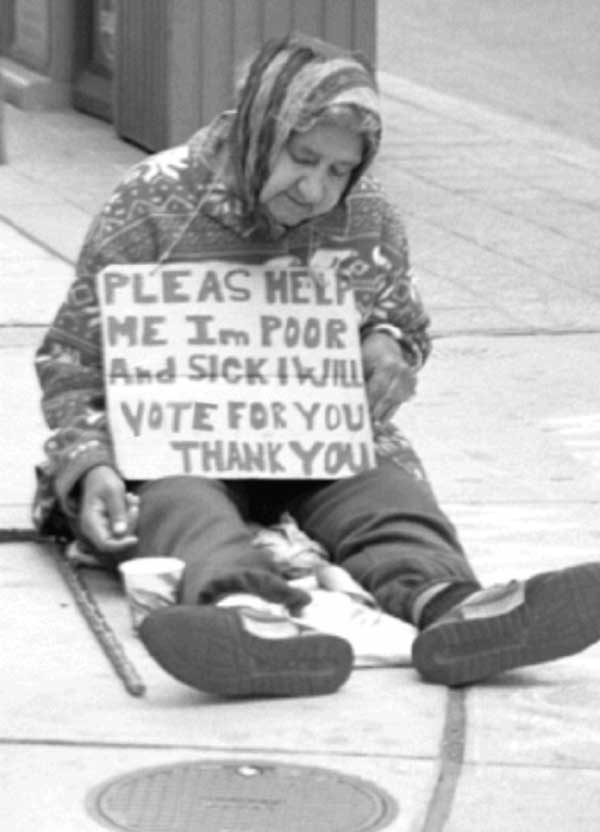
Next: Poverty. One of the $1.25 realizations you see firsthand as you travel extensively worldwide is the extreme wealth, extreme poverty, and extreme corruption that exists in all of its world flavors. About 1.3 billion people don’t have electricity never mind food.
What are we doing about it.
We turn a blind eye to High frequency trading, and Sovereign wealth funds that are blundering the earth resources.
We raise the poverty line from $1.25 to $1.90. Just over 900 million people globally lived under this line in 2012 (based on the latest available data), and the project that in 2015, just over 700 million are living in extreme poverty. According to the most recent estimates, in 2013, 10.7 percent of the world’s population lived on less than US$1.90 a day, compared to 12.4 percent in 2012. That’s down from 35 percent in 1990. This means that, in 2013, 767 million people lived on less than $1.90 a day, down from 881 million in 2012 and 1.85 billion in 1990. Moreover, for those who have been able to move out of poverty, progress is often temporary: economic shocks, food insecurity and climate change threaten to rob them of their hard-won gains and force them back into poverty. It will be critical to find ways to tackle these issues as we make progress.
Next: Global financial panic. Derivative, debt crisis, economic collapse and/or bond implosion will cause currencies to implode and governments to topple.
What are we doing about it. We are propping up Finical Institution with quantitative easing while subjecting the rest of us to Austerity.
Next: Problems with the exploration, deliver
y, or production of oil, the lifeblood of modern economies is coming to an end.
What can we do about it. Nothing, except to go back to bartering.
Next: Religion Beliefs.
What can we do about it. Adopted Dave Allen saying, “goodnight, thank you and may your God go with you”
Next: Asteroid Impact or an Electromagnetic pulse event.
What can we do about it: Get rid of all our nuclear weapons in an attempt to destroy or deflect the Asteroid. Electromagnetic pulse event. Nothing.
Last: The Sun.
What can we do about it. Sweet Fanny Adam, other than have left earth as transhuman.
With any of these scenarios listed above (and there is a host of others I have probably not even thought about), you could have localized, national, or global unrest and even war for an indefinite period of time depending on the scope and duration of the event(s).
The world in general seems afflicted on so many different fronts.
When you look at the list above, any rational person could easily see one or more of these scenarios occur within their lifetime. Aside from the geophysical things that seem to be going haywire, and could be explained simply as the planet’s cycles, there are plenty of man-made catastrophes that loom on the horizon…
Take your pick.
Never has the planet had as many people as it does now. With increased population numbers, there is increased pressure for resources, like water for example. As a result we are beginning to see the rise of extreme political parties as a consequence of the total and utter desperation of the populace.
However the main event is staring us in the face, and the whole of the world has front-row seats. Climate Change.
If things unravel at the core we can kiss our arse good-bye, Donal Trump nor religion will preserve life.
So I will sign off this post with this thought.
These events are never properly covered by the news media, Social media, (what a surprise!) my intent is to at least get you thinkingabout the most important things.
Individuals can still hope for the best (that things can and will eventually work out), but what good is your prosperity going to do if you don’t have anything to eat or a safe place to hang out for an extended period of time?
Risks appeared to be rising. After the shit hits the fan people will not behave normally. There’s no place like home. Most risks are rising. It’s a riskier world right now.
No matter how you slice it, things worldwide are getting very strange very quickly.
Ayn Rand: “Man’s mind is his basic tool of survival.”
USE IT.
Otherwise, robots may end up owning the world after all.
Feel free to add to the list. All comments appreciated and needed. All like clicks chucked din the bin.
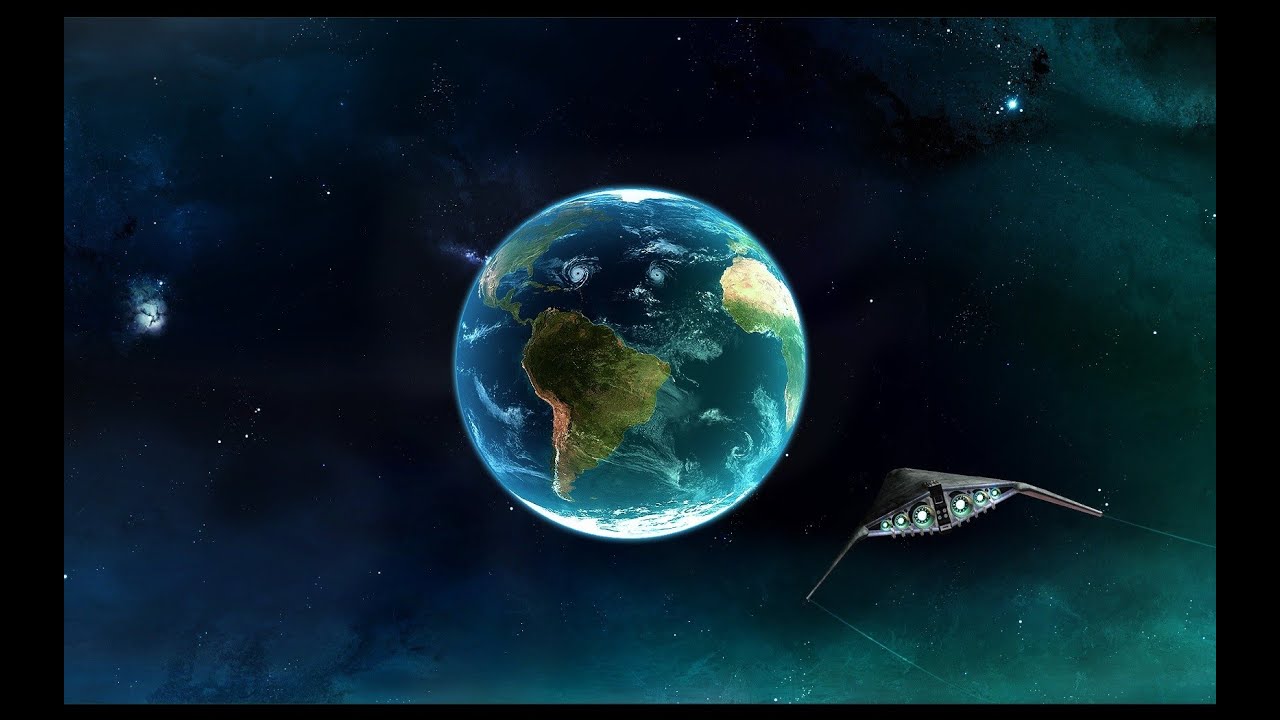
By the way this is what home looks like from 1.5 billion kilometers away complements of Cassini.
You might be asking yourself like many why it is that we are inflicted by the like of Donald Trump, Madame La Pen, Brexit, ect.
Any fool on the street can tell you that technology is changing at a whiplash-inducing pace. What’s much more difficult to predict is which technologies specifically are about to hit big.
To me it is obvious: Artificial Intelligent.
Platforms that serve manipulative interests of political elites, in which leaders do most of the conversing and democratic discussion is reduced to campaigning for elections and the casting of votes.
The result of elections and referendums are becoming more individualistic than they are democratic with Democracy becoming, trivial, incoherent, or manipulative across all sorts of domestic debates, military interventions, consumer advertisements, and television specials.
Democracy use to stirred up by:
The public relations agencies, the direct-mail companies, and opinion-polling firms work in concert with the infrastructure of think tanks, tax-exempt foundations, and other centers. With the press and television industry as the principle gatekeepers of political debate. Other channels of political information are almost nonexistent.
Today, tremendous changes in advanced computing technologies are giving rise TO A NEW DEMOCRATIC EMPOWERMENT, THAT HAS NOTHING TO DO WITH VOTING.The smart phone rules as to which party is the best in more way than one.
On-line computer services and networks, which are oriented toward spontaneous communication among citizens is limiting their exposure only to the affairs that match their interests. Populist appeal.
The application of Artificial Intelligence (AI) technology will and is expanding this type of public involvement with information-driven politics, the politics of knowledge, not necessarily the politics of winning elections.
But does the public really want a daily digest of political information?
IN WHICH IT HAS LITTLE OR NO SAY.
We are witnessing an ominous trend toward political dysfunction as the number who vote in national elections continues to slide below fifty percent.
One possible reason for this trend is that many people believe that political representatives have little to offer in terms of solving the immediate daily concerns of employment, health care, education, housing, transportation, drugs, crime, social decay, injustice, and so on.
Maybe, if the right tools were available, people would have a better chance to communicate with representatives, know and protect their own rights, engage in deliberation, test hypotheses, discover knowledge, discuss theory, and better understand world events
At the moment AI is all about analyzing the content of candidate appeals and making informed guesses about candidates.
Obviously, merit exists in the public becoming more politically astute and “awakening from the dormant state.” Success may depend partially on whether participation can be achieved in such a way as to impinge minimally upon the matters of private life.
The old politics often depicted as canned debates and public spectacle is becoming unacceptable to an intelligent populace.
New politics demands semantic understanding and identifying the chains of reasoning. These goals require building new tools and networks for the next generation of machine politics.
We are in the middle of a technological upheaval that will transform the way society is organized. We must make the right decisions now.
Every minute we produce hundreds of thousands of Google searches and Facebook posts. These contain information that reveals how we think and feel. Soon, the things around us, possibly even our clothing, also will be connected with the Internet. It is estimated that in 10 years’ time there will be 150 billion networked measuring sensors, 20 times more than people on Earth. Then, the amount of data will double every 12 hours.
Many companies are already trying to turn this Big Data into Big Money.
Soon we will not only have smart phones, but also smart homes, smart factories and smart cities.
Should we also expect these developments to result in smart nations and a smarter planet? ALL EVIDENCE POINTS TO THE OPPOSITE.
Today 70% of all financial transactions are performed by algorithms.
This all has radical economic consequences: In the coming 10 to 20 years around half of today’s jobs will be threatened by algorithms. 40% of today’s top 500 companies will have vanished in a decade.
Society is at a crossroads, which promises great opportunities, but also considerable risks. HERE I A NOT TALKING ABOUT CLIMATE CHANGE BUT OUR INABILITY TO EXPRESS OURSELVES AT THE BALLOT BOX.
If we take the wrong decisions it could threaten our greatest historical achievements.
Super-intelligence is a serious danger for humanity.
Search engines and recommendation platforms are beginning to offer us personalised suggestions for products and services.
But it won’t stop there.
Some software platforms are moving towards “persuasive computing.
These platforms will be able to steer us through entire courses of action, be it for the execution of complex work processes or to generate free content for Internet platforms, from which corporations earn billions.
The trend goes from programming computers to programming people.
These technologies are also becoming increasingly popular in the world of politics.
Under the label of “nudging,” and on massive scale, governments are trying to steer citizens towards healthier or more environmentally friendly behaviour by means of a “nudge”—a modern form of paternalism.
Singapore is seen as a perfect example of a data-controlled society.
It won’t be long before Every chinese citizen will receive a so-called ”Citizen Score”, which will determine under what conditions they may get loans, jobs, or travel visa to other countries.
This will be a sort of digital scepter that allows one to govern the masses efficiently, without having to involve citizens in democratic processes.
Would this overcome vested interests and optimize the course of the world?
If so, then citizens could be governed by a data-empowered “wise king”, who would be able to produce desired economic and social outcomes almost as if with a digital magic wand.
God forbid.
Lets hope we remain influenced by issues as much as by perceived.
Democracy is not for Hire or Sale. In order for us to retain control of our lives, these networks should be controlled. I am talking about Google, Twitter, and Facebook.
All technology and associated algorithms should be given a World Health Certificate in as much that they are serving the common good and human values.( See previous Posts)
Creation of computer applications to enhance democratic discussion is now a pressing problem.
Echo’s ability to represent “aggregate behavior” might be useful.
All Common Sense comments appreciated. All like comments chucked in the Bin.
WE CAN NO LONGER OR AFFORD TO LEAVE COMMON SENSE LYING IN A DORMANT STATE.
Starry-eyed cyber optimism [which suggests] a new form of technological determinism according to which the Internet would be the hammer to nail all global problems, IS BULL SHIT. SAY NO TO:
For wonks now we have had scientific paper after scientific paper, world climate summits, TV coverage of storms, glaciers melting, Greenland disappearing, Lakes lighting with methane, rivers disappearing, dust storms, vines freezing, cities covered in smog, and the rest.
You would think that we get it by now THAT WE ALL NEED TO DO SOMETHING, but no.
Instead because we have world leaders who think that Growth in the economy is the holy grail that rules all our lives we are selling carbon credits on the stock market, making promises to reduce carbon admission that are not worth the paper they are written on.
In the mean time the loss of biodiversity and ecosystems, including marine ecosystems are accelerating to the point of no return.
Global warming may well be the source of climate change but neither adaptation to new climate conditions nor the reduction of emissions alone can ensure that major negative climate change impacts can be avoided over the coming decades.
Addressing climate change will therefore require planning for sustainable development and measures to tackle the oncoming impacts of climate change.
Specific actions are now what is required.
Concerted efforts will need to be made locally and internationally by governments, public agencies, businesses, industries, communities and individuals.
Achieving major reductions in the use of fossil fuels is essential along with sustainable transport and agricultural practices aimed at reducing emissions are also urgently needed.
Development and deployment of low-carbon technologies and new technologies such as carbon capture and storage and management systems will also arise.
If we are to avoid mass migration it is obvious that globally assisting developing countries to address the impacts of climate change and to establish a sustainable pathway for their development is a must.
The rapid expansion of climate change control as a regulatory programme calls for a thorough consideration of its underlying ideas, objectives, and strategies. Climate change is understood as a major global environmental risk, and climate change regulation can be seen as a variant of risk regulation.
Unfortunately in the meantime we will be faced with the impact of climate change for at least the next 50 years.
Its effects increase daily on the quality and quantity of water and soil. It will not just have a devastating effect on the markets, but will create a new distribution of species both human and animal.
Now, we’re beginning to feel the effects of climate change around the globe.
While we can’t undo the damage caused to the environment, we can help decelerate the rate of change – and long-term, change the fate of the planet altogether. Half the problem for us as individuals, however, is the knowing where TO START.
So what can to done now, that might enable all of us to contribute.
Climate science must be integrated as practical knowledge into society so that understanding the complex physical and biological interconnections are relevant to decision-making in social, economic, political, cultural, and educational systems.
While information alone is not enough to prepare society for the immediate and long-term challenges of human influences on climate, without a scientifically informed understanding of the causes and effects of climate change, it will be difficult or impossible to reduce vulnerabilities or enhance the resilience of communities and ecosystems affected by climate change.
How about: One day a month city traffic free day . No privately owned cars on the road only essential service vehicles.
How about: No Flying one day a month.
How about: All TV weather forecast programs dedicating one a week, a report on the very subject.
How About: Take a few minutes to contact your political representatives and the media to tell them you want immediate action on climate change. Remind them that reducing greenhouse gas emissions will also build healthier communities, spur economic innovation and create new jobs. And next time you’re at the polls, vote for politicians who support effective climate policies.
Though you might feel like your lifestyle is insignificant compared to things like oil extraction or vehicle emissions, the choices we make in our day-to-day life — how we get around, what we eat, how we live — play a major role in slowing climate change.
Global warming is not expected to end anytime soon.
FOR ALL INTENTIONAL PURPOSES IT IS ACADEMIC HOW IS IN POWER.
STRONG MANDATE OR NOT.
THERE IS NO RESETTING THE OUT BUTTON.
Britain has already triggered Article 50 – the formal starting gun on Brexit, and withdrawal from the EU is all but a certainty at this point.
EU27 leaders meet on April 29 to agree on the negotiating guidelines. After that, there is a window, likely to last until June or July, during which the European Commission will draw up detailed negotiating plans for final approval by EU leaders. Until that time, nothing substantive can be agreed between the EU and the U.K. — and May has decided to squeeze a general election into this window.
SHE IS IN FACT PUTTING THE COUNTRY TO UNNECESSARY EXTRAVAGANT EXPENSE (UNLESS THE EU TOLD HER SHE WAS ANOINTED PRIME MINISTER AND WAS IN NEED OF A MANDATE TO NEGOTIATE).
BRITAIN HAS CHANGED PRIME MINISTER 24 TIMES IN THE LAST CENTURY, HALF OF THOSE WITHOUT A GENERAL ELECTION.
AFTER THE RESULT OF THE FIRST ROUND OF ELECTIONS IN FRANCE.
YOU DON’T NEED TO BE A POLITICAL ANALYST TO SEE WHAT IS GOING TO HAPPEN.
The negotiations with Europe over Britain’s exit from the EU are likely to be fraught negotiations.
The June election date means a new Parliament will have been formed just in time for the likely start date for the Brexit negotiations.
May’s problem was simple: She had a majority in parliament to trigger Article 50 but for almost nothing else — the final Brexit package included.
How the election influences the direction of the Brexit talks depends on the outcome.
There is already a democratic mandate for Brexit. This election could become a democratic mandate for her specific kind of Brexit — out of the single market, but with favorable access via a hasty free-trade agreement.
If the election delivers a small Conservative majority, as already exists, little will change. If the election wipes out the Tory majority — which would throw all assumptions about the U.K.’s Brexit strategy into the air.
The risk is that she ends up muddying the waters with an inconclusive result.
WHAT IS On the ballot paper is Britain’s future outside the European Union.
It might seem foolish to call anything a certainty now in politics but If Jeremy Corbyn was to agree PRIOR TO THE ELECTION to STEP DOWN ON WINNING THE ELECTION ( replacing himself with a more popular, centrist candidate he would win hands down) Why not have another unelected prime minister.
Parliament took you into Europe, and only parliament can take you out.
Both major parties seem wedded to the claim that “the British people have decided to leave”, the British people have done no such thing. At the referendum last June, 37% of those eligible to vote supported Brexit, 35% wanted to remain and 28% did not vote at all – many, in my view, misled by opinion polls indicating a pro-Europe result. Since 63% of the British public did not vote to leave, there would seem plenty for parliament to debate: whether a non-binding referendum should be allowed to produce a further fall in the currency, for example, or diminish human rights.
WAKE UP: Britain great again, or turn it into a bargain-basement offshore tax haven with sunken sterling.
wHICH ONE IS IT TO BE: MADAME MAY OR MRS LE PEN. NEITHER WOULD BE MY STRONG ADVICE. What is certain the most tumultuous period in post-war British history just got more tumultuous.
In Europe alone, there are 3 million people on the streets.
We all know that the Eu has many problems and is need of reform. All EU countries face major challenges in relation to finding sufficient resources to tackle social problems and it cannot be expected that one country like Germany is going to sort out other country’s homeless.
However it appears to me that homelessness is increasing across a considerable number of EU Member States.
The growing number of people in Europe facing situations of housing vulnerability due to shifting dynamics in housing and labour markets, as well as the diminishing role of states in housing provision requires policies that target different types of homelessness (temporary, long-term) with customized interventions (prevention, supported housing) that are flexible and effective at engaging individuals “where they are.”
As EU member states grapple with immigration and other social changes wrought by EU integration, globalization, and the economic crisis
We are now caught in VICIOUS circular, with the whole area in needs of a fresh approach.
Prevention of homelessness is strongest in social democratic regimes, and the weakest in Mediterranean countries and some eastern European transition nations.
Which strategies in particular are best suited to responding to homelessness, either from a preventive or remedial vantage point is debatable however the provision of housing must ultimately be seen as the primary solution to homelessness, and that, while distinct from their housing needs, the additional health and social service needs of individuals need to be addressed as well.
Housing and services should NOT be linked.
A right to housing for all homeless persons will only be successful to the extent that such a right is legally enforceable.
Another words in the hands of courts rather than in those of elected governments.
While the numbers of people experiencing homelessness may be relatively low compared to those experiencing other social problems within the EU, the unique distress of homelessness and the potential costs for individuals, families and wider society from homelessness must never be forgotten.
Quantifying homelessness isn’t straightforward and I don’t think it would be beneficial here to list the thousands that are sleeping rough in Europe, country by country.
It is sufficient to state that Homelessness is a violation of fundamental human rights. When you walk by a homeless person it personifies whether the European Union is working or not.
In total, the United Nations Commission on Human Rights estimates that the world has 100 million homeless people.
And we wonder why we have such an unstable political world.
By comparison in Australia and Canada, hundreds of thousands of people are homeless.
There are over 9.5 million homeless people in Columbia and 24.4 million in Nigeria.
The argument can be made for approaching homelessness as a problem that affects a set of distinct sub-groups and consequently, for tailoring solutions according to each group’s respective needs. Homeless youth, Homeless women Homeless migrants. Homeless mentally ill.
This places homelessness interventions squarely within the broader context of poverty.
But poverty is also the inability to use the resources offered. Poverty should be understood as not merely a problem of access to resources but also as implying a lack of ability in taking advantage of resources.
If the EU does not want social exclusion within its ranks it must address homeless with a Rooflessness subsidy, like it help the farming communities through the Common Agricultural Policy.
Homelessness in Greece has significantly increased to 20,000 homeless people in recent years.
About 50% of the homeless population roams the streets of Athens.
Measuring the scope and extent of homelessness in Europe still remains a significant obstacle along with the whole set of processes that generate homelessness and what results in different histories of homelessness.
The POOR AND HOMELESS WILL CONTINUE TO GROW, BOTH WILL UNDERMINE THE ECONOMIC GROWTH AND UNITY OF THE EU.
All comments welcome, all like clicks chucked in the bin.
≈ Comments Off on THE BEADY EYE ASKS: Before we welcome our AI overlords, Do you really want to give control over your life and your loved ones’ lives to a worm?
BEFORE WE: Hand over our lives and jobs to robots, we ought to pause and think about the kind of intelligences we are creating.
Every day countless headlines emerge from myriad sources across the globe, both warning of dire consequences and promising utopian futures – all thanks to artificial intelligence.
We don’t really understand what interacting with AI will be like – or what it should be like.
How we ought to think about, approach and interact with artificial intelligence
How we can properly conceive of their limitations, even as we celebrate AI’s new possibilities.
Technologists often try to explain AI in terms of how it is built. Take, for instance, advancements made in deep learning. This is a technique that uses multi-layered networks to learn how to do a task. The networks need to process vast amounts of information. But because of the volume of the data they require, the complexity of the associations and algorithms in the networks, it is often unclear to humans how they learn what they do.
AI researchers are working on teaching computers to reason, perceive, plan, move and make associations. AI can see patterns in large data sets, predict the likelihood of an event occurring, plan a route, manage a person’s meeting schedule and even play war-game scenarios.
A benevolent super intelligence might analyze the human genetic code at great speed and unlock the secret to eternal youth. At the very least, it might know how to fix your back.
By the time a machine develops the ability to speak and think it will be too late.
When a computer became capable of independently devising ways to achieve goals, it would very likely be capable of introspection—and thus able to modify its software and make itself more intelligent.
In short order, such a computer would be able to design its own hardware.
Such machines would have the insight and patience (measured in picoseconds) to solve the outstanding problems of nanotechnology and spaceflight; they would improve the human condition and let us upload our consciousness into an immortal digital form.
All wonderful.
BUT PRESENT DAY REALITY IS:
The company that controls A.I. could and will steer the tech industry for years to come and at the moment 60 percent of applications run on the platform software of four companies — Amazon, Google, IBM and Microsoft.
Because Google, Facebook, and other companies are actively looking to create an intelligent, “learning” machine, it just seems daft that we all turn a blind eye to aligning computers and AI with human needs and not profit.
How, then, do we program values into our (potential) super intelligences? What sort of mathematics can define them?
AI might show us the way to Mars, and since humans will never fully agree on anything, we’ll sometimes need it to decide for us—to make the best decisions for humanity as a whole.
This will be impossible if we don’t vet all Technology.
After all, if we develop an artificial intelligence that doesn’t share the best human values, it will mean we weren’t smart enough to control our own creations.
Our AI systems must do what we want them to do and if not,does that created them in the first place must be held responsible.
A platform, in technology, is essentially a piece of software that other companies build on and that consumers cannot do without. Become the platform and huge profits will follow. Microsoft dominated personal computers because its Windows software became the center of the consumer software world. Google has come to dominate the Internet through its ubiquitous search bar. It wants to capture all human knowledge and then to make us pay for it.
It’s early days, but the long-term goal is to have hundreds of millions of people useing platforms is already happening.
Microsoft offers 18 machine learning services, including face recognition, text analysis and product recommendations.
Google is opening its A.I. technology to outsiders, seeking to attract developers.
Facebook’s image-recognition software was now used to select what pictures or videos to show in a user’s news feed, based on a person’s friend network and interests.
Today, only about 1 percent of all software apps have A.I. features.
The next million+ years of human lives are all quietly looking at us, hoping as hard as they can hope that we don’t mess this up. We have a chance to be the humans that gave all future humans the gift of life, and maybe even the gift of painless, everlasting life. If we manage to get there, we’ll be impervious to extinction forever—we’ll have conquered mortality and conquered chance.
I want is for us to take our time and be incredibly cautious about AI.
Nothing in existence is as important as getting this right—no matter how long we need to spend in order to do so.
WE NEED TO ESTABLISH A INDEPENDENT NEW WORLD ORGANISATION: TO VET VERIFY AND APPROVE ALL TECHNOLOGY AGAINST WHAT MAKES US HUMAN.
The first ASI we birth will also probably be the last.
All intelligent comments appreciated all AI like clicks chucked in the bin.
There is no doubt that the work of modern-day leaders is complicated
around the world. Leaders will need to demonstrate a different set of behaviors IF WE ARE TO SAVE THIS ARTIFICIAL INTELLIGENT DRIVEN WORLD FROM GOOGLE, FACEBOOK, TWITTER, AND SOCIAL MEDIA.
It is true that today’s leaders are already facing challenges and changes that are rapidly transforming where, how, and with whom they do business.
WHY?
Because of the shrinking talent pool.
Unfortunately with climate change the world now needs:
Agility, Authenticity, Talent, Sustainability, with better deliver value that embrace social responsibility, all combining to give a distinctive leadership framework of connectivity for the further.
We all know that in the past the world has seen some good, some rotten to the core, however some of the current bunch take the biscuit.
So let’s have a look at a few of them.
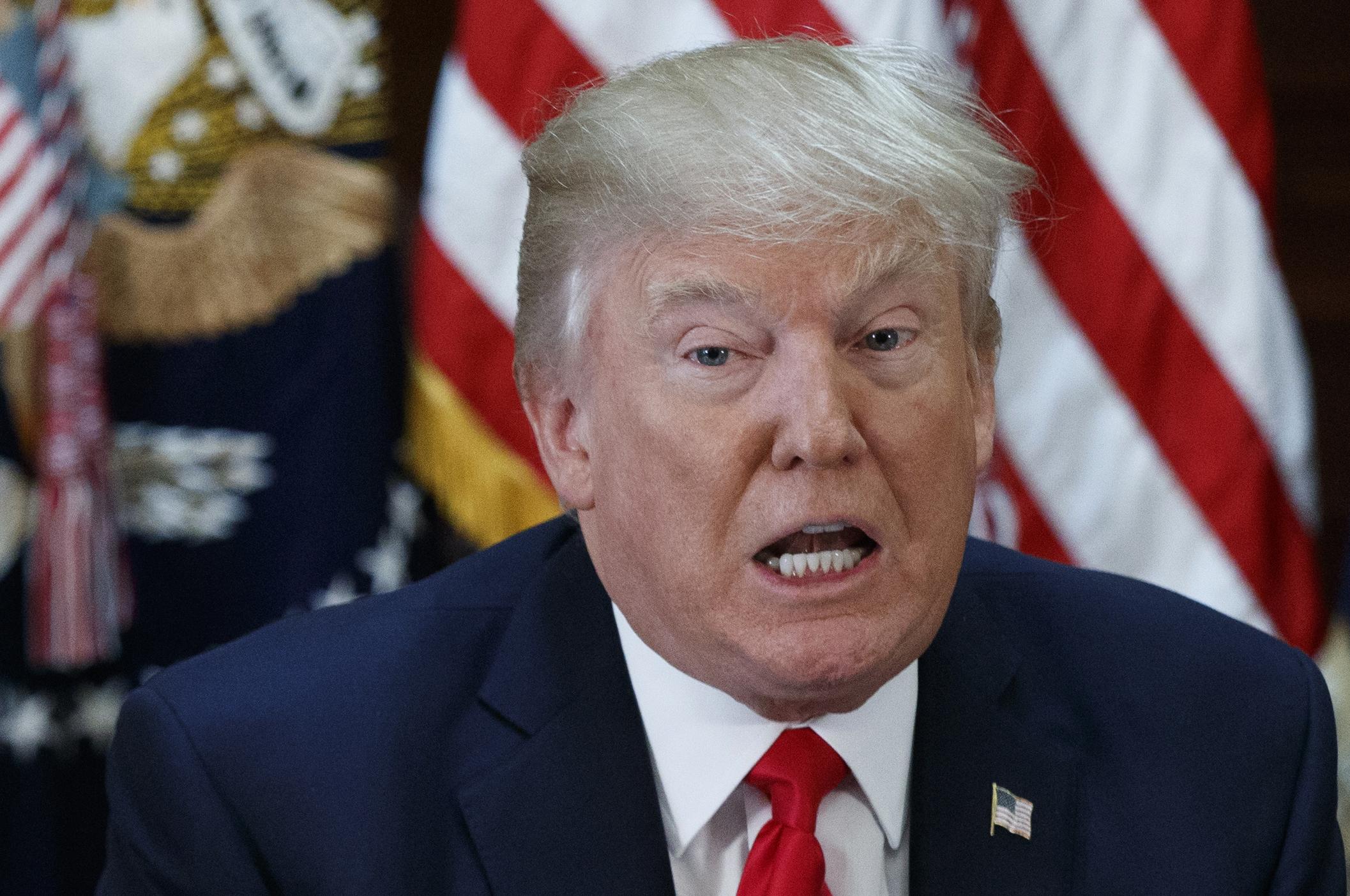
Donald Trump: Age 71. Elected by the power of money, twitter, and social media. Woman grouper. A real estate developer, reality television star. Turned his name into a brand. Three marriages. 5 children. Filed for bankruptcy several times. Represents 325 million people.
Chinese President Xi Jinping: Installed. Undergraduate degree in chemical engineering and a doctorate degree in law. Not much is known about Xi’s policies. Supports the large state-owned enterprises that have allowed high-ranking Communist Party officials to make millions of dollars. Represents 1 billion 342 million people.
Vladimir Putin: Age 65. Married Divorced. Two children. KGB.Appointed acting president after Boris Yeltsin’s resignation. Named Time Person of the Year. Represents 143 million people.
Narendra Modi. Age Teetotaler. Bachelor’s degree in Political Science.Unsuccessful arranged marriage. Childless. Poet. 26 million followers on Twitter. Represents 1 billion 342 million people.
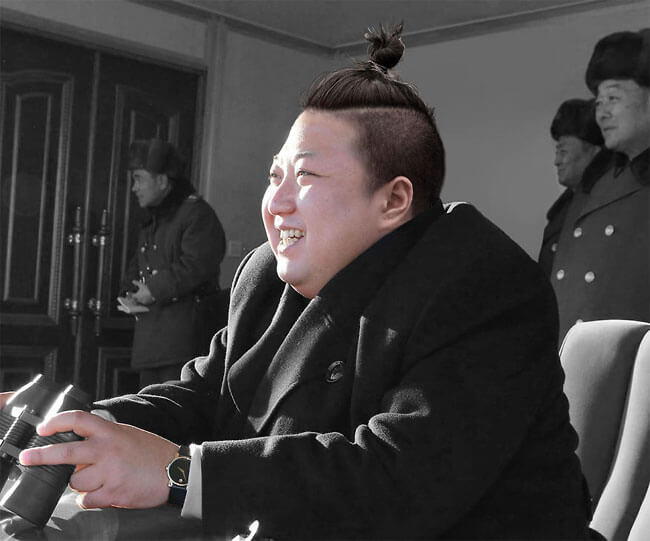
Kim Jong-il World’s youngest head of state, believed to be turning 33 on 8 January.Married to Ri Sol-Ju.Move over Jesus. Based on Kim Jong-iI’s official biography, he was born on Korea’s most sacred mountain, Mt. Baekdu. Fashion icon. Invented The Hamburger. Never used a toilet. Head of one of the largest armies in the world. Awarded an honorary doctorate in economics by a private Malaysian university called the HELP University.To break from its “imperialist past”, North Korea announced it would follow “Pyongyang time” in August 2015 – which is half an hour later than the previous time zone it shared with South Korea and Japan. In 2014, a UN report found: “The gravity, scale and nature of these [human rights] violations reveal a state that does not have any parallel in the contemporary world.” Represents 25 million people.
Bashar al-Assad : Age 52. Married 3 children. Elected unopposed. The second son of former Syrian President Hafez al-Assad. Study medicine at the University of Damascus, graduating in 1988. Leader of the Ba’ath Party and commander-in-chief of the military. Using chemical weapons against civilians with assistance from Russian president Vladimir Putin. April 2017, following news of another round of chemical weapons unleashed on civilians, new U.S. president Donald Trump ordered airstrikes on a Syrian airbase. By February 2016, the conflict had led to an estimated 470,000 deaths in Syria. Controls 25 percent of Syrian territory, and he’ll hold on to it as if his life depends on it. Controls 25 percent of Syrian territory, and he’ll hold on to it as if his life depends on it. 4 million people have left the country and another 7.6 million Syrians have been forced from their homes but remain inside Syria. Turkey highlights the fundamental problem with the war in Syria: every actor has his own agenda. Turkey wants to fight Kurds, Iran wants to beat back Syrian rebels backed by Saudi Arabia, the US is focused on ISIS, and Putin gains political ground by “standing up to the West.” Alliances and rivalries overlap, with just one clear winner: Bashar al-Assad. He may be fighting ISIS for control of Syria, but it’s the rise of ISIS that’s keeping him in power. Represents himself.
Ayatollah Khamenei: Age 78. Married 6 children. The supreme religious leader of the Islamic Republic of Iran in 1979, now the religious and political leader of Iran for life.Well known for releasing a fatwa (a legal document issued by a Muslim cleric) calling for the death of Indian-British author Salman Rushdie for his book The Satanic Verses in 1989. No friend of Israel. Recently stated “We however thank this new guy in the White House, since he largely did the job we had been trying to do in the past decades: to divulge the true face of the US. We had been working to show the world the depth of corruption in US government and ranks and files of the ruling elite; Trump did it in few days after coming to the White House.” Represents 81 million people.
Angela Merkel: Chancellor of Germany, Age 53. Married divorced. No Children. University of Leipzig, B.S., 1978; German Academy of Sciences, Ph. D, 1986. Named Person of the Year by Time magazine 2015. Forbes named her as the “Most Powerful Woman in the World” in May, 2016. A former research scientist. The only leader in the history of G20, to have attended every meeting, since the first in 2008. The longest-serving incumbent head of government in the history of European Union, as of March 2014. Described as the “Liberal West’s Last Defender.” Honored with the Grand Cross Special Class of the Order of Merit of the Federal Republic of Germany, the highest class of the Order. Awarded with the President’s Medal the highest civil medal given by the State of Israel, in the year 2014. Awarded the title Doctor Honoris Causa, by the Comenius University in Bratislava in 2014, the University of Bern in 2015 and the Ghent University and Katholieke Universiteit Leuven in the year 2017. Awarded the Presidential Medal of Freedom, the highest civilian award of the United States.Had “private and informal talks,” with the 14th Dalai Lama in the Chancellery in Berlin in the year 2007, amid China’s protests. Following this meeting, China cancelled any kind of separate talks with all the officials from Germany. Opened the doors to Syrian Refugees. Presidential Medal of Freedom, the highest civilian award of the United States. Represents 81 million people.
Francois Gerard Georges Hollande. Age 53. Married divorced. 4 children. First Socialist president since Francois Mitterrand left office in 1995. Taught economics at the elite Institut d’Études Politiques de Paris, or Sciences Po.Receives 28.6% of the vote in France’s presidential election in April 2012. Won in runoff election for the presidency of France by 51.62% of the vote. Enjoys a wide range of holiday residences. Commander-in-Chief of the French Armed Forces and may order the use of nuclear weapons. At the forefront of securing a global climate deal and after the Paris attacks he persuaded Europe and the US to step up the fight against Isis. One of the very last European leaders to believe in Europe. Represents 65 million.
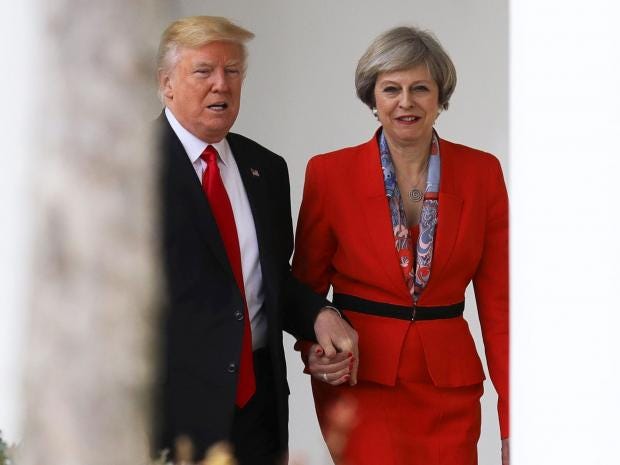
Theresa May: Age 60. Married. No children. Incumbent Prime Minister of the United Kingdom. A graduate in Geography from Oxford University. Suffering with Type 1 diabetes and Brexit. Worked at the Bank of England. Head of the European Affairs Unit of the Association for Payment Clearing Services. The second longest-serving home secretary in the past 100 years. Fashion-conscious. Instinctively secretive and very rigid. Holds herself at one remove.. Her wider political appeal is, as yet, untested. Mrs May will not have to face a general election until May 2020 unless she decides to seek a fresh mandate – something she has seemingly ruled out but the folly of brexit ill see her overseeing the brake up of the UK.One does not know unless one is educated about or knows the culture. Represents 65 million people.
Dilma Rousseff. (suspended) Age 70. Married,divorced twice. One child. Democratized Brazil’s electricity sector through the “Luz Para Todos” (Light for All) program, which made electricity widely available, even in rural areas. Her chairmanship of the state oil company Petrobras and misuse of election funds, all of which she denies, soon plunged her presidency into crisis. Impeach. Petrobras are accused of illegally “diverting” billions from the company’s accounts for their personal use or to pay off officials. Rousseff served as chair of Petrobras during many of the years when the alleged corruption took place. Did Represent 211 million people.
Malcolm Turnbull. Age 63. Married Two children. The country’s fourth Prime Minister since 2013. One of Australia’s wealthiest and most prominent lawmakers. Prone to remind the people of his intelligence and their stupidity. A journalist, a barrister, a banker, a developer of shopping centres, a businessman, a politician, a Rhodes scholar, a student at Oxford. Represents 25 million people.
Muhammadu Buhari. Age 73. Married Divorced. 10 Children. A farmer, cattle rearer. Retired Major General in the Nigerian Army Latest in a family of 23 children. He contested four times (2003,2007,2011 and 2015) under the platform of CPC, ANPP and APC. The first man to overthrow (by the poll) a sitting Nigerian president. He was one of the two African “not in government ” individuals invited to President Barack Obama’s inauguration. Represent 175 million people.
Recep Tayyip Erdogan. Age 53. Married. 4 children. Semi-professional football player.Accused of autocratic tendencies, corruption and extravagance, including the 1,000 room-plus palace he built on publicly protected land. Erdogan has also been heavily criticized for failing to protect women’s and human rights, curbing freedom of speech and attempting to curb Turkey’s secular identity. Mayor of Istanbul. Co-founds the Islamist-rooted Justice and Development Party (AKP). Elected president during the first-ever direct elections. Recent attempted coup by a faction of the military squashed, at least 161 people are killed and 1,140 wounded. Says that women and men are not equal “because their nature is different. Wants to transfer power from parliament to the presidency. Represents 81 million people.
Susuga Tuilaepa Sailele Malielegaoi Age 63. Married has been in office for eighteen years and is the leader of the Human Rights Protection Party. Bachelor of Commerce and Master of Commerce degrees. He holds Chairman positions in many organisations and corporations in Samoa as well as in international organisations. Represents 195 thousand people.
Considering there are 195 countries in the world,6,909 distinct languages and 4,200 different religions, it’s no wonder that the world is in a mess.
Some behaviors may be the norm in one country but different in another.
What is accepted in one culture may be unacceptable or taboo in another.
It is essential to be aware of the cultural nuances. One does not know unless one is educated about or knows the culture
All existing human speech is one in the essential characteristics which we have to consider, even as humanity is one in its distinction from the lower animals; the differences are in nonessential.
If your actions inspire others to dream more, learn more, do more and become more, you are a leader.”
If you can’t remember all—or even any—of them, don’t be too hard on yourself.
Originally, it was the G5: the United States, the United Kingdom, France, Japan, and West Germany. By 1976, Italy and Canada had joined.
The first G8 meeting took place in 1998, in Birmingham, and the final one we should all hope ended yesterday in the Tuscan walled city of Lucca.
Given the gaping gap between rhetoric and action, these get-togethers are so tedious and inconsequential it’s not exactly surprising that, in recent years the G7 is viewed like its G20 mainly as a talking shop.
The G20 at least it gives a notional voice to the billions of people who don’t live in the G7 or G8 countries. China and India are members of the G20, and so are many other big countries that were previously excluded from the annual photo-op.
All that either seem to achieve these days is to create expectations that couldn’t be fulfilled or spur opposition from those who dismissed both as a rich man’s club, or an agents of globalized capitalism.
Yesterday while pretending—to be an organization of global governance efforts to reach an agreement on statements were replaced with an hypocritical buffoon called Boris, (who represents a country that has just voted to leave the EU) summing up the meeting in a word, that can only be described as – Gobbledygook.
We being treated once again to hot air, with relations between Russia and the US looking set to enter a new chapter you can rest assured that climate change will go on back burner.
New global goals for a brighter future for people and planet is fantasy stuff if the real problems are not tackled or given a mention.
No matter how you cut it – socially, economically, legally it is a worthless club.
Whatever pledges G7 leaders make to the world’s poorest people, they should be more Than Hot Air. We want detailed plans of how they’ll follow up and make change actually happen.
Ironically, the last G20 summit took place in St. Petersburg, last September, and Putin was the host. (At the time, he was in the United States’s good books for Russia’s help in brokering an agreement on Syria’s chemical weapons.)
The next G20 meeting is scheduled for this November, in Brisbane, Australia.
It will be interesting to see if Putin attends, and, if he does, whether the other leaders of the G7 will agree to sit down with him.







 The smart phone rules as to which party is the best in more way than one.


.jpg)









 Francois Gerard Georges Hollande. Age 53. Married divorced. 4 children. First Socialist president since Francois Mitterrand left office in 1995. Taught economics at the elite Institut d’Études Politiques de Paris, or Sciences Po.Receives 28.6% of the vote in France’s presidential election in April 2012. Won in runoff election for the presidency of France by 51.62% of the vote. Enjoys a wide range of holiday residences. Commander-in-Chief of the French Armed Forces and may order the use of nuclear weapons. At the forefront of securing a global climate deal and after the Paris attacks he persuaded Europe and the US to step up the fight against Isis. One of the very last European leaders to believe in Europe. Represents 65 million.
 Dilma Rousseff. (suspended) Age 70. Married,divorced twice. One child. Democratized Brazil’s electricity sector through the “Luz Para Todos” (Light for All) program, which made electricity widely available, even in rural areas. Her chairmanship of the state oil company Petrobras and misuse of election funds, all of which she denies, soon plunged her presidency into crisis. Impeach. Petrobras are accused of illegally “diverting” billions from the company’s accounts for their personal use or to pay off officials. Rousseff served as chair of Petrobras during many of the years when the alleged corruption took place. Did Represent 211 million people.
 Muhammadu Buhari. Age 73. Married Divorced. 10 Children. A farmer, cattle rearer. Retired Major General in the Nigerian Army Latest in a family of 23 children. He contested four times (2003,2007,2011 and 2015) under the platform of CPC, ANPP and APC. The first man to overthrow (by the poll) a sitting Nigerian president. He was one of the two African “not in government ” individuals invited to President Barack Obama’s inauguration. Represent 175 million people.




 bobdillon33blog