The present Covid-19 Pandemic might be warping our sense of reality however there is another pandemic that is shaping and will shape our future reality.
We – in many ways, things are way better than they were thanks to technology.
We can work from anywhere because we have the Internet and we have Zoom and all of those platforms.
If you are able to say technology, on the whole, has done well, it probably means you’re in a fairly privileged position.
There’s still a huge digital divide.
Even – there are billions of people who don’t have access to the Internet.
On paper, algorithms sound like the pinnacle of efficiency, but as they’ve become more ubiquitous, there’s a difference between potential and reality both must be separate for the survival of democracy and the forthcoming distribution and administration of any covid-19 vaccine worldwide.
The reality is that Algorithms will be used to distribute and decide who will get the Covid-19 vaccination.
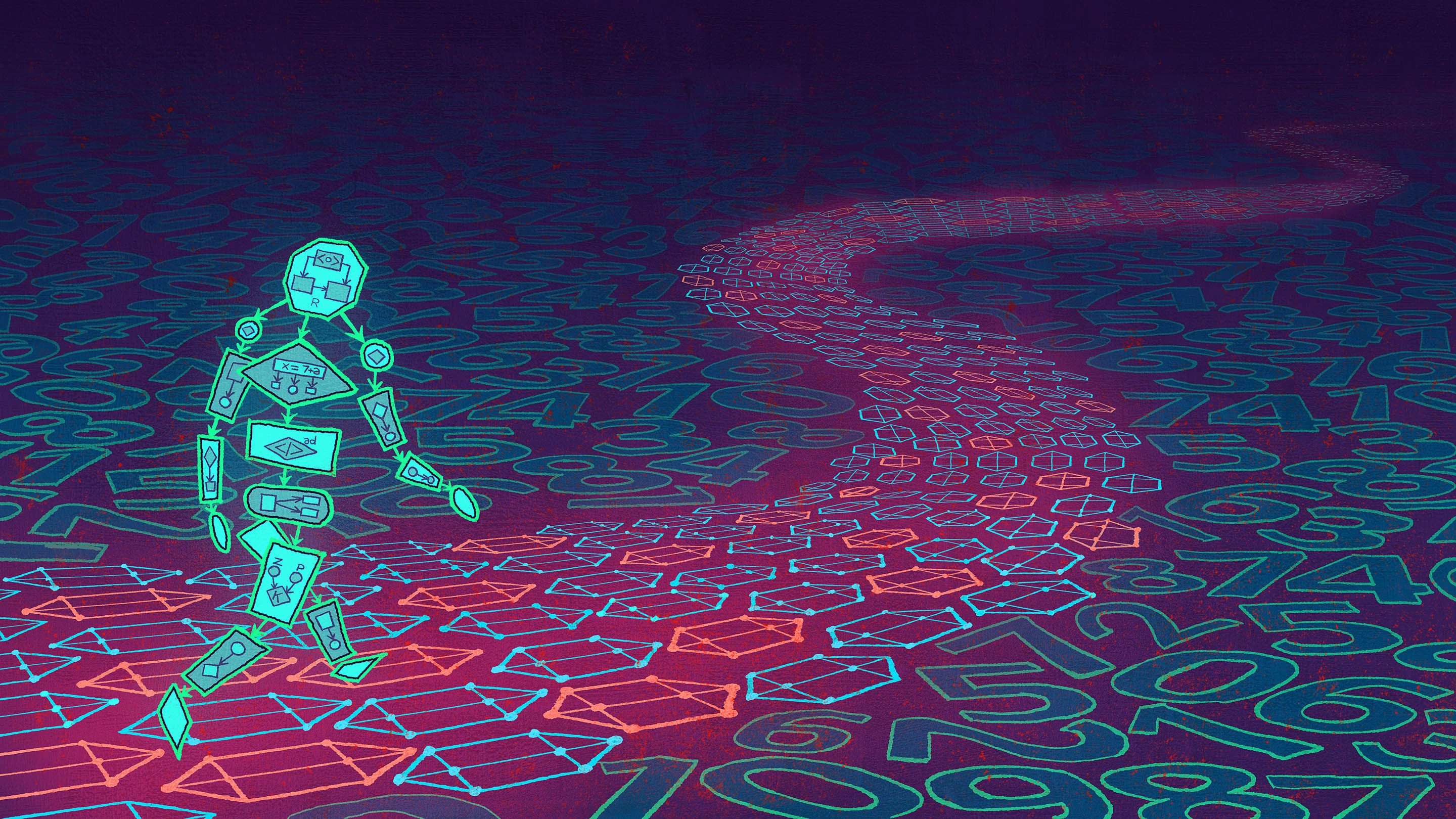
When it arrives algorithms will continue to reflect the biases that it has been and is being trained into machines that are learning a representation of the world that is skewed.
Some will say that Data is neutral. It’s just numbers. It’s just data but the past dwells within our algorithms and the flaws that are in our technology are what’s the algorithm’s information it’s taking in.
I am not just talking about the U.S. presidential election in a few day’s time.
We have already seen artificial intelligence being used in voting or politics how they extend beyond the realm of computer vision.
If we’re defining success by how it’s looked like in the past and the past has been one where men like Donal trump were given an opportunity to Twitt falsehoods, spreading them with the aid of Facebook and others it’s no wonder who gets hired or fired?
Do you get that loan? Do you get insurance? Do you and I pay the same price for the same product purchased on the same platform?
Automating inequality.
Before a human looks at your resume, it gets vetted by algorithms written by software engineers who are involved in the system (without changing the system itself he the engineer is still going to reproduce algorithmic bias and algorithmic harms.)
Any sorts of algorithmic tools that are intended to be used, again, have to be verified for nondiscrimination before it’s even adopted.
We now have an AI system – right? – that can classify skin cancer as well as the top dermatologists but to change society to change what AI is learning in order to create what can be realized is going to be trusted into our lives by the inevitable economic depression.
So a Covid-19 vaccine is going to transfer real power into the world of Data and we can’t fight the power you don’t see, you don’t know about.
All human comments appreciated. All like clicks and abuse chucked in the bin.
We should be warier of their power. People don’t need to understand something to do it. The algorithm does it for them.
They’re are increasingly determining our collective future.
We are already halfway towards a world where algorithms run everything.
With the current Pandemic, it is, not who will survive, but how and at what cost, not just to economic systems but to our hard-earned freedoms.
Times will be rough as society tries to come up with an appropriate balance between who gets the jab.
When algorithms involve machine learning, ( like track and trace ) they ‘learn’ the patterns from ‘training data’ which may be incomplete or unrepresentative of those who may be subsequently affected by the resulting algorithm.
Modern algorithm developers are focusing on creating algorithms that learn and develop with the data that they encounter. Machine learning is the next step that they are aiming for, with the algorithms deciding the input and outputcompletely.
One of the world’s most used algorithms right now is the search engine algorithm of Google. It determines what people find in their internet searches and is the basis of the entire SEO industry, where people try to ensure that they show up in the top spot.
However, algorithms are much more prevalent than that- the Apple FaceID algorithm decides whether you are who you say you are.
Social Media algorithms tuned to your desires and want’s ensures that everything on your feed will be of interest to you without you knowing what data these algorithms use and what they aim for.
(Google’s search algorithm is more closely guarded than classified secret documents)
It is very convenient for people to follow the advice of algorithms if your high-frequency trading on the stock exchange but some algorithms limit people’s worldview, which can allow large population groups to be easily controlled.
This is why many of the issues raised in this post will require close monitoring, to ensure that the oversight of machine learning-driven algorithms continues to strike an appropriate and safe balance between recognizing the benefits (for healthcare and other public services, for example, and for innovation in the private sector) and the risks (for privacy and consent, data security and any unacceptable impacts on individuals).
Algorithms are being used in an ever-growing number of areas, in ever-increasing ways, however, like humans, they can produce bias in their results, even if unintentional.
They are bringing big changes in their wake; from better medical diagnoses to driverless cars, and within central governments where there are opportunities to make public services more effective and achieve long-term cost savings.
However, the Government should produce, publish, and maintain a list of where algorithms with significant impacts are being used within the Central Government, along with projects underway or planned for public service algorithms, to aid not just private sector involvement but also transparency.
Governments should not just simply accept what the developers of algorithms offer in return for data access.
This is now an urgent requirement because partnership deals are already being struck without the benefit of comprehensive national guidance for this evolving field.
Given the international nature of digital innovation, governments, should establish audits of algorithms, introducing certification of algorithms, and charging ethics boards with oversight of algorithmic decisions.
Governments should identify a ministerial champion to provide government-wide oversight of such algorithms, where they are used by the public sector, and to co-ordinate departments’ approaches to the development and deployment of algorithms and partnerships with the private sector.
Transparency must be a key underpinning for algorithm accountability.
Why?
Because it will make it easier for the decisions produced by algorithms to be explained.
(The ‘right to explanation’ is a key part of achieving accountability and tackling the ethical implications around AI.)
Why?
Because they are also moving into areas where the benefits to those applying them may not be matched by the benefits to those subject to their ‘decisions’—in some aspects of the criminal justice system, for example.
Because algorithms using social media datasets like ‘big data’ analytics, need data to be shared across previously unconnected areas, to find new patterns and new insights.
It’s not COVID-19 that will fuck us all its Profit-seeking algorithms.
All human comments appreciated. All like clicks and abuse chucked in the bin.
In these extraordinary times, I am sure I speak for world citizens that we count on our leaders to bring out their statesmanship and have the courage and imagination to think and work together to fight this pandemic in equally extraordinary ways.
We may be about to face the perfect storm:
A humanitarian disaster, global recession, severe de-globalization, the crash of healthcare systems, social breakdown, conflicting nationalism not forgetting the power of AI, and its algorithms all point to the need for value realignment.
Many of the issues have a history of a basis. So potential risks and ways to approach them are not as abstract as we may think.
How do we actually design a new system that can understand and implement the various form of preference and values of a population?
The ideal system is, of course, a balance between all the needs of the numerous stakeholders the people, and the earth we all live on.
So how do our societies reconcile their own historic aspirations while we are struggling with a world of ARTIFICAL INTELLIGENCE that is isolating us all into data?
Neither China nor the US, Iran, Indonesia, or any country can insulate themselves from what is to come. COVID-19 should be the exception to — not the extension of –geopolitical rivalry. It should be an opportunity to recover trust rather than advance mistrust.
HOWEVER, WHAT WE WILL WITNESS IS OUR COLLECTIVE INABILITY TO ACT AS ONE. (DUE TO A MENSTRUUM OF REASONS FAR TO LONG TO ADDRESS HERE.)
From what we see to date:
With the erosion of democratic institutions, with the rise of the right, loss of jobs, false news, rising inequality, foodbanks, our inability to tackle Climate change, stop wars, without any robust mechanisms of oversight and accountability for Profit-seeking algorithms there seems little hope for future generations.
Artificial intelligence now embedded in our daily lives has still to show empirical evidence that validates that AI technology will achieve a broad base of social benefit we aspire to.
We need a community of researchers worldwide to really understand the range of potential harms that AI systems pose. The use of data, machine learning, their applications to society – Face recognition -Track and Trace- all in use without any regulations.
Therefore there is only one solution to the problems facing us all and that is the introduction of a basic living wage for all.
Why?“
Because Cash is the best thing you can do to improve health outcomes, education outcomes, and lift people out of poverty. It’s the only solution to an economy where a small group of people is getting very, very wealthy while everyone else is struggling to make ends meet.
It would remove the problem with existing welfare programs that keep people below the poverty line a form of structural inequality.
It would also cost governments less simplifying welfare programs.
A guaranteed income would give young couples the confidence they need to start a family.
From a macro viewpoint, it would give society a much-needed ballast during a Depression.
It would offset job losses caused by technology.
What are the downsides?
Inflation.
Who funds it?
Many would support it if tech companies with profit-seeking algorithms paid for it.
High-frequency trading.
Hedge Funds, Sovereignty wealth funds, and currency trading over $50,000
Cash is King.It’s an idea that is long overdue.
Both the Current pandemic and Automation are fundamentally changing the structure of the economy. Proposals for various forms of regular cash assistance are increasingly part of the political conversation. And in fact, the cash payments of 2020 are serving as something of a real-life test of the principles behind UBI, even if there are important differences.
All human comments appreciated. All like clicks and abuse chucked in the bin.
The covid -19 pandemic is changing everything. Unfortunately, our politicians are not used to this kind of emergency.
But they may soon find that their preferred economic cure to the coronavirus will long outlive the enemy it was intended to fight.
After all, income taxes were first introduced as temporary measures intended to address a short-term crisis and are still with us today.
As western leaders learned in the Great Depression, and after the second world war, to demand collective sacrifice you must offer a social contract that benefits everyone.”
The only way to achieve the above in a world that is driven by greed is by implementing a universal basic income that is funded by greed.
We all witnessed the Financial crises. How governments introduced Quantitive easing by issuing billions to banks. It did not stop it from spreading throughout a single economy, the economy of a region, or economies worldwide. Asset prices saw a steep decline in value, businesses, and consumers were unable to pay their debts, and financial institutions experience liquidity shortages.
If we learned anything it was that putting trillions into the mouths of the greedy did not help the poor. As income inequality continues to grow and the disruptive impact of technology leads to less security and stability for a growing list of industries and careers, a Universal basic income can protect people from slipping through the ever-expanding cracks in our social safety net.
THE PREPANDEMIC case for a universal basic income is both simple and seductive.
It is the most efficient way to get money into the hands of individuals and prevent the economy from seizing up completely—and because it largely cuts government bureaucracy out of the equation.
Until this year, it was mostly an idea that lived on the margins of the political mainstream, debated and discussed in academic circles, and overlooked by almost everyone else. Then, as with so many other things, COVID-19 changed everything.
Helping us overcome that challenge isn’t the only thing a UBI could do.
Take, for example, its impact on homelessness, “a guaranteed annual income would also help to make it far less likely that job loss, divorce, family conflict, domestic violence, injury, or illness result in homelessness.
UBI “could be transformational.”
“Beyond defeating the disease, the great test all countries will soon face is whether current feelings of common purpose will shape society after the crisis.”
Humans need work more than work needs us. “Poverty and income insecurity translate into expensive health care needs .“Income is the leading determinant of health.”
But the most important contribution that a UBI could make to our lives is raising our expectations of what governments can—and should—do.
It holds up a guiding point by which to assess government initiatives to alleviate poverty, to reduce income inequality, and to address precarity in the labor market.
Just as we saw a major reassessment of the role that governments should play in the aftermath of the Second World War, we may well see a similar adjustment in the wake of COVID-19.
Dead people don’t pay taxes or contribute to the GDP. They remain in permanent lockdown.
At least with UBI when a vaccine does arrive you might be able to afford to buy it and make better choices in saving yourself.
All human comments appreciated. All like clicks and abuse chucked in the bin.
The coronavirus pandemic has caused a considerable drop in advertising spending however life in the time of coronavirus is increasingly a life lived online which has led to an acceleration of digital adoption and e-commerce.
Our current regulations governing advertising are no longer enough to ensure protection against aggressive sales techniques, false or deceptive ad messages, as well as intentionally incomplete information. The Sale of Goods Act of 1979 under which all advertised goods must match the description advertised on them is out of date.
In today’s digital era, conventional marketing dictums no longer hold true.
In a nutshell, ‘Everything for everyone, customized’
The very nature of what this industry is about should with the current difficulties facing the world be questioned.
Clearly, there should be a line separating the private from the public, the free from the controlled.
But who should be in charge of drawing this line? Facebook, Twitter, Apple, Microsoft, Apps, or Laws to curtail the advertising industry from promoting consumerism for the sake of profit.
Just like any other industry, advertising needs regulation.
On one side, we live in free-market times, which means that each product or brand, no matter how big or small, has the right to be noticed but not the right to piggyback on fear – On the other side, not all products and services are equal. Some are neutral, while others might have a negative effect on our health, safety, and overall well-being- such as gambling- fast food -obesity – cleaning products – damage to ecosystems.
We realize that advertising should be regulated.
We admit that proper regulation can only be implemented on a state level.
We are as concerned about government data collection as we are with data collection by marketing agencies and brands.
What is mind-blowing is that even with so many organizations, laws, and regulations designed to control the quality of advertising, some brands manage to get around ad regulations using legal loopholes.
You only have to look at BIo it now applies to everything down to sardines in tins.
It would be an understatement to say that advertising regulation is complex but is it not time with what the world is facing to force it to rethink and stop pigging backing on the problems we all now face.
These days, when massive data breaches have become the new norm just imaging what is going to happen when the advertising media get their hands on promoting a vaccine against COVID -19.
Ad regulations should specify which forms of data collection and tracking are been used in order to consider what is legal and which Ad be banned. As the need for this form of regulation emerges international regulations such as GDPR come into play. The primary goal of such documents is to limit/control the power of ad tech companies, marketing agencies, and brands trying to make the most out of user data.
If not mass, untargeted broadcasting will become passé and data will be at the heart of marketing strategy.
New tracking and data collection technologies make us all more vulnerable and unprotected than ever before.
For instance, if there were no advertising regulations put in place, we will fall victim to the whims of marketers, quickly and inevitably, once and for all.
Brands will use complex combinations of personal data, location data, and environment data to target their customers with the right message at the right time on the right device.
These days, everything changes in a heartbeat. With new technologies, advertising can be as personalized as we allow it to be – voice marketing.
In the modern ‘attention economy’ where consumer attention is divided across more devices, applications, and formats than ever before, only engaging and relevant ads will command consumer attention.
Advertisers are adapting by following consumers, which means prioritizing digital advertising. The online environment is favorable for “direct response” campaigns – those encouraging quick purchases by consumers.. and technological innovation continuously redefines the landscape of advertising.
This new era has placed new demands upon marketers. AI and machine learning bring massive benefits to marketing. Digital advertising technology is changing rapidly. New communication technology –including social media, wearables, virtual reality — is turning the advertising industry upside down.
One could argue that many elements of human behavior are going to change permanently and there will be increasing complexity in consumer purchasing decisions but this will not stop advertising from exploration and delivering targeted ads.
If we want real transformation all companies must find new ways of brand-building by using advertising to create awareness of climate change, pollution, racism, slave labor, etc. In forests of inaccurate data we can’t make sense of or dark caves of illusory tech that yield no light at the end of the tunnel.
With more and more highly specific marketing there is still a lot to be done in this regard both on national and international levels. – greater transparency in the value chain is required.
A few examples:
Switzerland: Although the local ad space is small, it is worth our attention. According to Swiss law, advertising lotteries and games of chance are strictly prohibited. In Switzerland, it is illegal to promote pharmaceutical products under prescription in any publicly available media. Health-related and nutritional claims for foods are only permitted if they deliver exactly what they promise.
China: The Chinese advertising market is the second-largest in the world and one of the most interesting in terms of ad control. For instance, brands can be fined up to $157,000 for using statements such as “the best,” “the most,” or similar phrases in their marketing campaigns. Another fascinating fact is that children under 10 are not allowed to endorse or promote within Chinese ads (even if it’s an advertisement for toys!)
Chile: Under Chilean law, it is not allowed to advertise products that are high in calories, sugar, sodium, and saturated fats to children under the age of 14. Brands producing the above-mentioned foods cannot be marketed in schools and are illegal to use in cartoons or toys for promotional purposes.
Ireland: According to advertising regulations in Ireland, any ads that target children under 18 cannot include celebrities. Foods that are high in sodium, sugar, or fats are completely banned from advertising on channels where at least half of the audience is under 18 years old.
All human comments appreciated. All like clicks and abuse chucked in the bin.
IS PROBABLY THE MOST USED TERM IN CURRENT DAY CONVERSATIONS – POLTICALY OR OTHERWISE.
Against the background of a doubling of the world population every thirty-odd years, it’s no wonder that we find ourselves facing intractable problems and we need to do something about them.
The Covid-19 pandemic so far has only killed a mear 800,000 while ongoing wars over 100 million in the 20th century.
We now live in a world of lip service, (used by silent data collection – profit-seeking – algorithms that could not give a shit), are run by corporations, the manipulators of the need-to-do, in order to promote consumption, whatever the cost, long term, or short term.
The recycling of plastic alone is an example. We are told that we need to recycle plastic by companies that continue to produce it in the trillions of tons.
I am not sure about you, but I am a little ashamed to be human right now.
Why?
Because none of our world organizations, governments, the current crop of leaders have at their core a true understanding that we all live and rely upon the planet to be able to kill each other, love each other, and propagate more of us.
With the COVID-19 pandemic shining a light onto societal and economic systems all across the world, exposing the flaws of a capitalist society we are still driven by greed, religious beliefs, social media, advertising.
The pandemic-induced health crisis has rapidly ignited an economic crisis with yet unknown consequences for financial stability, and all is being played out against the backdrop of a climate crisis that cannot be addressed by “business as usual.
We are now facing problems all of which have to be resolved at the same time, otherwise, we will simply be solving problems in one place while creating new ones elsewhere.
So golly gosh the COVID-19 crisis is exacerbating all these problems and what are we doing about it other than convene world leaders in a virtual format to seek action and solutions for a world in crisis. (The united nations on the 17 Sep- 5 Oct)
You can rest assured what we will witness as we did with the Paris climate change is countries promising virtual undertakings, with no means of enforcement, or transparency.
Some years ago 150 countries set a list of goals to be achieved by 2020 to improve the world’s biodiversity, not one was achieved and humanity is now at a crossroads.
Why?
Because countries will virtually promise whatever when it does not cost them arm and a leg. Virtual multilateralism is a joke in the extreme when we need value creation instead of value extraction when the pillars of our world are being shaken to the core.
The COVID -19 will cost trillions while reversing climate change will save trillions.
We all know that we need to grasp the opportunity to fix the system. If we don’t, we will stand no chance against – an increasingly uninhabitable planet – and all the smaller crises that will come with it in the years and decades ahead.
It’s used to be challenging and difficult to make predictions especially about the future now its child play — BLEAK
What can we the people of the world do?
We are incapable of acting as one for obvious reasons, but every one of us needs a habitable planet. We could weaponize our buying power to accelerate actions on biodiversity for sustainable development.
By doing so the world of profit would change.
What can countries do?
To realize that we are not as unique as a species and that the risk extinction has never been greater. Stop god wobbling as there has been nothing like what we are now looking at in human history.
Don’t trade with countries that breach environmental sustainability.
The like hood of either of the above happening is zilch.
So the world of profit has to be taped into, in order to reboot the numerous we need to do.
(See the previous posts on a World Aid Commission of 0.05%)
We need to rise up and speak up!
So all I’m saying is that communication needs to start now not tomorrow.
Transparency needs to start now not tomorrow.
Yes we are all different and what we do with our differences needs to make a difference.
All human comments appreciated. All like clicks and abuse chucked in the bin.
Never in history is such a question more important. Unfortunately, we live in a world of distractions.
In my previous post to this one, (THE HARDEST THING OF ALL TO SEE IS ALREADY THERE.) I attempted to say that the truth has no past.
By this, I meant that the truth is reality, and therefore religion and the state must be separated.
Only then can one hope for value with the same value or worth for all, or almost all, people. A value is considered universal when it goes beyond laws and beliefs; rather, it is considered to have the same meaning for all people and does not vary according to the societies that have evolved.
In fact, cultural relativism is a belief that opposes the existence of universal values; proposes that a value can not be universal because it is perceived differently in each culture.
Given the ambiguity of the term, the existence of universal values can only be understood as the values that have to do with the basic requirements of the human being. Such as Fresh Air, Freshwater, Food, Clean Energy.
Now with AI infiltrating our lives, it seems that the faster we travel, the importance of there place is getting lost.
It seems because there are no universal moral values, our command of science simply can not coexist with morals, and our internet fed imaginations
We talk about the central issues of our times: A universal pandemic, an economic depression, continuing wars, climate change, migration, artificial intelligence, rising inequalities, erosion of the power of the vote, loss of individualism, loss of connection to ecosystems, to mention just a few of the problems to define any values that are universal.
We have many governments doubling down on the blame game and brinkmanship.
We have bioengineering which alone is now much greater danger than a nuclear war.
We have the maldistribution of wealth.
We have world leaders unwilling to see beyond the next election.
We have the extinction rebellion.
We have non-transparent digital data.
We have 10.000 to 130,000 species going extinct each year.
We have a population of 7.7 billion
We have extreme weather and biodiversity loss.
I ask myself why is it that with so many of us tryin’ to improve society, not that much changes but I hope that we don’t make changes to satisfy the noisemakers.
Rather than separating one problem from another, we need to connect them.
i.e. Climate changes to war and war to climate changes.
The question remains.
> How do we the current guardians of the planet achieve a balance between living our lives and the life of the planet, that allows us to live them in the first place.
It is no longer that logic alone will solve the problems, nor protests, or political will but within functional societies, we do still have the ultimate weapon – VIEWING AND BUY POWER and both are available in every type and form of human culture.
They must be added to the deep emotions of religion if we are to achieve change.
The life of now economies and pay later must come to an end if we are to avoid the hazards of the future.
If Extinction Rebellion wants to be heard, it will not do so on top of bamboo towers stopping newspapers to be deliveries, or sticking themselves to windows.
It must use social media digital platforms to encourage its supporters to use their buying power to attack profit for profit sake.
Certain human characteristics as valuable – life regardless of whether or not it is believed in said characteristic.
PROFIT WITHOUT CONTRIBUTION TO UNIVERSAL VALUES IS THE ENEMY.
With these weapons, we can effect change and avoid the hazards to come.
All human comments appreciated. All like clicks and abuse chucked in the bin.
If one takes a look at the state of the world which has gone through two world wars, numerous pandemics, natural disasters, you could say that its present state all boils down to us, our sense of belonging, our values, our separate cultures, greed, and power.
There is little point at this present moment in us dragging up our past history to ANSWER these questions other than it shows that colonization and slavery contributed to the world’s woes and that we are unable to act as one.
Take climate change.
There is no hope of reducing co2 emissions until we understand what being a human being means.
Until we begin to understand each other there is no hope of tackling any of the current world problems.
So in this post, I am concerned with what has happened in recent times to produce the current century of a world preoccupied with crisis management.
9/11 is my starting point.
Without understanding that Muslims believe that Allaha is the ultimate arbiter of their existence 9/11 was rightly or wrongly declared an act of war against Iraq.
Since then we’ve all been living in the shadow of the World Trade Center that unbridled the economic, cultural, and military power of the US – America First.
The result is continuing wars Iran, Syria, Yemen, Afghanistan that are not clashes of civilizations but a clash of ideologies, values, and cultures.
Take Isreal- Palestinian.
It has been referred to as the world’s “most intractable conflict”, with the ongoing Israeli occupation of the West Bank and the Gaza Strip reaching 52 years.
There can be no peace between Muslims and Non-Muslims because what is happing in Israel goes beyond it.
The world is now preoccupied with crisis management so even if the Palestinian case is settled it won’t stop there.
Worldwide wide it is consumerist capitalism versus religion and tribal fundamentalism.
So if religion determines what we believe what does race tell us?
Nothing when it comes to COVID-19 it is non-races no matter whether you are Muslim or Christian the price of faith means nothing if you are dead.
All of us no matter what race you are, Black or White, Christian, Jews, Muslim, Buddhist, Hindu, call ourselves after the country we are born in only if the expression of religious beliefs is enshrined in the countries constitution with equal rights and freedoms. Where one can be our race and practice our religion.
A sense of self maybe?
Perhaps it is a race that makes us different from others.
The Irish were considered as being subhuman to the British many years ago before the Great Famine in the 1800s.
Lived segregated cultural traditions do not work. 700 hundred-odd years later, even in a Europen union setting Northern Ireland remains a divided society by religious beliefs, and a border created by colonization.
If we were paid a visit by another race that was intelligent to get here in the first place they would not give an F… what race we were or had been.
Not until the human race understand that is one race will there be any hope in addressing the present problems we all face.
This will remain so till there is a solution to the Israelis and Muslim Palestinian conflict which in my opinion can now only be solved with a one-state solution, not two-states which has no hope of removing the inherent flaws and injustices or resentment of both sides.
All are intertwined forces that are both tearing apart and bring together the world.
What am I saying here is that the Middle East conflict is not just over religion or race it is also over land.
The 9/ 11 atrocity claimed nearly 3,000 lives and shocked the world but now many people are unable to remember the date of the tragedy – 11 September 2001 – 19 years ago the beginning of the Iraq invasion. An invasion that totally and utterly did not understand that Islam is not their religion, it is their life and remains so to this present day.
Instead of world leaders making an effort to prevent the Iraqi invasion according to Mr. Bush, there were no options but to use force which has now lead to one of the most inhuman periods in our recent history.
Recent work also shows that Islamophobia in the West is abetting the Islamophobia in China, with global leaders willing to stay silent about the treatment of Muslims.
These days what one hears over and over is the phrase ” What is needed is “
On top of this, we now have a world pandemic, climate change, America, and Britain first, the erosion of any long term policies by social media, the smartphone, and unregulated artificial intelligence, with religion shrinking in a digital world run by Five Titanic digital companies, run for profit.
It might not be possible to carry on in a world of two deities God and Allah.
If you ask me it’s all ridiculous the last ones standing to go to heaven and who will be there to greet them, is God, Allah, or Jesus? It just doesn’t make sense, intellectual, religious-philosophical, or any other sense.
The world whether it is China and the Muslim or whatever has to come together in new ways.
Wars that are now seen by moderate Muslims as virtually and ultimately as a war against Muslims and Islam across the ethic board.
What does the word Islam actually mean?
It means surrender.
And if we want a world worth living on, surrender is what we will all have to do in the end.
Shalom in Hebrew means peace.
Hebrew: shalom aleichom meaning-peace be upon you.
Arabic: salam alaikum meaning-peace be upon you.
So take the knee, not to race, not to religion, but tothe planet.
All human comments appreciated. All like clicks and abuse chucks in the bin.
The answer lies basically in this question -why is it that governments can afford a fighter plane, but teachers need to hold a bake sale to buy school supplies.
Understanding how the balance of payments work is key to understanding the monetary leverage that one country holds over another. Based on the modern method of money creation, the functionality of the balance of payments is really a zero-sum game.
Wealth used to be defined as the accumulation of human time and labor.
This is why human time and labor are consolidated under ideologies (eg. Socialism, democracy, communism, etc.), which are framed with borders around cultures, religions, and historical significance. Time and labor are consolidated as a measure of GDP.
World GDP can now be considered the measurement by which human time and labor are used to manage the debt which is a product of the money creation process.
As Yanis Varoufakis says ” It is pointless to continue to do macroeconomics analysts focusing on a single country” “It is not any more trading volumes or fiscal data it is the ebb and flow of financial capital”
There was or there is no need for the Coronavirus to expose still more flaws in economic structures. Inequality is to be seen in foodbanks, people sleeping on the street, the color of your skin, not least the increasing precarity of work, owing to the rise of the gig economy and a decades-long deterioration of workers’ bargaining power.
A Clap will not save nine, but thanks to Covid-19 the bastions of global Capitalism are on hold.
There has never being a more important time to effect change to Capitalism.
So will or can we use the current state of emergency to start building a more inclusive and sustainable economy.
If we don’t, we will stand no chance against the major crisis – an increasingly uninhabitable planet – and all the smaller crises that will come with it in the years and decades ahead.
Capitalism is facing at least three major crises.
A pandemic-induced health crisis that is rapidly igniting an economic crisis with yet unknown consequences for financial stability and all of this is playing out against the backdrop of a climate crisis that cannot be addressed by “business as usual.”
The COVID-19 crisis is exacerbating all these problems with governments playing a leading role, in delivering immediate solutions in the short term. However, the solutions are still not designed in such a way as to serve the public interest over the long term, and therefore they will not lay the foundation for a robust and inclusive recovery.
With reports on the seriousness of the coronavirus evolving each day if not each hour, the eyes of commerce are on epidemiology.
The effort to develop a COVID-19 vaccine could become yet another one-way relationship in which corporations reap massive profits by selling back to the public a product that was born of taxpayer-funded research.
The ongoing coronavirus crises are forcing governments to cash out in order to keep businesses, workers, and their economies afloat, but extending loans to businesses at a time when private debt is already historically high. Flooded the world with liquidity without directing it toward good long term investment opportunities like renewable green energy will result in the money ended up back in a financial sector that was (and remains) unfit for purpose.
The ability of companies to service any of this debt is debatable never mind the economies of countries.
This time, rescue measures absolutely must come with conditions attached, bailouts should be designed to steer larger companies but to reward value creation instead of value extraction, preventing share buybacks, and encouraging investment in sustainable growth and a reduced carbon footprint.
It was the high private debt that caused the global financial crisis in 2008. The result of this has been to erode the very public-sector institutions that we need to overcome crises like the coronavirus pandemic.
On top of these self-inflicted wounds, an overly “financialized” business sector has been siphoning value out of the economy by rewarding shareholders through stock-buyback schemes.
If one really looks at Capitalism at its basic modeling – its beating heart is profit for profit sake.
To day’s Capitalist Economics is set up with this mantra, not to serve people’s needs, or to protect the environment, or to spread the rewards, rather to enslave people to the world of consumption- produce something at the lowest cost to produce the highest profit.
Apart from the tragic human consequences of the COVID-19 coronavirus epidemic, the economic uncertainty it has sparked will likely cost the global economy trillions in 2020, the UN’s trade and development agency, UNCTAD, said on Monday.
What is clear is that if politics and trade wars emerged as uncertainties in recent years, now a third leg in the stool holding up global confidence has suddenly gone wobbly.
It is also clear this is going to be a slow-rolling, highly consequential event, that has all the ingredients required for internal strife in many countries.
It is clear that if we keep exploiting wildlife and destroying our ecosystems, then we can expect to see a steady stream of these diseases jumping from animals to humans in the years ahead.
It is clear that we need to invest in ending the over-exploitation of wildlife and other natural resources, farming sustainably, reversing land degradation, and protecting ecosystem health.
It is clear that the virus is already robbing the world of carbon reduction and it’s only a matter of time before climate change dwarfs the impact of COVID-19.
It is clear that all country’s fates are intertwined.
It is clear that if there is some message here, it’s that this is totally predictable other than without proper oversight, that AI may replicate or even exacerbate human bias and discrimination, cause potential job displacement, and lead to other unintended and harmful consequences.
It is clear given the growing importance of this powerful technology, AI regulation should not be designed in a haphazard manner. As governments struggle to keep up with the unprecedented speed and scale of technological change, companies are facing a crisis of trust amid the growing “techlash” and are increasingly being called on to self‑regulate the technology they are developing and deploying.
It is clear despite vast efforts worldwide to address the symptoms of the coronavirus pandemic, the root causes have been largely ignored, to rebalance the needs of people, the planet, and animals.
It is clear that there’s a lot still to learn about the virus – and therefore how extensive its impact on the global economy could become. Some of the most basic aspects of the virus remain unknown. It all depends on the eventual scale of the epidemic, and at any given point, no one has been able to say whether it has peaked. We don’t know whether it will burn out, like SARS, or come back seasonally like the flu.
It is clear that the impact on markets not to mention human behavior is far from normal never mind the new normal. We are operating in the uncharted territory and the stark reality is that we as a species are unable to act as one.
It is clear that the last thing we need to hear from brands is that we all in this together. They are simply trying to remain relevant and in demand. They need to rethink engagement data-driven empathy no longer cuts the ice.
It is clear that Humanity must become the killer app.
It is clear that we’re living in a world of transparency and in such a world inequality cannot be tolerated.
It is clear that nowadays, it is no longer enough for a business to figure out how it was going to turn a profit. The social goals of the business – are not mere “add-ons or marketing ploys” they must be “part of the DNA of the business.”
It is clear that an unregulated algorithm-driven world will put its riches into the hands of the few.
The problem that we have is not globalization it is a lack of global governance, a lack of means to address global issues.
To solve social problems such as pollution, poor nutrition, and poverty, climate change, you name it there is only one solution.
At the end of Yanis Varoufakis, The Combination That Changed Capitalism Forever, he promotes the establishment of what he calls a political movement that he calls a progressive international movement that is globally and act like activists locally by using purchasing power, he also puts forward a vision of Capitalism where there is no stock exchange, replaced by private ownership and Greene every bonds backed by treasuries.
The green energy bonds are a must So the young generation is able to buy into the process that creates their destiny.
Purchasing power as an economic power to effect change, unfortunately, is visible and like all things that are visible will not work due to greed, cultural differences, etc.
THE SOLUTION MUST BE INVISIBLE AND APPLICABLE WORLDWIDE.
To create a perpetual ongoing fund that spread the cost fairly to tackle climate change and inequalities worldwide.
Make a profit for profit sake pay by placing a 0.005% commission on all, Hight frequency trading, on all foreign exchange transactions over £50 thousand, on all sovereign fund acquisitions, on all gambling and world lottos, on all consumption advertising, on all dividend payments.
Profit for a Purpose- with-Purpose.
Nearly a third of the world’s oceans and land areas could be placed under environmental protections without harming the global economy.
You cannot put a price tag on nature, but a recent independent report, commissioned by the Campaign for Nature charity, found about $140bn (£110bn) a year would be required by 2030 to place 30% of land and sea under protection.
Achieving the target of 30% protection would lead to increased economic output of between $64bn and $454bn a year.
The benefits to humanity are incalculable and the cost of inaction is unthinkable.
To younger generations, the state of the planet is even more alarming but if they don’t get their proveable faces out of their smartphones and their fingers out of where the light shines we all going to witness horrors unimaginable.
It is clear that a coalition of old folks in the establishment won’t cut it.
All our efforts have to be inclusive, integrating all stakeholders, the earth and all that live, grow, and die on it.
All human comments appreciated. All like clicks and abuse chucked in the bin.
As if the world does not have enough problems regardless of the application, genetic engineering is a very controversial topic in our society.
According to most religious doctrines, life begins at conception, not anymore.
When digital technology took over the world, things we perceived as science fiction became reality. Today the same thing is happening with Genetic Engineering.
Life is made up of just four alphabets that give the instructions, and when we change the guide book we change the being carrying it.
As we are seeing it does not matter what religious beliefs you have or otherwise, the current coronavirus is not fussy who it infects.
We are on the verge of being able to transform, manipulate, and create organisms for any number of productive purposes.
Human genetic engineering may soon be possible. It might well be in its infancy from changing the course of our lives. From medicine to agriculture, to construction and even computing, we are within reach of age when manipulating the genetic codes of various organisms, or engineering entirely new organisms, promises to alter the way we relate to the natural world.
Genetically engineered food is a divisive topic that is deeply embedded in the ongoing debate around climate change, sustainability, and food security.
There are many pros and cons regarding this topic and there are many powerful arguments for and against genetic engineering and gene therapy.
We already improve crops and animals. Why not humans?
Evolution is a change in the inherited characteristics of a population of organisms from one generation to the next.
This happens anyway and genetic enhancement is just speeding up this natural process.
We will have to make difficult decisions in the future on whether we want to play god in order to be able to fight deadly diseases and colonize another planet, grow enough food, replace exhausted resources.
Of course, the big question is.
Is it wrong to play god by effectively creating and changing life?
Altering genes to improve strength, beauty or intelligence undermines the moral and legal idea that all humans are equal, creating further inequality in society – those who are genetically engineered and those who are not.
These individuals would have no say in this, but when they arrive at the pearly gates will they be allowed to enter.
Genetical engineering is an extremely controversial issue without even considering the views of religions. The ethical question becomes even more daunting when we consider genetic engineering as it applies to animal life, particularly human life.
One could say that God has no say about any of this?
The Bible does not directly address the issue of genetic engineering, because genetic engineering was unknown at the time that the Bible was written, so there is a concern that a bold pursuit of advances in genetic engineering is motivated by defiance of God.
God said, ‘Let us make mankind in our image, in our likeness, so that they may rule over the fish in the sea and the birds in the sky, over the livestock and all the wild animals, and overall the creatures that move along the ground.’
The gift of life is a product whether it comes from God or not and can be reproduced and modified to make a better product. So where are we with the artificial manipulation, modification, and recombination of DNA or other nucleic acid molecules in order to modify an organism or population of organisms.
It is my belief that genetic engineering has promised to better mankind, and it is our ethical obligation to research it but not exploit it.
Determine the genetic material of embryos in humans limiting the chances of children’s autonomy to determine their own destinies.
This means that the entire life of children is changed irrespective of their wish. This practice is immoral in nature because it is an unnatural way of molding the life of a human being to become what they themselves do not wish to be, resulting in social inequalities.
All raises a number of significant ethical issues.
From genetically modified crops, using less water to speeding up the growth of plants to adapt to the global warming problem, to the overall life expectancy of animals and humans, to designer babies, to the development of new diseases, or to miscarriages, to resistance against antibiotics, to political decisions, to the uses of genetically modified bacteria for making biofuels, to the use of genetically modified seeds to increase yields and also make plants more resistant to pests, to the whole ecological system, to human behavior.
By treating the human embryo as mere ‘laboratory material’, the concept itself of human dignity is also subjected to alteration and discrimination. Dignity belongs equally to every single human being, irrespective of his parents’ desires, social condition, educational formation, or level of physical development. To create embryos with the intention of destroying them, even with the intention of helping the sick, is completely incompatible with human dignity.
Embryology is governed by the Human Fertilisation and Embryology Act 1990.
Human embryos produced for research purposes cannot be implanted into any woman’s womb and must be discarded after 14 days.
In evaluating these concerns, we need to bear in mind that genetic engineering is still young. Some of the possibilities, such as creating new species of superhumans or subhumans, seem highly unlikely, at least for the foreseeable future.
However, there is a need to have morally correct legislation that guides the way science develops genetic engineering otherwise it will be a Pandora’s box of dangerous genetic modifications posing a threat to humanity with the rich in a society enjoying the fruits of genetic enhancements.
EcologicalEngineering, the application of science to the optimum conversion of the resources of nature to the uses of humankind.
NATURE is being distilled—among many forms—into a network, where nodes represent species and links represent interactions between them.
Ecosystem engineering combined with genetic engineering not only impacts communities on ecological timescales but will profoundly shape the evolution of life on Earth. The complexity of an ecological community can be distilled into a network, where diverse interactions connect species in a web of dependencies.
The dynamical consequences of community structure is not yet a well-defined theory for the assembly of communities that incorporates multitype interactions.
The role of these ecosystem engineers has not been considered in ecological network models.
To unravel nature’s secrets we must simplify its abundant complexities and idiosyncrasies.
On the other hand, GENETIC engineering is entering a new phase as the available techniques become much more precise. Precise genetic editing opens up the opportunity for personalized medicine, with treatments tailored to our own unique DNA.
What is becoming possible and what will the implications be?
Just imagine a genetic engineering breakthrough that brings the dream of fixing everything from a deadly disease to environmental catastrophe into reach, simply by cutting and pasting bits of DNA.
Primarily, as with any technology, once it becomes cheap and easy, it’s going to be used more and more – so we can expect an explosion of activity and innovation around genetic engineering in the coming years.
A lot of controversy surrounds “transgenic” genetically modified organisms, resulting in bureaucratic obstacles that mean GM crops are scarcely cultivated across much of the European Union, Africa, and Asia.
For example, if a gene from a pig was inserted into a banana, will people of the Muslim faith stop eating bananas and so on.
Did you know that over seventy percent of all processed foods on supermarket shelves contain at least one genetically engineered ingredient? If you are not eating 100% organic food, you are eating genetically modified foods. It is almost impossible to avoid eating GMO foods. Presently, over ninety percent of the soybeans, canola, sugar beets, and cottonseed oil are bioengineered. Seventy-two percent of the corn is genetically altered. And more and more food products are being altered every day.
Considering every five minutes, there is a new life and every eight minutes a death and none of us last forever.
We all live for a short time in the fourth dimension of time so is any of this relevant.
Leaving apart the ethical issues, let us be optimistic for a while.
Genetic engineering hasn’t, and won’t, stop it raises ethical and moral questions to which there are, as of yet, no clear answers.
How we as a species solve these problems will tell us not only something about the global landscape of moral decision-making but will define precisely where the human race will end up over the next few generations.
It’s not an exaggeration to say genetic engineering could totally alter the way we live – and these changes won’t necessarily be positive.
While we humans are gaining the powers of the gods, we aren’t at all ready to use them. We aren’t prepared to handle these Promethean technologies responsibly.
While the advance of genetic technologies is inevitable, how it plays out is anything but.
A first inkling of where we are heading can be seen in the direct-to-consumer genetic testing industry.
When genetic Engineering reaches the mass, the change is going to be permanent.
The overlapping genomics and AI revolutions may seem like distant science fiction but are closer than you think. Because we are all one species. We will ultimately need to develop guidelines that can apply to all of us.
As a first step toward making this possible, we must urgently launch a global, species-wide education effort and inclusive dialogue on the future of human genetic engineering that can eventually inform global norms that will need to underpin international regulations. This process will not be easy, but the alternative of an unregulated genetic arms race would be far worse.
Scientists today have loftier ambitions than building a new app or social media companies.
All human comments appreciated. All like clicks and abuse chucked in the bin.








 bobdillon33blog