• About
  • THE BEADY EYE SAY’S : THE EUROPEAN UNION SHOULD THANK ENGLAND FOR ITS IN OR OUT REFERENDUM.

bobdillon33blog

~ Free Thinker.

bobdillon33blog

Category Archives: Sustaniability

THE BEADY EYE ASK’S. WILL GENETICALLY ENGINEERED/ASSEMBLED PEOPLE BE ALLOWED INTO HEAVEN.

07 Tuesday Jul 2020

Posted by bobdillon33@gmail.com in #whatif.com, Genetic engineering, Genetics., HUMAN INTELLIGENCE, Human values., Humanity., Life., Modern day life., Natural selection., POST COVID-19., Reality., Religion for a digital age., Religious Beliefs., Survival., Sustaniability, Technology v Humanity, The common good., The essence of our humanity., THE NEW NORM., The Obvious., The state of the World., Truth, Unanswered Questions., VALUES, We can leave a legacy worthwhile., WHAT IS TRUTH, What Needs to change in the World, Where's the Global Outrage.

≈ Comments Off on THE BEADY EYE ASK’S. WILL GENETICALLY ENGINEERED/ASSEMBLED PEOPLE BE ALLOWED INTO HEAVEN.

Tags

Genetic engineering

(Fifteen-minute read) 

As if the world does not have enough problems regardless of the application, genetic engineering is a very controversial topic in our society.

According to most religious doctrines, life begins at conception, not anymore.

When digital technology took over the world, things we perceived as science fiction became reality. Today the same thing is happening with Genetic Engineering.

Life is made up of just four alphabets that give the instructions, and when we change the guide book we change the being carrying it. 

As we are seeing it does not matter what religious beliefs you have or otherwise, the current coronavirus is not fussy who it infects.

We are on the verge of being able to transform, manipulate, and create organisms for any number of productive purposes.

Human genetic engineering may soon be possible. It might well be in its infancy from changing the course of our lives. From medicine to agriculture, to construction and even computing, we are within reach of age when manipulating the genetic codes of various organisms, or engineering entirely new organisms, promises to alter the way we relate to the natural world.

Genetically engineered food is a divisive topic that is deeply embedded in the ongoing debate around climate change, sustainability, and food security.

There are many pros and cons regarding this topic and there are many powerful arguments for and against genetic engineering and gene therapy.

We already improve crops and animals. Why not humans?

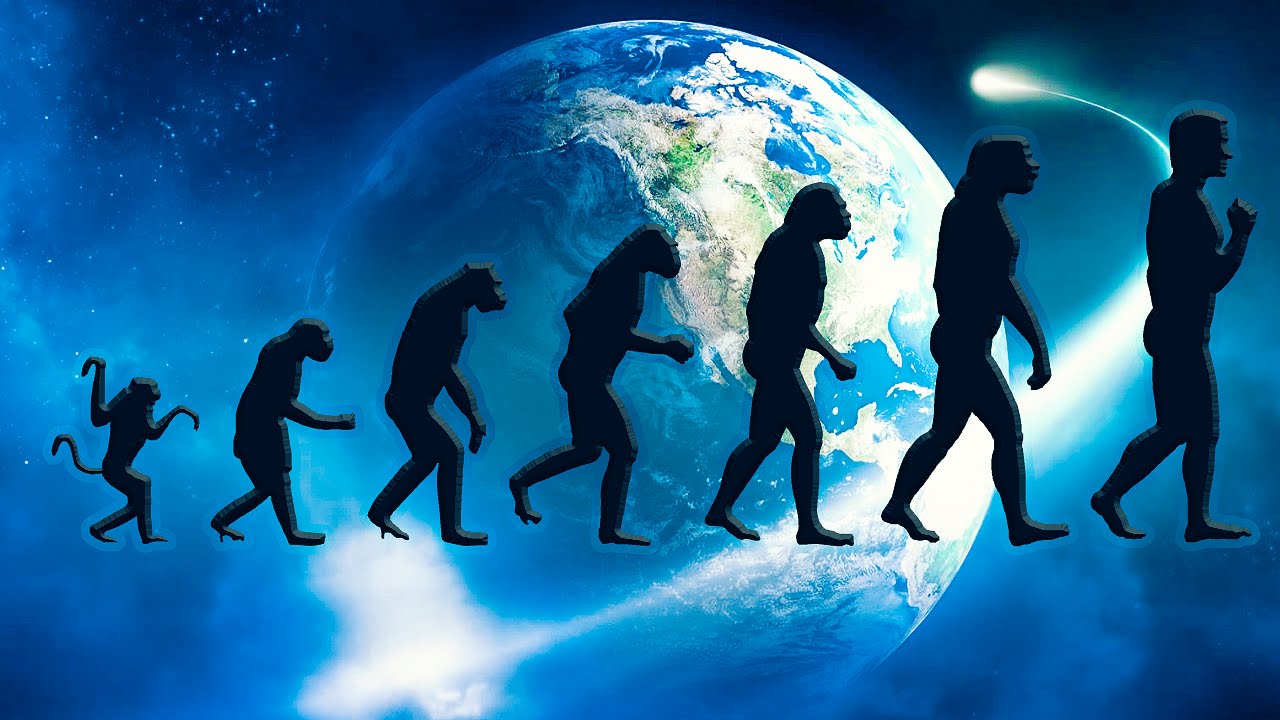
Evolution is a change in the inherited characteristics of a population of organisms from one generation to the next.

This happens anyway and genetic enhancement is just speeding up this natural process.

We will have to make difficult decisions in the future on whether we want to play god in order to be able to fight deadly diseases and colonize another planet, grow enough food, replace exhausted resources. 

Of course, the big question is. 

Is it wrong to play god by effectively creating and changing life? 

Altering genes to improve strength, beauty or intelligence undermines the moral and legal idea that all humans are equal, creating further inequality in society – those who are genetically engineered and those who are not.

These individuals would have no say in this, but when they arrive at the pearly gates will they be allowed to enter. 

Genetical engineering is an extremely controversial issue without even considering the views of religions. The ethical question becomes even more daunting when we consider genetic engineering as it applies to animal life, particularly human life.

One could say that God has no say about any of this?

The Bible does not directly address the issue of genetic engineering, because genetic engineering was unknown at the time that the Bible was written, so there is a concern that a bold pursuit of advances in genetic engineering is motivated by defiance of God.

God said, ‘Let us make mankind in our image, in our likeness, so that they may rule over the fish in the sea and the birds in the sky, over the livestock and all the wild animals, and overall the creatures that move along the ground.’

The gift of life is a product whether it comes from God or not and can be reproduced and modified to make a better product. So where are we with the artificial manipulation, modification, and recombination of DNA or other nucleic acid molecules in order to modify an organism or population of organisms.

It is my belief that genetic engineering has promised to better mankind, and it is our ethical obligation to research it but not exploit it.

Determine the genetic material of embryos in humans limiting the chances of children’s autonomy to determine their own destinies.

This means that the entire life of children is changed irrespective of their wish. This practice is immoral in nature because it is an unnatural way of molding the life of a human being to become what they themselves do not wish to be, resulting in social inequalities.

All raises a number of significant ethical issues. 

From genetically modified crops, using less water to speeding up the growth of plants to adapt to the global warming problem, to the overall life expectancy of animals and humans, to designer babies, to the development of new diseases, or to miscarriages, to resistance against antibiotics, to political decisions, to the uses of genetically modified bacteria for making biofuels, to the use of genetically modified seeds to increase yields and also make plants more resistant to pests, to the whole ecological system, to human behavior.

By treating the human embryo as mere ‘laboratory material’, the concept itself of human dignity is also subjected to alteration and discrimination. Dignity belongs equally to every single human being, irrespective of his parents’ desires, social condition, educational formation, or level of physical development. To create embryos with the intention of destroying them, even with the intention of helping the sick, is completely incompatible with human dignity.

Embryology is governed by the Human Fertilisation and Embryology Act 1990.

Human embryos produced for research purposes cannot be implanted into any woman’s womb and must be discarded after 14 days.

In evaluating these concerns, we need to bear in mind that genetic engineering is still young. Some of the possibilities, such as creating new species of superhumans or subhumans, seem highly unlikely, at least for the foreseeable future.

However, there is a need to have morally correct legislation that guides the way science develops genetic engineering otherwise it will be a Pandora’s box of dangerous genetic modifications posing a threat to humanity with the rich in a society enjoying the fruits of genetic enhancements.  

chances and risks of genetic engineering

Ecological Engineering, the application of science to the optimum conversion of the resources of nature to the uses of humankind.

NATURE is being distilled—among many forms—into a network, where nodes represent species and links represent interactions between them.

Ecosystem engineering combined with genetic engineering not only impacts communities on ecological timescales but will profoundly shape the evolution of life on Earth. The complexity of an ecological community can be distilled into a network, where diverse interactions connect species in a web of dependencies.

The dynamical consequences of community structure is not yet a well-defined theory for the assembly of communities that incorporates multitype interactions.

The role of these ecosystem engineers has not been considered in ecological network models.

To unravel nature’s secrets we must simplify its abundant complexities and idiosyncrasies.

On the other hand, GENETIC engineering is entering a new phase as the available techniques become much more precise. Precise genetic editing opens up the opportunity for personalized medicine, with treatments tailored to our own unique DNA.

What is becoming possible and what will the implications be?

Just imagine a genetic engineering breakthrough that brings the dream of fixing everything from a deadly disease to environmental catastrophe into reach, simply by cutting and pasting bits of DNA. 

Primarily, as with any technology, once it becomes cheap and easy, it’s going to be used more and more – so we can expect an explosion of activity and innovation around genetic engineering in the coming years.

A lot of controversy surrounds “transgenic” genetically modified organisms, resulting in bureaucratic obstacles that mean GM crops are scarcely cultivated across much of the European Union, Africa, and Asia.

For example, if a gene from a pig was inserted into a banana, will people of the Muslim faith stop eating bananas and so on.

Did you know that over seventy percent of all processed foods on supermarket shelves contain at least one genetically engineered ingredient? If you are not eating 100% organic food, you are eating genetically modified foods. It is almost impossible to avoid eating GMO foods. Presently, over ninety percent of the soybeans, canola, sugar beets, and cottonseed oil are bioengineered. Seventy-two percent of the corn is genetically altered. And more and more food products are being altered every day.

Considering every five minutes, there is a new life and every eight minutes a death and none of us last forever. 

We all live for a short time in the fourth dimension of time so is any of this relevant. 

Leaving apart the ethical issues, let us be optimistic for a while.

Genetic engineering hasn’t, and won’t, stop it raises ethical and moral questions to which there are, as of yet, no clear answers.

How we as a species solve these problems will tell us not only something about the global landscape of moral decision-making but will define precisely where the human race will end up over the next few generations.

It’s not an exaggeration to say genetic engineering could totally alter the way we live – and these changes won’t necessarily be positive.

While we humans are gaining the powers of the gods, we aren’t at all ready to use them. We aren’t prepared to handle these Promethean technologies responsibly.

While the advance of genetic technologies is inevitable, how it plays out is anything but.

A first inkling of where we are heading can be seen in the direct-to-consumer genetic testing industry.

When genetic Engineering reaches the mass, the change is going to be permanent.

The overlapping genomics and AI revolutions may seem like distant science fiction but are closer than you think. Because we are all one species. We will ultimately need to develop guidelines that can apply to all of us.

As a first step toward making this possible, we must urgently launch a global, species-wide education effort and inclusive dialogue on the future of human genetic engineering that can eventually inform global norms that will need to underpin international regulations. This process will not be easy, but the alternative of an unregulated genetic arms race would be far worse.

Scientists today have loftier ambitions than building a new app or social media companies.

All human comments appreciated. All like clicks and abuse chucked in the bin.

← Back

Thank you for your response. ✨


Share this:

  • Share on WhatsApp (Opens in new window) WhatsApp
  • More
  • Share on Pocket (Opens in new window) Pocket
  • Share on Mastodon (Opens in new window) Mastodon

THE BEADY EYE ASK’S: WHEN IT COMES TO WORLD PROBLEMS WHY IS IT THAT WE HUMANS ARE UNABLE TO APPRECIATE THE GRAVITY THEY PRESENT.

03 Friday Jul 2020

Posted by bobdillon33@gmail.com in #whatif.com, 2020: The year we need to change., A Constitution for the Earth., Big Data., Capitalism, Climate Change., COVID-19, Digital age., Disconnection., Economic Depression., Environment, Evolution, Fourth Industrial Revolution., GDP., homelessness., How to do it., HUMAN INTELLIGENCE, Human values., Humanity., Inequality, Life., Micro v Macro Economics., Modern day life., Our Common Values., Post - truth politics., POST COVID-19., Survival., Sustaniability, Technology v Humanity, Technology., Telling the truth., The common good., The current state of our oceans., The essence of our humanity., The Future, THE FUTURE OF OUR OCEANS/SEAS, The Obvious., The pursuit of profit., The state of the World., The world to day., Truth, Unanswered Questions., VALUES, We can leave a legacy worthwhile., Wealth., WHAT IS TRUTH, What Needs to change in the World, Where's the Global Outrage., World Economic Depression., World Leaders, World Politics

≈ Comments Off on THE BEADY EYE ASK’S: WHEN IT COMES TO WORLD PROBLEMS WHY IS IT THAT WE HUMANS ARE UNABLE TO APPRECIATE THE GRAVITY THEY PRESENT.

Tags

Capitalism and Greed, Capitalism vs. the Climate., Climate change, Coronavirus (COVID-19), Distribution of wealth, Earth, Environment, Extinction, Global warming, Inequility, SMART PHONE WORLD, Social Media, Technology, The Future of Mankind, Visions of the future., World aid commission


(Twenty-minute read)

As global citizens, the news is packed with statistics and updates on the challenges we face. Most of these challenges have existed from time memorial and are too large to be solved by one person at a time and if they affect huge numbers of people we are numb by their enormity.  

Photographs can be effective for a while. They capture our attention — they get us to see the reality, to glimpse the reality at a scale we can understand and connect to emotionally. But then there has to be somewhere to go with it.

“There is no constant value for human life.”

Granted that certain global issues cannot be solved by on-the-ground, grassroots-style projects like human rights, climate change, wars, etc. 

So is it a perception problem? 

No matter how hard we try we are unable to perceive the whole earth never mind the Universe as one.   

We witness this many times in history when the value of a single life diminishes against the backdrop of a larger tragedy and now we are once again witnessing it with COVID-19.

We all go to great lengths to protect a single individual or to rescue someone in distress, but then as the numbers increase, we don’t respond proportionally to that.

We don’t scale up, even when we’re capable. 

There’s a hard limit to human compassion. The human mind is not very good at thinking about and empathizing with, millions or billions of individuals. As the number of victims increases, our empathy, our willingness to help, reliably decreases.

We seem unable to prevent our past from impacting our present?

However, our current behaviors are not shaped by past events but by mass media in the form of social media which is creating self-limiting beliefs.

They appear so real to the extent that we cant hardly tell whether its a self-limiting belief or a real one, as a result, we are unable to see the world correctly, so we look on as millions die. 

Numbers simply can’t convey the costs, there’s an infuriating paradox at play.

We know that we must protect the Earth but are unwilling to pay the cost of doing so.

Our problem is to replace the false beliefs we acquired with the right one.

Which issues are the most urgent?

And can one person, really, truly, make that much of a contribution?

Here are some of the major issues all global citizens should be aware of if not there are living in coco land. 

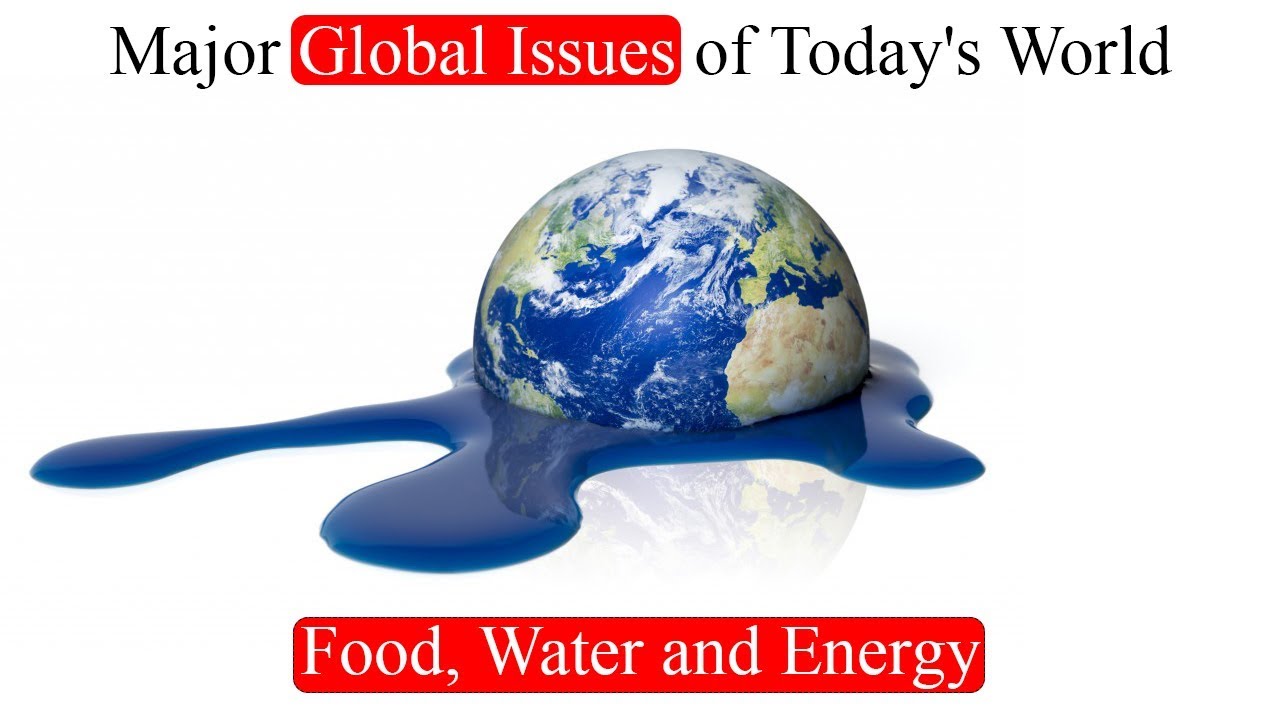
FOOD.

One in nine people in the world goes hungry each day.  

It has been estimated that if women farmers could be given the same resources as men, millions of more people could be fed. 

How can it be 2020 and people are still going hungry?

Nutritious food is often more expensive. Visit your local supermarket and compare the price of a punnet of strawberries to a chocolate bar. 

Even though approximately 12.9% of the world is undernourished, about 30% of the adult population is overweight.

HEALTH.

In a world of more than 1 billion people living in extreme poverty (less than $1.25 per day) and 2.2 billion living on less than $2 per day (2011 data)

The reality is far more complex. Untold hundreds of millions of people lack access to essential health services, in fact over half of the world population do not have basic health care. We are a long way from the universal right to health.

Communicable diseases were responsible for 71%  of deaths, and low-income countries are the most severely affected. 

EDUCATION. 

It’s estimated that approximately 600 million children are not mastering basic mathematics and literacy while at school. 

HABITAT AND BIODIVERSITY LOSS. OCEAN CONSERVATION

The earth is full. Full of our waste, full of our demands.

The economy is now bigger than the earth, unimaginable, unattainable, and unsustainable. There is no infinite growth possible on a finite planet because nature sets the rules and individual issues mean nothing if they are not attached to nature.  

There are countless studies and evidence all around you indicating that the coming crises are inevitable.

If an economy grows at 2% per year, it will double in 35 years. 

Imagine twice as much human economic activity as we now have. Can our planet sustain this? Do we need to do this? Why would we want to? Why are we doing this?

Even though a lot of us know that it makes no sense to try to grow endlessly and outstrip the only planet we have. 

What if anything can be changed? 

We all know that the road to global decarbonization must involve renewable energy.

Although the Paris agreement’s goals are aligned with science, alarming inconsistencies remain between science-based targets and national commitments.

Its a no-brainer in the current emerging global political climate.

Rather than tackle mitigation measures economies are now due to Covid-19 returning to pumping more not less carbon into the atmosphere.

Climate stabilization must be placed on par with economic development, human rights democracy, and peace.       

From a money perspective, we can’t help it—we live in a grow-or-die system.?

Currently, we have a system that provides humans to have an innate cost/benefit assessment tool called the smartphone operating at all times. 

Here are a few suggestions.

It is now vital that we consider the motivation and funding sources of those who are shaping our worldview. 

Money must be created without debt so it doesn’t force us to grow and consumer beyond our means.

New Money must no longer enter circulation as credit, that is, as debt.

It will simply be money spent into circulation by the government as a permanently circulating exchange medium to enable the country’s economy to function.

This money will be equity on the national balance sheet and be our commonwealth.

It will replace bank-created debt-money ending the privilege of commercial banks to create and issue what we use as money.

Then we have trillions in the form of pension investment funds that are nontransparently invested. If we demanded that these funds were moved from fossil fuel industries to green energy industries whose returns are going to be massive we would be reducing carbon emissions by millions of tonnes.

Next, we have the advertising industry.

All advertising that does not promote sustainability should be curtailed by law.  We must turn the direction of humanity towards thriving not consumption for profit.  

With the coming economic depression, we do have room for growth—the growth of community cohesion and commons conservation. We can grow our efforts to educate our children, care for our people, and care for the planet. We can grow into a more just, caring, sustainable society. 

Because we are careering into a world of a few haves and billions of have -not.

Access to information owned by Facebook, Twitter, Microsoft, Apple, to name a few, must become transparent and available to all as the interactions of all our individual worldviews shape the condition of humanity.

Lastly, we must address inequality.   

There are now 65.3 million people displaced from their homes worldwide.

Think about that number: 65.3 million. Can you even imagine it?

It’s now or never that we make a profit for profit’s sake contribute to a World Aid fund.

(see previous posts)

As Mahatma Gandhi put it, “Earth has enough to satisfy every man’s need, but not every man’s greed.”

We can’t eat drink or shit data.


All human comments appreciate. All like clicks and abuse chucked in the bin.

← Back

Thank you for your response. ✨


Share this:

  • Share on WhatsApp (Opens in new window) WhatsApp
  • More
  • Share on Pocket (Opens in new window) Pocket
  • Share on Mastodon (Opens in new window) Mastodon

THE BEADY EYE : LOOKS AT WHAT IS NOW BEEN CALLED THE NEW NORM.

26 Friday Jun 2020

Posted by bobdillon33@gmail.com in 2020: The year we need to change., Climate Change., COVID-19, Digital age., DIGITAL DICTATORSHIP., Economic Depression., Environment, Evolution, Fourth Industrial Revolution., Human values., Humanity., Modern day life., Modern day Slavery, POST COVID-19., Sustaniability, Technology v Humanity, Technology., Telling the truth., The common good., The essence of our humanity., THE NEW NORM., The Obvious., The state of the World., The world to day., TRACKING TECHNOLOGY., Unanswered Questions., VALUES, Viruses., We can leave a legacy worthwhile., What Needs to change in the World, Where's the Global Outrage., World Economy.

≈ Comments Off on THE BEADY EYE : LOOKS AT WHAT IS NOW BEEN CALLED THE NEW NORM.

Tags

Capitalism vs. the Climate., Coronavirus (COVID-19), Environment, Extinction, NORMALITY., Post-Covid-19, SMART PHONE WORLD, The Future of Mankind, THE NEW NORM., Visions of the future.


(Fifteen-minute read) 

While the pandemic continues to turn the world upside down, new realizations are beginning to dawn on us, there’s no going back to normality.

There is no doubt that we are getting close to the “new abnormal”.

We are all in this together and no one really knows what the future holds but you only have to look at the advertising industry to see what is coming. 

We are now in a digital dance in which the use of surveillance and testing to find and control outbreaks will eventually determine who gets to make or earn a living or not.

Under the cloak of preventing the virus from spreading governments are either already deploying, or actively considering, surveillance technology of such intrusiveness that it would have caused outrage and furious protests even a month ago. 

As the human and economic impact unfold, how massive this change will become is still unclear.

Indeed, it is a real question as to whether normal or abnormal can be sensibly used at all, given their tremendous baggage and built-in biases and the general confusion they create.

However, there are a few new norms becoming clearer.

The current devastating pandemic is likely to happen again and again and the digital dance to avoid the next outbreak will not be to the tune of governments, but two powerful global corporations laying down the law to territorial sovereigns and restructuring the economic order. 

Whole industries grossing billions of dollars are built on the words “normal” and “abnormal” and on the ideas of “well” and “disordered.”

It is therefore inconceivable that the right thing can be done and that the situation can change. Given that even the best and the brightest in the field of advertising are attached to an illegitimate naming game, from Bio this and Bio that there is probably no hope for change other than COVID free. 

Add the coming World economic depression, with unemployment and climate migration one thing is clear, slowing the pace of climate change and adapting to its impacts, must become a central organizing principle of society at all levels, from local to global through national and regional.

The declarations of climate emergency must start meaning that, rather than being just an additional agenda item for busy executives and politicians.

Why? 

Because climate change and the erosion of wildlife habitats will ensure a ready supply of zoonotic viruses.

Up to now, the emphasis is on lifting the lockdown has centered solely on the necessity of bringing the economy out of its cryogenic chamber to take in the world it has inherited.

We’re all online now, new conformity which is developing a serious digital divide between the young and older generations. And if the impact of Covid19 is another step in the collapse of modern societies, then it is likely it will have been another climate-driven step in that collapse.

The new normal, in other words, change what was wrong but keeps what was right with the old normal.

But if the old normal was wrong, then why did we call it normal?

The word “normal” appears straightforward enough it possesses a certain kind of authority or “power to divide and distinguish things” since a person’s mental model of “what is normal?” is tremendously influenced by how society and its institutions define “normal.”

But like many of our words, as soon as we begin thinking about it, it starts to fall apart at the seams. The fact with which we started our process of categorization becomes the standard or norm, and everything that diverges from that norm is not just different but abnormal and therefore less than normal.

Our concept of normal pulls double duty; it tells us that what is, ought to be.

Nor can it mean “free of discomfort,” as if “normal” were the equivalent of oblivious.

Normality forces upon us are that “in most cases, no formal rules or standards indicate what conditions are normal” In the absence of such rules, those who wish to identify normality will normally turn to one of three different definitions.

The first is the statistical view, “where ‘the normal’ is whatever trait most people in a group display”. Normal is what is typical, what most people do – which means it is impossible for any individual to be normal.

Second, the norm provided a concrete standard that, if followed, allowed the user to reproduce a specific pattern. Normal-as-ideal, then, might be in harmony with normal-as-ubiquitous, but it might be quite different.

What is normal for a human being, then, are all those behaviors that make it fit to thrive in its particular niche. The capacity to feel shame when betraying a loved one is normal in this scheme, as is the desire for one’s offspring to survive.

When it comes to defining normality, we start with what we think is normal before even considering what is abnormal with all three above end up sliding into each.

The new normal will mean that most of us will go back to most of what we were doing before the pandemic struck (1), but that our societies will make changes for the better (2), which will end up being good for the survival of our communities (3).

The question, then, is why would you use the word “normal” at all? 

Normal is safe. It’s familiar. In the face of fear, people long to go back to a time before the fear set in.

Covid-19 causes us to experience a great deal of anxiety, and then we imagine a carefree time before these feelings set in. We don’t begin with normality and then categorize those instances where it is transgressed.

If we begin with all of those things that we instinctively feel are “abnormal” and then try to find comfort by erecting a norm that resolves our anxieties. We then locate this norm “in the past”, which gives us the benefit of claiming the norm as our own. This, after all, may seem easier to attain than one that requires all the hard work of creation.

It is not something we need to build from scratch; all that is necessary is that we return home to it.

We will all continue to face daunting challenges for which we are not prepared. Modern medicine, as advanced as it is, is still, in the grand scheme of things, relatively young.

We’re not sure what exactly the future will look like – which is why we prefer to discuss it in the familiar terms of the good ole’ days – but we know that it’s coming to greet us.

Bergson used the term élan vital to describe the mysterious impulse toward an open future that seems to animate all life. In fact, this impulse is what life is. Life, says Bergson, “since its origins, has been the continuation of one and the same impetus which separates itself into diverging lines of evolution”.

If we are careful two huge tech companies that control mobile phone technology will enable governments to build and deploy proximity-tracking apps on every smartphone in the world.

 Your online appointments for everything IS JUST AROUND THE CORNER.  

Here is a shortlist of Normal abnormalities in the world. 

  • 640 million without adequate shelter (1 in 3)
  • 750 million with no access to safe water (1 in 5)
  • 270 million with no access to health services (1 in 7)
  • In developing countries, some 2.5 billion people are forced to rely on biomass—fuelwood.
  • The wealthiest 20% of the world accounted for 76.6% of total private consumption. The poorest fifth just 1.5%. In other words, about 0.13% of the world’s population controlled 25% of the world’s financial assets
  • A quarter of humanity — live without electricity.
  • 51 percent of the world’s 100 hundred wealthiest bodies are corporations.

A strong economy in a nation doesn’t mean much when a significant percentage (even a majority) of the population is struggling to survive.

THE NEW NORM.

Thinking about it, I much prefer the new COVID-19 normal, as I am certain you do too. After all, it has, in some bizarre way, opened our eyes to the infinite treasures that lie within us and in front of us, that we may have been too numb to notice until now.

What was once the unknown and frightening becomes your new normal.

We can make the new normal any way we want providing we make it GREEN. 

If “the new normal” means giving up to technology then THE NEW NORMAL MUST BE REJECTED WITH EXTREME PREJUDICE.

These temporary measures are just that; temporary. They need to be observed, but NOT FOREVER. New normal or not, every day really is a miracle.

The new normal that activity tracks your steps, whether you are black or white, rich or poor, left or right-wing, gay or straight, Muslim or other, Facebook or Twitter, contaminated or not, is irrelevant to living life and appreciating the world we all live on. 

It’s the powerful combination of humanity and values that count. We are living in a world of continuous change “Technology Rules The World.”

The new norm requires that we consider our systems as a platform for scaling value.

An investment that needs to be made by leadership. The time has passed for small commitments, hyperbole, and delays in embracing sustainable investing.

All human comments appreciated. All like clicks and abuse chucked in the bin. 

← Back

Thank you for your response. ✨


Share this:

  • Share on WhatsApp (Opens in new window) WhatsApp
  • More
  • Share on Pocket (Opens in new window) Pocket
  • Share on Mastodon (Opens in new window) Mastodon

THE BEADY EYE ASK’S. WHAT ARE MODERN DAY VALUES AND THEIR ROLE IN OUR LIVES.

20 Saturday Jun 2020

Posted by bobdillon33@gmail.com in #whatif.com, 2020: The year we need to change., A Constitution for the Earth., Capitalism, Climate Change., COVID-19, Dehumanization., Digital age., Disconnection., Economic Depression., Environment, Fourth Industrial Revolution., Future Education., HUMAN INTELLIGENCE, Human values., Humanity., Inequality., Life., Modern day life., Our Common Values., POST COVID-19., Poverty, Reality., Reverse racism., Survival., Sustaniability, Technology v Humanity, The common good., The essence of our humanity., The Obvious., The pursuit of profit., The state of the World., The world to day., Truth, Unanswered Questions., VALUES, WHAT IS TRUTH, What Needs to change in the World, Where's the Global Outrage., World Economic Depression., World Leaders, World Racism

≈ Comments Off on THE BEADY EYE ASK’S. WHAT ARE MODERN DAY VALUES AND THEIR ROLE IN OUR LIVES.

Tags

Modern day education, Modern day life., Modern day values., Modern global economy, Modern humans, Post-Covid-19

(Twenty-minute read) 

This is a vast subject which is not possible to address in an 800-word blog.

However, values role’s in our lives and their importance is not always fully understood.

Values are the things that are important to us, the foundation of our lives.

What I am interested in here is exploring the influence of technology and its advancement and how it now relates to the modification of cultural values.

Technology commonly exerts a strong influence on daily practices, changing the way values are carried out with each new development.

Will this in the end ‘kill’ our social cohesion and will groups of people be left out? Or will our social interaction become extensive and will our relationships get better? Are there any common values left? 

These are all questions that can’t be answered yet and can only be answered in the future. 

Technology is all around us.

It is so pervasive in our everyday life that it is impossible to get away from it.

It has become almost invisible so that most of us don’t know how to interact in the real world or with our environment, but it is how humans are using technology that is so devastating our common values. 

Before COVID-19 we were already isolating ourselves from physical contact with smartphones.

The virus has pushed us further apart with social distancing, online education, and social platforms replacing almost all forms of entertainment.   

Are we connected better nowadays with social media, or are we worse off?’

One of the aspects of culture and values is social interaction between people. How we behave to one another and in which way we do that. Social media has taken a big role in our social interaction. We no longer have to speak to a person to know what they are doing. We just look on twitter of Facebook. 

Social media and smartphones both are turning us into non-empathic couch potatoes and it is this passive use of technology that is the reason technology is ruining not just our values but humanity itself. 

With the arrival of COVID-19 ( His “epidemic”) technology isn’t allowing the young generation to truly embrace our humanity while creating a gap between generations. 

The real connection such as visual and emotional expressions aren’t shown anymore, because we are looking at a computerized display. This way messages could be understood differently than they should be, because they don’t get to know the real meaning behind the message.

If Facebook was a country, it would be the world’s 3rd largest country in terms of population. 

Now is the opportunity to realize this and that we must use technology as a tool, not reality.

Our overbearing dependence on technology can be detrimental to society.

It is not the be-all and end-all of everything. Everyone is entitled to their own values, attitudes, and beliefs.

For example. From the outside, the cultural values ​​of a group can often be difficult to understand. 

In India, 80% of the population practices the Hindu religion. For the believers of this religion, the figure of the cow is venerated and should not be sacrificed. In western culture, this is a strange cultural value, since cows are a source of food and not of worship. 

or

Some people may see great value in saving the world’s rainforests. However, a person who relies on the logging of a forest for their job may not place the same value on the forest as a person who wants to save it.

——————————————————————————————-

Before the coronavirus crisis exploded and confronted us with a life-and-death threat to every corner of our planet those who worked in what could be called taken for granted jobs we not valued neither in money terms or the essential services they provided to us all.

As a result, society discovered new heroes.

Times of crisis bring out the best in us. Superficial concerns fall away and we rediscover what really matters: Our values.

Now that the Pandemic in the western world is coming under control (we hope) and the murder of a colored man in the USA our worldwide values which have been honed by decades of biased history are coming under the spotlight, not just our personal views but societies as a whole.

BUT WHAT ARE THOSE VALUES AND HAVE DUG DOWN TO CORE VALUES AND WILL WE PUT THEM INTO ACTION?

It is easy to compile a list of personnel values and at the same time aspire to universal values of peace, human dignity, equal human rights, and freedom values.   

They are at the core of our being. They are our motivators, our drivers, the passion in our hearts, the reason we do the things we do and feel the way we feel. They help us to make better choices in life, develop healthy patterns of behavior, and form and maintain meaningful personal relationships.

They are the compass guiding everything we do – our choices and our actions.

So, if we want to change the world for the better, then we have to change
our own behaviors.

Living by your personal values sounds easy—at least in theory. Your values, after all, are simply the things that are important to you in life, so it should be natural to live by them.

Here are some more questions to get you started:

  1. What’s important to you in life?
  2. If you could have any career, without worrying about money or other practical constraints, what would you do?
  3. When you’re reading news stories, what sort of story or behavior tends to inspire you?
  4. What type of story or behavior makes you angry?
  5. What do you want to change about the world or about yourself?
  6. What are you most proud of? 
  7. When were you the happiest?

Think about our most important values and to act on them.

Living your values is about more than the big, long-term goals, however, it’s also about the small, day-to-day decisions. Putting them into action each and every day will have a powerful impact on our own wellbeing, the wellbeing of the groups and communities we belong to, and the wellbeing of the whole world.

The passive use of Technology is the reason technology is ruining our Humanity. 

Why is technology ruining humanity?

The only reason people do things is that life gives them the opportunity to do so. Which by extent, whether they know it or not, implies that people value their life.

Behind every use of technology is a person, as behind every murder, there is also a person.

We are about to pass through a long and very painful period of adjustment which is fraught with danger at the cost of permanently reducing human beings and many other living organisms to engineered products and mere cogs in the social machine.

As the noose of technological enslavement tightens on humanity will our values have any value?

They say that innovations in technology can save the world and is extending democracy. I say that it is concentrating even more power in the hands of a tiny elite.

Personal Values are formulated by a variety of influences, environmental influences including upbringing, religion, friends, family, peers, and, education not by algorithms, virtual reality.    

Until we get better at using technology as a tool I think we’re cooked, we’re going to continue to extinct species and we’re going to continue to dig the hole deeper of the whole eco-social crisis.

If you just hold your cell phone for 30 seconds and think backward through its production you have the entire techno-industrial culture wrapped up there.

You can’t have a smartphone an I pad or use Social media without everything that goes with it. You see mining, transportation, manufacturing, computers, high-speed communications, satellite communications, it’s all there, you see and it’s that techno-industrial culture that’s destroying the world.

The only way we’ll be able to responsibly harness the fruits that technology bears are with a renewed attitude of cooperation and care for the most vulnerable among us.

Technology has given us the tools to reshape how we live in the world; if it also changes the way we interact with our neighbors, it can be transformational.

Technology can inspire progressive social policies. When 62 billionaires have as much wealth as the bottom half of the world’s population, it’s clear that political principles are skewed toward the influential in business.

Overall, technology has the potential to reduce suffering, fight disease, and level the playing field for the poor if we use it as a tool, not as values.

Values are immensely powerful!

We know that human history is full of hideous, horrible acts, but it is important it explains why things are the way thy are. The problem is that is it not taught in schools without warts so no one gets a free pass.

History is the past it cannot be changed.   

But mature humans don’t live in the past and we need to start seeing each other as fellow humans. If we do so maybe we can start addressing the real cause of inequality in our societies which is our present economic systems. 

However, you don’t have to go into the future to see what is happing.  In the last forty years, we have wiped out 40% of our wildlife, acidified our oceans, pumped CO2 into the atmosphere, destroyed vast regions for livestock, ignored world natural disasters all for the sake of short term profits.  

If we don’t have a fucking healthy biodiversity-ecosystem there will be no need for profits or values.

With world economies, slowly reopening, I won’t hold my breath as it is easier to keep viewing thinks as black and white and profit for profit sake, not Clickbait.       

We all deserve to be treated as human beings of worth.

However because values are culture-bound, what’s good for one culture may be (and often is) deemed an abomination by another.

Herein lies the ultimate irresolvable dilemma.

Culture gives us prescriptions for appropriate conduct. When judging values, we should not speak in terms of right or wrong, black or white rather we should look at competing values in terms of better and worse.

Who’s to say what my values will be in 2030?

When I hear competing values shouted by a person from a different culture than mine, I hope to take a deep breath, realize that he/she is simply expressing a deep need they have, and then perhaps I can share my values and needs without fostering judgment, evaluations of their character, or moralistic analysis.

In the end, compassionate dialogue changes live, not right/wrong judgment, or taking the keen. 

All comments valued. All like clicks and abuse chucked in the bin.

← Back

Thank you for your response. ✨


Share this:

  • Share on WhatsApp (Opens in new window) WhatsApp
  • More
  • Share on Pocket (Opens in new window) Pocket
  • Share on Mastodon (Opens in new window) Mastodon

THE BEADY EYE ASK’S: ARE WE ENTERING AN ERA OF DO IT YOURSELF ECONOMICS, BASED ON PEOPLES INTUITIONS.

16 Tuesday Jun 2020

Posted by bobdillon33@gmail.com in 2020: The year we need to change., Capitalism, Climate Change., COVID-19, Enegery, Environment, Fourth Industrial Revolution., How to do it., Humanity., Inequality, Life., Micro v Macro Economics., Modern day life., Populism., Post - truth politics., POST COVID-19., Sustaniability, Technology v Humanity, The essence of our humanity., The Future, The Obvious., The pursuit of profit., The state of the World., The world to day., Unanswered Questions., United Nations, VALUES, We can leave a legacy worthwhile., WHAT IS TRUTH, What Needs to change in the World, Where's the Global Outrage., World Economic Depression., World Economy.

≈ Comments Off on THE BEADY EYE ASK’S: ARE WE ENTERING AN ERA OF DO IT YOURSELF ECONOMICS, BASED ON PEOPLES INTUITIONS.

Tags

Capitalism and Greed, Capitalism vs. the Climate., Coronavirus (COVID-19), Globalization, Inequility, Micro v Macro Economics., The Future of Mankind, THE UNITED NATIONS, World aid commission

(Twenty-minute read)

I am no economist but you don’t have to be to realize that long before the Covid-19 Pandemic, the state of the global economy was already in disarray, now with viruses the economic problems to come are in general as serious as they have ever been.

To deal with the accumulated liabilities history suggests some radical alternatives, including a burst of inflation or an organized public default, one way or the other the economic fallout defies calculation.

It makes sense with everything happening at once to take a hard look at the coming economic depression. (which is going to be deep and long)

It will require not just governments to be more visionary to lead the way out of the crisis but new economic thinking to rethink the whole Globalisation of economies before they disappear into the world of digital data and become difficult to measure, or tax.

The question, of course, is what form that will take and which political forces will control it.

We all know that economic relationships are complicated and changeable. The influence of anyone variable in an economy is not easy to isolate even with the use of sophisticated data. This is why economists are unable to agree on any course of action when it comes to deciding how the economy actually works and how it ought to work.

Even if they could agree countries have different moral and political judgments.

What I see is that we entering an era of doing it yourself economics, based on people’s intuitions,but unfortunately macroeconomic is choosing between inflation or unemployment.

With countries trying to reopen their economies and given that economists can not agree or have sufficient knowledge to predict any direction one could be forgivin to ask are they performing a useful purpose in the first place.

The coming economic depression can only be diluted by the creation of a new interrelationship with the resources of the earth, their use against their value to the ecosystems as a whole not the continuation of profit for profit sake.

We must recognize that the civilizations of the world are entwined in a global economic system that is incapable of functioning for the common good of humanity, other species, and this planet, which is our home.

It is clear that serious reflection is in order.

Simply to stand back and question what has happened and why would be to compound failure with failure: failure of vision and failure of responsibility.

A sustainable and prosperous global economy needs to be grounded in the common good of all living species, not profit.

The failure of markets, institutions, and morality during the current coronavirus crisis has shown that the emergence of global capitalism brings with it a new set of risks that call for an ethical, moral change.

Leaders are now gambling with public health, safety, and the future of younger generations. They unapologetically prioritize serving themselves over the people they were elected to serve. We have to make them raise their game.

A new approach to economics is required that puts values, compassion, generosity, kindness, people, planet, and the common good at the heart of our economic system. 

Now is the Time for a Revolution in Economic thinking.

A new definition of the “Bottom Line.”

Given today’s global challenges, such as climate change, financial crises, oil depletion, renewable energy, inequality, and poverty, what kind of new economic theory is called for?

Therefore this post is an appeal to economists, academic colleagues in business, finance, management, political economy, philosophy, theology, ethics, environmental studies, sociology, anthropology, and others to come together, so that, all of us, collectively, can prescribe a working solution to our commonly shared challenges.

As we transition from a service-based economy to a knowledge-based economy, human capital will not be enough, the next generation will see large tax increases in order to pay off the national debts.

The work, of which we are a part, which is so needed, has barely begun.

The pandemic will continue to change the economic and financial order

forever.

It will lead to permanent shifts in political and economic power in

ways that will become apparent only later.

However, the coronavirus crisis has been a powerful reminder that the basic political and economic unit is still the nation-state. Countries will have to strive for a better balance between taking advantage of globalization and a necessary degree of self-reliance.

The COVID-19 pandemic has created a wartime atmosphere in which such changes suddenly seem possible.

Perhaps the emergency payments to individuals that many governments have made are a path to a universal basic income and universal health insurance.

The pandemic has laid bare the vulnerabilities of open borders.

Firms that are part of global supply chains have witnessed first-hand the risks inherent in their interdependencies and the large losses caused by disruption.

Supply chains will have to become more local and robust—but less global.

The real risk, however, is that this organic and self-interested shift away from globalization by people and firms will be compounded by some policymakers who exploit fears over open borders. They could impose protectionist restrictions on trade under the guise of self-sufficiency and restrict the movement of people under the pretext of public health.

It is now in the hands of global leaders to avert this outcome and to retain the spirit of international unity that has collectively sustained us for more than 50 years.

The rise of populism in many countries further tilts the balance toward home bias.

Even after the pandemic is brought under control (which may itself prove a lengthy process). The post-coronavirus financial architecture may not take us all the way back to the pre globalization era, and the damage to international trade and finance is likely to be extensive and lasting.

The gap between rich countries (along with a few emerging markets) and the rest of the world in their resilience to crises will widen further. Economic nationalism will increasingly lead governments to shut off their own economies from the rest of the world.

Now and for a long time to come, central banks will become entrenched as the first and main line of defense against economic and financial crises. They may come to rue this immense new role and the unrealistic burdens and expectations it will impose on them.

We urgently need more and deeper conversations, dialogue, and engagement at all levels and from a variety of perspectives to bring the different cultures, civilizations, and viewpoints together, in order to find common ground and agreement on joint action.

The pandemic and subsequent recovery will accelerate the ongoing digitalization and automation of work changing the future composition of GDP.

The share of services in the economy will continue to rise. But the share of in-person services will decline in retail, hospitality, travel, education, health care, and government as digitalization drives changes in the way these services are organized and delivered.

The downturn will accelerate the growth of nonstandard, precarious employment—part-time workers, gig workers, and workers with multiple employers—leading to new portable benefits systems that move with workers and broaden the definition of employer. New low-cost training programs, digitally delivered, will be required to provide the skills required in new jobs.

The sudden dependence of so many on the ability to work remotely reminds us that a significant and inclusive expansion of Wi-Fi, broadband, and other infrastructure will be necessary to enable the accelerating digitalization of economic activity.

We cannot achieve our hopes and dreams without such conversations and dialogue. Only then can we hope for the understanding between civilizations, peoples, and points of view necessary to construct an economy that truly works for the common good.

No country or economic activity is going to be impervious to the drastic impacts of climate change.

It is cuckoo land to think that we can continue to ignore the pending disasters, compounded by the social problems, highlighted by the epidemic that has brought all manner of issues to the surface. From the coronavirus pandemic and police brutality to the marginalization of minority communities around the world, leadership is broken.

For years we have listened to their rhetoric without action that has given full rein to self-harming market forces.

The Normal Economy is Never Coming Back.

This much is certain:

Just as this disease has shattered lives, disrupted markets and exposed the competence (or lack thereof) of governments, it will lead to permanent shifts in political and economic power in ways that will become apparent only later.

It would be fair to say that if we are to move to Green sustainable economies the first thing that is needs is green energy that is free of costs to the user. 

The whole concept of economies becoming attached to the fundamental values required to protect and revitalize the fundamental resources of the earth that provide us all with life is idealistic and will remain so as no one wants to foot the bill to make it happen. 

However, for the first time in human history, before profit disappears into the cloud we have the technology to apply a World Aid commission of 0.005% on all activities that are in existence for profit sake only.

One of humanity’s greatest weaknesses is greed. 

One can see this throughout history, with the present-day examples personified by Wall Street and other world stock exchanges now run by high-frequency trading algorithms. 

Such a commission would create a perpetual fund of billions almost invisibly to the markets. It would spread the cost of changing world economies fairly to achieve the desired outcome both the earth’s needs and our needs.    

It would turn a begging United nation into a giving United nation. 

No one country wants to foot the cost of change and it cannot be achieved if visible to Wall Street

Micro and Macro Economics are neither different subjects, nor they are contradictory, rather, they are complementary. The only important point which makes them different is the area of application.

A fund like this could give grants, not loans. It could buy the sunshine and turn it into energy, buy the protection of forests, freshwater, fresh air, remove the need for mass farming, reduce inequality, afford education, change our lives for the better. 

All human comments appreciated. All like clicks and abuse chucked in the bin.
← Back

Thank you for your response. ✨


Share this:

  • Share on WhatsApp (Opens in new window) WhatsApp
  • More
  • Share on Pocket (Opens in new window) Pocket
  • Share on Mastodon (Opens in new window) Mastodon

THE BEADY EYE ASKS. WHAT IS CREATIVITY AND WHY WILL WE NEED IT NOW?

01 Monday Jun 2020

Posted by bobdillon33@gmail.com in #whatif.com, 2020: The year we need to change., Civilization., COVID-19, Digital age., Economic Depression., European Commission., European Union., How to do it., HUMAN INTELLIGENCE, Human values., Humanity., Imagination., Innovation., Our Common Values., Politics., Populism., POST COVID-19., Stimulus package., Sustaniability, Technology v Humanity, The common good., The Future, The Obvious., The world to day., VALUES, We can leave a legacy worthwhile., What needs to change in European Union., What Needs to change in the World, World Economic Depression.

≈ Comments Off on THE BEADY EYE ASKS. WHAT IS CREATIVITY AND WHY WILL WE NEED IT NOW?

Tags

Capitalism and Greed, Coronavirus (COVID-19), Creative Thinking., Creativity., Distribution of wealth, Post-Covid-19, The Future of Mankind, Visions of the future.


(Four-minute read) 

“Creativity is a combinatorial force: it’s our ability to tap into our ‘inner’ pool of resources – knowledge, insight, information, inspiration and all the fragments populating our minds – that we’ve accumulated over the years just by being present and alive and awake to the world and to combine them in extraordinary new ways.” — Maria Popova, Brainpickings.

It brings to our awareness what was previously hidden and points to new life.

The current COVID-19 pandemic is propelling us to get out of commodity hell into a new age of creativity.

Creativity is the Most Crucial Factor for Future Success.

It is critical to economic growth and solving the problems of the planet.

Creativity begins with a foundation of knowledge, learning a discipline, and mastering a way of thinking.

The longer the list of ideas, the higher the quality of the final solution.

Unfortunately, all the creativity in the world without financial support to achieve sustainability that does not address the problems as a whole will only achieve further inequality.

In seeking a transition to sustainability as the organizing principle in a new world order, a piecemeal approach—emphasizing some aspects,
while neglecting others—is unlikely to yield effective, lasting results.

It requires a fundamental shift in consciousness as well as action. It calls for a fresh vision, a new dream, and new approaches for shaping evolving new realities.

We can no longer rely on governments of countries to come together on the one problem the world has that is going to affect us all for generations.

We can no longer expect us, humans, because of the or indeed without the internet to act as one.

We can no longer watch our world plundered for the sake of short term profit.

We can no longer demand change when we are unwilling to change.

WHY?

Because when one looks over the neighbor’s wall we see 

If we want a Tiger, the Amazon, Clean Air, Fresh Water, Green Energy, and Sustainable Eco-Systems, a Future, it can only be achieved in an invisible manner.

No one wants to pay for it and we know that nothing comes for free.

Widespread use of the term sustainability has led today to a growing ambiguity with the employed within a very broad spectrum of meaning, often to the point of trivialization.

The principles of sustainability are articulated in a general fashion but can receive specific operational meaning in relation to particular cases, for example, sectors of the economy, development issues, business strategies, investment guidelines, or initiatives taken by individuals.

By their very nature, sustainable principles are influenced by language, logic, and action all forcing separation, discrimination, and choice, resulting in the artificial distinction and sequencing of the five principles.

When in fact they interacting and co-defining one another.

To restore rigor to the ideas underlying the concept of sustainability we should (We have the technology) create a World Aid Fund by placing a commission on all transactions and activities that don’t contribute to the principles. ( See previous posts) 

This would raise trillions to tackle not just climate change but all other problems, infusing a common purpose, provide a common foundation, and stimulate common resolve.

All distribution of the funds would be on a grant base.

To avoid political interference and lobbying the fund revenue would be granted on a project summit bases on an annual draw of all projects deemed worthy.

To ensure that the grants are used for the purposes they are intended the fund would be open to total transparency.

It is of course totally logical that in order to establishment of such a fund a pilot scheme would have to be implemented to iron out any problems. 

The European Union has just agreed on a massive financial package to enable its members to recover for CORVID-19. 50% of this package is to be granted.

Just think what it would do if none of this money had to be borrowed in the first place.  

The concept is systemic in nature, meaning that each domain affects all the others and is affected by each in return, all are reduced to mere technicalities, an invisible fund of trillions.

Where do you find creativity?

The answer: Anywhere if you know where and how to look, in a space you yourself make.

Any creative ideas and comments appreciated. All like clicks and abuse chucked in the bin.
← Back

Thank you for your response. ✨


Share this:

  • Share on WhatsApp (Opens in new window) WhatsApp
  • More
  • Share on Pocket (Opens in new window) Pocket
  • Share on Mastodon (Opens in new window) Mastodon

THE BEADY EYE SAYS. WE WILL NEVER HAVE A PERFECT WORLD, BUT WE DO STILL HAVE A WORLD OF INDESCRIBABLE BEAUTY.

21 Thursday May 2020

Posted by bobdillon33@gmail.com in #whatif.com, 2020: The year we need to change., A Constitution for the Earth., Climate Change., CORONA VIRUS., COVID-19, Disasters., Disconnection., Economic Depression., Environment, Evolution., How to do it., HUMAN INTELLIGENCE, Human values., Humanity., Life., Modern day life., Our Common Values., Pandemic, POST COVID-19., Reality., Survival., Sustaniability, Technology v Humanity, The common good., The essence of our humanity., The Future, The Internet., The Obvious., The state of the World., The world to day., Unanswered Questions., WHAT IS TRUTH, What Needs to change in the World, World Aid., World Economic Depression.

≈ Comments Off on THE BEADY EYE SAYS. WE WILL NEVER HAVE A PERFECT WORLD, BUT WE DO STILL HAVE A WORLD OF INDESCRIBABLE BEAUTY.

Tags

Artificial Intelligence., Capitalism and Greed, Capitalism vs. the Climate., Coronavirus (COVID-19), Earth, Environment, The Future of Mankind, Visions of the future., World aid commission


(Ten-minute read) 

There is no such thing as a perfect world here or anywhere else especially when it is inhabited by a species that thinks that it can survive at the cost of all that surrounds it.

They say that beauty is in the eye of the beholder.

This is true if you can behold what you are looking at while accepting that it can’t be perfect in the true sense of the earthly word. 

We might be living in history’s most peaceful era, with violence of all kinds – from deaths in wars to mass shootings, streets stabbings, in a world as interconnected and algorithmically driven that it could simply spiral out of control with an invisible virus that could kill untold numbers worldwide. 

In some sense, unlike our precedents who had gods for everything, from Wars to Famines we live a great deal of our lives in a reality of only what is visible but there is more and more becoming invisible. 

If all this were really true, it would suggest that an overwhelming proportion of the energy we dedicate to debating the state of humanity – all the political outrage, the warnings of imminent disaster, the exasperated op-ed columns, all our anxiety and guilt about the misery afflicting people all over the world – is wasted.

This is not an irrational thought.

Perhaps we should have or will have enough good reason to assume things will continue to improve but when you live in a world where everything seems to be getting better, yet it could all collapse tomorrow, “it’s perfectly rational to be freaked out,” by COVID-19.

It wasn’t so long ago that dogs gnawed at the abandoned corpses of plague victims in the streets of European cities.

With countries now endeavoring to kick start their economies, lurking behind everything else is our collective inability to act as one, to appreciate or understand that we all live on the same planet with all of its invisibility.  

Rational optimism holds that the world will pull out of the current crisis, but what if it’s the very strength of democracy – and our complacency about its capacity to withstand almost anything – that augurs its eventual collapse. 

We have created – the very engine that is so complex, volatile, and unpredictable that catastrophe might befall us at any moment. If it happens no one will remember the internet.

The worlds we live in are now so self-centered that we see charities begging to save everything from donkeys to starving children, all saturated in a media-era, that is constantly misleading us, with an advertising industry promoting unsustainable consumption for profit.   

Digital technology has unquestionably helped fuel a worldwide surge in economic growth but it has turned us into digital slaves detached from a genuine knowledge of how our world works and concern for the future.  

In these hyper-connected times, our addiction to bad news just leads us to vacuum up depressing or enraging stories from across the globe, whether they threaten us or not, and therefore to conclude that things are much worse than they are.

We live now in the Age of the Take, in which a seemingly infinite supply of blog posts, opinion columns, books, and TV talking heads compete to tell us how to feel about the news. (Including this blog.)

While the usual intractable political disagreements about the state of the planet improvements in sanitation and life expectancy we can’t prevent rising sea levels from destroying your country.

This shouldn’t really come as a surprise:

The internet economy is fuelled by attention, and it’s far easier to seize someone’s attention with emotionally charged argument than mere information – plus you don’t have to pay for the expensive reporting required to ferret out the facts.

Or, worse, is the internet with its social media platforms now counterproductive, insofar as a belief that things are irredeemably awful seems like a bad way to motivate people to make things better, and thus in danger of becoming a self-fulfilling prophecy.

The point is that if something does go seriously wrong in our societies, it’s really hard to see where it stops.

We are not merely ignorant of the facts; we are actively convinced of depressing “facts” that aren’t true.

You might argue that comparing the present with the past is stacking the deck.

Of course, things are better than they were. But they’re surely nowhere near as good as they ought to be.

Humanity indisputably has the capacity to eliminate extreme poverty, end famines, or radically reduce human damage to the climate. But we’ve done none of these, and the fact that things aren’t as terrible as they were in 1800 is arguably beside the point.

If you start from the fact that plague victims once languished in the streets of European cities, it’s natural to conclude that life these days is wonderful. But if you start from the position that we could have eliminated famines, or reversed global warming, the fact that such problems persist may provoke a different kind of judgment.

They’d say, the world’s getting better, but it doesn’t feel like that around here.

For people to feel deeply uneasy about the world we inhabit now, despite all most indicators pointing up, seems to be reasonable, given the relative instability of the evidence of this progress, and the [unpredictability] that overhangs it.

And I would say, ‘Yes, but this isn’t the whole world!

Should we be a  little bit cheered by the fact that really poor Africans are getting a bit less poor? There is a sense in which this is a fair point. But there’s another sense in which it’s a completely irrelevant one.

When we don’t see the progress we have made, we begin to search for scapegoats for the problems that remain.

Progress isn’t inevitable, progress is problem-solving but not problem solving that addresses the whole problem.  

Everything really is pretty fragile and it is now beyond a doubt that the world is going into an economic depression. The pandemic has exposed our failings in many ways with the need to reverse that last four decades of the prevailing policies of growth at any cost.

Observations alone, however, will not bring transformation.

God forbid we should be naive to think that once ideas are discussed and made popular they will permeate policymaking and bring about change. In reality in a pandemic it is more than likely with a world economic depression the first thing that happens is not a radical reengineering of the economy. 

What happens is, what is dispensable, how many death can we afford before the economy suffers? Is the loss of life at a level acceptable to big business and the government?

So we will for the foreseeable future lurch forward with broken economies while millions are made scapegoats. Yes, your data will be centralized. The data doesn’t lie. Just look at the numbers, whatever happens, things could always, in principle, have been worse.

If we are not vigilant history shows, that whatever horrors the crises expose they will be covered up in the shattered aftermath.   

It took millions and millions of lives to win your freedom so why should we give it up to AI apps that are non-transparent, non-regulated, owned by you-know-who. 

To save lives Yes. To control lives NO.

We should look at things like climate change and nuclear war and pandemics as problems to be solved, not apocalypses in waiting. But they aren’t newsworthy. And you’ll rarely see a headline about a bad event that failed to occur.

Nature might be healing and the green deal looks like to way to go but a sustainable world requires that we address the world as a whole not just piecemeal solving one problem after another. 

There can be no sustainability with economies that don’t have their activities vetted against the knock-on effects they have on the whole ecosystem of our planet.    

Can this be achieved?

As I have said our problem is that we humans cannot act as one or see ourselves as a whole, inhabiting a planet that is interconnected to each and every one of us.

We will never be able to do so. 

How do we overcome this problem before the damage may not be repairable?

It has to achieve by invisibly means and on a sufficiently long timescale.

There is no reason with the computer power now at our disposal that we could not tap into the greed( profit for profit sake) by placing a world Aid commission of 0.005% on all activities that are not contributing to the health of our planet. ( See previous posts) 

Frankly, we have the knowledge so our prevailing mood of despair is irrational, and a bit self-indulgent.

Stay Alert. 

All human comments appreciated. All like clicks and abuse chucked in the bin

← Back

Thank you for your response. ✨


Share this:

  • Share on WhatsApp (Opens in new window) WhatsApp
  • More
  • Share on Pocket (Opens in new window) Pocket
  • Share on Mastodon (Opens in new window) Mastodon

THE BEADY EYE SAY’S. NOW MORE THAN EVER IT’S IMPORTANT TO MOVE PEOPLE BEYOND JUST DREAMING INTO DOING.

14 Thursday May 2020

Posted by bobdillon33@gmail.com in #whatif.com, 2020: The year we need to change., A Constitution for the Earth., Artificial Intelligence., Big Data., Biotechnology., Civilization., Climate Change., COVID-19, Dehumanization., Digital age., Disasters., Disconnection., Environment, Evolution, Fourth Industrial Revolution., HUMAN INTELLIGENCE, Human values., Humanity., Modern day life., Nanotechnology, Our Common Values., Post - truth politics., POST COVID-19., Reality., Survival., Sustaniability, Technology v Humanity, The common good., The essence of our humanity., The state of the World., The world to day., Unanswered Questions., We can leave a legacy worthwhile., WHAT IS TRUTH, What Needs to change in the World, Where's the Global Outrage.

≈ Comments Off on THE BEADY EYE SAY’S. NOW MORE THAN EVER IT’S IMPORTANT TO MOVE PEOPLE BEYOND JUST DREAMING INTO DOING.

Tags

Artificial Intelligence., Big Data, Capitalism and Greed, Capitalism vs. the Climate., Community cohesion, Coronavirus (COVID-19), Earth, Environment, Extinction, Technology, The Future of Mankind, Visions of the future.


(Fifteen-minute read) 

It is now or never to stop dreaming.

No one has the ability to control the outcome of the ovarian lottery, and whether you were born into a life of privilege or disadvantage this COVID-19 business is beginning to ask us all questions about the Capitalist system that has and is failed us.

The one thing that this crisis is doing is making more space to acknowledge that our losses and our failures aren’t our individual faults.

This is now blatantly and brutely clear.

Let’s start with a few very basic questions.

Do people exist to serve the economy, or should the economy exist to serve people?

Can we create an economy that operates on anti-capitalist principles, rather than for private profit? 

With COVID-19, it turns out that we’ve created a whole society with culture and institutions around the idea that people exist to serve the economy.

And now millions of people are waking up to the reality that that’s a misplaced priority.

What we need is a money system that actually is connecting real resources with real needs, creating real community wealth at the community level.

That requires a financial system that is rooted in the community and accountable to community interest and that operates by life values rather than financial values.

The biggest problem with our current financial system is that it’s very short-term obsessed.

So we need to change that whole culture. And that means changing what we measure and that now will come with either rewards or unintended consequences of all of us.

Without fundamentally changing as to how we see the economy the current system which is organized around financial values over life values will continue. 

If we don’t take the same attitude toward nurturing the human life cycle as we do toward saving the environment from global warming and industrial pollutants were fooling ourselves. 

WHAT WE ARE NOW WITTISING ARE COUNTRIES STRUGGLING TO RESTART THEIR ECONOMIES AS IF NOTHING HAS HAPPENED. RETURNING TO WORK WITHOUT ANY NEW VISION AS TO HOW TO CHANGE THE SYSTEM. 

So our era is intensifying the almost daily choice for each of us – faced with a moment of unknowing, a new challenge, do I:

In other words, we all facing a lethal challenge with a profound urge to survive and yet without any guarantee of success.

This current ruthless system where the individual desire to succeed overrule all common sense to look after the real rewards of the value of life has kept us up to now quiet about our countries failures.

There are still nurturant values: Freedom, opportunity and prosperity, fairness, open two-way communication, community building, service to the community, and cooperation in a community, trust, honesty.

The world is a dangerous place and it always will be, so let us not seek to fix the blame for the past. Let us accept our own responsibility for the future.

We’ve come a long way but the question remains do our lives have any meaning, any purpose?
Every life has two bookends—the day we’re born and the day we die.

Each of us is born with tremendous potential, but ironically, we often end our lives much like we began—weak and helpless and if we are to learn anything from this pandemic it is that the meaning of life is a demanding question, and many dismiss it as simply unanswerable.

The truth of the matter is that every stage of life is equally significant and necessary. 

Where do you fit into this story of human life?

In general, worldview has been most influenced by religion and science.

The belief system determines what we think is possible, and what we think is possible influences the results we create or allow in life.

If you think that you are connected with all of life, you will be more apt to steward your environment with care and treat others with compassion. However, if you think that only your race or social class should rule, your behavior will most likely be very brutal.

On a larger scale, however, our beliefs are predominantly determined by those who control our access to information (media) and our social structures, (including schools), because these institutions dictate what beliefs and behaviors are rewarded and which are punished.

So the prevailing worldview of the 21st century, in which war is considered a viable or necessary means of problem-solving, that starvation is inevitable for some people on this planet, and that it is right for some people to tax and control others against their will, is the result of a well-organized elite who own the systems through which information and values are disseminated.

We are careening into a world of a few haves and billions of suffering have-nots.

It is critical to consider this if we want to protect one another, as well as our planetary home, and to turn the direction of humanity toward thriving.

Above all what we need is. To consider the motivation and funding sources of those who are shaping our worldview.

We are at a critical crossroads where our information and our courage enables us to choose to create a thriving world based on protecting the rights of every individual or as our recent trajectory of misinformation and confusion continues to lead us into a global  Data police state – seeking daily permission to act from the dictators of one-world tyranny run by Global Data platforms. 

We must learn ethical evolution quickly…

What can be done? 

First, we must stabilize our climate. 

Our sentience, our feelings of wonder and awe emerge out of the universe… These profound feelings are not just ours; they are the universe reflecting upon itself… To live is to enter this beauty, surrounded by enchantment, summoned by magnificence.

Secondly, we must overcome the powerful addiction of our smartphones, of money, power, career, and ego needs of every type. This momentum has kept suffering alive despite the enormous changes in human existence from age to age.

Then, we must not allow Artificial Intelligence to control our minds. Rather than just doing the next centralization of power into the hands of a few as we wake up, do our own thinking, connect with others, and take action, humanity has what it takes to thrive. 

Furthermore, we must stop experience every aspect of our lives through the lens of our set of beliefs, personalized social media filters, racism, greed,.    

Which is more primary in finding our way, the rights of the individual, or the opinion of the majority about what’s good for the group?

Finally,  “Everything we need is already here and we can access it by recognizing and acting from our oneness.”
      – Kimberly Gamble

Will we do any of it? 

Not likely. 

Why?

Because we are unable to act as one.

The world’s population is expected to hit seven billion in the next few weeks.

The number of people on Earth has more than doubled in the last 50 years.

As I see it, the economy is just a social construction that lets people produce and exchange goods and services. You can’t serve a social contract. In the end, the agreed-upon valuation between sellers and buyers is all that matters.

What’s it all mean then? 

I think the worst thing we could do would be to actually throw out capitalism and I think what we…the second-worst thing we could do would be to actually fail to reform it.

We need to re-orientate capitalism and the financial markets to make them more long-term focused, not let’s put it back in a box.

There is only one way that we might act together is by creating a perpetual funded World Aid fund, ( See previous posts) with a Constitution for the Earth and the use of all technology.

Remember that the economy depends on millions of factors that can have both a positive and negative impact, while the stock market is only affected by one factor, the supply and demand of stocks.

So, again, the stock market is not the economy. And the economy is not the stock market.

GDP is not a means to a healthy economy unless it protects the smallest ant to the biggest 

All of us will be a long time dead so hopefully, your legacy will continue after your stages of life have ended.

All human comments appreciated. All like clicks and abuse chucked in the bin.

← Back

Thank you for your response. ✨


Share this:

  • Share on WhatsApp (Opens in new window) WhatsApp
  • More
  • Share on Pocket (Opens in new window) Pocket
  • Share on Mastodon (Opens in new window) Mastodon

THE BEADY EYE SAY’S : WE KNOW THE RIGHT WAY TO GO BUT WHY IS IT SO HARD? IS IT BECAUSE IMAGINATION IS DISAPPEARING.

09 Saturday May 2020

Posted by bobdillon33@gmail.com in 2020: The year we need to change., Big Data., COVID-19, Dehumanization., Digital age., DIGITAL DICTATORSHIP., Digital Friendship., Disconnection., Economic Depression., Emergency powers., Fourth Industrial Revolution., Freedom, GPS-Tracking., HUMAN INTELLIGENCE, Human values., Humanity., Imagination., Inequality, Innovation., Modern day life., Modern day Slavery, Our Common Values., POST COVID-19., Reality., Robot citizenship., Sustaniability, Technology, Technology v Humanity, The essence of our humanity., The Future, The Obvious., The state of the World., The world to day., Tracking apps., TRACKING TECHNOLOGY., Unanswered Questions., VALUES, We can leave a legacy worthwhile., WHAT IS TRUTH, What Needs to change in the World, Where's the Global Outrage.

≈ Comments Off on THE BEADY EYE SAY’S : WE KNOW THE RIGHT WAY TO GO BUT WHY IS IT SO HARD? IS IT BECAUSE IMAGINATION IS DISAPPEARING.

Tags

Algorithms., Artificial Intelligence., CORONA VIRUS., Coronavirus (COVID-19), Imagination., Legacy worthwhile., The Future of Mankind, Visions of the future.

(Twenty-minute read) 

If ever there was a need for imagination when this pandemic is over or is eventually under control, hopefully, imagination is going to play a massive role in redesigning not just our societies but the way we live and die on this planet.

The responses to the COVID-19 pandemic are simply the amplification of the dynamic that drives other social and ecological crises.

If we have learned anything from Covid-19 is that global problems require global solutions, whether it is a pandemic, hunger, or access to quality education, reversing climate change, poverty, and inequality, you name it.

Imagination allows us to engage in thinking about alternatives and there is no doubt that we will need some radical changes.

Here I am referring to creative imagination the role it plays in our thinking.

The key point is that in using a term such as ‘imagining’, I am not just referring to some mental activity, but also evaluating that activity in some way, with all its relations and ramifications.

So here is your chance to submit you imagine creative ideas.

(All human comments appreciated. All like clicks and abuse get chucked in the bin) 

Where to start? 

Unfortunately, this pandemic is a present-day dystopia.

It’s not the stuff of science fiction set in some distant future or on another planet it’s damage is ongoing and will only get worse as it continues.

To understand the “real world” one has to experience it not imagine it.

At the moment there is a lot of rhetoric about using a tracking App to monitor the spread of COVID_19. In other words, unregulated squealing Apps (that are owned by private corporations) that Id people that have or had the virus. 

 We recently celebrated VE day that won us freedom at the cost of millions of lives. 

In my view, such a tracking proposition is not far removed from what the Nazis did in identify Jews by marking them with a yellow star. 

It is imperative that we in their honor that we now don’t rubbish there sacrifice by becoming Data slaves. 

(As I have said in the previous post, to ensure tracking does not outlive the effort against COVID-19. Both the technology and related policies and procedures should ensure the deletion of data when there is no longer a need to hold it.)

When people feel that their phones are antagonistic rather than helpful, they will just turn location functions off or turn their phones off entirely.

Imagine living under a Chines automatism system run by a Donal Dump.

Such techniques violate some of the core values of liberal democratic regimes.)

Up to now, we thought that Capitalist Globalization was the bee’s knees when in fact it increased inequalities and undermined democracy.

Now we realize that ecological transition IS more than NECESSARY with a bottom-up economy to protect the world and not the top-down begging world we have a the moment.  

However, the big problem remains the same.

How to distribute the gains of any economy. and now the losses.  

Technology will treat people as units and as such the relentless growth and accumulation of wealth and power for the few, will continue to grow. 

Cutting-edge technologies are now powered by artificial intelligence and are fundamentally shifting the distribution of power between people who provide data and entities that can make sense and use of these data.

It will become a battle between protecting individual rights and confronting an existential threat to our collective right to health, to a basic living wage. 

Of course, all of this data helps epidemiologists model the movement and the future of the virus but beyond the privacy and data rights, there are questions of biases and discrimination built into the algorithms that power the technology. 

Machines will never be made to think like people.

We have for decades underpaid the people that we now call essential workers as interchangeable units.

Currently, the AI field is mostly controlled by corporate interests. 

As global COVID-19 cases continue to rise, the unmatched connectivity that defines our era serves as both bane and blessing. 

Let’s ask the question one more time, in taking advantage of big data to create databases to track and predict infectious risk, should we be enforcing social- distancing by squealing on each other?

If you are at risk, the odds change rapidly, you become in favor of sharing or donating data.

There’s really no way to stop the movement of microbes and we need to realize that now our citizens really need to realize that.

Mapping potential carriers with big data notwithstanding privacy concerns, analysis of personal, travel, and other data like clinical data allow accurate predictive modeling.

Imagine if we created a society where everything is predicted and determined by big data. Its presence depends on “symbolic function”, the ability to pretend that one object is another thing entirely.

It will be a massive mistake.

So is technology an imaginary friend or foe?

Will we lose that human touch?

There’s no doubt that the coronavirus pandemic has changed daily life.

But what changes will last? How will we live when it’s all over? 

Even now, when we’re seeing a massive, rapid change in most walks of life — inspired by a push in science or technology, or nudged by a freak, global health emergency — it’s hard to find sound prophecy. And that’s despite access to mountains of data.

Who would have imagined that global consumerism could be crushed by the wheels of its own industry … quite so suddenly.

But perhaps this is the kind of tipping point that we secretly crave — a slowing of society.

Many people will struggle to deal with an increasing rate of change and, as a result, suffer a social or personal shock. Whether we survive the shock depends on how well we adapt.

What complicates things is that no two societies are ever fully the same.

We’re seeing that friction today, between so-called “forces” and “anti-forces.” The push and pull of people and places adapting this way or that way. But it’s nigh impossible to predict how much of that change, and its effect on daily life, will remain, and how much — or what — will change back.

Whatever happens, it won’t be on a massive scale because our regular behavior will start to reemerge.

Who will benefit more?

We might discover that work is not really part of your life or something you like to do, but something you must do exactly seven hours and 42 minutes a day. And then your real life starts.

This Pandemic will not be a ‘one-off’ event. 

Now is the time to start investing in spare capacity, in people and equipment, to cope with such events. 

( See post on setting up World Aid Depots)  

We must envision a path that allows humans to flourish by asking: how can we protect people financially, should widespread technological unemployment happen even sooner than we anticipated?

A realization among some that the dominant ways of knowing and organizing, which characterize our modern techno-industrial cultures, cannot handle the realities of living, complex, relational, human, and non-human systems.

This may help bring into focus the need to update the conceptual foundations of our cultures.

But can tech solve everything?

That raises the question of whether privacy isn’t just a cultural construct.

If your health depended on it, wouldn’t you share your data willingly?

So we need to say goodbye to our concepts of data security.

Data security is something for healthy people.

On the other hand fear of infection is limiting “in-person” interactions, forcing us deeper into an “increasingly chilling use of online systems and all-electronic communication.

Change depends on how we see ourselves as individuals and groups living through the now.

The internet might just be facilitating.

But it’s still about the real world and a reminder that you can’t eat anything on your computer screen.

In the next Pandemic and the forthcoming Depression, there will be nowhere to hide” from economic collapse in our networked world. 

Take video conferencing.

It’s fine as an exception, but as a rule, it fails to fully translate subtle forms of communication — body language below the head and shoulders. All sound is normalized, mics get muted, along with nervous hands or a lost, downward gaze.

In the end, previous pandemics have profoundly re-shaped society and despite huge advances in medical knowledge, we are once again forced to respond in much the same ways as we did to previous pandemics.

Until a worldwide vaccine we’re really back to what our ancestors would have had in terms of dealing with this kind of disease – just stay away from each other in an effort to slow down its spread.

What we’re doing now is keeping it running at any cost.

However, it is obvious that the right path in tackling both COVID-19 and climate change is much easier if you reduce nonessential economic activity.

There is now an opportunity to change course, the earth must be respected.

So imagination without reality is the osmotic membrane between matter and mind, the antechamber between outside and inside, the free zone between the laws of nature and the requirements of reason.

Without, it indicates a lack of commitment to the truth or existence of what is thought of by the person or persons who invented big data. Thinking of something that is not present to the senses without commitment to its truth or falsity a Digital prison. 

Up to now, we live in a world of the short-term profit-driven corporate world, with the support of the trillion-dollar advertising industry and complicit governments who have fetishized economic growth.

If technology dominates us, not only is the whole struggle to imagine a world of equal opportunities betrayed but the opportunity is lost.

So it’ll only be when it’s all over that we’ll have the luxury of telling the story as a neatly bound series of logical events.

The impacts we’ll see from this is going to be far greater than what happened before. Whether imagery is a form of imagination, and whether supposition is a form of imagination as quick as you can imagine there is a depression of historic proportions coming.

Imagination makes our world an even more spectacular place.

We imagine even when we don’t think that we are imagining.

Everything that humans have achieved has started with the glimmer of imagination.

It is, in sum, the pivotal power in which are centered those mediating, elevating, transforming functions that are so indispensable to the cognitive process that philosophers are reluctant to press them very closely.

Why does it seem to diminish over time for all but the most creative among us?

My own ability to imagine up a story or new world seems far weaker than it used to be. Or is it?

It fails to exclude such things as remembering.

We can leave a legacy worthwhile.   So comment. 

← Back

Thank you for your response. ✨


Share this:

  • Share on WhatsApp (Opens in new window) WhatsApp
  • More
  • Share on Pocket (Opens in new window) Pocket
  • Share on Mastodon (Opens in new window) Mastodon

THE BEADY EYE’S ACTION PLAN. FOR A GREEN ECONOMY.

02 Saturday May 2020

Posted by bobdillon33@gmail.com in #whatif.com, 2020: The year we need to change., COVID-19, POST COVID-19., Survival., Sustaniability, Technology v Humanity, The common good., The essence of our humanity., The Future, The Obvious., The state of the World., The world to day., Unanswered Questions., VALUES, WHAT IS TRUTH, What Needs to change in the World, Where's the Global Outrage.

≈ Comments Off on THE BEADY EYE’S ACTION PLAN. FOR A GREEN ECONOMY.

Tags

benefits arising from the green economy., Capitalism and Greed, Capitalism vs. the Climate., Climate change, Coronavirus (COVID-19), Green Economics., Green Economy., Green Energy., The Future of Mankind, Visions of the future.


(Seven-minute read)

At the moment we are inundated with rhetoric that the world is going to change due to the coronavirus pandemic.

Now the big question yet to be answered is how in the midst of a coming a Global economic depression to restate countries’ economies.

But the truth remains that few politicians are prepared to take substantive leadership towards changes that could alienate powerful interest groups that benefit from the current paradigm.

It appears that we have a brain drain as existing legal frameworks and regulations do not encourage improved environmental and economic practices or innovations.

However, issues that created a sense of solidarity among civil society and academia in
earlier decades are now back on the table thanks to the Pandemic.

While the rationale for change is clear even with the evidence of climate change, and the possibilities of future pandemics there are a number of barriers or challenges to making this transition.

Key issues affecting the rate of transition to a green economy include entrenched interests supporting the status quo, lack of data and information, organizational obstacles, reaching competitive levels of risk and return for financing, and the need to scale up.

It’s about getting everyone – from governments through to the business community – to work together to do things differently, and this requires a common language.

Whether that is at the international level, the national level, or within the business community. All levels need to be striving towards the same goals, and the indicators provide a common way of talking about this – allowing a better-managed with system corporate social responsibility.

Green Economics principles should be developed to meet the needs and vision of each country and each sector. The goal is not to simply arrive at a list of principles but to engage in discussions with stakeholders about the priorities and approaches to moving toward a green economy.

Environmental well-being contributes to economic well-being when the environment is
able to properly carry out its functions. For longterm prosperity through equitable distribution of economic benefits and effective management of ecological resources; it must be economically viable and resilient, self-directed, self-reliant, and pro-poor. 

The need for a convergence – that all sectors need to work together to deliver these goals.

The first thing to say is that a green economy would not have to be any different than the regular economy.

Supply and demand. 

What role does public policy play in encouraging and facilitating the green economy?

1. The green economy is a means for achieving sustainable development.
2. The green economy should create decent work and green jobs.
3. The green economy is resource and energy-efficient.
4. The green economy respects planetary boundaries or ecological limits or
scarcity.
5. The green economy uses integrated decision making.
6. The green economy measures progress beyond GDP using appropriate
indicators/metrics.
7. The green economy is equitable, fair, and just – between and within countries
and between generations.
8. The green economy protects biodiversity and ecosystems.
9. The green economy delivers poverty reduction, well‐being, livelihoods, social
protection, and access to essential services.
10. The green economy improves governance and the rule of law. It is inclusive;
democratic; participatory; accountable; transparent; and stable.
11. The green economy internalizes externalities.

Thanks to COVID-19 we’re going to see a huge amount of capital flood into sustainability.  It is already happening if at a slow pace.

The government can spark a clean energy economy by setting the rules and letting the private sector scale up.

Of course, finance will not be the only factor in this transition, but rather the forthcoming Economic Depression.

What better way to stimulate growth by securing self-efficiency in green energy (Energy production results in the emission of 80 percent of global carbon dioxide.)   

What better way to promote Tourism that depends on the environmental quality of a destination – i.e. – clean air, water, and land. It depends on the natural environment for its wide array of ecosystems, for example, beaches and coastal areas, mountains, and forests. 

What better way to stop pollution that has an impact on global warming has a potential cost from flooding and hurricane damage, low agriculture yields, and population resettlement.

What better way to realize that GDP is increasing while emissions are going down.

What better way to leave a legacy for the next generation.

What better way to engage the whole population.

What better way to make wealthy countries finally realize that the greenest investments also look like the wisest. 

What better way for the European Union to live up to its name ( Union) by Investing in the sunshine of the south with energy grants to establish solar farms. The north could manufacture them creating millions of new jobs in their economies, in Italy, Spain, Greece.  

The benefits arising from the green economy are extended to all levels of population and all countries, as well as interconnected among the features of mutual influence and common development: the more countries and companies “go green”, the more the economy grows; the more the economy grows through “green plans”, the more research and development on the green economy will be conducted. The more green economy dominates markets, the sooner the world will be a clean place after more than two hundred years of increasing.

That there is a need for a new model of economic development but unfortunately, that is what it is Rhetoric.

All human comments appreciated. All like clicks and abuse chucked in the bin.

← Back

Thank you for your response. ✨


Share this:

  • Share on WhatsApp (Opens in new window) WhatsApp
  • More
  • Share on Pocket (Opens in new window) Pocket
  • Share on Mastodon (Opens in new window) Mastodon
← Older posts
Newer posts →

All comments and contributions much appreciated

  • THE BEADY EYE SAYS. ANY OTHER PERSON WOULD BE ARRESTED. February 1, 2026
  • THE BEADY EYE SAYS FROM THE RESURRECTION OF JESUS TO THE PRESENT DAY THE HISTORICAL RECORD OF OUR WORLD IS MORE THAN HORRIBLE. February 1, 2026
  • THE BEADY EYE SAYS: THE WORLD WE LIVE IN IS BECOMING MORE AND MORE UNKNOWN. January 31, 2026
  • THE BEADY ASK. IN THIS WORLD OF FRICTIONS IS THERE ANY DECENCY LEFT ? January 29, 2026
  • THE BEADY EYE ASKS ARE WE WITH ARTIFICIAL INTELLIGENCE LOOSING THE MEANING OF OUR LIVES? January 27, 2026

Archives

  • February 2026
  • January 2026
  • December 2025
  • November 2025
  • October 2025
  • September 2025
  • August 2025
  • July 2025
  • June 2025
  • May 2025
  • February 2025
  • January 2025
  • December 2024
  • November 2024
  • October 2024
  • September 2024
  • August 2024
  • July 2024
  • June 2024
  • May 2024
  • April 2024
  • March 2024
  • February 2024
  • January 2024
  • December 2023
  • October 2023
  • September 2023
  • August 2023
  • July 2023
  • June 2023
  • May 2023
  • April 2023
  • March 2023
  • February 2023
  • January 2023
  • December 2022
  • November 2022
  • October 2022
  • September 2022
  • August 2022
  • July 2022
  • June 2022
  • May 2022
  • April 2022
  • March 2022
  • February 2022
  • January 2022
  • December 2021
  • November 2021
  • October 2021
  • September 2021
  • August 2021
  • July 2021
  • June 2021
  • May 2021
  • April 2021
  • March 2021
  • February 2021
  • January 2021
  • December 2020
  • November 2020
  • October 2020
  • September 2020
  • August 2020
  • July 2020
  • June 2020
  • May 2020
  • April 2020
  • March 2020
  • February 2020
  • January 2020
  • December 2019
  • November 2019
  • October 2019
  • September 2019
  • August 2019
  • July 2019
  • June 2019
  • May 2019
  • April 2019
  • March 2019
  • February 2019
  • January 2019
  • December 2018
  • November 2018
  • October 2018
  • September 2018
  • August 2018
  • July 2018
  • June 2018
  • May 2018
  • April 2018
  • March 2018
  • February 2018
  • January 2018
  • December 2017
  • November 2017
  • October 2017
  • September 2017
  • August 2017
  • July 2017
  • June 2017
  • May 2017
  • April 2017
  • March 2017
  • February 2017
  • January 2017
  • December 2016
  • November 2016
  • October 2016
  • September 2016
  • August 2016
  • July 2016
  • June 2016
  • May 2016
  • April 2016
  • March 2016
  • February 2016
  • January 2016
  • December 2015
  • November 2015
  • October 2015
  • September 2015
  • August 2015
  • July 2015
  • June 2015
  • May 2015
  • April 2015
  • March 2015
  • February 2015
  • January 2015
  • December 2014
  • November 2014
  • October 2014
  • September 2014
  • August 2014
  • July 2014
  • June 2014
  • May 2014
  • April 2014
  • March 2014
  • February 2014
  • January 2014
  • December 2013
  • November 2013
  • October 2013

Talk to me.

Jason Lawrence's avatarJason Lawrence on THE BEADY EYE ASK’S: WIT…
benmadigan's avatarbenmadigan on THE BEADY EYE ASK’S: WHA…
bobdillon33@gmail.com's avatarbobdillon33@gmail.co… on THE BEADY EYE SAYS: WELCOME TO…
Ernest Harben's avatarOG on THE BEADY EYE SAYS: WELCOME TO…
benmadigan's avatarbenmadigan on THE BEADY EYE SAY’S. ONC…

7/7

Moulin de Labarde 46300
Gourdon Lot France
0565416842
Before 6pm.

My Blog; THE BEADY EYE.

My Blog; THE BEADY EYE.
bobdillon33@gmail.com

bobdillon33@gmail.com

Free Thinker.

View Full Profile →

Follow bobdillon33blog on WordPress.com

Blog Stats

  • 95,090 hits

Blogs I Follow

  • unnecessary news from earth
  • The Invictus Soul
  • WordPress.com News
  • WestDeltaGirl's Blog
  • The PPJ Gazette
Follow bobdillon33blog on WordPress.com

The Beady Eye.

The Beady Eye.
Follow bobdillon33blog on WordPress.com

Create a free website or blog at WordPress.com.

unnecessary news from earth

WITH MIGO

The Invictus Soul

The only thing worse than being 'blind' is having a Sight but no Vision

WordPress.com News

The latest news on WordPress.com and the WordPress community.

WestDeltaGirl's Blog

Sharing vegetarian and vegan recipes and food ideas

The PPJ Gazette

PPJ Gazette copyright ©

Privacy & Cookies: This site uses cookies. By continuing to use this website, you agree to their use.
To find out more, including how to control cookies, see here: Cookie Policy
  • Subscribe Subscribed
    • bobdillon33blog
    • Join 222 other subscribers
    • Already have a WordPress.com account? Log in now.
    • bobdillon33blog
    • Subscribe Subscribed
    • Sign up
    • Log in
    • Report this content
    • View site in Reader
    • Manage subscriptions
    • Collapse this bar