• About
  • THE BEADY EYE SAY’S : THE EUROPEAN UNION SHOULD THANK ENGLAND FOR ITS IN OR OUT REFERENDUM.

bobdillon33blog

~ Free Thinker.

bobdillon33blog

Category Archives: Populism.

THE BEADY EYE SAY’S: ITS TIME FOR THE SOCIAL SECTOR TO MOVE BEYOND THE US-VERSUS THEM.

28 Thursday Mar 2019

Posted by bobdillon33@gmail.com in #whatif.com, Capitalism, Climate Change., Environment, Humanity., Inequality, Life., Modern Day Democracy., Our Common Values., Politics., Populism., Purchasing Power., Reality., Sustaniability, Technology, The common good., The essence of our humanity., The Future, The Obvious., The world to day., Trade Agreements., Unanswered Questions., WHAT IS TRUTH, What needs to change in European Union., What Needs to change in the World, Where's the Global Outrage., World Leaders, World Organisations., World Politics, World Trade Organisation

≈ Comments Off on THE BEADY EYE SAY’S: ITS TIME FOR THE SOCIAL SECTOR TO MOVE BEYOND THE US-VERSUS THEM.

Tags

Capitalism and Greed, Climate change, Distribution of wealth, Environment, Global warming, Inequility, Purchasing Power., The Future of Mankind, Visions of the future.


(Twelve-minute read)

There is no point at shaking our fists at corporations whose drive is to maximize profits at the expense of communities.

The world is changing faster than ever before with levels of social inequality spiralling out of control, with most of the world’s problems resulting from this, in one way or another.

The story we have been telling ourselves about our origins is wrong and perpetuates the idea of inevitable social inequality.

There is a fundamental problem with this narrative.

It isn’t true.

Civilization meant many bad things (wars, taxes, bureaucracy, patriarchy, slavery…) but also made possible written literature, science, philosophy, and most other great human achievements.

Civilization’ does not come as a package.

Unfortunately most see civilization from their smartphones and TV sets hence inequality, as a tragic necessity.

Once we learn to throw off our conceptual shackles and perceive what’s really there one can imagine overthrowing capitalism or breaking the power of the state, but it’s very difficult to imagine eliminating ‘inequality’.

In fact, it’s not obvious that doing so would even mean since people are not all the same and nobody would particularly want them to be.

Against a background of limited resources GDP growth is still seen as the ultimate political ambition.

‘Inequality’ is a way of framing social problems appropriate to technocratic reformers, the kind of people who assume from the outset that any real vision of social transformation has long since been taken off the political table.

With billions of people hyper-connected to each other in an unprecedented global network, it allows for an almost instantaneous and frictionless spread of new ideas and innovations. Combine this connectedness with rapidly changing demographics, shifting values and attitudes, growing political uncertainty, and exponential advances in technology, and it’s clear the next decade is setting up to be one of historic transformation.

The tech invasion has already taken over retail and advertising – and now invading forces have their eyes set on healthcare, finance, manufacturing, and education, banking.

It is time we turn the page on an approach to “the economy” under which communities are passive recipients, relegated to react to its ups and downs.

If we really want to understand how it first became acceptable for some to turn wealth into power, and for others to end up being told their needs and lives don’t count, it is here that we should look.

For instance, almost everyone nowadays insists that participatory democracy, or social equality, can work in a small community or activist group, but cannot possibly ‘scale up’ to anything like a city, a region, or a nation-state.

But the evidence before our eyes, if we choose to look at it, suggests the opposite.

Popolourism or people power can take many forms depending on what kind of change you’re looking to achieve and who has the power to make that change happen — whether it’s a government, company, community or individual.

There are many ways to influence governments and politicians, all of which can shift laws, policies and regulations.

Governmental and political structures are complex and vary widely across the globe and local laws can restrict the ability of organisations to engage in politics but there is one universal power that we have not yet tapped into.Résultat de recherche d'images pour "purchasing power pictures"

That is the power of Purchase Power.

The social sector has focused for years on government as its mechanism for change, but it’s business that has the biggest potential impacts on the social and environmental crises of our time.

Some of the deepest challenges facing our democracy have to do with the interaction between money and politics.

Yet civically minded citizens have limited options: call your MP, join a one-off protest action, donate to our advocacy organization. Too often, the options posed don’t translate into tangible benefits for one’s own community.

By making every purchase a civic opportunity, we can put communities back behind the wheel of their own economic destiny.

If we really want to see change when we open up our wallets to purchase the necessities and extra goodies in our lives, we should be more conscious of what or who we are supporting.

Purchasing power is social impact power.

With purchasing power, we can help business leaders to deliver social benefits while also meeting their bottom line, creating local markets that reward those who do.

People, given a path that does not set them back economically, will make choices as consumers that do good for their world. And, just as important, business leaders will as well.

By pooling our purchasing power, people and communities can do more than gain access to services they want at lower cost; they can unlock the ability of business–and I believe, whole market sectors–to be drivers of social good.

I believe people and communities have a more powerful tool in where what, and when they use their purchasing power.  For creating social benefits they care about, one that requires no sacrifice but instead aligns with their own economic interest as consumers:

Collective purchasing power.

Just imagine if the money we routinely spend on food, clothes, gifts, and even indulgences were turned into an untapped superpower to force change.

We’re at a moment of crisis in Communities–especially low-income neighbourhoods–are no longer being meaningfully engaged by the global economy, income inequality has never been higher, and our expulsion of finite fossil fuels into the atmosphere has us all on a crash course for disaster.

Although no generation behaves the same as the last.

How can we jumpstart a new, clean economy that truly lifts up those who need it most?

As new technologies are created at a faster and faster pace – and as they are adopted at record speeds by markets – it’s fair to say that the future is coming at a breakneck speed.

The definition of wealth itself is taking on a new meaning, with millennials leading a charge towards sustainable investing rather than being entirely focused on monetary return.

Global warming is here.

Humanity has dallied so long that avoiding the worst impacts will now require extremely sharp emissions cuts and the hotter it gets, the harder it gets to adapt.

THE TECH TO PULL CARBON OUT OF THE ATMOSPHERE IS STILL UNPROVEN.

The world has now amassed $247 trillion in debt, including $63 trillion borrowed by central governments: How we view money – and how that perception evolves over time – is an underlying factor that influences our future.

The population tidal wave in the coming decades will completely reshape the global economy. Rapid urbanization will translate into the growth of megacities, holding upwards of 50 million people.

While Amazon and Apple are worth over $1 trillion, Jeff Bezos has a $100+ billion fortune, and the current bull market is the longest in modern history at 10 years.

WITH MORE AND MORE PROFIT SEEKING ALGORITHMS THE FORCES BEHIND CHANGE ARE NOT ALWAYS EVIDENT TO THE NAKED EYE.

We now seem to be trapped in a trade paradox in which politicians give lip service to free trade, but often take action in the opposite direction.

Underrepresented populations have enormous influence as consumers.

Here are a few suggestions for conscious consumerisms.

Why not follow Bogota the Capital of a poor country and ban cars from our city centre on Sundays.

With the speed at which technology now moves, expect our energy infrastructure and delivery systems to evolve at an even more blistering pace than we’ve experienced before.

Why not allow and assist communities to set up there own solar farms.

Why not lobby Apple with there RECENTLY ANNOUNCED new credit card to allocate the cash back to charities.

Why not designate one day of the year as a world day of no online purchases.

Why not promote public asset ownership.

Why not apply a 0.05% world aid commission on all High-Frequency trading, on all Sovergen wealth fund accusations, on all foreign exchange transactions over 50,000 $, on all Lotto wins to create a perpetual World Aid fund.

Why not ask people outside Super Markets not to buy products that are housed in non-recyclable plastic.

There are many facets of change that will impact our shared future.

For community-driven economic transformation, someone has to pay for all of this change, and it is still going to be us in the form of targeted advertising.

So let advertising in all its forms Pay.

The wealth landscape is not all just about billionaires and massive companies – it is changing in other interesting ways as well.

The full impact of Millennials purchasing power and brand preferences will come into full effect in 2020 when their purchasing power is projected to reach $1.4 trillion.

Eventually, our descendants will be unrecognizable.

In our consumer culture what will have an immediate beneficial effect is a bottom-up approach through purchasing power which hurts the bottom line.

Finally. I am not the first or will I be the last to recognise the above.

Portable Purchasing Power

Today’s mobile advertising industry is growing exponentially. More devices

mean more sales, more opportunities to force change with what, where, and

how you buy.

Image associée

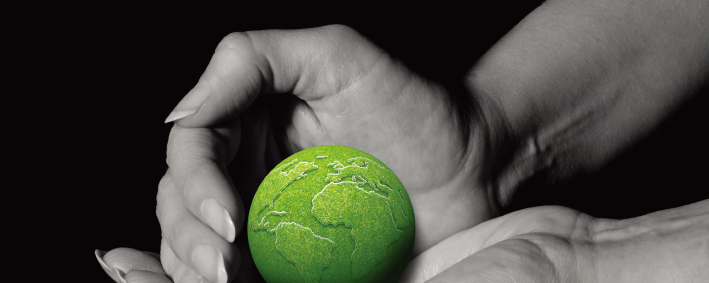
The world we want is in our hands. Buy the changes you want to see. 

All human comments appreciated. All like clicks and abuse chucked in the bin.

← Back

Thank you for your response. ✨


,


Share this:

  • Share on WhatsApp (Opens in new window) WhatsApp
  • More
  • Share on Pocket (Opens in new window) Pocket
  • Share on Mastodon (Opens in new window) Mastodon

THE BEADY EYE SAY’S: WE ALL KNOW WHY THE WORLD IS IN SUCH A MESS.

29 Tuesday Jan 2019

Posted by bobdillon33@gmail.com in Capitalism, European Union., Fourth Industrial Revolution., HUMAN INTELLIGENCE, Humanity., Inequality., Life., Modern Day Democracy., Our Common Values., Politics., Populism., Post - truth politics., Reality., Social Media., The common good., The Obvious., The world to day., Unanswered Questions., Wealth., WHAT IS TRUTH, What Needs to change in the World, Where's the Global Outrage., WORLD POVERTY WHERE'S THE GLOBAL OUTRAGE

≈ Comments Off on THE BEADY EYE SAY’S: WE ALL KNOW WHY THE WORLD IS IN SUCH A MESS.

Tags

Capitalism and Greed, Distribution of wealth, Globalization, Inequility


(Ten-minute read)

Looking at the world right in front of our eyes it would be fair to say that it is currently falling asunder while we all turn inwards in the fourth technological revolution that is not just undermining world institutions but creating social inequality that is linked to racial inequality, gender inequality, and wealth inequality, not to mention world conflicts.

This is a ringing indictment of our global economic system and there is no justifying it.

So the question is as it has been for the last couple of decades is there enough being done to bring about a more equitable distribution of income on a global scale.Résultat de recherche d'images pour "pictures of inequality and poverty"

The answer is a resounding No. To the extent that it is now hard to imagine any kind of economic miracle that could shrink the worldwide income gap.

Where is global inequality going?

By 2030 the richest 1% will own two-thirds of global wealth.

World lottos, created new billionaire every two days.

The world’s 10 richest billionaires, according to Forbes, own $745 billion in combined wealth, a sum greater than the total goods and services most nations produce on an annual basis.

Between 2009 and 2017, the number of billionaires it took to equal the wealth of the world’s poorest 50 per cent fell from 380 to 42.

But more than 65 per cent of the world’s millionaires continue to reside in Europe or North America. 

WHAT IF ANYTHING CAN BE DONE ABOUT THE DISTRIBUTION OF WEALTH – OR RATHER THE LACK OF IT.

It’s true that wealth inequality has always existed, no matter what the design of the society. Whether capitalist or communist, democratic, autocratic, or plutocratic, it will exist.

Yet many of the extremes we see today are avoidable.

Income disparities have become so pronounced poor health and poverty go hand-in-hand.

It is tempting to see the rising concentration of incomes as some sort of unstoppable force of nature, an economic inevitability driven by globalization and technology.

There is nothing inevitable about untrammelled inequality.

It is the result of an unlevel playing field, the direct consequence of certain government policies.

There is no longer any simple solution.

Nowhere has the distribution of the pie become more equitable.

Increasing the incomes of low-wage workers produces stronger beneficial economic ripple effects than boosting bonuses for the rich.

Excluding Quantitative easing, 97% of money has been created through lending. When somebody borrows money – even just by spending on a credit card – new money is created. No wonder our economy is so geared around finance.

Yet we penalise labour and subsidise both debt and the ownership of assets.

The question is, how fast can developing countries grow in the future? The answer, unfortunately, is not fast enough.

The richest 1 per cent of humanity reaped 27 per cent of the world’s income between 1980 and 2016. The bottom 50 per cent, by contrast, got only 12 per cent.

If you ever wanted to understand where climate change came from, why there are so many wars and the unrest we are witnessing the above figures say it all.

This will only get worse in the near future with the most powerful force driving the distribution of income on a worldwide scale will be raw economic growth:

Will poor countries make sufficient progress relative to their rich peers to bring more balance to the distribution of global income?

Or will rising inequality within countries dominate?

It depends on three forces: countries’ economic and population growth, as well as the evolution of inequality within them.

This is no longer true. The forth Industrial technological revolution is going to require more aggressive redistribution through taxes and transfers.

Why because social inequality is now very different from economic inequality, though the two are linked.

Areas of social inequality include access to voting rights, freedom of speech and assembly, the extent of property rights and access to education, health care, quality housing, travelling, transportation, vacationing and other social goods and services. In the quality of family and neighbourhood life, occupation, job satisfaction, and access to credit.

All of these areas are now been data mined for profit by you know who with us supplying the data scot free.

We all know that more inequality means less wealth for everyone. .. but are we seeing countries deciding to push vigorously back against inequality. No

Ballooning wealth inequality is a threat to society.

globalization has also upended the agricultural and manufacturing sectors in many countries.

“In every country, just about, the disproportionate economic clout of those at the top has provided these individuals with wildly disproportionate influence on their countries’ political life and on its media; on what policies are pursued and whose interests end up being ignored,” Obama said.

He is right!

Wealthy must contribute or be forced to the larger benefits of society.

Inequality is not inevitable – it is a political choice.

It represents social and political issues that no party or government can afford to neglect.

Foot Note: To us Europeans.

Europe, unfortunately, has not been at the forefront of this battle, at least not EU institutions.

On the contrary, it has for long remained complacent, as EU treaties require unanimity on tax matters and as the bloc includes countries such as Luxembourg that have benefitted massively from corporate and individual tax avoidance.

For decades, the EU was dominated by an unholy alliance among three types of governments: those that rejected the very principle of international tax coordination as an infringement on sovereignty; those that benefitted from tax competition; and those that used it as a way to overcome domestic reluctance to the reduction of redistribution.

For an institution that is supposed to be based on values and that hails the European social model, this is humbling, and the EU is now paying a political price for its long inertia.

Social inequality can also be established through discriminatory legislation.

Things have started to change.

Thanks to Yellow Jacks and Brexit we may witness only if we truly want it some improvements.

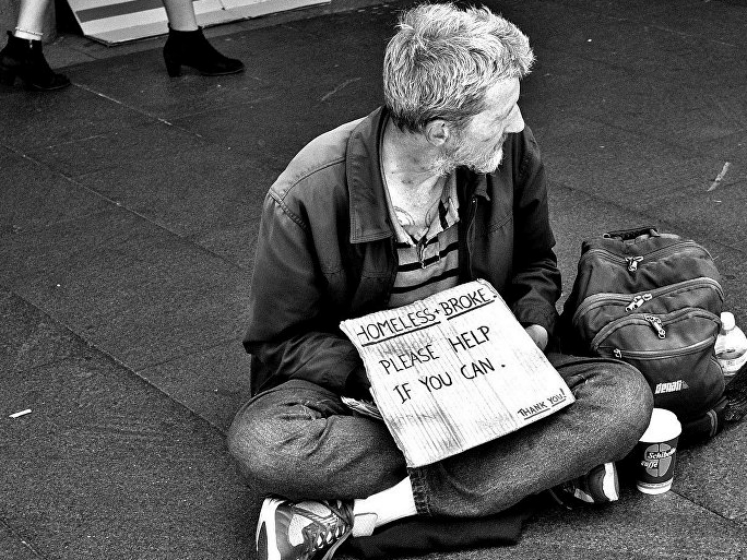
In the battle for fairer globalisation, with more and more Foodbanks and homeless people, it is far too early to claim victory.Résultat de recherche d'images pour "pictures of inequality and poverty"

All human comments appreciated. All like clicks and abuse chucked in the bin.

← Back

Thank you for your response. ✨


Share this:

  • Share on WhatsApp (Opens in new window) WhatsApp
  • More
  • Share on Pocket (Opens in new window) Pocket
  • Share on Mastodon (Opens in new window) Mastodon

THE BEADY EYE ASK’S. WHAT CAN BE DONE ABOUT THE STATE OF OUR WORLD.

24 Thursday Jan 2019

Posted by bobdillon33@gmail.com in #whatif.com, Artificial Intelligence., Climate Change., Environment, European Union., Evolution, Fourth Industrial Revolution., Happiness., HUMAN INTELLIGENCE, Humanity., Innovation., Life., Modern day life., Natural World Disasters, Our Common Values., Paris Climate Change Conference 2015, Politics., Populism., Post - truth politics., Reality., Refugees., Sustaniability, Technology, The common good., The essence of our humanity., The Future, The Obvious., The Refugees, The world to day., World Organisations.

≈ Comments Off on THE BEADY EYE ASK’S. WHAT CAN BE DONE ABOUT THE STATE OF OUR WORLD.

Tags

Artificial Intelligence., Capitalism and Greed, Community cohesion, Extinction, Global warming, Inequility, The Future of Mankind, Visions of the future.


(Fifteen minutes read.)

After decades of globalisation, our political systems are becoming obsolete.

Half a century has been spent building the global systems on which we all now depend.

The question is-  are they here to stay or do we need a new world system in order for it to serve the human community.

If so it must be subordinated to an equally spectacular political infrastructure, which we have not even begun to conceive.Image associée

Without political innovation, global capital and technology will rule us without any kind of democratic consultation, as naturally and indubitably as the rising oceans because any alternative to the nation-state system is a utopian impossibility.

This is the main reason we will not be able to tackle Climate change.

We have to move away from the Nation by Nation Paris Climate Promises Agreement with its new rules to a Collective World undertaking not a state by state input as there is no ecosystem immune to another.

When we discuss “politics”, we refer to what goes on inside sovereign states; everything else is “foreign affairs” or “international relations” – even in this era of global financial and technological integration we are unable to act like one.

Exhaustion, hopelessness, the dwindling effectiveness of old ways: these are the themes of politics all across the world.

In each country, the tendency is to blame “our” history, “our” populists, “our” media, “our” institutions, “our” lousy politicians.

This is understandable since the organs of modern political consciousness – public education and mass media – emerged in the 19th century from a globe-conquering ideology of unique national destinies.

However, it is becoming clearer every day – the real delusion is the belief that things can carry on as they are.

Distracted by wars, the magnification of presidential powers and the corresponding abandonment of civil rights and the rule of law.

We may all use Google and Facebook, but political life, curiously, is made of separate stuff and keeps the antique faith of borders.

All countries are today embedded in the same system, which subjects them all to the same pressures: and it is these that are squeezing and warping national political life everywhere.

The current appeal of machismo as political style, the wall-building and xenophobia, the mythology and race theory, the fantastical promises of national restoration – these are not cures, but symptoms of what is slowly revealing itself to all: Nation states everywhere are in an advanced state of political and moral decay from which they cannot individually extricate themselves.

National political authority is in decline, and, since we do not know any other sort, it feels like the end of the world.

Why is this happening?

In brief, 20th-century political structures are drowning in a 21st-century ocean of deregulated finance, autonomous technology, religious militancy and great-power rivalry.

Meanwhile, the suppressed consequences of 20th-century recklessness in the once-colonised world are erupting, cracking nations into fragments and forcing populations into post-national solidarities: roving tribal militias, ethnic and religious sub-states and super-states.

Finally, the old superpowers’ demolition of old ideas of international society – ideas of the “society of nations” that were essential to the way the new world order was envisioned after 1918 – has turned the nation-state system into a lawless gangland; and this is now producing a nihilistic backlash from the ones who have been most terrorised and despoiled.

The result?

For increasing numbers of people, our nations and the system of which they are a part now appear unable to offer a plausible, viable future. This is particularly the case as they watch financial elites – and their wealth – increasingly escaping national allegiances altogether.

Today’s failure of national political authority, after all, derives in large part from the loss of control over money flows. At the most obvious level, money is being transferred out of national space altogether, into a booming “offshore” zone. These fleeing trillions undermine national communities in real and symbolic ways. They are a cause of national decay, but they are also a result: for nation states have lost their moral aura, which is one of the reasons tax evasion has become an accepted fundament of 21st-century commerce.

The unwillingness even to acknowledge this crisis, meanwhile, is appropriately captured by the contempt for refugees that now drives so much of politics in the rich world.

In my view, it is unjust to preserve the freedom to move capital out of a place and simultaneously forbid people from following.

The ensuing vacuum can suck in firepower from all over the world, destroying conditions for life and spewing shell-shocked refugees in every direction. Nothing advertises the crisis of our nation-state system so well, in fact, as its 65 million refugees – a “new normal” far greater than the “old emergency” (in 1945) of 40 million.

After so many decades of globalisation, economics and information have successfully grown beyond the authority of national governments.

Today, the distribution of planetary wealth and resources is largely uncontested by any political mechanism – thanks to fourth Industrial technological revolution platforms with their algorithms, profit for profit sake is alive and growing while the inequality gap grows and grows.

Since 1989, barely 5% of the world’s wars have taken place between states:

National breakdown, not foreign invasion, has caused the vast majority of the 9 million war deaths in that time. Climate change will enhance those 9 million deaths and perversely might save the planet.

Even if we wanted to restore what we once had, that moment is gone.

We need to find new conceptions of citizenship. Citizenship is itself the primordial kind of injustice in the world.

It functions as an extreme form of inherited property and, like other systems in which inherited privilege is overwhelmingly determinant, it arouses little allegiance in those who inherit nothing.

97% of citizenship is inherited, which means that the essential horizons of life on this planet are already determined at birth.

National governments themselves need to be subjected to a superior tier of authority:  Oppressed national minorities must be given a legal mechanism to appeal over the heads of their own governments.

Nations must be nested in a stack of other stable, democratic structures – some smaller, some larger than they – so that turmoil at the national level does not lead to total breakdown.

The EU is the major experiment in this direction, and it is significant that the continent that invented the nation-state was also the first to move beyond it.

The EU has failed in many of its functions, principally because it has not established a truly democratic ethos. But the free movement has hugely democratised economic opportunity within the EU.

Finally.

If we as the custodians of the world are to address any of the major problems – Fresh Air, Freshwater, Clean Energy, Soil erosion, to name but a few and are unable to act as one we must put financial rewards in the path of those who do so.

Without this, our political infrastructure will continue to become more and more superfluous to actual material life.

In the process, we must also think more seriously about global redistribution: not aid, which is exceptional, but the systematic transfer of wealth from rich to poor for the improved security of all, as happens in national societies.Résultat de recherche d'images pour "pictures of the state of the world"

We’re all responsible for the state of the world.

Creating this sense of ownership, connection, empathy and compassion should not be left to chance, but should be bred into all of us through the education system and how we raise our children.

In a landmark climate report last year, the United Nations last year called for “rapid, far-reaching and unprecedented changes in all aspects of society.” It warned the world has only 12 years to avert a climate disaster.

“The enormity of the problem has only just dawned on quite a lot of people … Unless we sort ourselves out in the next decade or so we are dooming our children and our grandchildren to an appalling future.” David Attenborough.

All human comments appreciated. All abuse and like clicks chucked in the bin.

← Back

Thank you for your response. ✨


Share this:

  • Share on WhatsApp (Opens in new window) WhatsApp
  • More
  • Share on Pocket (Opens in new window) Pocket
  • Share on Mastodon (Opens in new window) Mastodon

THE BEADY EYE SAY’S ITS TIME TO TELL THE TRUTH AS TO WHY ENGLAND IS LEAVING THE EU.

10 Thursday Jan 2019

Posted by bobdillon33@gmail.com in Brexit v EU - Negotiations., Brexit., England EU Referendum IN or Out., Life., Modern Day Democracy., Norther Ireland, Northern Ireland Border., Our Common Values., Populism., Post - truth politics., Reality., Social Media, The common good., The Obvious., Unanswered Questions., WHAT IS TRUTH

≈ Comments Off on THE BEADY EYE SAY’S ITS TIME TO TELL THE TRUTH AS TO WHY ENGLAND IS LEAVING THE EU.

Tags

Brexit v EU - Negotiations., Brexit., European Union, Post - truth politics., Truth


(Twelve-minute read)

This truth has been with us from the dawn of humanity.

The inability to share leads to most world problems.

Inequality.

With the ability to share truth and untruths through social media right now, it’s difficult to know what to trust or who to trust.

Are we seeing a return to protectionism or the redefining of capitalism, to sustainability before profit?

There is one certainty Social media is having an effect on where power and how power is used giving rise to Popolusim contra Eliatilism.

So I think it is time to be a bit more honest and plain-speaking about the circumstances that have led to Brexit.

Politics and the media are being pushed to the limit by advancements in technology and uncertainty about the future.Résultat de recherche d'images pour "pictures of the truth in the future"

Misinformation is spreading.

When it comes to Brexit, we have reached the point where, to an extraordinary extent, the implementation of the 2016 referendum result trumps all else. But as we approach the departure date all statements about British politics should be assumed to include to the word “probably”

If it will happen when it will happen.

For the most part, the debate about Brexit since the 2016 referendum has been framed primarily in economic terms but it is my contention that Brexit, whether it happens or not, is now showing that the EU never was the problem. 

The problem is fixing Britain’s relationship with itself.

The irony is that the country that was least affected by the migration crisis is the one where we are now seeing the most consequential political backlash.

Those who promise that leaving the EU will deliver “control” are really promising something quite specific: a social and cultural reboot.

Of course, this is a complete impossibility. We live in a world defined by the economic, social and cultural interdependence of nation states.

Take back control” was indeed the slogan of the Leave campaign, but it was “control” with one purpose, above all others, the relationship between taxation and public spending and immigration.

A wealthy nation is essential both to the aspirations of individual households and the funding of public services. Unfortunately, England is now reaping the rewards of putting the economy before its people.

Of selling most of its assets, of investing in a world image of power when in fact its people were on the streets due to lack of social housing, were lying in hospital corridors due to lack of funding, were relying on food banks due to lack of decent wages, were running up personal debts, were educated for the market place.

These are now the gravitational centre of the whole debate:

Britain’s act of masochism in leaving the EU will create a country that is unpopular, self-hating and insecure about its identity.

There will be no game-changing trade deals.

It is better that they draw this conclusion today rather than in 2040 after a period of harsh isolation in the middle of the North Sea.

The British people (and particularly the English), who have been in search of their identity since 1945, might finally recognize that it lies not in the distant past (Empire/Commonwealth), nor in the recent past (“special relationship” with the US) but in the future.

The only sensible course, therefore, is to suspend Article 50 and request a return to the status quo ante.

This could be done following a proper constitutional process, meaning a parliamentary vote. Britain can unilaterally revoke Article 50 and therefore freeze the process of leaving the EU.

Britain can write a letter to the EU and state that it wants to freeze its withdrawal process, and that’s what it takes to get yourself off the default path towards crashing out.

However, this process cannot be used just to pause the process and regroup.

In order to pause the process and regroup, the U.K. would need to have the consent of all the other EU members.

If it were just a request to say, oh, we’ve really lost our mind, we don’t quite know what to do, it’s very unlikely that the other 27 members would say, oh, yeah, sure, fine, let’s do that.

Then we come to the Backstop re Northern Ireland;

Northern Ireland wants some legally binding assurances that the U.K. will be able to get out of it unilaterally.

The probability of EU leaders conceding this is zero. And it’s zero today. And it’s zero down the road.

The EU’s position has been very much: This is—this is not negotiable. And, frankly, they all know that you know, a number of EU members are unhappy with the terms of the withdrawal agreement. And if it were to be reopened, it would be a whole can of worms with a lot of, you know, different asks being put on the table.

So this is just not going to happen without the backstop becoming the front stop.

The priority list in continental Europe, with coming elections you know, Brexit isn’t the first thing, or the second thing, or the third thing; it’s somewhere after that.

The disasters to befall the EU27 won’t have befallen them. They will, instead, have continued to evolve their community, grow their economy, taken heed of lessons played out across the Channel, made things better.

Does any of this matter?

Because London is fine, Westminster and the BBC will say Britain is fine. This is no longer so, there is a much uglier reality and one that has little to do with GDP.

If London loses its financial clout there will be a fundamental change to the British economy that Britain now needs to cycle through before it can clarify where it wants to end up with in this Brexit process.

Brexit is both symptom and cause of a breakdown in this consensus.

This needs to be understood outside the day-to-day disasters of the Brexit process itself.

The NHS won’t have fixed itself. Nor will social care. Nor pension problem. Nor it’s out of date infrastructure.

So low and behold we now see department ministers promising funds to fix the NHS etc. However, Brexit will be a suffocating error when it comes to finding these funds. A poorer U.K. outside the EU will be less useful both as a military ally and as a diplomatic partner or as a trading partner.

There could be one unanticipated positive outcome.

The conventional politics of “left versus right” no longer apply:

The political party that can transcend party lines and speak to people across the ideological spectrum will be the rising voice in the next 10 years.

It is unlikely that either of the main political parties in England will survive in their current forms, given the pressures their internal coalitions are already under.

It does not take a nitwit that global we are witnessed the highest number of global battle deaths for 25 years, persistently high levels of terrorism, and the highest number of refugees and displaced people since World War II.

If this is not observable we are left with “the essence of bullshit: a complete lack of concern with truth” and “an indifference to how things really are.”

All one has to do is turn on your TV.  Who can tell what infringements to our civil liberties will have been introduced in the name of keeping us safe? What new walls will be built?

The important thing is not that what he says is true, but that it persuades. and by then none of us will have recourse to Europe to stave them off, either?

Luckily there is no such thing as an average human being.

Nonetheless, that fictional construct is precisely what businesses use to explain human behaviour, reducing us to mere consumers.

There are however those who navigate the currents of uncertainty and change without the need for any particular dogma or orthodoxy to guide them. These are the innovators, thinkers, misfits, activists, artists, and creators who can be found on the fringes of any walk of life, nipping at the hem of hegemonic power, disrupting the status quo, and bravely embracing the unknown.

The future belongs to these voices, not to a world where the truth has become so malleable and subjective as to be almost meaningless as a concept. 

It also belongs to those brave enough to stand up to bullshit in some of its most vaunted forms. There is some hope for this.  

The fine line between the present and the future never looked so blurry.

However, the truth has to persist unaffected, in the past, in the present and in the future.

The next victims of social media will be based on media trends.

What is left when you take away all the ads and the packaging of Brexit is the truth of the product –

Wake up England and stop being the sulking wanting to leave the room when you still have the chance to influence the creation of a Europe, whole, free and at peace.

Résultat de recherche d'images pour "pictures of the truth in the future"
All human comments appreciated/All abuse and like clicks chucked in the bin.

← Back

Thank you for your response. ✨


The UK National Debt is estimated to be £1.84 trillion.

Uk Defence spending is budgeted to be £48.3 billion.


A quick examination of the numbers reveals that the world continues to spend vastly disproportionate resources on creating and containing violence compared to what it spends on peace.


how you design the ballot would have a material impact on how it turned out.


Share this:

  • Share on WhatsApp (Opens in new window) WhatsApp
  • More
  • Share on Pocket (Opens in new window) Pocket
  • Share on Mastodon (Opens in new window) Mastodon

THE BEADY EYE LOOK’S AT THE PROSPECTS FOR THE EURO IN 2019.

31 Monday Dec 2018

Posted by bobdillon33@gmail.com in 2019., Brexit v EU - Negotiations., Enegery, European Commission., European Union., Populism., Sustaniability, The common good., The Euro, The new year 2109, The Obvious., Unanswered Questions., What needs to change in European Union.

≈ Comments Off on THE BEADY EYE LOOK’S AT THE PROSPECTS FOR THE EURO IN 2019.

Tags

European Union, Italy and the Euro., Italy., The Euro, The Euro zone.


( SIX MINUTE READ)

While we are all distracted by Brexit which has several possible outcomes in March 2019, all given a certain probability by market analysts:
– No-deal
– Canada-style trade deal
– Chequers plan
– EFTA/Norway agreement.
– Suspension of Article 50
– Reversal of Article 50.

Each is given a probability in terms of its likelihood but I would pay little attention to those probabilities as market analysts are not political insiders and in general, a lot of experts have misjudged the EU, as its rule-based way of operating has caught many out, not least the British negotiation team.

No matter how you look at the European Union it is a market run by rules which Independent Countries join to trade in a currency called Euros.Résultat de recherche d'images pour "pictures of the euro currency"

Although the creation of the euro, in particular, was deemed to be a key component helping to move the EU to an “ever closer union,” riding the continent of centuries of historic enmities, in reality, it has and is doing the opposite.

The monetary union and the austerity-linked conditions governing membership in the eurozone continue to create conditions ripe for extreme nationalist movements in Italy, France, Hungary, Poland and elsewhere.

The two principal goals of prosperity and political integration … are now more distant than they were before the creation of the eurozone.

The euro crisis was always likely to have a second act, and the stage was always likely to be Italy. (The only member yet to come to terms with the single currency. To do that, Italian democracy must be allowed to rise to the challenge.)

Were a further divorce to happen within the Union it would create a tremendous financial fallout for the rest of us, and likely mean the end of the euro itself.

The Euro to date has been both the glue and dissolvent of the European market.

Since the financial crisis of 2007-09, after dealing with Greece and the potential for defaults that led to a bailout of the EU member just a few short years ago, Italy is now on the list.

As such, these “states” are or were subject to solvency risk, because they themselves cannot create the euros to fund their debt.

With Brexit, it will become clear that we shouldn’t wait for the next crisis.

The next one could be very harmful, if not destroy the euro altogether.

A construction like the eurozone only partly rests on rules, technical procedures, institutions, etc. It relies on the fact that governments can trust each other at a minimum level. Take that away, and the whole edifice suddenly becomes much more fragile and the willingness to reform shrinks.

In these terms, a sustainable European currency requires either the export of the foundations of German economic strength to the periphery or Germany’s willingness to relinquish its obsession with ordo-liberalism and achieving a large current account trade surplus.

To date, its willingness to act to save the euro has not in fact been put to the test.

Far from involving domestic sacrifices imposed to save the euro, Germany’s handling of the eurozone crisis thus far has been, first and foremost, an opportunity for Germany to ‘Europeanise’ the burdens of its banks.

Germany may, therefore, end up with total dominance over something that doesn’t work, and holding the creditor bag on a currency that eventually may not exist.

Barring a wholesale shift in ideology, any short-term stitch-up will just set the stage for a bigger problem down the road, likely provoking more nationalist backlashes against the EU, which continues to play with fire, backed by Berlin.

So can the euro survive an Italian Bank/Country collapse?

Italy’s GDP has shrunk by a massive 10%, regressing to levels last seen over a decade ago. In terms of per capita GDP, the situation is even more shocking: According to this measure, Italy has regressed back to levels of 20 years ago, before the country became a founding member of the single currency.

As a result, around 20% of Italy’s industrial capacity has been destroyed, and 30% of the country’s firms have defaulted.

Its competitiveness can only be restored, therefore, via an “internal devaluation,” which in essence means crushing the living standards of the Italian people, so that they can compete in the global export market, rather than using fiscal policy to enhance the country’s domestic economy.

Understandably, the current coalition government in Rome doesn’t want to play along.

Its component parties were elected to defend the interests of the Italian people and deliver a different sort of economic program, which doesn’t consign the electorate to another decade of declining living standards. And Italy’s voters remain supportive if the most recent polls are anything to go by.

Hence the coalition’s resistance to Brussels/Berlin–imposed spending limits.

Europe’s central bank was (and is) the only institution that could credibly backstop the debt without limit because it is the sole issuer of the euro. However, the ECG has recently decided to put a stop to Quantitive Easing.

(Quantitative easing is a modern version of the printing press. It consists of the central bank creating money to buy government or private bonds held by investors on the market. The goal is for the latter to reinject the cash they get back into the economy by lending to households and businesses, which in turn must stimulate growth and inflation.)

As it concerns nineteen countries using the same currency, the ECB’s purchasing program is more framed than that of the US Federal Reserve, the Bank of England or the Bank of Japan.

It may have taken Trump, Brexit and the threat of a global trade war, but the markets in Europe are finally waking up to what the end of QE will look like.

The markets are finally facing up to a reality where fundamentals actually matter and are no longer being swept away by ‘QE infinity’.

That should be a relief, given the huge distortions that QE has created in the global economy, most notably in asset price inflation and a consequent widening of inequality throughout the developed world.

The political implications are obvious and are still continuing. But how quickly and safely central banks can be weaned off this great monetary experiment remains to be seen.

If QE is no longer an active policy instrument what will replace it?

Quantitative easing is – and always has been – a dangerous monetary experiment and these are not the times to experiment. Especially not in Europe, where the political gap between north and south has widened in a disturbing way and interdependencies grow bigger and bigger.

What if Germany, France and the Netherlands continue to grow, and Italy, Greece and Portugal don’t?

Then the gap between the higher income rates they have to pay and their lack of growth becomes even bigger.

The political and economic instability of the southern European democracies is eroding the political basis of the euro – and therefore its stability. Because of this everyone suffers.

THE QUESTION IS WILL ITALY BE ALLOWED TO GO THE WAY OF GREECE?

That could prove economically calamitous, exposing the country’s international creditors (including other eurozone nations, such as Germany and France) to literally trillions in liabilities. To be repaid in what? Euros?

A reconstituted, and possibly heavily devalued, lira?

What happens to the pension funds? What about capital flight? Runs on the banks?

The point is that Italy does have leverage, but deploying the leverage will be costly for all concerned.

Considering the political turbulence in Italy which wants to raise its budget deficit by 2.4% in 2019, ( Its current debt is more than 2billion euros 131% of its GDP.)

Driving Italy out of the euro makes no sense at all. Italy is facing not just a financial but a democratic reckoning.

The euro debacle has tested the democratic integrity of the weakest eurozone member states to a breaking point. In Ireland, Spain and Portugal – the other countries affected by the single currency’s woes – democracy not only survived the test but flourished after it.

In 2019 we are going to see Italy’s political class discredited, its economy exposed as a sham, and it can only be rescued with other people’s money on other people’s terms.

It has now brought Italy to the brink of another failure of state as dangerous as the one that occurred during the confrontation with the Mafia in the early 1990s.

One of the major challenges for members of the euro area has always been not simply to rectify external imbalances, but to do so at reasonably high levels of employment. The fact that failures to meet this challenge are encountering political difficulties in Italy and elsewhere is hardly surprising.

So to stabilize the euro area and foster the financial integration across countries, we need to end the vicious circle of youth unemployment in the Southern countries of Europe and not penalise breached of budgetary Rules.

The euro is neither the problem nor the solution.

Italy’s profound problems lie at home — especially in central and southern Italy — and need to be addressed at home.

Both Europes and Italy’s problems arise out of acute regional imbalance.

You can not look at Italy as one economy, but two or perhaps three: North, Centre, South which is reflected in the whole of Europe’s problem.

Take the hyper-competitiveness of Germany.

Its massive current account surplus (8% of GDP) combined with its virtually full employment implies unambiguously that for Germany the euro is significantly undervalued, just as for Italy the evidence suggests that it is overvalued.

So we have an interesting, but risky, game of chicken developing.

Even though virtually every country within the eurozone, including fiscally virtuous Germany, has routinely breached budget limits, these rules do matter because, under Maastricht Treaty terms, countries can be punished by European institutions and also by markets, as has happened to Greece and now is increasingly happening to Italy.

Its debt load is the third-largest in the world and will eventually become unsustainable if the country is unable to revive economic growth.

What can Europe do – that is not already being done – to get its millions of jobless young people into work?

Things cannot be implemented overnight and will never be unless there is a willingness to move on with euro area reforms.

On top of all our problems is the Automation of the job market.

WILL THE EURO SURVIVE?

YES.

Boosting productivity is essential to resolve both problems.

So here is a suggestion.

Why not make the two most Southern Countries of Europe where the sun does shine – Italy Spain – the new green energy hobs of Europe – implementing a huge investment into solar power to supplement the energy requirements of the Northern member states.

All human comments appreciated. All abuse and like clicks chucked in the bin.

← Back

Thank you for your response. ✨


Share this:

  • Share on WhatsApp (Opens in new window) WhatsApp
  • More
  • Share on Pocket (Opens in new window) Pocket
  • Share on Mastodon (Opens in new window) Mastodon

THE BEADY EYE ASK’S: WHEN THIS BRIXIT MAYHEM IS ALL OVER. THERE WILL BE QUESTIONS GALORE AS TO HOW IT ALL HAPPENED IN THE FIRST PLACE. ANOTHER FACE BOOK VICTORY.

13 Thursday Dec 2018

Posted by bobdillon33@gmail.com in #whatif.com, 2018: The Year of Disconnection., Algorithms., Artificial Intelligence., Big Data., Brexit., Democracy, Facebook, HUMAN INTELLIGENCE, Humanity., Life., Modern Day Communication., Modern Day Democracy., Modern day life., Our Common Values., Politics., Populism., Reality., Social Media, Sustaniability, Technology, The common good., The essence of our humanity., The Future, The Obvious., The world to day., Twitter, Unanswered Questions., What Needs to change in the World, Where's the Global Outrage., World Leaders, World Organisations., World Politics

≈ Comments Off on THE BEADY EYE ASK’S: WHEN THIS BRIXIT MAYHEM IS ALL OVER. THERE WILL BE QUESTIONS GALORE AS TO HOW IT ALL HAPPENED IN THE FIRST PLACE. ANOTHER FACE BOOK VICTORY.

Tags

Brexit., Democracy, Erosion of democracy., Future Society., Inequility, Power of Social Media, SMART PHONE WORLD, Social media platforms., Social networking, The Future of Mankind, Visions of the future.


(Seven-minute read)

Facebook is more powerful than a nation-state.

Facebook is in the business of exploiting your data.Résultat de recherche d'images pour "pictures of the erosion of democracy"

Platforms like Facebook enable people’s data to be used in ways that take power away from voters and give it to data-analyzing campaigners.

Unfortunately, it seems that none of us sees this. We don’t hold media technology firms accountable for degrading our public conversations.

With only months to go before Britain exits the European Union, the English government is in meltdown oblivious to what is happening in the world beyond and how it connects to Britain

All eyes are transfixed on the EU exit sign.

Critically, both for the EU and England it’s what happened on Social media platforms like Twitter or Facebook that will remain the biggest question of all after Brexit.

Both Twitter and Facebook have become a giant funnel not just for dark ads, but for dark money that evades election finance laws and the control of money spent during elections is the very basis of our electoral laws.

If we are now failing to recognise the above we are failing to appreciate how social media is breaking our democracy.Résultat de recherche d'images pour "pictures of the erosion of democracy"

While we all are all burying our heads in the sand of smartphone it is obvious that Social media platforms like Facebook, Twitter are the perfect cover for something far more chilling controlling the expression of public opinion in the political debate.

Although Twitter and Facebook are categorised as social networking services, in fact, they are as different as chalk and cheese. And, of the two, Twitter is more important in one respect: its impact on the arena in which societies discuss their political issues.

Twitter also has the capacity to turn “ordinary” people into broadcasters, a development whose implications we are only just beginning to digest. Yellow Jackets, Brixiters who form the conclusion are perhaps three hundred miles distant from those who hear the arguments?

Technologies such as Twitter, which offer real-time tracking of public opinion, are the visible foundations of the Arab Spring, Donald Trump’s election, Brexit and the Yellowjackets.

Democracy and the rule of law are been subverted in plain sight.

If you look at the USA Twitter is the de facto newswire for the planet, which means that a company that can regulate expressions of opinion might be very powerful indeed.

And that should make us nervous.

So is there anything that can be done?

No much unless we pass laws regulating these platforms and make them responsible for what is posted on their platforms.

One of the most striking aspects of the epoch-making Brexit is (as with the Syrian War the Iraq, and Yemen war) is the way many MPs cited the emailed opposition of their constituents to armed intervention as a reason for voting against the proposed action.

Thus, it is evident that we are all increasingly embracing the importance of social media and its value in modern human communication.

However, this trend can only be assumed as the beginning of an envisioned well connected and digital adept world.

So recent history has evidenced that Social Media is a potent tool with transformational abilities to shape and influence the way in which people communicate and share information.

One of the qualities that define Social Media is its ability to transcend beyond borders, without observing spatial distance that exists between and amongst the geographies.

In addition, social media connects individuals on a semi-personal level, while allowing instantaneous feedback and dialogue.

But, this does not rule out the possible abuse of such innocent yet powerful platforms of communications.

Different sectors ranging from government to business also embeds and encourages the embracement of social media platforms into their processes in order to enhance organisational efficiency.

We might be gradually realising the significance of social media for democratic benefits that it is seen as an agent of public discourse and a driver of public participation and freedom of speech amid political and democratic uncertainty.

It might be rising the political and democratic consciousness but the power of social media in the political and democratic dispensation cannot be underestimated.

Is social media damaging democracy? Yes, but we can also use social media to save democracy.

We have to stop governments from colluding with an omniscient surveillance superpower but use it as their eyes to see the inequalities we all live in.

THERE IS NOT THE TIME FOR COUNTRIES TO BE MOVING TO ID ISOLATION IF WE ARE TO HARNESS TECHNOLOGY TO SERVE THE WORLD.

Just as there is nothing inevitable about democratic survival, neither is the demise of democracy guaranteed.

These changes are especially likely to go unnoticed when popularly elected leaders twist laws to their advantage or frame attacks on checks and balances as populist reforms limiting the power of elites.

Civil society must reclaim its rightful place by demanding genuine participation in governance, including decisions on peace initiatives, environmental protection and trade and investment agreements.

A large part of humanity still doesn’t have it. Résultat de recherche d'images pour "pictures of the erosion of democracy"

All human comments appreciated. All abuse and like clicks chucked in the bin of the cloud.

← Back

Thank you for your response. ✨


Share this:

  • Share on WhatsApp (Opens in new window) WhatsApp
  • More
  • Share on Pocket (Opens in new window) Pocket
  • Share on Mastodon (Opens in new window) Mastodon

THE BEADY EYE SAY’S : IF WE ARE TO AVOID A MELT DOWN NOT JUST BY CLIMATE CHANGE BUT BY SOCIAL MEDIA. WE ALL KNOW THAT WE NEED TO REINVENT SOCIETY REAL QUICK,

06 Thursday Dec 2018

Posted by bobdillon33@gmail.com in 2018: The Year of Disconnection., Algorithms., Capitalism, Climate Change., Environment, Fourth Industrial Revolution., Fresh Water., Humanity., Modern Day Democracy., Our Common Values., Politics., Populism., Poverty, Social Media, Sustaniability, Technology, The essence of our humanity., The Obvious., The world to day., Trade Agreements., Unanswered Questions., War, What Needs to change in the World, Where's the Global Outrage., World Politics

≈ Comments Off on THE BEADY EYE SAY’S : IF WE ARE TO AVOID A MELT DOWN NOT JUST BY CLIMATE CHANGE BUT BY SOCIAL MEDIA. WE ALL KNOW THAT WE NEED TO REINVENT SOCIETY REAL QUICK,

Tags

Algorithms., Capitalism, Capitalism and Greed, Greed, Inequility, Social Media, The Future of Mankind, Visions of the future.

(Twelve -minute read)

Most mainstream textbooks have the word “economics” in their title as if no differentiating adjective exists.

THE NASTY REALITY IS:

AS THE WORLD POPULATION GROWS IT WILL BE TO THE DETHRONEMENT OF THE PLANT AND TO THE SUSTAINABILITY OF ANY ECONOMIC SYSTEM WHETHER IT IS CAPITALIST OR OTHERWISE AS CAPITALISM HAS ALWAYS HAD A NEED FOR POVERTY TO KEEP COST DOWN.

However, through social media, the poor are no longer invisible and the consequences of this are now beginning to becoming evident.

It is a grim truism of modern life that everything from civil rights violations and health crises to environmental degradation and educational barriers are disproportionately suffered by the people least financially and socially equipped to deal with them.

Capitalism today still represented itself as freeing serfs, slaves, etc,  with freedom becoming capitalism’s self-celebration, which it largely remains today.

Yet the reality of capitalism is different from its celebratory self-image.

IT IS NOW a form of algorithmic trading in which funds trade on the small fluctuations in asset prices without ever owning the assets, with us the powerhouse in the making of fortunes that put colossal resources in the hands of a relative few, while at the same time, see others without even the means to sustain themselves.

Combined the above with climate change and poverty and THE FORTH INDUSTRIAL REVOLUTION (AS IT HAS BEEN CHRISTENED BY THE ADVANCES IN TECHNOLOGICAL) IS CREATING A CAPITALIST WORLD THAT IS REMOVING IT FROM VIEW.

DRIVEN BY CONSUMPTION PRODUCING ALGORITHMS JUST FOR PROFIT FOR THE ONE PERCENTERS, WHILE OUR GOVERNMENTS ACT LIKE THERE IS NO ALTERNATIVE TO GROWTH AT ALL COSTS.Poverty has always accompanied capitalism (as Thomas Piketty's work documents yet again).

Wherever you look you will see that enormous gap between rich and poor growing and this gap between rich and poor is now threatening to destroy us and the world we all live in.

To those who think capitalism and inequality need each other.

Capitalism requires inequality of wealth, runs this right-of-centre argument, to stimulate risk-taking and effort; governments trying to stem it with taxes on wealth, capital, inheritance and property kill the goose that lays the golden egg.

It took war and depression to arrest the inequality dynamic, along with the need to introduce high taxes on high incomes, especially unearned incomes, to sustain social peace.

Now the ineluctable process of blind capital multiplying faster in fewer hands is underway again and on a global scale with self-serving greed in the form of profit-seeking algorithms.

Anyone with the capacity to own in an era when the returns exceed those of wages and output will quickly become disproportionately and progressively richer- APPLE, MICROSOFT, E BAY, AMAZON- and when we buy their products online are in fact vote for them and their system.

The mass of employees are not free inside capitalist enterprises to participate in the decisions that affect their lives (e.g., what the enterprise will produce, what technology it will use, where production will occur, and what will be done with the profit workers’ efforts help to produce). In their exclusion from such decisions, modern capitalism’s employees resemble slaves and serfs.

So the speeding train of capitalism is “back on track,” resuming its rush toward stone walls of excess debt, stagnant mass incomes, capital relocating overseas, etc.

YOU CAN WATCH THIS PROCESS IN REAL TIME WITH  BREXIT, OR AMERICA FIRST.

In Britain, it may be true that the top 1% pays a third of all income tax, but income tax constitutes only 25% of all tax revenue: 45% comes from VAT, excise duties and national insurance paid by the mass of the population.

As a result, the burden of paying for public goods such as education, health and housing is increasingly shouldered by average taxpayers, who don’t have the wherewithal to sustain them. Wealth inequality thus becomes a recipe for slowing, innovation-averse, rentier economies, tougher working conditions and degraded public services.

All in all, you could say that no real changes have been made in global capitalism OTHER THAN IT IS NOW RUN BY ANALYSING ALGORITHMS THAT RECOMMEND WHERE, WHEN AND HOW WITH TO SATISFY SHORT TERM PLEASURE.

UNFORTUNILTY it is simply depriving us and our children of fundamental rights of a decent & caring society, fearless & dignified living, by a deprivation of the material conditions for the reproduction of society, and a failure to develop the full capabilities of human beings.

OF COURSE, our collective sense of justice is outraged as we are witnessing in the recent Paris Riots, the Climate Change Conference in Poland sponsored by coal trying to set rules to govern pledges that will be broken as soon as the ink dries and the ongoing Brexit charade which has nothing to do with peoples wellbeing.

Where does all of this leave us other than with an ominous sense of impending implosion reverberates throughout the world with national politics and culture waning no one seems to know or care.

Our TV screens with Christmas coming we are bombarded with the worst images of Capitalism – advertisers promoting materialism, alongside appeals to donate money to save everything from children in Yemen too abandoned animals.

While it is heartbreaking the worst part is that our governments are complicit.

Despite the famine, despite the bombing of a busload of school kids in Yemen countries like the US, UK, France, and Canada are still supplying the Saudis with hundreds of billions of dollars in tanks and missiles.

However, it has little effect as we look on from a distance sitting at home before our own little stages our TV’s, our I Pads, our Smartphones, our courtyards of miracles where an image sweeps across the previous one without trace.

Everything is on a reduced scale, even emotions.

That’s the trouble with shadow political power structures. Their true shape and purpose stay hidden while they capture democracy.

From all this, we shall draw some conclusions, in the absence of any convincing certainties one has to pretend that we shall solve Climate Change  (that is going to drive more inequality and eventually the extinction of our biodiversity, followed by us due to the lack of fresh water or clean air.) and currents world conflicts that are only the tip of the coming wars over diminishing natural resources.

What needs to happen?

Let’s put the plant first before space exploration, before material productivity consumption, before cultural identity, before consumerism, before America first, before Brexit isolation, before trade deals, before nuclear power, before religious beliefs, before skin colour, before short-term pleasure, before us.

Let’s go for a diverse economic system where toxic wealth inequalities are less indulged rather than a monopolised marketplace.

Let’s enshrine Water and Fresh air into all our actions.Résultat de recherche d'images pour "pictures of social media icons"

Any of the above can now only be achieved by using the power of Social media which is being used in ways that shape politics, business, world culture, education, careers, innovation, and more.

THE PROBLEM WITH SOCIAL MEDIA THAT IS HAVING A REAL IMPACT ON SOCIETY IS THAT IT IS LEADERLESS.

On one hand, it generates insights, stimulates demand, and create targeted product offerings but when people are presented with the option of ‘liking’ a social cause, they use this to opt out of actually committing time and money.

Social sharing has encouraged people to use computers and mobile phones to express their concerns on social issues without actually having to engage actively with campaigns in real life.

On the other hand, it without social media, social, ethical, environmental and political ills would have minimal visibility.

Increased visibility of issues has shifted the balance of power from the hands of a few to the masses.

Capitalism understands the above more than our world organisation or governments.

Social networks feed off interactions among people, they become more powerful as they grow. Each person with marginal views can see that he’s not alone. And when these people find one another via social media, they can do things — create memes, publications and entire online worlds that bolster their worldview, and then break into the mainstream.

Social networks are helping to fundamentally rewire human society.” Because social media allows people to communicate with one another more freely, they are helping to create surprisingly influential social organizations among once-marginalized groups – Popularism- Short-term politics with no long-term aspirations promoting social ills.

Across the globe, mobile devices dominate in terms of total minutes spent online. This puts the means to connect anywhere, at any time on any device in everyone’s hands.

Their support is limited to pressing the ‘Like’ button or sharing content.

Is it not time that we demand that our internet platforms introduce a dislike button.

So far humans have had a monopoly on decision making but we are sleepwalking with Data Analyzing algorithms eroding our societies that have the sole purpose of predicting our next purchase or move.

Artificial intelligence in its current form is mostly harmless but that’s not going to last.

Fueled by powers of machine learning with no end in sight it is encroaching into to our homes without human examples or guidance, without any knowledge of the domain beyond basic rules of promoting profit.

WHAT IF ANYTHING CAN BE DONE?

We need to ensure that Ai Systems are provable safe and beneficial, and unbias regardless of how intelligent they become.

Imagine the havoc and harm they will inflict with greater power, scope and social reach.

When developers are at a loss to explain the behaviour of their creations we will then need Ai to explain to humans why they reached certain decisions, or what their conclusions actually mean.

At the moment we are seeing poorly thought out systems released into the world without any real ethical or safety standards. Governments and our out of date international world organisation have a role to play, by introducing and enforcing standards and regulations.

Changing present capitalist corporate culture won’t be easy, but it needs to start at the top.

Just look at biotechnology some research findings are too dangerous to share with the public.

It is time we all grew up and accept some responsibility for Artifical Intelligence impact on the world.

Why?

Because AI is poised to be one of the most daunting challenges our species have ever faced,  decoupling us from human speed and timelines, operating beyond human levels of control and comprehension.

AT THE MOMENT IT IS RATHER THAN TURNING THE ATHOMISPHRIC DOWN IT IS CONTRIBUTING (IN MOST OF ITS FORM)  TO TURN IT UP.

On a deeper level, the idea of self-referential feedback may be crucial not only in the evolution of life but for its origin as well.

It may even be that the algorithmic nature of cellular automata could be the key to removing a major barrier to explaining life’s origin — defining what life is, to begin with.

It’s pretty hard to explain the origin of something if you don’t know what it is.

When the environment changes, the rules for surviving may change as well. Life’s activity generates feedback that influences the rules of life.

You can’t blame scientists for conceiving of the universe in terms familiar from their everyday life. That’s just the way that thinking works, whether it’s about the laws of nature or anything else. And you have to admit that nowadays computers have invaded everyday life so thoroughly that it’s only natural for scientists to think about nature in a computational way.

If the world is a computer, life is an algorithm, so all algorithms and how they

work, and for what reasons, should be made public to ensure both social and

  “environmental justice.” Résultat de recherche d'images pour "pictures of computer algorithms"

All human comments appreciated. All like clicks chucked in the bin.

← Back

Thank you for your response. ✨


.


Share this:

  • Share on WhatsApp (Opens in new window) WhatsApp
  • More
  • Share on Pocket (Opens in new window) Pocket
  • Share on Mastodon (Opens in new window) Mastodon

THE BEADY EYE ASK,S: WHAT HAVE US HUMANS ACHIEVED TO DATE.

08 Thursday Nov 2018

Posted by bobdillon33@gmail.com in 2018: The Year of Disconnection., Climate Change., Environment, Evolution, HUMAN INTELLIGENCE, Humanity., Life., Natural World Disasters, Politics., Populism., Reality., Sustaniability, Technology, The common good., The current state of our oceans., The essence of our humanity., The Future, The Obvious., The world to day., Unanswered Questions., Where's the Global Outrage., World Leaders, World Organisations., World Politics

≈ 1 Comment

Tags

Climate change, Extinction, Visions of the future.


(Three-minute read)

We have been on earth 300,000 years or maybe even longer.

WHAT HAS BEEN ACHIEVED IN THAT TIME-  OTHER THAN INVENTING NEW WAY OF KILLING EACH OTHER.Résultat de recherche d'images pour "pictures of human achievement"

I suppose the answer is we still exist.

Anyway, there is now compelling evidence THAT WE ARE ON THE THRESHOLD OF OUR GREATEST ACHIEVEMENT TO DATE.

Humanity’s impact on the Earth’s atmosphere, oceans and wildlife are pushing the world into a new geological epoch.

Humans have introduced entirely novel changes, geologically speaking, such as the roughly 300m metric tonnes of plastic produced annually.

Wildlife, meanwhile, is being pushed into an ever smaller area of the Earth, with just 25% of ice-free land considered wild now compared to 50% three centuries ago.

As a result, rates of extinction of species are far above long-term averages.

We [the public] are well aware of the climate discussions that are going on.

But there is more than one aspect of the changes happening to the entire planet.

The Earth is now on course for a sixth mass extinction which would see 75% of species extinct in the next few centuries if current trends continue.

  • Increased the concentrations of CO2 in the atmosphere by about 120 parts per million since the industrial revolution because of fossil fuel-burning, leaving concentrations today at around 400ppm and rising
  • Nuclear weapon tests in the 1950s and 60s left traces of an isotope common in nature, 14C, and a naturally rare isotope, 293Pu, through the Earth’s mid-latitudes.
  •  We have put so much plastic in our waterways and oceans that microplastic particles are now virtually ubiquitous, and plastics will likely leave identifiable fossil records for future generations to discover.
  • We have doubled the nitrogen and phosphorous in our soils in the past century with our fertiliser use. According to some research, we’ve had the largest impact on the nitrogen cycle in 2.5bn years.
  • We have left a permanent marker in sediment and glacial ice with airborne particulates such as black carbon from fossil fuel-burning.

We will reach the hard reality whereby the planet we call home cannot keep us.

Even if like in the past we are able to get ourselves of this quite uncomfortable position with the developing technology we are going to see our civilization strained.

We are already using Earths resources that cannot and will not be replenished.

Granted we have come a long way from our biggins but with the human population set to continue to grow exponentially, there is no sense whether your black, white, rich, poor, Trump or Putin, Muslim or Christian, in the EU or out not cooperating together to share what we all need.

IF WE CANNOT ADDRESS THE OBVIOUS WITHOUT TURNING THEM INTO COMMODITIES TO BE SOLD ON THE STOCK EXCHANGE FOR PROFIT WE CAN REST ASSURED WHEN YOU ARE DEPARTED AND GONE THAT YOU WILL BE THE LUCKY ONE.

All the rhetoric without funds without the distribution of wealth and technology will achieve nothing.

THERE IS ONLY ONE WAY TO ACHIEVE ANYTHING – TAP INTO GREED.

(See: Previous posts re A World Aid commission)

All human comments appreciated. All like clicks chucked in the bin.

← Back

Thank you for your response. ✨


Share this:

  • Share on WhatsApp (Opens in new window) WhatsApp
  • More
  • Share on Pocket (Opens in new window) Pocket
  • Share on Mastodon (Opens in new window) Mastodon

THE BEADY EYE SAY’S: BEFORE WE ARE ALL HACKED – WHAT IF.

03 Saturday Nov 2018

Posted by bobdillon33@gmail.com in Algorithms., Artificial Intelligence., Big Data., Capitalism, Evolution, Fake News., Freedom, Google Knowledge., HUMAN INTELLIGENCE, Humanity., Politics., Populism., Reality., Social Media, Sustaniability, The common good., The essence of our humanity., The Internet., The Obvious., The world to day., Unanswered Questions., What Needs to change in the World, Where's the Global Outrage., World Leaders, World Organisations., World Politics

≈ Comments Off on THE BEADY EYE SAY’S: BEFORE WE ARE ALL HACKED – WHAT IF.

Tags

Algorithms trade., Algorithms., Artificial Intelligence., Big Data, Distribution of wealth, Inequility, Internet, Social Media, Technology, The Future of Mankind, Visions of the future.


(Two-minute read)

I have posted many articles concerning Algorithms that are plundering our lives and the world for profit.

Although governments and world organisations are only just waking up to the power of these algorithms giving the changes we are witnessing to society there are little, or no conscientious efforts as to how to introduce regulations to limit the damage they are doing.

With every click, power is shifting to the Google’s, the Microsofts, the Apple, the Amazon, the eBay’s, the Netflix’s, to machine learning recommendations, to Social Media rhetoric, to right-wing politics disguised as populism nationalism.

ALL CREATING A PLANET IN CRISES.

So In this post, I am hoping to create an online pressure group to lobby the relevant powers to effect change.

Life is not only trade, consumption and markets.Résultat de recherche d'images pour "photo of question marks"

THE SUGGESTED NAME FOR THE GROUP IS # WHAT IF.COM

SO IF THERE IS ANYONE READING THIS THAT KNOWS HOW TO GO ABOUT SETTING UP SUCH A WEBSITE I AM ALL EARS.

WHY SET UP SUCH A GROUP.

BECAUSE:

Markets are not faceless forces.

All markets have some sort of morality.

Buyers and sellers need to consider the consequences which their actions and decisions may have on the environment and on society itself.

Today a simple one-dollar-one-vote principle dominates the world economy.

International organizations ought to impose sanctions upon countries which condone immoral practices, such as the use of child labour, environmental destruction, the selling of arms or the persecution of trade unionists.

The detrimental effects of international money markets and the crises caused by speculation can be alleviated by international legislation such as levying taxes on international currency exchange.

Free markets do not guarantee adequate conditions of life to all people. Therefore we need states and organisations that protect the weak and defends social justice.

The eradication of poverty presupposes equalization of income. This means, for example, that the strong and well to do must assume a proportionally greater burden of taxes than the weak and the poor.

We need services which citizens themselves initiate and generate, and the new potential, which they can contribute to the life of our congregations and local communities.

The ultimate responsibility for ensuring that local communities have the resources to guarantee basic security for all their members use to rests with the national governments.

Basic security must, in the future, also include healthcare and adequate, living standards, so that all people are reasonably covered regardless of their wealth and position in society.

All contributions and comments appreciated. All like clicks chucked in the bin.

← Back

Thank you for your response. ✨


Share this:

  • Share on WhatsApp (Opens in new window) WhatsApp
  • More
  • Share on Pocket (Opens in new window) Pocket
  • Share on Mastodon (Opens in new window) Mastodon

THE BEADY EYE SAY’S: SOCIAL MEDIA POLITICS IS OUTPACING THE ISSUES FACING THE EU AND WAS THE MAIN DRIVING FORCE BEHIND BREXIT.

26 Friday Oct 2018

Posted by bobdillon33@gmail.com in Brexit v EU - Negotiations., Brexit., European Commission., European Union., Politics., Populism., Social Media, The common good., The Obvious., The Refugees, Unanswered Questions., What needs to change in European Union.

≈ Comments Off on THE BEADY EYE SAY’S: SOCIAL MEDIA POLITICS IS OUTPACING THE ISSUES FACING THE EU AND WAS THE MAIN DRIVING FORCE BEHIND BREXIT.

Tags

Brexit v EU - Negotiations., Capitalism and Greed, European Union, Social Media


(Seven-minute read)

After Brexit, the EU will remain a global player, with 440 million citizens, and one of the biggest world economies.

How Brexit will impact the political weight of and the dynamics between smaller member states has generated far less attention than it should.

Brexit means losing capacity because a large and influential country is leaving. But Brexit also means that the EU gain the capacity to act.

It will be a different union from now on.Résultat de recherche d'images pour "pictures of the eu in the future"

The starting point in trying to answer the question of how the EU should be reformed is the observation that the European Union has a very negative image today.

Let’s be frank:

As the UK has decided to leave the Single Market, it can no longer be as close economically to the rest of the EU. The UK wants to leave the common regulatory area, where people, goods, services and capital move freely across national borders. These are the economic foundations on which the EU was built. And the European Council – the 27 Heads of State or government – as well as the European Parliament have often recalled that these economic foundations cannot be weakened.

It is fair to say, however, that Brexit has prompted a great deal of political movement. The direction of this movement is yet unknown, but it has instilled a new sense of unity among the EU’s twenty-seven remaining members.

Contrary to what some had predicted, Brexit has not led to enthusiasm for more EU departures. On the contrary, member states have so far demonstrated they want to explore new ways to stay together.

However, the biggest danger to the EU is not Brexit but its citizens becoming more and more inward-looking.

There is certainly a lack of democracy in the decision-making at the European level.

But is the democratic deficit at the EU level worse than at the national level?

Legislation in the European Union is made by the Council of Ministers
and the European Parliament. The ministers are sent by their national governments, which hold power as a result of democratic elections in each country. Members of the European Parliament are elected directly.

The Council of Ministers, which is perhaps not what we want.

The main problem with the CoM is that the individual ministers are accountable to national parliaments, but the whole body isn’t accountable to anyone.

Unless the CoM is reformed in some significant ways the decision-making bodies in the European Union will not have the same
democratic legitimacy as national governments and parliaments.

This could be solved by making the CoM more independent, where the whole body would, for example, be elected by national parliaments at fixed times (say every 2 years or so).

Unless Europe becomes more than just a market that benefits not just its member states CORPORATIONS there is every likelihood that its days are numbered.

So instead of promoting economic and social welfare across Europe, the very thing that got the EU the Nobel prize for peace, the region should just not focus on trade relations but on engaging with its citizens at grass root level.

How can this be achieved?

By establishing legal immigration channels. Migration has completely upstaged all the good things that are being done all the time at the European level.

Why?

Because the EU has reduced the capacity of national governments to take on the role of protector, while nothing has been done to create such a mechanism at the EU level.

Because you cannot have a union with mass youth unemployment.

Because there is no direct way of its citizens to investing in the union as it develops other than harping back to the two world wars.

Because it is quite evident that Social media has the potential to connect far and wide but it also with its individual tailored algorithms is closing open-minded politics. Which means there is more information than ever about Europe, and it is sparking a debate which is unprecedented.

Because of a lack of interest.

Because over the past 5 to 7 years, there has been a very alarming and very dramatic loss of trust both in national governments and in the political institutions of the European Union.

Because there is practically no implementation of otherwise good initiatives from the top of EC or the governments at the lowest level of local communities. So, most citizens can’t really see any direct tangible interests for their benefit and are unsatisfied.

Because Politicians who are supposed to serve are focused mostly on infrastructure projects and big organizations on using these for their own benefit. The European officials spend far too much time on issues that everyday citizens are not, at least today, concerned about.

If we could get focus on say the five biggest issues affecting Europeans, one would expect to see reform in the number of people working with the institutions.

People in microlocal communities should be therefore more pro-active and self-organized to do the same not one by one but together in cooperation. However, rarely they are indeed doing it in this way.

I love Europe as a concept and the idea that we are part of a grouping where our everyday citizens can live, learn and love in any of 28 countries needs is a more positive participation of the citizens. Not an egocentric participation. More in the sense of “what can I do to improve citizenship and cooperation in Europe”. One where the everyday citizen is able to prioritize the big issues for Europe.

Securing the right outcome will be a tough balancing act: Image associée

It will take many guises: trends, signals, scenarios, visions, roadmaps and plans are all parts of the tool-box for looking to the future. In addition to these tools, using foresight requires an in-depth reflection on the policy implications and related scenarios.

In the end, it is the people that will make or break the EU so why not afford them an opportunity to contribute by issuing European green energy bonds that can be cashed in ten-twenty years.  Just think what it would do to the whole of the European Union if it became self-sufficient in energy.

All human comments appreciated. All like clicks chucked in the bin.

← Back

Thank you for your response. ✨


Share this:

  • Share on WhatsApp (Opens in new window) WhatsApp
  • More
  • Share on Pocket (Opens in new window) Pocket
  • Share on Mastodon (Opens in new window) Mastodon
← Older posts
Newer posts →

All comments and contributions much appreciated

  • THE BEADY EYE SAYS. ANY OTHER PERSON WOULD BE ARRESTED. February 1, 2026
  • THE BEADY EYE SAYS FROM THE RESURRECTION OF JESUS TO THE PRESENT DAY THE HISTORICAL RECORD OF OUR WORLD IS MORE THAN HORRIBLE. February 1, 2026
  • THE BEADY EYE SAYS: THE WORLD WE LIVE IN IS BECOMING MORE AND MORE UNKNOWN. January 31, 2026
  • THE BEADY ASK. IN THIS WORLD OF FRICTIONS IS THERE ANY DECENCY LEFT ? January 29, 2026
  • THE BEADY EYE ASKS ARE WE WITH ARTIFICIAL INTELLIGENCE LOOSING THE MEANING OF OUR LIVES? January 27, 2026

Archives

  • February 2026
  • January 2026
  • December 2025
  • November 2025
  • October 2025
  • September 2025
  • August 2025
  • July 2025
  • June 2025
  • May 2025
  • February 2025
  • January 2025
  • December 2024
  • November 2024
  • October 2024
  • September 2024
  • August 2024
  • July 2024
  • June 2024
  • May 2024
  • April 2024
  • March 2024
  • February 2024
  • January 2024
  • December 2023
  • October 2023
  • September 2023
  • August 2023
  • July 2023
  • June 2023
  • May 2023
  • April 2023
  • March 2023
  • February 2023
  • January 2023
  • December 2022
  • November 2022
  • October 2022
  • September 2022
  • August 2022
  • July 2022
  • June 2022
  • May 2022
  • April 2022
  • March 2022
  • February 2022
  • January 2022
  • December 2021
  • November 2021
  • October 2021
  • September 2021
  • August 2021
  • July 2021
  • June 2021
  • May 2021
  • April 2021
  • March 2021
  • February 2021
  • January 2021
  • December 2020
  • November 2020
  • October 2020
  • September 2020
  • August 2020
  • July 2020
  • June 2020
  • May 2020
  • April 2020
  • March 2020
  • February 2020
  • January 2020
  • December 2019
  • November 2019
  • October 2019
  • September 2019
  • August 2019
  • July 2019
  • June 2019
  • May 2019
  • April 2019
  • March 2019
  • February 2019
  • January 2019
  • December 2018
  • November 2018
  • October 2018
  • September 2018
  • August 2018
  • July 2018
  • June 2018
  • May 2018
  • April 2018
  • March 2018
  • February 2018
  • January 2018
  • December 2017
  • November 2017
  • October 2017
  • September 2017
  • August 2017
  • July 2017
  • June 2017
  • May 2017
  • April 2017
  • March 2017
  • February 2017
  • January 2017
  • December 2016
  • November 2016
  • October 2016
  • September 2016
  • August 2016
  • July 2016
  • June 2016
  • May 2016
  • April 2016
  • March 2016
  • February 2016
  • January 2016
  • December 2015
  • November 2015
  • October 2015
  • September 2015
  • August 2015
  • July 2015
  • June 2015
  • May 2015
  • April 2015
  • March 2015
  • February 2015
  • January 2015
  • December 2014
  • November 2014
  • October 2014
  • September 2014
  • August 2014
  • July 2014
  • June 2014
  • May 2014
  • April 2014
  • March 2014
  • February 2014
  • January 2014
  • December 2013
  • November 2013
  • October 2013

Talk to me.

Jason Lawrence's avatarJason Lawrence on THE BEADY EYE ASK’S: WIT…
benmadigan's avatarbenmadigan on THE BEADY EYE ASK’S: WHA…
bobdillon33@gmail.com's avatarbobdillon33@gmail.co… on THE BEADY EYE SAYS: WELCOME TO…
Ernest Harben's avatarOG on THE BEADY EYE SAYS: WELCOME TO…
benmadigan's avatarbenmadigan on THE BEADY EYE SAY’S. ONC…

7/7

Moulin de Labarde 46300
Gourdon Lot France
0565416842
Before 6pm.

My Blog; THE BEADY EYE.

My Blog; THE BEADY EYE.
bobdillon33@gmail.com

bobdillon33@gmail.com

Free Thinker.

View Full Profile →

Follow bobdillon33blog on WordPress.com

Blog Stats

  • 95,082 hits

Blogs I Follow

  • unnecessary news from earth
  • The Invictus Soul
  • WordPress.com News
  • WestDeltaGirl's Blog
  • The PPJ Gazette
Follow bobdillon33blog on WordPress.com

The Beady Eye.

The Beady Eye.
Follow bobdillon33blog on WordPress.com

Create a free website or blog at WordPress.com.

unnecessary news from earth

WITH MIGO

The Invictus Soul

The only thing worse than being 'blind' is having a Sight but no Vision

WordPress.com News

The latest news on WordPress.com and the WordPress community.

WestDeltaGirl's Blog

Sharing vegetarian and vegan recipes and food ideas

The PPJ Gazette

PPJ Gazette copyright ©

Privacy & Cookies: This site uses cookies. By continuing to use this website, you agree to their use.
To find out more, including how to control cookies, see here: Cookie Policy
  • Subscribe Subscribed
    • bobdillon33blog
    • Join 222 other subscribers
    • Already have a WordPress.com account? Log in now.
    • bobdillon33blog
    • Subscribe Subscribed
    • Sign up
    • Log in
    • Report this content
    • View site in Reader
    • Manage subscriptions
    • Collapse this bar