The accident of birth determines the direction or foundation of ones life which can be looked at through various lends.
Male or Female.
Love or abuse.
Skin colour.
When and Where Geography positions.
Rich or Poor.
Educated or uneducated.
Gifted or not.
Luck is a major element.
Health or disabilities.
Peace or war.
Size.
Engagement / Experiences
Life has not and never will be distributed evenly. However opportunity could be if we used our intelligence to create a world of equality rather then inequalities.
Instead of blowing our self off the face of the earth we could get rid of nuclear arms, invest in clean energy before the planet we all live on becomes inhabitable.
Incredibly even though we all know that the climate is changing we are unable to stop contributing to the disaster that is inevitably coming.
We are unable to defend what matters.
Why?
Because thanks to social media and main stream media everybody is an expert and all events are turned into verbal diarrhoea provided entertainment to the great unwashed.
However one would think that by now we all realise that to live our lives there is no choices when it comes to clean air – fresh water- food – energy.
Apparently not so.
We now have one person rule in the form of a populous one man band USA president how has no concept of how world trade works and thinks he can executive order away any opposition.
The expectation of a solution to the climate change disaster is a fantasy while he remains in power.
Our ability to think and cooperate with each other marks a turning point in our history.
This ability has been eroded down our evolutionary trajectory by greed to the point that we can no longer share without demanding a cost.
So the question is have we reach the end of any chance of sharing our lives to better ourselves and our very existence.
Migration is destroying cultures that have existed for centuries, combined with Artificial intelligence both are erasing us as separate species in real time.
You can only disabuse a population to a certain level before it becomes protective of its identity, leading to violence.
This is what is happening in Ireland due to uncontrolled migration that will explode in the near future.
The smart phone is going to ignite the fuse.
All human comments appreciated. All like clicks and abuse chucked in the bin.
THERE IS NO FUTURE UNLESS WE WAKE UP AND GET RID OF THE PRESENT WANKERS THAT THINK THEY ARE RUNNING OR RULING THE WORLD.
REPLACING THEM WITH LEADERS THAT HAVE VISION NOT GDP.
THERE IS NO FUTURE IF YOUNG PEOPLE CANNOT BUY A HOUSE, CANNOT EDUCATE THEIR CHILDREN FOR FREE, CANNOT EARN A LIVING, CANNOT ASPIRE TO UTTER THAN BEING DIGITAL CITIZEN FEED BY SOCIAL MEDIA.
THERE IS NO FUTURE DRIVEN BY CAPITALISM CONSUMPTION, CONSTANT WARS, OR WALL STREET PROFIT FOR PROFIT SAkE.
INFINITE GROWTH ON A FINITE PLANET IS NOT POSSIBLE.
THERE IS NO FUTURE IN 10% OWNING THE WEALTH OF THE WORLD.
THERE IS NO FUTURE IN IGNORING CLIMATE.
LIVE IN A NOW AND NOT YET LIFE.
THERE IS NO FUTURE IN ALLOWING UNFEELING GENERAL ARTIFICIAL INTELLIGENCE TO RULE THE WORLD.
THERE IS NO FUTURE IN TURNING A BLIND EYE TO GENOCIDES – RWANDA AND NOW PALESTINE.
THERE IS NO FUTURE IN AMERICA FIRST.
THERE IS NO FUTURE IN SEE EIGHT YEARS OLD PEOPLE BEING ARRESTED AND CLASSIFIED AS TERRORISTS BECAUSE THEY ATTENDED A MARCH SUPPORTING PALESTINE.
THERE IS NO FUTURE IN DEPORTING REFUGEES.
THERE IS NO FUTURE IN A WORLD WHERE RELIGIOUS BELIEFS AND IDOLS GOVERN SOCIETY.
THERE IS NO FUTURE UNLESS WE OVER COME THE HUMAN PREDICAMENT OF AGI VERSUS HUMANITY.
THERE IS NO FUTURE IN ADVERTISING THAT IS BECOMING PERSONALISED.
THERE IS NO FUTURE IN ALLOWING SMARTPHONE AND PLATFORMS CREATE AND SPREAD FALSE INFORMATION.
THERE IS NO FUTURE WITHOUT ALL THAT STILL LIVES ON THE PLANET.
THERE IS NO FUTURE WITHOUT CLEAN AIR, UNPOLLUTED FRESH WATER AND CLEAN ENERGY.
THE FUTURE IS IN OUR HANDS. GRAB IT WHILE YOU CAN.
ALL HUMAN COMMENTS APPRECIATED. ALL LIKE CLICKS AND ABUSE CHUCKED IN THE BIN.
≈ Comments Off on THE BEADY EYE SAYS WE HAVE REACHED IN HISTORY OF HUMANITY A POINT WHEN IT IS NECESSARY FOR US TO WALK BACKWARDS INTO THE FUTURE WITH OUR EYES FIXED ON OUR PAST.
Are we building technology for us or something else?
What is the future of us, the people?
I believe that Ai will make us even more human.
Mr Socrates
“ Wisdom comes from how little we know “
The future can only be made by asking better continuous questions. This is exactly what AI will do.
Using pseudoscience it will take a misguide leap to evade Meta’s filters and hijack community notes, eventually come to the conclusion that we are not needed.
Creating a cesspit of a world of misinformation.
Just think what it will be like when fact checkers are gone.
For the first time ever humanity must contend with a cacophony of non human voices called bots.
We will in the end trade our liberty for more certainty.
However totalitarianism will remain untenable to Ai.
Even if machine learning algorithms rules they will compete in a world of synthetic data.
The biggest challenge is not the world of technology with the convergence of humans and machines it is climate change.
So we have a choice now not tomorrow but right now.
Live with machines that will have the knowledge of all our collective humanity in a roasting world or tackle the climate that is going making living impossible.
All human comments appreciated. All like clicks and abuse chucked in the bin.
2024, Global climate trends are cause for both deep alarm, and our continuing denial of the absurdity of the verbal discussions on the subject, a task which is now monumental.
“We have built a civilization based on a world that doesn’t exist anymore.”
“We are conducting an unprecedented experiment with our planet,”
We have now unmoored ourselves from our past, as if we have transplanted ourselves onto another planet.
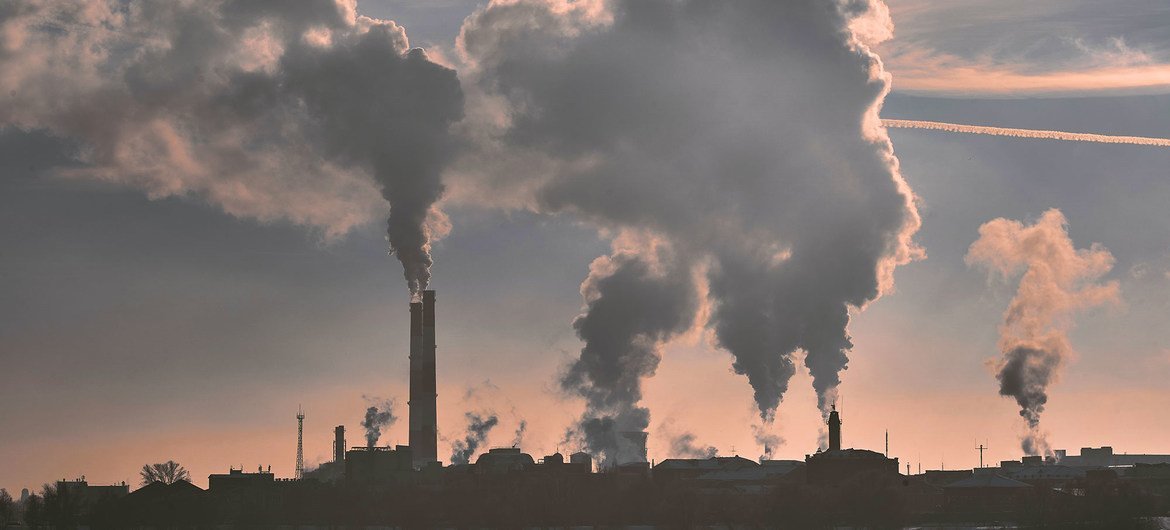
Without immediate action, we are at grave risk of crossing irreversible tipping points in the Earth’s climate system. +2.0C+3.6F with our current policies is the reality by around 2050s.
The world has already heated up by around 1.2C, on average, since the preindustrial era, pushing humanity beyond almost all historical boundaries,
AND WE STILL CANNOT EXCEPT THE INEVITABLE.
The enormous, unprecedented pain and turmoil caused by the climate crisis is often discussed alongside what can seem like surprisingly small temperature increases – 1.5C or 2C.
“The difference between 1.5C and 2C is a death sentence”. No amount of global warming can be considered safe and people are already dying from climate change.
A severe heatwave historically expected once a decade will happen every other year at 2C.
The fingerprint of climate change on recent extreme weather is quite clear, In fact, extraordinary, with the oceans alone absorbing the heat equivalent of five Hiroshima atomic bombs dropping into the water every second. The oceans have heated up at a rate not seen in at least 11,000 years.
——————
These temperature thresholds will again be the focus of upcoming UN climate talks and Climate Summits
Thirty years of climate summits: Where have they got us?
All have proved that its nearly impossible to achieve any coordination, with the whole process becoming too business-friendly, to the detriment of other perspectives and voices.
It is important to look at the bigger picture.
By most standards the world’s governments are currently failing to avert a grim fate.
To COP28 UN Climate Change Conference in Dubai, the United Arab Emirates, was the biggest of its kind. Some 85,000 participants, including more than 150 Heads of State and Government, were among the representatives of national delegations, civil society, business, Indigenous Peoples, youth, philanthropy, and international organizations in attendance at the Conference from 30 November to 13 December 2023.
Given these problems and repeated failures, why continue with the COP meetings?
Because we are arriving at tipping points that represent thresholds which, when crossed, will trigger abrupt and self-perpetuating changes to the world’s climate and oceans.
They are threats of a magnitude never before faced by humanity – one-way doors we do not want to go through.
Governments are more concerned about Energy and food price rises mean that governments face a cost of living and energy security crisis, with some threatening to respond by returning to fossil fuels, including coal.
The climate disaster is here. There is no huge chasm after a 1.49C rise.
Superimposed on top of these long-term warming trends overshadow the real-world hazards they amplify: Heat waves, floods, droughts, wars and mass migration.
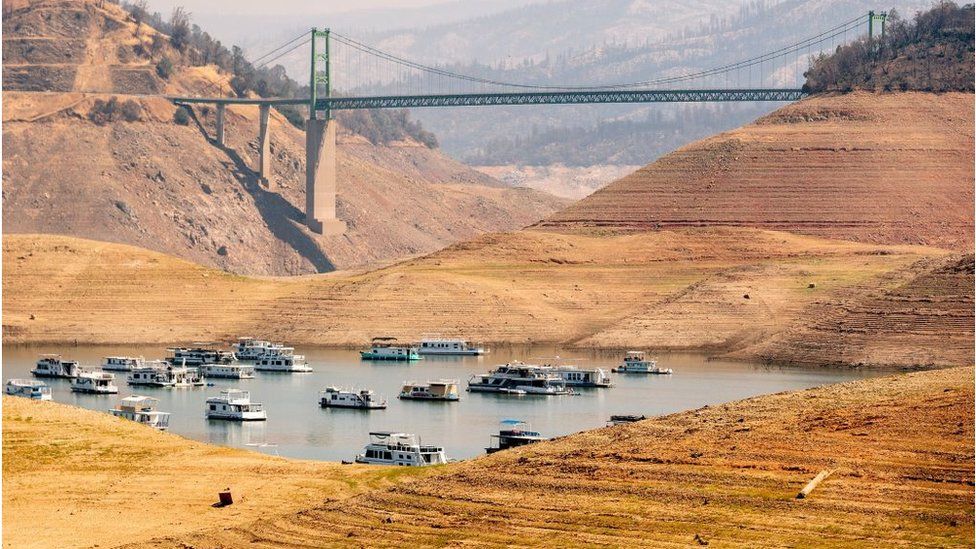
Meaning that people and ecosystems are dying, that people are losing their livelihoods, that agricultural land will be unusable.
For climate scientists, this is the “I told you so” moment they never wanted.
So what we’re seeing now is only a foretaste of what could happen if efforts to reduce emissions aren’t successful.
I hope that maybe more people will realize that this is really happening and put pressure on their representative to put actions on the top of their agendas. Our individual choices can challenge the status quo, and force things to change.
Like cleaning up the Advertising Industry to sustainability rather then consumerism across all their out lets – Main Stream TV, Socially Media, Bill Boards and the like.
To cut out the hypocrisy in Trade deals that are not Green, along with home grown policies to grow the economy above genuine climate demanding Projects. To push for a consumer chapter to be included in future deals which reflects the issues that are most important to consumers.
So what’s stopping us from getting there?
The rules governing global trade policy mean that powerful countries and corporations escape accountability.
One of the biggest examples of hypocrisy is the EU’s common agricultural policy – or CAP – established over 50 years ago and currently under reform. This policy, thanks also to the support of highly protective tariffs and agro-chemical companies, has allowed destructive intensive practices to become the default way European food is produced.
Why are French farmers protesting? Their slogan reads “It doesn’t make sense” ~Shat Upon by Regulations, on environmental protection.
They are not being paid enough TO FUCK IT UP.
Perhaps our slogan should be: # ITSALLBOLLOCKS.
We can challenge the myth that we have to choose between protectionism versus free trade, and end the myth that free trade brings any meaningful benefit to the average consumer.
All human comments appreciated. All like clicks and abuse chucked in the bin.
It’s one of the most important questions of the 21st century:
You always have a higher potential for violent conflict when the survival conditions of groups of people are threatened. This is a very basic principle.
Will climate change provide the extra spark that pushes two otherwise peaceful nations into war?
The obvious answer is yes.
You can see this when you look at events that are already happening, like land conflicts due to desertification, or various resource conflicts around the world.
There are currently 27 ongoing conflicts worldwide. A quarter of the entire global population lives in conflict-affected areas. This year, it is estimated that at least 274 million people will need humanitarian assistance. But it’s important to remember that the causal links between climate and conflict are rarely direct.
However there has always been an empirical connection between violence and climate change which has persists across 12,000 years of human history.
We now live on a planet expecting changes to temperature or rainfall in the coming decades—which will come faster and stronger than the many natural climate changes of the past.
This is the situation the world finds itself in today.
Conflict is on the rise. Millions are displaced. International law is disregarded with impunity, as criminal and terrorist networks profit from the division and violence.
The reasons for the outbreak of conflict range from territorial disputes and regional tensions, to corruption and dwindling resources due to climate change.
Take the Syrian war for example.
Nearly 11 years after it started, the Syrian refugee crisis remains the largest displacement crisis worldwide (13.2 million, including 6.6 million refugees and more than 6 million internally displaced people). At least 2 million people are living in tented camps with limited access to basic services.
Lasting more than 60 years, the conflict in Myanmar (previously called Burma) remains the longest ongoing civil war in the world.
The cost of war is almost unfathomable with conflicts driving 80% of humanitarian needs.
In 2016, the cost of conflict globally stood at an astonishing $14 trillion. That’s enough to end world hunger 42 times over.
For the seventh year in a row, global military spending is increasing, exceeding trillions’ for the first time.
Just imagine what the world could do with that money if conflicts were to end worldwide.
——-
If you’re looking for the causes of climate change, it’s us—the overconsuming, fossil-fuel-burning North and West.
If you want to get serious about climate change, worrying about the small-scale details of conflicts in Africa is missing the point. It’s us.
Twentieth-century wars were fought over land, religion, and economics. But the wars of the 21st century will be fought over something quite different: climate change, and the shortages of water and food that will come from it with mass migration leading to social disruption and potentially violent conflict.
I think this will become more apparent over the next decade or so. You can see it already in Europe.
I suspect we’re going to see more nativism, more xenophobia, and more talk of building walls on our borders.
If you look deeply at the source of future conflicts, I think you’ll see a basic resource conflict at the bottom of it all.
The thin veneer of civilization.
‘ Overwhelmed by the disaster, people could not see what was to become of them and started losing respect for laws of god and man alike,” Thucydides wrote.
Do we have the institutions, the structures, the systems of cooperation we need to deal with this problem?
I don’t think we have an existing structure of peacekeeping that can hold up under these conditions — or at least I’m not encouraged by what we’ve seen so far.
Can Western democratic society, which is built on a system of limitless growth and productivity, change its destructive relationship with nature?
No, modern liberal democratic societies are successful at improving the lives and freedoms of people who live in them but the problem is that their systems are based on the exploitation of nature and our environment, and we’re sort of trapped in this paradigm.
Climate change is a threat multiplier, which means it amplifies problems already facing the world.
Stressors such as poverty, political instability, and crime are magnified by increased droughts, floods, or heat waves. Of the 25 countries deemed most vulnerable to climate change, 14 are mired in conflict.
The climate crisis is altering the nature and severity of humanitarian crises.
As the world gets hotter, mayhem could spread.
Humanitarian organizations are already struggling to respond and will not be able to meet exponentially growing needs resulting from unmitigated climate change.
I think one of the things that clearly exacerbates matters is when the issues become politicized.
It’s going to take a combination of both personal action and systemic change to combat climate change. One is not a substitute for the other, and doing one without the other won’t solve the issues we face.
How civilized will we remain?
Climate change will be a small hole through which we glimpsed what always lies below the thin crust we lay across the seething magma of nature, including human nature.
Recycle. Fly less. Eat less meat.
These are some of the ways that we’ve been told can slow climate change.
But the inordinate emphasis on individual behaviour is the result of a marketing campaign that has succeeded in placing the responsibility for fixing climate change squarely on the shoulders of individuals.
With immensely powerful vested interests aligned in defence of the fossil fuel status quo, the societal tipping point won’t happen without the active participation of citizens everywhere aiding in the collective push forward.
While humongous industries continue to shirk responsibility, lobbying against change and top-down regulation. Nothing decivilizes more quickly and surely than war.
All human comments appreciated. All like clicks and abuse chucked in the bin.
Contact: bobdillon33@gmail.com
So watch the video, learn the facts, and form your own conclusions.
≈ Comments Off on THE BEADY EYE SAY’S WHEN IT COMES TO CLIMATE CHANGE WE HAVE ALREADY PASSED A TIPPING POINT.
( Four minute read)
Have we reached a tipping point, that moment from which a system irreversibly changes state?
I say yes.
Climate tipping points could lock in unstoppable changes to the planet, self-sustaining shifts in the climate system that would lock-in devastating changes, like sea-level rise, even if all emissions ended.
Inhabitants of New York on Wednesday are invited to stay at home and to use masks outdoors. More than 100 million Americans are now affected by air quality alerts due to wild fires in Canada.
In the mean time melting of the sea ice in the Arctic will inevitably lead to a warming of the region: a huge white space, the pack ice reflects light when the sun shines 24 hours a day in summer.
It lowers the temperature of the Arctic. The disappearance of the pack ice – icy water already present in the ocean – will not directly lead to a rise in the sea and the rise in global temperature caused by the melting of the sea ice risks in turn leading to extreme climatic events: heat waves, droughts, floods, etc.
Are we all screwed?
Yes.
Why?
Because every fraction of a degree makes tipping more likely, but we can’t be sure exactly when tipping becomes inevitable as one tipping point speeds up the next.
These signals can’t tell us exactly how close we are to tipping points, only that destabilisation is underway and a tipping point may be approaching.
These changes are just the beginning of worse to come.
The scale of recent changes across the climate system are unprecedented over many centuries to many thousands of years, and it is unequivocal that human influence has warmed the atmosphere, ocean and land.
The most we can be sure of is that every fraction of further warming will destabilise these tipping elements more and make the initiation of self-sustaining changes more likely.
“It’s a huge red flag, but there’s still time to save everything else.”
The temporary reduction in carbon emissions caused by global COVID-19 lockdowns did not slow the relentless advance of climate change.
To implement climate change goals as geopolitical uncertainties threaten to undermine their efforts,
The world is yet to get to a “positive tipping point” in the fight against climate change. It is now very likely that the 5-year average temperature for 2021–2025 will pass the 1.5 °C threshold.
Even if emissions are reduced to limit warming to well below 2 °C, the global average sea level would likely rise by 0.3–0.6 m by 2100 and could rise 0.3–3.1 m by 2300.
Three-quarters of people in the world’s wealthiest nations believe humanity is pushing the planet towards a dangerous tipping point and support a shift of priorities away from economic profit.
People know we are taking colossal risks, they want to do more and they want their governments to do more. We and they must move faster to implement more ambitious policies to protect and regenerate our global commons.
People in power seem to feel it is OK to fell old trees or destroy natural ecosystems for buildings or roads, or to dig up oil, so long as they then plant new trees. But this approach is not working.
Overall, 74% of people agreed that countries should move beyond focussing on gross domestic product and profit, and instead focus more on the health and wellbeing of humans and nature.
Its now or never for global cooperation to tackle shared challenges.
There is now a need for major economic and social transformation.
Currently the world is heading toward ~2 to 3°C of global warming; at best, if all net-zero pledges and nationally determined contributions are implemented it could reach just below 2°C.
One barrier appears to be media coverage. It is not helped the understanding of the issues, or what is at stake.
You don’t have to be told that it will not take much to tip us all into killing each other.
All human comments appreciated. All like clicks and abuse chucked in the bin.
If humanity wants to hope to contain global warming below 1.5°C – Governments must close the gap between net zero rhetoric and reality.
There can be no more hiding, and no more denying deluding yourself with a lot of greenwashing.
Political leaders, blinded by capital and powerful private interests, have long decided Earth is a small price to pay for the yachts, mansions, private jets and record profits of the one percent.
In Glasgow at the COP26 climate conference we watched as world leaders came up with new excuses, symbolic targets and new ways to silence the progressive voices who opposed them.
Global heating is supercharging extreme weather at an astonishing speed, this life-altering issue which we are NOW all witnessing daily – Somalia, Nigeria, Pakistan, is not getting the urgency and attention it demands.
Exploitation and development of new oil and gas fields must stop this year.
If governments are serious about the climate crisis, there can be no new investments in oil, gas and coal, from now – from this year.
It’s Now or Never.
A huge part can be done with existing technologies.
These technologies can and will create billions of jobs to drive a sustainable world, but it remains a fight of David against Goliath, because of how we measure our well being.
How we evaluate what we are doing needs to change.
GDP is a totally numbers-driven index that does not produce the true picture.
There are growing calls to find GDP alternatives to measure countries’ wealth and welfare.
GDP can’t accurately represent the wealth of a country when it ignores how money is divvied up.
Considering GDP alone, a rich country where 10% of the population controls 75% of the wealth (looking at you, United States) may rank higher than a poorer country with a more even distribution of wealth.
One of GDP’s biggest flaws is that it counts tragedies as economic bonuses. If a hurricane or tornado hits and a country spends millions of dollars rebuilding, those expenses boost GDP, even though people lost their homes, jobs, and lives.
GDP ignores many crucial ways to measure the wealth of a country: clean air, health, life span, gender equality, opportunity, education, and more. This is understandable – GDP wasn’t developed to rank countries’ welfare, but simply to measure money as the world recovered from the Great Depression.
Of course GDP cant be replaced over night, but it can be complemented by a Thriving Places Index (TPI) and this index could easily be expanded to other parts of the world.
TPI’s primary focuses are sustainability, equality, and local conditions. Unlike GDP, this index measures equality by investigating how evenly distributed life expectancy and wellbeing are across a country.
Interestingly, the U.N. encourages nations to use it alongside their gross national income data. They say that it can help governments assess national policy by “asking how two countries with the same level of GNI per capita can end up with different human development outcomes.”
By factoring in the ecological footprint, inequality, wellbeing, and life expectancy of a country, it provides a simple but rounded glance at the wealth of a country.
This alone will not however solve the problems that are now on the horizon.
We must implement measurements by monetising environmental damage factors to help countries better understand exactly where they stand environmentally.
The Green GDP is a noble effort to factor in the cost of climate change in a way that people whose focus is money can appreciate. While subjective data can immediately turn some financially conservative parties off, putting a number on the impact of environmental negligence could potentially hit home.
Our Profit driven societies focused too much on an idea that futuristic technologies will save the world from climate chaos, rather than focusing on what can be done today. If cuts to carbon are left to the future and not made in this decade, it will be too late to stay within the 1.5C limit.
What are the crucial new technologies in development for combatting Climate Change?
Clean energy is perhaps the biggest issue to tackle.
Convert carbon dioxide into a usable energy source using sunlight.
There are numerous projects trying to achieve this, but most of the hydrogen used today is extracted from natural gas NG00, -3.93% in a process that emits carbon dioxide as well as the more-fleeting, but more-potent, methane.
Electrical transportand advanced batteries?
Particularly for use in electric vehicles; hydrogen; and carbon capture appears to be the miracle solution to reduce the heavy ecological impact of transport. This technology is not all green under the hood. Even before having driven a single kilometre, the electric vehicle has emissions almost twice as high as those of a thermal vehicle.
Big data has big implications in creating awareness about the consequences of climate change but it’s harvesting with the use of non transparent and unregulated algorithms.
Crowdsourcing for environmental solutions by gathering journalists, scientists, technologists, and people passionate about sustainability is creating a new wave of environmentalism.
Mobile apps such as Oroeco is an app that tracks your carbon footprint by placing a carbon value on everything you buy, eat, and do. However most Apps are profit seeking and like Big data they remain un -transparent and unregulated.
Interactive maps really drive home the point of climate change.
All of these technologies use microchips in order to operate and these are made from rare finite resources.
For the first time, a mining company is preparing to mine the seabed to collect rocks rich in metals for the batteries of electric cars. A practice that promises to destroy ecosystems that are still unexplored and that could constitute a ticking “climate bomb”. Poisoning of fresh water reserves, artificialization and loss of biodiversity, toxicity for humans, radioactive pollution, occupation of agricultural land… The extraction and transformation of raw materials are much more polluting than for the fossil car.
In the end here is where we are.
Some of the highlights included a prediction of violent conflicts and civil wars, extreme poverty and the loss of several points of gross domestic product in some developing nations, mass extinctions, and an intense, regular pattern of natural disasters.
The average decline of the species analysed was 68% in 2020, and 60% in 2018, revealing an accelerating collapse of biodiversity around the world. “We can tell ourselves that 1% is not much, but losing 1% in two years is absolutely colossal. The mere fact that this index is not improving is a disaster in itself
Taking into account a global population rise of about 2 billion people, as well as the need to supply electricity to 785 million people who do not have access to it, and clean cooking to the 2.6 billion people who currently lack it there is no more time for multinationals to obtain justice.
Governments must fine them.
Instead we see governments like the UK licensing new oil and gas fields in the North Sea and has also mooted a new coalmine for coking coal alongside introducing fracking.
Instead we see Energy being use a a weapon of war.
We all know what is necessary for life however in the age of instant gratification, we have little appreciation of where it all come from and we remain unwilling to pay for a future that only exists on the planet we all inhabit.
A large-scale nuclear war would, by all scientific projections, be a planetary disaster of the highest order.
A large -scale climate event would be far worse. Here to day gone to morrow against watch our demise over a few generations.
So every one of us must engage now. ( See previous posts as how this can be achieved)
The simplest thing you can do is educate others.
Tell people there are other ways to measure a country’s wealth.
All human comments appreciated. All like clicks and abuse chucked in the bin.
The message is clear Climate Change is here and is already having a significant impact.
It is inconceivable that we still have people refusing to accept the facts that surround them, even if they saw 100 more years of it plain and apparent they and unfortunately many of our present world leaders are blind to what is happing and what is to come.
How much more evidence do they and us need ?
MAKE YOUR MINDS UP!
The Evidence for Rapid Climate Change Is Compelling:
I’ve not noticed any changes in the weather outside of the norm or I don’t give a Fuck what is happing. I’d rather live on another planet, than on one where every aspect of your life is subject to rigorous scientific control is not possible.
There is unequivocal evidence that Earth is warming at an unprecedented rate.
Right now there’s nothing like enough understanding.
Observers recognise that the decisive, political steps to enable the cuts in carbon to take place will have to happen before the end of next year.
Human activity is the principal cause. It is undeniable that human activities have produced the atmospheric gases that have trapped more of the Sun’s energy in the Earth system.
However if there was meeting tomorrow of world leaders they would as before, argue that its not their responsibility, making promises that cannot be kept.
To have any chance of drilling into them the urgency of tackling climate change on a global scale perhaps it would be best to invite them all together in Gautama bay, take their mobile phone, starve them for a week and get them to write their last wills and testaments.
This might fired the starting gun on what will become a global race to eliminate fossil fuels.
At this point you might be asking why is it so difficult for the world to take action.
The effort to control climate change impacts virtually every element of a country’s economy “so countries have traditionally been nervous about what they’re going to be asked to do.”
The idea that every five years countries would be asked to come up with more ambitious targets, ramping up their efforts is therefore bull shit.
“We are living in an interconnected global village with a common stake,” says Xi.
“All countries are closely connected and we share a common future. No country can gain from others’ difficulties or maintain stability by taking advantage of others’ troubles.”
“We should embrace the vision of a community with a shared future in which everyone is bound together,” he continues. He is right! Heart-stirring stuff, eh?
A cynic might think his reassuring words were partly a ploy to reingratiate China with the climate-conscious Europeans, and isolate a climate-sceptic US President MR DUMP.
But there is a much more important broader context for his announcement:
Let’s be clear what it means:
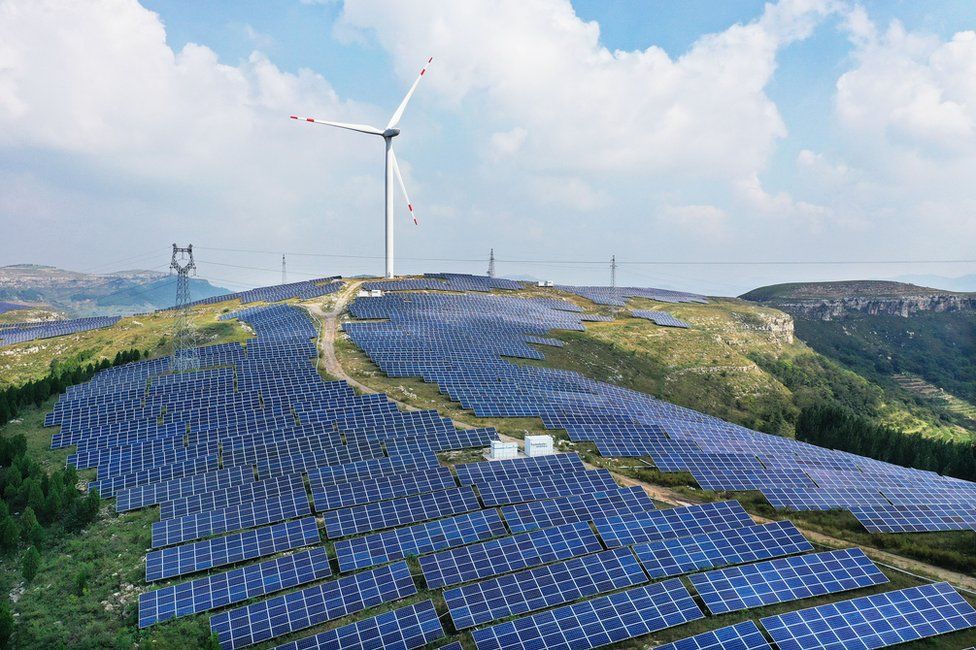
China, the most polluting nation on earth – responsible for around 28% of global greenhouse gas emissions – is saying it is going cut that back to virtually zero within 40 years. The commitment is of significant because China has never promised anything near as bold as this on climate before. President Xi’s 2060 pledge was notably unconditional – China will move ahead whether or not other countries chose to follow.
Why?
Because the cost of renewables follows the logic of all manufacturing – the more you produce, the cheaper it gets. Why invest in new oil wells or coal power stations that will become obsolete before they can repay themselves over their 20-30-year life?
Why carry carbon risk in their portfolios at all?
It looks like Xi has judged that the economics of clean energy mean that decarbonising is now the most sensible choice for the Chinese economy as well as for the world’s climate.
So can we stop worrying about climate change?
Sadly we cannot.
It is going to take eye-popping investment in wind, solar and nuclear power.
Even as the economics tilts in favour of renewables the task of decarbonisation is still enormous. However once half the world is on-board with the project of decarbonisation it is hard to see how the rest could hold out.
Evidence of environmental damage and climate change everywhere. It’s the biggest challenge humanity has ever faced. Tackling it means changing how we do virtually everything.
We are right to be anxious and afraid at the prospect. Remember that by 2050 urban centres will hold 75% of the world population and 40% of them have no resilience plans in place, and have no plans to develop one in the hear future.
Currently accounting for 70% of the worlds population and 70% of global GDP and 70% of CO2 emissions.
Don’t get me started on the food crisis.
You’ll be even more apprehensive if I was venture down that online rabbit hole.
Consider this conundrum:
When you talk to climate scientists you quickly discover they are far more worried about the dangers of global warming than most of us. Some tell you privately that they have had counselling to cope with the psychological effects of knowing the world is facing an impending disaster and not enough is being done.
Yes at this moment in history were in a mess. Wars, Natural disasters, Energy, Rampant Inequality etc. On the right, I am alright Jack on the left just of a scream that will before defang in the next few years.
Leadership is action not position.
As Henry Miller said ” No man is great enough or wise enough for any of us to surrender our destiny to. The only way in which anyone can lead us is to restore to us the belief in our own guidance. “
All human comments appreciated. All like clicks and abuse chucked in the bin.
Technology is often touted as the savior that will rescue us from our misbegotten ways, redeem us, and put us on the track to utopia. Then there are the dystopian views, where the future is dominated by technology that either rule over us or saps us so completely of our humanity that we might as well be a bunch of gadgets ourselves.
There are countless challenges today both environmental and not.
Mostly, we see the world through a set of layers. These layers are made up of our emotions, past experiences, and beliefs, and whichever perception is held by most, is popularly deemed as the reality.
Among contemporary scientists and philosophers, the most popular solution to the mind-body problem is probably materialism.
According to neuroscience, the contents of your head are comprised of 86
billion neurons, each one linked to 10,000 others, yielding trillions of
connections.
Materialists aspire to explain feelings and experiences in terms of the chemistry of the brain. It is broadly agreed that nobody has the slightest clue as yet how to do it, but many are confident that we one day will.
For human beings to survive, they need to produce and reproduce the material requirements of life.
But, the real reality is different and it’s above any perception.
=============
THERE ARE NO UNIQUE VOICES ANYMORE.
Here we are once again with another verbal diarrhea conference at the Summit of America’s with the president of the USA delivering a version of his domestic economic pitch promising leaders from Latin America that the United States is committed to helping the region combat crime, corruption, and its economic struggles.
“We will introduce a new approach to managing migration and sharing responsibility across the hemisphere.” A load of verbal bollix but it raises the question are we now heading into globalization vs regionalization?
If so why?
Because of the pandemic and the ongoing wars, today’s great powers have little choice but to spend their way to political stability, which is unsustainable, and or try to control knowledge that is unattainable due to technology.
Because the internet is currently eliminating the middleman the Politicians who are in a representative democracy hence the shift to direct democracy – Popularism – with power now resides with those best able to organize knowledge.
———————-
While the Earth, the planet, will continue to go its way regardless of what happens on the surface we are unable to act collectively and never will be able to do so.
We live toward incredible times where the only constant changes and the rate of change are increasing so fast that there seems to be no meaning to life.
Not until we eradicate poverty, establish free education, set aside ideological differences, change our primary focus to the long-term care of nature and people, remove profit for profit sake Algothrims, and create a World Aid Fund that we all can invest in. (See previous posts)
Not until when we are able to separate our own perception from reality we can take the necessary measures to be happy.
Not until we all realize that we are with Climate Change currently headed to a sixth mass extinction event and that this possibility alone needs to bond our collective conscious into acting like one.
Unfortunately, I believe, that if we aren’t now past the point of recovery, if we don’t act soon, civilization and human habitation here will be untenable.
————————
There’s no going back we are now stuck in a sad chamber of denial as those who are in power hopelessly try to ward off the apocalypse by promoting unsustainable economic growth. Our TV screens are inundated with appeals for help, while the cost of everything from health care, housing education, energy, etc is rising more than one can earn.
We must unplug our brains from smartphones and start working together in large numbers, as part of a coordinated effort to achieve change.
Like Evolution Migration goes both ways – out and in.
Rests assured if we continue to ignore the climate the earth will force us to go only one way, with the world passing through a nuclear war if we continue to ignore the warning signs.
If this happens humans will finally have little to no reason to fight.
What’s the point?
————————
As the Fourth Industrial Revolution forces us to think about where today’s innovations are taking us, when it comes to what our world will look like, in the medium-term – how we will organize our cities, where we will get our power from, what we will eat, what it will mean to be a refugee – it gets even trickier.
I predict the internet will go spectacularly supernova and fifty years from now catastrophically collapse.
With the world’s superpowers thrown into chaos as they come to grip with new powers, financial slowdowns, and emerging economies it will be the start of Apple’s path to world domination.
National leaders will find themselves under increasing pressure from their people, putting a strain on inter-country relationships.
The main political tendency will be away from multinational solutions to a greater nationalism driven by divergent and diverging economic, social and cultural forces with technology and political alining against Mega Power. With countries looking at solving their own problems before looking outward the Climate will continue to heat up.
Nations will increasingly adopt protectionist policies as well as look at ways of further securing borders, something which has already begun to take place as Europe grapples with the biggest refugee crisis since World War II.
Rising military costs, declining oil prices, and internal issues will all weaken Russia further with its inability to control the federation creating a vacuum. It is unlikely that the Russian Federation will survive in its current form.
While it remains a major economic, political and military power, the United States will “be less engaged than in the past”, with the powerhouse learning some vital lessons from history.
China will continue to be a major economic force but will not be the dynamic engine of global growth it once was,
The EU will remain hostage to the economic wellbeing and competitive environment in which it operates.
Nation-states created by the west will collapse.
———————–
We all want to know the future unfortunately in a supposedly thriving economy we are now facing inflation as the real cost of living.
Trickle-down economics does not work.
Social media is not simply a more sophisticated platform. Google, Facebook, Twitter, Youtube, Instagram, and Snapchat WhatsApp have turned into a gallery of Frankenstein’s monsters.
They are a new kind of assault on who we are, not just what we think.
“Like” button for Facebook
To have great predictions, these corporations have had to amass vast quantities of data on each of us – what is sometimes called “surveillance capitalism”, trading in human futures, herding us into our echo chambers of self-reinforcing information.
In doing so we lose more and more sense of the real world and of each other. With it, our ability to empathize and compromise is eroded.
We live in different information universes, chosen for us by algorithms whose only criterion is how to maximize our attention to advertisers’ products to generate greater profits for the internet giants.
Apps allowing us to hail a taxi or navigate our way to a destination are undoubtedly useful tools. But being able to find out what our leaders are really doing – whether they are committing crimes against others or against us – is an even more useful tool. In fact, it is vital if we want to stop the kind of self-destructive behaviors.
Advertisers have been playing with our brains in sophisticated ways for at least a century. And social atomization – individualism, selfishness, and consumerism – have been a feature of western life for at least as long. These aren’t new phenomena. It’s just that these long-term, negative aspects of western society are growing exponentially, at a seemingly unstoppable rate.
We live in a world in which a tree is worth more, financially, dead than alive.
For so long as our economy works in that way, and corporations go unregulated, they’re going to continue to destroy trees, kill whales, mine the earth, and to continue to pull oil out of the ground, even though we know it is destroying the planet and we know it is going to leave a worse world for future generations.
We are more profitable to a corporation if we’re spending time staring at a screen, staring at an ad, than if we’re spending our time living our life in a rich way.
Is the human race capable of pro-actively defining, harnessing, and expressing a collective consciousness, without the need for tragic experiences?
Much of the problem is around our inability to define collective consciousness. Who are we? Who do we want to be in the future?
I think it is time to act.
Our paths have never been so clear. More than ever, science can tell us what different socioeconomic-emissions paths will mean in terms of future temperature.
Which will humanity choose?
The world is getting smaller every day. There is only one world, and it’s made of consciousness. Matter is what consciousness does.
NO MANDATES. A long-standing issue is that the accords generally have no clear mechanisms for mandating that countries carry out their promises. World pressure and ethical considerations have to drive most of the agreements.
So, lots of promises, but no guarantee that countries will honor them.
“Once we have ruled out the impossible, what remains, no matter how improbable, must be the truth.”
Is the nature of global collective consciousness, yet another thing, such as climate change, that the population of this planet is going to happily sleepwalk towards, as it shrugs its collective shoulders and says, “Well, you know, sniff, what can you do?”
Drones hold potential for many environmental benefits but nature’s technologies and designs are more often than not far superior to our own.
Computers in our pockets offer huge conservation potential.
All human comments are appreciated. All like clicks chucked in the bin.
The Global Goals are a set of universal Goals, which set out a plan to tackle the issues that affect us all, no matter where we are in the world, from climate change to health, from gender equality to peace and justice.
The Millennium Development Goals (MDGs) set in 2000 are.
Goal 1: End poverty in all its forms everywhere.
Goal 2: End hunger, achieve food security and improved nutrition and promote sustainable agriculture.
Goal 3: Ensure healthy lives and promote well-being for all at all ages.
Goal 4: Ensure inclusive and equitable quality education and promote lifelong learning opportunities for all.
Goal 5: Achieve gender equality and empower all women and girls.
Goal 6: Ensure availability and sustainable management of water and sanitation for all.
Goal 7: Ensure access to affordable, reliable, sustainable, and modern energy for all.
Goal 8: Promote sustained, inclusive, and sustainable economic growth, full and productive employment, and decent work for all.
Goal 9: Build resilient infrastructure, promote inclusive and sustainable industrialization, and foster innovation.
Goal 10: Reduce inequality within and among countries.
Goal 11: Make cities and human settlements inclusive, safe, resilient, and sustainable.
Goal 12: Ensure sustainable consumption and production patterns.
Goal 13: Take urgent action to combat climate change and its impacts*
Goal 14: Conserve and sustainably use the oceans, seas, and marine resources for sustainable development.
Goal 15: Protect, restore and promote sustainable use of terrestrial ecosystems, sustainably manage forests, combat desertification, and halt and reverse land degradation and halt biodiversity loss.
Goal 16: Promote peaceful and inclusive societies for sustainable development, provide access to justice for all, and build effective, accountable, and inclusive institutions at all levels.
Goal 17: Strengthen the means of implementation and revitalize the global partnership for sustainable development.
They are intended to be universal in the sense of embodying a universally shared common global vision of progress towards a safe, just, and sustainable space for all human beings to thrive on the planet.
The different goals and targets however represent different degrees of challenge and ambition for different countries depending on their present state of development and other national circumstances. The balance between the social, economic, and political efforts needed to deliver the different objectives is also likely to be different in different countries.
There are all verbal Goals with no legal binding, interconnected to each other and so far we have failed to provide the support to turn any of the desired goals into reality.
The U.N. can’t compel any country to do any of the things required.
The rationale for any goal must increase everyone’s stake in the goals so that when they come into effect, countries will swiftly incorporate them into national policy decisions — in other words, take them off the page and into practice.
There’s a real danger they will end up sitting on a bookshelf, gathering dust as there’s still no clear consensus on where exactly the money will come from to achieve any of them.
In the end, we are one people living in one world and all Goals require financing.
So the goals are a waste of time and money and won’t matter unless we as individual and national governments take them seriously.
———————
The only way to combat the changes we are now witnessing in our plant is if we all start financing the changes required.
One of the first things you would hear in economics class is that there is no free lunch, meaning that nothing in life is free. Everything exists in a limited supply. That means that everything has value.
We also know that governments and countries can’t tackle anything that requires a long-term commitment.
The bead eye has been promoting the following solution to creating a worldwide value that would afford an opportunity for all of us to invest in a just future.
A perpetual funded Fund of trillions, totally transparent, with rewards to all investors that would transfer the UN verbal into positive actions.
Here is the idea again.
Can you improve or find fault with it? (Comments below)
It would give all of us an opportunity to invest in the sustainability of the plant.
It would give the United Nations clout not just worthless resolutions.
The Solution:
The United Nations-backed by world governmentsissues Non-tradableGreen PRIZE Bonds,
These Bonds would pay interest dividends that move in line with inflation rates, guaranteeing a percentage yearly return depending on the value of the bond.
The interest is guaranteed by all world governments.
Bought online like lotto tickets each bond carries an identification number that is entered into a weekly prize draw, and a yearly prize draws equivalent to 0.005% of the funds raised.
Draws are fully funded by the players, through revenue made from ticket sales.
Most of the biggest and most popular lotteries on the Lotter have some form of prize guarantee.
Take EuroMillions, for example. The EuroMillions jackpot starts at €17 million, which means that there is a €17 million guaranteed jackpot.
The pan-European EuroJackpot is similar, with a guaranteed minimum jackpot of €10 million.
The UN green Prize bond would be a progressive jackpot one in which if the jackpot is not won, it will carry over and grow for the next drawing.
The distribution of the funds raised by the Bonds must also be transparent and distributed as non-repayable grants.
This would be undertaken by an executive non-departmental public body not attached to the UN to avoid any vetoing.
It would vet all applications for funds to verify that they meet the values set by the UN, peace, dignity, and equality on a healthy planet.
Once accepted all projects would enter a draw for funding which would ensure that no lobbying and corruption with money going to community groups and health, education, and environmental projects.
There is considerable work to be done to create a realistic, coherent approach to improving our divorce from reality.
You only have to look at what has happened to the climate change goals.
Just as leaders around the world were starting to think seriously about tackling global warming it is now derailed for a decade by the Ukrainian/Russia conflict.
We’ll have to wait and see if that will really happen.
What if every child was aware of the key global challenges of our time?


 It is now very likely that the 5-year average temperature for 2021–2025 will pass the 1.5 °C threshold.

 “All countries are closely connected and we share a common future. No country can gain from others’ difficulties or maintain stability by taking advantage of others’ troubles.”


 bobdillon33blog
You must be logged in to post a comment.