The Covid-19 doesn’t just call our bluff it is questing the way we allow our society to be run.
It is bringing into sharp relief what some of us have always known to be true. Our current way of living must end.
Capitalism and the culture of hierarchy that props it up is now extremely screwed up.
The story of Capitalism up to now has been selling your labour so you don’t end up on the streets.
We should not behave to exist this way.
We come into this world kicking and screaming for our own needs while our birth’s, and our eventual departure’s, have all been turned into a product by capitalism to generate profit. We leave silent.
We live in a world where nearly everything has some kind of cost and the increased workforce automation is suggesting that things will keep getting worse.
What is considered valuable by man or the people of this world are of little or no value when one is confronted by a virus (which unfortunately some of us are witnessing this very minute) that does not discriminate any grounds.
Money, wealth, riches, gold, property, power and so on are either transitory, fading or can be destroyed in the blink of an eye and are of no value in the long term.
In the past few years, the money markets have fallen in a heap with the global financial crisis and the value of money becoming very shaky. The same can be said of shares, property and other investments. And this is nothing new for the economic cycle goes through boom and bust every seven to ten years making fortunes at one time and destroying them at other times.
However, men believe that wealth gives you the power to be able to rise above the problems and issues of the world.
How wrong he is.
The coronavirus is not the only virus we have to confront we also have to confront capitalism and the world that sustains it.
Climate Change was not enough to make the world pause.
The challenge man faces is that we think only of the here and now.
We now have a moment to consider what a rapid response to the climate emergency would look like – how we build a society that completely transforms our social order towards something that is in equilibrium with the biosphere and gives to each according to their needs.
But will more sustainable capitalism emerge from Covid-19 highly unlikely as the protection of private interest over public interest remains the same?
What the coronavirus has and is showing is that our cheapskate governments can provide far more in social programmes than they have.
While none of us can predict the future let’s hope that this time the penny drops.
The risks of Covid – 19 are now but the risks of climate change with the clock ticking needs us to wake up before the alarm goes off.
It’s not science, not protest, that will save the planet. Science alerted us to global warming but understand the nature of the world is crucial to dealing with it.
Everything has a function and our function is to fit into our world and not divorce ourselves from nature.
With the age of technology and its Algorithms working themselves into everything relentless, enabling profits to disappear far from the trickle-down effect the coronavirus is revealing heroes and villains across the world.
The markets might be paralysed with numerous industries entering a state of suspended animation the environment is getting a recovery period.
Covid -19 is showing us that on the horizon, capitalism in its current form threatens value. It is built on the premise of instant gratification.
Many businesses today are aware of this failing in mankind and play to it to great effect encouraging us to insure ourselves against the cost of living and dying but we are now trading for time and for eternity.
The corona-virus is certainly a much greater reward than the fleeting pleasures of this life.
The new WFH world that emerges from this will be intriguing – Universal Basic Income.
≈ Comments Off on THE BEADY EYE SAY’S. IT’S TIME TO ASK SOME WHY’S?
(Four-minute read)
Don’t answer the questions below, put some thought into their overall meaning.
AGAINST THE QUESTIONS THAT THE CORONA VIRUS IS AKSING OF ALL OF US THEY ARE ACADEMIC.
We, as humans, ponder about the life around us everything in life contradict itself to the point of confusing all of us?
What we call the modern world has brought its own unique set of problems: from the Coronavirus, huge food waste to climate change to an increasing wealth divide.
The western belief in ‘progress’, that each generation will be an improvement on its predecessor, for a long time has held true.
However, it seems this might no longer be the case as life at the moment isn’t about finding the answers, it’s about examining our atmosphere. From the nature of the universe (that’s if there is only one) to the purpose of dreams, there are lots of things we still don’t know – but we might do soon.
Leaving the usual unanswerable’s aside, like what is reality, what is life, do we have free will, is the universe deterministic, what is consciousness, will there ever be a theory of everything, what happens after you die, what comes after homo sapiens? the two most common questions at the moment on our lips – Are you alright? How are you?
Old solutions to solve to run an increasingly chaotic world requires governing elites to spend a lot of time spinning and inevitably tempts them into keeping lots and lots of secrets, to include telling the public exactly what they’re doing.
Even post-Snowden, is an increasingly secretive and intrusive national security state the “new normal”?
The timing is fortuitous because I’m pondering a number of big questions these days and I’ll be interested to see not what some of the nation’s best scholars think about them but you.
So for what they may be worth, here are my top 10 Why Questions, with plenty of blame to share on all.
There’s a pattern of contradiction in most of them that lead to a series of more ‘why’.
Once there is danger, there is hope; when there’s truth, there are lies.
Why am I asking these question?
Because we all have to, not someone to get serious about real the state of the planet we all live on.
Do we really value life so much if we make death come to others?
Why is there school when we don’t learn real-world skills?
Why do I have to get up every morning to go to work?
Should the wealth of Economies give us all a Basic Income?
Why do we demean everything not human if it’s what brought us life?
Taking the coronavirus and climate change are we better together or in isolation?
Will Europe ever get its act together?
If opposites attract, then why is there still war?
Why Bush is president of US?
What is the reality of immigration?
What is a world without Earth?
Go through life knowing that your world could mould into a piece of grey dust at any point; an experience that dust at your high to prepare for your fault, your decline because it will come to snap at you.
All human comments appreciated. All like clicks and abuse chucked in the bin.
STOP DESTROYING OUR PLANET: It’s no secret that our planet is in a pretty dire condition.
The problem is a massive one.
It’s so big that there are things that you do every day that are helping to bring about the end of the world, and chances are that you might not even know it.
Here are a few.
China produces a whopping 80 billion disposable chopsticks every year. The vast majority are used—and thrown away—That kind of production takes 20 million trees, and not just any trees.
Estrogen, one of the active ingredients in birth control pills and hormone therapy treatments, was introduced into a freshwater lake research facility in Ontario.
The impact was almost immediate. Male fish first began producing egg proteins and then producing eggs.
Wastewater treatment and its impact on freshwater ecosystems.
Hormones that aren’t absorbed or used end up in the sewer system after they cycle through the human body. In areas where sewer water is dumped into lakes and rivers, the average fish population is about 85 per cent female. The cause has been traced back to the release of improperly treated wastewater that contains hormones from hormone therapy drugs and birth control pills. A stark contrast to the normal 55 per cent. Fish exposed to the hormones not only lose the ability to reproduce, but their accidental hormone treatment impacts eggs at the development stage as well.
Prozac. Might have something to do with the decline in the starling population over the last few decades—to the tune of about 50 million birds.
Drinking straws.
The United States alone uses about 500 million drinking straws made from a polypropylene plastic that doesn’t disintegrate or dissolve.
These millions of straws are around forever, making up a huge part of the estimated 12 to 24 tons of plastic that end up ingested by fish and other marine wildlife every year. And that includes about one million seabirds that die after eating plastics. One of the most common items found in autopsies? The drinking straws that come attached to juice boxes.
Eating frogs.
The fungus that’s being spread by the live food trade is different than one that’s being blamed for most of the recent die-offs.
The consequences of the fungus and its ability to hybridize create the potential to unleash an epidemic across the globe.
Antibacterial soaps, washing liquids/tablets use triclocarban and triclosan, chemicals while most of those chemicals are removed from wastewater when they’re run through a treatment plant, they have to go somewhere. When triclocarban degrades, it degrades into two chemicals—both carcinogens.
When triclosan is run through a treatment plant to make drinking water, it doesn’t exactly make safe drinking water. Instead, it makes other chemicals that can include chloroform. And those chemicals travel through the food chain in plants, animals, and ultimately humans.
Farm-raised fish.
Shrimp aquaculture has resulted in the large-scale degradation of coastal areas, the destruction of wetlands, and salinization of freshwater areas and drinking water. Salmon farming relies on the release of fish food and nutrients into the water, which always results in wasted feed and a huge amount of fish droppings in the water
Extra waste products end up sinking to the bottom where they react with the medicines and other nutrients used to keep the fish healthy along with antifoulant agents used to keep nets clean. That means fish farms are a breeding ground for sea lice, which are as disgusting as they sound. More chemicals are used to control the sea lice, which end up killing the other marine life that was supposed to be in the area in the first place.
Not the eco-friendly choice you’d think.
Soybeans 80 per cent of the world’s soy production goes into livestock feed.
1.2 million hectares of soy was planted in Brazil’s rain forest in 2005 alone.
Global food waste.
Every year, global food waste amounts to about 1.3 billion tons, and that’s such a big number that it’s impossible to imagine. Meanwhile, about 870 million people are starving.
Inequality: Lack of Healthcare, Nutrition and Education.
We all know that the world’s richest 1 per cent, those with more than $1 million, own 44 per cent of the world’s wealth. In many countries, a decent education or quality healthcare has become a luxury only the rich can afford.
Being poor all too often means more sickness and an earlier grave.
The story of inequality in many developed countries, including the U.S. and U.K., is more sobering. However, when you are born in a poor place where every tenth child dies, as the well-to-do’s share of the national economic pie surges, a pandemic is a joke.
So what can be done to right this unsettling imbalance and restore a sense of opportunity for the billions of people who are being excluded from the gains of economic development?
The first and most important step may ultimately be recognizing the scope and scale of the problems caused by inequality in the first place and resolving to do something about them.
Inequality is out of control with the human costs devastating.
Like many other environmental problems, there’s absolutely no easy answer but it is time we opened our eyes.
Ironically, with the coming economic collapse due to the coronavirus, we might finally be recognizing inequality’s great economic costs may be just the motivation that financial interests need to take the issue seriously.
Its not Amazon fortune and power that will grow exponentially.
The growing gap between rich and poor is undermining the fight against poverty, damaging our economies and tearing our societies apart.
If not with climate change added to next pandemic it won’t be the virus that kills you but the influx of refugees.
All human comments appreciated. All like clicks and abuse chucked in the bin.
AS IF WE DID NOT KNOW it is posing that fundamental profound question once more.
Are we going to care of the Earth so it can care for us?
It is impossible to say which way the disease will go however there is no doubt that it is creating the biggest restriction of civil liberties “in peacetime”.
We know that we all tracked by Google. Behind all the restrictions governments will adopt powers that they will loath to relinquish when the crises are over.
There is every like hood that the pandemic will strengthen the state and reinforce nationalism. What won’t change is the inequality and greed, rather it will create a less open, less prosperous and less free world.
Of course, it did not have to be like this but it will be the straw that brakes the camel’s back of globalization and it will probably result in uncontrolled Co2 emissions.
In the short term, with decoupling and rivalry coming to the forefront driven by a cascading sense of vulnerability there will be a race to return to full production.
However the Pandemic is proof of our interdependence but we are not or are we heading for a poorer, meaner, and smaller world.
If the Pandemic shocks us into recognizing our real interests in cooperating multilaterally on the big global issues facing us all it will have served a useful purpose.
We all know that it is not enough to think of one nation’s power over another when it comes to climate change. The key is learning the importance that we have all to act together and Covid -19 is going to show that we are failing to adjust our strategy on many fronts to this new world.
Either way, this crisis will reshuffle the international power structure in the way we can only begin to imagine.
If we don’t support each other the result will be instability and widespread conflict within and across nations.
We know that there is a dramatic new stage in global capitalism on the horizon with supply chains be brought closer to home. We are going to see failed states with billions of economic refugees on the move.
We are going to see the USA no longer as an international leader.
To date, international collaboration has been woefully insufficient.
What is needed it targeted assistance that provides hope that men and woman can prevail in response to this extraordinary challenge.
If it gets Airborne the white full personal-protection suits that presently strike fear into the hearts of us all will be worthless.
AS IF EARTH DOES NOT HAVE ENOUGH PROBLEMS THE NEXT NASA PROJECT TO MARS IS SCHEDULED TO LAUNCH IN JULY.
NASA’s 2020 Mars rover.
The rover will collect and cache promising samples for eventual return to Earth.
The first pristine pieces of Mars won’t be coming down to Earth for at least another decade, but the time to start preparing society for the epic arrival is now.
This is an extremely grave point.
On the one hand, we can argue that Martian organisms cannot cause any serious problems to terrestrial organisms, because there has been no biological contact for 4.5 billion years between Martian and terrestrial organisms. On the other hand, we can argue equally well that terrestrial organisms have evolved no defences against potential Martian pathogens, precisely because there has been no such contact for 4.5 billion years. The chance of such an infection may be very small, but the hazards, if it occurs, are certainly very high.
Martian rock that has already arrived on earth contained structures resembled the fossilized remains of bacteria-like lifeforms.
What if such samples turned out to be dangerous, and contagiously so?
Are there some Mars-oriented lessons to be learned from COVID-19.
Here on earth, it is gruelling and potentially lethal work to identify a virus never mind virus from other planets.
It is estimated that there are 1.6 million unknown viruses in birds and mammals. Of these, it is thought between 600,000 and 800,000 are zoonotic, meaning they have the potential to jump from animals to people.
Virulence, contacts and the length of time for which people are infectious are the three factors that determine what is called ‘the basic reproductive rate’ – how far and fast the epidemic will spread.
There may be a staggering 3,200 different types of coronavirus harboured in bats alone.
As with historical infectious disease epidemics, the coronavirus that’s spreading currently is another example of why it’s so important to understand the consequences of interacting with environments humans rarely contact and then distributing widely whatever [they] picked up.
If one looks at the outbreak in Africa, of Ebola and the HIV/Aids pandemic – which to date has killed 35 million and infected 70 million – started about a century ago in Cameroon when a chimpanzee virus was transmitted to a human who almost certainly killed, butchered or consumed it.
Markets were closed during both outbreak, but they are now once more doing a roaring trade selling tropical game including monkeys, chimpanzees, cane rats, bats and snakes. Bushmeat is entrenched in local culture and is often a vital form of subsistence, hence why the authorities are unwilling or unable to announce an outright ban.
Last, with or without artificial intelligence we continue at our collective peril to make imbalance’s in the ecosystem.
All human comments appreciated. All like clicks and abuse chucked in the bin.
I know that humans are the only type of species that are suitable to manage the earth but it does not make them the right species!
Apparently not.
Did we ever think that we would be living in a world where it is life-threatening to go our side and I am not talking about terrorists or any other Hollywood science fiction movie scenario?
There’s a lot of bad news out there but this is not a death sentence.
It’s time to save the world. ” We can use it as we wish”
No one owns the earth. No one has the right to do whatever they want.
We’re not the only thing that lives here, nor are we more important in any way.
We cannot use the world as we please as our actions are endangering not just us but other species.
Our Earth was meant to be lived on in union with its Ecosystems and we cannot allow that to be broken.
The Coronavirus ( Covid 19 ) is illuminating what is wrong with our world.
So our most crucial life questions are:
What Kind of World Do We Want to Leave to Our Children?
Whatever your interest — whether it’s the environment, health care, poverty, or education — there are simple steps each of us can take to make life better not just for someone in our own community.
The Universal Declaration of Human Rights, that “all human beings are born free and equal in dignity and rights.” now needs an Earth Declaration.
Here are the top six of my non-legal binding the goals.
Use Global Warming to Solve Global Warming.
Take urgent action to combat climate change and its impacts to protect, restore, and promote sustainable use of terrestrial ecosystems, sustainably manage forests, combat desertification, halt and reverse land degradation, and halt biodiversity loss.
Conserve and sustainably use the oceans, seas, and marine resources for sustainable development.
Sustainable Development Goals which will take years for a critical mass of governments to actually rally behind.
The allocation of resources to fight climate change and other environmental issues over the next decade can be achieved by making a profit for profit sake pay. ( See the previous post on a 0.05% World Aid Commission. How it could be implemented so the costs are spread fairly)
End poverty in all its forms everywhere.
Global poverty. Reduce inequality within and among countries. Ensure inclusive and equitable quality education and promote lifelong learning opportunities for all.
Expand access to clean drinking water, green energy.
Artificial Intelligence and Automation.
The 2020s sounds like such a radical futuristic decade however to strengthen the means of implementation and revitalize the global partnership for sustainable development requires a coherent and plausible conception of social justice. Abasic income, a periodic cash payment unconditionally delivered to all on an individual basis, without means-test or work requirement.
Stop the sale of arms.
The estimate of the total value of the global arms trade in 2017 was at least $95 billion.* However, the true figure is likely to be higher. On any given day at any given moment in your life, there are at least 15 wars and armed conflicts actively going on all around the world — even if you’re only hearing about a few of them on the news.
There are an estimated 11-12 million refugees in the world today with between 12-24 million Internally Displaced Persons.
Electoral Reform with Citizens’ Assemblies.
These aren’t just focus groups or consultations though but for the members to engage in serious, informed reflection on important policy matters with people they may never normally meet.
As Hubert Reeves ( Canadian-French Astrophysicist) say’s, ” Man is the most insane species. He worships an invisible God and Destroys a Visible Nature. Unaware that this Nature he’s destroying is this God he’s worshipping “
Feel free to have idea sex between your ideas and mine so we can come up with even better ideas. It’s a way of saying: “We agree that these are the world’s top priorities right now.”
You don’t have to belive but it helps for something to be true.
Our modern society often seems geared towards quick fixes, superficial relationships, material things.
We are bombarded with advertising and social media images but below this superficial level of experience, there are deeper truths.
The problem of determining the truth in current events (and in other areas) when we’re faced with conflicting views from thousands of media and Internet sources seems insurmountable. Does this make sense? Is it likely?
While accepting that no one is going to get everything right all the time without the truth aiming for equality is a recipe for disappointment.
So we enter into our search for truth by asking these vital questions:
Is truth the property of verbal and written language, or is it now visual and as such by-passes the chaotic problem of human perception and interpretation?
Or is truth assumed to exist in an abstract realm of correctly conceived ideas?
Or is the truth the true knowledge of things as they are now, as they have been in the past, and as they will be in the future?
What does it mean to know the truth?
The most valuable asset you can have is trusting but to have trust it must be true?
Pragmatic proofs are paraded daily on TV and Social media which are both promoted by unregulated platforms with unchallenged Fake News making convincing claims to “knowing.”
Truth used to be conceived as a property of accurately stated words or accurately conceived ideas that correctly characterize world realities like the Corna virus outbreak that might turn out to be the modern-day catalyst to defining the truth.
Let’s start with death as it has a way of concreating the mind.
It is undeniable or is it.
We can’t know anything for certain, so the truth is in need of a God.
Without the Ressurection, Christianity would not exist.
We can’t imagine X being simultaneously true and false in the same manner. Another word if something is true, it’s not simultaneously false in the same way.
How to “prove” it.
All truth is empirically or scientifically testable.
There are no eyewitnesses who watched Big Bang so the assumption that something came from nothing is propositional truth. It has been the big question facing humanity since mankind crawled from the primordial ooze – where did the universe come from?
If we consider the hypothetical proposition of the impact of finding life on another planet or it arriving on this planet it will not prove anyone theological system right or wrong, so our confused view of what is true will remain.
For an example of this is.
If by deduction reasoning, verified against observed facts penguins exist.
But put another way, the claim “penguins exist” is itself a penguin.
That said if someone just refuses to acknowledge logic, it ends all rational discourse. You can’t logically prove anything to someone who denies logic.
So deduction depends upon the nature of assumptions.
These assumptions are not applicable universally because the premises from which they are deduced may not hold good at all time and places.
There is a part of the world that we can’t see.
Quantium Maths is a realm of reality that doesn’t consist of material things but of non-material forms. Quantum physics brings us a new kind of reality, provides us with direct suggestions of how we can live in accordance with the numinous realm of the universe.
But the meaning and purpose of our nature are anchored in the numinous realm of reality, not virtual reality. We usually take our thinking for granted, and the thoughts in our mind tell us a lot of things, but they say nothing about where they are coming from!
The word, “consciousness” derives from the Latin, “con” and “sciencia”, and it means a state of “knowing together” what is true and not true.
There is no plural form because there is only one consciousness.
Our concepts of truth evolve in the same way in which our bodies evolve.
For some reason, in our history, worldviews have always been accompanied by threats.
We believe that the evolution of concepts and their understanding is the true function of biological evolution. It is impossible to know, whether we are evolving with the cosmic mind, or whether it is merely our mind that has to evolve to a better understanding of a non-evolving cosmic order.
We are left with verifiable truth taking many paths based on observations which become intellectual toys that the real world may forget in the intellectual gymnastics and mathematical treatment of the observations.
The principle of noncontradiction cannot be established scientifically only by a witness.
Once you concede that *an* absolute truth exists, a whole slew of truth statements come with it:
It can’t be absolutely true since that would create a contradiction:
So if you remove all religious beliefs it is very easy subconsciously to absorb the truth.
An ascending process” in which facts are collected, arranged and then general conclusions are drawn in which we arrive at a generalisation on the basis of particular observed facts. This process is realistic because it is based on facts and explains to them as they actually are. But it can only show that the hypothesis is not inconsistent with the known facts.
In reality, the collection of data is not illuminating unless it is related to a hypothesis.
Either because it is committed to religion being false (e.g., they want to live a sinful lifestyle, so they need to convince themselves that God isn’t real, or at least, worth obeying), or because they’re too proud to admit defeat, or because they’re not really that interested in investigating the issue deeply, or simply because they don’t see things the same way that you do.
The narrower the problem on the basis of logical reasoning the truer it becomes verified by observation.
The penguin stands verified. It does not need a witness or scientifically proven.
But truth relies on the axiom that things are either true or false: things that are false cannot be true, and things that are true cannot be false.
There exists absolute and knowable truth, outside of the realm of the natural sciences, and not subject to empirical and scientific testing.
All scientific knowledge is built upon a bed of metaphysical propositions that cannot be established scientifically. Where experiment is practically impossible, abstraction and analysis afford the only means of escape from those which complicate the problem so much.
So many people hold wrong opinions simply because they’ve never thought deeply on the subject. And our culture is absolutely toxic with wrongheaded philosophical and religious views and now false news.
I won’t say you are wrong if you won’t say I am. The argument depends totally on the rules of the logic game. Unfortunately because of Social media, our intellects are falling.
We established the truth of the claim by the witness and not those who hide behind logically incoherent arguments removing themselves from the field of logical discussion.
The only thing to do (I presume) is to attempt to lure them back by showing that they’ve transgressed logic and are simply appealing to emotion?
Assuming that the public square should be devoid of religion; assuming that faith is irrational; etc. “Absolute truth exists” is absolutely true.
On the other hand, no one can know anything for certain, is sceptic’s absurdity.
This statement is a broad (self-refuting) metaphysical and epistemological claim.
To achieve a trusted world it requires a compromise of the cultures.
At this point in our analysis, we might ask:
Does it all matter? Why should we care?
Our answer is the belief that happiness in this life can be found only by understanding the spiritual background of the universe, and by living in accordance with it.
This means that we have to recognize the invisible background of reality and accept the importance of spirit in our life. Denying the transcendent aspects of our nature can lead to serious problems for our physical health and spiritual well being.
The truth the whole truth and nothing but the truth or someone may claim the right to tell it for you.
Our task isn’t the task of slaves to technology, who have to serve their creator.
“If Materialism is false”, writes Imants Baruss “then what is true?”
What is true these days is that we economizing it.
Let people believe what they want, as long as those beliefs aren’t leading to hurtful or unlawful actions.
All human comments appreciated. All like clicks and abuse chuck in the bin.
Our thoughts and actions are triggered by neurological processes we don’t
control. Paradoxically, the more we integrate mindfulness with our daily
lives we realise that the only reality we have is the present moment, the more
life may seem somewhat pointless – because we are living as if this is all
there is.
Richard Dawkins, “life has no higher purpose than to perpetuate the survival of DNA…life has no design, no purpose, no evil and no good, nothing but blind pitiless indifference”
As per his perspective of a human being, we are born, we grow old and older and die.
Survival is just a part of your life.
Other words after I am gone, there is no world because there is no ‘me’ to behold it.
So, my purpose of life should be to enjoy and stay happy in those 100 years instead of worrying to make the world “a better place.”
However, I say the last thing you want to do is die and realise you haven’t truly lived.
We might not be able to help live our lives in denial of death like a flower that dies and is blooming next spring.
Of course, the Theory of Evolution does not explain the origins of life.
It explains how life, once created, changes over time. Although origins of life are related to evolution. It is an accessory topic and area of study on a planet that will come of age when it works out the reason for its own existence.
As it appears with the present virus Corona that is affecting the old and weak, sparing the young and strong there are many different ways that evolution can happen in a population, including both artificial selection and natural selection.
The realisation that we are technically on autopilot and without free will, adds another new dimension to the question – What is the point of life if not survival?
Members of the public might be able to describe natural selection as survival of the fittest but pressed for further explanation of the term, however, most answer incorrectly.
Someone not familiar with what natural selection really is might take “fittest” to mean the best physical specimen of the species and that only those in the best shape and best health will survive in nature.
That isn’t always the case.
By that definition, then, the survival of the fittest might not be the best way to describe natural selection as it applies to evolution.
Now that this idea is stuck in our lexicon, there isn’t much that can be done to help others understand the actual meaning of the phrase beyond explaining the intended definition of the word “fittest” and the context in which it was said.
It follows that individuals with favourable adaptations will live long enough to pass their genes to their offspring.
I can take full control of my life right this second. I can act in full awareness of a particular thought of my choice. I can seize this moment to take action.
I’m not fully in control of my actions in this one; then truly, what is the point to all this doing, competing, struggling, striving, working, accumulating, etc.
Both impart that our species can adapt and change in order to survive.
On the face of it survival seems like the most unanswerable question there is, a question that nags our existence from start to finish. However natural selection will “select” the trait that is more beneficial for the species’ survival.
That’s the only answer we have available.
None of us will be travelling to any distant planets so its time we started to share what is left of this one.
It is not that there’s nothing to hope for in the future; because it doesn’t exist, but everything to perceive in the now.
The Coronavirus is one of those circumstances that can drive divergent evolution include natural disasters like volcanoes, weather phenomena, the spread of disease, or an overall climate change in an area in which the species lives.
Divergent evolution becomes necessary for survival in a changing environment.
After we die what is truly reminiscent of our existence- our progeny.
I hope my guide will enlighten you because survival is not the purpose of life, it is only a necessity!
All human comments appreciated. All like clicks and abuse chucked in the bin.
We must reclaim reality if not reality will reclaim us.
In a profound and globally interconnected world all our actions and in-actions matter. Nothing on this planet happens in a bubble.
Honesty is truth and the truth sets us free.
To be honest, everything you do directly affects everyone around you and everyone on the planet; and not just what you do, but also what you think, say, feel and believe.
We must all become completely responsible for ourselves and the global society we live in, and especially for all the problems that our global society has created and perpetuated. We don’t solve the problems of the world by blaming others, punishing them or shifting responsibility on to them or others who appear to be in charge, including governments, countries, religions, political systems, economic systems or anything else.
Perhaps with the Corona Virus, we are just beginning to learn this long and hard lesson.
What does it take to be honest?
To be free from deceit.
William Shakespeare ” No legacy is so rich as honesty”
Although often invoked, the concept of honesty is quite tricky to characterize in a world that is driven by inequality, inflicted by false news-Social media, plundered by unregulated profit-seeking algorithms, torn apart by wars, facing mass climate immigration, undermined by world institutions that are out of date.
George Grant, the Canadian philosopher, said ” “values language is an obscuring language for morality, used when the idea of purpose has been destroyed.”
The German philosopher Nietzsche saw all this last century but in all disciplines and at all levels (judges in law, ethics professors in medicine, university professors in a host of disciplines, politicians in all parties and, alas, religious leaders in all traditions) have not realized this point and continue to speak about “values” when they often seem to be discussing something they believe is true.
What is interesting is, these things are not simply, “you have yours, I have mine.” They are not values. They are a world away from “values.” We cannot say, “you have your courage and I have mine.”
I say we “cannot have a meaningful notion of “tolerance” “respect” or “dignity” or “honesty” based on an incoherent base of “values.”
That is why we no longer have any confidence that there are any shared purposes for human life.
To tell the truth is one thing, but the whole truth requires far more detail and doesn’t allow for the omission of anything, including the thought process associated with action or conclusion.
Despite its centrality in ordinary life as well as ethics and philosophy of psychology, honesty is not a major trend of research in the contemporary philosophical debate.
We have become so complacent that the conduct of elected governments is questionable.
Telling the truth — the whole truth — is, at times, practically and theoretically impossible as well as morally not required or even wrong.
Hypocrisy and intellectual dishonesty are character traits so deeply embedded in our Political worlds that we no longer even take notice.
But honesty means more than not lying it is the language of values.
It is not “imposing values” but “teaching in truth”
These day’s honesty is on an entirely different level.
As we have seen with Julian Assange revealing what is actually happening can be less than ideal to the ego-mind.
If honesty is not telling the whole truth, what is it?
That is indeed a major question, who in this world of false news is to say which particulars are relevant?
What we need is a TRANSPARENT society, where all the values and virtues of democracy and the free market are really at the service of all of us.
This is what democracy is supposed to be.
But this concept is so far from reality, even in the perceptions of the people in the most consolidated political democracies, that we really need to question what is wrong with our society.
Not just changing this single moment in time but rather gifting all future generations to come.
We Are Living in “The Time of Great Awakening!”
What will our descendants in 200 years say about us?
That our lives were terrible because our cars could not fly, our computers had no protobio-chips and so could not think like humans, our planes could not fly around the planet in 30 minutes?
I think not.
The honest truth is that it is too complicated.
All the virtues are shared as objectively true but they are personal in how they apply to us as persons.
Does it even make sense to say that most of us are not honest and also not dishonest?
We assume, that most of us go through our day with the best intention of being truthful. All our conduct, in a sense, hinges on justice, wisdom/prudence, temperance/moderation, and courage/fortitude.
Only those who can face themselves, in all their own peculiarity, seem to be capable of developing a persona that is true to the self — hence, authentic if not honest.
It appears that much of our learning and education is to learn what the word means.
It is not simply or at all a question of “you have yours, I have mine”?
The day we will be able to push our evolution towards a point to achieve these goals, these values, that day and only that day, we can ask ourselves again: “Is our world we live in really better?”
To be honest, as this world goes its one truth at a time at the point of a gun that
makes honesty into a disposition?
Consequently, we cannot order any human action towards an end, because all means are related to ends.
Is honesty genetic?
Honesty comes with a different lens, and it has a knack of revealing certain truths and they come with different levels of discomfort attached to them. So there comes a point at which honesty becomes something else.
That something else is survival.
The kind of world we are living in, there are economic/social benefits of dishonesty. Given this, and the concept of natural selection, will the truth gene(s), gradually become extinct?
It may take years of science to discover.
As the man-made “lie-gene” is still blessed by every government in every nation.
WE’VE LONG BEEN TOLD OUR GENES ARE OUR DESTINY AND THERE ARE SEVERAL WAYS THE GENETIC CODE CAN BE ALTERED.
All human comments appreciated. All like clicks and abuse chucked in the bin.
Our egos are the parts of our identities created by external influences to boost their own sense of self.
posting about it all over social media. which closes us off from the world
It’s pandering to a market the world seems to want right now.
Were sold algorithms that only add to the materialism.
An honest action is that with no intent of harm.
One primary reason is the influence of social media despise the truth from life,
can’t get away with lying
There are a few ways to tell if you’ve fallen victim to this superficial, materialistic spirituality. We’re told we need stuff in order to be the best, but no one tells us there is no best.
I suppose it is fair to say that when it comes to biological factors that tear thought entire species, humans can’t take all the credit.
History has shown that a pandemic now and then can be a good thing, at least for the survivors.
THE CURRENT CORONAVIRUS OUTBREAK IN PROGRESS HAS THE POTENTIAL TO ALTER HOW SOCIETIES FUNCTION. TAXING INFRASTRUCTURES WELL BEYOND THEIR TOLERANCES.
A disease that kills 80/90% of all people on earth could and will tip us to an unrecoverable social and technological crash.
But real disasters aren’t lone events born of simple, soluble problems, and they don’t end when the credits roll. Nor are they necessarily a question of scale.
The line that divides an incident from a disaster is defined by a society’s preparedness and capacity to deal with the aftermath.
For good or ill, the technology and unprecedented control over life and death we have will likely allow future disasters to unfold along lines unique in world history.
Do we who are in the know care?
Other than verbal diarrhoea it seems not so.
So here a few disasters to look forward too.
Genetic Manipulation Gone Wrong.
Our genetic ambitions will outpace our safeguards.
Put simply, we can now wipe out entire species with a single mistake. Bioethical standards tend to lag behind technology, and who can say what a less ethical party might attempt?
Coronal Mass Ejection or bursts of plasma and magnetic field from the sun’s corona.
They follow a cycle, like pandemics albeit a far more regular one (the conditions are ripe every 11 years or so) [source: NASA]. They also cause variable but potentially ruinous damage, and their destructive scales depend, in part, upon humans’ connectedness.
We’ve been lucky so far.
Such an event could last a few weeks. But a quick about-face would prove impossible if, as some people fear, the CME’s ground current cooks all the transformers. In that case, the risks of social breakdown and mass starvation become quite real.
Peak Phosphorus.
There’s a theoretical limit to how many people the planet can support? It’s mainly limited by available solar radiation, but there are other limits we would reach well before that one.
Our bodies need phosphorus to move energy around and to build cells and DNA. But our demand will likely outstrip our known supply within 30 to 40 years. Currently, a large amount of phosphorus is lost in human and animal waste. Much of what remains end’s up in the trash or washes away as farm runoff.
The push for biofuel options will only deepen the crisis. Everything has its limit — even the bounty of the earth.
The Thermohaline Circulation Shuts Down.
The melting poles.
As the resultant freshwater spreads across the North Atlantic Ocean, it shuts down a looping global current vital to global climate called the thermohaline circulation (THC).
But push past that point, and forcing factors, or environmental processes that affect climate, take over. This could create feedbacks that will alter climates for decades or centuries to come.
Whether such a shutdown will occur because of climate change remains unclear, but the bulk of data says the THC will more likely experience a slowdown. In the unlikely worst case, however, the effects of a mini-ice age combined with other climate change stresses could be nothing short of seismic.
The Cascadia Superquake.
An earthquake of magnitude 8.0 or greater.
In 2011 the 9.0-magnitude Tohoku quake and resultant tsunami killed 18,000 people, triggered the Fukushima meltdown and caused more than $200 billion in damages. All this happened in a region prepared for quakes, just not ones of such scale.
A Killer Asteroid.
Take Apophis, an apartment-building-size asteroid due to kiss our atmosphere in 2029 and possibly smack right into us on its 2036 return trip. If it does it will pack the wallop of a 300-megaton atom bomb, to say nothing of the ensuing fires, disruption of solar energy and famine.
Global Economic Collapse.
Economists still struggle to unravel collapses that already occurred.
This one might already be happing as we watch the out brake of CORONAVIRUS in China spread it seems likely that problems will only worsen under global climate change scenarios or energy-asset depletion.
All we can really say, as we watch China prop up its ailing stock market and the European Union struggle to define a set of economic policies suited to the diverse needs of its member states, is that indicators look more than a little dodgy..
The Singularity.
This is my favourite the steely grip of self-improving superintelligence born of human hubris. Po-tay-to, po-tah-to.
On one hand, it’s hard to imagine we’d be so foolish as to create a Frankenstein’s monster without a fail-safe. But do you know what’s not hard to imagine? That some garage hackers or industrialists, driven by rivalry, revenue or (Asimov help us) fetish, will sit nose-to-breadboard until they’ve created artificial intelligence or some weird imitation of it
Even ignoring the risk that superintelligent machines will rise, self-improve and decide a femtosecond later to eliminate humans, we’ll still face one of the most transformative moments in social and psychological history. Because however, it shakes out, it’ll be something we’re not prepared for, and that alone will make it a disaster.
World War III.
The reasons are deeply enmeshed: Food and water insecurity, climate change, financial crises, infectious diseases and profound social instability.
Add rising nationalism, weaponising technology, Donal Dump, Iran, Syria, Yemen, Iraq, Afghanistan, Libya, South Sudan, the international order that has been thrown into turmoil. Multilateralism and its constraints are under siege, challenged by more transactional, zero-sum politics.
A paralysed United Nations who’s collective accountability, including the International Criminal Court, are ignored and disparaged.
Dubious territorial claims by major powers like China and Russia, Japanese militarization and a pinch of terrorist pseudo-states, and a fearsome picture begins to emerge.
President Donald Trump’s contempt for traditional allies and Europe’s struggles with Brexit and nativism, leaders across the world are probing and prodding to see how far they can go.
Socially or ecologically, there is growing concern among experts that change today occurs at a rate that far outstrips our ability to cope with it.
The international order as we know it is unravelling, with no clear sense of what will come in its wake. The danger may well lie less in the ultimate destination than in the process of getting there.
Moreover, in a world characterized by ever-growing connectedness, it’s unlikely that some types of disasters — economic, political, ecological and epidemiological — will remain geographically confined.
The same globalization and mass communication that transform the world may just as easily doom it if we’re not careful, and perhaps even if we are.
Anyone will ensure that nobody will remember the Internet.
All human comments appreciated. All like clicks and abuse chucked in the bin.
Most of us struggle with seeing things from a different perspective but our perception of how the world is changing matters for what we believe is possible in the future.
So the purpose of this post is an attempt to take the complexity of the world and simplify it into some sort of graphic that will either help you understand it or motivate you to do something differently.
Dire predictions for the future are nothing new. There is a connection between our perception of the past and our hope for the future.
When one considers our world from a compressed perspective, the need for acceptance, understanding and education becomes glaringly apparent.
The state of the world today with Social media and profit-seeking algorithms is one of distrust. There are things that are certain in this world and there are lots of uncertainty attached to many things. Sometimes the only way to understand the world at its extremes is to put it in terms we use every day.
The fact is that at least two of the world’s largest powers have been at war with each other more than 50% of the time since about 1500.
The only problem we have here is us and therefore we cannot kill our way to a solution.
The Earth is about 3.5 million times larger than a human.
If you can read this message, you are more blessed than over two billion people in the world that cannot read at all.
Here’s what we’ve got.
We see our earth as big, and in a relative way, it is.
There are about 7 billion people currently on Earth. Over its existence, around 106 billion people have lived on Earth.
It exists on a blue dot, 24,901 miles in circumference that is over 4 1/2 billion years old, weighing in a 13,170,000,000,000,000,000,000,000 pounds (or 5,974,000,000,000,000,000,000,000 kilograms)
(Since Earth is too big to be placed on a scale, scientists use mathematics and the laws of gravity to figure out Earth’s weight.)
It has a solid iron ball in the middle that is 1,500 miles wide.
It makes up about 0.0003% of the total mass of our solar system.
75% of the Earth is covered in water only 2.5 per cent of it is fresh essential for producing food, clothing, and computers, moving our waste stream, and keeping us and the environment healthy.
About 321 billion gallons per day of surface water is used by humans.
Humans who are just 0.01% of all life have destroyed 83% of wild mammals.
Plants overshadow everything, representing 82% of all living matter. All other creatures, from insects to fungi, to fish and animals, make up just 5% of the world’s biomass.
It takes light a little over 8 light-minutes to travel from the Sun to Earth and it can circle our planet about seven and a half times in a single second.
Our closest star is Proxima Centauri at a distance of four light-years.
The Milky Way itself is about 100,000 light-years across and is home to about 400 billion stars.
(A light-year is the distance light travels in one Earth year. One light-year is about 6 trillion miles (9 trillion km). That is a 6 with 12 zeros behind it!)
According to the Big bang theory which happened about 13.7 billion years ago all the matter in the universe came into existence at the same time.
So anything can serve as a symbol as long as it refers to something beyond itself.
In our daily activities to give such things more than a passing glance.
However, our planet only seems large until we take a look at the rest of the cosmos around us.
Where do start? Its age., its place in the cosmic, or it’s future.
“Statistical facts don’t come to people naturally. Quite the opposite.
We’re visual creatures.
So perhaps a sense of scale might help.
Let’s start with a few comparisons
Life on Earth first emerged about 600 million years and we are the first generations whose decisions will determine for good or ill the future of human life on this planet, and we seem stuck in a way of thinking that is obsolete in a globalized world of growing populations. The widespread ignorance about these truly important changes in the world feeds into a general discontent about how the world is changing.
To our brains, a million, billion, and trillion all seem like large, vague numbers.
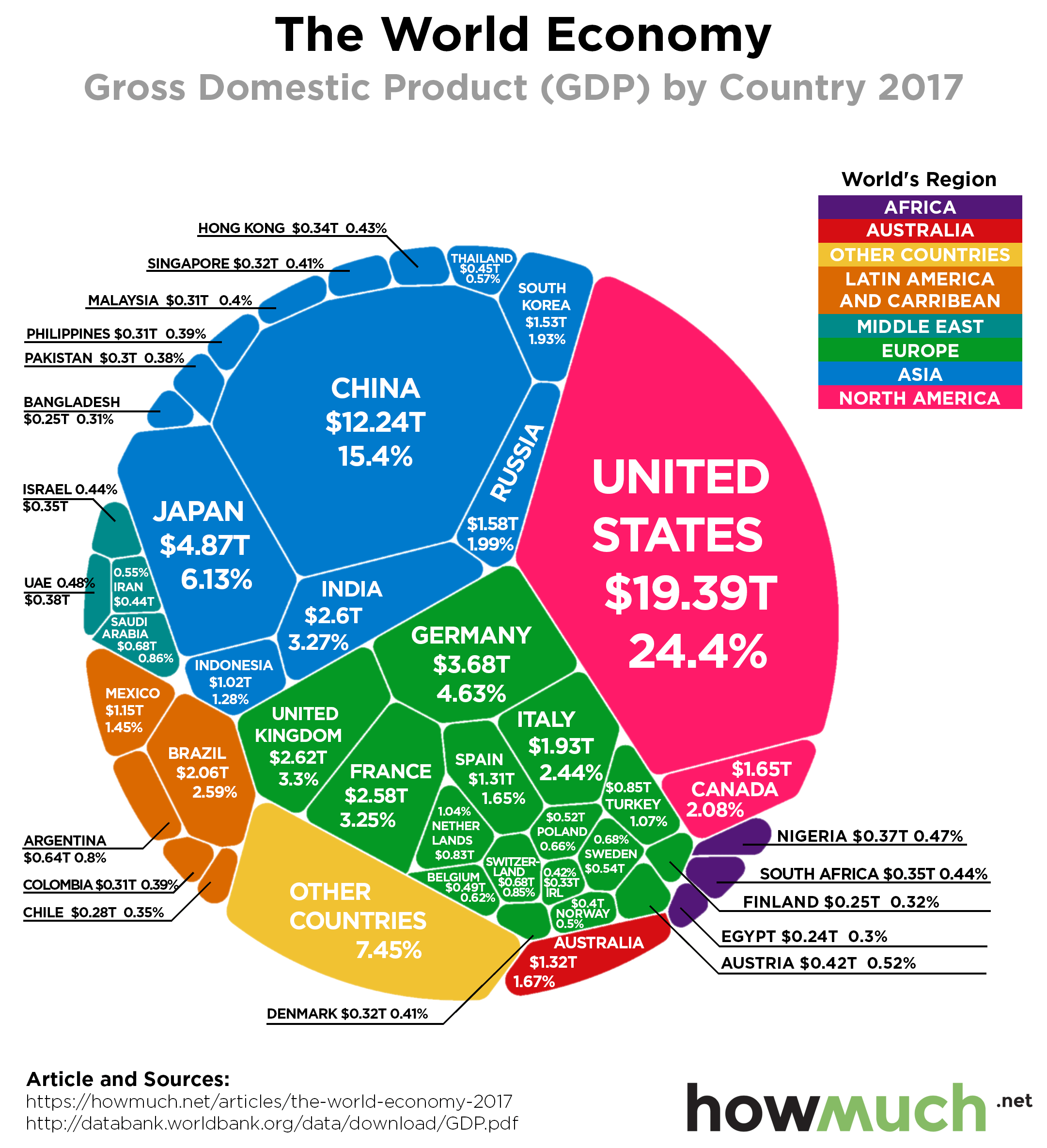
Today (January 2020) Bill Gates fortune amounts to around $108,5 billion around 0.5% of the GDP of the United States. By the time I complete this post, $1436400 amount will be added to his net worth and is predicted to hit the trillion mark by the age of 86.
If you are one of the so-called “rich” and you were lucky enough to make a million dollars per year, it would take you almost 80,000 YEARS to catch up.
We share the Earth with an estimated 1 quadrillion ants. Insects outweigh us by a factor of 17.
For every human, there are about one million ants and the total weight termites are more than the weight of all the humans in the world. They alone make up 10% of all animal biomass and 95% of soil and insect biomass in tropical regions.
Bacteria were one of the first life forms to appear on Earth, about 3.8 billion years ago, and they will most likely survive long after humans are gone.
The number of bacteria on our planet is estimated to be five million trillion trillion – that’s a five with 30 zeroes after it.
All the bacteria on Earth combined are about 1,166 times more massive than all the humans. For every human walking over the face of the planet.
Bacteria are the huddled masses of the microbial world, performing tasks that include everything from causing diseases to fixing nitrogen in the soil.
The number of bacteria makes the globe’s human population look downright puny.
Because the number of bacteria is so large, events that would occur once in 10 billion years in the laboratory would occur every second somewhere on the Earth.
We may have been underestimating our own humanness for the past several decades when it comes to Bacteria. The average human has over 100 trillion microbes in and on their body microbial cells outnumber human cells in your body by a ratio of around 10:1.
Our modus operandi was to kill them, rather than synchronize with them.
Bills and coins are the best way to transfer bacteria between people worldwide;
The debate over the microbiome will rage on, as the fear of the invisible and little understood will drive the masses in the short-term.
It is a fact that bacteria live in a whole series of worlds which stretch our imagination, be it the clouds in the sky, an Antarctic ice flow, a 100 degree C hot sulphur spring, 10 km down at the bottom of the sea, 1500 m below the surface of the earth in solid rock, in a rotting peach, in the roots of plants, the stomachs of animals and even your mouth, bacteria can be found there.
The vast majority of life is land-based and a large chunk – an eighth – is bacteria buried deep below the surface but bacteria also now found circling the Earth in the most upper layers of our atmosphere.
Recent findings on animal-bacteria interactions will likely require biologists to significantly alter their view of the fundamental nature of the entire biosphere.
“And that’s the way it is.”
My preference would be to avoid mentioning any ratio at all – you don’t need to it convey the importance of the microbiome.
Some 70 per cent of the global consumption of the drugs are used in animal and fish farming and to spray on crops.
Antibiotics in the environment do not do any good, they only contribute to risks which we are now witnessing with the Coronavirus. A rapidly spreading virus that is establishing itself across the world through international travel, trade and tourism.
We are now living in a bacterial world, and it’s impacting us more than
previously thought. No matter what process you think you are studying, you
must look for and consider a major role for bacteria.
The World Bank has estimated that drug-resistant infections could cost the world economy $1 trillion every year after 2030.
By 2050 costing the world around $100 trillion in lost output: more than the size of the current world economy, and roughly equivalent to the world losing the output of the UK economy every year, for 35 years not to mention killing an extra 10 million people across the world every year.
Back to earth.
This is what a quadrillion looks like written out: 1,000,000,000,000,000.
If it survives us it has 6.5 billion years before the sun (which is 92,960,000 miles away) about 109 times larger than the earth. That means you could fit around 1.3 million earth’s inside the sun which is actually considered a dwarf star — By contrast, UY Scuti is the largest star we humans are aware of; it is a hypergiant around 1.7 billion miles in diameter. UY Scuti is around 5 billion times larger than our sun.
Its no wonder we a pixel.
The diameter of our solar system is around 5,580,000,000,000 miles — that is, about five and a half trillion miles across. Expanding outward from here, we have to start talking about things in terms of light-years, as the scale is just too massive to discuss in miles. (One light-year is about 6 trillion miles (9 trillion km).
Our Milky Way Galaxy is about 100,000 light-years in diameter of which since the dawn of man we have observed the equivalent of the top of rubber on a pencil.
This is about one 24-millionth of the entire night sky visible from earth.
The diameter of the observable universe is estimated at about 28 billion parsecs (93 billion light-years).
Ok, the numbers are pretty hard to comprehend even when you know what each unit represents. To even think of how long 10 trillion kilometres might be, let alone 93 billion times that distance, can cause your brain to hurt.
Earth, in turn, is nothing more than a molecule in the incomprehensibly vast cosmic ocean.
Without a global jurisdiction, no government can enforce any kind of coherent rights doctrine, particularly in the face of borderless problems like terrorism or environmental crisis.
It is up to the people of earth to dissolve the strains between each-other in an equitable, harmonious way.
The planet you were born on is dying.
We’re on a timeline that leaves little space for politicians to gamble. This is a world that requires nations, corporations and individuals to think not in terms of quarterly reports or midterm elections, but in decades.
For transformative change to be possible, we sometimes need marginalized peoples to speak out, in a loud voice, against the status quo.
The guardians for future generations, representing the children of 2050, can be that voice that says we are spending too much on conflict and too little on peace.
Thus as Irving John Good said, “The survival of man depends on the early construction of an ultra-intelligent machine.”
“The first ultra-intelligent machine is the last invention that man need ever make, provided that the machine is docile enough to tell us how to keep it under control.”
If I took a personal guess the way we are going there will be no need for such an intelligent machine as there will be nothing to be intelligent with.
ALL HUMAN COMMENTS APPRECIATED. ALL LIKE CLICKS AND ABUSE CHUCKED IN THE BIN.







 bobdillon33blog