≈ Comments Off on THE BEADY EYE SAYS. DEMOCRACY WITH ALGORITHMIC SOCIAL MEDIA INFORMATION FLOW IS GOING TO BE WHATEVER WE ARE GOING TO CALL IT. BUT NOT DEMOCRACY AS WE KNOW IT.
Within the technology world Information flows differently than in the real world.
The real world is subjective to outside forces that shape information.
The tech world which is being sculpted more and more by algorithms is moving information into a world of services to be payed for.
Filtered by algorithms to fit individual tastes and preferences, arriving at exponential speed it is no longer possible to determine whether it’s true or false.
This is why the like clicks with minimal thought process behind them, will become little more than rubber algorithms stamping with preordained results.
Up to now in a democracy any intervention in people’s lives required an explanation.
This explanation was achieved by non tampering, transparent accountability elections, allowing Joe soap to challenge and make their own choices.
This is why we have elections, freedom of speech and press and separation of government from judiciary.
This is why we must insure that all artificial intelligence conforms to human values and the sustainability of the planet we live on.
This is why as no human in its present organic form is going to leave this planet of ours there is no reason, no room or other motivation for a democracy worth thinking about to tackle the inequalities.
In the meantime let’s continue killing each other’s in the name of Nexus. We have a whole industry dedicated to hunting and fishing.
Why not an individual industry for dummy us all down so we can all afford to consume AL – Khwarizmi the father of Algebra and Algorithm.
Who gives a F… we all love a decoy.
Preparation and practice are the key to non-toxic ammo in meeting Nexus
The one thing about speaking the truth is you don’t have to remember what you have said.
The problem with information is do we with technology decentralised information is the opposite happing with algorithms data collection.
Will wars be declared by Algorithms?
Where does the right to life end?
Answer me that.
All human comments appreciated. All like clicks chuck in the bin.
Contact: bobdillon33@gmail.com
The right to life is the belief that a human(or other animal) has the right to live and, in particular, should not be killed by another entity. The concept of a right to life arises in debates on issues including: capital punishment, with some people seeing it as immoral; abortion, with some considering the killing of a human embryoor fetus immoral; euthanasia, in which the decision to end one’s life outside of natural means is seen as incorrect; meat production and consumption, in which the breeding and killing of animals for their meat is seen by some people as an infringement on their rights; and in killings by law enforcement, which are seen by some as an infringement on those persons’ right to live. However, individuals may disagree in which of these areas the principle of a right to life might.
As an independent institution the life mission of a parliamentarian within in government is to stay relevant within a parliament.
This is not the problem it is the first issue to solving the problems with democracy.
If we don’t wake up to what is happening with elections we will get nothing from democratic elected government.
It is time we all stand up together for equality, accountability, and transparency not wealth, and definitely not Democracy by self learning self correcting algorithms that have and are penetrated all of democracies institutions.
If we don’t take actions now it’s going to be a nightmare with parasitic profits seeking algorithms feeding on the bodies of our nations.
For an Algorithm to operate efficiently it must update its data /input constantly and have everything specify for its object.
If not it will make out of date decisions. Even if it is self learning or uses reinforcing learning, it will end up as a narrow Algorithm if it doesn’t have up to date data.
This is why it won’t be long before algorithms will be writing their own syntactic data and code, creating other algorithms, with tailored recommendations and content curation.
This is perhaps the main difference between democratic authoritarianism algorithms and self correcting elections.
( Both are run by wealth, rather than any real choice that is free of contamination by either data or money)
This is why governments are incapable of achieve anything the electorate wants – ie reducing inequalities -climate change- wars – cheap housing etc,
Why?
Because only 2% of the population is represented in elections, which are decided and rigged by wealth, not wisdom, selecting the candidates for elections in the first place in safe seats constitutional voting.
Our problem in solving problems is that our only guidance is the past.
——————
The past shows that with each and every invention of technology inequality increases.
Except perhaps the smartphone which changed a great deal of what was wrong within the free marketplace- ie curbing corruption.
Unfortunately all of these profits seeking algorithms are and will continue to widen the inequality gaps.
In fact inequality is at its greatest since World War Two because the free market is no longer free but governable by algorithms trading.
Everything you see and do on the Web is a product of Algorithms exploiting data that we feed them for free.
Perpetuating social bias, optimising everything, putting control into the hands of a few, to predict market movements, portfolios performance, credit risk etc.
AI is naught but algorithms but as to how or whom should own/ control these algorithms is very much a pending question.
If that data is slightly changed the results could be small or catastrophic.
Luckily to days AI ( even with all the hype surrounded its future ) can’t actually think for itself.
We don’t have and are very unlikely to have in the short term to have anything like that.
However as with most things that threaten us we are in a caught up situation.
It is too late to close the gate on AI as the world would not be able to function. This of course is an absolute lie.
We must preserve our innate cognitive abilities by critically assess the role of technology in our lives.
What would happen if the technology world collapsed?
Would we be back to square one?
Yes.
Our vote had no relationship with the candidates standing for election they are selected by money donors.
Yes– the roads would turn into chaotic parking lots .
Yes – our hospital without AI powered tools, would collapse.
Yes – the economy would tank.
Yes – If it existed there would be long queues at the gates of heaven.
Yes – there would be a world war.
Yes – no one would remember the internet.
Yes – religiousindoctrination would increase.
Yes – we would release that we were too reliant on outsourcing our brains to machines.
Yes- Not even would AI be relevant.
All human comments appreciated. All like clicks and abuse chucked in the bin.
This is and has always been a fantasy, even with Artificial Intelligence it will remain so.
Why?
Because truth is always believed by fallible humans and Ai no matter what form it takes will never be sentient to become infallible. The world will be gone apeshit long before that will happen.
However caution had been throw to the wind when it comes to AI. All that is now need is infinite more computing power and infinite more data and hold and below we have a self learning Algorithm that will be Pope.
This is where we become unhinged.
As we are all taking the AI advancements for granted why not take this fantastic fantasise at face value.
Because when a rapid downfall in the use of Artificial Intelligence starts to bit the profit of profit seeking algorithms, governments and us will begin to see the environmental disaster ( that predictive algorithms economic manipulation is doing for short term gain)
Nothing grows exponentially for ever.
The planet cannot be paved with datacenter.
Is the Pope a Catholic.
It’s now or never we take back control and stuff all unsustainable Ai back in its box.
Before we are ruled by megalomaniacs that are unaccountable to any democratic transparency other than wealth.
All human comments appreciate. All like clicks and abuse chucked in the bin.
2024, Global climate trends are cause for both deep alarm, and our continuing denial of the absurdity of the verbal discussions on the subject, a task which is now monumental.
“We have built a civilization based on a world that doesn’t exist anymore.”
“We are conducting an unprecedented experiment with our planet,”
We have now unmoored ourselves from our past, as if we have transplanted ourselves onto another planet.
Without immediate action, we are at grave risk of crossing irreversible tipping points in the Earth’s climate system. +2.0C+3.6F with our current policies is the reality by around 2050s.
The world has already heated up by around 1.2C, on average, since the preindustrial era, pushing humanity beyond almost all historical boundaries,
AND WE STILL CANNOT EXCEPT THE INEVITABLE.
The enormous, unprecedented pain and turmoil caused by the climate crisis is often discussed alongside what can seem like surprisingly small temperature increases – 1.5C or 2C.
“The difference between 1.5C and 2C is a death sentence”. No amount of global warming can be considered safe and people are already dying from climate change.
A severe heatwave historically expected once a decade will happen every other year at 2C.
The fingerprint of climate change on recent extreme weather is quite clear, In fact, extraordinary, with the oceans alone absorbing the heat equivalent of five Hiroshima atomic bombs dropping into the water every second. The oceans have heated up at a rate not seen in at least 11,000 years.
——————
These temperature thresholds will again be the focus of upcoming UN climate talks and Climate Summits
Thirty years of climate summits: Where have they got us?
All have proved that its nearly impossible to achieve any coordination, with the whole process becoming too business-friendly, to the detriment of other perspectives and voices.
It is important to look at the bigger picture.
By most standards the world’s governments are currently failing to avert a grim fate.
To COP28 UN Climate Change Conference in Dubai, the United Arab Emirates, was the biggest of its kind. Some 85,000 participants, including more than 150 Heads of State and Government, were among the representatives of national delegations, civil society, business, Indigenous Peoples, youth, philanthropy, and international organizations in attendance at the Conference from 30 November to 13 December 2023.
Given these problems and repeated failures, why continue with the COP meetings?
Because we are arriving at tipping points that represent thresholds which, when crossed, will trigger abrupt and self-perpetuating changes to the world’s climate and oceans.
They are threats of a magnitude never before faced by humanity – one-way doors we do not want to go through.
Governments are more concerned about Energy and food price rises mean that governments face a cost of living and energy security crisis, with some threatening to respond by returning to fossil fuels, including coal.
The climate disaster is here. There is no huge chasm after a 1.49C rise.
Superimposed on top of these long-term warming trends overshadow the real-world hazards they amplify: Heat waves, floods, droughts, wars and mass migration.
Meaning that people and ecosystems are dying, that people are losing their livelihoods, that agricultural land will be unusable.
For climate scientists, this is the “I told you so” moment they never wanted.
So what we’re seeing now is only a foretaste of what could happen if efforts to reduce emissions aren’t successful.
I hope that maybe more people will realize that this is really happening and put pressure on their representative to put actions on the top of their agendas. Our individual choices can challenge the status quo, and force things to change.
Like cleaning up the Advertising Industry to sustainability rather then consumerism across all their out lets – Main Stream TV, Socially Media, Bill Boards and the like.
To cut out the hypocrisy in Trade deals that are not Green, along with home grown policies to grow the economy above genuine climate demanding Projects. To push for a consumer chapter to be included in future deals which reflects the issues that are most important to consumers.
So what’s stopping us from getting there?
The rules governing global trade policy mean that powerful countries and corporations escape accountability.
One of the biggest examples of hypocrisy is the EU’s common agricultural policy – or CAP – established over 50 years ago and currently under reform. This policy, thanks also to the support of highly protective tariffs and agro-chemical companies, has allowed destructive intensive practices to become the default way European food is produced.
Why are French farmers protesting? Their slogan reads “It doesn’t make sense” ~Shat Upon by Regulations, on environmental protection.
They are not being paid enough TO FUCK IT UP.
Perhaps our slogan should be: # ITSALLBOLLOCKS.
We can challenge the myth that we have to choose between protectionism versus free trade, and end the myth that free trade brings any meaningful benefit to the average consumer.
All human comments appreciated. All like clicks and abuse chucked in the bin.
Man is said to have evolved from monkeys and apes …but we still have monkeys and apes.
We live in a world of verball diarrhoea, another words every Joe saop has an opinion.
However the world today is being expressed as a single unified, interconnected and interdependent global system, and since we wish to remain as our individualistic egoistic selves while the world becomes more and more connected, we experience such tightening connection as suffering.
Characterized by intricate interconnections, rapid advancements in technology, globalization, diverse geopolitical challenges, and a multitude of social, economic, and environmental issues.
Since everyone understands the world from his/her own perspective which may be different from others due to religions beliefs we cannot understand what wholeness is.
Our world is beautiful but screwed.
71% water, average 93,000,000 miles away from a white star, around which it completes an elliptical orbit every 365.25 days with a dominant species are Homo Sapiens, which can live anywhere. It has one large satellite measuring 2,159 miles in diameter which is some 239,000 miles distant and is tidally locked.
—————–
With it’s current greedy drive for more – more this, more that, more me, me, me. causing greater and greater stress to the planet, earth is experiencing its hottest year on record and massive floods, fires and other climate-related disasters have taken root.
And lack of action on climate change threatens billions of lives and livelihoods.
Most of us know this but we don’t know when something amazing or horrible will happen next and it could be the greatest or worst thing for this world.
Like the opening of a massive technological gap between the global rich and the poor.
As our World becomes more disaster prone due to the extreme changes to our Climate, these vestibules of self-interest will be dumped for hardline practical leaders who will do whatever is necessary for the survival of mankind.
In the mean time all we do is fight over utterly meaningless bullshit.
———————————–
We carry affordable supercomputers in our pockets, and that is even more powerful than it sounds.
It has created multiple civilizations, none of which has been able to achieve a satisfactory minimum level of quality of life; the poorest people still live in inhumane conditions; the very few richest people own more than the all of the rest put together.
Most markets are moving online, moving from the physical world into the digital app world, until they’ll be purged there too by oligarchies; which will be the next medium?
Right wing politics and populism continue to gain ground through advocating individual freedom to prosper, while left wing politics is failing to establish and administer a necessary minimum of social equality and governmental regulation, which continues to propagate financial deregulation aka greed is good which in turn prevents a normal fluctuation of economy turning it into steep growth and catastrophic chain reaction crashes.
The extreme conservatism of certain societies founded on medieval concepts and flawed morals coupled with perpetual poverty and social stagnation certainly help maintaining inequality in the world.
Alternatively, we may destroy ourselves in the midst of our seemingly endless growth, and nature will resume its course over the centuries and millenia to come.
How can anyone with an active mind, who is aware of all this, neatly summarize his or her POV “of the world today” with A SINGLE WORD???????
Pretty nonsensical, if you take a couple of minutes to think about it.
The chances of wholeness happening now are roughly zero.
Why?
Because politicians who were starved of intelligent thinking and ARE BEING ELECTED INTO OFFICE BY DIGITLIZED CITIZENS RUN BY PROFIT SEEKING ALGORITHMS.
Recent advances in artificial intelligence raise a variety of questions about how to control a technology that could improve or threaten civilization in countless ways.
The Doomsday Clock that has been ticking for 77 years. The clock isn’t designed to definitively measure existential threats, but rather to spark conversations about difficult scientific topics such as climate change. Trends continue to point ominously towards global catastrophe.
Due to ongoing concerns about the war in Ukraine, the Israel-Gaza conflict, the potential of a nuclear arms race, and the climate crisis, its almost impossible to get people’s attention about existential threats and the required action.
We can reduce them but doing so is not easy, nor has it ever been. It requires serious work and global engagement at all levels of society.
The war in Ukraine poses an ever-present risk of nuclear escalation. And the October 7 attack in Israel and war in Gaza provides further illustration of the horrors of modern war, even without nuclear escalation.
A more realistic endpoint to both wars would be a military ceasefire, in which increasingly exhausted combatants see frontline positions harden around a line of control. That will become clearer by the summer or autumn, and will at some point prompt a question for its western backers: how long should the west continue supplying military aid at current levels to Ukraine/Israel
This requires a collective even harder stance.
A political earthquake. That’s the metaphor that stuck.
——————–
What if science itself is in some way culpable for all this?
We don’t know the real answer yet, and we probably will never know, but this is the moment to anticipate what such a finding might ultimately mean. It could obliterate the faith of millions.
This may be the great scientific meta-experiment of the 21st century. That the common people of the world have been forced into a real-life lab experiment, at tremendous cost — there is a moral earthquake on the way.
All of these disasters brought to you by the total, self-assured unanimity of the highly educated people who are supposed to know what they’re doing, plus the total complacency of the highly educated people who are supposed to be supervising them.
A perfect storm, as institutions crumpled and collapsed. with new fault lines targeting up the most powerful country on the planet.
Don’t disengage as digital technology is disrupting international politics in myriad ways.
To start, it is bringing new dimensions to the authoritarian playbook, enabling governments to more easily manipulate information consumed by citizens, to monitor dissent and track political opponents, and to censor communications.
Democracies, meanwhile, are struggling to strike the right balance between rewarding economic innovation and reaping the financial benefits of Big Tech, while protecting user privacy, guarding against surveillance misuses, and countering disinformation and hate speech.
Can democracies strike an appropriate balance between safeguarding their societies from dangerously polarizing online rhetoric while maintaining commitments to protecting free expression?
Can civic activists, independent journalists, and human rights advocates continue to find innovative ways to push back against government repression using new tools, tactics, and technologies?
The answers to these questions are not foretold—all of them represent major areas of contestation.
But one thing is clear. There is an expanding set of countries relying on facial recognition technology, big data analytics, predictive policing techniques, and safe city systems to enhance their security capabilities. There is now a close relationship between authoritarian regimes, constraints on political freedoms, and corresponding government reliance on digital repression techniques.
What technological methods are Gulf states using to enact their political agendas?
What can civil society make of the growth of internet shutdowns and social media blockages around the world?
Government disdain for international human rights principles “is pushing resistance to the breaking point.”
Disinformation has become the tool of choice for many illiberal regimes. From extreme political movements, particularly far-right groups, which harness social media to propagate falsehoods, spread conspiracy theories, and foment polarization and identity politics.
Flooding social media channels with competing or distracting information that overwhelms legitimate information sources, and deliberately post offensive content online to provoke or disrupt conversations
.A bigger question is how much governments should hold platforms responsible for facilitating the spread of bad information .
It is insufficient to blame Facebook or Twitter’s poor leadership for the much more complicated proliferation of politically motivated falsehoods.
These varying global perspectives shed light on emerging areas of contestation and highlight the complexities, urgency, and dangers involved in the advance of digital technologies and their effects on politics globally.
One has only to look at technology usage in the current wars in order to relise that Alogrithms are ruling not just how lives or dies on the battle fields but the direction we all going in our everyday lives.
All human comments appriciated. All like clicks and abuse chucked in the bin.
Like me today, many of us are being constantly bombarded by facts, figures and narratives that tell us our days on earth are numbered, that it’s our fault and that it’s also largely out of our control.
Our problem is that capitalism is designed to squeeze every last cent out of this planet until there is nothing left. We can either fool ourselves about that until it kills us, or we can change it.
Like many horror stories, this one features a main character full of futile determination to maintain a sense of normalcy even as the ominous signs of doom become ever more impossible to ignore.
We can chuckle knowing that the monster is going to come for our designated protectors.
We stop chuckling knowing that it’s coming for all of us next.
Homo sapiens rose above the lesser animals thanks to our ability to wield logic and reason, yet we have somehow gotten ourselves to a place where the knowledge of what is driving all these wildfires and floods is not enough to enable us to do anything meaningful to stop it.
As overwhelming and omnipresent as the climate crisis is, it is not the core issue.
The core issue is capitalism.
Capitalism’s unfettered pursuit of economic growth is what caused climate change, and capitalism’s inability to reckon with externalities – the economic term for a cost that falls onto third parties – is what is preventing us from solving climate change.
It is easy to imagine that a real live existential threat to our way of life would prompt any society to assume war footing and marshal everything it has to fight for survival. Unfortunately, this response only takes hold in actual war situations, where the threat is “other people that we can shoot and kill in glorious fashion”.
When the threat comes not from enemy people, but from our own nature, we find it much harder to rise to the occasion.
Where is the glory in recognizing the folly of our own greed and profligacy? Leaders are not elected on such things. We want leaders who will give us more, leading us ever onwards, upwards and into the grave.
The G20 is a perfect model of our collective failure to build institutions capable of coping with deep, long-term, existential problems that cannot be solved by building more weapons.
On the one hand, the head of the United Nations says that there is no way for the world to meet its 1.5C warming goal without the leadership of the G20 that claims to be bailing out humanity’s sinking ship with one hand while contributing billons of tons of carbon to the atmosphere by subsidising in the past five years $3.3tn to fossil fuel production and consumption.
—————–
It is not good to be too pessimistic on climate change, because we must maintain the belief that we can win this battle if we are to have any hope at all. That said, it sure does seem like we’re screwed.
We’re being led to believe that the society we’ve built has to ‘collapse’ if we’re to save the world.
We’re presented with a binary choice — save the planet and live a miserable existence, or accept that some populations (plant, animal, human) will have to act as collateral damage to ensure a quality of life that vaguely resembles our current one.
This whole thing of it being ‘a trade-off’ or ‘tough choices’ is based on our current lifestyle being awesome and the future being a kind of worthy ascetic hardship.
The message is that all the things you rely on to keep us safe are no longer part of a viable future fit for everyone. The sense is that when these things disappear, life will be unbearable. That we’re going to turn on each other
.It’s almost like our lives are being engineered this way.
Cuts to benefits, dismantling of free healthcare, with Government openly allowing the majority of wealth to be passed on to those who are already most wealthy.
—————-
We haven’t got a hope of addressing complex problems or creating a future fit for everyone.
Given the challenge we’re facing — one that’s complex, systemic and long-term, if we carry on acting from this place we’re going to really screw it up.
Climate change and the destruction of our ecosystems seem to be the result of persistent, rampant over-consumption. This is because our modern society is a consumer society.
It’s based on one simple idea: that consuming will meet your needs.
Others things we think are harmless serve to numb us: Netflix boxsets, smartphones, profit seeking algorithms, masquerade as the answer, but they are really just part of the same system — insurance policies, private healthcare and the multi-billion dollar ‘wellness’ industry.
New industries pop up to give us what we want without the guilt — sustainably sourced, vegan, fair-trade — but even aside from the minefield that is working out whether it’s really ‘sustainable’, it’s still built on the same system. A system built on a disconnection from your needs, that can never leave you satisfied with who you are and the world around you.
None of these things can or will ever meet our unmet needs for love, connection or trust in the world, so we continue consuming, throwing more things into the bottomless pit inside.
We seem to be more unhappy than ever before. More physically and mentally ill. More divided than ever. More stressed about our impact on the world.
Social media is a form of disconnection from ourselves that leads to the disconnection from each other that in turn leads to disconnection from our environment — which is the only thing that has enabled us to create the extractive, destructive system we have in place.
Given all this, ‘conscious consumerism’ and ‘green new deals’ will never offer the solution we need, if they are built on the fundamental idea of citizen is as consumer, working to earn, earning to spend, spending to consume etc.
I think the fundamental answer lies instead in rebuilding our lives around connection.
Recognise that if you would love other people to live in a certain way or see the world from a different perspective, this is only going to happen if others sense you’re not judging them to be wrong.
People are slowly but steadily finding that their real needs are met more consistently in self-awareness and relationship than they are in quick fix consumption.
We can’t all join a five-day protest and we’re not all ready to sit in a circle and talk about our feelings but that’s not what’s being asked of us.
Indeed, climate change itself is the ultimate negative externality: fossil-fuel companies and assorted polluting corporations and their investors get all the benefits, and the rest of the world pays the price.
Now the entire globe finds itself trapped in the gruesome logic of capitalism, where it is perfectly rational for the rich to continue doing something that is destroying the earth, as long as the profits they reap will allow them to insulate themselves from the consequences.
The path we are on, still, is not one that leads to a happy ending.
Rather, it is one that leads to the last billionaire standing on dry land blasting off in his private rocket as the rest of us drown in rising seas.
We talk about tipping points when it comes to the climate, but the real tipping point has long passed.
Its called inequality.
A strict definition of capitalism is a society where capital is privately owned, and workers are paid wages by private firms. Essentially it is a society with minimal government intervention and resources are distributed according to the outcome of free markets.
A looser definition of capitalism is a situation where business is left to the free market, but the government intervene in many areas of the economy like business regulation, health care and education.
In practice, using this definition of capitalism – most modern economies are essentially capitalist because it is the free market that dominates in the production and distribution of scarce resources.
Therefore, you can say the potential of reward makes inequality an essential ingredient of capitalism.
Therefore, capitalists with access to private property can ‘exploit’ their monopoly power to make a much higher profit than other people in society. Therefore those who inherit capital can enjoy high income even without any effort.
To redress some of the inequalities of capitalist society.
Regulate monopoly power, provide free education, so everyone has access to education and equality of opportunity.
Capitalism is unconcerned about equity. It is argued that inequality is essential to encourage innovation and economic development.
Socialism is concerned with redistributing resources from the rich to the poor. This is to ensure everyone has both equal opportunities and in some forms of socialism – equal outcomes.
Aspects of Democratic socialism
Advocates nationalisation of key industries (often the natural monopolies, like electricity, water)
Prices set by the market mechanism, except public goods, such as health and education.
Provision of a welfare state to provide income redistribution
Support for trade unions in wage bargaining
Use of minimum wages and universal income to raise low-income wages
Progressive tax and provision of public services. For example, marginal income tax rates of 70%. Tax on wealth.
There is no reason thatDemocratic socialism can not operate in a Capital society that is disappearing into the world of Profit seeking algorithms.
For anyone still unsure that big, important things are now broken, several new titles paint a convincing portrait of grossly unsustainable inequality, corrupt political processes, and a looming crisis—much of it stemming from a financial system that for 40 years or so has prioritized short-term profit over all else and systematically removed any checks on its own worst impulses in pursuit of that goal.
The single most important step is re-empowering governments, to start putting out the inferno.
All Human comments appreciated. All like clicks and abuse chucked in the bin.
≈ Comments Off on THE BEADY EYE SAY’S WHEN IT COMES TO CLIMATE CHANGE WE HAVE ALREADY PASSED A TIPPING POINT.
( Four minute read)
Have we reached a tipping point, that moment from which a system irreversibly changes state?
I say yes.
Climate tipping points could lock in unstoppable changes to the planet, self-sustaining shifts in the climate system that would lock-in devastating changes, like sea-level rise, even if all emissions ended.
Inhabitants of New York on Wednesday are invited to stay at home and to use masks outdoors. More than 100 million Americans are now affected by air quality alerts due to wild fires in Canada.
In the mean time melting of the sea ice in the Arctic will inevitably lead to a warming of the region: a huge white space, the pack ice reflects light when the sun shines 24 hours a day in summer.
It lowers the temperature of the Arctic. The disappearance of the pack ice – icy water already present in the ocean – will not directly lead to a rise in the sea and the rise in global temperature caused by the melting of the sea ice risks in turn leading to extreme climatic events: heat waves, droughts, floods, etc.
Are we all screwed?
Yes.
Why?
Because every fraction of a degree makes tipping more likely, but we can’t be sure exactly when tipping becomes inevitable as one tipping point speeds up the next.
These signals can’t tell us exactly how close we are to tipping points, only that destabilisation is underway and a tipping point may be approaching.
These changes are just the beginning of worse to come.
The scale of recent changes across the climate system are unprecedented over many centuries to many thousands of years, and it is unequivocal that human influence has warmed the atmosphere, ocean and land.
The most we can be sure of is that every fraction of further warming will destabilise these tipping elements more and make the initiation of self-sustaining changes more likely.
“It’s a huge red flag, but there’s still time to save everything else.”
The temporary reduction in carbon emissions caused by global COVID-19 lockdowns did not slow the relentless advance of climate change.
To implement climate change goals as geopolitical uncertainties threaten to undermine their efforts,
The world is yet to get to a “positive tipping point” in the fight against climate change. It is now very likely that the 5-year average temperature for 2021–2025 will pass the 1.5 °C threshold.
Even if emissions are reduced to limit warming to well below 2 °C, the global average sea level would likely rise by 0.3–0.6 m by 2100 and could rise 0.3–3.1 m by 2300.
Three-quarters of people in the world’s wealthiest nations believe humanity is pushing the planet towards a dangerous tipping point and support a shift of priorities away from economic profit.
People know we are taking colossal risks, they want to do more and they want their governments to do more. We and they must move faster to implement more ambitious policies to protect and regenerate our global commons.
People in power seem to feel it is OK to fell old trees or destroy natural ecosystems for buildings or roads, or to dig up oil, so long as they then plant new trees. But this approach is not working.
Overall, 74% of people agreed that countries should move beyond focussing on gross domestic product and profit, and instead focus more on the health and wellbeing of humans and nature.
Its now or never for global cooperation to tackle shared challenges.
There is now a need for major economic and social transformation.
Currently the world is heading toward ~2 to 3°C of global warming; at best, if all net-zero pledges and nationally determined contributions are implemented it could reach just below 2°C.
One barrier appears to be media coverage. It is not helped the understanding of the issues, or what is at stake.
You don’t have to be told that it will not take much to tip us all into killing each other.
All human comments appreciated. All like clicks and abuse chucked in the bin.
≈ Comments Off on THE BEADY EYE SAY’S: IT’S FAR TO LATE TO CONTROL AI.
( Six minute read)
Why?
Because the change is already taking place.
Because, There are now more cell phones in the world than people. There were less than 7% of the world on online in 2000, today over half the global population has access to the internet.
Because, technology has already radically transformed our societies and our daily lives, from smartphones to social media and healthcare. Technology touches nearly everything we do.
Because, your voice, your image, your race, your shopping habits, your health, your movement’s, your viewing habits, your voting, your financial standing, your criminal record, your interests, your decision making, down to what you are eating, not forgetting your sex life is and has being harvest for free.
All can be and are being faked.
Because, virtual interactions offers enticing financial opportunities for big businesses and digitalized Governments.
——-
Excessive use of technology can do more harm than good, and we should bear this in mind before we rush into digitizing our lives.
When all areas of human activity get rapidly digitized, it’s easy to become desensitized to the importance of innovations and advancements for the overall progress of society. Though it may be tough to predict which advancements technology would bring next, some innovations are already changing our beliefs about the world around us.
The coming generations will be living in a mixture of reality and the metaverse. Using headsets to create a 3D avatar – a representation of themselves – to enter a virtual world connecting all sorts of digital environments. Perhaps when they go online shopping, they will be able too try on digital clothes first, and then order them to arrive in the real world.
A virtual economy of inequality. Nowhere does the intersection of technology, enterprises and individuals hold greater opportunity than in the metaverse.
If it happens at all – will be fought among tech giants for the next decade, or maybe even longer.
———-
The Metaverse doesn’t exist – at least not yet, but there no way of predicting how people will react to it, or how it will be used.
( Everything transformed into line of code, augmenting reality by superimposing a computer-generated image on a user’s view of the real world. You have an experience while wearing another person’s body and you get to walk a mile in that person’s shoes.)
The next generation of the internet has the power to reshape the way that businesses and consumers engage, transact, socialize, work and learn together exploring the world on their own terms.
As of today, there isn’t anything that could legitimately be identified as a metaverse. The metaverse is essentially a massive, interconnected network of virtual spaces,
A better question might be:
What could become the metaverse?
Something that people would have considered magic just a few decades ago is now gaining popularity in business, gaming, and team building.
The combination of augmented, virtual and mixed reality – will play an important role.
The distinction between being offline and online will be much harder to delineate. So we either end up in a situation where it’s complete chaos and everyone’s allowed to do everything and you know, there’s racism, sexism, abuse and all that kind of stuff, or there’s incredibly tight moderation and no one’s allowed to do anything.
Wearable screens and gesture-based computing, other recent innovations, are predicted to soon substitute the usual PC and phone screens.
——-
Robots, another buzzword in today’s business world, have already replaced humans in some workplaces — robotic arms work at assembly or packing lines. Flying cars will soon address the issue of limited ground space and long traffic jams.
Clearly, technology by itself is neither good nor bad. It is only the way and extent to which we use it that matters.
It is indisputable that thanks to technology, we get a chance to live a life our predecessors could not even dream about.
But do all tech advancements bring sole good to our lives?
Or, maybe, the impact of tech innovations is quite ambiguous.
We are all at the mercy of machine learning algorithms, that are non transparent, non accountable, and non regulated.
So we have an open letter from those on High in the Tec world, advocating that the brakes should be applied to the creation of new tech that generates falsehood’s. You dont have to be a Tech genius to know that this is not going to happen.
My advice is.
To protect oneself.
Every person should have a secret verification word in order to authenticate the caller and a symbol to be used in all texts and emails, that if not present in any communication received or sent, marks it as False.
——–
All of which begs the question: just why is the 21st century so dystopian?
A few years ago, you might have thought: this is just a phase. It’ll pass. But it’s not. If anything, it’s getting worse, and it feels like it’s here to stay.
When I say “it”, or “dystopia,” you might wonder exactly, precisely what I mean. What I mean is very simple though. How many crises do we face? More than I can easily count. Let’s try to list them all, though we’ll run out of sanity and room before we finish, for sure. Finances? Total crisis, incomes falling around the world, debt levels soaring. Infrastructure? Mega-crisis, unless you think the infrastructure we have survives this century, let alone this decade. Social systems? Everywhere from France to Britain to America — crisis. People’s…minds? Crisis, especially in young people, depression and anxiety and suicide rates soaring. Then there are the big ones: climate change and mass extinction, not to mention politics , which has taken a notably…fascist…turn, again.
All of this is what scholars have begun to call The age of Polycrises. And in it, the better question isn’t: “what’s in crisis?
It’s: what isn’t?
Like I said, the list above is a mere brief beginning. Migration and refugees? Another one. Peace and democracy? Yup, in crisis.
How about upward mobility? Check. Faith and confidence in institutions? Super crisis. Take a look at any element of society or the world, and chances are, it’s in crisis. How about inequality? Shocking levels of crisis.
This is why the 21st century feels so dystopian.
It’s not really a “feeling,” though that’s the way it’s often made out to be by media. It’s an empirical reality. Scholars have begun to conceptualize the 21st century as a “Polycrisis” for a reason, which is that the dystopia is real.
So when media, bigwigs, wannabe intellectuals and so forth, make all this out to be exaggeration, hyperbole, imply that you are the fainting Victorian bride in the room, because, hey, Tucker!! Everything’s Great!!…they’re completely wrong. And that needs to be said. It’s a form of denialism at this point, because…
The next part is about cause and effect. We need, as a civilization and a world, to figure out what’s causing all this, so we can begin to undo it.But if all we do is deny it…then, my friends, our gooses are well and cooked. It’s fascism on a dying planet, in different bitter and poisonous flavours, maybe.
ITS NOW AGI. ( Artificial General Intelligence) Already it is transforming every walk of life.
AI is not a futuristic vision, but rather something that is here today and being integrated with and deployed into a variety of sectors.
There are numerous examples where AI already is making an impact on the world and augmenting human capabilities in significant ways. This includes fields such as finance, national security, health care, criminal justice, transportation, and smart cities, digital education, decision making, democracy’s.
Artificial intelligence algorithms are designed to make decisions, often using real-time data. They are unlike passive machines that are capable only of mechanical or predetermined responses. Using sensors, digital data, or remote inputs, they combine information from a variety of different sources, analyse the material instantly, and act on the insights derived from those data. With massive improvements in storage systems, processing speeds, and analytic techniques, they are capable of tremendous sophistication in analysis and decision making.
———-
These software systems “make decisions which normally require [a] human level of expertise” and help people anticipate problems or deal with issues as they come up. As such, they operate in an intentional, intelligent, and adaptive manner
AI generally is undertaken in conjunction with machine learning and data analytics. Machine learning takes data and looks for underlying trends. If it spots something that is relevant for a practical problem, software designers can take that knowledge and use it to analyse specific issues. All that is required are data that are sufficiently robust that algorithms can discern useful patterns. Data can come in the form of digital information, satellite imagery, visual information, text, or unstructured data.
AI systems have the ability to learn and adapt as they make decisions. In the transportation area, for example, semi-autonomous vehicles have tools that let drivers and vehicles know about upcoming congestion, potholes, highway construction, or other possible traffic impediments. Vehicles can take advantage of the experience of other vehicles on the road, without human involvement, and the entire corpus of their achieved “experience” is immediately and fully transferable to other similarly configured vehicles. Their advanced algorithms, sensors, and cameras incorporate experience in current operations, and use dashboards and visual displays to present information in real time so human drivers are able to make sense of ongoing traffic and vehicular conditions. And in the case of fully autonomous vehicles, advanced systems can completely control the car or truck, and make all the navigational decisions.
If we don’t want to end up as deglazed digital citizens here’s what should be done.
Regulate broad AI principles rather than specific algorithms,
Take bias complaints seriously so AI does not replicate historic injustice, unfairness, or discrimination in data or algorithms,
Maintain mechanisms for human oversight and control, and
Penalize malicious AI behaviour and promote cybersecurity.
All human comments appreciated. All like clicks and abuse chucked in the bin.
≈ Comments Off on THE BEADY EYE ASKS; WHEN ARE WE GOING TO WAKE UP TO THE POWER OF PERSONALIZE TECHNOLOGY THAT IS CREATING AN OPEN AIR (INVISABLE) PRISON – WHERE THE FUTURE IS NO LONGER THE FUTURE?
Technology is here to stay and we are supposedly on an unstoppable path towards driverless vehicles, fully automated internet-connected “smart homes”, and godlike artificial intelligence, when if fact we are on a path to the oblivion of our private lives.
As society is moving away from social interactions we take these technologies for granted and lose sight of reality.
So when are we going to wake up to the the pitfalls of personalized technologies that are targeting our lives, and what it is all ready doing, to what is left of what are supposed to be democratic societies.
It is difficult to manage the awesome power that is embedded in today’s technology however should we just sit back and let it exploited us with unregulated profit seeking algorithms and unauthorised data collection.
Its never to late to start asking questions.
We are so used to hearing that technological progress is smooth and inevitable these days, that it just seems like common sense.
However this idea may not be unrelated to the fact that the people who promote personalized technology are mainly the people with a large financial interest in the adoption of new technology -Facebook-Twitter-Google-Apple- LinkedIn – Instagram – Snapchat – Pinterest – Reddit and the rest.
Today, a plethora of personalization software tools, including AI and machine learning algorithms that are destroying individualism.
Just as our past futures need not be dead to us, our present future, with our reliance on devices, are becoming habitual, and if not already could be compulsory.
There’s is no app for that.
On a social level, the two dimensional world of the flat screen does not support the development of communication.
It’s just sad that people really don’t even have to use their brains anymore. If you don’t use it, you lose it.
It is estimated that as much as 93% of communication is non-verbal, leaving only 7% to the words themselves.
( Not much less alarming, and far closer, is the moment when “deep fakes” – computer-generated pictures and video – become indistinguishable from the real thing.) People who buy into this garbage is being taken for such a ride every month.
The vast majority of people were simply never given the choice to accept the trade-off between personalized technology for profit or technology for the common good. For example tracking due the Covid Pandemic against tracking for profits.
Not convinced?
It is now increasingly clear that many, if we had understood what was at risk, would have never agreed to tracking Apps.
For example, back in 2018, Amazon filed a patent that would allow its Echo device to detect when someone is ill from the change in their voice, nasal tones, and stuffed nose. When synced with Amazon’s website personalization engine, this is invaluable information to make personalized recommendations for cold medicine, recipes, etc.It allow them to achieve 1:1 personalization like never before.
Mobile devices themselves are truly turning people into mindless zombies and simpletons with personalized technology turning into the enemy. Yet most people are too blind to see it. 89% of businesses are investing in personalization.
I.E. Target the right person, at the right time, with the right offer. Analysing every aspect of the customer journey, companies can incorporate real-time dynamic pop-ups.
Here’s a fraction of the stats showing the power and importance of personalization:
80% of consumers are more likely to purchase from a brand that provides personalized experiences.
The idea of greater convergence and connectivity between personal electronics is correct. One only has to look at the smartphone that trigger customised adverts or programme your phone based on where you are. A company could tie itself to the Apple ecosystem, using an API to acquire data captured by each user’s Watch device into its own cloud-based system.
———————————-
As society pressures leaders for a more environmentally-friendly agenda the world of 2050 will be unimaginably different in many ways – other than climate change.
Carbon management solutions will be an integral part of emission reductions.
For that, real-time measurement, abatement, and offset integration will help ensure companies not only talk the talk but also walk the walk and transparently meet their net-zero targets. Setting a target is just the first step; the second is to understand and quantify the real emission baseline into measurable units. This can only be achieved with massive data collection. and analyzation
———————————–
The amount of information we share shared on social media networks is phenomenal.
A media company is now any company that helps pass information across the globe. Before mobile technology, you had to search through a dictionary to understand the meaning of a word. Now you can look words up in a dictionary app or quickly search the Internet. Communication has even evolved beyond mobile devices and personal computers. We can now send messages through tablets, voice assistants, smartwatches, and more. That’s right. Your fridge needs a Facebook account. It can e-mail you when your shopping time comes around with what all groceries you need to buy.
So one can see so clearly that society is not going to stop moving away from using technology as our primary communication methods, but here is a word of advice do not rely heavily on technology to live your lives, learn skills. Your life is yours to control. Because without them, you will struggle to move on as a society.
It is said that by 2050, “computational machines will have surpassed the processing power of all the living human brains on Earth.
It is said that a AI – a machine that can do everything a human can do – will arrive, they think it’s about 50/50 whether it will be before 2050.
By this time if we dont tackle climate change the cloud will have absorbed the thinking of the many dead brain on Earth.
If we assume that transcendentally brilliant artificial minds won’t be along to save or destroy us, and live according to that outlook, then what is the worst that could happen – we build a better world for nothing?
It is said that AGI will develop. If it does, every other prediction we could make is moot, and this story, and perhaps humanity as we know it, will be forgotten.
With the destruction of genuine human interaction you know, that technology will happen anyway, so I predict that we will see a lasting cooperation between the human race and the computational machines of the future.
However we are mow just beginning to see the down side to all of this technology.
Technology has changed how we entertain ourselves, meet each other, and consume all types of media.
We might be walking around with biometric healthcare data chips on your clothes, in a world in which mega scale injections of sulphur dioxide into the stratosphere turn the heavens a milky-white, and a whole generation never sees a clear blue sky, in order to reflect more of the sun’s rays and pause the greenhouse effect. Artificial intelligence brains simply cannot cope with change and unpredictable events such as the climate change will create, whole cities that are abandoned and populations relocated, to avoid the worst effects we can’t prevent. We all need to work together to survive.
Society used to be able to make a long-term plan, now it is driven by data with its chaotic effect on our lives shows no sign of abating, it is at least predictably unpredictable.
We need a cultural change in values, to enable more deliberate decision-making.
Future technology is sure to transform our lives in unbelievable ways, but how among us wants to live a life based on private data collected – by the fridge – the smart TV – your clothes – your mobile devices -whether you looked left or right – how many shits you had a day- face recognition – what emotions you had at looking at an emoji- what your are eating, reading, saying- what twitters you like or don’t,- where you were, where you going – all analysed by an invisible algorithm that has no oversight, or conscious.
Unfortunately, there’s not much we can do with this information and data except hope that people come to realize it needs to be regulated.
The changes in the world over the next 30 years, wont be down to technology nor will they be online, thanks to climate change they will metalize mostly through low-cost smartphones receiving increasingly ubiquitous cellular connections as the world fights for resources that are necessary for life.
Remember when people used to sleep and dream at night?
Now all we do is zone out in front of a computer screen all night. It’s time to unplug from all this craziness and go back to nature.
Nature does not spy on itself , in order to evolve.
All human comments appreciated. All like clicks and abuse chucked in the bin.


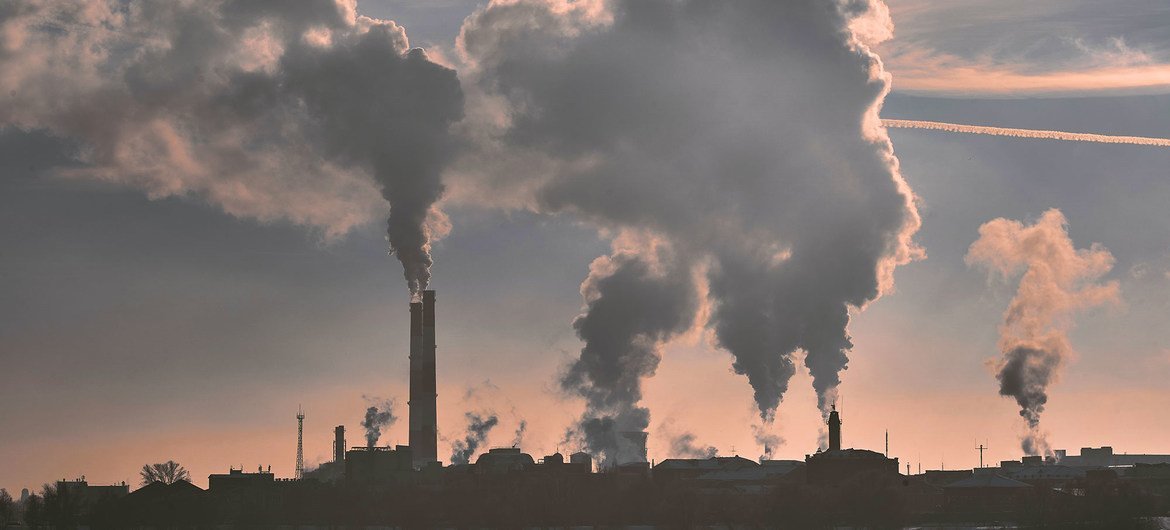 It is now very likely that the 5-year average temperature for 2021–2025 will pass the 1.5 °C threshold.
 bobdillon33blog