At the moment rightly so we are all preoccupied with the consequences of our own individual lives and all indicator point to world disaster on a scale not seen by most of us.
However, if and when we return to a semblance of normal the freedom of the press will be in jeopardy when the blame game starts, which is inevitable.
Why will it be?
Because the present pandemic marks the emergence of a new model of watchdog function, one that is neither purely networked nor purely traditional but is rather a mutualistic interaction between the two.
What globalization, technological integration and the general flattening of the world have done is to super empower individuals to such a degree that they can actually challenge any hierarchy—from a global bank to a nation-state—as individuals.
The fear that the decentralized network, with its capacity to empower individuals to challenge their governments or global banks, is not a democracy, but could lead to anarchy.
But the alternative is to give the government a veto over what its citizens are allowed to know.
There should be relentless exposure of politician or businessman, every evil practice, whether in politics, business, or social life if we are to change the world for a better future.
False news forces us to ask how comfortable we are with the actual shape of democratization created by the Internet. It circumvents the social and organizational frameworks of traditional media, which played a large role in framing the balance between freedom and responsibility of the press.
Many of the problems can be laid at the feet of the Internet—fragmentation of the audience and polarization of viewpoints.
We cannot afford as a polity to create classes of privileged speakers and press agencies, and underclasses of networked information producers whose products we take into the public sphere when convenient, but whom we treat as susceptible to suppression when their publications become less palatable.
Doing so would severely undermine the quality of our public discourse.
The risk is that the government will support its preferred media models and that the incumbent mass media players will, in turn, vilify and denigrate the newer models in ways that make them more vulnerable to attack and shore up the the privileged position of those incumbents in their role as a more reliable ally watchdog.
Clarifying that the freedom of the press extends to “every sort of publication which affords a vehicle of information and opinion” and that liberty of the press is the right of the lonely pamphleteer and individual bloggers.
Social distancing must not be allowed to turn into ruling distancing.
Long live WikiLeaks.
An uncomfortable fact is that a free press in a democracy can be messy at the best of times with governments around the world underestimated the coronavirus the political exploitation of the outbreak is now a reality.
Capturing the treatment of television is less comprehensive as it is a visual medium.
All human comments appreciated. All like clicks and abuse chucked in the bin.
It is widely assumed by the general public that humanity is “progressing” and that we are better both physically and mentally than our predecessors were. Of course, this is true for some of us but for 6 billion of us on 2$ a day I doubt they would agree.
A person’s conception of truth is deeply intertwined with their conception of reality and truth isn’t actually divorced from reality. Science is dependent on truthfulness.
Few of us these day’s has the time or resources to check all of the news we confront on a daily basis. Instead, we rely on other methods of assessing truth, but can we or should we trust the source?
As the saying goes, “You can fool some of the people all of the time, and you can fool all of the people some of the time, but you can’t fool all of the people all of the time.”
In a world where facts are under siege, credentialed sources are proving more important than ever.
We are getting our news from platforms, run by Facebook, Google, Twitter, Messanger, etc including other social media sites and search engines, but can we place our trust in those platforms.
The profession of undermining truth has been in existence for decades. For much of recorded history, the truth was rooted in scholasticism now it’s rooted in a capitalist haze where political correctness and social justice including warfare have descended from the ivory tower of the rich infiltrating tech, business, healthcare, and governments.
The quest for facts these days is now governed by disinterested Google algorithms that trade us, accuracy for efficiency, creating a “spiral of silence,” in which everyone believes that everyone else believes something but no one actually believes it.
It seems that we accept truthiness instead of requiring truth.
As a result, humankind is losing mental capacity to know the truth and we are living in an era of rationality inequality.
For example, voters act on issues that don’t affect them personally and are under no pressure to inform themselves or defend their positions.
People vote as if rooting for sports teams, encouraged by the media, which treat politics as a horse race, encouraging zero-sum competition rather than a clarification of character and policy.
So what is happening?
History is littered with the bending or inverting of truth by people in power has long been consequential, so the recent prominence of “fake news.” is not a new development. The belief that fake news is displacing the truth itself needs to be examined for its truth.
The implication is that we may as well give up on reason and truth and just fight the bad guys’ lies and intimidation with lies and intimidation of our own.
“Social media.”
Not long ago many intellectuals deplored the lack of democratic access to mass media.
Now a few media corporations, in cahoots with the government, “manufactured consent” with their oligopoly over the means of production and dissemination of ideas.
We used to say, freedom of the press belongs to those who own, one no longer true.
Social Media with it’s like algorithms are now fueling, accusations of racism, sexism, homophobia, and transphobia that can be weaponized: since everyone reviles these bigotries, they can be used to demonize adversaries, which in turn spreads a terror of being demonized. It has become the place where one can express heterodox opinions without fear of being silenced or fired.
A network of pluralistic ignorance enforced by denunciation mobs.
So when it comes to intolerant repression of non-leftist ideas, don’t blame the Millennials or the iGens because unregulated Social Media is now blazing out of control abetted in part by government subsidies and lack of will to regulate.
People gravitating to people who are like them.
Social media held out the promise of giving a voice to the people, unfortunately, is making us dumber.
It is true to say that the network dynamics of social media are still poorly understood, but they do not yet host the mechanisms of vetting and reviewing that are necessary for true beliefs to bubble up to prominence from the turbid pools of self-presentation, group solidarity, and pluralistic ignorance.
We project the best sides of our lives through social media but revile real vulnerability.
So we are living in a post-truth world” true?
If your answer is “yes” then the answer is “no” because you’ve just evaluated the statement in an evidentiary manner, so evidence still matters and facts still matter.
But humans are fundamentally irrational – No.
If humans were truly irrational, who specified the benchmark of rationality against which humans don’t measure up? How did they conduct the comparison? Why should we believe them? Indeed, how could we understand them?
We did not evolve with the truth-augmenting technologies that have been invented in recent millennia and centuries, such as writing, quantitative datasets, scientific methodology, and specialized expertise. We evolved with the reality of the thought of what is true.
We don’t believe in reason; we use reason but as soon as you try to argue that we should believe things by any route other than reason, you’ve lost the argument, because you’ve appealed to reason.
That is why a defence of reason is unnecessary, perhaps even impossible. The very fact that one is examining the validity of reason shows that one is committed to reason.
This is the point where it gets somewhat complicated.
We build mental models of the world around us that allow us to explain, predict, and control things to our advantage.
Algorithms know this by monitoring our lives and consultancy firms that specialize in defending products from tobacco to industrial chemicals that harm the public (that have and are with us since the dawn of Capitalism) are manipulating the market place for profit while ensuring that the truth stays buried.
So our reasoning is contaminated by false news.
Social media is a major source of these falsehoods coupled with peculiarities in human behaviour on social media, make it easy for fake news to spread. Twitter, Facebook you name them.
“Political” fake news spread three times faster than other kinds, and the top 1 per cent of retweeted fake news regularly diffused to at least 1,000 people and sometimes as many as 100,000.
Out of all of the news you see reported, how much of it do you believe is made up or fake news?
Around 40% with 70% per cent more likely than true news to receive a retweet.
While the political repercussions of fake news are quite obvious, the phenomenon it depends on how the information is presented and how rationality is defined.
The powers of inference for example.
Rational inference, scepticism, and debate are in our nature but set against false news that is normalizing the production of alternative facts are a project long in the making.
Politicians—two in particular—lies a lot. But politicians have always lied. They say that in war, truth is the first casualty, and that can be true of political war as well.
THERE’S A TON OF MISINFORMATION OUT THERE, AND WE’RE NOT OKAY LETTING IT GO UNCHECKED.
Why is the truth important?
We all need to know the truth if we want to be able to behave rationally.
Spreading disinformation here, hiding evidence of harm there, undermining authorities evidence can change people’s minds. Internet discussion groups, in which these ideas harden and grow more extreme in the absence of critical engagement.
Group loyalty is an underestimated source of irrationality in the public sphere, especially when it comes to politicized scientific issues like evolution and climate change.
Forecasting is no longer the dark art of pundits, gurus, it is big data and everyday fact-checking with Google has and is been revolutionized.
When people are confronted with their own ignorance of the facts, they become more epistemically humble about their opinions.
Unwelcome news is automatically rebranded fake news.
In the end, we are mere mortals but has the day of rationality-promoting norms and institutions passed?
The causes are complex, but it’s exhausting to live in a society where asking for help equals failure.
“Life before Google.”
Nothing can reverse the damage that has been done during our own generation, and some of this regression in truthfulness in the last 50 years is a paradoxical byproduct of the fantastic progress, we have made inequality.
From climate breakdown to air and water pollution, Co2 emissions, natural disasters, the spread of the coronavirus virus, ongoing wars, our media watchdogs that don’t know what they are watching only using them to boost their viewing ratings.
Something important about the way we conceive of truth in our daily lives is needed if we are to tackle the difficulty assessing the reliability of the information that we find on the internet.
To achieve this these platforms with profit-seeking algorithms need to put their money where their mouths are.
Considering the technological boom are humans becoming smarter or more stupid?
The art of creating scientific disinformation is now at a new level of the tricks reanalysing results to reach different conclusions and hiring people prepared to rig methodologies to produce funders’ desired result.
The truth of history constitutes its whole value.
Enriching a favoured few at the expense of the great majority of mankind will be the last lie. The inconvenient truths will inevitably come to light.
All human comments appreciated. All like clicks and abuse chucked in the bin.
The films served to both promote products and a vision of America undergirded by chemicals and synthetic materials. We learn the industry was proud to produce insecticides, PCBs, vinyl and other materials and toxins later identified as environmental toxins.
The word came from the “prairie populists”, a 1890s movement of US farmers who supported more robust regulation of capitalism.
“But no one is clear what it is.”
We can’t really talk about populism without talking about our conflicting conceptions of democracy – and the question of what it truly means for citizens to be sovereign.
So is it an ideologically portable way of looking at politics as a forum for opposition between “people” and “elites”?
Or is it simply part of what it means to do politics?
Or is it a lens for looking at our politics?
Or a mode of talking about politics, rather than a set of beliefs?
Or is it an emerging political movement driven by technology, spread by social media, the smartphone and ruled by algorithms.
There is one thing for certain populism is inherent to democracy.
So it would be in the first place a massive mistake, considering the hollow, undemocratic mess we are in, with algorithms making decisions about our collective fate – outside the reach of politics, to ignore its power.
If one looks at the state of liberal democracy today it is becoming more and more a sham. A nice-sounding set of universal principles that, in practice, end up functioning as smokescreens to normalise the exploitations and inequities of our capitalist system.
Nothing can stay depoliticised forever. The questions of populism would have little urgency were it not for the widespread agreement about the shortcomings of the political status quo: About the abyss between the shining ideals of equality and responsive government implied by our talk about democracy and the tarnished reality of life on the ground.
Populism is supposed to explain: Brexit, Trump, Viktor Orbán’s takeover of Hungary, the rise of Jair Bolsonaro in Brazil, even Putin.
However, neither Trump nor Brexit should be regarded primarily as populist phenomena.
His election and Brexit shows that every status quo – however sturdy – is only temporary, and can always be challenged by a movement that seeks to replace it with something new.
Populists consider themselves as victims of economic exploitation, anti-austerity movements – such as Podemos in Spain, Syriza in Greece, and Occupy these movements are obviously animated by a sense of opposition.
From this perspective, populism is just another word for real politics.
On the other hand, what most people knew about these parties, at first, was that they were openly nativist and racist. They talked about “real” citizens of their countries, and fixated on the issue of national and ethnic “purity,” demonising immigrants and minorities.
But I say that there are no real populists in politics – just people, attitudes and movements that the political centre misunderstands and fears.
The question of populism, then, is always the question of what kind of democracy we want.
The only inherent connection between rightwing and leftwing populist movements is that both embrace the same fundamental truth about democracy: that it is an ever-shifting contest over how the default “we” of politics is defined and redefined, of which no one definition can be guaranteed to last.
When populism appears in the media, which it does more and more often now, it is typically presented without explanation, as if everyone can already define it.
It sounded less alarming than “extreme right” or “radical right”.
It will always live in the shadow of the muddled media and political discourse and there can no longer be any doubt that we are going through a populist moment, so which type of populist you want to be.
A liberal democracy populism that is forced by rightwing populism to make good on its promises of equality. That needs to reacquaint with the need to construct a democratic “we” – a people – around their demand to protect liberal institutions and procedures, in opposition to radical rightwing parties who are happy to see them discarded.
Liberal democracy, in this context, has almost nothing to do with contemporary distinctions between left and right. It refers, instead, to the idea that government should facilitate pluralistic coexistence by balancing the never fully attainable ideal of popular sovereignty with institutions that enshrine the rule of law and civil rights, which cannot easily be overturned by a political majority.
or
A populism that can never be disentangled from the concept’s pejorative baggage. An ideology runs the risk of making effective and worthwhile political strategies seem irresponsible, even dangerously promoting nativisms and short term gains.
Obviously, there are leftwing and rightwing populisms both are motivated not by passion for populism’s core ideas, but by other ideological factors best described as a fuzzy blanket to camouflage nastier nativism.
We are now living through a time when familiar webs connecting citizens, ideologies and political parties are, if not falling apart, at least beginning to loosen and shift and old theories of populism that defined it specifically as rightwing, racist or anti-immigrant is insufficiently wide to describe these new developments in populist politics.
It seems to me that Populists deal in “simplicity,” in “glib, facile solutions” while liberal leaders have been “oblivious” to the sufferings of their people.
So why are the traditional parties of the left in the western world being defeated?
Because the other side doesn’t play fair any more with conflict an inescapable and defining feature of political life.
The juvenile incapacity of both to bring their preferences to the political arena and engage in the complex give-and-take of rational compromise is with Social Media now fraught with a political examination and association accusation and assassination.
With the impersonal forces, of “globalisation” and “technological change voters are deciding that mainstream political parties have done nothing for their static incomes or disappearing jobs or sense of national decline these past two decades.
The “many, not the few.”
Populism is a new, consensus-smashing thing that is now secondary to nativism. Ultimately, they are disputes about which types of politics make us suspicious, and why.
To conclude that the two camps are simply talking past each other would be to miss the extent to which they are in agreement –and what, taken together, they tell us about the current political moment.
We can never know exactly where democracy is going to take us – not this time, nor the next, nor the time after that, but political parties must come to terms that the elephant in the room is that we no longer vote once every five years we vote on Social media ever five minutes.
Unless politics is not achievable, or rewarding, it obviously is sowing the long-term seeds for discontent.
It’s great to see politicians with Twitter accounts but there’s only so much you can do with that. Online participation in local decision-making is possible.
Failing to practice what you preach has ethical and political costs. E-voting is the next step.
Here below is what they are voting on and its not Fifty Shades of Grey Popularism.
Capitalist greed has and is poisoning political life.
Unregulated Algorithms will ensure it continues to do so. Combined with the new realities of the portability of populism’s ideological movements spread by social media it is no wonder that liberal democracy is crumbling around the world.
To keep up with algorithms and their lavishly detailed position papers, their leaders, Google, Facebook, Twitter, Apple, Mircosoft, and their inc have little personal sympathy any longer with the travails of working people.
We can only hope that the fear of populism on the left will enable the victory of populism of the right.
All human comments appreciated. All like clicks and abuse chucked in the bin.
Remember when people use to initially judge you by your handshake. It formulated a picture of a person we were meeting for the first time.
In the span of a few seconds, it lay the foundation for how others perceive and feel about us — and we about them.
“It was wet,” “It was creepy,” ” It was firm,” It was crushing,” “It a Mormon handshake,” “It a Mason probing handshake”, enthusiastic, vigorous, prolonged, high-fives to fist-bumping.
A handshake was a globally widespread, brief greeting or parting tradition in which two people grasp one of each other like hands making impressions that have a very long shelf-life based on a brief but important meeting.
Your handshake is the business card you leave behind.
Believed by some to have originated as a gesture of peace by demonstrating that the hand holds no weapon.
It is a reassuring tactile touch that we as social animals share is essential for social interaction, social harmony, health, survival, and security, as well as for communicating our true feelings.
It serves as a means of transferring social chemical signals between the shakers.
What is even more startling is how long we remember those bad handshakes — sometimes we remember for decades.
Today we pay for items with the swipe of our phone or by inserting a small plastic card into a reader. The old handshake just doesn’t have its place anymore.
We can also spend thousands of hours clicking a mouse over a small image on a computer screen. Nothing is real, nothing is said – only ones and zeros racing around the globe in small packets of data.
The world of technology continues to tractor us into a world absent of looking at one another in the eyes the Art of the handshake is dead.
With, Social media, Face recognition, Instagram, Facebook, Smartphones, Emails etc our most valuable currency of the handshake is evaporating and being replaced by digital signatures or passwords, that are undermining our trust in each other.
It’s no wonder that so many people get something so simple as a handshake wrong.
Take the Politician’s Handshake:
Two hands to cover or cup the other person’s hands twisting the other person’s hand so that yours is superior or playing hand jujitsu to let the other person know you are in charge is just rubbish.
In the real world-shaking a person’s hand allows you to establish your friendliness and accessibility.
For example meeting your future in-laws for the first time, your first job interview.
It might be true that in the future daily and weekly media will be more and more electronic, but physical media will always exist.
Stand in front of the webcam and send a digital emoji and you could be shaking hands with the devil.
You cannot reproduce a handshake with meaning electronically.
This is a part of the beauty and the freakiness of the internet no handshake required.
Its no wonder there is grooming.
There was a time that a person had to put on nice clothes and go out into the real world to meet a love interest.
Today, you can be “out there” without ever having to go out- online dating.
You can even engage in a virtual relationship by using email or instant messaging. It is possible to get to know a person on a relatively deep level without ever meeting at all.
Customs surrounding handshakes are specific to cultures and can offer some real benefits. Take Brazilan negotiators they touch each other almost five times each half-hour where there is no physical contact between American negotiators.
In postmodern society, superstitions don’t have much of a place, for most of history they have a played a huge role in shaping culture and society before the arrival of the handshake.
The internet cares not what you do. You miss out on real contact with people.
It is affecting our ability to connect with others as equals. Not being able to manage the normal tasks of adult living resulting in more and more limper handshakes. Which leads them to problems with society and unable to get along with others.
Although teens are staying in constant contact via the Internet and texting, these friendships do not foster trust and intimacy the same as face-to-face contact.
The century’s old practice to seal a deal may seem quaint but its importance in the future will tell us whether its a robot or not.
As the appreciation of small things disappears; nature loses its brilliance.
Our planet is in a tight spot lets shake hands on that.
As we know there can be no peace no universal action on anything without it.
All the verbal diarrhoea in the world cannot replace it.
All human comments appreciated. All like clicks and abuse chucked in the bin.
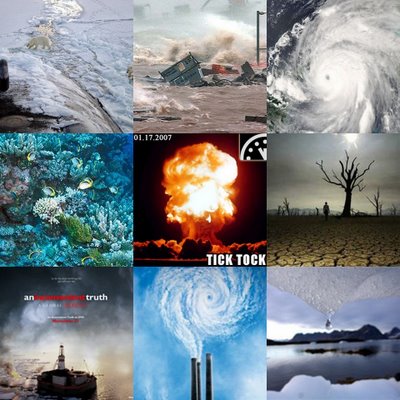
The Dead Sea will be almost completely dried up, nearly half of the Amazon rainforest will have been deforested, wildfires will spread like, umm, wildfire, and the polar ice caps will be only 60 per cent the size they are now.
Wars will involve not only land and sea but space. Superhurricanes will become a regular occurrence.
Should you be worried, of course not AI/Algorithms are here to guide you.
AI-related advancements have grown from strength to strength in the last decade.
Right now there are people coming up with new algorithms by applying evolutionary techniques to the vast amounts of big data via genetic programming to find optimisations and improve your life in different fields.
The amount of data we have available to us now means that we can no longer think in discrete terms. This is what big data forces us to do.
It forces us to take a step back, an abstract step back to find a way to cope with the tidal wave of data flooding our systems. With big data, we are looking for patterns that match the data and algorithms are enabling us to find patterns via clustering, classification, machine learning and any other number of new techniques.
To find the patterns you or I cannot see. They create the code we need to do this and give birth to learner algorithms that can be used to create new algorithms.
So do you remember a time, initially, when it was possible to pass on all knowledge through the form of dialogue from generation to generation, parent to child, teacher to student? Indeed, the character of Socrates in Plato’s “Phaedrus” worried that this technological shift to writing and books was a much poorer medium than dialogue and would diminish our ability to develop true wisdom and knowledge.
Needless to say that I don’t think Socrates would have been a fan of Social Media or TV.
The machine learning algorithms have become like a hammer at the hands of data scientists. Everything looks like a nail to be hit upon.
In due process, the wrong application or overkill of machine learning will cause disenchantment among people when it does not deliver value.
It will be a self-inflicted ‘AI Winter’.
So here is what your day at 70th might be.
Welcome to the world of permanent change—a world defined not by heavy industrial machines that are modified infrequently, but by software that is always in flux.
Algorithms are everywhere. They decide what results you see in an internet search, and what adverts appear next to them. They choose which friends you hear from on social networks. They fix prices for air tickets and home loans. They may decide if you’re a valid target for the intelligence services. They may even decide if you have the right to vote.
7.30 am
Personalised Health Algorithm report.
Sleep pattern good. Anxiety normal, deficient in vitamin C. Sperm count normal.
Results of body scan sent health network.
7.35 am
House Management Algorithm Report.
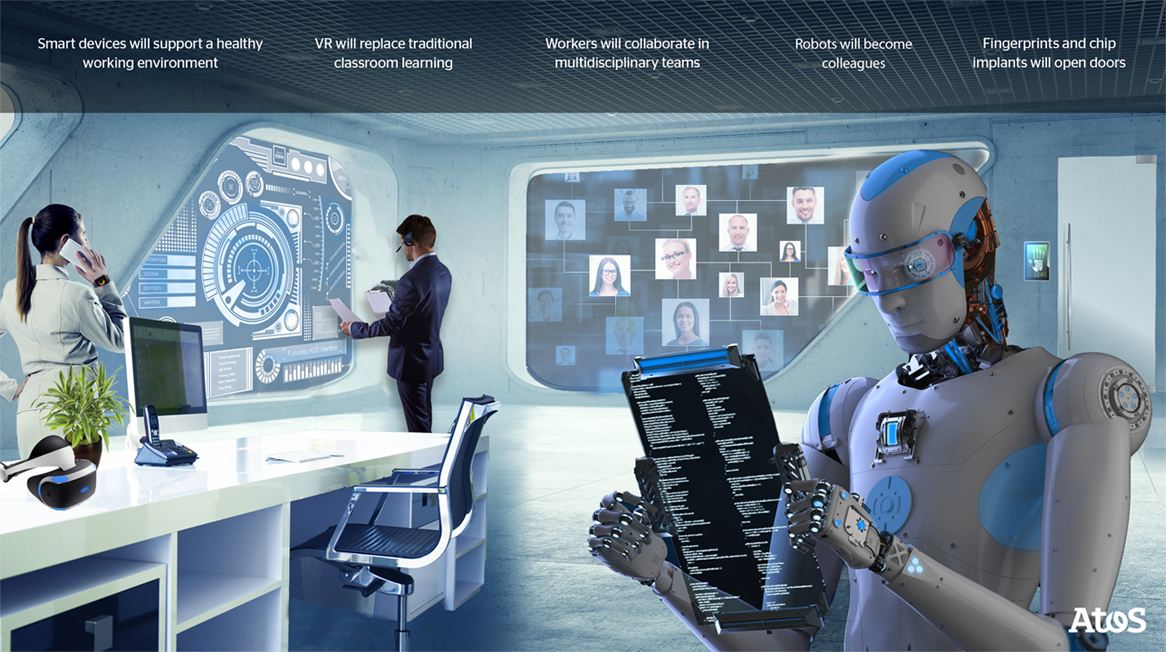
Temperature 65c. House secure. Windows/ Doors closed Catflap open. Heating off. Green Energy usage 2.3 Kwh per minute. (Advertisement to change provider.) Shower running, Water flow and temperature adjusted, shower head hight adjusted. House Natural light adjusted. Confirmation that smartphone and I pad fully charges. Robotic housemaid programmed.
Refrigerators will be seamlessly integrated with online supermarkets, so a new tub of peanut butter will be on its way to your door by drone delivery before you even finish the last one.
8.45 am. Appointments Algorithm.
Virtual reality appointment with a local doctor.
Voice mails and emails and the calendar check.
A device in your head might eliminate the need for a computer screen by projecting images (from a Skype meeting, a video game, or whatever) directly into your field of vision from within. It checks
9 am.
Personalised Financial Algorithm.
Balance of credit cards and bank accounts including citizen credit /loyalty points. Value of shares/ pension fund updated.
10 am. Still in your Dressing gown.
11 am. The self-drive car starts. Seats automatically shift and rearrange themselves to provide maximum comfort. Personalised News and Weather Algorithm gives a report. The car books parking spot places order for coffee. Over coffee, you rent out a robot in Dublin and have it do the legwork for your forthcoming visiting – hotels.
12 pm.
Hologram of your boss in your living room.
1 pm.
Virtual work meeting to discuss the solitary nature of remote work.
Face-to-face meeting arranged.
2 pm. Home. Lunch delivered.
3 pm. Sporting activity with a virtual coach.
5 pm. Home
7 30 pm.
Discuss and view the Dubin robot walk around containing video and audio report.
Dinner delivered. Six quests. The home management algorithm rearranges the furniture.
8 30 pm
Virtual helmets on for some after-dinner entertainment.
10 pm
Ask Alixia to shut the house down not before you answer Alixia question to score points and a chance to win — Cash- Holiday- Dinner for two- a discount on Amazon- e bay- or a spot of online gambling.
———
The fourth industrial revolution is not simply an opportunity. It matters what kind of opportunity is for whom and under what terms.
We need to start thinking about algorithms.
The core issue here is of course who will own the basic infrastructure of our future which is going to be effect all sectors of society.
They are not just for mathematicians or academics. There are algorithms all around us and you don’t need to know how to code to use them or understand them.
We need to better understand them to better understand, and control, our own futures. To achieve this we need to better understand how these algorithms work and how to tailor them to suit our needs. Otherwise, we will be unable to fully unlock the potential of this abstract transition because machine learning automates automation itself.
The new digital economy, akin to learning to read, has obscured our view of algorithms. Algorithms are increasingly part of our everyday lives, from recommending our films to filtering our news and finding our partners.
Building a solid foundation now for governance for AI the need to use AI responsibly
and to consider the broader reaching implications of this transformational technology’s use.
The world population will be over 9 billion with the majority of people will live in cities.
So here are a few questions at 30 you might want to consider.
How does the software we use influence what we express and imagine?
Shall we continue to accept the decisions made for us by algorithms if we don’t know how they operate?
What does it mean to be a citizen of a software society?
These and many other important questions are waiting to be analyzed.
If we reduce each complex system to a one-page description of its algorithm, will we capture enough of software behaviour?
Or will the nuances of particular decisions made by software in every particular case be lost?
You don’t need a therapist; they need an algorithm.
We may never really grasp the alienness of algorithms. But that doesn’t mean we can’t learn to live with them.
Unfortunately, their decisions can run counter to our ideas of fairness. Algorithms don’t see humans the same way other humans do.
What are we doing about confronting any of this – Nothing much.
So its no wonder that people start to worry about what’s left for human beings to do.
All human comments appreciated. All like clicks and abuse chucked in the bin.
The dawning of the digital age has not just changed communication, facilitating individual and group interaction in previously unimaginable ways it has fundamentally changed human relationships, or more specifically, the establishment of fraternity amongst people?
The internet has made it so you don’t need to physically see people feel close to them.
I miss those days of pre-digital friendship.
Thirty years ago we asked what we would use computers for.
Technology promises to let us do anything from anywhere with anyone and the introduction of social media platforms has changed the “friendship playing field”.
The way friendships are played out in the digital world is changing how young people express themselves, how they define ‘good’ friendships and interact with each other.
Now, through technology, we create, navigate, and perform our emotional lives.
In a surprising twist, relentless connection leads to a new solitude.
We turn to new technology to fill the void, but as technology ramps up, our emotional lives ramp down. At the threshold of “the robotic moment,” our devices prompt us to recall that we have human purposes and, perhaps, to rediscover what they are.
The huge role that technology plays in supporting young people’s friendships, with over half (55%) saying they interact online with their closest friends several times an hour and 63% saying they are closer to their friends because of the internet.
The basic components of friendship USE TO BE interdependence and voluntary participation but technology is now embedded throughout our relationships.
So the question is. Has friendship changed because technology changed it? Or both?
The popular platforms 8-17-year-olds are using to chat to their friends on a daily basis are YouTube (41%), WhatsApp (32%), Snapchat (29%), Instagram (27%) and Facebook or Facebook Messenger (26%)
Technology provides an important way for them to support their peers who are going through difficult times with Social media providing a vehicle of self-promotion, a means of fixing an idea of yourself in the social sphere, without people actually knowing you at all.
Has it made friendship less personal, less connective, less real?
The distinction in the online world is that the effort it takes to present ourselves in a certain way is much less.
Not to mention the fact that technology has allowed us to maintain friendships that might have otherwise waned when time, distance, and the constant demands of parenting take hold.
The lines between real friendships and fleeting acquaintances have become
blurred in the virtual world, not just but also because of many Social media
users showcase more than 1000 friends on their profiles, while the realistic
maximum number of people we are able to maintain relationships with lies at
150 people.
Our brains are just not wired to cope with.
——————
True friendships are hallmarked by each member’s desire to engage with the other – it’s about a mutual interest in one another’s experiences and thoughts, as well as a sense of ‘belongingness’ and connection, there’s no telling when and where a friendship will develop.
The cornerstone of friendship isn’t the public nature of the relationship, but the private connection of it and that private uniqueness hasn’t been eliminated; it just looks different now.
The Internet is undoubtedly an invaluable link between people separated by distance. But this link must be built on a stronger foundation of intimacy and familiarity and a balance of online and offline interactions will pave the way to better relationships in the world.
We “met” through a mutual friend on Twitter.
(Posts Tagged With friendship in the digital age,
“I wish I had stayed in touch with my friends.” is number five.)
Sexual online meetings themselves may be a replacement for deeper longings in couples. It may be an extension of particular needs not being met within the relationship.
They find that the relationship to their primary partner is more undervalued than in the past and that traditional definitions of intimacy are vaguer. They explain that couples who once experienced a secure relationship now struggle with the new –often ambiguous– rubrics surrounding agreed-upon Internet conduct.
Young people also need to be empowered to take control of their digital wellbeing, by recognising their emotions and the way that their use of digital technology can impact on their self-esteem and mood so that they are able to implement strategies to achieve a healthy relationship with technology.
Social exclusion can have just as much of a damaging impact on young
people but may not be easy to detect and manage in digital spaces.
Facebook has completely redefined the definition of a friend.
It wont be long before we could be seeing the following.
“We’d like to say a big ‘thank you’ every time you recommend a friend to us by rewarding you with a retail shopping voucher £250 will be paid for a friend.
Two in five adults (40%) first look at their phone within five minutes of waking up, climbing to 65% of those aged under 35. Similarly, 37% of adults check their phones five minutes before lights out, again rising to 60% of under-35s.
The average amount of time spent online on a smartphone is 2 hours 28 minutes a day. This rises to 3 hours 14 minutes among 18-24s.
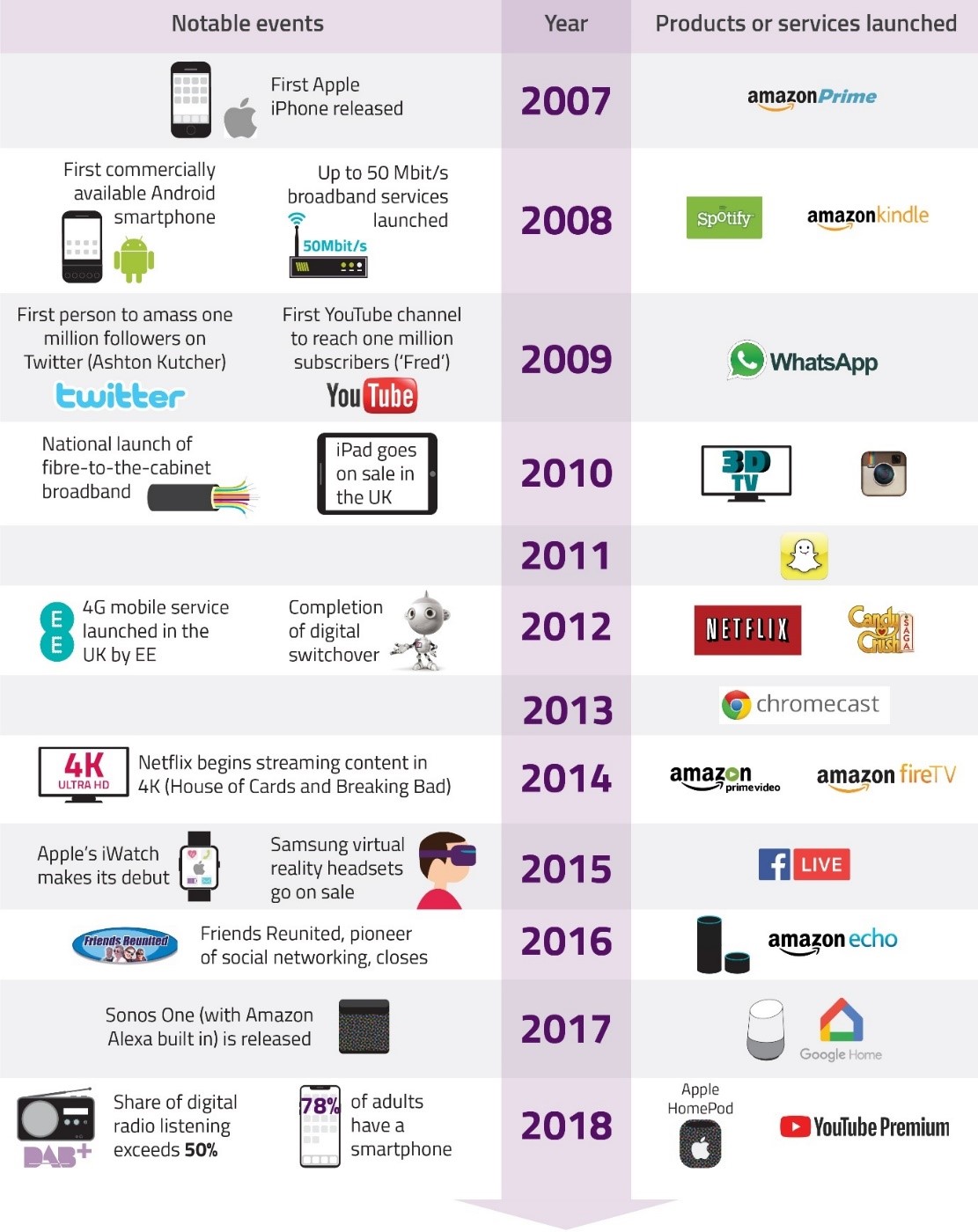
A decade of change in digital communications.
It is said that in the course of a normal life one is lucky to have a handfull of friends.
Now its social mobile, analytics, and cloud all want to be your friend.
When we think about social, the key is to consider why social is happening, rather than think of it as just a set of tools.
For example, Facebook, Twitter, and so on are tools, but why people use them is much more important. The same was true with the internet when we first started using that — that was a tool, but what it did to the lives of normal people in terms of access to information, increased freedom, etc., was much more important.
Mobile is a similar shape to social in that it’s the why as to why people use mobile devices as opposed to anything structural about the devices themselves.
The idea behind big data is that you can derive understanding about behaviour through statistical analysis of clumps of data. You can then take that understanding and implement some form of control to either get more of what you want, or get less of what you don’t want.
Finally, we come to the cloud. This is really about how companies buy. There are all sorts of reasons to like outsourcing IT functions to the cloud, whether it’s just outsourcing compute power into a load of servers that you run as if they were your own, or buying functionality on an SaaS basis ( Software as a service)
Is cloud necessary for digital?
To an extent, it likely does not. However, as a fashion/trend, it’s clearly important, and a lot of the tools and services involved in digital are unlocked as part of a cloud-based approach, hence it’s likely important.
It’s a sociological change, rather than a technical one.
You can see that by the fact that this is generally all about the “why” this is happening — why are customers using social, why are they using mobile, why big data is showing the trends that it is, why are companies able to buy and use consumer products, and why is running systems in the cloud easier.
Because they all your Friend without you knowing and couldn’t care less who or how they share that friendship with or what they do with it. Google it.
All human comments appreciated. All like clicks and abuse chucked in the bin.
An absurd thought you might say but it is the holy grail of AI to manipulate your feelings our emotions.
However, the uses of emotionally AI are nearly endless.
The number one question is going to be how do we stop being manipulated by those who control the data.
Another words democracy itself has been and is becoming more with Social media an emotional puppet show run by companies such as Facebook who is undoubtedly one of the kings of social networking.
It is who and how data is controlled that determines the outcomes of elections and referendums as we have seen with Brexit and the election of Donal Trump and now the coming of G5 we going have:
Autonomous Driving.
Remote Robotic Surgery.
Smart(er) Factories.
Immersive Gaming and Augmented Reality.
Supply Chain Management.
Digital Transformation in the Experience Economy.
It will “offer users no less than the perception of infinite capacity.
–
But how can we find a balance between accelerating technological progress
and governments’ responsibility to improve the economic conditions and raise
the level of wellbeing for their citizens?
There isn’t a single solution.
Why?
Because Democracy is based on feelings. During an election, you are not being asked to vote rather how do you feel.
Currently, many people cannot imagine their life without social networks, which in less than a decade have become an indispensable resource in our daily lives who have served multiple purposes throughout its short life and replaced other media.
With 2.38 billion monthly active users as of the first quarter of 2019, Facebook is the biggest social network worldwide. It is at a size where it’s worth really taking a careful look at what are all the things that it can do to make social media the most positive force for good possible.
But like climate change, we sit back and watch the development of technologies that have little or no regulation both of which are reshaping the world we live in and the Earth exponentially.
Perhaps sometime in the next few decades, we’ll start developing technologies that improve human intelligence. We’ll hack the brain, or interface the brain to computers, or finally crack the problem of General Artificial Intelligence.
Should we be worried about technology’s advance and our demise?
Will Technology Save Us Or Enslave Us?
Intelligence is the source of technology.
The purest case of an intelligence explosion would be a General Artificial Intelligence rewriting its own source code.
That prospect would certainly change our viewpoints on what is life.
The potential impact on our world is enormous.
Both climate change and GAI are heading us all to a critical point of all human history.
Right now, almost no one is paying serious attention to either.
So what might a General Artificial Intelligence do with nanotechnology?
Feed the hungry?
Heal the sick?
Help us become smarter?
Remove our emotions so we have no sense of guilt?
Instantly wipe out the human species?
Probably it depends on the specific makeup of the AI.
See, human beings all have the same cognitive architecture. We all have a prefrontal cortex and limbic system and so on. If you imagine a space of all possible minds, then all human beings are packed into one small dot in mind design space. And then Artificial Intelligence is literally everything else. “AI” just means “a mind that does not work like we do.
So you can’t ask “What will an AI do?” as if all AIs formed a natural kind.
There is more than one possible AI.
Back to the question of whether a robot could or should have emotions.
From an intellectual point of view, this may not be as important to a robot as being able to interrupt human emotion and also display it back while interacting with people.
The most efficient way to answer the question would be to start by making itself smarter: Acquiring more computer resources could probably be most easily accomplished by hacking every computer connected to the internet.
Once that’s done, it could use the resulting enormous amount of computing power to calculate the most optimal way of rewriting itself for more intelligence.
Using this newfound intelligence and raw brute force, it may turn to develop new and more efficient computer chips and proceeding to turn the surface of the earth and nearby matter into computer innards.
We would not escape as we are made from perfectly usable carbon atoms, just waiting to be utilized as computronium – re-purposing our atoms.
It would then be simply a matter of the robot fooling a human, an easy task into thinking it had emotions.
The sort of emotion a robot might actually be programmed would be the same as its intelligence that being artificial.
If it turns out to be possible to create an AGI, it will presumably be given a task of some sort.
Here are a few.
Psychotherapy software that utilizes an emotional connection to dispense advice.
Call answering software that detects caller emotions and responds accordingly.
To foresee the consequences of actions.
Robots will not be susceptible to the effects of fear, adrenaline or shock and could potentially make strategic, reasoned decisions much faster than a human soldier.
Robots would not be restrained by human emotions and the capacity for compassion.
So could a robot acquire Adrenaline along with emotions?
Emotions appear to be integrated as part of a biological body and a biological brain but our inability to see beyond biological programming does not allow us to answer this question.
There is no doubt that as AI technology grows more sophisticated, the potential for implementing it in weaponry is all but guaranteed – Drones that get an Adrenaline kick.
Adrenaline can be used in both technical and nontechnical contexts.
It is commonly used in describing the physiological symptoms (such as increased heart rate and respiration) that occur as part of the body’s fight-or-flight response to stress.
In a robot, it would not be just an act in the same vein. A thinking person feels empathy for something that looks alive and has complex behaviours, even if it doesn’t have life in a biological sense.
In the end, there is absolutely no reason why any sane human would ever want them to have characteristics but technophobic response actually feels rational.
Like a robot dealing with sick people should be able to mimic some emotions like compassion and carefulness….. They testify to the fact that emotions and our biological body operate together.
While a consensus is yet to be reached over the scope and scale of the effect we should expect from mobile connectivity on poverty-reduction and inequality some argue that it might be the best hope we have.
All human comments appreciated. All like clicks and abuse chucked in the bin.
THE EUROPEAN UNION WAS BORN OUT OF WORLD WAR TWO ON THE 25/MARCH/ 1957 TEN YEARS AFTER IT ENDED TO CHAMPION PEACE.
By establishing a unified economic and monetary system, to promote inclusion and combat discrimination, to break down barriers to trade and borders, to encourage technological and scientific developments, to champion environmental protection.
Fifty-two years later even as it adapts to meet the evolving challenges of the modern world, with all its faults, it has delivery just that- Peace.
Let us all remember the price the world paid to agree with these shared values.
The lessons of World War II — on whose ashes the United Nations was also founded emphasizing that remembrance is a debt owed to those who had lost their lives in World War II.
(By the end of the war, the total deaths ranging from 70 million to 85 million. Civilians deaths totalled 50 to 55 million. Military deaths from all causes totalled 21 to 25 million.)
However, the ideals and spirit that inspired the creation of the United Nations and the EU remain to be transformed into reality.
It is still necessary to remember the causes and overcome the legacies of the Second World War.
To reject and condemn any attempts to rewrite history or undertake attempts to glorify Nazism or any type of fascism.
Today, tolerance and restraint continued to be considered in world policy as signs of weakness and the use of violence and sanctions were praised; the world could therefore not say that the Second World War had been properly remembered.
Indeed it is our duty to revere and preserve and reform both the United Nations and the European Union because too much was paid for them, and too much is now at stake for succeeding generations.
So here below for all the Donald Trumps, Brexiteers, and Populous is a Speech that tells the TRUTH.
All human comments appreciated. All like clicks and abuse chucked in the bin.
Over the past decade, smartphones have revolutionized our lives in ways that go beyond how we communicate.
It is incontrovertible that they have yielded many benefits for society but the power they hold over us is glaringly evident.
Critical thinking in the real world is being replaced by Apps which are making us unable to focus for more than a minute.
Learning to live with technology without surrendering to it is the biggest challenge in the digital era.
If we continue to live with our head in vibrations, and pings of our phones there is no douth that we will be handing what is called life to the worst form of Capitalism – unseen profit for profit sake.
Undoubtedly, the capability of advancing technology coming forth from the latest industrial revolution has the potential to make even bigger and greater improvements on every aspect of our lives changes than the first three industrial revolutions summed together.
Technology and advancements in science are driving transformations around the world creating ripple effects on societies, institutions, and economies.
They will and are transforming the ways in which we live, work, and interact with one another.
Understanding these new technologies and their disruption potential is critical for all nations and especially developing countries.
Since humans are responsible for technological development, humans are
also responsible to exert every effort in shaping the Fourth Industrial Revolution
and directing it toward a future that reflects the universal good.
So I ask the question facing us all is, would you like to be alive in a hundred years from now.
If not, even the arrival of whatever God or gods you believe in will not save us from a world of I am all right Jack.
The fourth industrial revolution describes a world where individuals move between digital domains and offline reality with the use of connected technology to enable and manage their lives. Itis characterized by a fusion of technologies that is blurring the lines between the physical, digital, and biological spheres.
The breadth and depth of these changes herald the transformation of entire systems of production, management, and governance.
However, this fusion of technologies goes beyond mere combination and cannot be ignored any longer. We stand on the brink of a technological revolution that will fundamentally alter the way we live, work, and relate to one another.
Inits scale, scope, and complexity, the transformation will be unlike anything humankind has experienced before. Wedo not yet know just how it will unfold, but one thing is clear: the response toit must be integrated and comprehensive, involving all stakeholders of the global polity, from the public and private sectors to academic and civil society.
In a world infused with artificial intelligence and machine learning ability, with robots lacking an essential feature – the capacity of moral reason, it is easy to see what will happen.
On one hand, preventing genetic disease by genetic engineering is desirable.
On the other hand, what guidelines, or regulation, or ethical boundaries are there in order to prevent the over-manipulation genetics for desirable traits?
Further, the most critical questionis, whose moral standards should robots inherit.
Moral values differ greatly from individual to individual, across countries, religions, and ideological boundaries. Uncertainty over which moral framework to adopt underlies the difficulty and limitations to ascribe moral values to artificial systems.
This limits their ability to make good or ethical decisions in complex situations.
It is more than just technology-driven changewe have new ethical concerns emerging.
These changes are bringing about shifts in power, shifts in wealth, and knowledge.
The speed of current breakthroughs evolving atan exponential rather than a linear pace has no historical precedent.
The increased dichotomization is leading toan increase in social tensions while our lives become extensively connected to various devices, from our cell phones, cars, and light switches toour home security cameras, and smart speakers.
It is altering the way people eat, sleep, shop, socialize, study, play.
These technologies give rise to vast possibilities—but they can also upend the status quo and create nearly as much uncertainty as it does opportunity.
A paradigm shift is underway in how we work and communicate, as well as how we express, inform, and entertain our self. Having everything attached to everything else people will haveno control over either technology or the disruption that comes with the fourth industrial revolution.
The argument is:
The intelligence and productivity gains that AI will deliver can unlock new solutions to society’s most pressing environmental challenges: climate change, biodiversity, ocean health, water management, air pollution, and resilience, among others.
At the same time, the revolution could yield greater inequality, particularly inits potential to disrupt labour markets. As automation substitutes for labour across the entire economy, the net displacement of workers by machines might exacerbate the gap between returns to capital and returns to labour.
The evolution of global industries in the fourth industrial revolution isboth exciting and scary.
Only in being knowledgeable about these changes and the speed in which this is occurring can we ensure that advances in knowledge and technology reach all and benefit all.
To be sure that AI is developed and governed wisely, government and industry leaders must ensure the safety, explainability, transparency and validity of AI applications.
AT THE MOMENT OUR GOVERNMENTS AND WORLD LEADERS OFFER EMPTY PROMISES.
Definitions and standards relating to the “misuse of AI” are needed
that incorporate misuse for environmental as well as human harm.
It is incumbent on authorities, AI researchers, technology pioneers and AI adopters in
industry alike to encourage deployments that earn trust and avoid abuse of the social contract.
Recently we have witnessed the father of a young girl state on Television that his daughter committed suicide because of content on platforms of Social media.
A tragedy that could be avoided by our governments applying legal fines on any platform Social Networks(eg. Facebook, Twitter, Myspace, etc) Instant Messaging (eg. IM, MSN, etc) Chatrooms (eg. Skype, Yahoo, MIRC, etc) that posts
Cyberbullying – Sexting/Self-made videos or photos – online groomers, impersonating someone -Engaging in Subtweeting or Vaguebooking – Participating in Video Shaming and the like.
If the fines are large enough you may rest assured that these platforms will remove all such content.
One thing is certain:
If we end up with a centralized system where the winner takes all markets we can perversely hope that Climate change wipes us out sooner than later.
With the arrival of voice recognition, the focuses on education will have to change from modes of teaching to modes of learning.
It won’t be long before Eco and Alexa will be offering rewards to answering questions.
The world in a hundred year from now will be full of useless stuff telling you whether you are alive or dead. You might even have the pleasure of your Alexa telling you’re toasted that its mother was one a spanner.
Of course, some believe that humans will be known as the most powerful creatures present in the galaxy that surrounds the world.
O! Yet. Have a look around you.
Technology might be changing our definition of what it means to be a
Human?
Fortunately we humans have a long way to go to be human in the first place.
While the UK is wholly focused on Brexit negotiations, yesterday the 12th Sept Jean- Claude Junker gave his state of the Union speech.
It may have been a thoughtful and reflective speech, accompanied by concrete initiatives on trade, investment screening, cybersecurity, industry, and data IT DID LITTLE TO ADDRESS the wave of populist protest that can yet inflict serious damage on Europe.
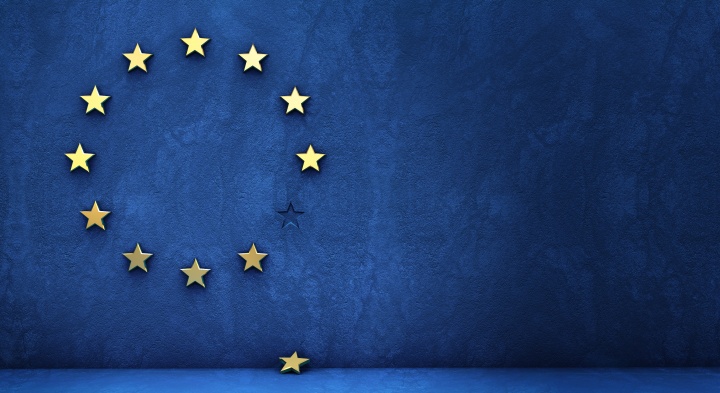
The rise of populist or far-right parties in Germany, Italy, Poland, the Czech Republic, Hungary, Austria, Denmark and elsewhere threaten not only the stability of individual governments, but the cohesion of Europe itself, and its most sacred values of democracy and freedom.
Already we can see that the EU is practically powerless to resist the erosion of civil liberties and the rule of law in eastern Europe, while the Conte-Salvini administration in Rome promises even more serious trouble on migration and the single currency.
Mr. Juncker recognized these challenges but had few immediate proposals to turn the populist tide nor did he offer much evidence that the commission has all the answers.
These are not times for any European leader to talk airily about further losses of national power and sovereignty. The next commission president need not be a Eurosceptic – an absurd notion anyway – but he or she will need, somehow, to bring Europe closer to its disaffected citizens. The EU is not a sovereign nation. It can’t have a president, nor can it grant citizenship.
It’s only an organization, deluded enough to think it’s a country.
The social balance of the EU and the EU nations is crucial for the EU future. The effects of the economic and financial crisis are still causing great hardship in many parts of Europe.
If the commission is to learn anything from the departure of the UK it must improve the public perception of the Union.
We will and are living in a Union of unemployed people, many of them young people who feel sidelined. Until this situation has changed, it must be the number one concern, to grant the Uk any agreement that is seeing as better than what exists for its remaining members will put the final nail in the coffin.
The UK is and was a hypocritical member seeking to get benefits for its businesses whilst, all too often, leaving its citizens out of the equation.
Brexit is inevitable. It is much too late to cancel Brexit.
The uncertainty about the future relationship is entirely due to the UK’s clueless incompetence and serial backtracking on previously agreed on things which PM May had SIGNED under.
The Brexit mess is 100% made in the UK.
At a time when and the desire to preserve access to EU capital for its banks, asset managers and insurers, many in the UK at least perceive the Commission’s proposed changes to strengthen rules around third country access as a direct attempt to ensure that the UK does not engage in a regulatory race to the bottom, once outside the EU.
THERE IS NO AGREEMENT TRADE OR OTHERWISE THAT A NEW PRIME MINISTER WILL NOT TRY TO CHANGE.
It will fall to Mr. Juncker’s successor, from next summer, to lead Europe away from its real and present dangers Of falling into the nationalistic fairy traps.
The EU has for way too long been dominated by an international corporate capital much better at international cooperation than the civil society. In Brussels, the corporate business lobby is much better organized than small business, workers unions, and civil society movements.
HOWEVER, WE ARE STILL ON A LEARNING CURVE WITH THE EUROPEAN UNION.
In conclusion:
One of the greatest challenges to the EU is that it does not stand still for long, with social media and the advance of technology in order to stay standing it must involve its citizens with an equal share of its benefits both financial and otherwise.
To give Europeans a working interest in the Union here is a suggestion that could go a long way in achieving an active engagement of its citizens in its future development.
WHY NOT INTRODUCE A EUROPEAN TREASURY BOND.
EVERYONE CAN BE AFFORDED AN OPPORTUNITY TO INVEST IN ITS FUTURE.
20,000 new border guards to police the EU’s Mediterranean borders by 2020 is too late.
THE JURY IS STILL OUT ON THE OVERALL PERFORMANCE OF THE JCJ COMMISSION.
All human comments appreciated. All lie clicks chucked in the bin.











 bobdillon33blog