
Tags
Algorithms., Artificial Intelligence., Capitalism and Greed, Capitalism vs. the Climate., Climate change, Distribution of wealth, Environment, Government, Inequility, news, politics, Technology, The Future of Mankind, Visions of the future.
( Five minute read)
A global pandemic killing millions of people and forcing entire countries into lockdown.
Then inflation takes off and (not unrelated) one country invades another and the resulting war affects us all.
Whoa! Where on Earth did all that come from?
We have to think about how we got here.
As if we don’t know its all wrapped up in one word Inequality.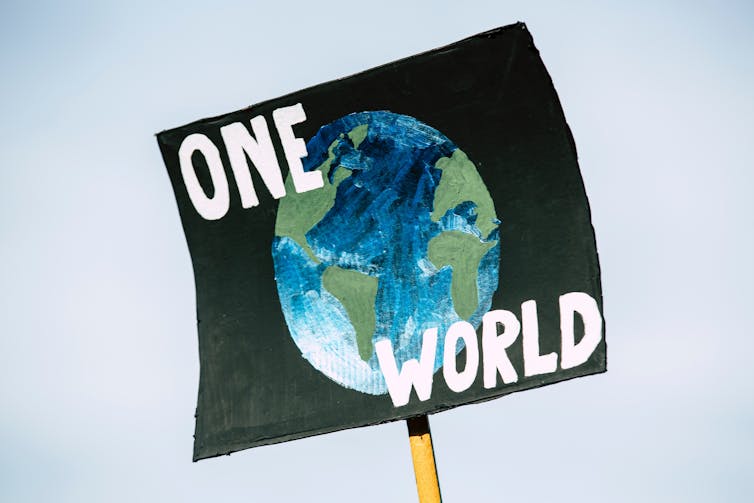
The cost of things average people must buy—healthcare, education, housing—tends to have risen more than wages did over the last two decades. Rising inequality across income, race and gender all demand urgent attention. It needs to made clear to leaders that in 2024 their citizens are expecting them to raise their ambition for humanity and deliver bold agreements to tackle poverty, inequality and climate change.
Government’s policy making will need to become more innovative to address such challenges other wise we going to have a left behind technological societies. We’re going to see, unfortunately, more technological unemployment. We’re going to have to think very carefully in political terms and in social terms about the implications of further automation.
Individual responsibility will play a role, too, in areas such as climate change.
To ignore the issue of inequality culture will need to adjust in terms of revisiting some of our values.
—————–
To start thinking outside of the box. We may have to consider very seriously ideas such as a universal basic income.
There are just over 7 billion people living on the planet today, spread between 196 (recognized) countries. Within each of these countries are groups of people with different ethnic backgrounds, different religious beliefs, different political beliefs. It’s because of these differences, you could argue, that the world is plagued by conflict.
Unfortunately, the future isn’t talking. It’s just coming, like it or not and we as individuals need to take ownership of this.
I dont know about you but I realized long ago that globalization was on its last legs. I also realize this isn’t pleasant to think about. Western economies have become knowledge based. This means Marx’s three factors of production (land, labor, capital) now have a fourth.
Politics as a social contract between a sovereign and citizens is no longer working. Each individual’s share of sovereignty, and therefore their freedom, diminishes as the social contract includes more people.
Power now resides with those best able to organize knowledge turning politicians into basically middlemen, bring a shift to direct democracy, with popular social media protests swamping sprawling governments.
We must do more to assertively channel technology to support progress and protect people and the planet.
As we entered the the 2020s it is clear that we are far from unlocking the potential of technology for our toughest challenges. We stand at a critical juncture to put these technologies to work in a responsible way for people and the planet.
Technology and political trends are aligning against mega-powers like the US and China.
How do we reconcile that with democracy in countries with millions of citizens?
Not with “America Alone” ” Brexit” or any other forms of isolation, which are highly problematic, as they are based on anxiety and insecurity, so inevitably create discord and division.
This is obvious to anyone with a brain looking at climate change – trade – wars – inequality – technology’s – and ideologies of I am all right Jack.
—————————
Historically, political regimes tend not to last more than a few centuries.
I’m not sure we can. Some things are so horrible, you don’t want to think about them.
- Today’s great powers have little choice but to spend their way to political stability, which is unsustainable, and/or try to control knowledge, which is difficult.
- Nor do we have any elder statesmen or nationally unifying figures whom everyone respects, much less agrees with. This will make our various problems worse.
- Ownership rights mean little without a government to protect them and courts to settle disputes.
- This world we now inhabit wasn’t always fit for human’s nothing requires it to remain so. At some point, it will develop into something else. When and how that will happen, we don’t know yet. But we know it will.
- We haven’t even talked about climate change. Issues like climate change will create further exacerbations on conflicts, and new forms of technological and cyber warfare could threaten countries’ elections and manipulate populations.
In the last two years: 90% of the data in the world was created.
Now it is up – technology companies large and small, industry, policy-makers, citizens and consumers alike – to use this power for good, before we run out of time. Now is the opportunity for leaders to step up into this new wave of opportunity and expectation.
We are the first generation to know we’re destroying the world, and we could be the last that can do anything about it. Our leaders are not on track to deliver. We need to ensure we hold our politicians accountable.
Food production is a major driver of wildlife extinction. We need to make wasting our resources unacceptable in all aspects of our life. We can all do more to be more conscious about what we buy, and where we buy it from.
We can and must end poverty and hunger, in all their forms and dimensions by addressing the underlying complex issues of fragility, conflict, and displacement and the looming threat of climate change.
The challenges facing the world are complex and intertwined and require complex solutions.
Another word is about to enter our collective dictionaries: permacrisis. What we do between now and 2030 will determine whether we as a collective species are intelligent or just dumm machines
Solutions to climate change and biodiversity loss won’t come from any one sector: they’ll come from governments, finance, business and civil society.
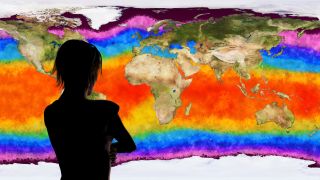
We’re analyzing satellite images but unable to see the picture that we all live on the same planet.
Like most of us, we are brought up to think in terms of countries with borders and different nationalities.
In some cases, there are natural borders formed by sea or mountains, but often borders between nations are simply abstractions, imaginary boundaries established by agreement or conflict.
How then do we explain nationalism? Why do humans separate themselves into groups and take on different national identities? Maybe different groups are helpful in terms of organisation, but that doesn’t explain why we feel different. Or why different nations compete and fight with one another.
When people are made to feel insecure and anxious, they tend to become more concerned with nationalism, status and success. Poverty and economic instability often lead to increased nationalism and to ethnic conflict.
The world in general does not have a sense of group identity.
If a terrorist’s biggest weapon is terror, climate change is going to inflict terror beyond belief.
Tsunami’s. Earthquake’s, Hurricane’s, Flood’s, War’s
We must shift 85% of the world’s energy supply to non-fossil fuel sources, not grant more oil exploration licences. Our economies depend on healthy, supportive natural systems.
A more sustainable path is possible. But we need to rally individuals, governments, companies and communities around the world to take action with us over the next decade.
It’s impossible to override the fundamental interconnectedness of the human race.
People from all around the world need to take a stand a citizen’s movement using the NEW BEADY EYE HASHTAG: #movebeyonditwiththebeadyeye
All human comments appreciated. All like clicks and abuse chucked in the bin.
Contact bobdillon33@gmail.com

 bobdillon33blog