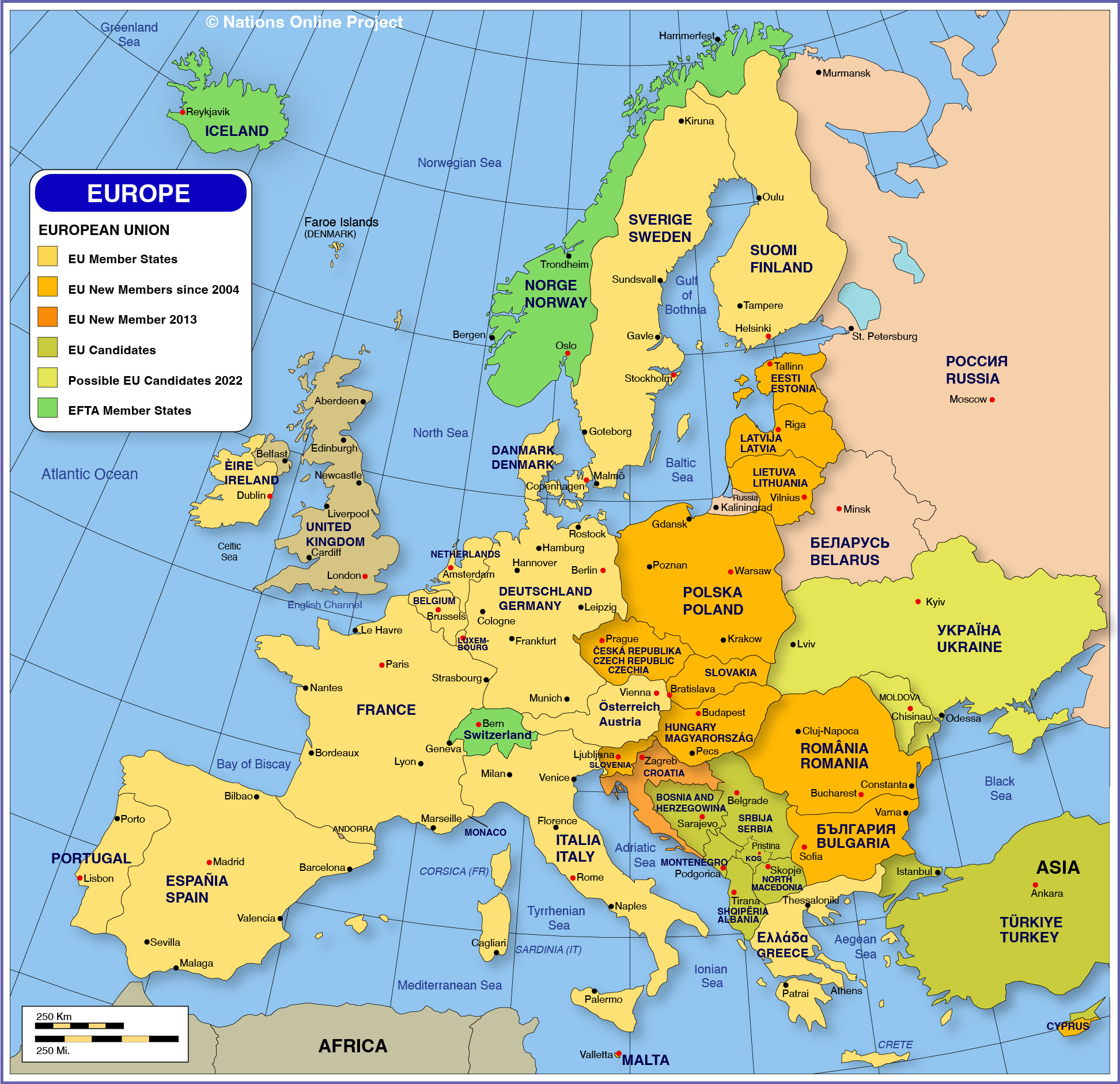
≈ Comments Off on THE BEADY EYE ASK’S: Thinking ahead to 5 years from now, do you think Britain’s decision to leave the EU will have had a positive or negative impact on the UK?
Of course, as with all hypothetical questions, there is no correct answer.
Whether it will be a liberal One Nation Tory party, ongoing coalition governments or the Labour party that will be the political beneficiary is not yet sure.
However, looking at the present state of England against the problems facing the world one would have to say the horizon is far from looking bright.
The longer-term questions about the UK’s relationship with the EU will still need to be addressed no matter what the result of the current general election.
This very question itself will pale in comparison to the coming nexus environmental and energy problems facing us all.
Even if one was to ignore climate change it is truly impossible to overstate the havoc—financial, social, cultural—that could be brought about by peak oil if sufficient renewable energy is not in place to make up for declines in fossil fuels.
By the middle of the next decade or so, we will either all be starving, and fighting wars over resources, or our global food supply will have changed radically.
The bitter reality is that it will probably be a mixture of both.
The one thing we can be sure of is this:
No matter how wacky the predictions we make today, they will look tame in the strange light of the future. From the web to wildlife, the economy to nanotechnology, politics to sport, will see technological change on an astonishing scale.
All this assumes that environmental catastrophe doesn’t drive us into caves.
With over 60% of global GDP will be digitized by 2022 it is a total waste of time for countries such as the UK to attempted to pull up the drawbridge, to increase national production and reducing reliance on imports. These world-changing technologies are already creating more interconnected, interdependent and rapid business networks.
How far beggar-my-neighbour competitive devaluations and protection will develop due to a hard Brexit is hard to predict, but protectionist trends are there for all to see.
The question is, will Britain outside the EU be a more global, more deregulated, more free-trading country five years from now.
Presently nearly half of the UK’s total trade is with EU countries.
Leaving the biggest free trade area with over 500 million consumers won’t be cheap no matter what the divorce bill is. The EU has 53 trade deals worldwide the UK has zero.
The consequent rebalancing of the British economy will therefore take years and more than likely create a food underclass.
WHY?
Because it is as yet unclear when the UK will have the legal authority to begin negotiations; when the UK will leave the EU customs union; and what the trade arrangements between the UK and the EU will be after that point.
It is therefore difficult to see how third countries could engage seriously with the UK until these decisions have been taken. In addition, there are significant obstacles to meaningful trade deals with most of the countries.
The world will be more complicated even if these projections assume an orderly exit from the EU.
Only when we stand together can we secure our prosperity in a competitive world as the distinction between the country, town, will blur, with Artifical intelligence not to mention sea levels rising.
Why?
Because if I’d been writing this five years ago, it would have been all about technology: the internet, the fragmentation of media, mobile phones, social tools allowing consumers to regain power at the expense of corporations, all that sort of stuff but artificial intelligence is proving itself an unexpectedly difficult problem.
To describe EXACTLY what they will be doing in 1,820 days never mind that a second financial crisis in the 2010s – probably sooner than later – that will prove not just to be the remaking of Britain but the whole of the EU.
All human comments appreciated. All like clicks and abuse chucked in the bin.
With NATO future once again up for grabs, it celebrated its 70th anniversary on Wednesday’s with a meeting of all its leaders.
What is NATO Celebrating when actually, NATO is a vehicle for the US-led use of force in the interests of powerful corporations, accelerating militarization, by-passing the United Nations and the established system of international law, while escalating military spending.
Fifteen years ago, Nato’s existential challenge was how to cope with the demise of its old enemy: the USSR.
No alliance in history had outlived the disappearance of the threat against which it was formed.
So NATO today exists to manage the risks created by its existence.
It has reinvented its self five times.
In Bosnia (1995) and in Kosovo (1999), 9/11, Afghanistan to Iraq, the alliance as a whole was called into service to stabilise the former while the US military focused on the latter.
The third future for NATO was devised in the mid-1990s, with membership expanded to former members of the Warsaw Pact. This process, conducted in the name of a Europe “whole and free,” saw the alliance progressively advance to Russia’s borders.
In 2011, the alliance engaged in a renewed experiment with humanitarian intervention “Operation Unified Protector” in Libya. The spillover from this mission destabilized much of North Africa and the Sahel, galvanized radical Islamists from Nigeria to Syria, and precipitated Libya into a still-ongoing civil war.
Then Putin by annexing Crimea and intervening militarily in Ukraine offered yet another, possibly its sixth, post-Cold War “future,” returning to its original role as a security trip-wire in Europe.
Unfortunately, this sixth “future” for NATO is that the Europeans have been developing their own “autonomous” security project, the Common Security and Defence Policy.
This has created a strong case for progressive US disengagement from NATO.
NATO’s status has become a major geostrategic conundrum. Europe does not need two rival security entities in its relatively limited geographic space.
Defining exactly “What is Nato for?” has been a problem ever since the end of the Cold war.
Nato now sells itself as a broad security alliance, a force for stability in Europe, as well as a toolbox of highly trained forces, ready for new challenges.
The irony is that 15 years on, with former Soviet client states like Ukraine, Romania and Georgia all electing pro-Western leaders, it is once again relations with Moscow that could prove the most important and the most problematic.
So what did it agree to at this summit?
The officials have agreed to:
Strengthen NATO’s new command structure by more than 1,200 personnel.
Launch a NATO Readiness Initiative, the so-called Four Thirties.
Set up a Cyber Operations Centre, as part of the new Command Structure, and integrate sovereign cyber effects into alliance operations and missions.
Also, the meeting discussed concerns re space warfare and a new policy toward China. We must never shy away from discussing new realities – particularly Nato’s response to emerging threats like hybrid warfare and disruptive technologies, including space and cyber.
Trump said, “We’d be in World War Three if it weren’t for me”” If all NATO members had spent just 2 per cent of their GDP on defence last year, we would have had another $119 billion for our collective defence and for the financing of additional NATO reserves.”
Boris said, “The fact that we live in peace today demonstrates the power of the simple proposition at the heart of this alliance: that for as long as we stand together, no-one can hope to defeat us, and therefore no-one will start a war.”
Macron made a valid point, he said: ” Nato is brian dead.”
President Recep Tayyip Erdogan of Turkey has already upset NATO allies by purchasing a sophisticated Russian antiaircraft missile system, the S-400. He is now threatening to oppose NATO’s plans to fortify the defence of Poland and the Baltic countries if the alliance does not join him in labelling some Kurdish groups as terrorists.
I say ” It is not just brain dead its political thinking is out of date.”
NATO has carried out wars, aerial bombardments and armed drone operations in Iraq, Afghanistan and Libya to change regimes, but these countries are now in chaos with thousands slaughtered and many more made homeless and destitute with little help for their well-being.
It’s no longer East v West, nor is it starting bombing before you started thinking- Iraq Afghanistan.
No military operations were conducted by NATO during the Cold War.
Instead of allocating 2% of 28 countries GDP on “obsolete,” military spending, in order to play cowboys and Indians.
In fact, only five of the 28 NATO allies have made the grade: Aside from the U.S., the other four were Greece (2.36 per cent in 2016, amounting to $4.6 billion), Estonia (2.18 per cent, $503 million), Britain (2.17 per cent, $56.8 billion) and Poland (2.01 per cent, $12.7 billion).
As the French philosopher and essayist Paul Valéry noted in 1937, “the trouble with our times is that the future is not what it used to be.
Who is the enemy today?
The visible enemy is Climate Change, the non-visible, weaponized algorithm-driven drones.
If NATO is still needed in 10 years, it will have failed in its mission.
NATO can declare “mission accomplished” when Europeans become entirely self-reliant in security terms.
There remains an urgent need to address the root causes of terrorism.
What has Nato contributed to this problem It, in fact, spent $1.23 billion, on new headquarters. ( Dedicated on 25 May 2017.)
Military spending of the NATO countries from 2017 to 2019
(in million U.S. dollars)
20172
2017*
2018*
Albania
144
176
198
Belgium
4,431
4,840
4,921
Bulgaria**
723
961
1,079
Croatia
924
1,045
1,072
Czech Republic
2,255
2,746
2,969
Denmark
3,780
4,559
4,760
Estonia
540
607
669
France
46,036
50,459
50,659
Germany
45,580
49,473
54,113
Greece
4,748
4,853
4,844
Hungary
1,468
1,791
2,080
Italy
23,852
25,004
24,482
Latvia
530
701
724
Lithuania
816
1,056
1,084
Luxembourg
325
373
391
Montenegro
66
84
92
Netherlands
9,622
11,115
12,419
Norway
6,463
7,067
7,179
Poland
9,938
11,856
11,971
Portugal
2,702
3,220
3,358
Romania
3,643
4,359
5,043
Slovak Republic
1,053
1,297
1,905
Slovenia
476
550
581
Spain
11,864
13,186
13,156
Turkey
12,972
14,145
13,919
United Kingdom
55,672
60,446
60,376
Canada
23,704
22,068
21,885
United States
642,936
672,255
730,149
All human comments appreciated. All like clicks and abuse chucked in the bin.
≈ Comments Off on THE BEADY EYE SAY’S: JUST IN CASE YOU DON,T KNOW WHY THE UK IS HAVING AN ELECTION.
( A twenty-minute read before you vote)
This post is COMPLEMENTS to a list compiled by MATT TURNBULL.
His list may shock you, but it does not shock me as there is plenty of evidence of a deeper problem. in the UK. His list, in fact, confirms that the referendum to leave the EU has little to do with with the Eu in the first place.
Anyway, before we see England elect the mother of all hung parliaments.
No amount of lever pulling, within the current paradigm, will get England anywhere but back to where it was. England has hocked most of the economy to save a broken and out of date system of governance.
Even before approaching the management of its miserable plight it needs a written constitution.
It is clear to me there are two big things happening in the world:
A tech revolution that started with the internet, but has now spread to everything from materials science to medicine to robotics; and a green revolution, that started with carbon reduction and is now changing the way people run businesses and live their lives.
Bigger structural changes on the horizon because society as a whole has barely yet to recognise the symptoms of climate change.
We are the only species that ROUTINELY overrule natural imperatives.
The tragedy of Brexit in waiting is that the process may be irreversible while it sheds the need to playing world superpower and gain a modest outlook on its position in a world of change.
It needs to create its own value and reinvest that value not in isolation but within the European community to which it belongs.
In fairness to MATT TURNBULL (I have added below the top motivations of the leave vote) which he will be sharing every day until 12th December supported by his headline comment.
“Nothing else really explains it better. Ignore the bluff, the lies, the spin, the opinion and the outright ridiculous and stick to the facts. This is where we are. Do we let it continue?”
Here is his list: 2010-2019, in case you missed it…
1,000 sure start centres closed.
780 libraries closed.
700 football pitches closed.
Foodbank use up 2,400%.
Homelessness up 1,000%.
Rough sleeping up 1,200%
Bedroom tax caused mass evictions.
Evictions are running at record highs.
35% of U.K. kids live in poverty.
Student fees up 300%.
Student debt has risen by 150%.
Eradication of EMA (education maintenance allowance).
The national debt has risen from £850billion to £2.25trillion.
Emergency Brexit stimulus from BoE in June 2016 of £175b.
Brexit related fall in national revenue of £500b.
GDP has fallen to -0.1%.
GBP fell by circa 15% versus EUR and USD.
Manufacturing in recession.
Construction in recession.
Services close to recession.
25-30% cuts to all govt departments.
25-30% cuts to all councils, mainly centred on Labour councils.
Half of the councils facing effective bankruptcy.
185k extra deaths attached to the political ideology of austerity.
25,000 less police.
20,000 fewer prison officers.
10,000 fewer border officials.
10,000 fewer firefighters.
10,000 less medical professionals.
25,000 fewer bed spaces for mental illness.
OECD calculate 3 million hidden unemployed, the rate is really 13%.
Creation of 1.3m jobs, mainly temporary, the self-employed, gig economy and ZHC.
Only 30k full-time work positions created.
Close on 50% of workers are self-employed, ZHC, or part-time precariat.
80% of the 5.3 million self-employed live below the poverty line.
35% of self-employed only earn £100 a month.
25% cuts for our disabled community.
80% cuts to Mobility allowance.
Closing Remploy.
40% of working households have practically no savings.
70% of households have less than 10k savings.
60% of households can only survive 2 months without a wage.
Household debt reaches a new peak, despite emergency base rates.
Increase of 50% in hate crimes.
Increase of knife crime by 150% to 22,000 per year.
Increase in teenage suicide by 70%.
Suicide up 12% in the year 2018.
Self-harm among young women up 70%.
Life expectancy down 3 years.
NHS satisfaction level at lowest recorded rate.
Council home building down 90%.
200k social homes lost since 2010.
Zero starter homes built, despite Tory flagship programme.
Council home building down 90%.
200k social homes lost since 2010.
One million families on council home waiting list.
100,000 increase on the council home waiting list since 2010.
36,000 teachers have left the profession.
….. and we now have MORE BILLIONAIRES IN THE UK THAN EVER BEFORE!!!!
Why England should leave the EU.
Brexit, in all scenarios, means a departure from the Common Agricultural Policy (CAP) and its subsidy and regulatory regime.
The UK will be obtaining exclusive national fishing rights over its Exclusive Economic Zone (EEZ) up to 200 miles from the coast.
Depending on the terms of Brexit, it may be easier for future UK governments to change environmental standards.
It is uncertain how Brexit will affect UK energy policy.
It is far too early to say what impact Brexit will have on aviation, shipping, public transport including rail and bus, and road haulage.
The UK already maintains its own border controls. It is not part of the internal border-free Schengen Area, so free movement is a myth. Entitlement to welfare benefits for people moving between the EU Member States is closely linked to free movement rights.
The UK currently has an opt-out arrangement with the EU on policing and criminal justice measures, whereby it can choose which measures to opt in to.
A UK withdrawal from the EU would mean that the UK no longer has to comply with the human rights obligations of the EU Treaties.
Reciprocal access to healthcare through the European Health Insurance Card could be jeopardised.
Brexit could mean the Government will not have to provide student loans or maintenance funding for EU students, which would save money.
Consumer protection in the UK is currently a complex combination of EU and national law. A huge amount of UK consumer protection regulation is derived from the EU.
Foreign and defence policy; Acting through the EU means a larger aid budget, the promise of access to the largest consumer market in the world and a louder political voice. All of these can be significant ‘soft power’ tools in the pursuit of European interests. If the UK no longer co-ordinates its policy with the Member States, it will lose access to these shared tools.
International development; The UK channels funds for development cooperation and humanitarian aid through two budget lines, both of them managed by the European Commission:
The devolved legislatures: With Brexit, there could be further policy and legislative divergence in areas of devolved competence, as the UK Government and Devolved Administrations will no longer be required to implement the common requirements of EU Directives.
AND:
The EU threatens British sovereignty.
The EU is strangling the UK in burdensome regulations.
The EU entrenches corporate interests and prevents radical reforms.
The EU was a good idea, but the euro is a disaster.
The EU allows too many immigrants.
The UK could have a more rational immigration system outside the EU
The UK could keep the money it currently sends to the EU.
All human comments appreciated. All like clicks and abuse chucked in the bin.
In terms of almost everything, no one can be sure what the next fifty years will hold nor can anyone be sure just what a government will be doing fifty years from now, never mind next year.
As history has repeatedly shown, political systems come and go.
Given our rapid technological and social advances, (a trend we can expect to continue) we will be looking at many different possible futures because there is a new kind of creature that has entered the world.
When we change the way we communicate, in today’s increasingly interconnected world we change society, creating entirely new systems of thought to deal with complex issues like climate change, and by whom/what and how we are governed.
We are in the throes of the digital age with all of its unknown consequences and it along with Climate Change is ushering in a new phase of the world. Perhaps we are looking at democracy being replaced by Cyberocracy. (Computer(s) make the decisions.)
A precise definition of cyberocracy is not possible at present as it is still hypothetical in form, but it may bring a new emphasis on ‘soft’ symbolic, cultural, and psychological dimensions of policymaking and public opinion.
It will be however a product of the information revolution and it may place a premium on gaining information from any source, public or private, radically affect who rules, how and why.
(That is, information and its control will become a dominant source of power, as a natural next step in political evolution.)
In essence, a smartphone could show us how and can train us in the latest developments to increase effectivity, while making sure a human or a group of people are not directly interacting with the information.
In theory a great idea for efficiency but in practice, those in charge will probably use the information to crush dissent and sell the information off to private companies.
Ideally, the point of cyberocracy would be to ultimately overcome the faults that lie in typical bureaucratic systems, effectively creating an artificially intelligent head of state.
Luckily there is a pitfall, in that the control of all gathered information would then ultimately lie in the proverbial hands of a machine, wherein true humanity becomes lost to the legislative and governmental processes.
The consequence of the information revolution may thus mean “greater inequalities. speeding the collapse of closed societies and favouring the spread of open ones.
Algorithms are already undermining the power base of old monarchies and governments, and these same technologies will subsequently “turned into tools of propaganda, surveillance, and subjugation that enabled dictators to seize power and develop totalitarian regimes.
New modes of multiorganizational collaboration are taking shape, and progress toward networked governance is occurring to enable hybrid systems to take the form that do not fit standard distinctions between democracy and totalitarianism.
A double-edged sword that revolves around symbolic politics and media savvy with governments straining to adapt.
For example vast new sensory apparatuses for watching what is happening in societies and around the world. Of all the uses to which the new technologies are being put, this may become one of the most important for the future of the state and its relationship to society.
Each generation must address its own challenges even though it is not yet clear which future will emerge with the current climate crisis.
Policy problems have become so complex and intractable, crossing so many jurisdictions and involving so many actors, that governments should evolve beyond the traditional bureaucratic model of the state.
Only time will tell.
We now have communications tools that are flexible enough to match our social capabilities, and we are witnessing the rise of new ways of coordination activities that take advantage of that change.
Setting priorities among government’s current endeavours need to involve at least four decisions:
Which endeavours should be continued or stopped; Which are most important; Which are the government’s greatest responsibility; and which should have the highest priority?
Back to the present with climate change.
There is one thing for certain that with climate change there will be tragedies not yet imagined. It will drive people into compact groups and we know that if a group of humans get together without some sort of organised leadership they end up killing each other.
So for the good of all humankind, in fact, all life on earth and the earth itself, we need to push ahead in this area. Or else go back to pre-industrial times and abandon modern life as we know it. Staying the course we are on will lead only to ruin.
Government’s greatest priorities of the next fifty years can be found in their greatest disappointments of the past.
My point is, the government doesn’t remind us of the good things in life, not often. When it works, we barely notice, but when things go wrong, the glaring deficiencies of the system present themselves everywhere.
As a result, the Government used to be for the lack of a better word the parent of the group/ nation hated some days and loved other days.
Should they now be limited to the implementation of certain social norms desirable for holding the structure of society in place?
I want to see some politicians with the forethought and imagination to understand this.
That’s because I need to be reminded of what I’m living for, not an Algorithm of everything, not a government elected on lies, false news, predictive algorithms which is a two-way relationship manipulated by social media platforms, owned by monopolies that are no longer trusted by the citizens they represent.
Without knowing how decisions are taken or who the decision-makers are, and without knowing how decisions are implemented or to what end, citizens feel undervalued and disenfranchised. They do not believe that the government is listening to their concerns.
So where are we?
The freedom that we see emerging from the networked environment allows people to reach across national or social boundaries, across space and political division. It allows people to solve problems together in new associations that are outside the boundaries of formal, legal-political association like governments.
If the past is prologue, however, the government will continue to the extent that a society is measured by what it asks its government to do.
Sure the information revolution will foster more open and closed systems; more decentralization and centralization; more inclusionary and exclusionary communities; more privacy and surveillance; more freedom and authority; more democracy and new forms of totalitarianism.
Yet setting priorities is not just about addressing past failures. It is also about protecting past achievements.
To solve the problems and understand the role and limitations of government, will require a new way of thinking and working and a new level of trust and understanding of people.
The revolution in global communications thus forces all nations to reconsider traditional ways of thinking about national sovereignty.
A longer view of history provides little assurance that the new technology favours democracy.
Firstly, governments must be seen as capable and effective in carrying out their activities. Secondly, the government must be seen as treating all people equally and impartially, without favouritism or discrimination.
And thirdly, the dimension of human concern and personal connectedness: government must be seen to be sincerely caring about each person’s welfare.
Digital is offering a great way to respond to this at a service level but is only part of the answer when it comes to mending and building relationships with people.
Even in the best of times, delivery is hard for governments: objectives are not always clear; they change in response to events or leadership transitions.
An endeavour cannot be a top priority, or a priority of any kind if it is not worth pursuing at all. The term “greatest” does not mean either “most successful,” or “most important,” or even “most appropriate.” Rather, the greatest endeavours of the present are the ones in which the government has made the greatest investment.
This fact base speaks for itself.
The first step, then, is to choose three to six priority outcomes—any more will be too many. They can’t all be equally important.
These priorities must be written into the constitution of a nation so they cannot be tampered with.
And establishing the right metric for each priority to ensure it does not yield unintended, negative consequences must be set by citizens assemblies rather than relying on leaders political instincts.
People must feel ownership of the plan by agreeing on criteria for continuation funding.
Communicating is only the beginning.
Stakeholders must be engaged all the way through to delivery of the promised outcomes. Accountability is established,outcome-based budgeting, so that funding is directly linked to and contingent on the delivery of key outcomes.
This, as we know, is notoriously difficult to pull off in a world of silos, disparate agendas, and competition for funding. But a small number of priorities will go a long way toward securing the support required.
Government achievement ebbs and flows with changing economic, social, and political circumstances, with the mere passage of time.
The worst form of government is the tyrannical form, where all power is with one man, a leader who rises from the chaos of democracy, thirsting for power but not having the wisdom or learning to use it wisely.
With the issue of government Citizens, bonds targeting citizens funding will resolve this problem. They could unite as a human race and get our priorities in check so we can find out what’s really out there and perhaps where we really came from.
Their performance should be measured against agreed international benchmarks a portfolio of targets at varying levels of ambition.
Who would set the levels?
The U.N. is essentially an incredibly weak confederacy it should be disbanded, and a new, better UN made, with a written Constitution. All member countries hereby agree to uphold and abide by all constitutional clauses upon entry to the United Nations and any violation of any of the several clauses herein will be punished with the full force of each member state.
And finally, here are a few endeavours.
Reduce Carbon emissions.
Continue reducing nuclear weapons.
Reduce discrimination, pollution, poverty, and inequality.
Expand health care.
Devolve digitally responsibility to promote and protect democracy with the right to vote by electronic voting.
Create a Digital government performance platform.
As to which type of government is the best for mankind, well, if only we had the answer to that…Hierarchy does not end.
All human comments appreciated. All like clicks and abuse chucked in the bin.
I watching a TV programme the other night and during the Ads I overheard a promotion by you know who promoting the iPad as the new pacifier for babies and toddlers.
Unbeknownst to most of us, an invisible, game-changing transformation links everyone in this picture: The neuronal circuit that underlies the brain’s ability to read is subtly, rapidly changing – a change with implications for everyone from the pre-reading toddler to the expert adult.
Is technology makes us weaker socially, physically, and mentally lazier?
Is the digital age making our minds weaker and deep thinking impossible?
How many hours do you spend hopelessly scrolling on the internet?
There is not a handful of societies that are, slowly and painfully, evolving institutions and behaviours that allow people to escape these ills on a broad front and if we continue to rely on technology, we will reverse all the progress we have worked so hard to achieve.
The answer to the above is in how we use technology by understanding all of the ethical implications technology can have- the ethical dilemmas of automation and surveillance are only beginning to surface.
Across the free world, the rise of populism and the decline of open debate is stressing our traditional democratic and societal institutions.
With every new release of technology, we become less physically active and more reliant on a screen, fearing that one day we will be the space humans in Wall-E who hover around on chairs, the epitome of laziness.
So anyone hoping to improve their mind both psychologically and cognitively might want to think about taking up the habit of regular reading.
Books can take you anywhere you want to go, exposing you to so many wonderful things.
When you are reading, you are focusing on and concentrating on one thing. You are using your memory muscle.
Technology cannot (yet) harm anyone by itself but it is worsening our ability to socialize directly with other people.
Who really wins and who loses before the Information Age has truly “come of age.”
In this “revolution” of information delivery, what is happening?
Poverty, disease, ignorance and intolerance, and inequality are humanity’s default condition.
Reading to your children helps build a bond and open up communication. It is another way of showing them, love. Your child’s language skills and literacy depend on you talking and reading to them.
Digital delivery is truly revolutionizing how we get our information but not how to decipher it.
In short, the reader is turning to the Internet with Skim reading.
The result is to scatter our attention and diffuse our concentration. This trend is likely to continue for decades to come.
In the end, it should not be a surprise that so many cannot make it through three or four paragraphs before turning their attention to something else.
It is not just the Internet itself causing this shift in our behaviour. It is modern technology—computers, smartphones, software, etc.
In the name of efficiency, human beings are losing their ability to set aside hours to simply read without distraction.
Until the last century, no one ever spent one minute in front of a television, computer or on a smartphone or iPad. Back then People had time to mentally digest—to think and analyze.
These days when one attempts to read a long article or book there is an uncomfortable sense that someone, or something, has been tinkering with your brain, remapping the neural circuitry, reprogramming the memory.
What will be the long-term effects of such social behaviour?
What will happen to the children and teenagers of today who have even fewer occasions to read and think?
Will a large enough foundation be built for our children to make correct decisions?
What about your future?
Deep reading processes may be under threat as we move into digital-based modes of reading.
We don’t have time to grasp complexity, to understand another’s feelings or
to perceive beauty.
Skim reading is a new normal and the effects on society are profound.
Set aside time to think and read and you will be investing in your future.
We need a new literacy for the digital age.
This is not a simple, binary issue of print vs digital reading and technological innovation.
It is about how we all have begun to read on any medium and how that changes not only what we read, but also the purposes for why we read.
A great deal hangs on it:
The ability of citizens in a vibrant democracy to try on other perspectives and discern the truth; The capacity of our children and grandchildren to appreciate and create beauty; and the ability in ourselves to gobeyondour present glut of information to reach the knowledge and wisdom necessary to sustain a good society.
In this hinge moment between print and digital cultures, society needs to confront what is diminishing in the expert reading circuit, what our children and older students are not developing, and what we can do about it.
The potential inability of large numbers of students to read with a level of critical analysis sufficient to comprehend the complexity of thought and argument found in more demanding texts, whether in literature and science in college or in wills, contracts and the deliberately confusing public referendum questions citizens encounter in the voting booth.
The whole point of technology is a convenience, not a dumbing down.
All human comments appreciated. All like clicks and abuse chucked in the bin.
Footnote: In order to have your blog read it appears that if it does not have a read time it is just skimmed.
There is no doubt that climate change is a complex subject and is challenging us in ways we’ve never seen before.
Based on what scientists understand, the changes we are seeing today are far more rapid than anything that has occurred in our planet’s history.
How best to depict the climate emergency is down to the media to ensure that the images publish accurately and appropriately convey the climate crisis that we face.
To address Climate Change with or without an agreement is going to cost trillions.
when trying to depict what cannot always be seen.showing the direct impact of environmental issues on people’s daily lives as well as trying to indicate the scale of the impact,the effect of the reporting and how we perceive the risks. to unearth photography beyond the usual keywords of climate change, heatwave and floods.
The problem is: No one, No country, No government, No Organisation, No economy, wants to pay for it. T
THIS ISSUE IS CRITICAL IF WE ARE TO ACHIEVE ANYTHING WORTHWHILE.
Everyone is, however, paying lip service to the problem.
Delay action will drastically increase the costs of taking action, but no one ever talks about how the funding required can be achieved.
Why?
Because the costs will not be shared evenly.
The trillions have to come from somewhere.
The world’s most powerful institutions are still engaged in a game of lethal procrastination that threatens to speed up global ecological collapse and sow chaos throughout human civilization in the decades to come.
The world’s biggest asset managers remain heavily invested in climate-polluting industries ― and do little if anything to convince those companies to change.
Forceful engagement with the companies in these sectors to hasten their transition to low carbon technologies must occur.
A Bloomberg New Energy Finance chart shows investments in new solar, wind and other non-hydroelectric power projects dropping from 2017 to 2018. (Photo: Bloomberg New Energy Finance)
Clearly, it’s not enough.
At this juncture, to meet the growing demand for green and social investments we need to have a dual focus on maximizing the potential of our current financial instruments, while also creating space for the next wave of innovations for sustainable growth.
We all know that there is already technology that exits, or that are coming on stream to tackle the problem head-on. Not in thirty years from now.
This blog as I am sure are others have been posting a solution that addresses the fair spreading of the costs worldwide.
( See: 0.05% World Aid commission)
All human comments appreciated. All like clicks and abuse chucked in the bin.
The problem with the above question is where to start.
Around the world, democracies are distrusted by a majority of their citizens.
As a result, it is creating space for the rise of authoritarian-populist forces or other forms of independent representation.
Without trust we are diminishing our capacity to meet complex, long-term challenges, reducing support for evidence-based public policies and promotes risk aversion in government.
This lack of trust is and will translate into a lack of action.
I suppose that there is no one simple explanation for what drives or undermines political trust but there can be no doubt that social media with the growing worldwide inequality is contributing to spreading distrust. and forming barriers of political engagement.
This is set to get worse with profit-seeking algorithms.
So what is it about citizens, such as their educational background, class, location, country or cohort of birth, that makes them trusting or not?
In general, the strongest predictors of distrust continue to be attitudinal and are connected to negativity about politics which is being influenced more and more by technological algorithms of prediction and recommendation.
What would it be that makes citizens feel that their vote could deliver value?
Most interventions tend to focus on dealing with issues of social disadvantage through education, labour market activation, public participation, improved representation, place-based service delivery and other forms of empowerment.
By offering more participation or consultation we are turning politics into a tokenistic exercise, generating more cynicism and negativity among citizens, who are turning to Populism.
The term populism can designate either democratic or authoritarian movements. Populism is typically critical of political representation and anything that mediates the relation between the people and their leader or government.
Populism usually combines elements of the left and the right, opposing large business and financial interests but also frequently being hostile to established socialist and labour parties.
In its contemporary understanding, however, populism is most often associated with an authoritarian form of politics.
Populist politics, following this definition.
It revolves around a charismatic leader who appeals to and claims to embody the will of the people in order to consolidate his own power. In this personalized form of politics, political parties lose their importance, and elections serve to confirm the leader’s authority rather than to reflect the different allegiances of the people.
Depending on one’s view of populism, a populist economic program can, therefore, signify either a platform that promotes the interest of common citizens and the country as a whole or a platform that seeks to redistribute wealth to gain popularity, without regard to the consequences for the country.
In Europe, we are seeing the rise of the Swiss People’s Party, the Austrian Freedom Party, the Swedish Democrats, the Danish People’s Party, the Northern League in Italy, Marine Le Pen in France, Victor Orban in Hungary, and Greece’s Golden Dawn and of course the Brexit party in the UK.
Elsewhere in the world one has to only look at Donald Trump, Dufeele in the Philippines.
The question of what’s fueling this populist?
It’s nothing new.
Most of us are now live in two increasingly separate worlds one wants to eliminate health care, shred the social safety net, and cut taxes on the rich—benefit the winners from globalization and work against the economic interests of the working class.
They others want revenge and this revenge is —not of the economically insecure, but of the cultural left-behinds.
So are groups like the those mentioned above, just groups of nativist, putting their nation first?
The answer is obvious. No. They’re looking backwards.
However, that is not the case, because if populism was truly driven by economic fears, populist candidates should be drawing votes from those who are suffering the most: unskilled workers, the unemployed, those with lower levels of education, and less advantaged groups in cities and urban centres.
Because economic issues have declined in importance to voters, like cultural issues—around women’s rights, abortion, same-sex marriage, and gay rights—climate change – have risen to the fore, along with the anti-immigrant sentiment, authoritarianism, mistrust of global national governance, and right-wing ideological self-placement.
The rise of populist parties reflects, above all, a reaction against a wide range of rapid cultural changes that seem to be eroding the basic values and customs of Western societies.
So a populist leader is forced to be in a permanent campaign to convince his people that he is not established and will never be. Magnify the political divide. Ultimately he ignores complicated democratic systems and is therefore viewed with suspicion…
What if anything can be done?
The importance of beliefs can only be tackled through discussion of the role of mass media in influencing public trust.
The power of mass media is not easy to reconcile with the empirical evidence of experimental social psychology research which demonstrates that people with strong beliefs and values often remain unpersuaded even in the face of overwhelming evidence to the contrary.
Positive economic growth does not necessarily increase political trust, but negative economic growth and prolonged economic crises.
Rather, economic development and social modernisation in advanced industrial democracies have encouraged new types of engaged, questioning and assertive publics, for whom strong economic performance no longer automatically leads to increased trust.
There is only one answer to this question.
It is greater political accountability of MPs and political parties to their electorates and members.
Providing performance data will not work because it leads to government officials trying to manipulate the way citizens judge their performance. Positive data is given prominence, less helpful data sometimes hidden.
There is one thing for sure because trust cut across racial and ethnic lines any solution to the puzzle of political trust can not be achieved without our engagement.
Anti-establishment, might having faith in “plain talkers” and “ordinary people” as opposed to the “corrupt establishment” of business, government, academia, and media but without formal rules there can be no good democratic practice.
Here I may be forgiven for indulging in some wishful thinking and believing that, despite the current shortage of inspirational leadership in the West, trust in democratic principles and values that transcend national boundaries will remain strong and shared by a large number of ordinary people across the world.
The good news for political parties that take up the cause of democratic reform is that the citizenry is ready to take up the challenge.
Finding what is the equilibrium point between political trust and distrust requires reducing inequality because political attitudes are shaped by more than people’s pocketbooks.
In effect, political parties are each a product of the world view of their membership or of their directing minds. Their attitudes, carriage or expression are often indicative of the groups’ underlying body of beliefs, catechism or affirmation of faith.
The chattering class will continue to wallow in their own cynical self-assurance, and the best and most principled among us will remain reticent to enter to the moral minefield of public life.
At the heart of this faulty ontology remains the myth of the autonomous self, the pipe dream that our identity is a “blank slate” that WE choose regardless of the desires and influences of others.
Dogmatism and doctrinaire ideology may seem no longer attractive or realistic political attributes. But democracy will continue to mean a change of government from time to time as if oscillating between two sides with opposing philosophies rigidly applied.
The democratic tradition of alternating governments, evolving policies, pragmatic choices, etc theoretically presents us with some choice with regard to the management of our economic and other affairs.
Being so vulnerable to purely political decisions surely honesty is required.
Perhaps it is time to remove politics from decisions that require long term solutions andset them in law, like reducing Carbon emmission, before we see civil unrest, and migration on a massive scale.
Why should this be done:
Because elections are for political parties to be in office for the short term – five years if not re-elected.
All human comments appreciated. All like clicks and abuse chucked in the bin.
Everyone sees the world in different ways however the greatest innovations of man are found in the most simple things:
Starting with Fire, Language, Tools, and Wheel writing has been the sole reason that mankind has been able to accumulate knowledge.
Since then the use of our inventions have taken us a long way, they’ve allowed us to land on the moon, travel over oceans, and even eliminate major health threats with various medicines.
You could not be blamed for asking what was actually gained by landing on the moon — a handful of rocks and a game of low-gravity golf — was of virtually no value and yet the act of the journey was invaluable beyond all measure as it personified our continuing evolution.
The same is true with technology today.
The development of it is mind-blowing but its application is almost entirely mindless – profit-seeking algorithms and weaponized drones.
Setting aside why do we exist and what is the purpose of life? (These are hard questions that demand answers) it is what we have not achieved that will be judged by future generations.
Karl Marx once famously observed that capitalism carried within it the seeds of its own destruction but he was wrong. It’s not capitalism that’s the problem, it’s people.
The human race ended the 20th century in pretty good shape, at least comparatively speaking.
The first half of the 1900s was almost certainly the most bloody and brutal phase of humanity’s existence.
Now we have all the information in the world yet it has made us only more ideological and more ignorant; we have access to limitless opinions yet we seek to criminalise those who don’t agree with us. We are so advanced and yet so backward, so cynical and yet so stupid, that we can no longer even agree on what constitutes a fact.
Welcome to the 21st century.
Consider the internet itself, probably the most revolutionary invention in the history of humankind. Its potential to share information thus to accelerate the advancement of science and keep the world running in the event of a catastrophic disaster — the purpose for which it was first intended — is all but limitless.
And what do we use it for most? Porn.
Consider the smartphone, the match to the powder keg of the worldwide web. Almost everyone in every half-developed part of the world, even people living on the streets, has a device more powerful than supercomputers that once took up whole buildings. We can access virtually any image, any idea, any information from anywhere in the world.
And what do we overwhelmingly use it for? Taking pictures of ourselves.
Let’s look at medical technology — the smartest minds on the planet developing machines and medicines that keep the average person today alive for longer than was once ever dreamt of.
And what is the result?
We are fatter and lazier than ever, resulting in spiralling hospital costs that will send most Western governments broke in a matter of decades. It was once said that the only two certainties in life were death and taxes and yet now we are defying death and there aren’t enough taxes to pay for it.
We are too dumb to even know when to die.
It may well be impossible to connect a full chronological series of species, leading to Homo sapiens, but over millions of years of evolution, we’ve picked up some less than ideal characteristics.
Why? Because of greed.
It will take the efforts of several scientific disciplines and sophisticated technology, probably over many years, to discover the underlying nature of our mental faculties, their neurological basis, and their development over time.
And it’s fair to say that we have little idea of what we’ll evolve to in the future, but there is one thing for certain, evolution is about adapting to your environment – Weaponized drones, Climate change, Algorithms.
Algorithms that are feeding Social media, are stripping us of a collective understanding of what is going on in the world.
People like to blame fake news on Facebook, and that is true enough.
But the far greater truth is far worse than that. Neither fake news nor Facebook emerged like Athena fully-formed from nothing. They were made by us. By us and for us and of us.
While the positive uses for technology are endless I marvel as I read Asimov to see the way in which he foresaw the ethical conundrum in which we now find ourselves embroiled.
Of course, when they (the future generations) look at our achievements the one thing they will not be able to comprehend is why we have not been able to stop killing each other.
Weaponized drones are now more acceptable than land mines, cluster bombs, or chemical weapons.
It might be argued that this would be a way of sparing human beings who could stay comfortably at home and let our intelligent machines do the fighting for us. If some of them were destroyed — well, they are only machines. This approach to warfare would be particularly useful if we had such machines and the enemy didn’t.
Just like those tried at Nuremberg who attempted to wash their hands of mass killings we have now developed weaponized drones to kill, with a Punches Pilot immunity, that is violating all existing international law.
So humans through the use of technology may eventually reach a point where they can force evolution upon themselves.
Perhaps the result (if we are not already wiped out by Nuclear or a Weather bomb) will be that we’re no longer subject to the driving force of evolution – but unnatural selection by drones.
Now the question is, how accurate is this statement?
Is technological progress actually taking us backwards?
Are we advancing ourselves to death? At what point do many deaths become too many deaths?
This is the first problem with technology.
If it is accurate, we’re already screwed.
Of course, none of this is important given the glacial pace of evolutionary change, we probably won’t have to worry about that for thousands of years.
Wrong.
We’ve come to believe that, with enough information, human behaviour is predictable.
But number-crunching algorithms are leading us perilously wrong. There’s something unsettling in the idea that, amid the vagaries of choice, chance, and circumstance, mathematics can tell us something about what it is to be human.
Who we are together, as a collective entity?
Despite the grand promises of Big Data, uncertainty remains so abundant that specific human lives remain boundlessly unpredictable. The more data that are collected, cross-referenced, and searched for correlations, the easier it becomes to reach false conclusions.
It might be true that in large groups, the natural variability among human beings cancels, however, if we end up with algorithms setting thresholds extremely unlikely outcomes are bound to arise eventually.
The gift is not a technology to enable us to realise evolution for the cruel being it is, but giving mankind the intelligence and tools to exclude ourselves from the other species on the planet and take a step back to interpret for ourselves where we as a race are going?
Leaving the brutality of evolution behind is not a gift given to us by evolution.
We have evolved to the point whereby we stand on the threshold of controlling our genetic and ultimately evolutionary destiny. Unfortunately, the problem with humans is, whenever we encounter a problem we have evolved to the point where we think that we can overcome it with technology.
Advances in technology, medicine and culture mean it isn’t just the fittest who get to pass their genes on to the next generation.
External aids could be entirely responsible for our survival.
All of this relies on earth’s natural resources which are supposedly gonna be gone by 2050!
The problems in this world are manmade therefore man can solve them.
The sad truth is that we have Governments and World Organisations that pay lip service when the real debate is a knowledge- and research-based exchange of argument and counterargument that should be focused at the analysis of a specific question, our survival.
Passion and competition, yes, but, more than anything else, debate is an exercise in critical thinking! The human brain, being a machine striving for maximum efficiency, typically remembers where information is stored, rather than the information itself.
Technology has already affected the way our memory works.
AI. After all, natural evolution wouldn’t be able to mould and program devices to a point of sophistication that may lead to sentience, but we may be able to and maybe at that point even though its not natural, it is an evolution born of natural origins and most likely would go on to create newer better versions of itself.
In theory, humans are exercising their judgement in the process, but in reality, the computer system is viewed as too “smart” to be second-guessed by a human being.
So . . . what do we need to be more afraid of?
Robots with a compulsion to out-think humans? or humans that are afraid to second-guess the robots?
We must confront an urgent problem related to technology: the automation of “pre-emptive violence” – front-loaded with a bias to kill, with little impetus to contradict that bias.
At present drones are the most devastating driving forces for terrorism and destabilization around the world.
So are we at the peak of human evolution?
Certainly not. Certainly not as long as there are humans, there will be human evolution.
We are not even close to the peak of evolution.
Just look at wthat werecently found > The Higgs Boson, Mapped the Human Genome, Cloned a sheep, built the International Space Station, discovery the Double Helix Structure of DNA, Split the Atom, invented the Internet, we’re revisiting the theories of Relativity with Quantum Mechanics.
We have Created Nuclear Weapons, the Periodic Table of the Elements, Created the Internet Developed Vaccines, Created Music, Created Photography, Flight, Electronic Devices, Traveled to the Moon, Eradicated Small Pox, Created the Television, Discovered Mathematics, Invented the Printing Press, The Phone, Discovery and Control of Electricity, Cars, Invented Zero, Created of United Nations, Discovered World is Round.
AND STILL, WE ARE UNABLE TO ACT TOGETHER.
Why?
Because you know the downfall of civilisation has really passed the point of no return when even a rich white guy can’t get anything done.
Humans are the only organism that can alter their environment to suit them (instead of the other way around)
Finally, people must take into account that nature will commence exerting its own controls LONG BEFORE the human race has reached the point where it can step off the evolutionary treadmill.
With our increasing reliance on technology – and in particular machinery – to do our dirty (but muscle-enhancing) work. The less each generation depends on physical strength, the more likely it is that the whole species will grow weaker to the point of stagnation.
As evolution relies on the survival of the fittest, evolution itself will evolve everything else in all our lives will be transitory and every other artificial intelligent goodwill application will become visionary.
Only when we’ll be able to repair and augment our children’s DNA. Then we really will have triumphed over evolution. Race” will no longer be an issue. Perhaps we will stop killing each other.
Yet we’ve got our problems. A lot of them but the very things we invented to sustain us will destroy us.
The exact nature of our evolutionary relationships with the planet and AI will be the subject of debate for the foreseeable future.
It doesn’t matter if we’re uncovering evidence for climate change or deciding whether a drug has an effect: the concept is identical.
By setting an arbitrary threshold, and agreeing that anything beyond that point gives you grounds for suspicion with greed this is the evolutionary path we are setting our selves.
Mentally the world appears to be de-evolving with smartphones and social media platforms.
All human comments appreciated. All like clicks chucked in the bin.
The beady eye is far from the first voice to ask this question and it certainly will not be the last.
We might even come to “question whether we still have free will.
There is no doubting that the social web has created amazing opportunities to learn, discover, connect, but its downside as it penetrates our daily lives is becoming more and more prevalent in the creation of our future lives and the societies we live in.
If the public discussion is shifting increasingly to online fora, and those fora are having more and more influence over democracy it becomes increasingly important to apply principles to them.
Honest political debate is essential for the health of a democracy.
If discussions of import move into space where they can be readily censored, then we will simply no longer live in a society with a free exchange of ideas, because the playing field will always be tilted.
One only has to look at how social media platforms are amplifying what is wrong with the world.
While we all reveal a huge amount of personal information online we are losing the ability to determine honest facts that democracy depends.
Basically, companies that run social media platforms are monopolies or near-monopolies in their areas of operation, and the only way we can achieve the desired outcomes is through clear, effective legal regulations.
We can’t always control how others use their platforms but we can apply the same regulations that govern all other forms of Media.
The public cannot rely on these company’s self-regulation, because self-regulation raises more questions than it answers.
The fact is that the formation of a platform takes place in a vacuum, whereas the formation of any competitors do not, so they cannot be considered parallels in any way.
If we take companies like Facebook and Google they both derive most of their revenue from advertising. They essentially constitute a duopoly because they have access to the best data about individuals. Every memory, picture, emoji, song, video, link, gripe, fear, hope, want, dream and bad political opinion posted is mined and monetized as data.
As a result of their algorithms, they are creating and reinforcing divided and insular online communities that do not interact with people or information with which they disagreed.
At the end of the day, how Facebook and Google conduct their businesses undermines privacy and raises questions about ethical behaviour in the uses of our information and their role in society.
The Internet is a “utility” like water or electricity. It is essential to modern life, not an optional subscription service.
Determining how to regulate Facebook or any other platform may first require some kind of definition of what it is.
Facebook brags about connecting us to our family and friends — but it also about directly influencing the outcomes of elections across the globe.
It sits on top of industries including journalism, where it, together with Google, essentially controls the distribution channels for online news and, in effect, the way people discover information about politics, government and society.
They ( Google, Facebook, Twitter,etc) have figured out how to take advantage of this dynamic to distribute false information about political candidates and hot-button political issues in order to drive up traffic and advertising revenue.
Protecting our community is more important than maximizing their profits.
They are given protections that no one can sue them for any reason — that is Google and Facebook nither are responsible for the fake news that appears on their sites.
They are completely shielded from any responsibility for the content that appears on their service.
Changes to legal protection (which has been interpreted by judges to provide a safe harbour for online platforms even when they pay to distribute others’ content and decline the option to impose editorial oversight) would likely be devastating to online platforms like Google and Facebook and would transform the way people interact across the entire internet.
However, with legal protection, sites like these could be held responsible for libellous comments posted by readers, Google could lose lawsuits over potentially false or defamatory information surfacing in search results, and Facebook could be sued for any potentially libellous comment made by anyone on its platform against any other person.
The legal bills to defend against libel and defamation claims would be enormous.
We all need protection and the ability to request platforms to provide us with control over online information by making it accessible and removable at an individual’s request.
The government, on the other hand, has a regulatory intent to protect citizens from content that is obscene or violent.
Should Facebook and their like be regulated?
A question that is never going to end.
However, until we recognize that there is no fool-proof safeguard to keep horrific content away from the eyes of children we rely on huge fines to the detriment of us all.
Till then with all internet platforms deflecting criticism, social media will be more psychologically damaging than anyone expected.
We need a radical shift in the balance of power between the platforms and the people.
It is beyond comprehension that we tolerate the present position.
Or is it? When you see the below.
Would you ever be prepared to use a nuclear weapon?
This question is increasingly put to politicians as some kind of virility test.
The subtext is that to be a credible political leader, you must be willing to use an indiscriminate weapon of mass destruction.
We should be baulking at the casual way in which political discourse on this topic has developed which is politically unacceptable and morally despicable.
If a mainstream politician unblinkingly said that they would use chemical weapons against civilians there would be uproar. If a self-proclaimed candidate for prime minister boasted that they would commit war crimes, it would be a national scandal. Nuclear weapons should be seen no differently.
It’s time that nuclear advocates spelt out the reality of what their position means.
The human race is so good at speaking, it’s lost the art of listening.
It might be easy to brush away the febrile atmosphere online as a nasty byproduct of free expression: I don’t want Facebook having everyone’s verified identities. I do want their platform and other platforms to be held responsible legally for content that is false, racest, hateful, rightwing fascist propaganda.
I do know that if the big platforms, as they already do in part, forced some verifiable information to back up use, we could tame this wild west with legal requirements
I’ll give up on the consensus-building when I can open a platform knowing who to hold legally responsible.
All human comments appreciated. All like clicks and abuse chucked in the bin.
We all know that new data-driven technology is transforming our society.
Our digital society is creating new and profound challenges and carry significant ethical risks to us all.
To be human means that you are persuadable in every single moment.
If you need any evidence of this you don’t have to look any further than the current impeachment hearing in the USA and England with its general election.
The troubling influence algorithms have on how we make decisions are now treating the foundations of our Societies.
Algorithms are now usually a component in a broader decision- making process involving human decision-makers. Far from being neutral and all-knowing decision tools, complex algorithms are shaped by humans, who are, for all intents and purposes, imperfect.
Determining the meaning of sensory input is one of the most constantly ongoing, and important, functions of any brain. By refining our awareness, we transform existence into beauty, thinking into philosophy.
Our increasing reliance on artificial intelligence is destroying the meaning of life.
Few of us understand them or the implications they are having or will have. .
They are taking the creativity away from the decision-making process for instance.
They could turn us humans into mush-minded creatures who can’t be bothered to make our own choices.
What if the new algorithm rated my friend and another woman as a 90% match, would that mean he would simply trust the algorithm and go straight for a proposal of marriage?
Important parts of our lives are being run by AI without sufficient scrutiny.
Self-learning systems are not autonomous systems however they could lead to a Master Algorithm that could match Einstein’s theory of relativity in its world-transformative power.
Algorithms are changing our relationship with each other, with doctors, police, politics, work, health care.
They are at work where ever you look. When you do a web search, machine learning chooses the results you get. Interactive processing allowing the software to learn automatically from patterns. Algorithms are not only being used just to make a profit but life-changing decisions, from your Credit rating, how your will and who you will vote for.
With machine learning, you are programming a computer to learn by itself.
Amazon uses them to recommend products; Netflix uses them to recommend movies; Facebook and Twitter use them to choose which posts to show you.
Pretty much everything that happens online involves machine learning.
So are we putting to much trust in smart systems that learn from data?
The systems are only as good as the data it learns from.
Their goal is to provide software that can reason on input and explain on output by becoming classifiers and predictors.
Alexa – Google is an example. Like most machine-learning algorithms, Google not only analyses our behaviour: it shapes it. This goes round and round until one viewpoint dominates people’s thinking. It will control the information its algorithm pays attention to and the secretive nature of algorithms means people cannot scrutinise the decisions they make.
Since much of the data that is feed into AI’s is imperfect and bias the decision processes built on top of the Ai’s need to be made open to scrutiny.
Why?
Because Algorithms learn differently than us. They look at things differently.
It might enhance the speed, precision and effectiveness of human efforts but in the long run, it will replace our decision making.
They are also moving into areas where the benefits to those applying them may not be matched by the benefits to those subject to their ‘decisions’— We have to demand to know what kind of influence these algorithms have over us.
Google is an algorithm that we are all familiar with, but it is far from being the only algorithmic decision-making tool to influencing our daily lives.
What can be done to combat their growing influence?
Governments should play their part in the algorithms revolution in two ways
Governments should produce, publish, and maintain a list of where algorithms with significant impacts are being used.
The index to the internet should be a public instrument, owned and controlled by the public. It should be a public utility. It should be an index, pure and simple – not a tracking device or a mechanism of manipulation, put the control of algorithms back into the hands of the people that are affected by them.
Government oversight of such algorithms, where they are used by the
public sector, and to co-ordinate departments’ approaches to the development and
deployment of algorithms and partnerships with the private sector.
Governments should offer significant rewards for societies that can find the right combination of market-driven innovation and regulation to maximise the benefits of data-driven technology and minimise the harms.
We must subsequently make decisions that require value judgements and trade-offs between competing values.
New functions and actors, such as third party auditors, may also be required to independently verify claims made by organisations about how their algorithms operate.
Many of the most consequential algorithms currently being used in the public and private domains are complex and opaque, making it hard to attribute accountability to their actions.
Humans are often trusted to make these trade-offs without having to explicitly state how much weight they have put on different considerations. Algorithms are different. They are programmed to make trade-offs according to unambiguous rules.
The ethical questions in relation to bias in algorithmic decision-making vary depending on the context.
For example, High-frequency trading is an algorithm-fueled method of buying and selling stocks – among other things.
The fact that while the problematic implications of many algorithms have been exposed, we may have only just begun to skim the surface.
Improving transparency, however, is no easy task.
Companies with algorithmic products would lose their competitive edge if they were forced to make their algorithms public.
Transparency is not enough. In fact, because algorithms are quite complicated.
This is a simple matter.
What is required is a means of certification as to whether an algorithm is safe or fair to use.
Who knows, an algorithmic slider could, one day, form part of our daily lexicon. But, in the meantime, algorithms need to be managed; ensuring those with the power to shape our lives do so with some code of conduct.
In the end, all technology revolutions are propelled not just by discovery, but also by business and societal need. We pursue these new possibilities not because we can, but because we must.
As I have already said “To be human means that you are pursuable in every single moment”
This morning without any action on my part through the post I am in receipt of an Amazon prime video card.
All human comments appreciated. All like clicks and abuse chucked in the bin.